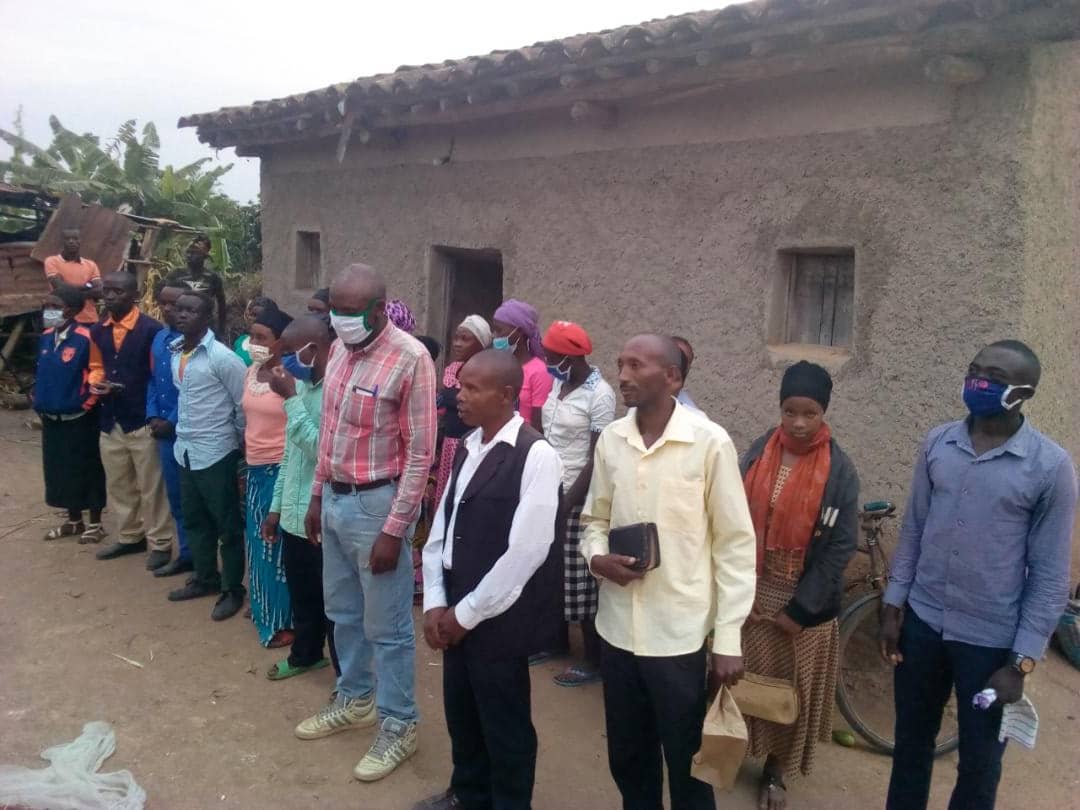
All the suspects are members of ADEPR Church. They include 12 women and 11 men from different parts of the district, who had gathered for prayers.
They were found in the house of one Françine Mukantwari, 60, located in Kibirizi Sector, Mbuye Cell.
Chief Inspector of Police (CIP) Sylvestre Twajamahoro, the Southern Region Police Spokesperson said that besides disregarding the government directives, which partly prohibit mass gatherings including religious services in this period; the room where they were found is very small, they were congested and had no facemasks.
“Local residents called the Police reporting serious violations. Indeed, we found 23 people congested in a tiny room praying, with no facemasks. Some of them had traveled from the neighboring sectors.
In any case where one is infected with Coronavirus, it was very easy to infect all others who were in the same room,” said CIP Twajamahoro.
The suspects, he said, were isolated at Kibirizi Police Station for further management.
CIP Twajamahoro warned against breaching the government orders and derailing efforts to combat the pandemic of COVID-19.
“People should understand that such prohibited gatherings don’t only put their lives at stake but also those of others in their families and communities, and hampering the government efforts to combat the virus. One infected person can easily infect the whole community, these behaviors shouldn’t be tolerated and should be reported,” the spokesperson said.
CIP Twajamahoro reminded members of the public to also follow other health and hygiene guidelines put in place, especially washing hands, avoiding handshakes and wearing facemasks.
He further warned that whoever breaches the directives meant to contain the spread of COVID-19 will be brought to book.
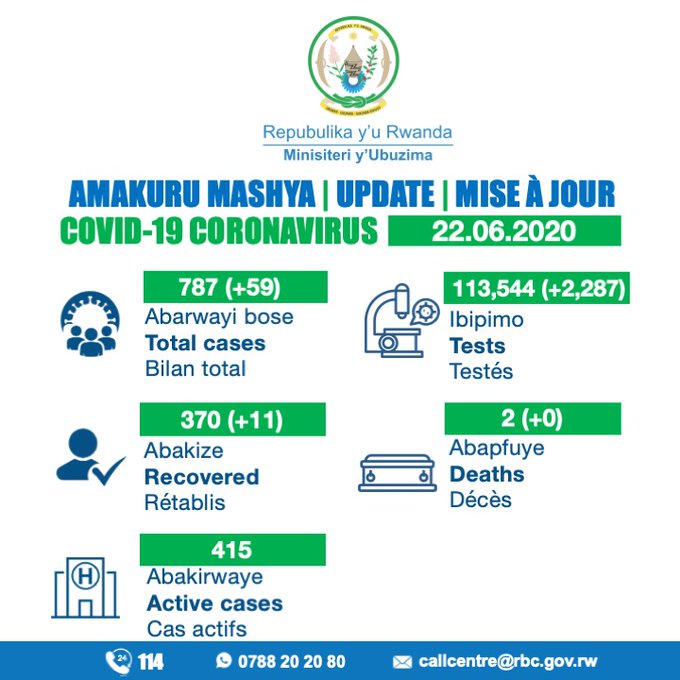
According to the Ministry, Rusumo cluster registered the highest number with 33, followed by Rusizi with 12 cases, Kigali recorded 7, Nyamasheke 4, and Rubavu 3.
The report also talks of a total of 11 new recoveries registered, taking the number of recoveries to 370.
The country’s testing capabilities have continued to improve with a total of 2, 287 tests conducted in the last 24hrs, bringing the total number of tests so far done to 113, 544.
The Director General of Rwanda Biomedical Centre (RBC) Dr. Sabin Nsanzimana said that among the categories of people who tested positive in Kigali were moto-taxi operators after two of them were identified in Kicukiro and Nyarugenge districts.
“Detecting new cases among this category confirms the fears we had earlier on the motorbikes being a risk factor,” Dr. Nsanzimana said.
The other cases in Kigali are linked to previously confirmed cases that were traced.
“We want to encourage people to continue being vigilant. These cases confirm to us that the virus is still among us. We need to continue taking precautions as we also work around the clock to trace and contain the spread,” Dr. Nsanzimana said.
Dr. Nsanzimana said that there are practical precautions that people can take on their part to minimize the risk, including observing social distancing measures and taking safety precautions, including those who use motos as a form of transport.
He also said that the movement of people from one place to another could be a major risk factor for transmission but experts are working to see if indeed there could be a province to province risk for transmission.
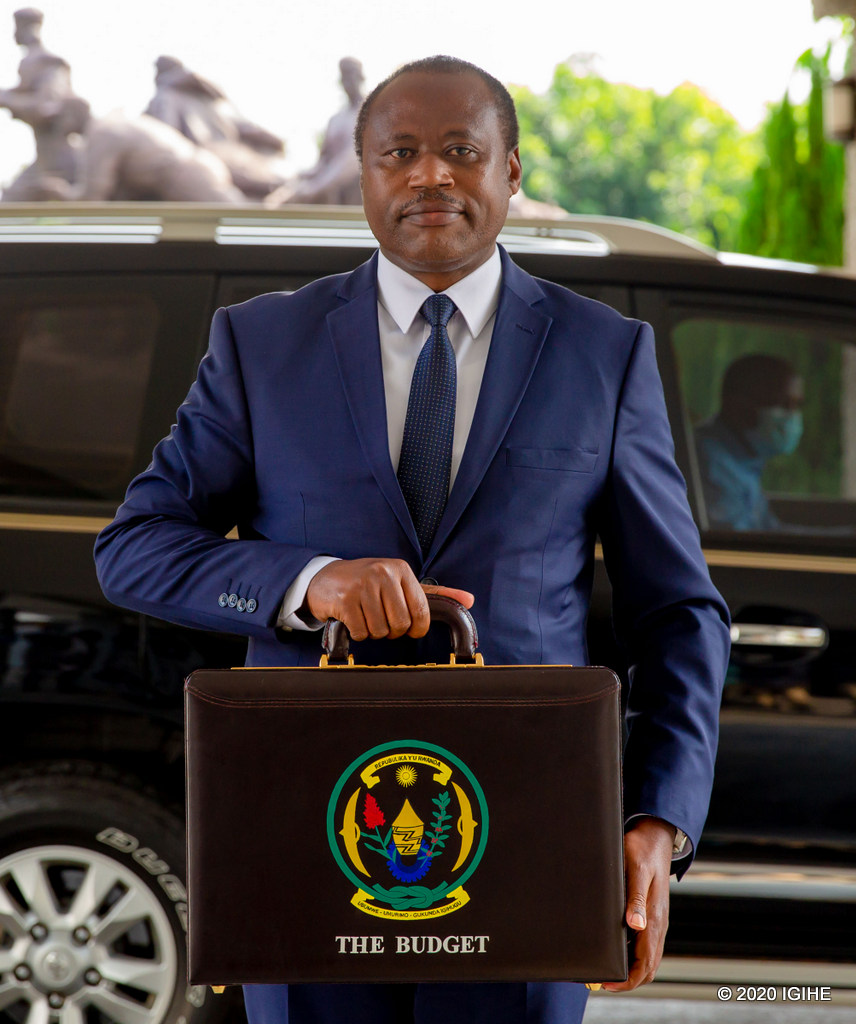
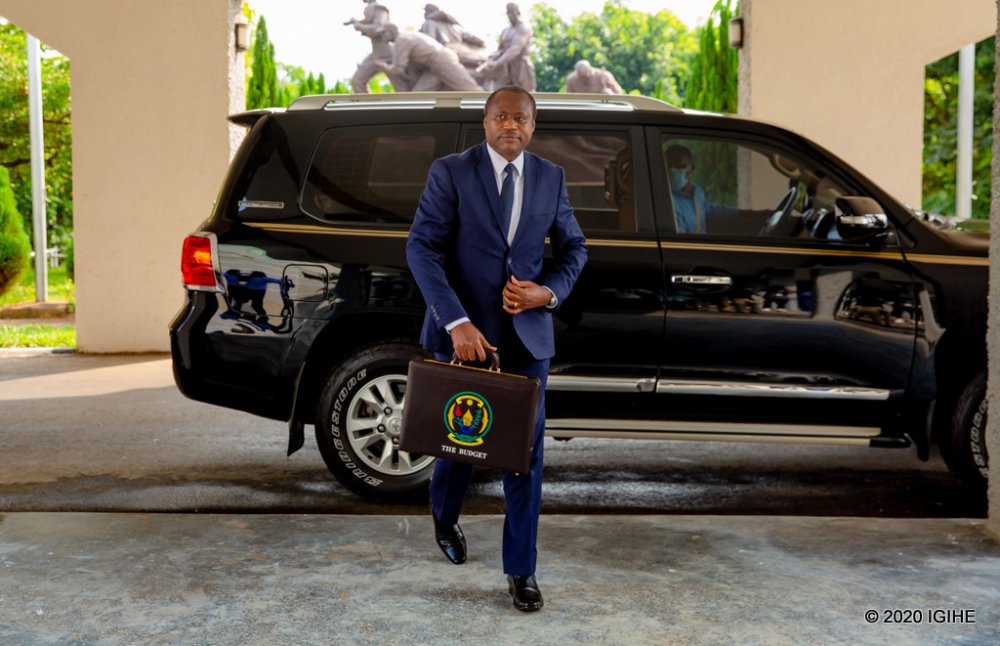
The fiscal policy in 2020/21 will be in line with COVID-19 economic recovery plan and National Strategy for Transformation (NST-1) priorities. The focus will be on increasing health-related spending to contain the epidemic and to strengthen the health system, scaling up social protection, strengthening the education sector, as well as supporting private sector through the Economic Recovery Fund.
{{Resources}}
The FY 2020-21 budget will be financed through domestic resources at Rwf 1,969.8 billion representing 60.7% of the entire budget. The remainder of the budget will be funded through external sources at Rwf 1,275.9 billion which accounts for 39.3% of the total budget. These include grants worth Rwf 492.5 billion and loans worth Rwf 783.4.
{{Expenditure}}
Government will spend Rwf 3,245.7 billion in 2020/21. Recurrent expenditure will take up Rwf 1,583.0 billion which accounts for 48.8% of the total budget.
Development projects are projected to consume up to Rwf 1,298.5 billion, which represents 40% of the total budget. Domestically financed projects are estimated at Rwf 703.4 billion, while externally financed projects are projected at Rwf 595.1 billion.
In addition, Net Lending has been allocated Rwf 306.5 billion which accounts for 9.4% of the total budget. Rwf 35.2 billion is allocated to payment of arrears and Rwf 22.6 billion reserved for accumulation of deposits to boost the Government reserves representing 1.1% and 0.7% of the total budget respectively.
“The share of recurrent budget in the total budget of 2020/2021 reduced by 2.6% compared to 2019/2020, while development budget and net lending increased by 2.6%. This confirms Government’s effort to contain recurrent expenditures and to focus on development spending,” Dr. Uzziel Ndagijimana, the Minister of Finance and Economic Planning said.
{{NST-1 and Resources Allocation }}
Government’s expenditure policies in fiscal year 2020/21 are guided by National Strategy for Transformation priorities and objectives while ensuring appropriate allocation by promoting made in Rwanda to reduce trade deficit and build economic resilience.
To this end, the Economic Transformation pillar takes the lion’s share of the resources at Rwf 1,802 billion amounting to 55.5 % of the total budget. Social transformation will take up Rwf 960.4 billion (29.6%) while Transformational Governance is allocated Rwf 482.7 billion representing 14.9% of the total budget.
In line with NST-1 strategic objectives, some of the priority areas agreed during planning and budgeting consultations formed the basis for resource allocation in 2020/21fiscal year. These include:
Strengthening health system by increasing accessibility to quality health services for all
-* Increasing agriculture and livestock productivity
-* Strengthening Social Protection programs by scaling up coverage.
-* Promote employment through investment in public infrastructure.
-* Support businesses affected by COVID-19 to recover, boost their business and contribute to the national economic growth.
-* Support Made in Rwanda policy to reduce trade deficit and build economic resilience.
-* Promote digital infrastructure and technologies to improve service delivery
-* Improve access to quality education
-* Continue eradication of malnutrition and stunting
-* Strengthen disaster preparedness and management
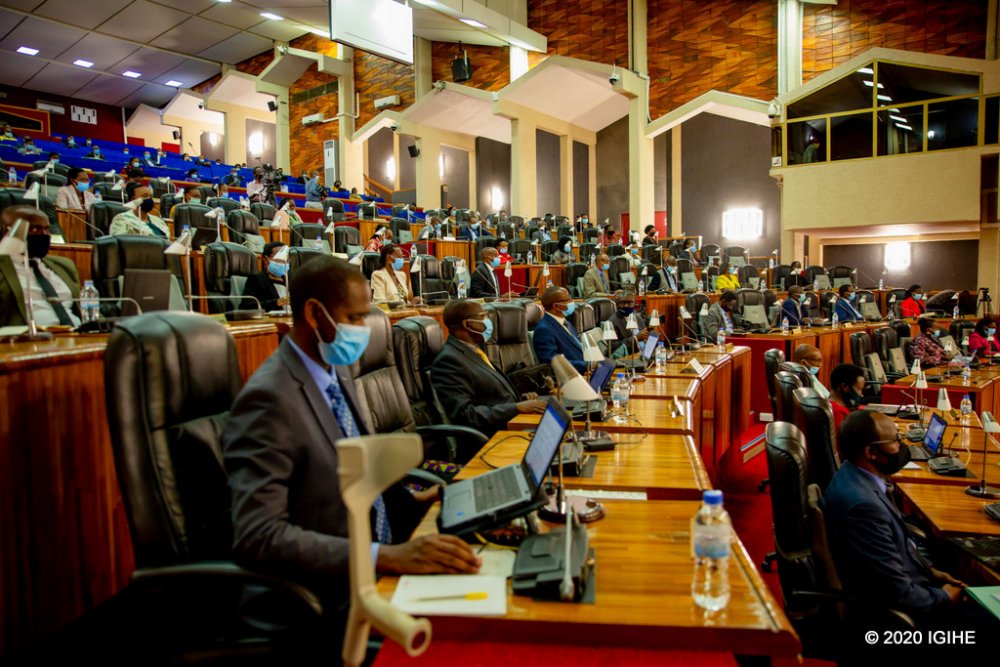
The 2020/2021 draft finance law conforms to the 2020/21 – 2022/23 Budget Framework Paper that was presented to Parliament on May 21, 2020 and amended to reflect the recommended actions by the Parliament as submitted on June 5, 2020.
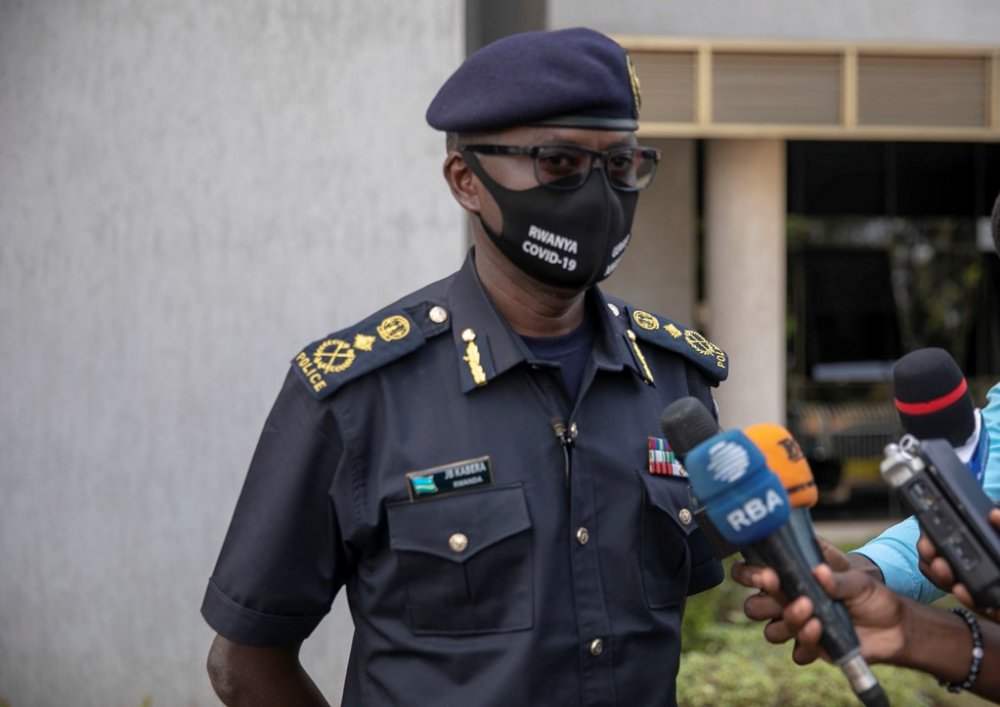
While appearing on ‘Waramutse Rwanda’, a morning talk-show on Rwanda Television on Monday, CP Kabera observed that ‘Ntabe Ari Njye’ literally translated as ‘I shouldn’t be the one’ campaign initiated by RNP is meant to effect change in people’s thinking and actions to make safer individual choices in compliance with the recommended directives and guidelines to contain the pandemic.
“Ntabe Ari Njye campaign looks at the individual character to make a choice not be the source for COVID-19 infections where you live, walk, in the vehicle or at work.
A choice to never shake hands or hug anyone; a choice to wash your hands well as many times as possible with clean water and soap or sanitize your hands; a choice to leave enough distance between you and another person; a choice to wear a facemask well covering your mouth and nose, to prioritise movements or avoid unnecessary movements including journeys,” said CP Kabera.
Although most businesses and movements, as well as the transport sector, resumed across the country, CP Kabera said that the global pandemic is still in our midst and these safety guidelines are compulsory and must be adhered to at all times to prevent catching or spreading the virus in your home, community, at work or while on your journeys.
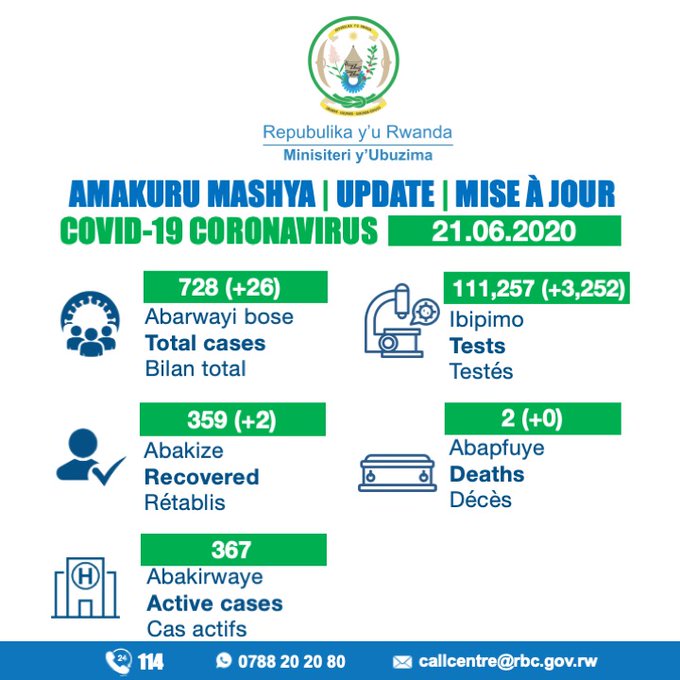
On Sunday, June 21, the Ministry of Health reported 26 new COVID-19 cases that were diagnosed from 3,252 tests; 18 were detected in Rusizi district, two at Rusumo and 6 cases found in Kigali. Two of the cases detected in Kigali are taxi-moto operators.
“Before you board a motorcycle or vehicle, there are compulsory precautionary measures you have to take first. You must wash or sanitize your hands, the facemask should be worn properly; a distance must be left between two passengers in the vehicle and a helmet cleaned first for those using motos, wear fabrics inside the helmet and use cashless payment. The virus can be spread through many ways and the good choice you make is your safety and the safety of others around you.”
He warned motorcyclists, who breach the directives such as cashless payment, sharing fabrics with clients, not washing or sanitizing their hands or using water as sanitizer.
Rwanda’s fastest-growing service provider of Voice, Data, and Mobile Financial services has today partnered with online money transfer service WorldRemit to enable Airtel Money customers to receive remittances instantly to their Airtel Money wallets from World Remit users across the globe. Top countries include but not limited to: The United States, Canada, Belgium, United Kingdom, Australia, France, Sweden, Norway, Netherlands, and Germany.
With this partnership, World Remit customers across the world now have the option of visiting the World Remit website, choosing Airtel Money as their preference, and follow the prompts. Commenting on the launch, Amit Chawla, Airtel Rwanda Managing Director said:
“We are excited about this partnership with World Remit as it allows our customers to receive money from their friends and family across the world at their comfort. This contributes to our drive to offer our customers the convenience of using their Airtel Money wallets to carry out their day to day activities. WorldRemit makes it easy to send money to Airtel Money accounts in Rwanda from more than 50 countries around the world. Just download the app or create your free account to start transferring money to family and friends in Rwanda today.”
“We are delighted to partner with Airtel Money to ensure that Rwandans can have access to financial support from their loved ones abroad. This is more important than ever with lockdown measures in place. This partnership allows us to give customers even more remittance options whilst continuing to provide a convenient, safe, and secure service.” said Carine Umurerwa Country Manager, Rwanda, WorldRemit.
Airtel Money enables users to perform local and international money transfers, make utility payments, save money in their mobile wallets, purchase airtime, and access a range of mobile financial products.
WorldRemit sends more money transfers to Mobile Money accounts than any other provider. Over half of WorldRemit’s money transfers to Africa are now received on Mobile Money accounts
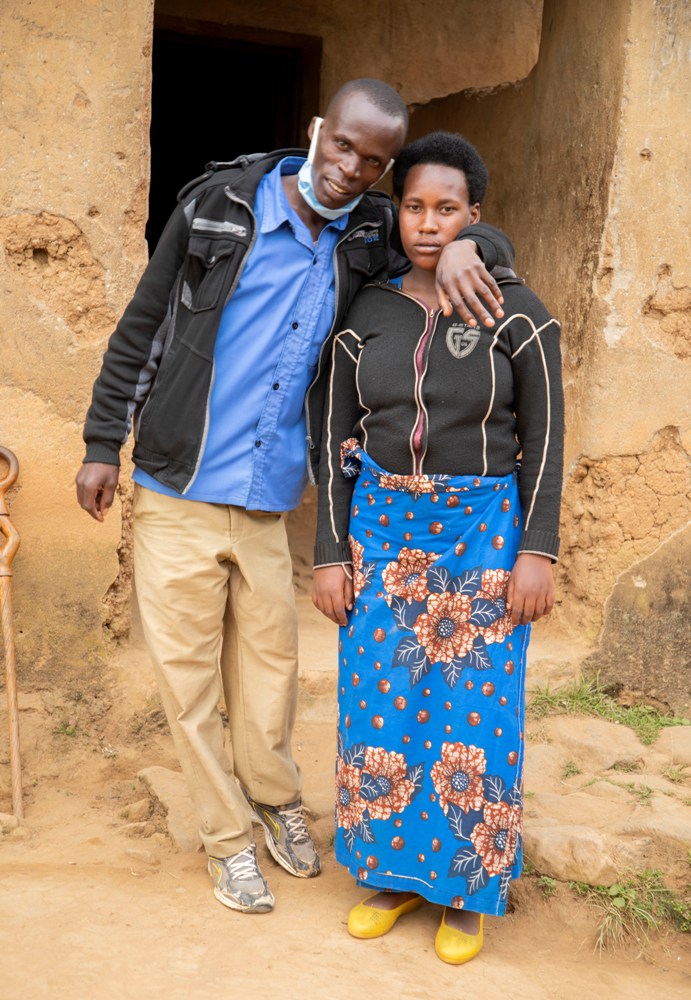
Ngiriyambere Jean Baptiste from Gifurwe Village in Gifurwe Cell took out insurance from ‘Radiant Yacu Ltd’ in November 2019 and paid Rwf1000 per month via Mobile Money.
He was involved in a bicycle accident in June 2020 and was treated at Butare University Hospital, CHUB, where he spent 10 days. Radiant Yacu Ltd paid for his medical services as he had an accident insurance cover with Radiant.
“I got a text message on ‘Radiant Turikumwe’ for I had already subscribed for the cover. To join, I typed * 531 #, I read all the instructions and chose a thousand insurance,” a 26-year-old barber said.
He says it was after the accident that he realized the benefits of insurance, encouraging other residents to subscribe for the same.
{{How Radiant Yacu decided to visit Ngiriyambere}}
CEO of Radiant Yacu Ltd, Amb. Joseph Habineza told IGIHE that once they saw how a rural resident far from the City of Kigali thought of taking insurance, they decided to visit him and thank him for his membership.
Habineza added that another reason they visited him was to set an example for all Rwandans.
“Jean Baptiste is the first Rwandan to pay for our Radiant since we started,” he said.
{{The public is touched by the events}}
Some of Ngiriyambere’s neighbors were pleased with the way Radiant Yacu visited a resident in the village, demonstrating that a friend in need is a friend indeed.
Nyiranjyinshuti Espérance said she did not know about insurance but she is now aware and happy about it so she is going to subscribe with Radiant.
Ngiriyambere Jean Baptiste’s family members, including his father, Ahingereje Martin, and his wife, Jeannette Nyirahagenimana, also say that they were touched by the way Radiant Yacu Ltd helped him, so they are also going to insure themselves.
Amb. Joseph Habineza explained that Radiant has a spectrum of insurance products that cater to different categories of people, with premiums ranging from Rwf 500; 1000; 2000; 5000 or 10,000. When the affiliate as a medical problem and goes to the hospital and stays there for more than three days, he or she starts receiving the support.
Amb. Joseph Habineza emphasized that insurance is not just a reserve of well-to-do Rwandans, but all people can be brought in the loop with small subscriptions under Radiant Yacu.
Chief Inspector of Police (CIP) Hamdun Twizeyimana, the Eastern region Police spokesperson said the maize was recovered from two suspected thieves; Emmanuel Nsanzimana, 28 and Innocent Fasasi, 30.
The two suspects were working for Sibomana as security guards at the store.
“Nsanzimana and Fasasi were both guards at the store, they stole the maize at different occasions and would hide it in the nearest homes,” said CIP Twizeyimana.
“Local residents realised that the two guards were stealthily taking the maize from the stores and informed the Police in Rilima. The victim wasn’t aware,” he further explained.
“With the help of the residents, Police arrested the two guards and recovered the maize.
We commend the residents for the ownership… not just being bystanders as the theft was going on but to fight and prevent it.”
The recovered maize was handed over to the owner.
Sibomana lauded the Police’s quick response to recover his goods and commended the residents’ responsiveness.
“I live in Kigali but I have my stores in Rilima. I wouldn’t have known anything had it not been the ownership of my neighbors in Rilima and I am thankful for that spirit of neighborhood watch,” said Sibomana.
Theft, under article 166 of the penal code, is punishable with an imprisonment of between one and two years, a fine of between Rwf1 million and Rwf2 million, a community service of not more than six months or one of these penalties.
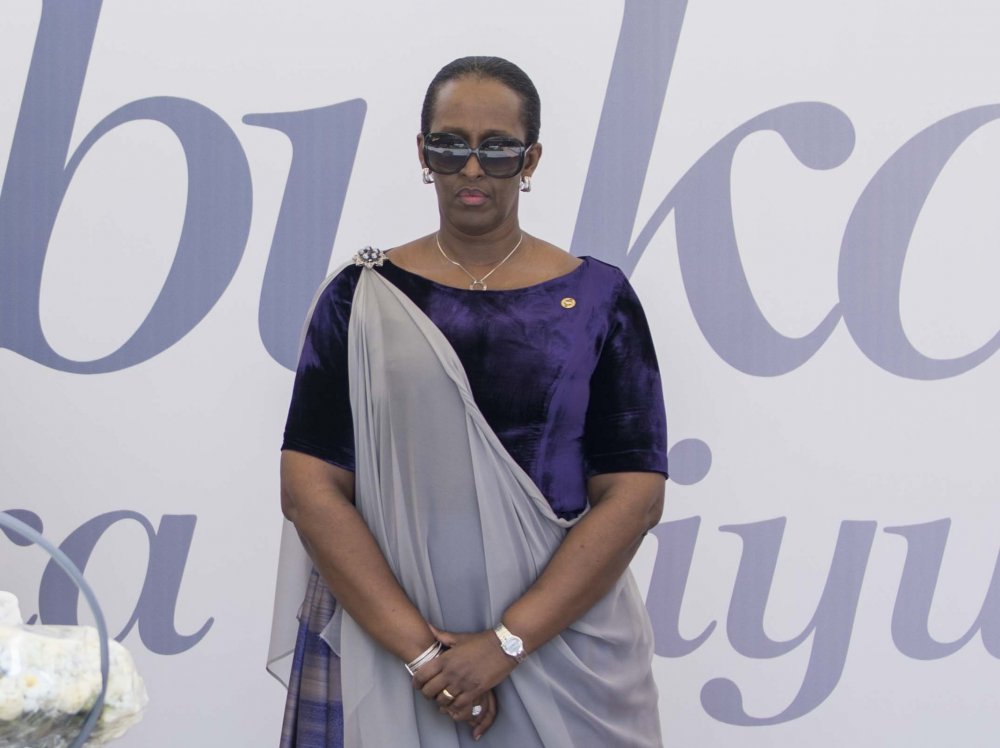
Mrs. Kagame called for the nurturing of children with the right values of humanity which go against the same reasons that made the genocide possible.
“As we remember the families completely wiped out during the 1994 Genocide against the Tutsi, let their memory be a reminder that total extermination is the indisputable uniqueness of a genocide. Let us continue instilling in our children the values of humanity, dignity, and respect for one’s neighbor. Let us recommit to fighting the genocide ideology and denial, grounded in our journey as a testament to our ability to fight evil with good,” said the First lady.
GAERG, an organization of former students who survived the 1994 Genocide against the Tutsi and is in charge of preparing and implementing the commemoration of wiped out families revealed that the remembrance shall be done in line with Covid-19 preventive measures.
“Similar to other Kwibuka26 activities, the commemoration of the completely wiped out families will be held in adherence to the Covid-19 preventive measures,” reads a part of the Organization’s statement.
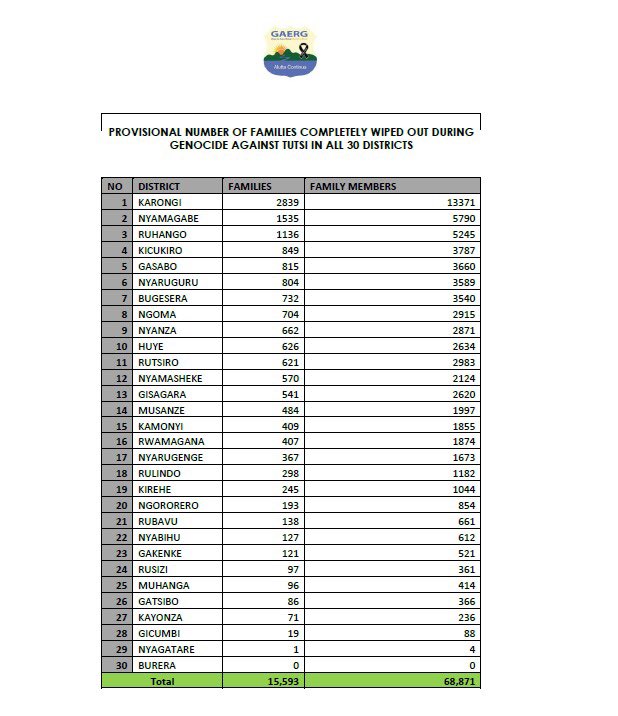
Since 2009, the IBUKA affiliate of former students who survived the Genocide against the Tutsi (GAERG), prepares and implements the commemoration of families wiped out in the Genocide against the Tutsi.
GAERG has enumerated those families in all 30 districts of Rwanda; the figures available to date show that 15,593 families made of 68,871 people were wiped out.
The association has started a project to write a book on these families, a documentary moviefilm and a database to safeguard their history. The project is worth Rwf64m.
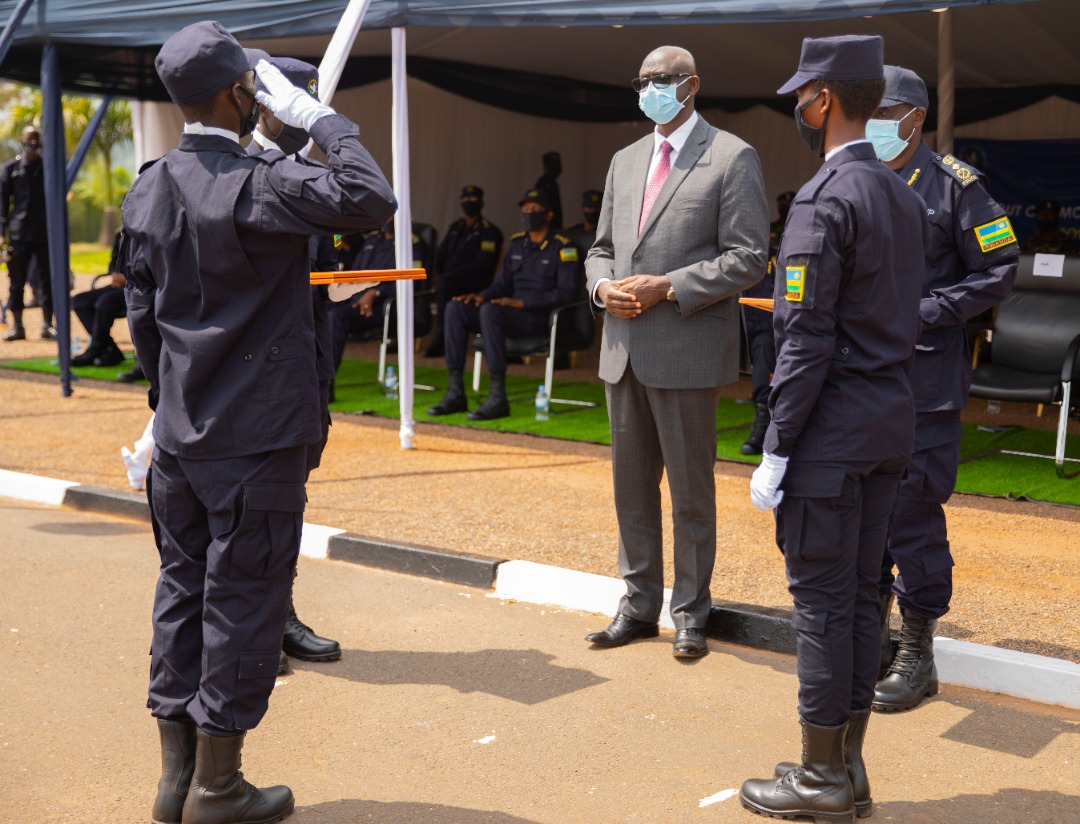
The Minister of Justice and Attorney General, Johnson Busingye presided over the pass-out ceremony of the 16th Basic Police Course intake.
The Minister awarded the new Police officers the rank of ‘Police Constable.’
The pass-out event held in consideration of the national guidelines to prevent the spread of Coronavirus was also attended by the Inspector General of Police (IGP) Dan Munyuza and the Deputy IGP in charge of Administration and Personnel, Juvenal Marizamunda.
Busingye formally welcomed the new Police officers into the RNP family.
The pass out, he said, signifies Rwanda’s commitment to continue building an able and professional Police force capable of effectively accomplishing its policing mandate to reassure the safety and security of people living in Rwanda and their property.
“Training is the foundation of professionalism and a determinant for quality services expected from every trained Police officer to implement what they were trained to do,” Minister Busingye said.
He mentioned that RNP plays a crucial part in the implementation of government development programmes and has built a strong bond with the citizenry through community policing to further ensure homeland security and uplift the wellbeing of the people.
“This requires Police officers to exhibit exemplary service in compliance with the law and supplement the government development agenda so as to create the same culture among all Rwandans,” Minister Busingye said.
He highlighted the role that RNP continues to play in this period of the global COVID-19 pandemic, to educate Rwandans on prevention measures.
“Your role in building this country in all aspects is expected,” he told the new Police officers.
He further lauded the RNP efforts invested in fighting all sorts of corruption, domestic and gender-based violence, cybercrime, and terrorism, among others.
“In this endeavor, every Police officer should feel the responsibility to fight crimes, and community policing is one of those effective strategies adapted to be ahead of crime to prevent lawlessness.
This empowers the public to play their part as their right to share information to facilitate crime prevention.”
He reassured of safety and security in the country and commended the professional conduct that Rwandan Police peacekeepers continue to exhibit in their respective UN missions.
Minister Busingye pledged the government’s continued support to build the capacity and capability of the force including training both at home and abroad and acquiring modern policing equipment.
He thanked the trainees for the resilience and urged them to use the acquired knowledge and skills to add value in their policing services and to continue protecting and promoting the image of RNP.
The PTS commandant, Commissioner of Police (CP) Vianney Nshimiyimana commended the discipline, commitment, and resilience throughout the eleven months of the course.
CP Nshimiyimana further lauded their discipline and observance of the instructions in this period of COVID which barred their relatives to visit them since March as part of the efforts to prevent the spread of the pandemic.
The trainees covered varied disciplines including drills and duties, skills at arms, public order management, law, and community policing, among others.
Police Constables; Vedaste Nkurunziza, Eriya Iyakaremye, and Devota Iradukunda, in that order, were awarded as the best overall trainees.
Since the beginning of this financial year, more than 55000 personnel have acquired varied training at PTS.
They include those trained in fire response, basic course, peacekeeping, driving, UNPOC, VIP, reserve, refresher, and environmental protection courses.