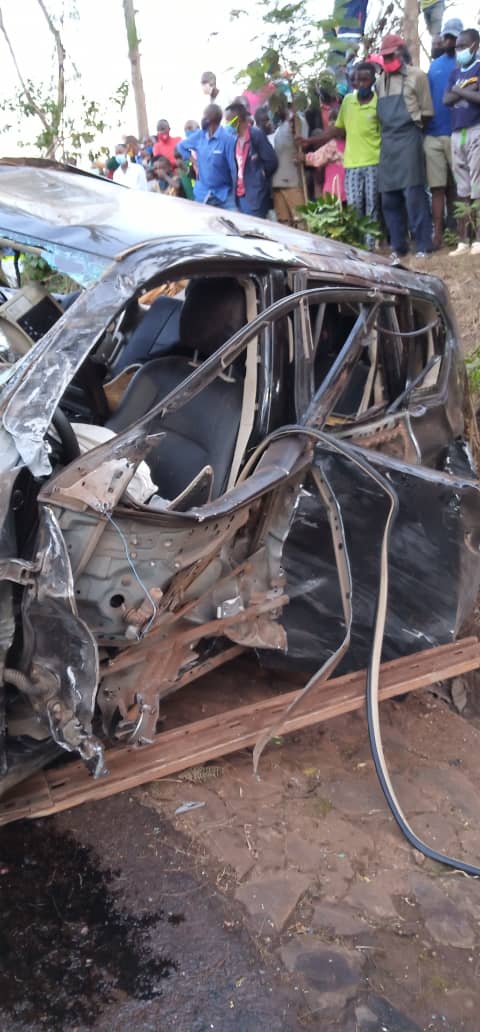
The Eastern Province Police Spokesperson for the Eastern Province, CIP Twizeyimana Hamdun, told IGIHE that the accident happened around 5.30 pm when a Jeep Toyota Prado that was heading from Nyagatare to Kigali hit a cyclist identified as Alphonse Habimana in Rwamagana town.
The Prado collided with an Actros Mercedes Benz before killing a taxi moto rider and his passenger.
The driver of the Prado identified as Etienne Ruzindana was trying to escape from police after he made a hit and run on a cyclist who luckily cheated death.
The car later lost the balance and hit the tree on the roadside, leaving the driver in critical condition.
One of five persons he was carrying identified as Aloys Niyonzaba died in the accident while others were seriously injured.
Police Spokesperson said that the accident wouldn’t have been as fatal as it was had the driver not tried to escape.
“The police stopped the driver after hitting the cyclist but he opted to escape and I don’t think he was running against the clock to stick to curfew hours because he would have reached on time without considering going at the highest speed,” CIP Twizeyimana said.
The driver who caused the accident was immediately transferred to Kanombe Military Hospital for treatment.
The bodies of the deceased were taken to Rwamagana Hospital for autopsy tests; while those who were injured during the accident were hospitalized at Rwamagana Hospital.
The African Banker’s judging process sought to recognise the African banks that have demonstrated original and practical uses of technology to provide customer convenience, improved and more affordable services and greater access to the financial services sector in Africa.
Ade Ayeyemi, Group Chief Executive Officer said: “Winning the Award for Innovation in Financial Services from the African Banker magazine is such an honour. It provides public recognition of our pioneering role in harnessing technology to complement our pan-African presence and partnerships, to deliver accessible, convenient, affordable and innovative banking products which are making a difference to millions of lives and businesses across sub-Saharan Africa. Five years ago, we commenced a digital transformation journey to transform our banking products and services. This award attests to the success of that journey and we are delighted that our significant investment in technology is yielding the desired results.”
“Our one bank model, powered by our robust pan-African banking digital platform provides diverse products and services to governments and corporate clients using our digital platforms including Ecobank Omni Plus amongst others, Ecobank Omni Lite for our SMEs and commercial bank clients as well as our Ecobank Mobile App and Ecobank Online for our consumer clients. These are in addition to the highly effective cash management, transaction banking solutions and our cross-border Rapidtransfer remittance solution – a few of the headline-grabbing innovations that we have delivered to meet and exceed the evolving needs and expectations of our customers. I applaud all my Ecobank colleagues for their continued commitment and dedication to serving our customers especially during these challenging COVID-19 times.”
Other African banking awards won by Ecobank so far in 2020 include amongst others, Most Innovative Bank in Africa, Best Bank for Payments& Collections, Best Integrated Corporate Banking Site in Africa (Global Finance) and the Best Bank for Corporate Responsibility (Euromoney Awards for Excellence).
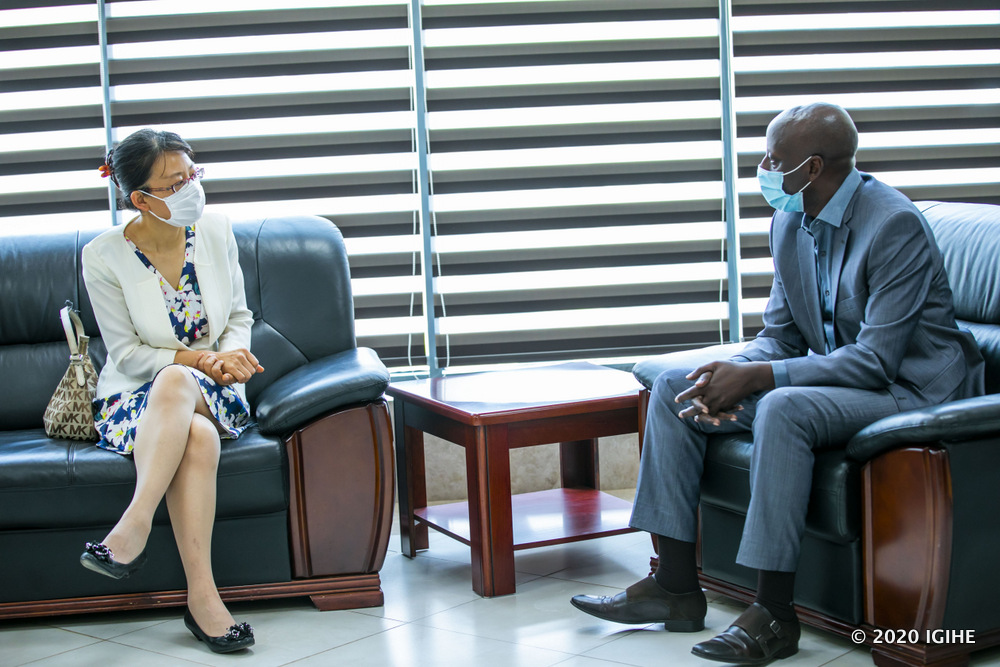
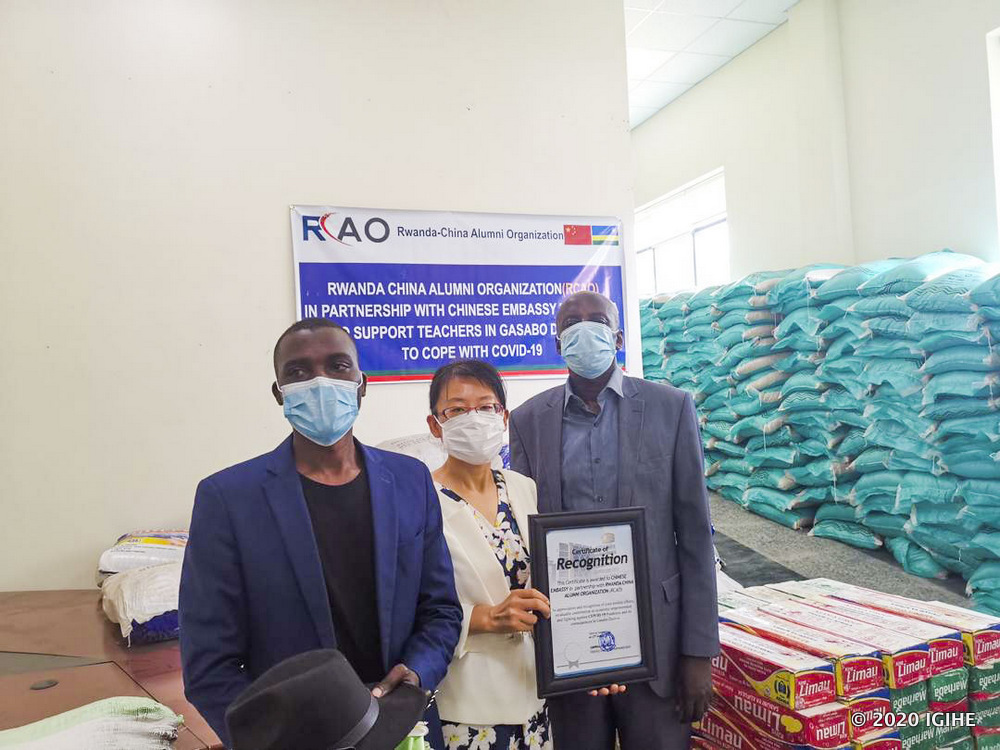
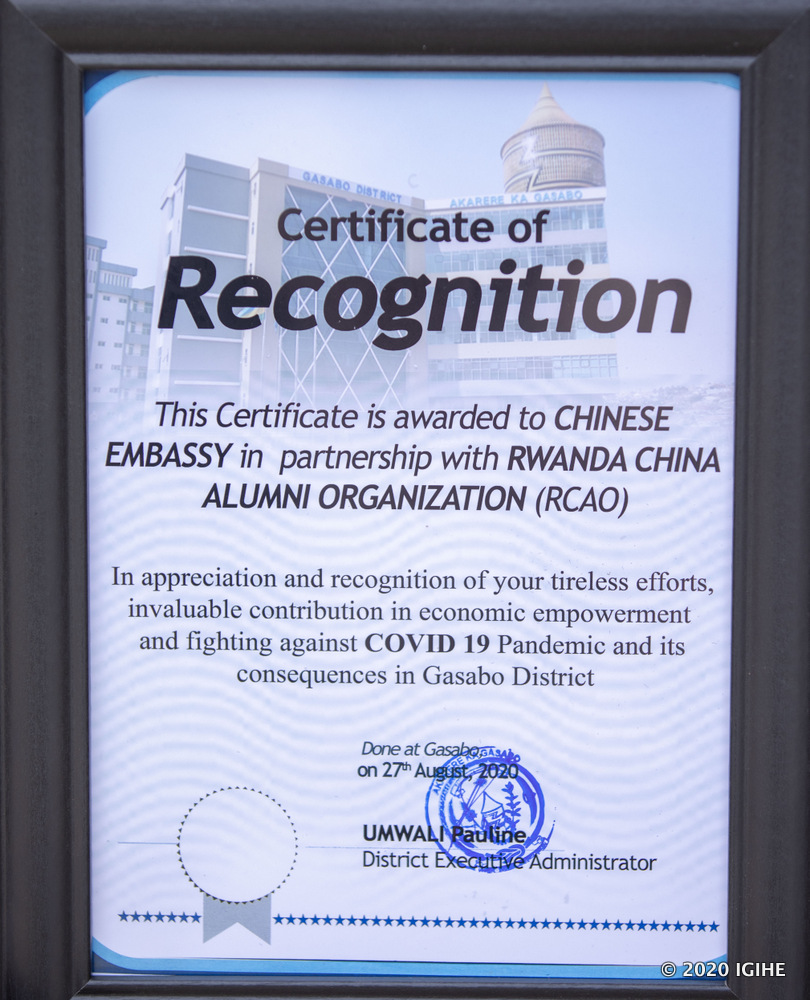
The support includes food items and hygienic equipment worth Rwf22.6million. They were handed over to Regis Mudaheranwa, Executive Administrator of Gasabo district on 27th, August 2020
It was raised to help teachers who have been out of work for a while due to the government’s decision to close schools as part of a strategy to prevent the spread of COVID-19.
Mudaheranwa said they were going to enumerate all the private school teachers who need food before supplying it.
He thanked the Chinese Embassy for its ongoing cooperation with Gasabo District, as it was not the first time it had sponsored them.
Xing Yuchun, China’s Deputy Ambassador to Rwanda explained the choice to help teachers in Gasabo District.
“The reason we chose to help teachers, is that at home in China a teacher is a highly respected person. Seeing them in a bad situation is a very serious problem. So the reason we chose Gasabo, is because it’s where we work from, it is our home or it is where our embassy is built, and we want to be friends with the people of Gasabo.”
Donations include food such as rice, flour, beans, oil, salt, and hygiene items such as soaps.
The grant is expected to be sent to private school teachers who have lost their jobs during the recent COVID-19 prevention guidelines.
Changing the curfew hours is one of the resolutions of the cabinet meeting on Wednesday, which was adjusted from between 9 pm and 5 am, and is now set from 7 pm to 5 am.
In an interview with the RBA, Dr. Ngamije said that in the last three weeks, the nature of the pandemic has changed dramatically, “so that one can say that the pandemic is signaling to us that it can get worse.”
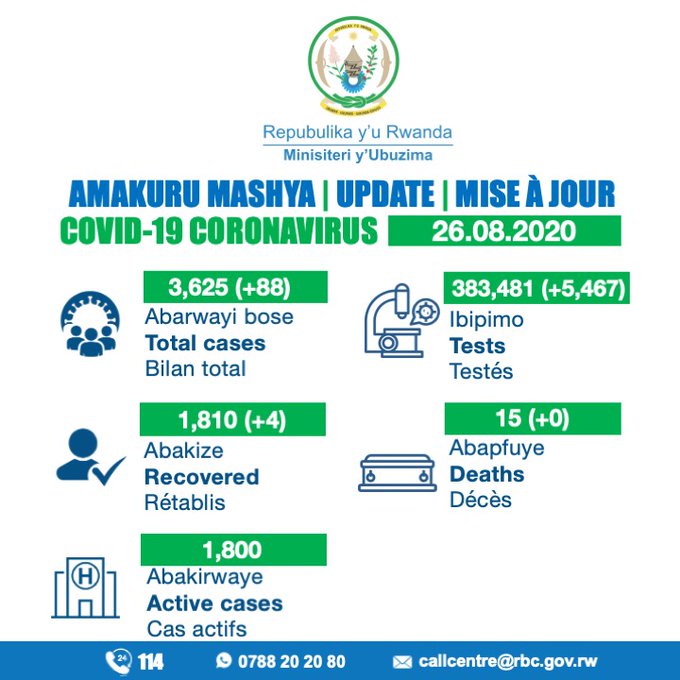
That is why the Government has come up with a strategy to prevent it, where since COVID-19 came to Rwanda from March 14, 2020, to the end of July, there are about 1,500 cases, for four months. However, in the last 45 days, the number of patients has increased from 1,500 to 3,600.
Dr. Ngamije said it was indicative that the pandemic is widespread in the area where people did not comply with COVID-19 prevention guidelines; some don’t wear masks, don’t comply with social distance, and don’t wash their hands while entering at the workplace.
“What we want is to avoid overcrowding of people. Looking at the decisions of the Government, you see that we have asked people to comply with social distance because we have asked the number of people working in the same place be reduced, either in the private sector, government agencies, market places, or in other business houses. The decision is aimed at reducing the number of people meeting at the same place. ”
“Secondly, when people meet, we ask that when the work is done, they go home without going anywhere else to meet with another group of people.”
He said that these days it has become more visible on social media and elsewhere, where people either on weekdays and on weekends, you find them at home or elsewhere gathering without complying with the COVID-19 prevention guidelines.
He said people should be more vigilant about the pandemic, as it kills and does not care about the age as some people thought.
The number of COVID-19cases in Rwanda is 3625, and 15 deaths.
Minister Shyaka said on Thursday that one of the reasons why the country was unable to control the COVID-19 pandemic was that among instructions given, was closing bars but some instead of closing relocated to others places.
He said last month local authorities working with the police found gaps in complying with the regulations.
“In that month alone, we caught 3,500 bars, found 13,000 people in them, that is in just four weeks. That number is very high. ”
“So you find what used to be a bar is called a restaurant, and then you find that the bars have increased. So the disobedience to the rules is causing escalation of spread of COVID 19.”
NCSA was established by Law N ° 26/2017 of 31/05/2017, to build knowledge and capacity in the field of information and communication technology, to protect the integrity and security of the nation, leading to economic and social development. NCSA is overseen by the Presidency.
Its responsibilities include advising the President of the Republic and other public and private sectors on strategies to protect Rwanda’s interests in the field of technology; to investigate and identify activities that have or may be detrimental to the national security of the site and to inform the relevant authorities of the information obtained from the investigation.
It also includes establishing measures to ensure the safety of all activities carried out using ICT and to perform other functions required by the President of the Republic.
In July 2020, President Paul Kagame promoted Colonel David Kamu Kanamugire to the rank of Colonel. Kanamugire has been the director of technology in the Ministry of Defense.
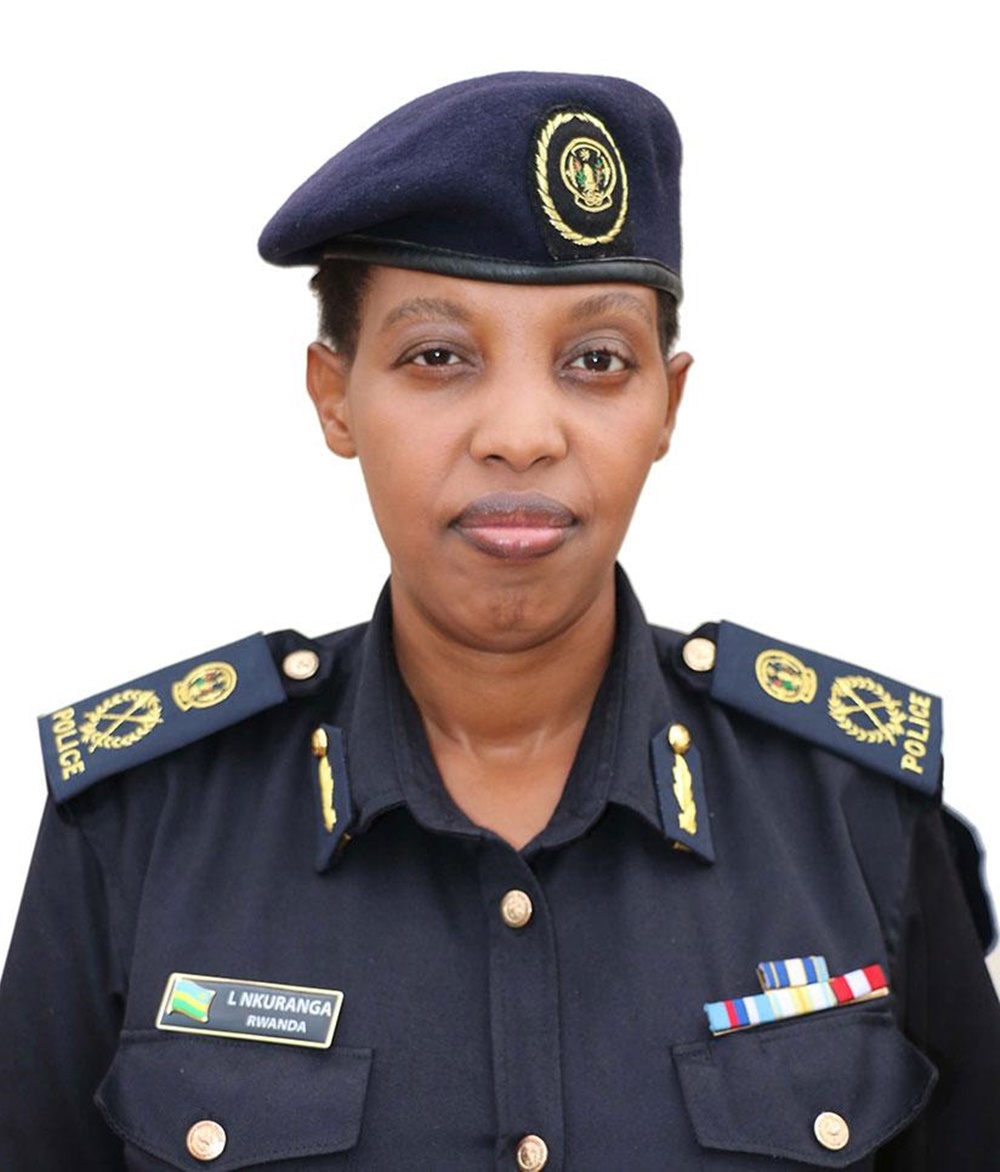
In the same meeting, Assistant Commissioner of Police Lynder Nkuranga was appointed as the Director-General of External Intelligence at the National Intelligence and Security Service (NISS). This position in NISS has been occupied by Anaclet Kalibata. Nkuranga has been serving as the commissioner of protocol and co-operation in the Rwanda National Police, (RNP).
Under the law governing the powers, responsibilities, structure, and functioning of the National Service for Investigation and Security, the Directorate General of Investigation and Security Abroad is one of the main organs of NISS, as well as the General Directorate of Internal Security and Investigation, the Directorate General of Administration and Finance and the Directorate General of Immigration and Emigration.
NISS is generally responsible for conducting internal and external investigations and assessing immigration to protect and prevent threats to national security.
Lt Col Ngabo Francis was also appointed as CEO of Rwanda Space Agency, RSA. He has been working as the Director in charge of Spectrum and Numbering management at Rwanda Utilities Regulatory Authorities, (RURA).
In May 2020, the Cabinet approved a draft law establishing RSA. It is a reminder of the progress Rwanda is making in the field of aerospace technology, as well as building on other common institutions such as ESRI Rwanda and the Institute of Science at the University of Rwanda.
Also, Rwanda has traditionally used aerospace technology to assist in imaging during census, land survey, and research. It is an activity that needs to continue to be empowered and expanded.
The center will also assist in agricultural planning, environmental protection, disaster preparedness, and urban planning through the use of satellite and imaging systems.
It is also the center that will develop programs that will enable Rwanda to have a foothold in the international arena. It will also support programs related to space and technology research, as well as programs related to the preparation and launch of spacecraft.
The agency will also monitor Rwanda’s cooperation with other countries in the field of climate.
The decision came after a cabinet meeting on Wednesday decided that travel between the Provinces and the City of Kigali is not allowed on public transport, and no one is allowed to be out of home between 7:00 PM and 5:00 AM
The decision was taken to reduce physical interaction of people in one place to check the growing number of new COVID-19 infections. Companies are encouraged to reduce the number of employees who go to the workplace.
According to a statement signed by President of RBA, Robin Bairstow, the decision was taken after in depth discussions with the Nationall Bank of Rwanda.
Financial digital transactions, however, will continue uninterrupted.
These include paying taxes, transferring money from one bank account to another, transferring money between a bank and a mobile money account, or online payments for other services.
Bank of Kigali, one with several branches in Rwanda, has informed its customers that it will be opening between 8:00 AM and 3:00 PM, except for the Rusumo branch on the border with Tanzania, which will be open 24/7, while the branches of La Corniche on the border with the DRC, Kagitumba on the Uganda border and Kigali Airport will open between 8:00 AM and 5:00 PM
“We also remind you to leave at least one-meter distance between people while on the line. We encourage you to reduce the hand to hand money transfer by using more technology networks such as BK App, Internet Banking, USSD (* 334), POS, debit cards and agent services. ”
The RBA has announced that it will continue to analyze the effects of COVID-19, and inform members, customers, and other stakeholders of the next steps.
Various banks have also continued to inform its customers of the changes caused by the government’s decisions.
A statement from the Ministry says the new patients are mostly from the people tested in the Kigalimarkets and other parts of the country, thus; .79 from Kigali, 3 from Rusizi, 2 from Rubavu, 2 from Karongi, 1 from Nyamasheke, and 1 from Kamonyi.
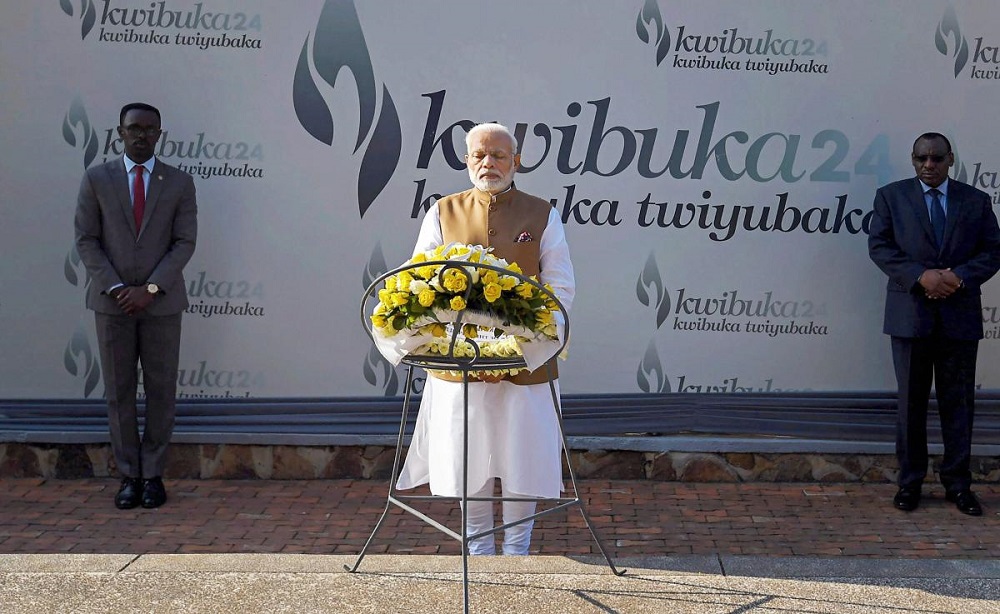
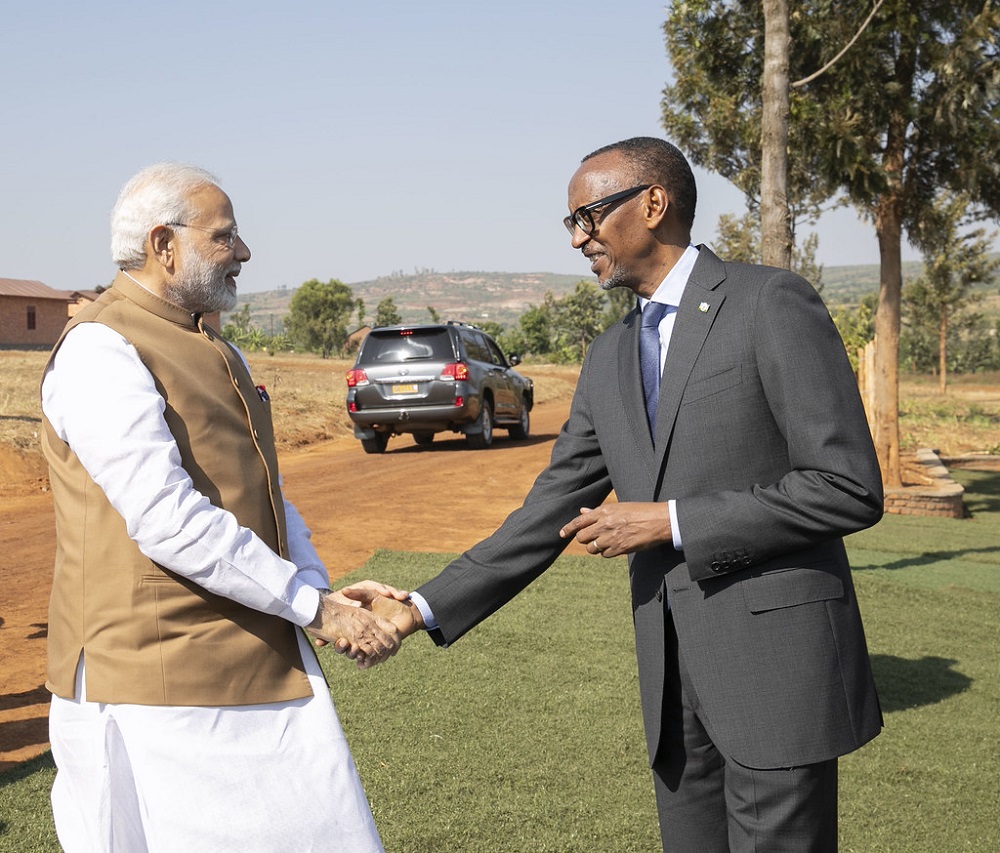
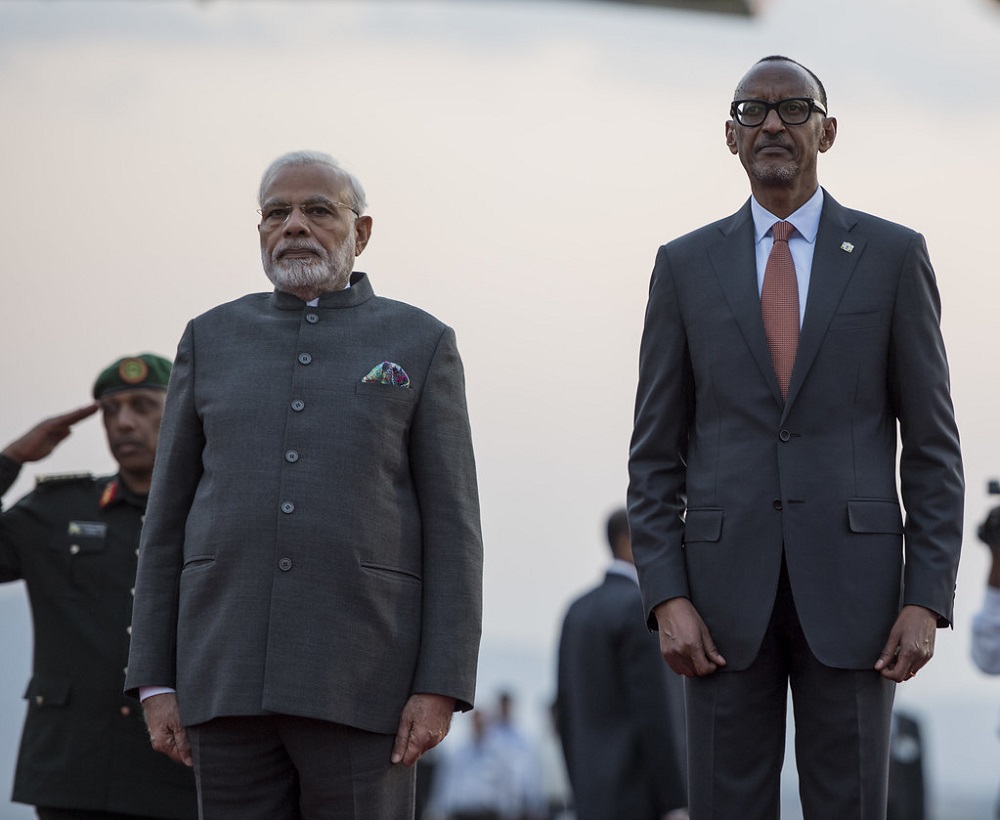
It is a visit that has strengthened the willingness of both countries to strengthen development ties, given that the two countries share much in common, including the pace of sustainable development.
During his visit, the two countries signed a Memorandum of Understanding (MoUs) focusing on sectors such as security, trade, cooperation in increasing milk production, cooperation in boosting leather, agriculture, and culture.
At that time, the Prime Minister of India donated 200 cows to Rwanda, which were given to the people of the Bugesera District in Eastern Rwanda. This was a great sign because cows are animals that means a lot in Indian culture as well as in Rwandan culture.
India also donated 100,000 books to Rwanda for the betterment of education. A $ 200 million (Rwf193 billion) agreement will also be signed to help develop irrigation and industrial space.
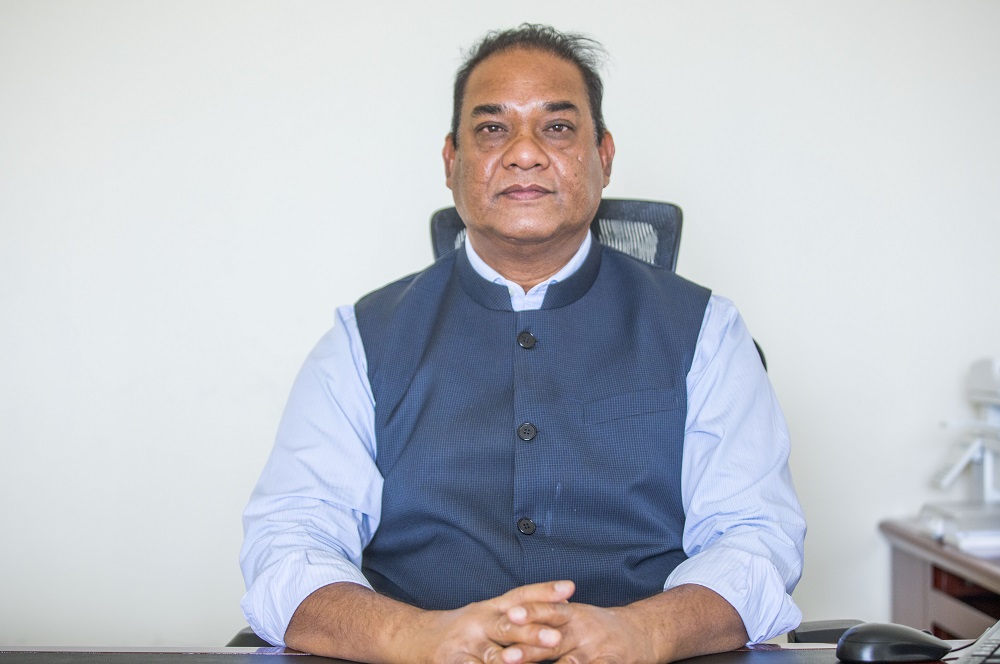
In an interview with IGIHE, the Indian Ambassador in Rwanda, Oscar Kerketta, said the money has already been increased.
“I am pleased that India’s budget for Rwanda stands at $ 547 million (Rwf528 billion), which will be used in sectors such as electricity, agriculture, irrigation, and technology,” he said.
In addition to this money that will help the country in large-scale projects, Rwanda has benefited greatly from the investment of Indian businesses that have long shown a thirst for investment in the Rwandan market. As of 2017, India was the third-largest investor in Rwanda, valued at $ 83.1 million (Rwf 80.3 billion).
According to Oscar Kerketta, “Indian businesses are moving to the Rwandan market due to the country’s economic opportunities, good governance, and how Rwanda is leading the way in facilitating investment.”
He explained that there is a lot of potential for productivity between the two countries, as Rwanda can increase the size of its exports to India, as it is still low.
Some of the major Indian companies that have invested in Rwanda include Airtel, Virunga Biotech Ltd, Marasa Holding, Accacia Property Development, Kabuye Sugar Works Sarl, God Steel Rwanda Ltd, Cardiac Specialty Rwanda, Rugabano Tea Company Ltd, Gisovu Tea Company Ltd and more.
As of 2018, Indian projects in Rwanda were valued at $ 389 million, employing 10,175 people in the telecommunications, technology, agriculture, health, and more sectors.
Kerketta told IGIHE that cooperation between the two countries’ trade establishments had begun. It is a partnership called the ‘India-Rwanda Innovation Growth Program’ aimed at leveraging India’s technology in the development of Rwanda. The project was launched when former Vice President of India Hamid Ansari paid a visit to Rwanda in 2017.
In the first year of the agreement, over 200 Indian companies signed a partnership agreement with over 100 Rwandan companies. It is expected that in the next two years, up to 20 technological ideas and innovations will be implemented.
Business establishments between the two countries have also signed agreements aimed at facilitating cooperation between them.
According to Kerketta, one of the reasons for this is the launch of flights between Kigali and Mumbai, as well as travel by RwandAir.
“These important travels between Rwanda and India have greatly facilitated relations, boosted trade, tourism, and investment. The launch of air freight services between Kigali and Mumbai has reduced the cost of air freight,” he said.
So far, the journey between Kigali and Mumbai only takes six hours.
This positive relationship also led to the rise of a large number of Rwandan students who are going to complete their studies in India, due to the facilitation of travel and the culture of the two regions.
“Every year we see an increase in the number of Rwandan students going to India to complete their courses. This is due to the reasons for the low cost and quality of education in India, the availability of courses in English, the Indian culture of hospitality, the culture of India in general, the ease of issuing visas, and more,” Kerketta said.
He added that the fact the East African Region is home to a large number of Indians creates a cultural sharing, where Rwandans go to India freely.
Also, India has helped many African students get the opportunity to study in their country for free, and many Rwandans have benefited from it.
“I am pleased to say that, taking advantage of this opportunity, many students who have completed their studies in India will now be contributing to the development of Rwanda,” he said.
Kerketta said development cooperation would continue, adding that institutions such as education, capacity building, health, technology, infrastructure, agriculture, and security could be given more attention.
He added that the two countries are concerned about improving their relations, saying that “the key to maintaining relations is in the development of cooperation between India and Rwanda.”
He emphasized that the partnership would be achieved through “support, technical advice, human rights activities, loans to study in India and many other capacity-building programs”.
Apart from Rwanda, India has also invested heavily in building a viable relationship with the African continent as a whole.
For example, trade between India and Africa was $ 69 billion last year, while India was ranked fifth in Africa with a high investment of $ 54 billion.
India has a lot in commonalities with Africa, including having a history that goes hand in hand, especially based on colonialism and the shackles of liberation.
He said that relations between India and Africa are developing because “India’s goal is to expand Africa’s opportunities, build capacity, Africa-based partnerships and work together to participate in world events, giving a voice to people of both sides”.
It is in this context that Oscar Kerketta says that India supports the African Common Market Agreement, AfCFTA, and is proud of Rwanda’s role in its implementation.
“The implementation of the AfCFTA agreement is an opportunity to further boost trade between India and Africa. We commend the role of the Government of Rwanda in the implementation of the AfCFTA. ”
Oscar Kerketta also said that India is in the process of launching an Entrepreneurship Development Center, which will be integrated into the Cooperative and Microfinance Institution (RICEM), which will be completed in the next few months.
It is a long-term program, which will be based on the broader WIBENA Impact framework, which includes knowledge-based education, leadership education, women’s and youth development, gender equality, human rights, and justice for all and c climate change resilience.
It is a goal that the organization says it wants to share with all Africans, to help people of the continent better share the opportunities available that can promote it.
The organization says African education needs to be reformed, based on knowledge rather than just paper.
René Yves Uwayo, Regional Program Manager at Wibena Impact, said: “When you have knowledge no one can take it away, we believe that knowledge is the path to Africa’s development.”
He outlined the goals of Rwanda and Africa, in general, to build a knowledge economy, explaining why there should be a change in the current knowledge, which is more relevant to the times.
He said the WIBENA Impact is campaigning, to encourage all stakeholders, including the government, to put more effort into the reform of knowledge in general.
In this journey, Wibena Impact is also organizing training to raise the profile of those who are lagging in development, including women and youth.
It is a training course for 120 people in Nyarugenge District, where they will be taught vocational skills and will be helped to find tools that will help them to make it productive.
“It is a project to provide practical skills training to the most vulnerable people in Nyarugenge District. 120 people will be selected from the sectors that make up the region, and then, we will provide them with the equipment they need that will enable them to start earning money,” Uwayo said.
Speaking on the development of women and youth, Uwayo said that these categories of people are among the most lagging in development, where statistics show that during the Coronavirus period, unemployment increased to 22.1% from 13%.
About 25% of those who lost their jobs were women, 27.1% were youth while only 19% were men.
Uwayo points out that there is still a need for more efforts to help these levels rise.
He said development is impossible for people who do not complement each other, which is why their concerns include complementarity between the two sexes. This will go hand in hand with helping everyone get the opportunity they deserve and achieve their dream, no matter what their gender is.
“Let people be prevented with incompetence, but not by human inventions,” he said.
This will ensure that resources are shared fairly, where everyone gets what they deserve, and there is no need for the poorest and richest in the country.
In maintaining good health, Uwayo says it is important that as a development community, they should study the issue of climate change and take care of the environment because that is where people draw their lives.
He also said that it is important to protect the environment to protect future generations, “which can be heard in history because they will no longer exist.”
Wibena Impact combines all the responsibilities to be productive.
“Looking at our projects, it has a connection. As an example of the training we will provide, we can teach leadership responsibilities, conduct anti-drug or violence awareness campaigns, so each one complements the other. ”
He said WIBENA Impact is conducting a regular assessment, which is what Steve Young’s statement is: The principle is self-control, self-improvement, and self-improvement today than it was yesterday,” he said.
The campaign aims to bring change
To develop the youth, the WIBENA Impact has a large government advocacy program aimed at encouraging it to reduce taxes.
WIBENA Impact says that although taxes are not eliminated for young people, they can be reduced or there may be a time limit for small businesses operating to allow them to build capacity that will help them pay taxes in the long run.
In addition to tax reduction, there are projects the organization plans to undertake in the field of environmental care including forestation during the mining week, which will be celebrated at the end of the year.
It will also educate miners on the best ways to protect the environment near their place of work, as the mining industry when mismanaged, damages the environment by flooding rivers, forests, and so on.
“When you look at mining around the world, you will see that it is one of the most polluting substances in the environment, such as water, illegal logging, and soil contamination. We will not stop mining because it is very important for the economy. In Rwanda, it is the second-largest source of foreign exchange earnings after tourism, but there are ways to do it better, depending on the environment in general,” he added.
In the field of education, WIBENA Impact says it plans to focus on promoting education based on the history of the African continent, rather than focusing on other countries, because “when you don’t know where you came from you won’t know where you and you are going”.
“We believe that education is the right of every African. We want Africans to know their history because a country that does not know its history it fails in the middle of the journey. When you look at Africa, we study foreign history more than our own, which makes us love foreign countries more than we love our countries. So if you don’t like where you are, you won’t be able to do sustainable development. ”
WIBENA Impact is one of the organizations that helped people get food during the lockdown program, where they provided food in the Nyarugenge, Nyakabanda, Kimisagara, and Kicukiro areas.
It aims to reach out to all African countries as there are often many problems common to the entire continent, so this will give it a chance to achieve its goals of improving the lives of Africans in general.
Currently, the organization has launched a series of discussions on technology, covering a wide range of topics. As of this month, the discussion returned to the topic of “Youth and talents”, which was attended by celebrities including artist Mani Martin.
The talks also drew a crowd of over 23,000 people from around the world.
The organization helps the poorest sections of the population, helping them build health and progress. For people with development projects that can change the lives of many, WIBENA Impact welcomes them, where they can easily achieve it, through its social media platforms or by emulating it at its headquarters in the Centenary House in Kigali City.
For those who want to support it, WIBENA Impact is ready to work with them, where an individual, an institution, a certain family, and many others, can approach it and be shown the projects they are sponsoring. Basing on the huge responsibilities this organization has, supporting them is to help the youth, women, and others who have projects that this organization is developing.
WIBENA Impact’s activities can also be found on social media including its website https://www.wibenaimpact.org/ , Twitter and Facebook on behalf of Wibena impact