The Head of State made the remarks on Tuesday, September 22, during a virtual commemoration event to mark the fourth anniversary of the death of Israel’s 9th President who passed away on September 28, 2016.
“On behalf of the people and Government of Rwanda and my own behalf, I am pleased to join in paying tribute to an extraordinary man, a son of the State of Israel, President Shimon Peres, who was also a friend of Rwanda,”
“President Peres lived a momentous life in service to his country. We remember him for his firm commitment to peace, which he always articulated with wit and grace, despite all the challenges,” said President Kagame.
President Kagame said that Rwanda identifies with his vision of global collaboration, in pursuit of a brighter future “for all our children”.
“Today my thoughts are with the Peres family, as we recall the legacy of this statesman who touched so many hearts, through his example,”
“We would do well to remember that peace and security are the precondition for human well-being and progress in Israel and throughout the world,” he said.
President Kagame quoted Shimon Peres’ saying that “Peace is not a political choice.
It is a basic, historic, and moral choice” and thanked the Peres Centre for Peace and Innovation, which hosted the event, for continuing to keep President Peres’s ideals alive in the minds of young people for generations to come.
The virtual event was attended by members of the Peres family, global figures including former French President Nicolas Sarkozy, former British Premier Tony Blair and Hillary Clinton, singer and actress Barbara Streisand and actress Sharon Stone, among others.
Some men say that marrying a second wife can solve or ease some of the problems in the home, including conflict because when one knows that they are sharing a husband with another they will be more respectful of the husband so that he does not stay with the co-wife.
“In the Islam beliefs, God approves of it. It means that God also allows up to four marriages, to marry a second wife is not caused by adultery urge, they can help strengthen your at home, if the government agrees, I would really want another,” Said a man from Nyamirambo Sector who spoke to Radio 1
There are women supporting men in this quest, saying that when men start seeing people outside the marriage they also start wasting family resources.
“Instead of going to prostitution with many different women, bringing children to me all the time, I would give him permission to bring her officially,” said one woman
MP Mukabagwiza said that in order for these men’s wishes to be implemented, it would require a change in the law because the Constitution of the Republic of Rwanda allows only one wife, one husband.
“This project would not be approved because the Constitution does not allow it, the law states that legal marriage is of one man to one woman,” she underscored.
Law nº32 / 2016 of 28/08/2016 governing the family, in its article 166, stipulates that a legitimate marriage is an act performed by one man and one woman.
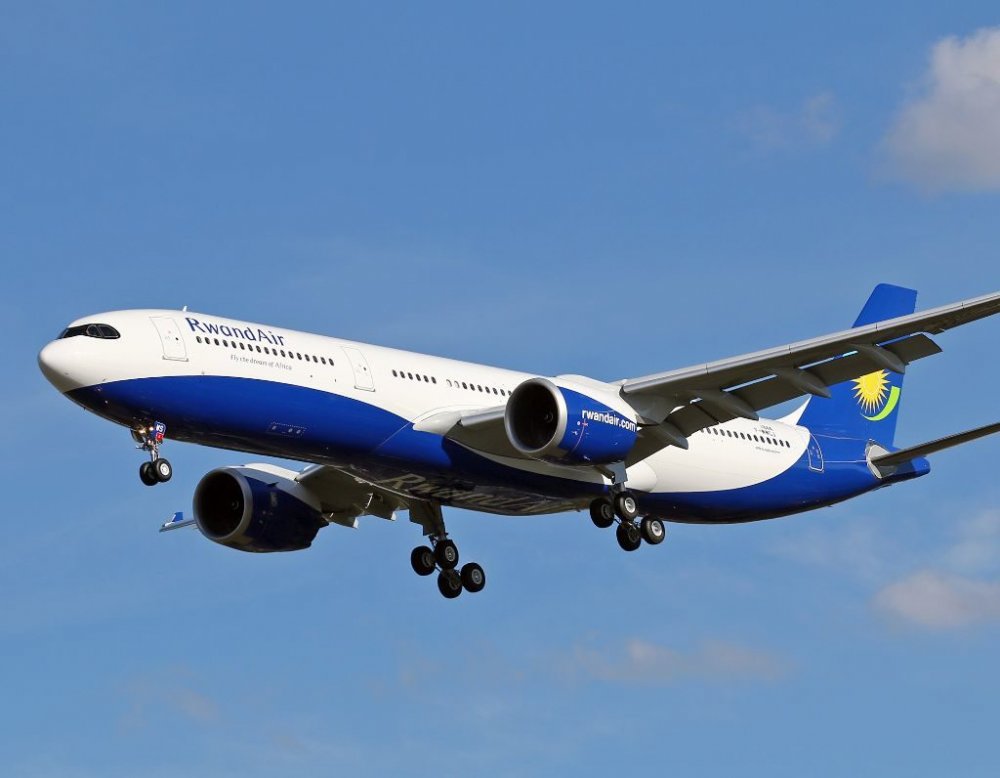
In an interview with FlightGlobal, Makolo said a special cargo plane is expected to be acquired soon.
Qatar Airways announced in February this year that it was in talks with RwandAir, to buy 49% of the shares in the company which continues to expand. It is expected that in this partnership, there will be a special cargo plane.
“Cargo transportation continues to be important for RwandAir, especially since we got the large plane, we are seeing a rise in profits from cargo transportation,” Makolo said.
As the COVID-19 pandemic halted flights around the world, RwandAir used its large airplane to transport cargo to various destinations including Brussels in Belgium, Guangzhou in China, and London in the UK, before the routes were reopened to passengers in general.
RwandAir currently has 12 planes including one Airbus A330 – 300, one Airbus A330 – 200, four Boeing 737-800NG, two Bombardier Q-400 NextGen, two Bombardier CRJ-900 NextGen, and two Boeing 737-700NG.
The International Air Transport Association (IATA) (IAEA) recently announced that freight traffic will be accelerating, and will continue in the remaining months of this year.
Of the new confirmed cases, 11 were detected among Kigali’s high-risk groups while five others were recorded in Nyamagabe District.
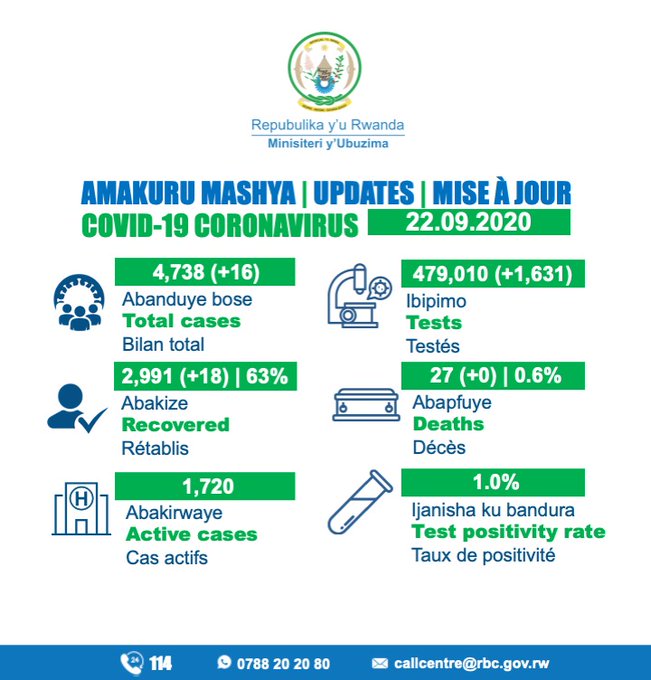
Since the outbreak of the pandemic in the country in mid-March, Rwanda has confirmed a total of 4,738 Covid-19 cases out of 479,010 tests taken, 2,991recoveries, 1,720 active cases, and 27 deaths.
Coronavirus symptoms include coughing, flu, and difficulty in breathing. The virus is said to be transmitted through the mucous membranes of the respiratory tract.
Rwandans are required to continue complying with government regulations, especially with frequent washing of hands and water and soap, wearing masks when leaving home or in public.
Rwanda’s score this year was down 0.2 compared to last year’s report, as it had 71.1 points.
It is the second year that Rwanda has proven to be at a high level in the second category of free countries, as it includes all countries with a score of between 79.9 and 70. The other category includes countries with a score of between 100 and 80.
This report shows that over the past five years, the economy has grown due to the development of the agricultural sector, as well as investment in the private sector.
Rwanda is commended for being one of the African countries that has performed well in facilitating trade and contributing to the fight against corruption, which is where the score of being a country with integrity comes from.
In 2016 Rwanda had a score of 63.1, the following year it was 67.6 while in 2019 it was 71.1. In sub-Saharan African countries, Mauritius is above Rwanda, ranking first with 74.9 points, having increased by 1.9 points compared to the previous year.
In third place is Botswana with 69.6 points, Seychelles with 64.3 points in fourth place, Cap Vert with 63.6 points while Tanzania is the closest country in the region as it is in sixth place with score 61.7.
The top three countries in the world are Singapore, Hong Kong, and New Zealand while the other major countries in the world such as the UK are in seventh place, Canada in the ninth and the United States, the 17th.
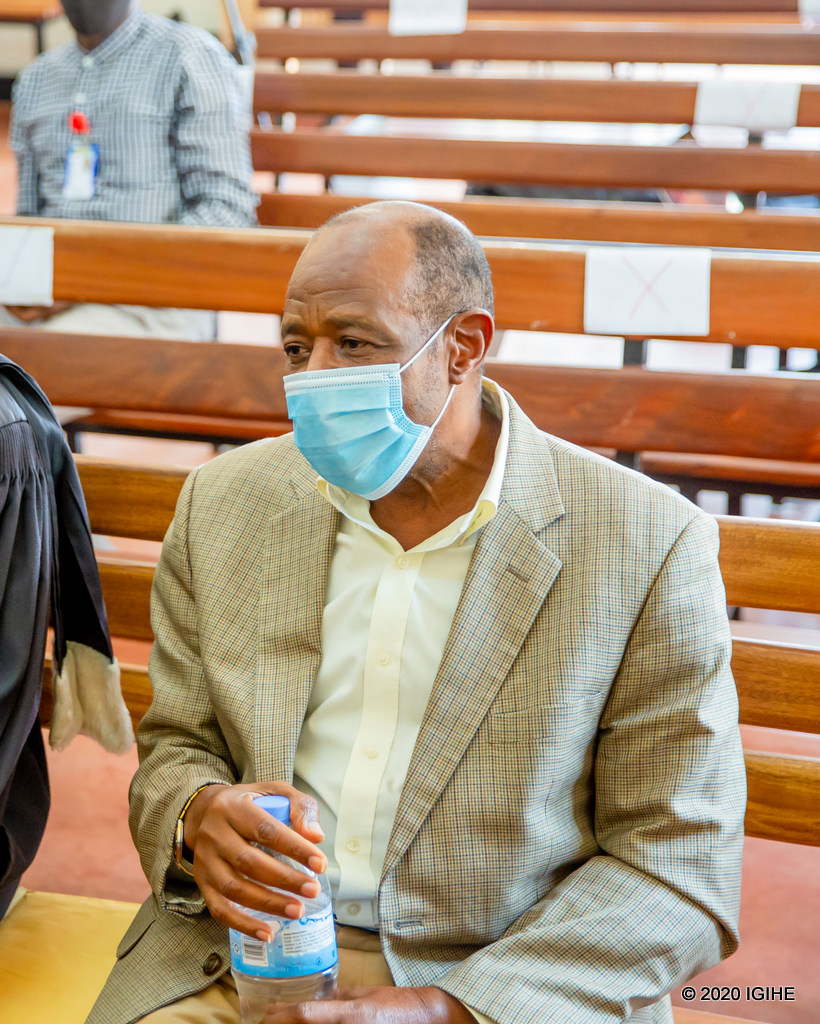
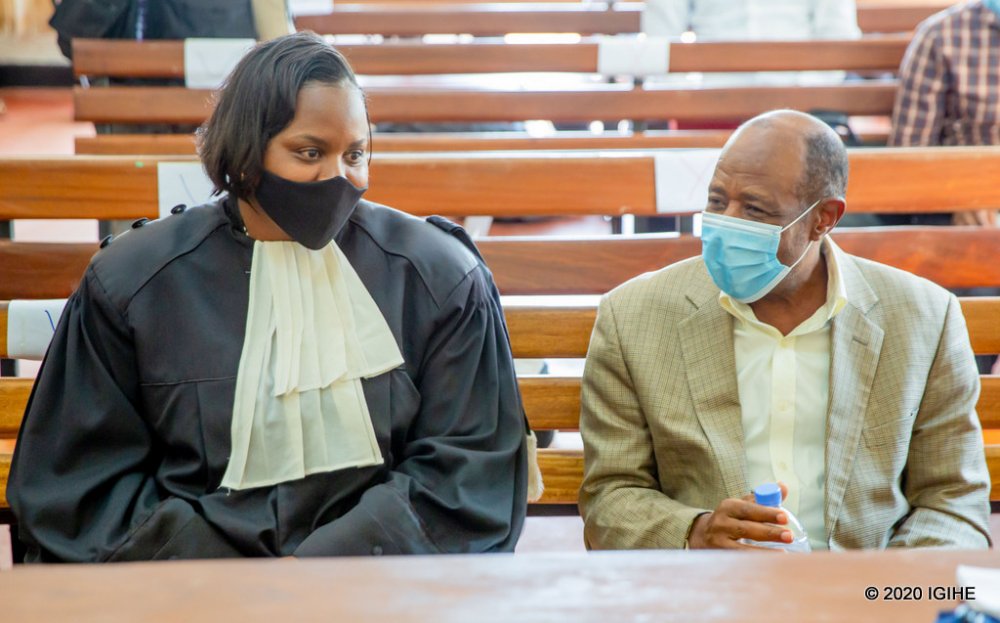
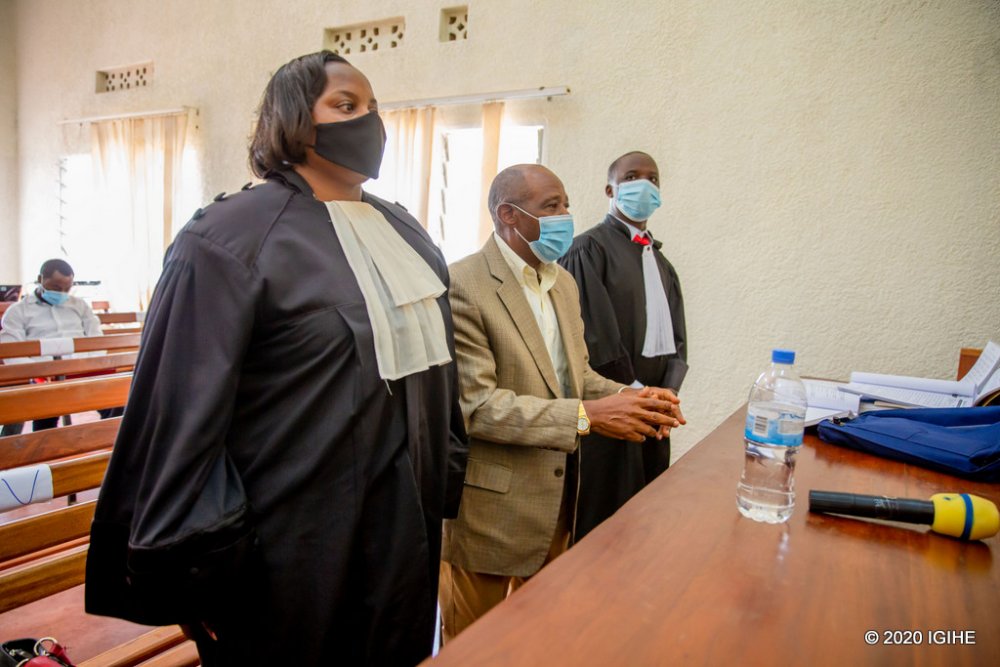
The 66 year old, arrived at the court premises in a RIB detainees van under tight security. Before attending the court proceedings, everybody was required to pass a COVID-19 test, and before passing the gate, there was someone checking the pandemic symptoms.
The Judge informed Rusesabagina that is suspected of 13 counts and asked him if he is pleading guilty but he refused to answer. Instead, he said that he has answered on every count during interrogation, before an investigator and a prosecutor.
However, he told the judges that he regrets the killings carried out by FLN belligerents in Nyaruguru, asking for forgiveness from the affected families and the nation.
The Proceedings
15:55: The judge says the hearing is completed and the Court is scheduled to pronounce on 17 September 2020 at 2:00 pm.
15:52: Rusesabagina was given an opportunity to speak and tells the court he has ailing health as proven by the three times he was taken to the hospital during the last two weeks, and assures the court that he will not escape once the provisional release is granted.
15:50: As for the bail, the Prosecution said that Mr. Rugaza did not know what he was asking for because during the interrogation he said that Rusesabagina is bailed out by a surety, and today he said that he would use a cash bond.
They said Mr. Rugaza should specify a cash bond bearing in mind the lives of the dead and the material damage. Prosecution prayed for his stay in custody.
15:30: Prosecution tells the court that Rusesabagina as a suspect, refusing to respond to each charge and saying he had no list of crimes while his lawyers had them, is evidence that he tried to avoid the interrogation.
The prosecution says the accused is mired into a lot of controversies, for though he said he regrets the FLN killings, his words are contrary as he is denying his role as the president of the MRCD, the mother organ of FLN.
The prosecution says it is not a question of whether he was sick or not, but the fact that he could stand before the court today for his trial means that he has been well treated since his arrival in Rwanda, treated, and taken to the doctor whenever he wanted.
The prosecutor says that while they were interrogating him, they had to suspend his interrogation so he could be taken to the hospital, therefore, being in custody cannot prevent Rusesabagina from accessing any medical attention he needs.
15:20: About the conversation between Rusesabagina and Twagiramungu, Mr. Rugaza said it should have been presented to the suspect so that he should answer on it. He insisted the defendant should be granted bail on account of his good conduct and that he had no prior convictions.
He said Rusesabagina was a good person, who had been given various awards as an honest person, therefore, the court should base on that to grant him bail.
15:00: The fact that the FLN has committed crimes, Rugaza said, should not be tied on Rusesabagina because the group was no longer affiliated with the MRDC, but that members of the group should be held accountable.
Rugaza said that in regards to the testimony of people injured in the FLN attacks and photos of the burnt vehicles, although Rusesabagina regrets, the court should consider whether any of their burns are related to the FLN activities.
15:00: Mr. Nyambo, one of Rusesabagina’s lawyers said his client should be released and tried as a free man because he was ill and, if necessary, he should be restricted to a certain area since his traveling documents were seized.
14:45: As for the audio and video that the prosecution claims to have, he said he wanted to check and see if it was him or not. In regard to other written documents demonstrating that he sent money to people in FLN, he said he had no knowledge of some of them.
“I have personally regretted and apologized to the families of those affected and to the country,” he said, referring to the criminal activities committed in Nyaruguru.
14:40: Talking about the money he allegedly sent to Sinayobye, Rusesabagina said that he sent him three thousand euros because he “called me crying” and then sent him the money as a parent; that the money was not sent to the FLN.
In regard to the money his wife sent to Comoros, he said, was “sent to Sankara by my wife” because Sankara’s mother and his wife were neighbors in the same area. His wife allegedly sent Sankara money to help her child.
On the money he sent to Noel Habiyaremye, he said the same thing to the FBI and all investigative agencies. He said that by the time movie Hotel Rwanda was released, many Rwandans, refugees, thought that he had become a millionaire; that everyone sought him out individually, at that time he had not entered politics.
14:25: When asked if he pleaded guilty, Rusesabagina said he had discussed the allegations during the investigation and had responded to each case.
He said he would like to voice his thoughts as soon as the trial begins in substance.
“The questions I answered were not many, one is that I helped FLN, I said yes I helped FLN, I gave 20 thousand euros,” he said. The fact that he gave them the money and the used it for their killings, he said that it was not the agreement he shared with the FLN.
14:24: The prosecutor said that if Rusesabagina was released, he would escape justice based on the gravity of the crimes he is suspected of; also, he was arrested after a long search, so if he was released it would not be easy to find him again.
In addition, he is well-aware that Belgium investigated him the same as the FBI in the United States, with regard to financing terrorist groups, so keeping him behind bars looks to be the only way to prevent him from tampering with the evidence and pressuring witnesses, or to meet other suspects in Belgium for treason.
14:15: The prosecutor said 82 children that made statements and their testimony showed that they had been abducted and taken to militia services in violation of Rwandan and international law.
He said there were medical records showing that nine people had been killed in the FLN terrorist attacks in Nyabimata and Cyitabi Sectors and all of them had died as a result of the attacks.
14:00: The prosecutor said there were various documents provided to Rwanda by the Belgian Police indicating the amount of money that had been sent by Rusesabagina, which was provided by the Western Union.
Some of the money sent to Madagascar and Comores to Nsabimana Callixte and others to FLN fighters in the DRC.
13:45: As the serious reasons for Rusesabagina to remain in custody, the prosecution recounted every one of his 13 charges.
• On the charge of the formation of an irregular armed group or joining it: The prosecutor relied on a statement from the FLN stating that it was a group formed by the MRCD, made by its former spokesman, Nsabimana Callixte.
He talked about Rusesebagina’s footage where he and Twagiramungu Faustin were discussing on the FLN establishment, and a two-page document found in Rusesabagina’s computer in a search conducted by the Belgian police at his home in 2019.
Another reason the prosecution relies on is the statements of FLN soldier Col Nizeyimana Marc describing how the FLN was set up, Sankara’s statement, and Paul Rusesabagina’s statement confirming that he went to the FLN but did not create it.
• On charges of financing terrorism, the prosecution said the reason for keep Rusesabagina in detention was based on an interview with Wilson Irategeka on May 19, 2019, in which Irategeka accuses Rusesabagina of trying to divide the army [called farmers] with money.
This was based on the fact that Rusesabagina had sent Gen Sinayobye Bernabe three thousand dollars. It is also alleged that Rusesabagina’s wife sent 1,000 euros to Comoros, at this time the money was sent to Nsabimana Callexte alias Sankara.
13:30: The prosecution was given the floor and they are praying to the court that the accused be remanded in custody on the ground of all the crimes he is suspected of. He said the alleged activities of Rusesabagina began in 2009 when as the leader of the PDR Ihumure party; Rusesbagina approached Lt Col Habiyaremye Noel, formerly known as Banga Banza Lambert.
He was a member of the FDLR terrorist group, urging them to join him together with his FDLR fighters. The prosecutor said that Habiyaremye later went to Burundi and Rusesabagina kept sending him money. The money was alleged to form a military unit against the Rwandan government.
Because of the good relations between Rwanda and Burundi at the time, Habiyaremye was arrested and sent to Rwanda, where he then spoke about his cooperation with Rusesabagina.
Rusesabagina later worked with Gen Wilson Irategeka who founded CNRD Ubwiyunge. They later formed the FLN and were joined the RRM party of Nsabimana Callixte alias Sankara.
They added another party to the coalition, Rwanda Rwiza led by Faustin Twagiramungu; in order to work together. They all shared a common plan to overthrow the government in Rwanda. The plan was to be achieved by using force, the reason why they founded the FLN. The MRCD was a four-party coalition, with the FLN as its military wing.
13:15: After examining all the objections raised, the court ruled that the arrest of Rusesabagina in the Nyarugunga Sector which is in the territory of Kicukiro Primary Court, ordering the trial to proceed immediately.
13:10: The court is set to announce its decision on the objections raised by Rusesabagina’s lawyers. Both parties have returned to the waiting pending a hearing.
The 13 crimes of which Rusesabagina is accused of:
• Formation of an irregular armed group or joining it
• Financing terrorism
• Terrorism for political purposes
• Committing and participating in terrorist acts
• Giving orders in a terrorist act
• Membership of a terrorist group
• Conspiracy and incitement to commit a terrorist act
• Complicity voluntary murder
• Complicity in taking a person hostage
• Complicity in armed robbery
• Complicity in arson
• Complicity in assault or battery;
• Complicity in children in warfare or other military activities
11:05: The judge said the court would examine in private, which they will resume at 1 p.m., announcing decisions taken in regards to the objections identified by the defense lawyers.
10:50: The prosecutor said Rusesabagina could not be separated from the FLN’s actions because he himself said he regretted it when he was questioned by the prosecution. They said that Rusesabagina did not donate as to a charity when he sponsored the FLN, adding that during his interrogation he said, “I financed the FLN with 20,000 euros”, and that the FLN was not a charitable organization.
10:45: Me. Rugaza said the $ 900 Rusesabagina donated was not the money someone can use to attack the country.
10:40: The prosecutor said Rusesabagina admitted that he had acted as a Rwandan and there is no surprise that even as a foreigner can be prosecuted by Rwandan courts.
The prosecutor said Rusesabagina had every right to his freedom of speech, but when one goes on the radio or television and points out that the FLN, affiliate to the MRCD of which he was the rightful President started attacks in Rwanda, that should be called freedom of speech.
In addition, the fact that Rusesabagina acknowledged that some of the money he donated to the FLN was used to assassinate Rwandans, should not be considered a freedom of speech while supporting people who want to kill Rwandans.
10:35: As for Me Rugaza’s claim that Rusesabagina is in court as a Belgian, the Prosecutor stated that in his interrogation he admitted that he had Belgian citizenship and that anyone who committed a crime in Rwandan territory should be prosecuted regardless of his nationality. That means Rwandan courts have the power to prosecute him.
10:30: The prosecutor insisted that arguing on the jurisdiction of the court is unfounded because the law on the jurisdiction of the courts, the primary courts were the ones that had jurisdiction over the trial of detention and provisional release.
He said Rusesabagina had been arrested in the territory of Kicukiro Primary Court, and that is where he should be tried.
Regarding the fact that Rusesabagina had a building in Nyarutarama, the Prosecutor said the fact that he had bought the plot and built it did not mean that he lived in it or that he was arrested there. “It does not mean that he was living there at the time of his arrest, nor was he there at the time of his arrest,” they said mentioning that during the interrogation, Rusesabagina said he lived in Belgium.
10:25: His lawyer went on to say that Rusesabagina’s charges were not right because some were attributed to other political parties not his own, saying that everyone should be held accountable for his actions.
10:15: Rugaza said Rusesabagina had never set foot on Rwandan soil so as to be suspected of involvement in the 2018 crimes. He added that from 1996 to 1999, Rusesabagina had no citizenship, and at the time the documents he was using were given to him by the United Nations. It was in 1999 that he was granted Belgian citizenship.
Me Rugaza said the prosecution cited a meeting he had held in the United States, said that as a Belgian citizen, his country looked at what he said and found it to be a freedom of expression, so nothing he should be accused as a Belgian.
He said the FBI also in the United States called him and saw that the meeting he addressed itself was based on freedom of expression. With reference to the Rwanda Penal code of 2012, Rusesabagina shouldn’t be accused of anything because what he did was exercising his freedom of expression.
10:09: One of Rusesabagina’s defense team, Mr. Rugaza David, began by saying that there were objections, referring to the jurisdiction of the Kicukiro Primary Court to try his client. He said that only the Primary court where the man lived had jurisdiction to try his cases of provisional detention and release.
He said that in 2004 when Paul Rusesabagina lastly came to Rwanda, bought a plot of land in Nyarutarama, so that should be considered as his residence. That means he should be sent to the Gasabo Primary Court and be tried there instead of in the Kicukiro Primary Court.
10:00: The court began by reading Rusesabagina’s profile, and when asked if the profile they read belonged to him, and he replied, “That’s right.” The judge read the crimes he is accused of and asked if he heard them, his response was “I heard.”
The judge said that Paul Rusesabagina is the son of Rupfure Thomas and Nyirampara Keiza, born on June 15, 1954, in Nyakabungo Cell, Nkomero Sector, Murama Commune, Gitarama Prefecture; it’s now in Ruhango District, Southern Province. He said he lives in Belgium in the Kraainem-Banlieu area of Brussels where he has Rwandan and Belgian citizenship. He is married to Mukangamije Tatiana and is a hotelier.
Rusesabagina was paraded in front of the media on August 31, 2020, RIB explained that he was arrested at Kigali International Airport and arrived in Kigali voluntarily, contrary to reports that say he had been abducted in Dubai. On the other hand, there are reports that Rusesabagina arrived in Dubai on August 27, 2020, at 7:10 p.m.
Unconfirmed reports say that he left Al Maktoum Airport in Dubai on a private jet of the Bombardier Challenger 605 of GainJet, late in the night and arrived in Kigali on Friday morning.
While reflecting on the security situation in the past week, Rwanda National Police (RNP) spokesperson, CP John Bosco Kabera explained that most of the road accidents registered during this pandemic period occurs in the evening hours, when motorists and people in general, are racing against time.
“Majority of the fatal accidents registered last week happened between 5pm and 9pm. Some of them were due to speeding to beat time because someone did not manage well their time. Others were involved because they were driving under the influence of alcohol or just rush driving,” CP Kabera said.
Recent data by the Traffic and Road Safety department, show that in 1,826 road accidents that happened from March to August this year, 744 of them happened during an hour to the prohibited movement time.
This means that 40.7percent of the accidents happened in one hour against 59.3percent that occurred in more than 10 hours.
This, according to CP Kabera, indicates that reckless driving is still high when people are under pressure to be where they need to be before prohibited movement time, which he discouraged and advised on “proper planning and time management.”
He urged the public to plan and respect time, and to avoid anything that could result into an accident.
“We remind everyone to look back and remember the messages we gave them during Gerayo Amahoro campaign.”
When you drink do not drive, do not use a phone when driving, riding or crossing the road; always be extra attentive when on road because any reckless and irresponsible action can lead to a fatal accident, so use the road in harmony with every other road user,” CP Kabera added.
On respecting COVID-19 prevention measures, he said that the vast majority comply.
“It is not understandable how after six months, some people still can’t properly wear a mask, some are still found in bars, which are supposed to be closed, and other cases of varied violations,” he wondered.
He warned bar owners against violations including those who relocate them into their respective homes, which equally exposes their own families to the pandemic.
He further advised the youth to “do better on compliance” noting that they dominate the numbers of violators.
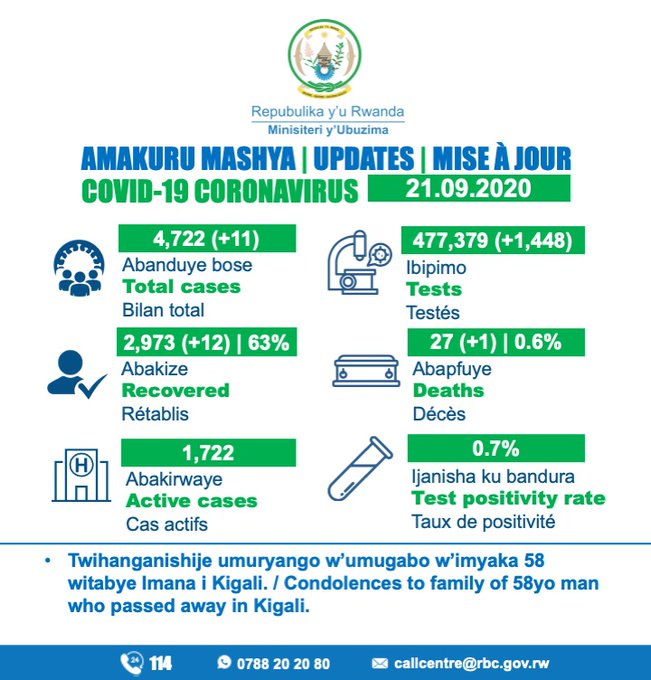
As of Sunday, September 20, Rwanda had 4,711 cases of Coronavirus, with 2,961 recoveries.
On the same day, the country recorded 12 new recoveries bringing the number of recoveries to 2973.
Of the new cases, 7 were detected in Kigali among contacts of previously confirmed cases, while Nyamagabe district in Southern Province also confirmed four new cases.
The latest results were obtained from 1,448 sample tests conducted in a single day, making the number of tests taken by the country to reach 477,379.
So far, in total, the country has 4,722 confirmed cases, of which 1,722 are still active cases.
Rwandans are required to continue complying with government regulations, especially with frequent washing of hands and water and soap, wearing masks when leaving home or in public.
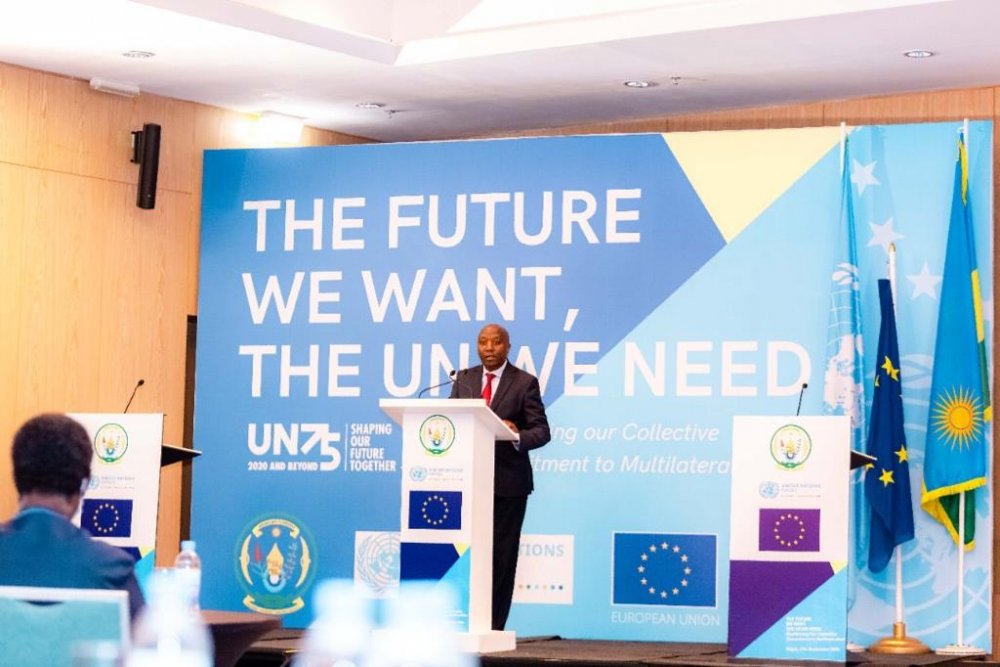
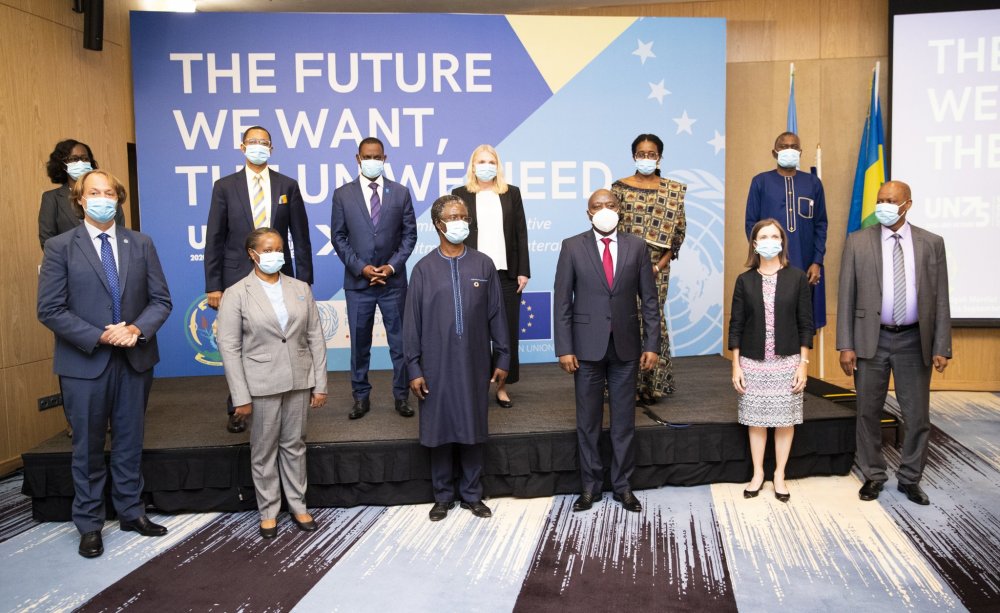
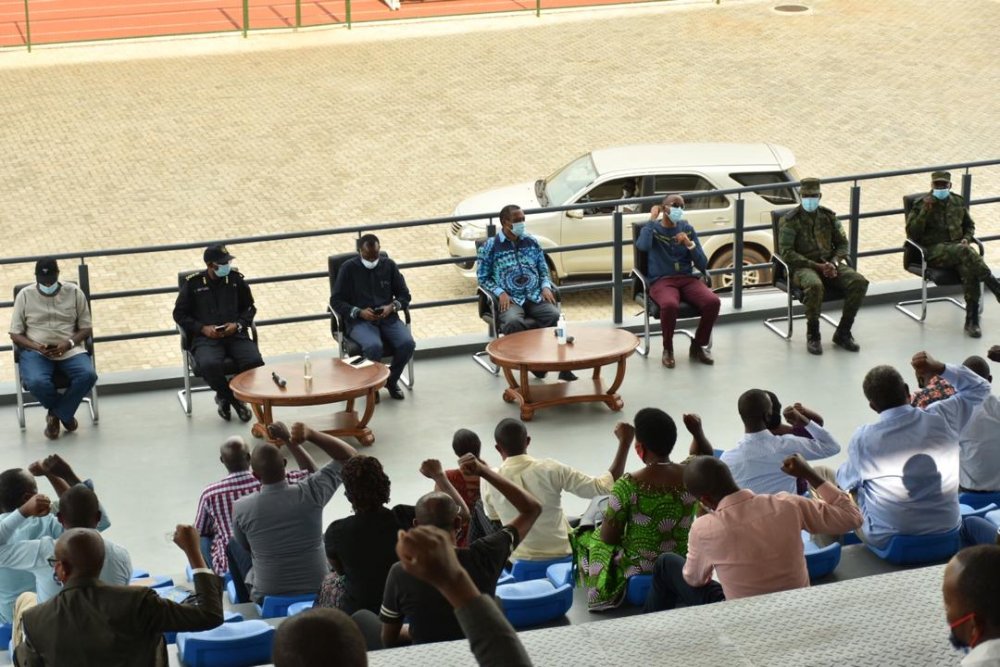
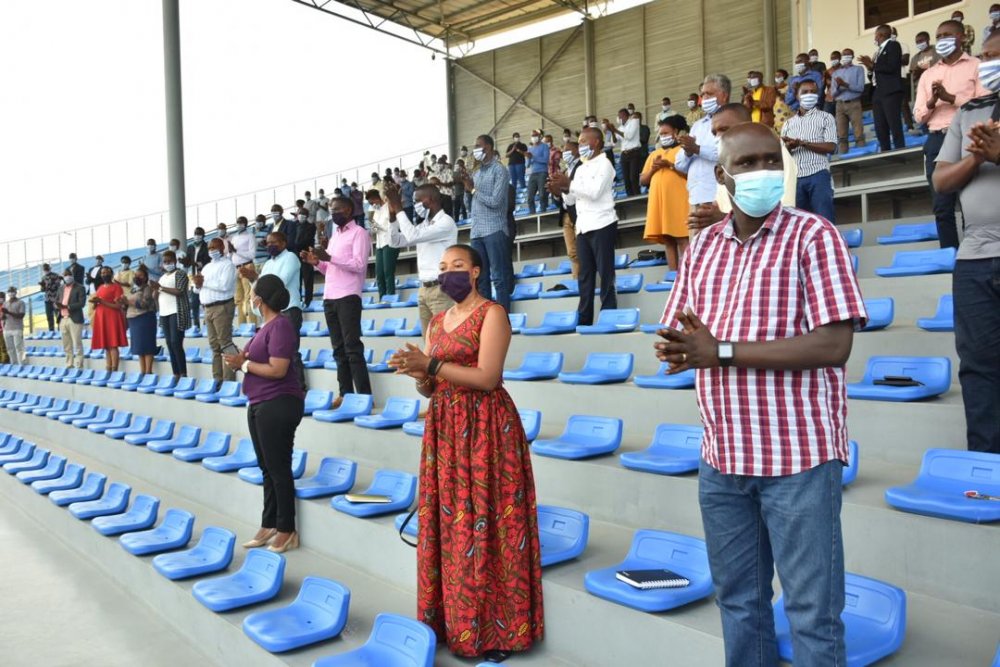
The Premier made the call at the celebration of the 75th anniversary of the United Nations held on September 21, Monday in Kigali.
The celebrations in Rwanda brought together representatives of UN agencies in Rwanda and top government officials, convening for a high-level meeting to reflect on the body’s mission of keeping global peace and security, 75 years after the Second World War.
The UN marked its 75th anniversary at a time of great disruption for the world, compounded by an unprecedented global health crisis with severe economic and social impacts.
Ngirente highlighted the urgent need for international cooperation to address present and future global crises.
“We are celebrating this anniversary during the challenging times of Covid-19. And one of the key lessons learned from the Covid-19 pandemic is the importance of international cooperation and solidarity to overcome any global crisis,” he said.
“The Covid-19 pandemic has shown that global risks are interconnected. Therefore, strong and committed institutions are crucial in solving these interlinked challenges.”
“Without international cooperation and global solidarity, we cannot confront the challenges of our time and those coming tomorrow. These common threats will require us to come together as nations in order to find sustainable and inclusive solutions.”
The ceremony in Kigali was co-organized by One UN Rwanda and the European Union. It was segmented by moments of silence to commemorate lives lost during UN peacekeeping operations.
UN Resident Coordinator for Rwanda, Fode Ndiaye reiterated that global cooperation will be key to overcoming multifaceted damages caused by Covid-19.
“This health crisis has created major distraction, distrust, rising vulnerabilities, inequalities, racism, populism and nationalism. But it also has shown the importance of international cooperation. No one will be safe unless all are safe,” Ndiaye said.
The year 2020 theme is “The Future we want, the UN We need; reaffirming our collective commitment to multilateralism”.
Ndiaye suggested that responding to the pandemic collectively reflects the organization’s commitment to promote multilateralism as reaffirmed by a global survey framing the UN towards its centenary in 2045.
To meet priorities voiced by one million responders including access to basic services such as healthcare, sanitation and education, great international solidarity will be key, according to the survey.
“Over 87 percent believe global cooperation is vital to deal with today’s challenges and the pandemic has made international cooperation more urgent forever,” Ndiaye said.
On peace, he stated the UN has prevented the world from a third world war by negotiating 172 peace settlements and making the world nuclear free.
Speaking on the shortfalls, Ndiaye conceded UN’s failure to prevent the 1994 Genocide against the Tutsi.
“In Rwanda, it is a fact that the UN and the international community failed the country in 1994 to prevent the genocide against the Tutsi,” he stated, adding, however, that the body acted rapidly to provide humanitarian and development support to rebuild the country.
Nonetheless, the UN’s Global Peace Index for 2020 indicated that the world was more peaceful a decade ago than now.
The UN 75th anniversary ceremony also saw an official launch of the Integrated National Financing Framework (INFF) aimed at supporting particularly the National Strategy for Transformation (NST1).
Prime Minister Ngirente said the initiative “will strengthen our capacities to mobilise resources required for the implementation of our national priorities and the 2030 Agenda.”
By this launch, Rwanda becomes one of the first 17 nations worldwide to be part of a new initiative for countries to identify areas for strengthening their management of financing for the SDGs with Integrated Financing Solutions.
The United Nations is celebrating its 75th anniversary; it started operation on October 24, 1945, replacing the UN General Assembly, which failed to prevent World War II. The organization was made up of 51 countries but currently has 193 countries members, including 54 countries from the African continent. The main mission of the organization is to preserve the peace and security of the world.
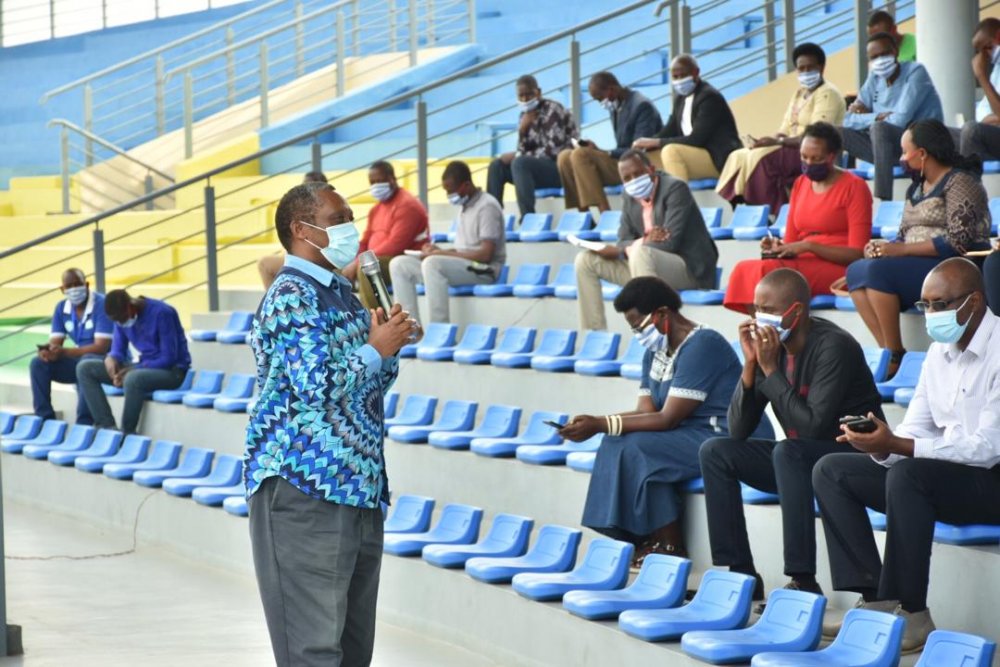
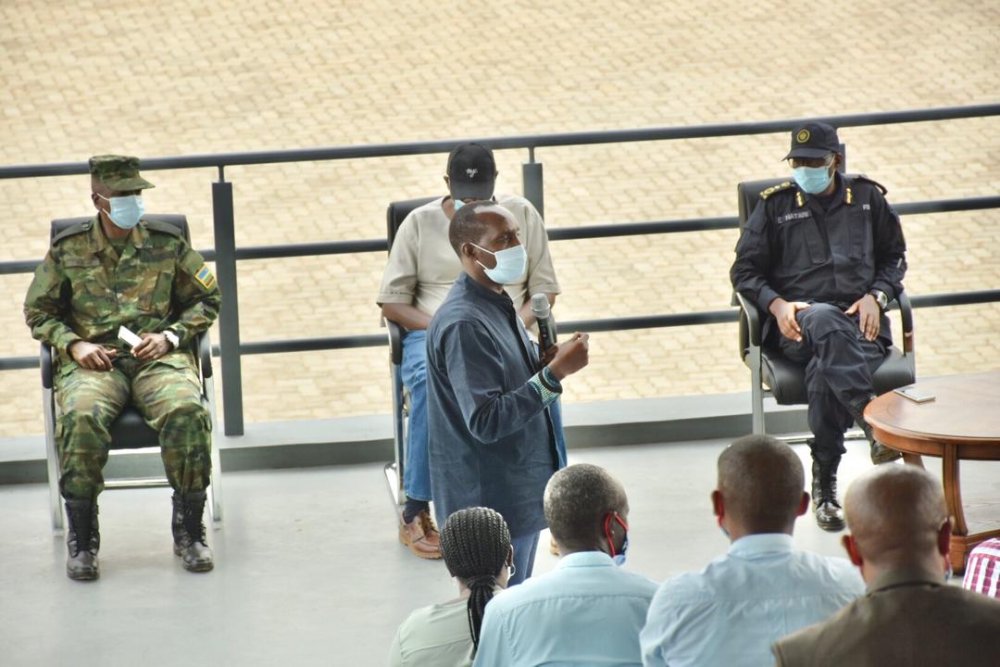
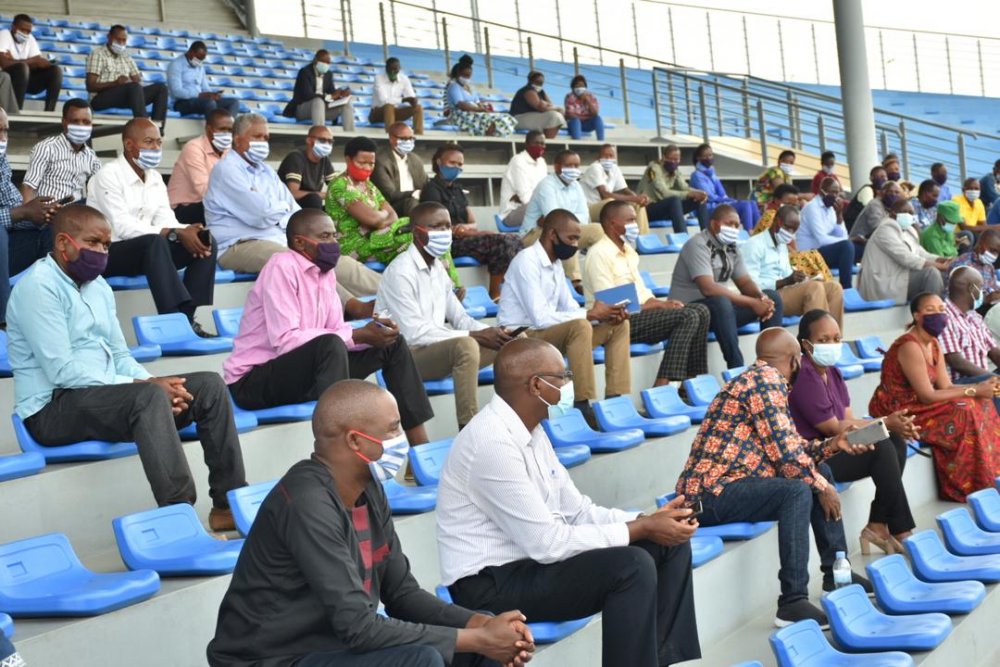
The Minister made the remarks on Saturday, September 19, 2020 during a visit to Bugesera District, where he spoke to representatives of local authorities, the private sector and opinion leaders in the area.
Shyaka told local authorities that their reputation as “Abakeramurimo ba Bugesera” should strengthen their commitment towards strategizing for inclusive development without leaving anyone in all people-life-changing programs.
“If you don’t want to be called ‘work delayers’ you should take care of these issues that are still prevalent in the community and solve them in a short time. Your district is rich compared to others; you should, therefore, act and behave like those who understand they are lucky among many others,” he advised.
So far 77.7% of the population of Bugesera District has already paid their health insurance contributions, and only 18.6% of the population has already contributed Rwf 44.7 million on their Savings while the entire district has a target of Rwf240 million this year.
On the other hand, there are still emerging issues including families with no houses, lack of toilets, malnutrition in children and poor hygiene.
Some of the leaders immediately vowed before the Minister that in two weeks’ time, they will have addressed the major challenges in the district including mobilization of the population to subscribe for mutual health insurance and child malnutrition.
The Bugesera Private Sector also committed to making a significant contribution to addressing social and development challenges.
Bugesera has a population of 479,624 living on an area of 1,337 km2; the majority are farmers, while others are involved in different activities including fishing in the lakes of Cyohoha, Gashanga, Kidogo, Rumira, Mirayi, Kirimbi and Gaharwa.