The tour will follow a one-day visit to Monaco on March 28 and a trip to Spain from June 6 to 12. During his African tour, Pope Leo is expected to draw large crowds, encourage world leaders to support development initiatives, and promote Catholic-Muslim dialogue, particularly in countries with diverse religious communities.
Africa is home to about 20% of the world’s Catholics, making it one of the fastest-growing regions for the Church. The continent has seen significant increases in Catholic communities in recent decades, particularly in Central and Sub-Saharan Africa, where the Church continues to expand.
“Pope Leo’s visit will remind the world that Africa matters and the vibrancy of the Church in Africa remains at the heart of a thriving global Church,” said Reverend Agbonkhianmeghe Orobator, a Nigerian Jesuit.
The trip is historically significant, as it will be the first time a pope has visited Algeria, a predominantly Muslim nation. Pope Leo, a member of the Augustinian order, has expressed a special interest in the country, which is the birthplace of St. Augustine of Hippo, a key figure in early Christianity.
In Cameroon, the Pope will visit Yaoundé, Douala, and Bamenda, including regions affected by long-standing conflict. Angola’s stops will include Luanda, Muxima, and Saurimo, while Equatorial Guinea will see visits to Malabo, Mongomo, and Bata, the continent’s only Spanish-speaking nation.
Although this will be Pope Leo’s first official visit to Africa as pope, he is no stranger to the continent, having traveled to countries like Kenya and Tanzania as Cardinal Robert Prevost.
Pope Leo’s African tour follows his first foreign visit to Turkey and Lebanon late last year and sets the stage for other planned trips, including a likely visit to Peru later in 2026.
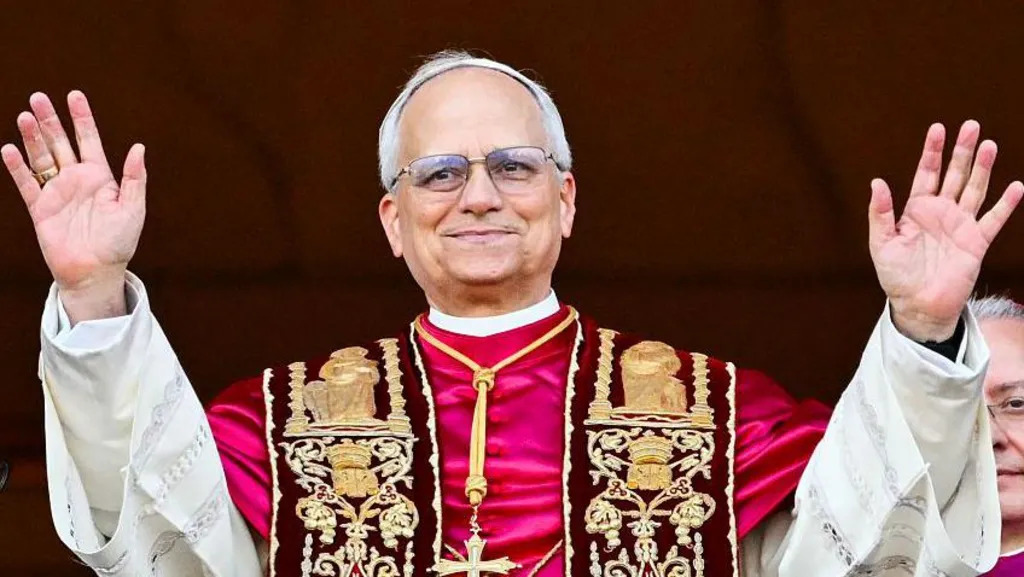
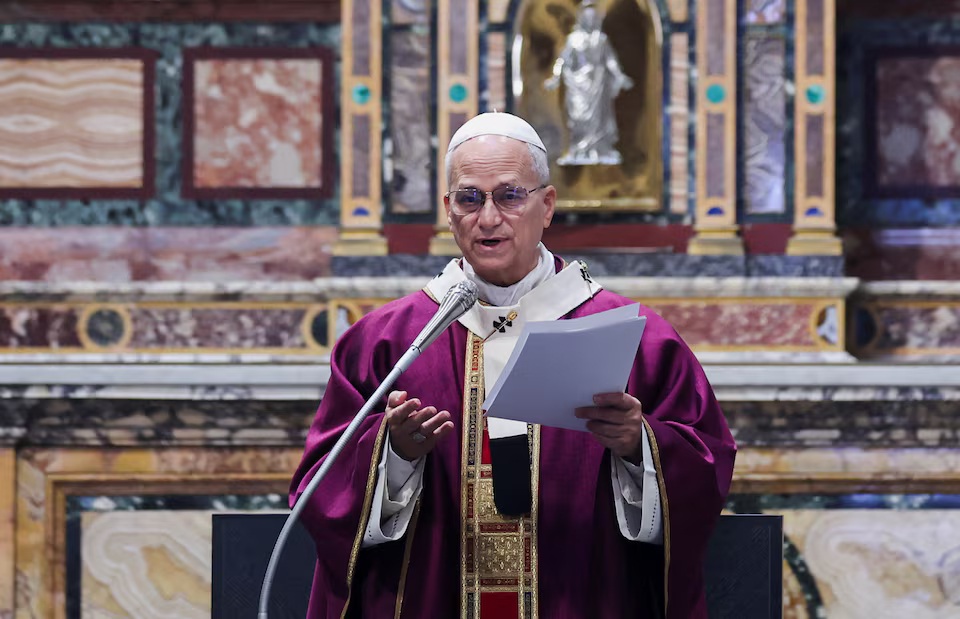
Pope Leo XIV will make his first official visit to Africa from April 13 to 23, travelling to Algeria, Angola, Equatorial Guinea, and Cameroon.
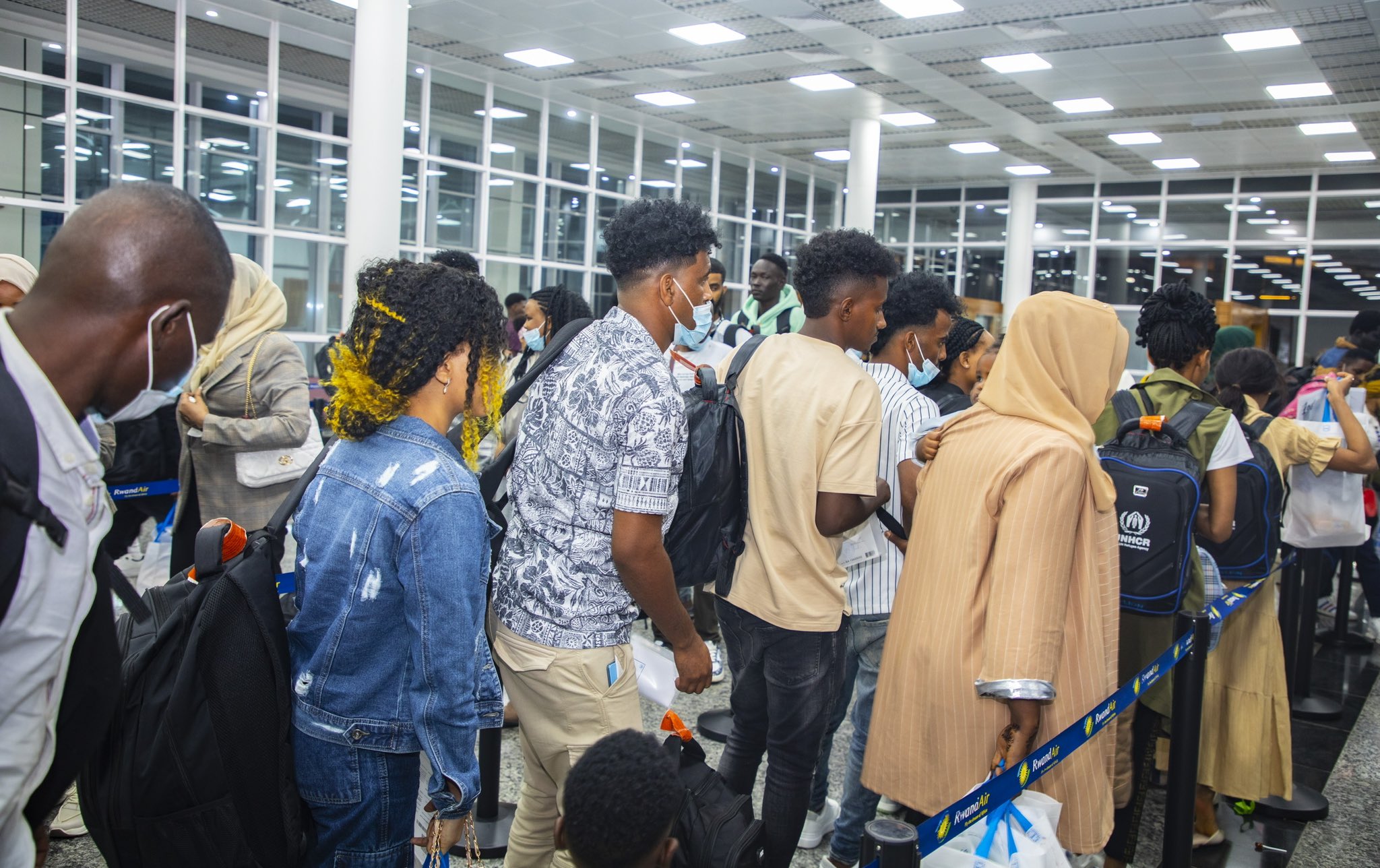
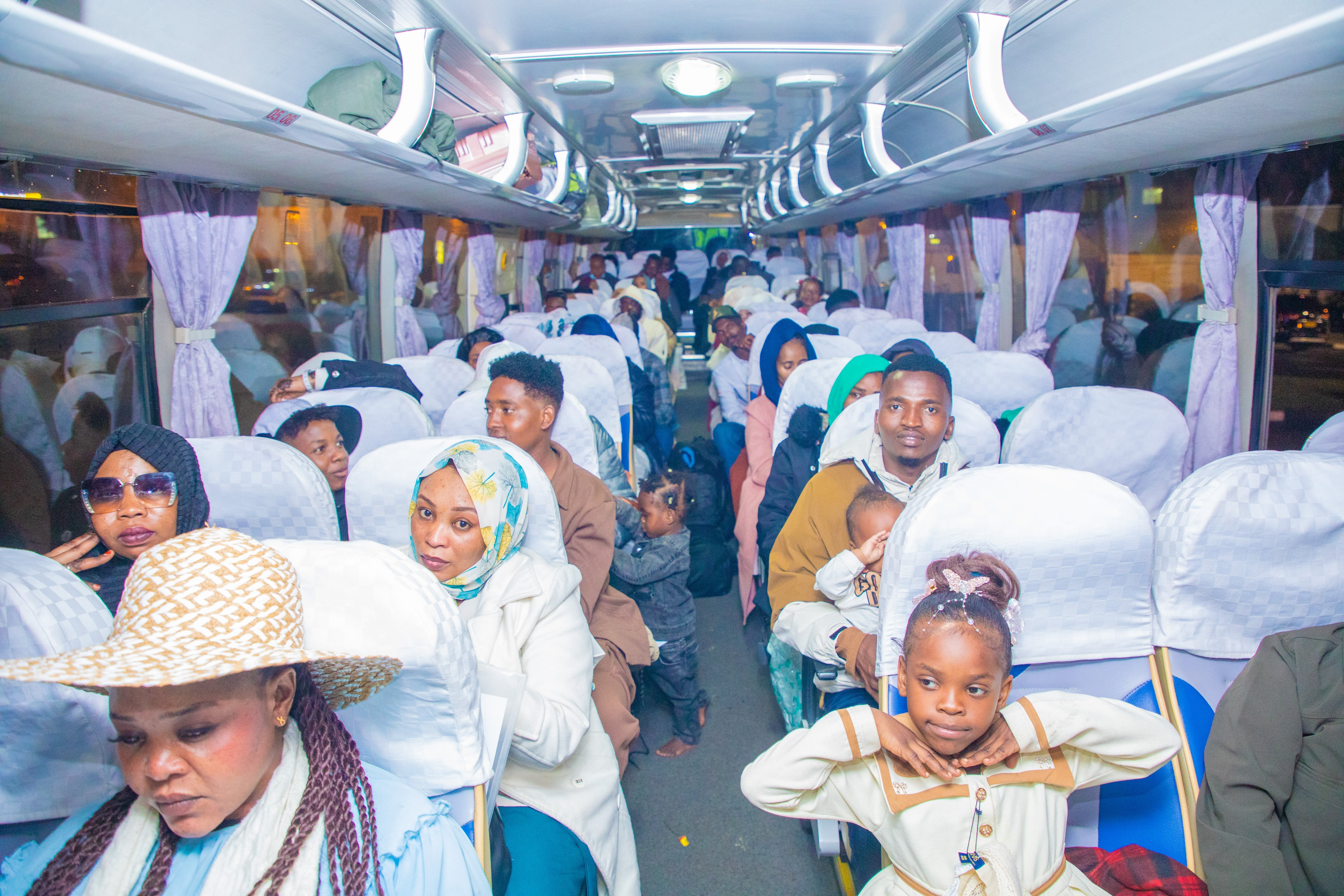
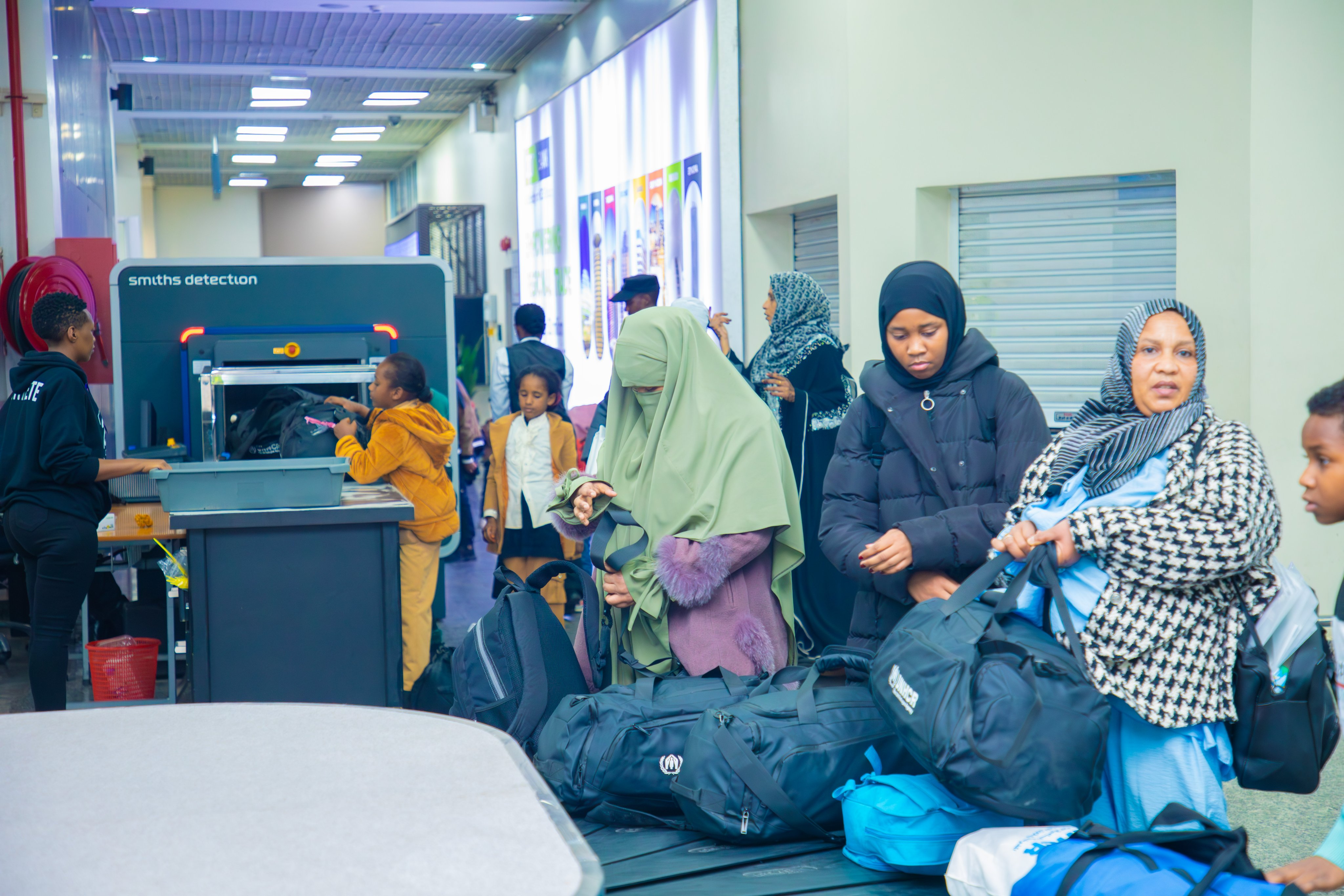
The group arrived on Wednesday night through a joint effort between the United Nations High Commissioner for Refugees (UNHCR) and the Government of Rwanda. Of the 164 evacuees, 143 originate from Sudan, 19 from Eritrea, while one person each comes from Ethiopia and South Sudan.
The ETM, a joint initiative involving UNHCR and the African Union, was established to provide lifesaving protection and assistance to vulnerable refugees and asylum seekers trapped in Libya. The mechanism temporarily relocates them to Rwanda while durable solutions, including resettlement to third countries, are pursued.
Since the launch of the ETM in 2019, a total of 2,760 people have been evacuated to Rwanda and hosted at Gashora Transit Centre. Of these, more than 2,500 have since been resettled in third countries.
In August 2024, the Government of Rwanda, UNHCR, and the African Union Commission agreed to extend the ETM programme. In a joint statement issued on August 22, 2024, the three parties reaffirmed their commitment to continue protecting evacuees and securing lasting solutions, while Rwanda provides temporary safe haven.
“The Government of Rwanda reaffirms its unwavering commitment to receive and protect these individuals, as well as others identified as particularly vulnerable and at risk,” the statement noted.
The parties also adopted a second addendum to the original Memorandum of Understanding signed on September 10, 2019. The updated framework emphasises a more transparent selection process for evacuees, ensuring equal opportunity for all potential candidates, regardless of nationality, ethnicity, race, gender, age, or any other factor unrelated to vulnerability.
The group arrived on Wednesday night through a joint effort between the United Nations High Commissioner for Refugees (UNHCR) and the Government of Rwanda.The ETM, a joint initiative involving UNHCR and the African Union, was established to provide lifesaving protection and assistance to vulnerable refugees and asylum seekers trapped in Libya. Since the launch of the ETM in 2019, a total of 2,760 people have been evacuated to Rwanda and hosted at Gashora Transit Centre.
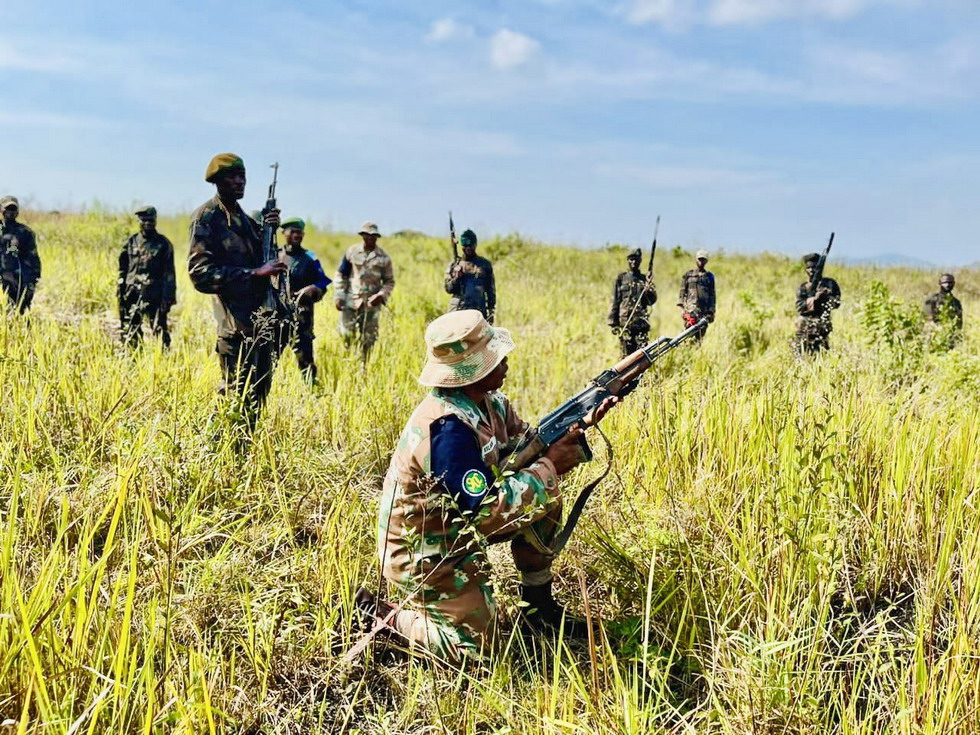
The AFC/M23 movement has strongly criticised the international community for remaining silent as the government of the Democratic Republic of Congo (DRC) launched a large-scale offensive, causing civilian casualties and mass displacement.
According to Lawrence Kanyuka, spokesperson for AFC/M23, the attacks on Wednesday, February 25, 2026, marked a “new threshold of violence” by the Kinshasa regime.
The DRC military reportedly used armed drones and heavy artillery to strike densely populated areas as well as M23 positions, in what Kanyuka described as blatant violations of international humanitarian law.
The strikes were recorded throughout the morning and early afternoon, beginning at 9:00 AM in Rutigita, Minembwe, continuing at 10:30 AM in Kitazungura, Kalehe territory, and culminating at 12:00 PM in Rugezi and surrounding areas of Minembwe.
“These deadly aggressions are causing human casualties, mass displacement of civilian populations, and fueling an extreme humanitarian crisis,” Kanyuka said, highlighting the severity of the situation for local communities.
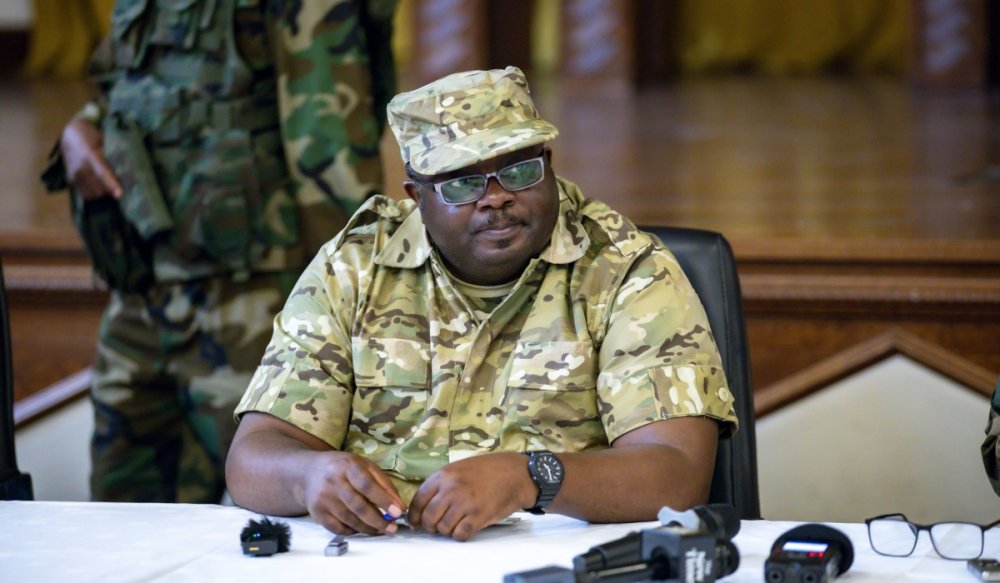
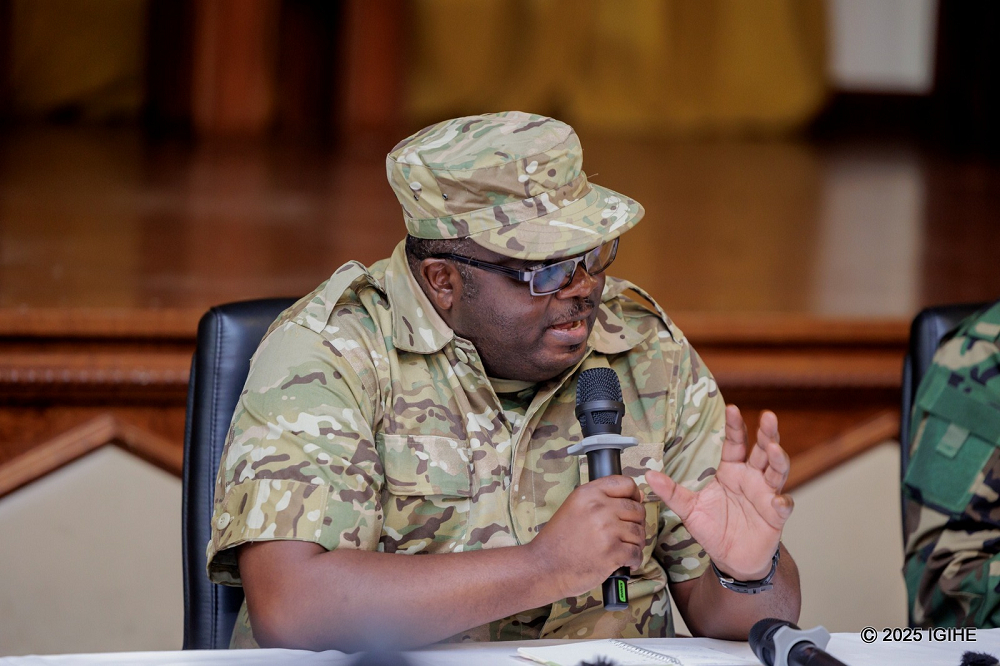
Bertrand Bisimwa, deputy coordinator of AFC/M23, emphasised that the offensive reflects a deliberate choice by the DRC government to pursue military escalation, violating ceasefire agreements. He also criticised the international community for failing to act:
“We cannot help but express our deep concern over the absence, at this stage, of any clear and visible initiative aimed at bringing an immediate halt to this government offensive. There has been no public reprimand, no condemnation… no discernible action seems to have been taken to prevent the risk of escalation,” Bisimwa stated.
He added, “This silence contrasts with the swift reactions observed when our movement is forced to exercise its legitimate right to self-defence in the face of direct attacks.”
The offensive marks a continuation of rising tensions in the region despite peace efforts by mediators such as Qatar and existing ceasefire commitments.
Bertrand Bisimwa, deputy coordinator of AFC/M23, emphasised that the offensive reflects a deliberate choice by the DRC government to pursue military escalation, violating ceasefire agreements.
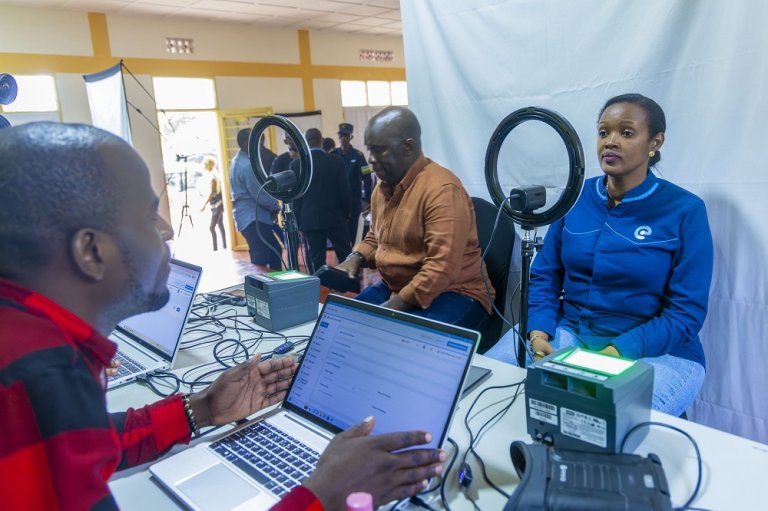
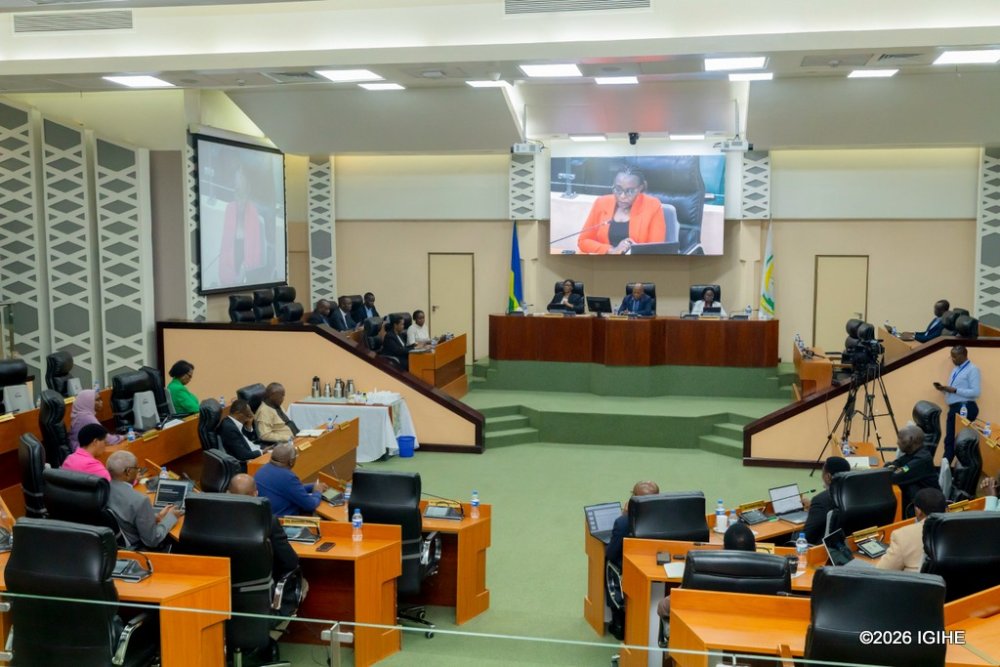
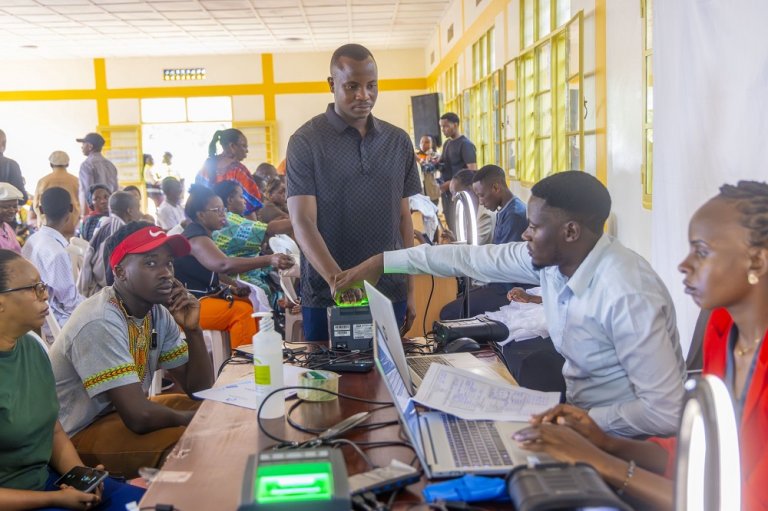
Speaking before the Senate on February 24, 2026, Minister Paula Ingabire stated that 1,828,763 individuals have so far had their data captured. The exercise has been conducted in nine districts, including the initial pilot districts of Huye, Nyanza, and Gisagara, as well as Kamonyi, Muhanga, Ruhango, Nyarugenge, Gasabo, and Kicukiro.
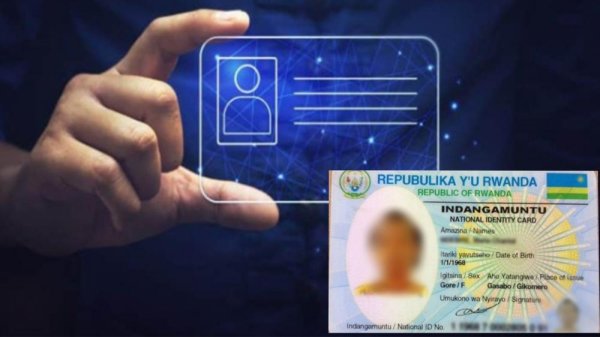
The digital ID, known as the e-ID or Single Digital ID, will be a permanent identification assigned to every Rwandan from birth and linked to key public and private services. The $50 million initiative aims to cover at least 15 million residents, including citizens, refugees, and migrants.
According to the Minister, nationwide biometric capture is expected to be completed by the end of this year, with the official issuance of the digital IDs set to begin in August 2026.
The e-ID will support access to vital services such as healthcare, education, banking, taxation, social protection, voting, and business registration. It will also simplify account opening and reduce the cost of linking bank and mobile money services.
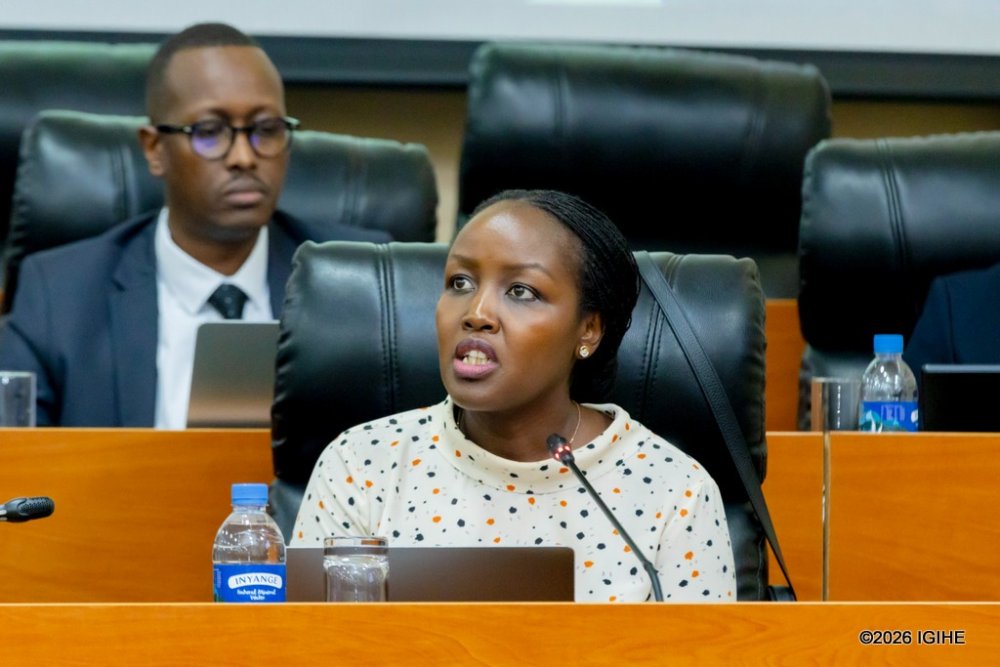
Minister Ingabire emphasised that the system is not designed for surveillance and that data will be protected under Rwanda’s data protection law, which strictly requires any breach to be reported within 72 hours.
To ensure accessibility for all residents, including those without smartphones, the ID will be issued in three modalities: a physical card with a QR code, a digital ID number, and a secure token for online transactions.
Senators welcomed the initiative during the session, noting that it is expected to streamline service delivery and significantly improve efficiency across government institutions.
More than 1.8 million people have completed biometric enrollment under the country’s national digital ID project.Senators welcomed the initiative during the session, noting that it is expected to streamline service delivery.Minister Ingabire emphasised that the system is not designed for surveillance and that data will be protected under Rwanda’s data protection lawThe digital ID, known as the e-ID or Single Digital ID, will be a permanent identification assigned to every Rwandan from birth and linked to key public and private services.
In a statement released on Tuesday, MONUSCO said the assessment mission, running from February 23 to 27, follows consultations with Democratic Republic of the Congo President Félix Tshisekedi, who also serves as chairperson of the ICGLR.
The statement noted that the deployment is a preparatory step toward operationalising the agreed ceasefire architecture. The team is evaluating access, security, logistics, and engagement requirements to ensure that future monitoring and verification efforts are credible, safe, and operationally feasible.
The initiative comes amid sustained diplomatic efforts to stabilise eastern DRC. In October 2025, the DRC government and the AFC/M23 rebel alliance signed the Doha Framework for Comprehensive Peace Agreement in Doha, establishing a joint monitoring and verification mechanism to investigate and prevent ceasefire violations. Observers from the United States, the African Union and Qatar are also part of that mechanism.
MONUSCO recalled that under UN Security Council Resolution 2808 (2025), the mission is authorised to support the implementation of a permanent ceasefire. This includes backing the Ceasefire Oversight and Verification Mechanism as well as the Expanded Joint Verification Mechanism Plus (EJVM+), created following the Doha agreement.
During their stay in and around Uvira, the joint team will assess political, security, logistical and socio-environmental conditions to inform comprehensive planning for a future deployment.
“Effective ceasefire monitoring is intended to reduce violence and create the necessary space for a durable political solution,” said Vivian van de Perre, Special Representative of the UN Secretary-General in the DRC and Head of MONUSCO ad interim.
She noted that, unlike in North Kivu and Ituri, MONUSCO’s mandate in South Kivu is limited to ceasefire monitoring and does not include Protection of Civilians responsibilities under Resolution 2808 (2025).
The mission emphasised that the current deployment is exploratory in nature. The scale and configuration of any subsequent ceasefire monitoring presence will depend on agreed parameters, security guarantees and operational requirements.
ICGLR Executive Secretary Dr. Mbita Luwabeha said regional cooperation remains key to lasting stability. “The Great Lakes region has vast potential for peace and prosperity. By uniting and cooperating, we can tackle challenges and create a brighter future for everyone,” he said.
Repeated ceasefire violations and ongoing hostilities have hampered efforts to stabilise the region, and it remains to be seen if the latest attempt to implement a lasting truce will succeed.
During their stay in and around Uvira, the joint team will assess political, security, logistical and socio-environmental conditions to inform comprehensive planning for a future deployment. The assessment mission runs from February 23 to 27.The team is evaluating access, security, logistics, and engagement requirements to ensure that future monitoring and verification efforts are credible, safe, and operationally feasible.
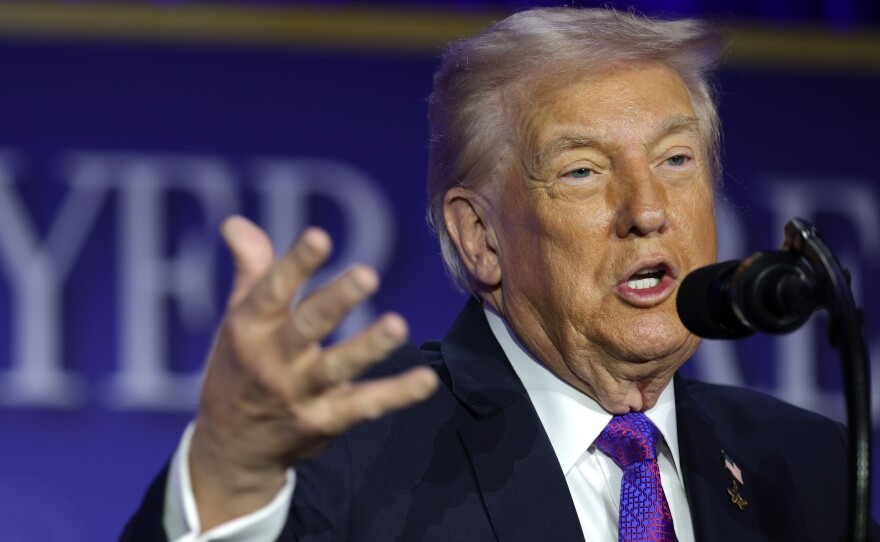
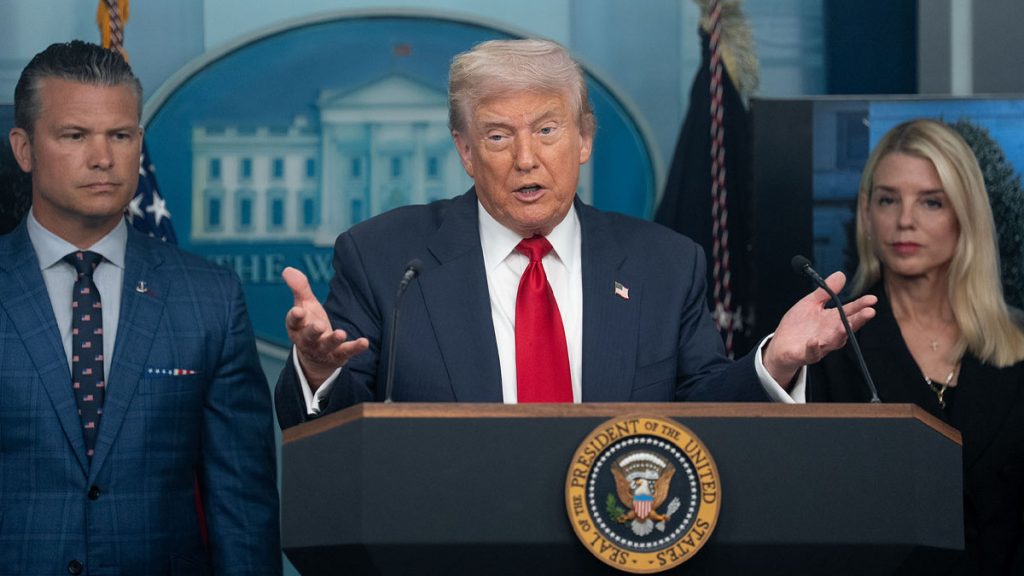
With the midterm elections approaching later this year, Trump is using this high‑profile speech as an opportunity to defend his record and rally support from Americans who remain sceptical about the direction of the country.
Domestically, Trump’s approval ratings have slipped as inflation and cost‑of‑living concerns continue to trouble many households. Recent data shows the U.S. economy has slowed more than expected, and the public is worried about job security and everyday expenses, forcing the president to try to reassure voters that his policies are working.
At the same time, a Supreme Court decision invalidating his global tariff program has undercut one of his signature economic strategies, and the impasse over immigration enforcement has led to parts of the Department of Homeland Security being temporarily shut down.
Internationally, the Trump administration is confronting rising tensions, particularly with Iran, where U.S. military assets have been repositioned amid ongoing nuclear disputes and regional instability. These foreign affairs challenges add to the pressure on Trump to present a confident and persuasive vision of U.S. leadership to both domestic and global audiences.
White House aides and Republican strategists see the State of the Union as a critical moment to shift the narrative, encouraging Trump to focus on economic gains such as stock market performance and tax cuts, even as polls show mixed public confidence in those outcomes. Trump is also expected to highlight his administration’s border policies, including deportation and enforcement efforts, despite controversy around these issues.
The address is expected to be lengthy and somewhat unscripted, a style Trump has used before giving him room to cover a wide range of topics and reinforce his message to voters ahead of the November elections. However, his administration’s troubles from economic discontent to geopolitical uncertainty will likely shape how the speech is received and influence the broader political climate in the months to come.
Trump prepares to address the nation at a critical moment, with economic challenges and political tensions shaping his upcoming State of the Union speech.
Officers arrested the 72-year-old Mandelson at an address in Camden on Monday, and he has been taken to a London police station for interview, a Metropolitan Police spokesperson said.
“This follows search warrants at two addresses in the Wiltshire and Camden areas,” the spokesperson said via a statement published online, adding that they were not able to provide further information to “prevent prejudicing the integrity of the investigation.”
In late January, the U.S. Justice Department made public a large cache of files related to the dead American financier and convicted sex offender Jeffrey Epstein, prompting renewed scrutiny in Britain. British police confirmed later that they had opened a criminal investigation into Mandelson over alleged misconduct while in public office, including the possible disclosure of market-sensitive information.
Mandelson previously served as a senior cabinet minister under former prime ministers Tony Blair and Gordon Brown. He was appointed ambassador to Washington in early 2025 but was dismissed by British Prime Minister Keir Starmer after seven months as questions over his past resurfaced.
Earlier this month, Starmer apologized for his decision to appoint Mandelson as British ambassador to the United States.
Speaking at an event in the town of Hastings in southeast England, Starmer said he had underestimated the seriousness of Mandelson’s past association with Epstein. He offered an apology to victims connected to the Epstein case and said he understood the anger voiced across parliament.
Due to the Mandelson-Epstein scandal, Starmer’s former chief of staff Morgan McSweeney, communications director Tim Allan, and Cabinet Secretary and Head of the Civil Service Chris Wormald have all stepped down from their posts.
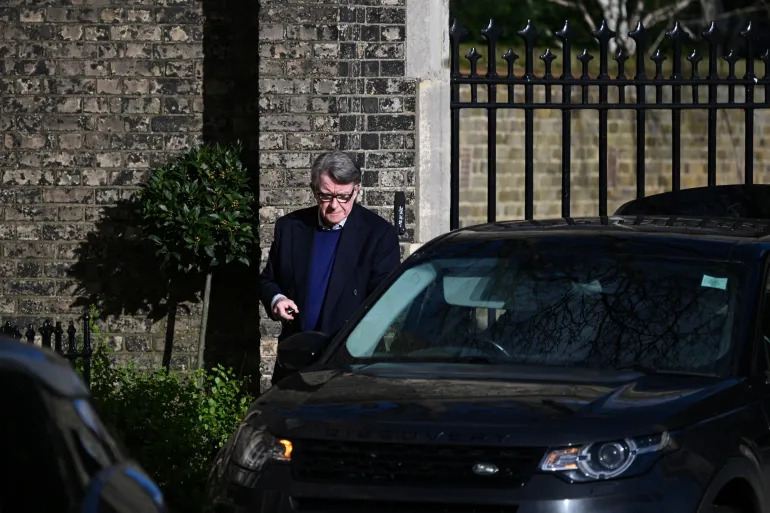
Former British Ambassador to the US Peter Mandelson is seen in London on February 14.
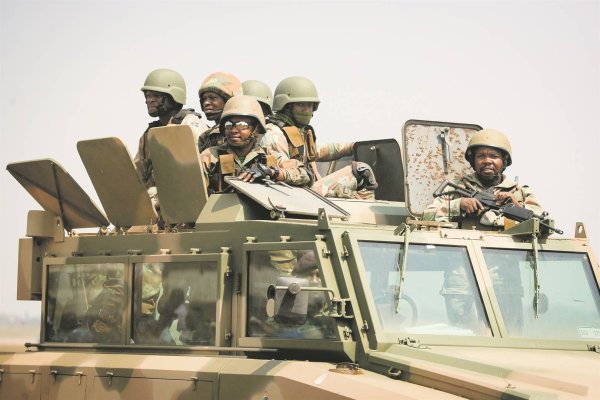
The request follows South Africa’s recent decision to withdraw its troops from eastern DRC, where they had been deployed under a Southern African regional mission against the AFC/M23 rebel alliance. Pretoria has also announced the withdrawal of its contingent serving under the United Nations peacekeeping mission, MONUSCO.
South Africa’s Presidency said the decision to pull its troops out of MONUSCO was driven by the “need to consolidate and realign the resources of the South African National Defence Force”, following 27 years of supporting UN peacekeeping efforts in the DRC.
DRC Minister of Defence Guy Kabombo Muadiamvita visited Pretoria on February 21, 2026, where he held talks with his South African counterpart, Angie Motshekga. The discussions focused on strengthening bilateral military cooperation.
In a statement, the DRC Ministry of Defence said the two officials met in a closed-door session to review various aspects of military and strategic cooperation between the two countries. Revisiting the 2004 military agreement between Kinshasa and Pretoria was among the key items on the agenda.
Both sides agreed to establish a joint team of experts to examine potential areas of renewed cooperation, drawing on the provisions of the 2004 accord. The outcome of these consultations could inform the negotiation and signing of a new agreement.
The original Pretoria Agreement was signed in June 2004, shortly after the DRC emerged from years of armed conflict. At the time, the accord was part of broader efforts to stabilise the country and rebuild its security institutions and economy, particularly in a nation endowed with vast mineral resources.
Then South African Defence Minister Mosiuoa Lekota pledged that South Africa would support the professionalisation of Congolese forces through training programmes, supply of military equipment and technical assistance.
However, unlike in 2004, when peace processes were underway to integrate former armed groups into a unified national army, the current security context remains marked by ongoing hostilities in parts of eastern DRC.
Kinshasa is now actively seeking multiple international partners to strengthen a military widely seen as under-resourced and structurally weak. Should the discussions advance, the United States is also expected to provide support, including training, equipment and intelligence cooperation.
Ministers Guy Kabombo Muadiamvita and Angie Motshekga held talks on strengthening military cooperation. South Africa’s recently announced decision to withdraw its troops from eastern DRC.
Omani Foreign Minister Sayyid Badr bin Hamad bin Hamood Albusaidi said on Sunday that the next round of U.S.-Iran talks will take place on Thursday in Geneva.
“Pleased to confirm U.S.-Iran negotiations are now set for Geneva this Thursday, with a positive push to go the extra mile towards finalizing the deal,” the minister said on social media platform X.
In a phone call on Sunday, Iran’s Foreign Minister Seyed Abbas Araghchi and Director General of the International Atomic Energy Agency (IAEA) Rafael Grossi stressed the importance of “constructive engagement and using the path of dialogue” to achieve a sustainable nuclear agreement, Iran’s official news agency IRNA reported.
This followed Araghchi’s remarks on Friday in an interview with the U.S. media outlet MSNBC that Tehran will prepare the draft of a possible nuclear deal with the United States within two to three days and submit it to the U.S. delegation.
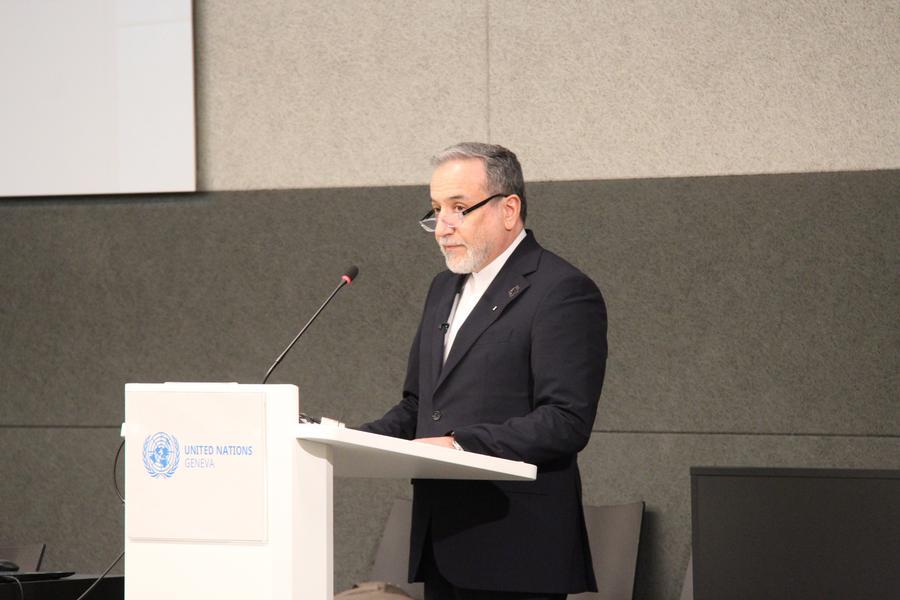
Iranian Foreign Minister Seyed Abbas Araghchi addresses a UN disarmament conference in Geneva, Switzerland, February 17, 2026.
In a CBS News interview broadcast on Sunday, Araghchi reiterated Tehran’s willingness to resolve its differences with Washington through negotiations.
Araghchi said he may meet with U.S. President Donald Trump’s special envoy Steve Witkoff on Thursday in Geneva, noting that it is still possible to find a diplomatic solution between Tehran and Washington.
He said the two sides are working on elements of a potential deal, and may discuss a preliminary draft for the deal on Thursday.
Araghchi said the deal should include Iran’s “peaceful nuclear program” as well as lifting U.S. sanctions against Iran, reaffirming Tehran’s resolve to secure its right to uranium enrichment under the national nuclear program.
He added that Iran and the United States can reach a nuclear deal better than the one signed between Tehran and world powers in 2015, noting unlike the previous negotiations, where the involved parties went into so many details, “this time, there is no need for that many details, and we can agree on basic things and make sure that Iran’s nuclear program is peaceful and would remain peaceful forever and, at the same time, more sanctions would be lifted.”
He also stressed that Tehran has right to self-defense if the United States attacks Iran. “We have to hit, you know, the American base in the region.”
Also on Sunday, Iranian President Masoud Pezeshkian said recent negotiations with the United States have “yielded encouraging signals,” while cautioning that Iran is prepared for “any potential scenario.”
“Iran is committed to peace and stability in the region. Recent negotiations involved the exchange of practical proposals and yielded encouraging signals. However, we continue to closely monitor U.S. actions and have made all necessary preparations for any potential scenario,” Pezeshkian said in a post on social media.
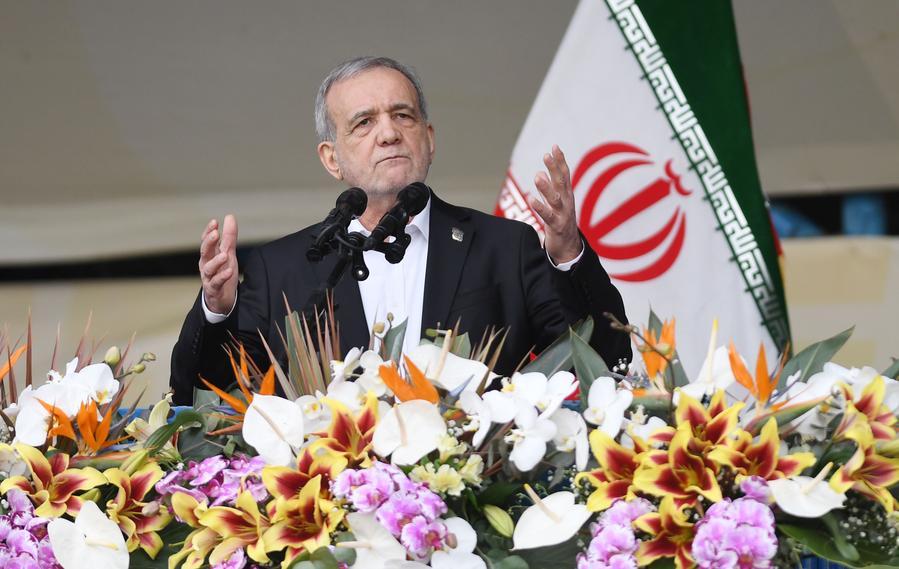
Iranian President Masoud Pezeshkian speaks at the celebrations for the 47th anniversary of the 1979 Islamic Revolution in Tehran, Iran, February 11, 2026.
A senior Iranian official has told Reuters that significant differences remain between the two sides, even over the “scope and mechanism of sanctions relief.”
“Both sides need to reach a logical timetable for lifting sanctions,” said the unnamed official, adding that any roadmap must be “reasonable and based on mutual interests.”
Washington has said that any deal with Iran must include a ban on uranium enrichment, the removal of its enriched material, limits on long-range missiles, and a rollback of support for regional proxies. But analysts have said such conditions would be “very difficult” for Iran to accept.
The diplomatic maneuvers occurred against a backdrop of escalating U.S. military pressure. Media reports said the United States had recently deployed a large number of fighter jets and transport aircraft to Muwaffaq Salti Air Base in Jordan, marking a noticeable increase compared with the base’s usual level of deployment.
Located about 100 km northeast of Amman, the capital of Jordan, Muwaffaq Salti is considered one of the main U.S. military bases in the Middle East. At other U.S. military bases in the region, there have also been reports of significant military build-ups.
The development came amid heightened tensions between Tehran and Washington, and followed two rounds of indirect nuclear talks between the two sides this month, with the first held in Muscat on Feb. 6 and the second in Geneva on February 17.
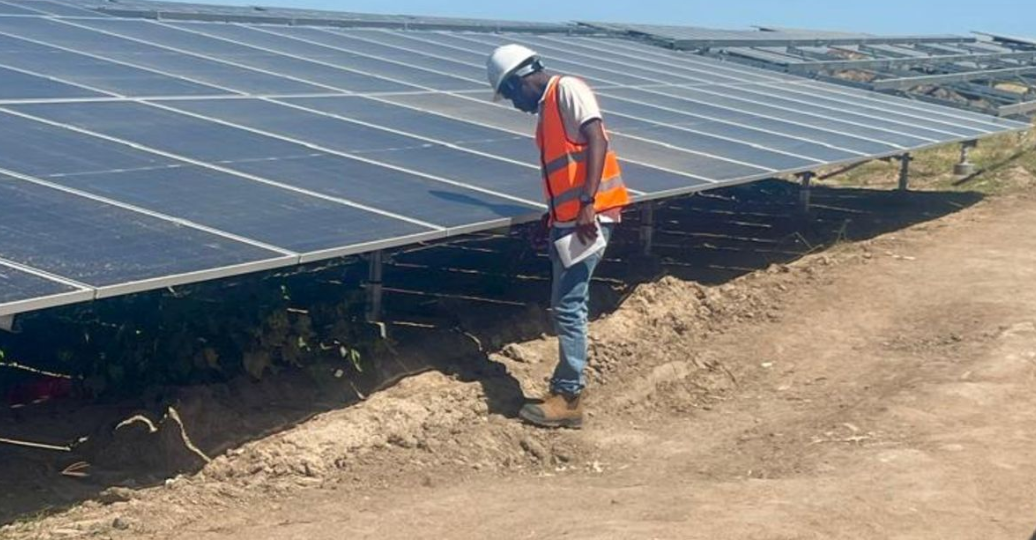
Tanzania has completed its first large-scale solar power project in Kishapu District of the northwestern Shinyanga region, marking a milestone in the country’s energy transformation agenda, the Ministry of Energy said in a statement on Sunday.
According to the statement, Lazaro Twange, managing director of the Tanzania Electric Supply Company Limited, said during a site inspection on Saturday that the project reflects the government’s commitment to expanding access to reliable electricity nationwide.
Twange described the project as a new chapter in the country’s history, saying it is the first solar project of such magnitude since independence. He said electricity has already been generated at the site, with 50 megawatts set to be connected to the national grid by March 1.
Kishapu District Commissioner Peter Masindi said the solar plant is a catalyst for local economic growth, particularly benefiting youth engaged in mining and agriculture.
Mariana Mrosso, acting manager of the power generation plant, said the facility would enhance the stability of the national grid and improve electricity supply, especially across the Lake Zone regions.