Global Arcus provides these opportunities worldwide, and in Rwanda, they are collaborating with Mega Global Link to make them more accessible to Rwandans.
To be considered for a scholarship to study in India, you need to [visit Global Arcus’ website->https://www.globalarcus.com/apply-now.aspx?linkid=QVJDVVMxMzE5OA2] and take an assessment that will help determine your eligibility. This assessment is scheduled to open on Sunday, July 7 and close on Saturday, July 20, 2024.
The opportunities are available for undergraduate, master’s, and PhD studies in various fields, including technology, business, law, health, and more, at different state universities in India, which offer internationally recognized degrees.
If you pass this initial assessment, you will receive a certificate confirming your success. The next step is to visit the Mega Global Link office to proceed with the registration process, obtain a visa, and more.
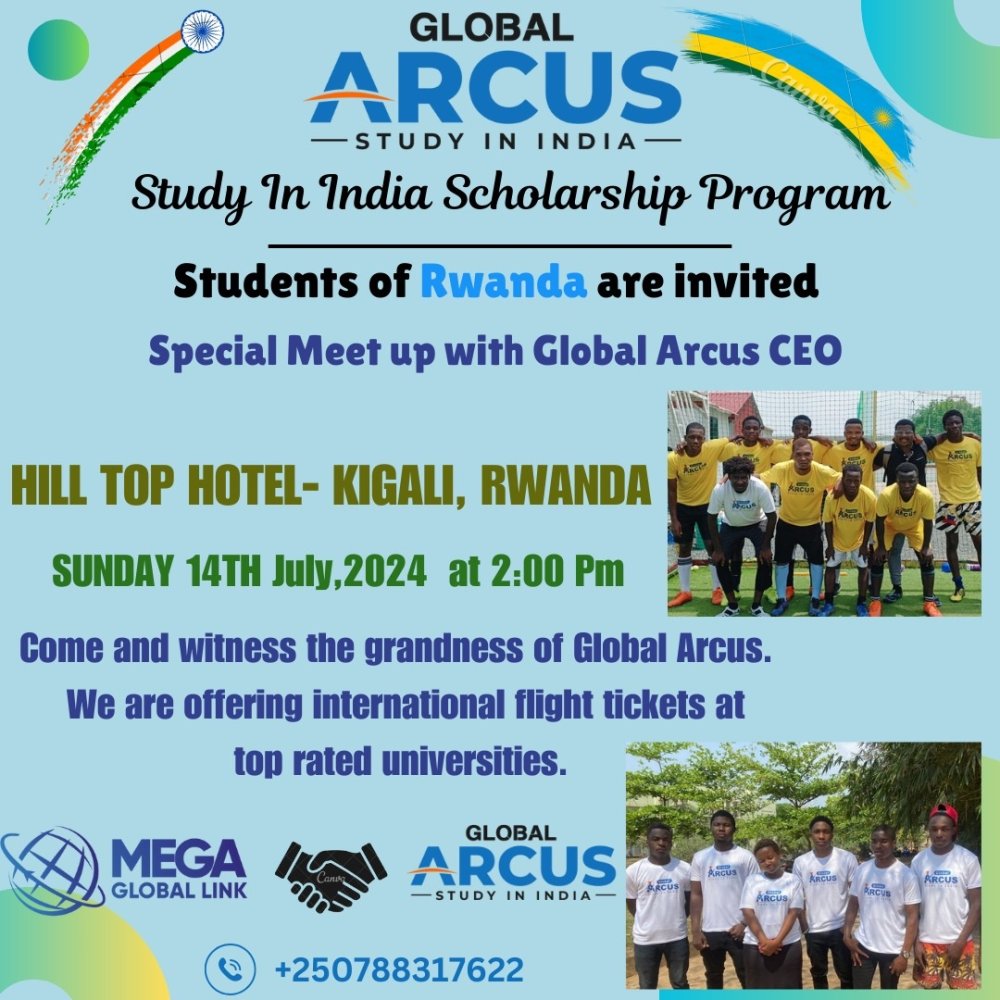
Those who pass the assessment on Sunday, July 14, 2024, at 2:00 PM, along with anyone seeking information (students or parents), will have a chance to meet with Sachin Shekhar, the CEO of Global Arcus from India. He will explain the process and answer any questions you may have.
Additionally, successful candidates will be given a free flight ticket to either Mumbai or Delhi Airport in India, from where they will proceed to their respective schools. Classes will start on August 16, 2024, and there will be a team from Global Arcus ready to monitor their progress daily.
Mega Global Link has a proven track record of providing various services for those wishing to study abroad, whether in Canada, America, or Europe, assisting not only students but also those going for work or tourism. Many have successfully achieved their goals through their help.
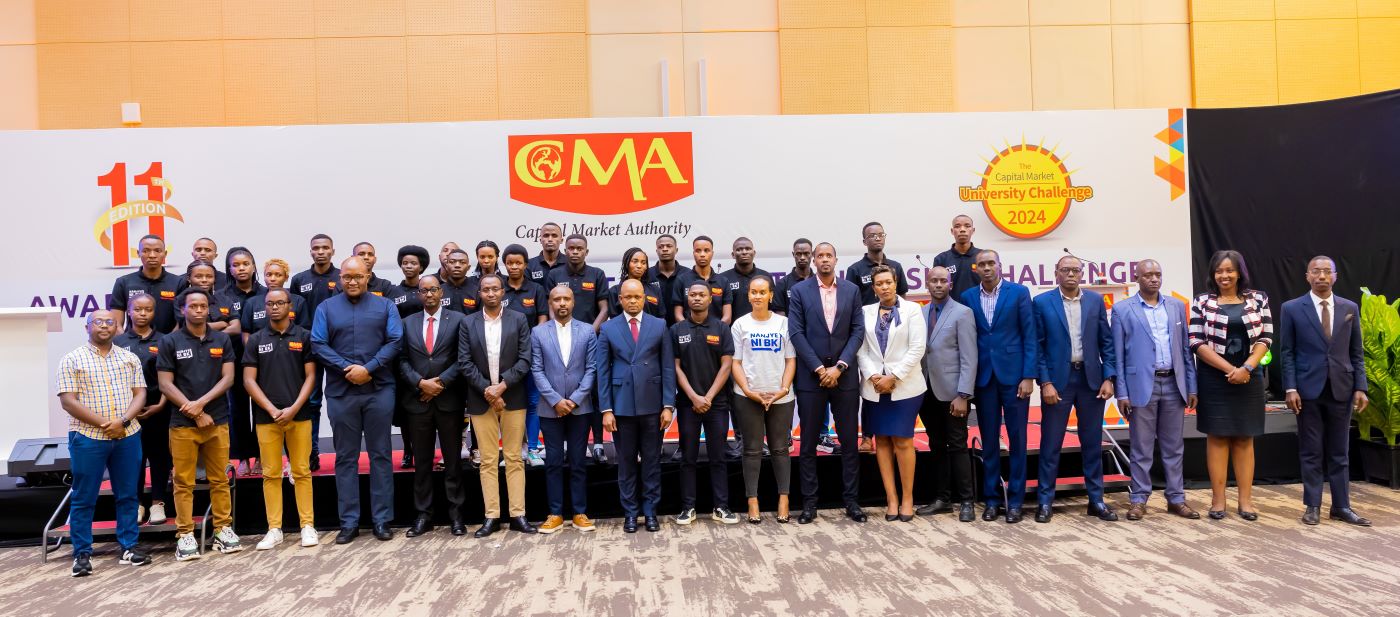
The Capital Market University Challenge is a competition designed to familiarize students from universities and higher learning institutions with the capital market business. It aims to cultivate a culture of saving and investment among participants, preparing them to become future investors and professionals in the industry.
Among the standout winners of the 2024 competition were Jean Pierre Nshimiyimana, Esther Ashimwe, Vainqueur Irasubiza, Alphonse Majyambere, and Joel Rwambibi.
The Capital Market University Challenge encourages students to embrace the culture of saving and investment that ensures sustainability. Participants are urged to explore opportunities in capital market products such as shares and bonds, as well as to consider collective investment through savings and investment clubs.
“This award serves as motivation for students like myself still in university to begin thinking about investments and job creation through savings,” said Jean Pierre Nshimiyimana, the overall winner and a student at the University of Kigali. He plans to initiate an ICT-related project with the award he received.
Esther Ashimwe, a student from the University of Rwanda and second-place winner, urged more female participation in future editions of the Capital Market University Challenge. “This competition boosts the confidence of girls, and increased female participation will lead to greater investment in the capital market,” she asserted.
Thapelo Tsheole, CEO of the Capital Market Authority, highlighted the scale of participation in the 2024 Challenge, with 760 students from 37 universities across Rwanda taking part. He emphasized the programme’s role in nurturing future investors and professionals to the growth and sustainability of Rwanda’s capital market industry.
“As Rwanda strives for self-reliance through mobilizing domestic resources for socio-economic development, active engagement in the capital market becomes increasingly vital,” Tsheole stated. He underscored the importance of investing in educational initiatives targeting students, young professionals, and potential investors.
Pierre Celestin Rwabukumba, CEO of the Rwanda Stock Exchange, emphasized the benefits of investing in the stock market, describing it as a form of saving that yields annual returns and appreciates in value over time.
Mr. Tsheole thanked partners such as the Bank of Kigali, BK Capital, and the Rwanda Stock Exchange for their commitment to organizing yet another successful edition of the Capital Market University Challenge.
The third lesson we have learned in the last nine years is that our successes should be shared in order to multiply impact. While the lessons we’ve shared thus far focus on supporting refugee youth to succeed in higher education and transition to the world of work, the barriers to even accessing higher education are tremendous. Today, only 6% of young refugees have access to higher education, while the global average is 42% for youth not facing forced displacement. In most refugee hosting countries, language, cost, inconsistent or unavailable information on academic and scholarship programs, lack of support during the application process, and movement restrictions constrain the number of qualified young refugees who are able to participate in higher education opportunities.
Kepler addressed access to our higher education programs for refugees through the creation of a preparatory program for high school students and recent graduates. Its early success pushed us in 2018 to create Iteme, bridge in Kinyarwanda, that provides digital and soft skills, advocacy and access to information, and individualized advising for youth to access any available tertiary or career opportunity. We recently added examination preparation to our program so our trainees can do well in national exams, a perquisite for entering higher education in the countries we operate in. There was a clear gap in services for many refugee youth at this pivotal transition, and Kepler saw an opportunity to use its expertise in support of the broader ecosystem.
We wanted to do more and joined forces with a partner who had a clear vision to support displaced youth. In 2021, Kepler and the Mastercard Foundation partnered to expand the Iteme preparation program across Rwanda into Ethiopia and a third country soon to thousands of young refugees. We have served 1,364 students to date, 56% of whom are young women, and Iteme graduates have secured almost 600 scholarships to tertiary institutions. Our 2023 cohorts have already reached a 75% success rate in accessing tertiary education or employment opportunities. This is more than 12X the global average. Iteme graduates have gone on to study at numerous institutions beyond Kepler College, including Ashesi University, University of Rwanda, African Leadership University, and United States International University.
Iteme was created to be low-cost and scalable while also providing guidance and support at the level of the individual. Kepler’s team recognized the complexities involved with everything from accessing and understanding online scholarship applications to applying for travel documents and we designed the program to allow for this level of intensive support. Program staff also support tertiary education partners to understand the complexities refugees face and what creative accommodations can be put in place.
The Iteme staff are recent bachelor’s degree graduates from the communities we serve who complete a paid fellowship or internship, both of which allow them to gain relevant professional experience and build their resume. Kepler has found that the key to the Iteme experience is empowering refugee youth to give back to their communities while providing a living wage. The staff share common experiences with our students, understand their lived realities, and serve as role models.
As we look to the future, our reflections on the past ten years serve as a guide for expanding access to higher education and employment for refugees, ensuring that more young people in vulnerable situations have the opportunity to achieve their potential and contribute to their communities. We are always happy to share our experience in order to multiply the opportunities and impact for the forcibly displaced. This is true solidarity.
{{Editorial note: Nathalie Munyampenda is the Chief Executive Officer at Kepler}}
When Kepler, in collaboration with SNHU’s Global Education Movement, and with the support of the IKEA Foundation, opened a campus in the Kiziba refugee camp in Western Rwanda, we had a decade of experience supporting Rwandans from vulnerable backgrounds to access higher education and succeed in the job market. The fundamental question we faced was how to translate a proven model for high-quality education to employment into a low-resourced, isolated, and protracted refugee camp setting. Spoiler alert: We succeeded! Our Kiziba campus has served over 393 students to date, with 91% of 159 bachelor degree graduates employed, resettled or doing graduate studies.
Kepler’s program in the Kiziba refugee camp mirrors what we offer on our campus in Kigali. So far we have also served 225 refugees on our Kepler campus in Kigali, with 78 already graduated. Admitted students participate in a foundation program, which equips them with the English, technology, and executive thinking skills necessary to succeed in the online bachelor’s degree program from SNHU or degrees from our very own Kepler College. Academic advisors regularly meet with students to further support their skills development through Kepler-created or curated modules. From day one, we focus on career readiness, modeling our classrooms after the world of work and providing explicit soft skills training.
The secret sauce is balancing high expectations with flexibility. A core element of the Kepler model is instilling professional competencies early and maintaining high standards for their consistent demonstration. This begins with basic expectations, such as punctuality and timely communication for lateness or absences, including a plan for catching up on missed learning. Assignments must be submitted on time, and students revise their work until they achieve mastery, reflecting the skills expected by employers.
However, working within the realities of daily life of refugees also requires significant flexibility. Our students face food insecurity, limited access to quality healthcare, and an ever-changing resettlement system while often bearing significant responsibilities at home. Our approach balances these realities with our goal of preparing students for professional success beyond the camp. We set a serious tone early on to shift students’ mindsets, emphasizing commitment through attendance and assignment completion in the first six weeks. We have clear non-negotiables to create a culture of high academic and professional expectations. Once students pass this initial phase, we provide more flexibility, including a mostly self-paced curriculum that facilitates leaves of absence for maternity, illness, or resettlement processes. At the same time, Kepler offers robust academic and mental health support, including weekly advising sessions, access to a full-time counselor, and specialized guidance for students at risk of dropping out.
Alumna Divine Nyiraburanga’s journey illustrates Kepler’s balance between high expectations and flexibility. Married with a child and working as a volunteer teacher, she faced challenges with English and limited time for studies. Academic advisors worked closely with her, providing additional tutoring and guidance for managing her work load. When Divine’s second child arrived, she took a three-month maternity leave during which Kepler staff visited her to keep her connected with the community and provided resources to practice English. They helped her manage challenges, like arranging financial assistance for someone to bring her baby to campus for breastfeeding and making the decision to leave teaching to focus full time on her studies. The Careers team later secured a remote internship in Communications for her, allowing her to stay in the camp and care for her children. After graduating with a bachelor’s degree, Divine started a business importing traditional fabrics, which enabled her to move outside the camp and have the flexibility she wanted to focus on her family.
Yesterday, I shared more on the lessons we have learned supporting refugees to transition to employment. https://en.igihe.com/education/article/reflections-from-a-decade-of-expanding-higher-education-for-refugees
{{Editorial note: Nathalie Munyampenda is the Chief Executive Officer at Kepler}}
The second lesson we learned is that our model would not be successful if refugees could not find employment and take care of themselves and their families. Unlocking formal employment for our refugee graduates in Rwanda required a dual focus on advocacy and our usual robust skills preparation.
This involved educating both employers and refugees on labor laws and processes. We found the most success when refugee students demonstrated their potential to employers before disclosing their status. Many alumni, both refugee and Rwandan, secure jobs at organizations where they began as interns. Internships are our most powerful tool to show employers that Kepler graduates possess the mindset and skills their companies need. Our Careers team encountered reluctance from employers to hire individuals with refugee status. However, in an internship setting, students can prove their competency before revealing their status. By the time a job offer is made, employers are unlikely to rescind it due to the candidate’s refugee status.
Educating refugee youth on their legal rights, including the right to work, fosters self-advocacy, independence, and initiative. Kepler regularly discusses with its refugee students how and when to disclose their status to potential employers, walking through possible scenarios and responses. In more challenging policy environments, we are expanding employment options to include remote opportunities and emphasize quality entrepreneurship training and support.
For us, employment for graduates with refugee status is critical because of the wider impact to both their refugees themselves and their families, as well as the community. Our Kiziba graduates were among the first refugees hired by humanitarian actors in Rwanda and are shaping a broader dialogue around employment and self-reliance for refugees. In all, nearly two-thirds of Kepler learners find social sector jobs that give back to their communities. In this way, Kepler’s is working to create decent employment for Africa’s young people, with a critical multiplier effect.
Take Alumnae Claude Safari for example. His professional journey from Kepler Kiziba student to an experienced manager shows the importance of internships in the transition from education to career. While studying for his bachelor’s degree, Claude completed two mostly remote internships that allowed him to practice new skills in a professional setting while earning additional income. After graduating, Claude took a third internship with a logistics and global trade company in the capital, Kigali. He quickly impressed his employers and was given the position of Tally Clerk and later promoted to Warehouse Manager at another company.
There are many stories like Claude’s. For us, employment outcomes remain our measurement of success. And we are working to do more in sharing our model with others. More on that tomorrow.
{{Editorial note: Nathalie Munyampenda is the Chief Executive Officer at Kepler}}
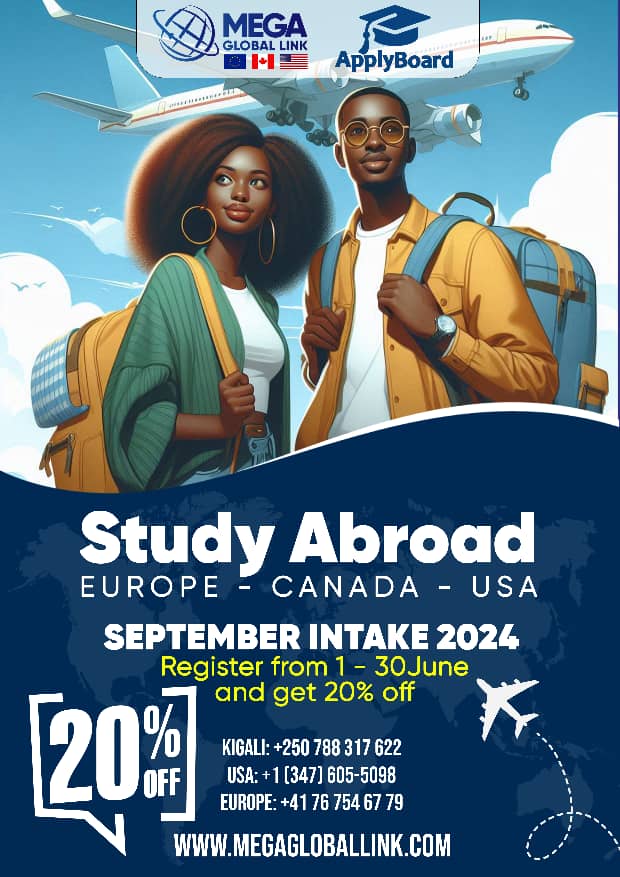
This company collaborates with Apply Board to ensure that all its clients receive excellent services and quality education. Those wishing to study in countries such as Canada, the United States, and Europe, starting this September, can approach this company to find good schools in these countries at reasonable prices.
One of the special features of this company is that it assists those seeking various levels of education, including primary schools, secondary schools, and universities. This is achieved by leveraging the opportunities provided by Rwanda’s good relationships with other countries and the strong partnerships the company has established with international universities.
For students who seek the services of this company, assistance is provided from the beginning until the student finds the school and courses they desire. The company also helps students obtain visas and monitors their journey until they reach their schools.
The schools working with Mega Global Link offer various programs at different levels, including undergraduate (bachelors), graduate (masters), short-term courses, diplomas, and even doctoral programs (PhD), among others.
Studying abroad is very important as it helps in learning foreign languages, professional development, life experience, personal growth, making international friends, gaining global exposure, finding various opportunities, changing perspectives, and more.
Those wishing to take advantage of these opportunities through international education can approach Mega Global Link and be facilitated to find schools at reduced costs, as Mega Global Link’s services are now 20% off for applications submitted between June 1 and June 30 of this year.
Explore with us in Summer Camps
Besides assisting Rwandans in studying abroad, Mega Global Link also helps those wishing to take vacations in foreign countries.
Summer camps have built a reputation as enjoyable and relaxing times for people of all ages, whether adults or children. Activities include outdoor games, educational programs, music, dance, sports, performances, and more.
Summer camps help participants build self-confidence, independence, social skills, leadership abilities, and physical fitness.
Mega Global Link is collaborating with summer camp organizers in Canada, the United States, and Europe to ensure that participants are safe and familiar with the environment while enjoying their time.
Vacation programs are meticulously prepared, especially for those with children, ensuring they receive everything they need, including nutritious meals for healthy growth.
There are many benefits for those who register or enroll their children in summer camps. Besides having fun, staff assist in finding additional opportunities to prepare for a bright future.
Additionally, children gain new experiences that help their brains develop, which will benefit them as they grow older.
The good news is that Mega Global Link has introduced a 20% discount on this service from June 1 to June 30 for anyone interested in these opportunities.
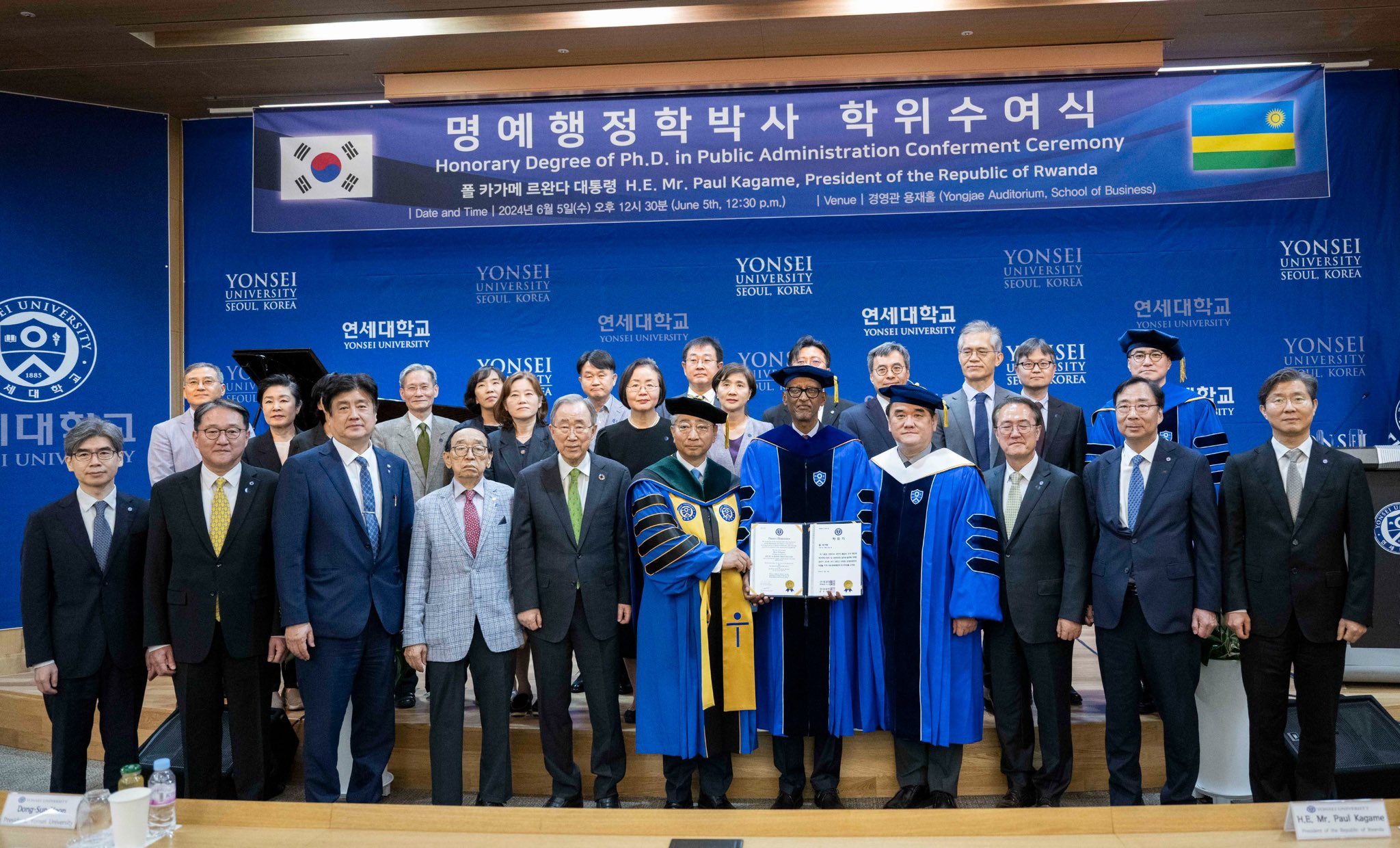
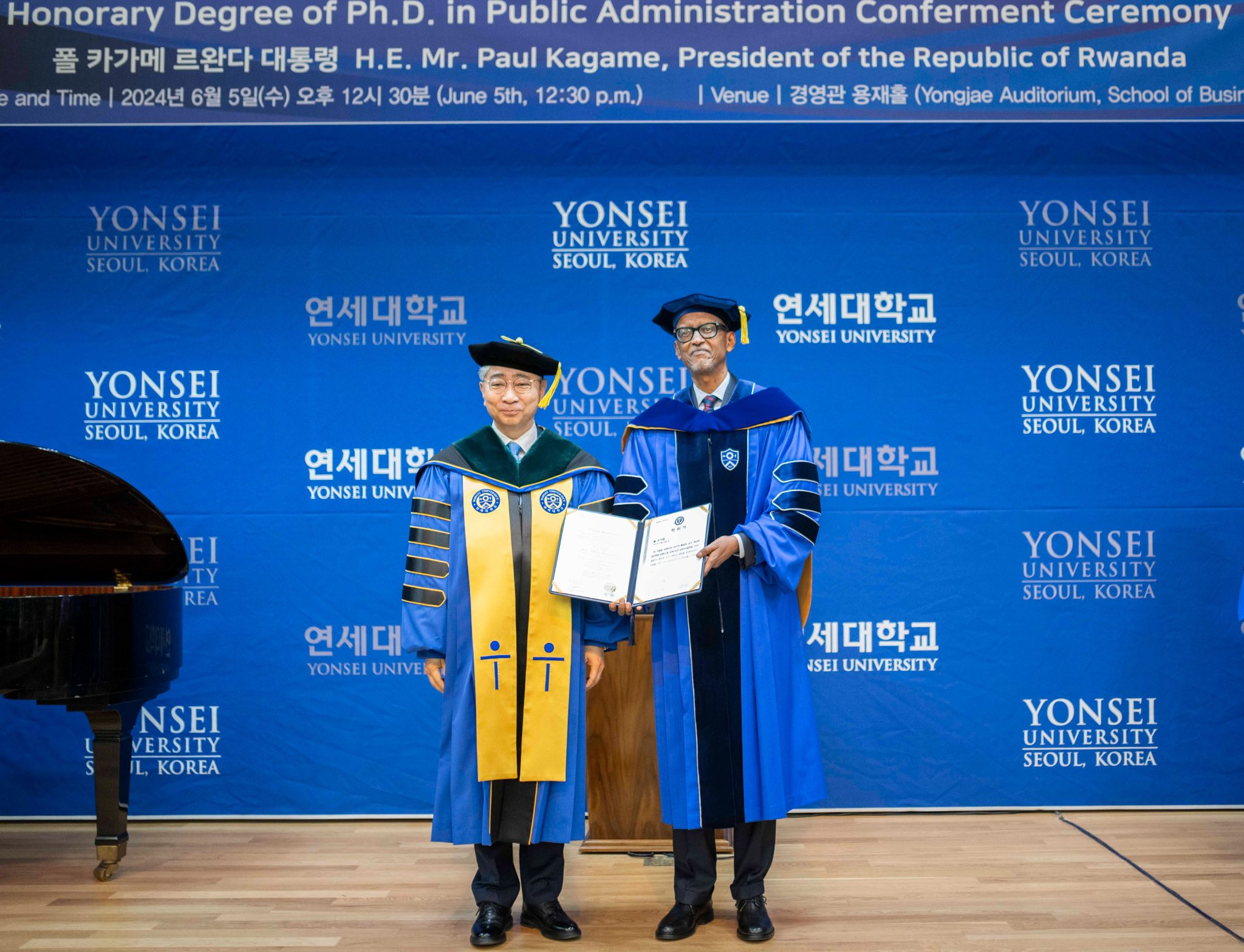
The Head of State, credited with spearheading various policy and economic transformations in Rwanda, was honoured during his trip to South Korea, where he attended the inaugural Korea-Africa Summit.
“I would like to thank you for the tremendous honour you have bestowed on me and my country with the award of this honorary doctorate,” Kagame stated in his acceptance speech.
“This is my fourth visit to Korea but my first to the Yonsei campus, I wish that our connection had started much earlier,” he added.
In his speech, President Kagame emphasized the importance of public policy in nation-building, especially in the aftermath of the 1994 Genocide against the Tutsi in Rwanda, saying, “The purpose of public policy is to make our citizens safe, united, free, creative, and prosperous, more or less in that order.”
“We inherited a country that was completely broken and devastated physically, financially, and spiritually. Our people were displaced and divided. Establishing security was our first policy objective; without it, nothing else is possible.”
Founded in 1885, Yonsei University is one of the top private Universities in South Korea. The university boasts of 158 research centres.
The South Korean varsity has multiple campuses, with the Sinchon campus in Seoul as its main location. Other locations include the International Campus in Songdo, which opened in 2010, and the Wonju Campus.
During his visit to the university’s campus in Seoul, President Kagame held discussions with Professor Dong-Sup Yoon and faculty members about furthering the partnership and increasing the number of Rwandan students.
{{Korea-Africa summit
}}
During the Korea-Africa summit that attracted 48 African leaders, President Paul Kagame called for more partnerships between Africa and South Korea, emphasizing that the two regions stand to benefit from each other’s immense resources and potential.
President Kagame said “the moment was long overdue”, praising Korea as a strategic partner for Africa.
“Korea is a global pivotal state and Africa is a pivotal continent. It’s only natural for us to draw closer together in the years ahead for many reasons. First, Korea knows the value of sovereignty and independence as well as the struggle required to achieve accountable and inclusive politics. Those experiences allow us to look at each other eye to eye with mutual respect and admiration,” President Kagame said in his address on Tuesday.
President Kagame noted that Africa has much to learn from Korea’s rapid economic transformation over the past few decades, emphasizing the need to invest in political stability, health, education, and technology.
“Korea’s experience shows that a country can be radically transformed in the course of a generation. Is there any explanation why Africa has not become a high-income continent? Africa can go much faster and there is no better way than focusing on stability, health, education and technology. All of these are possible depending on how we address our security and governance challenges. Africa’s young people need these opportunities. It’s possible,” the Head of State said.
Africa, President Kagame explained, stands to benefit from cutting-edge innovations from Korea to boost advancements in various sectors, including Artificial Intelligence (AI).
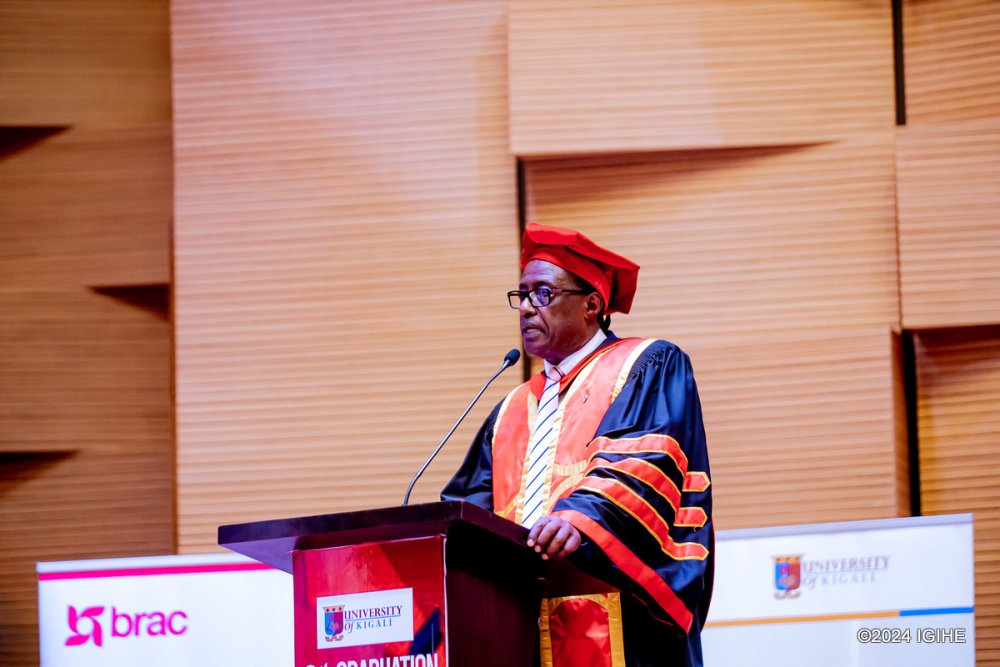
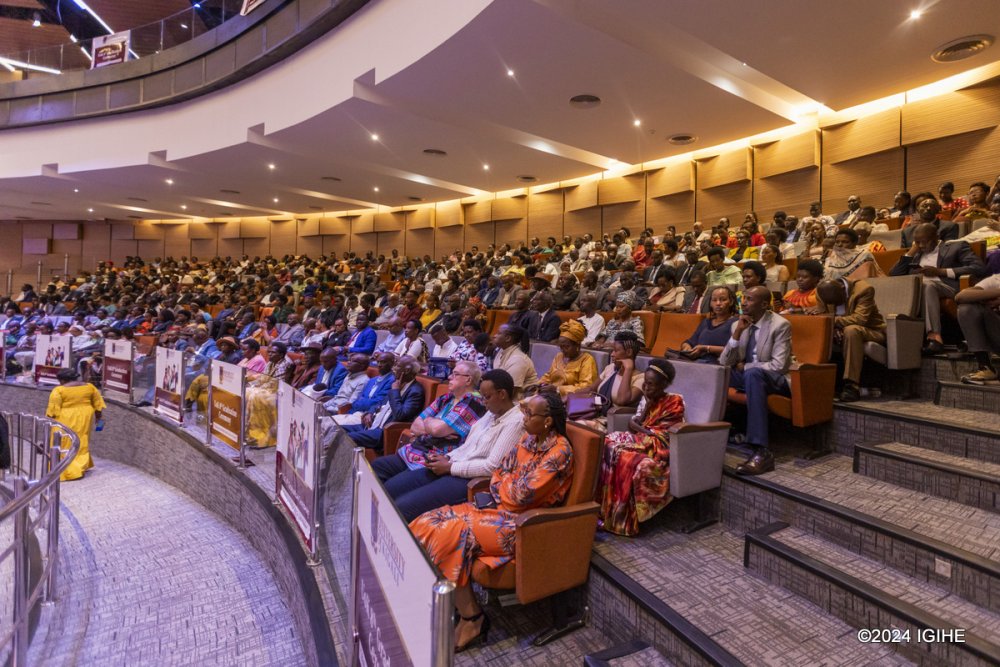
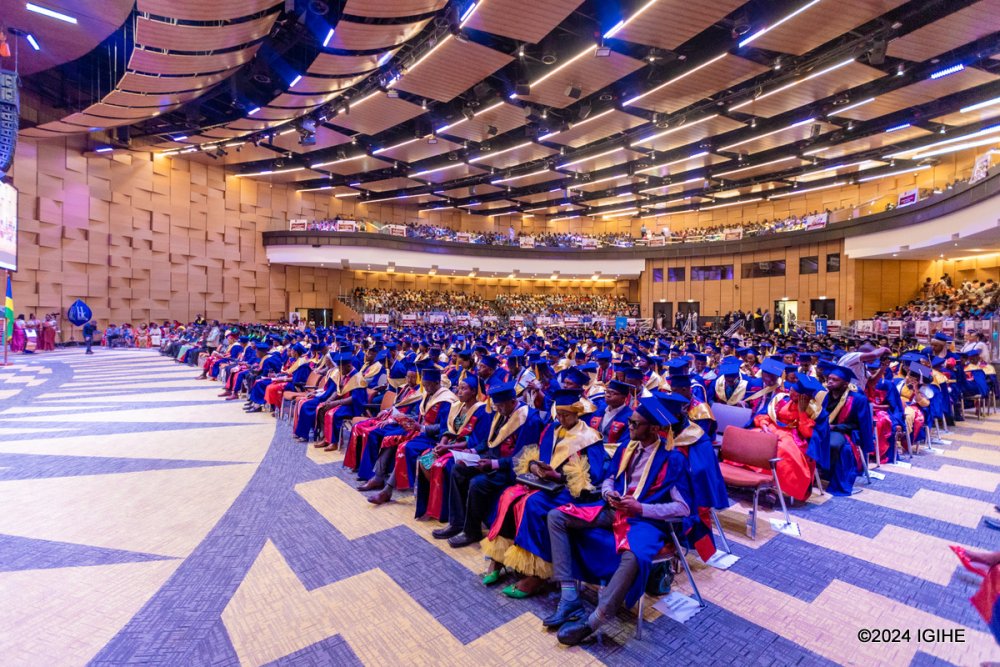
The graduation ceremony, held at Intare Conference Arena in Gasabo District on Friday, was attended by various dignitaries, including government officials, university representatives, university administrators and parents.
Among the graduates, 388 completed their Master’s degrees, while others graduated with Bachelor’s degrees and PGDE
The graduates included 103 in Education, 595 in Business and Economics, 257 in Computer Science and Technology, and 85 in Law.
Prof. Nshuti Manasseh, one of the university’s founders, stated that the university was established with the goal of offering high-quality education by instructing required courses, particularly because it had become apparent that there was a void in this industry.
He added that the quality has increased, as those who started it had received extensive and complete education themselves, which has continued to guide its excellence.
“At that time, there was confusion in the universities due to various reasons. That’s when we decided to bring in education suitable for Rwandans, providing necessary courses for the job market, but also giving students practical lessons.”
Prof. Nshuti reminded the students that Rwandans expect results from their studies, to improve themselves, represent their university well, and contribute to the country’s development.
“For both graduates and current students, learning is a journey. Learning never ends; as you progress, knowledge evolves. Because an educated person strives to increase their knowledge, reaching a level where the country relies on your ideas as an intellectual, strive for that honour.”
Fanny Umunyana, who excelled in Business, Economics, and Finance, expressed confidence in the comprehensive knowledge she received, stating that she would use it to tackle challenges in her field.
She said, “I got the knowledge I wanted, and God helped me to be among the top. It requires nothing but setting goals, avoiding distractions, listening to teachers, and seeking knowledge beyond the classroom. There is no other secret. By collaborating with others, the knowledge I have is a resource that will help me achieve my goals.”
The Vice-Chancellor of the University of Kigali, Prof. Danson Musyoki, noted that despite various challenges during these times, the values of unity, inclusivity, determination, perseverance, and striving to achieve goals instilled in these students will help them continue to progress in whatever they undertake.
“I urge you, even after graduating, to maintain the values of resilience, determination, and inclusivity, collaborating with others in different sectors. Let all these be guided by the pursuit of success in the areas you engage in. Continue striving to ensure that your future is marked by the values you acquired at the University of Kigali.”
The Vice-Chancellor assured parents that their children received education of international standards, thanking them for their cooperation throughout this period. He also thanked the university staff for their dedicated efforts, ensuring students received up-to-date knowledge.
Among the 1,428 graduates from the University of Kigali, there were 769 female and 659 male students. Prof. Musyoki highlighted that these numbers reflect how the university provides equal opportunities for everyone to access quality education.
The areas hosting refugee camps in Rwanda now feature structures resembling villages inhabited by citizens, contrasting with the previous use of tents.
Each camp also has schools where refugee children study alongside local children, ensuring that all receive the same level of education.
Jean Bosco Ukwibishatse, the Manager of the Mahama Camp, who has children studying at nearby schools, told IGIHE that the quality of education is good, with no visible discrimination.
“All children attend the same schools as those outside the camp, and so far, they face no obstacles up to the sixth year of secondary education. The quality of education is consistent, especially with experienced teachers,” he said.
On the other hand, some refugees have chosen to live in cities where they can work and send their children to local schools.
A report by the Ministry of Education, released on May 23, 2024, shows a general 1% increase in refugee students enrolled in Rwandan schools, with a particularly rapid increase in those attending vocational and technical schools.
In the 2021/2022 school year, there were 39,329 refugee students, and in the following year, 2022/2023, the number slightly increased to 39,728. Among these, there are 20,417 boys (51.4%) and 19,311 girls.
The majority of these students are in primary schools, totaling 23,119, while secondary school students number 11,563. In primary schools, refugee students increased by 0.2%, whereas in secondary schools, they decreased by 6.9% compared to the 2021/2022 school year when there were 12,168.
Jacqueline Muhimpundu, a refugee from Burundi living in Kigali, has four children attending primary school at APADE Kicukiro. She told IGIHE that her children are well taken care of in school and perform well, although she struggles to afford their school fees as she is also caring for orphans.
“All four children attend the same school. The eldest is well cared for by the school principal, who treats him like his own. I found them in Masaka after their father was killed in Burundi,” she said.
She highlighted that her biggest challenge is finding the money for school fees, especially for two orphans she took in after their mother was killed by her husband.
Statistics show a 41.7% increase in refugee students attending vocational and technical schools in the 2022/2023 school year, rising from 534 in 2021/22 to 757.
Regarding the types of schools these students attend, the number of refugee students in public schools increased from 24,285 in the 2021/22 school year to 25,065 in 2022/23, a 3.2% rise, while those in private schools funded by the government decreased by 3%.
Conversely, the number of refugee students in private schools decreased by 2.2%.
However, statistics show that Rwanda still has a long way to go, as a child may spend an average of 6.9 years in school but only show the equivalent of 3.9 years of learning.
{{World Bank Human Capital Index}}
A World Bank report on human capital—knowledge and skills relevant to the labor market—highlights the measures countries take to prepare their citizens through education and health, aiming for them to enter the job market successfully.
The report underscores the need for substantial investment to ensure a child born today grows up with adequate resources to be productive.
It reveals that a child born in 2020 globally has a 56% chance of becoming productive in adulthood if given quality education and health. In Rwanda, a child provided with high-level education and health is predicted to have a 38% chance of productivity.
{{Education Progress and Challenges in Rwanda}}
Statistics show that in 2018, a child starting school at four in Rwanda was expected to spend 6.6 years in education, rising to 6.9 years by 2020, completing their studies before turning 18.
This situation is influenced by high enrollment rates in primary education, reaching 135%, while only 46% transition to secondary education, with numbers declining as students progress through the system.
Enrollment rates for primary school stand at 94%, with 76% completing the level. However, the dropout rate, especially among boys, is significant at 62.6%.
World Bank metrics from 2018 indicate that a student would have effectively received 3.8 years of education out of 6.6 years spent in school. By 2020, this had slightly improved to 3.9 years out of 6.9.
These figures suggest that despite attendance and teaching efforts, the actual educational process is not being executed as it should be.
{{Observations and Reforms}}
This gap is attributed to the recent introduction of nursery schools and the recruitment of many non-professional educators who have not been adequately trained. This lack of quality training means it takes longer for a new teacher to reach the desired level of teaching proficiency.
Emma Rubagumya Furaha, President of the Commission for Education, Technology, Youth, and Culture, has pointed out that educational outcomes are unsatisfactorily low despite reforms that should have improved them.
He noted, “Metrics related to school dropouts, repetitions, and the basic skills in reading, arithmetic, or English are concerning. When you reduce classroom overcrowding and the student-to-teacher ratio, educational outcomes should improve significantly.”
{{Improvements and Future Prospects}}
Between the 2020/2021 and 2021/2022 school years, dropout rates decreased from 10.3% to 9.2%, and repetition rates increased from 8.3% to 14.3%.
On April 18, 2024, Prime Minister Dr. Edouard Ngirente told the Legislative Assembly that the educational reforms are aimed at addressing these issues and should show positive changes within a few years.
He confirmed, “The first group of students who have gone through these new reforms are just now finishing their fifth year of secondary school. They have not yet entered the workforce or university to assess the full impact of these reforms.”
Currently, 132 teachers from Zimbabwe are assisting in Rwanda’s 16 teacher training schools, as part of these educational reforms.
{{Stunting}}
Stunting remains a significant issue, with 33% of children under five in Rwanda affected, severely impacting their learning capabilities. The national school feeding program, launched in 2020 from preschool through secondary education, aims to combat stunting and has shown success in bringing children back to school and enhancing their learning.