Irembo, a leading digital services provider in Rwanda, termed the strategic partnership a significant milestone in the country’s ongoing digital transformation.
By making the RW country domain more accessible, this collaboration aims to simplify the process of domain registration, providing a seamless experience for both individuals and businesses seeking to establish a digital presence in Rwanda and beyond. RW domain registration is now available alongside other services provided on the IremboGov platform.

Through this integration, clients can now purchase RW domains directly on the IremboGov platform, aligning with Rwanda’s vision of building a modern digital ecosystem.
The addition of RW domain services enhances IremboGov’s comprehensive suite of digital services, empowering Rwandans and international investors with an easy-to-use, centralized platform to access essential online services.
“Users can now register their RW domains with just a few clicks,” Irembo said in a statement.
RICTA is a non-profit organization with a mandate to manage Rwanda’s RW country code top-level domain (ccTLD).
The new partnership is part of RICTA’s broader effort to promote the adoption of the RW domain, which is essential for establishing trust and authenticity in the digital space.
The RW domain serves as a symbol of Rwanda’s national identity, offering businesses, startups, and individuals a unique opportunity to strengthen their digital presence while supporting the country’s efforts to foster a thriving digital economy.
The collaboration with Irembo is expected to increase the visibility and adoption of the RW domain, making it the domain of choice within and beyond Rwanda.
RICTA has affirmed its commitment to ensuring the growth of Rwanda’s internet ecosystem. The integration with IremboGov is a significant step toward achieving this goal.
The Cabinet approved the changes during a meeting chaired by President Paul Kagame on Monday, February 10, 2025.
According to the Finance Ministry, the changes are part of Rwanda’s medium-term strategy to strengthen economic resilience and promote self-reliance.
“These new tax policy reforms are part of the Government’s medium-term strategy to broaden the tax base, increase revenue mobilization, and streamline tax administration in order to meet Rwanda’s development goals,” the Minister of Finance Yusuf Murangwa stated in a statement on Tuesday.
The reforms touch on multiple sectors, including consumer goods, transportation, telecommunications, tourism, and gambling. They also introduce new levies aimed at enhancing economic sustainability while ensuring the continued transformation of the country as outlined in the Second National Strategy for Transformation (NST2).
One of the most notable changes is the introduction of a 15% excise duty on cosmetic and beauty products, including makeup, body lotion, and hair products. However, essential pharmaceutical beauty products will be exempted in consultation with the Ministry of Health.
Vehicle owners will also feel the impact of the reforms, as registration fees for all types of vehicles, including electric cars, will be increased. However, the exact figure was not immediately revealed.
Similarly, the fuel levy has been adjusted from a fixed fee of Rwf 115 per litre to 15% of the Cost-Insurance-Freight (CIF) to support road maintenance initiatives.
Mobile phone users will now have to pay 18% Value Added Tax (VAT) on mobile phones, which had been exempted since 2010. The government argues that while the exemption initially helped to boost digital penetration and smartphone affordability, the reintroduction of VAT will allow for more sustainable revenue collection without stifling smartphone access.
A similar VAT exemption introduced in 2012 on ICT equipment will also be revoked, though selected ICT devices will remain tax-free based on consultations with the Ministry of ICT and Innovation.
The gambling industry is set to face higher tax measures, with the tax on Gross Gambling Revenue (GGR) rising from 13% to 40%, and withholding tax on winnings increasing from 15% to 25%. The government said the move aims to encourage responsible gambling while also increasing tax revenues from the industry.
Additionally, the tourism sector will be subject to a new Tourism Levy, which imposes a 3% tax on accommodation costs. This measure aims to fund investments in the country’s tourism and hospitality industry, a critical pillar of Rwanda’s economic growth.
{{Green transportation incentives and increased excise taxes
}}
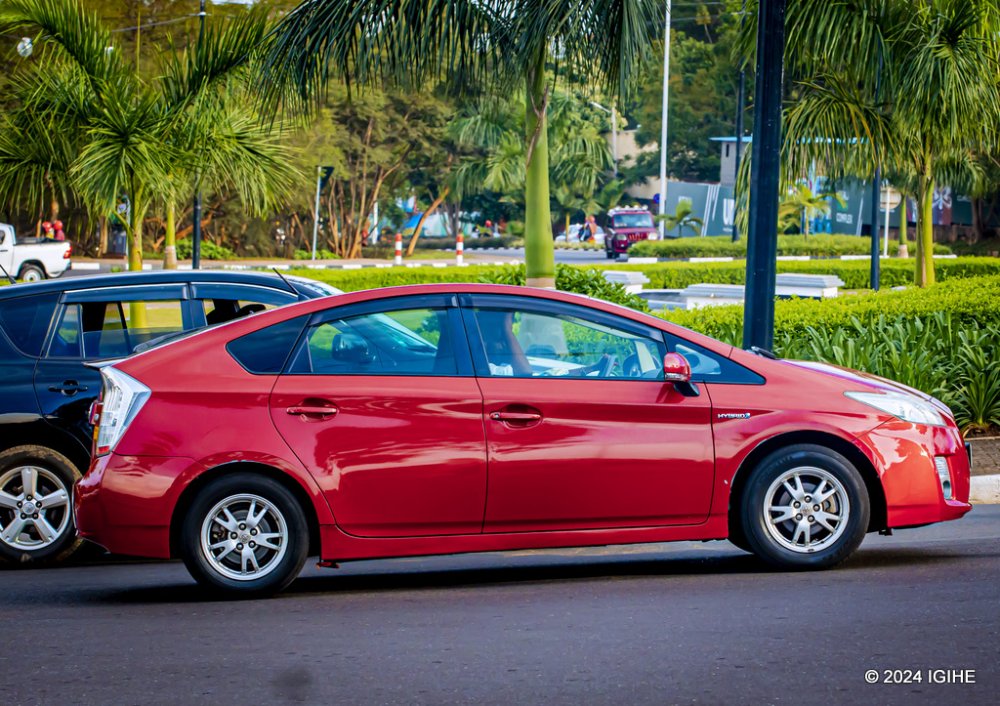
In a bid to encourage green mobility and reduce carbon emissions, the government has maintained a 25% import duty exemption for hybrid vehicles while introducing an age-based excise duty system. Under the new system, hybrid cars less than three years old will be taxed at 5%, those between four and seven years old at 10%, and vehicles older than eight years at 15%.
Additionally, VAT and a 5% withholding tax will be reinstated for hybrid vehicles, while fully electric vehicles will remain tax-exempt to encourage their adoption. However, this measure will only take effect in the 2025/2026 fiscal year.
Excise taxes have also been adjusted in other areas. The tax on cigarettes has increased from Rwf 130 to Rwf 230 per pack, along with an additional 36% tax on the retail price.
The excise duty on beer has risen from 60% to 65% of the factory price. For airtime, the tax has been raised from 10% to 12% in 2024/2025, with a gradual increase to 15% in the medium term.
{{Additional tax policy measures}}
Beyond these direct tax changes, the government has also signalled upcoming policy adjustments targeting financial services, transportation, and ICT in the next financial year.
Among the expected measures are an environmental levy on single-use plastics, new VAT charges on select fee-based financial services, and taxes on fossil fuels and road transportation services of goods.
Under the ICT sector, the government is expected to roll out the Digital Services Tax, which will be imposed on digital platforms such as Netflix, Amazon, and others.
The government has assured taxpayers that public awareness programs will be rolled out to educate citizens and businesses on these new tax provisions to facilitate a smooth transition.
“The Government of Rwanda remains committed to working closely with taxpayers to ensure a smooth transition and to foster a prosperous future for all,” the Ministry added.
The decision, which is expected to drive up costs for import-dependent industries, has already drawn sharp criticism from major trading partners, including Canada, as well as from domestic businesses.
Trump has long championed protectionist economic policies. He framed the tariffs as a step toward reviving American manufacturing.
“This is a big deal—the beginning of making America rich again,” he declared. “Our nation requires steel and aluminium to be made in America, not in foreign lands.”
Despite concerns about rising consumer prices, Trump insisted that, in the long run, the move would be cost-effective. He hinted at further trade measures, suggesting future tariffs could target pharmaceuticals and semiconductor imports.
The US, the world’s largest steel importer, relies heavily on suppliers from Canada, Brazil, and Mexico. Canada, which provided over 50% of US aluminium imports last year, is expected to be the hardest hit by the new tariffs.
Canadian officials reacted with outrage, with Minister of Innovation Francois-Phillippe Champagne calling the decision “totally unjustified.”
“Canadian steel and aluminium support key US industries from defence to automotive,” Champagne stated. “This policy undermines North American competitiveness and security.”
Ontario Premier Doug Ford accused Trump of destabilizing economic relations, warning that shifting trade policies put jobs at risk.
Meanwhile, industry lobbyists in Canada urged immediate retaliation, with lawmakers exploring ways to reduce dependence on the US market.
The tariffs prompted a surge in US steelmaker stock prices, with Cleveland-Cliffs gaining nearly 20%. However, broader market reactions remained subdued, as investors speculated whether Trump might later soften his stance or introduce exemptions.
Economic analysts likened the move to Trump’s 2018 tariff campaign, which initially imposed levies on steel and aluminium but later carved out exceptions for countries like Canada, Mexico, and Australia.
Dartmouth College economist Douglas Irwin suggested the latest announcement could be a bargaining tactic rather than a firm policy shift.
“The biggest question is whether Trump is using this as leverage or truly committing to long-term protectionism.”
Trump’s track record includes a history of abrupt trade policy shifts. Just last week, he announced a 25% duty on Canadian and Mexican imports before postponing enforcement by 30 days. He also introduced a 10% tariff on Chinese goods, prompting retaliatory measures from Beijing.
Critics warn the tariffs will inflate costs for US industries reliant on imported metals, affecting sectors from construction to consumer goods. The US International Trade Commission previously estimated that similar tariffs raised domestic steel and aluminium prices by 2.4% and 1.6%, respectively.
White House officials defended the policy as a measure to curb unfair competition, particularly from China and Russia.
The administration introduced stricter regulations requiring steel to be “melted and poured” and aluminium to be “smelted and cast” in North America, aiming to prevent foreign suppliers from bypassing tariffs through third-party nations.
Nick Iacovella, spokesperson for the pro-tariff Coalition for a Prosperous America, emphasized concerns over a surge in steel imports from Mexico.
“There are still imbalances in US-Canada trade that need addressing,” he said, adding that Trump’s approach signals a broader effort to rebalance North American trade relations.
The sharpest increases were observed in transport costs, which surged by 18.5% year-on-year, and in restaurant and hotel prices, which rose by 9.5%. Food and non-alcoholic beverages also saw a significant annual price hike of 7.2%, while education costs went up by 8.4%.
The overall CPI for Rwanda, which includes both urban and rural areas, registered an annual increase of 5.7% but declined by 1.6% on a monthly basis. Rural inflation remained lower than urban inflation, rising by 4.5% year-on-year but dropping by 2.9% from December 2024.
The core inflation rate, which excludes fresh food and energy, increased by 6.2% compared to January 2024, reflecting the persistence of underlying price pressures.
Rwanda’s inflation trends have fluctuated in recent months, with rising costs in key sectors such as transport, hospitality, and essential goods affecting household budgets. The annual average inflation rate between January 2024 and January 2025 stood at 5%.
The NISR compiles the CPI based on data from 12 urban centres across the country, tracking price movements in a basket of 1,622 products.
“Weights used for the index are from the Household Living Conditions Survey (EICV4) results conducted in 2013-2014 with a sample of 14,419 households,” the report reads.
The index serves as a key indicator for policymakers and the central bank in managing inflationary pressures and economic stability.
This was due to registered businesses that never operated or ceased operations for various reasons. The closure of these accounts led to a reduction of nearly 100,000 small taxable businesses.
Jean Paulin Uwitonze, the Deputy Commissioner for Taxpayer Services and Communications at RRA, told the national broadcaster (RBA) that the decrease resulted from technological reforms that enabled the identification of registered businesses and taxpayers that were not actually operational.
“With the adoption of digital systems, RRA was able to access information that was previously unavailable, allowing us to make informed decisions. For instance, some young graduates eager to become entrepreneurs would register businesses and receive TINs, but later, many found formal employment, leaving their TINs unused with no tax payments, no imported goods, and no business transactions within the country,” he explained.
Previously, RRA’s digital system imposed penalties on these inactive accounts as non-compliant taxpayers. However, after thorough investigations confirmed that these businesses never operated, the authority opted to close the TINs instead.
Additionally, some TINs were either closed or suspended due to businesses that had been active but later ceased operations.
“There were TINs that were once used for tax payments but later became dormant. After a period of inactivity with no indication of ongoing business operations, some owners even approached us to explain that they had secured employment and stopped running their businesses. Should we continue treating them as taxable businesses? In such cases, we closed or suspended their TINs,” Uwitonze added.
He emphasized that this move was aimed at ensuring that only those required to pay taxes are taxed, clarifying that it does not indicate a decline in the number of taxpayers.
The decision also relieved individuals who had inactive TINs from penalties for non-compliance, despite no longer engaging in business.
In the past fiscal year, RRA closed over 40,000 tax accounts and suspended more than 130,000 others. As a result, the number of taxable small businesses dropped from 465,378 to 382,318, while the number of taxable medium-sized businesses declined from 842 to 786.
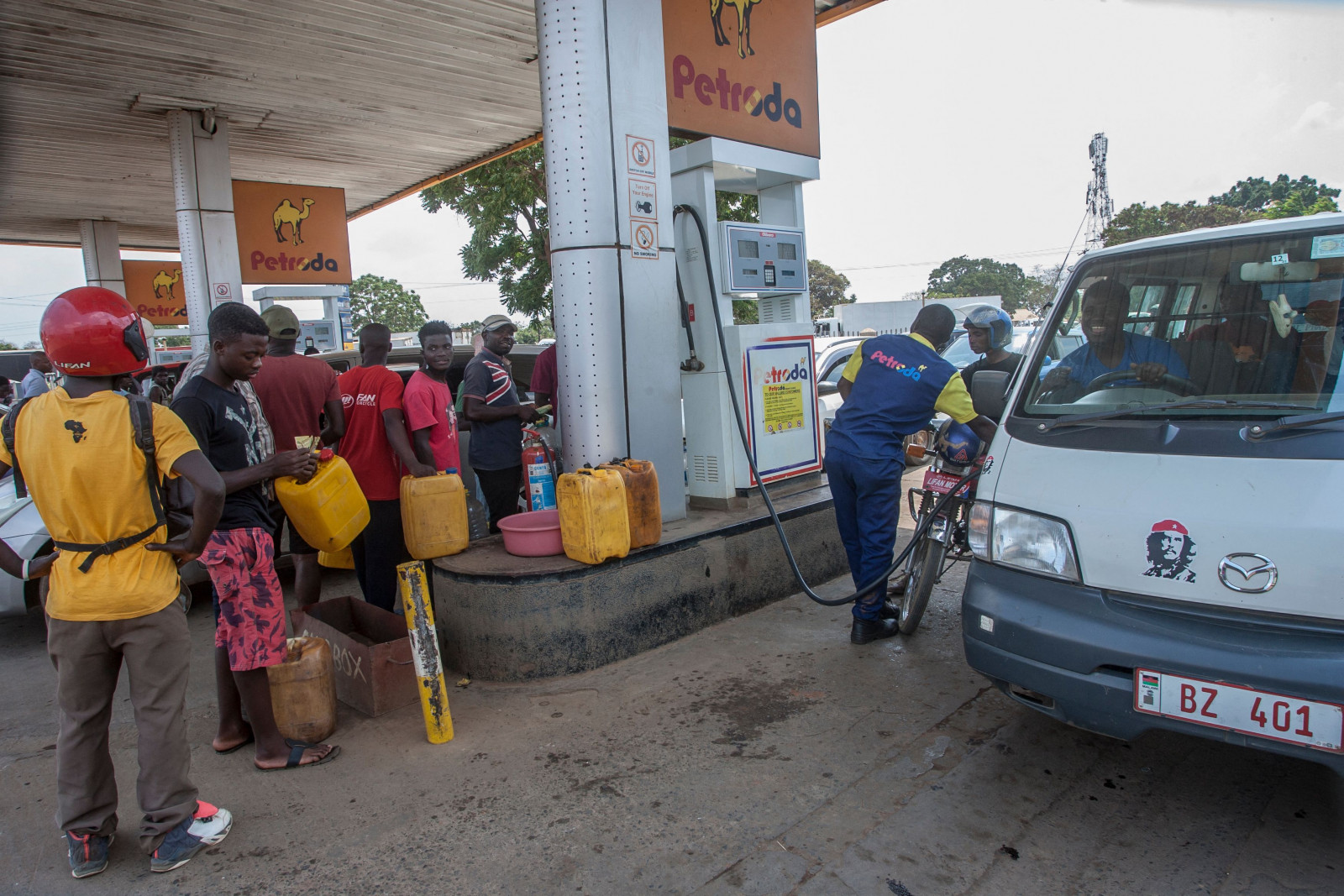
In the latest adjustments, the maximum retail price for gasoline (Premium Motor Spirit) has increased by Frw 59 to retail at Frw 1,633 per litre, up from Frw 1,574. Diesel (Automotive Gas Oil) has risen by Frw 71 to a maximum retail price of Frw 1,647 per litre, up from Frw 1,576.
The new maximum retail prices take effect from 6:00 AM on February 9, 2025, and will remain in place for the next two months.
“These adjustments are primarily based on recent fluctuations in international petroleum product prices,” Evariste Rugigana, the Director General of RURA, explained in a statement released on Saturday night.
The revision comes at a time when many economies worldwide are grappling with volatile fuel prices, influenced by global supply and demand dynamics. The ongoing conflict in Ukraine has particularly affected energy supplies from Russia, a major exporter, since the war broke out in February 2022.
The virtual event brought together key industry leaders to educate the public on the advantages, risks, and accessibility of CIS.
CIS are investment funds that gather money from multiple investors and allocate it into a diversified portfolio of assets. These schemes offer several benefits, including professional fund management, lower investment risk through diversification, and access to investment opportunities that may be difficult for individual investors to reach.
In Rwanda, two CIS are currently licensed: the RNIT Iterambere Fund and the BKC Aguka Fund. By the end of December 2024, their total assets under management (AUM) had grown to RWF 67.49 billion, with 34,465 unit holders, up from RWF 64 billion and 28,895 unit holders in June 2024.
This growth reflects increasing investor confidence and participation in Rwanda’s capital markets.
Agnes Nyirankeza, CEO of BCP Investment Managers noted that “The CIS industry can help create quality jobs in Rwanda by employing financial analysts and portfolio managers. It is a crucial part of our economy, offering diverse investment opportunities with professional management.”
Siongo Kisoso, Managing Director of BK Capital stressed that “The future of CIS in Rwanda is bright. As the market develops, we expect greater innovation, increased investor participation, and a wider range of investment options. CIS provide a balanced approach, combining professional management with accessibility and risk diversification.”
Jonathan Gatera, CEO of RNIT Iterambere Fund said that since launching in 2016 as Rwanda’s first CIS, the RNIT Iterambere Fund has grown its assets from RWF 3 billion to over RWF 45 billion.
“Investors can start with as little as RWF 2,000 and only need an ID card. The Net Asset Value per unit has increased from RWF 1,000 to RWF 1,238, reflecting an annual net return of about 11.78%. We plan to introduce more schemes to enable broader participation,” he said.
Pierre-Célestin Rwabukumba, CEO of the Rwanda Stock Exchange (RSE) expressed commitment to educating the public on CIS, as they provide the easiest access to the market.
“I encourage BK Capital to consider listing on the RSE for visibility, and I urge all stakeholders to introduce more CIS and investment products to expand opportunities for everyone,” he advised.
Thapelo Tsheole, CEO of the Capital Market Authority (CMA) explained that CIS offer the simplest entry point for market investment.
“To enhance productivity, we must create more schemes, develop new investment products, and invest in technology. By working together, we can broaden the scope of CIS in Rwanda,” he said.
As Rwanda’s capital markets continue to expand, the rise of CIS will play a key role in driving financial inclusion and economic development, providing investors with accessible and secure long-term investment opportunities.
The report, released on January 31, 2025, highlights that the highest price increase was for tea products, at 16.2%, while mining prices rose by 1.2%. The rise in export producer prices reflects strong international demand for Rwandan goods, particularly in tea and mining.
The general Producer Price Index (PPI), which measures the overall changes in prices received by domestic producers, increased by 0.2% annually but declined by 0.5% on a monthly basis.
For locally sold products, the Local Producer Price Index (LPPI) fell by 2.5% annually, indicating a drop in prices within Rwanda’s domestic market. However, on a monthly basis, local producer prices rose by 0.5%, suggesting a short-term recovery.
{{Decline in Monthly Export Prices
}}
Despite the 5.9% annual increase, Rwanda’s export producer prices fell by 2.2% in December compared to November 2024. The report attributes this to a 3.9% decline in tea product prices and a 0.5% drop in coffee product prices within the month.
Meanwhile, manufacturing prices saw mixed results, with an annual increase of 0.1% but a monthly drop of 0.6%, largely due to falling prices in certain industrial goods.
While tea prices rose significantly, coffee product prices fell by 2.8%, affecting overall performance.
The Producer Price Index (PPI) survey covers 114 establishments and 402 products across Rwanda. The data is collected in collaboration with the National Bank of Rwanda (NBR) and focuses on key sectors such as mining, manufacturing, and utilities.
The NISR report notes that price data is collected monthly and reflects the selling price received by producers at the factory gate, excluding taxes and transport costs. The PPI is calculated using the geometric modified Laspeyres formula, with December 2010 as the base year.
The company secured the funding through the first tranche of a Frw5 billion note program approved by the Capital Market Authority (CMA), reinforcing its commitment to scaling operations and contributing to Rwanda’s self-reliance in the agriculture sector.
Founded in 2018, Mahwi Grain Millers specializes in processing grains into food products for human and animal consumption.
The company, operating from the Bugesera Special Economic Zone in Southeastern Rwanda, currently produces and distributes 150 tonnes of refined maize flour daily. With a processing capacity of 250 tonnes per day, the new funding is expected to accelerate growth and enhance product diversification.
The Managing Director of Mahwi Grain Millers Plc, Jean Claude Uwizeyemungu, highlighted the impact of the capital raised, stating that the Frw3.3 billion not only enabled the company to expand its operations but also allowed it to diversify its product offerings and establish a foothold in export markets.
The company’s journey to securing financing was supported by the Rwanda Stock Exchange’s Capital Market Investment Clinic, a program designed to prepare small and medium enterprises (SMEs) to attract investors.
Rwanda Stock Exchange (RSE) Chief Executive Officer Pierre Célestin Rwabukumba encouraged other SMEs to explore capital markets as an alternative means of raising funds through a simplified process designed to facilitate access for smaller businesses.
Speaking during a media tour on January 30, 2025, Thapelo Tsheole, CEO of Rwanda’s Capital Market Authority, reiterated the vital role capital markets play in the country’s economic transformation under the Second National Strategy for Transformation (NST2).
He stated that capital markets will be essential in assisting SMEs to raise capital, thereby unlocking additional funding opportunities to fuel their growth.
As Rwanda’s capital market continues to expand, it is expected to provide businesses with increased access to funding while offering investors promising long-term opportunities.
Mega Global Link is a renowned company supporting individuals travelling abroad for various purposes, including work, education (long-term and short-term studies), visiting friends and family, tourism, and medical treatment.
The company provides these services in European countries, Canada, the United States, and other regions.
The permit to operate in Toronto was granted to the company by the Canadian government on January 20, 2025.
Dr. Habumugisha Francis, the CEO of Mega Global Link, stated that the company’s services are now fully operational in Canada. He emphasized that those wishing to work in Canada are being supported, as the company has already signed agreements with employment agencies.
Dr. Habumugisha assured clients that the Canada office is equipped with a dedicated team ready to serve them. He extended a warm welcome to those wishing to visit or settle in Canada.
He said, “If you want to travel to Canada with your family, come and let us assist you. Whether you’re coming to work or study, we have signed work agreements to meet your needs. Everything will be handled smoothly.”
Mega Global Link runs a number of branches worldwide, including an office in Kicukiro District in Kigali City, operations in New York in the United States, and several locations in Europe.
In 2024, Mega Global Link was awarded the Abroad Education Agency of the Year by Karisimbi Events for its outstanding service to clients.
The company recently ventured into an online marketplace for fitness equipment and nutritional supplements. The platform offers products designed to improve health and wellness.