The rise in prices was primarily driven by increases in transport, food, and hospitality costs.
The report highlights that urban inflation, which is the headline index for monetary policy, saw a notable uptick, reflecting the ongoing economic dynamics.
“Urban CPI increased by 6.3 percent on an annual basis (February 2025 compared to February 2024) and by 0.7 percent on a monthly basis (February 2025 to January 2025),” the report states.
Among the key contributors to the inflation surge were transport costs, which rose by 17.4% year-on-year, and restaurant and hotel prices, which climbed by 11.6%.
The price of food and non-alcoholic beverages increased by 4.5%, while housing, water, electricity, gas, and other fuels saw a 2.9% rise.
Rural areas, however, experienced a milder price increase, with rural CPI rising by 2.2% annually and 1% on a monthly basis. This resulted in an overall national inflation rate of 3.8% year-on-year.
The NISR compiles Rwanda’s CPI using price data from over 1,622 products across the country, tracking inflation trends that impact households and businesses.
With inflationary pressures persisting, policymakers and businesses will be closely monitoring economic trends in the coming months.
This year’s Level Up Your Biz edition empowered 40 MTN Agents with essential business skills to enhance their operations. Among them, 10 MTN Agents stood out with the most outstanding solutions to real distribution channel challenges, with the top three winners securing the highest recognition.
Mapula Bodibe, CSI Chairperson and MTN Rwanda Chief Executive Officer highlighted that, beyond providing communication and internet services, the initiative aligns with the telecom’s committment to contributing to Rwanda’s Vision 2050 of becoming a high-income country, .
“By equipping our agents with the necessary training, we empower them to become job creators, driving economic growth and transforming their lives. Inclusion is at the heart of what we do, and we believe that by working together, we can build a future that benefits all Rwandans,” she said.
Bayigana Alexis from Gasabo District clinched first place, winning Rwf 5 million in float, while Dusabimana Adelphine from Rulindo District secured second place with Rwf 3.5 million in float. Tuyishime Baraka from Nyamasheke District earned third place, receiving Rwf 2.5 million in float.
Beyond their cash prizes, the top three winners will also benefit from a revamp of their current working environment, further enhancing their business operations. The remaining seven MTN agents were each awarded Rwf 500,000 in float, reinforcing MTN Rwanda’s commitment to supporting and uplifting its agents.
“At Inkomoko we believe Solutions can be found here. The solutions to many challenges will be found by entrepreneurs on this continent. We are tremendously proud of the 10 agents from the pool of 5,000 who made it out. Our biggest wish is that your businesses will reach a new level and thrive and that this program will change your life,” said Helle Dahl Rasmussen, Business Growth Director, Inkomoko Rwanda.
MTN Rwanda is encouraging organizations across the country to join efforts in advancing Rwanda’s National Strategy for Transformation, playing an active role in driving sustainable development and achieving the Vision 2050 goal of becoming a high-income nation.
By creating jobs, the people of Rwanda are empowered with economic opportunities that improve their livelihoods, enhance financial inclusion, and drive innovation. This collective effort not only strengthens local businesses and industries but also contributes to a more resilient and self-sustaining economy, paving the way for long-term national prosperity.
{{About MTN Rwandacell }}
MTN Rwandacell Plc (MTN Rwanda) is the market leader in mobile telecommunications in Rwanda. Since 1998, it has continuously invested in expanding and modernising its network and leading digital solutions for Rwanda’s progress.
The telecom offers various services to subscribers, including innovative propositions such as personalised voice and data offers for individuals and corporates with a clear vision to lead the delivery of a bold, new digital world to customers with a belief that everyone deserves the benefits of a modern connected life.
{{About Inkomoko}}
Inkomoko is a consulting firm that supports micro and small enterprises across Africa so that they can grow to create jobs, improve livelihoods, and create thriving communities. It started its work in Rwanda eleven years ago and has now opened offices in Kenya, Ethiopia, South Sudan and Chad.
The new service aims to provide fast and convenient financing to salary earners without requiring collateral. Customers can apply through the BK Mobile App or Internet Banking platform and receive funds in record time.
“We understand that when opportunities arise, speed matters. “By digitizing BK QUICK +, we empower our customers to take charge of their financial goals and contribute to Rwanda’s growing economy,” said Desire Rumanyika, Chief Retail and Digital Banking Officer at Bank of Kigali.
The application process is simple and takes only a few minutes. Customers need to log in to their BK Mobile App or Internet Banking, select “Loans” then “BK QUICK +”, submit the required documents, and wait for the system to assess their eligibility.
If approved, a loan offer is sent digitally, and once the customer signs the contract electronically, the funds are transferred to their account within 15 hours. The loan offers flexible repayment terms of up to five years.
This initiative aligns with Bank of Kigali’s commitment to advancing financial inclusion in Rwanda. By providing quick, secure, and fully digital loans, the bank aims to support Rwandans in meeting their personal and professional financial needs.
Bank of Kigali continues to position itself as a leader in digital financial innovation, simplifying access to essential financial products. With BK QUICK +, customers can now fund major purchases, cover emergencies, or pursue new opportunities without the traditional waiting periods.
Interested customers can apply for BK QUICK + today through the BK Mobile App or Internet Banking platform and receive funding in just 15 hours.
The payment gateway was among the products showcased during the Inclusive FinTech Forum (IFF), held in Rwanda from February 24 to 26, 2025.
The three-day forum, opened by President Paul Kagame, brought together global leaders, entrepreneurs, and innovators, providing a platform to explore solutions for the continent’s economic challenges through digital finance.
{{How IremboPay works
}}
IremboPay simplifies electronic payment collection for businesses of all sizes, from large corporations to small enterprises, significantly boosting operational efficiency. The platform was developed by Irembo, a leading tech company in Rwanda renowned for its role in transforming government services digitally through its IremboGov platform.
By integrating diverse payment methods into a single, secure, and intuitive platform, IremboPay eliminates the need for time-consuming manual reconciliation, reducing financial complexities and minimising errors.
The platform processes millions of transactions annually, empowering businesses to save valuable time and enhance their overall financial management.
IremboPay’s Business Lead, Vanitah Gatana, explained how the platform simplifies financial management and drives business growth.
“Time spent on reconciliation and lack of revenue visibility can significantly slow down a business,” Gatana stated.
“Our system integrates all payment sources, giving business owners a clear picture of their income and facilitating informed growth decisions.”
IremboPay offers several key benefits to businesses, including efficient payment processing that ensures fast and secure transactions and reduces administrative workload.
The platform employs advanced security measures such as encryption and fraud prevention to ensure safety and confidentiality.
IremboPay also provides multi-currency convenience, supporting Rwandan Francs (RWF), US Dollars (USD), Euros (EUR), and British Pounds (GBP), facilitating international trade.
Additionally, it features multi-language accessibility, available in English, French, and Kinyarwanda, making it more user-friendly for diverse businesses. The system also delivers user-friendly financial reports with valuable insights to inform strategic business decisions and performance tracking.
One of IremboPay’s standout features is its ability to integrate effortlessly with existing accounting and business management systems. Real-time transaction tracking allows businesses to monitor finances with ease, reducing manual bookkeeping efforts.
Looking ahead, IremboPay is set to integrate with Rwanda Revenue Authority’s Electronic Billing Machine (EBM) system, enabling businesses to automatically generate official invoices upon receiving payments.
IremboPay caters to a wide range of industries, including tourism and hospitality, where it simplifies check-ins and payments through its Payment Links solution. In education, it streamlines fee collection for schools and universities.
In the transport sector, it enables real-time payment processing for transport services. Manufacturing businesses can use it to efficiently manage transactions, while software and IT companies benefit from its integrated digital payment solutions.
Businesses interested in adopting IremboPay can start by visiting the [IremboPay.com->http://IremboPay.com] website or contacting the sales team. After an initial consultation to discuss specific business needs, a customized payment solution is developed.
The setup process is quick and easy, allowing for seamless integration with existing systems. Businesses also receive continuous support to ensure smooth financial operations.
With its user-friendly interface, secure transactions, and comprehensive reporting, IremboPay is streamlining digital payments in Rwanda. As more businesses embrace digital transformation, IremboPay stands out as an essential tool for growth, efficiency, and financial clarity.
The signing of the project, dubbed Africa’s Next-Gen Digital Payment Infrastructure, took place on Tuesday, February 25, at the Inclusive Fintech Forum 2025.
Also known as Project 54, the initiative marks a significant step toward integrating Africa’s financial ecosystem.
GFTN is a not-for-profit organisation established by the Monetary Authority of Singapore (MAS) in 2024 to expand Singapore’s fintech ecosystem globally. Its partnership in the initiative underscores Africa’s growing significance in the global digital economy.

Outgoing Central Bank Governor John Rwangombwa participated in the signing ceremony, praising the initiative for its potential to address the high costs and inefficiencies of cross-border transactions, thereby enhancing trade and financial inclusion.
The project was conceived through discussions at key global forums, including the 3i Africa Summit in Accra, the Zurich Point Zero Forum, and the Singapore FinTech Festival.
Recognising Africa’s dynamic financial landscape, stakeholders sought to develop a solution that enables seamless cross-border transactions, ultimately benefiting small businesses, entrepreneurs, and financial institutions.
The implementation of Africa’s Next-Gen Digital Payment Infrastructure is built on four fundamental pillars, each essential to creating a robust and future-ready financial system.
A strong governance framework is at the core, establishing clear scheme rules, dispute resolution mechanisms, and liability structures. This also includes enhanced local currency settlement models, ensuring stability and reliability across cross-border transactions.
Technology integration and advancement play a pivotal role, with a focus on innovations such as tokenisation and digital currency applications. By embracing these emerging technologies, the initiative aims to future-proof Africa’s financial sector and enhance efficiency.
A sustainable pricing model underpins the initiative, promoting financial viability through cost-effective solutions tailored for both high-value and low-value transactions. This ensures accessibility and affordability while maintaining long-term operational stability.
Equally important is the engagement of key stakeholders, including regulators, financial institutions, fintech innovators, and investors. By fostering collaboration, the initiative seeks to build a resilient digital payments ecosystem that aligns with the needs of Africa’s evolving financial landscape.
Bank of Ghana Governor Johnson Asiama described the launch as a milestone toward an integrated African capital market, offering new opportunities for entrepreneurs and small businesses.
“The pursuit of a safe, affordable, and efficient cross-border regional payment architecture, backed by a licence passporting framework, represents another significant step forward,” he said.
With Africa’s fintech industry projected to generate $40 billion in revenue by 2028, overcoming regulatory and infrastructure challenges remains crucial. Project 54 aims to bridge this gap, unlocking new pathways for inclusive financial growth and positioning Africa at the forefront of global digital payments innovation.
Speaking at the second edition of the Inclusive FinTech Forum in Kigali on Tuesday, February 25, the Head of State highlighted the need for a secure and regulated environment to not only attract investment but also enhance financial inclusion and build resilience in Africa’s rapidly evolving financial sector.
In his keynote address, Kagame noted that Africa’s young, tech-savvy population presents a unique opportunity for innovation in the financial sector.
“Indeed, with our continent’s young and tech-savvy population, Africa can compete with the rest of the world and successfully innovate,” he said.
“FinTechs continue to dominate, with the number of companies tripling in recent years. These enterprises are fundamentally shaping our financial services sector, especially with mobile money and remittance services.”
The president pointed out that regulations must evolve to keep up with this rapid growth, particularly to address challenges like cybercrime and fraud.
“We need a harmonized regulatory landscape, and we must come together to combat cybercrime and fraud,” President Kagame remarked.
He also called for closer cooperation between public and private sectors to unlock opportunities through innovation.
“We can unlock many more opportunities through public-private partnerships and by harnessing the power of artificial intelligence,” he added.
The Head of State also discussed the need for Africa to develop its own regulatory frameworks and infrastructure, highlighting Rwanda’s commitment to digital infrastructure and skills development as key drivers of the country’s economic progress.
“Moving forward, creating an enabling environment for business and skills development should be our number one priority,” he said.
Kagame also addressed challenges facing Africa, including the growing brain drain of skilled professionals and financial exclusion, particularly among women in the informal economy. He argued that the continent must take ownership of its own development, rather than relying on external support.
“Taking ownership of our development is not something we can ask others to do for us. Business founders also need to do their part and gain the confidence of investors,” Kagame said.
The three-day Inclusive FinTech Forum brings together global leaders, entrepreneurs, and innovators, providing a platform to explore solutions for the continent’s economic challenges through digital finance.
Among the attendees was Alvin Tan, Minister of State for Trade, Industry, Culture, Community, and Youth in Singapore.
In his remarks, the minister celebrated the longstanding relationship between Rwanda and Singapore as the two countries mark 20 years of diplomatic ties.
He praised Rwanda’s rapid development in recent years, expressing his pleasure at seeing Rwanda becoming the “Singapore of Africa.”
“We admire and respect Rwanda for your resilience and outstanding achievements in economic and technological development,” the minister remarked.
Singapore is highly regarded for its exceptional development, driven by strong governance, strategic economic diversification, and world-class infrastructure. Under visionary leadership, particularly that of Lee Kuan Yew, the country transformed from a small port city into a global financial hub, maintaining one of the highest GDPs per capita in the world, valued at 501.4 billion USD as of 2023.
To participate, merchants must receive payments from customers through their MoMo code and make payments to other merchants using MoMoPay. Two lucky merchants will each win a pickup truck.
Speaking at the launch, Chantal Kagame, CEO of Mobile Money Limited, said: “We are proud to launch this campaign as we celebrate a major milestone—reaching 500,000 merchants last year. We had a total of 3.3 million users of the MoMoPay services actively paying these merchants, which aligns with the government’s strategy to drive a cashless economy.
“This achievement reflects the trust that businesses across Rwanda have placed in Mobile Money as a reliable payment solution. ‘BivaMoMotima 3’ is our way of thanking them and encouraging more merchants to join the MoMoPay network for seamless, secure, and efficient transactions.”
The ‘BivaMoMotima’ campaign has been a staple of Mobile Money Limited’s commitment to driving digital financial inclusion. This third edition builds on the success of previous campaigns by specifically recognizing merchants, who play a crucial role in the ecosystem. By incentivizing the use of MoMoPay, the campaign aims to reinforce cashless payments as the preferred method for business transactions in Rwanda.
MoMoPay allows merchants to receive customer payments via a dedicated USSD code, providing a hassle-free alternative to cash transactions. With over half a million merchants already on board, Mobile Money Limited is encouraging even more businesses to register and benefit from the efficiency and security of digital payments.
Mobile Money Limited remains committed to empowering businesses and driving Rwanda’s digital economy forward, one transaction at a time.
{{About Mobile Money Rwanda Ltd}}
Mobile Money Rwanda Ltd is MTN Rwanda’s FinTech subsidiary, established on 27th April 2021 to provide and manage Mobile Money services in Rwanda. The company has about 5.1 million subscribers, over 65,000 Mobile Money agents, and over 500,000 MoMoPay merchants across the country.
With continuous innovations in services such as MoMoPay, MoKash Loans & Savings, Tap&Go bus payments, Bill Payments, International & Regional Remittances, and more, Mobile Money Rwanda seeks to maintain the lead in driving financial inclusion and supporting the digital economy in Rwanda.
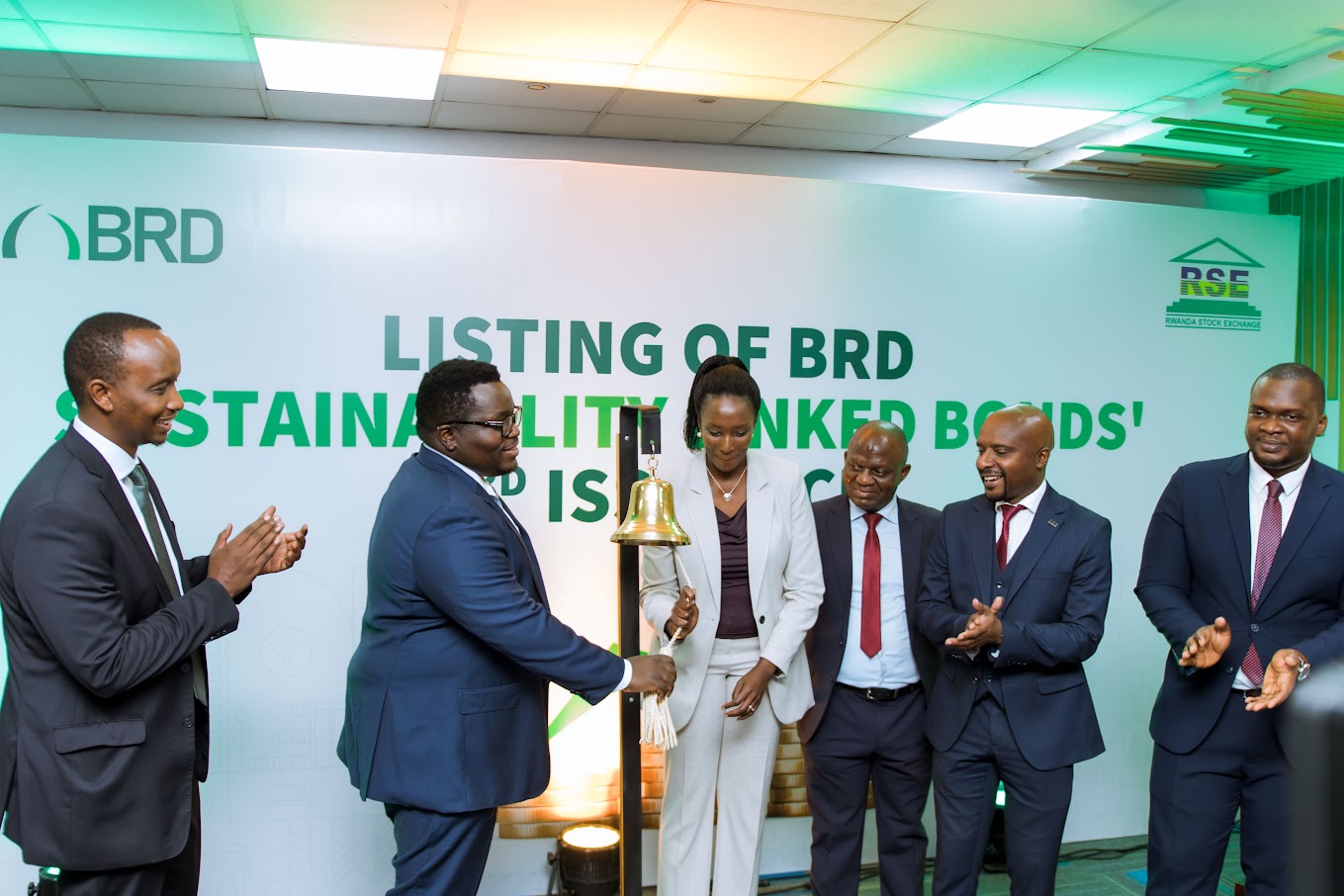
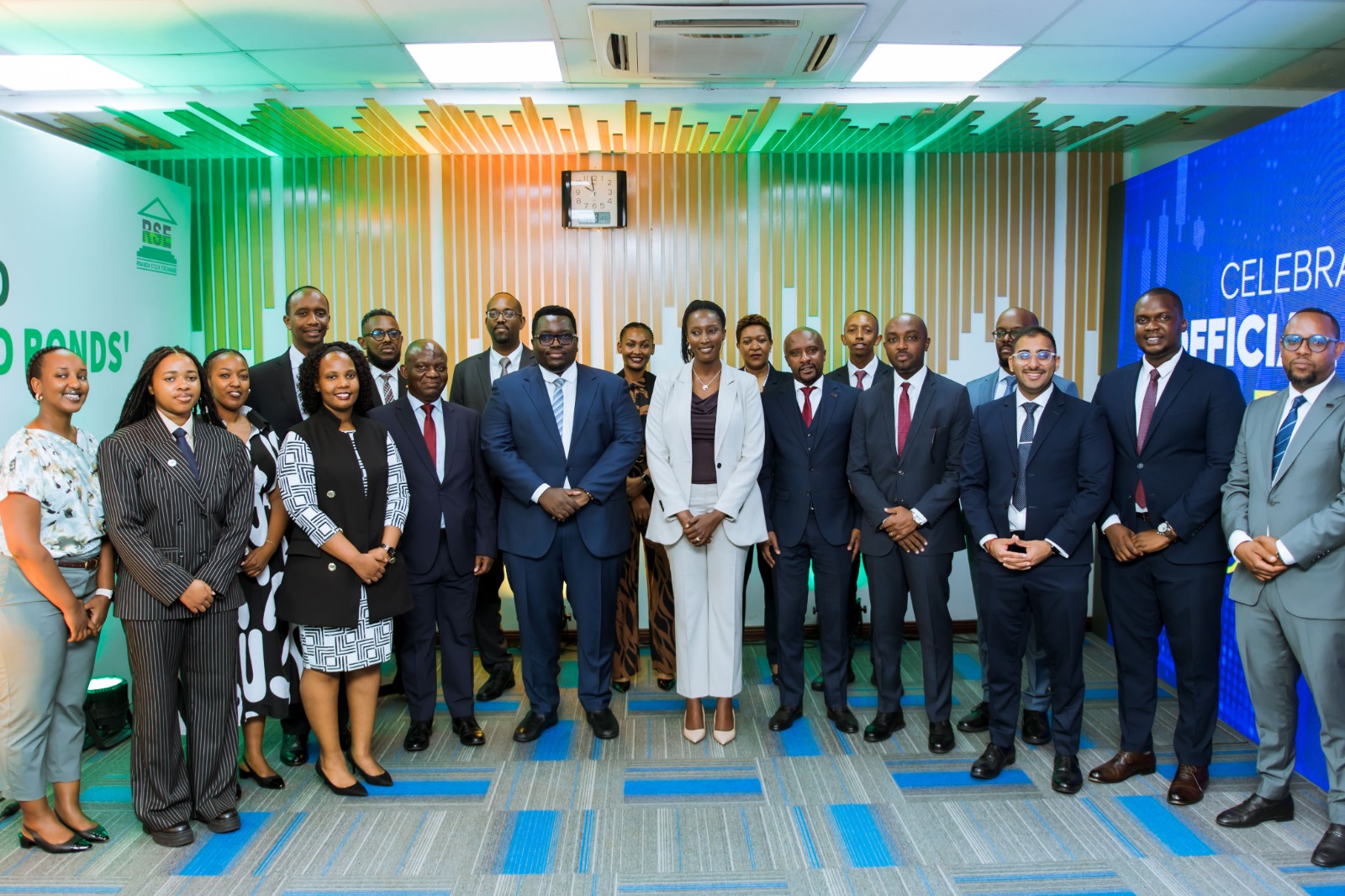
The accreditation was granted during the 41st GCF Board Meeting held in South Korea.
This achievement positions BRD as a key player in mobilizing climate finance to support Rwanda’s transition to a green economy.
The recognition allows BRD to access concessional funding at scale, further strengthening Ireme Invest—Rwanda’s flagship climate finance initiative—across the financial sector. By doing so, BRD aims to accelerate sustainable investments and integrate climate considerations into financial portfolios.
Expressing her enthusiasm, BRD Chief Executive Officer, Ms. Kampeta Sayinzoga, highlighted the significance of this development, explaining how it positions BRD to further its green finance initiatives:
“This accreditation is a testament to the rigorous efforts BRD has undertaken to champion green finance in Rwanda. It reinforces our position as a key enabler of climate action, allowing us to mobilize concessional resources to green the financial sector. With the support of the Green Climate Fund, we are now better positioned to scale up Ireme Invest and strengthen Rwanda’s climate resilience through sustainable investments.”
The accreditation also reinforces BRD’s commitment to fostering partnerships that drive climate finance. By working closely with stakeholders in both the public and private sectors, the bank aims to implement climate-smart projects that contribute to Rwanda’s ambitious sustainability goals.
BRD now joins an elite group of African financial institutions accredited by the GCF, including the Development Bank of Southern Africa, the Development Bank of Nigeria, and the Development Bank of Zambia.
Other accredited institutions on the continent include, among others, the African Development Bank, the Eastern and Southern African Trade and Development Bank, Africa Finance Cooperation, Banque Ouest Africane De Development (BOAD), ECOWAS Bank
for Investment and Development, Fonds d’Intervention pour I’Environnement (FIE), KCB Bank Kenya Limited and Ecobank Ghana.
As Rwanda’s sole development finance institution, BRD has played a critical role in driving the country’s economic transformation since its establishment in 1967. With a strong focus on infrastructure, agriculture, affordable housing, green finance, and exports, BRD continues to position itself at the forefront of sustainable development financing.
This accreditation is expected to strengthen Rwanda’s financial ecosystem by ensuring that institutions are better equipped to support climate adaptation and mitigation initiatives. It also aligns with Rwanda’s Nationally Determined Contributions (NDCs) and Vision 2050, reinforcing the country’s commitment to climate resilience and low-carbon growth.
The Green Climate Fund, the world’s largest dedicated climate fund, was established under the UNFCCC to support developing nations in tackling climate change. By providing financial resources for climate adaptation and mitigation projects, the GCF helps mobilize funding for transformative climate action worldwide.
The announcement was made by BNR Governor and Chairperson of the Monetary Policy Committee (MPC), John Rwangombwa, during a press conference in Kigali on Thursday.
The decision follows the MPC’s meeting on February 12, 2025, where members assessed the impact of previous monetary policy decisions, evaluated recent global and domestic economic developments, and reviewed economic projections for the next three months.
The 6.5 percent lending rate was first introduced in August 2024 after being reduced from 7.0 percent and was subsequently maintained during the November 2024 meeting.
Governor Rwangombwa said headline inflation remained within the target range of 2 to 8 percent in the fourth quarter of 2024, despite some upward pressures in food and core inflation.
The MPC projects inflation will average 6.5 percent in 2025 before declining to approximately 4.1 percent in 2026. However, risks such as geopolitical tensions and adverse weather conditions affecting food prices could exert upward inflationary pressures.
“The Monetary Policy Committee has decided to maintain the central bank rate at 6.5 percent, a level considered adequate to keep inflation within the target range, with forecasts averaging around 6.5 percent in 2025 and 4.1 percent in 2026,” Rwangombwa announced, adding that the MPC will continue monitoring global and domestic economic developments and stands ready to take appropriate action to ensure price stability.
In the fourth quarter of 2024, headline inflation rose to 5.2 percent, up from 4.1 percent in the previous quarter. This increase was driven by higher core and fresh food inflation, which offset a decline in energy inflation.
Core inflation rose slightly from 5.3 percent to 5.4 percent, primarily due to rising costs in housing materials and services, as well as increased input costs for alcoholic beverages.
Fresh food inflation surged from 0.2 percent to 5.6 percent due to base effects from the previous year’s sharp vegetable price decline. Meanwhile, energy inflation declined due to lower liquid and solid fuel prices.
For the full year 2024, headline inflation averaged 4.8 percent, significantly down from 14 percent in 2023. This disinflation was largely attributed to improved agricultural production, the lagged effects of prior monetary policy tightening, and government-led measures to curb inflation.
Rwanda’s economy demonstrated strong growth in 2024, with real GDP expanding by an average of 9.2 percent in the first three quarters, following 8.2 percent growth in both 2022 and 2023. The growth was broad-based, with industry and services sectors registering double-digit expansion, while agriculture rebounded from previous poor harvests.
“High-frequency indicators show continued growth momentum in the last quarter of 2024, primarily driven by strong activity in the industry and services sectors. The Composite Index of Economic Activity (CIEA) rose by 15.7 percent year-on-year in the fourth quarter of 2024, indicating that the economic growth for the year 2024 will likely exceed the projection of 8.3 percent,” the governor revealed.
Rwanda’s merchandise trade deficit improved in the fourth quarter of 2024, supported by a 15.8 percent growth in exports, driven by stable commodity prices and strong regional demand for manufactured goods and re-exports.
Meanwhile, imports recorded a modest 3.3 percent increase, reflecting strong domestic demand for raw materials and energy products. Consequently, the trade deficit narrowed by 3.7 percent in the last quarter of 2024.
The pressures on Rwanda’s foreign exchange market eased in 2024 compared to the previous year. By December 2024, the Rwandan Franc had depreciated by 9.42 percent against the US dollar, a significant improvement from the 18.05 percent depreciation recorded in 2023.
Additionally, Rwanda’s gross official reserves stood at 5.4 months of import cover, well above the 4-month benchmark.
Money market interest rates reflected the central bank’s monetary stance, with the interbank rate averaging 6.78 percent in the fourth quarter of 2024, down from 8.25 percent in the same period the previous year.
This decline was attributed to the 100-basis point CBR reduction in May and August 2024, as well as ample liquidity in the banking system.
While short-term lending rates declined, the overall lending rate increased slightly by 7 basis points to 15.85 percent, mainly due to a higher proportion of individual loans, which typically carry higher interest rates.
The deposit rate also rose by 45 basis points to 10.5 percent in the fourth quarter of 2024, reflecting an increased share of long-term deposits.
Facilitated by Rwanda’s Private Sector Federation (PSF), the visit seeks to explore potential areas of collaboration between the two nations.
During their stay, the Saudi delegation will hold meetings with senior government officials and representatives from Rwanda’s private sector.
“The visit also aims to increase trade between Saudi Arabia and Rwanda, highlighting the existence of numerous investment opportunities that will be unveiled,” PSF said in a statement on Wednesday.
The delegation’s visit signals growing interest from Saudi investors in Rwanda’s rapidly expanding economy and business-friendly environment.
Rwanda continues to position itself as a prime investment destination, with strategic policies designed to attract foreign direct investment and drive sustainable economic growth.
Rwanda and the Kingdom of Saudi Arabia have maintained strong cooperation in health, education, energy, and infrastructure development. Additional opportunities for collaboration exist in technology, finance, tourism, trade, and investment.