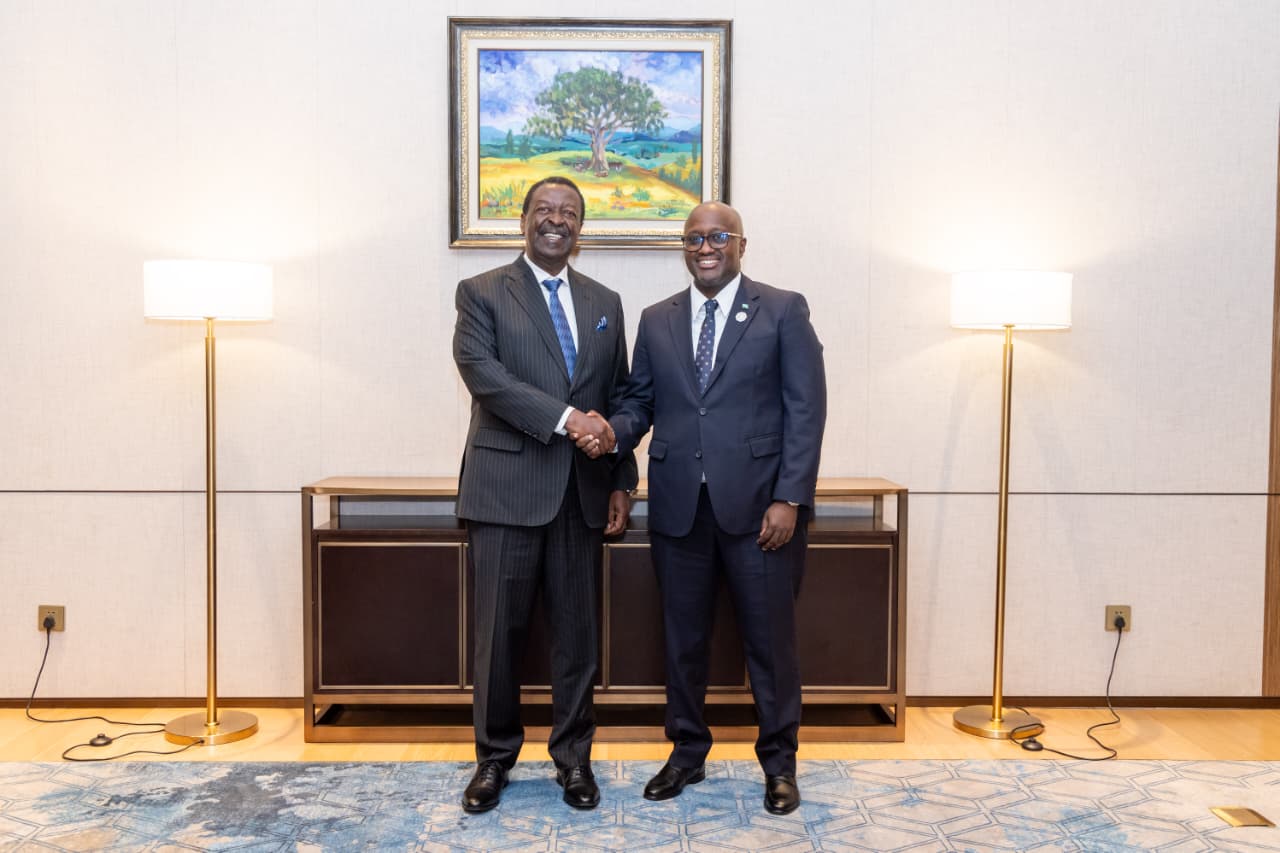
Kenya’s Prime Cabinet Secretary and Cabinet Secretary for Foreign and Diaspora Affairs, Musalia Mudavadi, announced the approval during bilateral talks with Rwanda’s Minister of Foreign Affairs and International Cooperation, Olivier Nduhungirehe, in Addis Ababa.
“The Kenyan Cabinet approves the movement of about 40,000 metric tonnes to Rwanda through our pipeline from Mombasa. We are committed to ensuring a deeper relationship with our neighbours,” Mudavadi said.
The agreement will allow Rwanda to use Kenya’s petroleum infrastructure, including the pipeline network connecting the Port of Mombasa, to facilitate the movement of fuel imports.
Nduhungirehe said the arrangement will help stabilise Rwanda’s fuel supply and support smooth operations across the economy.
“That will be about 52 million litres, which is about our consumption in a month. It will serve us well,” he said.
Rwanda, a landlocked country, relies on neighbouring countries for access to international fuel markets. The country has been working to diversify petroleum import routes through agreements with Kenya and Tanzania to improve supply reliability and strengthen energy security.
In June 2026, Rwanda signed a cooperation agreement with Kenya to facilitate petroleum imports through the Port of Mombasa, granting access to storage facilities, transportation services and distribution infrastructure.
Rwanda later signed a similar agreement with Tanzania in July to import petrol and diesel through the Port of Tanga.
The agreements are part of efforts to expand Rwanda’s petroleum supply network amid global fuel market uncertainties while also positioning the country to participate more actively in regional petroleum trade.
Earlier this month, Minister of Trade and Industry Antoine Marie Kajangwe said the agreements with Kenya and Tanzania could create opportunities for Rwanda to become a regional fuel distribution hub.
“We believe this can strengthen regional trade, allowing Rwanda, given its geographical position, to supply petroleum products to neighbouring countries. Our goal is to have sufficient petroleum products that can meet demand in Rwanda and also serve markets in the region,” Kajangwe said.
Mudavadi said Kenya’s decision to facilitate fuel transit to Rwanda demonstrates the two countries’ commitment to regional integration and shared prosperity.
He added that Kenya remains focused on strengthening regional partnerships and advancing Africa’s role in international institutions. During the talks, Mudavadi also sought Rwanda’s support for Kenyan candidates seeking positions at the International Court of Justice (ICJ) and the International Criminal Court (ICC).
Kenya’s Prime Cabinet Secretary and Cabinet Secretary for Foreign and Diaspora Affairs, Musalia Mudavadi, announced the approval during bilateral talks with Rwanda’s Minister of Foreign Affairs and International Cooperation, Olivier Nduhungirehe, in Addis Ababa.
Its chairman, Xiang Wenbo, sees that as a floor rather than a ceiling.
“I think this is only the beginning. There are still huge opportunities ahead,” Xiang said in a recent interview with Xinhua in the Kenyan capital, Nairobi.
Sany’s trajectory tracks a broader shift in China-Africa economic ties, moving beyond the export of goods toward industrial presence on the ground — in infrastructure, clean energy, servicing networks, and workforce training.
Taking root
Xiang has lost count of how many times he has visited Africa since Sany first entered the continent more than two decades ago. He said he is drawn to the continent’s unspoiled character and the beauty of its natural environment.
What has changed, in his telling, is the built environment. Infrastructure across Africa has been transformed over the past decade, he said, “especially in Kenya, where the change is striking. So I believe Africa is now in a very good period of development.”
The commercial case has moved with it. China has been Africa’s largest trading partner for 15 consecutive years, according to China’s Ministry of Commerce, and the stock of Chinese direct investment on the continent continues to grow. Beyond capital and equipment, Xiang argued, Chinese firms have brought technology transfer and supply-chain depth that turn industrialization plans into productive capacity.
Many of those firms have become significant taxpayers and employers in their host countries, he said.
“We have created a lot of local jobs. We directly employ more than 1,000 people here, and we have sold more than 40,000 machines in Africa over the years. Most of the operators were trained by us, which means we have trained a large number of industrial workers,” Xiang said.
“We have established sales and service operations, including repair centers, in almost every African country. Those skilled service personnel are, in effect, the foundation of Africa’s modern manufacturing industry in the future.”
That picture is broadly consistent with outside assessments. A McKinsey study of Chinese enterprises in Africa found that local staff account for close to 90 percent of their workforce.
Roads first
Drawing on China’s own development experience — captured in the saying that to get rich, you build roads first — Xiang argued that infrastructure must be built with foresight and should never become a bottleneck on growth.
By that standard, he said, Africa’s build-out “is still far from sufficient, and there is a great deal Chinese companies can do.”
He pointed to the cost of moving goods. “Logistics here is still very inadequate, and because of logistics, many things in Africa remain expensive,” he said, noting that a road journey in some major African cities can take more than 14 hours. “That would be unimaginable in China.”
The gap is well documented. The African Development Bank estimates the continent’s annual infrastructure financing shortfall at between 68 billion and 108 billion dollars, and infrastructure deficits are widely identified as a principal constraint on Africa’s competitiveness and on realizing the potential of the African Continental Free Trade Area.
A white paper issued by China’s State Council Information Office, “China and Africa in the New Era: A Partnership of Equals,” says Chinese companies have built or upgraded more than 10,000 km of railways and nearly 100,000 km of roads in Africa and helped create over 4.5 million local jobs.
Africa’s transport and network infrastructure remains nowhere near complete, Xiang concluded, so concerns about over-building are beside the point.
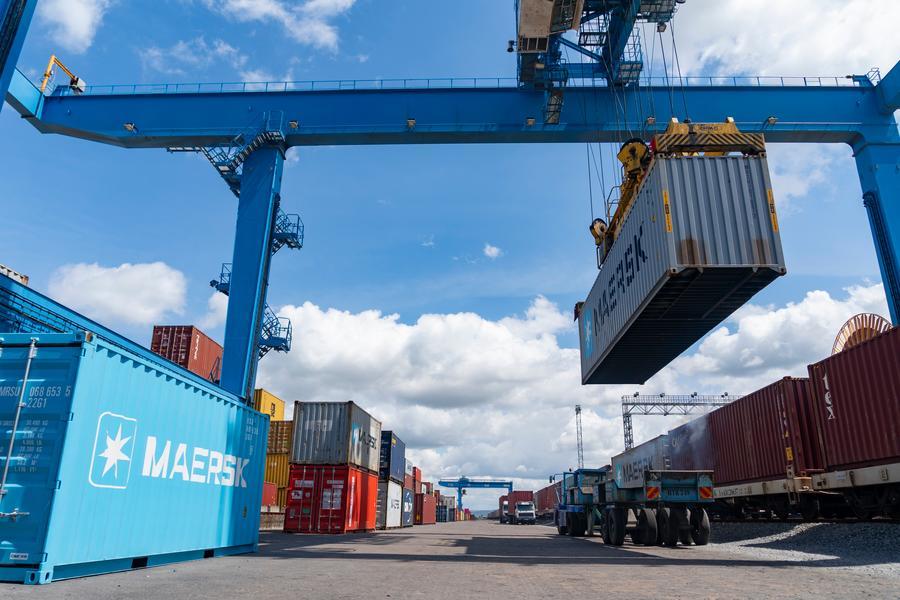
A crane hoists a container at Port Reitz Station on the Mombasa-Nairobi Standard Gauge Railway (SGR) in Mombasa, Kenya, July 9, 2026. (Xinhua/Xie Jianfei)
Two revolutions
Looking ahead, Xiang said Chinese companies should shift from exporting products to exporting industry, helping African partners build modern management practices and industrial systems. China and Africa pursuing modernization together, with no country left behind, is “a very large undertaking,” he said.
He sees a particular opening in timing. The fourth industrial revolution, driven by artificial intelligence, is unfolding alongside a clean energy revolution led by wind and solar, he said. The overlap gives latecomer economies a historic chance to leapfrog older technologies.
Sany is pursuing a strategic transition centered on new energy, promoting green mining, microgrids, and utility-scale solar to cut African mining operations’ reliance on costly conventional power. Last year, the company donated 500 household solar systems to Malawi.
Xiang acknowledged that the operating environment is not without friction, citing logistics costs, financing constraints, and the long lead times required to build service networks from scratch.
As Europe and the United States turn to non-market measures to shield domestic industries, he added, third-party markets are becoming the main arena of competition. The long-standing relationship between China and Africa offers a comparatively stable environment for two-way trade and investment, he said, and that is where Chinese firms’ durable advantage lies.
Sany’s African story began in 2002 with two motor graders delivered to Morocco. Nearly a quarter of a century later, its machines work across the continent.
“The real curtain,” Xiang said, “is only now going up.”
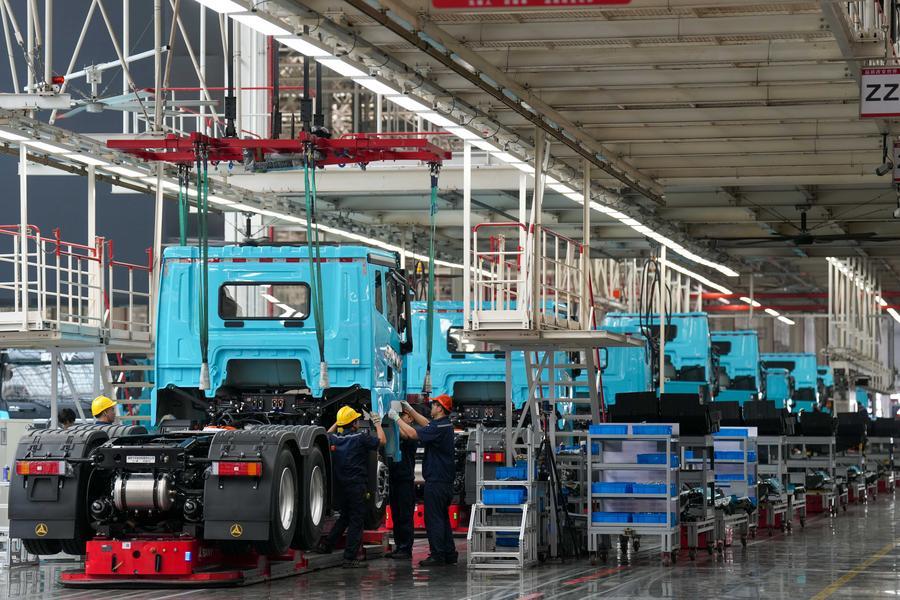
Workers work at an industrial park of Sany, China’s leading heavy equipment manufacturer, in Changsha, central China’s Hunan Province, May 12, 2026. (Xinhua/Xue Yuge)
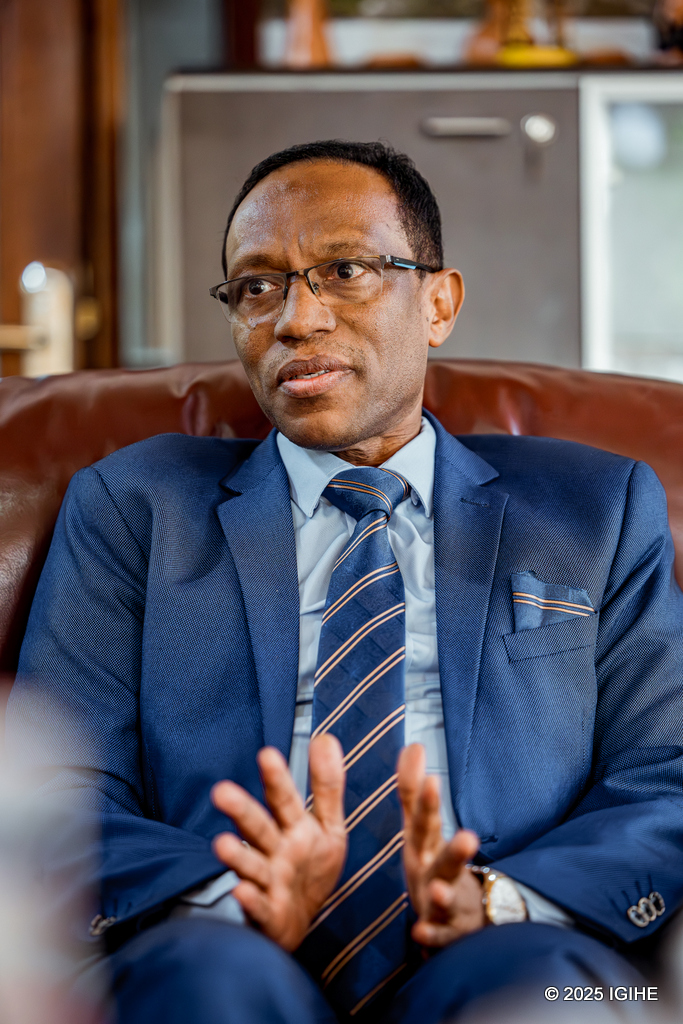
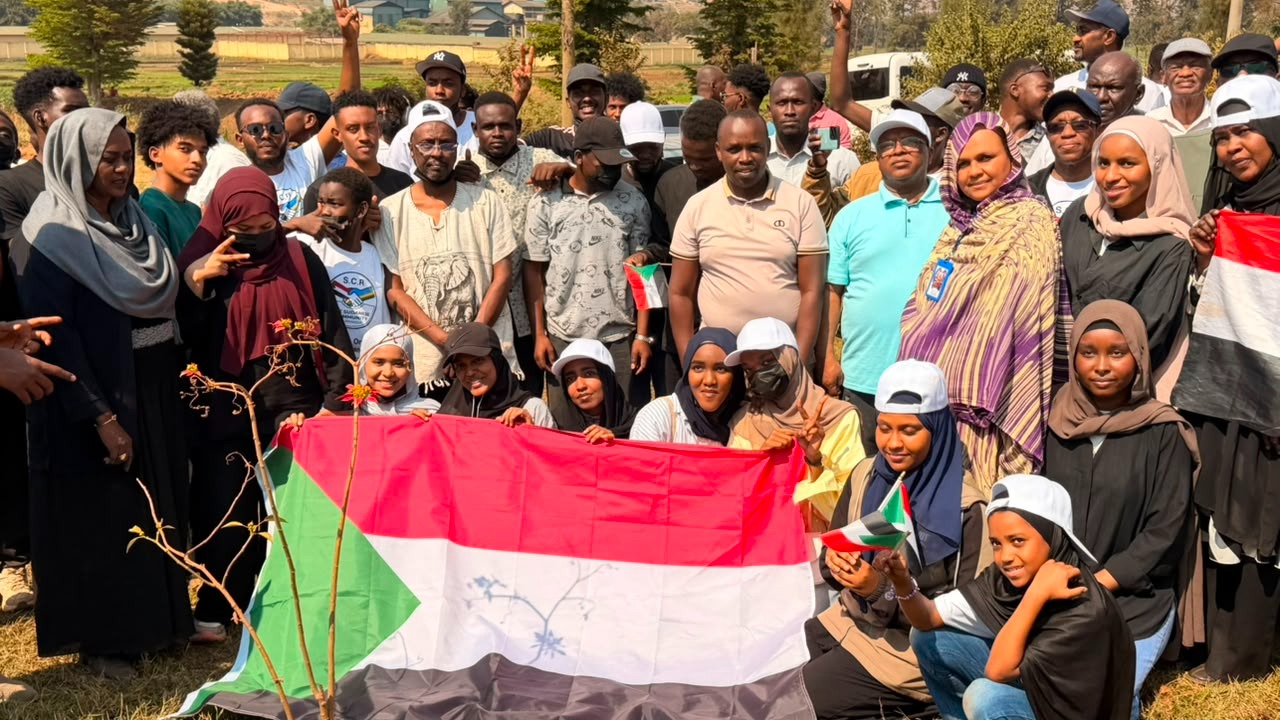
The ambassador disclosed the figures while speaking to IGIHE on the sidelines of Umuganda, Rwanda’s monthly community service, held in Jabana Sector of Gasabo District last Saturday, where more than 150 Sudanese nationals joined local residents in community work.
Dafalla said the growing investment portfolio reflects the Sudanese community’s confidence in Rwanda’s business environment and its desire to contribute to the country’s socio-economic development.
“Our total investment here is more than $25 million,” he said. “Real estate is one of the biggest sectors. We have five companies developing apartments, villas and houses. It is a very promising sector.”
He added that Sudanese investors have also established a strong presence in education, including two schools and a medical university with more than 1,000 medical students, alongside investments in medical services.
Ambassador Dafalla said the growing investment portfolio reflects the Sudanese community’s confidence in Rwanda’s business environment.
Beyond education and real estate, Sudanese businesses are active in agriculture, poultry farming, oil and gas, and other commercial activities.
“We have Sudanese agriculturalists with different farms. There are three or four companies in poultry, and some companies are already exporting cash crops,” he said.
According to the ambassador, Sudanese entrepreneurs are increasingly looking at Rwanda’s real estate market while also exploring opportunities in agriculture, particularly the export of coffee, tea and other cash crops.
“Rwanda is famous for its agribusiness, especially coffee and tea, which are among the best quality in the world,” he said, noting that Sudan is the sixth-largest importer of Rwandan coffee and tea and that both countries have room to expand agricultural trade.
Dafalla also revealed that Sudanese investments in Jabana alone are valued at about $4 million, mainly in the oil and gas sector.
The ambassador said the investments are being driven by a growing Sudanese community in Rwanda, which he estimated at around 5,000 people, including about 4,000 students enrolled in six universities. Others work in healthcare, business and other professional fields.
He noted that Sudanese doctors serve in hospitals and clinics across Rwanda, while business owners operate shops in Kigali and have also introduced Sudanese cuisine through about 15 restaurants.
“We are contributing to cultural diversity,” he said. “We are part of this culture and are adding beauty to the cultural scene in Rwanda.”
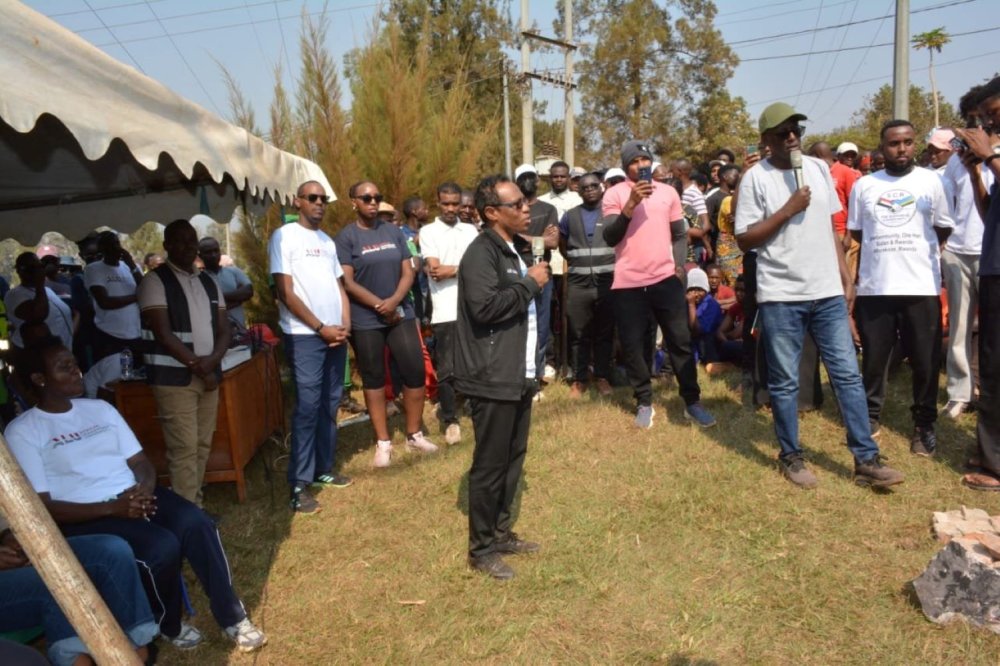
Members of the Sudanese community participated in Umuganda, Rwanda’s monthly community service programme, held in Jabana Sector of Gasabo District last Saturday.
Umuganda offers lessons for Sudan
Dafalla said the Sudanese Embassy organised the participation of more than 150 Sudanese nationals in Umuganda to expose them to one of Rwanda’s most celebrated homegrown initiatives.
He described Umuganda as an expression of African values centred on collective responsibility and community development, adding that the Sudanese community would take the lessons learned from the initiative back home and promote similar practices within their communities.
“We came to learn from Rwanda’s good practices and deepen our understanding of Rwandan culture,” he said. “Our youth especially want to learn from this so that when they finish their studies and return home, they can reflect these good practices in the Sudanese community.”
During the exercise, the embassy donated 100 construction and cleaning tools to support community activities in Jabana.
The ambassador emphasised that the Sudanese community considers itself an integral part of Rwandan society.
“We are not aliens; we are African brothers and sisters,” he said. “We are here to participate, contribute positively and learn from Rwanda’s good practices.”
The ambassador emphasised that the Sudanese community considers itself an integral part of Rwandan society.
Embassy addresses student misconduct
The ambassador also addressed recent reports involving misconduct by some Sudanese students, describing the incidents as isolated and unrepresentative of the wider community.
He said the embassy has intensified engagement with students through campus visits, meetings with university leaders and collaboration with student associations to encourage respect for Rwandan laws and peaceful coexistence.
“When you have 4,000 students and there are only a few reported cases, the proportion is not alarming, but it is still a concern for us,” he said. “We are working hard to ensure it is not repeated.”
He urged Sudanese students to respect Rwanda’s laws, cooperate with law enforcement authorities and act as ambassadors of goodwill between the two countries.
“My message is that we should pay back respectfully to the Rwandan community,” he said. “Take the good practices from Rwanda back to Sudan. You are cultural bridges between our two African sister countries.”
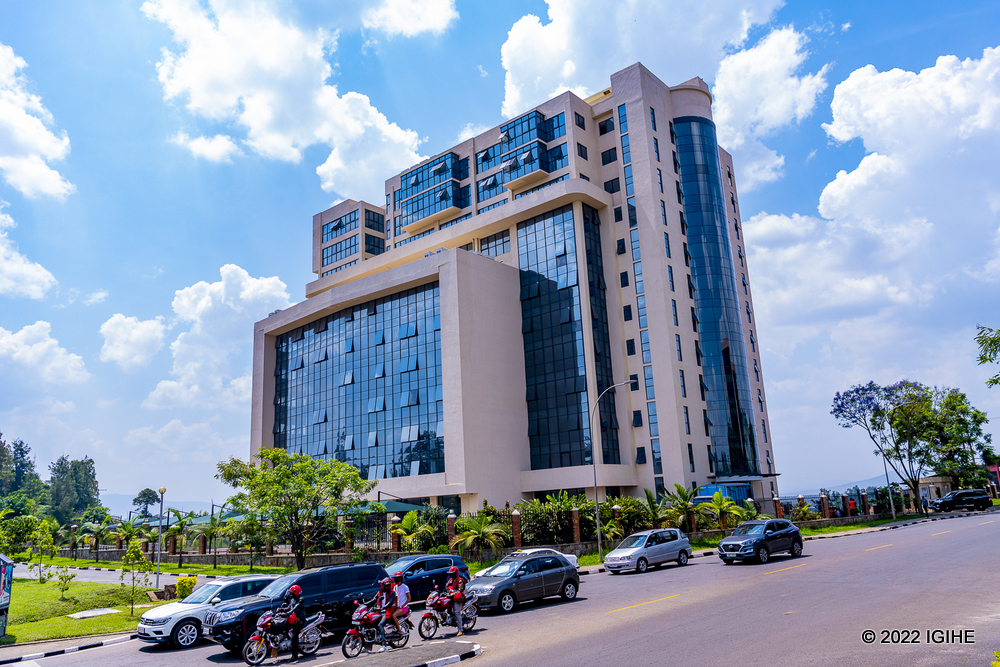
In a public notice issued on Monday, July 27, RDB announced that it had begun operating from its new premises on KN 69 Street, opposite St. Michael Cathedral, with all services now available from the new location.
“Effective 27 July 2026, the RDB office has relocated to new premises,” the agency said, noting that the move applies to the public, development partners, investors and the wider business community.
RDB said all of its services will now be provided from the new offices, while the One Stop Centre, which offers a range of government and business services to investors, will operate from the ground floor of the building.
The agency added that its digital platforms remain fully operational, allowing clients to continue accessing online services and information without interruption. Customer support teams will also remain available to assist stakeholders during the transition.
RDB said details on the relocation of its subsidiaries, the Rwanda Convention Bureau (RCB) and the Rwanda Mines, Petroleum and Gas Board (RMB), will be communicated at a later date.
The move follows the temporary closure of the RDB Building in Gishushu on May 5, 2026, to pave the way for planned renovation and upgrade works.
At the time, RDB relocated its One Stop Centre services to the Ministry of Infrastructure offices in Kimihurura, while other services continued to be offered through the institution’s digital platforms.
The 12-storey Gishushu building, which also housed the Rwanda Housing Authority (RHA), had become the subject of scrutiny after assessments identified structural and construction-related defects.
RDB had long operated from this building in Gishushu before it was closed in May to allow renovations aimed at addressing structural defects.
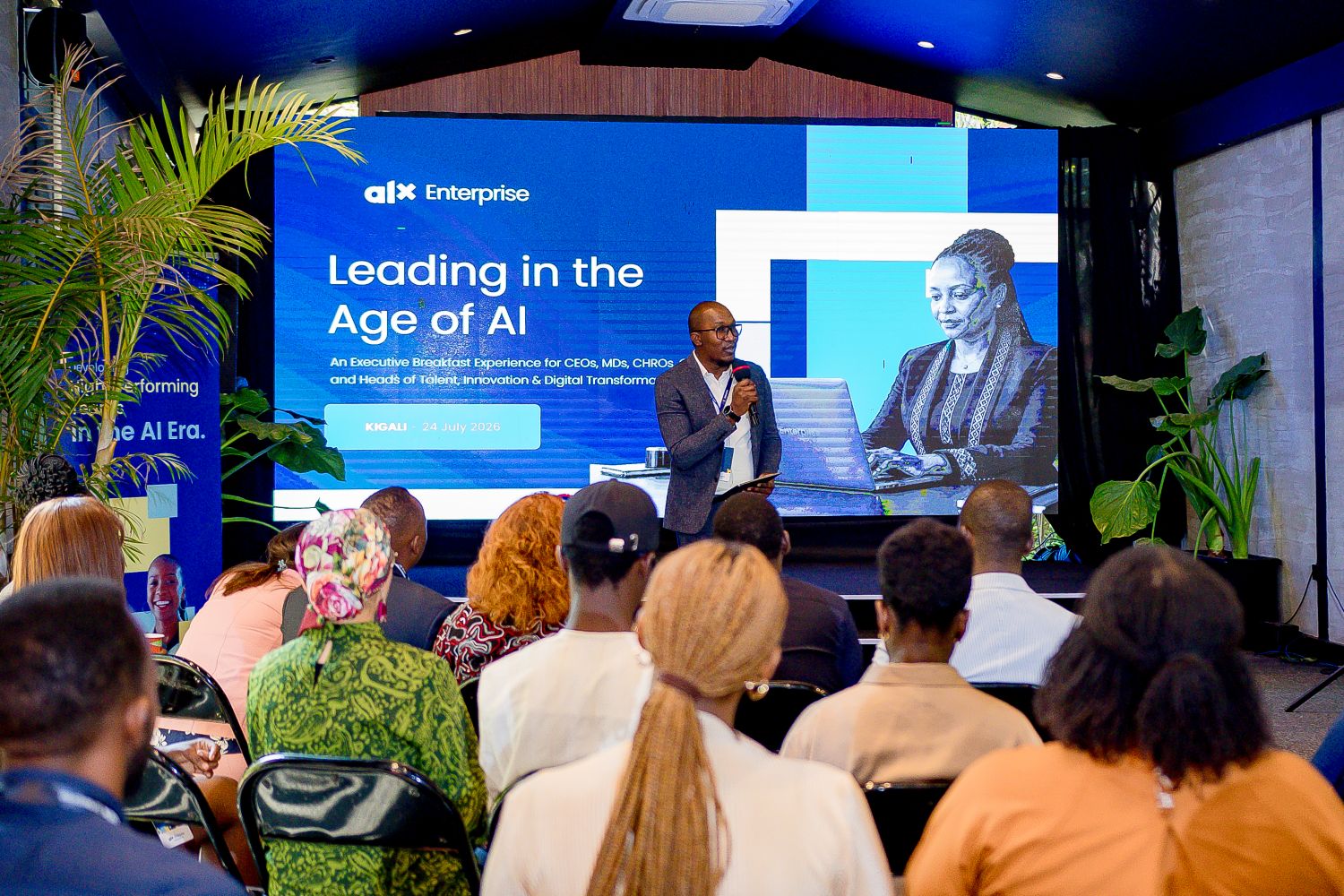
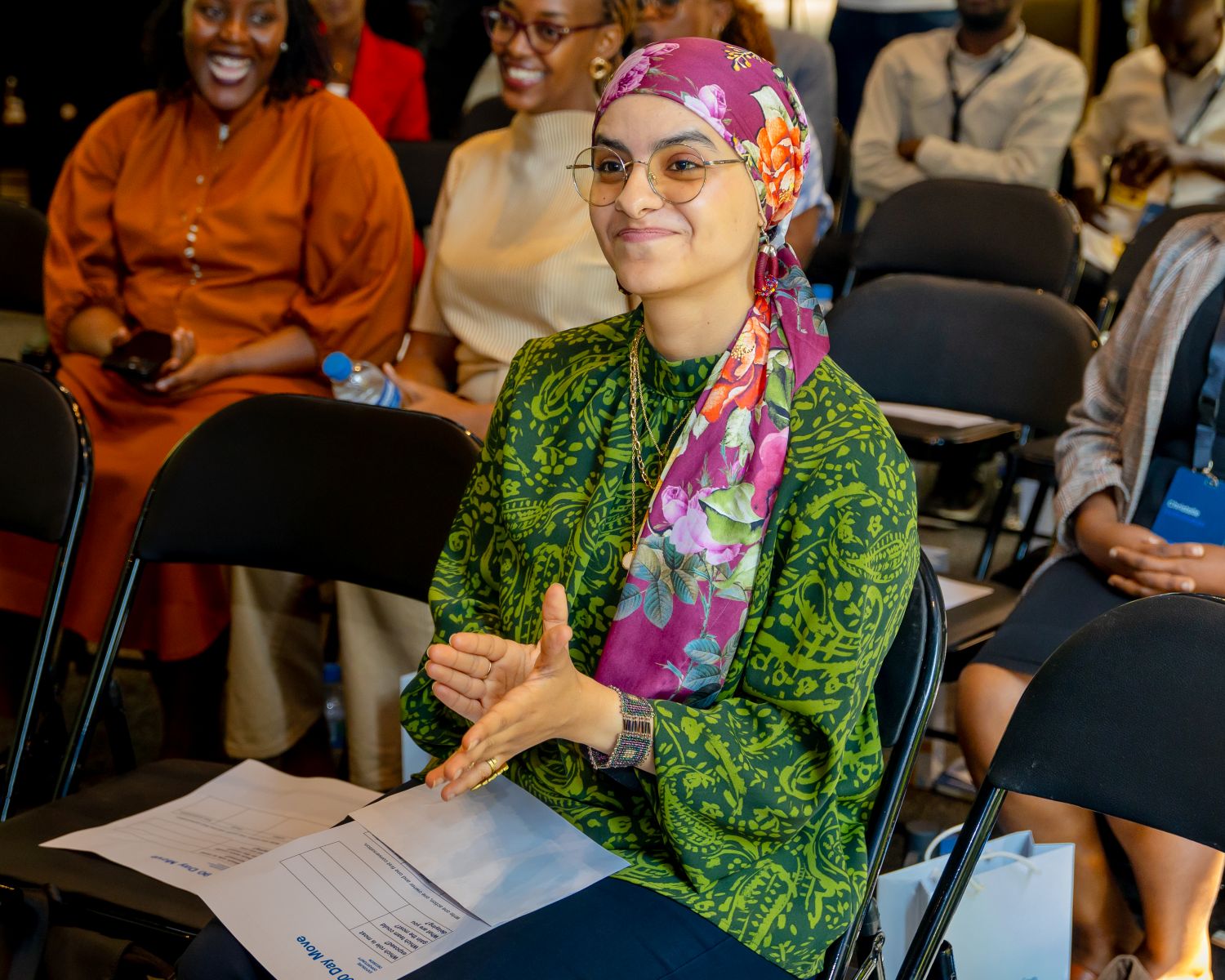
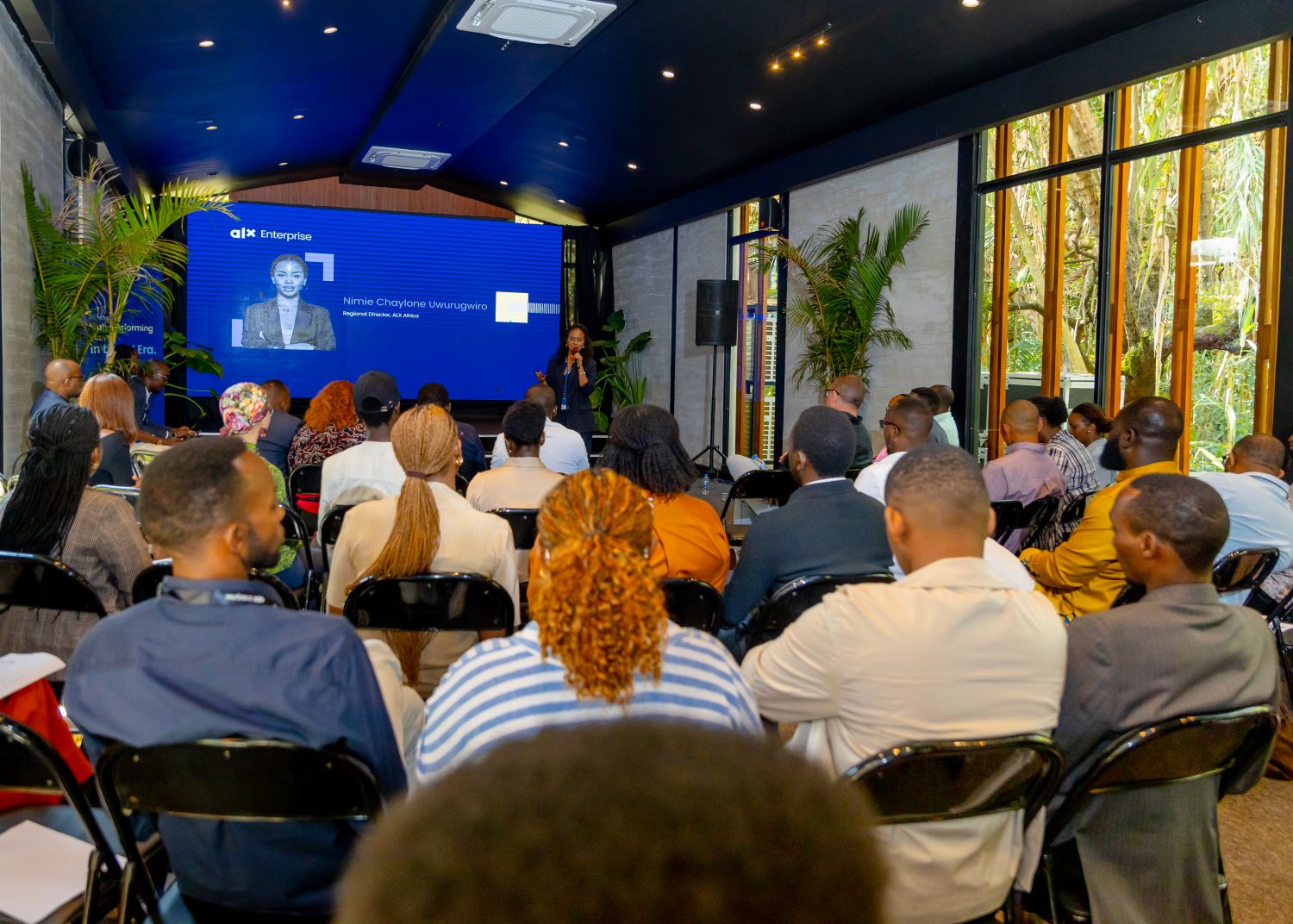
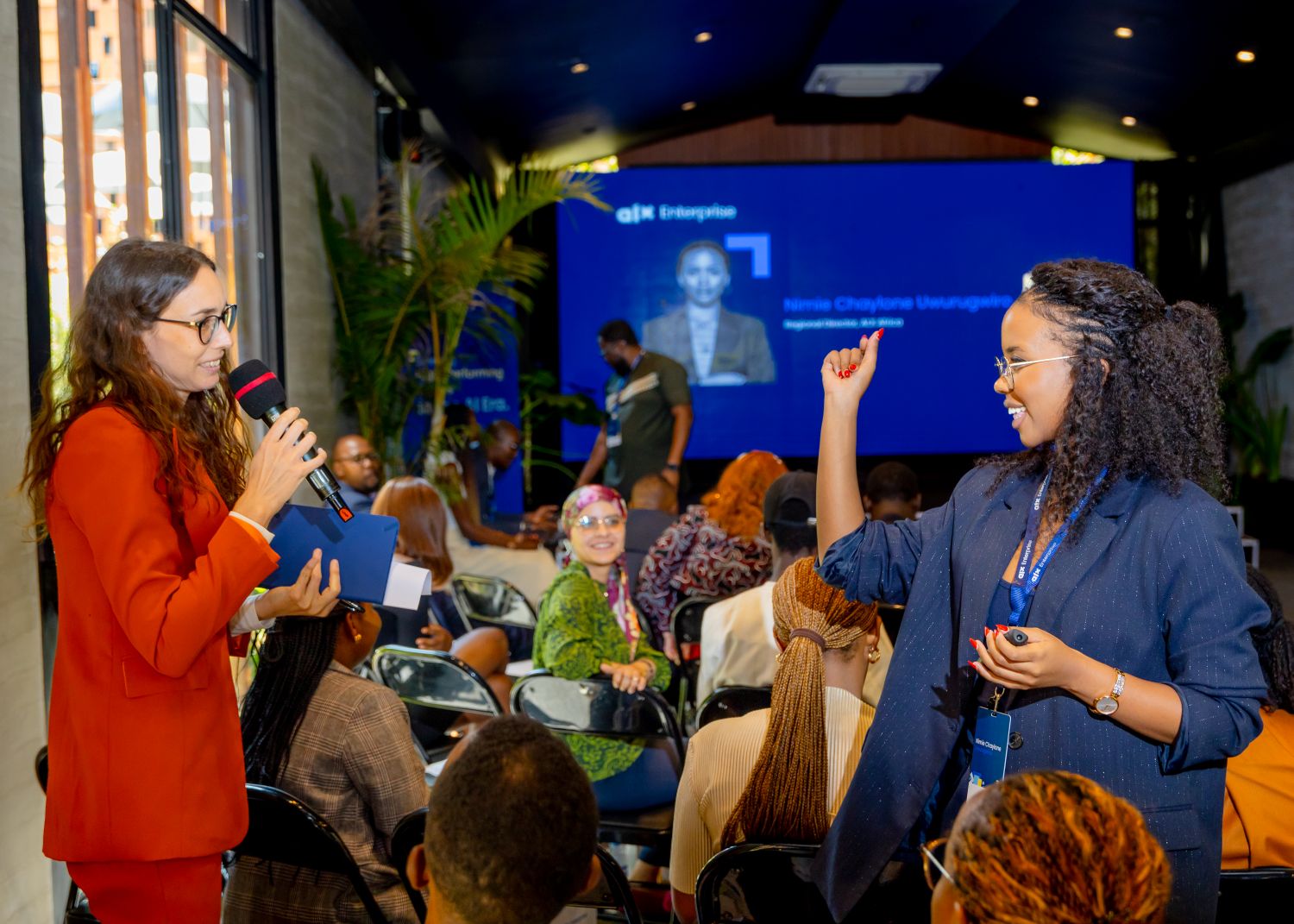
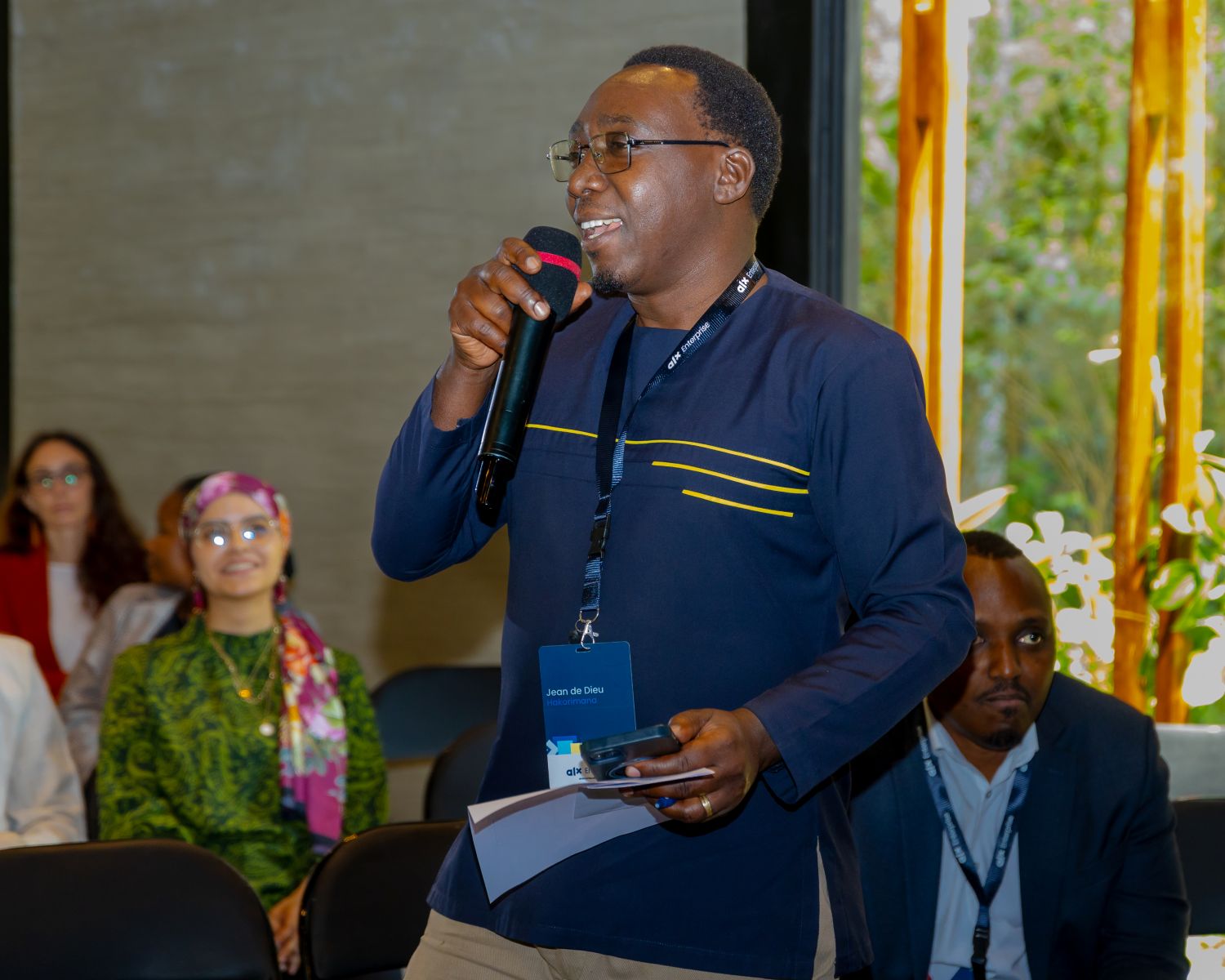
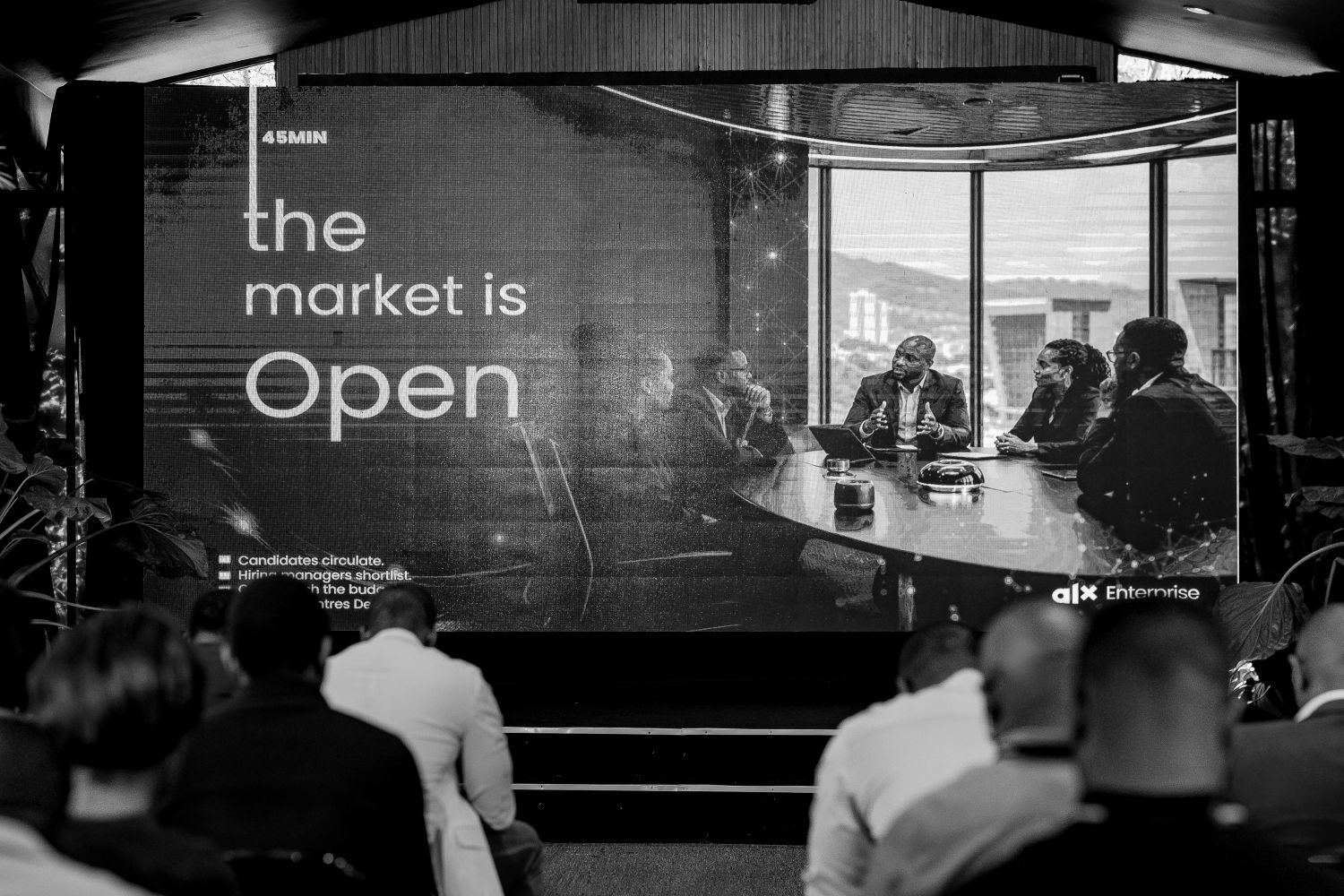
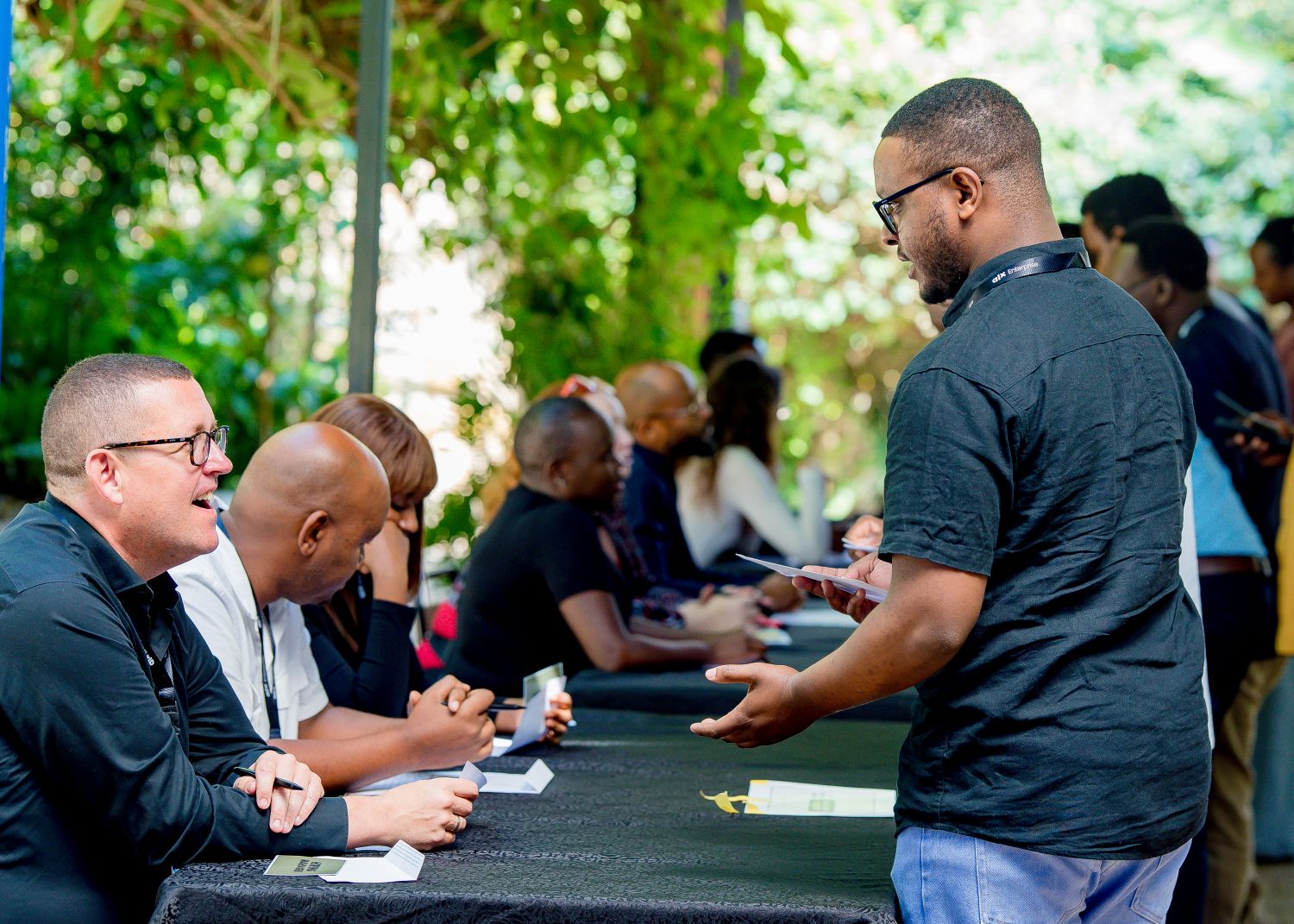
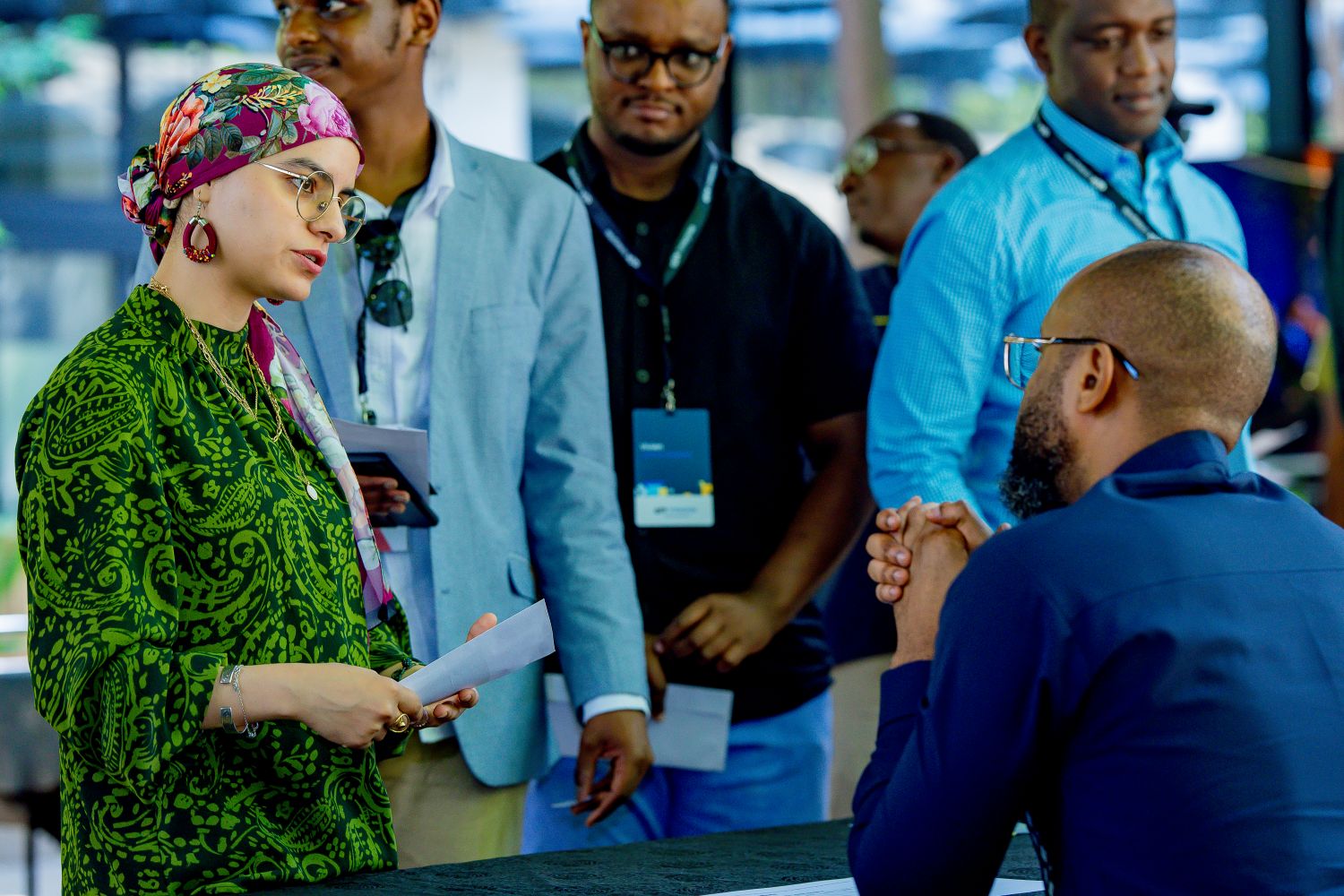
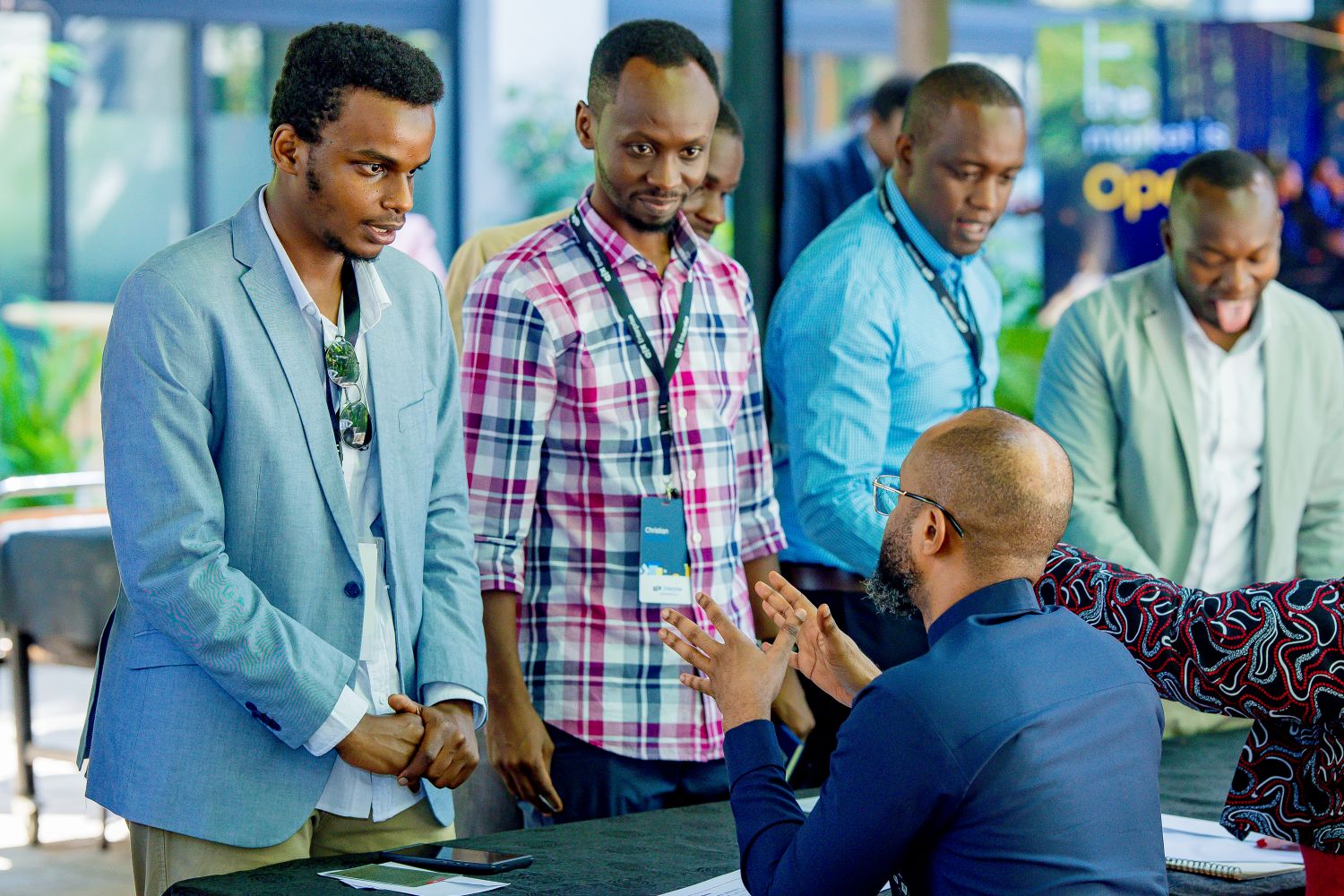
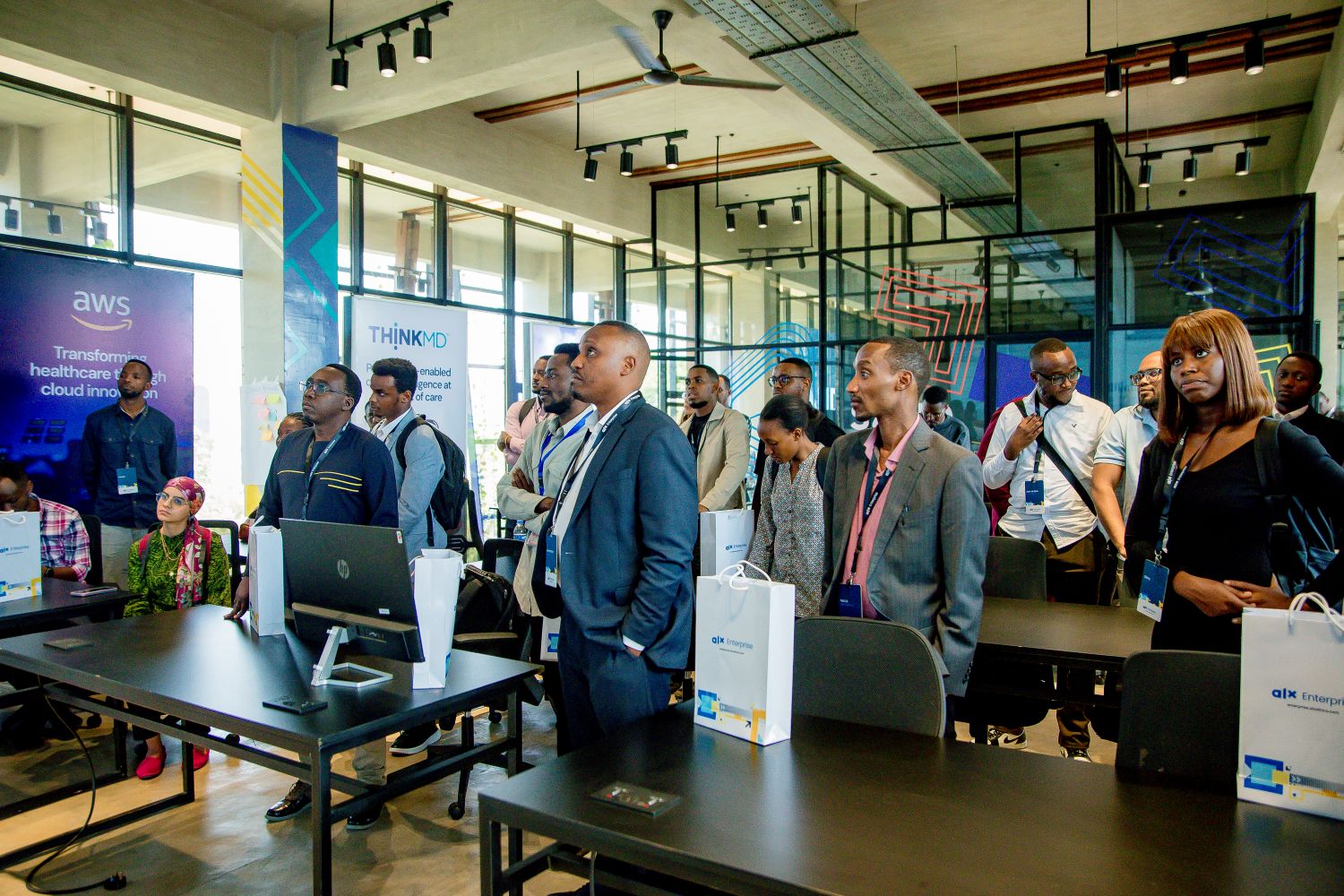
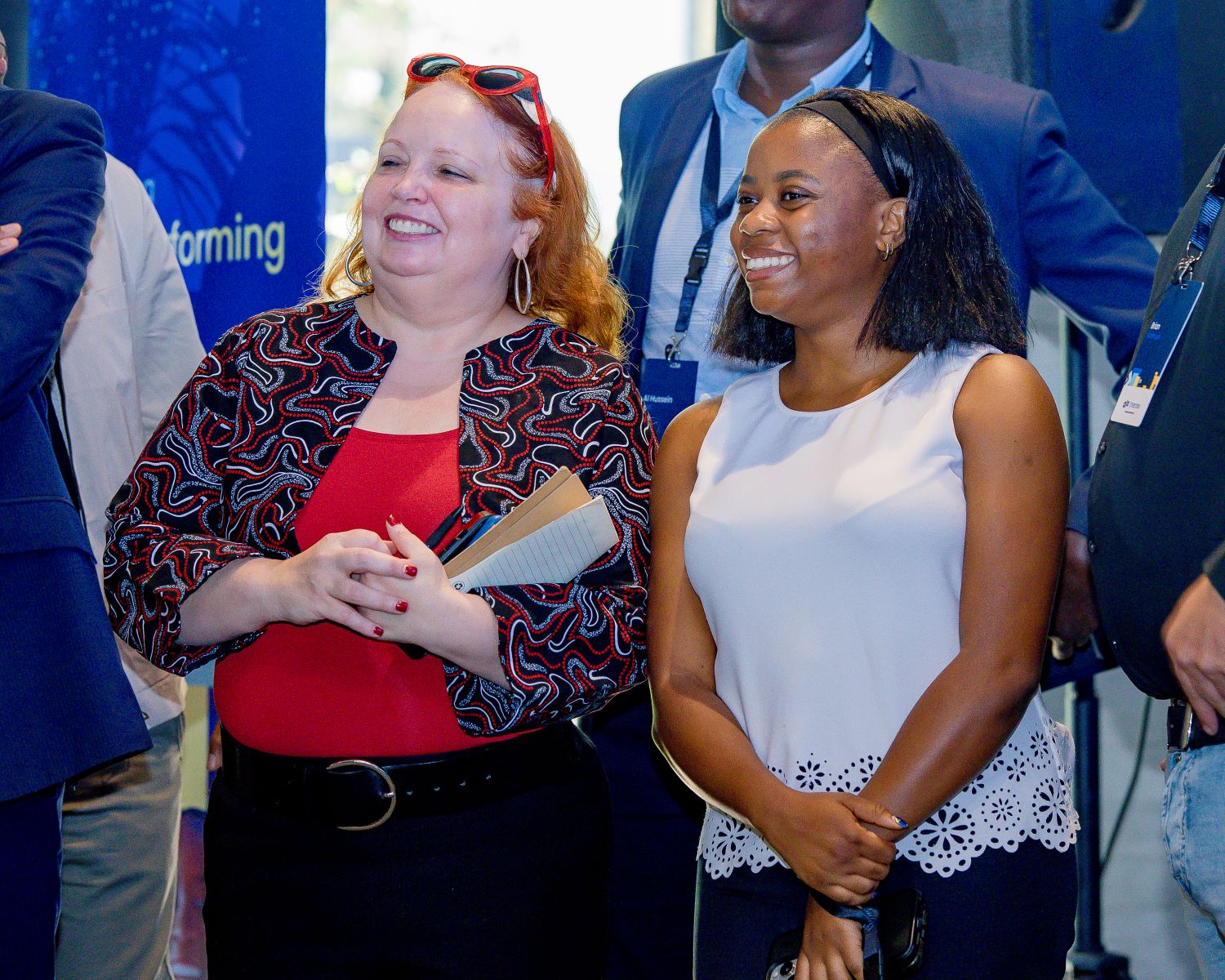
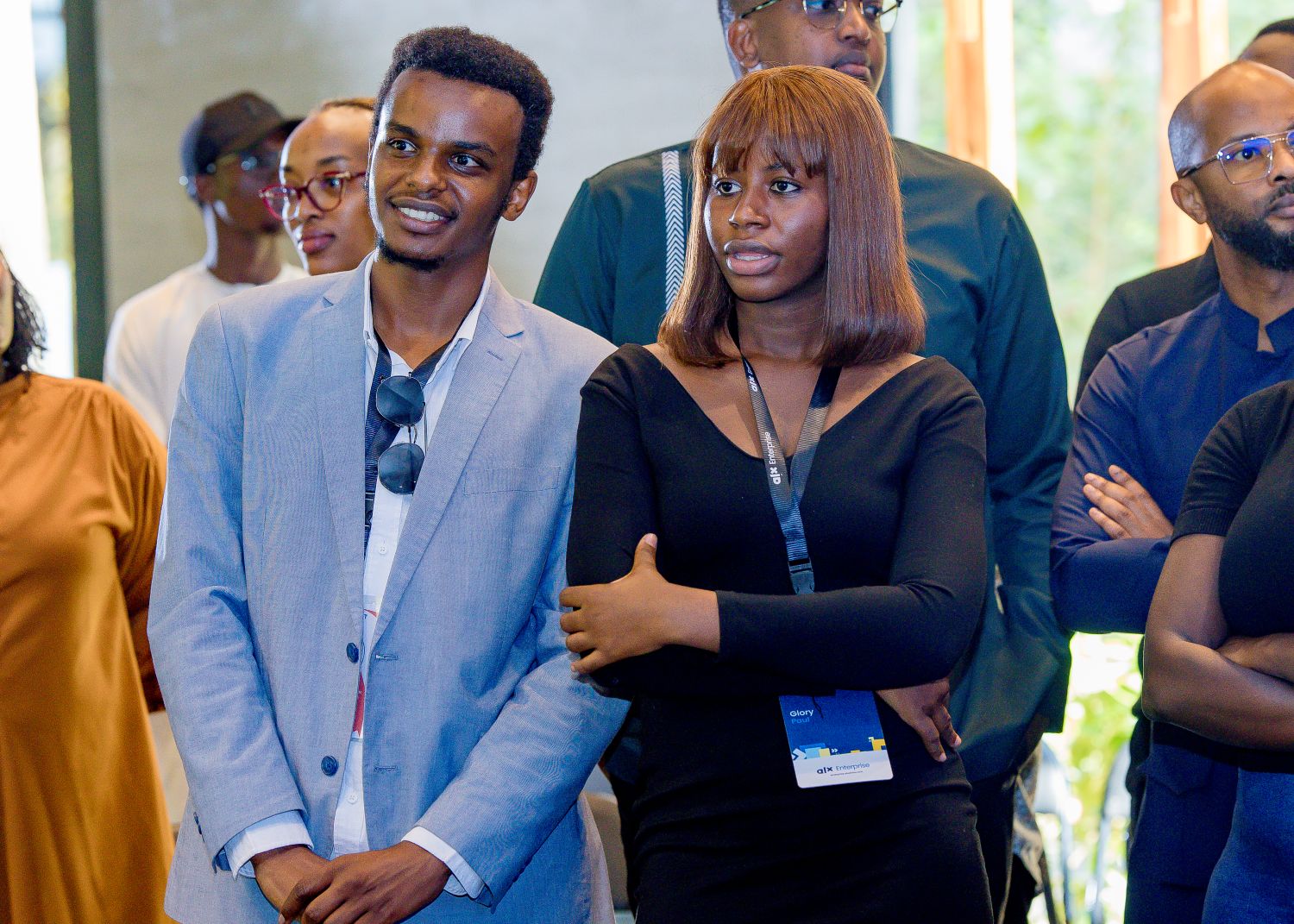
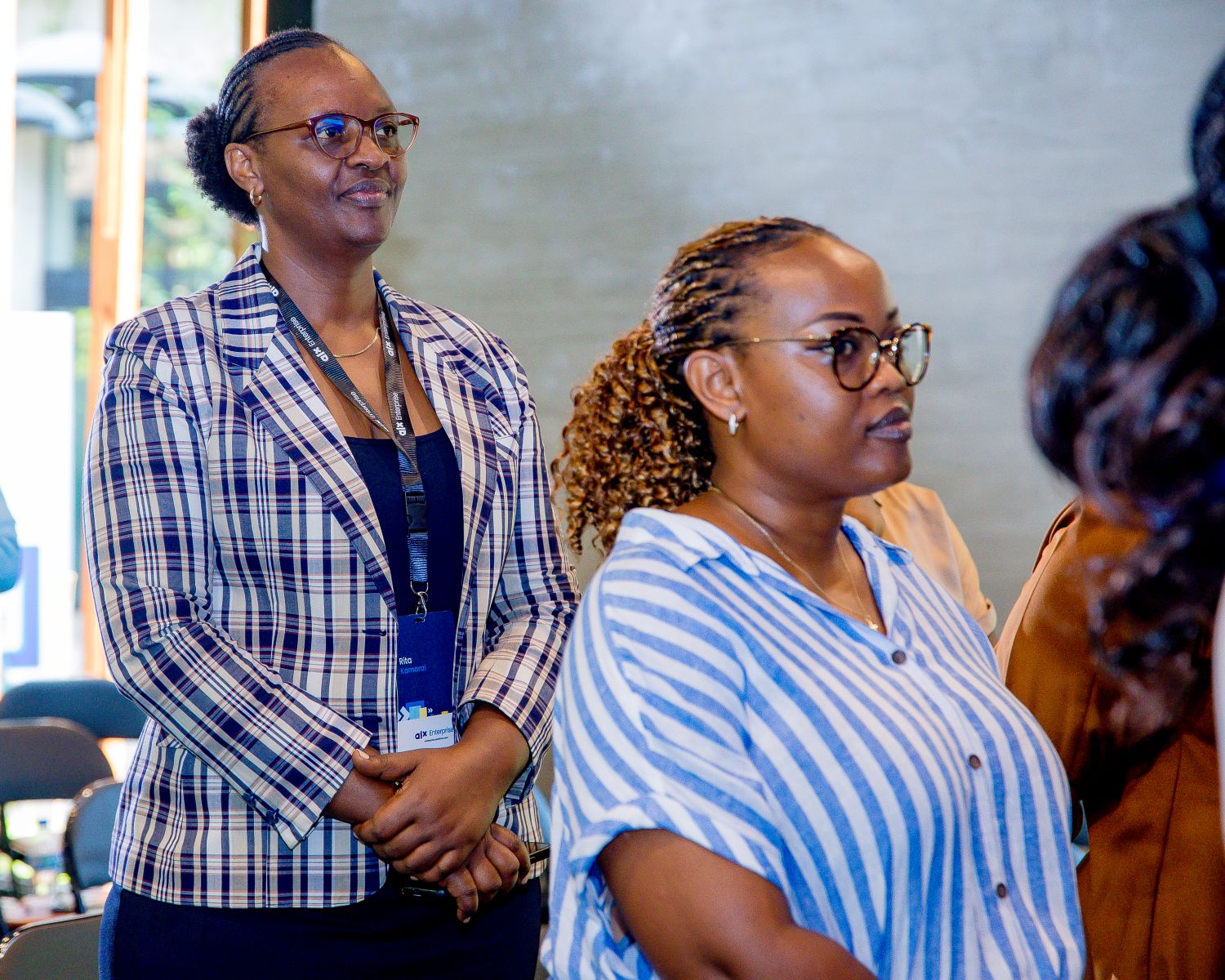
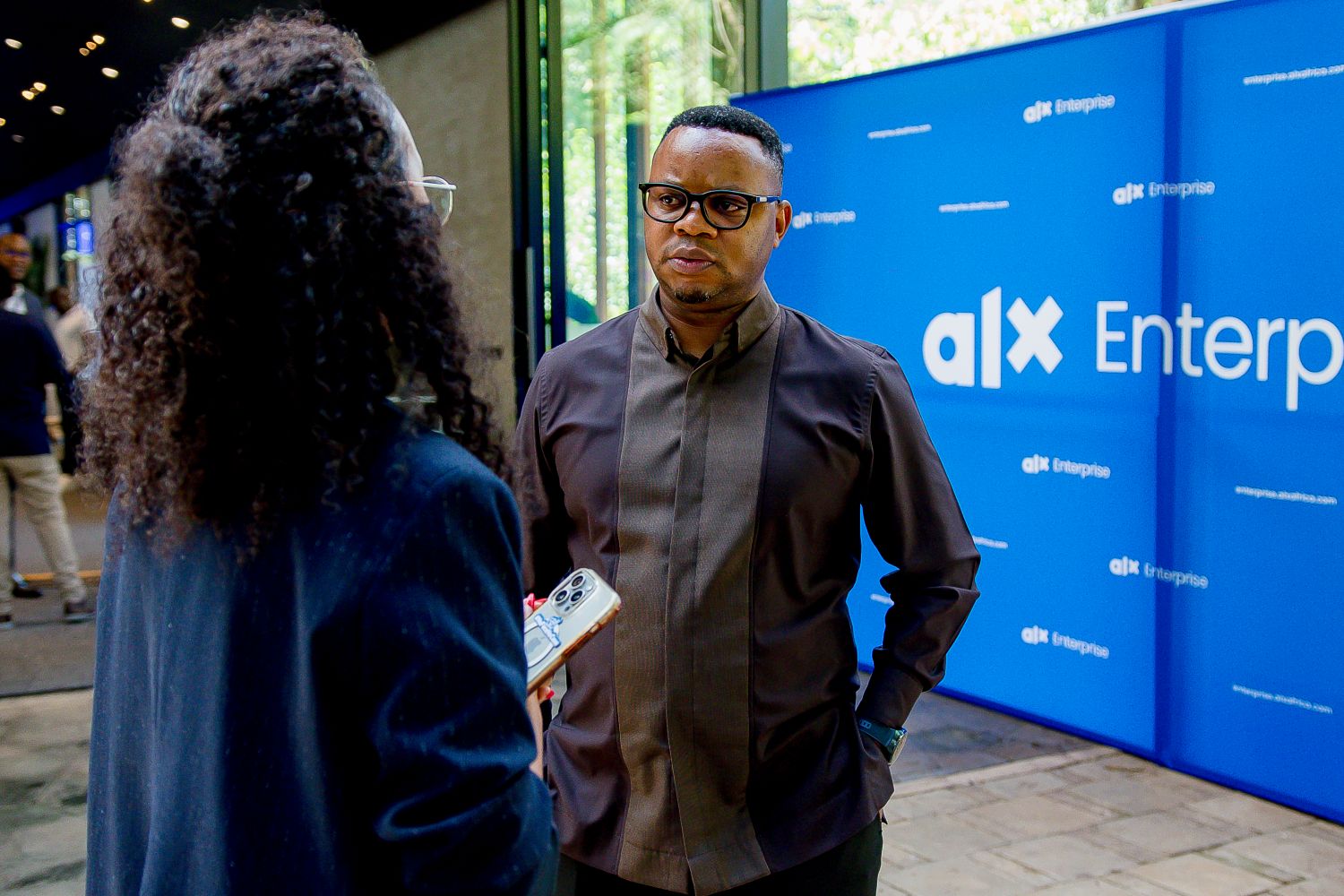
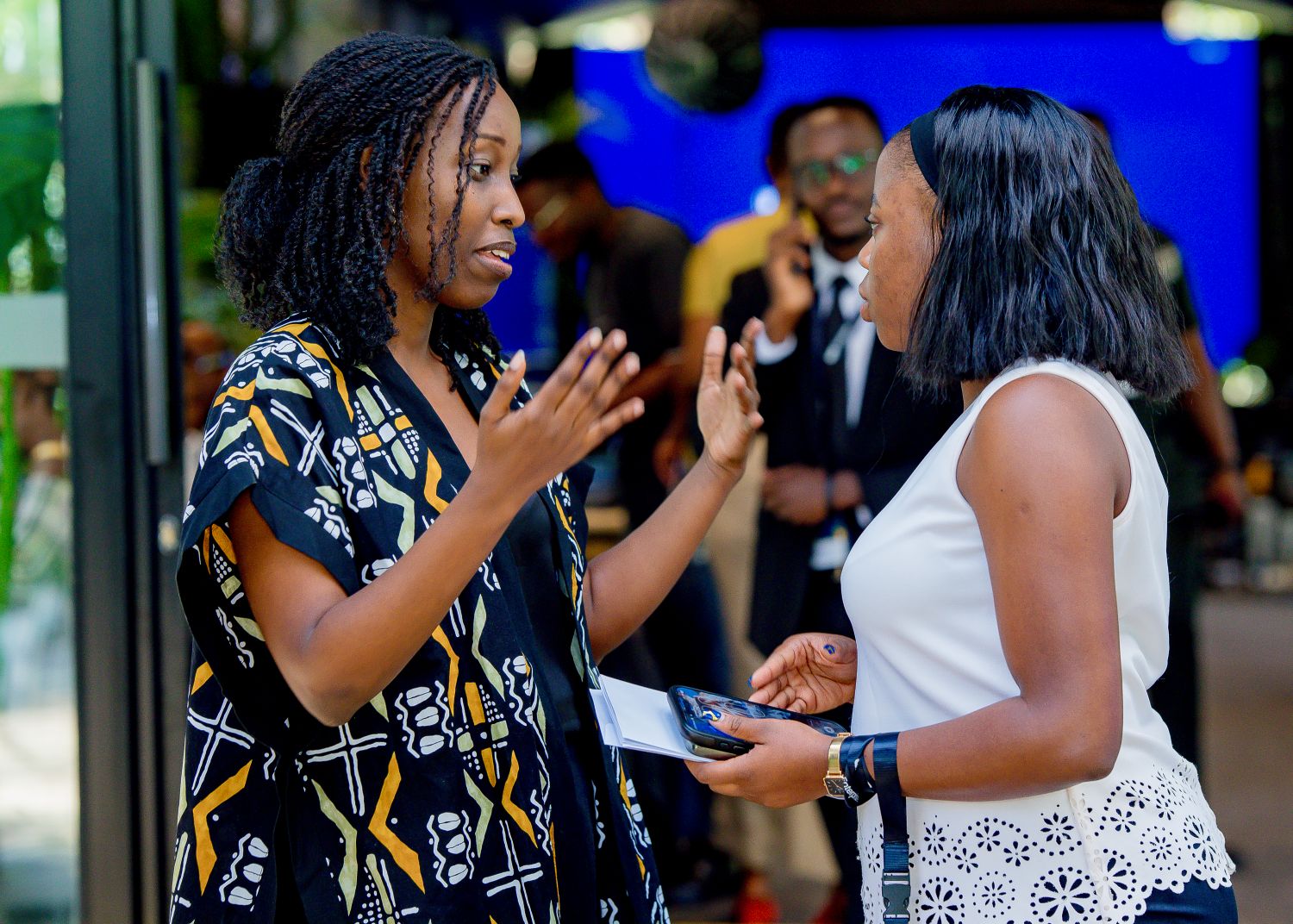
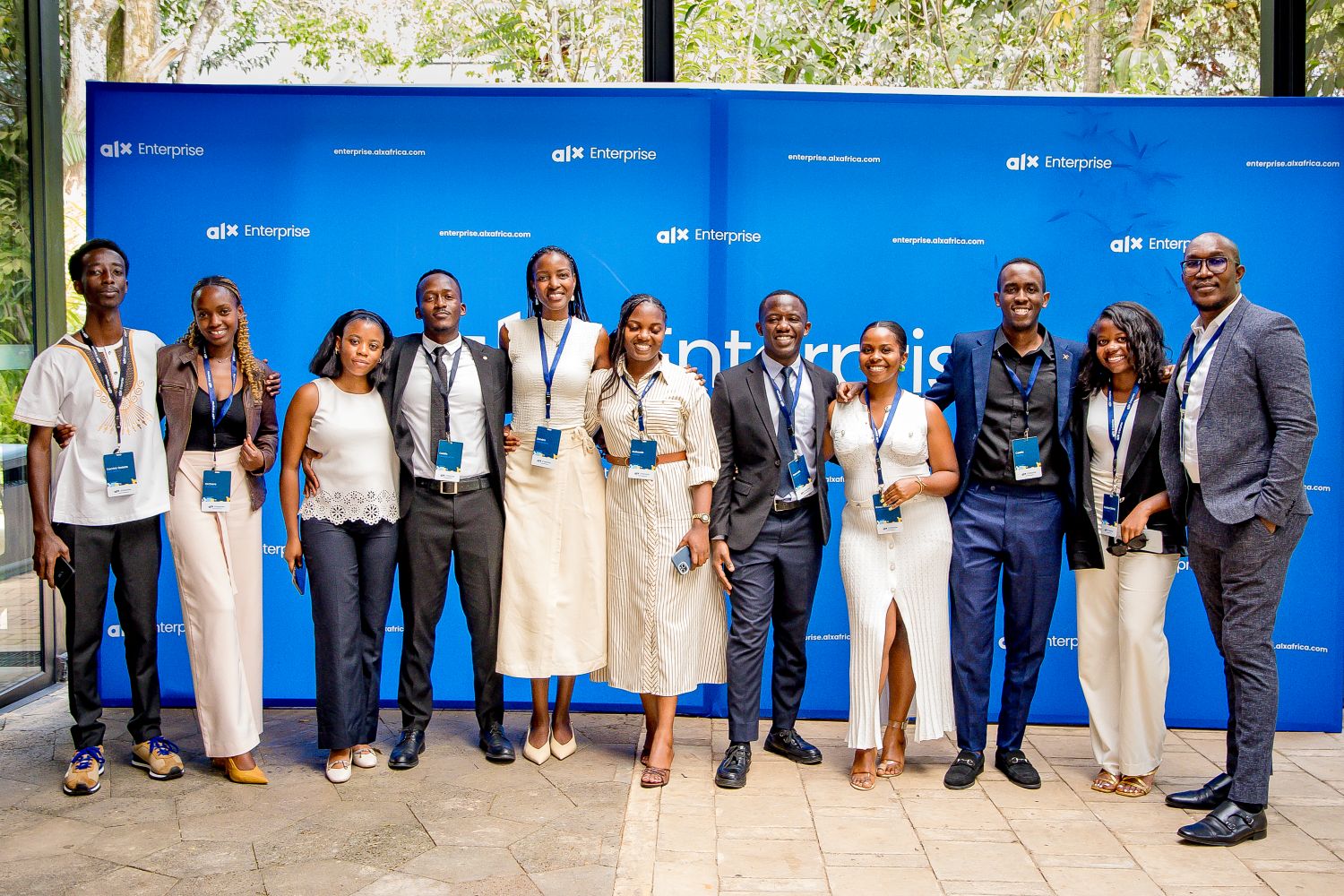
That was the central message at Leading in the Age of AI, an executive breakfast hosted by ALX Enterprise at Norrsken Kigali on Friday, where CEOs, senior executives, HR professionals and business leaders gathered to examine how AI is reshaping organisations beyond automation. Rather than focusing on software or technical demonstrations, the event challenged leaders to rethink the future of work itself through practical discussions and an immersive simulation that mirrored the disruptions AI is already creating across industries.
For many organisations, the question is no longer whether AI will transform business operations, but whether leadership teams are prepared to guide their companies through the transition.
Leadership in an era of constant disruption
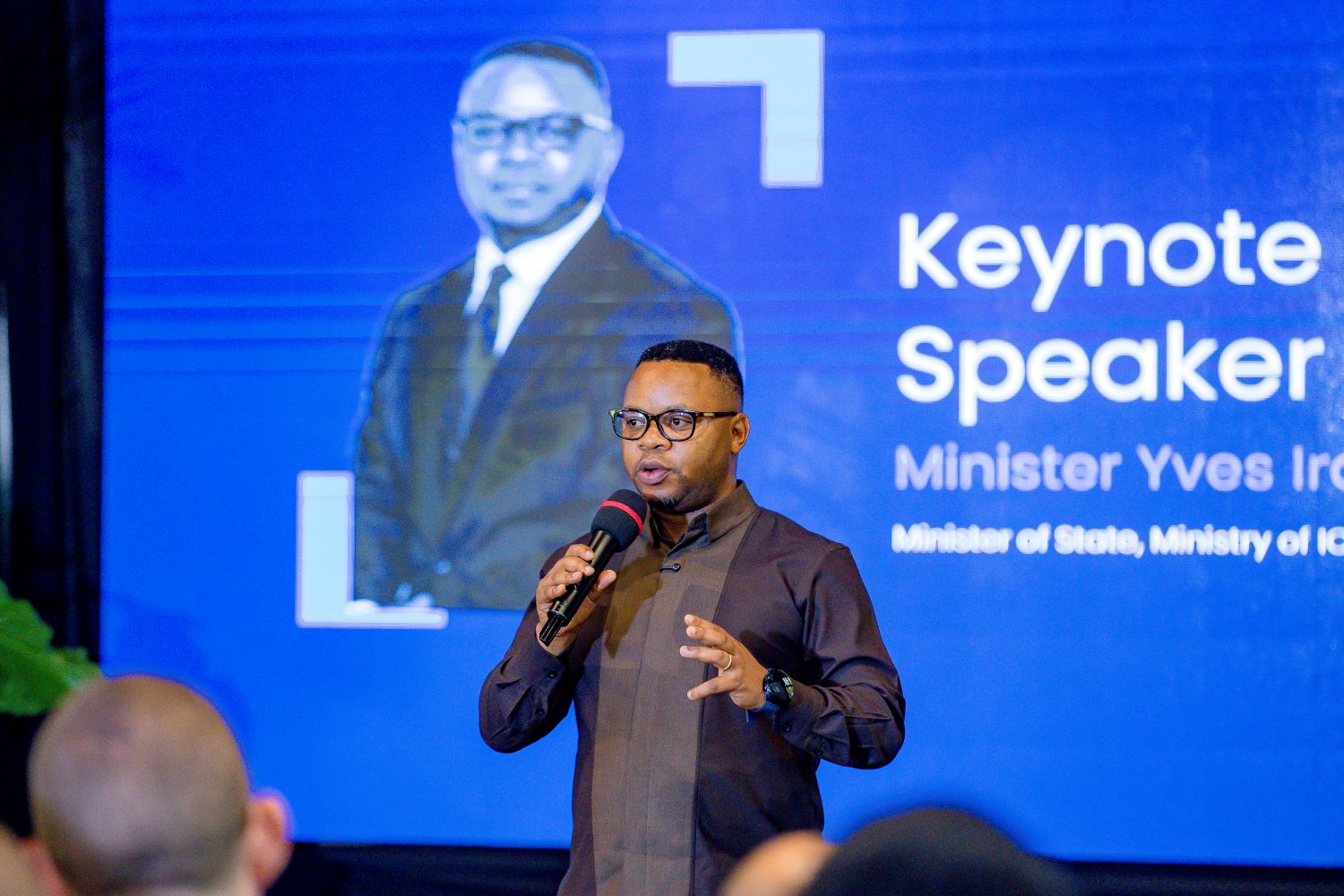
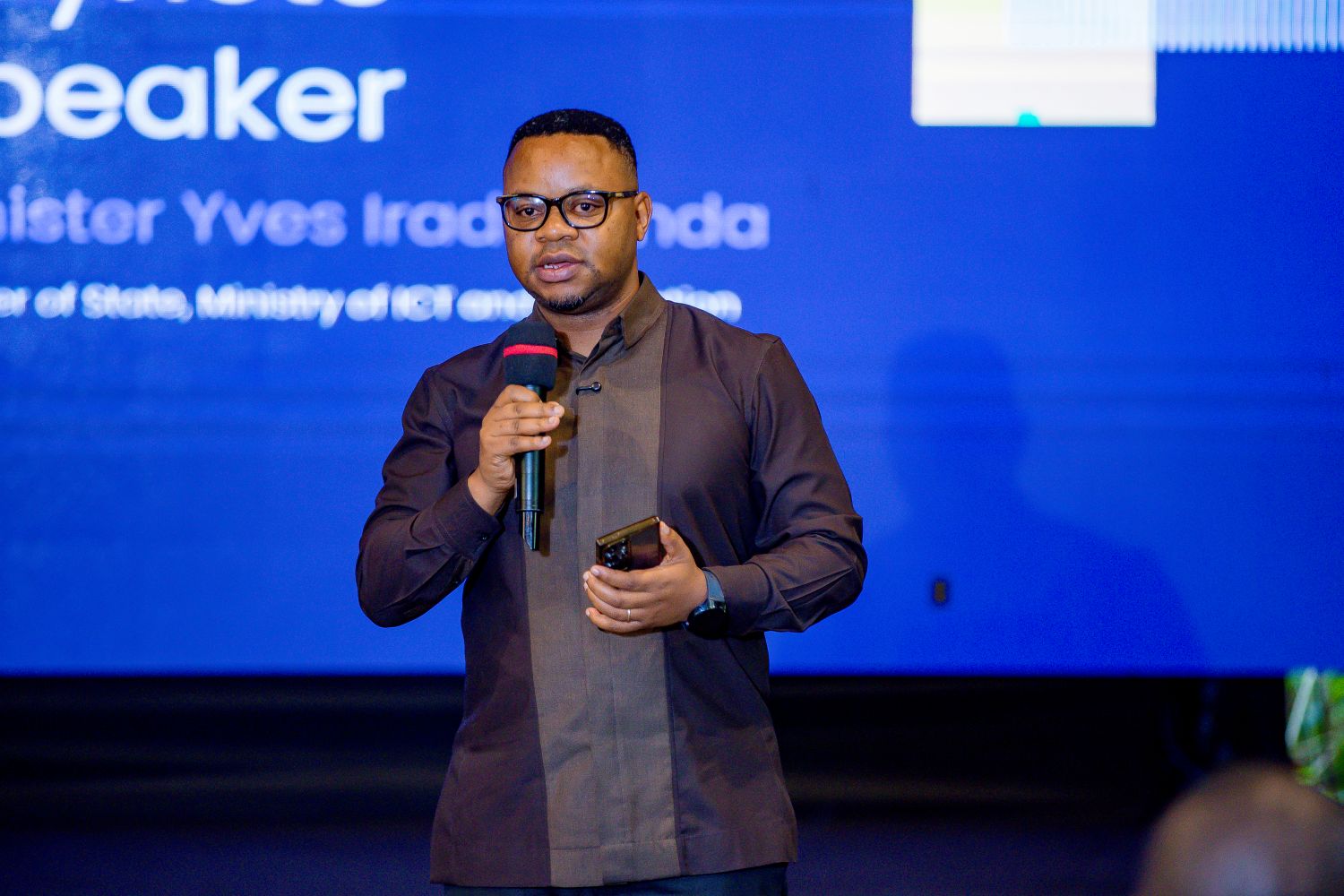
Delivering the keynote address, Minister of State for ICT and Innovation Yves Iradukunda said leadership has become significantly more complex because AI technologies evolve at a pace that makes yesterday’s assumptions obsolete almost overnight.
Minister of State for ICT and Innovation Yves Iradukunda delivered a keynote address at the event.
He noted that executives today must make decisions in an environment where new AI models and tools are constantly changing how businesses operate, requiring organizations to rethink not only technology adoption but also governance, regulation and workforce development.
“The companies that are going to succeed are not the ones that have adopted these AI tools first,” Iradukunda said.
“I believe they are the ones that will be able to deploy these tools to generate the highest impact, but also do it responsibly and equitably.”
According to the minister, responsible AI adoption extends beyond purchasing new software. It requires businesses to think carefully about data governance, ethics, workforce readiness and long-term competitiveness.
He also emphasised that organisations cannot rely indefinitely on imported AI technologies, arguing that Rwanda is investing in local capabilities through a National AI Agency, AI-ready infrastructure, stronger data governance frameworks and expanded talent development to help businesses innovate responsibly.
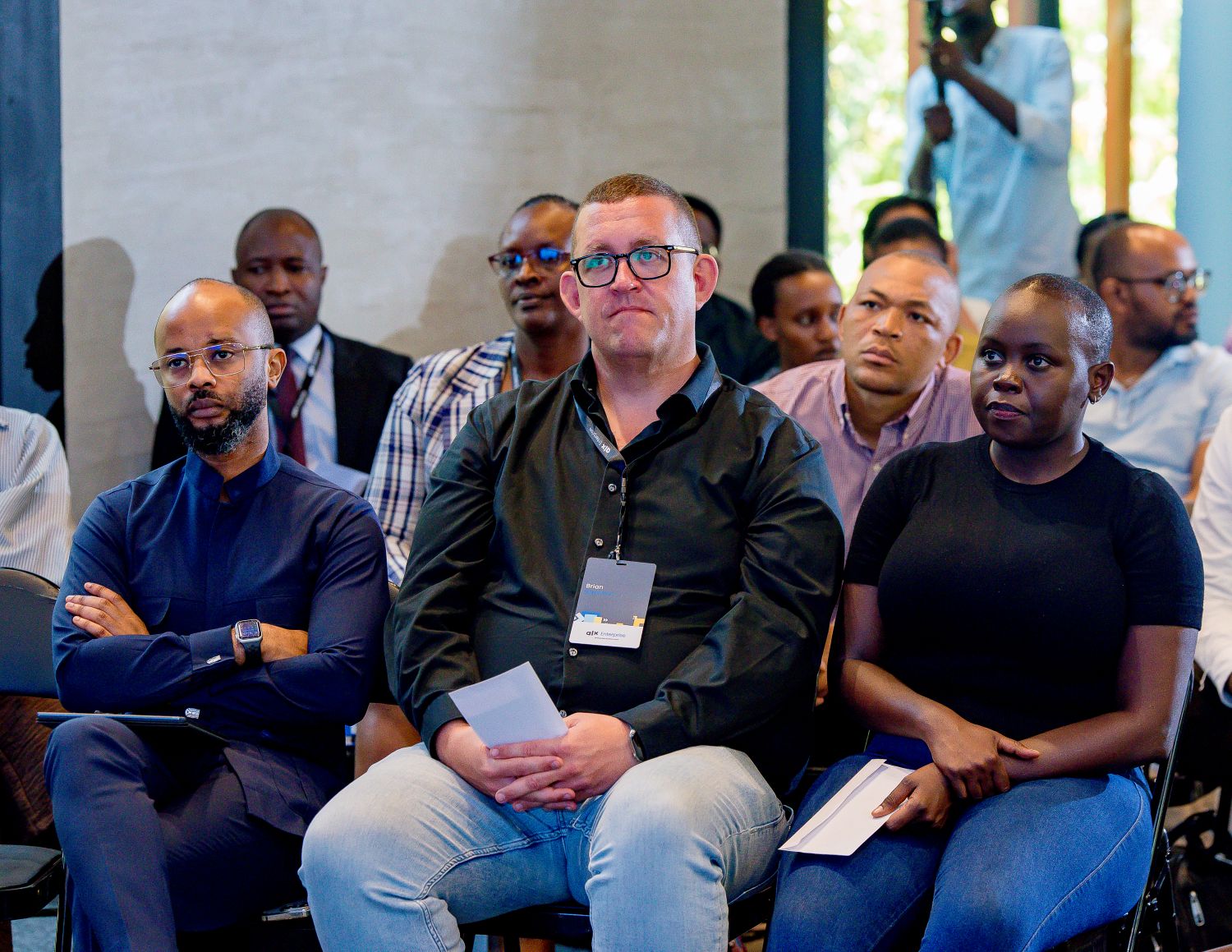
Attendees follow a highly engaging session at Norrsken Kigali on Friday, July 24, 2026.
Workforce training becomes a business strategy
Perhaps the biggest shift highlighted throughout the discussions was the changing role of workforce development.
Instead of treating employee training as a human resources function, speakers argued that continuous learning is becoming essential for business survival.
“The team you have today, the team that has gotten you here as a corporate, is not the team that is going to take you to the next level if you are not constantly training and building their capacity,” Iradukunda said.
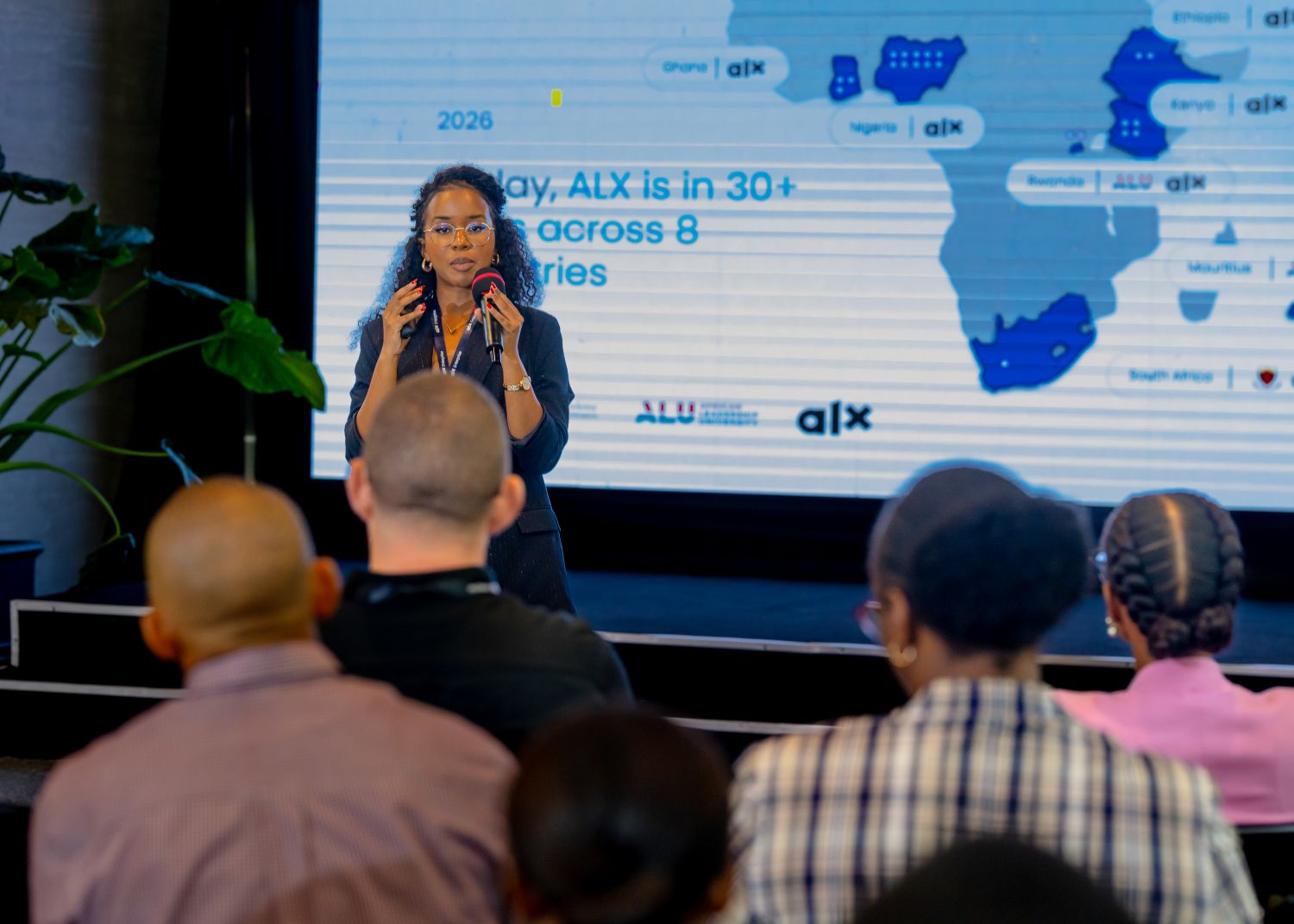
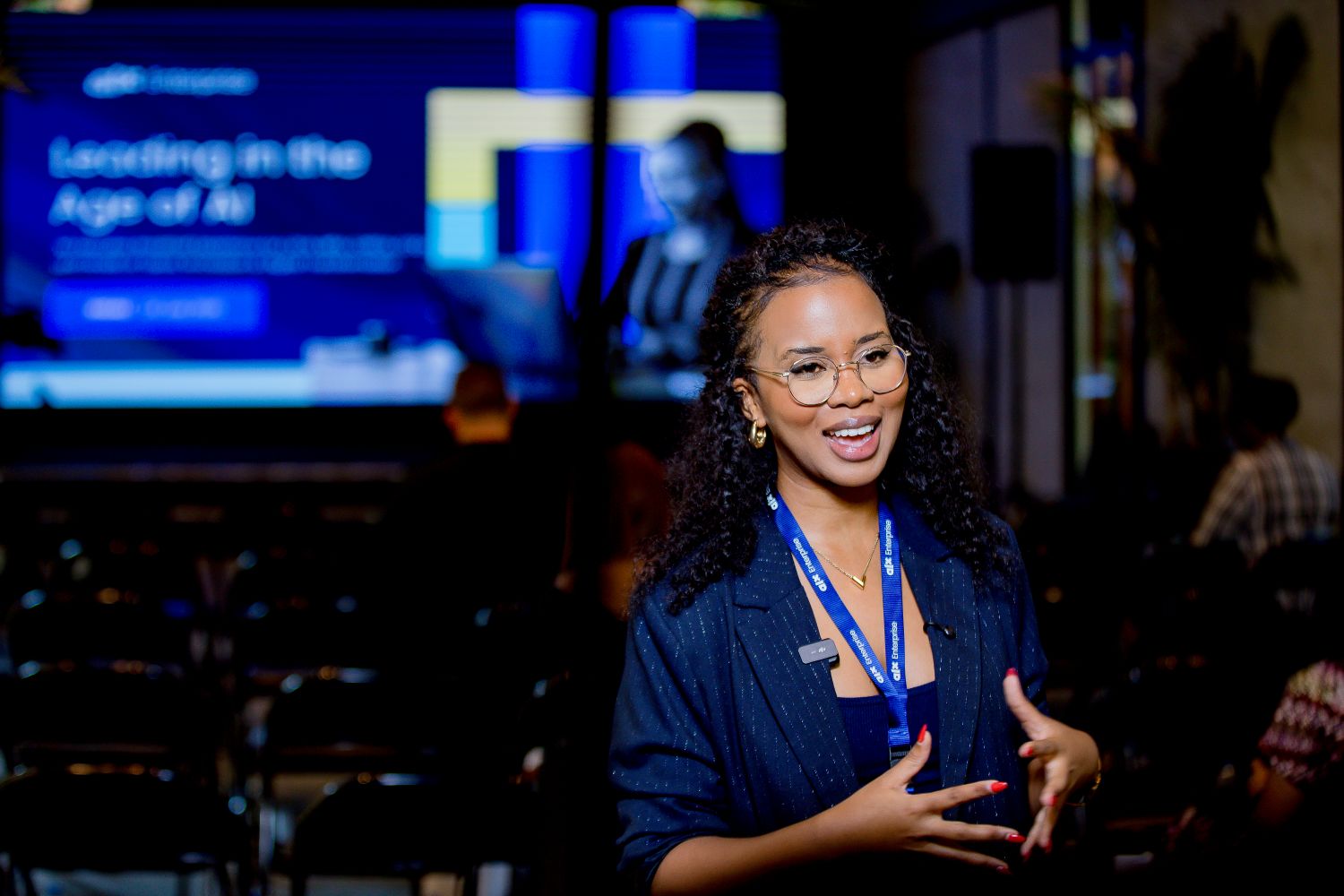
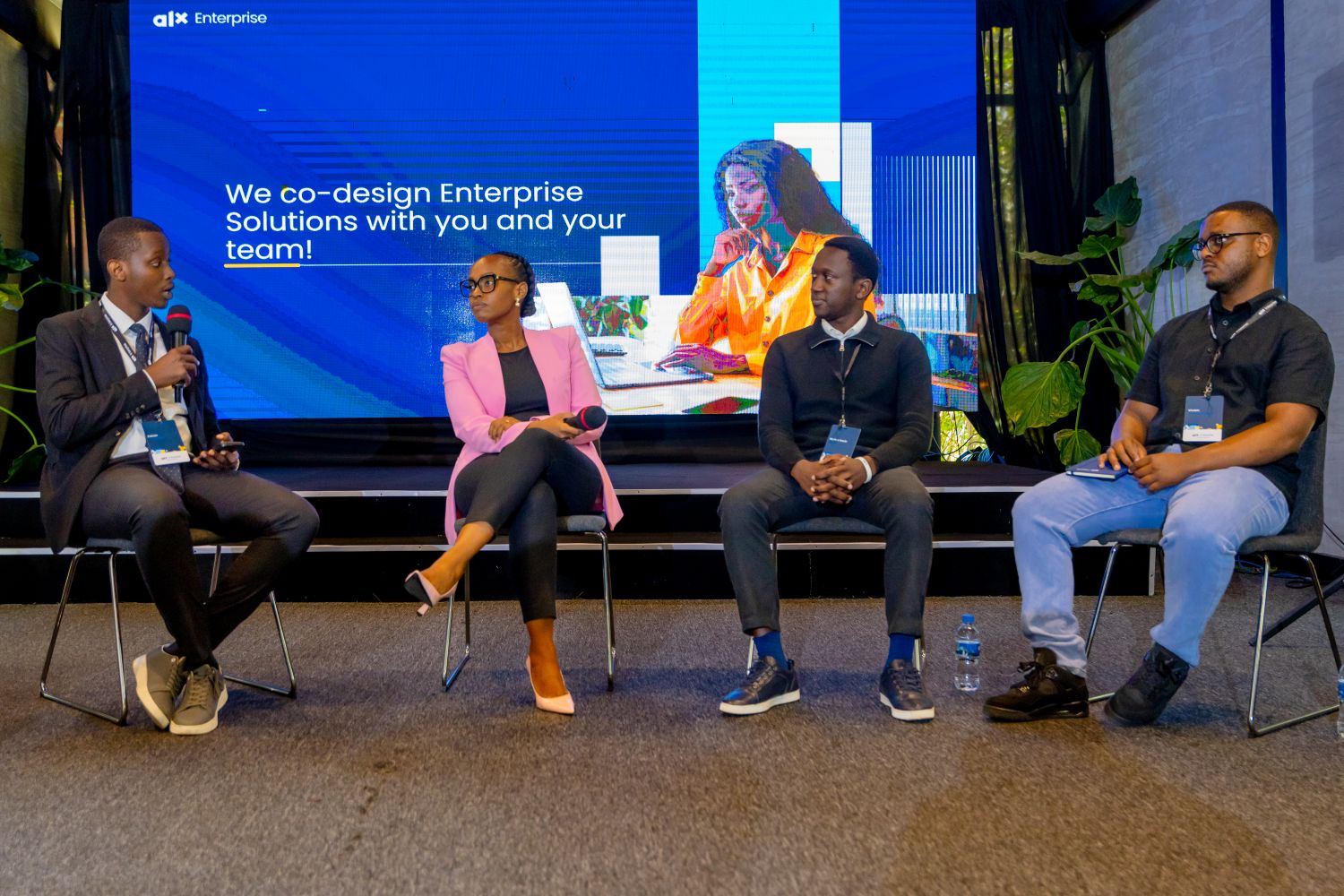
ALX Africa Regional Director Nimie Chaylone echoed the same message, urging organisations to stop viewing upskilling as something employees do away from work.
“If you find someone who is a culture fit and they have skills, but their skills are becoming obsolete, how can we make sure that you are not losing them but literally keeping them while upskilling them?” she asked.
ALX Africa Regional Director Nimie Chaylone urged organizations to embed upskilling into the workplace.
She argued that organisations face growing challenges recruiting employees with both the right technical capabilities and cultural fit. Rather than repeatedly replacing workers whose skills become outdated, companies should focus on continuously developing existing talent while employees remain in their roles.
That philosophy underpins ALX Enterprise’s approach of working directly with businesses to design customised AI and leadership training programs tailored to their operational needs rather than offering generic courses.
AI is changing the role of managers
The discussions also highlighted a shift that is often overlooked in conversations about artificial intelligence.
While much attention focuses on software developers and data scientists, speakers argued that middle managers may ultimately determine whether AI investments succeed.
According to ALX Enterprise, AI is changing where value is created inside organisations, making managers responsible for translating new technologies into measurable business outcomes. Workforce training, therefore, is no longer simply an employee benefit but a business continuity strategy.
Chaylone added that leadership itself must evolve.
Managers must understand not only AI tools, but also AI ethics, cybersecurity risks, data privacy and organisational change management.
Managers were challenged to ensure new technologies deliver measurable business impact.
She warned that many employees are already using generative AI applications in ways that could expose sensitive company information, making leadership awareness just as important as technical capability.
Learning through experience
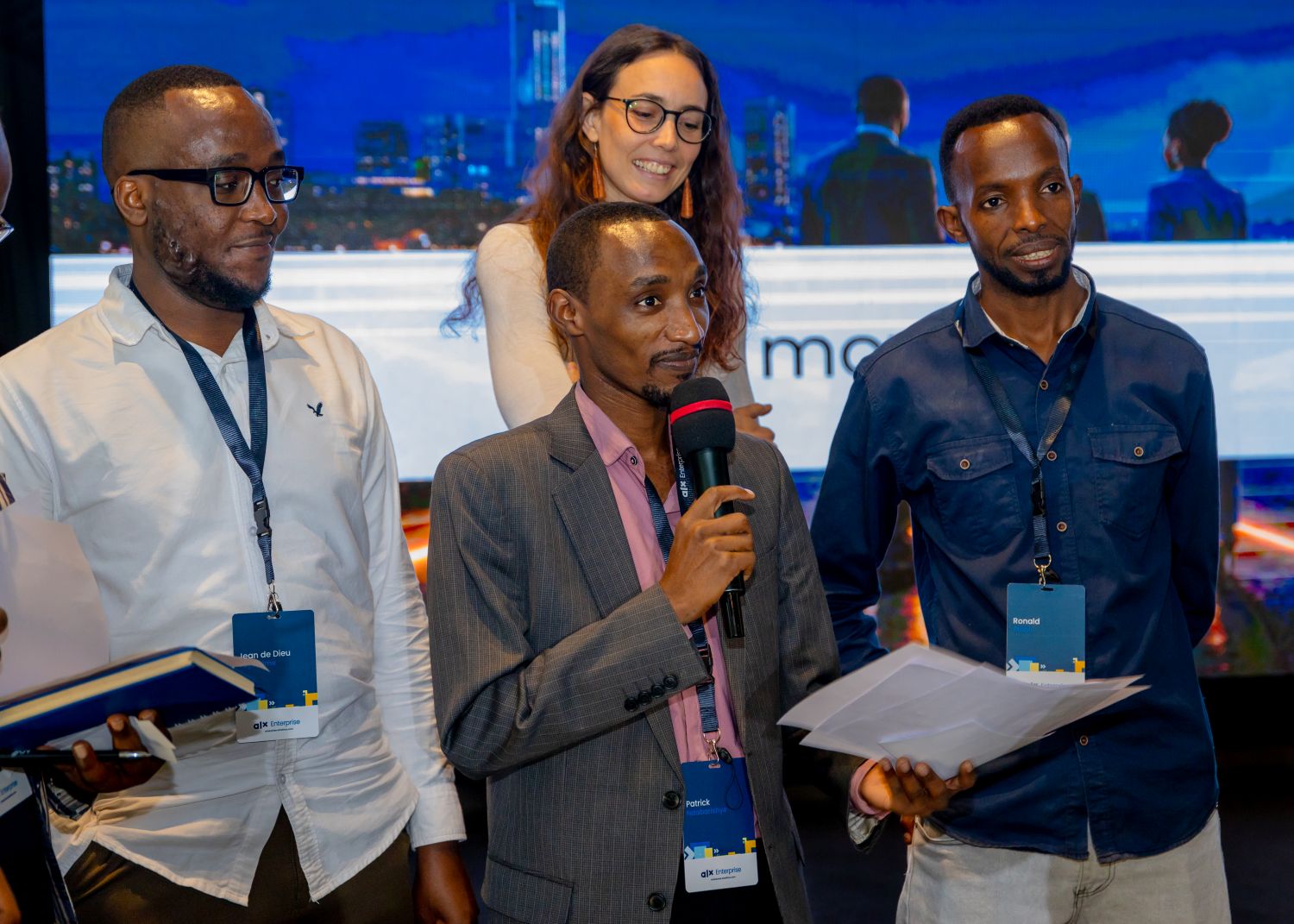
Instead of relying on keynote speeches alone, organisers placed executives inside an interactive simulation called The Future of Work Marketplace.
Participants assumed the roles of CEOs, hiring managers, employees, training providers and market forces, navigating rounds of AI-driven disruption involving automation, changing salaries, evolving client expectations and shifting workforce demands.
The exercise concluded with each group presenting a 90-day strategy for how their organization should respond to the challenges they had experienced.
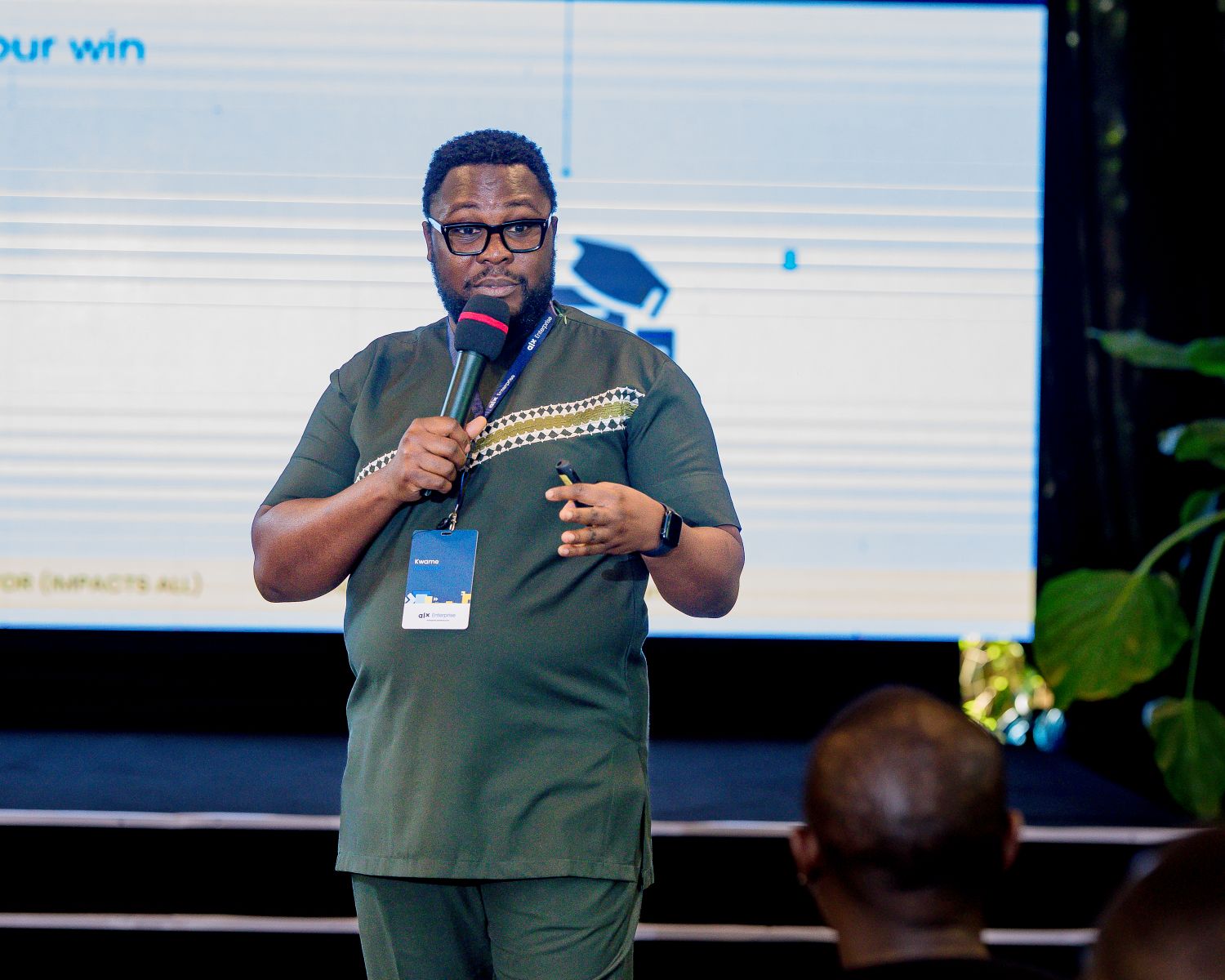
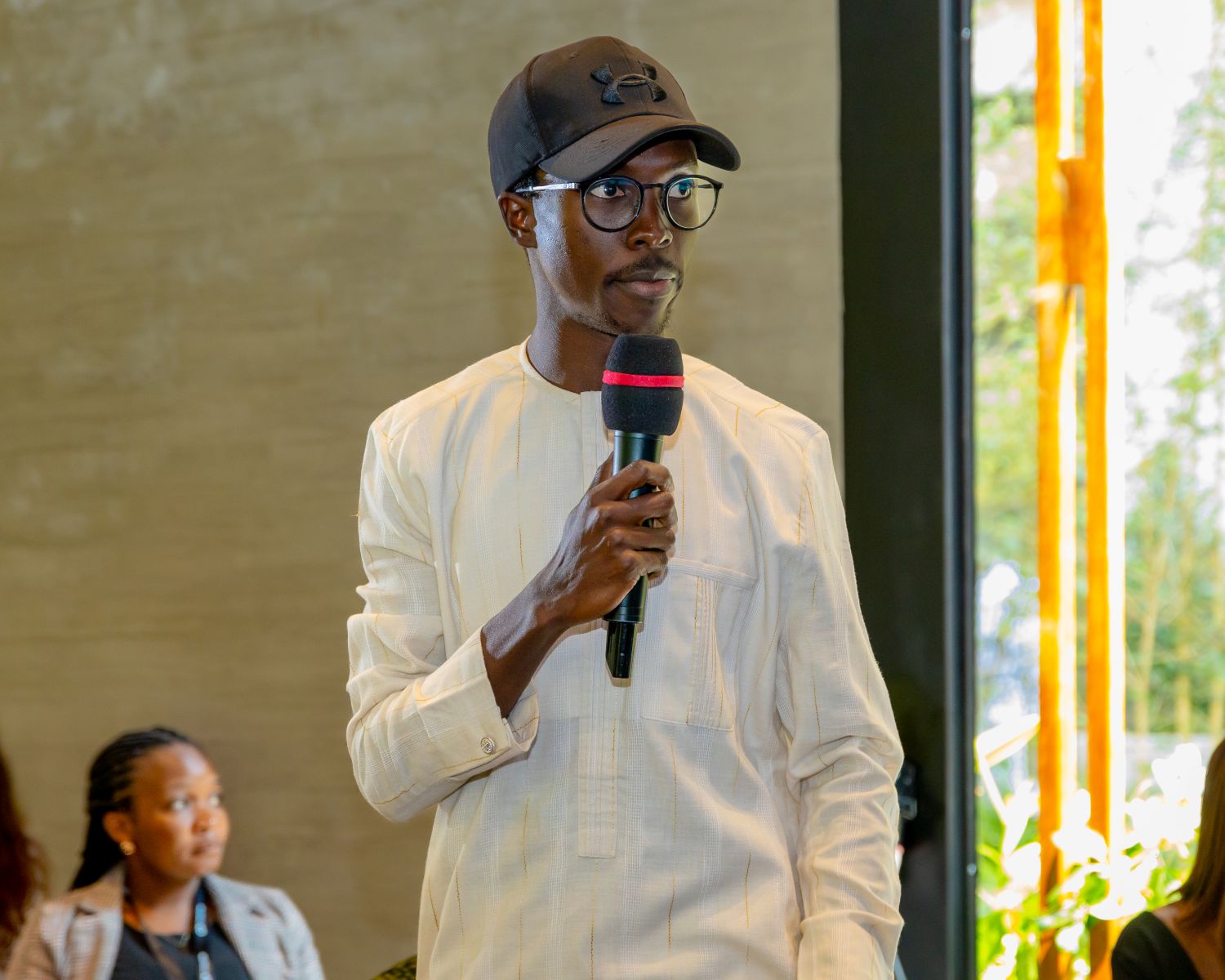
Kwame Norvixoxo, Research Lead at the World Bank and facilitator of the simulation, said the exercise was intentionally designed to move away from traditional conferences where participants passively listen to presentations.
Instead, leaders were encouraged to experience the uncertainty organisations now face and collectively reflect on practical responses.
He said the exercise also provides an opportunity for businesses and training institutions to better understand future workforce needs and collaborate on closing emerging skills gaps.
Kwame Norvixoxo, Research Lead at the World Bank, facilitated the simulation.
Business leaders see AI as unavoidable
Participants from different sectors agreed that AI adoption is no longer optional.
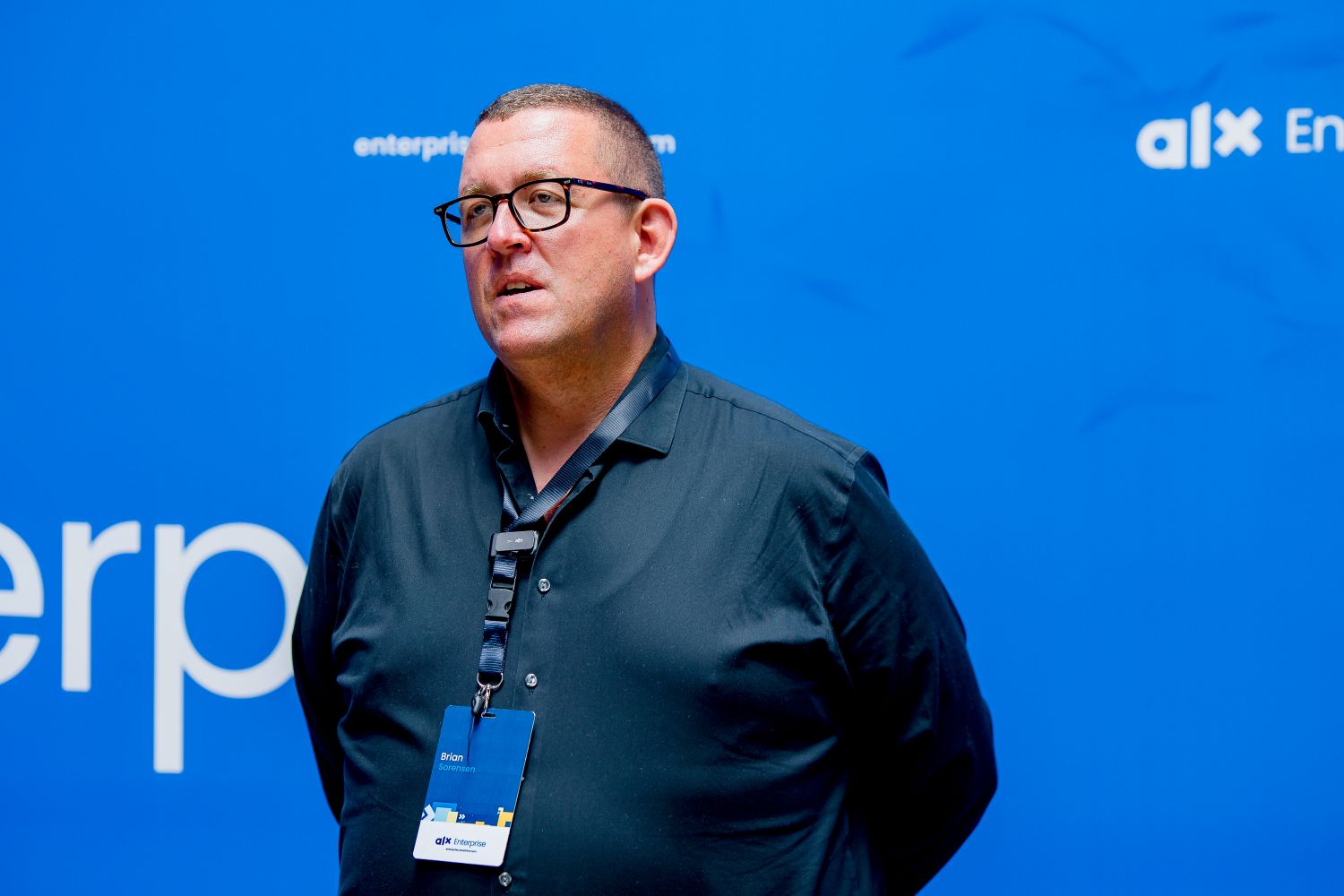
Brian Sørensen, who leads Vertland Africa, said AI has become a strategic priority across his organisation because it enables businesses to become more efficient while delivering faster services.
“We know that this is a must-have,” he said, noting that continuous upskilling has become central to the company’s growth strategy.
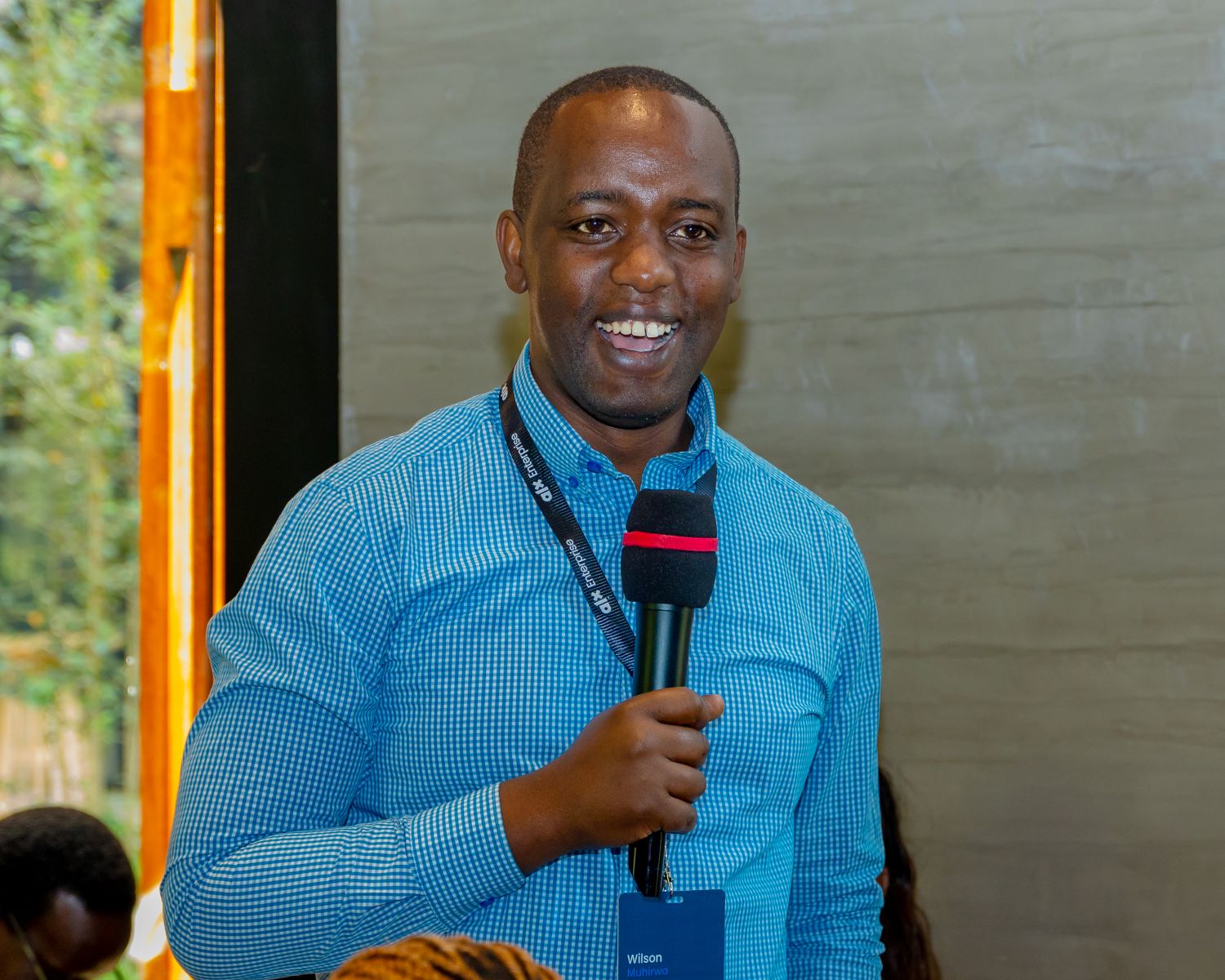
Wilson Muhirwa, Managing Director of Shift Africa, said organisations that delay adopting AI risk falling behind.
“The only thing we have to do is to make sure that we adopt, we learn, we unlearn where necessary, and adapt to the new technologies,” he said.
He encouraged business leaders to build organisational cultures that embrace experimentation and continuous learning rather than fearing technological change.
Wilson Muhirwa, Managing Director of Shift Africa, said organisations that delay adopting AI risk falling behind.
Laura Gotti, Communications Manager at Rwanda Men’s Resource Centre (RWAMREC), said AI adoption should begin with educating employees and strengthening governance around data protection.
For her organisation, one immediate takeaway was the need to develop an AI policy aligned with existing data protection frameworks before expanding AI use.
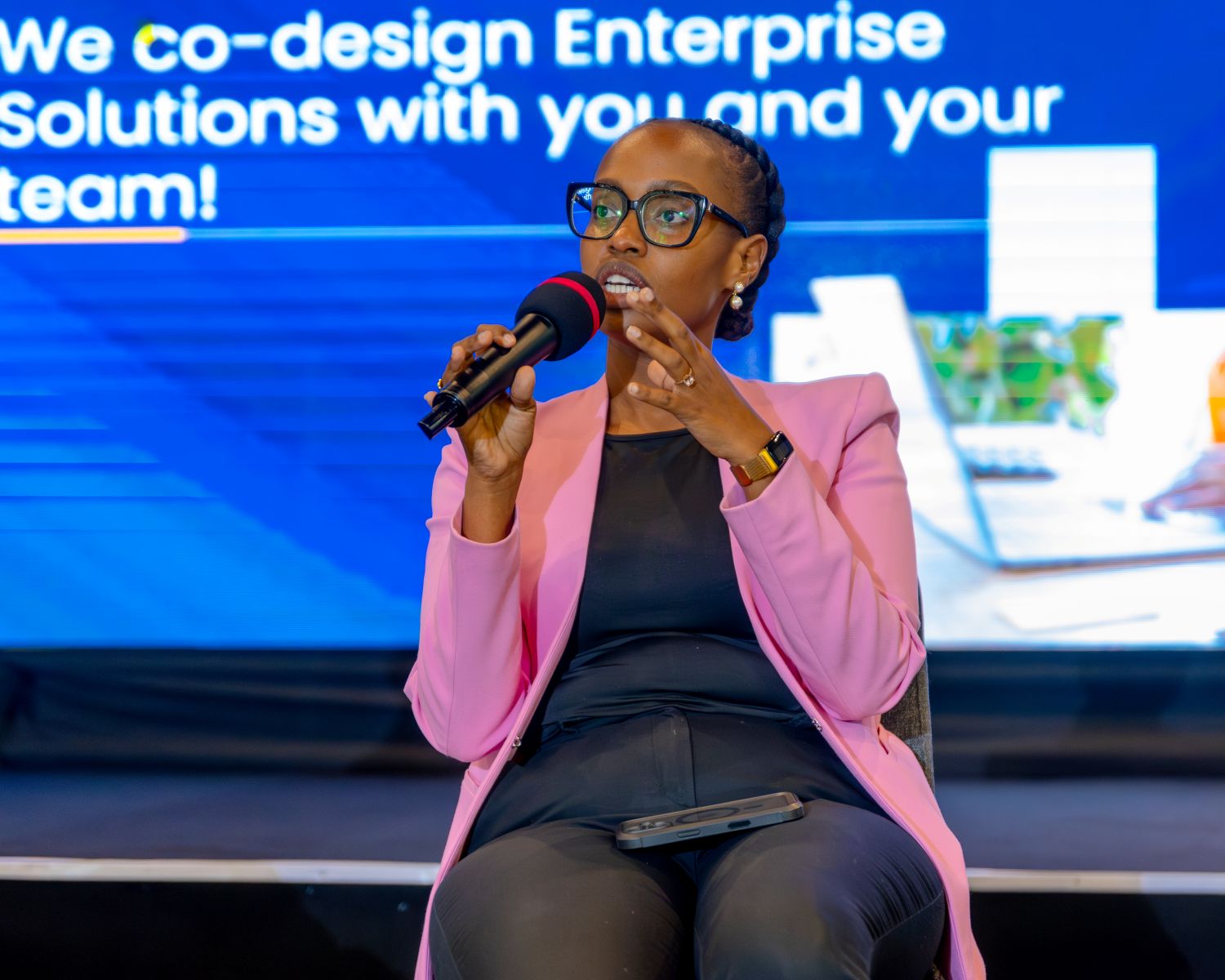
Raissa Mahoro, Healthcare Solutions Manager at Sand Technologies, argued that leaders should first identify operational challenges where AI can create value before investing in workforce capability, to ensure employees can use new technologies effectively and responsibly.
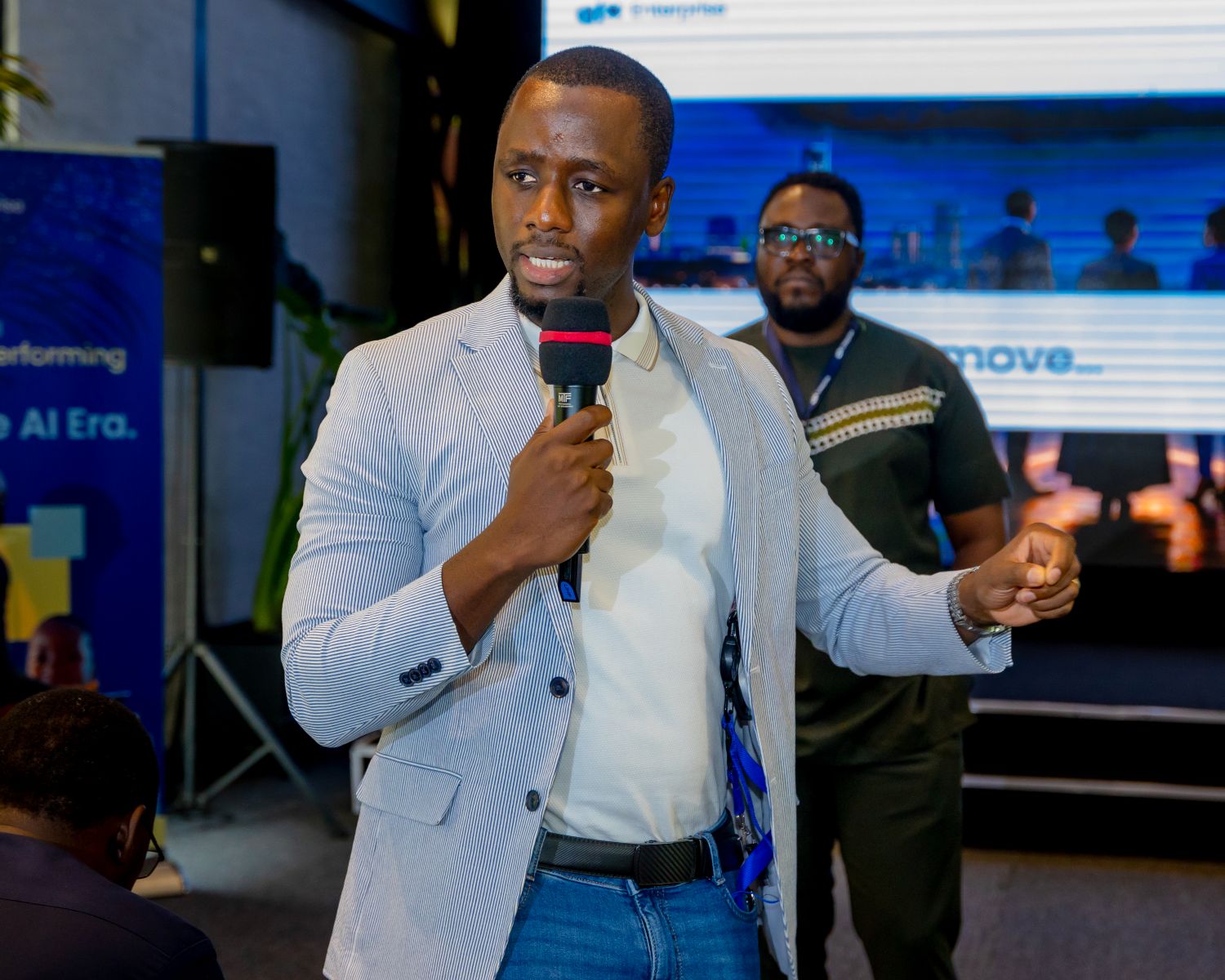
Raissa Mahoro, Healthcare Solutions Manager at Sand Technologies, speaking at the ALX Enterprise AI leadership breakfast in Kigali.
Leadership, not technology, will determine success
Across every session, one conclusion consistently emerged: the future of work is becoming less about technology itself and more about leadership.
AI may automate routine tasks, improve decision-making and accelerate productivity, but organisations will only realise those benefits if leaders create cultures that encourage learning, build workforce capability and adapt business strategies to an increasingly AI-driven economy.
For today’s CEOs, the challenge is no longer deciding whether AI matters. It is deciding whether their people, their managers and ultimately their leadership are prepared for what comes next.
ALX Enterprise is the corporate training arm of ALX, a pan-African talent and skills organisation that has trained hundreds of thousands of learners across the continent in software engineering, data science, cloud computing and AI. Building on that track record, ALX Enterprise partners directly with companies and their leadership teams to close AI and data capability gaps, redesign workflows around new tools, and build the manager and executive capability needed to lead through disruption grounded in practical, Africa-relevant training rather than theory alone.
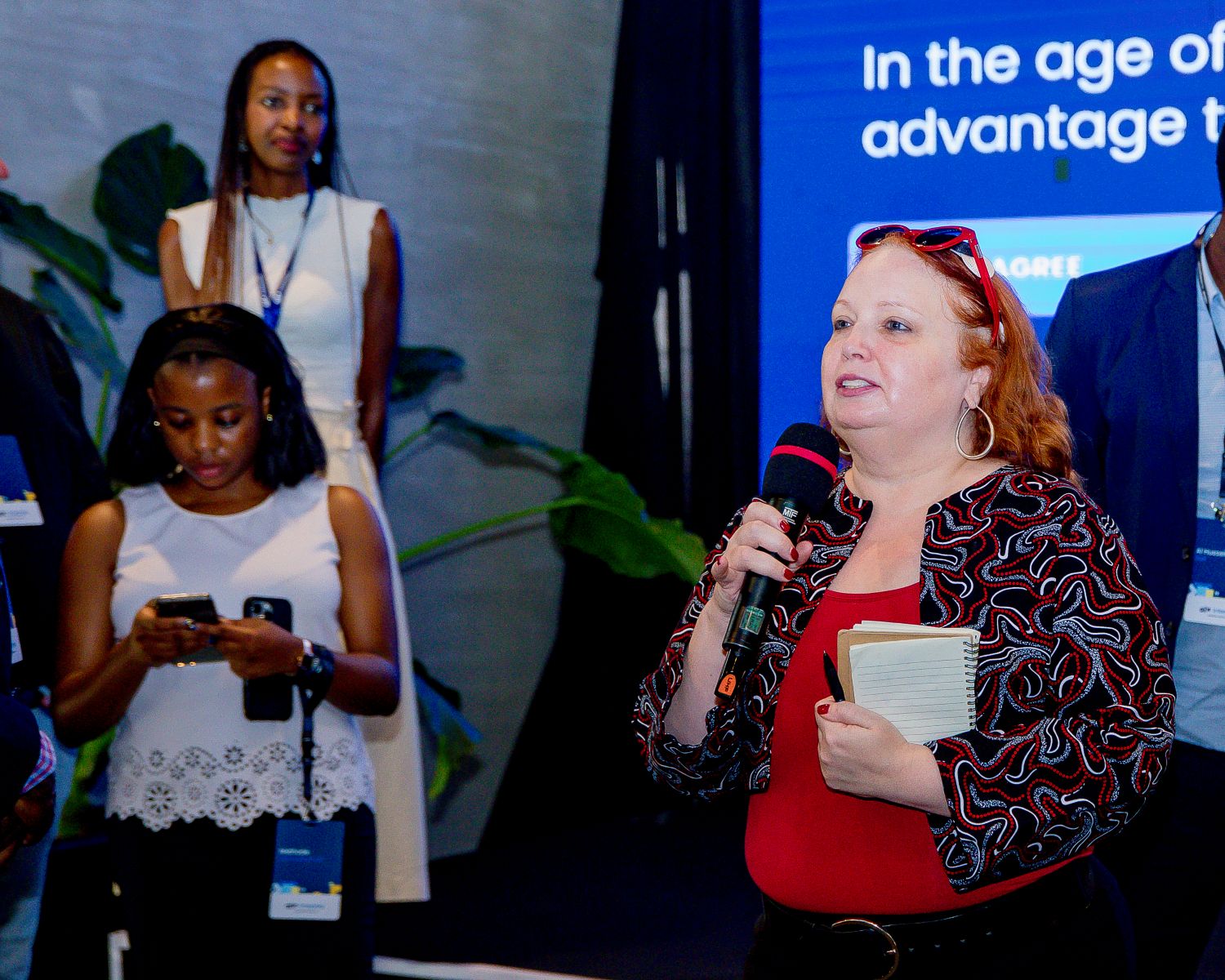
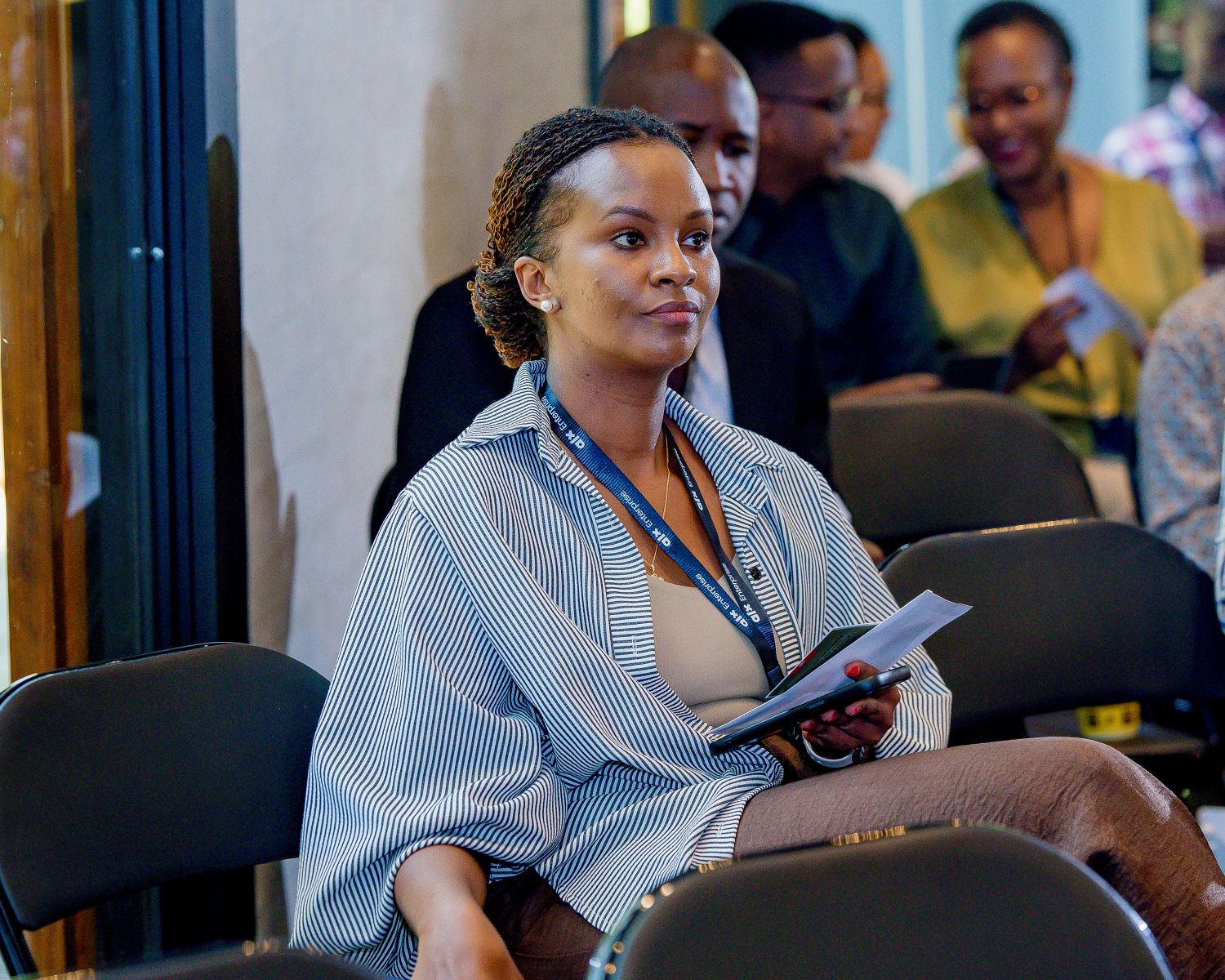
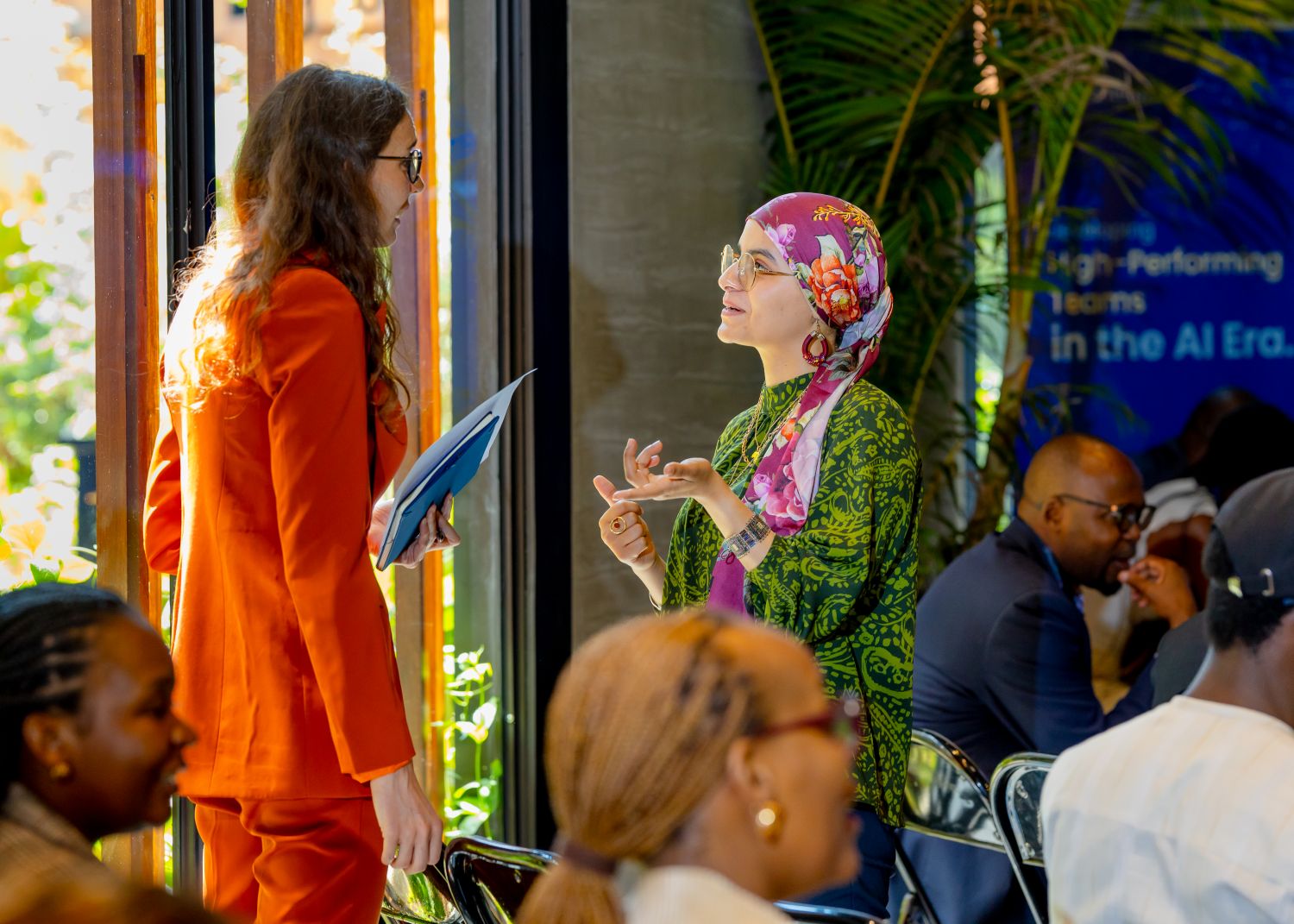
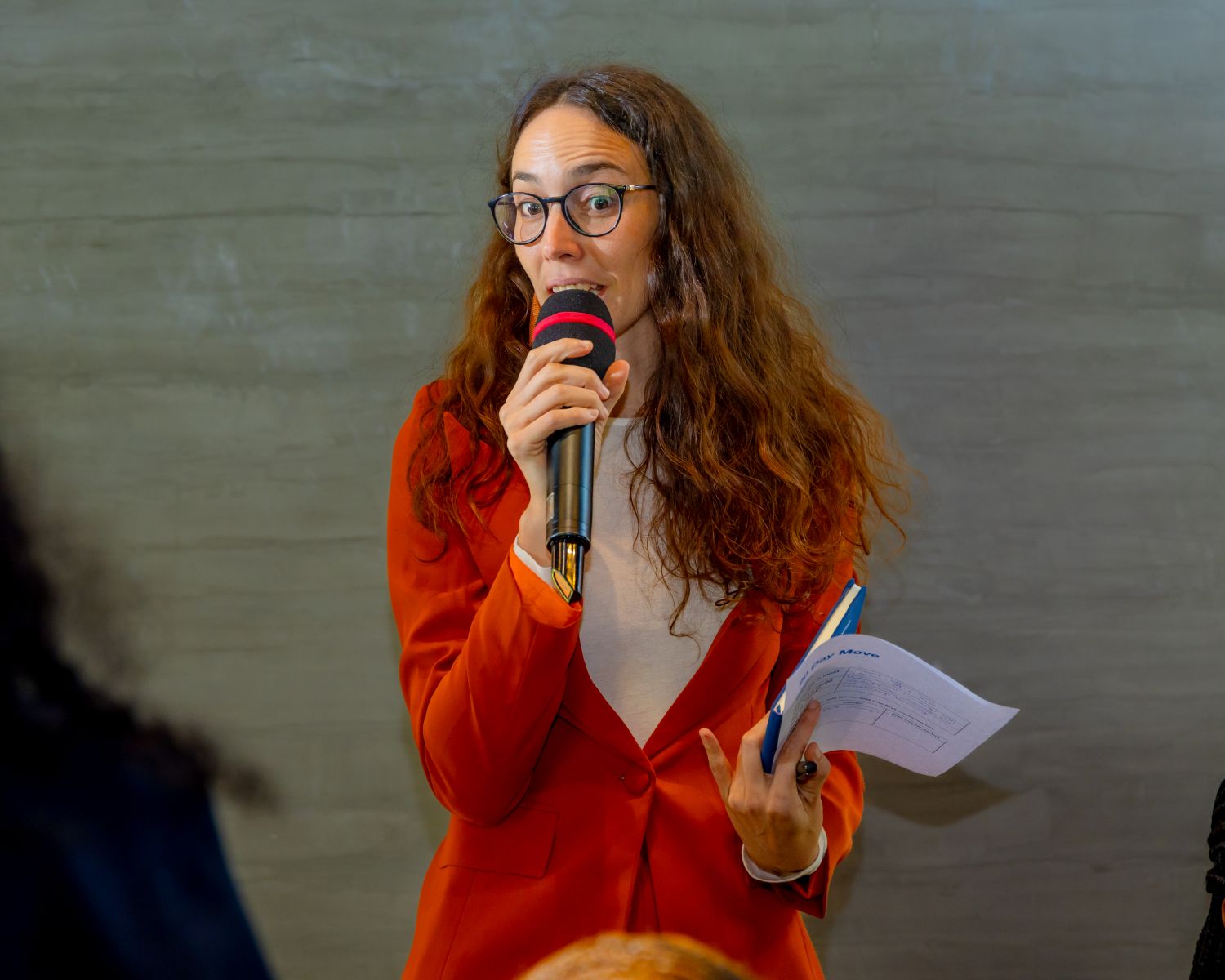
The executive breakfast hosted by ALX Enterprise at Norrsken Kigali on Friday brought together CEOs, senior executives, HR professionals, and business leaders. Minister of State for ICT and Innovation Yves Iradukunda told the business leaders that responsible AI adoption extends beyond purchasing new software.ALX Africa Regional Director Nimie Chaylone speaks during the “Leading in the Age of AI” executive breakfast at Norrsken Kigali.ALX Africa Regional Director Nimie Chaylone urged organizations to embed upskilling into the workplace.Brian Sørensen, who leads Vertland Africa, said AI has become a strategic priority across his organisation because it enables businesses to become more efficient while delivering faster services.Laura Gotti, Communications Manager at RWAMREC, says AI adoption should begin with educating employees and strengthening data governance. The event challenged leaders to rethink the future of work itself through practical discussions and an immersive simulation that mirrored the disruptions AI is already creating across industries.The event challenged leaders to rethink the future of work itself through practical discussions.Guests toured Sand Technologies at Norrsken, where the company demonstrated its services.
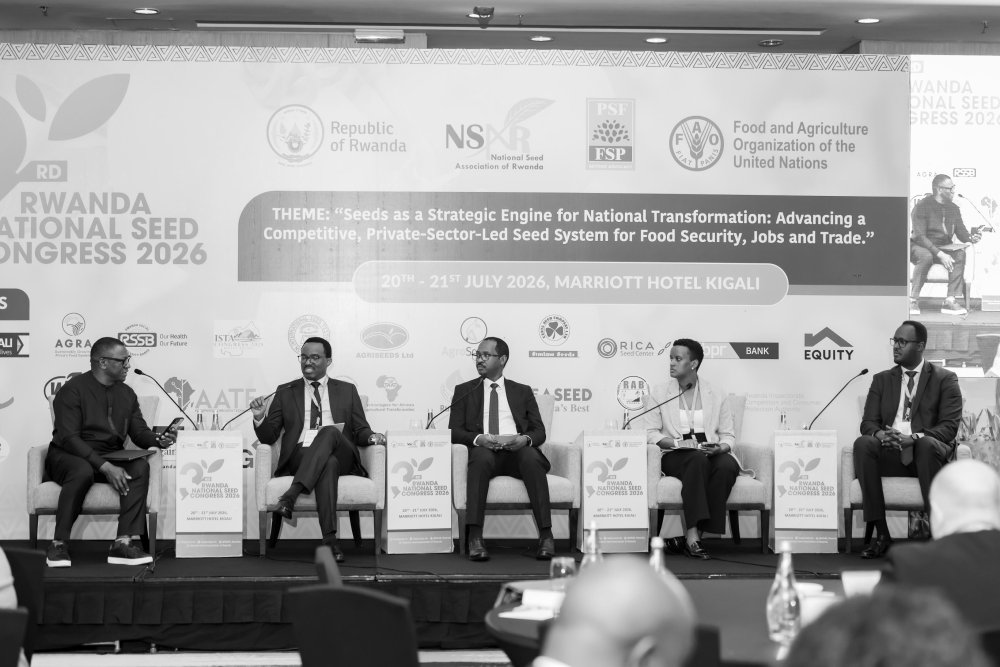
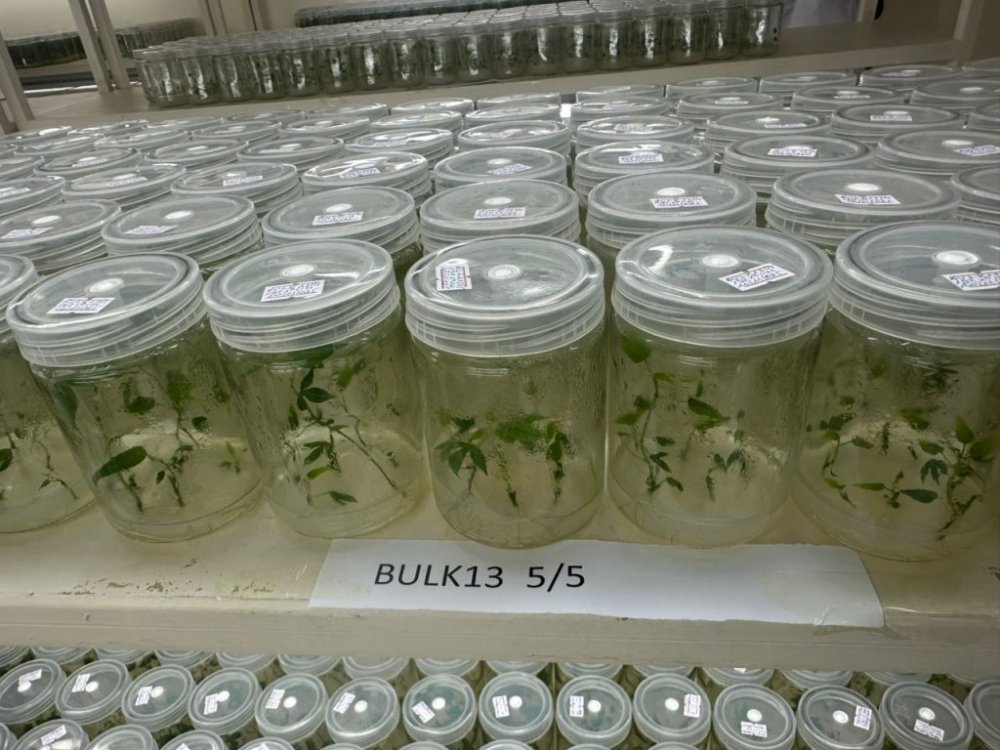
The announcement was made during the opening of the third National Seed Conference in Kigali, a two-day event that brought together policymakers, researchers, seed producers and agricultural experts from more than 20 countries to discuss the role of quality seeds in strengthening food security and promoting commercial agriculture.
Speaking at the conference, the Director General for Agriculture Modernisation at the Ministry of Agriculture and Animal Resources (MINAGRI), Dr Patrick Karangwa, said Rwanda no longer imports food crop seeds after investing heavily in research and local seed production over the past several years.
He explained that until about eight years ago, the country depended almost entirely on imported seeds for staple food crops. However, government investment in agricultural research, seed multiplication and production infrastructure has enabled Rwanda to meet its domestic demand.
“Quality seed is the foundation of high agricultural productivity, and it begins with strong research,” Dr Karangwa said. “The government invested significantly in research, equipment and the seed production sector. As a result, since 2021, farmers have been able to access all the food crop seeds they need within the country.”
Although farmers remain free to import seeds, he noted that imported food crop seeds are no longer eligible for government subsidies because certified alternatives are now readily available on the local market.
However, Rwanda still imports seeds for specialised crops that are not considered food staples, including plants used in perfume production and spices such as chilli peppers.
“We have not yet prioritised those crops because our initial focus was on ensuring food security through the local production of food crop seeds,” he said.
Rwanda targeting export markets
Having achieved self-sufficiency, Rwanda is now encouraging local seed producers to expand beyond the domestic market and explore business opportunities across Africa.
According to Dr. Karangwa, several Rwandan seed companies have already begun testing their products in different African countries as part of efforts to secure export markets.
“Our seed producers have already started exploring regional markets and conducting trials in several countries,” he said. “They are looking beyond Rwanda because relying only on the domestic market could result in surplus production that cannot be absorbed locally.”
He noted that exporting seeds is a complex process that requires producers to meet international quality standards and obtain certification from recognised regulatory bodies.
Seeds must also undergo field trials in destination countries to confirm that they perform well under local climatic and agricultural conditions before they can be commercialised.
Regulatory gaps remain a challenge
Innocent Namuhoranye, Chairperson of the National Seed Association of Rwanda (NSAR) and CEO of Agriseeds Ltd, said local producers have already started exporting vegetable seeds within the region, while maize seeds are currently undergoing trials in the Central African Republic.
Despite this progress, he said outdated regulations remain one of the biggest obstacles to expanding Rwanda’s seed exports.
“There is still a gap in our regulatory framework, particularly in the certification of locally produced seeds,” Namuhoranye said. “Our legal system needs to be aligned with international standards so that Rwandan seed producers can compete more easily in global markets.”
Africa’s share of the global seed market remains small
The Minister of State for Agriculture and Animal Resources, Dr. Solange Uwituze, said Africa continues to play only a minor role in the global seed industry despite its enormous agricultural potential.
She noted that the global seed market is currently valued at around $85 billion annually, yet Africa accounts for only 2.2 percent of that market.
“That is a significant gap, but it is also a huge opportunity for African countries to increase their participation in the global seed trade,” she said.
Within Africa, the seed market is estimated to be worth $3.45 billion, with South Africa accounting for nearly half of the continent’s market, while investment in the sector remains relatively low in many other countries.
Farmers urged to embrace certified seeds
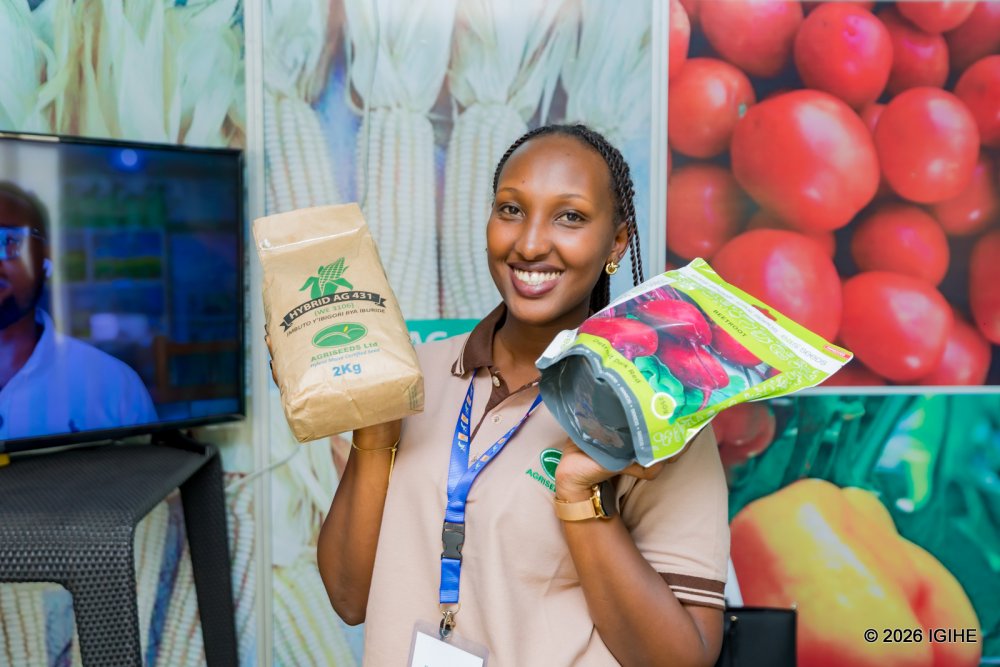
Meanwhile, Lucie Ikirezi Uwase, Head of Agriculture at Agriseeds Ltd, a Rwandan company specialising in maize and vegetable seed production, said the market for certified seeds continues to grow, but changing farmers’ attitudes remains a challenge.
She observed that many farmers still save seeds from previous harvests for replanting instead of purchasing certified seeds, which are developed to deliver higher yields and greater resistance to pests and diseases.
“Farmers need to understand that seeds harvested from previous crops should not automatically be replanted,” she said. “To improve productivity and increase harvests, they should purchase certified seeds every planting season.”
As Rwanda strengthens its seed industry and expands local production, government officials believe the country is well positioned to become a regional supplier of high-quality certified seeds, supporting both agricultural transformation and food security across Africa.
Africa faces major seed production gap despite huge market potentialDr Solange Uwituze, Minister of State for Agriculture and Animal Resources, said Africa must step up efforts to strengthen its seed industry, as the continent continues to have a very limited share of the global seed marketThe conference, which focused on the development of Rwanda’s seed sector, brought together participants from more than 20 countriesInnocent Namuhoranye, Chief Executive Officer of the Rwanda Seed Association, said Rwanda has already started supplying vegetable seeds to regional markets as local producers continue exploring export opportunities.Dr Patrick Karangwa, Director General for Agriculture Modernisation at MINAGRI, said Rwanda has developed the capacity to produce all the food crop seeds needed for domestic use, eliminating the country’s reliance on importsRwanda has attained self-sufficiency in the production of all food crop seeds required for domestic useIkirezi Uwase Lucie, Head of Agriculture at Agriseeds Ltd, said the certified seed market is performing well, but one of the biggest challenges remains changing farmers’ mindset, as many still rely on seeds from previous harvests instead of purchasing new certified seeds
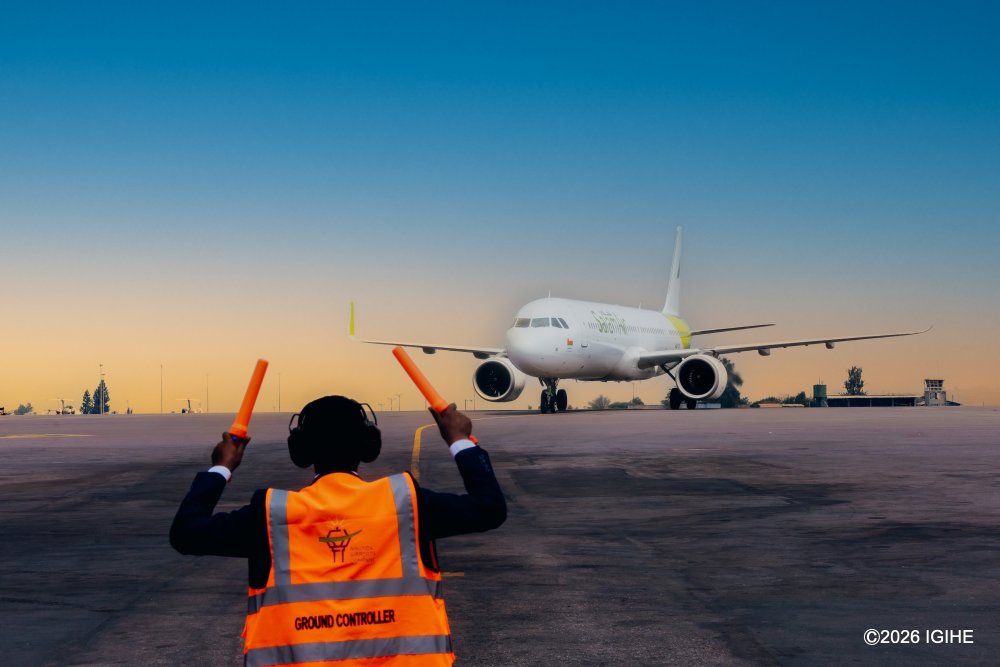
Oman’s low-cost carrier, SalamAir, officially launched its direct flights between Muscat and Kigali, marking the airline’s expansion into the African market. The inaugural flight landed on Tuesday, July 21, 2026, with the route scheduled to operate twice a week.
The new air link has sparked optimism about the benefits it will bring to both nations, from boosting tourism and trade to expanding employment and investment opportunities.
As Rwanda continues positioning itself as a leading tourism destination, the direct connection to Oman is expected to attract more visitors from Oman and neighboring Gulf countries while also providing easier access for African travelers heading to Oman.
The route is also anticipated to stimulate investment. Easier travel will allow Omani investors to explore business opportunities in Rwanda, particularly in sectors where the country has seen significant growth.
For ordinary citizens, the new flights will simplify travel for business, tourism, education, and family visits, making movement between the two countries faster and more affordable.
Employment opportunities for Rwandans
Oman has a population of over 5.3 million, with a significant proportion made up of expatriates. Foreign workers play a vital role in sectors such as construction, healthcare, tourism, transportation, and hospitality.
Rwanda’s Honorary Consul to Oman, Hamood Khalfan Al Busaidi, described the launch of the flights as the realization of a dream he had pursued for more than three decades.
“For me, this is a dream come true. I have represented Rwanda’s interests in Oman for more than 30 years, and I have followed this initiative closely. Today it has become a reality with the support of leaders from both countries.”
Al Busaidi noted that the new air connection could create employment opportunities for qualified Rwandans, as Oman relies heavily on foreign professionals.
“Oman has a relatively small population, while Rwanda has about 14 million people. This creates employment opportunities for educated people in Oman,” he said.
He also highlighted business opportunities for Rwandan exporters, particularly those dealing in agricultural products such as fresh fruits and vegetables.
Conversely, Oman could expand exports to Rwanda in areas including construction materials, natural resources, and other industrial products.
According to Al Busaidi, increased interaction between business communities and government officials from both countries will help identify additional sectors for cooperation and investment.
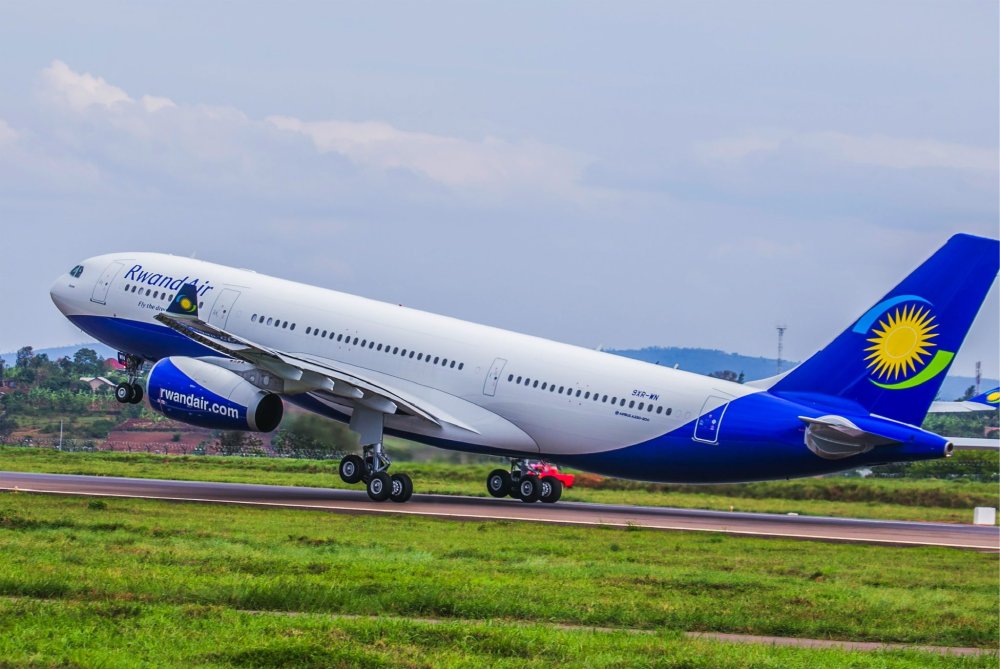
RwandAir could soon launch direct flights to Oman.
A longstanding relationship
Despite regional geopolitical tensions affecting the Strait of Hormuz, through which nearly 20% of the world’s petroleum supplies pass, Rwanda and Oman have maintained strong bilateral relations.
Al Busaidi emphasized that ties between the two countries go back many years, with several Omani families having lived in Rwanda.
He himself was born in Rwanda to an Omani father and a Rwandan mother. Other Omanis were also born or have lived in Rwanda, reflecting the longstanding relationship between the two nations.
The launch of SalamAir’s Muscat–Kigali route is expected to encourage Omani investment in sectors such as transportation, tourism, mining and infrastructure development.
The direct connection will also facilitate tourism in both directions while supporting Oman’s ambition to use Kigali as a gateway to the wider African market.
For Rwanda, the route is expected to improve trade logistics and provide easier access to markets in the Middle East.
Speaking to IGIHE, Senator Murangwa Ndangiza Hadidja, Chairperson of the Senate Standing Committee on Foreign Affairs, Cooperation and Security, welcomed the development, saying the new route would deepen cooperation between the two countries.
“We highly appreciate this opportunity for Rwanda to strengthen its partnership with Oman. The launch of SalamAir flights opens new possibilities for trade, tourism, and employment between our two countries.”
Rwanda’s Minister of State in the Ministry of Infrastructure, Col. Claudien Bizimungu, also said the direct flights would significantly reduce travel costs and inconvenience for passengers who previously had to connect through third countries to reach Oman.
SalamAir’s first flight to Kigali receives a ceremonial water salute upon arrival.
A new destination for RwandAir
During the inauguration of SalamAir’s Muscat–Kigali service, officials also revealed that RwandAir may soon begin operating flights to Oman.
Rwanda’s Ambassador to Oman, Dan Munyuza, who is based in Egypt, said Omani authorities have committed to facilitating all the necessary approvals if RwandAir decides to launch the route.
Minister of State Col. Claudien Bizimungu confirmed that the bilateral air services agreement allows airlines from both countries to operate flights between Kigali and Muscat.
“RwandAir could begin operating this route in the near future because that is Rwanda’s objective. Rather than relying solely on foreign airlines, we want our national carrier to provide Rwandans and international travelers with direct access to the destinations they need. We are investing in these connections to make travel and business more convenient.”
Located on the southeastern coast of the Arabian Peninsula, Oman is a Middle Eastern nation whose capital, Muscat, is the destination served by the newly launched direct flights from Kigali.
The country covers approximately 309,500 square kilometers and had a population of about 5.3 million as of May 2026. Nearly half of its residents are expatriates, making Oman one of the Gulf countries with a large foreign workforce.
Arabic is the country’s official language, while English is widely spoken, particularly in business, tourism, and international trade.
Oman’s currency is the Omani Rial (OMR), one of the world’s strongest currencies. One Omani Rial is worth more than Rwf3,800. The country is ruled by Sultan Haitham bin Tarik.
Oman’s economy was valued at approximately $107 billion in 2024. While oil and natural gas remain the backbone of its economy, the country has been actively pursuing economic diversification by investing in tourism, mining, infrastructure, logistics and ports, and renewable energy.
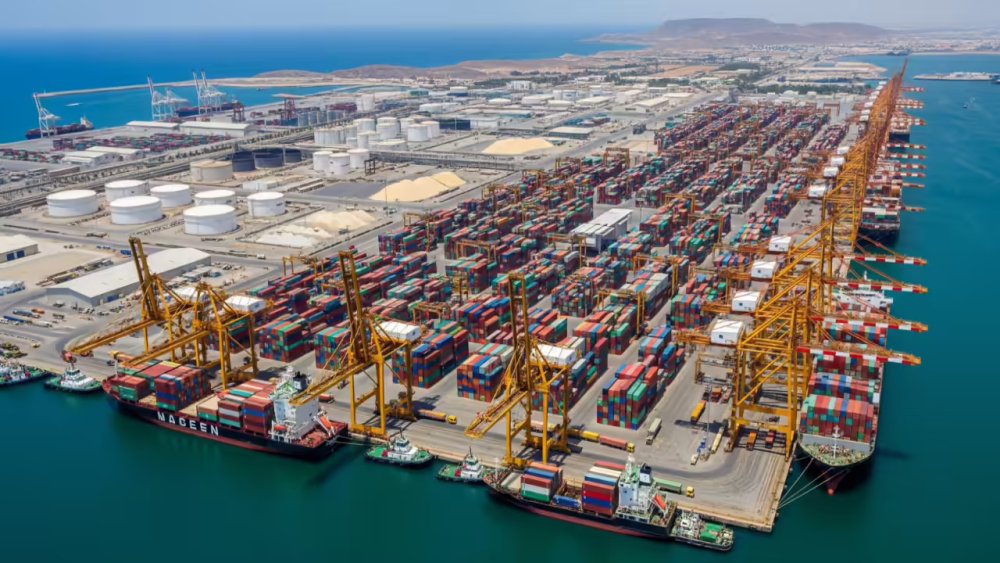
SalamAir’s inaugural flight arrives at Kigali International Airport.Oman is home to some of the region’s most strategically important commercial ports.
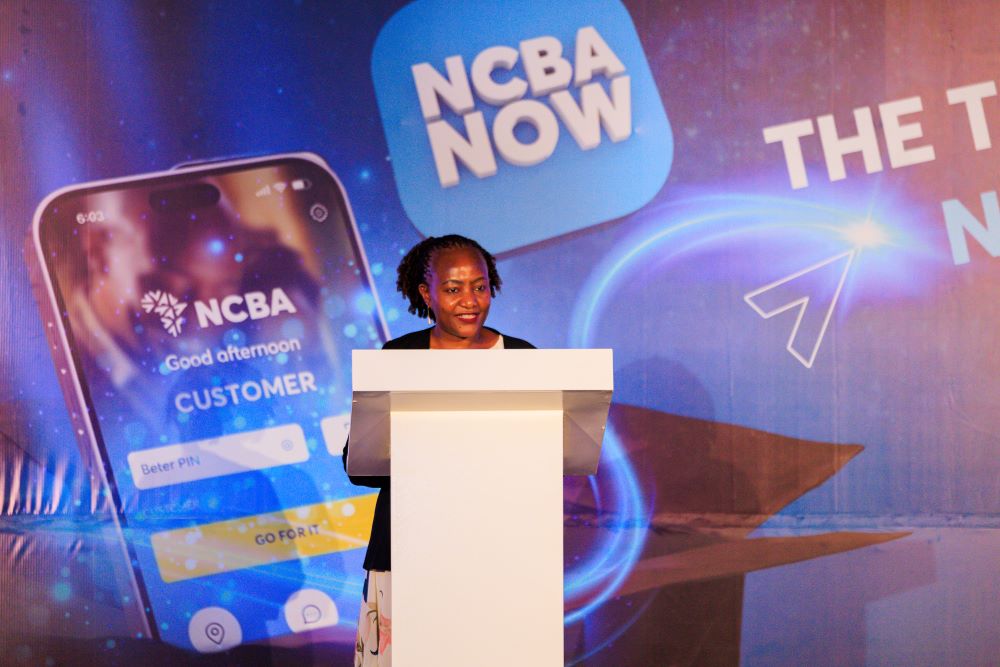
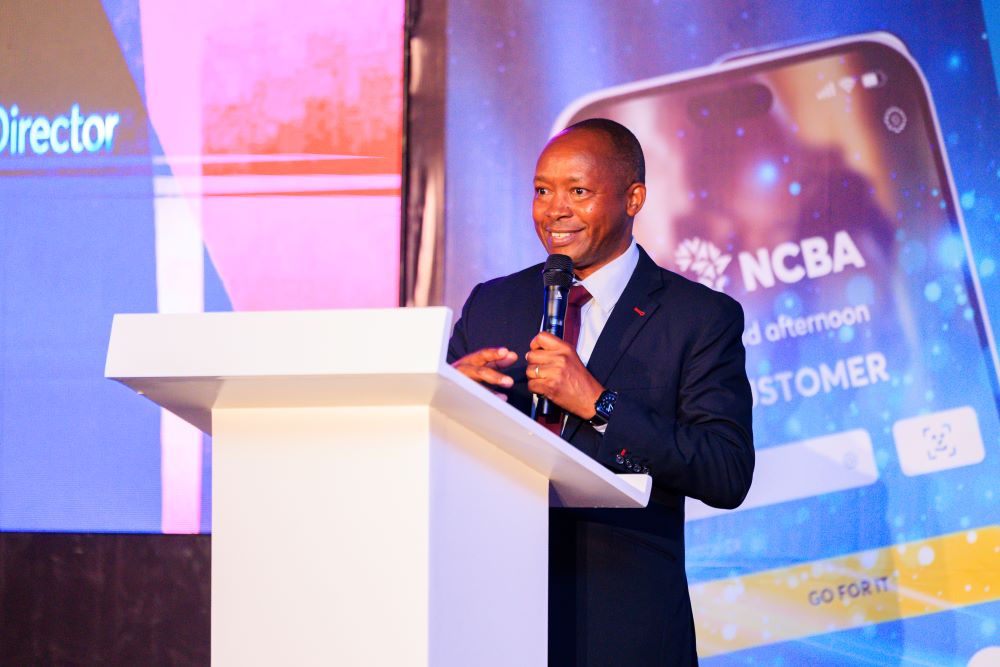
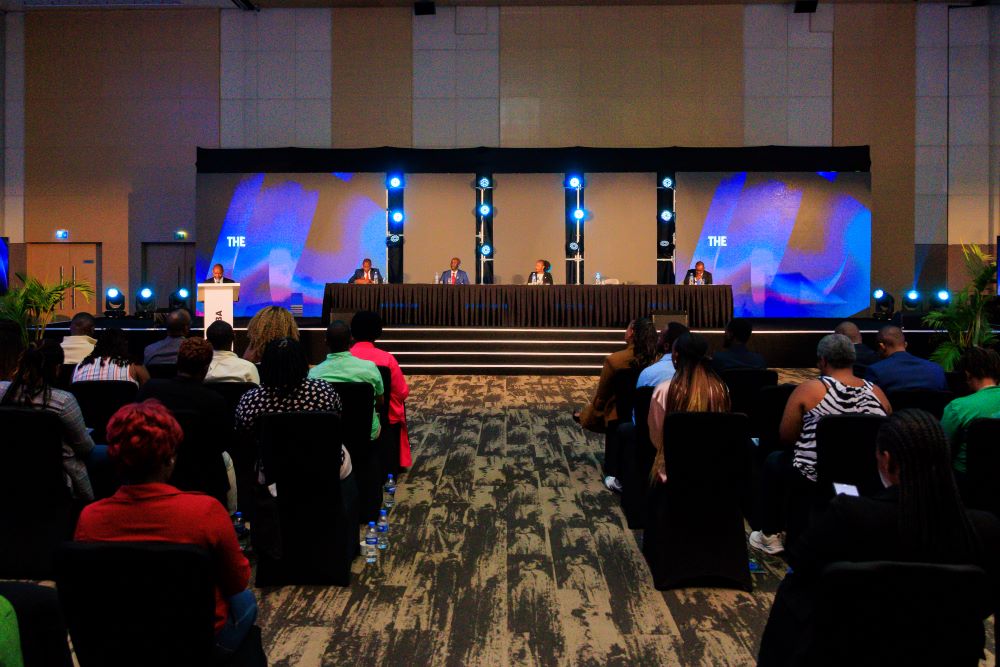
The platform was officially unveiled on July 23, 2026, during an event that brought together NCBA Bank Rwanda officials, partners, customers and social media influencers.
ConnectPlus is designed to support businesses, particularly large enterprises, by providing them with a convenient digital solution to manage their banking needs without having to visit physical bank branches.
Through the platform, businesses will be able to process payments, manage employee salaries, monitor accounts and conduct various financial transactions in a faster, safer and more efficient way.
Speaking during the launch, NCBA Bank Rwanda Managing Director and CEO Maurice Toroitich said the introduction of ConnectPlus reflects the bank’s commitment to using technology to improve customer experience and make financial services more accessible.
He explained that the bank is focused on developing digital solutions that allow customers to access services wherever they are while saving time and improving convenience.
“Technology is one of our key priorities at NCBA Bank. We want our customers to access our services without necessarily visiting our branches, but instead use digital solutions that allow them to manage their financial needs easily using their phones,” Toroitich said.
Catherine Ngali, Senior Manager of Channels and Product Development at NCBA Bank Rwanda, said the launch of NCBA NOW and NCBA ConnectPlus marks an important step in the transformation of banking services.
She noted that the platforms are designed to make financial services more convenient for both individual customers and businesses by providing simple, secure and efficient ways to access and manage their accounts.
Samuel Gatari the Head of Retail Banking and Branch Network at NCBA Bank Rwanda revealed that the bank’s mobile financial service, MoKash, has already attracted more than five million customers, with young people accounting for about 60 percent of its users.
He said the growing number of digital banking users demonstrates the increasing demand for technology-driven financial solutions that make banking services more accessible.
NCBA Bank Rwanda is a subsidiary of NCBA Group, a financial institution operating in five African countries: Kenya, Uganda, Tanzania, Rwanda and Côte d’Ivoire.
The bank began operations in Rwanda in 2016 and currently operates branches in Kigali, as well as Musanze, Nyagatare, Rubavu, Kayonza and Rusizi districts.
Catherine Ngali, the Senior Manager of Channels and Product Development at NCBA Group, stated that NCBA NOW and NCBA ConnectPlus represent a new milestone in the transformation of digital banking services.NCBA Bank Rwanda Managing Director and CEO Maurice Toroitich said that the platforms were introduced to enable customers to access and use the bank’s services without having to visit its physical branches.The event was attended by NCBA Bank Rwanda officials, partners and customers.Rwandan artist Ariel Wayz entertained attendees during the event.NCBA Bank Rwanda has launched a digital platform to help customers access its services through technology.
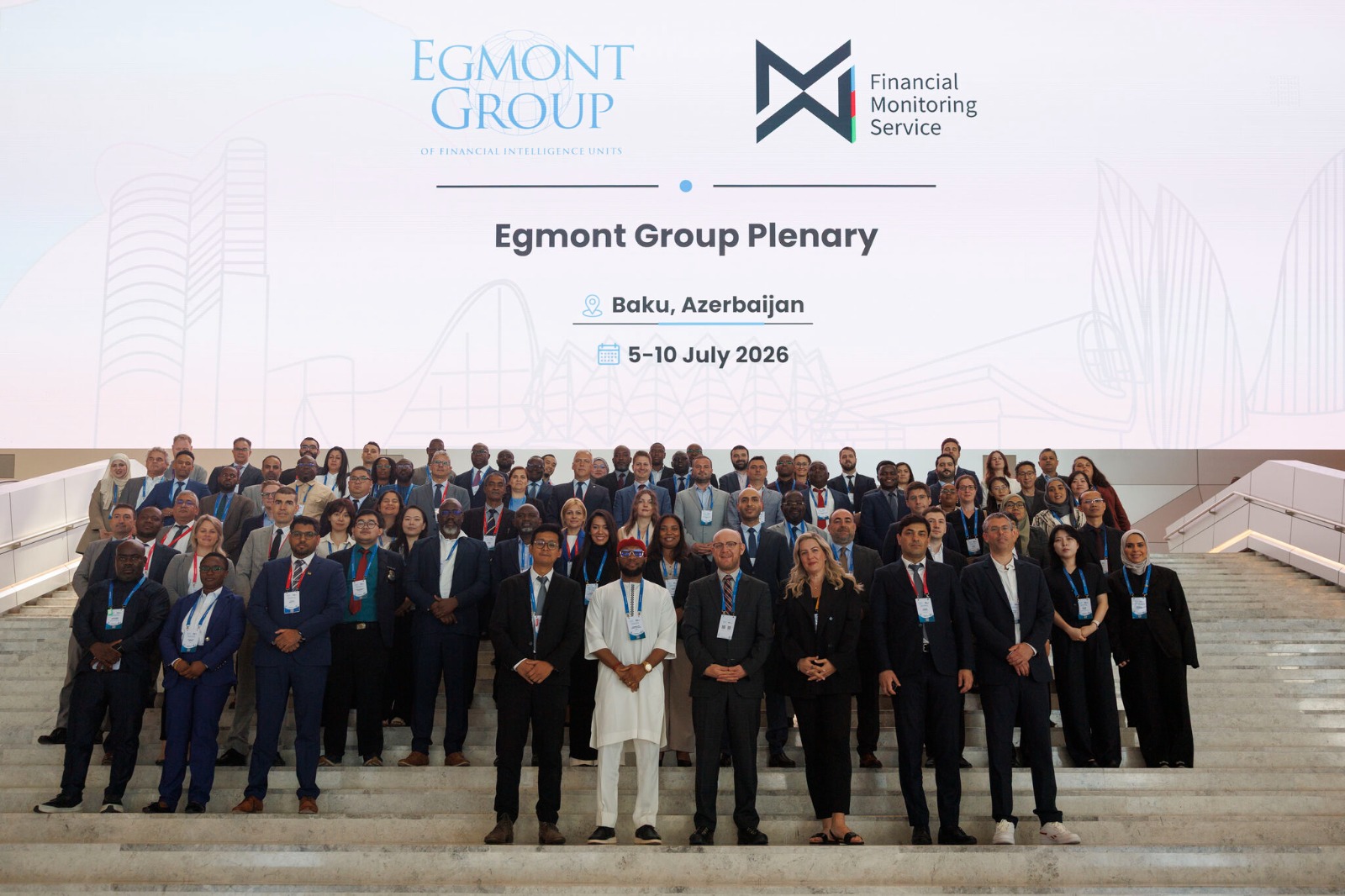
The Egmont Group is a global network of Financial Intelligence Units (FIUs) dedicated to strengthening international cooperation in combating money laundering, terrorist financing and other financial crimes. Through secure communication channels and trusted frameworks for FIU-to-FIU collaboration, the Group enables the timely exchange of actionable financial intelligence across jurisdictions.
Rwanda’s admission marks the culmination of more than three years of rigorous assessment, institutional reforms and sustained national commitment to strengthening its Anti-Money Laundering, Countering the Financing of Terrorism and Countering Proliferation Financing (AML/CFT/CPF) regime.
More than a national achievement, Egmont membership signifies Rwanda’s commitment to collective international action against increasingly complex and transnational financial crimes. It reinforces the country’s growing reputation as a credible and trusted partner in promoting financial integrity, transparency and global security.
Why Egmont membership matters
Membership positions FIC-Rwanda within a global network of FIUs, enabling secure, real-time exchange of financial intelligence and strengthening international cooperation in investigating and disrupting money laundering, terrorist financing, tax crimes, drug trafficking, human trafficking, illegal mining and other illicit financial activities.
The membership also provides access to specialised training, technical assistance, peer learning and international best practices, further enhancing institutional capacity to detect, investigate and respond to financial crimes.
Beyond the Financial Intelligence Centre, Egmont membership strengthens Rwanda’s international standing by reinforcing confidence among investors, development partners and the global financial community, while supporting the country’s efforts to maintain a resilient, transparent and secure financial system.
A stronger Rwanda, a stronger global financial system
As financial crime becomes increasingly sophisticated and borderless, Rwanda’s admission into the Egmont Group demonstrates the country’s readiness to work alongside the international community in safeguarding the integrity of the global financial system. Through enhanced cooperation, intelligence sharing and adherence to international standards, Rwanda is well positioned to contribute meaningfully to the global fight against illicit financial flows while advancing sustainable economic development and financial security.
FIC was admitted to the global network on July 8, 2026, during the 32nd Egmont Group Plenary held in Baku, Azerbaijan, from July 5 to 10, marking a major milestone in Rwanda’s efforts to strengthen the integrity of its financial system.
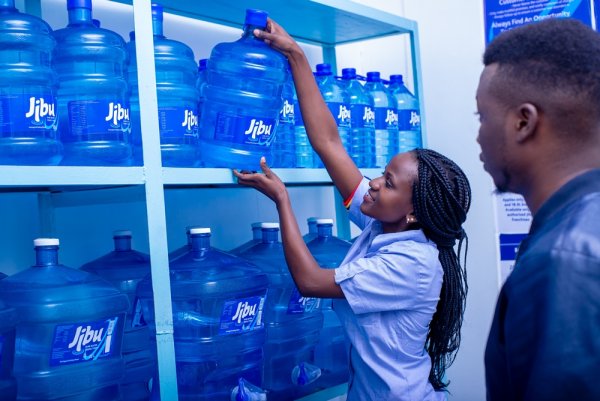
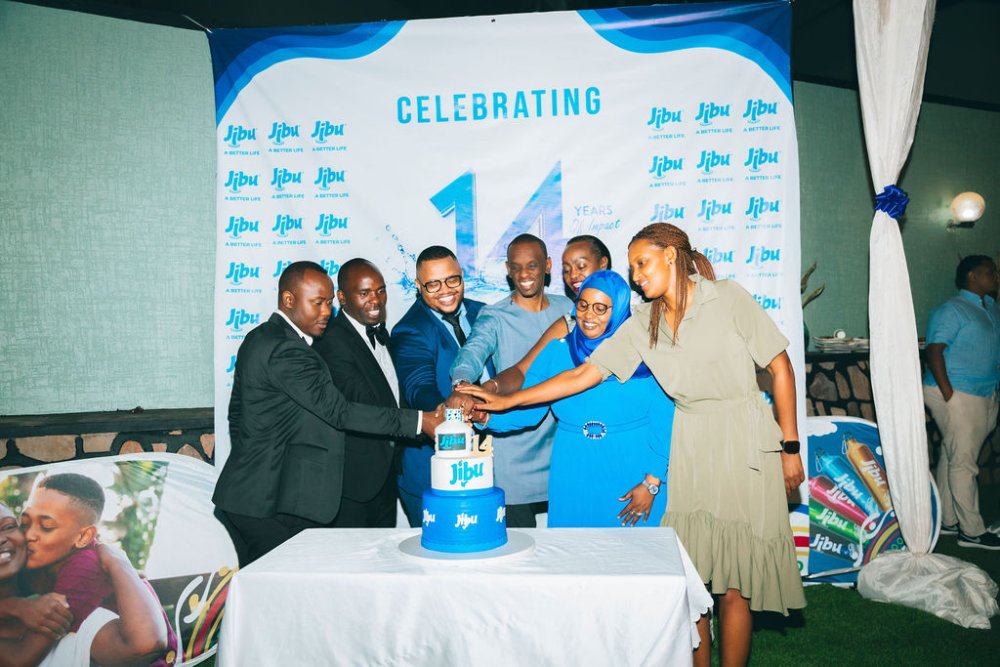
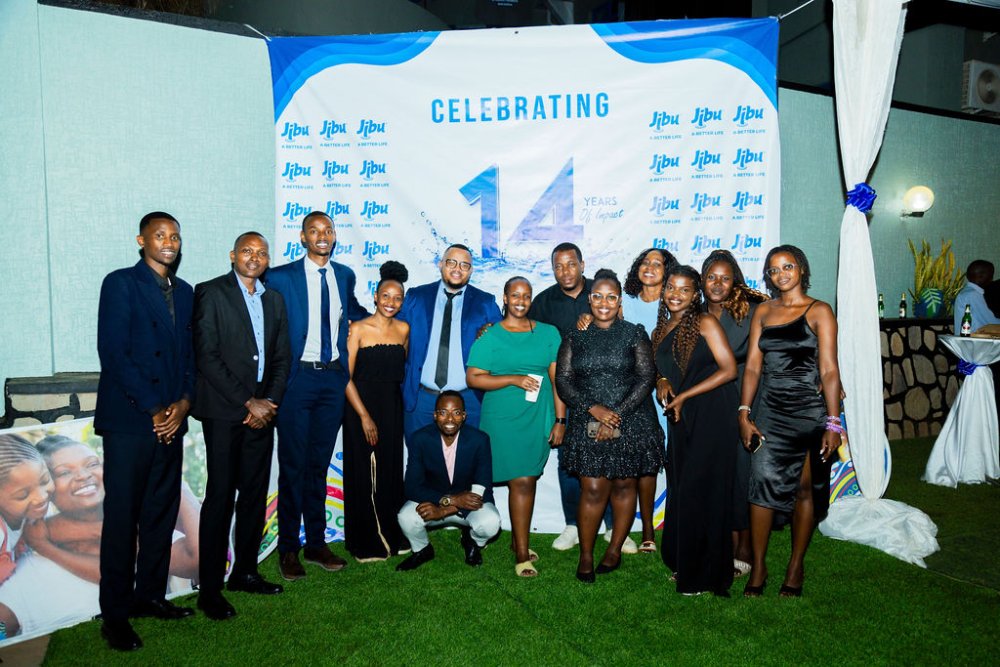
The company announced that it has established 65 water treatment facilities across almost all districts of Rwanda and created employment opportunities for more than 600 Rwandans.
The celebrations also marked the 15th anniversary of Jibu Holdings, the parent company that established its operations in Rwanda in 2012.
Jibu Holdings was founded in Colorado, United States, by Randy Welsch and his son Galen Welsch. Rwanda became the first country where the company launched its business model, which has since expanded to eight African countries, mainly in East Africa.
The company chose Rwanda for its anniversary celebrations as the country where it began operations and has remained one of its most successful markets.
Jibu works by partnering with local entrepreneurs to establish decentralised water treatment facilities in different communities.
Through its shared technology system, the company monitors water quality and ensures that all its facilities maintain consistent standards.
Across the eight African countries where it operates, Jibu has established more than 195 water treatment plants, supported over 10,000 water distributors, sold more than 950 million litres of water, and developed a network of more than 14,000 sales outlets.
In Rwanda, Jibu Country Manager Bruno Tuyisenge said the company currently works with more than 6,000 water distributors, operates 65 water treatment facilities, and serves over 300,000 regular customers.
He added that the company has created more than 640 jobs, excluding temporary employment opportunities, and its services have reached 26 districts across the country. The company currently treats about 280,000 cubic metres of water.
Tuyisenge said Jibu Rwanda expanded its operations in 2022 by entering the cooking gas sector in partnership with Japanese investors, aiming to reduce dependence on firewood and charcoal.
The company has since introduced a new gas distribution model that allows customers to purchase gas according to the amount of money they have.
“We are developing ‘Smart Stations’ where a customer who has Rwf 3,000 should not fail to access gas simply because they cannot afford to refill an entire cylinder. The first machine is already operating in Kacyiru, where residents have started purchasing gas through this system. We plan to expand the service to other parts of the country,” Tuyisenge said.
He added that more Smart Stations are being developed in Kigali City, Nyagatare and Kayonza.
Tuyisenge further said the company plans to introduce more varieties of water products to provide customers with wider choices. He noted that Jibu is also contributing to reducing reliance on boiled water, as many households have shifted to treated drinking water.
Rehema Uwamahoro, one of Jibu Rwanda’s franchise owners, said the company’s business model has helped her build a successful enterprise. Uwamahoro owns three productionfacilities located in Rwamagana, Kanombe, and Nyabisindu.
She said she joined the business in 2016 after leaving public service and has since expanded her operations, built a house, purchased a vehicle, and created jobs for more than 60 people.
Her facility in Rwamagana is valued at more than Rwf 60 million, despite starting the business with an initial capital of Rwf 500,000 when she was only selling water on a small scale.
Jibu Holdings Chief Executive Officer Galen Welsch said Rwanda remains a special market for the company because it was the first country where the business model was introduced and became the foundation for its expansion across Africa.
He said the company plans to expand its operations to more African countries over the next 10 to 15 years to ensure that affordable and safe drinking water reaches more households.
“Our vision is not only to expand as a business. We want to build a strong and sustainable African institution that contributes to improving public health, creating jobs, developing capable entrepreneurs, and transforming the lives of people across the African continent,” Welsch said.
Jibu Holdings currently operates in Rwanda, Uganda, Kenya, the Democratic Republic of Congo, Burundi, Tanzania, Zambia and Ghana.
Jibu Rwanda marks 14 years of providing safe drinking water across the countryJibu Rwanda operates 65 water treatment plantsCountry Manager Tuyisenge Bruno said Jibu Rwanda has over 6,000 distributorsUwamahoro Rehema awarded a motorcycle for outstanding performance among Jibu Rwanda franchise ownersJibu Rwanda franchisee Uwamahoro Rehema built successful business since 2016