Under the new legislation, any driver found with a blood alcohol content above the legal limit commits an offence. Convicted drivers face a fine ranging from Rwf 100,000 to Rwf 400,000 and imprisonment of three to six months.
The law specifically targets drivers of public transport, school buses, employee shuttles, tourist vehicles, and cargo trucks over 3.5 tons. Drivers whose blood alcohol level is at least twice the legal limit may face fines between Rwf 200,000 and Rwf 500,000 and imprisonment of three to six months, or one of these penalties.
Refusing a blood alcohol test is also criminalised. Drivers convicted of this offence face fines of Rwf 300,000 to Rwf 600,000 and imprisonment of three to six months if they operate public transport, school, or tourist vehicles, or cargo trucks over 3.5 tons. Drivers of other vehicles may face fines of Rwf 400,000 to Rwf 600,000 and imprisonment of up to 10 days.
The law sets the maximum permissible blood alcohol content at 0.80 grams per litre of blood. It also prohibits driving without a valid license, punishable by fines of Rwf 100,000–200,000 and 15–30 days in jail. Additionally, refusing to stop when signalled by a traffic officer is punishable by fines of Rwf 400,000–700,000 and imprisonment of three to six months.
The revision incorporates modern technology to enhance transparency and accountability in law enforcement, aiming to improve road safety and reduce accidents and fatalities. Traffic officers will prepare case files for prosecution in accordance with criminal procedure law.
Under the new legislation, any driver found with a blood alcohol content above the legal limit commits an offence. Convicted drivers face a fine ranging from Rwf 100,000 to Rwf 400,000 and imprisonment of three to six months.
The company hosted a business solutions event at the Kigali Marriott Hotel, bringing together representatives from government institutions, banks, insurance firms, and private companies to explore technologies designed to improve document management and workplace efficiency.
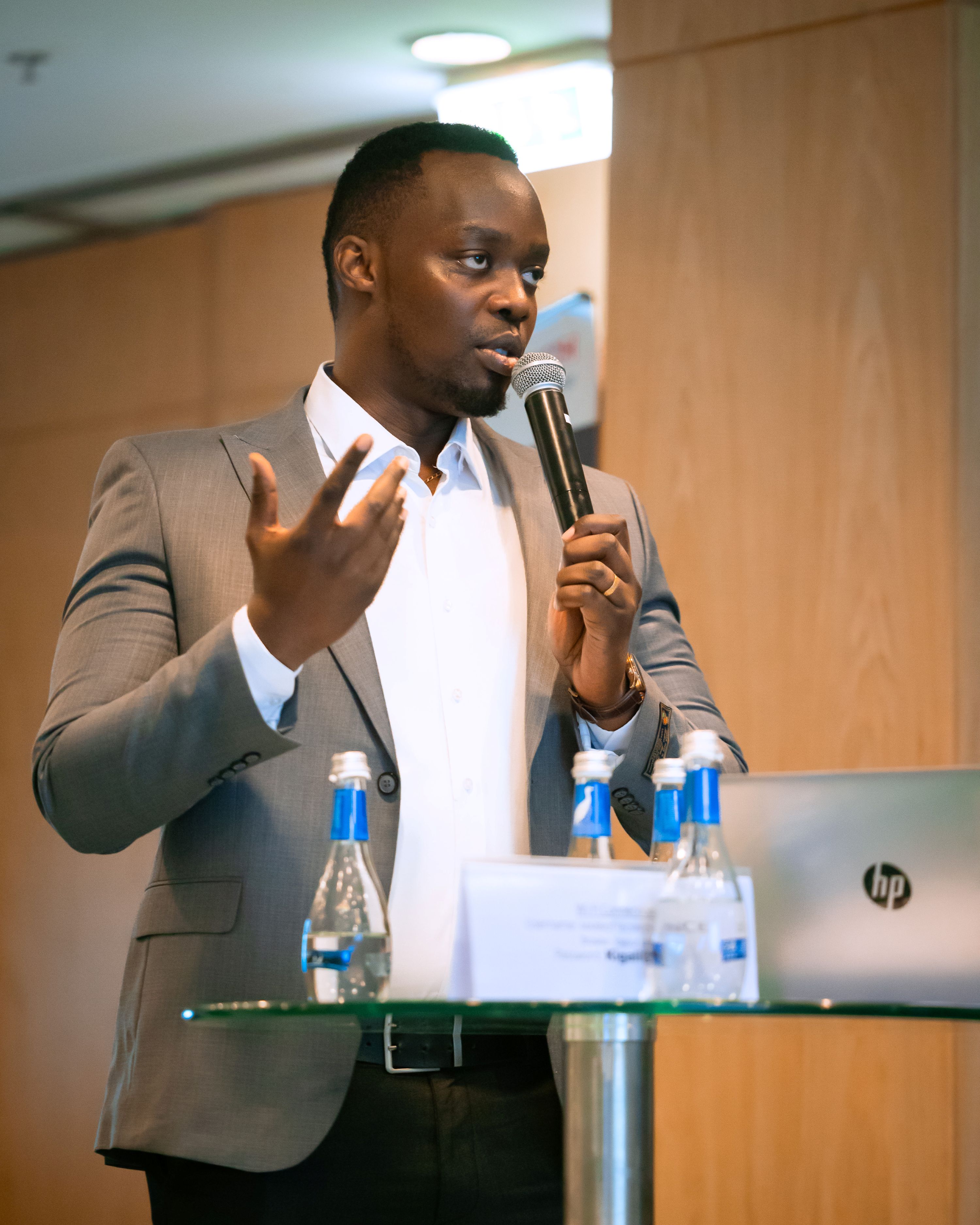
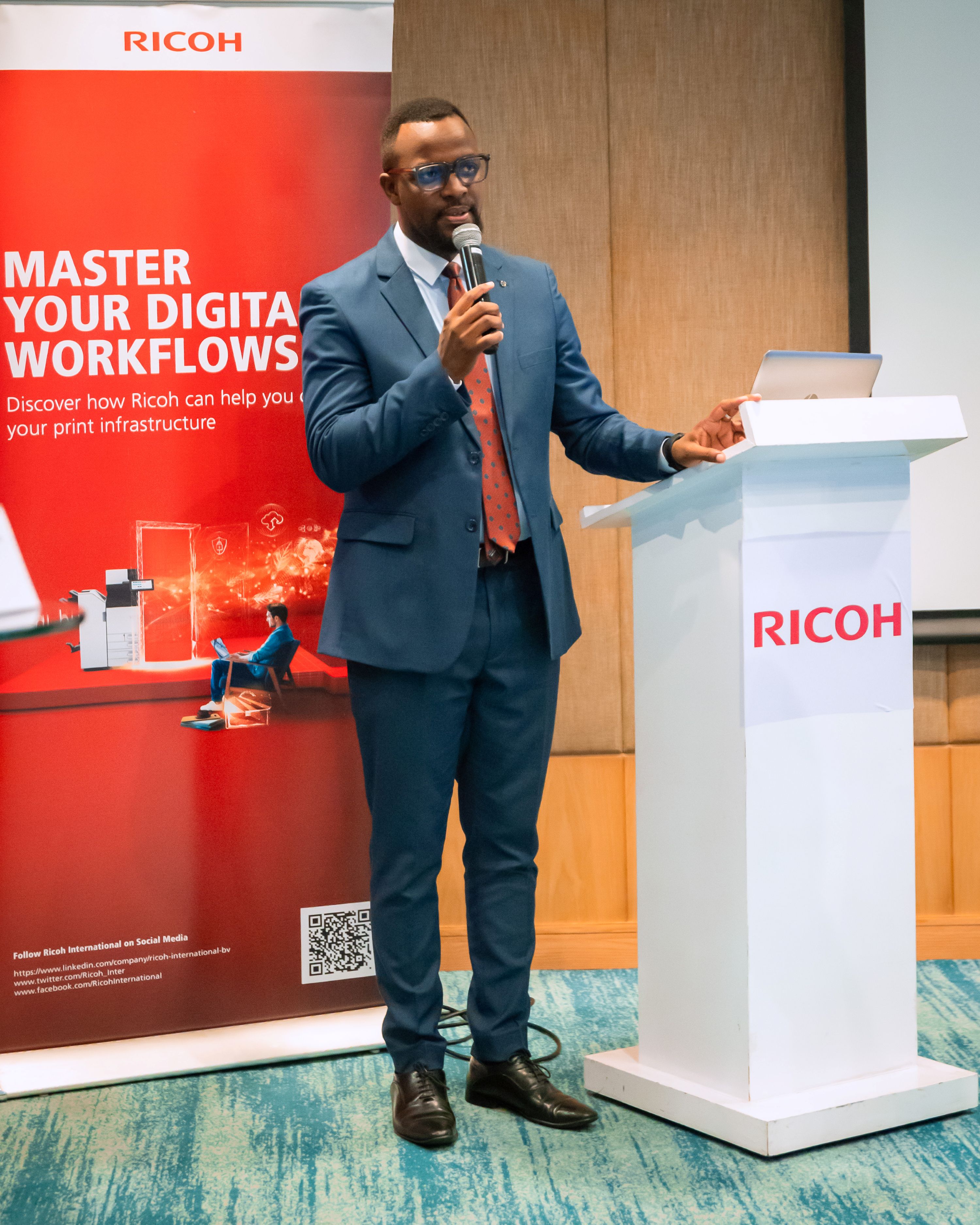
Speaking at the event, RD Tech CEO Jules Munyempeta said the gathering aimed to demonstrate how organisations can adopt practical solutions to support their digital transformation journey.
“We organised this event to showcase the kind of solutions we provide,” he said. “There is a clear trend toward digital transformation, but people also need to understand what it really means and what solutions address it.”
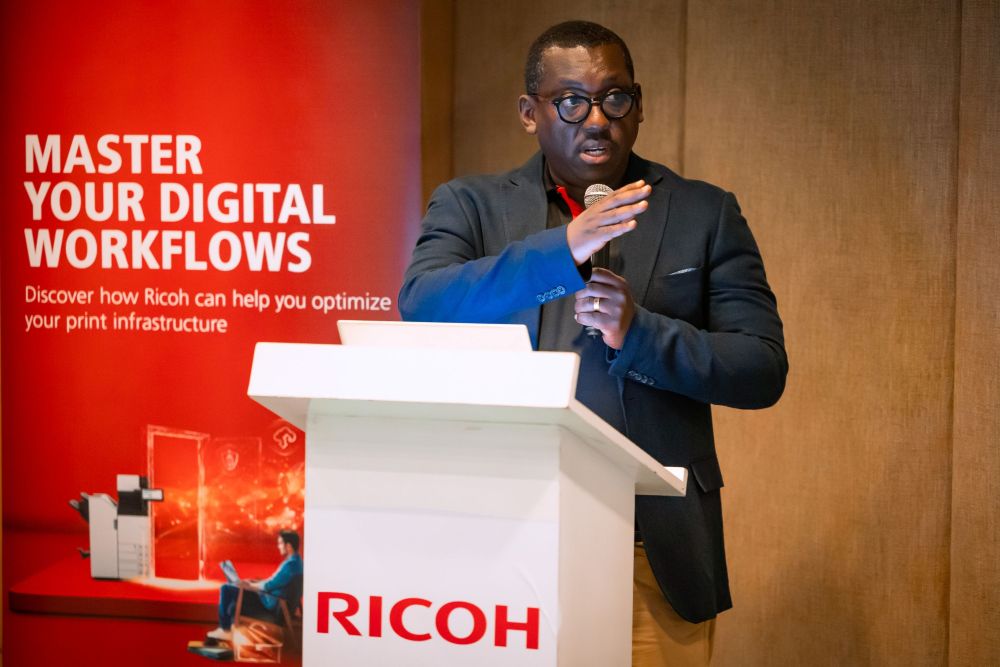
RD Tech CEO Jules Munyempeta showcased a range of digital workplace innovations powered by Ricoh.
The event also marked a milestone for RD Tech, which is celebrating two decades of delivering technology solutions to organisations across Rwanda.
“For us, it is a very important milestone that we do not take for granted,” Munyempeta said. “We would not have reached 20 years without the support and trust of our customers.”
Partnership driving digital solutions
RD Tech has been working with Ricoh for the past three years, a partnership the company says has expanded its ability to offer advanced digital workplace technologies.
From photocopiers to digital innovation, Ricoh is transforming how businesses operate.
Munyempeta noted that Ricoh, historically known for photocopiers and printers, has evolved into a provider of broader digital solutions as organisations increasingly move toward paperless operations.
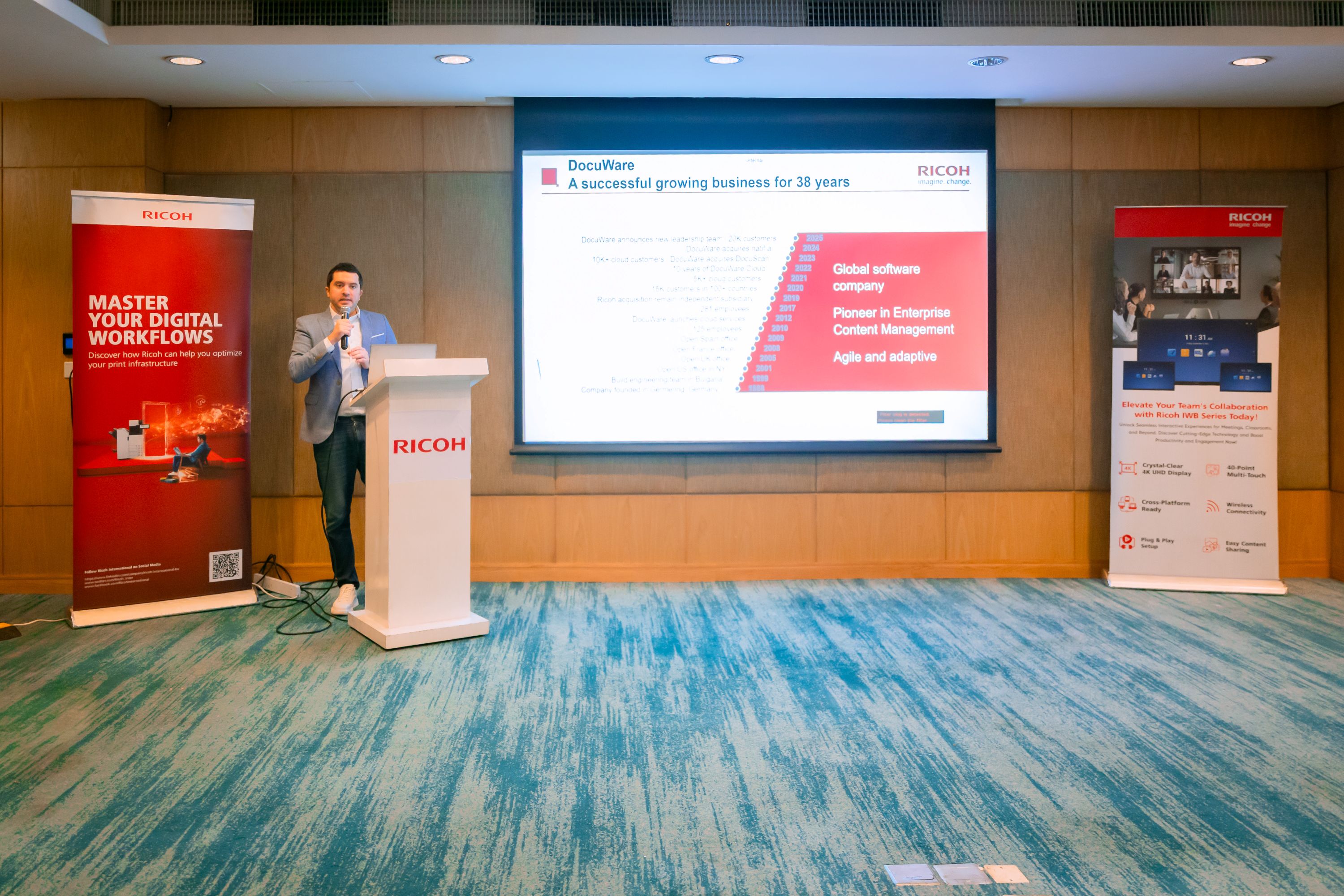
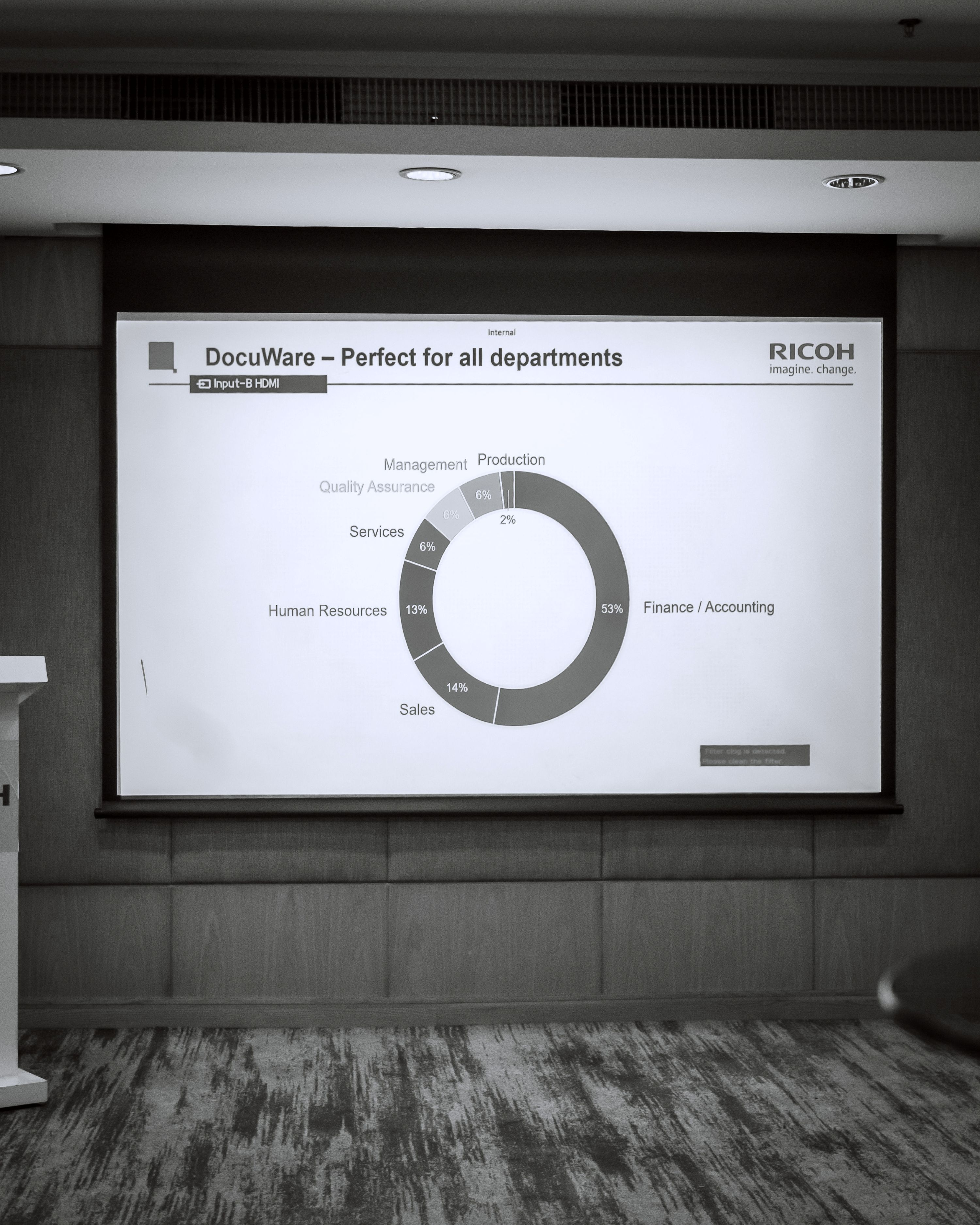
“They have expanded their business into solutions,” he said. “Ricoh also acquired one of the world’s most experienced document management companies, DocuWare, which allows us to provide a wide range of technologies that support our customers’ digital transformation.”
During the event, RD Tech demonstrated several technologies aimed at helping organisations digitise workflows, manage information more efficiently, and improve data security.
From printing to intelligent workplaces
Participants were introduced to Ricoh’s intelligent multifunction printers, which function not only as printing devices but also as digital hubs capable of scanning, cloud integration, and connectivity with enterprise systems.
DocuWare platform allows organisations to securely archive files, automate document workflows, and retrieve information quickly through digital repositories.
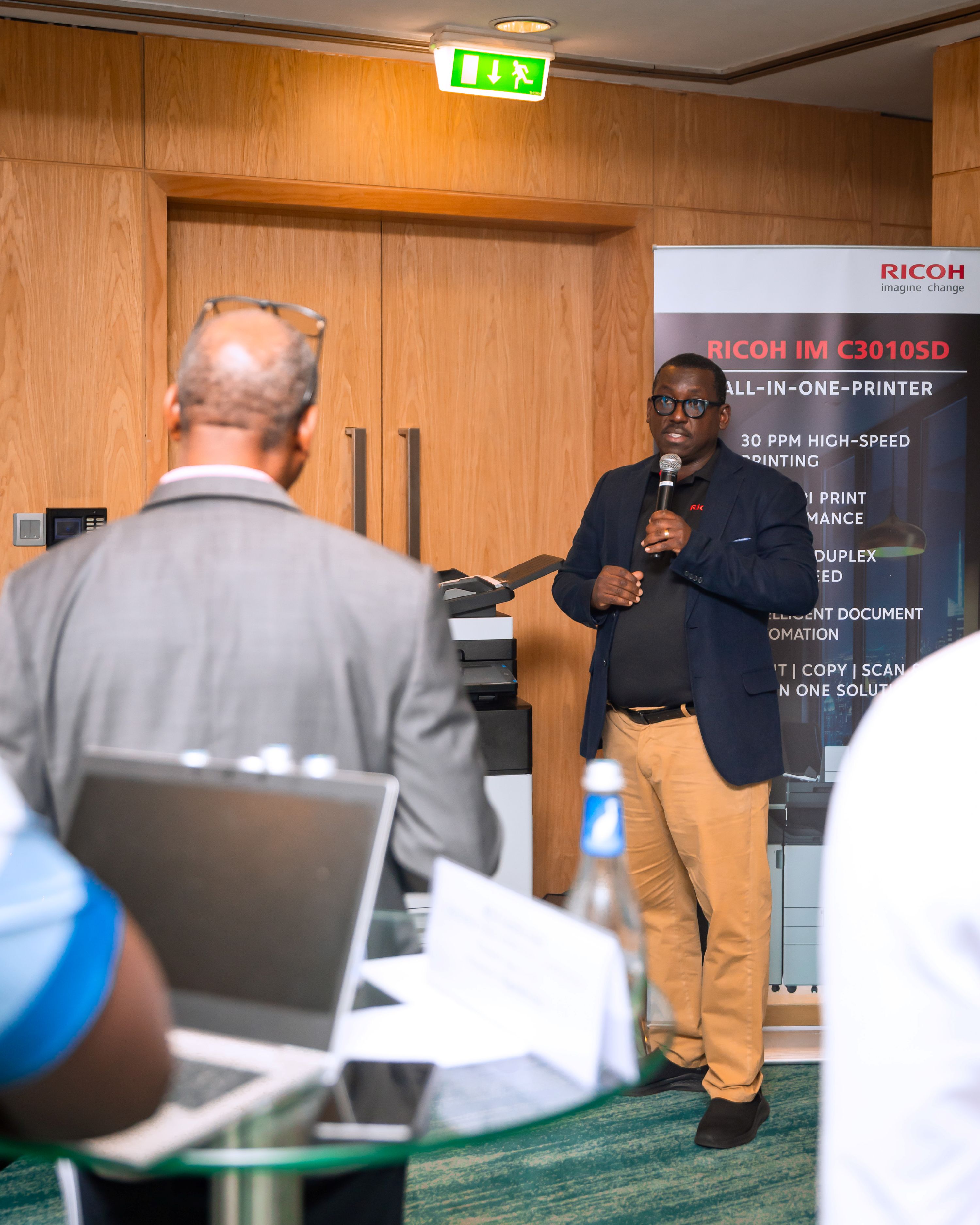
Among the technologies showcased was the Ricoh IM C3010SD multifunction printer, which integrates document automation, high-speed duplex scanning, and cloud-based workflow integration.
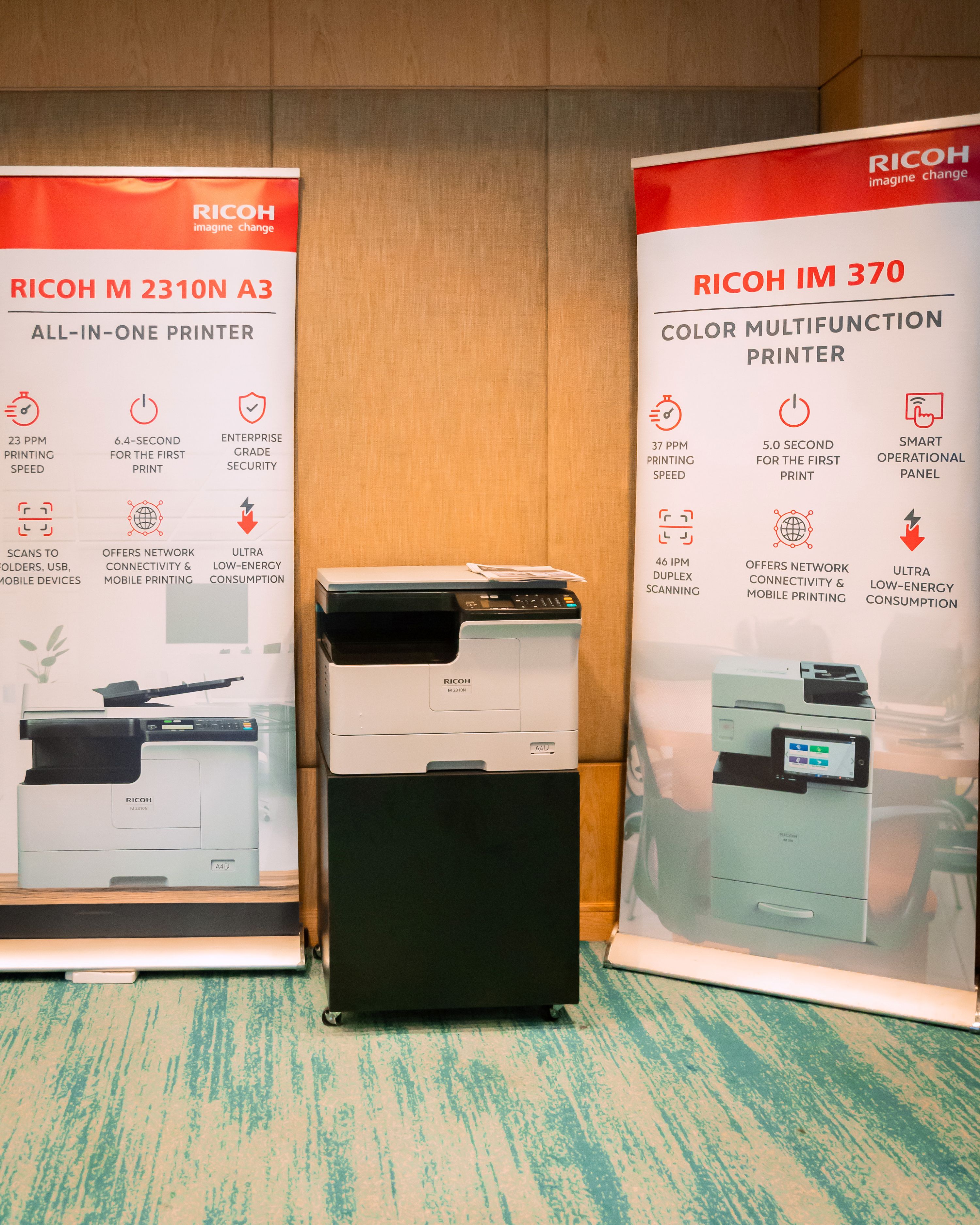
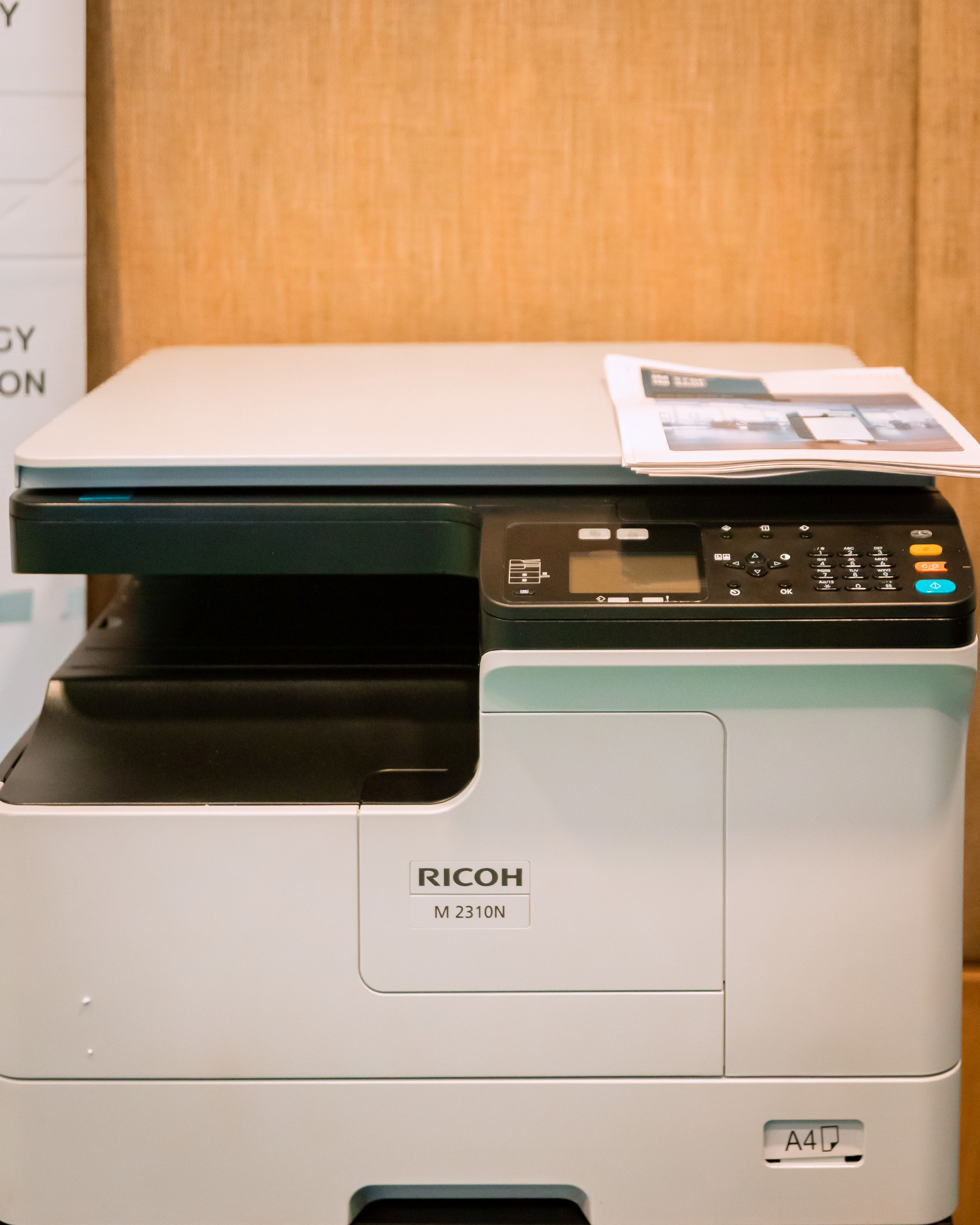
Other devices on display included the Ricoh IMC320, Ricoh IM 370, and Ricoh M 2310N printers, designed to support office productivity while reducing energy consumption and operational costs.
The company also demonstrated Ricoh’s managed print services (MPS), a model that allows organisations to lease and centrally manage their printing infrastructure.
Some of the smart printers the two partners have brought to the Rwandan market.
Through this system, companies can track printing usage, optimise device deployment, and reduce overall printing costs while maintaining secure document workflows.
Digitising document management
Another major focus of the event was document digitisation through the DocuWare platform, which allows organisations to securely archive files, automate document workflows, and retrieve information quickly through digital repositories.
The platform helps companies reduce paper dependency while improving compliance and operational efficiency.
According to RD Tech, these solutions enable businesses to automate approvals, centralise document storage, and access files remotely through secure online systems.
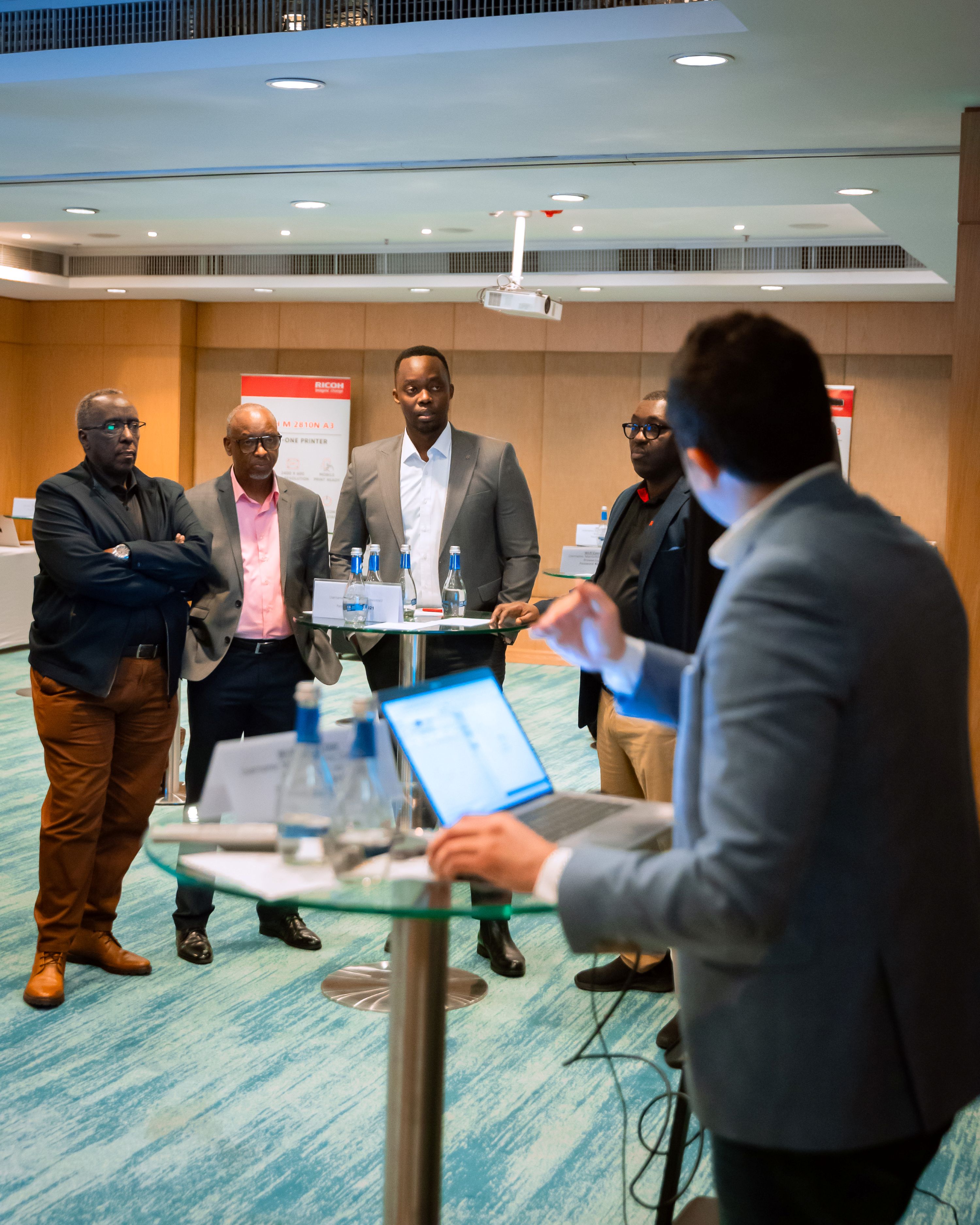
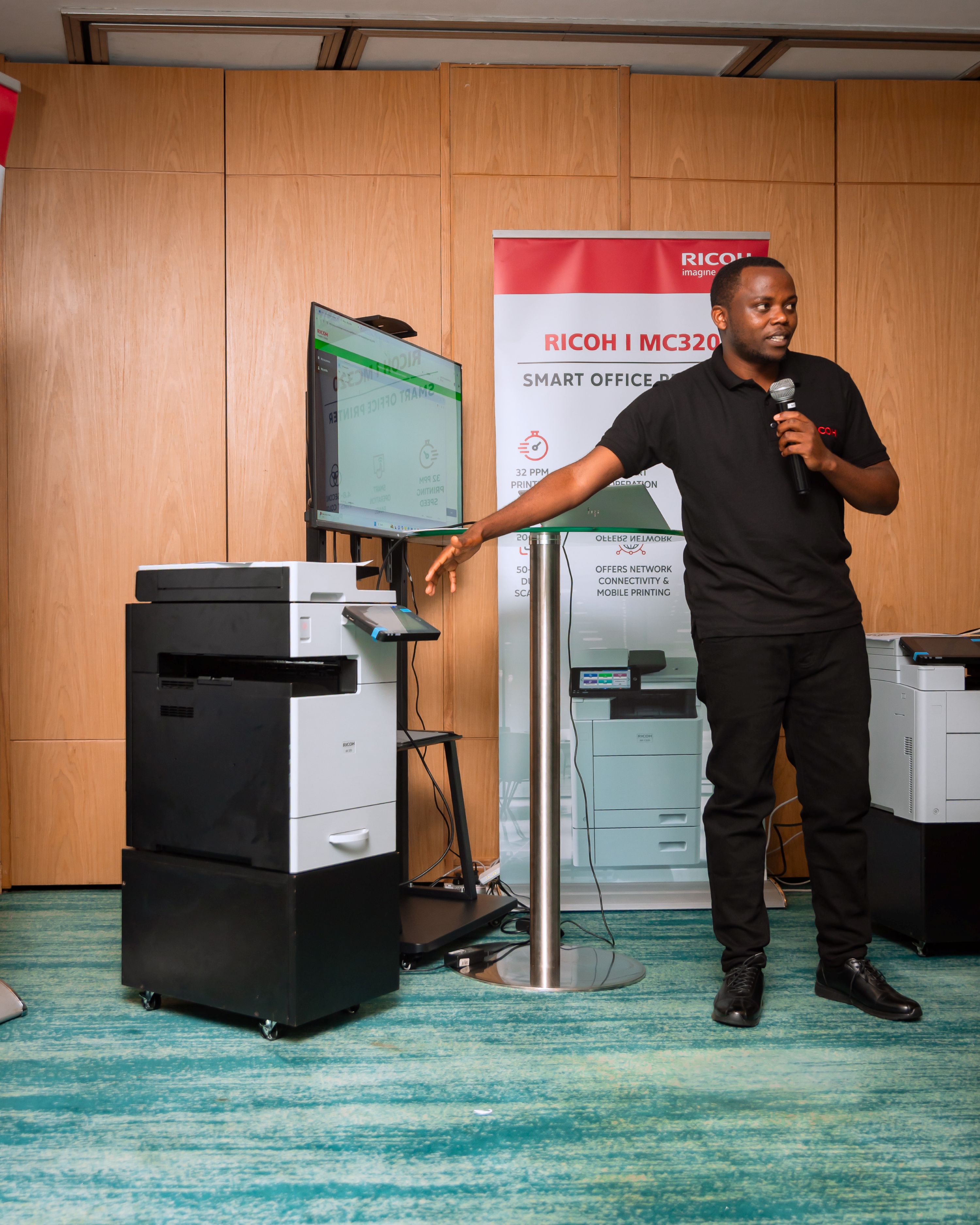
Ricoh and RD Tech led an engaging, hands-on session to help representatives from various sectors understand how the modern and intelligent printers work.
The event was designed to be interactive, with demonstration stands allowing attendees to experience the solutions firsthand.
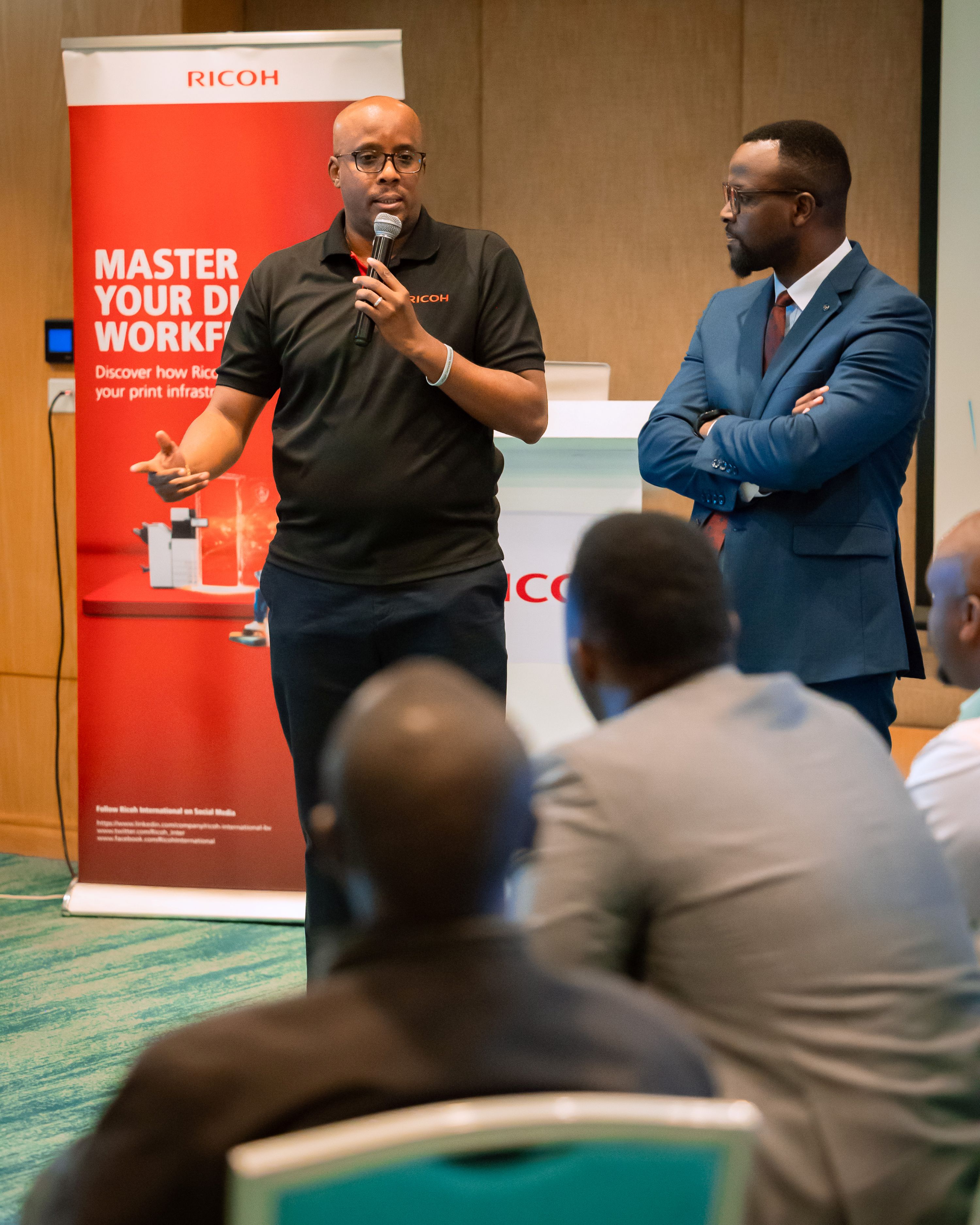
“We designed today’s event to be interactive and hands-on, so attendees could experience firsthand how RD tech and Ricoh solutions can transform their workplaces,” said Benjamin Cyusa, RD Tech Event Organiser.
Businesses see practical benefits
Participants who spoke to IGIHE said the technologies could significantly improve internal processes and reduce operational inefficiencies.
Rene Sebera, Managing Director of Sky Global Events Management, said the document management systems demonstrated during the event could help organisations avoid duplication of work and improve record management.
“This system helps you save files in a way that makes them easy to retrieve even years later,” he said. “It can also prevent issues like paying the same invoice twice because the system can track previously processed documents.”
Rene Sebera of Sky Global Events noted that the document management systems can boost efficiency and improve record management.
Similarly, Serge Kajabo, HR and Procurement Manager at Ngali Holdings, said digital document systems could solve several challenges related to printing and file management.
“If we can index documents and manage them digitally instead of printing everything, it will make things much easier,” he said. “AI can help retrieve documents instantly, which saves time and reduces costs.”
Looking ahead, CEO Munyempeta said businesses must embrace emerging technologies such as automation and artificial intelligence to remain competitive.
“Everyone is moving toward digital transformation,” he said. “The faster organisations adapt, the better they will be able to serve their customers.”
He added that companies should adopt solutions that can evolve alongside their digital transformation journey.
As RD Tech marks 20 years in the technology sector, the company says it will continue investing in innovation, skills development, and partnerships that help organisations build smarter and more secure digital workplaces.
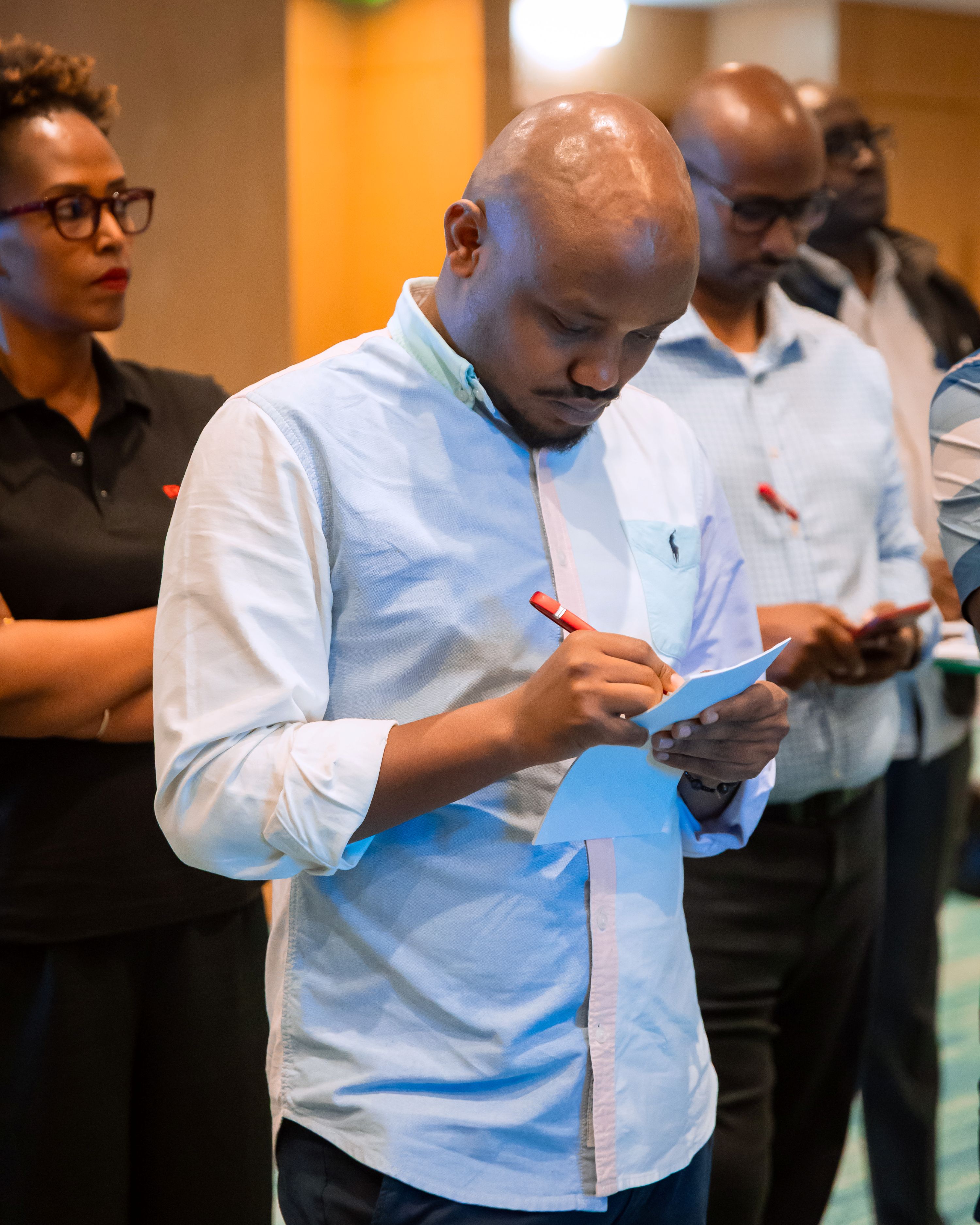
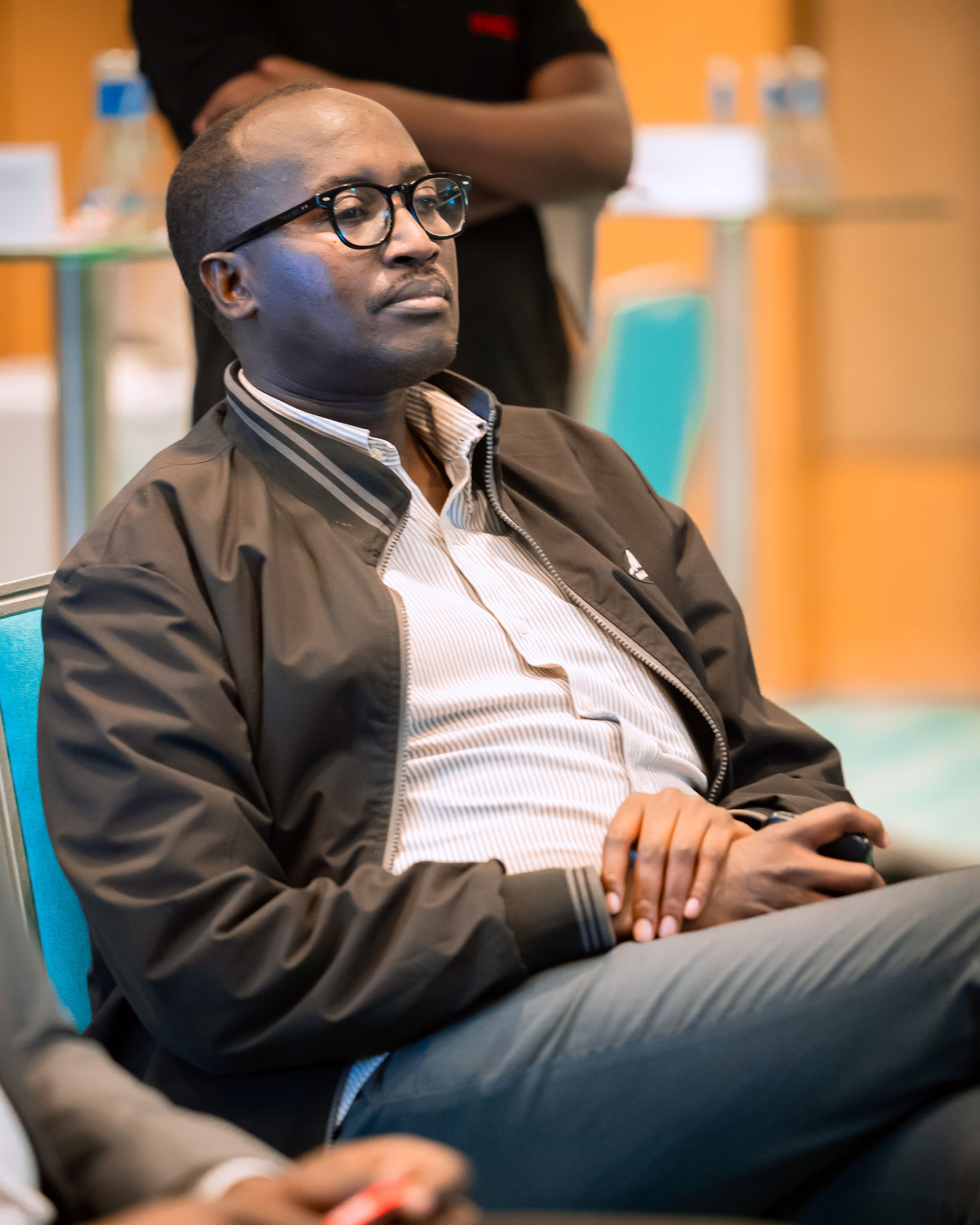
The event was designed to be interactive, with demonstration stands allowing attendees to experience the solutions firsthand.Teams showcased how modern printers can reduce costs and boost efficiency.Printers such as the Ricoh M 2310N are designed to support office productivity while reducing energy consumption and operational costs.Participants engaged experts and documented insights on how the digital solutions enhance workflows.Experts demonstrated how various technologies work.Benjamin Cyusa, RD Tech Event Organiser, said the interactive event let attendees experience solutions firsthand.According to Serge Kajabo of Ngali Holdings, digital document systems help tackle issues with printing and records management.The highly interactive event was held at the Marriott Hotel.
Seventy-four Burundians, who had sought refuge in Rwanda over the years, have voluntarily returned to their home country, expressing gratitude for the safety and support they received while in Rwanda.
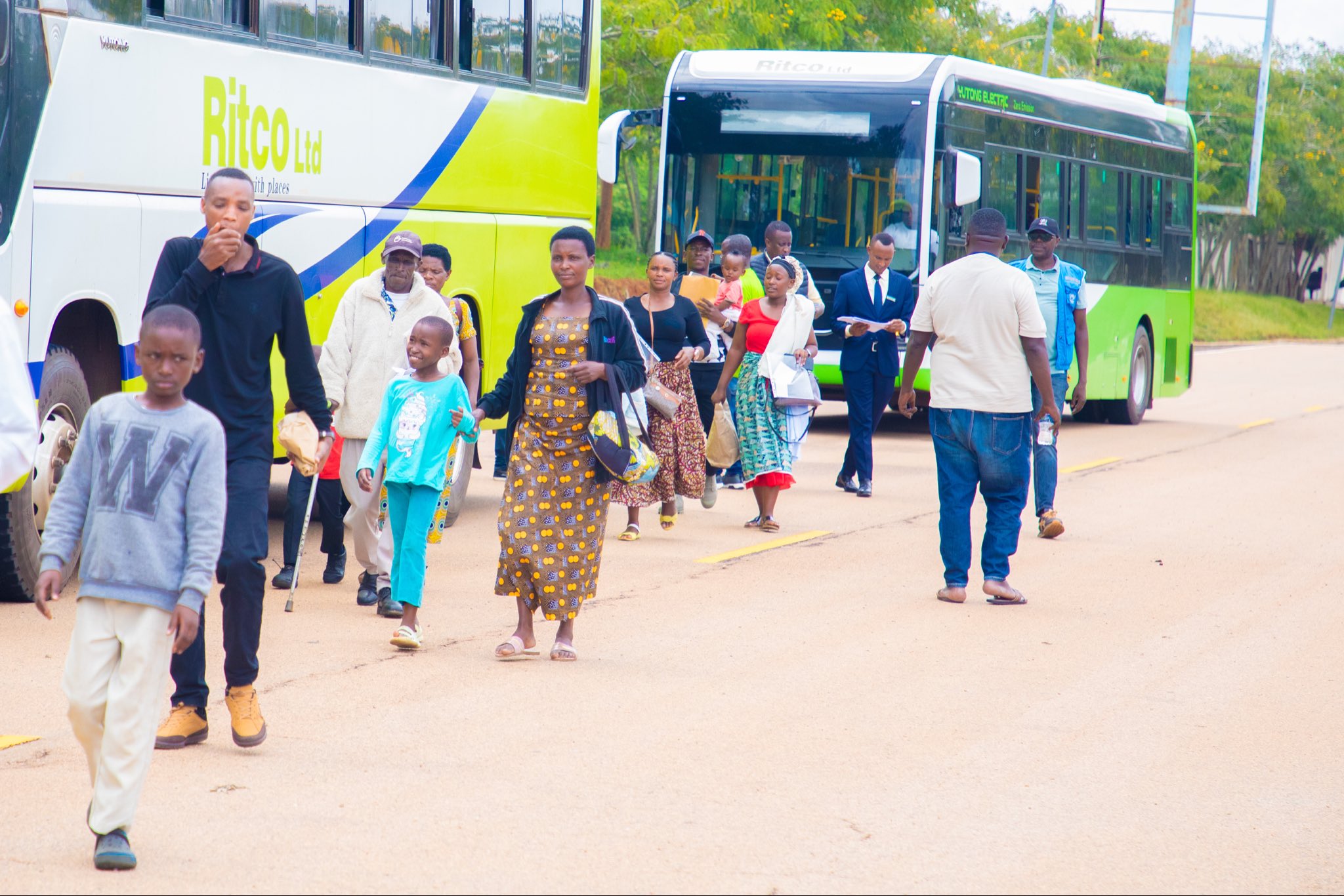
The group crossed the Rwanda-Burundi border at Nemba One Stop Border Post in Bugesera District on Thursday, March 12. The group included 44 men and 30 women from 47 families. Among them, 62 had lived in Mahama Refugee Camp in Kirehe District, while 12 had been residing in Kigali City.
They were received by officials from Burundi following their transfer, with representatives from Rwanda’s Ministry of Emergency Management (MINEMA) and the United Nations High Commissioner for Refugees (UNHCR) accompanying them.
The group crossed the Rwanda-Burundi border at Nemba One Stop Border Post in Bugesera District on Thursday, March 12.
Jérémie Havugiyaremye, who spent 25 years in Rwanda, said he lived a normal life during his stay and had four children there, adding to three he had brought with him, making seven in total.
“Life in the camp was not easy, but we did not face any problems while in Rwanda,” Havugiyaremye said. “However, a camp is not a place to stay permanently. I miss my country, and I have decided to return to rebuild my life there.”
He added that his decision was influenced by friends who had returned earlier and reported that peace had been restored in Burundi.
The voluntary repatriation was facilitated by the United Nations High Commissioner for Refugees (UNHCR) in coordination with officials from Rwanda and Burundi.
Oda Mariya, who had lived in Rwanda for 11 years after fleeing the unrest in Burundi in 2015, said she returned after learning that peace had returned.
“I fled alone, leaving my family behind,” she said. “Friends who returned earlier told us it was peaceful. I decided to go back and live normally with others, as we had no issues here in Rwanda.”
Karagire Gonzague, Refugee Programme Manager at MINEMA, said that since 2020, more than 31,000 Burundians have voluntarily returned home, with Burundi actively encouraging returns.
“In 2022, Burundi officials visited Mahama Camp and Kigali to speak with refugees and encourage them to return,” he said. “Last year, online discussions were held to explain to refugees the reasons for going back home.”
The 74 returnees join 115 others who returned in November 2025 from Mahama Camp and Kigali. MINEMA reports that since 2020, more than 30,000 Burundian refugees have returned home, while Rwanda continues to host over 50,000 others.
The Burundian nationals expressed gratitude for the safety and support they received while in Rwanda.
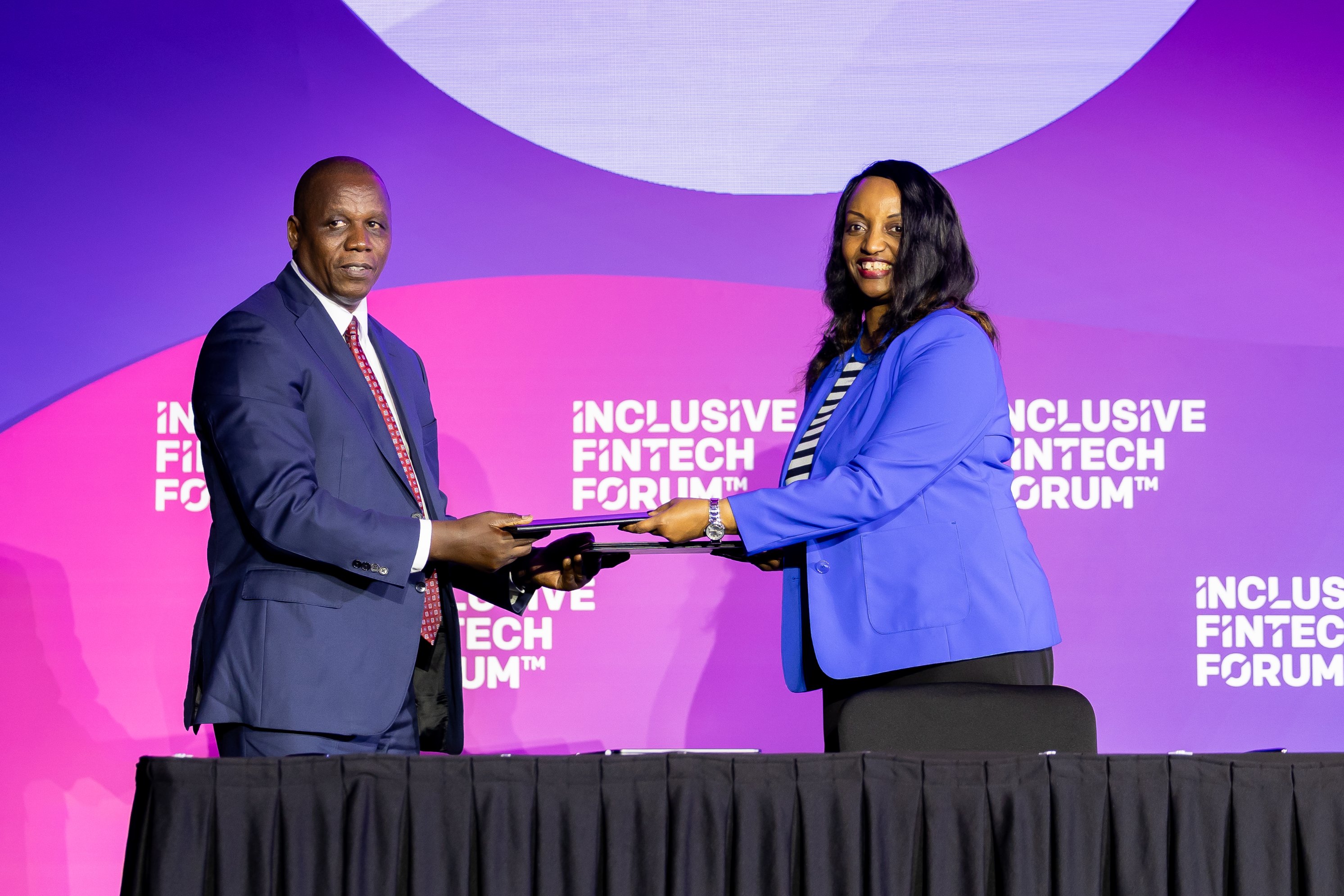
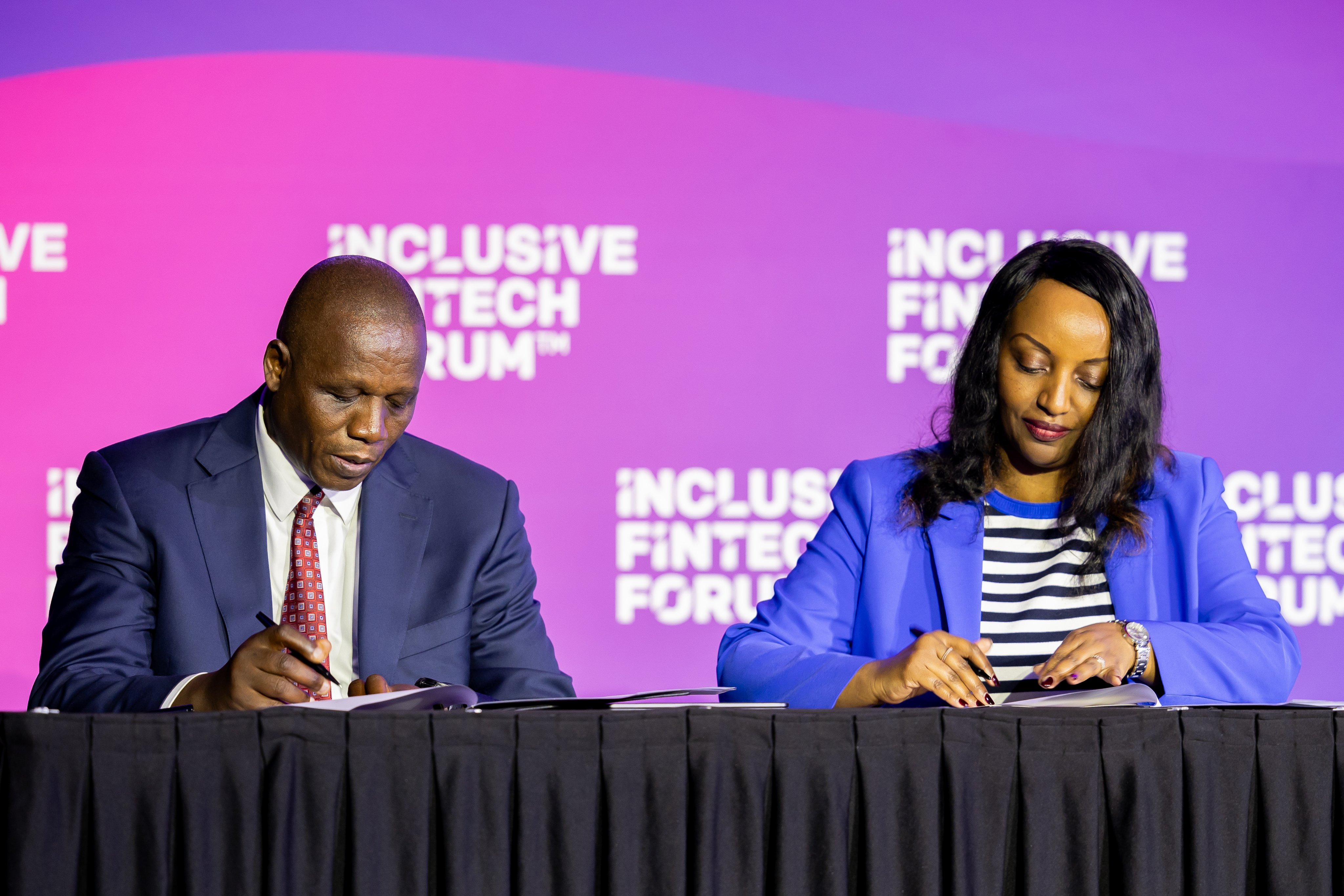
Signed on the sidelines of the Inclusive FinTech Forum 2026 in Kigali on Wednesday, the new framework aims to reduce duplicative regulatory processes while maintaining strong oversight, allowing licensed PSPs to operate seamlessly in both Kenya and Rwanda.
By promoting mutual recognition of licensing regimes, the initiative is expected to foster competition, encourage innovation, and accelerate the delivery of digital financial services across borders.
The MoU, the partners said, aligns with the East Africa Community Cross-Border Payment System Masterplan (EAC Masterplan), which envisions a more integrated, efficient, and inclusive regional payments ecosystem.
One of the Masterplan’s key priorities is to create a mutual recognition system for PSP licensing across partner states, addressing the regulatory fragmentation that has historically limited cross-border payment expansion.
Rwanda’s central bank termed the new agreement a “major step toward stronger competition, greater innovation, and faster cross-border digital financial services under robust regulatory oversight.
The Central Bank of Kenya reaffirmed its commitment to strengthening regional collaboration and ensuring that national payment infrastructures meet the evolving needs of the economy.
The agreement is expected to pave the way for a more connected East African payments landscape, benefiting businesses and consumers alike by facilitating faster, safer, and more accessible digital financial services.
Signed on the sidelines of the Inclusive FinTech Forum 2026 in Kigali on Wednesday, the new framework aims to reduce duplicative regulatory processes while maintaining strong oversight, allowing licensed PSPs to operate seamlessly in both Kenya and Rwanda.
The match was played at PSG’s home stadium, Parc des Princes.
“This evening in Paris, President Kagame attended the UEFA Champions League match at Parc des Princes, where Visit Rwanda partner Paris Saint-Germain secured a 5–2 victory over Chelsea FC,” the Office of the President said in a post on X.
The partnership between Visit Rwanda and Paris Saint-Germain was first signed in 2019 and renewed in 2025, extending the agreement until 2028.
Under the deal, PSG promotes the Visit Rwanda brand at its home ground, Parc des Princes, and on the club’s training kits.
Since the partnership began, millions of football fans around the world have gained greater awareness of Rwanda through media coverage and the visibility of the Visit Rwanda brand.
Through the collaboration, more than 400 children have also received football training through PSG Academy Rwanda, established by the French club in Rwanda.
Each year, the club sends players and legends to Rwanda to visit the country’s tourist attractions and share their experiences with global audiences.
The latest visitors were Océane Nathalie Toussaint Dit Marseille, Baby Jordy Benera, and Jade Le Guilly, members of the Paris Saint-Germain Féminine, who visited Rwanda in late February this year.
According to the Rwanda Development Board, the continued partnership helps position Rwanda as a global tourism destination, with further exposure expected as the Visit Rwanda brand appears on training kits worn by PSG youth teams in the United States.
President Kagame was welcomed by senior officials from Paris Saint-Germain.The match ended with PSG defeating Chelsea 5–2.
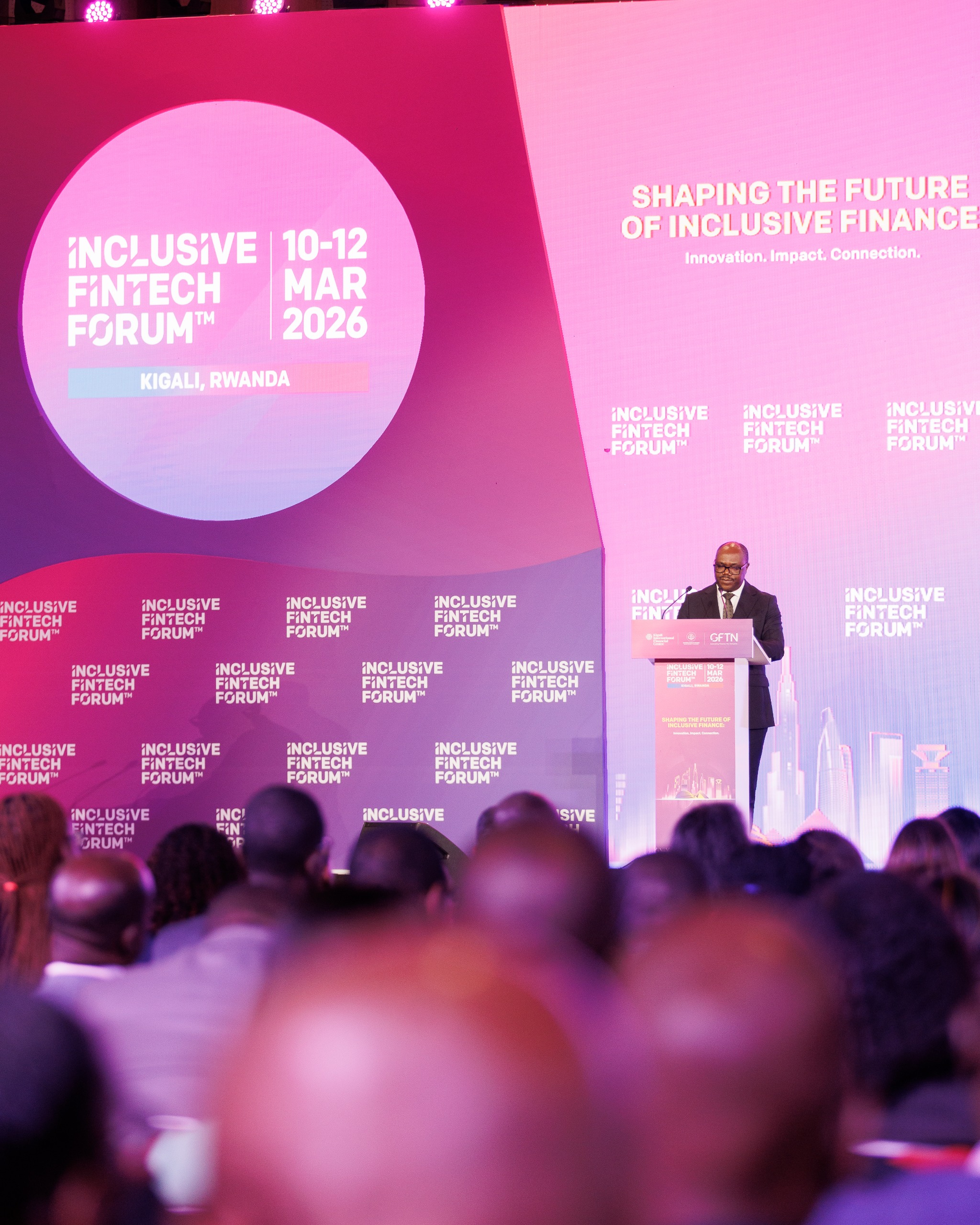
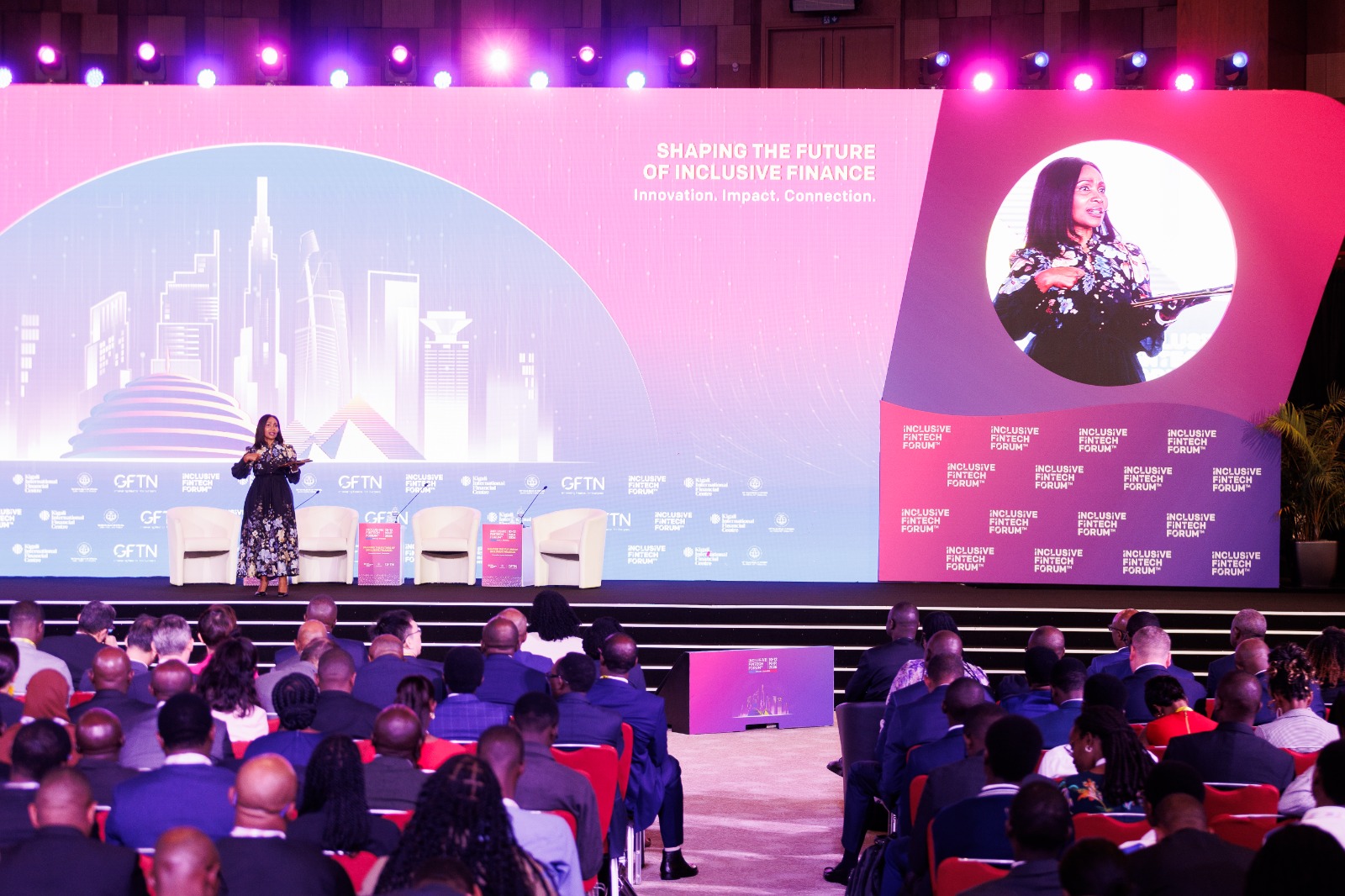
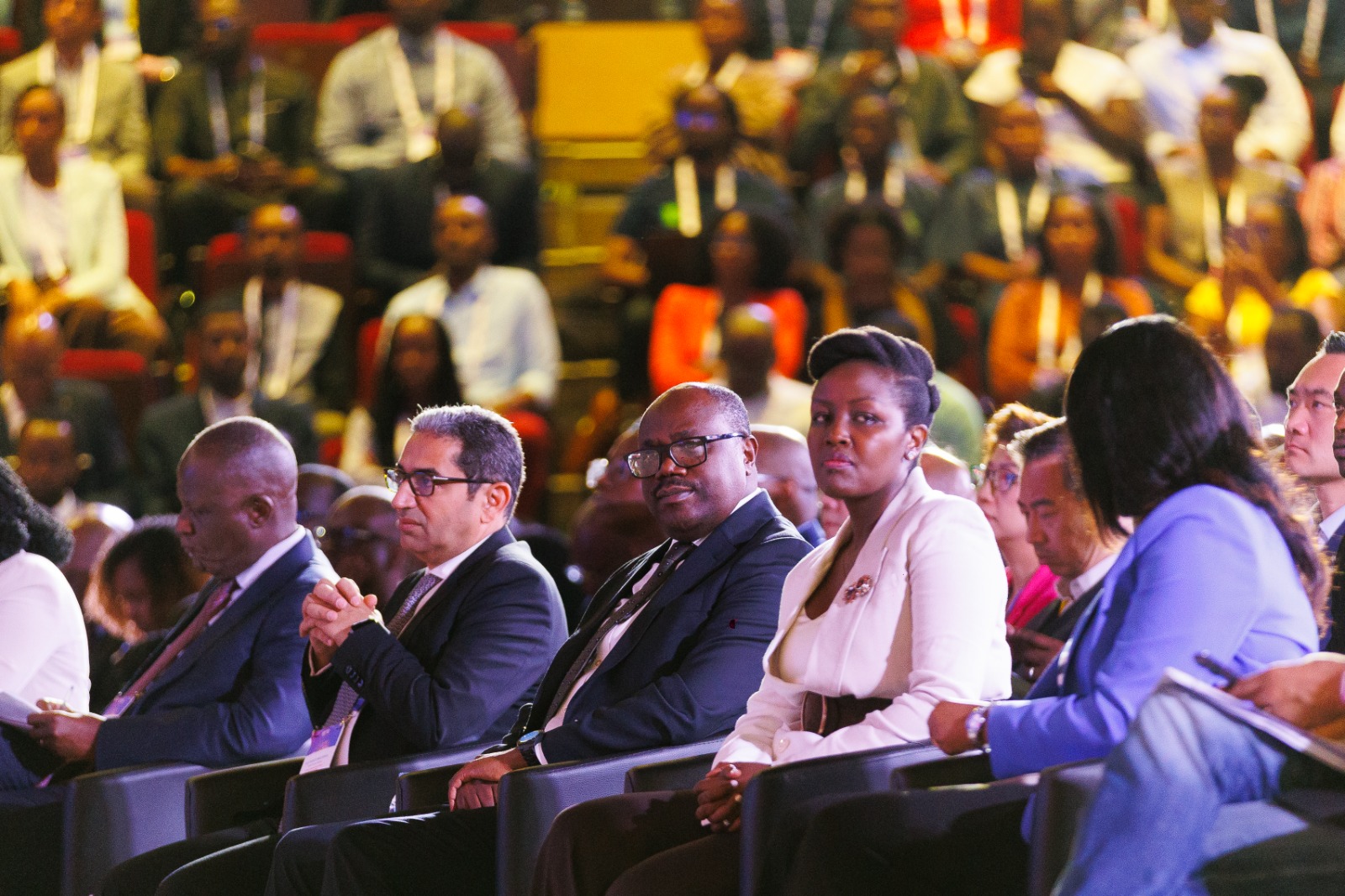
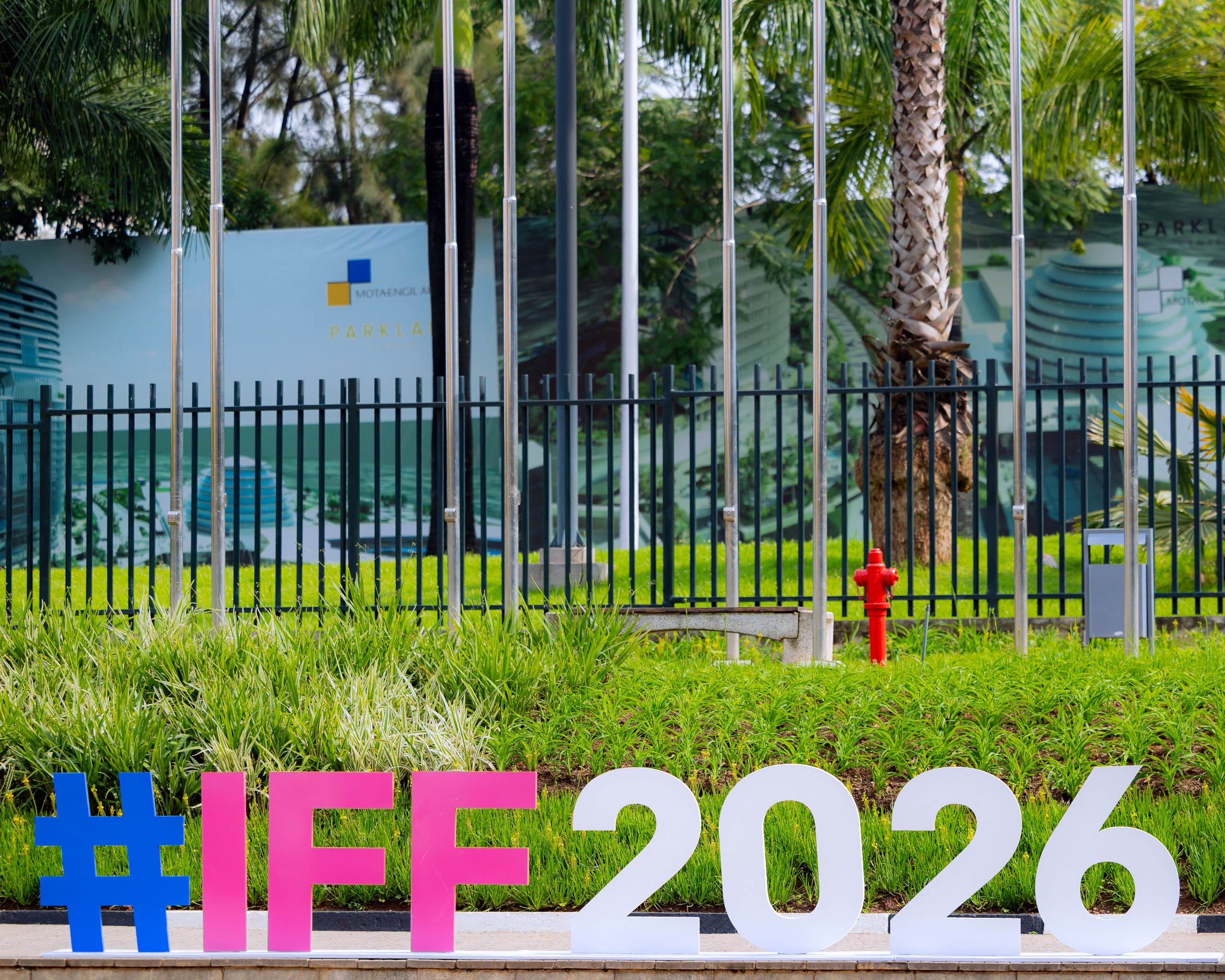
Held from March 10 to 12 at the Kigali Convention Centre, the forum brings together participants from the finance, technology and investment sectors to explore how innovation can accelerate financial inclusion and unlock capital for Africa’s growing digital economy.
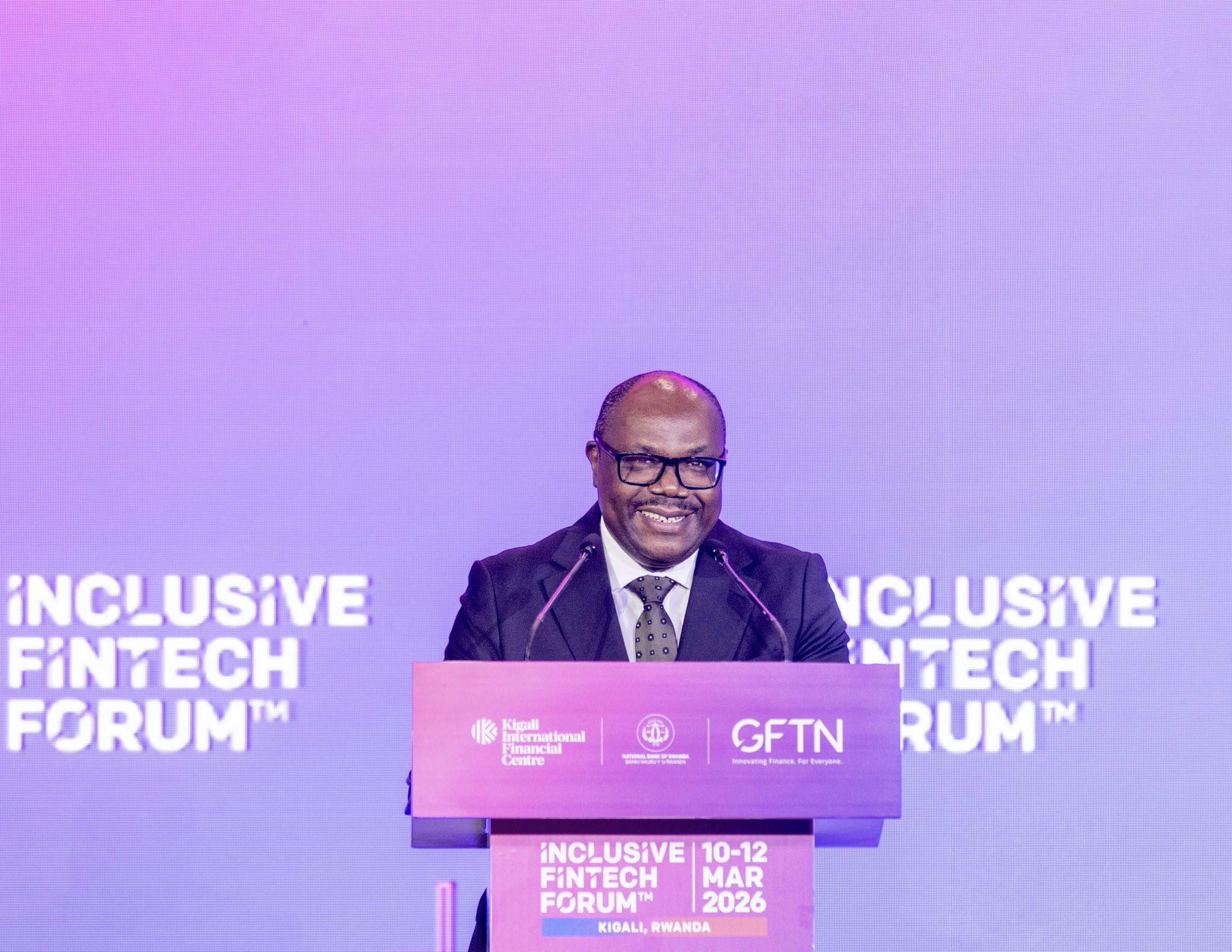
Opening the forum, Prime Minister Justin Nsengiyumva said the global financial system is undergoing profound changes that present both risks and opportunities for the continent.
“We are honoured to host you in Kigali to advance an important global mission: building a financial system that leaves no one behind,” he said.
Nsengiyumva noted that Africa has historically operated on the margins of global finance, often facing limited access to capital and high risk premiums. However, rapid advances in digital technologies are allowing African entrepreneurs to bypass traditional infrastructure constraints, particularly in the fast-growing fintech sector.
“The opportunity for Africa to become a cradle of global business and innovation is real,” he said, adding that inclusive financial systems will be essential to mobilise investment for key sectors including energy, digital infrastructure, manufacturing and human capital.
Nsengiyumva said Rwanda is ready to work with global investors, innovators and policymakers to help unlock these opportunities and accelerate the continent’s digital financial transformation.
“To the investors and innovators gathered here today, allow me to reaffirm that Rwanda stands ready to partner with you to unlock the extraordinary opportunities before us,” he said, adding that the country aims to build a dynamic, secure and inclusive financial ecosystem capable of supporting Africa’s next phase of growth.
Rwanda has spent the past two decades investing heavily in digital infrastructure as part of its long-term economic transformation strategy. The country now has near-universal 4G population coverage and has digitised many public services through platforms such as Irembo, improving access to government services and enabling electronic transactions across the economy.
Today, about 92 percent of adults in Rwanda have access to financial services through bank accounts or mobile money wallets.
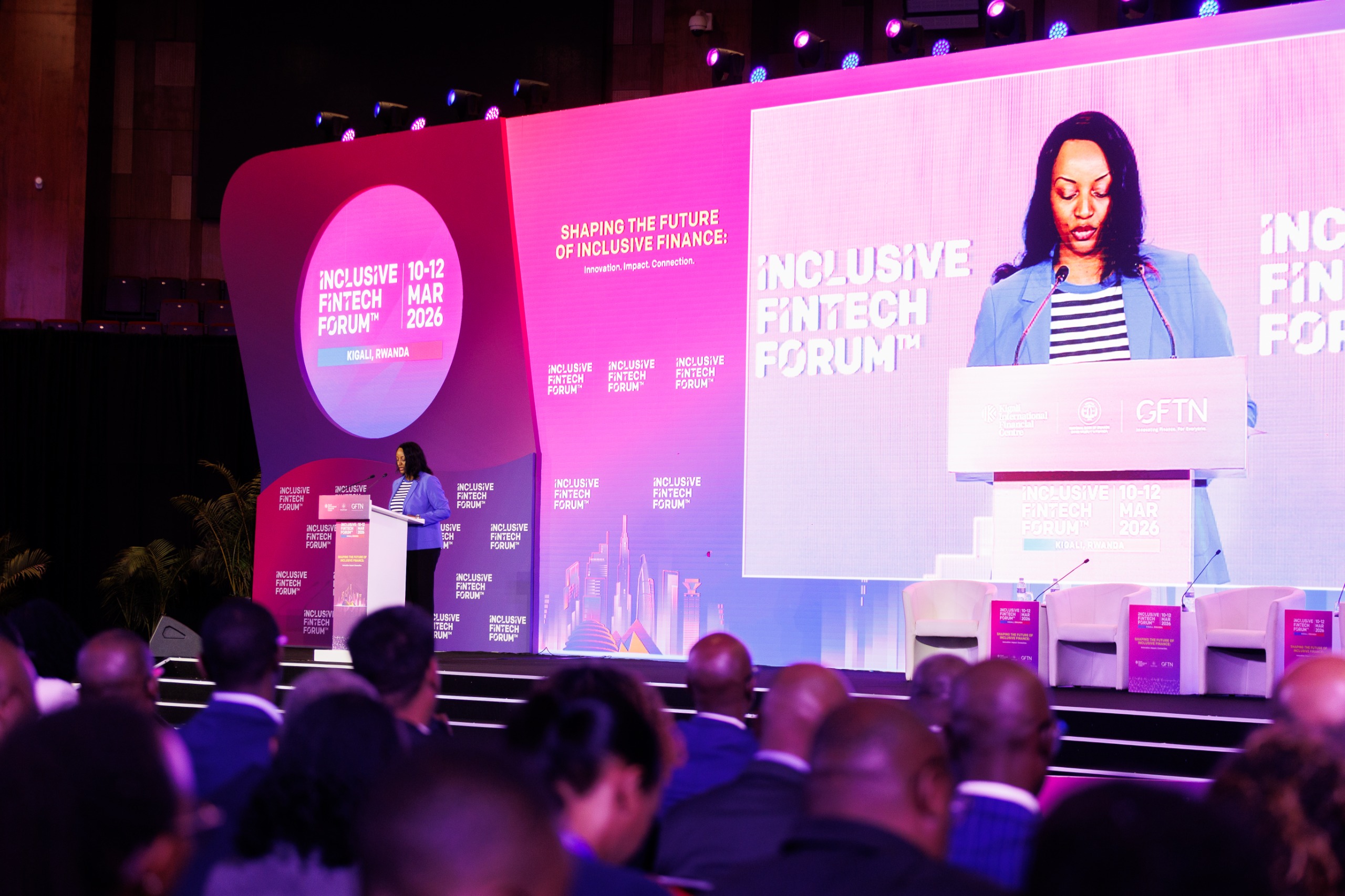
The Governor of the National Bank of Rwanda, Soraya Hakuziyaremye, said the country’s progress shows how the right policy environment can accelerate financial inclusion.
“In Rwanda, we have made remarkable strides in financial inclusion, from just 21 percent in 2008 to 92 percent of adults today having access to a bank account or mobile money wallet,” she said.
Across Sub-Saharan Africa, the region remains the global leader in mobile money adoption, with more than 600 million registered accounts, while digital payments continue to grow at double-digit rates.
“These are not just statistics,” Hakuziyaremye said. “They represent farmers, traders, women and youth whose financial wellbeing has improved. But more needs to be done to ensure financial resilience for households and enterprises.”
To deepen access to digital financial services, Rwanda has launched a new national financial inclusion roadmap for 2026–2030 aimed at expanding digital payments, strengthening financial resilience and supporting innovation in emerging technologies such as artificial intelligence and digital assets.
Regulators are also focusing on improving cross-border payments and enhancing regulatory cooperation across African markets, which experts say will be critical for scaling digital finance across the continent.
Industry leaders at the forum warned that Africa still faces structural barriers that limit trade and financial integration.
Haytham ElMaayergi, Executive Vice President for Global Trade Bank at African Export-Import Bank (Afreximbank), said Africa’s digital gap risks becoming a competitiveness gap if infrastructure and integration challenges are not addressed.
“Globally, about 25 percent of trade is conducted through digital processes, but in Africa that figure is only around five percent,” he said.
Fragmented financial systems mean cross-border payments in Africa can cost up to three times the global average, while small and medium-sized enterprises face a trade finance gap estimated at $120 billion.
However, initiatives such as the African Continental Free Trade Area are creating new opportunities to integrate African markets by connecting 1.3 billion people into a $3.4 trillion economic bloc.
Afreximbank is supporting that transformation through digital platforms such as the Africa Trade Gateway, which helps African businesses identify partners, access trade intelligence and secure financing.
The bank is also backing the Pan-African Payment and Settlement System, which enables cross-border trade to be settled in local currencies, helping reduce transaction costs and reliance on foreign exchange.
ElMaayergi also praised Rwanda’s progress in building a fintech ecosystem capable of serving as a continental innovation hub.
“Afreximbank is committed to supporting Africa’s and Rwanda’s digital transformation and innovation agenda as the country advances its knowledge-based economy and growing fintech, AI and startup ecosystem,” he said.
He added that Kigali has already demonstrated the conditions needed to scale financial innovation across Africa.
“Through the Kigali International Financial Centre, the city has created a proof of concept for Africa. You have the regulatory clarity, political will and infrastructure to serve as the control tower of African fintech,” he said.
ElMaayergi stressed that digital infrastructure must now be treated as a strategic economic priority.
“Digital payment rails are as essential as paved roads,” he said. “Without them, trade stands still. The time for pilot projects is over , we must scale now.”
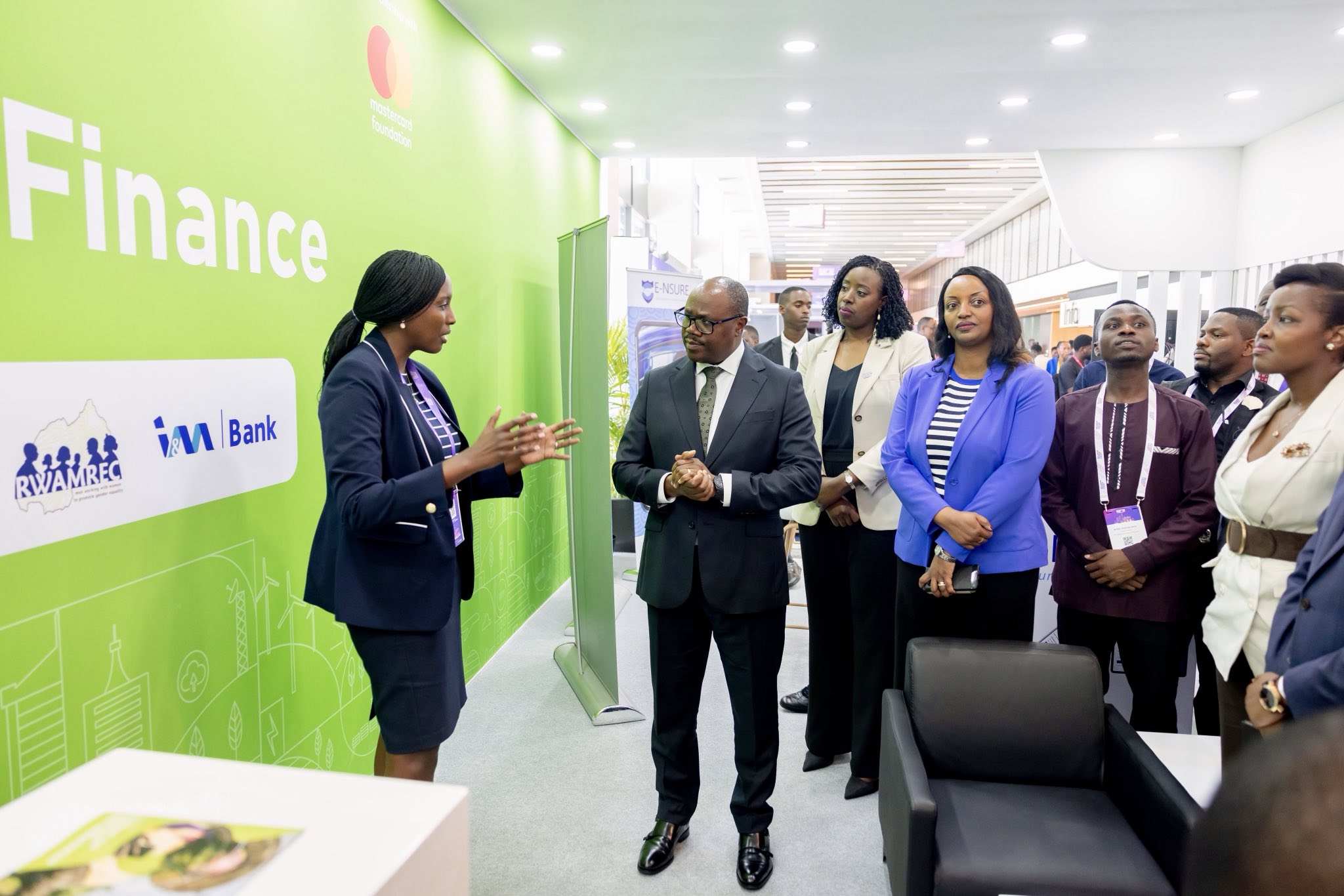
Organised by the Kigali International Financial Centre, the National Bank of Rwanda and the Global Finance & Technology Network, the Inclusive FinTech Forum has emerged as a leading global platform for advancing financial innovation in emerging markets.
This year’s discussions focus on topics such as artificial intelligence-driven financial services, digital currency corridors, open finance ecosystems and climate-focused fintech solutions.
For Rwanda, the event reflects a broader strategy to position Kigali as a gateway for financial innovation and investment in Africa’s rapidly evolving digital economy.
Opening the forum, Prime Minister Justin Nsengiyumva said the global financial system is undergoing profound changes that present both risks and opportunities for the continent.The Governor of the National Bank of Rwanda, Soraya Hakuziyaremye, said the country’s progress shows how the right policy environment can accelerate financial inclusion.Held from March 10 to 12 at the Kigali Convention Centre, the forum brings together participants from the finance, technology and investment sectors to explore how innovation can accelerate financial inclusion and unlock capital for Africa’s growing digital economy.
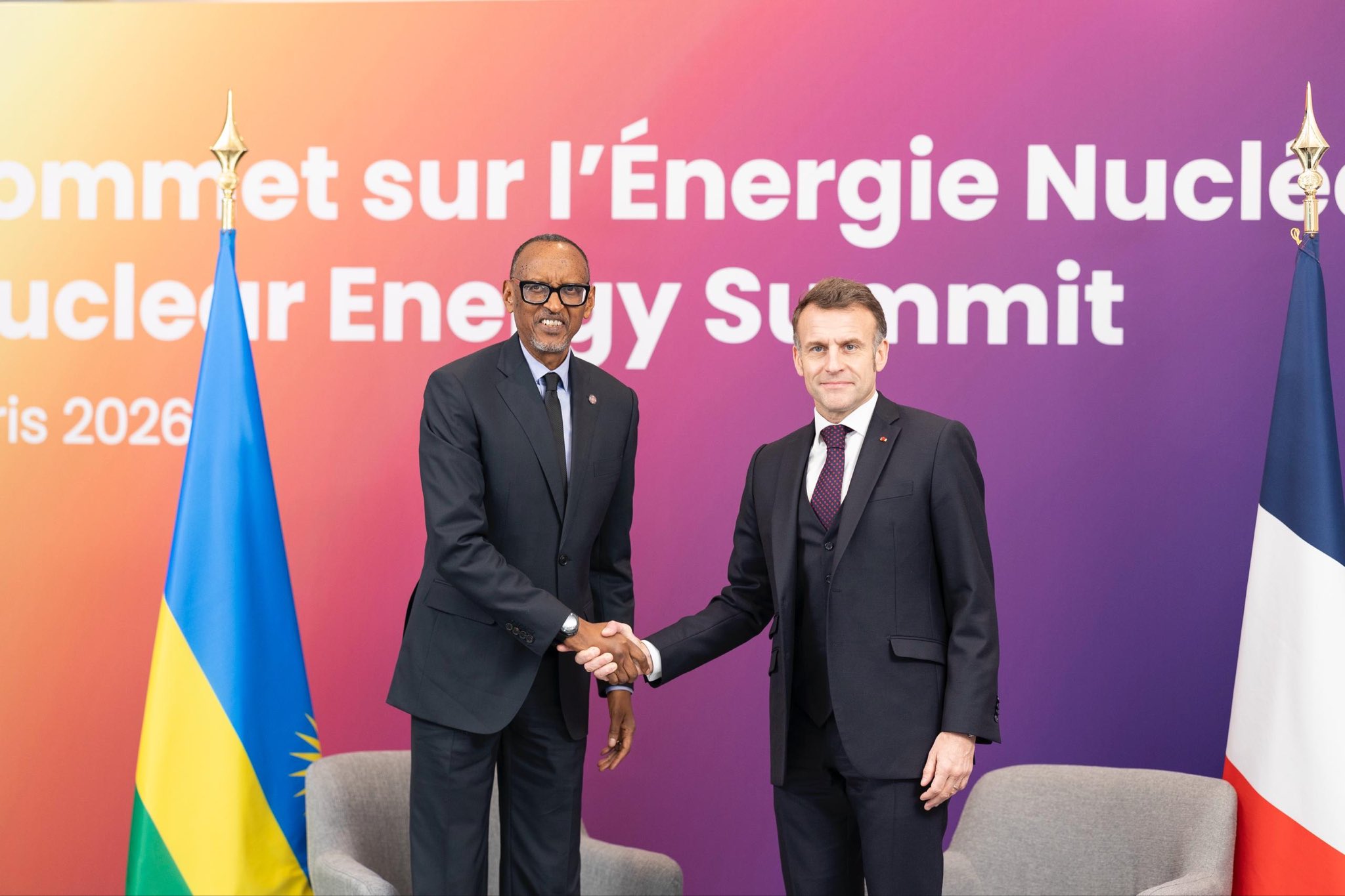
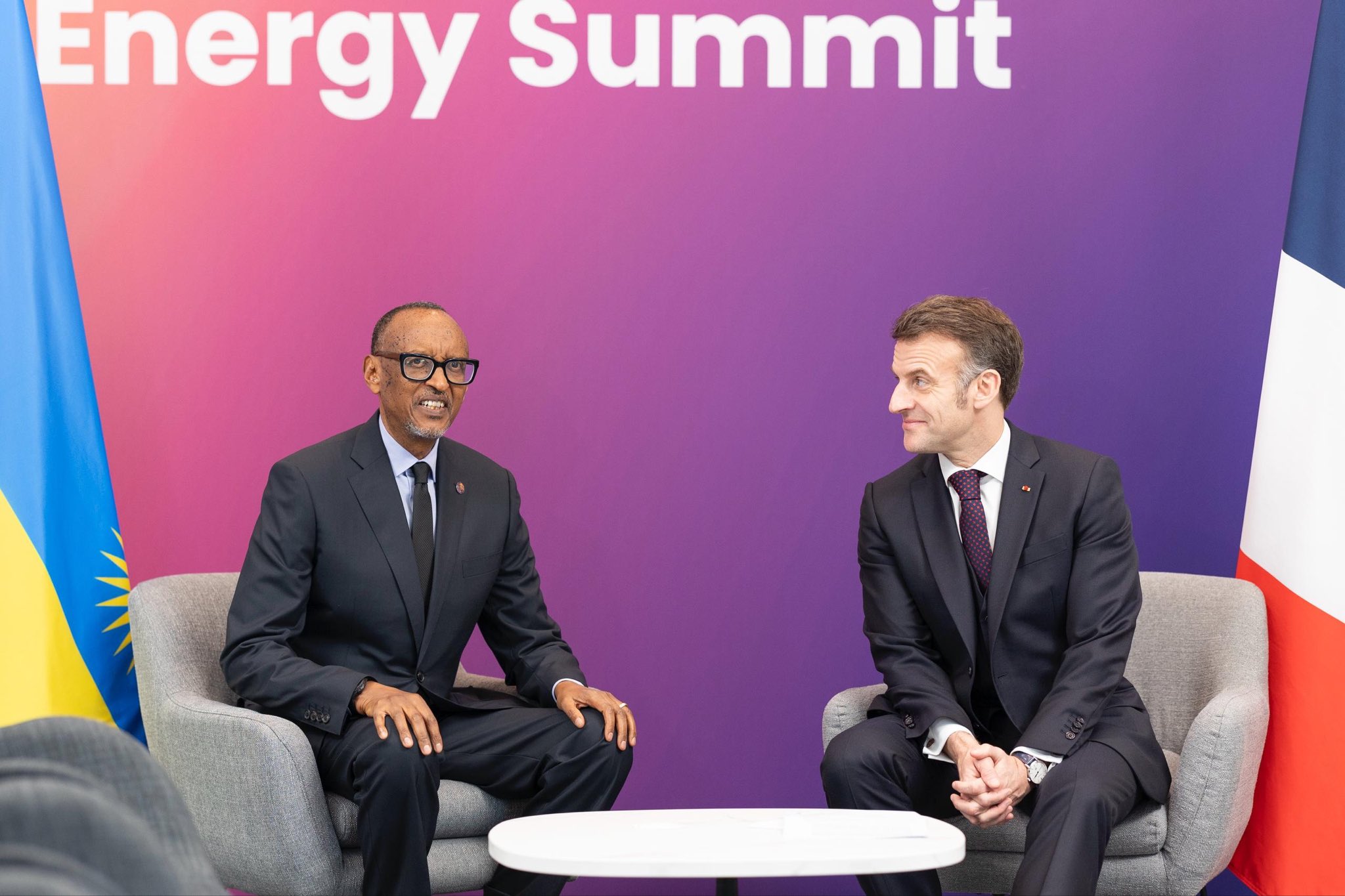
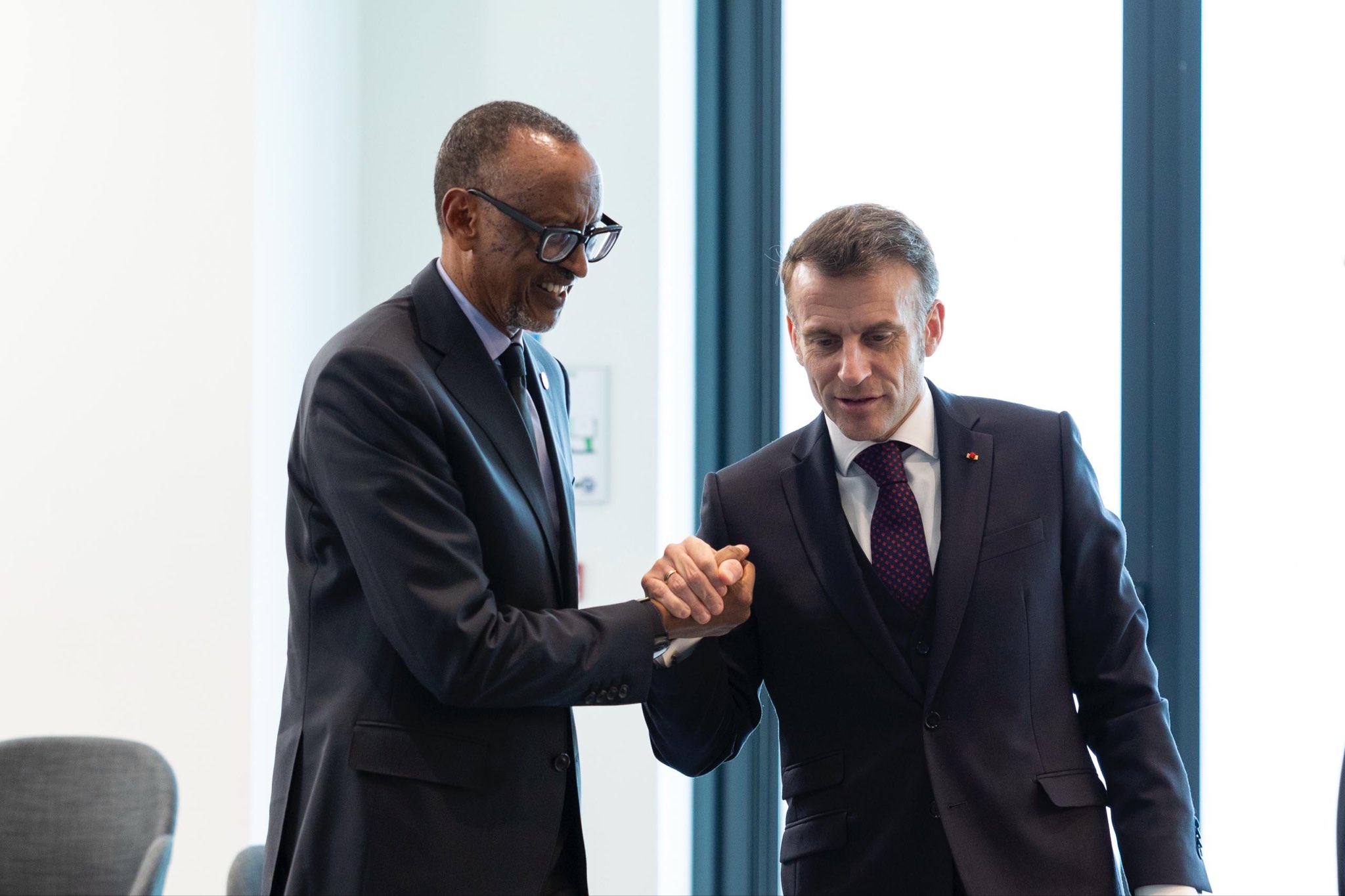
A brief statement released by the Office of the President indicated that the leaders discussed the strong and productive bilateral relations between Rwanda and France, as well as the security situation in the region, emphasising the need for sustained efforts to address its root causes.
The meeting comes against the backdrop of ongoing efforts to resolve the conflict in eastern Democratic Republic of the Congo, with Rwanda insisting that addressing the root causes is crucial to ending the decades-long conflict.
Meanwhile, the high-level summit in Paris brought together heads of state, government leaders, international organisations, financial institutions, nuclear industry representatives, and energy experts to discuss the future of civil nuclear energy. President Kagame attended the summit alongside a delegation from the Rwanda Atomic Energy Board (RAEB).
During his address at the summit, President Kagame reaffirmed Rwanda’s commitment to developing nuclear energy, describing it as a key pillar for powering the country’s industrial growth while meeting climate responsibilities.
He highlighted that Rwanda’s long-term ambition to become a high-income country by 2050 hinges on having a reliable and abundant electricity supply.
“Nuclear energy will play a central role in diversifying our energy mix and providing the stability needed for sustained economic transformation,” Kagame said.
President Kagame noted that nuclear power offers Rwanda a dependable source of electricity that can support industrial expansion while helping reduce carbon emissions.
“We have decided to make nuclear central to our strategy,” President Kagame said. “It will diversify our energy mix while providing the stability required for industrial growth and long-term transformation.”
President Paul Kagame and his French counterpart Emmanuel Macron met on the sidelines of the Nuclear Energy Summit in Paris on Tuesday afternoon.The two leaders discussed the strong and productive bilateral relations between Rwanda and France, as well as the security situation in the region.
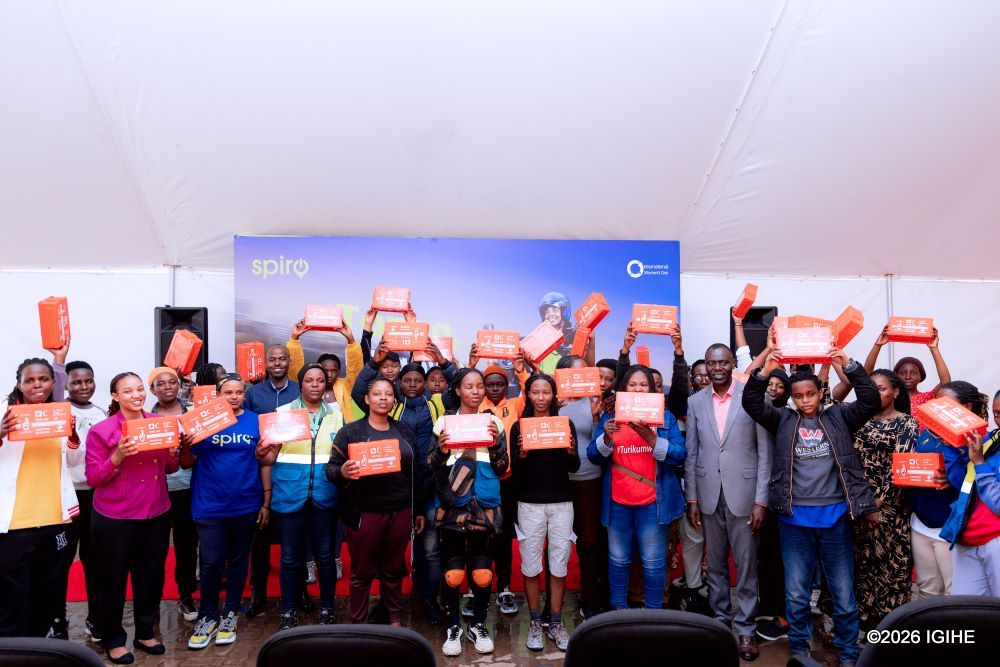
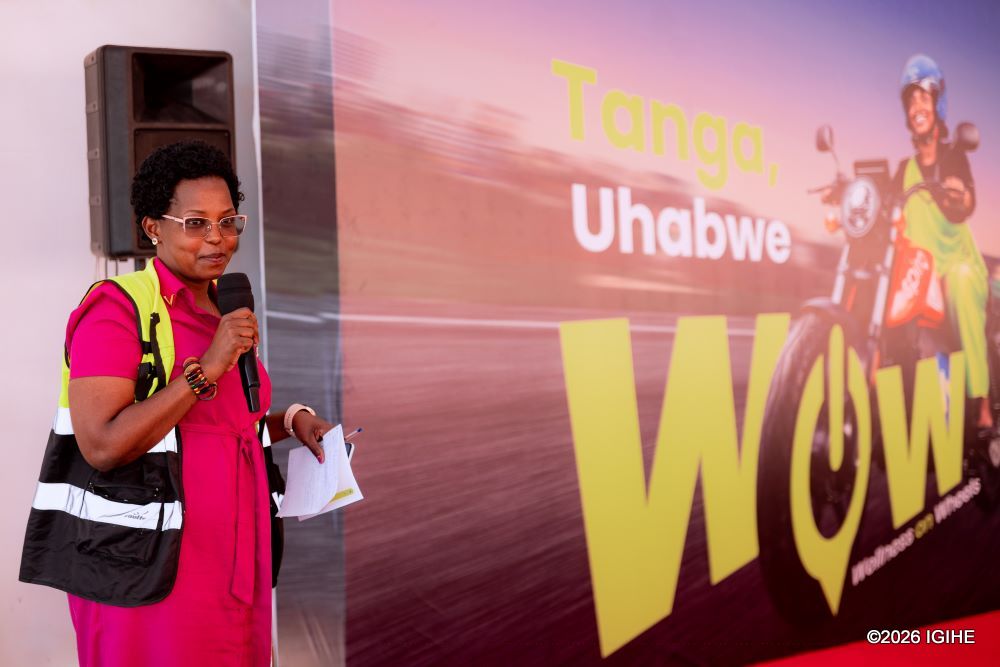
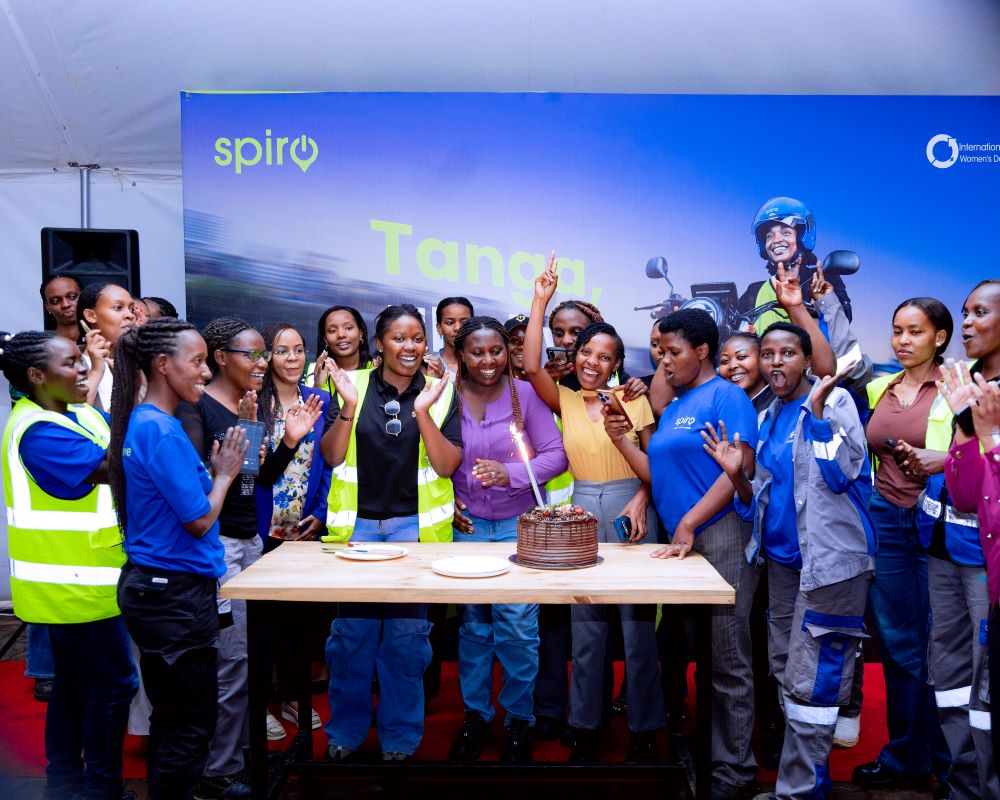
The celebration took place on March 9, 2026, at the company’s headquarters and brought together Spiro staff and motorcycle taxi operators, with a special focus on female riders who use Spiro motorcycles.
The company’s Senior Human Resources Officer, Dengeri Annet, said the firm is encouraged by the progress made so far, noting that the number of women using Spiro motorcycles continues to rise.
“While we celebrate Women’s Day today, we are also proud of the progress we have made, with more than 50 women now riding Spiro motorcycles,” she said. “Our goal is to continue increasing that number.”
She urged female riders to serve as role models by maintaining responsible conduct on the road, saying their professionalism could encourage more women to join the motorcycle taxi profession, a field traditionally dominated by men.
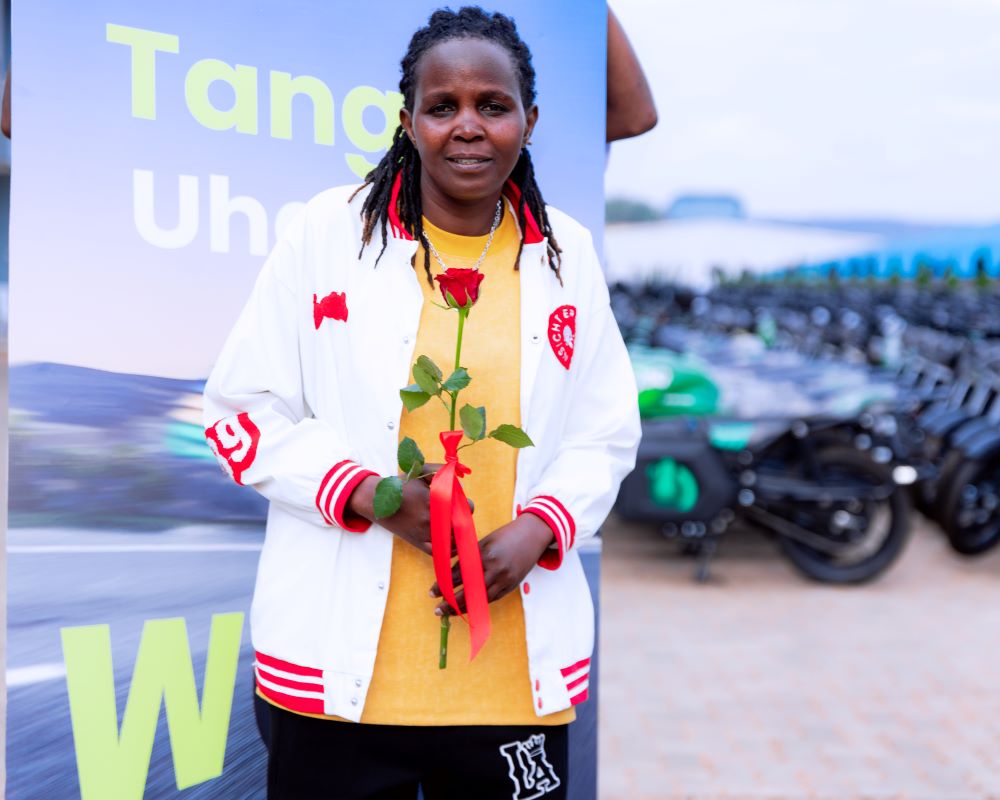
One of Spiro’s clients, Dusengimana Blanche, who has worked as a moto taxi rider for three years, said she chose Spiro motorcycles because they are more affordable and supported by financing options and after-sales services provided by the company.
“I had a motorcycle driving license for a long time but lacked the financial means to buy one,” she said. “Later, I approached Spiro and they helped me acquire a motorcycle. Now I work independently and no longer rely on a salary. On a good day, I can earn at least 20,000 Rwandan francs.”
Dusengimana said some women still hesitate to join the motorcycle taxi profession due to a lack of confidence, but stressed that this mindset should change, adding that women are equally capable of doing the work.
“They should stop thinking they have to wait for opportunities to be handed to them. That mindset is outdated,” she said.
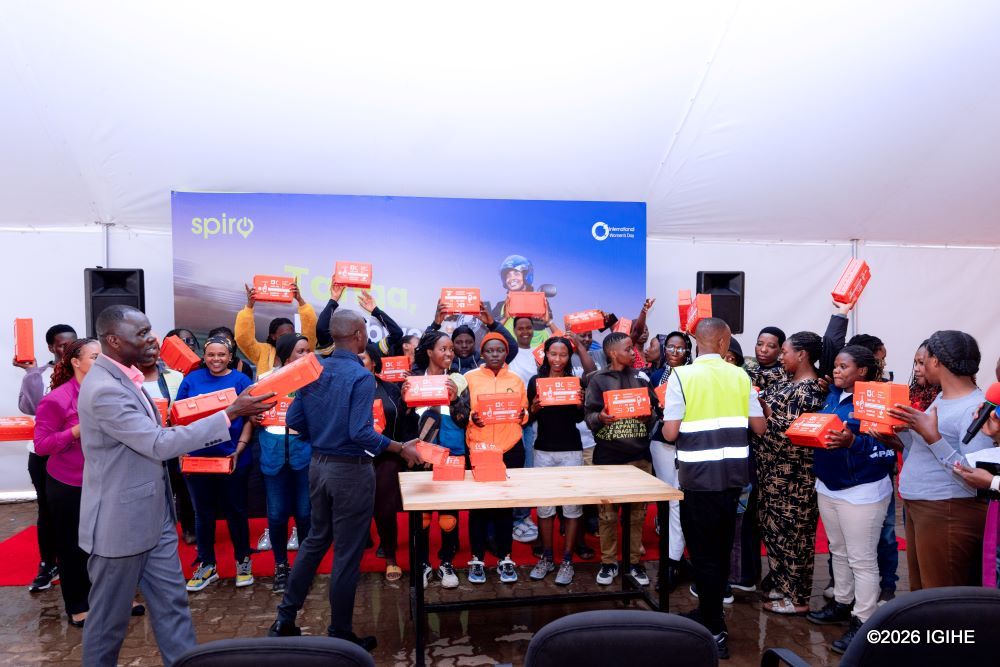
During the event, motorcycle riders received first-aid kits to help them respond to accidents and other emergencies involving them or their passengers.
Spiro began operations in Rwanda in 2023 and currently has 35 percent women within its workforce, including employees and female motorcycle riders who use its electric bikes.
In recent years, the company has also been ranked among Africa’s top 100 companies, recognised for its exceptional contributions to the continent’s development.
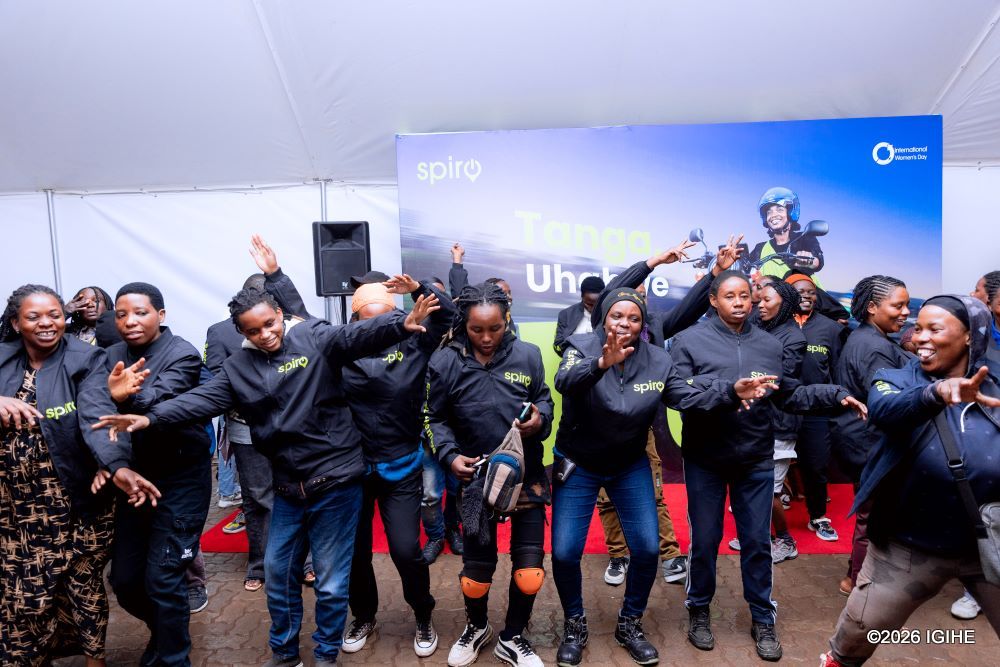
The company’s Senior Human Resources Officer, Dengeri Annet, said the firm is encouraged by the progress made so far, noting that the number of women using Spiro motorcycles continues to rise.Women motorcycle riders lauded Spiro for its continued support, highlighting the role the company plays in empowering them.Employees and clients of Spiro came together to mark International Women’s Day, celebrating the company’s ongoing efforts to empower women, particularly those working as motorcycle taxi riders.Women motorcycle riders celebrated the progress they have achieved.Dusengimana Blanche, a Spiro motorcycle rider, said she can earn up to 20,000 Rwandan francs on a good day.
The program is being implemented in partnership with the Rwanda Biomedical Center (RBC), targeting more than 140,000 households across nine sectors in the Gasabo, Kicukiro, and Nyarugenge districts.
The affected sectors include Masaka in Kicukiro; Kanyinya and Mageragere in Nyarugenge; and Rutunga, Gikomero, Rusororo, Ndera, Jabana, and Kinyinya in Gasabo.
The campaign was launched in Masaka Sector, which has over 30,000 residents. Kicukiro District, where Masaka is located, has reported more than 115,000 malaria cases, making it the district with the highest number of infections.
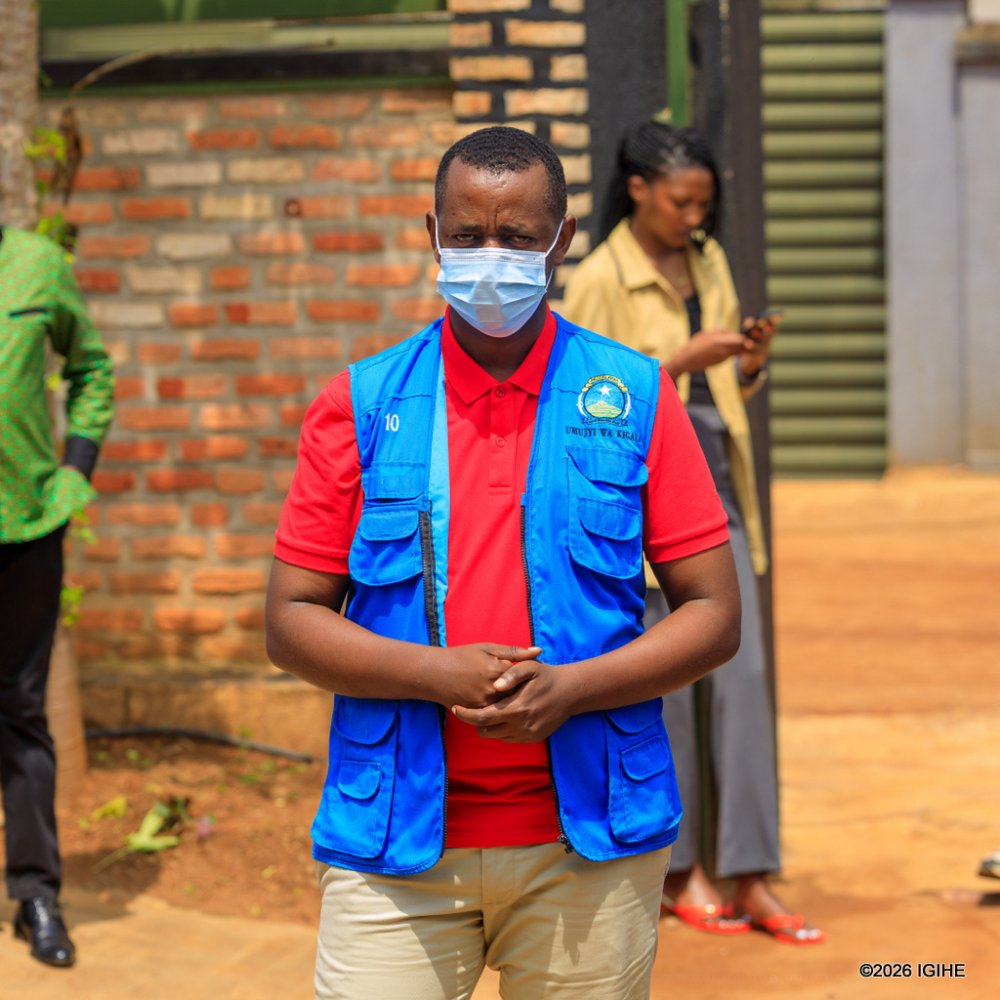
Alfred Nduwayezu, Masaka Sector Executive Secretary, attributed the high malaria rates to local environmental factors, including marshlands used for rice cultivation and areas with stagnant water.
He explained: “When we track the data, the increase in malaria cases is linked to the local environment — there are marshes, rice fields, and water accumulation. RBC and its partners recognised the problem and approved indoor spraying in our sector to help address it.”
In Masaka, around 20,000 households are expected to receive the insecticide treatment.
Nduwayezu added that, in collaboration with partners, the sector has implemented measures to curb malaria and reduce infection rates, particularly during and after the rainy season when cases typically spike.
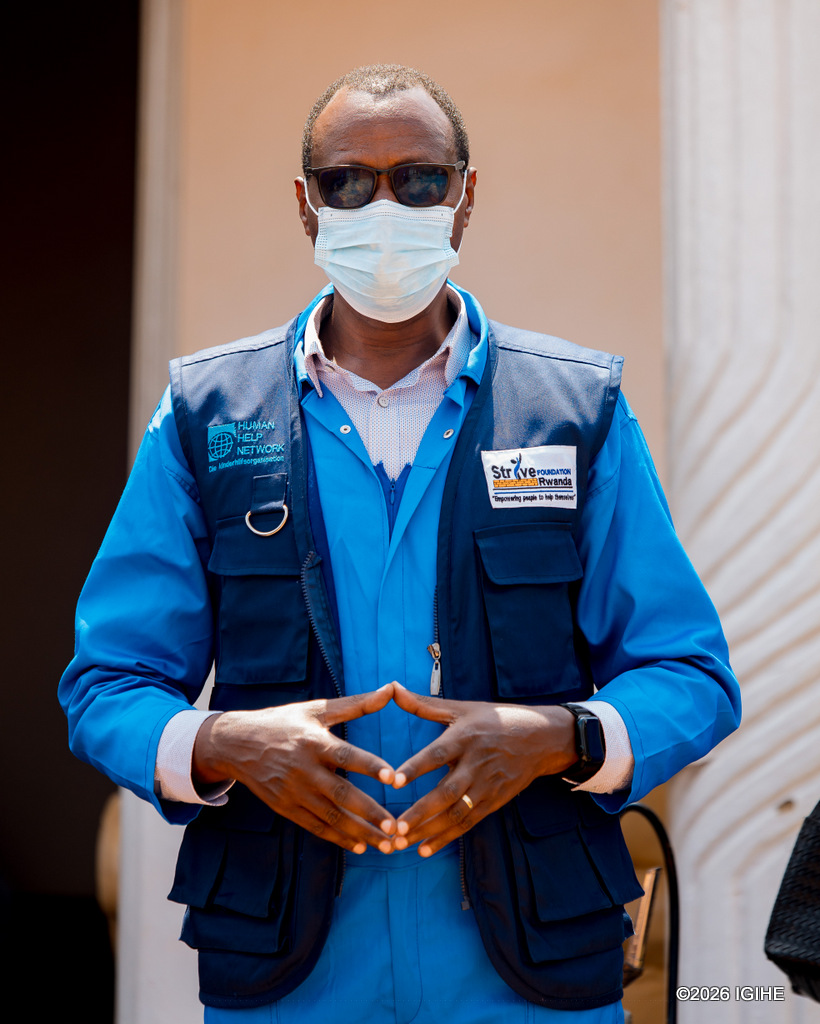
Léopold Ruzibiza, Programs Manager at Strive Foundation Rwanda, said previous interventions, including mass testing, clearing bushes, and other measures, had limited impact. Indoor spraying was therefore chosen as the most reliable method.
He emphasised the importance of residents following proper procedures during spraying:
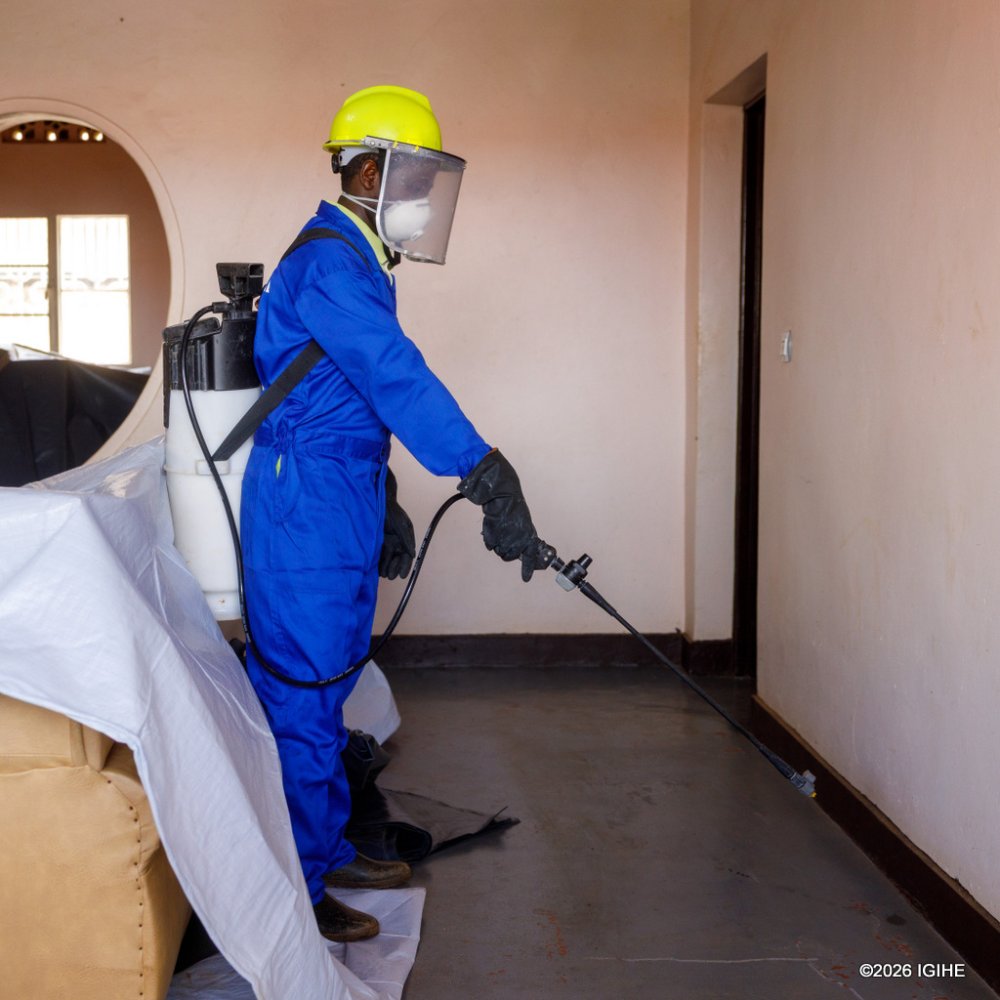
“Residents must vacate their homes, remove all belongings from the rooms, and allow health workers to mix and apply the insecticide at the approved dosage. Houses are then sealed for two hours.”
Residents are being urged to cooperate fully, as the campaign is being carried out by trained health workers.
In October and December 2025, the campaign will expand to 28 sectors most affected by malaria in the Gisagara, Nyanza, Bugesera, Kirehe, Rwamagana, and Nyagatare districts, covering 1,031,676 residents.
According to the Rwanda Biomedical Center (RBC), malaria claimed over 150 lives nationwide between 2024 and 2025.
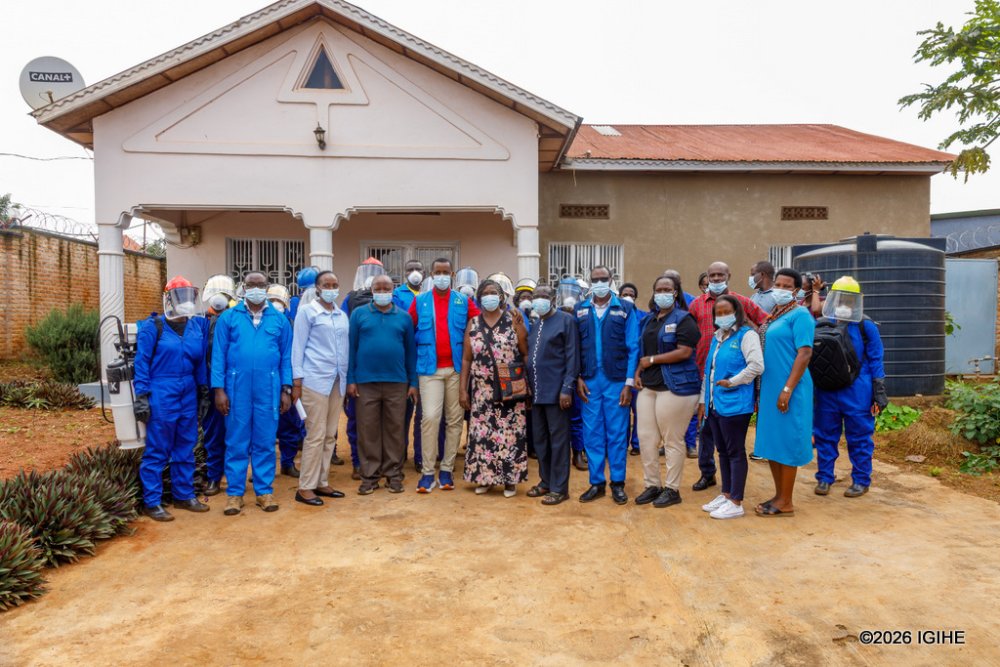
The person applying the insecticide must wear full protective clothing to prevent exposure to its harmful effects.The program is being implemented in partnership with the Rwanda Biomedical Center (RBC), targeting more than 140,000 households across nine sectors in the Gasabo, Kicukiro, and Nyarugenge districts.Léopold Ruzibiza, Programs Manager at Strive Foundation Rwanda, urged residents to actively cooperate in the insecticide spraying campaign.Alfred Nduwayezu, Masaka Sector Executive Secretary, attributed the high malaria rates to local environmental factors, including marshlands used for rice cultivation and areas with stagnant water.
The Israeli military said in a statement that air defense systems are working to intercept the missiles.
Sirens were heard in the northern cities of Metula and Haifa, the southern city of Ashkelon, as well as in Jerusalem and several settlements in the occupied West Bank.
Debris fell in the Umm Al Faham area in southern Israel, causing damage. There were no immediate reports of injuries, the country’s Magen David Adom rescue service said.
The development came as the deadly regional conflict entered its 11th day. On February 28, Israel and the United States launched joint attacks on Tehran and several other Iranian cities, killing Iran’s Supreme Leader Ali Khamenei, along with senior military commanders and civilians. Iran responded by launching waves of missile and drone strikes targeting Israeli and U.S. assets in the Middle East.
Earlier on Tuesday, the Israeli military said it had begun a new series of airstrikes against Iranian government targets in Tehran, whereas Iran’s Foreign Minister Seyed Abbas Araghchi said Iran is well-prepared to continue missile attacks against Israel and U.S. bases in the West Asia region for as long as needed.