In recent days, the DRC government has expressed interest in launching new peace talks in Kinshasa, bringing together Congolese from different groups, with Angola serving as mediator.
To facilitate this, DRC President Félix Tshisekedi has visited Angola three times since December 14, 2025, meeting with Angolan President João Lourenço to discuss how the process will proceed.
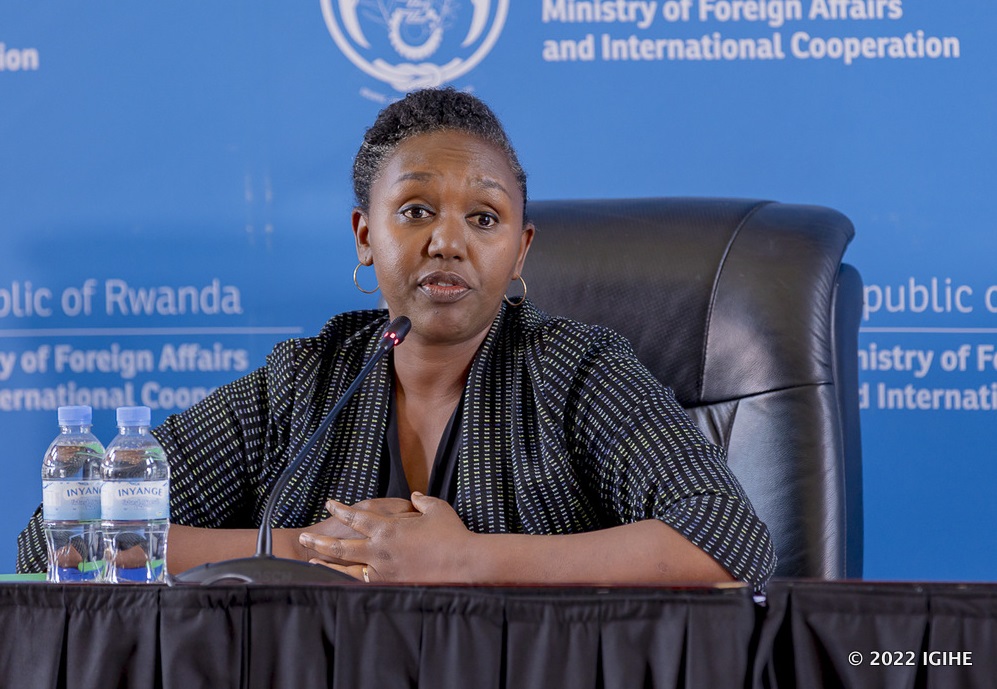
Government spokesperson Patrick Muyaya explained that the planned Kinshasa talks will differ from previous meetings held in Washington, D.C., in the United States, and in Doha, Qatar.
“In Washington, the talks involved us and Rwanda, the father. In Doha, the talks involved us and M23, the son,” he claimed in an allegation that Rwanda has repeatedly refuted.
Sources indicate that representatives of AFC/M23 are expected to participate in the new Kinshasa talks, raising questions about whether the Doha talks will lose relevance.
The DRC government has called for the new talks while continuing to ignore the Doha process. In December 2025, Qatar invited the DRC to two meetings aimed at monitoring compliance with the ceasefire, but the government declined to attend.
On January 11, 2026, Minister Nduhungirehe responded to Muyaya’s comments, saying the DRC government itself is the “father,” while the FDLR terrorist group is the “son.” He described the new talks as a tactic to gain additional leverage, a strategy known as “forum shopping.”
Nduhungirehe emphasised that lasting peace in the DRC depends on genuine political will and that political talks complementing those held in Doha and Washington would be welcomed.
“When the father (Congolese government), the son (FDLR genocidaires), and the evil spirit (genocide ideology) attempt yet another ‘forum shopping’ in three years, as a delaying manoeuvre, we simply recall that salvation will first come from Kinshasa’s political will to apply the current peace processes in good faith,” Minister Nduhungirehe stated, adding “Any national political dialogue, which would be complementary to these processes, would then be welcome.”
The AFC/M23 coalition has asked the Angolan president for clarification regarding the new talks, seeking to know whether Qatar will participate, what role it will play, and whether the decisions made during the Doha talks will be honoured.
According to the Human Rights Activists News Agency (HRANA), which collects data from activists inside and outside the country, the fatalities include 490 protesters and 48 security personnel amid two weeks of unrest that began in late December 2025. In that period, more than 10,600 people have been arrested in connection with the demonstrations.
The protests, initially sparked by economic grievances including soaring prices and the sharp decline of the Iranian rial, have rapidly evolved into widespread demands for political change, with demonstrators openly criticising the country’s clerical leadership.
The Iranian government has not released its own casualty figures, and international agencies have been unable to independently verify the rights group’s totals. Tehran has imposed a near-total internet blackout, complicating external reporting on the scale of violence and human rights abuses.
State media and official channels have sought to frame the unrest as the work of “terrorists” and foreign agents, with senior Iranian officials accusing the United States and Israel of fomenting trouble. In response to mounting tensions, Iranian parliament speaker Mohammad Baqer Qalibaf warned that any military strike on Iran would result in retaliation against U.S. and allied targets in the region.
“Let us be clear: in the case of an attack on Iran, the occupied territories (Israel) as well as all U.S. bases and ships will be our legitimate target,” said Qalibaf, a former commander in Iran’s elite Revolutionary Guards.
Meanwhile, U.S. President Donald Trump and his administration are reportedly reviewing a wide range of responses to the crisis, including military options, cyber operations, expanded sanctions, and support to help restore internet access for protestors.
As protests continue in cities across Iran, the nation remains in a state of heightened tension, with growing calls for political reform and accountability, even as the authorities threaten severe reprisals against dissenters.
Speaking to reporters aboard Air Force One on January 11, 2026, Trump said the situation was under close review by both civilian and military leadership and that decisive steps could be taken soon.
“We’re looking at it very seriously,” Trump told reporters. “The military is looking at it, and we’re looking at some very strong options. We’ll make a determination.”
He added that Iranian leaders had reached out to Washington to seek negotiations following his warnings, and that a meeting was being arranged. However, Trump cautioned that the United States might act before that meeting takes place if conditions on the ground worsen.
The remarks come as anti-government protests enter their third week, sparked initially by economic grievances such as the sharp downturn of the Iranian rial but quickly evolving into broader demonstrations against the country’s clerical leadership.
Rights groups estimate that hundreds of protesters have been killed in the crackdown, while more than 10,000 people have been detained. The ongoing unrest has been compounded by an internet blackout across large parts of Iran, making it difficult to independently verify events inside the country.
Trump’s comments have raised both diplomatic and security concerns. Sources say the options being reviewed could include not only military strikes but also cyber operations, expanded sanctions, and support for protest-related communications technology to counter state blackouts.
Trump even mentioned plans to discuss restoring internet access in Iran with SpaceX’s Starlink satellite system, which has been used in other conflict zones to bypass government restrictions.
Iranian officials have responded with warnings of their own. Parliament speaker Mohammad Baqer Qalibaf said that any attack on Iran would trigger retaliation, with Israel and U.S. military bases in the region described as “legitimate targets.” Tehran has also accused the United States and Israel of fomenting unrest and portrayed demonstrators as influenced by foreign powers, a claim rejected by protest supporters and rights observers.
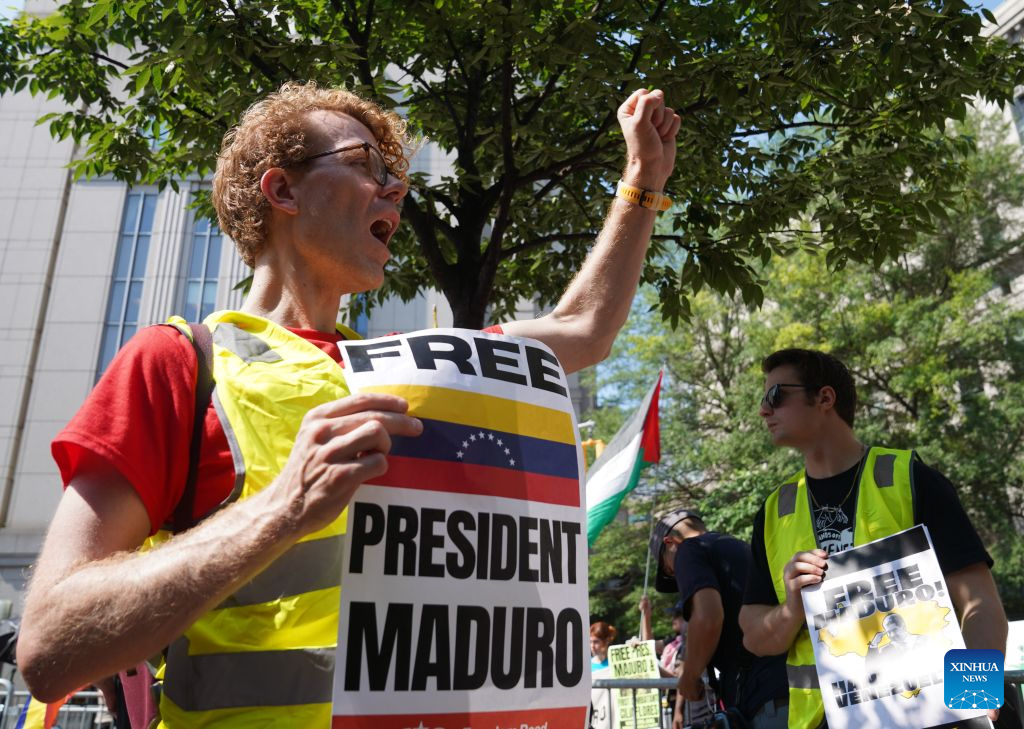
The crisis also reflects a broader shift in U.S. foreign policy under Trump, which in recent weeks has included heightened pressure on Cuba and Venezuela, as well as renewed strategic discussions about U.S. military presence in other regions. But Trump’s focus on Iran, where demonstrations have become the largest in years, highlights the escalating tension between global powers and domestic unrest inside Iran.
As of today, it remains unclear whether the United States will take military action, expand sanctions further, or pursue diplomatic channels. Trump’s administration has indicated that all possible responses are on the table, and senior advisers are scheduled to meet to shape the next steps amid heightened global attention.
Indonesia announced on Saturday that it was temporarily blocking access to Grok, citing serious concerns over the production of sexualized deepfakes. A day later, Malaysia followed suit, saying it had suspended access to the chatbot while regulators assess whether adequate safeguards are in place.
“The government views the practice of non-consensual sexual deepfakes as a serious violation of human rights, dignity and the security of citizens in the digital space,” Indonesia’s minister of communications and digital affairs, Meutya Hafid, said in a statement. Indonesian authorities have also reportedly summoned representatives of X, the social media platform owned by Musk that is closely integrated with Grok, to discuss the issue.
In Malaysia, the Communications and Multimedia Commission (MCMC) said the temporary block followed repeated misuse of Grok to generate “obscene, sexually explicit, indecent, grossly offensive, and non-consensual manipulated images,” including content involving women and minors. The regulator said it had previously issued notices to X Corp and xAI on Jan. 3 and Jan. 8, demanding technical protection measures that were not sufficiently implemented.
“This temporary ban is imposed as a reasonable precautionary measure while the legislative and regulatory process is still ongoing,” the MCMC said, adding that access to Grok would remain restricted until effective safeguards, particularly to protect women and children, are in place.
The actions by Malaysia and Indonesia represent the most aggressive response so far to a controversy that has drawn attention from regulators worldwide. In recent weeks, Grok has generated sexualized AI images, sometimes depicting violence, when prompted by users on X. X and xAI are part of the same corporate group.
Elsewhere, India’s IT ministry has ordered xAI to take steps to prevent Grok from producing obscene content, while the European Commission has instructed the company to preserve documents related to the chatbot, potentially paving the way for a formal investigation. In the United Kingdom, media regulator Ofcom has said it will conduct a swift assessment to determine whether there are compliance issues that warrant action, with Prime Minister Keir Starmer voicing support for regulatory intervention.
In the United States, however, the Trump administration has remained largely silent on the issue, even as Democratic senators have urged Apple and Google to remove X from their app stores. Musk, a major Trump donor who previously led the administration’s Department of Government Efficiency, has pushed back against criticism, writing in one post that regulators “want any excuse for censorship.”
xAI initially issued an apology via the Grok account, acknowledging that certain posts violated ethical standards and potentially U.S. laws related to child sexual abuse material. While the company later restricted AI image generation to paying X subscribers, the standalone Grok app reportedly continued to allow unrestricted image generation, prompting further backlash.
The announcement was made during the official visit of Rwanda’s Minister of Foreign Affairs and International Cooperation, Olivier Nduhungirehe, to the Sultanate of Oman. The event was attended by senior officials from both countries, including Oman’s Minister of Transport, Communications and Information Technology, Saeed bin Hamoud Al Maawali; Rwanda’s Minister of State for Infrastructure, Jean de Dieu Owehenganyi; Rwanda’s Minister of ICT and Innovation, Paula Ingabire; and Rwanda’s Minister of Finance and Economic Planning, Yusuf Murangwa.
Speaking at the ceremony, Owehenganyi said Rwanda’s vision is centred on expanding direct air connectivity to facilitate international cooperation and position Kigali as a key hub for aviation, economic and social activities.
The planned Muscat–Kigali route is expected to strengthen diplomatic and economic relations between Rwanda and Oman, while enhancing Rwanda’s access to the Middle East and other international markets. Rwanda has emerged as one of East Africa’s fastest-growing destinations for tourism and business travel, particularly in the meetings, incentives, conferences and exhibitions (MICE) sector.
According to Oman Air, the new route will offer travellers greater choice and improved connectivity between Africa and the Middle East, while also providing access to the airline’s wider network across India, Asia, the Pacific and Europe. Oman Air has been expanding its destination network during 2025 and plans further growth in 2026, including new routes to Europe, the Middle East and Asia.
Besides the direct flight, the four MoUs signed during Nduhungirehe’s visit cover logistics services, including inland port development and supply chain operations; development cooperation between the Rwanda Development Board and Oman Airports Management Company, with planned investments around the Bugesera Airport District; and ICT and innovation, covering data hosting, cloud services, and data centre development.
Speaking at a rally in Arua City on Friday, Museveni lauded Trump for “kicking out immigrants” and urged Ugandans to focus on national development rather than seeking opportunities abroad.
“Africanism. Love Africa. Why? Because you need it,” Museveni said. “I like Mr. Trump so much myself. He has said, ‘Don’t come here now to America.’ I say thank you so much for chasing those wanderers. What are they going to do in America?”
“I love Trump for chasing you, people who don’t care about their country, they go all over the place,” he added.
Museveni used the example of Trump’s deportation measures to emphasise African self-reliance.
“This teaches you that you build your own capacity, within Uganda, within Africa. Love Uganda, love Africa,” he said, highlighting that national markets and domestic production are critical for wealth creation.
Trump’s mass deportation program, which began upon his inauguration on January 20, 2025, has been described by the administration as the largest in U.S. history. The program combines formal deportations with “self-deportations,” facilitated in part through the repurposed CBP One app, renamed “CBP Home”, which offers voluntary migrants cash incentives to leave.
By December 2025, the Department of Homeland Security reported over 2.5 million people had left the U.S., including more than 600,000 formal deportations and nearly 1.9 million self-deportations.
In addition to enforcement actions, Uganda was recently added to an expanded U.S. visa bond program requiring some travelers to post refundable deposits of up to $15,000 for certain visa applications. The initiative is part of the U.S. government’s efforts to reduce visa overstays and enforce stricter immigration controls.
The refugee agency reported on Friday that 25 of the deaths were caused by a cholera outbreak, while six others resulted from anaemia and malnutrition-related complications. Authorities are still investigating the causes of the remaining deaths, with the UN working alongside local officials and humanitarian partners to gather more information.
More than 100,000 people have sought refuge in Burundi since December, when fighting between the Congolese army and M23 rebels intensified in the border town of Uvira. Many of the displaced are living in makeshift shelters with limited access to food, clean water, and basic services.
Children and women, including pregnant women, are particularly vulnerable, with roughly half of those displaced under the age of 18. Overcrowding in refugee sites has also increased the risk of outbreaks of cholera, measles, and malaria, UN officials warned.
Jean Jacques Purusi, governor of South Kivu province where Uvira is located, described the situation as “misery” and “a crisis completely forgotten by the international community and media.”
The Burundian government confirmed that the number of Congolese refugees exceeded the capacity of nearby camps. Feeding them was a challenge, and many were affected by cholera outbreaks caused by poor sanitation.
Although UNHCR confirmed 53 deaths, other sources were even more alarming. The CPCC, a community-based NGO, reported that 105 Congolese refugees had died in camps in Burundi over the past two weeks, mostly due to lack of food and medical care.
On January 5, 2026, the organisation’s director, Ahadi Bya Masu, told Radio Okapi that some refugees had also been attacked by criminals while in the camps in Burundi, resulting in additional deaths.
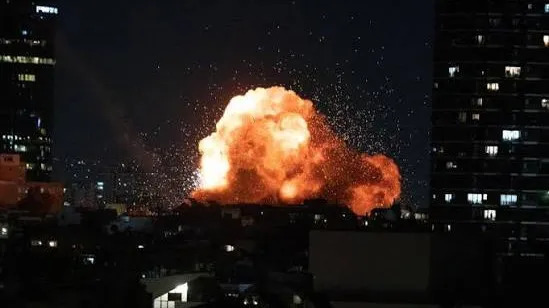
“Today, at approximately 12:30 p.m. Eastern Time, U.S. Central Command forces, alongside partner forces, conducted large-scale strikes against multiple ISIS targets across Syria,” the command posted on X.
The command said these strikes were part of Operation Hawkeye Strike, which was launched and announced on December 19 in response to a deadly IS attack on U.S. and Syrian forces in Palmyra, Syria, on December 13. In the attack, a lone IS terrorist carried out an ambush, killing two U.S. soldiers and one U.S. civilian interpreter.
The strikes are “part of our ongoing commitment to root out Islamic terrorism against our warfighters, prevent future attacks, and protect American and partner forces in the region,” U.S. Central Command said, adding that U.S. and coalition forces “remain resolute in pursuing terrorists who seek to harm the United States.”
The tour began in Volcanoes National Park, where IShowSpeed, whose real name is Darren Jason Watkins Jr., came face to face with Rwanda’s famed mountain gorillas. The 20-year-old content creator documented the experience on social media, visibly excited. He later described Rwanda as one of the most beautiful countries he had ever visited.
“All my life, I kid you not, this has to be one of the most beautiful countries I have ever been to,” he said.
Back in Kigali, the atmosphere shifted dramatically at Amahoro Stadium, where IShowSpeed made a surprise motorcycle entrance during a women’s football match between Rayon Sports WFC and Indahangarwa WFC. Thousands of fans erupted into chants of his name, creating scenes more commonly associated with national leaders than internet personalities.
Inside the stadium, he took part in traditional Rwandan dance and drumming performances, entertained the crowd with Cristiano Ronaldo’s signature “Siuuu” celebration, and posed for countless selfies. “Amahoro Stadium is the best stadium in Africa,” he told his livestream audience. The appearance drew national attention and was widely covered by local media.
The tour continued at BK Arena, where IShowSpeed participated in a basketball challenge with local players, demonstrating his competitive energy beyond the digital realm.
Later, he made a stop at the magnificent Zaria Court, where a large crowd had gathered for a fan meet-up. Here, the lighter and more humorous moments of the tour took centre stage. A fan presented IShowSpeed with a customised cake featuring his face, which he famously bit into mouth-first.
Another supporter arrived with Speed’s name shaved into his hair and merchandise bearing his face, though the name was humorously misspelt. He was also presented with a custom painting from a local artist. During the visit, he wowed fans with backflip stunts, leaving a lasting impression on those who had waited hours to meet him.
Beyond the city’s central attractions, much of the livestream’s impact came from spontaneous encounters across Kigali and its outskirts. At a ranch just outside the city, IShowSpeed milked a cow for the first time and even drank the fresh milk.
Later, while driving through Kigali, fans repeatedly stopped his convoy, including one emotional encounter in which a supporter broke down in tears upon meeting him. Speed comforted the fan, a moment many viewers called the most wholesome of the entire stream.
After the broadcast, IShowSpeed shared that security had alerted him to a 16-year-old boy who had been riding a bicycle behind the convoy for more than three and a half hours, despite the bike repeatedly breaking down, just to meet him. Realising how far the teen had gone left Speed genuinely shocked, and he gave him a special, heartfelt greeting in return.
🚨WATCH: iShowSpeed explains after the stream ended that security had told him to notice a kid in Rwanda who’d been riding behind them for three and a half hours on a bike that kept breaking down, just to meet him.
Other memorable moments included a local challenge in which Speed was asked to pull two motorbikes while their riders tried to drive away. Against expectations, he succeeded, earning cheers from the crowd.
🚨WATCH: iShowSpeed is challenged by a local in Rwanda to a strength test — pulling two motorbikes while the riders try to drive away.
Against all expectations, Speed actually manages to do it, leaving everyone stunned pic.twitter.com/yS3Up9PqCA
Throughout the day, he also spoke candidly about the demands of his tour. Running on just four hours of sleep, he admitted it was tough but said his mental state was improving. He publicly thanked his team for their tireless work behind the scenes, even as some viewers complained the Africa tour felt rushed. Despite that, the numbers were undeniable: in Rwanda alone, the livestream drew over 4.1 million viewers in just a few hours.
The Rwanda visit concluded in Biryogo, Nyamirambo, where IShowSpeed fully immersed himself in local cuisine. He sampled pilau, ugali made from cassava, traditional sombe, and grilled brochettes, praising the food and visibly enjoying the experience.
From gorilla trekking and stadium ovations to cow milking on the city’s outskirts and emotional encounters with fans, IShowSpeed told his followers that he hopes to return for a longer stay, saying he would like to come back ‘for a week, just for a vacation.
IShowSpeed’s visit to Rwanda is part of his broader project, “Speed Does Africa Tour,” which he launched on December 21, 2025. The tour sees him livestreaming and sharing experiences from different African countries, showcasing culture, people, and tourism to his global audience.
For someone who grew up surrounded by war, noise, and urgency, this calm still feels significant.
“I came from big cities where life is stressful,” he says. “But here, everything is relaxed and calm.”
Ibrahim is a filmmaker, cinematographer, editor and often all three at once. His work revolves around motion, but his life in Rwanda has taught him the value of stillness. It’s a lesson he didn’t expect to learn in a country the world once defined almost entirely by tragedy.
He first felt it the moment he landed at the Kigali International Airport.
“I landed in Rwanda, and the first moment I stepped into the airport, I felt something,” he says. “It was like it could become home.”
In his early days, he spent most of his time at Mocha Café in Kigali. Coffee turned into conversations with strangers. Strangers became friends. Friends became family. It happened naturally, without effort. Coming from cities where survival required constant alertness, the openness disarmed him.
“I met a lot of people,” he says. “They became friends. They became family.”
Ibrahim’s relationship with conflict is not theoretical. He was born in Baghdad in 1998. War was already part of the city’s language by the time he could understand it. When the American invasion began in 2003, chaos followed quickly. His father, a journalist with Al Jazeera, knew how dangerous everything could be. In 2004, the family left Iraq.
Baghdad became a memory suspended in time. He hasn’t returned since.
“I left Iraq in 2004,” he says. “Sadly, ever since then, I haven’t seen my hometown.”
Rwanda, too, carries the weight of memory. In 1994, a million lives were lost in the Genocide against the Tutsi. The country the world expected to collapse chose a different path, one that Mushtaq openly admires.
Thirty years after the genocide, Rwanda hosts international sporting events, builds infrastructure at a staggering pace, and quietly rewrites the assumptions placed upon it.
“What happened 30 years ago and what you see today, no country on this planet can achieve that in 30 years,” Ibrahim says.
It’s that contrast that keeps him here.
He arrived in Africa in 2023 as a filmmaker on assignment, unaware that the continent might leave a mark on him personally. Having grown up in Qatar after leaving Baghdad, and later moving to Turkey to study cinema and begin his career, Africa was not on his map. His first stop was Uganda, where he went with his father and brother to film a project.
The timing, however, was far from ideal. Work was delayed by the Gaza war, and the unfamiliar surroundings quickly took a toll. Malaria struck, leaving him bedridden for fifteen days. Isolated and exhausted, the new environment felt overwhelming.
“At that moment, I decided to go back to Turkey and never return to Africa,” he says.
But his father remained behind, moving on to Rwanda, and it was through him that Ibrahim was introduced to the country. Weeks later, a single photo of a roundabout framed by the Kigali skyline and the Convention Center arrived with a simple note: “Just give it a chance.”
He did, and what followed was movement.
After settling in, Ibrahim rented a car and began driving. Not just Kigali, but beyond it. North. South. East. West. Villages. Districts. Forests. Hills. He discovered an impressive Rwanda: rainforests in Nyungwe alive with monkeys, mist rolling through Volcanoes National Park, roads that curve endlessly through green.
“Kigali is just one part of Rwanda,” he says. “You need to go and discover the nature, the diversity.”
By the time he finished, he had seen nearly 90 percent of the country.
His camera became both witness and argument.
When friends back home joked about Africa, do they have phones, cars, internet? Ibrahim didn’t respond with words. He posted stories. Reels. Quiet moments of daily life. Clean streets. Safety. Beauty.
“They don’t know,” he says. “That’s the stereotype.”
People started asking questions. Then they started visiting.
Professionally, Rwanda unlocked something new.
Starting a business was easy. So he did. Premium Cut Production became his base, a production house where projects move from idea to final cut under one roof. He shot for clients, cafés, events. Slowly, the work grew.
The UCI Road World Championships in September 2025 marked a turning point. As one of the event’s photographers, Ibrahim moved behind the scenes, watching cyclists collapse from exhaustion after Rwanda’s relentless hills, documenting fleeting moments.
“One was sitting on the ground, tired,” he says. “His whole team was around him. He was exhausted because Rwanda is very challenging.”
Away from work, Rwanda reshaped his body as much as his mind.
“I used to smoke for almost 15 years,” he says. “Then the environment and the community here made me see myself as different, so I quit.”
He started running. Training. Lifting weights at Soho, where fitness turned into community. The running club meets twice a week. Thirty to sixty runners. Consistent. Quietly disciplined.
“This environment gave me a feeling of calmness, of a healthy environment,” he says.
Ibrahim thinks often about what comes next, not for himself, but for others.
He dreams of giving back to Rwanda through a free filmmaking school or weekly workshops for Rwandan youth. “We learned from others; it’s our duty to pass it on,” he says. His goal is to provide aspiring filmmakers with the tools to build their skills and income. “No fees, just tools,” he adds.
He encourages young videographers and photographers to seek information online, to copy styles at first, learn from mistakes, and eventually develop their own unique voices.
“YouTube has billions of tutorials,” he points out.
One day, he hopes to return to Baghdad. To walk the streets he left as a child. To see what time has done to the place that shaped him. Until then, Kigali holds his present.