He made the remarks in an interview with state-run IRIB TV while noting that the U.S. response is being reviewed.
He stressed that Iran’s plan is exclusively focused on ending the war, and “nothing pertaining to the nuclear field’s details exists in it.”
“At present, we are focused on the parameters related to ending the war in the region, including Lebanon,” Baghaei added, stressing “we have no nuclear negotiation at this stage.”
Also on Sunday, Iranian Foreign Minister Seyed Abbas Araghchi briefed his Omani and German counterparts on Iran’s latest diplomatic efforts and initiatives to end the war.
In separate phone calls, Araghchi exchanged views with Omani Foreign Minister Sayyid Badr bin Hamad bin Hamood Albusaidi and German Foreign Minister Johann Wadephul on the latest regional and international developments, according to statements released by the Iranian Foreign Ministry.
On Feb. 28, Israel and the United States launched joint strikes on Tehran and other cities, killing Iran’s then-Supreme Leader Ali Khamenei, senior commanders, and civilians. Iran responded with waves of missile and drone attacks targeting Israel and U.S. interests in the region.
A ceasefire took effect on April 8, followed by talks between Iranian and U.S. delegations in Islamabad that failed to produce a deal.
On Feb. 28, Israel and the United States launched joint strikes on Tehran and other cities, killing Iran’s then-Supreme Leader Ali Khamenei, senior commanders, and civilians. Iran responded with waves of missile and drone attacks targeting Israel and U.S. interests in the region.
The initiative comes at a critical time for Africa’s agricultural expansion, particularly for South Africa’s fast-growing citrus sector, he said.
“South African citrus production is on such a significant growth trajectory that unlocking its full economic potential requires improved access to all high-value markets like China,” the business leader said.
Highlighting the sector’s broader socio-economic contribution, Ntshabele noted that the country’s citrus industry currently supports about 140,000 jobs at the farm level alone and that expanded access to a large market such as China could create further employment opportunities and support rural development.
Many rural communities in South Africa rely heavily on agricultural exports, he said, adding that citrus-producing regions are likely to be among the first to benefit from improved market access under the new tariff policy.
The zero-tariff treatment, he said, will help expand trade access and deepen economic ties between Africa and China, while strengthening the continent’s external trade resilience amid global economic uncertainty.
Such policy measures could contribute to a more stable global trading system by promoting inclusive trade and reducing barriers for developing economies, helping diversify supply chains, he added.
African exporters are expected to gain a stronger foothold in one of the world’s largest consumer markets, reinforcing confidence in long-term economic cooperation and shared growth between Africa and China, Ntshabele said.
“We greatly value the opportunities the Chinese market holds,” he added.
Many rural communities in South Africa rely heavily on agricultural exports
As a hallmark of China-Africa cooperation in the new era, the zero-tariff measure is expected to reduce trade barriers and deliver long-term benefits to people on both sides, injecting fresh momentum into their joint pursuit of modernization while contributing to a more inclusive and universally beneficial global trading system.
A reliable market
On the outskirts of the Ethiopian capital city of Addis Ababa, construction is underway on a new roasting facility for Awo Coffee to meet soaring export orders. According to Awo Coffee General Manager Tesfaye Gebru, about 90 percent of the firm’s roasted products are shipped to China each year.
“Since we began in 2014, the fast-growing Chinese coffee market has emerged as our primary export destination,” said Gebru, noting that in 2024, the company exported about 140 tonnes of Ethiopian green coffee beans and 20 tonnes of processed coffee products to China, with annual growth of around 10 percent.
Awo Coffee sources beans from its own 14-hectare farm. “We purchase beans from smallholder farmers at higher prices, directly boosting their incomes. During harvest seasons, we also hire local villagers to pick coffee cherries,” said Gebru.
Awo’s rapid expansion has been supported by early access to China’s zero-tariff policy. Effective from December 2024, China granted all least developed countries with which it has diplomatic relations zero-tariff treatment for 100 percent tariff lines, including 33 African countries.
The impact on Ethiopian coffee exporters has been swift. Ethiopia, widely known as the home of Arabica coffee, has strengthened its position in the Chinese market, rising to become one of the largest suppliers of coffee to China in recent years.
As China’s zero-tariff policy now extends to 53 African countries, Cameroon cocoa farmer George Wambo Cornyu described it as “a golden opportunity.”
“It’s going to encourage our domestic processing and also value additions,” said Cornyu, also president of Masoka-Ikata Farmers Cooperative in Cameroon. “It is going to trigger industrialization in our own sector.”
Beyond tariff reductions, China has in recent years expanded market access for African exports through upgraded “green channels” and other facilitation initiatives. It has also supported African participation in major trade expos such as the China International Import Expo, helping African products reach global markets.
In 2025, China-Africa trade grew by 17.7 percent year on year to reach 348 billion U.S. dollars, while Africa’s exports to China exceeded 123 billion dollars, reflecting deepening economic and trade ties.
James Kandoya, a senior economic journalist at Tanzania’s The Guardian Newspaper, noted that for a long time, many African products struggled to enter major global markets due to high tariffs, strict standards, or complicated procedures.
“When China opens its market to African exports with zero tariffs, it immediately creates real opportunities. It gives African businesses the feeling that there is a reliable market willing to engage with us on fairer terms. That can encourage more investment in agriculture, processing, and logistics,” he said.
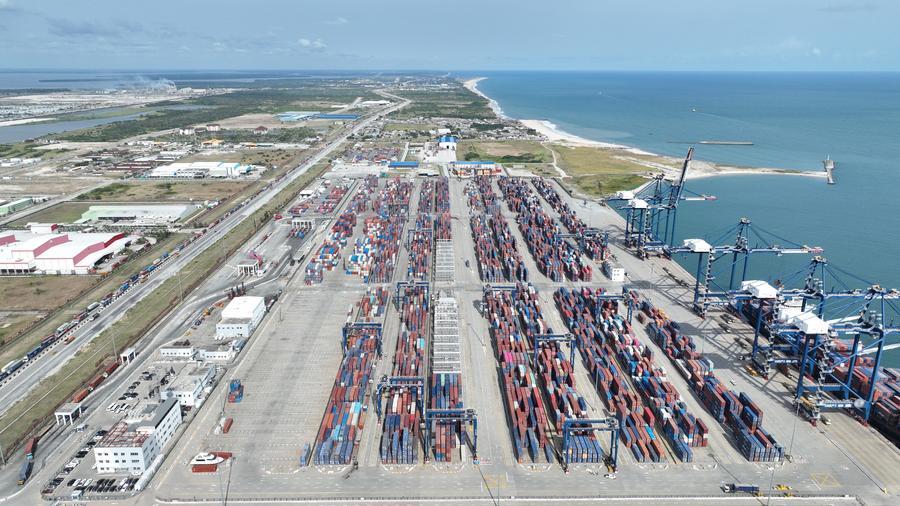
An aerial drone photo taken on March 26, 2026 shows a view of the Lekki port in Lagos, Nigeria. (China Harbour Engineering Company Ltd./Handout via Xinhua)
A driver of African modernization
In March, the first cargo train carrying 54 containers of locally produced goods exported to China under zero-tariff treatment departed from Nairobi, Kenya’s capital. It traveled along the Chinese-built Mombasa-Nairobi Standard Gauge Railway to the port city of Mombasa before continuing by sea to China.
Among the shipments was a batch of avocado oil produced at a processing plant in the Athi River Export Processing Zone on the outskirts of Nairobi, invested in by the Chinese company Sanmark Limited.
Since beginning operation in August 2025, the processing plant has exported about 410 tonnes of avocado oil to China, where the product has evolved from a niche health item to a regular feature on major e-commerce platforms.
With China’s zero-tariff policy taking effect in May, Kenya’s avocado industry players expect further export growth.
“We look forward to exporting more avocado oil and boosting incomes for local farmers,” said Muhammad Khan, operations manager at Sanmark Limited. “I also believe more Chinese investors will be encouraged to enter the Kenyan market and set up processing factories, enhancing the efficiency and resilience of the industrial chain.”
In 2022, fresh Kenyan avocados embarked on their journey to China. Since then, Chinese and Kenyan companies have launched full value-chain cooperation spanning avocado cultivation, processing, cross-border logistics, and end-market distribution, significantly boosting the sector’s overall development.
Describing the zero-tariff initiative as “an unprecedented breakthrough in the export journey,” Lee Kinyanjui, cabinet secretary in the Ministry of Investments, Trade and Industry, said: “This is more than a policy shift; it is a game changer that opens the door to one of the world’s largest consumer markets and positions Kenya for a new era of trade growth and value addition.”
“Over the past two decades, the (China-Africa cooperation) framework has steadily shifted toward trade, industrialization support, and infrastructure development. Duty-free access complements infrastructure corridors, logistics projects, and industrial parks already developed through China-Africa cooperation,” Zimbabwean economic analyst and political commentator Dereck Goto said.
Sharing a similar view, Balew Demissie, a senior communication and publication consultant at the Policy Studies Institute of Ethiopia, said as a combined measure of trade and investment, “the zero-tariff policy closely aligns with Africa’s urgent industrialization agenda.”
“It could complement domestic industrial policies by creating new opportunities for manufacturing expansion, agro-processing, and export-oriented industrialization, thereby injecting fresh momentum into Africa’s modernization trajectory,” he added.
“This is an approach where China is trying to re-establish supply chains that are more predictable, that are more stable in this erratic world,” said Tabani Moyo, research fellow with the Graduate School of Business and Leadership at the University of KwaZulu-Natal, South Africa. “Hence, (there is) a need for the multiple industries in Africa to chip in and drive the modernization agenda through value-addition of their commodities.”
A timely stabilizer
Amid rising volatility and growing protectionism in global trade, China’s zero-tariff policy underscores its firm commitment to fostering an open world economy, advancing shared development across the Global South through practical cooperation, and injecting stability into the global trade system and economic growth.
During the 39th African Union Summit, United Nations Secretary-General Antonio Guterres welcomed the move, appealing to all developed countries and nations with large economic potential to take the same measure.
African Union Commission Chairperson Mahmoud Ali Youssouf said that China’s initiative is particularly vital as Africa bears the brunt of global uncertainties, which have disastrous effects on African economies, particularly those with structural vulnerabilities.
“We also see isolationist policies across the world, while protectionism is growing,” he said, noting that China’s zero-tariff treatment is a “very timely” move that will help Africa tackle global challenges.
“Amid unilateralism and protectionism, China’s zero-tariff treatment enhances trade resilience, supports diversification of African exports, and sustains development prospects by shielding them from external shocks,” said Leseko Makhetha, head of the Department of Economics at the National University of Lesotho.
“It reinforces a rules-based global trading system, offering an alternative to protectionism and helping stabilize trade flows amid global tensions,” Makhetha noted.
This photo taken on April 15, 2026 shows containers at the Nairobi station of the Mombasa-Nairobi Standard Gauge Railway (SGR) in Nairobi, Kenya. (Photo by Nelson Asienwa/Xinhua)
China’s announcement of zero-tariff treatment starting May 1 for all the 53 African countries with which it maintains diplomatic ties reaffirms its consistent commitment to opening its vast market to Global South partners.
As Chinese President Xi Jinping has put it, China is committed to providing new opportunities for the world with the new achievements of Chinese modernization and offering new impetus to Global South partners, including Africa, via its huge market.
At a moment when globalization is buffeted by protectionism, China remains firm in its conviction that mutually beneficial and open cooperation is the right path forward and the common aspiration of all people.
Through concrete action, it is transforming a consumer market of over 1.4 billion people into tangible development opportunities for African nations, yielding fruitful results.
The macro picture is compelling. China-Africa trade reached a record 348 billion U.S. dollars in 2025, up 17.7 percent year on year. Of the total, China’s imports from Africa amounted to 123 billion dollars, an annual increase of 5.4 percent.
China’s new zero-tariff measures will inject much-needed certainty and confidence into the African economy. In an increasingly uncertain global trade environment, the biggest advantage of the policy is not short-term profit but long-term predictability, said Cobus van Rensburg, general manager of the South African Pecan Nut Producers Association.
“It adds a lot of security, especially from a supply point of view, as well as from a demand point of view, because it creates a better bond between South Africa and China,” he said.
The zero-tariff policy marks another key step in furthering industrial partnership between the two sides, and is expected to help Africa move up the global value chain. The Forum on China-Africa Cooperation Beijing Action Plan explicitly commits to supporting “Africa in developing local value chains, manufacturing and deep processing of critical minerals.”
Over the years, China has also made great efforts to remove other non-tariff barriers in its trade with Africa. Expanded sanitary and phytosanitary agreements have widened the “green lanes” for African agricultural exports to China, while digital customs supervision and regulatory innovation have shortened the journey from farm to port and, ultimately, to consumers.
The results are already visible across Africa. In Kenya, avocados and macadamia nuts now move efficiently by rail toward Chinese markets, raising farmers’ incomes while driving investment in cold-chain logistics and related industries. In Cote d’Ivoire, a modern cocoa-processing complex built by a Chinese company has helped the country move beyond its long-standing reliance on raw bean exports, allowing local farmers to participate in higher-value stages of production. In Rwanda, Chinese-supported cold storage and drying facilities have enabled premium dried chillies to reach consumers in China, opening new opportunities for local growers.
Through technology transfer, infrastructure investment and expanded market access, China is helping Africa strengthen the industrial foundations needed for long-term development. Across the continent, China is increasingly seen as a reliable and sincere partner.
History has shaped that trust. African countries supported the restoration of China’s lawful seat at the United Nations more than five decades ago, while China has in recent years championed the African Union’s entry into the G20 and consistently advocated greater African representation in global governance.
As 2026 marks the China-Africa Year of People-to-People Exchanges, ties are deepening from government cooperation to closer bonds between ordinary people. Rooted in mutual respect and shared development, the China-Africa partnership is becoming an important force driving the rise of the Global South and supporting a more balanced global economy.
Over the years, China has also made great efforts to remove other non-tariff barriers in its trade with Africa.
In an exclusive interview with IGIHE, Niyonzima explained that the FDLR was built on a deep-rooted ideology that viewed Tutsis as enemies everywhere, insisting that no country should be governed by a Tutsi.
“What we were mainly taught was the evil nature of the Tutsi, just as we had been taught while still in Rwanda,” he said.
In 2000, he underwent training in intelligence work, a field he later led within the FDLR leadership structure prior to his return to Rwanda.
He described the FDLR leadership system as being organized into commissions similar to ministries, each with its own leadership and operational staff.
His responsibilities included gathering intelligence related to the group, assessing operational risks, recruiting new fighters, and managing relations with other armed groups such as Nyatura, FARDC and Congolese communities more broadly.
Deep-rooted ideology and ethnic targeting
Niyonzima revealed that due to genocidal ideology and anti-Tutsi hatred, anyone perceived to resemble a Tutsi could be targeted, accused of collaboration, or even placed on the front lines.
He emphasized that the FDLR ideology was built on the belief that Tutsis were enemies everywhere.
“We considered every Tutsi an enemy, whether in Uganda, Burundi, Congo, or Rwanda,” he said.
He further noted that the group opposed any possibility of a Tutsi leading a country, viewing them as perpetual adversaries.
False prophecies and ideological indoctrination
As a pastor within the group, Niyonzima said he used the Bible alongside what he described as false prophecies claiming divine support for their cause, including the belief that they would eventually conquer Rwanda.
He explained that each commander had a group of so-called prayer leaders who played a role in mobilization and decision-making, including leadership changes.
“When they wanted to replace a leader, they would use a so-called prophet who would fall down and ‘prophesy’ while covered. This was used to justify decisions,” he said.
Niyonzima also revealed that the group gradually shifted toward promoting ethnic identity over language, deciding to emphasize “Hutu” identity instead of Kinyarwanda.
“We said we should no longer speak Kinyarwanda but Hutu language. We were told we were Hutu and our enemy was the Tutsi,” he said.
He added that the group justified its actions by linking their narrative to grievances about regional conflicts involving Hutus in neighboring countries.
He further stated that intelligence structures within the FDLR monitored individuals planning to leave the group or communicating with people in Rwanda. Such individuals could be targeted and killed under suspicion of betrayal.
“When you believe you are fighting an enemy, everything you do feels justified. We would say: if this person leaves, they will one day become a threat. So we eliminate them early.”
Recruitment of youth and Congolese civilians
Niyonzima rejected claims that the FDLR is composed only of elderly fighters, explaining that the group actively recruited children, including those as young as 14, as well as young Congolese civilians.
He said the recruits were indoctrinated with hatred narratives, teaching them that the Tutsi was their enemy.
He also revealed that recruitment networks existed in neighboring countries, including Burundi and Uganda, and within Congolese communities.
Regret and reflection
Looking back, Niyonzima expressed deep regret for the years he spent in the Congolese forests, saying he lost valuable time that could have been used for personal development.
“My biggest regret is the time I wasted living in fear of nothing. I was afraid to return, but when I eventually did, I found people I left behind doing well. I have nothing to show for those years,” he said.
Niyonzima also expressed remorse for having spread extremist ideology. “What pains me most is that I taught people false ideas that Tutsis are evil, enemies, and cruel. But when I returned, I saw how people live together peacefully. I ask for forgiveness because I acted in ignorance,” he added.
Niyonzima called on former comrades still in eastern Congo forests to return home, urging them not to continue wasting their lives.
He also encouraged cooperation between regional actors, including the Congolese leadership, stressing that confrontation with Rwanda is not a viable path forward.
Niyonzima explained that the FDLR was built on a deep-rooted ideology that viewed Tutsis as enemies everywhere
The final event took place on April 30, 2026, featuring five finalists selected from an initial pool of 1,200 applicants. The challenge is designed to support youth-led innovations that improve productivity and efficiency in the agricultural sector.
The grand prize of Rwf 30 million was awarded to Mutoni Goodluck for her project, Goodness of God Ltd, which produces natural hair care oils designed to promote hair growth and maintenance.
Mutoni explained that she began experimenting with her products in 2019 and officially entered the market in 2024. Her oils are made from natural ingredients including onions, ginger, and garlic.
She noted that sourcing raw materials requires close collaboration with farmers from land preparation to harvest, a process that initially limited her production capacity.
“We were working with about 120 farmers. During dry seasons, production would drop due to limited yields,” she said. “With this support, we plan to organize farmers into groups and train them so we can improve production and ensure consistent supply.”
Isidore Niyigirimpuhwe won second place and received Rwf 20 million for his project, Tech Plus, which focuses on developing egg incubator machines capable of hatching chicks after 21 days.
His innovation includes machines with different capacities, ranging from 120 eggs to large-scale incubators holding up to 40,000 eggs. He said the funding will help increase production capacity.
“We had many clients, but building one machine used to take three to four days. Now we aim to scale up so that we can produce at least one machine per day,” he said.
Muyumbano Happy Axel secured third place with Rwf 15 million for his project, Ampere Vision, which develops agricultural drones used for spraying pesticides on crops.
Each drone can cover up to 18 hectares per day, significantly improving efficiency in pest control.
He said the funding will help expand production to meet growing demand. “We had limited drones, which made it difficult to serve many farmers. Now we can scale up because our main challenge was access to equipment,” he said.
Other finalists included Josiane Mujawayesu, who is developing organic fertilizer from biodegradable waste combined with insects such as worms and flies that she breeds for this purpose.
Another finalist, Abdu Usanase, presented a digital platform that helps farmers calculate the quantity of seeds needed and also supports storage solutions that allow crops such as potatoes to be preserved for up to six months without spoiling.
Government and partners emphasize collaboration
Minister of Agriculture and Animal Resources, Dr. Ndabamenye Telesphore, highlighted that young people are increasingly understanding their role in agriculture through innovation and encouraged collaboration among entrepreneurs.
“There is a youth platform in agriculture that brings together everyone from farmers to exporters. What we always encourage is teamwork and partnerships between complementary projects so that profits can grow,” he said.
Verena Ruzibuka, Country Director for Heifer International Rwanda, noted that even participants who did not win are still supported through other programs.
“Even those who do not win continue to benefit from other initiatives that help them expand their markets. For example, we work with mushroom farmers and connect them to solve shared challenges,” she said.
She added that young entrepreneurs also receive continuous mentorship to help strengthen and scale their businesses.
Mutoni Goodluck received the Rwf 30 million grand prize at the AYuTe Africa ChallengeProducts developed by Mutoni Goodluck, winner of the grand prize at the AYuTe Africa ChallengeVerena Ruzibuka, Country Director for Heifer International Rwanda, noted that even participants who did not win are still supported through other programs. Muyumbano Happy Axel won Rwf 15 million prize at the AYuTe Africa ChallengeMuyumbano Happy Axel explains how his agricultural drone operates.Minister of Agriculture and Animal Resources, Dr. Ndabamenye Telesphore, encouraged youth participation in agriculture innovation.Abdu Usanase presents his digital platform helping farmers determine required seeds based on expected yieldsJosiane Mujawayesu explains her organic fertilizer project combining waste and insects such as flies and wormsIsidore Niyigirimpuhwe, inventor of an egg incubation machine, wins second prize of Rwf 20 millionPromising but emerging innovation project was recognized and supported for further developmentThe third edition of the AYuTe Africa Challenge concluded with awards given to outstanding agricultural innovations
The British Royal Navy, citing monitoring results from the UK Maritime Trade Operations (UKMTO) it leads, said that since the United States and Israel launched military operations against Iran on Feb. 28, reports of incidents in the Strait of Hormuz and surrounding waters have gone “through the roof,” in the strait especially.
Between March 1 and April 27, a total of 41 security incidents were recorded.
The UKMTO said that around 850 to 870 large merchant vessels, including oil tankers, liquefied natural gas carriers and container ships, are currently stranded in the Gulf waters.
Meanwhile, about 20,000 seafarers are trapped in the region. Crew changes have been severely disrupted.
Although supplies continue to reach ships, they have been reduced, and prolonged stranding could affect the mental health of seafarers.
The agency noted that as international attention focuses on the Strait of Hormuz, there is a warning of resurgent piracy off the coast of Somalia.
The photo released on July 21, 2019 shows the British oil tanker “Stena Impero” surrounded by Iranian Revolutionary Guard near the Strait of Hormuz, Iran.
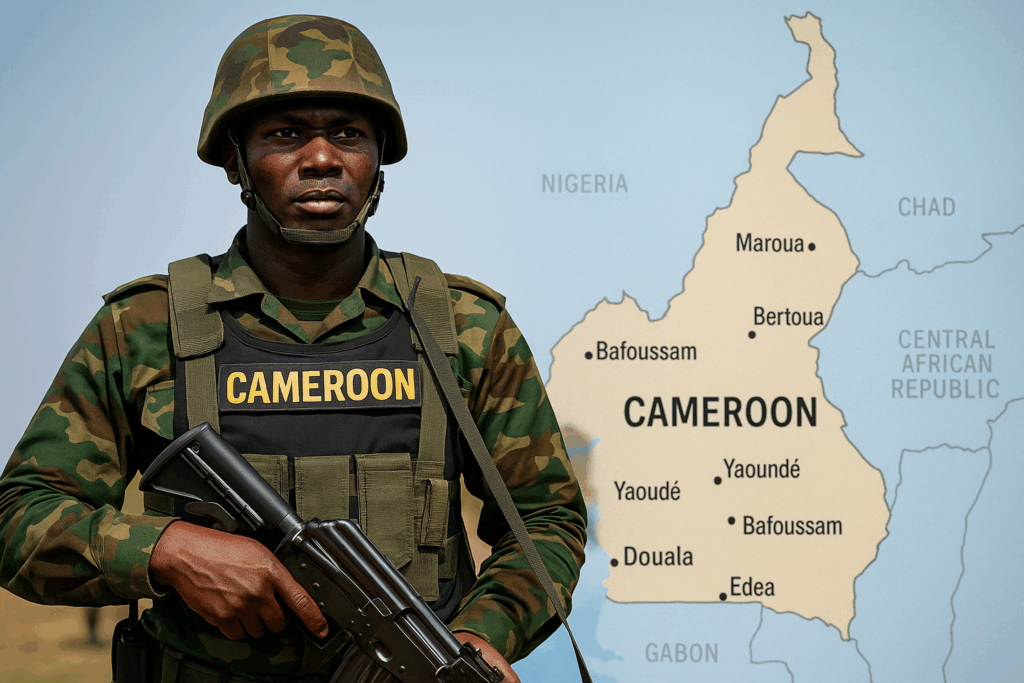
The soldiers were at a security checkpoint in Big Babanki in the Tubah subdivision when they were attacked, a military official in the region confirmed.
“The separatist terrorists took them by surprise. The sad incident occurred by midday this Friday. We have deployed additional forces to pursue the terrorists and capture them,” the official, who spoke on condition of anonymity, told Xinhua.
Local media reported an increase in attacks on civilians and security forces in the region in recent weeks.
Cameroon has been experiencing an armed separatist conflict in its English-speaking regions of Northwest and Southwest since 2017, as separatists seek to create a new nation in the regions.
Two Cameroonian soldiers were killed on Friday in an ambush by separatist fighters in the country’s English-speaking Northwest region, security sources said.
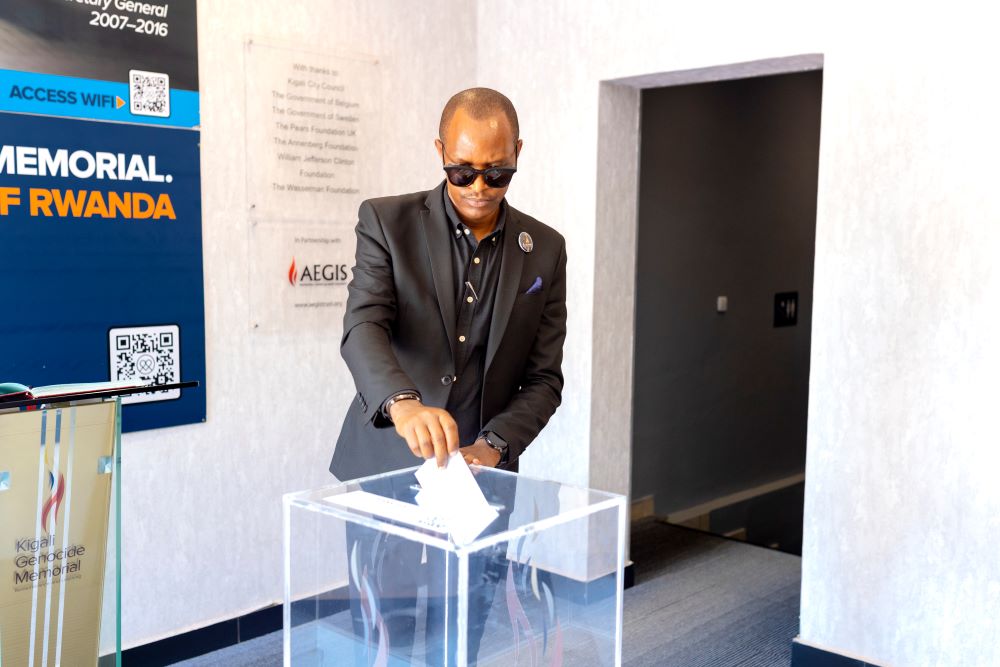
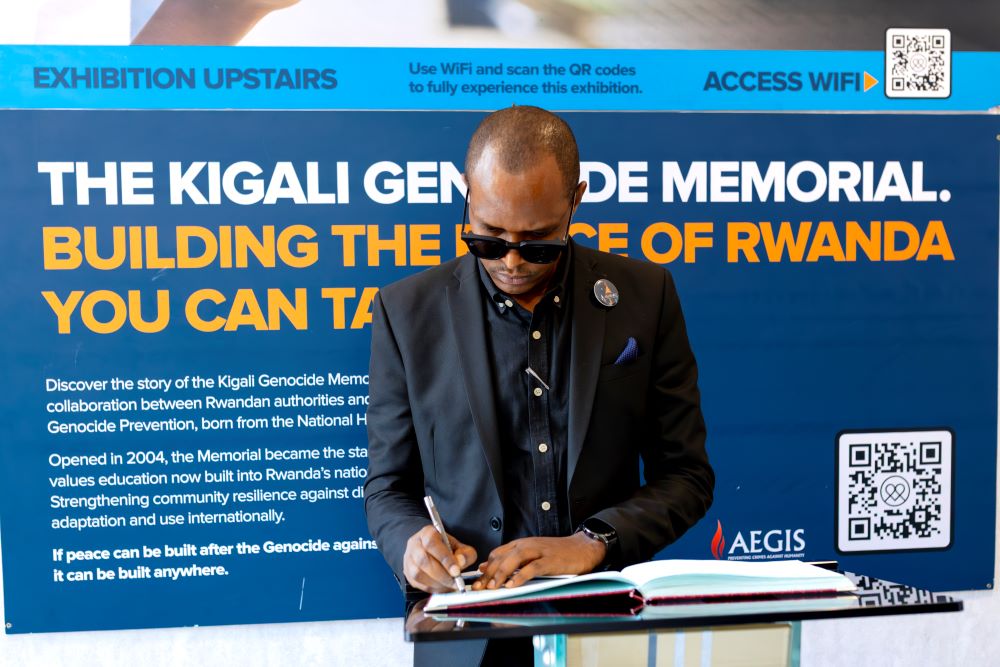
The visit, which took place on April 30, 2026, offered employees an in-depth understanding of Rwanda’s history, particularly the planning and execution of the 1994 Genocide against the Tutsi.
During the tour, they explored different sections of the memorial and gained insight into the events that led to one of the darkest chapters in the nation’s history.
The Genocide against the Tutsi claimed the lives of more than one million people in just 100 days before it was halted by the Rwanda Patriotic Army (RPA).
As part of the visit, the employees also learned about Rwanda’s journey of recovery and reconstruction in the years that followed.
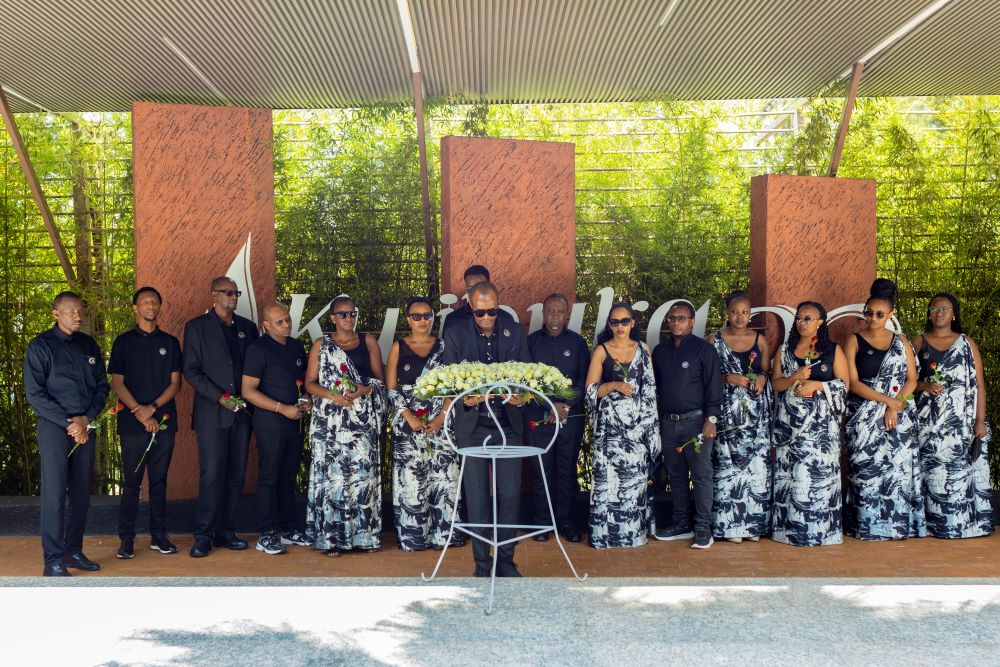
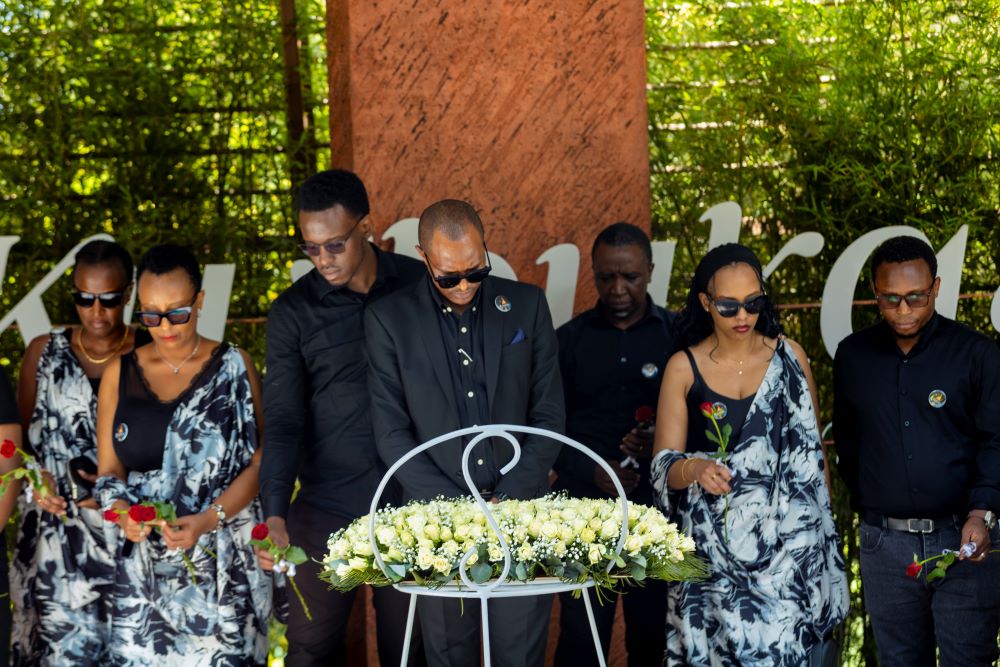
They paid tribute to the victims by laying wreaths at mass graves where over 250,000 victims are laid to rest at the memorial.
Q-Sourcing Servtec Country Manager Martin Rushema Mugisha said the visit serves as a reminder of their responsibility to preserve the accuracy of Rwanda’s history as a nation.
“I strongly believe that the private sector especially Q-sourcing ServTec Rwanda has to play a big role in transmitting the same message to future generations and stakeholders, that Genocide against the Tutsi will never happen again” he said.
He reminded Q-Sourcing Servtec staff, especially the youth, of the importance of learning their history by visiting memorials to deepen their understanding. He urged young people to verify information from credible sources and avoid being misled by those who distort Rwanda’s history.
Q-Sourcing Servtec Rwanda currently employs more than 300 people across different parts of the country.
Staff from Q-Sourcing Servtec Rwanda laid wreaths at mass graves at Kigali Genocide Memorial, paying tribute to victims of the 1994 Genocide against the Tutsi.During a guided tour of the Kigali Genocide Memorial, employees of Q-Sourcing Servtec Rwanda learnt about the events that led to the Genocide against the Tutsi.Q-Sourcing Servtec Rwanda employees observed a moment of silence to honour victims of Genocide against the Tutsi. Employees from Q-Sourcing Servtec Rwanda visited Kigali Genocide Memorial where they reaffirmed commitment to preserving Rwanda’s history.Q-Sourcing Servtec Rwanda staff gather at Kigali Genocide Memorial during a visit aimed at promoting historical awareness and responsibility among employees.
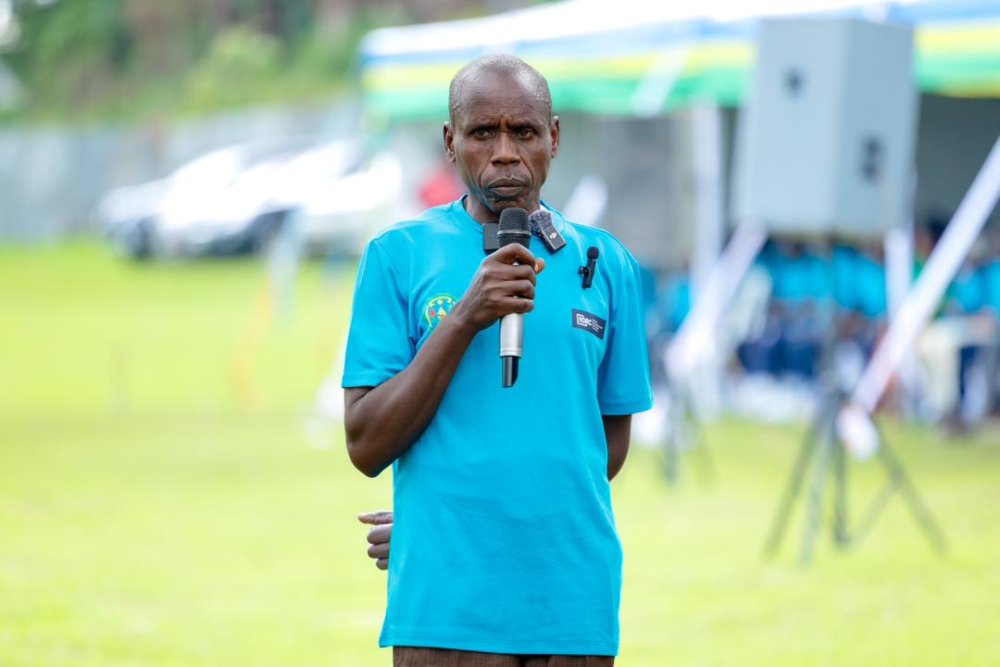
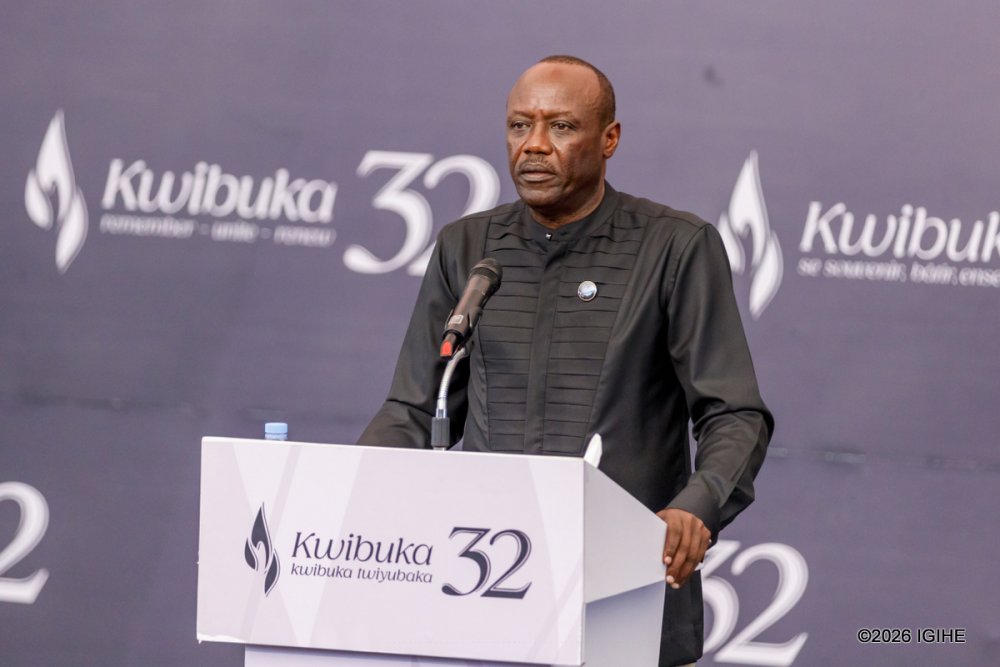
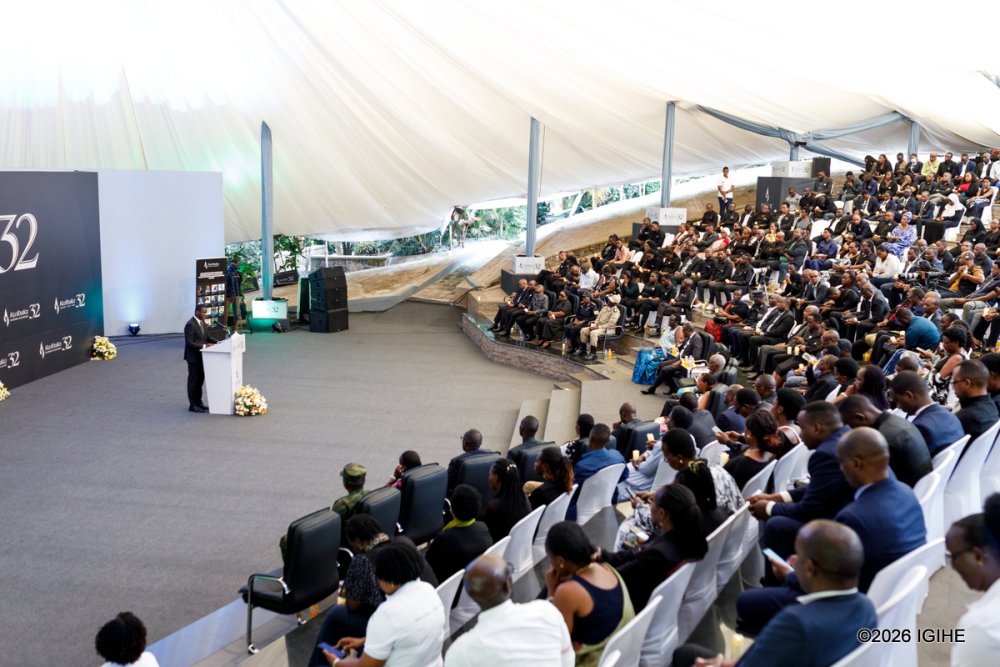
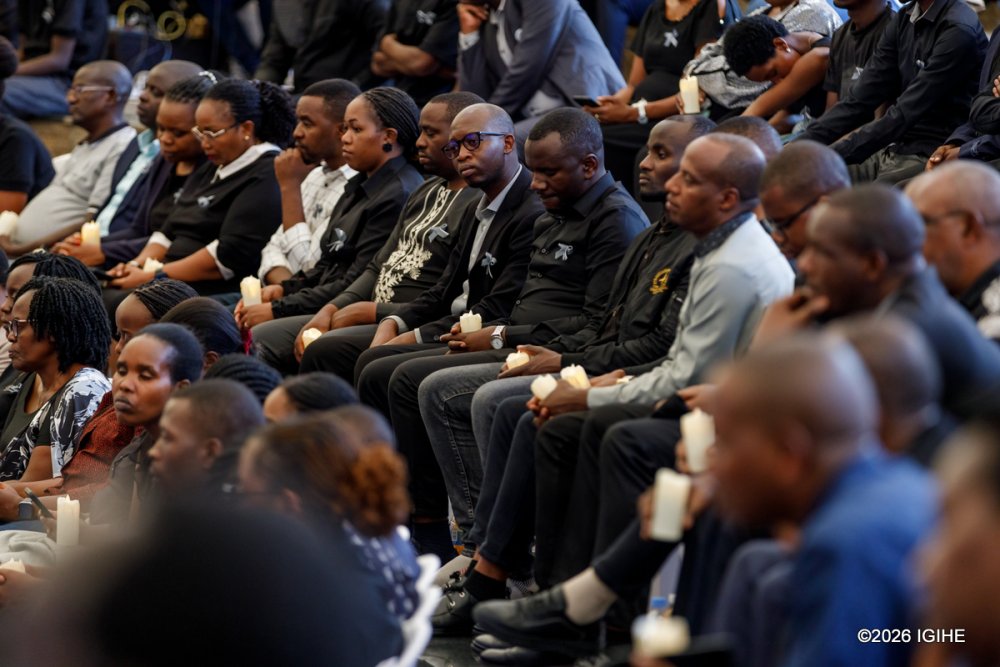
He made the remarks on April 30, 2026, during a commemoration event marking the 32nd anniversary of the Genocide against the Tutsi. The event was organised by the Ministry of Local Government, Ministry of Internal Security, Ministry of Public Service and Labour, CHENO, Directorate-General of Immigration and Emigration, the National Electoral Commission, and RALGA.
Gen (Rtd) Ibingira, who presented an overview of Rwanda’s liberation struggle, said the Rwanda Patriotic Army (RPA) took up arms in 1990 after peaceful efforts to resolve the country’s crisis failed, as Tutsi citizens were being persecuted, killed, and stripped of their rights.
He noted that for him, having been born outside Rwanda, the country was initially only known as a point on the map until the Rwandan Patriotic Front (RPF-Inkotanyi) made the decision to return and liberate it.
He explained that the liberation struggle and the effort to stop the genocide were extremely difficult, as they involved both combat operations and rescuing civilians who were being killed.
He further stated that some Congolese fighters initially opposed the return of the Rwandan Patriotic Army, as they supported the forces of the former regime.
After the 1994 Genocide against the Tutsi, Interahamwe militia members and former soldiers of the defeated regime fled to then Zaire (now the DRC), where they were granted refuge and reorganised with the intention of launching attacks against Rwanda.
These groups later carried out cross-border attacks into Rwanda. When their efforts failed, they formed armed movements such as ALIR and PALIR, taking advantage of the fact that they had fled with military equipment that was not confiscated in line with international law.
The FDLR was later formed through the merger of these groups, built on an ideology that labels the Tutsi as enemies and seeks to overthrow the Rwandan government.
Gen Ibingira said that more than 30 years later, the FDLR continues to operate, claiming that it is being supported by the government of Félix Tshisekedi, which he alleged has pledged cooperation with the group against Rwanda.
He argued that this support has strengthened the FDLR and contributed to the spread of genocide ideology in eastern DRC and the wider Great Lakes region, resulting in continued violence against Congolese Tutsi communities.
“Genocide was carried out openly by the government of Habyarimana and Sindikubwabo. It was stopped openly by the RPA in broad daylight. No one else stopped it,” he said.
He added: “Anyone backing the Interahamwe will face consequences. Those who support them and shelter them today will face the consequences of their actions.”
Gen Ibingira further said that those supporting the FDLR are openly aligned with its agenda of destabilising Rwanda.
He stressed that Rwanda will not accept insecurity imposed from outside, even if it faces sanctions.
“If the world says it is sanctioning us, we will not fold our arms and allow Interahamwe to attack us,” he said.
He urged Rwandans to remain vigilant, saying the country’s security depends on collective responsibility.
“The life of this country is in your hands, both young and old,” he said.
He also reflected on the 32 years since the genocide, saying Rwanda has made significant progress in rebuilding unity and ensuring citizens are no longer persecuted based on identity, crediting strong leadership and national resilience.
Minister of Local Government Habimana Dominique said the Genocide against the Tutsi was stopped by Rwandans themselves, and that their bravery remains a national responsibility.
He emphasised that fighting genocide ideology remains a duty for all citizens, warning that some perpetrators continue to deny the genocide and pass on its ideology to younger generations.
The commemoration event took place on April 30. Gen (Rtd) Ibingira said Rwanda will not accept insecurity imposed from outside, even under threat of sanctions.