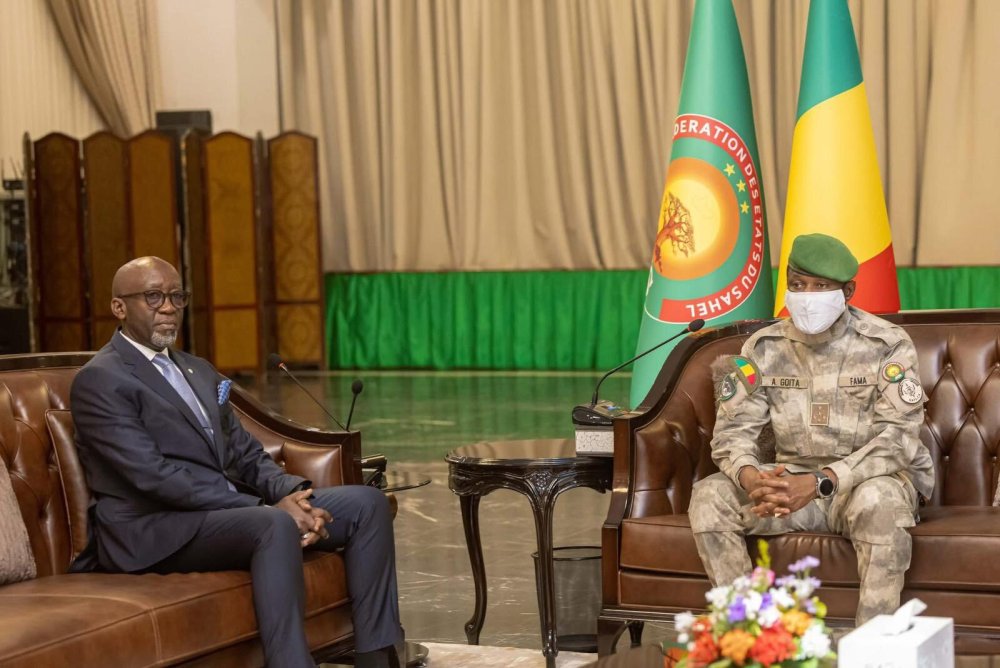
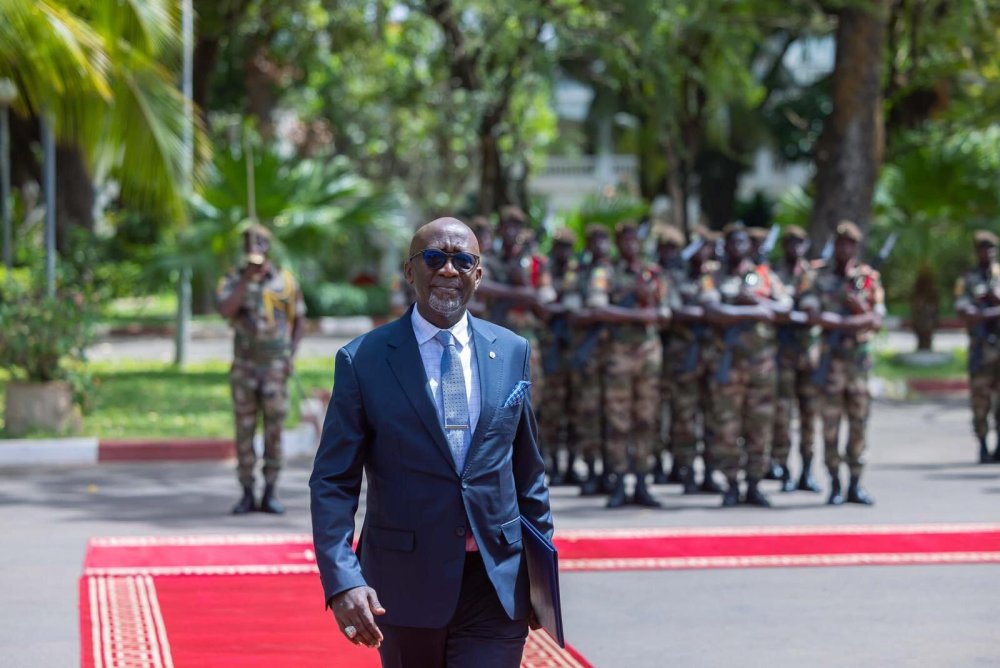
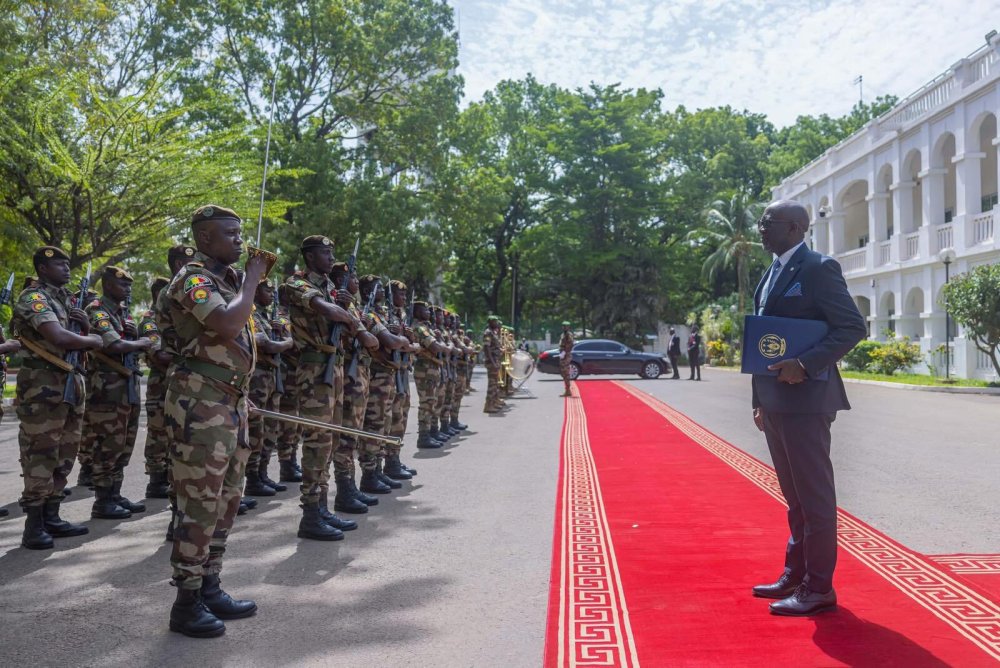
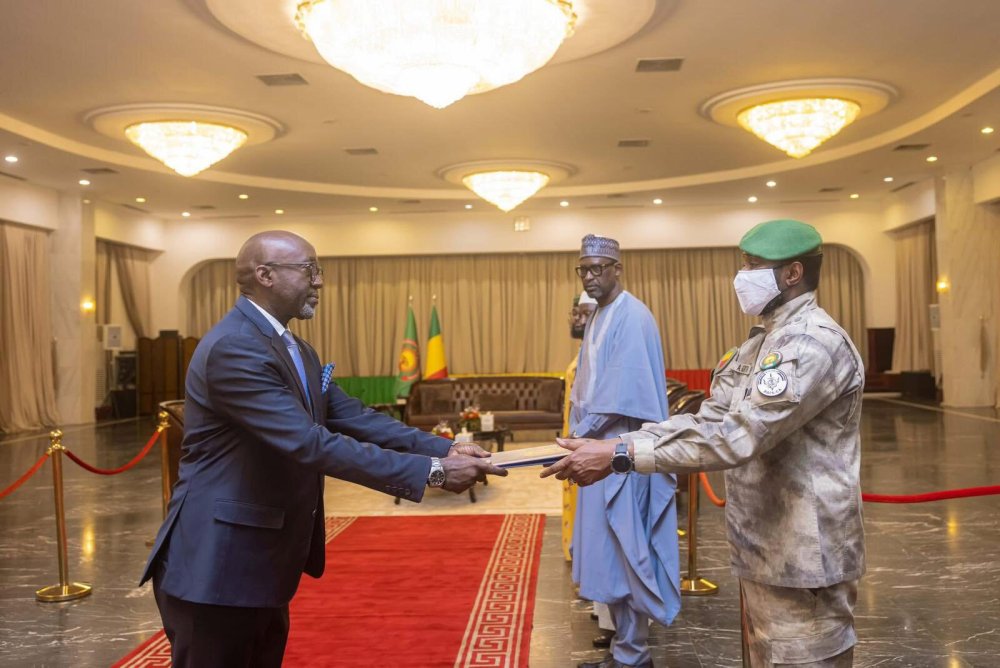
The ceremony took place in the capital, Bamako, on May 7, 2026. During his visit, Amb. Bizimana also participated in a meeting bringing together foreign diplomatic representatives in Mali to receive updates on the security situation following attacks that occurred on April 25, 2026.
Rwanda and Mali maintain strong bilateral relations based on friendship, cooperation, and a shared commitment to further strengthening ties between the two countries.
In 2024, Rwanda and Mali signed 19 cooperation agreements covering sectors including justice, mining, oil and gas, agriculture, fisheries, environment, climate change response, tourism development, higher education, transport, and the movement of people and goods, among others.
The two countries also cooperate in several other areas, including air transport, under agreements allowing airlines from both nations to use each other’s international airports.
Amb. Festus Bizimana presented his credentials to Mali’s President Assimi Goïta in Bamako, marking his official accreditation as Rwanda’s ambassador to the West African country.Rwanda’s Ambassador Festus Bizimana presented his credentials to Mali’s President Assimi Goïta in Bamako, also joining diplomatic briefings on the country’s post-attack security situation.Amb. Festus Bizimana has been officially accredited as Rwanda’s ambassador to Mali after presenting his credentials to President Assimi Goïta during a ceremony in Bamako.Rwanda’s Ambassador to Senegal, Festus Bizimana, presented his letters of credence to Mali’s President Assimi Goïta in Bamako, formally accrediting him as Rwanda’s envoy to Mali on May 7, 2026.
The upper house of parliament passed the bill with 343 votes in favor and none against, after the revised draft law had already been approved by the National Assembly on Wednesday with 141 votes in favor and none against.
The bill seeks to establish a clearer and simpler legal framework for returning cultural assets acquired by France through illicit means, including looting, theft and sales conducted under coercion. It applies to cultural property acquired between 1815 and 1972, excluding military items and certain archaeological objects.
Under France’s longstanding principle of the inalienability of public collections, cultural objects could previously be returned to their countries of origin only through specific legislation on a case-by-case basis and in limited numbers.
The French Senate first passed the draft law on Jan. 29, and the National Assembly approved a slightly different version on April 13 with 170 votes in favor and none against. As differences remained between the two versions, a joint committee composed of seven deputies and seven senators worked to reconcile the differing provisions and submitted a compromise text on April 30.
French Prime Minister Sebastien Lecornu welcomed the draft law on social media platform X on Wednesday, saying that “this law is not intended to rewrite history, but allows us to take responsibility for returning improperly acquired cultural property.”
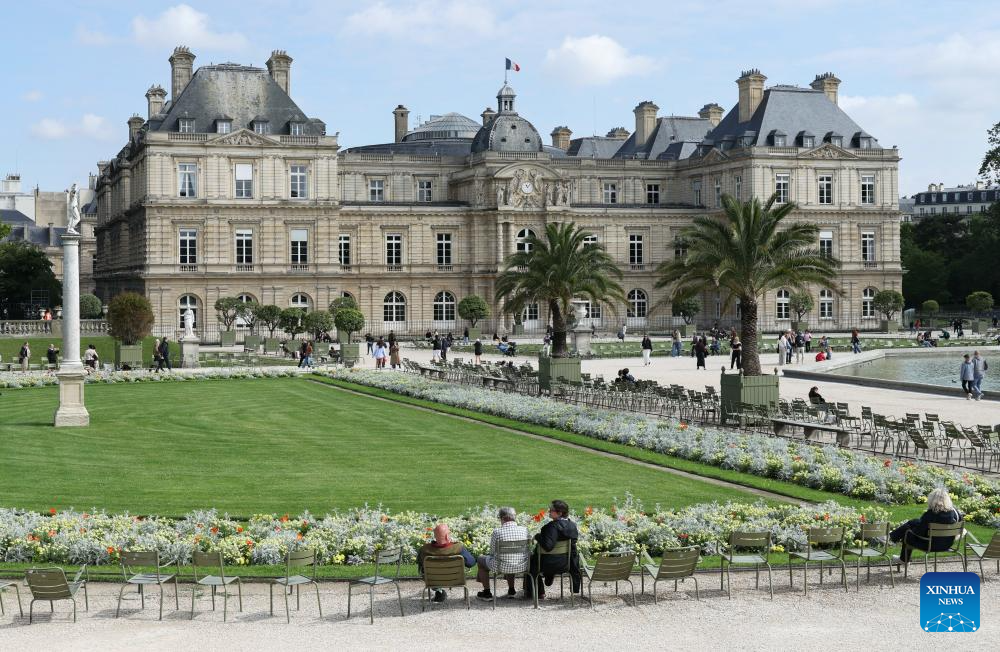
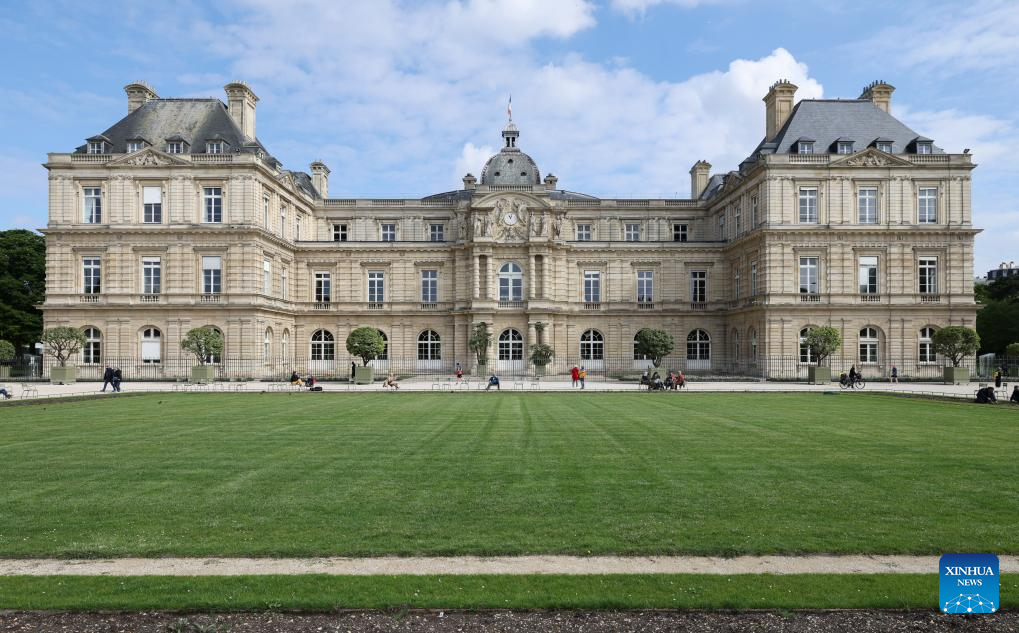
This photo taken on May 7, 2026 shows the French Senate in Paris, France. The French Senate on Thursday approved a draft law on the restitution of cultural property acquired through illicit appropriation, following a new round of debate. (Xinhua/Wu Huiwo)People enjoy their leisure time near the French Senate in Paris, France, on May 7, 2026. The French Senate on Thursday approved a draft law on the restitution of cultural property acquired through illicit appropriation, following a new round of debate. (Xinhua/Wu Huiwo)People are seen in front of the Louvre Museum in Paris, France, May 7, 2026. The French Senate on Thursday approved a draft law on the restitution of cultural property acquired through illicit appropriation, following a new round of debate. (Xinhua/Wu Huiwo)
French prosecutors accuse Kanziga of role in planning the Genocide as one of the influential figures within the former ruling elite group known as the “Akazu,” and of participating in the Genocide between April 7 and 9, 1994, before being evacuated by the government led former French President François Mitterrand.
In August 2025, an investigating judge in France halted the inquiry into Kanziga, which had begun in 2008, arguing that there was insufficient evidence to charge her with involvement in the planning and execution of the Genocide.
However, after hearing an appeal from the Paris Prosecutor General, the French Court of Appeal ruled on May 6, 2026, that the investigating judge had relied on questionable reasoning in suspending the case and ordered the investigation to resume.
On May 7, IBUKA said the date of the court’s decision would remain historic and would always be remembered by Genocide survivors, including former neighbors of Habyarimana in Kanombe, Nyarugunga Sector of Kicukiro District.
IBUKA emphasized that Kanziga belonged to the “Akazu” (Inner Circle), a network dominated by members of her family, which it says planned and carried out the Genocide that claimed the lives of more than one million Tutsi in 100 days.
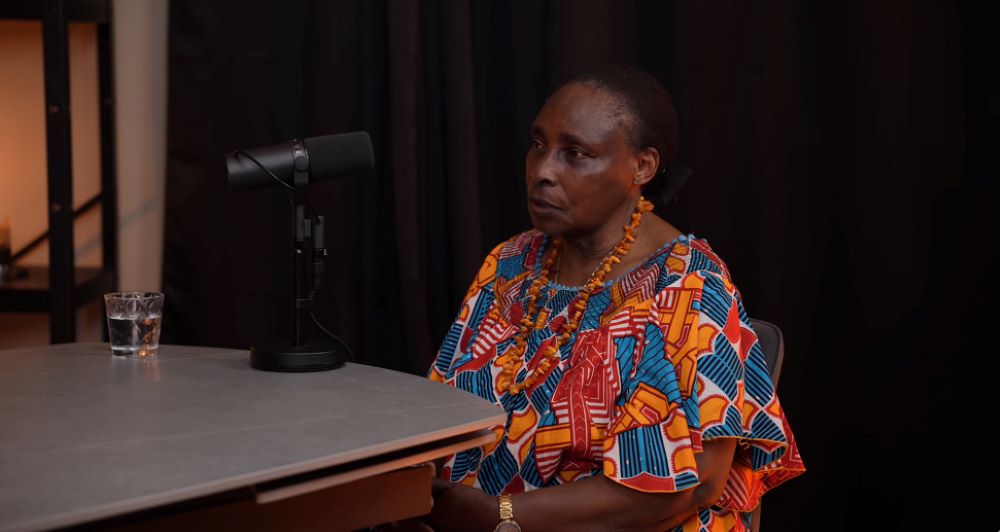
The family of Marie Chantal Niyonshuti lived next to Habyarimana’s residence in Kanombe, with no other home separating the two compounds. Eight members of her family, including her mother and seven siblings, were killed during the Genocide.
In an interview with IGIHE in April 2024, Niyonshuti explained that many Tutsi were killed near Habyarimana’s residence following the shooting down of his plane, allegedly on Kanziga’s orders after she became enraged by her husband’s death.
“Before dawn, they wanted that when people came to see the remains of the plane, there would be no Tutsi left here. They immediately took them to the military camp and burned them. They did not even wait for daylight. Anyone who survived may only have escaped from beneath the bodies because their time to die had not yet come,” she said.
Following the Paris court’s decision to reopen the investigation, Niyonshuti expressed hope that the inquiry would not be suspended again.
“I have waited 32 years for justice. I am still waiting. Please do not allow the investigation to be halted again,” she said.
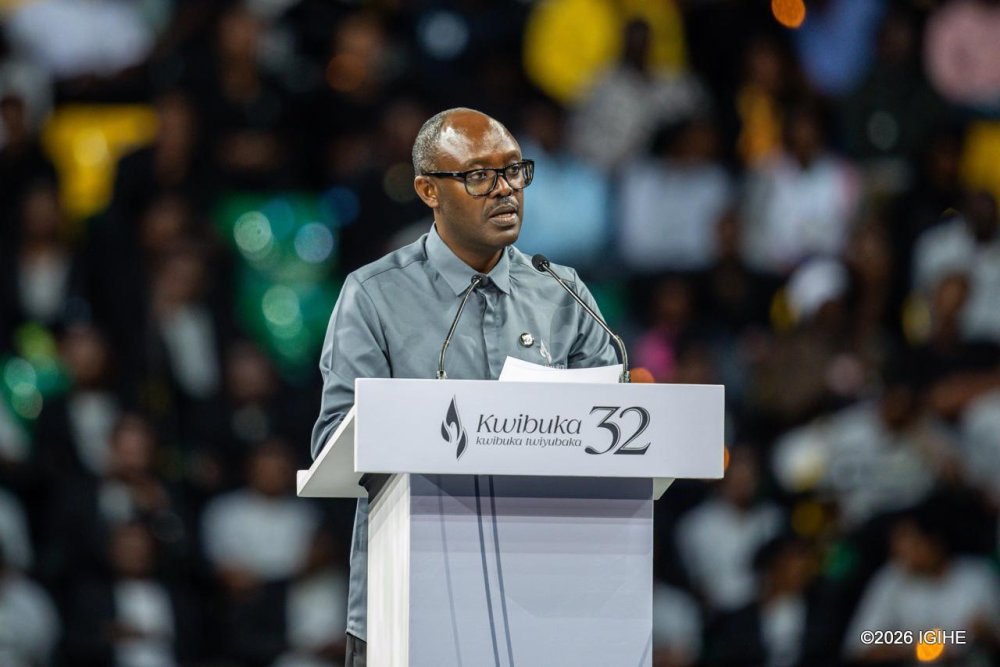
IBUKA President, Dr. Philibert Gakwenzire, said the organization is now focused on whether France will ultimately deliver justice. He added that Genocide survivors are prepared to testify about what they witnessed and endured.
“What concerns us now is what comes next. We ask the French justice system to remain on the path of hope that yesterday’s decision gave us. Survivors will be there, as always, to testify about what they saw and what they went through,” he said.
The investigating judge is expected to reexamine evidence and testimonies that had previously been overlooked but could help establish serious grounds to charge Kanziga with involvement in both the planning and execution of the Genocide.
IBUKA also stated that it stands ready to provide any assistance needed by the French justice system to ensure that the full truth in the case of Agathe Kanziga comes to light.
Marie Chantal Niyonshuti says she has waited more than three decades for justice following the loss of eight members of her family during the 1994 Genocide against the Tutsi.Agathe Kanziga, widow of former President Juvénal Habyarimana, remains under investigation by French authorities over alleged involvement in the planning and execution of the 1994 Genocide against the Tutsi.IBUKA President Dr. Philibert Gakwenzire says Genocide survivors are prepared to give testimony as France resumes investigations into Agathe Kanziga.
The development has been confirmed by Rwanda’s Office of the President.
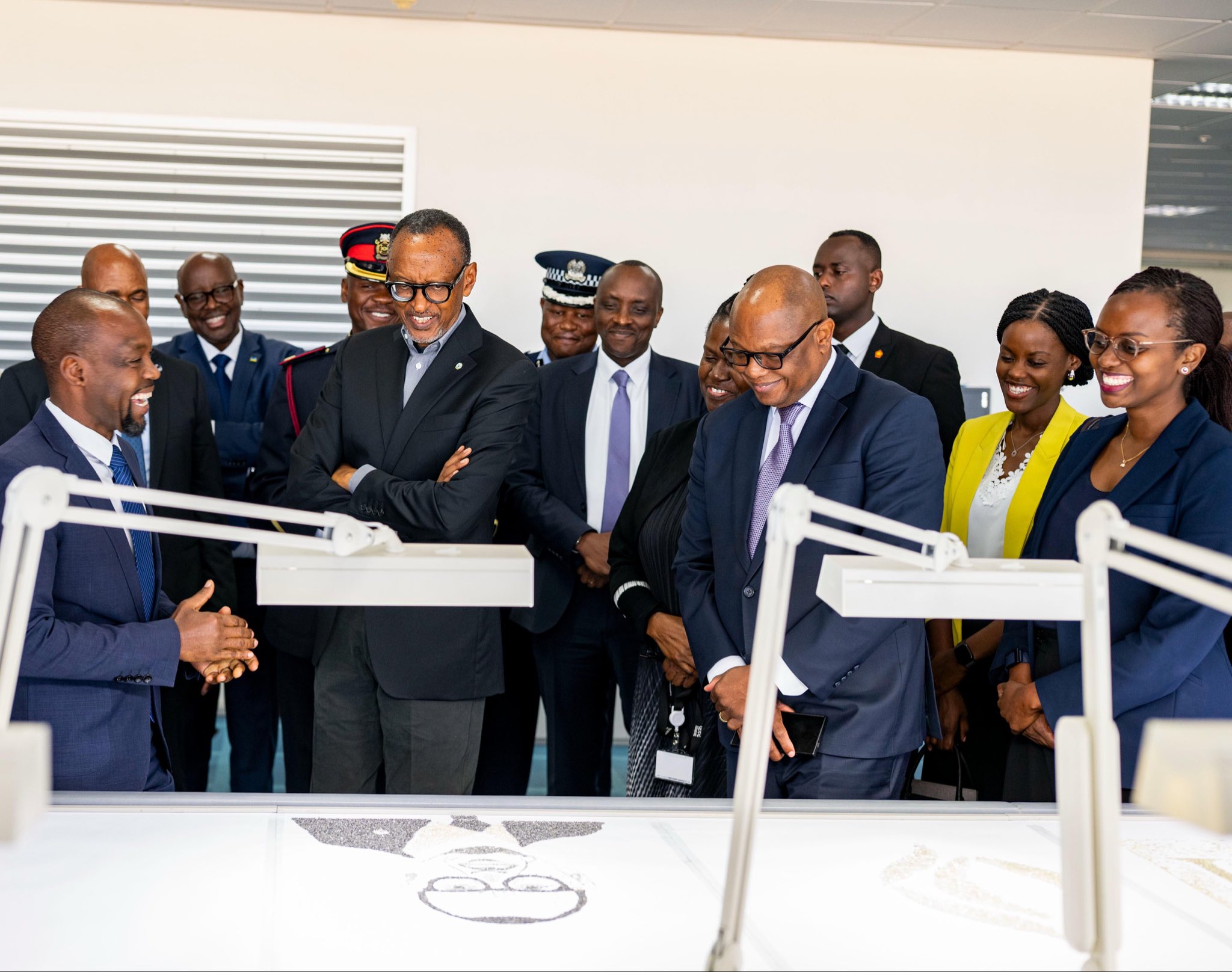
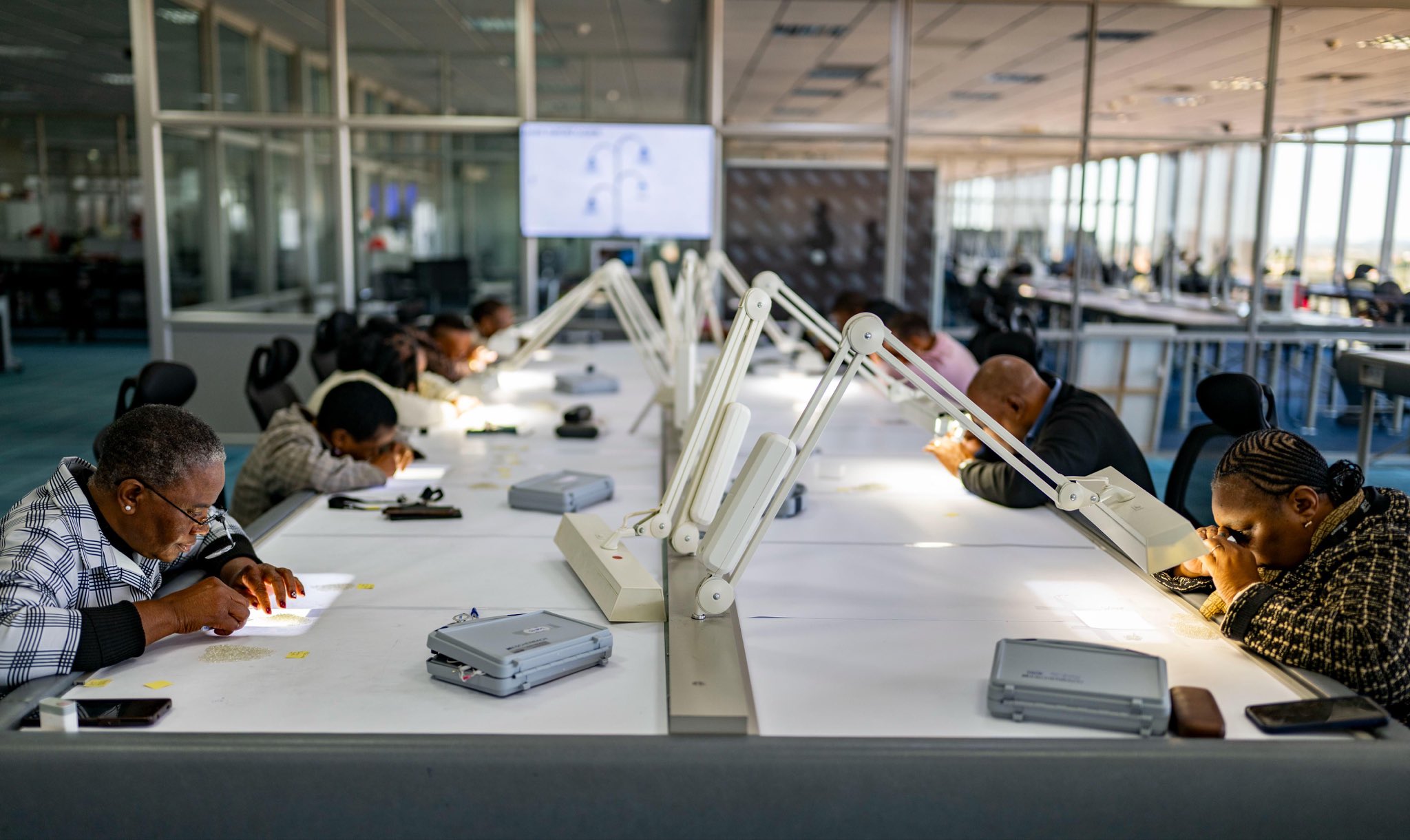
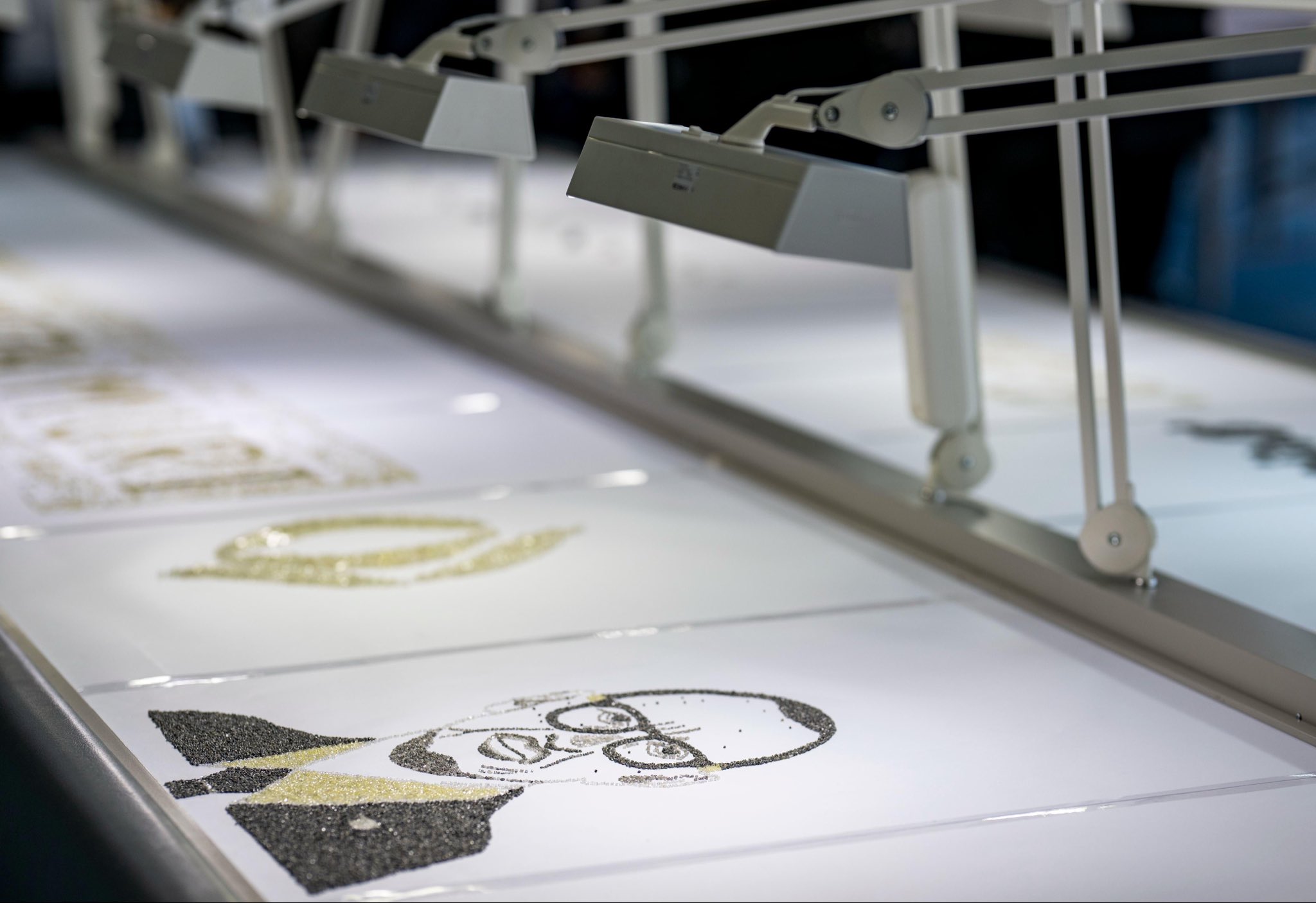
DTC Botswana is a 50/50 joint venture between the Government of Botswana and De Beers. The company is regarded as the world’s largest and most sophisticated rough diamond sorting and valuing operation, with the capacity to sort up to 45 million carats annually.
The visit to the diamond facility comes amid renewed efforts by Rwanda and Botswana to deepen economic cooperation and strengthen investment partnerships between the two countries.
On Wednesday, President Kagame and Botswana’s counterpart Duma Boko witnessed the signing of several bilateral agreements at the State House in Gaborone following bilateral talks between the two delegations.
The agreements covered avoidance of double taxation, visa exemption for holders of diplomatic, official, and national passports, air services, health cooperation, and broader economic, trade, and investment partnerships.
A cooperation framework between the Rwanda Development Board and the Botswana Investment and Trade Centre was also signed to promote private sector collaboration and facilitate investment flows.
During the engagements, President Kagame praised Botswana’s approach to natural resource management, particularly in the diamond sector, describing it as an example of forward-looking governance.
President Boko said the visit marked a strategic realignment between the two countries and stressed the need for swift implementation of the signed agreements.
President Kagame’s visit is his first State Visit to Botswana since 2019, when both countries agreed to establish the Joint Permanent Commission on Cooperation framework aimed at strengthening bilateral ties.
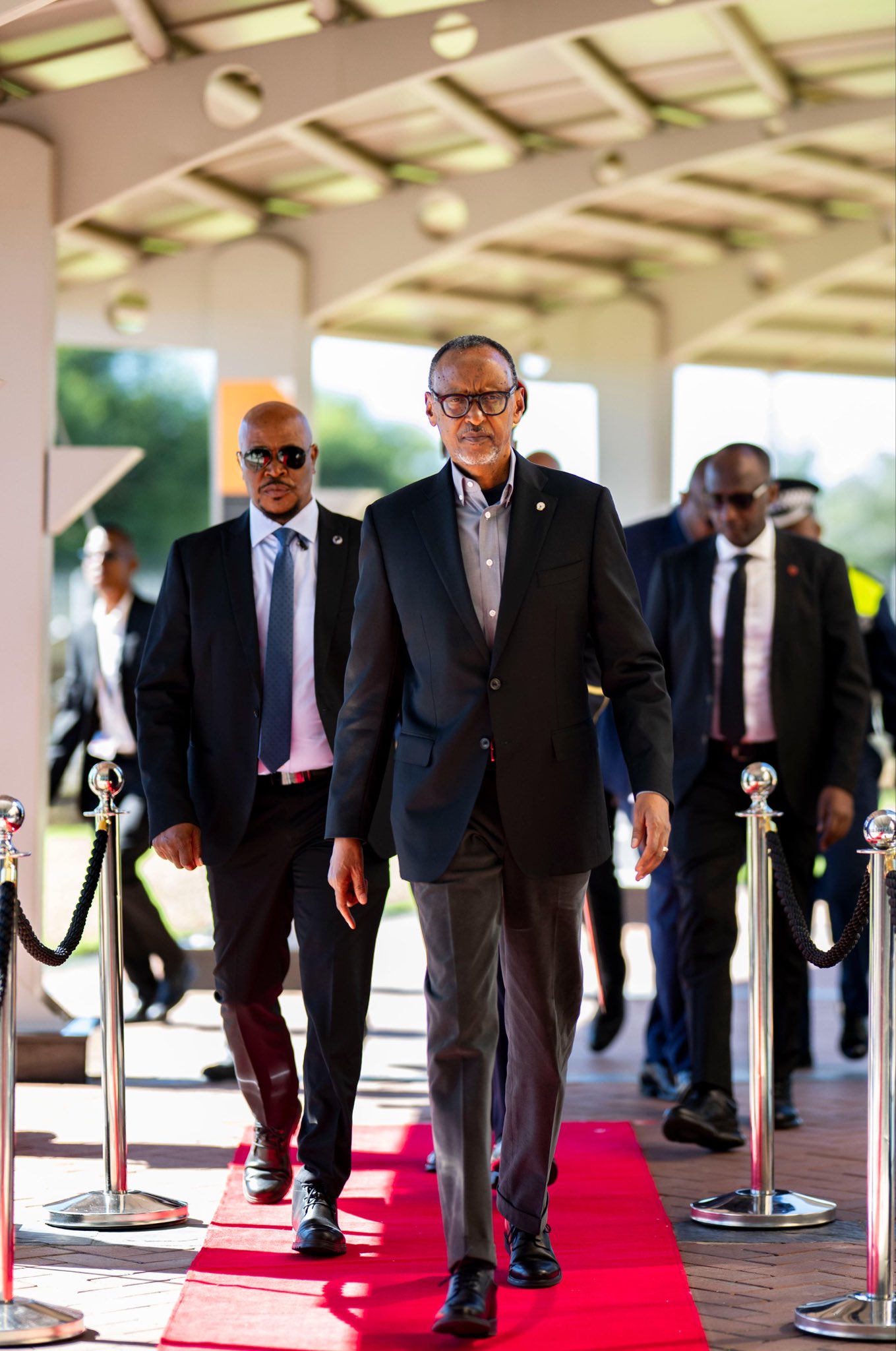
Kagame arrived in Botswana on Wednesday, May 6, 2026, where he was welcomed by his counterpart Duma Boko at Sir Seretse Khama International Airport.
Kagame explored Botswana’s diamond industry during a two-day State Visit.President Kagame toured DTC Botswana, the world’s largest rough diamond sorting and valuing facility, during his State Visit to Botswana.President Kagame’s Botswana visit featured high-level engagements, including a tour of one of the world’s most sophisticated diamond operations.
The announcement was made on May 6, 2026, during the launch of DNA Week at the University of Rwanda College of Science and Technology (CST).
The week-long event aims to raise awareness about DNA, widely regarded as the backbone of all living organisms, including plants, humans, and animals.
RAB revealed that since 2025, it has been working with various partners on a project that will result in the establishment of a center dedicated to developing enhanced crop seeds in Rwanda. The facility will be located at RAB’s Rubona branch in Huye District.
RAB’s Plant and Microbial Biotechnology Programme Coordinator, Dr. Bellancile Uzayisenga, said that the Rubona branch already has the capacity to identify diseases affecting crops.
However, she noted that this is not enough, as Rwanda still lacks the ability to locally produce genetically enhanced seeds.
She explained that the project launched in 2025 aims to train Rwandans with the necessary expertise while also establishing a model center capable of developing crops resistant to major diseases.
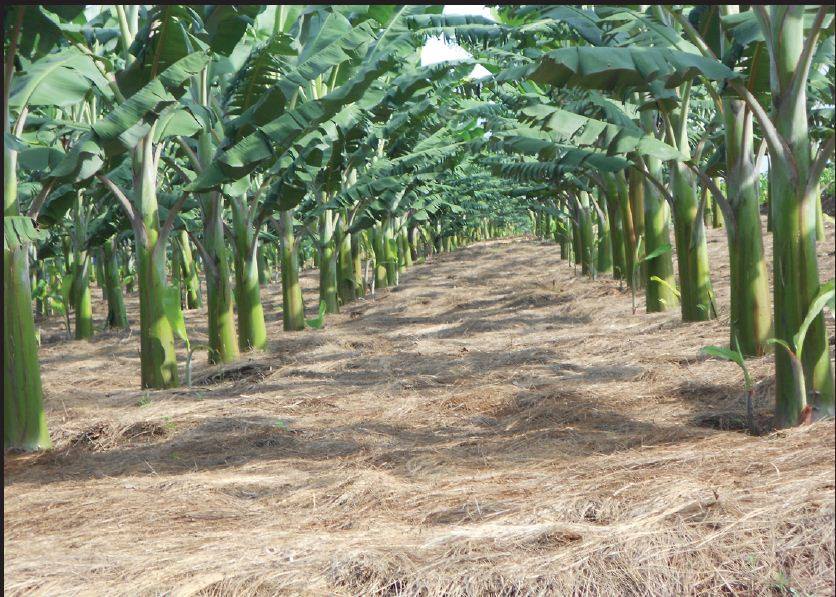
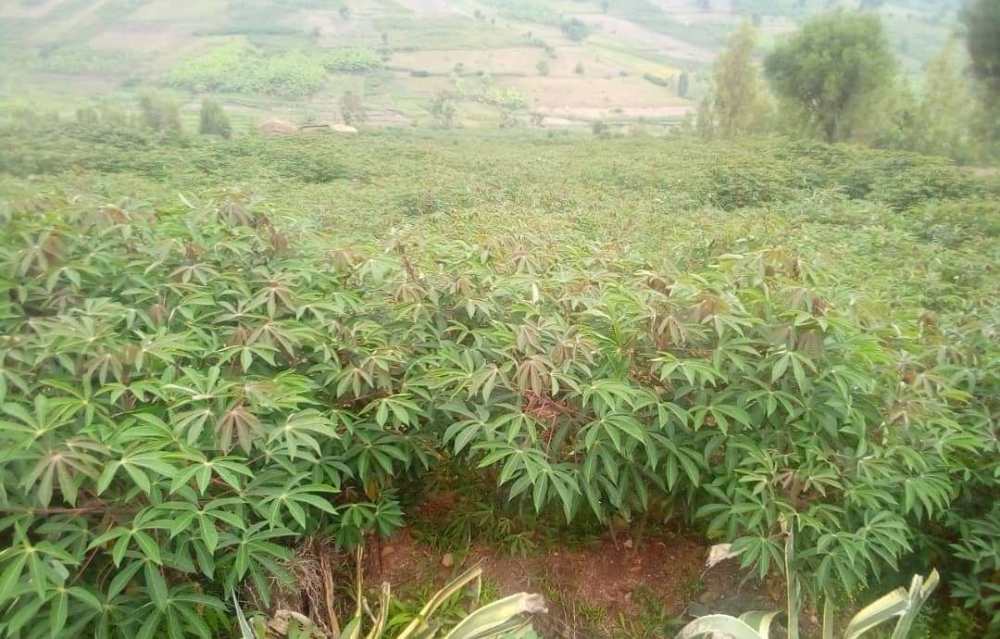
“Here in Rwanda and elsewhere, many crop diseases continue to affect production. For example, banana plants are severely affected by Wilt disease, cassava is attacked by Cassava Brown Streak Disease, and potatoes suffer from Late Blight. Through this project, enhanced seeds will be developed with the ability to resist these diseases,” she said.
Dr. Uzayisenga explained that the project will initially focus on bananas, potatoes, and cassava, before expanding to other crops. She added that neighboring countries could also benefit from the facility, as no similar center currently exists nearby.
“We already use enhanced cassava, maize, and potato varieties in Rwanda, but they were all developed outside the country. Under this new project, Rwandans themselves will gain the expertise to produce them locally. In particular, the popular Kinigi potato variety will be improved to increase productivity,” she said.
Dr. Uzayisenga also addressed concerns surrounding genetically enhanced crops, stressing that the technology only modifies the crop’s DNA structure without introducing harmful changes that could affect human health.
A lecturer in the Department of Biology at the University of Rwanda, Prof. Mutangana Dieudonne, said that while DNA-related courses are taught at the university, public understanding of the subject remains low.
He noted that plans are underway to extend awareness programs to secondary schools so students can develop a better understanding of DNA science from an early age.
Banana plants are among the crops that will be genetically enhanced through research conducted in Rwanda.Dr. Uzayisenga explained that the project will initially focus on bananas, potatoes, and cassava, before expanding to other crops.
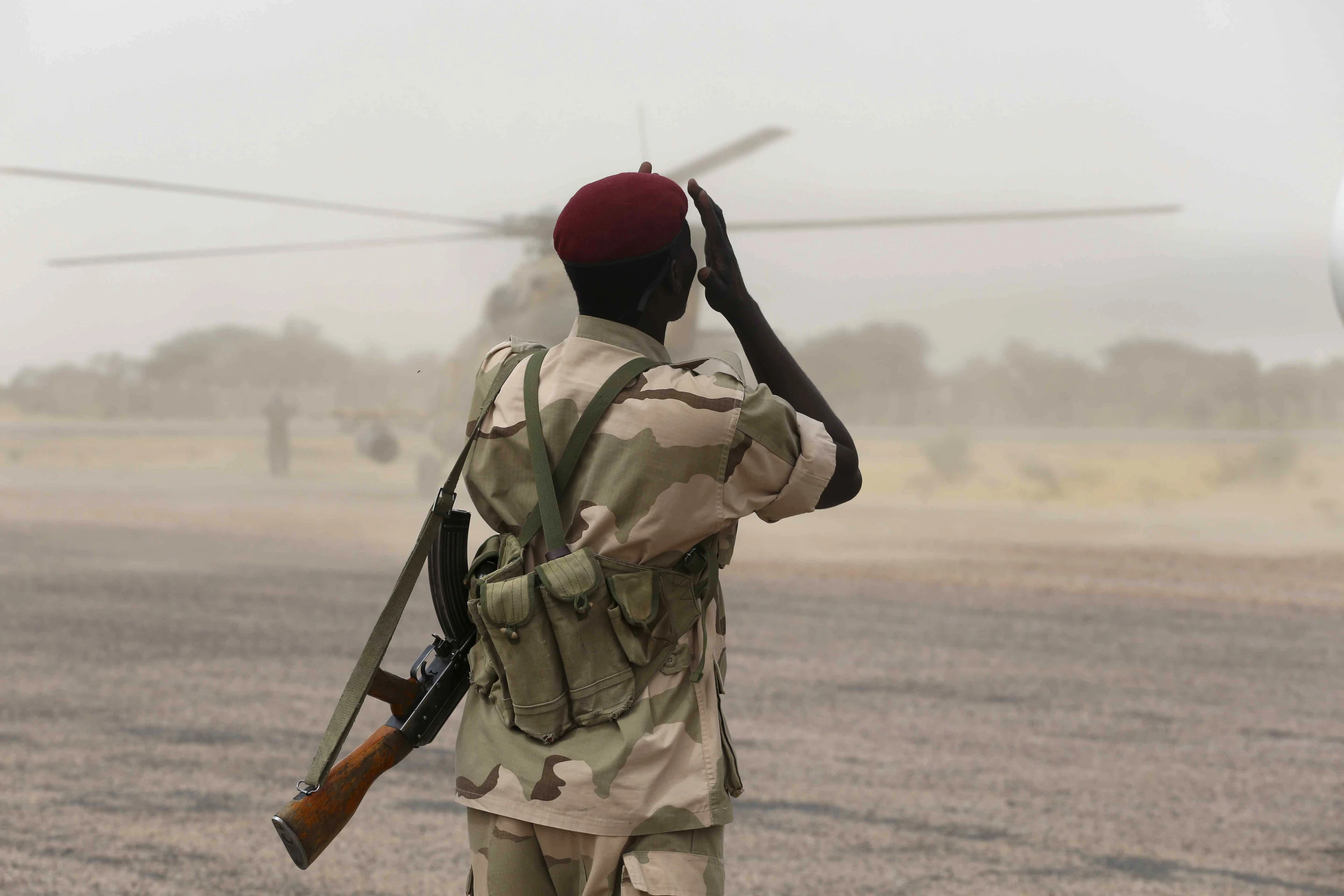
Twenty-three soldiers were killed and 26 others injured on Monday in an assault by Boko Haram militants on the Barka Tolorom island military base in the region.
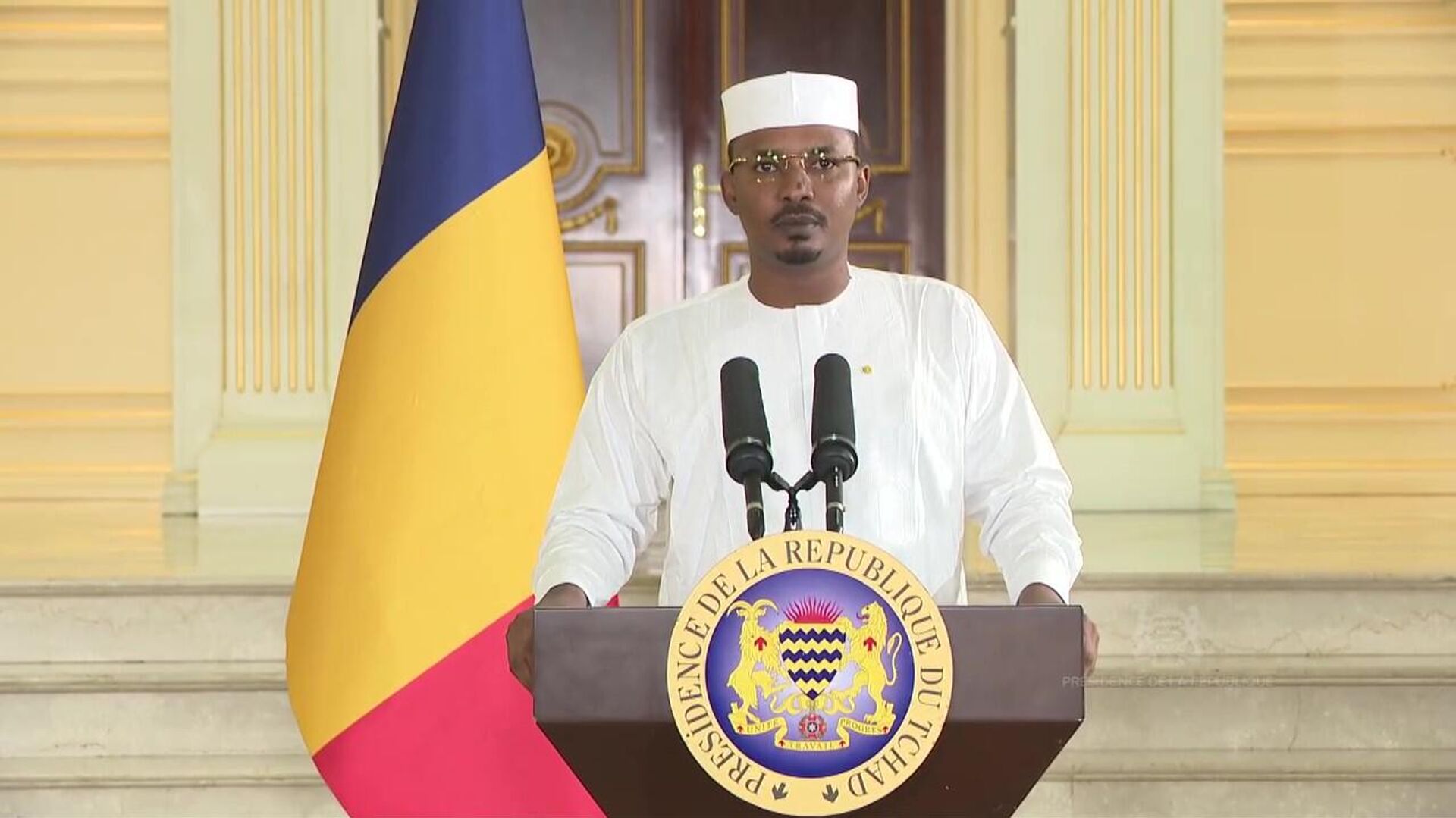
Late Wednesday, Chadian President Mahamat Idriss Deby Itno signed a decree declaring the mourning.
“During this period, flags are flown at half-mast and all festive activities are prohibited. Only religious music and prayers are permitted in the media and places of worship,” the decree stated.
The mourning declaration came just hours after local media reported another deadly Boko Haram attack on soldiers in Lake Chad on Wednesday. There was no official announcement regarding the number of casualties.
The Lake Chad region, bordering Nigeria, Niger and Cameroon, has long faced attacks by Boko Haram and its splinter faction, the Islamic State West Africa Province.
Chadian President Mahamat Idriss Deby Itno signed a decree declaring the mourning on Wednesday.
Epstein’s cellmate stated that he discovered the note in a book after the financier’s failed suicide attempt, several weeks before his eventual death in August 2019.
“They investigated me for month — Found NOTHING!!!” the note reads. “It is a treat to be able to choose one’s time to say goodbye.”
“Watcha want me to do — Bust out cryin!! No fun — NOT WORTH IT!!” it continues.
The handwritten letter, undated and unsigned, has not yet been authenticated and was not included in the millions of pages of Epstein-related documents released earlier this year by the U.S. Justice Department.
U.S. District Judge Kenneth Karas ordered the note’s release following a request by The New York Times, which reported its existence last week and argued that there was no basis for keeping the document sealed.
Epstein pleaded guilty in 2008 to a state charge of soliciting a minor for prostitution. He was arrested again in July 2019 on federal sex trafficking charges and was found dead in his jail cell the following month.
Although federal authorities ruled his death a suicide, questions about the official account have persisted for years.
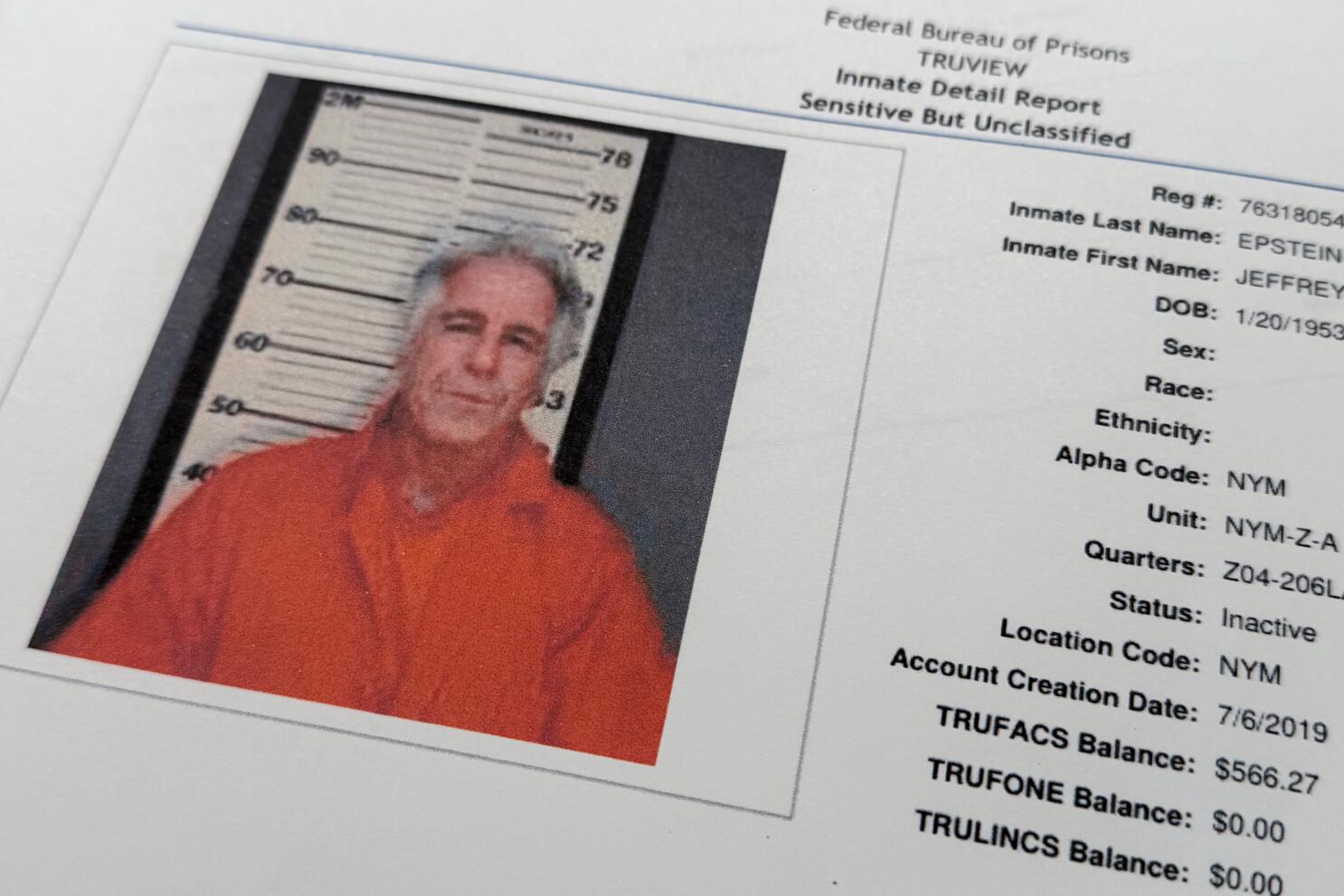
A document that was included in the U.S. Department of Justice release of the Jeffrey Epstein files, photographed Tuesday, Feb. 10, 2026, shows a photo of Epstein on a inmate report from the Federal Bureau of Prisons . (AP Photo/Jon Elswick)
In December 2023, while concluding his campaign for a second presidential term, Tshisekedi had declared that if a single bullet fired by the AFC/M23 coalition landed in the city of Goma, he would seek authorization from both chambers of parliament to launch attacks on Rwanda.
“At present, our army can strike Kigali while stationed in Goma. Kagame will not sleep in his house; he will sleep in the forest. He may play games with others, but not with Fatshi Béton,” Tshisekedi had said to cheering supporters.
He added that if even a small provocation occurred or any territory around Goma was captured, he would convene parliament and request permission to declare war on Rwanda.
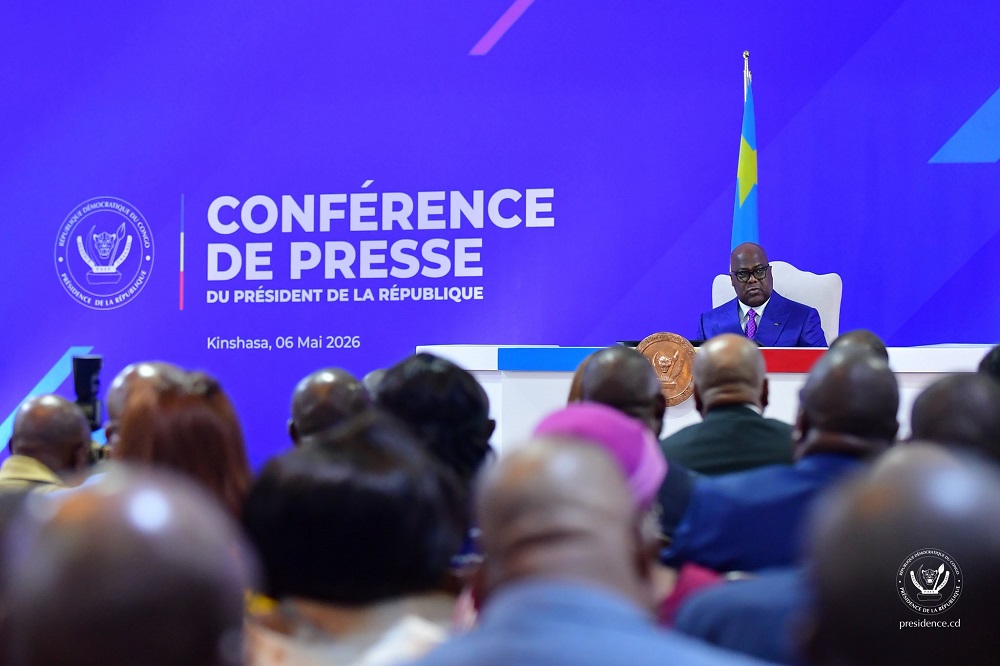
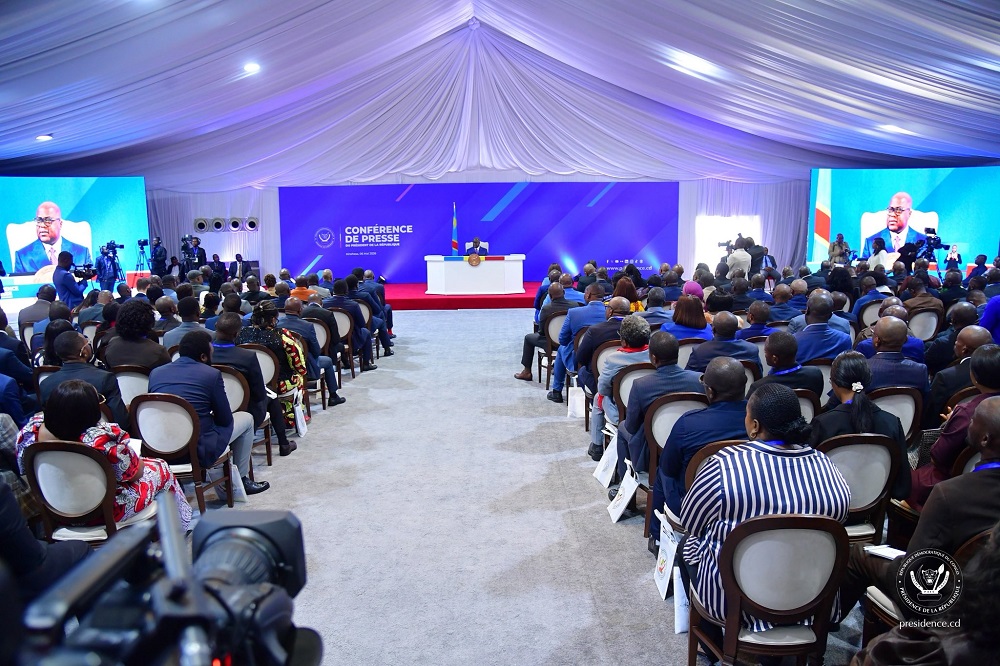
Speaking during a press conference in Kinshasa on May 6, a journalist told Tshisekedi that he appeared to prioritize diplomacy more than military strength, despite many historical thinkers emphasizing the importance of military power in securing peace.
The journalist referenced the famous saying attributed to Vegetius Renatus, “If you want peace, prepare for war,” and cited political philosopher Niccolò Machiavelli as well as comments once made by Barack Obama concerning peace in eastern Congo.
The journalist then asked Tshisekedi when the cities of Goma and Bukavu would be liberated. Responding to the question, Tshisekedi acknowledged that the criticism about his diplomatic approach was understandable.
“You must understand that as a civilian like me, with no military training or background whatsoever, the first instinct when such events happen is diplomacy. But I must also tell you that this comes after an honest assessment of the situation,” he said.
Tshisekedi recalled statements he made during the 2023 election campaign regarding possible military action against Rwanda in response to what he described as provocations.
“Today, I want to take this opportunity to apologize to the Congolese people, not because I was rushed into speaking, but because I had been given false information about our military,” he said. He went on to explain that the Congolese army lacked the capacity to confront Rwanda in the way he had initially envisioned. He revealed that some soldiers and officials are now being arrested and punished over failures within the military structure.
“Today you can see punishments and arrests taking place. These are the consequences. It means we were being kept from the truth about the condition of our army. We could not go to war with a military that lacked direction and was deeply divided,” Tshisekedi said.
He added that the army lacked uniforms, weapons and sufficient ammunition for combat operations.
“How could we enter a war under those conditions? That is not how I think. It is important to face reality and use other available means, and I believe we achieved a lot through that approach,” he stated.
Tshisekedi further claimed that the Congolese military had been infiltrated from within by hostile elements who weakened it under the cover of peace agreements.
“Today we have the information, and that is the good thing. We now know our military had been infiltrated and destroyed from within. There were people inside it whose objective was to seize part of our country. That is the truth,” he said.
According to Tshisekedi, diplomacy became the only viable option available to his government at the time.
“We had no other choice except diplomacy. That became our weapon. There is no debate about it,” he said.
He added that the Democratic Republic of the Congo now has international allies helping it restore peace while also benefiting from the country’s natural resources.
Speaking during a press conference in Kinshasa on May 6, Tshisekedi apologized to Congolese, noting that he abandoned plans to attack Rwanda after discovering that he had been misled about the true capabilities of his country’s military.
In its first-quarter earnings report published on Wednesday, Germany’s flag carrier Lufthansa said it had hedged around 80 percent of its jet fuel requirements. Despite these measures, it expects fuel-related costs in 2026 to increase by 1.7 billion euros (2 billion U.S. dollars), nearly 24 percent higher than previously forecast, mainly driven by surging energy prices and disrupted global aviation markets.
The group said it plans to offset the additional burden through higher ticket revenues, network optimization and further cost-cutting measures in the coming quarters.
“The ongoing crisis in the Middle East, combined with rising fuel costs and operational constraints, poses enormous challenges for the global economy, the aviation industry and our company,” Lufthansa CEO Carsten Spohr said.
According to the International Air Transport Association (IATA), jet fuel prices surged 106.6 percent year-on-year in March amid escalating geopolitical tensions. In Europe, prices have climbed to their highest since 2022.
IATA Director General Willie Walsh said that while the industry remains in better shape than during the 2020 pandemic lockdowns, the current fuel crisis has emerged as the most acute shock to global aviation since COVID-19.
According to a study released by Allianz Trade last week, Europe produces only half of the kerosene required by its domestic market, leaving the region’s aviation sector dependent on imports for the remainder of its jet fuel needs.
Several European airlines have already introduced measures to cope with rising fuel costs and concerns over potential supply disruptions.
Air France-KLM said it plans to impose a surcharge of up to 50 euros (58.73 dollars) on long-haul flights, while EasyJet and Ryanair warned that fares could rise further if fuel markets remain tight. Lufthansa said it has already implemented ticket price increases.
Analysts at Allianz Trade painted an equally bleak picture, estimating that international airfares have already risen by between 5 percent and 15 percent.
Lufthansa is also evaluating stopover options for its long-haul routes to Asia and Africa as a contingency measure against potential refueling failures at destination airports. Highlighting the gravity of the supply crisis, Spohr remarked, “We can only fly if we have fuel.”
A Lufthansa aircraft (Rear) and an EasyJet aircraft are seen after arriving at the newly-opened Berlin Brandenburg Airport in Schoenefeld, Germany, on Oct. 31, 2020. (Thomas Trutschel/photothek/Handout via Xinhua)
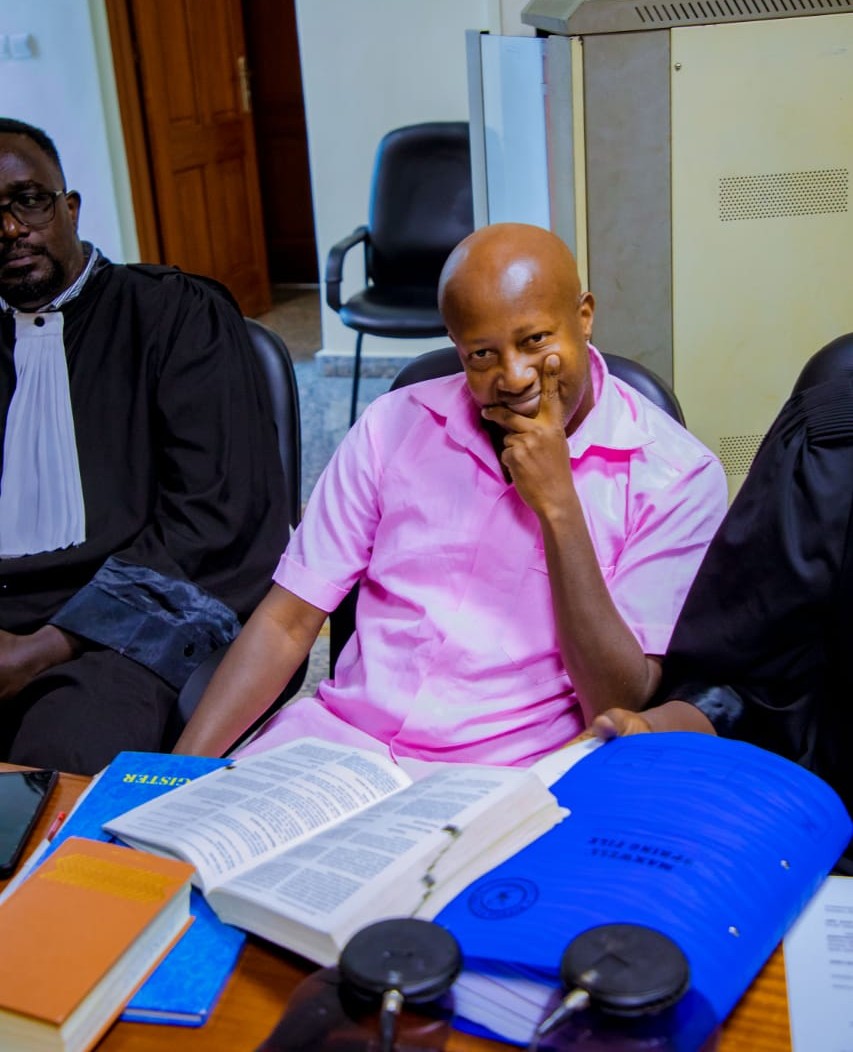
The spokesperson for Rwanda Correctional Service, CSP Sengabo Hillary, told IGIHE that on Wednesday, after all procedures related to Karasira’s release had been completed and only a few hours remained before he could leave prison, he took medication he normally used to manage a mental health condition.
“He would usually take the medicine and sleep for about six hours, as it helped him rest. However, because he took it in what appeared to be a suicide attempt, he consumed a large amount, which resulted in his death. He was taken to Nyarugenge Hospital, but doctors were unable to save him,” Sengabo said.
Sengabo added that Karasira died during the night at around midnight.
A medical report explaining the cause of his death is still expected, but preliminary findings indicate that he died after taking an excessive amount of medication.
Sengabo added, “All procedures required for his release had already been completed. What remained was the final search and exit process. That was the only step left when he took the medication and swallowed a large quantity of it.”
Karasira, widely known as Prof Nigga, had been convicted of inciting divisions among the public. He had completed the five-year sentence handed to him.
The sentence was issued on September 30, 2025, by the High Court Chamber for International and Cross-Border Crimes (HCCIC) based in Nyanza.
Based on the way prison sentence calculations are carried out within the correctional system, Karasira officially completed his sentence on May 6, 2026.
He had been charged with offenses including genocide denial, inciting divisions, and spreading false information.
Other charges included money laundering and failure to explain the source of his wealth, including cash found in his possession and funds held in various bank and Mobile Money accounts.
The prosecution had appealed the court’s decision to sentence him to five years in prison, but the appeal case had not yet been heard.
The correctional service stated that when releasing an inmate, it only follows the sentencing decision recorded in the electronic system used by the institution.
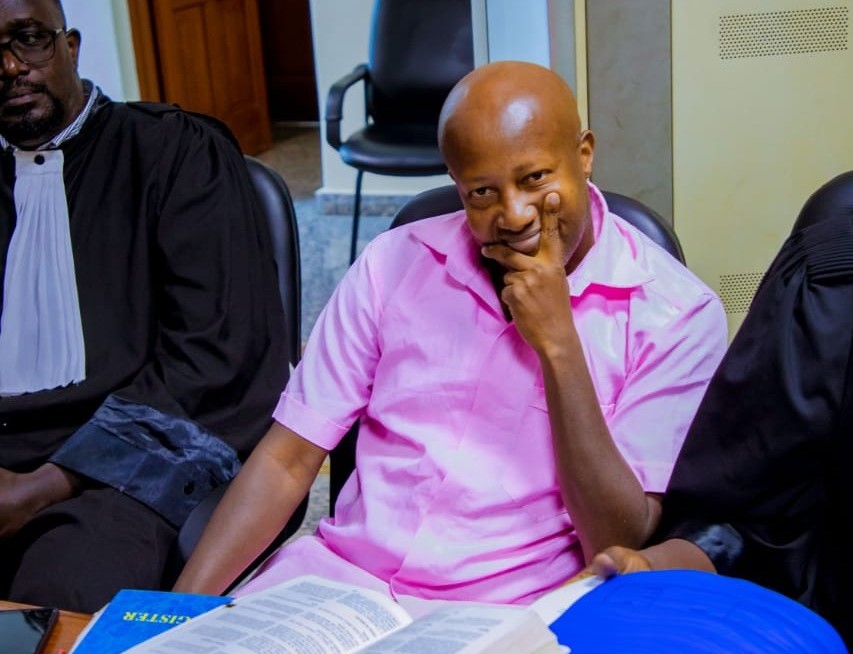
RCS has confirmed that Karasira Aimable died hours before scheduled release.