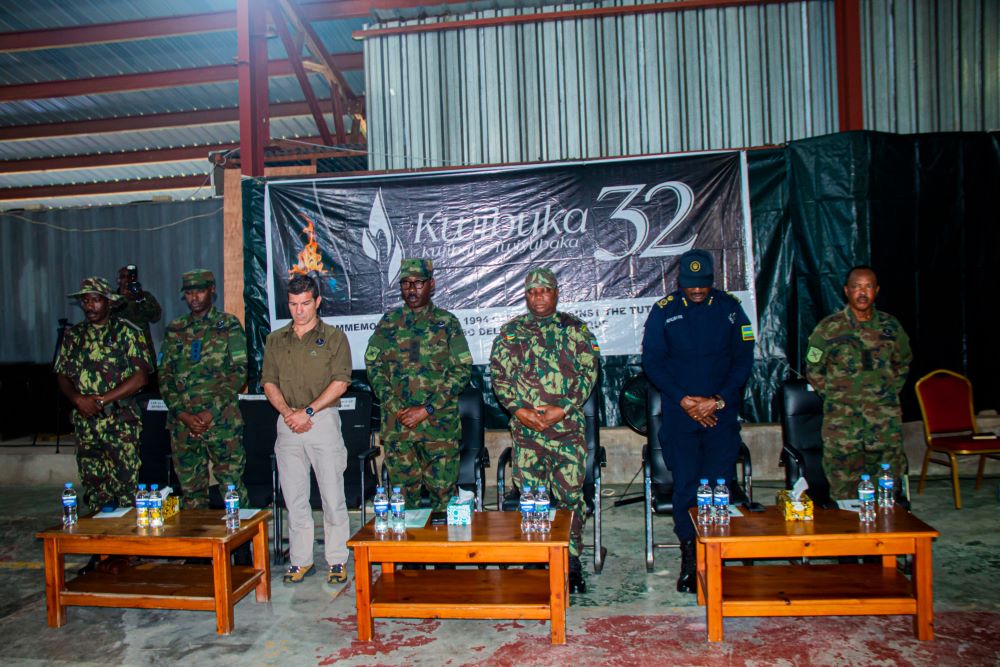
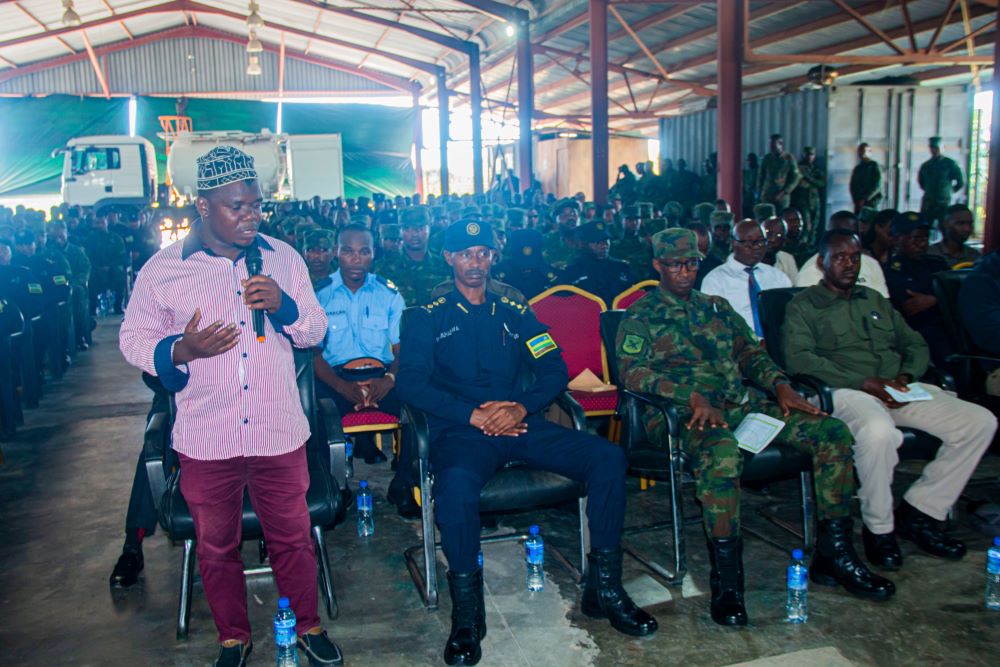
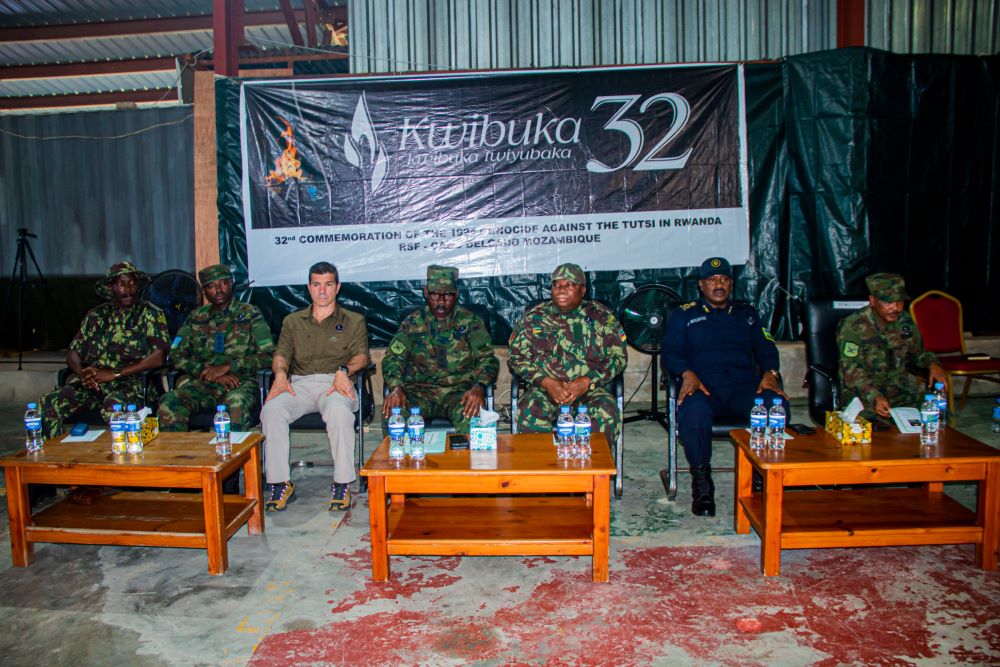
Heads of delegations who attended included Deputy Army Commander (FADM)- Brig Gen Tomás Mponha, Mr Savio- TotalEnergy GP, and leaders from different religious faiths residing in Mocímboa da Pria District.
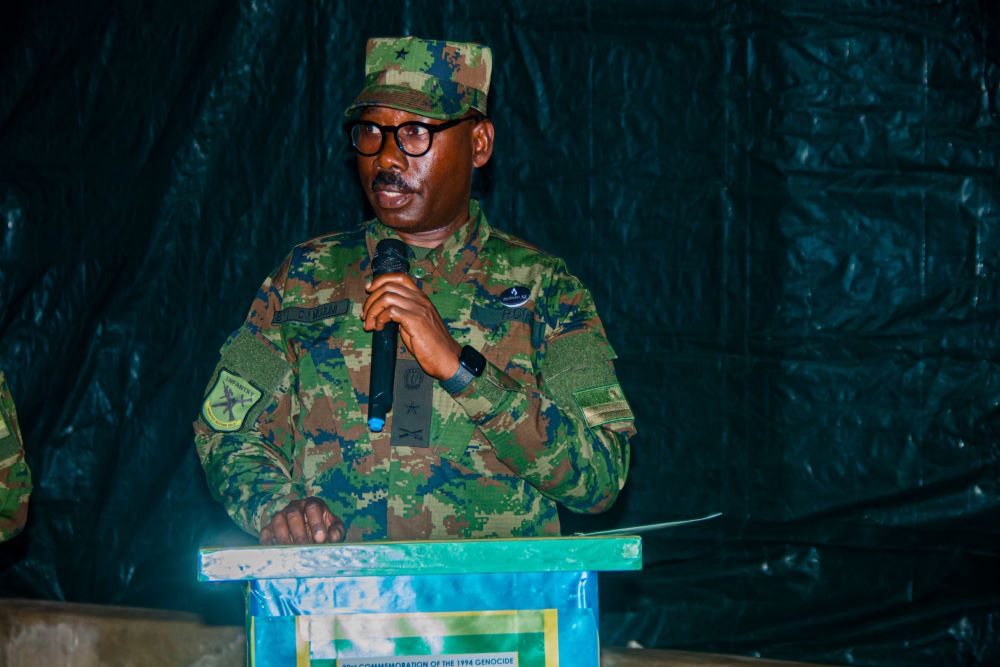
Addressing the gathering, Brig Gen CM Mujuni, the Joint Task Force Commander (JTFC) reiterated the importance of remembrance as a reminder to deter any acts of Genocide from happening again.
The JTFC noted that genocide stems from divisive ideologies rooted in colonial influence and poor leadership that had been adopted in the post-colonial Rwanda.
The divisive politics led to the extermination of over one million Tutsi people who perished in only 100 days while the International community watched.
Had it not been RPA’s intervention, even those who survived would have perished
Brig Gen Mujuni reaffirmed Rwanda’s commitment to unity, peace, and ensuring that such atrocities never happen again
On behalf of the Mozambican delegation, the Deputy Army Commander, Brig Gen Tomás Mponha, noted that Rwanda’s history especially the 1994 Genocide against the Tutsi offers significant lessons to Mozambique in particular and the world in general.
The FADM Gen further commended the sacrifice made to stop the genocide against the Tutsi and acknowledged the efforts made by the Rwanda Security Force to combat terrorism in Mozambique- Cabo delgado province.
The ceremony was concluded by listening to the televised strong message of remembrance, solidarity, and a shared commitment for peace and stability, delivered by Paul Kagame, the President of the Republic of Rwanda.
The commemoration event was held on April 7, 2026.Brig Gen CM Mujuni, the Joint Task Force Commander (JTFC) reiterated the importance of remembrance as a reminder to deter any acts of Genocide from happening again.Heads of delegations who attended included Deputy Army Commander (FADM)- Brig Gen Tomás Mponha, Mr Savio- TotalEnergy GP, and leaders from different religious faiths residing in Mocímboa da Pria District.
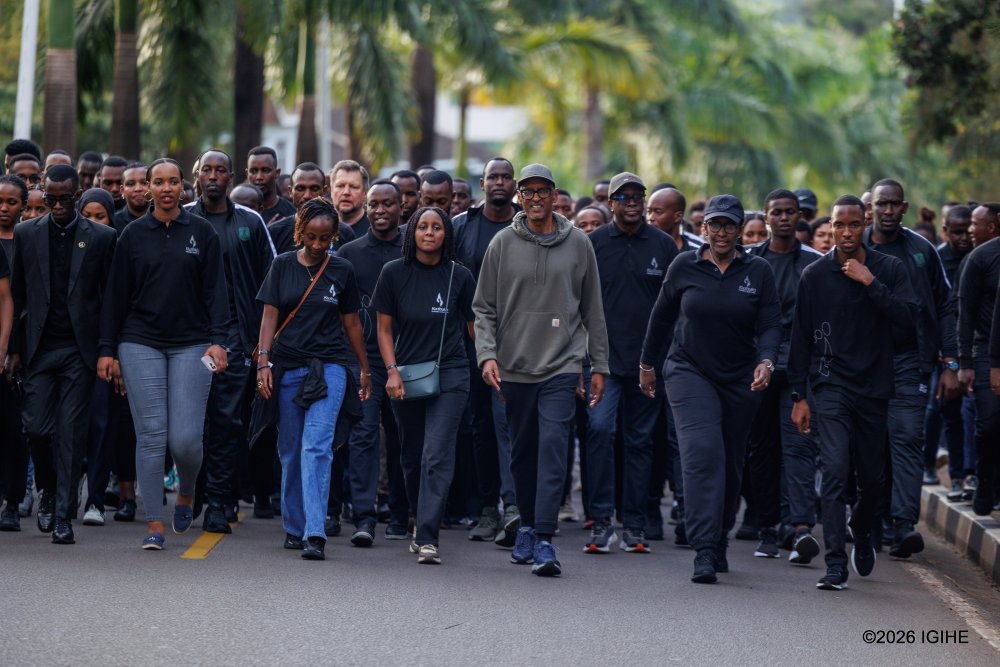
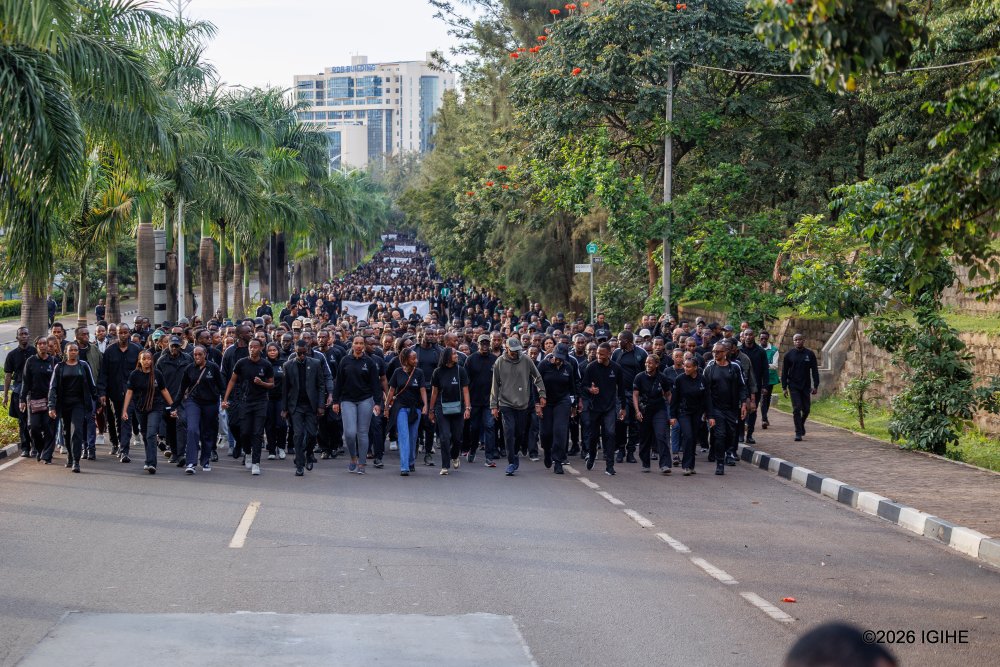
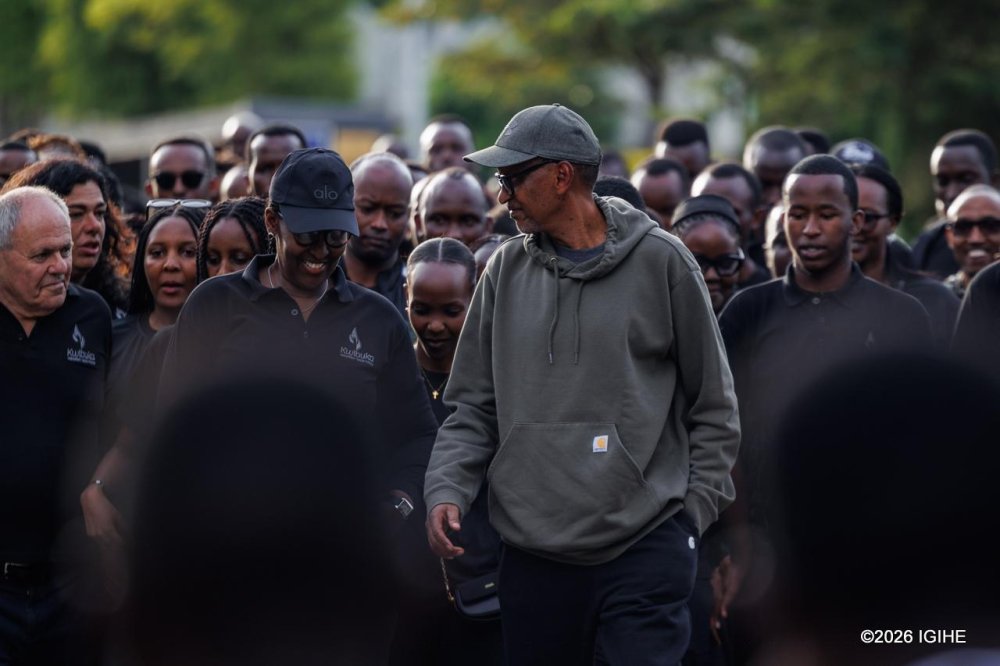
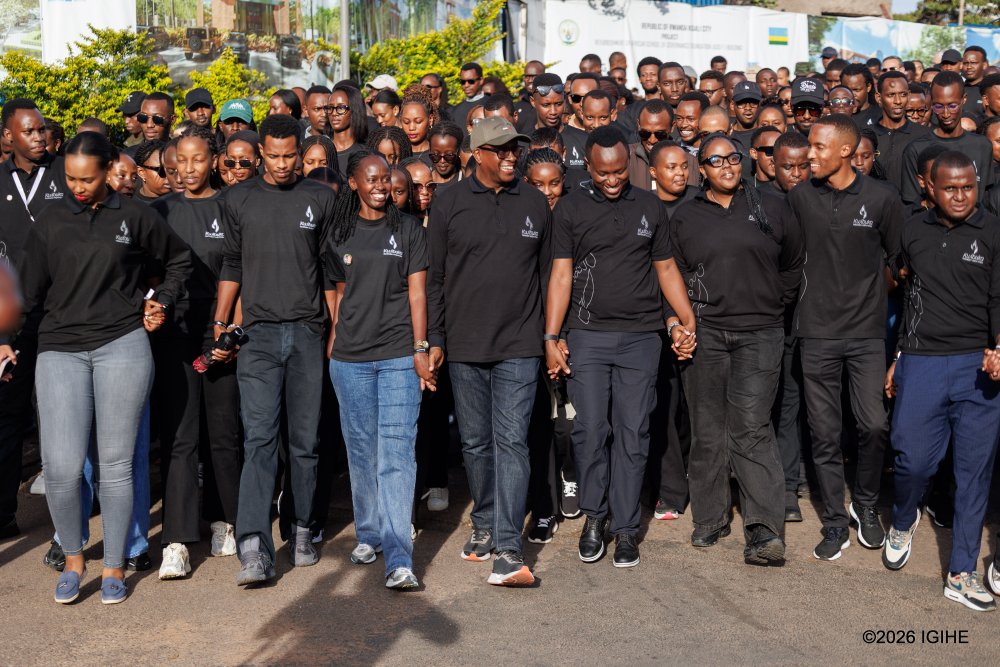
The walk concluded at BK Arena, where a vigil for the 32nd Commemoration of the 1994 Genocide against the Tutsi took place, with the President and First Lady joining participants in honoring the victims.
The walk began at the Gasabo District offices and was attended by youth from various sectors, artists, social media influencers, journalists, football players, film actors, government officials, and other members of the community.
April 7 is recognized globally as the International Day for Reflection in the 1994 Genocide against the Tutsi.
According to the census conducted by the Ministry of Local Government between 2000 and 2002, 1,074,017 Tutsis were killed over a span of 100 days, from April 7 to July 1994.
The 2004 report documented where the victims lived, their ages, their names, and in many cases, the circumstances of their deaths.
At the start of the 32nd Commemoration Week and the 100 days of remembrance, President Kagame reassured that the dark chapter in Rwanda’s history would never happen again in Rwanda.
President Kagame also highlighted that remembrance carries deep significance for Rwanda, serving as a way for the nation to overcome divisions that once threatened to destroy it.
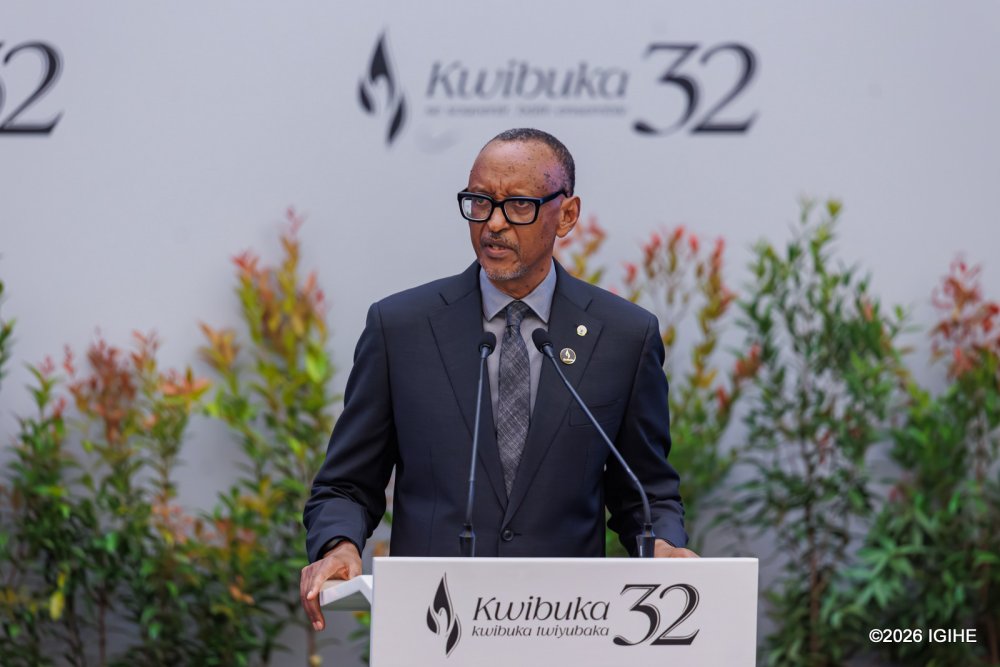
He delivered the message on April 7, 2026, at Kigali Genocide Memorial, where genocide commemoration at national level brought together Rwandans, friends of Rwanda, and members of the diplomatic corps, among others, to honor the victims.
Rwanda’s commemoration period, known as Kwibuka, begins on April 7, with a week of national mourning and continues over 100 days, reflecting the duration of the genocide in which more than one million victims were killed.
This year’s commemoration is observed under the theme “Remember, Unite, Renew”.
In his address, Kagame emphasized the importance of survivor testimonies in preserving the truth about what happened in 1994, describing them as a vital foundation for collective memory and national identity.
“These testimonies keep memory alive for all of us and for those who will follow us,” he said.
He added that survivors are not alone, noting that their stories form a shared moral resource for the country. “They provide a reservoir of humanity that feeds our nation’s soul,” he said.
Kagame stressed that remembrance goes hand in hand with responsibility, saying every Rwandan has played a role in rebuilding the country, from documenting crimes through community-based justice systems to rejecting division and choosing unity.
The President also pointed to ongoing challenges in how the genocide is understood and described globally, warning against efforts to distort or minimize the truth.
“In 2018, the United Nations General Assembly adopted a resolution that called the genocide against the Tutsi by its proper name. The truth is undeniable, and yet we still find people sowing doubt and twisting the facts up to today. This is not just a matter of ignorance, but something much deeper,” he said.
“It means that the risk of seeing history repeat itself is a constant danger, if we allow ourselves and our friends to become indifferent.”
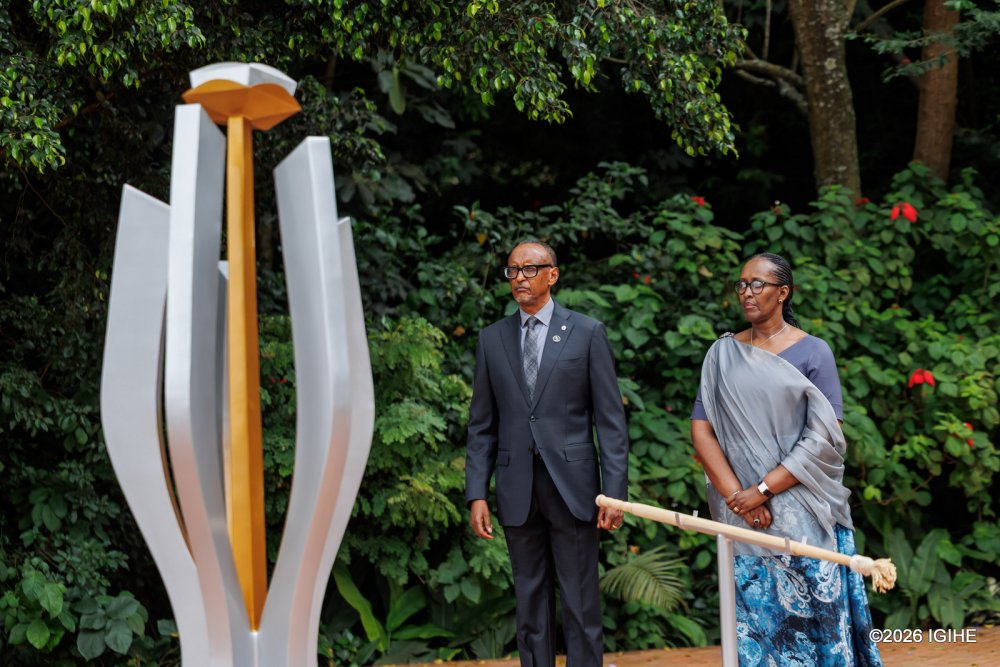
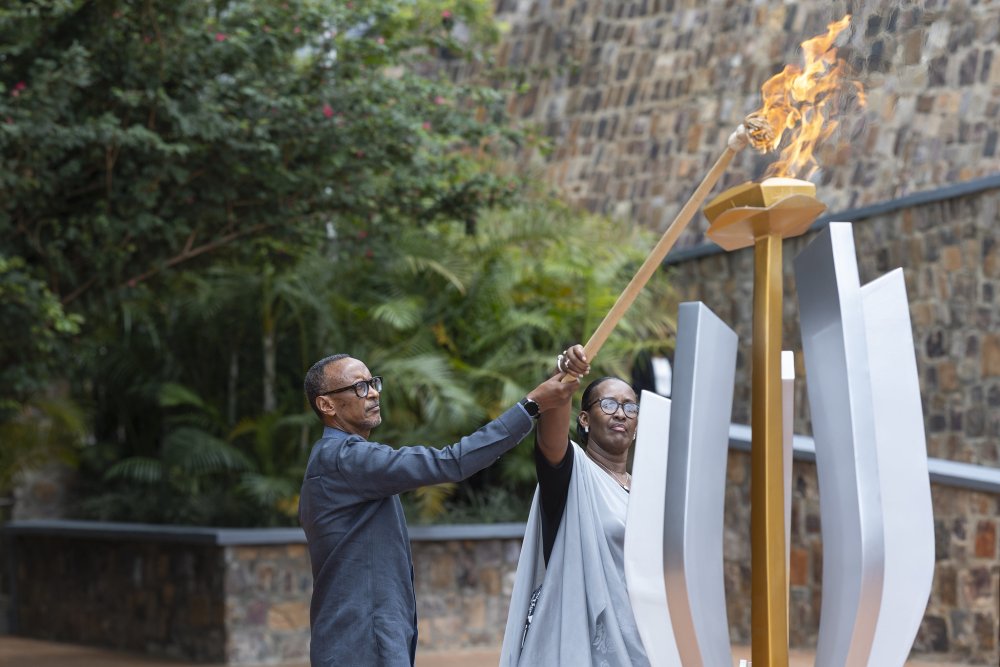
President Paul Kagame and First Lady Jeannette Kagame lit the flame of hope at the start of 32nd commemoration of Genocide against the Tutsi.
Kagame warned that genocide denial often begins long before violence erupts, taking root in subtle and dangerous ways.
“Genocide denial begins long before the genocide itself is committed. There is a pattern of looking away from the warning signs or taking them lightly,” he said.
“Hate speech turns into hate acts, dismissed as expressions of popular discontent. Behavior that should be immediately condemned is rationalized and minimized. The preparations are masked by narratives of popular grievance and fear.”
He rejected claims that the genocide was spontaneous, insisting it was deliberately planned and executed.
“All of these elements were present in our own history. There are some who pretend that the Genocide against the Tutsi was a spontaneous event. That’s not true. It was carefully prepared and carried out in plain sight.”
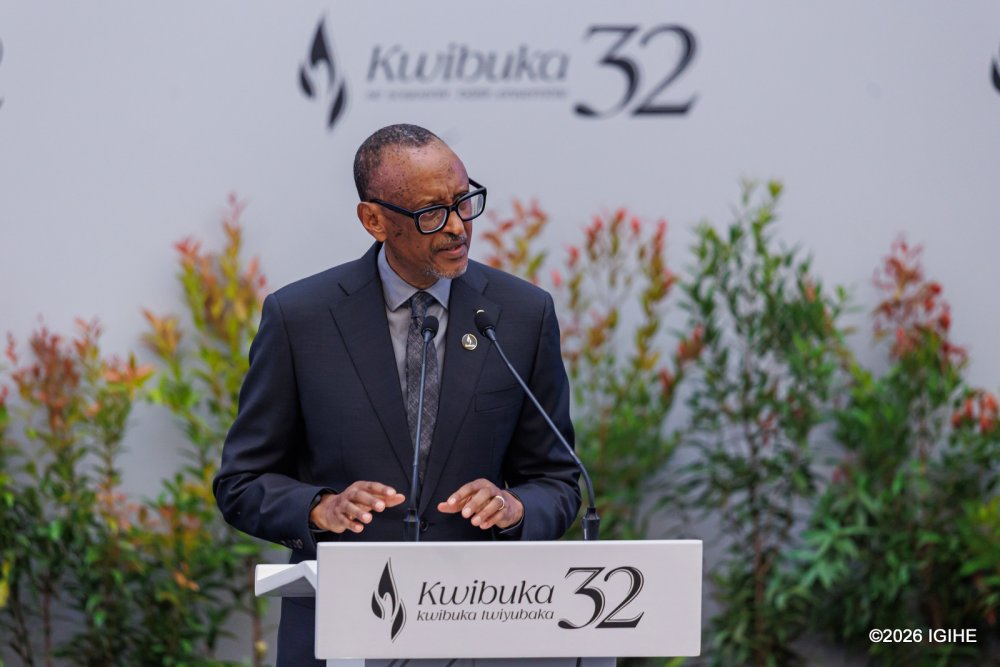
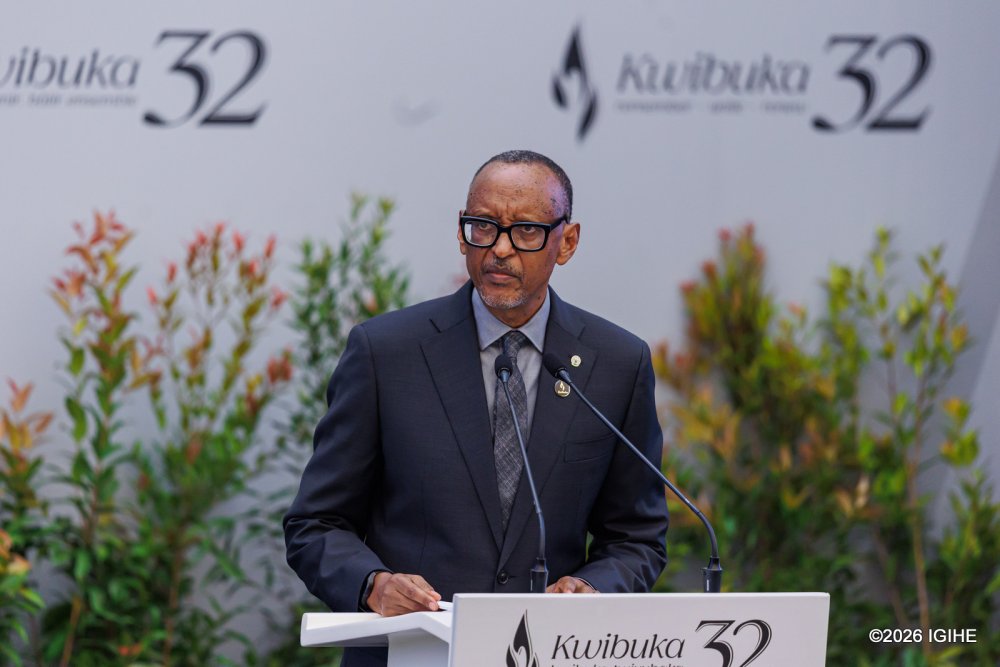
President Kagame delivers remarks at the Kwibuka 32 launch in Kigali, where he warned against genocide denial and global indifference.
Kagame also criticized the international community’s failure to act despite clear warning signs, noting that more lives could have been saved.
“The lives saved by the United Nations peacekeepers who were allowed to remain makes clear how much more could have been done with political will. Even as the killings accelerated, the language used to describe what was happening itself became a matter of calculation.”
Despite that failure, he highlighted the role of the former Rwandan Patriotic Army (RPA), now the Rwanda Defence Forces (RDF), in stopping the genocide and protecting civilians, saying its legacy continues to shape Rwanda’s security philosophy.
“It guides the conduct of our forces who serve abroad in peace-building missions, earning universal respect. Indeed, no sanctions or insult from outside can ever tarnish the honor and integrity of Rwanda’s Defense and Security Forces who are among the finest that can be found anywhere.”
President Kagame highlighted the dangers of moral passivity and the global failure to act during the 1994 Genocide against the Tutsi.
Reflecting on post-genocide security challenges, Kagame recalled the insurgency that followed the collapse of the genocidal regime in 1994.
“This was the period known as the Abacengezi Insurgency. And the western border was only fully secured by the end of the 1990s through the combined efforts of our army and the brave residents of those areas.”
“And since then, our defensive measures have been aimed at ensuring that such attacks can never again be made across our borders. This is not a problem that should be left to Rwanda alone. Doing so only rewards those behind the threat, while Rwanda is penalized for standing up for itself.”
He warned against double standards in addressing security concerns and used a metaphor to illustrate the dangers of inaction in the face of rising threats.
Kagame likened it to a farmer watching a small fire spread while others assume it will burn out on its own, even as “a pyromaniac is secretly adding fuel to the fire.”
Turning to the broader African context, he called for vigilance and responsibility across the continent.
“Africans, more than most, should understand the danger of moral passivity in the face of hatred and violent extremism,” he said.
While acknowledging the importance of national sovereignty, Kagame cautioned against its misuse.
“Bad actors must not be allowed to hide behind the principle of sovereignty,” he said, warning that “we cannot afford to repeat the mistakes of the past,” as genocide ideology spread in the region has the power to take people backwards again, if left unchecked.
President Kagame used a powerful metaphor of a spreading fire to illustrate the dangers of inaction in the face of rising extremism.
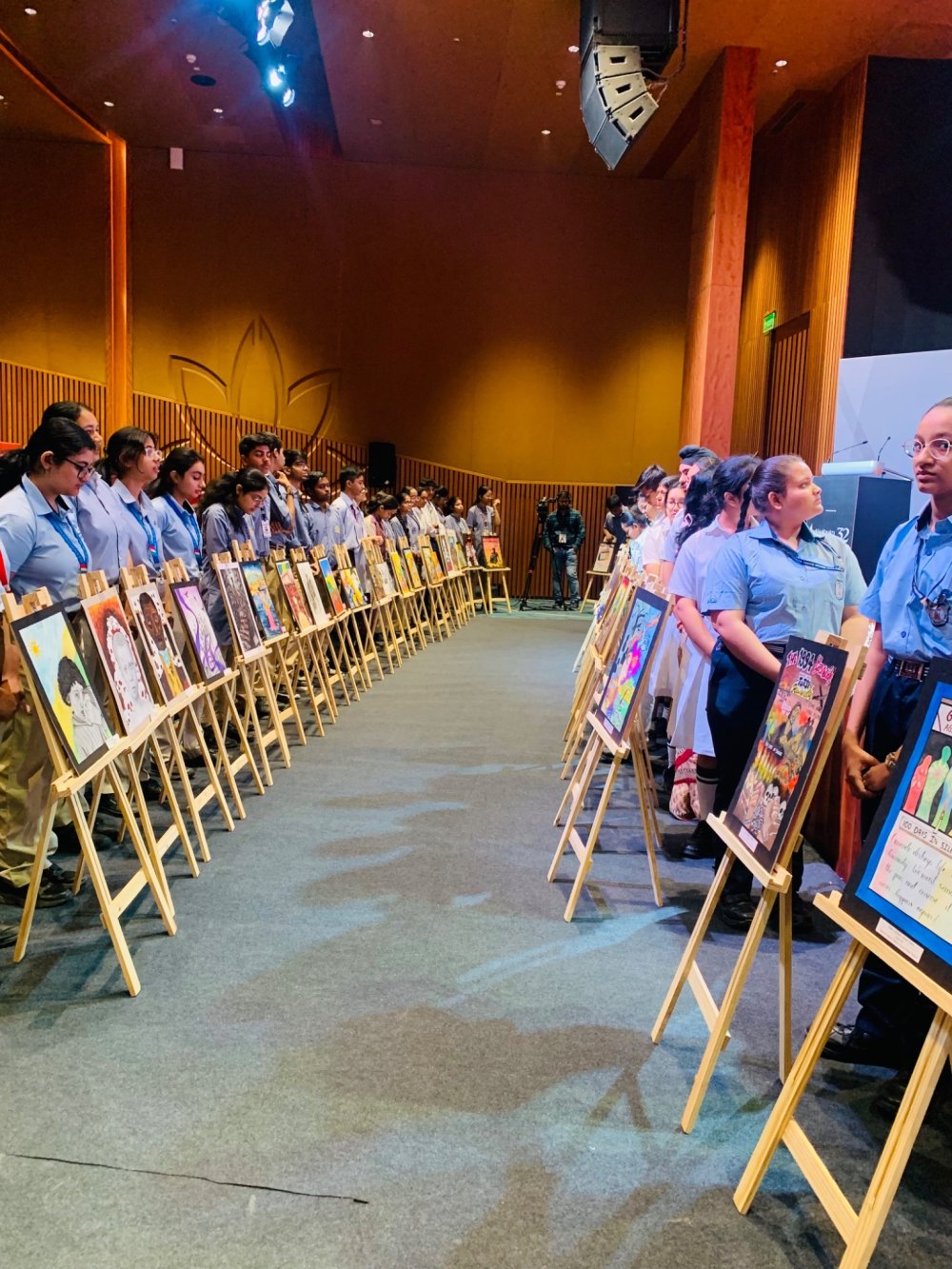
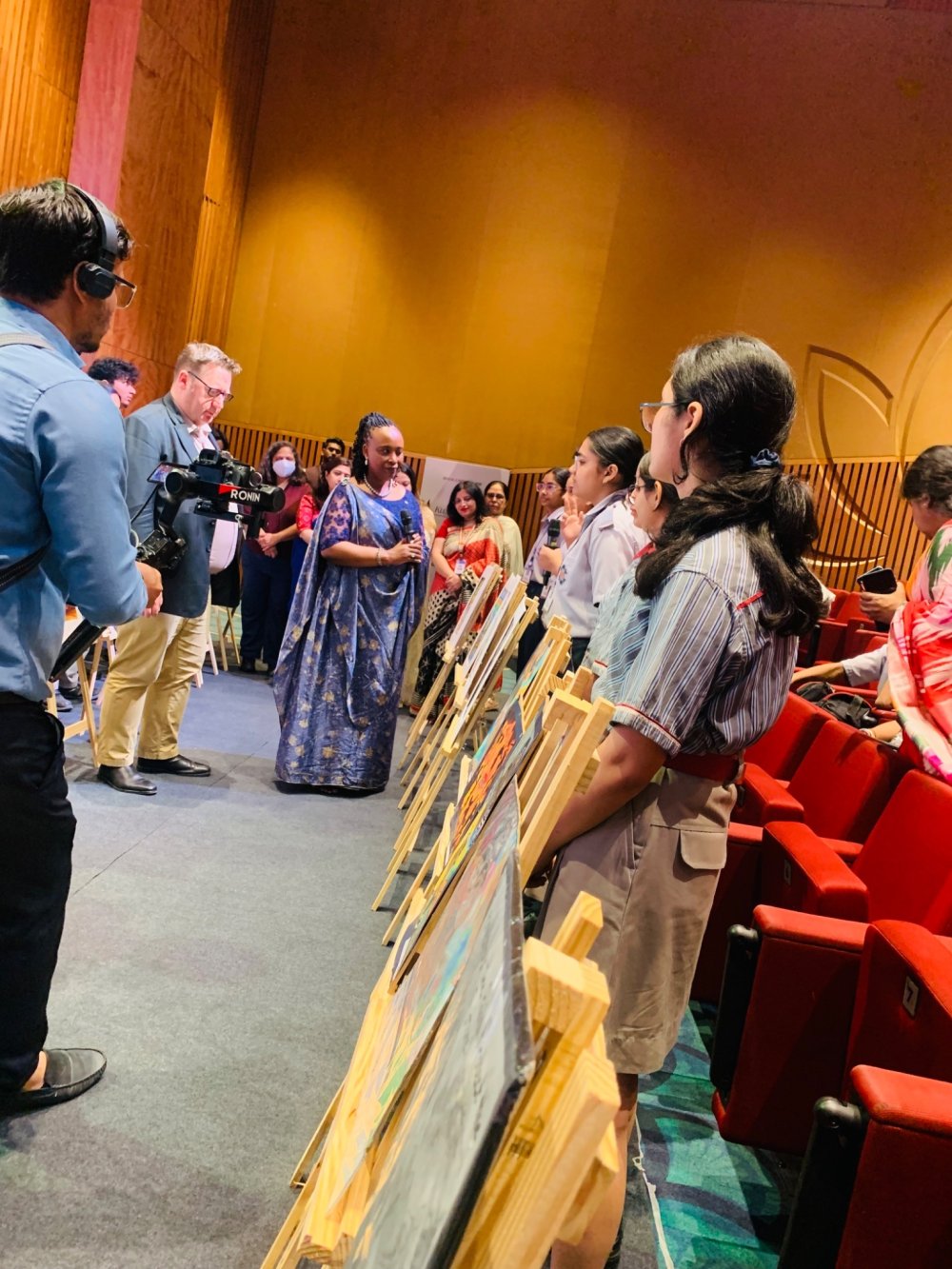
The exhibition took place on the morning of April 7, 2026, in the hall where the 32nd commemoration of the Genocide against the Tutsi was held.
The Rwandan Embassy in India reported that officials, including Rwanda’s High Commissioner to India, Jacqueline Mukangira, the Head of the UN Mission in India, Darrin Farrant, and school teachers, were given an introduction and explanation of the messages conveyed through the students’ works.
April 7 is observed annually as the International Day of Reflection on the 1994 Genocide against the Tutsi. This year marks the 32nd commemoration, when Rwandans and the global community remember the genocide.
In Rwanda, the 32nd Commemoration Week has begun nationally, alongside 100 days of remembrance activities.
Students in India on the morning of April 7, 2026, displayed artworks commemorating the 32nd anniversary of the 1994 Genocide against the Tutsi.
On April 7, 2026, Rwanda, alongside the international community, began the 32nd commemoration of the 1994 Genocide against the Tutsi.
MINUBUMWE stated that the Commemoration Week officially begins at the Kigali Genocide Memorial, which also hosts the national-level Kwibuka ceremony.
On the evening of April 7, a “Walk to Remember” will start in Gasabo District and conclude at BK Arena, where the Evening of Remembrance will take place.
At the community level, commemorative activities will include talks and guidance on the day’s messages. MINUBUMWE emphasized that after the Kwibuka activities, all regular work and services may continue as usual.
Essential services, such as pharmacies, hospitals, and health centers, will remain operational to serve the public, and hotels are allowed to continue providing services to their guests.
At the village level, no additional talks are planned during the Commemoration Week, except for those scheduled on April 7.
On April 11, 2026, in Kigali’s Kicukiro District, another Walk to Remember will start at IPRC/Kicukiro and conclude with an Evening of Remembrance at the Nyanza Genocide Memorial.
MINUBUMWE also stated that commercial activities, individual sports, team training, and other income-generating activities are allowed to continue throughout the Commemoration Week.
The ministry further announced that during Commemoration Week, the national flag will be flown at half-mast.
On April 13, 2026, the Commemoration Week will conclude at the Rebero Genocide Memorial at the national level. On that day, political figures who were killed for opposing the genocide will also be remembered.
The ministry clarified that no additional district-level closing activities are planned. It also reminded organizers that Kwibuka ceremonies should not exceed three hours.
Remembrance activities in government institutions, private organizations, businesses, and foreign embassies in Rwanda will be held on designated days between April 8 and July 3, 2026, with talks led by knowledgeable facilitators.
Schools will organize special remembrance days with lectures, visits to memorial sites, and activities aligned with Kwibuka program once students return from holidays.
It was also emphasized that evening vigils held before Kwibuka ceremonies or genocide victim burials should conclude by 10:00 p.m.
After the Commemoration Week, all remembrance symbols will be lowered, but may be reused only for specially organized genocide remembrance events.
During the 32nd commemoration of the Genocide against the Tutsi, Rwandans, particularly the youth, are encouraged to actively participate in remembrance activities and follow commemorative programs broadcast on radio, television, and social media.
President Kagame and First Lady Jeannette Kagame lighting the Flame of Hope in 2025 during the 31st commemoration of the Genocide against the Tutsi.
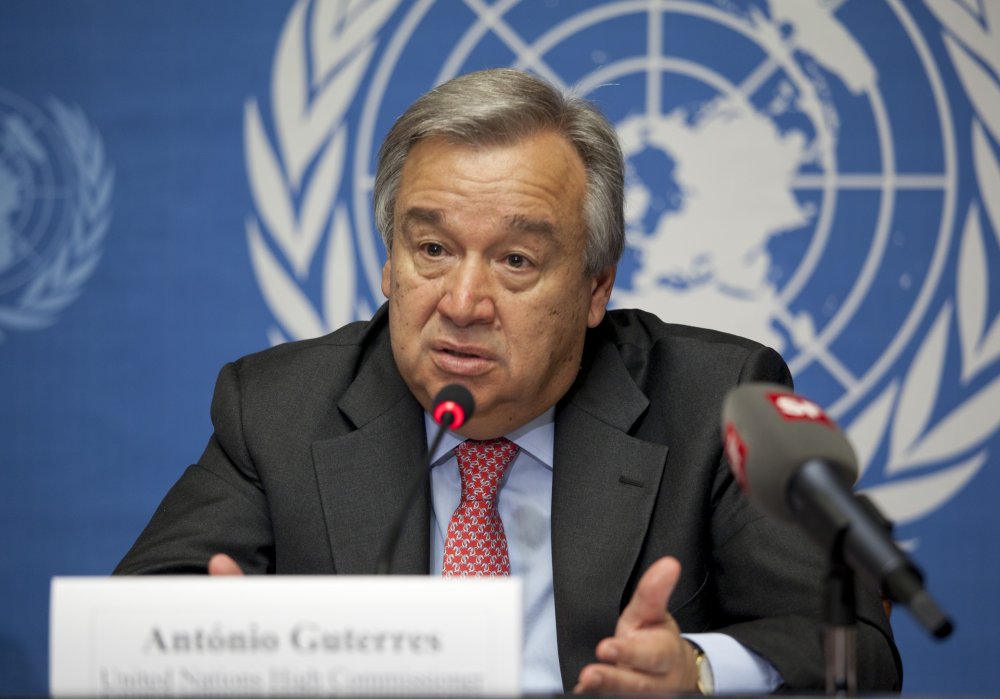
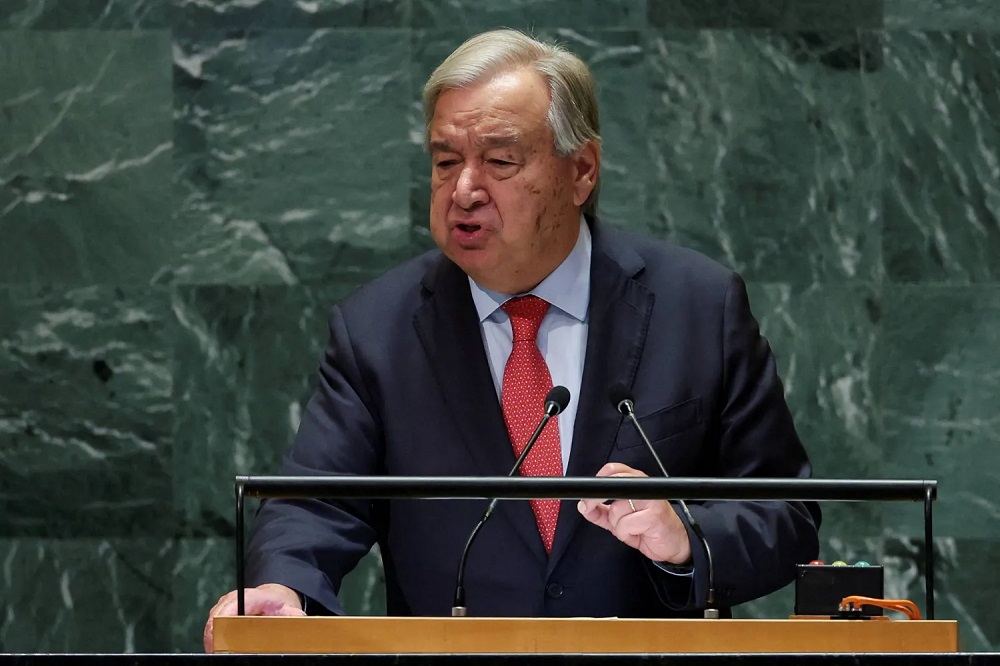
In a statement issued on the occasion of the International Day of Reflection on the 1994 Genocide against the Tutsi in Rwanda, Guterres reflected on the horrors of 1994 while stressing the urgent need for accountability and prevention.
“Thirty-two years ago, Rwanda endured one of the darkest chapters in human history. In just 100 days, more than a million people were murdered,” he said.
The UN chief noted that the day serves not only to honour the victims but also to confront the failures of the international community at the time.
“On the International Day of Reflection on the 1994 Genocide Against the Tutsi in Rwanda, we mourn the victims and honour their stolen dignity. We pay tribute to the survivors, whose resilience shows the strength of the human spirit,” he stated, adding that the world must also recall “with humility and shame, the international community’s failure to heed warnings and take immediate lifesaving action.”
Guterres emphasized that remembrance alone is not sufficient, urging nations to take deliberate steps to prevent similar tragedies.
“It’s not enough to remember the dead. We must learn from past failures and protect the living – by rejecting hatred, inflammatory rhetoric and incitement to violence; by investing in the social fabric to deepen community resilience; and by strengthening institutions that help prevent mass atrocities,” he said.
He further called on all countries to commit to international legal frameworks aimed at preventing genocide.
“I call on all countries to become parties to the Genocide Convention without delay and to implement it fully,” he added.
So far, 153 countries have signed the international convention on the prevention and punishment of the crime of genocide.
Reaffirming the United Nations’ solidarity, Guterres said, “The United Nations stands with the people of Rwanda. And we stand with all those, everywhere, who refuse to surrender our future to fear, division, or silence.”
He concluded by urging a renewed global commitment to action, saying, “Let this day reaffirm our commitment to remember, to listen, and to act. With history as our guide, and the prevention of genocide as our goal.”
Rwanda’s commemoration period, known as Kwibuka, begins on April 7, with a week of national mourning and continues over 100 days, reflecting the duration of the genocide in which more than one million victims were killed.
This year’s commemoration is observed under the theme “Remember, Unite, Renew”.
Guterres has urged action beyind remembrance as Rwanda marks the 32nd commemoration of Genocide against the Tutsi.
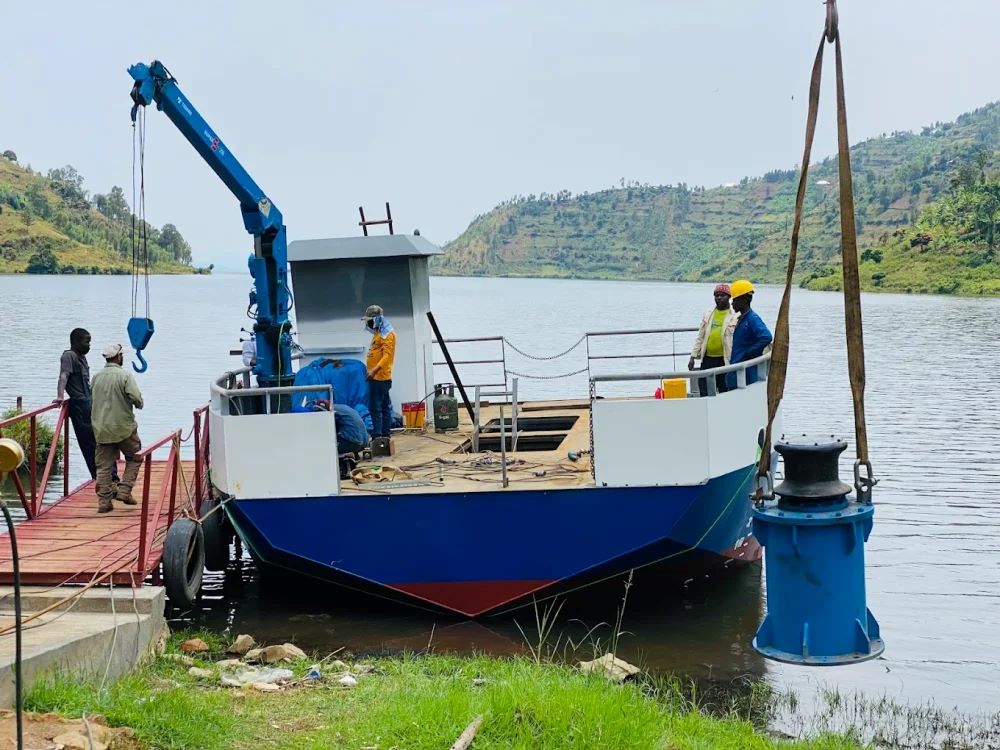
The development follows the signing of a partnership agreement between Karongi District authorities and Afrinest Engineering, a company that has been operating in the area for the past seven years.
Rwanda comprises six major lakes, including Lake Kivu, Muhazi, Ihema, Rweru, Burera, and Ruhondo.
These water bodies present significant opportunities for transport, trade, tourism, and recreation. However, progress in these sectors has been hindered by limited local expertise in boat construction and navigation. Within the region, Afrinest Engineering Ltd is currently the only company manufacturing boats that meet the standards of the International Maritime Organization (IMO).
One of the key challenges the company faces is its reliance on foreign skilled labor, with workers sourced from countries such as Bangladesh, Egypt, Kenya, Tanzania, and South Africa. This challenge has driven the initiative to establish a local training institution in partnership with Karongi District.
The Managing Director of Afrinest Engineering, Alain Munyaburanga, said the land for the school has already been secured, and the next steps involve conducting architectural studies and developing the curriculum.
“We will begin with 40 students, gradually increasing to 400. We plan to recruit students with backgrounds in welding, mechanics, and electrical engineering and equip them with specialized skills in boat building and maintenance,” he said.
Julienne Ntakirutimana, Vice Mayor of Karongi District in charge of economic development, noted that the school will be built in Bwishyura Sector. She added that the district will support student recruitment.
“This initiative will help reduce unemployment, as Afrinest has access to job markets both in neighboring countries and beyond. When the company builds boats, clients often request trained personnel to operate and maintain them,” she explained.
Célestin Simparinka, who has spent 30 years navigating boats on Lake Kivu, welcomed the initiative. He noted that his own skills were acquired abroad, having trained in the Democratic Republic of Congo, Burundi, and Uganda.
“My boat navigation license was obtained in Congo. I have heard about Afrinest’s plan to establish this training school, and it is a very positive step.
Karongi is growing in tourism, and we have long been concerned about operators who learn informally and in a short time,” he said.
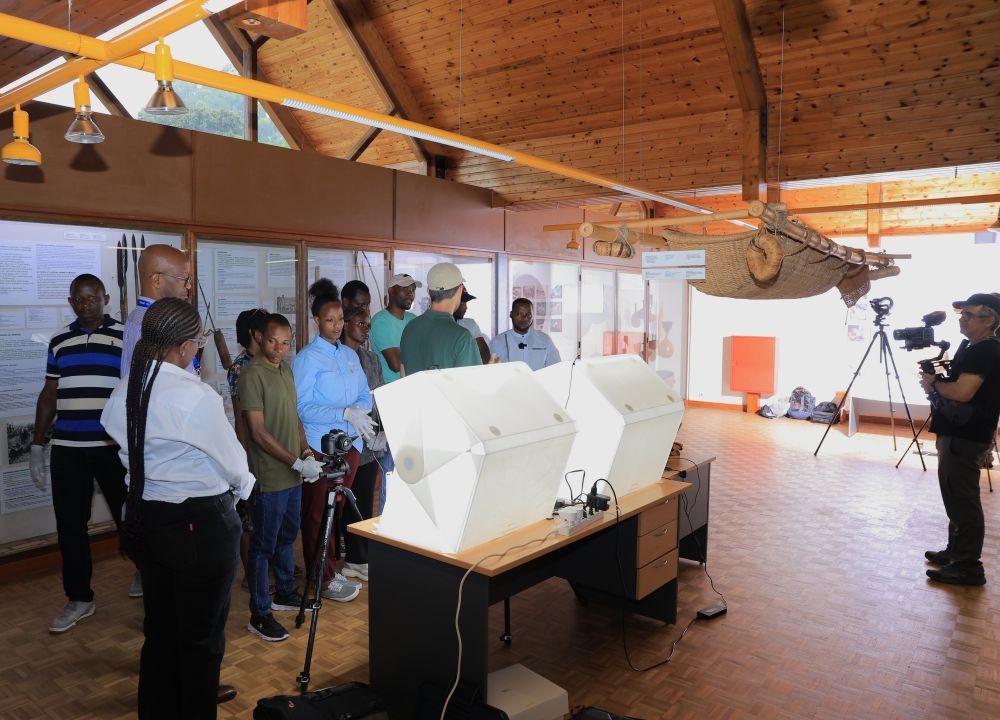
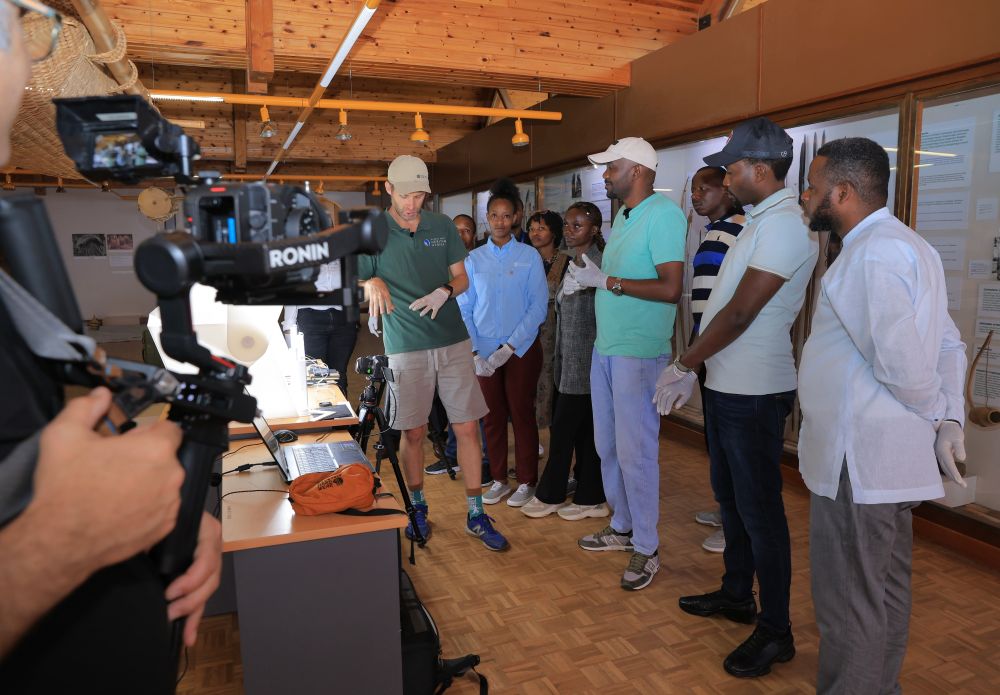
The announcement came at the conclusion of a week-long training program organized by the U.S.-based Global Digital Heritage Center, designed for staff responsible for managing exhibitions in museums and heritage sites across the country.
3D technology allows objects or sites to be captured in a way that lets people view them from all angles, replacing traditional photography, which only captures a single perspective.
This means that anyone will soon be able to rotate and examine artifacts or historical sites virtually, gaining a much fuller understanding of their details.
The digitization program is planned to be rolled out museum by museum until all sites are covered, with new discoveries continuously added to the digital archive.
Chantal Umuhoza, a staff member of the Rwanda Cultural Assembly responsible for Exhibitions and Digital Heritage Projects, Chantal Umuhoza, Museum Curator at the Rwanda Cultural Heritage Academy (RCHA), specializing in exhibitions and cultural heritage protection, said the technology will improve the preservation and global dissemination of Rwanda’s heritage.
She explained, “This technology helps us preserve and safeguard artifacts in museums and at heritage sites. Take, for example, the Musanze cave, you can now explore it virtually and see all angles as if you were there in person. This is the level at which we want to showcase our heritage.”
Umuhoza added that digitizing museums will also raise the international profile of Rwanda’s heritage, allowing anyone with an internet connection to visit the museums virtually without needing to travel physically. This is expected to increase curiosity and interest among potential visitors worldwide.
Historians and cultural experts note that making museum artifacts digitally accessible will help people better understand the country’s history and culture, while also making it easier to share Rwanda’s heritage with foreigners.
Steven Iradukunda commented, “In today’s world, technology is the most advanced way to quickly share information. As someone interested in history, I feel this technology will provide an easy way to explore museum collections, helping our children learn more about our heritage instead of wasting time on trivial content on social media.”
Addressing concerns that digitization might reduce physical visits to museums and heritage sites, Rwanda’s Cultural Heritage Academy clarified that this is unlikely. Instead, virtual access is expected to stimulate interest, encouraging more people to visit in person, ultimately increasing attendance.
Visitor numbers to Rwanda’s museums and heritage sites have been steadily increasing; from 139,538 in the 2014/15 fiscal year to 263,061 in 2024/25, generating Rwf 439,885,212 in revenue that year.
Participants praised the training for being transformative.
The night of March 31, 2026, was filled with celebration across the country as the national team defeated Jamaica 1-0, securing a World Cup spot for the first time in 52 years.
Residents in regions under AFC/M23 control, including the city of Goma, also celebrated the victory, demonstrating a sense of shared joy with citizens in other parts of the country, despite being under the rule of opposing factions.
On April 5, 2026, during festivities in Kinshasa honoring the team and thanking the players for their achievement, President Tshisekedi noted that the happiness of people in the eastern regions reinforced his confidence in reclaiming these areas.
He stated, “You saw the footage—there is joy in these territories controlled by the enemy, and we will reclaim them soon because of these forces, because of this momentum.”
The Head of State expressed optimism about regaining the regions, even as AFC/M23 maintained that it had no plans to relinquish control and warned that any government attacks would be dealt with.
Whenever the Congolese government has tried to retake lost areas, AFC/M23 has countered effectively, often seizing additional territory.
The international community has emphasized political negotiations as the only viable solution to halt the conflict, but President Tshisekedi has remained adamant.
There are reports that peace talks between the DRC government and AFC/M23 could resume in April 2026, though not in Doha, Qatar, due to the ongoing conflict in the Middle East; suggesting the venue may be moved to Switzerland.
President Tshisekedi noted that the happiness of people in the eastern regions reinforced his confidence in reclaiming AFC/M23 controlled areas.
Each year, new structures rise across the country, accompanied by ambitious real estate developments designed to meet the demands of a modern urban population.
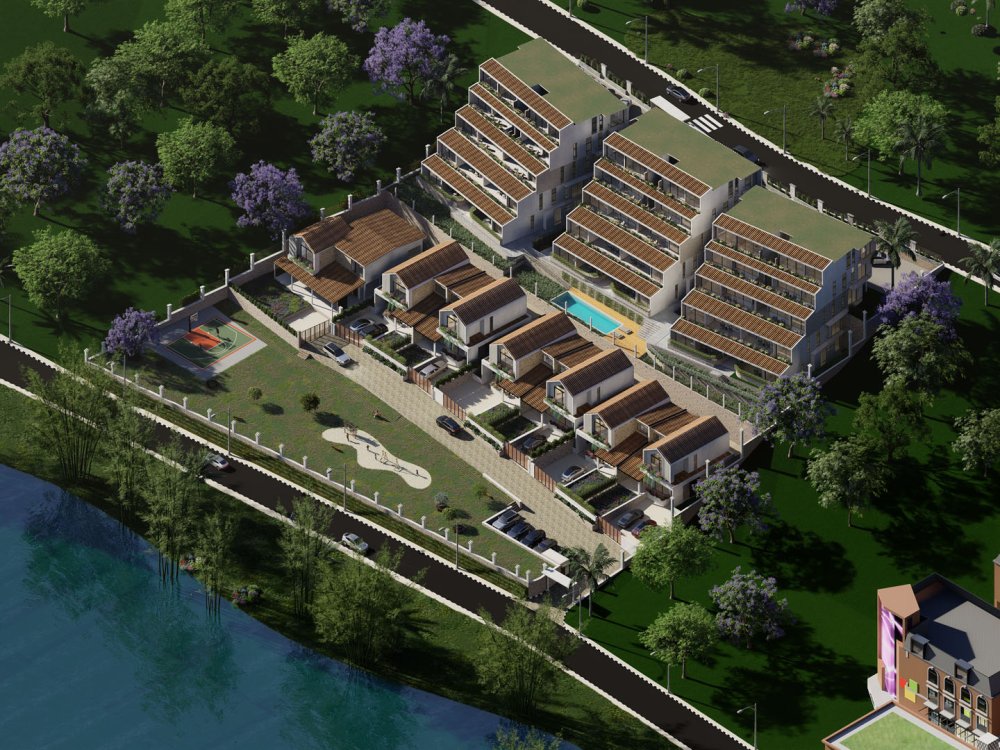
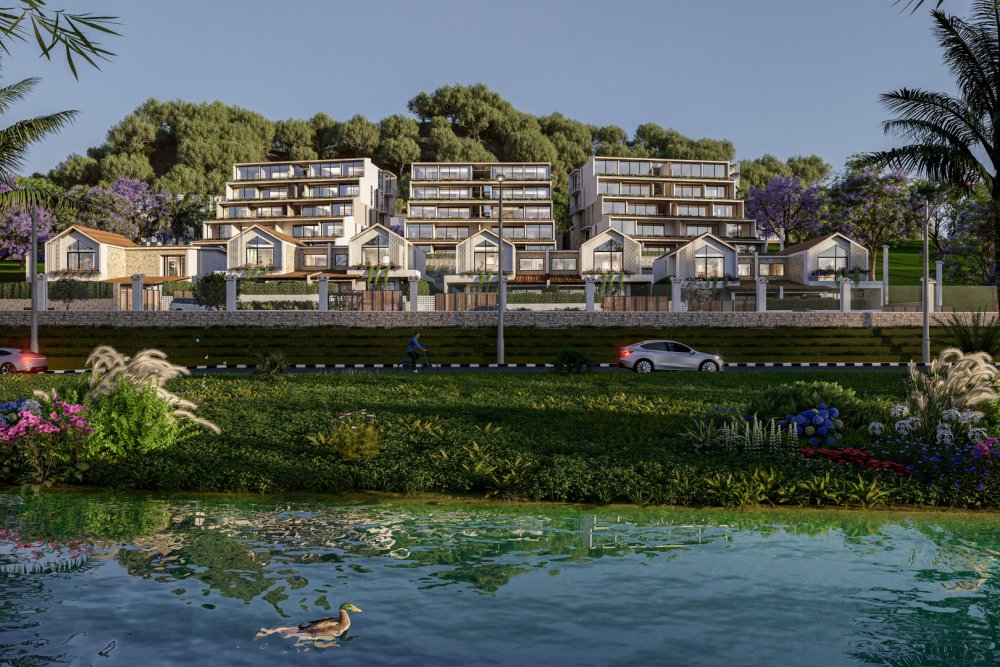
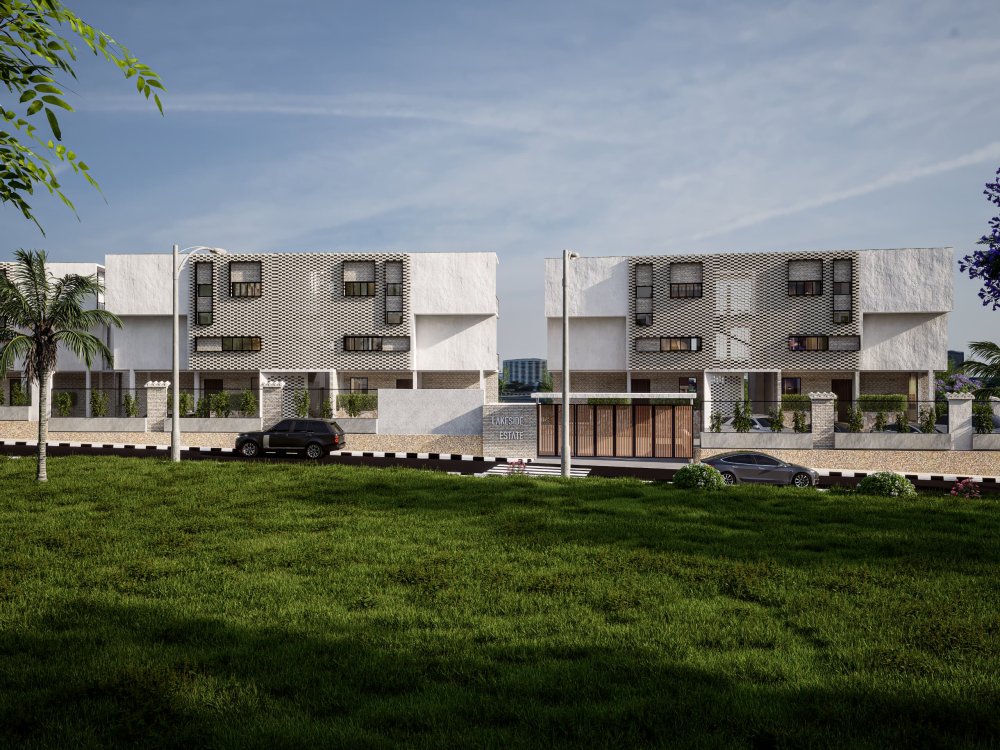
Among the most anticipated of these is Lakeside Residence, a contemporary housing project taking shape in Kacyiru, Gasabo District, near the former La Colombière School.
Developed by Nile Concept, a Rwandan firm with a solid reputation in construction and engineering, Lakeside Residence represents the company’s expansion into property development.
Known for its expertise in civil and geotechnical engineering, as well as the renovation of residential and commercial buildings, Nile Concept is now channeling its experience into building and selling modern homes tailored to Kigali’s evolving lifestyle.
The project brings together two types of residences: standalone villas and apartment units, all set on an 8,000-square-meter site.
The villas, which number seven, are designed as spacious two-level homes that combine comfort with functionality. On the ground floor, each villa features a large living room, a well-designed kitchen with storage space, and a guest bedroom with its own bathroom.
This level also opens onto a generous veranda, offering a seamless connection between indoor and outdoor living. Upstairs, the layout includes a master bedroom with an en-suite bathroom, along with two additional bedrooms, creating a well-balanced living space suitable for families.
In total, each villa offers four bedrooms, three bathrooms, and ample living and dining areas, complemented by verandas on both levels. Outside, each home is equipped with parking space for two vehicles and a private garden, adding to the sense of exclusivity and comfort.
Beyond the villas, the development also includes 30 apartment units designed to suit different needs. These apartments are available in two configurations, offering either two or three bedrooms, each with a thoughtfully arranged interior that includes a kitchen, bathrooms, and a living area. The design emphasizes both functionality and modern aesthetics, ensuring residents enjoy a comfortable and practical living environment.
What truly sets Lakeside Residence apart is not only its design but also the level of technical precision behind its construction. Nile Concept has applied its specialized knowledge in geotechnical engineering to prepare the site thoroughly before building began.
This process involved stabilizing the soil, implementing advanced drainage systems to manage rainwater and underground water, and reinforcing the land to prevent risks such as erosion or structural instability.
These measures ensure that the homes are protected from common issues like moisture damage or ground shifting, offering long-term durability and safety.
Architecturally, the project draws inspiration from the Mediterranean style, widely recognized in countries such as Spain, Italy, and Greece.
This approach is characterized by tiled roofs, timeless design elements, and interiors that maximize natural light, creating bright and inviting spaces. The result is a harmonious blend of elegance and practicality that stands out within Kigali’s growing urban landscape.
The location of Lakeside Residence further enhances its appeal. Situated in Kacyiru, the development offers convenient access to some of Kigali’s key landmarks and infrastructure, including the Nyarutarama Golf Course, the Kigali Convention Centre, and the city center. It is also close to a rehabilitated wetland that is being transformed into a public park, adding a natural and recreational dimension to the living experience.
According to Claudine Bagwire, the Commercial Manager at Nile Concept, the project was carefully designed with accessibility and convenience in mind, ensuring that residents can easily connect to essential services and amenities across the city.
She also noted that construction is progressing steadily, with the villas expected to be completed by July 2026, followed by the apartments in December of the same year.
As construction advances, some of the units have already been introduced to the market, signaling strong interest from prospective homeowners and investors.