Constantine made the remarks on Thursday morning, June 4, 2026, as the team departed Marrakech for Casablanca before travelling on to Cairo, Egypt.
The national team had spent two days in Marrakech and was scheduled to face Comoros and Tanzania in international friendly matches on June 6 and June 9. However, the Rwanda Football Federation (FERWAFA) announced that both matches had been cancelled due to security concerns.
Speaking about the decision to relocate the camp to Egypt, Constantine said the team still needed valuable training time ahead of the upcoming 2027 Africa Cup of Nations (AFCON) qualifiers.
He explained that the team would spend four to five days in Egypt working with the players while also exploring the possibility of arranging a friendly match.
According to the coach, securing an international friendly would be ideal, although a match against a club side would also serve the team’s preparations. He stressed that the primary objective was to continue training and help the players prepare adequately for the AFCON qualifiers.
Asked why Rwanda opted to continue its preparations in Egypt while some other teams returned home, the coach revealed that efforts had been made to organize friendly matches in Kigali against Uganda and Tanzania, but the plans did not materialize.
Constantine noted that Cairo was a convenient stop on the team’s route back to Rwanda and offered suitable training facilities as well as local support.
He said the coaching staff had explored the possibility of hosting Tanzania and Uganda for friendly matches in Kigali, but Uganda was unavailable while Tanzania planned to release its players back to their clubs.
As a result, the team chose between returning to Kigali for training or continuing preparations in Egypt.
He emphasized that maintaining the training camp in Egypt was more beneficial than ending preparations altogether, arguing that returning home immediately would have wasted the resources, time and effort already invested in the camp. He insisted that the team needed to continue training in order to remain focused on its objectives.
The Amavubi coach believes the additional training period will help his squad build chemistry, particularly new players such as Noam Emeran Fritz, who received his first call-up to the national team.
The squad also includes newly appointed Brazilian goalkeeping coach Ramos Dal Solio Rogerio.
Amavubi’s training camp in Egypt is expected to conclude on June 11, 2026.
Constantine explained that Amavubi would spend four to five days in Egypt working with the players while also exploring the possibility of arranging a friendly match.
WHO Director-General Tedros Adhanom Ghebreyesus, who just returned from a visit to the DRC, said he was very encouraged by the level of commitment he saw in the country. “What I saw gave me hope, although challenges remain.”
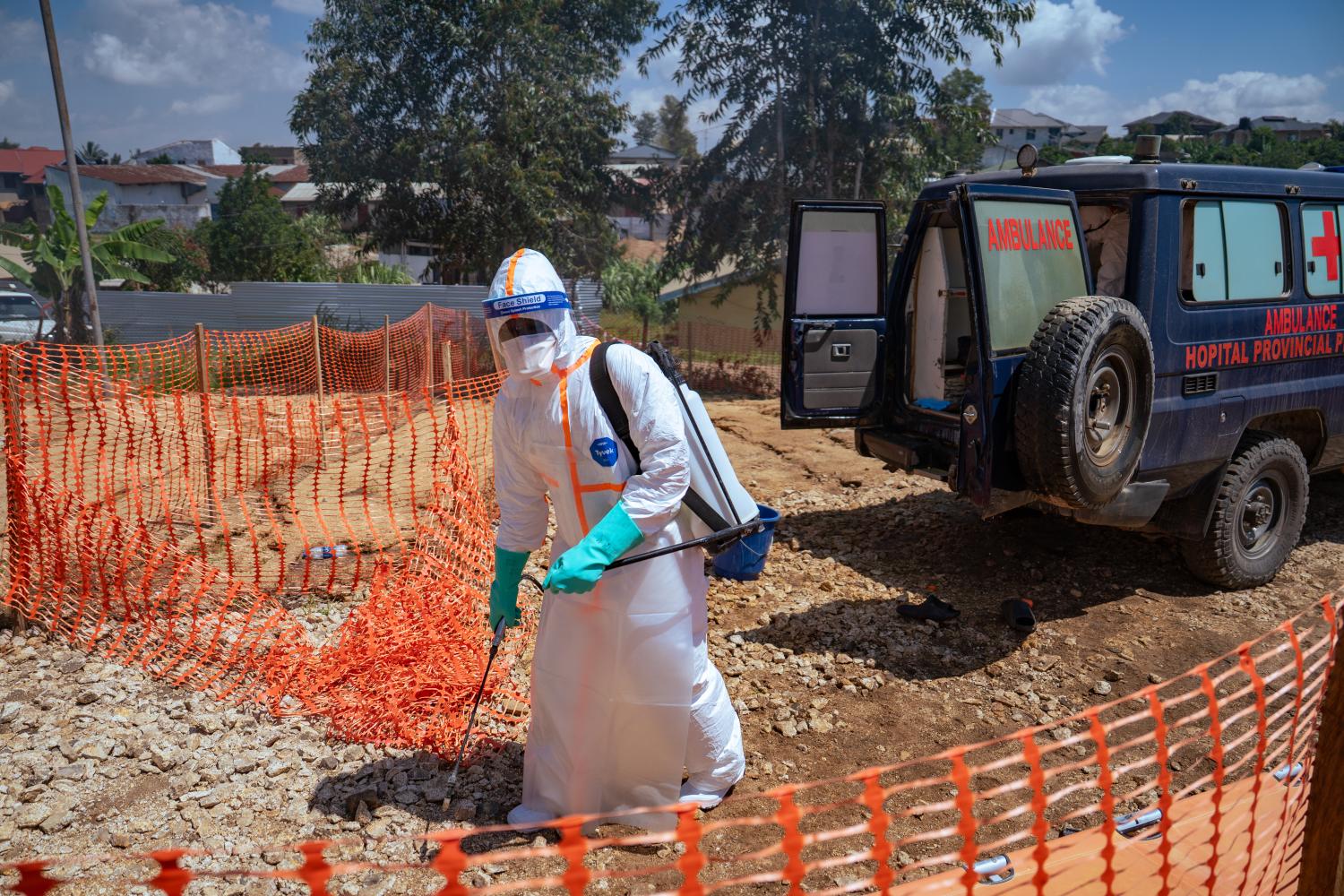
Tedros said that in the DRC, 344 cases have been confirmed, including 60 deaths, in 24 health zones across three provinces, while the number of suspected cases has been reduced to 116 from over 1,000 last week.
Tedros said WHO’s risk assessment remains unchanged: very high at the national level, high at the regional level, and low at the global level. “The outbreak had a big head start, and we’re still behind, but under the leadership of the Government of DRC, we are catching up,” he said.
Nonetheless, Tedros noted several challenges, which include scaling up laboratory and diagnostic capacity to reduce delays in case confirmation and support faster response decisions, contact tracing in the DRC, travel restrictions that are disrupting supply chains and hindering the response, community mistrust, and the fact that there are currently no licensed vaccines or specific therapeutics for the Bundibugyo ebolavirus strain.
WHO Director-General Tedros Adhanom Ghebreyesus, recently visited DRC to express solidarity and assess Ebola response.
“It’s very, very hard to get it … but nevertheless, I want to get at it,” Trump told reporters at the White House.
Despite recent strikes in the region, he said that the U.S.-Iran ceasefire taking effect in early April remains in place, suggesting that it is possible an interim deal could be reached “over the weekend” as the ongoing talks are advancing.
“The negotiation itself has gone very well – actually, very well – even if it happens, and it might not happen, but if it happens, it could happen like over the weekend,” Trump said.
“A ceasefire there is much different than a ceasefire in other parts of the world,” he said. “You know, I’d say in that part of the world, a ceasefire is when you’re shooting in a more moderate manner.”
Meanwhile, Trump claimed that Iranian officials have “changed their mind a couple of times, but as it stands now, we will go in sometime in the not-too-distant future.”
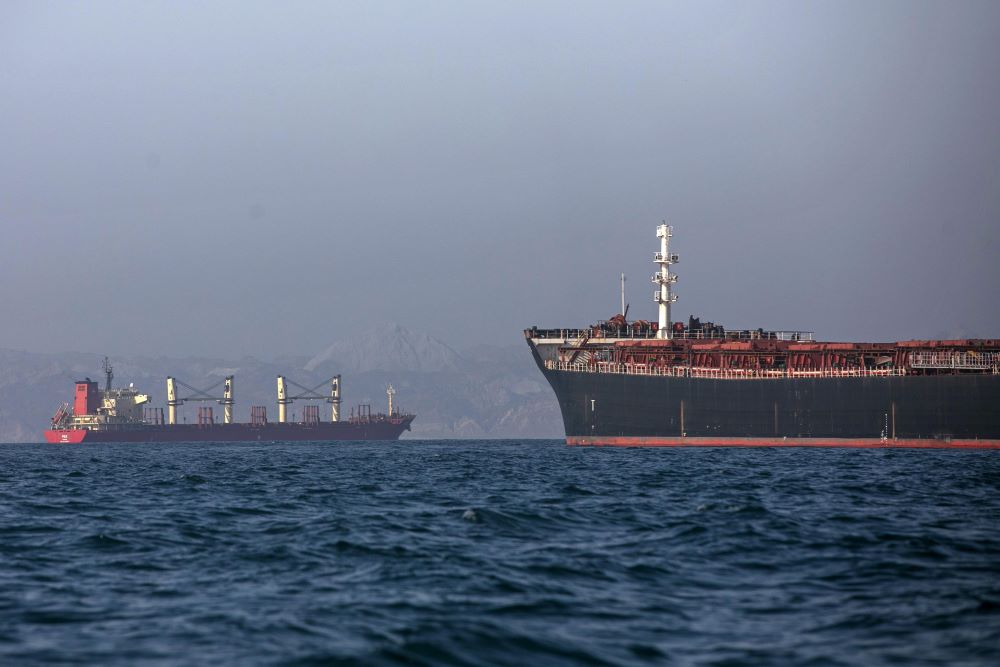
Iran’s naval forces have targeted the “command center” on a U.S. destroyer in the Gulf of Oman in response to U.S. “violations of the regulations” of the Strait of Hormuz and its “hostile” actions against Iranian vessels, state-run IRIB TV reported Wednesday.
Minutes later, the U.S. Central Command denied the claim on X.
Trump has said U.S., Iran to jointly dig out Iran’s buried nuclear material
Officially inaugurated by Rwandan President Paul Kagame and French President Emmanuel Macron on June 2, 2026, the monument is being described as “a light that has been lit in the city of Paris.”
On the evening of June 2, 2026, French and Rwandan authorities officially inaugurated the memorial, named Les Archives, erected along the banks of the Seine River in the heart of Paris in tribute to the victims of the 1994 Genocide against the Tutsi.
The ceremony was attended by President Emmanuel Macron, Paris Mayor Emmanuel Grégoire, senior officials from the French and Rwandan governments, Secretary General of the Organisation Internationale de la Francophonie (OIF) Louise Mushikiwabo, IBUKA-France President Marcel Kabanda, and numerous representatives of survivors’ associations.
Speaking to IGIHE, several IBUKA leaders from Europe and Rwanda expressed their satisfaction, saying the memorial will help the international community better understand the true history of the Genocide against the Tutsi.
IBUKA-France President Dr. Marcel Kabanda described the memorial as “a light lit in Paris” that will help dispel the darkness of ignorance and genocide denial.
“This memorial is like a light that has been lit in the city of Paris so that people may emerge from the darkness surrounding this history. That darkness is sustained by genocide deniers. They create a fog, but this memorial illuminates the way, enabling people to learn about the history of the Genocide against the Tutsi, understand it, preserve it, and resist those who seek to minimize or distort it.”
He also emphasized that the speeches delivered by Presidents Kagame and Macron reflected a sincere commitment to cooperation between Rwanda and France.
“Each spoke openly and honestly, without evasion. Both Heads of State demonstrated their willingness to work together. What I take from this is a relationship built on sincerity, without hypocrisy or deception. This partnership has already made significant progress, and we hope it will continue moving forward, as President Macron himself stated.”
Dr. Kabanda was also thanked by both Heads of State and the Mayor of Paris for his dedication and efforts in helping bring the memorial project to fruition.

For his part, IBUKA-Rwanda President Dr. Philbert Gakwenzire stressed that the memorial not only honors the victims of the Genocide against the Tutsi but also carries a universal message aimed at preventing future atrocities.
“This memorial pays tribute to the victims, provides comfort to survivors, and sends a message to Rwandans, the French people, and humanity as a whole. It invites us to reflect on our history so that genocide never happens again. It reminds us of our past, the difficult relationship that once existed between France and Rwanda, but also the progress that has been made in restoring ties between our two countries.”
He also highlighted the educational role of memorial sites.
“A memorial should be a place of learning. It should help us understand what happened so that it never happens again. It tells the story of those who were killed during the Genocide against the Tutsi and shows that when leaders make poor decisions, entire populations suffer the consequences. That is exactly what happened during the genocide.”
Dr. Gakwenzire further argued that, given the influence France held in Rwanda at the time, it could have helped prevent the genocide.
“Considering the influence France had over the Republic of Rwanda at the time, had they simply raised a finger and said that these events must stop, they should never have happened. That is why this moment is so important. It shows that France now recognizes certain responsibilities and wishes to build, together with Rwanda, a future based on shared values and a message to the world.”
IBUKA-Italy President Dr. Honorine Mujyambere described the memorial as an important tool in the fight against genocide denial in Europe.
“This is an extremely important initiative, especially in Europe, where genocide denial remains widespread. The fact that France has taken such a step is highly significant. We know the role France played in this history, what was said, what was left unsaid, and what was not done. Today, France has taken strong and meaningful action.”
She added that the memorial will help preserve the memory of the victims while raising awareness about Rwanda’s history.
“Anyone who passes by this memorial will inevitably ask what happened here. It will encourage people to seek the truth about this history and will greatly contribute to combating genocidal ideology, which we know remains particularly prevalent in parts of Europe.”
IBUKA-Switzerland President César Murangira also described the memorial as a major symbol in the process of healing the wounds that long characterized relations between Rwanda and France.
“This memorial carries immense symbolic value. It contributes to healing long-standing wounds in relations between France and Rwanda. It reflects France’s acknowledgment of its role and responsibilities in this history, thereby opening an important path toward truth-seeking, remembrance, and reconciliation.”
According to him, the establishment of the memorial in Paris sends a powerful and hopeful message. It reflects a commitment to honoring the victims, preserving historical truth, and continuing to build a relationship between Rwanda and France founded on truth, remembrance, and reconciliation.

He also emphasized the significance of the memorial’s location, situated near major French institutions such as the Quai d’Orsay, home to the Ministry for Europe and Foreign Affairs, the National Assembly, and Les Invalides—sites that hold a prominent place in France’s political and historical life.
During the inauguration ceremony, President Kagame thanked French individuals who contributed to bringing the truth about the Genocide against the Tutsi to light, including former Paris Mayor Anne Hidalgo, her successor, journalists, historians, and human rights advocates.
The Rwandan Head of State also noted that the memorial stands as a powerful symbol of historical truth—a truth firmly rooted and impossible to shake. He described it as a testament both to the dignity of the Rwandan people and to the memory of the Genocide against the Tutsi.
Photos marking the unveiling of the memorial in Paris
Preliminary investigations revealed that the victims were working at night when the landslide occurred, which made rescue efforts harder, Gabin Razafindrakoto, commander of Vatomandry gendarmerie brigade, told Xinhua.
The mayor of the city has ordered the immediate closure of the site to prevent any further mining activities and reduce the risk of additional incidents, he said.
Authorities are trying to determine the exact circumstances of the landslide.
Event attendees toured the development projects, each of which was designed and implemented by residents of Gatovu IDP model village and Gataraga Sector.
The projects included a computer laboratory, a girls’ hygiene room and a nursing teachers’ room for Groupe Scolaire Gatovu, a volleyball and basketball court at Group Scolaire Ruhehe, latrines for 50 households, businesses in furniture-making, handicraft-making, soap-making, and tailoring, a savings and lending group, a sheep farming project, Irish potato farming, and new market infrastructure for vendors and customers.
Provincial Executive Secretary for the Northern Province, Pascal Ngendahimana, who presided over the ceremony together with representatives of Musanze District and Gataraga Sector noted that many of these development projects provide ongoing benefits to the whole community.
He said, “For example, when a community group makes furniture to sell, they not only earn themselves income, they also make those products available locally – so residents here do not have to travel far to obtain them.”
Following a memorandum of understanding signed with the Ministry of Local Government (MINALOC), World Connect Rwanda invested Rwf 135,980,665 to launch the 12 projects. Residents of Gatovu IDP model and Gataraga Sector contributed Rwf 88,254,900 in their own cash, labour and other resources as a co-investment into these initiatives.
Executive Director of World Connect Rwanda, Rhoda Kanyesigye, told the attendees, “We do not see communities as beneficiaries of development aid, but as investment partners. This is because our partner communities co-invest with us. And we value their investment enormously; without it, success is not durable.”
In a unique partnership, University of Rwanda students studying rural development and agribusiness were paired with community members in Gataraga Sector and Gatovu IDP model village. The students are supporting the implementation of these development projects with technical guidance, monitoring, and evaluation.

“World Connect Rwanda helped us apply what we learned in class to real life situations, showing us that community work teaches lessons that cannot be fully learned from textbooks,” explained University of Rwanda student Winny Abera.
Since 2012, World Connect Rwanda has invested grant funding in nearly 200 projects that have been designed and led by Rwandan communities, improving health, education, and economic opportunity for over 256,000 Rwandans.
A major focus of World Connect Rwanda for the next 5 years (2026-2030) is to scale up and support 10 IDP model villages, reaching and impacting an additional 100,000 Rwandans. Key partnerships with local government, the private sector, and funding partners will play a great role in this aspiration.
Attendees pose for a group photo with the Northern Province Executive Secretary. Pascaline Nirere, a resident of Gatovu IDP model village, is earning income through the tailoring and fashion design workshop established with funding from World Connect Rwanda. This tailoring and fashion design project at Gatovu IDP model village, was funded by World Connect Rwanda. Provincial Executive Secretary for the Northern Province, Mr. Ngendahimana Pascal, gave keynote remarks at the inauguration, congratulating the work of the communities in Gatovu IDP model village and Gataraga Sector, World Connect Rwanda, and the University of Rwanda.
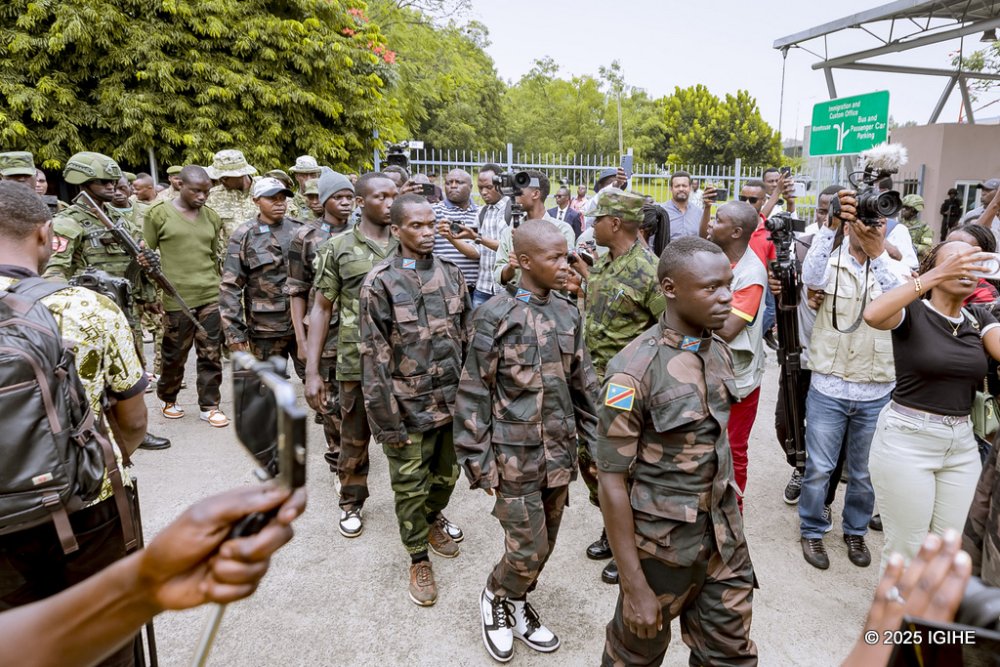
The decision comes as Rwanda’s national team, Amavubi, is already in Morocco, having arrived in Marrakech on Tuesday evening to begin preparations for two friendlies against Comoros and Tanzania on June 6 and June 9, 2026.
Several media outlets report that Moroccan authorities have introduced precautionary health measures that have disrupted a series of fixtures involving African national teams.
The FRMF said the move is aimed at safeguarding players, coaching staff, officials, and supporters as fears over the spread of Ebola continue to grow across the continent.
Reports from Africasoccer and Africatopsports indicate that among the affected fixtures are Tanzania vs Uganda scheduled for June 5, Rwanda vs Comoros on June 6, Uganda vs Madagascar on June 8, and Tanzania vs Rwanda on June 9.
The Rwanda Football Federation (FERWAFA) had not yet issued an official response by press time.
Some matches are still under review, with organizers expected to take final decisions in the coming days.
These include Burundi vs Equatorial Guinea on June 4 and Comoros vs Guinea on June 9.
Despite the uncertainty, Amavubi’s full squad of 24 players is already in camp in Marrakech. The group includes Noam Fritz Emeran, the Netherlands-based player who has earned his first call-up to the national team.
The Royal Moroccan Football Federation (FRMF) has called off a number of international friendly matches scheduled to be played in the country in June.
According to a notice issued by RRA, the products in question include 1,993,750 litres of fuel currently stored in bonded facilities operated by Yussa in Kabuye, Rubis Energy in Gatsata, and Oilcom in Jabana.
Diesel accounts for the largest share of the stock, with approximately 1.35 million litres. The remaining volume includes 641,055 litres of petrol and 5,065 litres of kerosene.
RRA said the fuel has exceeded the maximum storage period permitted under customs regulations and must therefore be processed and released onto the market.
The published list shows that the ownership of 791,832 litres of the fuel has not been identified. Among the companies holding the largest volumes are Mount Meru Petroleum with 368,998 litres, Kivu Energy Ltd with 120,361 litres, and Socit Sarl with 65,404 litres.
Other firms on the list include Ukod Oil Rwanda Ltd, Hashi Energy, China Road, Gulf Energy, Hunan Road and Job Petroleum, each holding varying quantities of fuel and diesel.
Bonded warehouses are used to store imported goods before taxes and duties are paid or before customs clearance is completed.
A source familiar with petroleum storage operations explained that fuel sometimes remains in storage after smaller companies cease operations.
Because warehouse operators do not own the products, they cannot place them on the market without authorization. In such situations, government intervention is required to facilitate their release.
RRA’s notice also lists several individual owners with fuel products in storage. The smallest quantity recorded belongs to an owner holding just three litres.
A source familiar with petroleum storage operations explained that fuel sometimes remains in storage after smaller companies cease operations.
Luku Maleyo Marius, a representative of the DRC Ministry of Health, welcomed the team at the airport, saying that China’s dispatch of the medical experts represents timely and strong support for the Congolese government and people.
Whenever the DRC faces major public health challenges, China has consistently extended timely assistance, he said, adding that he looks forward to the mission further strengthening the country’s epidemic prevention, control and treatment capacities, and helping bring the outbreak under control as soon as possible.
Lu Ming, head of the Chinese expert team, said the team would begin work promptly in line with the Congolese side’s needs and would cooperate with local medical and disease control institutions to provide support in epidemic assessment, case management, and other areas.
He added that the team would work closely with the Congolese side to safeguard people’s lives and health, contributing China’s expertise to helping the DRC control the outbreak at an early stage.
On May 15, the DRC officially confirmed its 17th Ebola outbreak since 1976. Two days later, the World Health Organization declared the outbreak a public health emergency of international concern.
China’s National Health Commission announced on Monday the decision to send a medical expert team to support the DRC’s Ebola control efforts.
According to the commission, the first group consists of five members with extensive experience in epidemic control. They will also share practical response experience tailored to local conditions and help enhance the DRC’s capacity for Ebola prevention, control and treatment.
Lu Ming (L), head of the Chinese expert team, talks with Luku Maleyo Marius, a representative of the Ministry of Health of Democratic Republic of the Congo (DRC), in Kinshasa, capital of the DRC, June 2, 2026.Members of a Chinese anti-epidemic medical expert team arrive in Kinshasa, capital of the Democratic Republic of the Congo (DRC), June 2, 2026. A Chinese anti-epidemic medical expert team arrived in Kinshasa on Tuesday for a three-month mission to support the Central African country’s response to the Ebola outbreak. (Xinhua)
He made the remarks on June 2, 2026, during the inauguration of Les Archives, a memorial dedicated to the victims of the Genocide against the Tutsi, where he was accompanied by First Lady Jeannette Kagame and other dignitaries.
In his address, Kagame reflected on his personal experience of displacement and Rwanda’s history of repeated tragedy, noting what he described as a “cycle of thirty years” between earlier violence in the 1960s and the 1994 Genocide against the Tutsi.
He said, “The events of the Genocide against the Tutsi are within living memory. And so the work of memory necessarily begins with the word of survivors.”
Kagame stressed that survivors themselves carry the burden of history, describing them as “living memorials, not only by virtue of the visible scars of the body, but also the indelible wounds of the spirit.”
Speaking about the significance of the newly unveiled memorial, he said it plays a critical role in preserving truth for future generations: “The memorial before us is powerful because it sets the truth in stone and protects it from the heartlessness of time, by instructing the living.”
Kagame added that the memorial is not about validation, but respect, saying it stands as “a mark of respect for the dignity of Rwandans and our history.”
Turning to relations with France, Kagame commended President Emmanuel Macron for his approach to historical responsibility, stating: “President Macron, I want to commend you on both counts: courage and humanity.”
He referenced France’s acknowledgment of its past during Macron’s 2021 visit to Rwanda, noting the recognition that France “could have stopped the genocide but did not,” and describing such acknowledgment as more meaningful than an apology.
Kagame also praised earlier steps taken by France, including historic remarks by former President Nicolas Sarkozy, and efforts by journalists and researchers who helped document the truth of the genocide.
He said Rwanda’s engagement with its past and international dialogue has contributed to what he called an “irreversible journey towards truth.”
Kagame further emphasized Rwanda’s internal responsibility and resilience, saying the country has chosen to confront its history directly and invest in educating younger generations to prevent repetition of past atrocities.
He concluded by stressing that overcoming history requires political will, adding that the unveiling of the memorial in Paris represents a deeper commitment to peace, understanding, and remembrance.
French President Emmanuel Macron also paid tribute to the victims during the official inauguration of the memorial, emphasizing the importance of remembrance.
The French Head of State described the memorial as “the culmination” of the long process of recognition undertaken in recent years regarding the Genocide against the Tutsi.
According to Macron, the construction of the memorial in Paris now places the Genocide against the Tutsi “at the heart of the French capital and its history.”
He noted that the project is the result of years of dedicated work based on survivors’ testimonies, historical research, academic publications, and the sustained commitment of memory and remembrance associations.
The French President also recalled the speech he delivered at the Kigali Genocide Memorial in Gisozi in May 2021, when he acknowledged France’s responsibilities in the events that led to the Genocide against the Tutsi.
“I do not wish to take back a single word of what I said,” Macron stated, reaffirming his commitment to continuing the pursuit of truth between the two countries.
The memorial was inaugurated in Paris on Tuesday, June 2, 2026. President Kagame has hailed Macron for ‘humanity’ and the role played by his country to preserve memory of the 1994 Genocide against the Tutsi. President Kagame and First Lady Jeannette Kagame honored victims of the 1994 Genocide against the Tutsi at the unveiled memorial in Paris.