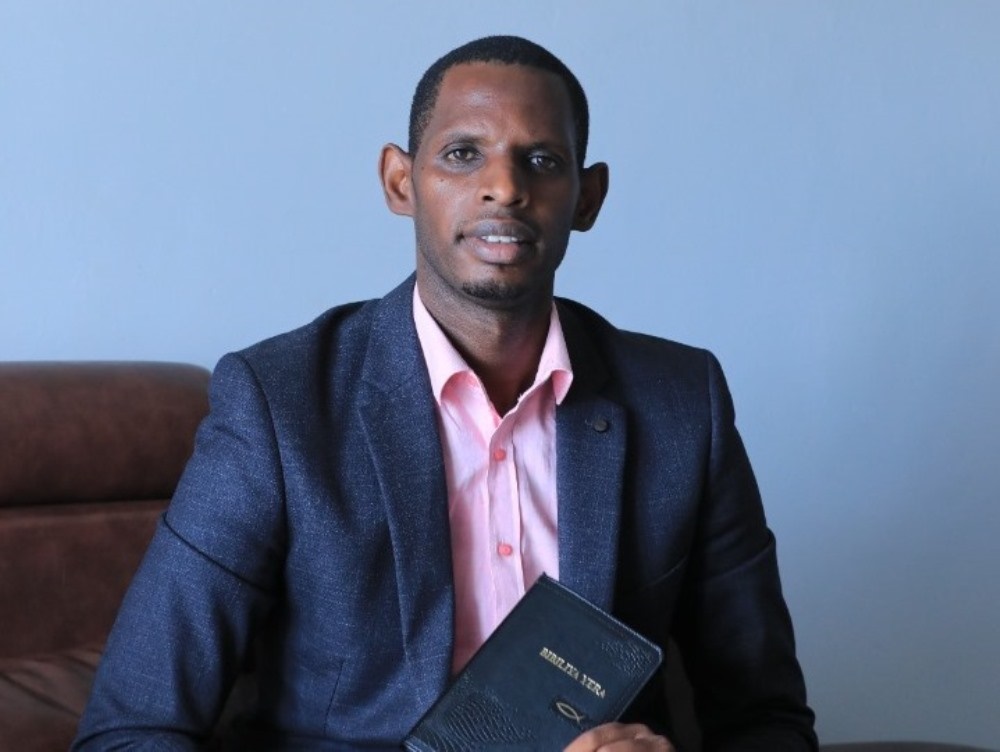
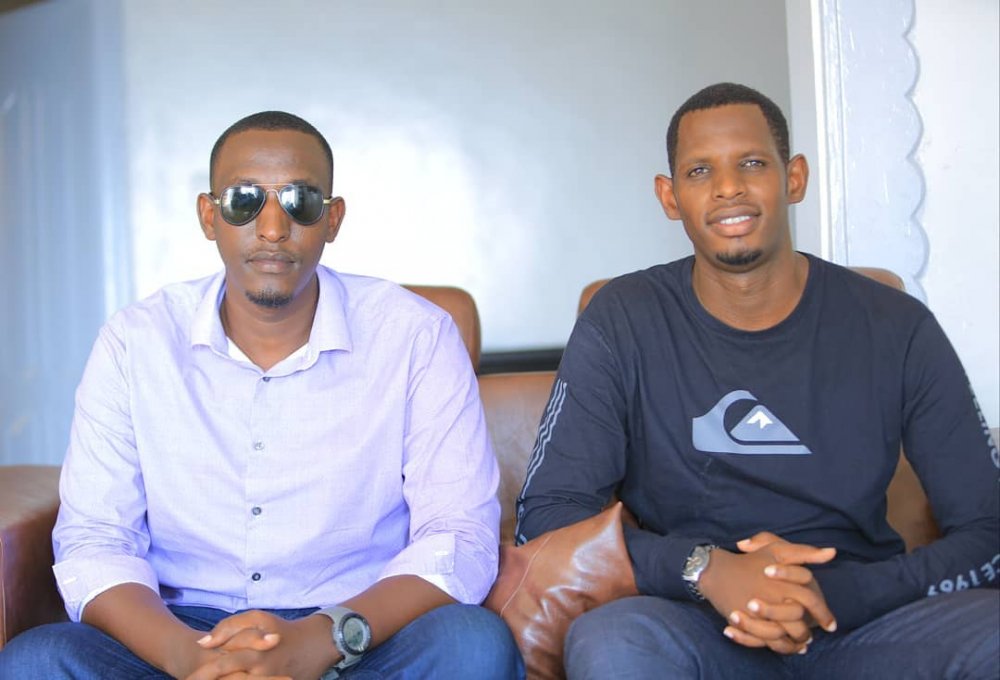
His death has been confirmed to IGIHE by Junior, the brother of the deceased who is also a movie interpreter. “He died around 11:30 a.m. in South Africa where he has been receiving treatment,” he said.
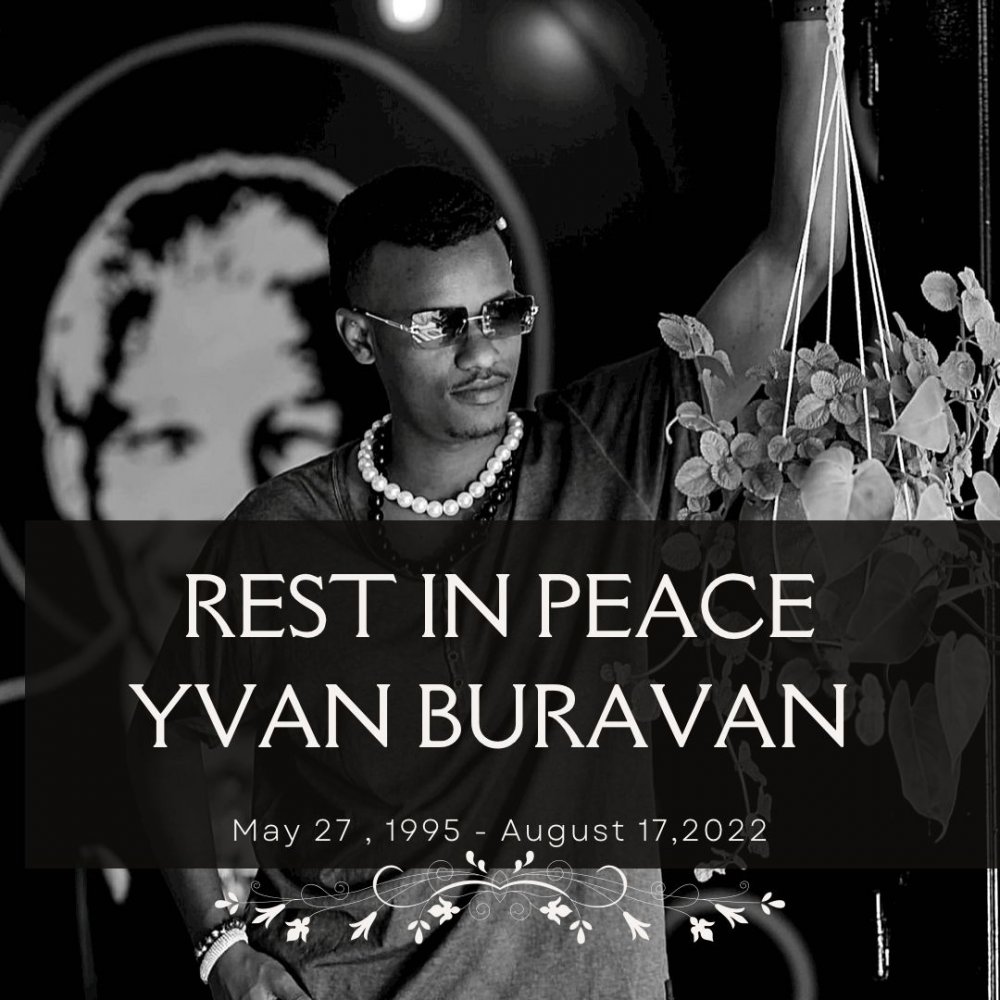
His death is announced in less than a day following the demise of singer Yvan Buravan who breathed the last in India.
Yanga went to South Africa in April this year. At the time, he was accompanying his children to visit their mother who works there.
Arriving in the country, he caught a disease that his life deteriorated until he breathed the last on 17th August 2022.
Yanga started his career as a film interpreter at the age of 17 while he was a secondary school student.
He once told IGIHE that he drew inspiration at early age from neighbours who forced their meal upon the job when his family lived in Uganda.
Interpreting movies into Kinyarwanda earned him huge returns and popularity.
He however retired from the business between 2012-2013 realizing that movie interpretation was no longer lucrative enough.
Yanga will be remembered as one of pioneers of film interpretation in Rwanda.
In 2018, Yanga was diagnosed with a stomach abscess which resulted into cancer. After learning about his critical condition, Yanga felt shocked and leaned on God.
He sought assistance from pastors to pray for him and later announced that he miraculously healed from stomach cancer without undergoing surgery.
Since then, he committed to serve God for the rest of his life. Yanga had established a movie hall dubbed ‘The One Film Production’.
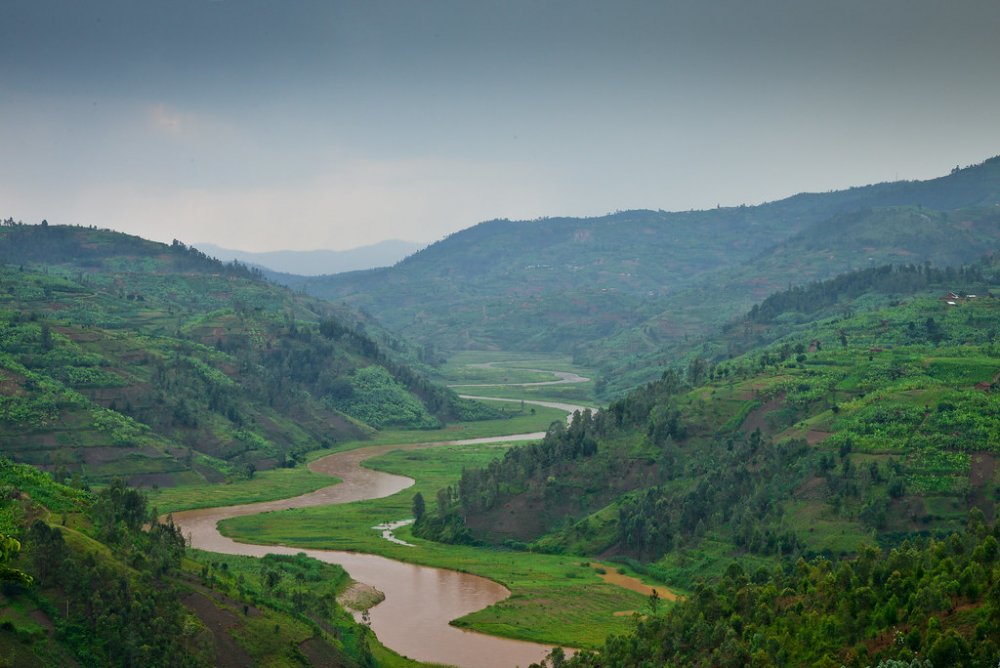
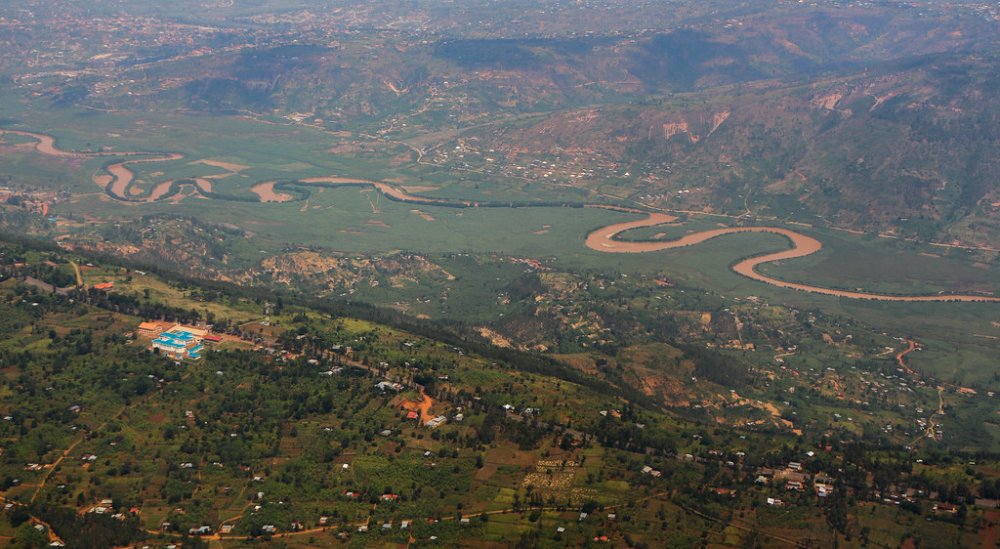
Research shows that River Nyabarongo washes away over 400 tons of soil from Rwanda every year to other countries along its water courses.
In areas with large-scale mining projects like Muhanga, at least 51 kilograms of soil are washed away every second as per figures from Rwanda Water Resources Board (RWB).
The degradation of River Nyabarongo which is the longest in Rwanda, and its banks incurs a huge loss to the country considering its relevance to the agriculture, biodiversity, national economy through electricity generated from dams built over the river and water supplied to Kigali City among others.
Speaking to IGIHE, the Director General of RWB, Dr. Emmanuel Rukundo has revealed that the country suffers big losses over the degradation of River Nyabarongo which flows into Nile River.
Nyabarongo water is always dark-brown due to erosion and illegal mining activities.
Dr. Rukundo Emmanuel has said that this degradation affects the country and citizens as well.
“Erosion firstly washes away the arable and fertile land. This reduces agricultural yields for farmers, hence causing adverse effects in daily lives where expected outcomes to the country and the individual is low,” he said.
Farmers account for 60% of Rwandan population where a large segment of farmers are only assured of good yields in wetlands and rivers’ edges.
Nyabarongo is home to diverse animal species including crocodiles and fishes among others.
Dr. Rukundo has revealed that the polluted water flowing through the river and erosion pose threat to these species where some of them can be subjected to the risk of extinction.
“Polluted water puts life on a standstill. We use water to generate electricity or for daily consumption. For instance, Nzove Plant uses water from River Nyabarongo which undergoes treatment processes before being released into communities for daily use. When water is contaminated, the cost of treatment goes high,” he noted.
Considering the complex process of highly contaminated water, Nzove Plant has sought alternatives to use underground water in case River Nyabarongo is very muddy during the rainy season.
“When water containing much mud gathers in dams built at a hydropower plant, it reduces the output,” said Dr. Rukundo.
Several conservation efforts for River Nyabarongo were implemented over the past years but did not lead to a durable solution.
Experts expressed concerns that the issue lies in scattering efforts among relevant partners or lack of strong policy.
Dr. Rukundo has told IGIHE that new polices devised to prevent erosion across the country are expected to start bearing fruits this year.
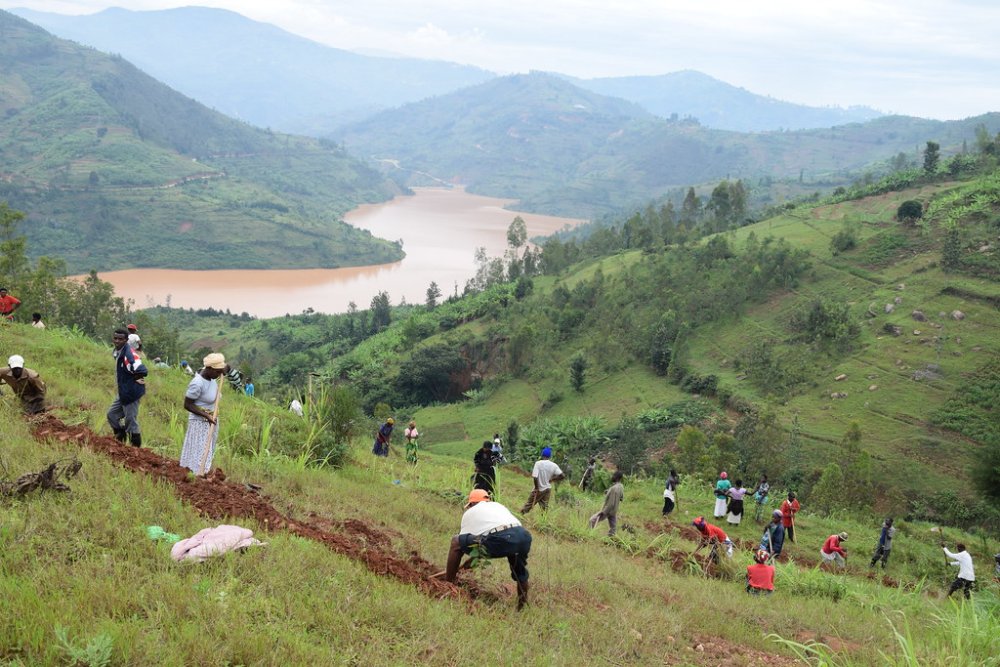
“80% of the land designated for heightened erosion prevention are fit for terracing or other erosion control techniques. All these activities are within citizens’ capacities,” he said.
“There is an ongoing sensitization that started in April being conducted in collaboration with local leaders reminding citizens to prevent erosion in own land. The average size for a land owned by a citizen is nearly a half hectare. We believe it is possible to control erosion on that land,” added Dr. Rukundo.
Since 2012, the Government of Rwanda has allocated almost Rwf3.5 billion for erosion control starting with the most affected districts.
Dr. Rukundo has disclosed that there is a plan to build terraces on 24,948 hectares of land. They will be an addition to more 21,000 hectares terraced over the past four years.
He explained that planting crop-friendly trees, and planting trees along river banks are among other measures being devised to control soil erosion.
Plans are also underway to sensitize companies carrying out mining activities to recycle used water before releasing them into rivers.
Dr. Rukundo has further stressed the need for concerted efforts between different stakeholders considering the complex work it requires for efficient conservation of River Nyabarongo.
Other pointed out pollutants include garbage discharged from households and factories which put at risks the lives of consumers.
Research carried out by the Democratic Green Party in October 2021 indicated that some bird species in the nature along Nyabarongo watercourse disappeared owing to contamination of the river’s water.
“I, therefore, call on all Kenyans and the business community to resume their normal daily activities and get back to the business of building our great nation,” said Head of the Public Service and Chairperson of the NSAC Joseph Kinyua in a statement issued in Nairobi, the capital of Kenya.
The National Security Advisory Committee (NSAC), which comprises top security and government officials, also assured the country of adequate security as they go about their activities.
The statement came after the Independence Electoral and Boundary Commission (IEBC) on Monday declared William Ruto as the country’s fifth president-elect after garnering 50.49 percent of the total 14.1 million votes cast in a tight presidential race against the veteran opposition leader Raila Odinga.
Ruto’s victory sparked violent protests in some parts of the country Monday, with demonstrators alleging there were irregularities during the tallying of the votes.
Four IEBC commissioners also on Monday distanced themselves from the results that were announced by their chairman Wafula Chebukati, saying they could not support the “opaque” vote count before the declaration, which raises anxiety that the results might be contested at the Supreme Court.
The National Security Advisory Committee, however, confirmed that the nation remains peaceful and secure. Kinyua assured the country that the government would continue to take all necessary measures to ensure that the entirety of the country is safe and secure.
The military in a statement it tweeted said its medical department together with the ministry of health and the World Health Organization will, starting on Aug. 19, vaccinate the troops including those operating along the common border with the DRC.
Ambrose Musinguzi, Chief of Medical Services, said the troops in eastern DRC face a high risk of contracting the deadly disease.
“The vaccine to be applied which is from Merck is 100 percent effective. We have used it before in Uganda not only to health workers but also in districts of Kasese and Bundibugyo and in some units of UPDF (Uganda People’s Defense Force),” said Musinguzi.
Henry Kyobe Bbosa, the UPDF Epidemiologist, said the army medical personnel have been trained as Ebola Rapid Response Team and Vaccinators to contain and control the outbreak.
“We have conducted TOT (Training of Trainers) workshop of 30 experts in different areas who are going to train other medical workers in the field who will in turn be conducting case findings, managing alerts and carry out vaccination. We are also to deploy three mobile laboratories to be able to manage any signal case,” Bbosa said.
He said there are potentially sporadic unmasked Ebola outbreaks that require contingent measures, in case if any of the troops get infected, the rapid response team is able to respond, manage and treat.
Uganda and DRC in November last year launched joint military operations against the Allied Democratic Forces (ADF), an insurgent group hiding in the jungles of eastern DRC.
The ADF is an affiliate of the Islamic State in central Africa and is also blamed for the bombings in the Ugandan capital Kampala last November that left six people dead and 33 others injured.
The Alexander Pushkin Square-Gotera Interchange Road Project, which is a 3.8 km road that incorporates three segments and construction of a two-lane 320 meters tunnel, was contracted by China First Highway Engineering Co., LTD (CFHEC).
Adanech Abiebie, Addis Ababa city Mayor, said during the road project inauguration that the project is a manifestation of Ethiopia’s commitment and dedication to undertake vital development projects in a short period of time with higher quality.
“This road project, in addition to setting a good example of an excellent road project execution for the city and our country, will also tremendously improve the traffic flow in this highly congested part of the city,” Abiebie said.
“We would like to appreciate the Chinese people and government for this magnificent project, both in terms of financing and executing the project,” the mayor added.
She further emphasized that the newly inaugurated road project not only alleviated the traffic flow across its surroundings but also added another aesthetic to the area.
The project’s timely completion, which was commenced with a groundbreaking event back in Oct. 2019, was said to be another milestone that serves as an example for similar large scale development projects in the east African country.
Shen Qinmin, charge d’affaires of the Chinese Embassy in Ethiopia, on his part said the Alexander Pushkin Square-Gotera Interchange Road Project, is a symbol of cooperation and friendship between China and Ethiopia.
Shen said China and Ethiopia are all-weather brothers. He said the two countries have adopted development strategies that are highly compatible, and engaged in fruitful cooperation that sets the pace for China-Africa cooperation in general.
“China as a developing country fully understands the needs and aspirations of the Ethiopian people and government. We know how important roads or infrastructures are for the coming true of national dreams and economic development as well,” he said.
He affirmed that China continues to be Ethiopia’s genuine, sincere development partner.
Spokesperson Wang Wenbin made the remarks at a regular news briefing in response to a query on the measures China will take to facilitate the import of agricultural and food products from African countries.
The Chinese government attaches importance to strengthening agricultural cooperation with Africa and actively promotes the import of agricultural products from Africa, Wang noted, adding that China is the second largest destination for African agricultural exports.
In recent years, the average growth rate of African agricultural exports to China has reached 11.4 percent. In 2021, African agricultural exports to China increased by 18.23 percent year on year.
At the Eighth Ministerial Conference of the Forum on China-Africa Cooperation in November last year, China announced the establishment of a “green channel” for African countries’ agricultural products entering China, Wang said.
Wang said the General Administration of Customs formulated and actively implemented several practical measures to facilitate access for such products.
First, the applications of agricultural products from African countries for entry into China are to be considered on a priority basis. After receiving relevant technical data, risk analysis is to be immediately started to accelerate the quarantine work needed for gaining access.
Second, for some agricultural products from the same country with similar processing technologies, or the same agricultural products from different countries, on the premise of controllable risks, the risk assessments will be carried out in a combined manner, thereby speeding up the entry process.
Third, China will facilitate the registration of African enterprises that have been approved for the import of agricultural products, adopting flexible methods such as video inspection or document review to speed up the assessment and registration process.
With the joint efforts of both sides, the trade in agricultural and food products between China and Africa will prosper and develop, he added.
Sources reveal that the singer died in India where he had been flown for medical attention.
The statement released by his management team reads that Yvan Buravan has succumbed to pancreatic cancer.
The singer fell critically ill after releasing his latest song dubbed ‘Big time’. He started seeking treatment on 2nd July this year.
He returned home after spending a week at King Faisal Hospital. At the time, Buravan revealed that he was recovering but it was later reported that he went to Kenya for further treatment.
Since then, Buravan’s life continued to deteriorate that his family urged the general public to pray for him instead of bringing his sickness to attention through the media.
After spending few days in Kenya, Buravan returned to Rwanda before he was flown to India early August 2022.
Yvan Buravan was born in Gikondo on 27th May 1995. His demise has been announced in the wee hours of 17th August 2022.
“It is with great unimaginable sadness that we announce to you the untimely passing of our beloved Yvan Buravan, which occurred tonight in India, where he was undergoing treatment for pancreatic cancer,” reads the statement in part.
The management has also described Yvan Buravan as a genuine soul that radiated happiness to everyone around him where he motivated people to love their country and culture.
“His loss will be immensely felt by his family and friends and throughout our industry. We are certain that our community will remain united, as we go through this unspeakable tragedy,” adds the statement.
Buravan was an R&B, Soul and Afrobeat musician. Some of his hit songs include ‘Si Belle’, ‘Garagaza’, ‘Oya’ and Just a dance among others. He started his music career in 2009 until 2015 when he had a major breakout in 2016.
Buravan is the winner of the Prix Découvertes RFI 2018 contest, an annual competition involving artistes from across Africa.
He is the last child born to Michael Burabyo and Elizabeth Uwikunda. Buravan attended primary studies at Le Petit Prince before pursuing secondary education at Amis des Enfants and La Colombière before joining the College of Business and Economics- University of Rwanda, to pursue a bachelor’s degree in Business Information and Technology.
Last week, Police intercepted two people in Rusizi District with 13 bales of second-hand clothes and 410 pieces of traditional garment commonly known as kitenge.
Earlier on August 4, the Revenue Protection Unit (RPU) recovered 1574kgs of second-hand clothes in a house located in Busasamana Sector, Nyanza District, after they were smuggled into Rwanda from the neighboring Burundi through a porous border.
In the same operation conducted on July 27, RPU also impounded a vehicle in Muhanga District, Kanyinya cell in Mataba village loaded with 42 sacks of used clothes weighing 988kgs.
Similarly, five people were arrested on July 13, in Karongi District with 13 bales of second-hand clothes after they sneaked them into Rwanda from the Democratic Republic of Congo (DRC).
Now, in the latest two separate operations conducted on Monday, August 15, and Tuesday, August 16, RPU and the department of Anti-Smuggling and Organized Crimes (ASOC) arrested six people in Nyabihu and Rubavu districts with assorted goods, including clothes, shoes, prohibited skin bleaching cosmetics and energy drinks,
The goods were sneaked into Rwanda from DRC, according to Chief Inspector of Police (CIP) Mucyo Rukundo, the Western Region Political and Civic Education Officer (RPCEO).
In Nyabihu, CIP Rukundo said, Police impounded 10 bales of smuggled used clothes and arrested four people in connection with the acts.
“Residents had earlier shared information with the Police about a group of suspected smugglers, who had sneaked quantities of used clothes into Rwanda from DRC through a porous border in Bugeshi (Rubavu District), and were headed to Bigogwe in Nyabihu District,” CIP Rukundo said.
“The suspected smugglers were cut-off in Kora Cell en route to Sashwara market. Those, who were hired to transport the goods dropped them and run away after they saw the Police but the rightful owners were arrested and handed over to RIB at Kanama station while the goods were handed over to Rwanda Revenue Authority (RRA) in Rubavu,” he added.
In the Tuesday operation conducted in Rubavu District, Anti- smuggling unit arrested the duo of Elie Tuyisenge, 29, and Immaculee Mukamana in Akarundo village, Mbugangali cell, Gisenyi Sector with assorted smuggled goods, including 1534 pieces of prohibited skin bleaching cosmetics, 69kgs of second-hand clothes, 35 pairs of used shoes, 3000 pieces of shopping bags, 11 pieces of kitenge, a traditional fabric, and 11 pieces of Exo, an energy drink.
“Tuyisenge and Mukamana are part of a big group that was transporting the goods, which they had smuggled into Rwanda from DRC through Karundo. Police has since established that the goods belong to one Issa Ndungutse of Rubavu, yet to be arrested, who had hired the group to transport them from DRC to unknown location in Rubavu,” CIP Rukundo said.
He reiterated the RNP increased operations against smuggling and fraud, and the role of the public through information sharing.
Smuggling is punishable under the East African Community Management Act, which is applicable in Rwanda, which provides that seized smuggled goods under article 199, are auctioned.
A vehicle intercepted transporting smuggled goods is also auctioned and the driver slapped a fine of US$5000.
A taxpayer, who commits fraud, is also subject to an administrative fine of one hundred percent (100%) of the evaded tax and a likely imprisonment of between six months and two years.
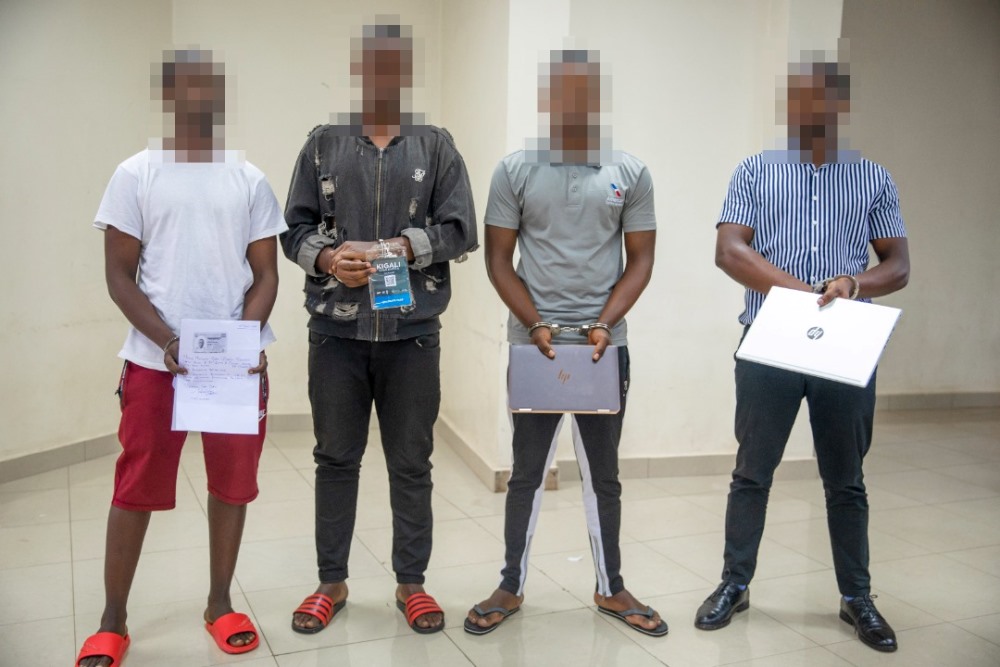
Those arrested include one Eddie Bertin Munyaneza, the prime suspect, who allegedly stole the two laptops after he masqueraded as a participant at the Africa Protected Areas Congress (APAC) last month held at Radisson Blu hotel, and on August 12, during the Kigali Global Dialogue at Marriott Hotel.
RNP spokesperson, Commissioner of Police (CP) John Bosco Kabera said that other accomplices include one Ndutiye Maurien Theophile, an employee of a local events management company, which was working at the conferences, who facilitated Munyaneza to secure a badge to access the conference venues.
Two others suspects are dealers in used electronics, who bought the stolen laptops from Munyaneza.
“The first laptop was stolen on July 18, at Radisson Blu Hotel while the second laptop was stolen on August 12, from a delegate who was attending the Kigali Global Dialogue at Marriott Hotel.
Munyaneza was the first to be arrested on Sunday, August 14, in Kicukiro District, Nyarugunga Sector, Kamashashi Village after Police thoroughly reviewed CCTV footages at both hotels,” CP Kabera said.
He added that Munyaneza disclosed his accomplices, including Ndutiye, who secured a badge for him, one Gihozo Jules, who bought the two laptops from Munyaneza for Rwf340,000, and Niyigena Jean de la Paix, who bought one of the laptops from Gihozo.
“One laptop was recovered from Niyigena while the other was recovered from Gihozo,” CP Kabera explained.
Munyaneza and Ndutiye are friends, who were last year taken to Nyamagabe rehabilitation centre after they were found to be addicted to heroin.
“The suspects have been handed over to RIB for further investigations. Apart from Munyaneza, these three others were working or had income generating businesses.
The young people should seize the available opportunities and engage in productive activities instead of wasting their lives in criminal acts and spending years in prison,” CP Kabera advised.
Article 166 of law determining offences and penalties in general states that; any person convicted of theft is liable to imprisonment for a term of not less than one (1) year and not more than two (2) years and a fine of not less than Rwf1 million and not more than Rwf2 million, community service in a period of six (6) months or only one of these penalties.
CP Kabera further advised those who trade in used electrical and electronic equipment to comply with the regulations governing their business to fight such criminal acts and to avoid falling prey.