England booked a last-16 tie against Senegal with a comfortable 3-0 win over Wales at Ahmad bin Ali Stadium in Doha. Gareth Southgate’s side controlled the game for nearly the entire 90 minutes, but it was only in the second half they imposed their quality.
Marcus Rashford opened the scoring in the 50th minute with a powerful free kick won by Phil Foden, before Foden himself added a second goal with a simple finish after a low cross from Harry Kane.
Rashford scored his second of the night after a powerful run, cutting inside and beating goalkeeper Danny Ward with a low shot. As well as being England’s third goal of the game, it was their 100th goal in the World Cup finals.
Christian Pulisic scored a first-half winner as the United States beat Iran to set up a round of 16 duel with the Netherlands.
Pulisic bundled home seven minutes before half-time after Sergino Dest’s header. The Chelsea forward clashed with goalkeeper Alireza Beiranvand as he scored and received treatment on the pitch before being replaced at halftime.
But Iran, who needed a draw to progress, registered just one shot on target as they were knocked out.
At Khalifa International Stadium, Ismaila Sarr and Kalidou Koulibaly scored either side of halftime as Senegal advanced beyond the group stage for the first time in 20 years with a 2-1 win over Ecuador.
Sarr converted a penalty on the stroke of halftime but Brighton midfielder Moises Caicedo put his side on level terms with a close-range finish in the 67th minute.
Koulibaly wrested back the lead for Senegal by thumping home a first-time effort 20 minutes from time.
The result means Senegal finish second in Group A with six points from three matches. Ecuador miss out on a place in the last 16, having finished two points further back in third place.
In Tuesday’s other match, Cody Gakpo and Frenkie de Jong scored as the Netherlands beat Qatar 2-0, progressing to the next round as the Group A leaders with seven points.
Qatar became the first host side to lose all three group matches in the competition’s history.
Gakpo, who plays his club football for Dutch outfit PSV Eindhoven, has now struck the first goal in all three of the Netherlands’ World Cup games in Qatar to date.
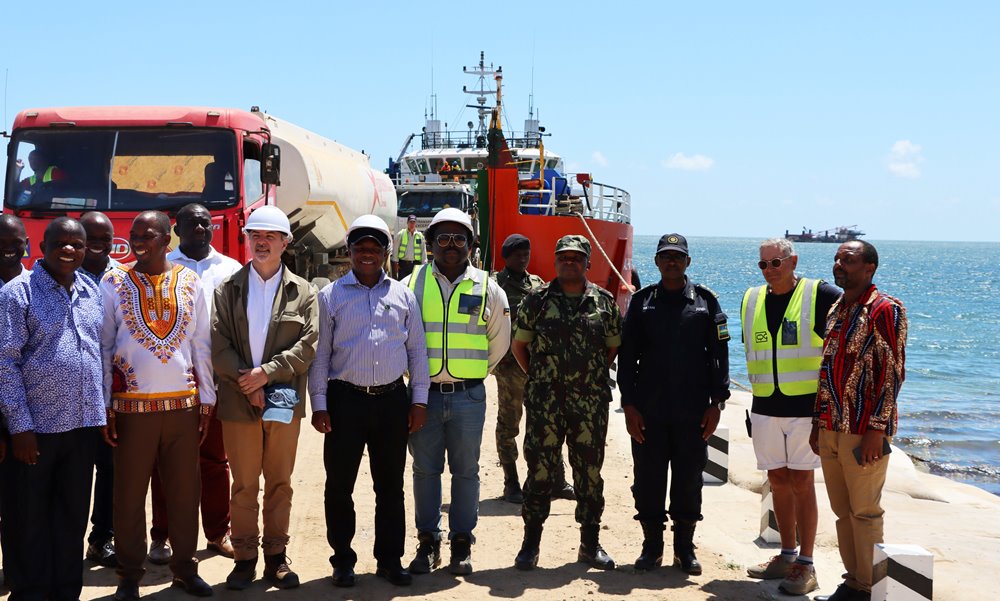
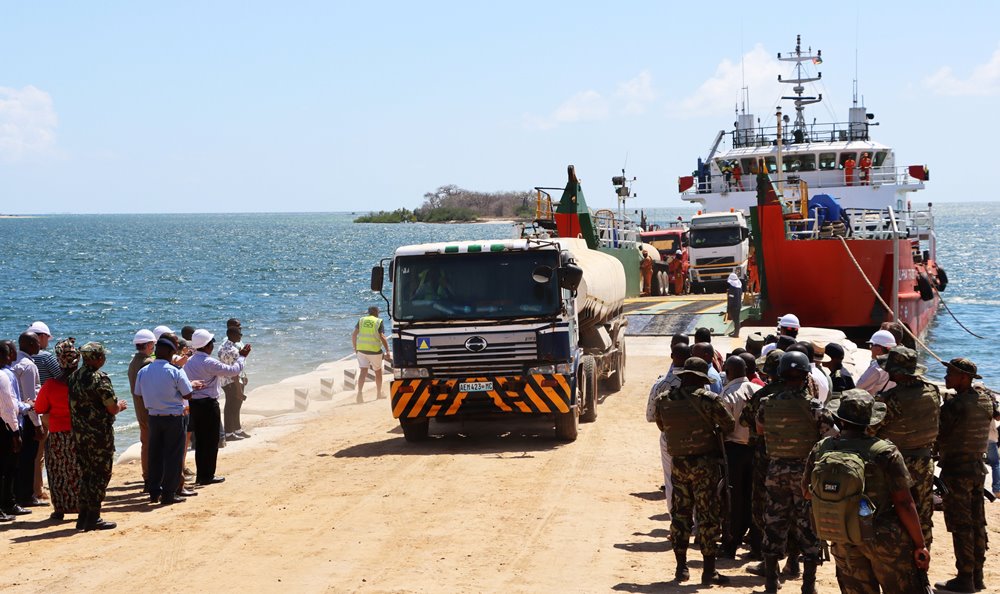
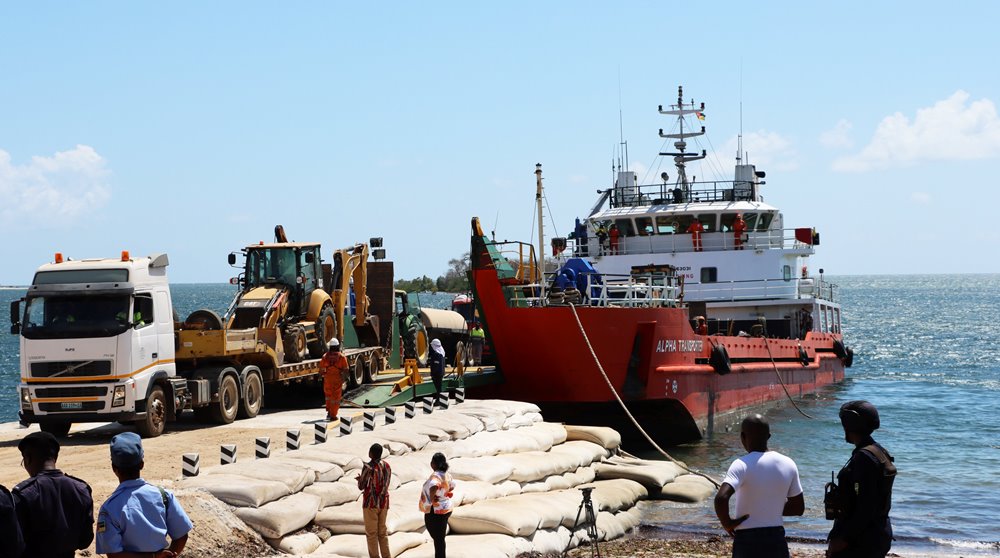
The reopening ceremony held on Tuesday 29th November 2022 included, among others, the operationalisation of the first cargo ship to be used by the city residents and surrounding areas since its closure.
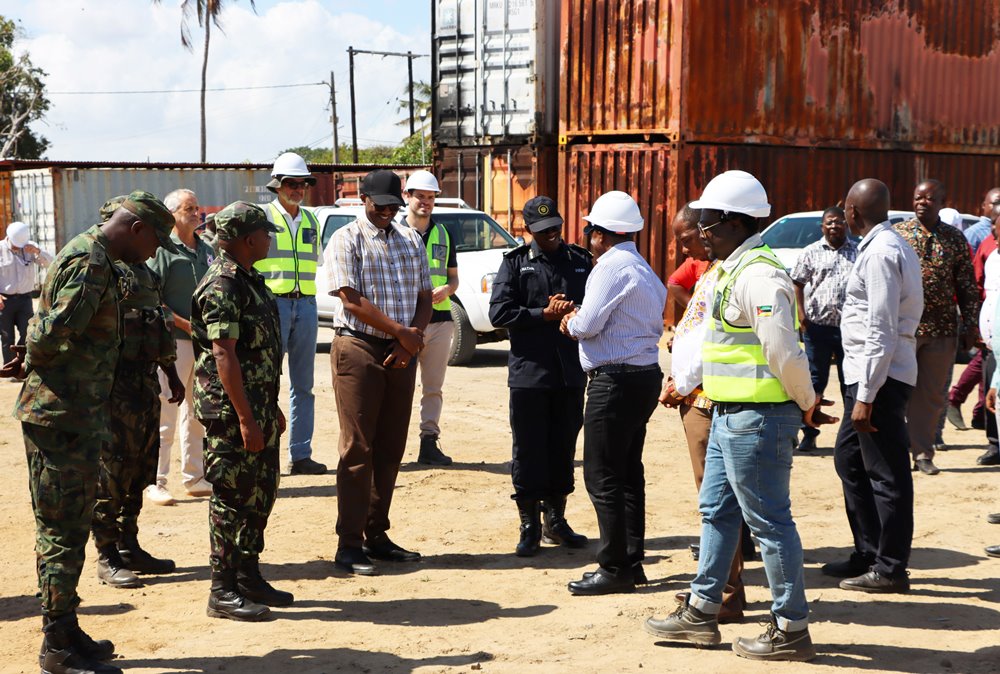
The Governor thanked the joint security forces for their effort in normalising the security situation in Mocimboa Da Praia leading to the reopening of port.
Rwanda started the deployment of 1000 troops of the Rwanda Defence Force (RDF) and the Rwanda National Police (RNP) to Mozambique on 9th July 2021, to fight terrorist groups, honoring the request of Mozambique. The troops had increased to nearly 2000 by the end of the year 2021.
The situation in the country had worsened since October 2017 when armed extremists launched an insurgency in the Cabo Delgado Province of Mozambique.
Mozambique Defence Armed Forces battled the extremists but many civilians were killed and displaced by the fighting.
Before Rwandan troops’ intervention, terrorists had killed 3000 civilians while more than 800,000 were displaced. The insecurity had also put to halt all development projects in the area controlled by insurgents.
The joint operations between Rwandan and Mozambican troops yielded big where different regions were seized from terrorists.
Rwanda and Mozambique have been enjoying vibrant relations for many years.
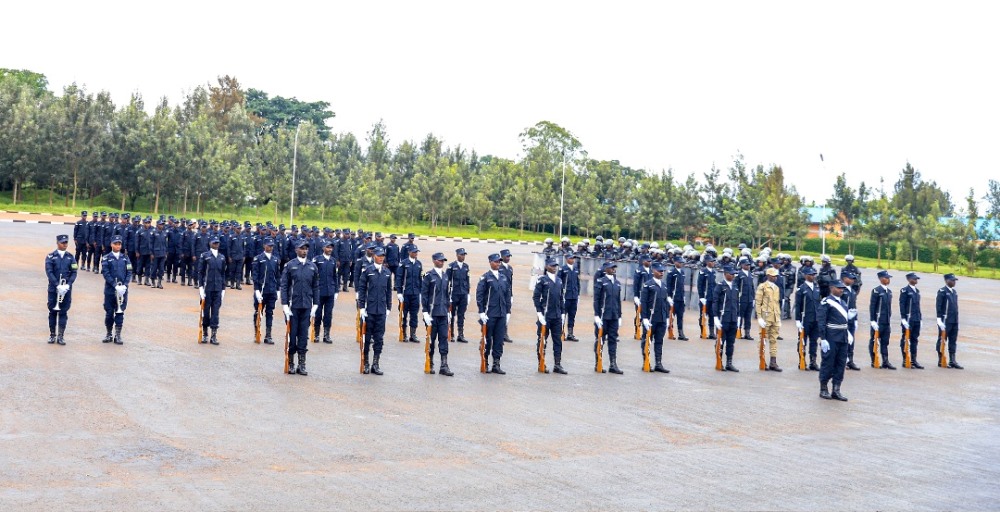
The Police Chief embarked on what awaits them in policing and security matters.
“Police Constables and the NCOs constitute the biggest number of Police officers and in its policing responsibilities, and that adds value to the face of Rwanda National Police services.
When you serve the people exceptionally with discipline…that is the pride and image expected from you,” IGP Munyuza said.
The acquired knowledge and skills, he said, will be defined by the impact they will bring in their units.
“Have positive attitude and thinking, do your work well, use the acquired skills to add value to your policing duties, work professionally with a patriotic spirit, and be practical in your respect for superiors,” the Police Chief told the officers.
Commissioner of Police (CP) Robert Niyonshuti, the PTS Commandant said that the officers demonstrated “positive attitude, commitment and good will” throughout their 16 weeks of training.
The NCO course is designed to further enhance the abilities of the officers in public order management, duties at a Police station, physical fitness, drills and duties, map reading, field-craft tactics and Police ethics, among others.
It is said that the rain characterized by wind occasioned floods, landslides while some houses’ roofs were blown away.
As he interacted with residents from Mushubi Sector today, Police Commander for Nyamagabe District, SSP Burahinda Ntacyo reminded them to develop proactive measures against disasters.
“Recently, rain killed a large number of residents in this district. Therefore, you need to be cautious and avoid neglecting any water body whatever the size. We have so far lost eight people all attempting to cross rivers. You need to exercise extreme vigilance to remain safe,” he said.
The deceased include two students washed away by River Nkomane as they returned home from school.
The Mayor of Nyamagabe District, Hildebrand Niyomwungeri has requested residents to heighten vigilance during the rainy season and relocate from risky zones prone to landslides.
He reminded them to tighten roofs lest they are blown away by wind and dig waterways to prevent disasters.
The disasters also ravaged crops and destroyed houses in different sectors.
The rescued migrants include 19,075 men, 1,089 women and 678 children, IOM said.
Also, 514 migrants died and 865 others went missing off the Libyan coast on the Central Mediterranean route, IOM added.
In 2021, a total of 32,425 illegal migrants were rescued and returned to Libya.
Libya has been suffering insecurity and chaos since the fall of the late leader Muammar Gaddafi in 2011, making the North African country a preferred point of departure for illegal migrants who want to cross the Mediterranean Sea to European shores.
Rescued migrants end up inside overcrowded reception centers across Libya, despite repeated international calls to close those centers.
Since a TCM center was opened at Parirenyatwa Hospital in the capital Harare in 2020, thousands of locals with different ailments have thronged the center to receive treatment free of charge.
Charity Nyakurimwa, one of the patients who have received treatment at the center, said she opted for acupuncture due to its non-invasive nature.
“I was having sciatic nerve pain on my right leg because of the nature of my job — I will be standing most of my time, so the pain was now radiating to my back. So I said oh! There is a Chinese center which is giving acupuncture to patients. So that’s when I decided to come for acupuncture,” Nyakurimwa told Xinhua.
“So I came in and I had acupuncture done on me on my right gluteal muscle, and my back, after that the pain was much much better,” Nyakurimwa added.
Another patient, Catherine Sadza who suffers from arthritis, said she has witnessed significant progress since she came for her first session of acupuncture.
“I came here with a problem with my neck, my hand, and my knees. When I came here they performed acupuncture, now I am feeling better than before,” she said.
TCM is a holistic ancient system of health and wellness that has been used in China for thousands of years. It encompasses several therapeutic methods that include acupuncture, cupping, Chinese herbs, Tai Chi among others.
Zhu Wei, a TCM doctor at the center, and Captain of the 19th Chinese Medical Team in Zimbabwe, said the ancient knowledge system is proving to be a viable medical alternative.
“It can help to unblock meridians and bring back balance to the body because people get ill because of imbalance of the body, so acupuncture can bring back balance in the body and people can be kept in health,” Zhu said.
The physician said TCM offers many tangible benefits.
“More than 5,000 people came here and received acupuncture treatment. They have spread the information to their relatives, so at present more and more patients come here to try acupuncture treatment,” he said.
To meet growing demand for Chinese medicine in Zimbabwe, in July the TCM center started offering acupuncture training to local health personnel.
“We are planning to train more local doctors who can specialize in acupuncture and they can help more people,” Zhu said.
Richard Mutingwende, a Homeopathy Specialist and a TCM Trainee at the center, said Chinese medicine has many advantages.
“And also it can address so many health conditions such as arthritis, spinal injuries, chronic conditions, such as diabetics, such as hypertension, so it has so many advantages than any other type of medicine, and also reliable because it has been in existence for the past 5,000 years compared to other systems of medicines,” he said.
“I will be doing acupuncture, moxibustion and also Tai Chi. Such types of treatment are very safe, they are non-invasive,” he added.
Soo Bishop, a patient who sought medical attention at the center after suffering from muscle spasms in her shoulder, neck and head, said as a form of natural intervention, traditional treatments are beneficial.
Bishop said her condition improved a lot following her acupuncture sessions at the center.
Tatenda Chimbunde, a trained Pharmacist and a TCM Trainee at the center, said unlike conventional medicine, TCM has no side effects.
In addition, Chimbunde said TCM is more beneficial since it addresses the cause of the problem rather than just treating the symptoms.
After witnessing first hand the benefits of traditional remedies, Chimbunde hopes to pursue a career in TCM.
“In the near future, I hope to be able to practice acupuncture on many people with different ailments, as well as working in the public sector as well as in the private sectors,” she added.
Zimbabwe and China share a long period of cooperation in the health sector. Since 1985, China has dispatched 19 medical teams to the southern African country.
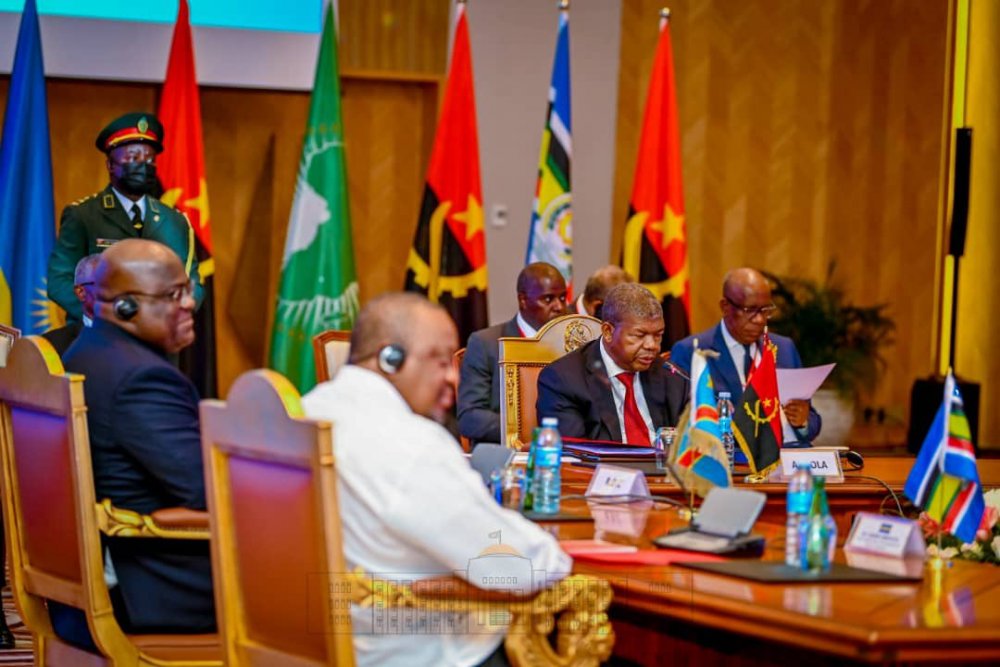
The Luanda summit followed the visit of Angolan President, João Lourenço to Kigali and Kinshasa where he met with his counterparts, Paul Kagame of Rwanda and Félix Tshisekedi of DRC.
As the mediator on tensions between Rwanda and DRC, Lourenço had been assigned to facilitate negotiations on the issue of armed groups in eastern DRC which usually take place Nairobi.
It was attended by Burundian President, Evariste Ndayishimiye; Tshisekedi of DRC; Rwanda’s Minister of Foreign Affairs, Dr. Vincent Biruta who represented President Kagame and former Kenyan President, Uhuru Kenyatta who currently serves as the East African Community (EAC) facilitator of peace talks in eastern DR Congo.
On Monday 28th November 2022, another meeting bringing together regional heads of state on Nairobi Process for the Restoration of Peace and Security in Eastern DR Congo was held in Kenya.
Normally, concerned parties in similar meetings draft recommendations to be discussed and endorsed after reaching consensus.
Rwanda’s biggest concern at the recent meeting in Luanda is the issue of the Democratic Forces for the Liberation of Rwanda (FDLR), a terrorist group formed by individuals responsible for the 1994 Genocide against the Tutsi. The group has been plotting attacks at different times to destabilize Rwanda.
From the standpoint of DRC, FDLR does neither exist nor poses threat to Rwanda.
Such statements have for the past few weeks dominated speeches propagated by DRC politicians including Tshisekedi himself.
They assert that FDLR kills Congolese, that it should be considered a threat to DRC not Rwanda.
By doing so, the politicians overlook attacks plotted on Rwandan territory and reported collaboration between Congolese Army (FARDC).
The recurrent meetings on insecurity in DRC are taking place at a time when the international community has noticed the strength of M23 rebel group which might add Goma town to other captured areas during the fight with Congolese Army (FARDC).
{{DRC allows M23 to remain on its land for the first time}}
During the mini-summit in Luanda last week, the fighting with M23 was among issues brought on table for discussions. Previously, DRC was proposing that M23 lays arms down and return to its origin (former cantonment in Uganda).
Apart from that, DRC rose alarms at different time that it was attacked by Rwanda through M23 rebel group and called fighters of M23 foreigners who must return home.
Ahead of the meeting, Tshisekedi held talks with Angolan President and convinced him that he sticks to the wrong side, that M23 rebels are apparently Congolese.
He also told him that it does not sound well to expel M23 fighters after accepting to cease fire.
During the meeting, DRC accepted that M23 would remain on its land once it respects a call for ceasefire.
It is a great milestone reached for the first time by DR Congo as a country which had ignored the reality sounding alarms that M23 rebels are Rwandans who must return to Rwanda.
This led to the resolution of setting a deadline of 25th November for M23 to cease hostilities.
It was also resolved that M23 had to respect the decision not later than 18:00 and return to its initial positions not beyond along the line Sabyinyo Volcano in the areas of Bigega, Bugusa, Nyabikona, Mbuzi, Rutsiro and Nkokwe on the side of DRC.
The heads of state agreed that the areas previously captured by M23 will be controlled by joint EAC forces.
As for Kenya, the country has so far deployed over 2000 soldiers in DRC. It was mandated maintain security in the areas of Bunagana, Rutshuru and Kiwanja after withdrawal of M23.
However, the plan to deploy a small number of troops in such a large area remains questioned.
Few hours before the deadline of 25th November expired, M23 released a conditional ceasefire statement.
Through the statement, the President of M23, Bertrand Bisimwa explained that the group is willing to cease fire as was the case on 1st April 2022 without involvement of DR Congo.
M23 also requested ‘a meeting with the mediator and the facilitator in order to discuss the matter of its concerns in a way to restore a lasting peace in our country’.
{{FDLR urged to lay down arms and return home}}
Rwanda considers FDLR as the root cause for insecurity in eastern DRC given that it is at the center of ethnic divisions propagated in the area.
This year, the terrorist group continued to destabilize Rwanda’s security where it shelled the country’s territory three times, injured citizens and destroyed their houses.
Luanda summit resolved that the group has to lay down arms not later than 30th November. This means, FDLR fighters have to return to Rwanda effective from 1st December.
The Government of Rwanda has been receiving FDLR combatants at different times where those who committed crimes face justice while others are reintegrated into their respective communities.
Other armed groups concerned with the decision include RED Tabara and ADF.
The suspects were arrested on Saturday 26th November 2022.
These include James Kamanzi, former Deputy Director General at RBC, Fidele Rwema, who was an RBC employee in Karongi region, Fidele Ndayisenga, Jean Pierre Ndayambaje, Leoncie Kayiranga, all of whom were RBC employees and members of the RBC procurement committee.
The Spokesperson of RIB, Dr. Thierry B. Murangira has told IGIHE that the suspects are detained as investigation on alleged illegal public procurement is ongoing.
“They are detained at RIB stations in Kicukiro, Kimironko and Rwezamenyo as investigation is ongoing to file their files to the Prosecution,” he said.
Illegal procurement is a crime punishable by Article 188 of illegal public procurement.
A person convicted of committing this crime is bound to imprisonment of not less than five years but not more than seven years, and a fine between Rwf2 million and Rwf5 million.
If it is committed by an employee under the orders of his manager, that manager shall be liable to a jail term between seven and10 years, and a fine of Rwf10 million and not less than Rwf5 million.
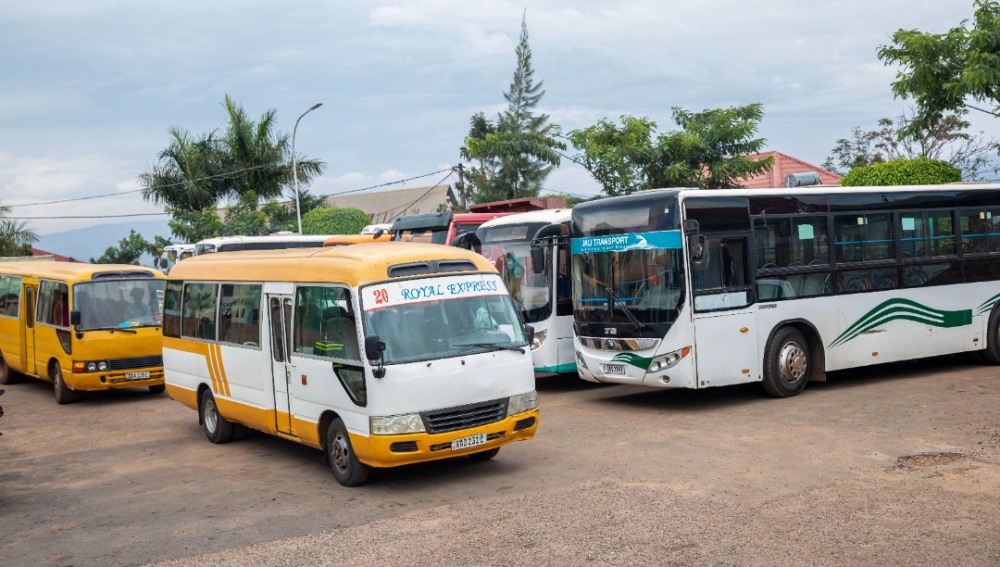
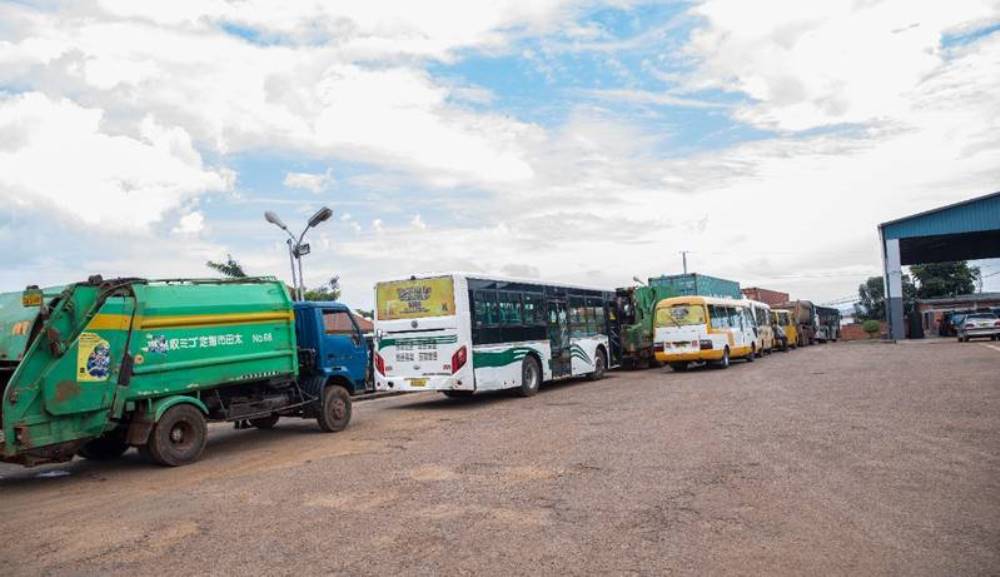
Some 125 vehicles were impounded in the City of Kigali while other 74 were impounded on various highways across the country.
All the vehicles were escorted the Automobile Inspection Centres for mechanical inspection, according to Senior Superintendent of Police SSP Irené Irere, the spokesperson for Traffic and Road Safety department.
He added that these are continuous countrywide operations to impound vehicles without the roadworthy certificate and to penalize owners for their negligence.
Most drivers of the impounded vehicles, however, blamed their bosses for intentionally refusing to have their cars taken for inspection, when the certificate expires.
Public transport vehicles and trucks are subjected to mechanical inspection every after six months.
“The mechanical inspection certificate for the school bus I was driving expired on November 11, and I had informed my employer even before it expired. I was stopped today in the morning while taking children to school,” one of the drivers said.
He added: “I knew well that driving a vehicle without a roadworthy certificate is a traffic offence but as drivers, we find ourselves on the edge of being fired, if we refuse to drive them, and we have families to cater for.”
Another driver was quick to say that the transport company he works for cares more about money than road safety.
“They just tell you; go to work, we will be booking for the inspection,” another driver said.
The Traffic spokesperson warned owners of vehicles and heads of transport companies for these behaviors of forcing their drivers to drive cars with no or expired mechanical inspection certificate.
“We noticed that there are many public vehicles and trucks with expired mechanical inspection certificate, which prompted these operations.
Mechanical inspection is meant to ensure that vehicles are roadworthy and to prevent road carnage caused by mechanical failures,” SSP Irere said.
“Some of the impounded vehicles had expired certificate while others were operating after failing the first inspection. It is prohibited and a traffic offence to use a vehicle in an operations, if it failed the inspection and given 14 days to fix the identified mechanical faults,” he added.
The automobile mechanical status is mandated under the Presidential Decree No. 85/01 of September 2, 2002, which, partly, stipulates that owners of vehicles using public roads without a mechanical inspection certificate will be liable to a fine of Rwf25, 000.