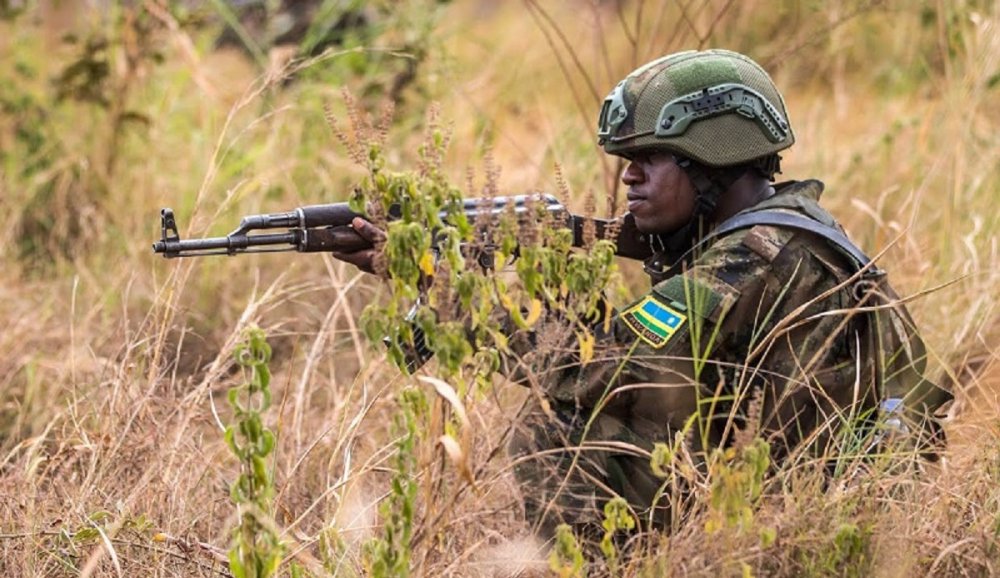
Rwanda started the deployment of 1000 troops of the Rwanda Defence Force (RDF) and the Rwanda National Police (RNP) to Mozambique on 9th July 2021, to fight rebel groups linked to the Islamic State of Iraq and the Levant (ISIL).
The situation started worsening in October 2017 when armed extremists linked ISIL launched an insurgency in the Cabo Delgado region of Mozambique.
Since then, Mozambique Defence Armed Forces have been battling the extremists while many civilians were displaced by the fighting.
The joint operations between Rwandan and Mozambican troops yielded big where different regions of Cabo Delgado Province including Palma, Awasse, Mocímboa Da Praia, Quionga, Tete, Maputo, Nhica Do Rovuma, Quelimane, Chinda and Mumu among others have been seized from rebels.
As at 5th September 2021, Rwandan and Mozambican troops who were joined by the military mission of the Southern African Development Community (SADC) had captured almost all areas of Cabo Delgado Province where the remaining work was predominantly about launching offensives to quell enemy pockets from their hideouts and help displaced citizens to return to their homes.
Towards the end of 2021, Rwandan troops deployed to the country had been increased to nearly 2000.
In their area of operations, Rwandan troops killed, captured some terrorists and quelled others who fled to the areas of Nangade and Macomia controlled by SADC forces.
They used to plot hit and run attacks from their new hideouts to areas captured by Rwandan troops. This stressed the need to develop new tactics to completely deal with the issue of terrorists.
As he received oaths of new officials including the Minister of Health, Dr. Sabin Nsanzimana and Minister of State in the same ministry, Dr. Ivan Butera, President Kagame said that Rwanda increased troops deployed to Mozambique in connection with their new mandate.
“We have nearly 2500 troops including soldiers and Police personnel in Mozambique, working with Mozambican forces. Even yesterday, we deployed more troops. We did it because many problems have been solved in collaboration with Mozambicans since our initial deployment,” he said.
“There are ongoing problems because we were not present in all areas,” added Kagame.
The Head of State explained that security problems were dealt with in Rwanda’s areas of operations but lingered in other places.
“[…] It emerged that terrorists in Mozambique fled from their strongholds to other places. We agreed with Mozambique that we are going to chase them out of their new hideouts. This is what are going to do,” he noted.
Kagame disclosed that operations are fully financed by Rwanda, even as the country welcomes and wait for external support.
They were arrested separately on Tuesday, November 29, in Rulindo and Kicukiro districts with combined 13kgs and 574 pellets of cannabis.
Those arrested include one Elevanie Nyirahabimana, 30, who was apprehended in Buriza Village, Mugambazi Cell of Murambi Sector in Rulindo District with 402 rolls of cannabis.
Another suspected drug dealer identified as Aphrodis Niyigena alias Potential, 29, was caught with 10kgs in Munini Village, Rudogo Cell, Cyinzuzi Sector also in Rulindo District.
Niyigena was at the time transporting the narcotics on a motorcycle, according to Superintendent of Police (SP) Alex Ndayisenga, the Northern Region Political and Civic Education Officer (RPCEO).
Meanwhile, the duo of Bernard Niyonkuru, 20, and Kagesera Jean Baptiste, 40, were arrested with 3kgs and 172 pellets of cannabis, in Kabeza Village, Cyimo Cell in Masaka Sector, Kicukiro District.
“The successful operation was informed by credible information provided by residents of Buriza Village on Nyirahabimana, who was later arrested with 402 rolls of cannabis,” said SP Ndayisenga.
He added: “After the arrest of Nyirahabimana, she disclosed to the ANU officers her supplier, Niyigena, a resident of Tumba. Nyirahabimana further told the Police that Niyigena traffics the narcotics into Rwanda from Uganda.
The ANU officers later tracked Niyigena in Rudogo, Cyinzuzi Sector, where he was arrested with other 10kgs of cannabis, which he transporting on a motorcycle.”
In the case involving Niyonkuru and Kagesera; the Police spokesperson for the City of Kigali, CIP Sylvestre Twajamahoro, said that they were arrested at their rental house in Kabeza where they were running their narcotics business.
“Police searched and recovered 3kgs and 172 rolls of cannabis at their house. They were also found with money amounting to Rwf176, 500, which they had allegedly made from selling cannabis,” CIP Twajamahoro said.
All the suspects were handed over to RIB for further legal process.
This is one of the many successful Police operations against drug dealers, which are largely facilitated by the public through community policing.
Cannabis is classified as a “very severe narcotic drug” in Rwanda with a sentence of up to life in prison, and a fine of up to Rwf30 million.
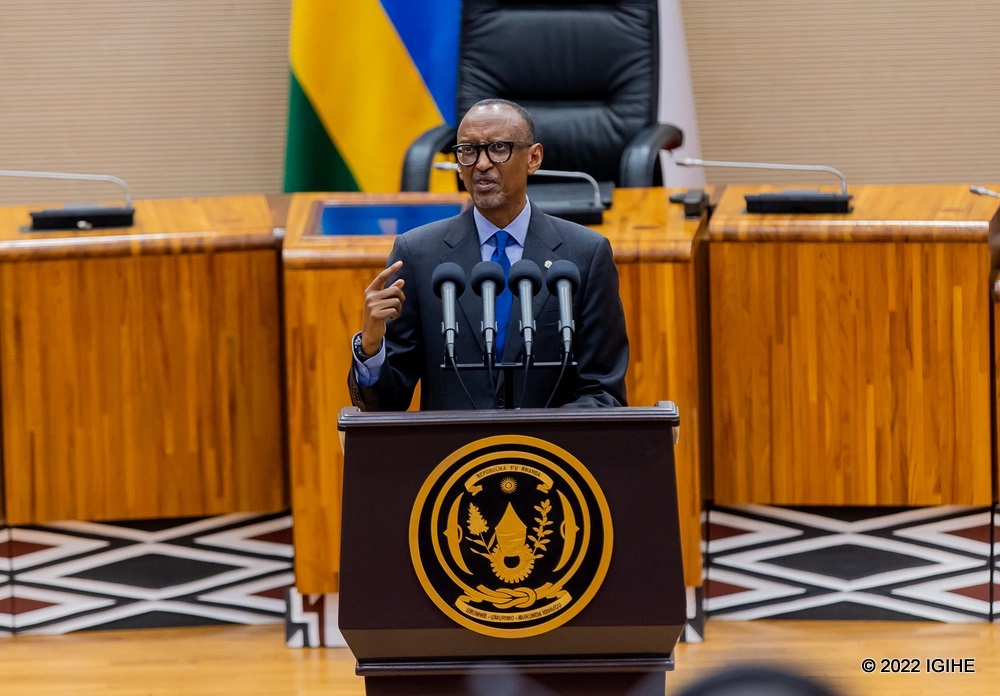
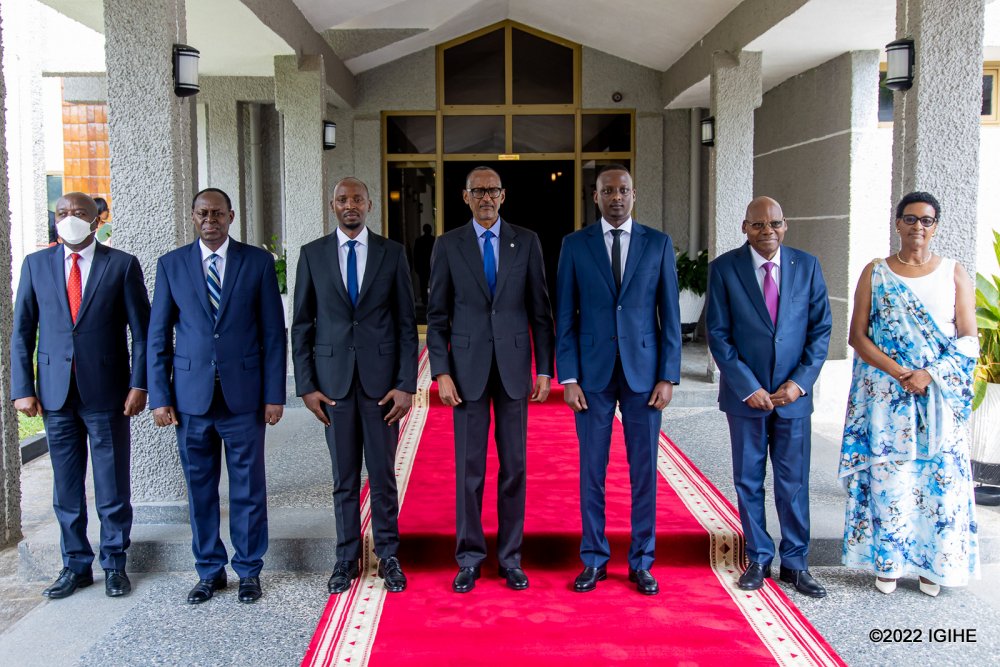
Kagame made the statement after receiving the oaths of recently appointed cabinet members including the new Minister of Health, Dr. Sabin Nsanzimana and the State Minister in the Ministry of Health, Dr. Ivan Butera.
After welcoming new cabinet members on Wednesday 30th November 2022, the Head of State also updated government officials on the status of security in the region as well as Rwanda’s contribution to peace and security in partner countries through bilateral agreements or United Nations missions.
As he talked about the regional situation, President Kagame reminisced on DRC crisis where the country has been externalizing its internal problems and accusing Rwanda of supporting M23 rebel during a fighting with Congolese Army (FARDC).
However, Rwanda repeatedly denied the allegations and accused DRC of working with the Democratic Forces for the Liberation of Rwanda (FDLR), a terrorist group formed by individuals responsible for the 1994 Genocide against the Tutsi.
The collaboration has resulted into three separate incidents where the forces shelled Rwanda’s territory, injured people and destroyed houses.
Kagame further talked about the root causes of insecurity in the neighbouring country highlighting that the issue is complex as it concerns many parties including Congo, FDLR, Rwanda, the United Nations Organization Stabilization Mission in DRC (MONUSCO), M23 and international communities among others.
He revealed that the problems are put on the shoulders of Rwanda instead of finding a solution together and proposed a durable solution.
On repetitive provocations, Kagame said that the shelling on Rwandan territory was enough invitation but insisted that the country can’t be drawn into avoidable war as it knows how bad it is.
Below is the transcription of an extract from President Kagame’s speech delivered today at the parliamentary building on security crisis in DRC, the country’s provocations and allegations against Rwanda.
{{Excerpts: }}
First of all, it should be a shame to all these people. You, that we are so many, have so much, in terms of means, we claim to want to resolve the problem,
It is actually simple, to resolve in my opinion, but it never gets resolved for decades.
Of Congolese problems, problems of DRC […] I am just talking about the problems of the last few decades. [..] I am just talking about the last nearly thirty years now.
You would wonder, I am sure people should be asking themselves, how can these problems that relate to Rwanda, DRC, and to all these groups I am talking about, that relate to the whole region, powerful countries that so much talk about humanitarian crisis, human rights and all kinds of things and really speak up for wanting to resolve all these, sit with this kind of situation, and just keep massaging it and only…blaming everybody else except them for these problems.
And it is unfortunate that while I am saying, I have given a list of all parties concerned.
But it has become so convenient for long that all problems are heavily put on the shoulders of Rwanda. Rwanda is always the culprit in all these. It is not FDLR, not Government of Congo that should be responsible for its problems and people, it is not the UN, not the powerful countries, mainly America, UK , France, etc. […] It is Rwanda all the times.
And it’s M23 because of Rwanda. So, it still comes back to Rwanda. It is not FDLR, remnants of people who carried out Genocide here. It’s not the government of Congo, for many reasons,
I started saying here that we don’t have means but we have ways. And that is why in comparison, Rwanda and Congo, there is more, much more, much more Congo offers to these people than Rwanda. Naturally, these people masquerade carefully when they are dealing with Congo’s problems.
They must even assist Congo to alleviate their pain, by transferring the blame they should have, hold, put somewhere else and the easiest place to put their blame is Rwanda.
You know the…Swahili proverb, hapa mnajua Kiswahili?
Kwa Kiswahili, ‘Shamba ya ndizi kuna migomba na majani’. Migomba yaani banana stems, majani ikiwa banana leaves.
Kwa migomba, kuna migomba ,mifupi na migomba mirefu. Kwa sababu Afrika wanatumia saana, majani ya migomba fanya kazi nyingi mbalimbali, kupikachakula […] ukienda kwa shamba la ndizi, ile majani wanayokata, ni yile ya migomba mifupi, ..sindiyo,..
When they go to banana plantations […] Africans use a lot of many things they use banana leaves for. The banana leaves they cut, are the ones of short banana stems.
Yile mlefu saana , wanaacha. Sasa hawa watu wanafikiriya sisi ni migomba mifupi, kwa sababu ya geography, …inchi ndogo tu, au resources, minerals, vitu vingine. Wale wana vingi saana sisi hatuna.
So, they would rather go for the short […] lakini wanajidanganya kweli. Sisi, kwa ufupi wetu, hatuna means lakini tuna ways, na tuko imara ambayo hauwezi kuelewa. Huwezi ukaelewa imara tulivyo.Those who think they can keep picking, cutting out banana leaves, because we are short stems, you don’t know how much you have deceived yourself.
Yes, they even say, we are accused, of stealing the wealth, minerals of Congo.
One thing we are not and that’s what makes us what I have just said, we are not thieves.
We work for what we have and what we get. In fact, we are where we are with some decent progresses, but not really too much. We still have to do a lot.
By the way, also on account of the support we get from these people who accuse us or who accept that we actually do that, meaning these powerful countries, they actually give us a lot of support.
And if they took time to scrutinize, because they support other countries as well, including the Congo that we are accused so much for what is happening there, they will find or will not find a place where we give value for their money than Rwanda.
They will not, I can bet on this. For every dollar they spend on us, support us with, we will show more for it than anybody they give their money.
And it is deliberate, it is not by accident. It is who we are, who we want to be and nobody will take it away from us.
But when it comes to trying to cut the banana leaves because we are short stems, they can or will discover that they can also provide value for money. Meaning, it will actually be costly for them.
Now, let me add to that, for the FDLR and their affiliate groups, RUD Urunana and so forth. By the way, affiliate groups, means also there are some individuals we have here in prison, whom we brought from outside, or others who masquerade around this so called opposition whom we have just left free to mess up themselves until some point when, if need be, to take care of them.
But why do you think this problem, for example, of FDLR has been there for the last nearly thirsty years, why?
Because you think it is a too complicated problem to resolve? No! I am beginning to believe something I never believed. I suspected but I had no proof an don’t want to believe it. But it is so many years, that few can’t find another explanation, then you have to believe it.
You can’t but not believe that actually, somebody, somewhere wishes this problem to be there forever.
Around it, so many things are played. One, it is may be to check these stubborn trouble makers but short banana stem. It is to check them , there is always something to, so it is maintained there. And then, it spins around for the crimes associated with these people of our history, of our tragedy in Rwanda in the 1994 and the history before that.
They start associating us with the very crimes of these people. It is like they exist because we are doing something wrong.
In actual fact, maybe we share in the crime they committed. In other words, for the perpetrators and victims of our tragic history, were actually the same.
There is no difference, isn’t it the narrative since 1994 how we, in this country, are known for stifling freedoms of people, violate human rights. Sometimes when they are talking about violating human rights, they point to the people who are here, whom they have labeled opposition leaders or associated with this history that we are violating their rights.
Can you imagine! The very people who are associated with Genocide, some of them were here, many of them outside there, whom they have even sometimes refused to try for their crimes because they say they can’t return them to Rwanda, because of Rwanda’s justice, human rights […[ if they return them to Rwanda, they will be denied their freedom, their human rights.
An then, we respond to these people, okay! If you can’t give them to us, here is the evidence, you try them in your courts because you are better than us and they still don’t do that. What would that mean for anybody who wants to think?
You don’t want me to try them for reasons you are giving, whether false or true, but then, how about you trying them? What is wrong with you? You mean you are questioning your own justice system as well?
On top of that, they still come and point fingers at us, you know… But sometimes, there is poetic justice that goes on. Some of these people who refuse to send these people back to us and we have been begging, showing them the crimes, and they have refused…in some cases, these people have gone ahead and committed crimes where these people are holding them in their countries.
And then prompted by that, they quickly now send them to us because there is a case where somebody was being accused. We were asking to have this people, then this killed somebody else in one of these countries outside that had refused to surrender that person to us, killed a person, another case, then another one in other case raped somebody. And then prompted by that, they start processing to send these people to us.
So, the first crime of Genocide they carried out here was not bad enough, but they are reminded by somebody violating the rights of their citizens. This is what I am calling, sometimes, poetic justice.
If for the last 28 years, this problem has been there and for the last 20 something 22 may be, the UN force was sent to Congo to deal with this situation, on top of the list, being to deal with FDLR and these other armed groups. And there is not a single day, that I know, may be you do, that these forces ever fought FDLR […] But they have been so keen to fight a notorious, famous I don’t know, M23.
That’s what happened in 2012 and we warned this people. We were warning and saying , you are dealing with half of the problem, the other half will come back to all of us.
This is not a military issue, this is not a problem you want to resolve by force of arms. It is largely a political problem. You need to attend to or may be help the Congolese to address this problem. They ignored us. Ten years after that, the problem has come to…all of us.
But of course the easy way, again they have, is to blame Rwanda for it. That is where we are now. But why, wasn’t this problem resolved for the last ten years?
Those from M23, those who fled and came to Rwanda, we put them in a camp in Ngoma, former Kibungo.
We disarmed them, we gave arms to Congo, they took arms. I am talking about facts here.
Now, processes started of not talking to these people, how do we deal with them and we always gave access to the officials from Congo to go and talk to these people every time.
They came here like twenty times. The last I heard was they wanted the representatives of these people and the others. The majority of them went to Uganda, there was a bigger group and they said, they wanted to talk to their representatives. Those groups here and in Uganda.
They took them to Congo, to Kinshasa actually, supposedly to talk to them and solve their problems. These people they took, spent months in a hotel where they put them. And for those months, not a single government official visited or came to talk to them until they decided to, I don’t know whether, to escape or do what and left.
Now the problem comes back to be Rwanda’s problems. When they started fighting, don’t ask me how or where they came from. But we have had a moment to discuss this openly in meetings of heads of state in Nairobi and it was clearly demonstrated to the Congolese leaders, what had been going on.
And the only thing they kept telling us was no no no! These people must go back where they came from.
And then we asked them, where did they come from or what time do you mean? Because, even if you assumed they came from here, where did they come from when they came here. And I asked one simple question in the meeting. I said, we would be wasting our time, if we did not answer this question and continued discussing this issue. I asked one simple question. Are these people we are dealing with or having to deal with Congolese?
Fortunately, the Congolese leaders answered that they are actually Congolese. Then, I said okay! Now, we can have conversation because my impression at first was that you were saying that they are Rwandese, because they speak Kinyarwanda, because they are Rwandophones as some people here call that, but they are Congolese.
These are citizens of Congo; they have their ancestral homes and things in Congo not here. Here they are refugees, there are over 8,000 of them as refugees in the camps.
So, how do we deal with this issue, how does it become Rwanda’s issue? Just being associated for convenience[…]
So, this problem in my view, is not too difficult to address but we have to do the right thing. I want to remind people that they have to think about how to address the FDLR problem. It has been there for too long. Forget about the stories being created around it, and say no, they are no longer there, they came to Rwanda and then we sent them back, but on a record also of the UN, there are those who have been repatriated overtime and we received and reintegrated them. That is why there is Mutobo center.
Records are there. So, that problem has to be looked at. The other problem is the so called M23 or other groups. By the way, there are over a hundred rebel groups in eastern Congo. Did you know that? Armed, fighting for all kinds of things I don’t know. They can’t all be existing because of Rwanda. Certainly not. If it was because of Rwanda, may be they would be together.
So, that problem needs to be addressed in the right context and those problems are Congolese problems, they are not Rwanda’s problems. But we can help because we are interested in a stable neighbor.
Peace in Congo or eastern Congo is peace for us. So, we can’t be questioned about or our desire to have a peaceful country and region cannot be questioned, honestly!
Even those who accuse us of stealing minerals, if that were to be true, I think we can do better still by having peace. Yes, because when you have peace, you don’t even need to steal. […]
When I was talking to some very senior people recently, from somewhere who are saying now, the Congolese are saying we steal their Colta, Gold. I asked them one question … I said, there is something I know. Some people come from Congo whether they smuggle or go through the right channels, they bring minerals, but most of it goes through here, does not stay here. It goes to Dubai, Brussels, Tel Aviv and used to go to Russia but I don’t know if it still goes there, goes everywhere.
Then, I was asking them. Are you on the list of those who are still stealing minerals in Congo? Because these things end up with you?
For us, they go through our country. They are accusing us of stealing Congo’s minerals. How about the destination? Why don’t you talk about it?
And if we actually deployed everything and stop this flowing, the accusation would be even worse. They would be seeing no more Gold coming through here going to them. Then they say,…they are causing problems.
So, what are we supposed to do honestly? And then, there is this famous thing. You know I have heard of hate speech, saying, some of the things that need to be paid attention to, the hate speech that goes on from eastern Congo to the Western end.
Then recently , some very powerful people, who have some good ideas to resolve problems started saying, hate speech must be stopped on both sides.
Does anyone understand what that means? Which both sides? There is hate speech in Congo and in Rwanda. This is what they are trying to say. […] And these are people who are supposed to be helping to resolve the problem. So, they must give part of the blame to Congo, and another part must be carried by Rwanda. Even if, both of us have not been doing the same thing.
So, I am saying it is simple to resolve because all it needs is just avoiding being neither here nor there. You have to address the problem as it is, deal with facts, evidences, and the right things to do […] How our name will keep coming up, […] not because we have solicited or created or in any way shape or form, war to happen.
We never ask for war, we don’t create grounds for conflict, not at all. We are interested in rebuilding and building until we are where we want to be.
We know what war means. I have heard some people, you know, in interviews in FT, London, France24, France or TV5 or something like that. Somebody say, I don’t rule out a war with Rwanda, you know when I used to talk to this person who keeps saying this, I used to advise or humbly tell him that we are actually tired of war. We need to be working together and creating peace between our two countries.
Because, if you are looking for somebody who knows about war, you come to me please. I know something about it and know how bad it is. And by that, I know how you cannot have anything better than peace.
So, this problem can be resolved if one country headed for elections next year, is not trying to create grounds for an emergency so that elections don’t take place. […] If he is trying to find another way of having the next elections postponed, then I would rather he used other excuses not us.
I think we have really lot problems of our own. We don’t need to add other people’s problems. But what is surprising is that, you will help me to understand that, I don’t know how it comes that everybody, …, I think putting blame on Rwanda which the whole world seems, buys them votes, why you should be having problems with Rwanda and votes for people.
I see politics hitting up in DRC and everyone who has something to day, whether it is whoever, just keeps, ooh, Rwanda has invaded. Since when? And if you think also that we have, that we are there, even if I were to believe it, I would still proceed asking myself a question. Why would Rwanda be in Congo? May be you will find an answer because there is a possibility that can take us there.
That means really what we are saying. For example, let me say like this last time when you remember in 2019 when FDLR invaded, attacked Kinigi and nearly shut down that place where tourists go.
And by the way, we started seeing some messages, don’t go to the northern part of Rwanda, there is insecurity from all over the world. May be, this is what some people actually want.
So, we cleaned up that mess and then, this year’s first half […] you remember what went on. The bombings that took place being fired from across with heavy artillery in that place. So, that is very attractive for us to actually cross the border. There is no doubt about it.
We asked DRC several times, I asked the president to allow us to work with their people to actually deal with the FDLR, and they refused.
So, I kept asking why they would refuse. I told them, just be with us, we will do the work of dealing with them. Little did I know that they wanted to [preserve them.
In the end, later on in these arguments, when they started firing across our border, I told him that is enough invitation. I told the President of Congo, that while initially I was seeking the invitation to work with them to deal with the problem, actually firing artillery across our border into our territory is sufficient invitation. That statement still stands.
We have been keeping quiet about some things, you know violations. And again, when you see the statements everywhere saying, the territorial integrity of Congo must be respected, I totally agree, but so must Rwanda’s territorial integrity be respected. And respecting territorial integrity is not just by a soldier putting foot on the ground of that territory. It’s what you send on the other territory, even standing on your own.
If you fired artillery shells across the border into Rwanda, while you are in Congo, you have violated the territorial integrity of Rwanda. That’s the interpretation. I don’t know even other interpretation.
So, I gave you more than you wanted or expected but I thought I really needed to do this. So, be clear about it, when you see things happening, you just know, first of all we are not going to engage in skirmishes that could have been avoided. We are not going to violate anybody’s sovereignty, territorial integrity will be respected but with so much demand that it happens in our case as well.
And so, people along the border, can go to bed at night, knowing they will have security for them to sleep all night.
Short of that, we will make somebody else, spend sleepless nights.
The ceremony took place at the parliamentary building in Kimihurura.
The Head of State saluted the commitment of new top government officials and expressed optimism that they have what it takes to take Rwanda’s health sector to greater heights in their respective capacities.
He also assured them of collaboration to diligently discharge their duties.
The two new ministers were appointed on 28th November 2022.
They are all familiar with Rwanda’s health sector which they have been serving. For instance, Dr. Nsanzimana has been serving as the Director General of Butare University Teaching Hospital (CHUB) for nine months. He also worked as the Director General of Rwanda Biomedical Center (RBC) since 2019 among other duties.
Dr. Nsanzimana holds a Master’s degree in Clinical Epidemiology from the University of Rwanda and PhD doctoral research studies in Epidemiology at University of Basel, Switzerland.
Meanwhile, Dr. Butera has been serving as the Deputy Executive Secretary in Human Resources for Health Secretariat in the Ministry of Health.
He worked in different hospitals including Kanombe Military Hospital.
Dr. Butera has a Bachelor of Medicine obtained from the University of Rwanda in 2014 and PhD in Medical Sciences from Liège University in Belgium acquired in 2019.
In 2017, he also obtained a Master’s degree from the University of Global Health Equity located in Burera District.
After welcoming new cabinet members, the Head of State updated officials attending the ceremony on the status of security in the region as well as Rwanda’s contribution to peace and security in partner countries through bilateral agreements or United Nations missions.
As he talked about the regional situation, President Kagame reminisced on DRC crisis where the country has been externalizing its internal problems and accusing Rwanda of supporting M23 rebel during a fighting with Congolese Army (FARDC).
He also hinted at repetitive provocations from DRC. The President underscored that Rwanda is committed to living in peace with neighbours but insisted that disrupting Rwandans’ security will be costly.
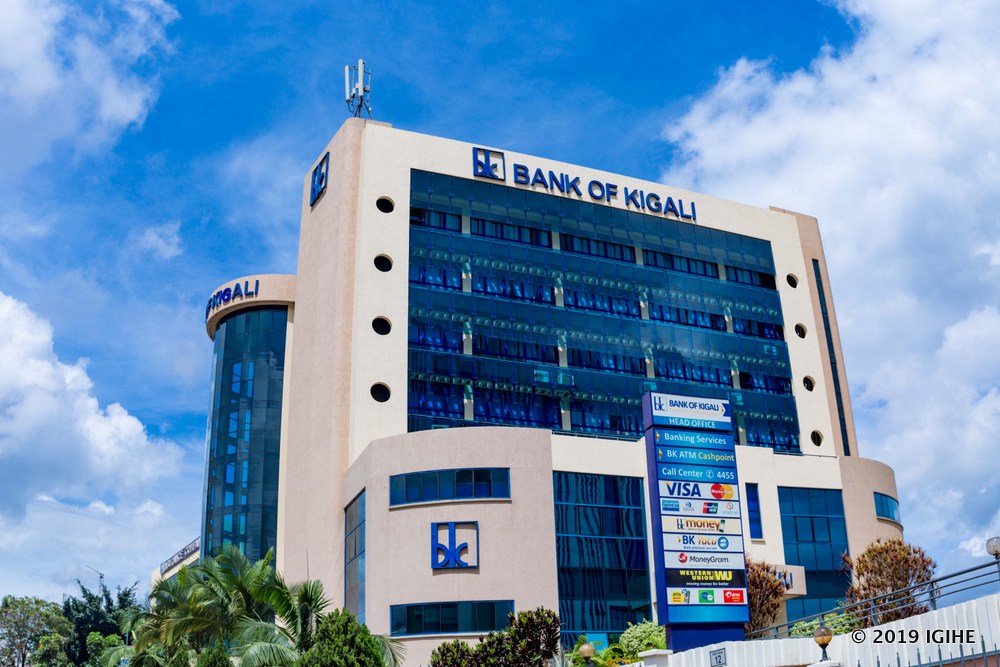
BK Group Plc is the mother company of four subsidiaries including Bank of Kigali, BK General Insurance, BK TechHouse and BK Capital Ltd.
As per released figures, the lender recorded Rwf134.8 billion total operating income and Rwf43.5 billion after-tax profit in the first nine months.
As for the third quarter, the group registered Rwf15.2 billion after-tax profit.
Commenting on the performance, the CEO of BK Group Plc, Béata Habyarimana said: “BK Group Plc recorded strong results in Q3 and first nine months of 2022; reporting a net income of Rwf43.5 billion. We are happy to see improvement in asset quality despite a turbulent macroeconomic environment. We remain Rwanda’s leading financial group with over 30% market share on all key metrics teams remain committed to delivering great results and we are confident and optimistic that we will continue to meet shareholder’s expectations.”
{{Subsidiaries’ performance in the first nine months}}
{ {{Bank of Kigali Plc}} }
As at September 2022, the bank served 439,690 Retail customers and over 21,561 corporate clients, expanded the Agency Banking Network to 4,086 agents and processed over 1.8 million transactions worth Rwf357.0 billion.
The lender has 68 branches, 13 outlets, 9 mobivans; 97 ATMs and 3,197 POS terminals that accept most international cards including VISA and MasterCard.
Among others, retail clients’ balances and deposits reached Rwf309.3 billion as at September 30th, 2022 while business banking clients’ balances and deposits were Rwf818.0 billion as at September 30th, 2022.
BK Quick now has 125,112 registered customers and has disbursed over Rwf1.8 billion as at September 30th, 2022 while IKOFI wallet has registered over 1,853 agro-dealers/agents and over 264,082 registered farmers.
{ {{BK General Insurance}} }
As one of BK Group’s subsidiaries, BK Insurance registered a profit of Rwf2.1 billion in quarter three compared to Rwf1.8 billion registered in same period last year, representing 15% growth in profitability.
Gross Premium decreased from Rwf10.4 billion in the third quarter of 2021 to Rwf8.9 billion in 2022 reflecting a growth of 15%.
Underwriting profit grew from Rwf1.7 billion to Rwf1.9 billion year-on-year, which represents a 12% growth.
Total assets also increased by 9% y-o-y from Rwf21.7 billion to Rwf23.5 billion.
{ {{BK TecHouse}} }
As for the performance of BK TecHouse, sales revenue grew from Rwf735.7 million to Rwf867.2 million; representing an 18% increase while Net Operating Income reached Rwf1.1 billion; representing a 37% growth.
{ {{BK Capital Ltd}} }
The company’s total revenues for the period stood at Rwf677.0 million. Assets under management grew by 128.3% YTD to Rwf2.4 billion; mainly due to improving product awareness, investment returns and consistent customer service.
With RSE Market Share of 36.6%; the subsidiary sustained market share growth attributed to deepening client relationships and growth in related businesses.
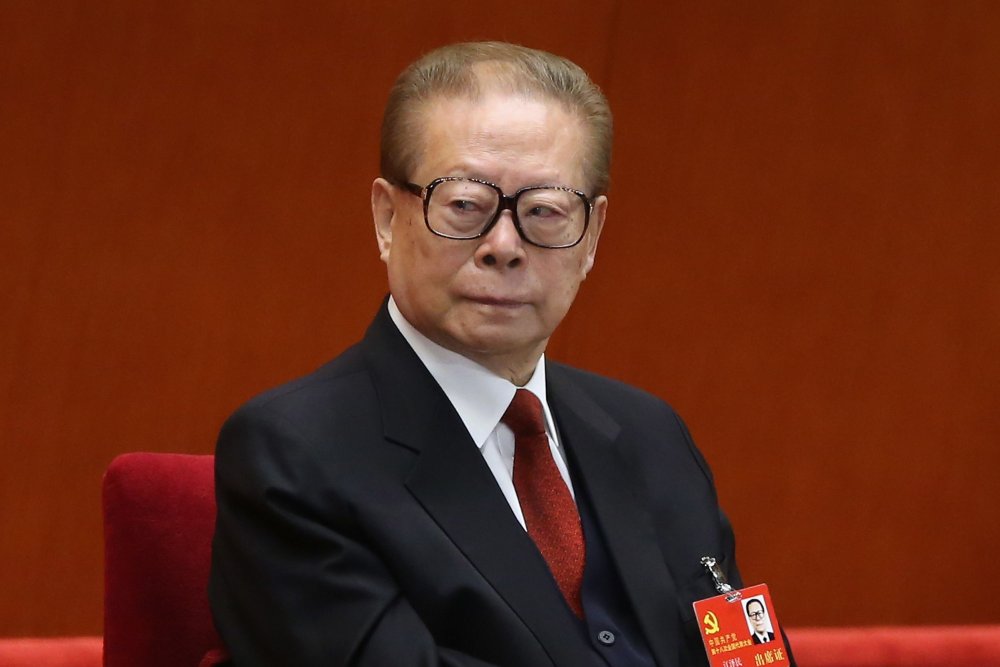
The announcement was made by the Central Committee of the Communist Party of China (CPC), the Standing Committee of the National People’s Congress of the People’s Republic of China (PRC), the State Council of the PRC, the National Committee of the Chinese People’s Political Consultative Conference, and the Central Military Commissions of the CPC and the PRC.
It was announced in a letter addressing the whole Party, the entire military and the Chinese people of all ethnic groups.
The letter says they proclaim with profound grief to the whole Party, the entire military and the Chinese people of all ethnic groups that our beloved Comrade Jiang Zemin died of leukemia and multiple organ failure after all medical treatments had failed.
The letter says that Comrade Jiang Zemin was an outstanding leader enjoying high prestige acknowledged by the whole Party, the entire military and the Chinese people of all ethnic groups, a great Marxist, a great proletarian revolutionary, statesman, military strategist and diplomat, a long-tested communist fighter, and an outstanding leader of the great cause of socialism with Chinese characteristics.
He was the core of the CPC’s third generation of central collective leadership and the principal founder of the Theory of Three Represents.
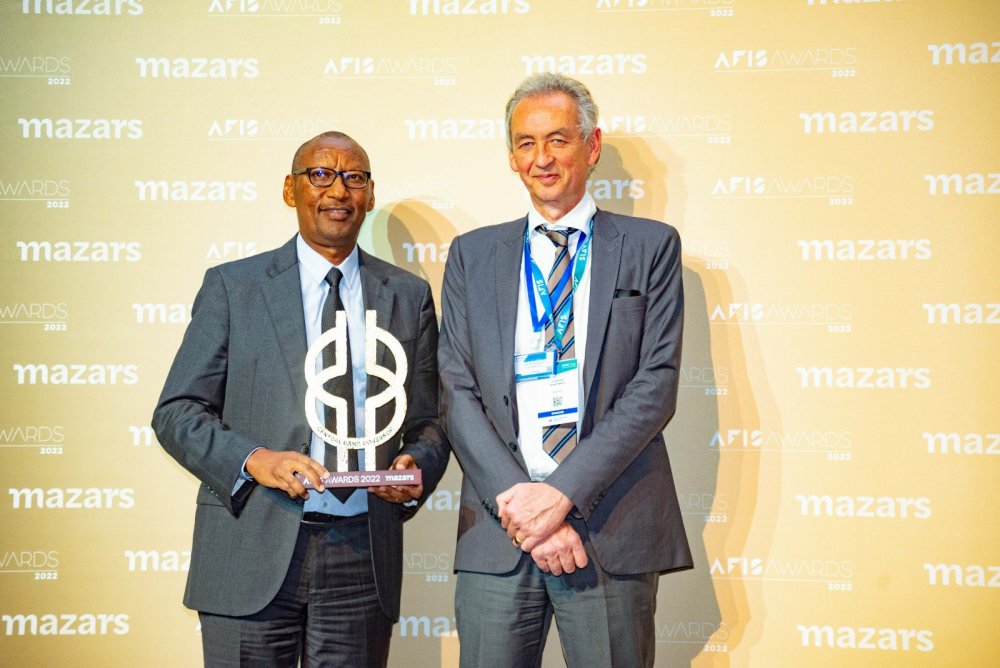
The second annual summit took place from 28th to 29th November 2022 in Lomé, the capital of Togo.
It brought together leaders from the African financial industry, teachers, lecturers and economic experts for discussions to contribute to the continent’s economic recovery through the development of a competitive, innovative, inclusive, and sustainable financial industry.
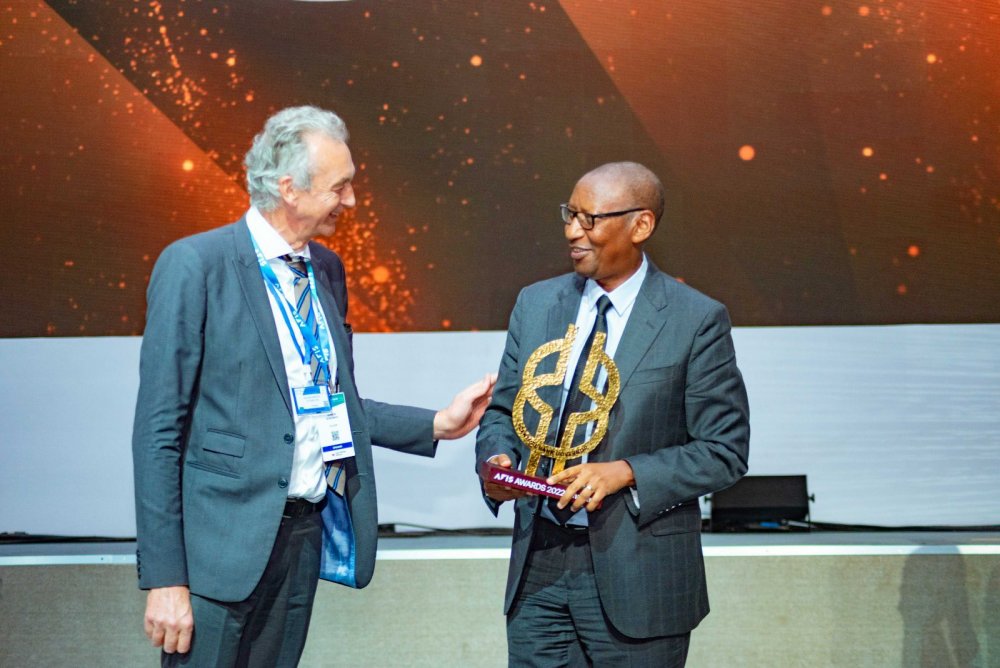
The first ever AFIS Central Bank Governor Award recognizes the role of Governors in the development of the continent’s economies.
Governor Rwangombwa was also recognized in the areas of Monetary policy, discipline and proactive approaches in public debt management, bank consolidation and support for private equity.
Rwangombwa was appointed Central Bank Governor in 2013. Since then, Rwanda’s economy grew at a commendable pace with an annual growth of over 7%.
During his tenure, Rwanda promoted cashless transactions. For instance, latest figures from BNR indicate that the number of funds transfers through mobile payment channels in the fiscal year 2021/2022 increased by 58 percent from 196 million to 310 million transactions and the value increased by 41 from Rwf4,707 billion to Rwf6,616 billion.
Rwangombwa contributed to Rwanda’s economy through different duties assumed previously where he worked in Rwanda Revenue Authority (RRA), Ministry of Finance and Economic Planning (MINECOFIN) which he led since 2009.
At the time, Rwanda was implementing the First Economic Development and Poverty Reduction Strategy (EDPRSI) aimed at eradicating poverty. EDPRSI saw Rwanda reducing poverty by 12% from 2006 to 2011.
In 2015, two years after assuming duties as Governor, BNR received an award as the Central Bank of the Year in the Sub-Saharan Africa Region.
AFIS is organized by Jeune Afrique Media Group and Africa CEO Forum.
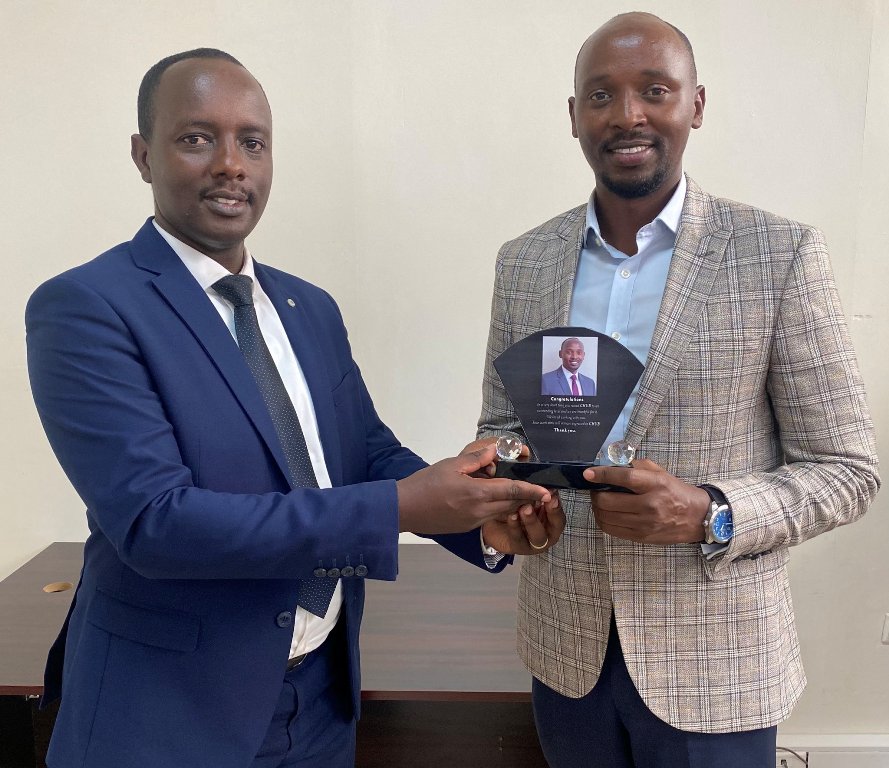
A letter from the Office of Prime Minister shows that Dr. Ngarambe was appointed on 29th November 2022.
Dr. Ngarambe Christian has been serving as a General Surgeon at CHUB since 2015. He is a graduate from the University of Rwanda.
Dr. Ngarambe is named the Ag. Director General of CHUB for the second time. He once replaced Dr. Augustin Sendegeya in August 2021 and handed over to Dr. Nsanzimana in February 2022.
He previously served as a Medical Director at the hospital.
The handover between Dr. Nsanzimana and his successor, Dr. Ngarambe took place on Tuesday 29th November 2022.
It was witnessed by the Mayor of Huye District, Ange Sebutege and CHUB team.
The UNOCHA said in its latest Horn of Africa drought situation update that the situation could worsen further amid deteriorating weather conditions across the affected countries.
“Communities in the Horn of Africa are in the midst of a likely fifth consecutive failed rainy season — with the October to December 2022 rains beginning poorly and forecasts indicating they are likely to underperform — and may face a sixth failed season in March to May 2023,” the UNOCHA said.
The October-December 2020, March-May 2021, October-December 2021, and March-May 2022 seasons were all marred by below-average rainfall, leaving large swathes of Somalia, southern and southeastern Ethiopia, and northern and eastern Kenya facing the most prolonged drought in recent history, while the March-May 2022 rainy season was the driest on record in the last 70 years, it said.
It said the 2020-2022 drought has now surpassed the horrific droughts in 2010-2011 and 2016-2017 in both duration and severity and will continue to deepen in the months ahead, with catastrophic consequences.
The UNOCHA further warned that the ongoing drought situation is ravaging affected communities, with needs spiraling.
Across the Horn of Africa, at least 36.4 million people will be affected by the most prolonged and severe drought in recent history in the last months of 2022, including 24.1 million in Ethiopia, 7.8 million in Somalia, and 4.5 million in Kenya, according to the figures from the UNOCHA.
Chen Dong, the commander of the Shenzhou-14 crew, opened the hatch at 7:33 a.m. (Beijing Time). The three space station occupants greeted the new arrivals with warm hugs and then they took a group picture with their thumbs up, shouting in chorus — “China’s space station is always worth looking forward to.”
The space reunion kicked off the first in-orbit crew rotation in China’s space station, according to the China Manned Space Agency (CMSA).
The six astronauts are projected to live and work together for about five days to complete planned tasks and handover work, said the CMSA.