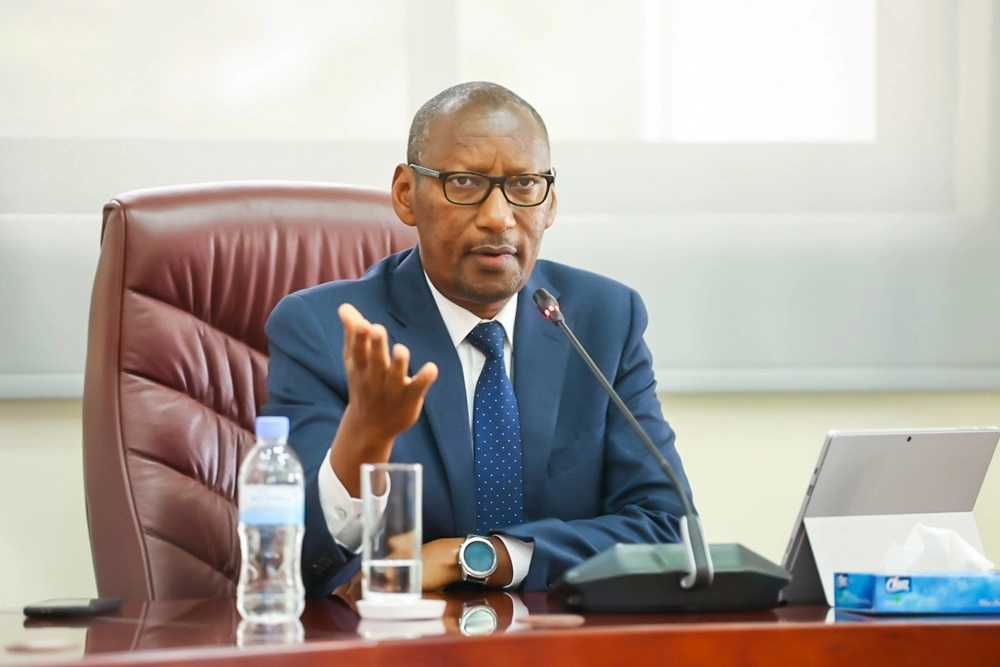
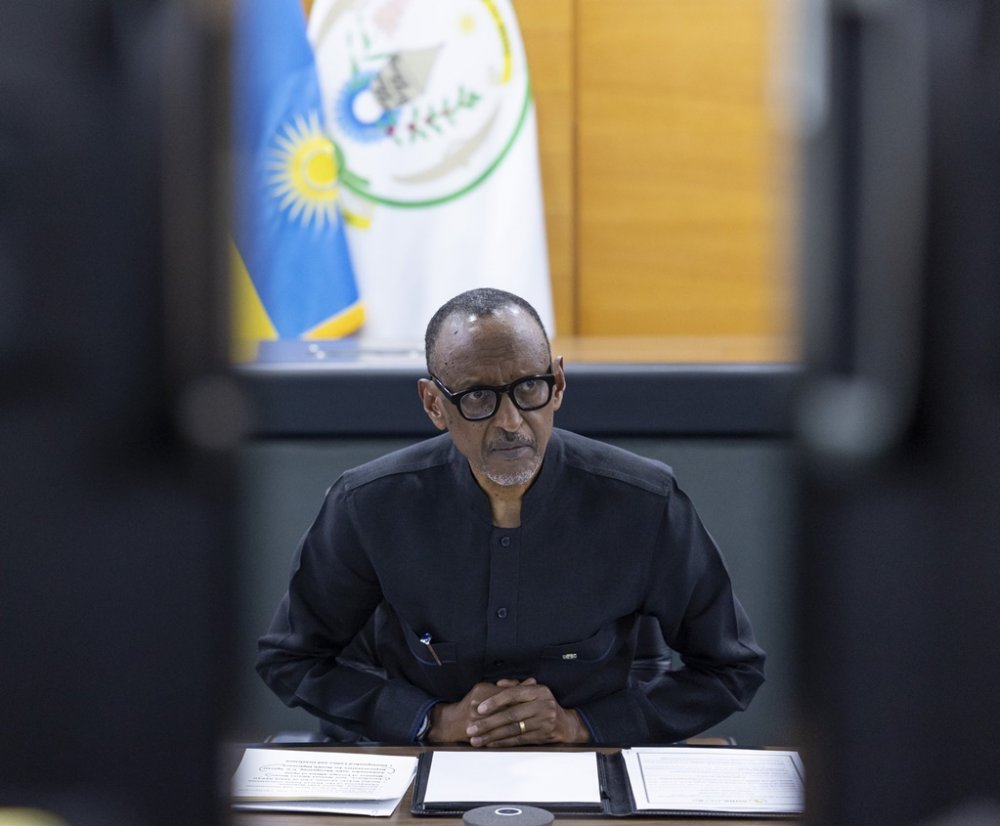
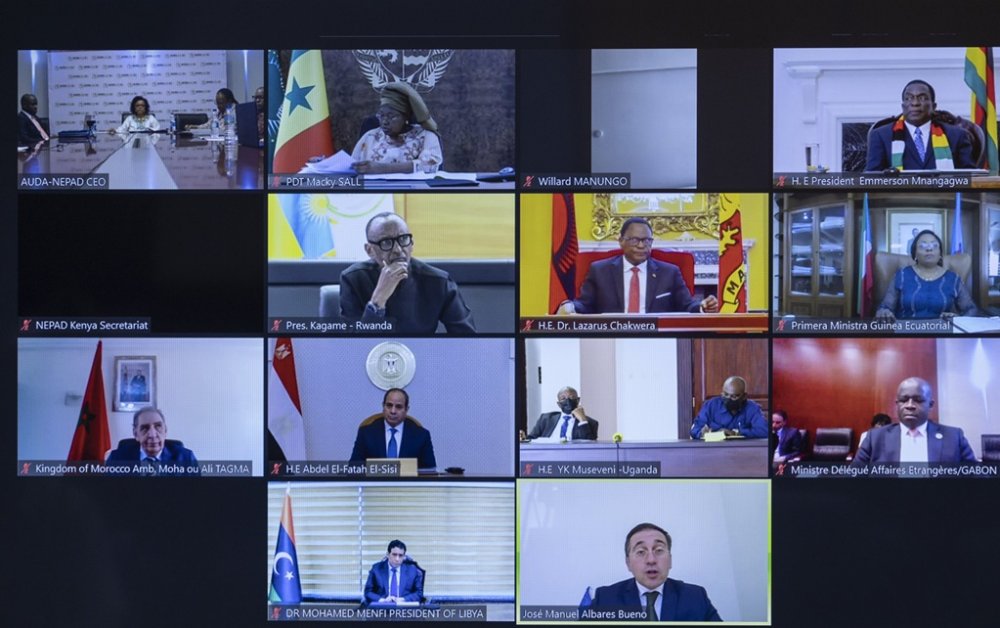
Before concluding his term, Kagame chaired the 40th session of AUDA-NEPAD Heads of State and Government Orientation Committee on Wednesday 15th February 2023 which discussed health, infrastructure financing and elected President Abdel Fattah el-Sisi as the new Chair of the AUDA-NEPAD HSGOC.
It was also attended by Spanish Minister of Foreign Affairs and Ambassador Nkengasong as partners.
The Head of State commended AUDA-NEPAD for working closely with regional economic communities and member states to set up regional health financing hubs.
As highlighted during the second Dakar Financing Summit hosted by President Mack Sall recently, Kagame reminded participants that the continent’s infrastructure remains weak yet the world continued to experience difficult times last year.
The President underscored that he shared Africa’s perspective on these pressing issues as he attended G20 and the Effective Development Cooperation Summit on behalf of AUDA-NEPAD.
“First, I mentioned that higher borrowing costs are deepening Africa’s debt burden. But there are tools to get our economies back on track,” he said.
Of these, Kagame pointed out the International Monetary Fund’s new Resilience and Sustainability Trust, and the Debt Service Suspension Initiative.
Secondly, the Head of State emphasized that Africa continues to lag behind in terms of pharmaceutical production where the continent’s efforts to bridge this gap ‘are crucial to our health security’.
Thirdly, Kagame highlighted that what Africa needs is peace when it comes to geopolitical conflict.
He also mentioned how Africa has been disproportionally affected by the rise in food and fertilizer prices.
To better support the implementation of AUDA-NEPAD programs, Kagame observed that the agency needs to be financed in a predictable and sustainable manner given that it has fallen significantly as voluntary contributions have declined, hence increasing dependence of development partners.
“These issues need to be addressed. Otherwise, it is like saying, that we do not need the work which AUDA-NEPAD is charged with doing on our behalf.
As I conclude my term as Chair, I take this opportunity to thank all of you, along with our partners, for the continued dedication to Africa’s development. Let’s continue working together to meet our objectives,” he said.
Kagame has been chairing the AUDA-NEPAD Heads of State and Government Orientation Committee since 2020.
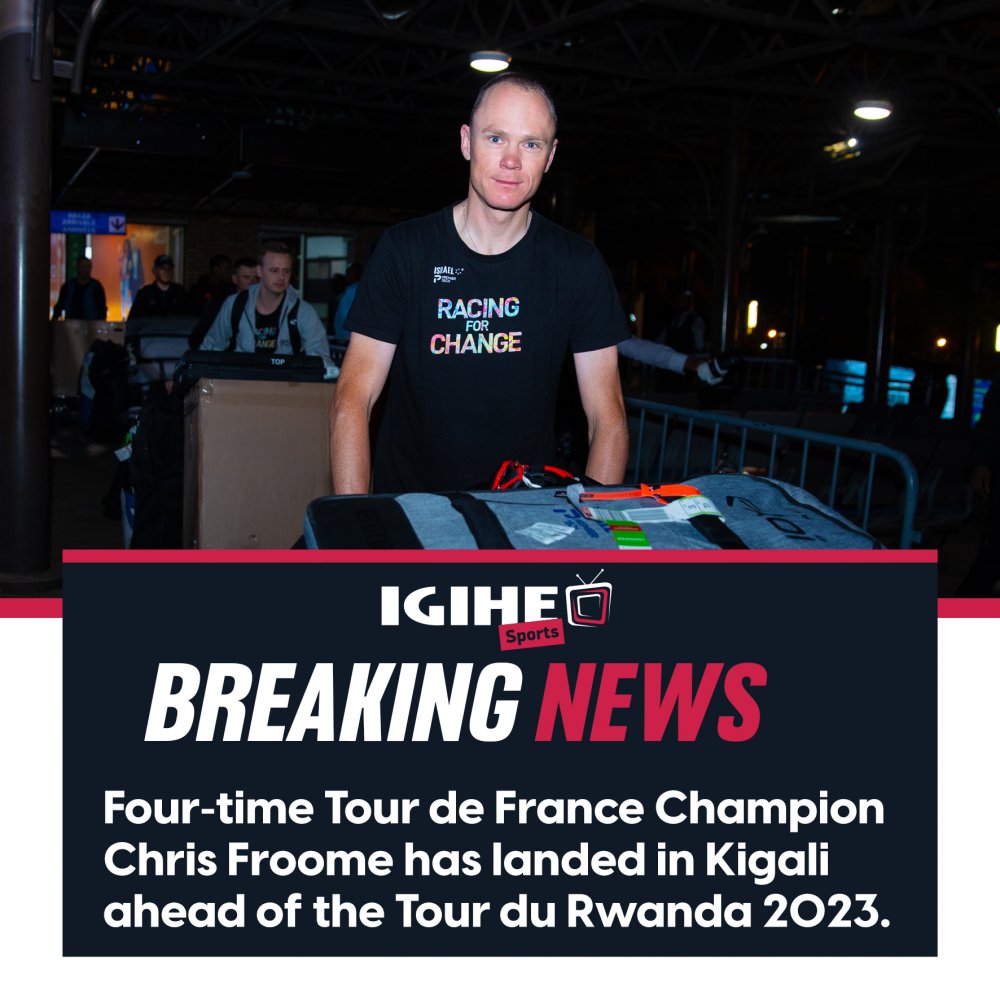
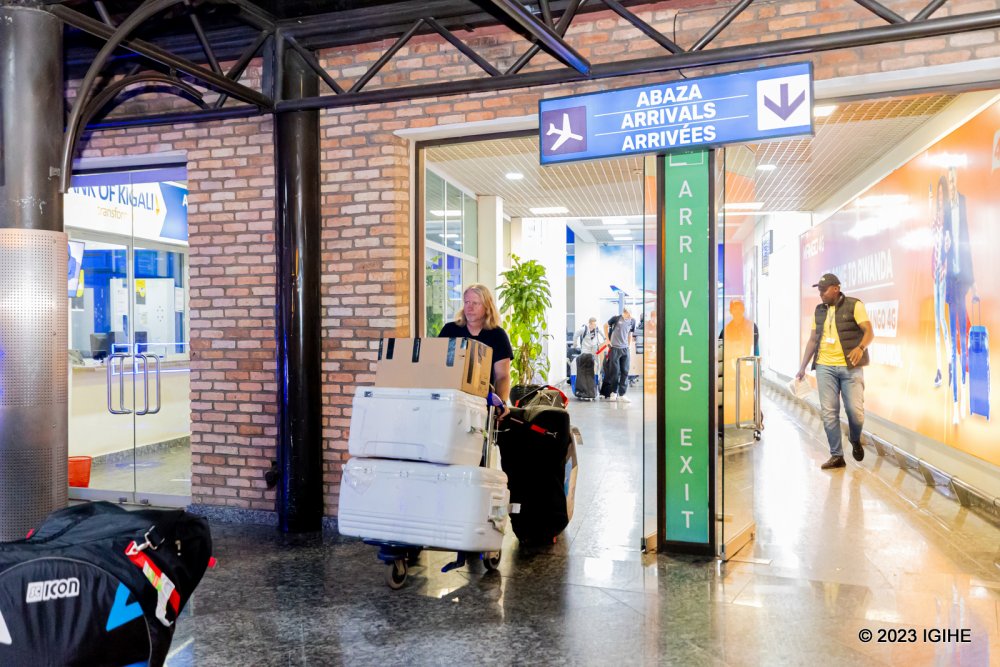
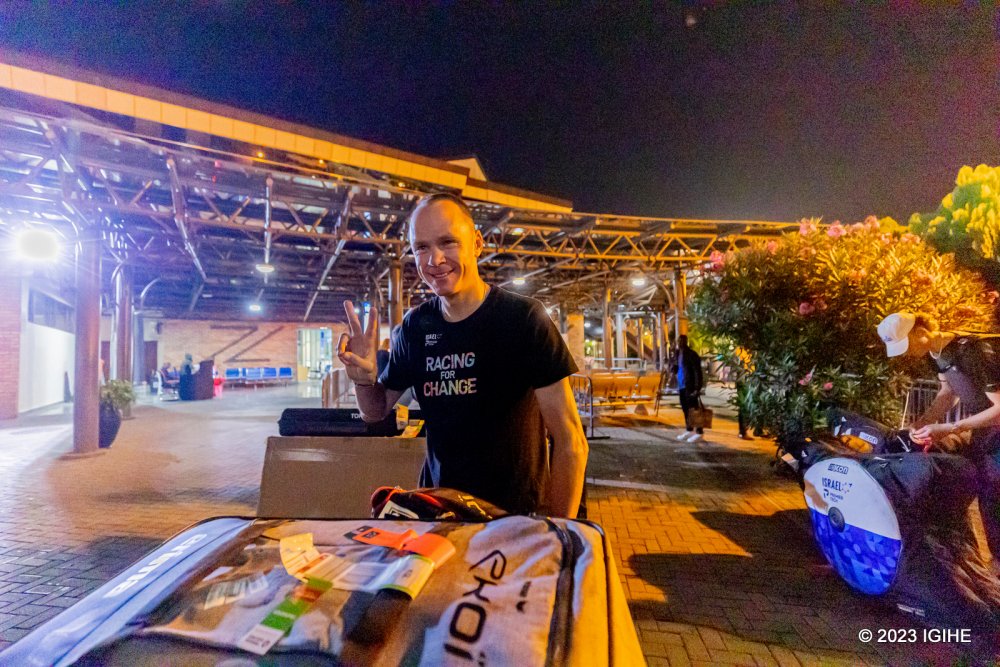
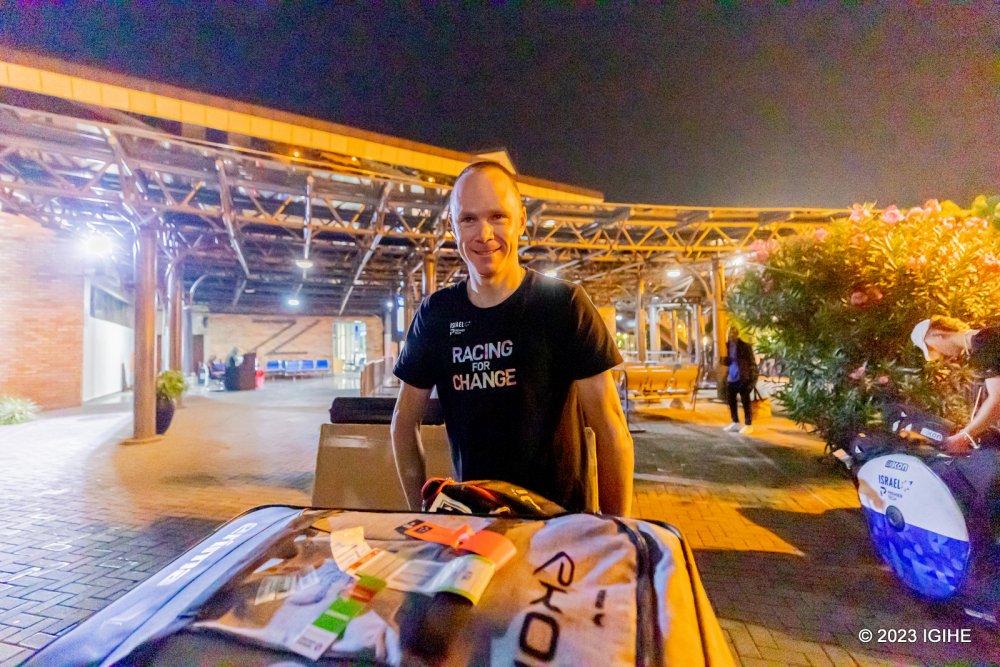
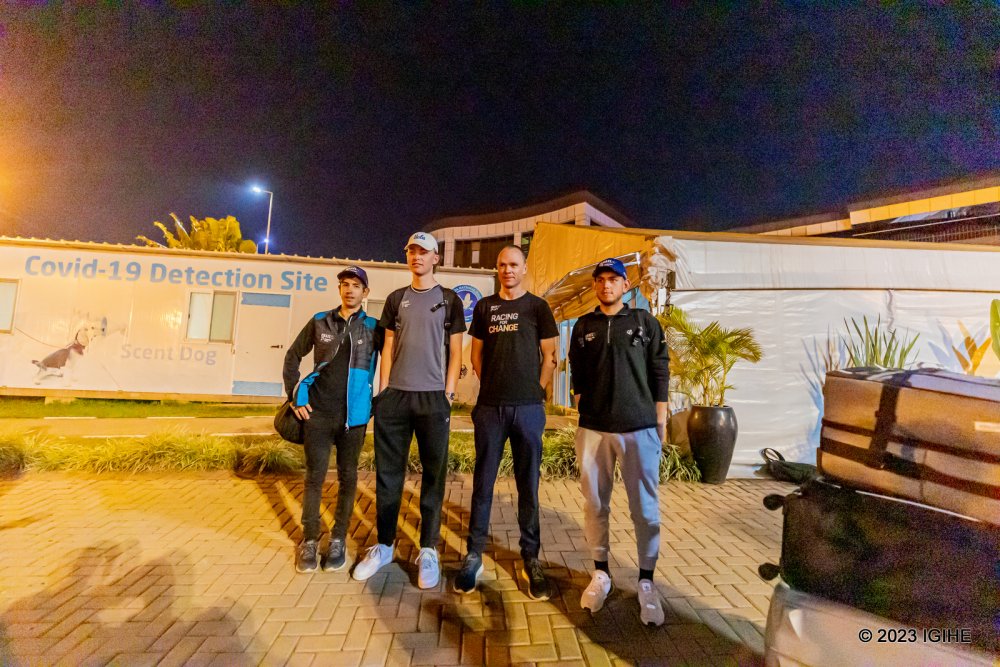
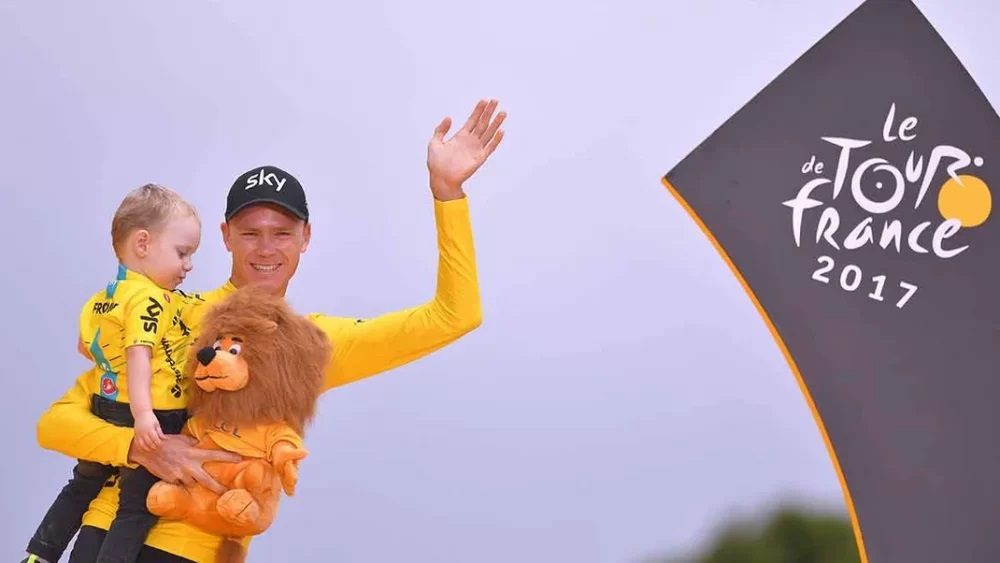
Chris Froome, his teammates and representatives from the management of Israel Premier-Tech arrived at Kigali International Airport around 2:52 a.m on Thursday 16th February 2023.
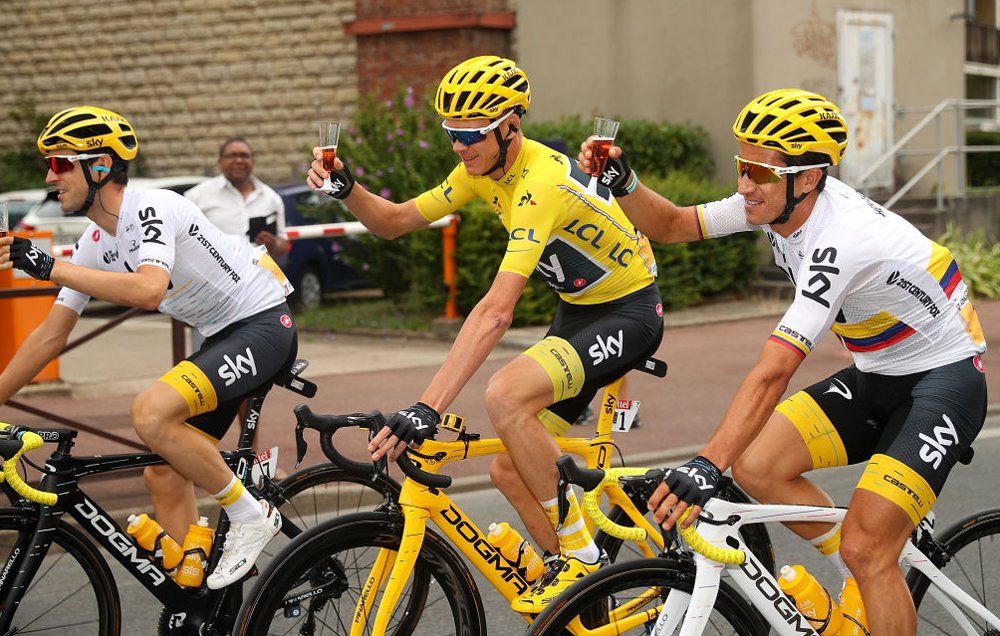
Froome 37, is among legendary cyclists as he won seven Grand Tours: four editions of the Tour de France (in 2013, 2015, 2016 and 2017), one Giro d’Italia (2018) and the Vuelta a España twice (2011 and 2017). He has also won several other stage races, and the Vélo d’Or three times.
Upon arrival, Froome expressed delight to be in Rwanda for the first time.
“It is my first time here. I grew up not too far away, in Kenya. I am happy to be here and looking forward to the race this week,” he noted.
“I don’t really know what to expect in the race, I have never raced here before. I am expecting a fast and furious week racing. […] I am sure there is a lot of strong local talents and I am looking forward to getting to know some of those guys,” added Froome.
At least 100 riders from 20 teams are expected to participate in the race scheduled between 19th and 26th February 2023.
Froome confirmed his participation in Tour du Rwanda on 15th January 2023.
He will be riding for Israel Premier-Tech which is participating in Tour du Rwanda for the eighth time.
Froome was expected to participate in Tour du Rwanda 2022 but got a knee injury during preparations.
In 2019, he sustained serious injuries in a freak high-speed accident. At the time, the cyclist broke a leg, ribs and an elbow after colliding with a wall outside the town of Roanne in the Loire in France.
After leaving Team Ineos, Froome raced in Tour de France mu 2021 where he finished in 133rd place.
Israel Premier-Tech team landed in Kigali three days ahead of Tour du Rwanda 2023.
It has joined other teams that have already arrived in Rwanda to participate in the eight-day race.
These include TotalEnergies from France, Terengganu Polygon from Malaysie, Bike Aid from Germany, Soudal Quick-Step from Belgium and Bolton Equities Black Spoke from New Zealand which arrived in the morning of Wednesday 15th February 2023 as well as Tartu 2024 from Estonia which landed in Rwanda on 10th February to make enough preparations in Musanze.
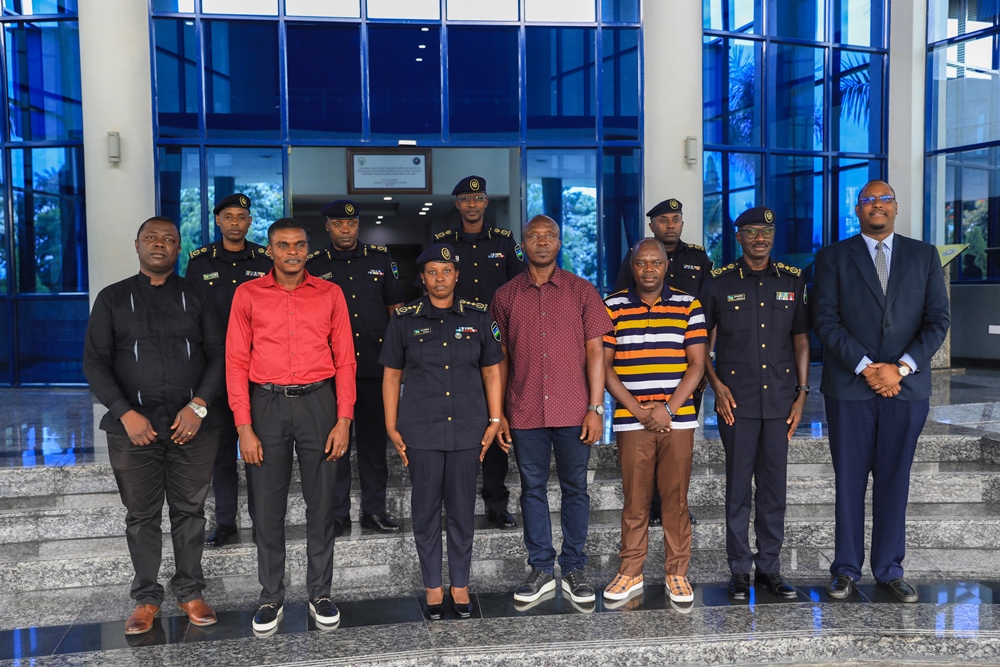
The delegation, which is in the country since Monday, visited the RNP to specifically understand Rwanda’s traffic management policies and enforcement.
The Deputy Police Chief thanked the delegation for choosing Rwanda and the RNP in particular for their benchmarking.
Through a presentation, the delegation was given an overview on traffic management in the country, mainly through the three departments of Traffic and Road Safety (TRS), Automobile Inspection Centre (AIC) and Testing and Licensing (TL).
Effective laws and policies, embracing technology as well as public awareness were identified as efficient tools that are facilitating the RNP in road traffic management system.
Technology in road traffic management includes the integrated database, speed governor, fleet management system, traffic enforcement cameras, red light cameras and body worn cameras, among others.
The integrated database records transactions related to fines and related exhibits, facilitates online booking, either for automobile inspection or driving test, among others.
Whereas traffic enforcement cameras largely enforce speed limits, red light cameras captures automobiles that have violated and entered an intersection after the traffic lights controlling the intersection have turned red.
The Liberian officials from different entities, including the Police and ministries, inquired more on the process of acquiring a driver’s license, management of traffic flow and enforcement.
“Laws and policies must be respected by everyone, regardless of who you are, and that has become a culture; whether wearing a helmet for everyone on a motorcycle, observing speed limits, driving only when you are sober and other practices permitted for safer road usage. Contrary to that, there are specified punitive measures, including fines,” DIGP Ujeneza said.
She further mentioned road safety awareness as a key factor in improving road security to drive the ideals of shifting from respecting traffic rules as a law to making it a choice and ultimately a culture.
Samuel C. Wonasue, the coordinator of the road safety secretariat in Liberia, and head of the delegation, said that their five-day visit to Rwanda is for “peer review.”
“There is a lot we can learn and borrow from Rwanda, including in traffic management,” said Wonasue.
Later, the Liberian officials also visited the command and control centre, traffic and road safety enforcement system and the Traffic and Road Safety headquarters.
The caution follows separate post-match incidents in which some fans have turned violent and assaulted their opponents, and causing public disorder.
Last Sunday, February 12, shortly after a football match between Rayon Sports and APR at Huye stadium, a group of violent youth pelted stones at a Kigali-bound bus carrying APR fans, injuring six of them. Subsequently, six people were arrested in connection with the act.
In last December, a similar incident occurred in Rubavu District where two APR fans were assaulted and seriously injured. This was after a football match between Etincelles and APR.
Also in December last year, a journalist was assaulted after a match between Etincelles and Rayon Sport at Umuganda stadium.
On January 20, after a match between Kiyovu Sport and Gasogi United at Bugesera stadium, a section of fans turned rude and abused the match referee.
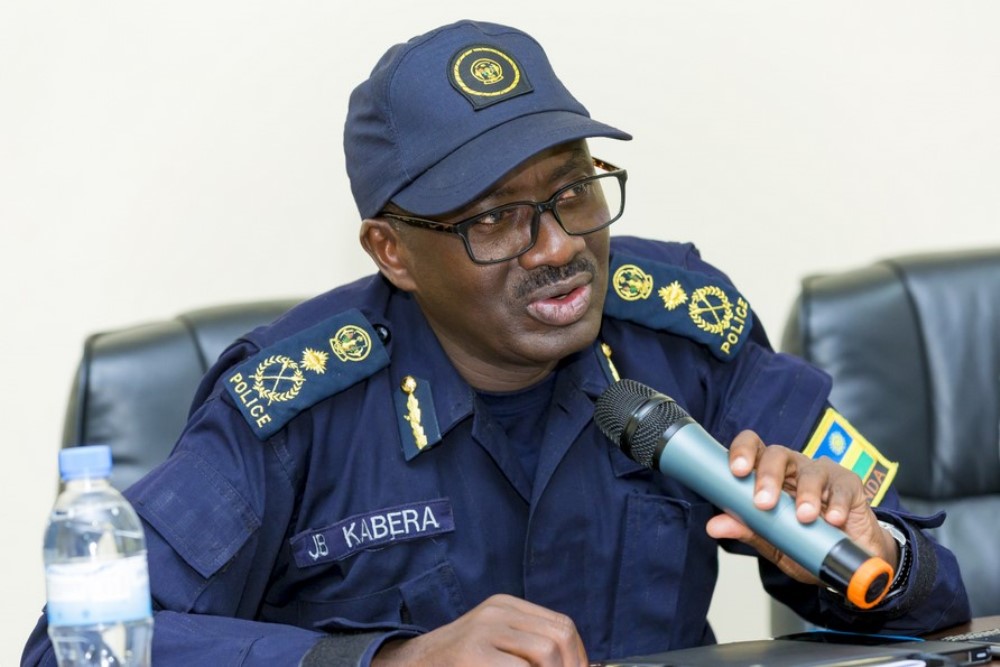
“Football or sports competitions should be contested in friendly and orderly manner… it is a fair play; any acts of violence and assault is criminal and punishable by law,” Commissioner of Police (CP) John Bosco Kabera, the RNP spokesperson, said.
He added that rights of all supporters should be respected.
“Any acts of violence or abuse means that legal actions will be taken.”
In article 121 of the law Nº68/2018 of 30/08/2018 determining offences and penalties in general; any person who, wilfully, injures, beats or commits any serious violence against another person, commits an offence.
Upon conviction, he/she is liable to imprisonment for a term of not less than three years and not more than five years and a fine of not less than Rwf500,000 and not more than Rwf1 million.
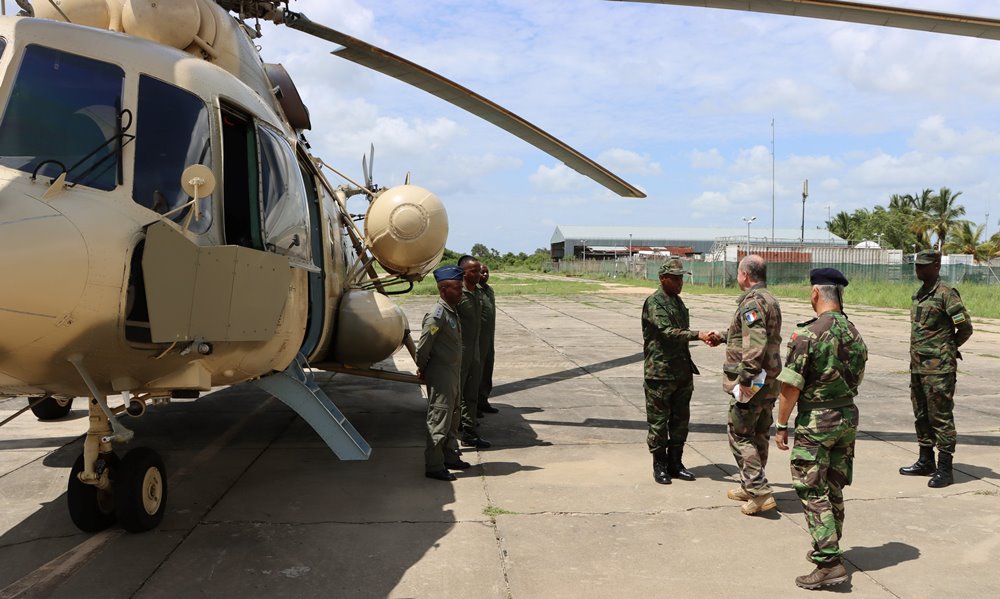
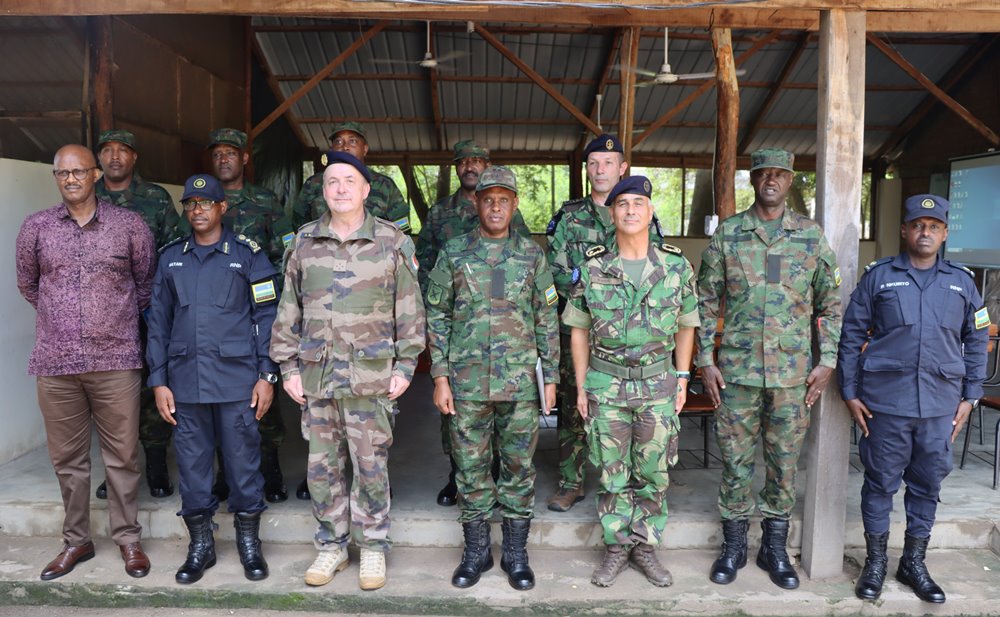
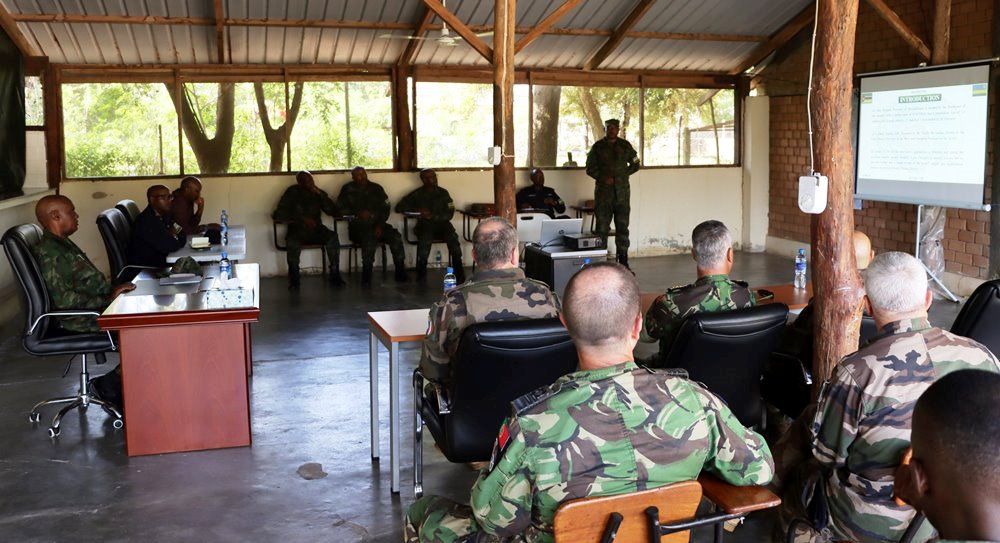
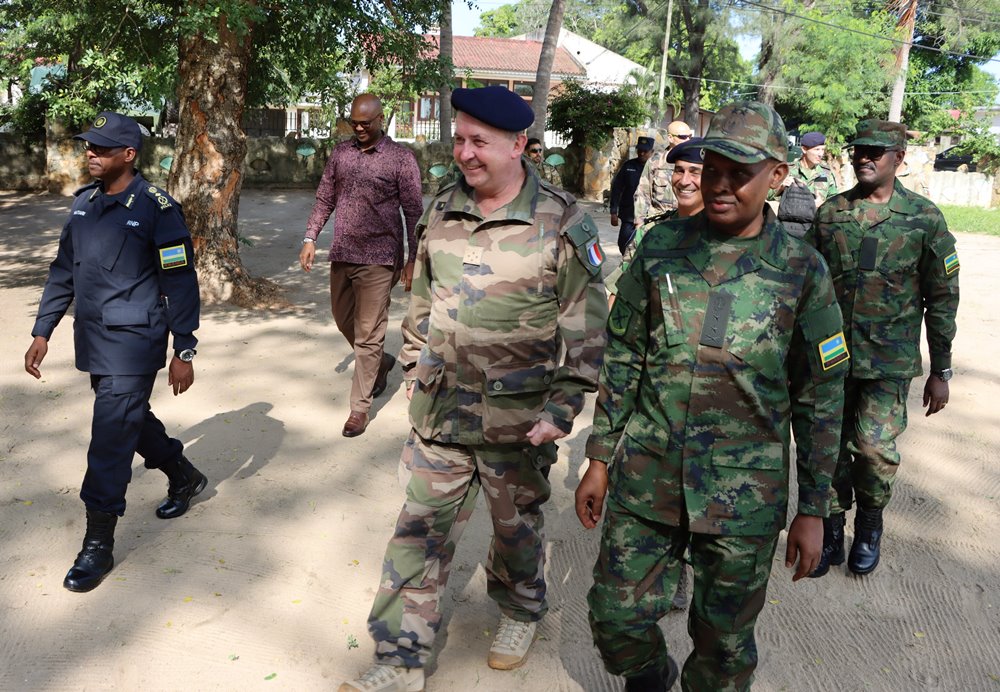
During their visit on On Wednesday 15th February 2023, they received a briefing on the security situation in Rwandan Security Forces Area of Responsibility.
Gen admiral, Herve Blejean appreciated the great achievement recorded by the joint forces in Cabo Delgado (Mozambique armed forces, RSF and SAMIM) that has registered positive outcomes such as the return of a large number of IDPs to their homes.
He added that the EU appreciates and pledges their continued support to ongoing joint operations to bring about lasting peace in Cabo Delgado.
Towards the end of 2022, the EU Council approved €20 million (over Rwf20 billion) funding to support the continued deployment of Rwandan troops to fight terrorists in Cabo Delgado province of Mozambique.
The assistance measure is expected to enable the acquisition of collective and personal equipment, and cover costs related to the strategic airlift needed to sustain the Rwandan deployment in Cabo Delgado.
The funding to Rwanda’s intervention in Mozambique was part of assistance measures adopted by the council in support of the armed forces of five countries. These include Bosnia and Herzegovina, Georgia, Lebanon, Mauritania and Rwanda.
At the time, the Government of Rwanda welcomed the support of European Peace Facility to joint operations in Cabo Delgado and reiterated continued commitment to work with partners to fight terrorism.
Rwanda deployed army and police personnel to Cabo Delgado in July 2021 at the request of the Government of Mozambique. As at December 2022, Rwanda had around 2,500 troops engaged in joint operations with Mozambican forces while additional troops were being deployed in areas that experienced new terrorist attacks.
Before the announced assistance, Rwandan contingent was fully funded by the Government of Rwanda.
Since 2021, the joint force has dislodged insurgents from their strongholds, allowing civilians to return to their homes, and also collaborated with SADC’s SAMIM force to pursue terrorists in other sectors.
The statement released by RDF reads that the intruders have been dealt with and assured that the situation is calm at the border.
“On Wednesday morning at 4h30, FARDC forces estimated to be about one section (12 to 14 soldiers) entered the No Man’s Land between Rwanda and the Democratic Republic of Congo (DRC) bordering Rusizi District in Western Province, and opened fire at our border post. Our security forces responded and FARDC soldiers withdrew,” reads the statement in part.
“At 0554hrs, FARDC forces visited the scene and cleaned up the area. There were no casualties on the Rwanda side and the situation is calm,” adds the statement.
RDF has requested the Expanded Joint verification Mechanism and the Ad Hoq Verification Mechanism ‘to investigate this act of provocation’.
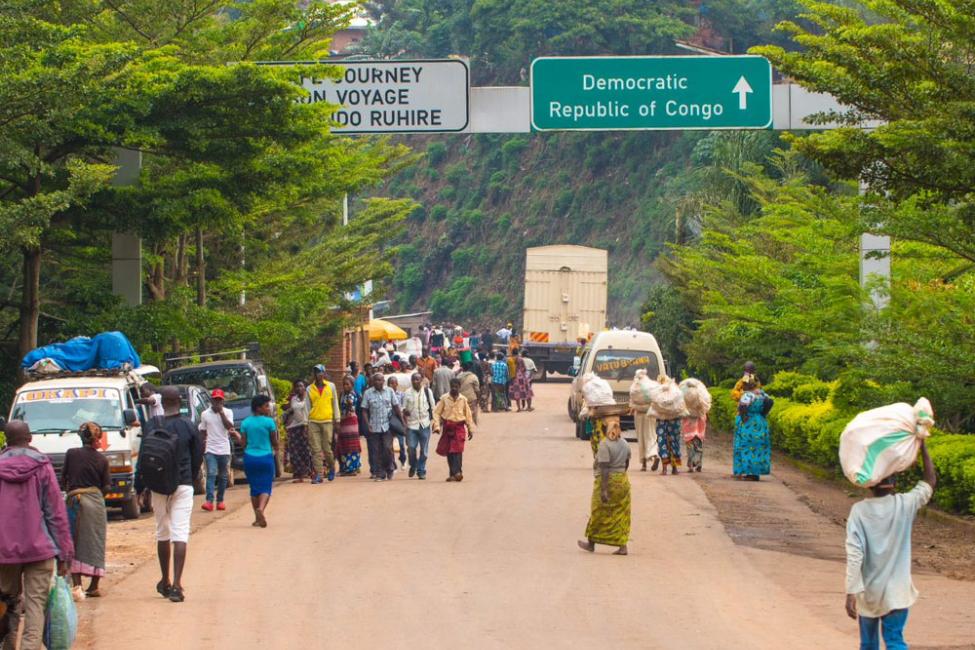
Congo’s provocation to Rwanda is not happening for the first time. In June last year, the country’s soldier stormed Rwandan territory through the small border in Rubavu.
He was shot dead after opening rapid fire on civilians crossing the border and police officers on patrol.
In November 2022, another soldier of the Democratic Republic of Congo (DRC) was shot dead after crossing to Rwanda.
The incident occurred in Gasutamo Village, Mbugangari Cell of Gisenyi Sector in Rubavu District in the night of Friday leading to Saturday 19th November 2022.
At the time, RDF released a statement indicating that the soldier had crossed through the small border between the two countries in Rubavu District and started shooting at Rwandan soldiers on patrol, which prompted them to shot him dead.
Commenting on the incident; Congolese Army spokesman in Northern Kivu, Lt Col Guillaume Ndjike Kaiko confirmed to the media that the soldier shot dead was from FARDC.
“Following an investigation, we have established that he is a soldier of Congo who was recently deployed to Northern Kivu. He knew well border demarcations between Rwanda and Congo,” he said.
He further stated that the soldier was on patrol along with colleagues and mistakenly crossed the border between Rwanda and DRC.
The Congolese soldier killed in November last year in 50 meters from no man’s land, was the third shot dead at the border between the two countries in 2022.
Apart from soldiers reported to have stormed Rwandan territory, DRC’s fighter jets have also violated Rwanda’s airspace at different times. Similar incident recently saw Rwandan soldiers firing at the country’s warplane which returned to Goma burning on its left wing.
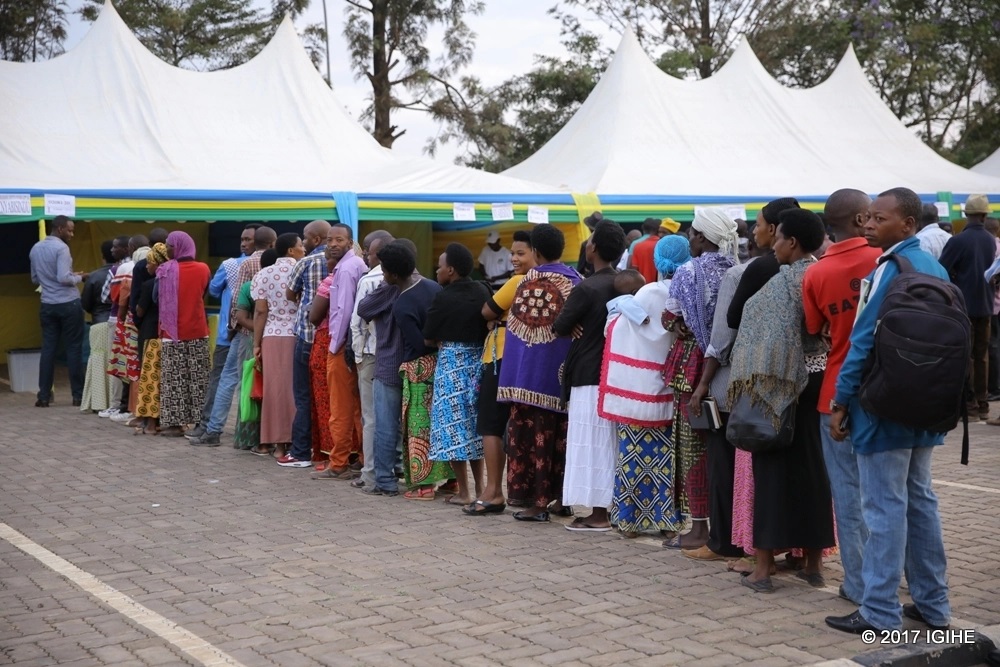
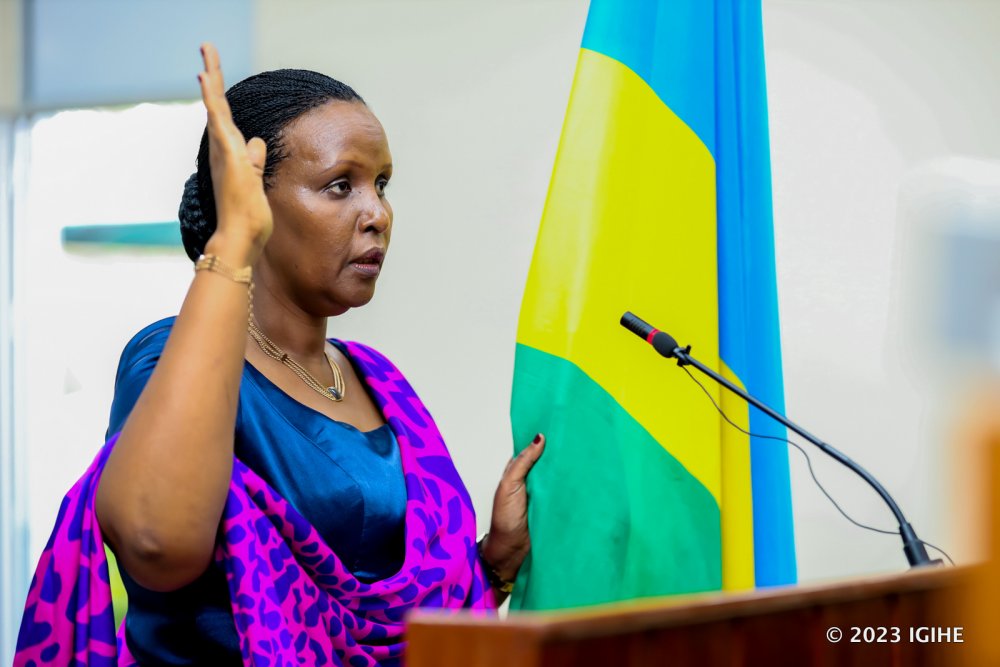
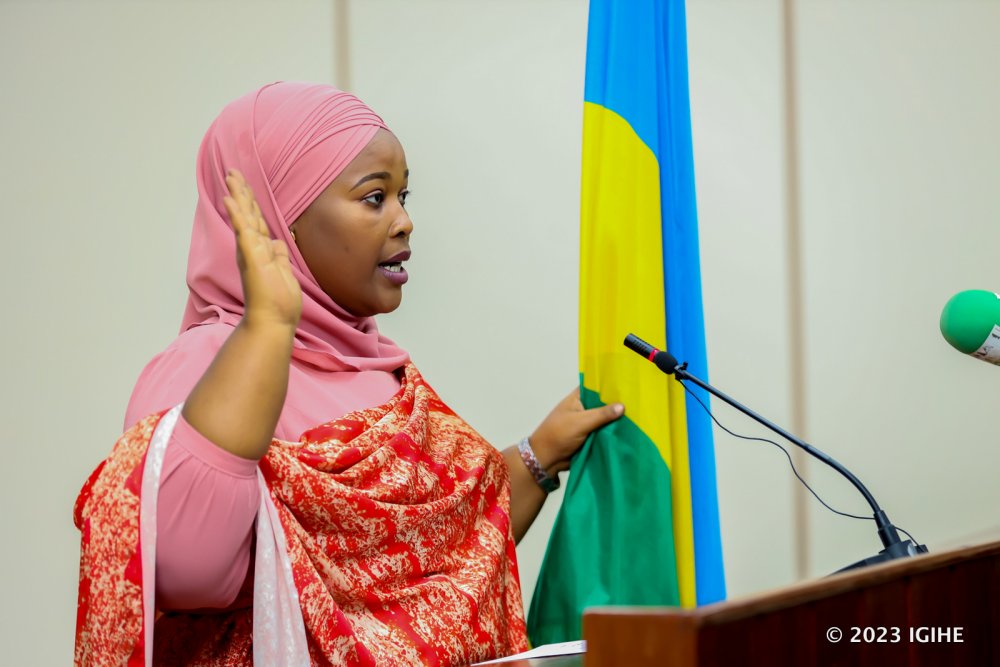
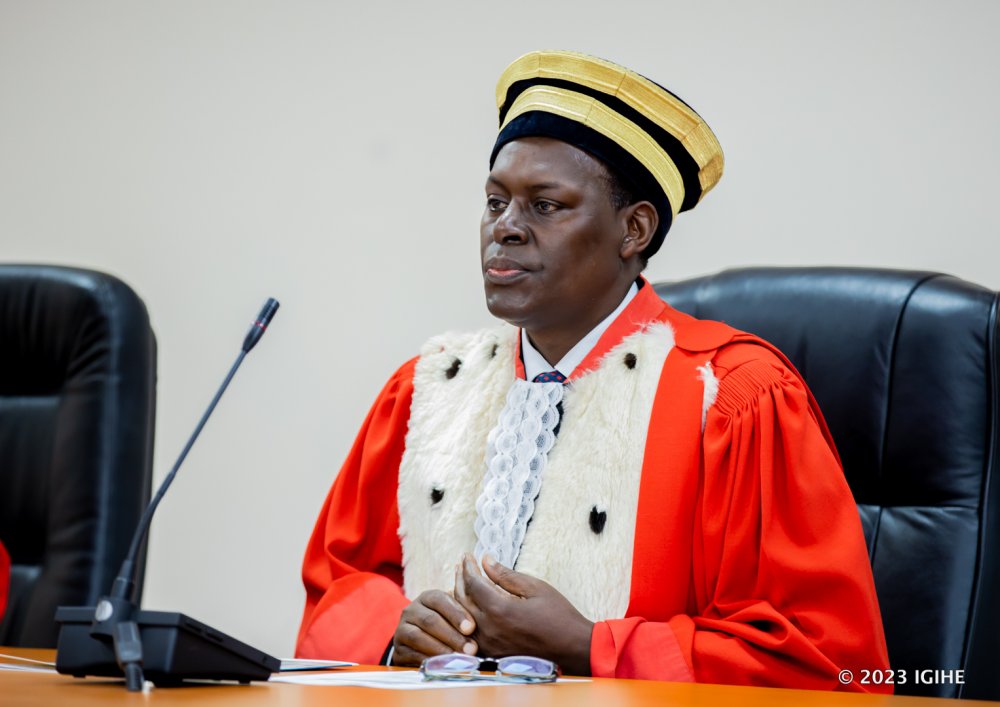
The disclosure was made on Wednesday 15th February 2023 by the new NEC Chairperson, Oda Gasinzigwa after swearing-in before the President of Supreme Court, Faustin Ntezilyayo.
Gasinzigwa told the media that NEC has been undergoing process to overhaul elections’ preparations in consideration of other countries best practices.
Normally, presidential and parliamentary elections in Rwanda are held in different years given that the duration of their terms were not equal. The President would run office for seven years while parliamentarians had to stay in office for the duration of five years.
However, the presidential term will be reduced from seven to five years effective next year as per revised Constitution in 2015.
“Synchronizing the elections is important […] Following senate’s approval, I took time, approached the National Electoral Commission and other partners for discussions on synchronization of those events,” said Gasinzigwa.
One of pointed out reasons for the proposal is related to financial constraints as elections require huge budget.
“It would be a good move. There have been consultations on the possible synchronization of presidential with parliamentary elections. It will be very helpful because the budget for elections is not only a serious challenge to all countries but also to political parties,” noted Gasinzigwa.
“You know that political parties spend a lot of money during elections’ preparations […] the synchronization would help us a great deal in terms of saving time and the budget ,” she added.
Gasinzigwa appealed on concerned institutions to discuss the proposal and expressed optimism that it will be endorsed.
If the proposed changes go into force, the term for parliamentarians will be extended by one year to end in 2024.
The synchronization of presidential and parliamentary elections is common among Commonwealth countries.
NEC Executive Secretary, Charles Munyaneza has told journalists that spending much on elections would be addressed once the proposal is welcomed.
He explained that both elections can take up to Rwf14 billion when they are organized separately yet the cost can be reduced to Rwf8 billion when synchronized.
During the ceremony, Carine Umwari was also sworn-in as commissioner in NEC.
News about his demise went to the public in the morning of Wednesday 15th February 2023.
Rwanda’s Parliament has confirmed that MP Rwigamba ‘died of disease in the morning of 15th February 2023 at King Faisal Hospital’.
Rwigamba served as a parliamentarian since 2013. He was a clerk in the Chamber of Rwanda’s Senate from 2009 prior to the appointment.
He also held other positions as the State Minister in the Ministry of Public Service and Labour (MIFOTRA) in 2003 and Director in charge of coordination of governmental Actions in the Prime Minister’s Office in 2001.
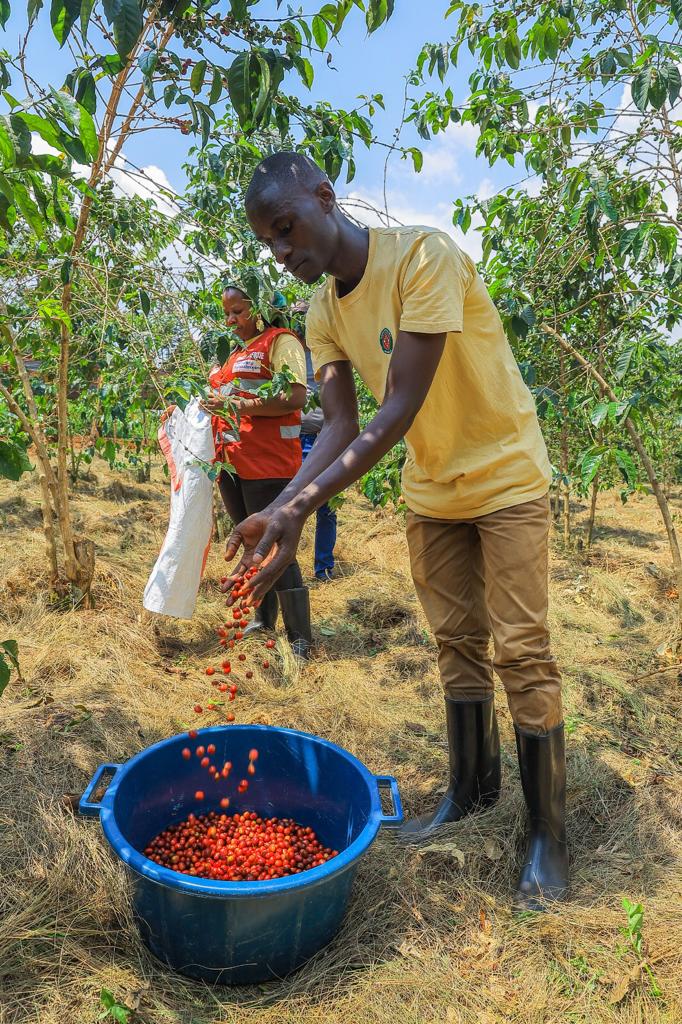
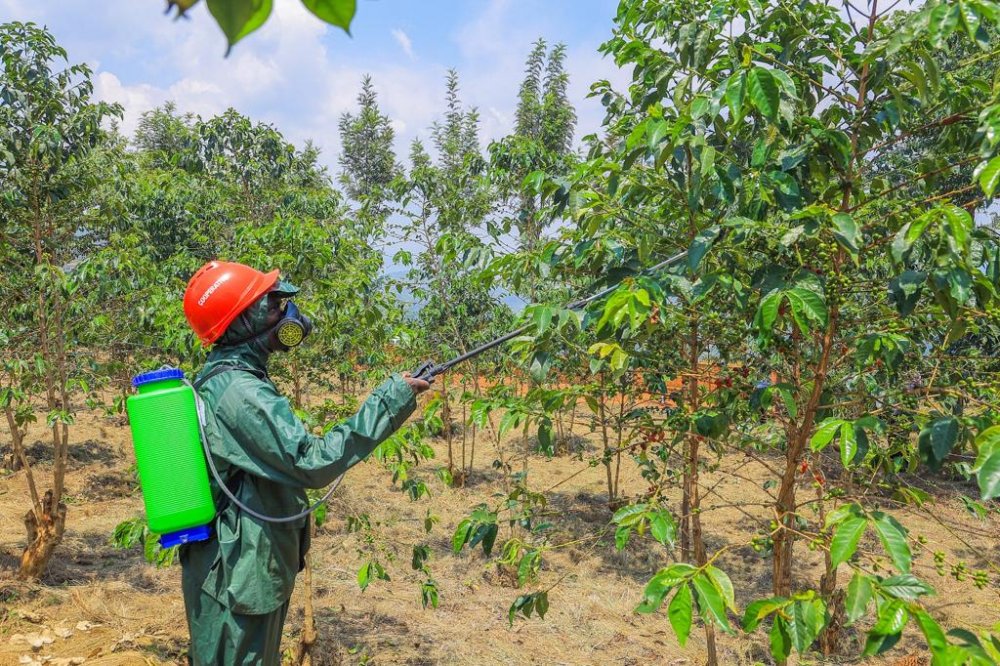
Currently, coffee is considered one of the cash crops with good returns for Rwanda whereby its value is expected to increase as the years go by.
Every year, Rwanda sells between 16,000 and 21,000 tons of coffee grown on 42,000 hectares around the country. Bourbon and Arabica are among the most cultivated coffee varieties in Rwanda.
Currently, figures from NAEB show that Rwanda exported 24,000 tons of coffee that generated more than Rwf108 billion in 2022 while the target is to increase the country’s coffee exports to 27,000 tons in 2024.
In general, the value of Rwanda’s agricultural exports is projected to increase to US$1 billion by 2024. Of the revenues, coffee exports are expected to increase from US$61 million earned in the fiscal year 2017/2018 to US$120 million in 2024.
The target is likely to be achieved considering current figures where the crop generated US$2,796,579 (Rwf3 billion) last week.
{{Farmers’ concerns}}
Coffee began to be cultivated in Rwanda in the 1900s introduced by the German colonists. Today, more than 400,000 Rwandans grow this cash crop and force their meal upon it.
Despite the fact that the crop generates huge returns for the country, farmers have been claiming over meager payments that cannot help them to get rid of rudimentary farming practices.
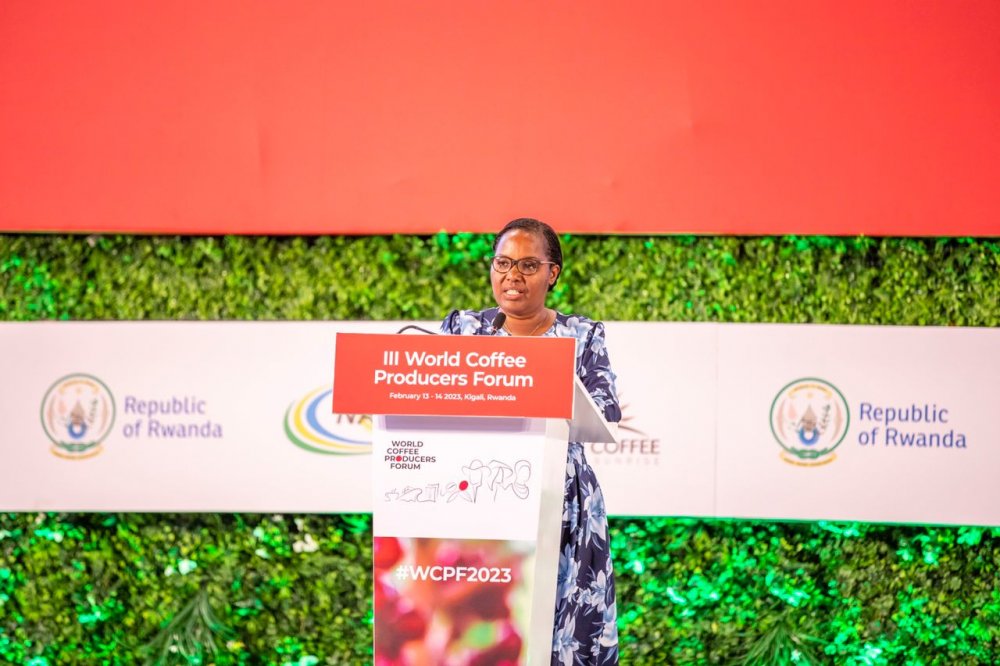
The issue was brought up again on Monday, February 13, at the third edition of World Coffee Producers Forum (WCPF) bringing together coffee producers from 40 countries in Kigali, the capital of Rwanda.
More than 800 participants from 40 countries gathered at the conference to discuss how to improve coffee processing and turn it into a sustainable source of income.
As she officiated the opening of the forum, Rwanda’s Minister of Agriculture and Animal Resources, Dr. Gérardine Mukeshimana hinted at this problem that is often raised by coffee farmers who sell their crops at a low price and stressed the need for all stakeholders in the coffee industry to ensure decent living for millions of coffee farmers worldwide.
“It is imperative that we secure increased revenues and enhance welfare for coffee producers. The sustainability of the coffee industry does require that coffee producers and those at the bottom level enjoy shared prosperity,” said Dr. Mukeshimana.
She also called on all key actors in the coffee sector value chain to recognize the role played by coffee producers in guaranteeing the sustainability of the industry and its long-term viability.
{{Meager payments}}
Coffee farmers in Rwanda say that the money earned per kilogram is still low depsite the fact that the amount has been increasing year by year. Last year, the price of a kilogram reached Rwf410.
Cassien Ndashimye is one of the coffee farmers working from Nyarusange Sector in the Muhanga District.
The man, who started growing coffee in 1997, says that the money earned from this crop does not correspond to expended efforts.
“I have been involved in coffee farming for a long time because I started it in 1997 with 1,340 coffee trees. The money we receive is not rewarding. We have earmarked substantial resources to improve quality and productivity of our coffee but the price is still low,” he says.
Ndashimye further expresses lamentations that received money cannot help them meet household expenses as per current market conditions.
“ Apparently, the amount we used to receive in the past was more helpful than today’s earnings due to the current inflation that worsened the situation. We demand advocacy for increased price and agro-inputs supplied to farmers,” he noted.
Landouard Musengimana, a coffee farmer from Muhanga District shares the same thoughts with Ndayishimiye.
“I have more than two hectares of land with 3,800 coffee trees. The price today is not compatible with what we do. This year they pay us Rwf410 per kilo, but this amount is not suitable for the farmer. They should pay us Rwf500Frw or Rwf600,” he noted.
The CEO of NAEB, Claude Bizimana, says the government is aware of low prices for coffee produce noting it is making possible efforts to handle the situation.
Bizimana said that they expect deliberations from this meeting to take into consideration the improvement of coffee farmers’ livelihoods.