An al-Shabab suicide bomber wearing an explosive vest blew himself up at a military training academy on Monday near the Ministry of Defence, according to a government soldier who declined to be named.
The ATMIS extended its deepest condolences to the bereaved families and wished the injured a speedy recovery in a statement issued on Monday evening.
Increased attacks by the al-Shabab terrorist group across the country will not deter efforts by the international community to stabilize Somalia, it said. “The AU Mission remains committed to the fight against terrorism and will continue working closely with the Federal Government in securing Somalia.”
The ATMIS has started to withdraw its troops from Somalia and hand over security responsibilities to Somali forces. The AU mission has withdrawn 2,000 troops by June 30 and is expected to draw down another 3,000 in September in compliance with the UN Security Council Resolutions 2628 and 2670.
In the horn of Africa, female genital mutilation (FGM) is among the cultural practices done in regards to the ‘high moral value’ tied to virginity and sex despite being declared a criminal act in; September 1985 under ‘the prohibition of Female Circumcision Act 1985”.
It was replaced by ‘the Female Genital Mutilation Act 2003’ which came into force in 2004 and further amended by the ‘Serious Crime Act 2015’.
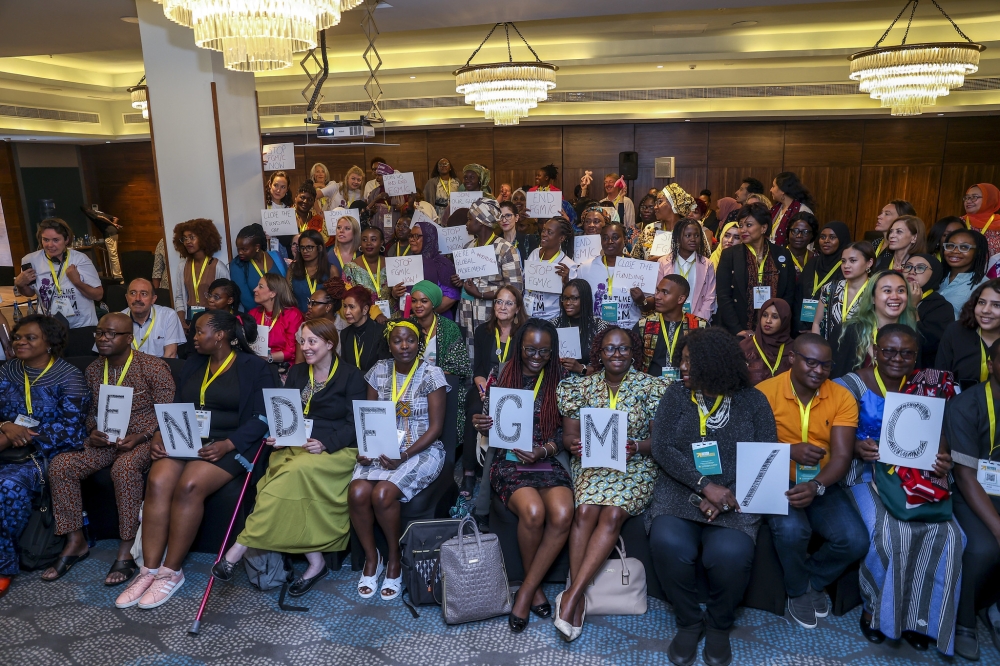
During the recently concluded Women Deliver Conference 2023 held in Kigali, Rwanda; women’s organizations, mostly female activists across Africa, under their umbrella ‘Frontline ending FGM’ gathered in solidarity in one space to find solutions to the ongoing practice as part of the UN mandate to end FGM by 2030.
IGIHE spoke to Sess, an activist from Kenya at the ‘Frontline ending FGM’ booth during the conference to explain what their work entails.
“Basically, what we do is sensitize the community about the harmful cultural practices because they have been medically proven to be very detrimental. We have girls and women going through difficult economic times as a result of the various medical conditions they experience,” she said.
As a gynecologist specializing in the management of ‘prolapse and incontinence’, conditions that can be linked to FGM, Dr. Willison emphasizes that FGM survivors may encounter challenges such as intimacy pain and menopausal issues as they age. These long-term complications could significantly impact their quality of life and, in severe cases, may even lead to death.
According to Sess, the communities that cut in Kenya include; Somali’s, Kiisi, Masai, Kuria, Kalenjin, Taita and Taveta, Meru, and immigrants among others. She added that these communities have different reasons for performing the act, all which rotate around; society, culture and religion.
“The Somali’s tie it to the religion bit, in communities where I work they tie it to culture. To them, it’s a social norm and they want to continue doing it because they want to appease their leaders,” she mentioned.
Considered a transition of ‘girls into womanhood’ in practicing communities, FGM not only varies in beliefs but also the way it is done, said Sess.
She told IGIHE that there are various types of FGM: Type 1 (clitoridectomy) where they either cut the entire part/partial removal of the clitoris, Type 2 (excision) where they cut the clitoris in half and Type 3(infibulation) or type 3 genitalia, very common among the Somali’s.
“Here, they scoop everything out and sew it together leaving the girl/woman with a very small part to ease herself and for menstruation’, it is a very crazy practice,” she exclaimed.
Despite their efforts, Sess acknowledged that there are challenges hindering their work from resistant movements that are against the practice. However, she says that they won’t back down as it is against human rights.
Funded by ‘Global Leader campaign’, the Frontline movement supports activists (people on ground) to create awareness on harmful cultural practices.
They use local media and social media where they bring medical professionals, law enforcers, reformed cutters, elders, community members, and all stakeholders to give their different context and perspective on the practice and how it can be stopped.
FGM was legally recognized in Kenya in 1999 by the Ministry of Health under the National Plan of Action for the Elimination of FGM/FGC.
Globally, FGM was declared a criminal act in September 1985 under ‘the prohibition of Female Circumcision Act 1985”. It was replaced by ‘the Female Genital Mutilation Act 2003’ which came into force in 2004 and further amended by the ‘Serious Crime Act 2015’.
The apology was conveyed through a message posted on her Twitter handle on Monday, 24th July 2023. The installation ceremony took place on 9th July in the Kinigi Sector of Musanze District and was attended by members of the private sector, local officials, and security personnel, among others.
The act was deemed divisive, raising fears that it could hamper the progress made in achieving national unity after the tragic 1994 Genocide against the Tutsi. In response to these concerns, the ruling party, RPF Inkotanyi organized a meeting that brought together approximately 800 cadres, including senior officials, to discuss various issues threatening Rwandans’ unity. The installation of the Abakono clan’s leader, which the party had previously denounced, was one of the topics discussed during the assembly.
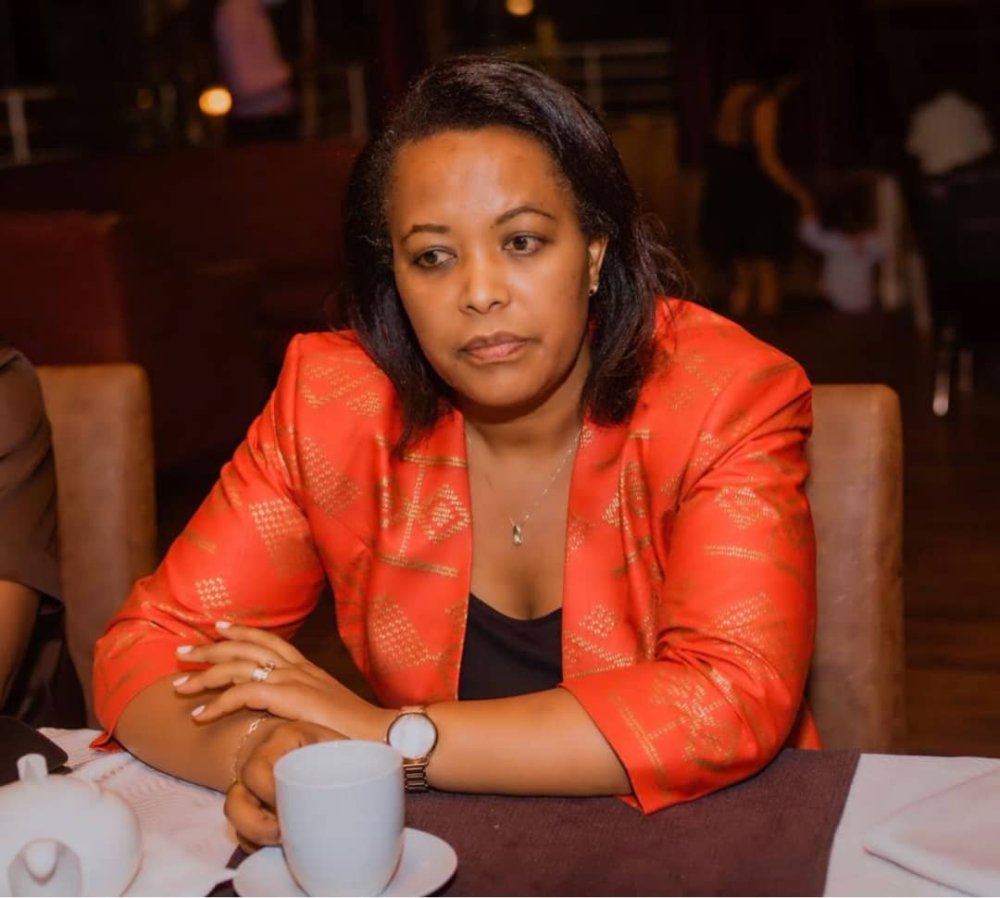
Senator Nyirafari expressed her heartfelt apologies one day after the assembly. In her tweet, she addressed the Chairman of RPF Inkotanyi and the President of Rwanda, acknowledging the gravity of her mistake in attending the ceremony. She mentioned that her realization came after participating in discussions revolving around Rwandans’ unity on 23rd July 2023.
Having personally experienced the consequences of divisionism that plagued the country, Nyirafari emphasized her understanding of the seriousness of the issue. She acknowledged her distraction in attending such an event, stressing that the historical repercussions of sectarianism were evident in the 1994 Genocide against the Tutsi.
Nyirafari firmly denounced beliefs and actions similar to the installation of the Abakono clan’s leader, reiterating her commitment to resist any divisive practices that might lead Rwandans down a tragic path again. She pledged to distance herself from anything that could potentially drag the nation into the painful history it endured.
Finally, Nyirafari called on all Rwandans to reject any negative attitudes related to divisionism and emphasized the importance of promoting national unity and reconciliation.
Bill Kayonga, President of Rwanda Golf Union (RGU), was also among the participants of the installation ceremony of the Abakono Clan’s leader. However, he has now expressed his sincere apology through his Twitter handle, acknowledging that the event goes against the national efforts to promote unity and reconciliation.
In his tweet, Kayonga stated, “I write this tweet to deeply apologize to the leadership of our nation for the gross irresponsible act of participating and speaking at the Abakono clan leader installation ceremony held in Kinigi.”
Upon careful reflection, he has come to understand the potential damage that such sectarian acts can inflict on the social cohesion of Rwandan society and deeply regretted his participation in the ceremony and promoting the event without fully considering the negative impact it would have on the larger Rwandan community.
Among others, Kayonga expressed remorse for not immediately denouncing and disassociating himself from what he witnessed during the event, even after its conclusion.
“For these reasons, I sincerely apologize to my leadership and Rwandans in general for this irresponsible act. I commit myself to fight any negative tendencies that threaten the unity of Rwandans. I find it befitting to take this step and apologize publicly so that no other responsible Rwandan finds themselves in the same mistake,” stated Kayonga.
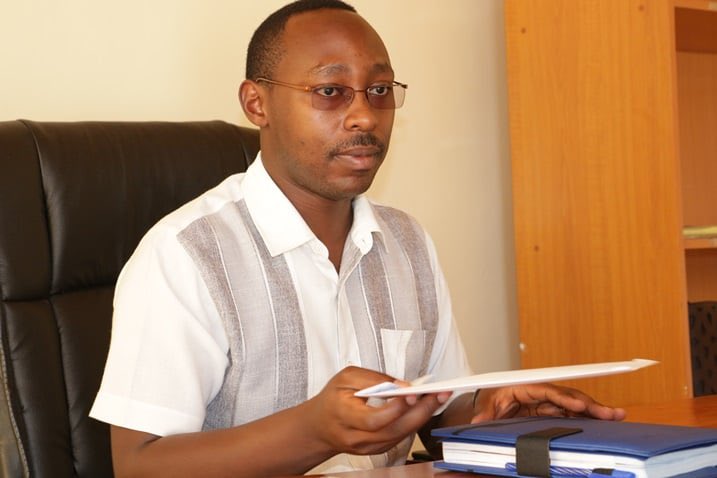
On the same day, Andrew Rucyahana Mpuhwe, the vice mayor of Musanze District in charge of economic development, resigned from his position in connection with the case. He submitted his resignation on Monday after confessing his attendance at the installation of the Abakono Clan’s chief.
In his resignation letter, Rucyahana said that he regrets his appearance in the ceremony which could have led to divisionism, and considered it a big mistake because it sets back the progress of unity and reconciliation among Rwandans.
Meanwhile, Jean Marie Vianney Gatabazi, who held various government positions, has also become entangled in the case and recently sought forgiveness from President Paul Kagame. In a tweet, he expressed his acceptance of the President’s mercy and pledged to stand firmly against anything that threatens Rwandan unity, emphasizing its significance as their collective strength.
“Dear President Paul Kagame, the mercy you have shown us is gratefully accepted, and we are committed to opposing anything that seeks to undermine Rwandan unity, as it is the bedrock of our strength,” Gatabazi tweeted.
He further expressed his gratitude to President Kagame for the guidance, advice, and support provided, emphasizing the importance of building a nation based on a strong national identity that unites all Rwandans.
During the assembly of RPF Inkotanyi cadres on Sunday, the installation of Kazoza Justin as the leader was declared null and void.
Kazoza also took responsibility for his lack of foresight and involvement in activities that could undermine the progress made in fostering national unity.
Speaking at the RPF cadres’ meeting on Sunday, General James Kabarebe, the Senior Presidential Advisor on security matters, delivered a powerful message on maintaining Rwandans’ unity and expressed strong disapproval of any actions that could undermine the progress made in building national unity.
He disclosed that Rwandan Defense Forces (RDF) have consistently stood against divisive activities, which led to the arrest of three soldiers involved in the “investiture of the Abakono clan leader.”
Musoni, who once served as the vice-president of the FDLR, disclosed that the group continues to collaborate with the Congolese Army (FARDC) and urged its combatants to cease hostilities, emphasizing the devastating effects of war that are known to all.
Originally specializing in rural and urban planning after his graduation in Germany, Musoni excelled in this field before choosing a career in political opposition, rather than returning to Rwanda to contribute to the development of his home country.
Born in Masoro, in the district of Rulindo, Musoni pursued his studies in Germany with the help of a state scholarship. In September 2015, he and Ignace Murwanashyaka, then president of the FDLR, were sentenced by the Stuttgart court to 13 and 8 years in prison, respectively. They were found guilty of ordering attacks in the North Kivu province between 2008 and 2009.
After serving his sentence, Musoni was repatriated to Rwanda. In October 2022, he was transferred to the Mutobo Demobilization Center, where he participated in civic education programs aimed at rehabilitating former combatants.
During an interview with IGIHE, Musoni revealed that his political engagement began with the Rally for the Return of Refugees and Democracy in Rwanda (RDR). He expressed how he became aware of the post-genocide situation in Rwanda and felt the urge to do something about it, leading him to become one of the founders of the FDLR and eventually serving as its vice-president.
In the aftermath of the genocide against the Tutsi in 1994, some of its instigators and perpetrators, particularly former military personnel, expressed their desire to return to Rwanda to commit genocide again. As the initial objectives of the RDR were not achieved, the FDLR was created with the intention to challenge the Rwandan Patriotic Front (FPR Inkotanyi) and reclaim power in Rwanda.
Musoni acknowledges that the FDLR’s formation was largely by former EX-FAR soldiers who believed that returning to Rwanda necessitated the use of weapons. However, over time, the group was classified as a terrorist armed organization.
The FDLR initially received support from Laurent Désiré Kabila, the then-president of the DRC, who promised to assist the EX-FAR in their attempt to overthrow the Rwandan government. In return, the EX-FAR supported Kabila against various armed groups threatening his power, including the Congolese Rally for Democracy (RCD).
Kabila, facing challenges from his opponents, including the RCD, later asked the EX-FAR to engage in dialogues, lay down their arms, and join the Rwanda Defense Forces (RDF), effectively abandoning his initial commitment. This is when the FDLR emerged.
Musoni reveals that the FDLR’s plan failed at a certain point, and they then attempted to pressure the RPF Inkotanyi into negotiations. The FDLR split into two sections: a political one and a military one (FDLR/FOCA), with both factions sourcing their weapons from Laurent Kabila’s army, the FARDC, and other armed groups.
He emphasizes that some FDLR members who once served in FARDC never handed over their weapons when they left Rwanda, but instead, they kept them. He further claims that the FARDC and FDLR currently collaborate when the government seeks their assistance in combating armed groups like the M23.
Musoni concluded by calling on the FDLR combatants to understand that the time for war is over and emphasized the importance of peace for Rwanda and the need to preserve it.
He reminded everyone of the disastrous consequences war brought to Rwanda, and he urged everyone to strive for a peaceful future.
Addressing the gathering, General Kabarebe expressed strong disapproval of any actions that could undermine the progress made in building national unity. He reiterated that the Rwandan Defense Forces (RDF) have consistently stood against divisive activities, which led to the arrest of three soldiers involved in the “investiture of the Abakono clan leader.”
The primary purpose of the meeting was to address various issues threatening unity among Rwandans and to develop proactive measures to strengthen this cohesion.
General Kabarebe emphasized the importance of eradicating divisive tendencies from their roots, just as was demonstrated by the swift action taken against the soldiers involved in the divisive activity. He highlighted how the success of the Rwandan Patriotic Army (RPA) in liberating Rwanda was a result of its unwavering rejection of anything that could lead to divisionism. He warned that indulging in such wrongdoing can lead to uncontrollable consequences.
During the assembly, Vice-President of the Senate, Espérance Nyirasafari, who had attended the investiture as a friend of the elected leader, Mr. Justin Kazoza, publicly apologized for her participation in the “Bakono” gathering and acknowledged her irresponsibility. Similarly, Rucyahana Mpuhwe Andrew, the Vice-Mayor for Economic Affairs of Musanze district, also confessed his guilt in the matter.
General Kabarebe passionately emphasized that Rwanda’s success lies in the unity of its citizens, a precious asset that must be preserved at all costs.
As a result of the RPF’s cadre session, the investiture of Justin Kazoza was declared null and void. It was concluded that this act lacked foresight and long-term vision. RPF members who participated in the divisive event sought clemency and pledged to prioritize the unity of Rwandans above all else.
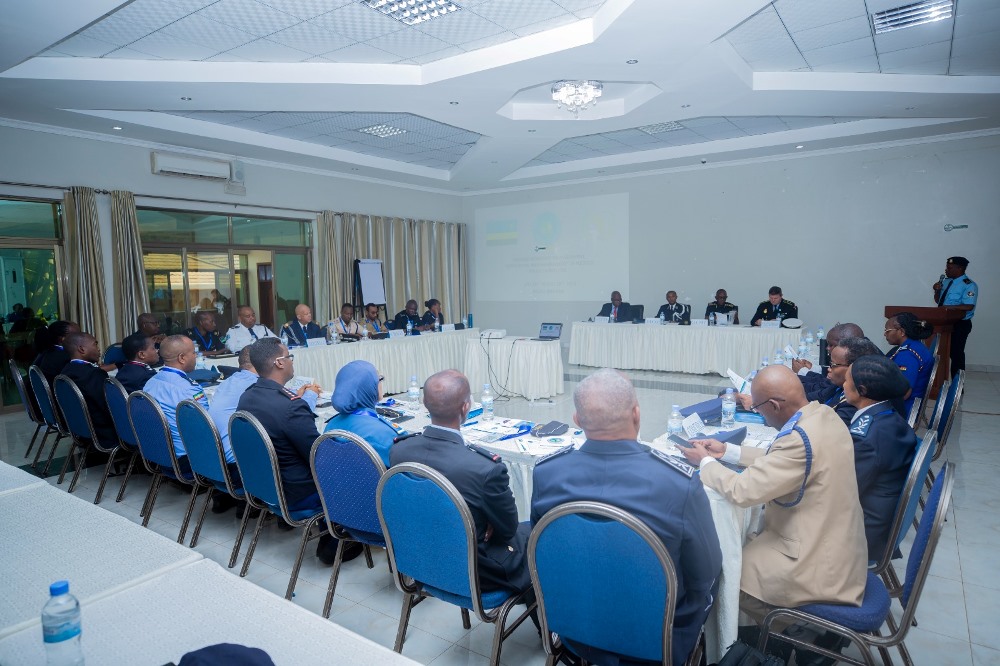
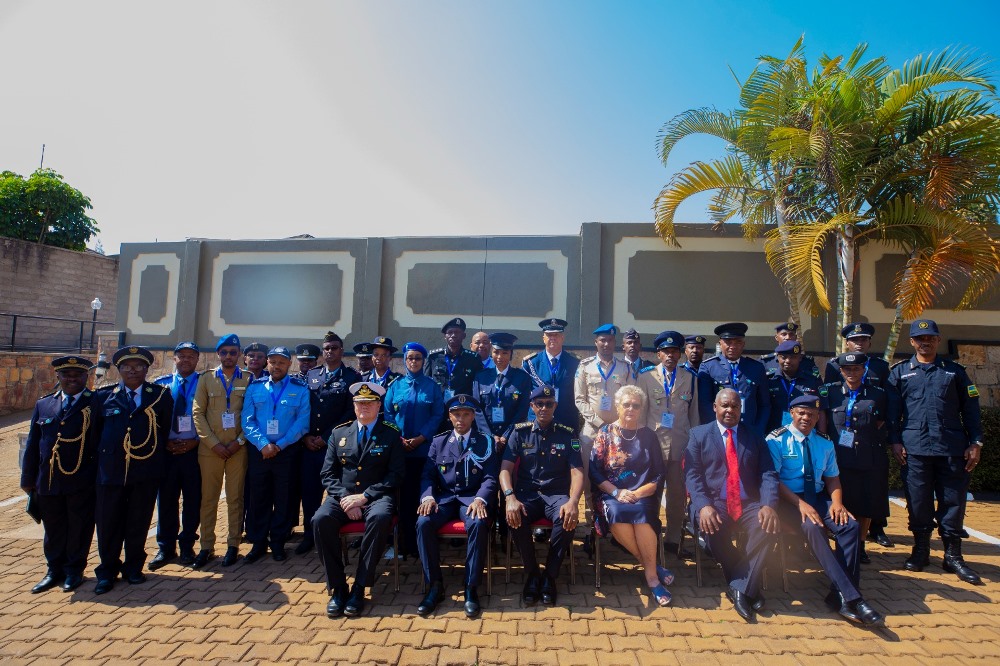
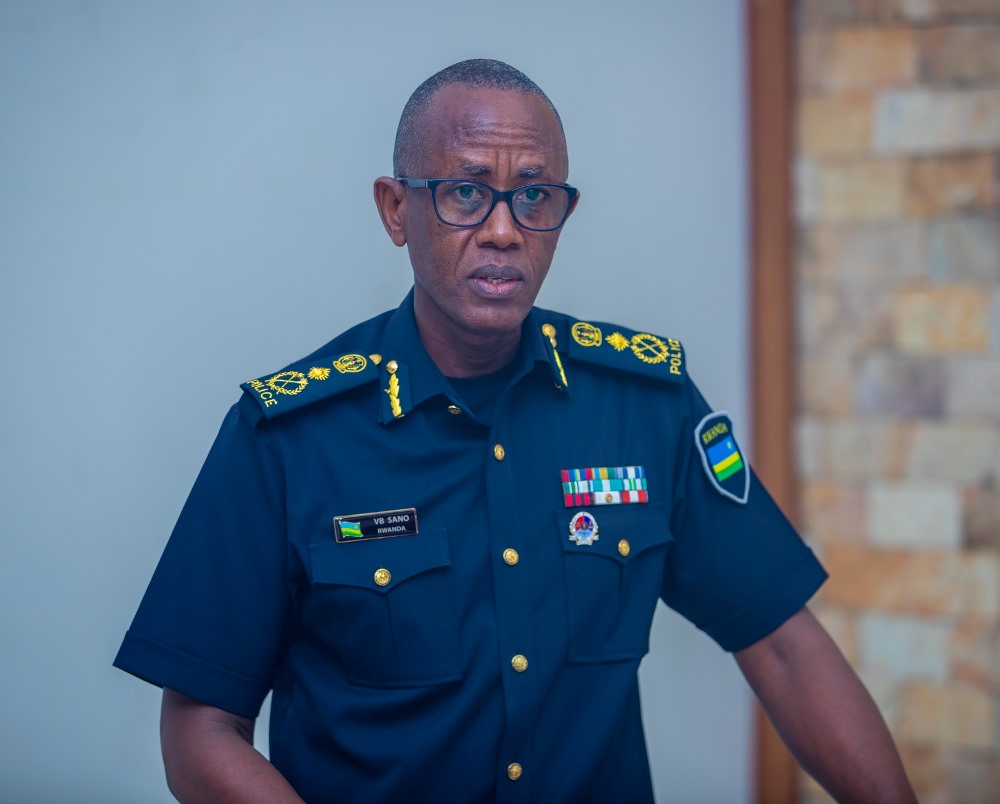
The five-day training was opened on Monday, July 24, by the Deputy Inspector General of Police (DIGP) in charge of Operations, Vincent Sano.
Rwanda pledged Police, military and civilian personnel as well as logistics to the regional body, composed of 10 active members, namely; Rwanda, Burundi, Seychelles, Djibouti, Kenya, Comoros, Ethiopia, Somalia and Uganda.
The EASF is one of the five regional multidimensional Forces of the African Standby Force (ASF) mandated to enhance peace and security in the Eastern Africa region.
DIGP Sano reiterated Rwanda National Police’s readiness to deploy a Formed Police Unit (FPU) and Individual Police Officers (IPO).
“The EASF, as a regional body mandated to respond to any conflict or other crisis situations in the region…it is paramount to adequately prepare the required Police and other capabilities for deployment in peace support operations,” DIGP Sano said.
The workshop aims to address challenges in the management of the Police pledged capabilities, which were identified in the report of the panel of independent experts on verification, confirmation and validation of the EASF pledged capabilities also known as ‘Gambari Report.’
“This is a good opportunity to discuss relevant thematic areas related to these challenges and exchange views on enhancing preparations and management of pledged Police capabilities. The contribution of each and everyone is of great value,” DIGP Sano noted.
The EASF Head of Police component, Commissioner Ali Said Bacar, thanked Rwanda for its commitment to the regional force.
“We are here to jointly address challenges that might hinder the peace and security mandate,” Commissioner Bacar said.
He emphasized the importance of having well equipped forces ready for deployment at any time of need.
His removal occurred on May 5th due alleged mismanagement of disaster response during the recent floods and landslides that affected the district on the night of May 2nd to May 3rd, 2023.
The elections are scheduled to take place on August 11th, according to Charles Munyaneza, the executive secretary of the NEC.
He confirmed that all 17 individuals interested in the position have already submitted their candidatures, and the electoral campaign is expected to begin on 26th this month.
“We are first anticipating the election of his successor in the district’s advisory council, and later on, a replacement for the district mayor’s position. 17 contenders have already submitted their candidatures,” stated Munyaneza.
Additionally, the NEC has also announced upcoming elections in other districts, namely Rwamagana and Rutsiro, which are scheduled to occur between August and September 2023.
In Rutsiro district, the head of state dissolved all of the district’s advisory council over administration failures and appointed Prosper Mulindwa as the interim mayor.
Meanwhile, Rwamagana district advisory council suspended Jeanne d’Arc Nyirabihogo from her duties as vice mayor in charge of economic development on 18th July 2023. The suspension came after her involvement in a court case along with Jean Nsabimana, “Dubai.”
According to Jules Ngongo, FARDC’s spokesman in Ituri Province, at least ten children were among the victims. The majority of the victims are family members of the soldier who fired the shots, said the spokesman, adding that a family conflict was the cause of this tragedy.
“As the armies, we are shocked and sympathize with the families after the murder of 13 civilians caused by a soldier of the naval force in Tchomia. Whatever the family problem, he should not act in this way. For us, it is a criminal act. He must answer it before military justice,” said Ngongo.
The military authorities have deployed a commission of inquiry to conduct on-site investigations into this killing.
The ANU recovered 2089 pellets of cannabis from the same house, during the targeted operations.
A 33-year old man suspected to be the rightful owner of the narcotics and major drug dealer, was arrested at the house.
Superintendent of Police (SP) Sylvestre Twajamahoro, the Police spokesperson for the City of Kigali, said that ANU and local authorities searched the house on Friday afternoon following a tip-off from area residents.
“At the time, the suspect had already sold other quantities of cannabis to other dealers, worth Frw263, 400, which was also seized from the house during the operation,” said SP Twajamahoro.
The narcotics were sneaked into Kigali from Rubavu District after they were traffic into Rwanda from the Democratic Republic of Congo (DRC), according to the suspect.
His arrest came a day after another drug dealer was arrested in Ngororero District with 995 rolls of cannabis.
Anyone convicted for dealing in very severe drugs face an imprisonment of 20 years to life, under article 263 of the law determining offences and penalties in general.
Cannabis, cocaine and heroin are classified as very severe drugs in Rwanda.
This came during a reception marking the 96th anniversary of the founding of the Chinese People’s Liberation Army (PLA) on Friday evening in the Ethiopian capital, Addis Ababa.
The event brought together military representatives of different African countries, senior Ethiopian government officials, members of the diplomatic corps in Ethiopia, as well as representatives of the Chinese societies in Ethiopia.
“Without security and stability there can be no development. As a constructive participant and active contributor to the cause of peace and security in Africa, China has continued to deliver military assistance to the African Union, supporting capacity building of the African Standby Force and jointly working on counter-terrorism,” Guo Baojian, Defense Advisor of Mission of China to the AU, said during the ceremony.
Guo stressed that the PLA is developing into a world-class military, which serves as a strong guarantee for the realization of the Chinese national rejuvenation and also for making greater contributions to world peace.
“China has always been a peace loving nation. Under the guidance of the national defense policy, the PLA always honors its international responsibilities and plays an active role in maintaining world peace,” he said.
Guo said as part of its commitment to international peace, China is the second-largest contributor to the UN peacekeeping budget, and a top contributor of the peacekeepers among the five permanent members of the UN Security Council.
Antonio Lamas Xavier, Chief of Staff of the African Standby Force (ASF), on his part echoed Guo’s comments as he hailed the ever-expanding China-Africa military cooperation and fruitful partnership in promoting peace and security across the African continent.
Xavier, in particular, underscored the growing cooperation and positive outcomes in the peace and security sector following the establishment of the Forum on China-Africa Cooperation (FOCAC).
He stressed that the China-proposed Global Security Initiative (GSI), which aims to eliminate the root causes of conflicts and improve global security governance, is highly welcomed in Africa as it injects positive momentum towards strengthening continental security and development.