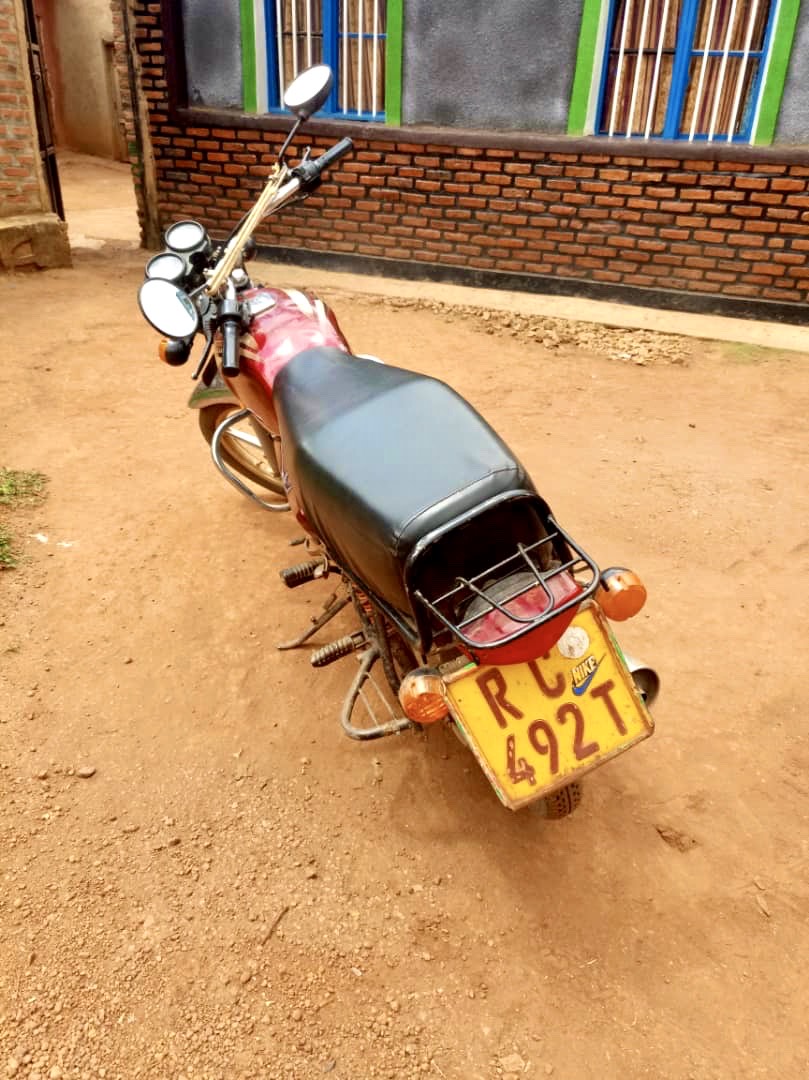
The TVS motorcycle, RC 492T was stolen in August in front of a bar in Rukumberi Sector, where the owner had parked it.
It was recovered Saturday in the Jarama Sector, also in Ngoma from the suspected thief identified as Eugene Ufitubuzima, who was also taken into custody.
The Police spokesperson for the Eastern region, Chief Inspector of Police (CIP) Hamdun Twizeyimana said that law enforcement organs received Maniriho’s theft complaint back in August, and the search was commenced.
“Maniriho reported that his motorcycle was stolen in August, he provided its plate and engine numbers,” CIP Twizeyimana said.
“During the search, we received information from a mechanic, who had worked on the motorcycle and out of suspicion that it could have been stolen, he decided to call the Police,” he added.
He thanked the mechanic for his responsiveness adding that it is the “spirit and attitude required of every member of the public to fight and prevent crimes, recover stolen or missing items, and bring wrongdoers to justice.”
Thieves had changed its plate numbers although it was identified by its engine number, CIP Twizeyimana said.
The recovery of Maniriho’s motorcycle came few days after another was recovered in Bugusera District.
Maniriho, on his part, thanked the resident, who helped the Police efforts to recover his motorcycle, and commended the impact of community policing in fighting and preventing crimes.
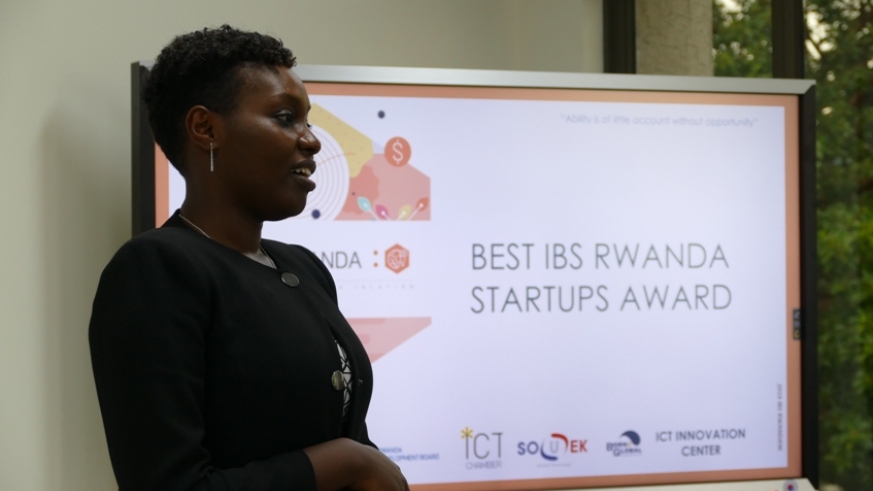
The companies that participated in the program are expected to transform and bring innovative services to citizens through mobile content, multimedia, e-tourism, e-sports and film making.
Constructed under joint Rwanda – South Korea “Enhancing ICT Innovation Capacity in Rwanda” project, the new state of the art ICT Innovation Center was inaugurated in June this year.
It aims at fostering the development of the ICT and audio-visual sectors in Rwanda by building the capacities of job seekers and start-ups.
The 15 selected companies include;
-* -Zacu TV, LaFotolia, Dtravela and Mudacumura Publishing house. They will each get investment support of US$ 2,000 and further training in Korea;
-* Mapa, Zoombyte and Innovetancy will each receive US$ 1,800 USD;
-* e sport, macye App and e construct will each receive funding of US$1400;
-* Toutrip, Powerhouse studio, TBirori, Mbwira App and Kosmotive Health will receive US$ 1,000 each.
Speaking during the ceremony, the Permanent Secretary in Ministry of ICT & Innovation, Claudette Irere said: “These initiatives are meant to enhance capacity building and skilled human resource development programs which have been in short supply in the ICT sector and we expect it to contribute to its development. The Government is working with partners to increase the number of incubation centres in the country in order to improve the sustainability of start-ups.”
The KOICA Country Deputy Director, Myung Keun Choi said that the support will be extended to more Rwandans.
“We are pleased to witness the first beneficiaries of the Inclusive Business Solution Program. We plan to support the Government of Rwanda in upskilling of more Rwandans so that they overcome challenges as they grow.”
His body arrived at Kigali International Airport aboard Ethiopian Airlines and taken to Kanombe Military Hospital’s mortuary.
Rwigamba’s family has announced that the mourning is ongoing home at Gisimenti in Remera, Kigali city.
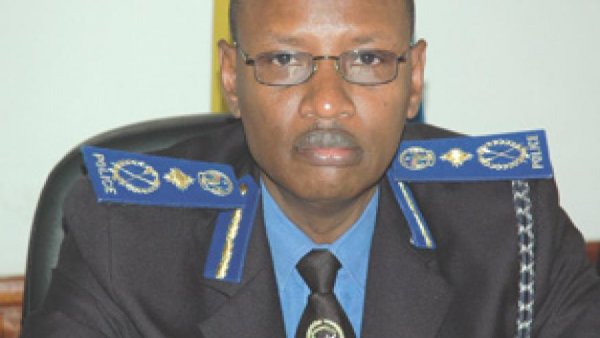
Gen Andrew Rwigamba passed away on Thursday. He was prior to his demise working at the Ministry of Defense.
Late Rwigamba assumed different offices as the Commissioner General of Rwanda National Police prior to 2008 when he was relieved of his duties and replaced by Emmanuel Gasana in 2013.
The post was temporarily being filled by Deputy Commissioner General, Mary Gahonzire who was at the time appointed Head the National Prisons Services.
Andrew Rwigamba was sent to retirement from RDF at the rank of Brigadier General in October 2013 along with other senior and non-commissioned officers.
He was among the first batch of senior officers sent into retirement that took part in stopping the 1994 Genocide against the Tutsi.
Following his retirement, Gen Rwigamba was appointed the Director-General in charge of Foreign Military Relations and Cooperation at the Ministry of Defense.
About 400 liters were seized from one Jean Baptiste Niyibizi while one Jean de Dieu was caught with 300 liters.
Police spokesperson for the Western region, Chief Inspector of Police (CIP) Emmanuel Kayigi, said the suspects had illegal breweries in their homes distilling ibikwangari and thanked community members, who reported the duo, thus protecting their community.
Community policing and information sharing, in particular, he added, is playing a big role in fighting illicit drugs and illegal breweries distilling substances.
“These substances have varied brand names such as ibikwangari and muriture, made out of unhealthy and harmful raw materials, distilled in unhygienic places and containers, and security concern,” said CIP Kayigi.
“There are laws, policies, and regulations, which must be respected and followed. Law enforcement agencies, local leaders, community policing groups and the public, in general, are working together against crimes and illicit drugs in particular,” Kayigi warned.
The Rwanda Standards Board (RSB) set standard requirements, including labeling (name of the products, physical and postal address of manufacturer); net contents in milliliters or liters; ethyl alcohol content; date of manufacture and expiry date; storage instructions; statutory warnings; and list of ingredients in descending order, among others.
Muriture and ibikwangari are classified as psychotropic substances under Ministerial Order Nº 001/MoH/2019 of 04/03/2019 establishing the list of narcotic drugs and their categorization.
Article two of the same Ministerial Order classifies narcotic drugs, psychotropic substances, precursors and unauthorized drinks considered as drugs in three categories; very severe narcotic drugs, severe narcotic drugs, and simple narcotic drugs.
Article 5 of the same order lists simple narcotic drugs, psychotropic substances, precursors and unauthorized drinks as alcoholic drinks produced without complying with standards and other laws; chemical substances whose original intended use has been altered and applied as a narcotic drug.
Article 263 of the law determining offences and penalties in general in Rwanda, provides an imprisonment term of not less than seven years and not more than ten years and a fine of not less than Rwf5 million and Rwf10 million, in regard to simple narcotics.
According to Police, they received credible information on Uwayezu’s criminal dealings, and acting on it, they arrested him red-handed in Cyanya Cell.
Chief Inspector of Police (CIP) Hamdun Twizeyimana, the Police spokesperson for Eastern Region said that Uwayezu was at the time traveling from Kigali to Rwamagana District by public means, and paid a fake note of Rwf1, 000, on arrival at his destination.
“Uwayezu attempted to pay the fare using counterfeit notes, but it was detected by the conductor; they immediately called the police and officers arrived shortly before he could leave the venue. When they searched him they recovered 17 other fake notes in denomination of Rwf5, 000, Rwf2, 000 and Rwf1, 000 on him,” CIP Twizeyimana explained.
The spokesperson added that the suspect disclosed another person connected to this counterfeit case. Uwayezu had bought fake money amounting to Rwf50, 000 at Rwf25, 000.
CIP Twizeyimana warned against such tendencies of dealing in counterfeit currencies and called for vigilance and partnership in identifying and arresting individuals involved. He further appealed to the general public to always be vigilant when receiving money.
“The general public, especially the business community are required to always be vigilant and check the given currency notes thoroughly to fight and prevent such financial crimes, which have ill-impact on the economy,” he advised.
“The effects of counterfeit to a trader are grave as they could easily lead them out of business. This is why we continuously request the public to be cautious about fake money,” added CIP Twizeyimana.
Article 269 of the Penal Code states that, “Any person who, fraudulently counterfeits, falsifies or alters coins or banknotes which are legal tender in Rwanda or abroad, notes issued by the Treasury with its stamp or brand, either banknotes or alike that have legal tender in Rwanda or abroad, or one who introduces or issues in Rwanda such effects or notes with knowledge that they are forged or falsified, commits an offence. Upon conviction, he/she is liable to imprisonment for a term of not less than five years and not more than seven years.”
The duo was at the time of their arrest trying to con people promising to magically double the money they give, Police said.
Chief Inspector of Police (CIP) Marie-Gorrette Umutesi, the Police spokesperson for the City of Kigali, said that information about the alleged criminal acts was reported by some of the victims.
“These suspects were going around manipulating people that they have magic to make money, and would require their target to give them a certain amount of money they want doubled,” CIP Umutesi said.
Apparently, the suspects would wrap papers cut in form of currency notes in a handkerchief, which they would give to their target before vanishing with their money.
They were targeting anyone with anything valuable, including jewelry, CIP Umutesi explained.
“People should be vigilant; look at someone trying to convince you that they have the magic to make you rich. Why can’t they use their magic to get those riches themselves?” she wondered.
“When you see such people, know that they are fraudsters trying to defraud you; always be quick to call the Police to prevent them from victimizing others,” the spokesperson emphasized.
Article 174 of the law determining offences and penalties in general, states that “Any person, who by deception, obtains another person’s property, whole or part of his/her finance by use of false names or qualifications, or who offers positive promises or who threatens of future misfortunes, commits an offence.
Upon conviction, he/she is liable to imprisonment for a term of not less than two years and not more than three years, and a fine of not less than Rwf3 million and not more than Rwf5 million.”
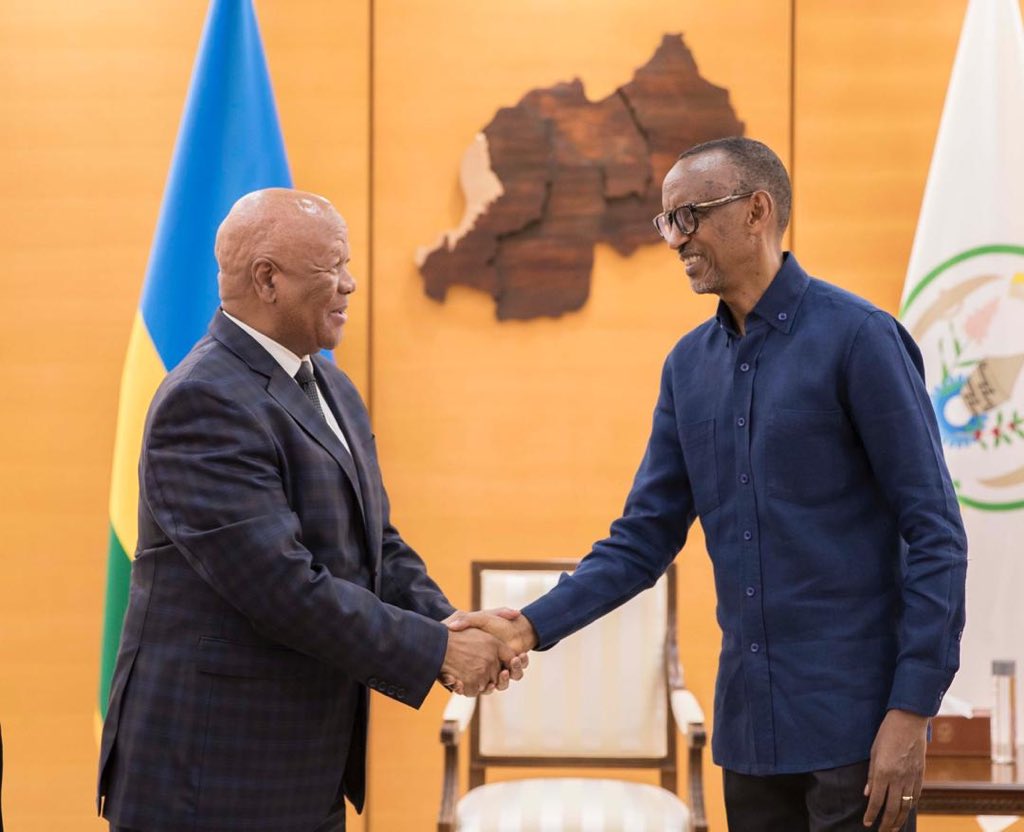
Radebe who was the Minister of Infrastructure and currently one of top leaders of the country’ leading political party, ANC came to Rwanda following visits to other African countries including Ghana where he held talks with President Nana Akufo-Addo.
Attacks to foreigners was reported in Gautenf and Western Cape .
Apart from discussing policies against xenophobia, there several areas of concern both countries can discuss.
Rwanda and South Africa have been working towards revitalizing relations that soured in 2014 over political crises related to hosting convicted fugitives including Kayumba Nyamwasa convicted of terrorism acts that involved grenade attacks in different parts of Kigali taking lives of many people.
At the time, South Africa also accused Rwanda of being behind an armed attack on Kayumba’s home in South Africa.
This saw South Africa suspending the issuance of Visa to Rwandans heading to the country using ordinary passports and deported three Rwandan diplomats in Pretoria. In return, Rwanda expelled six South Africa’s diplomats.
As President Ramaphosa attended African Union Summit in Kigali 2018, he revealed that he had agreed with his Rwandan counterpart Paul Kagame to facilitate both countries’ Foreign Affairs Ministers to deal with the issue amicably and make a report for implementation. No progress has so far been reported.
George Nkosinati Twala was the last South Africa Ambassador to Rwanda. He was recalled after ending a 6-year term limit but has not yet been replaced.
The conference gathered over 150 energy and nuclear professionals from across the globe. Representatives from key African countries that are planning or already implementing their respective programs for developing peaceful nuclear technologies included Cote d’Ivoire, Egypt, Ethiopia, Ghana, Kenya, Niger, Nigeria, Rwanda, South Africa, Sudan, Tanzania, Tunisia, Uganda, and Zambia.
The topics key issues for the development of nuclear on the continent: international collaboration, technology development, infrastructure, financing, and regulation.
Speaking at the panel on global nuclear trends, Dmitry Shornikov, CEO of Rosatom Central and Southern Africa, emphasized the advantages of joining the atomic club through creating nuclear industries in newcomer countries and gave an overview of projects with the maximum positive effect on the industrial development, enhancing the quality of life and developing knowledge economy.
He noted: “We are the only ones in the world who are fully vertically integrated in absolutely every segment of the nuclear value chain. We utilize this competitive advantage to create additional value by providing full support for the national nuclear energy program of the customer country at all its stages and provide access to the entire line of products and services throughout the entire life of a nuclear power plant from a single supplier. Rosatom offers solutions to partner countries in the field of energy and food security, health, education, and science, improving the quality and standard of living of the population”.
Ryan Collyer, Deputy CEO of Rosatom Central and Southern Africa highlighted the reliability and versatility of small modular nuclear power plants.
He spoke of several tried and tested solutions in the field: “One of our latest and most exciting solutions is a floating nuclear power plant (FNPP).
The first plant, fondly named “Akademik Lomonosov” after famous Russian polymath, scientist, and writer Mikhail Lomonosov, is a unique and pioneering solution in the area of small modular reactors. ”
‘Akademik Lomonosov’ twin KLT-40 reactor system has a capacity of 77 MW, which is sufficient to satisfy the electricity needs of a city with a population of about 100 thousand people.
Due to its mobility, FNPP’s offer an excellent solution for power supply in remote and poorly accessible coastal territories.
The versatile FNPP has numerous other applications such as heat generation and desalination depending on the needs and location of the region. ‘Akademik Lomonosov’ will be ready to start commercial operation on the shore of the Arctic Ocean in the Far East region of Russia in December 2019
Mr. Collyer also noted that Rosatom offers land-based small modular reactors known as RITM-200: “A modular approach allows for easier and more cost effective electrical capacity expansion, as additional reactor units and turbine equipment are able to utilize existing auxiliary infrastructure”.
It is said that students’ mattresses and other equipment inside were burnt to ashes.
The fire caught the dormitory this Friday around 10 am.
The mayor of Rulindo district, Kayiranga Emmanuel has told IGIHE that investigation is underway to establish the cause.
“The cause of the fire has not yet been established but investigations are underway. We have held a meeting to devise means of helping students with alternative accommodation so they can continue with their exams,” he said.
Police Fire and Rescue Brigade rushed to extinguish the fire soon as it was alerted.
It is the second time that the fire incident is reported at the school this year.
Damaged cement was provided by the Ministry of Defense through the Reserve Forces one year ago following the heavy rain that left a number of houses destroyed in Rubavu district.
Tuyisenge Felix, one of the disaster-affected residents said the cement was long-awaited to complete their houses.
“Following disasters, the Government rented accommodation for vulnerable residents but others with means rebuilt houses. I am among those who managed to set up other buildings. It would be better we get the cement to make final touches,” he said.
Rubavu district vice mayor for economic affairs, Nzabonimpa Déogratias said they have assigned a team to inspect the number of damaged sacks and hold accountable the people behind the negligence.
“There are at least 700 sacks of cement that might have wasted in-store within a year. We have delegated a team following up on the matter to identify non-damaged cement to be used. We need the cement to build 400 houses of vulnerable residents this year. We shall opt for the court to bring to book whoever is responsible for the waste,” he said.
IGIHE has learned from credible sources that 5078 sacks were damaged in store though the vice mayor reduced the number to 700.
The heavy downpour of 3rd March 2018 resulted in the flooding of River Sebeya hence completely destroying 26 houses and dampened over 900. Most of the victims are still housed by good Samaritans.