This comes after several people have been arrested for either conducting illegal mining operations or unlawful trade in minerals.
In the latest case, Police in Gatsibo District, on Wednesday, arrested two illegal mineral dealers with 70kgs of wolfram.
Chief Inspector of Police (CIP) Hamdun Twizeyimana, the police spokesperson for Eastern region identified the suspects as Eliezel Musengimana, 27, and Fraterne Shyaka, 28, over illegal mining.
“The suspects were arrested in Rugarama Sector with the minerals after the locals called the Police. They were buying minerals from miners, who were also mining illegally,” said CIP Twizeyimana.
“Mining or trade in minerals has to follow the law; right people being in the right concession at the right time. A dealer has to be licenced to do so and transportation has to be done in the right way—minerals have to be tagged to show the origin partly to fight fraud and tax evasion.”
“Illicit mining activities don’t follow legal and safety provisions. They take place at abandoned mineral concession and illegal miners often operate under dangerous conditions. Not only is illegal mining risky from a safety perspective for those who choose to participate, risking their lives and that of others; but it leads to outcomes that have negative long-term consequences,” said the spokesperson.
Article 54 of the law on mining and quarry operations, states that “any person, who undertakes mineral or quarry exploration, exploitation, processing or trading without a license commits an offence
Upon conviction, the offender is liable to imprisonment for a term of between two and six months and a fine of not less than Rwf1 million and not more than Rwf5 million or only one of these penalties.
Liliane Musabinema, 31, was at the time of her arrest found in possession of 5,200 pellets of cannabis.
Chief Inspector of Police (CIP) Sylvestre Twajamahoro, the Police spokesperson for the Southern region, said that Musabinema was arrested following a tip-off by area residents in Muyira.
“The Anti-Narcotics Unit received reliable information that Musabinema, who was suspected of being a major drug dealer, had brought another consignment of narcotics,” said CIP Twajamahoro.
“ANU responded and arrested her red-handed with 5,200 pellets of cannabis. Musabinema disclosed another drug dealer whom she identified as Emmanuel Niyirora, as her supplier. Law enforcement organs are working together to track and arrest Niyirora as well,” he added.
The spokesperson also said that it is a chain of drug traffickers from the neighboring countries to their local suppliers and retailers, which is being targeted in the ongoing operations.
“It is a chain of distributors and local suppliers, but we commend the role of the general public in identifying these individuals and their groups, which continues to ease Police operations to break these chains,” CIP Twajamahoro said.
Article 263 of Rwanda penal code stipulates that any person who, unlawfully, produces, transforms, transports, stores, gives to another or who sells narcotic drugs and psychotropic substances commits an offense with a sentence, upon conviction, ranging between 20 years and life in prison, and a fine of between Rwf20 million and Rwf30 million.
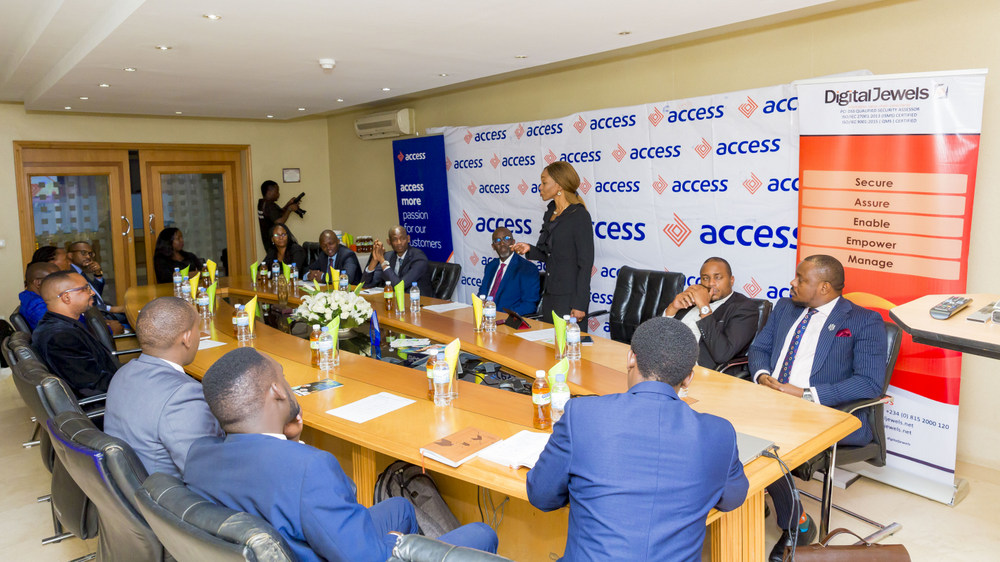
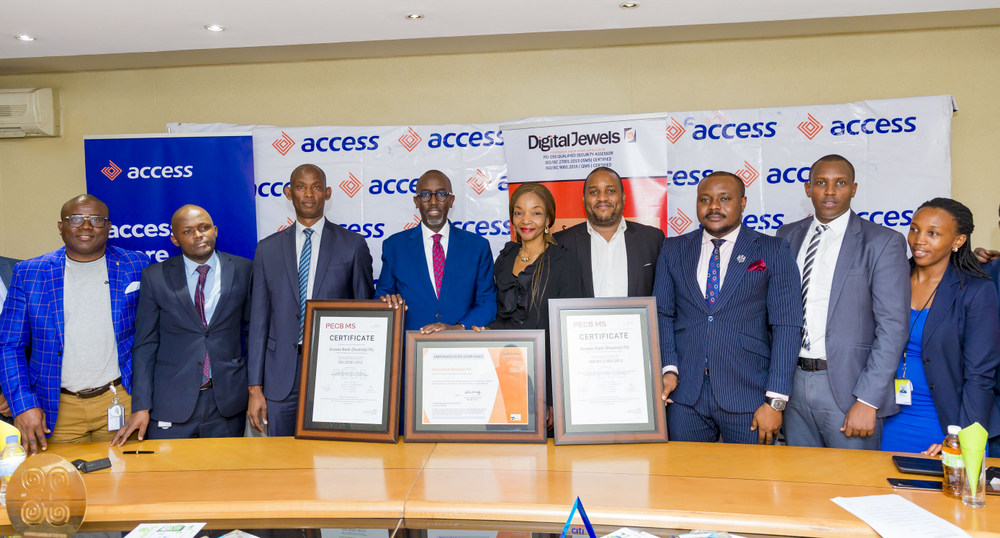
The certificates which were presented by Digital Jewels, a specialized cybersecurity and IT solutions firm, after a period of evaluation and capacity building in regard to digital security measures for the well-functioning of the bank in line with the standard best practice.
In their evaluation prior to certification, the experts examined backup memory storage capacities, staff capacities and cybersecurity against outlier access.
The evaluation included also the security of the Cards used, to improve their experience with the ATM machines and other channels.
The Managing Director and Chief Executive Officer of Digital Jewels Ltd, Adedoyin Odunfa noted that the certification awarded were well deserved, considering the cybersecurity solutions that have been introduced at the Bank and they act as a game changer as they give the Bank confidence to become more competitive and more effective in service delivery and data system protection.
“Access Bank Rwanda Plc has upgraded their security infrastructure and can now detect any electronic breach if there is any,” She aid
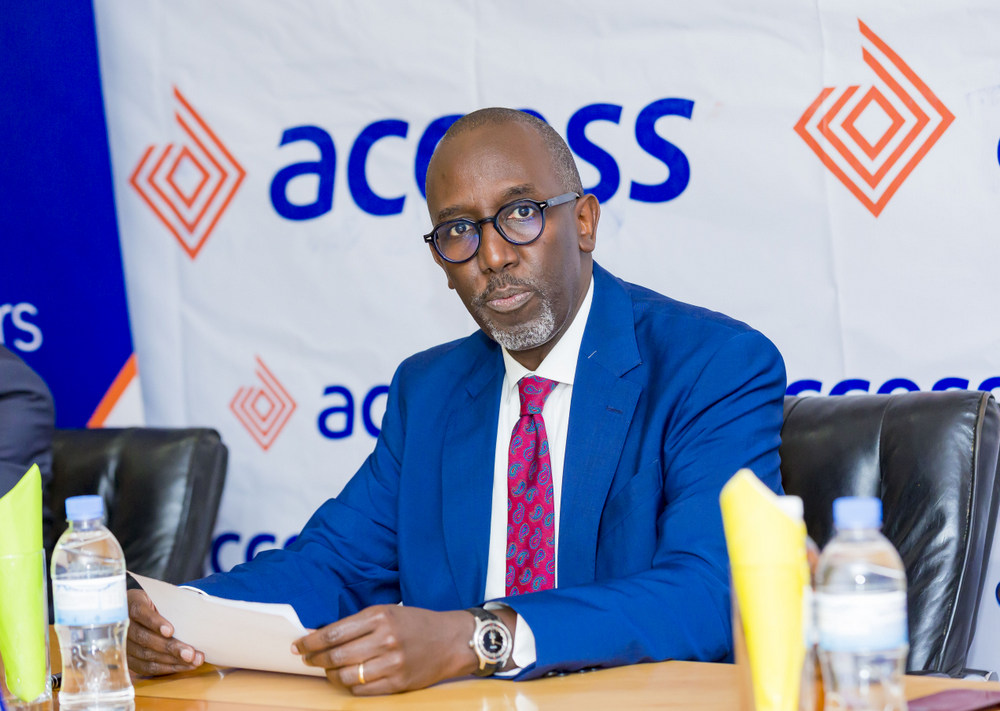
The Managing Director of Access Bank Rwanda, Mr. Jean-Claude Karayenzi assured customers of the safety of their deposits.
“These certificates mean a great deal to this international bank; now cyber hacking has grown on an international level; this means that we have to work even harder to ensure the safety of our customers’ accounts. We made this extra effort to help our clients feel safe with their accounts in our hands.”
John Karamuka, the Director of Payment System at the Central Bank of Rwanda congratulated Access Bank Rwanda for being the first Commercial Bank in Rwanda to attain these three certifications at the same time.
The project known as the Rwanda Housing Financing Project promises cheaper mortgages and longer duration of payment.
With a secured World Bank (WB) loan of $150m now available, the Development Bank of Rwanda (BRD) has given fresh opportunities for Rwandans to own a house at low-interest rates, as low as 11%.
The funding will be dispatched to all commercial banks, micro-finance and saving schemes to speed up service delivery.
The beneficiaries will also get an option on choosing a rent-on mortgage loan, in this case, the rental fee will be used as payment for the loan for a period of more than 20 years
The new rates and offers comes as a game changer in the mortgage segment which has been offered by commercial banks at a rate of between 16% and 18% and for a short tenor.
The Chief Executive Officer of BRD, Eric Rutabana and the Director General of Rwanda Housing Authority, Eric Serubibi announced that applicants for affordable funding must be first time home owners and citizens having an income of less than Rwf700, 000 per month and they can borrow to purchase a house starting with a worth of Rwf10million not exceeding Rwf35million.
“This kind of loan is strictly meant for low income earners which include teachers and the fund is for those who don’t have houses at all but need an affordable one for the first house not for those with other houses,” said Eric Rutabana.
The new funding is expected to respond to the need for affordable housing in general especially in Kigali which has more than 1.2 million dwellers with a majority of them renting houses.
The concerned institutions will share the list of the registered applicants to the participating financial institutions who will approach the applicant to fulfill the mortgage requirements and get the loan.
The financial institutions will then pay the seller of the house on behalf of the mortgage applicant.
However, they said, the new project will be subjected to the usual mortgage loan laws and penalties such as taking possession of the house in case of default.
Currently 17 projects have been registered, some of which started in July 2019 as a pilot scheme to assess the market and decide whether to expand the construction.
Among others, the PM’s Order established a 2.5% levy on annual turnovers of telecommunications companies for the first two years, which is to increase to 3% in the third year and thereafter.
MTN Rwanda has led the way in complying with this new legislation, cementing its commitment to contributing to the development of Rwanda and building a legacy of changing lives within the communities where it operates.
In relation to the rates established by the Prime Minister’s Order, MTN Rwanda will pay out a total of Rwf1,363,442,690 by the end of December 2019.
In addition to this, MTN Rwanda has paid Rwf50 million through its Corporate Social Responsibility to further contribute to achieving universal health coverage.
Speaking about this contribution, MTN Rwanda CEO, Mitwa Ng’ambi said, “In line with the United Nation’s Sustainable Development Goal of achieving good health and well-being, MTN Rwanda is committed to contributing to the betterment of the health of millions of Rwandans. We are all about making a positive and sustainable impact in Rwanda so that we can be better together.”
Mutuelle de Santé is a community-based health insurance scheme established in 2002 and managed by the Rwanda Social Security Board (RSSB) since 2015.
The Prime Minister’s Order came after the Government of Rwanda’s commitment to spend an additional Rwf6 billion on Mutuelle de Santé through direct budget financing every year.
“As the Government continues to push for increased accessibility to high quality healthcare for all, the cost on the scheme increases. As a result, it was necessary to find creative ways to finance it for which we are grateful to the Government’s support and to the actors who are coming out to comply with the obligations,” RSSB Deputy Director General in charge of Benefits Dr. Hakiba Solange said.
Financing sources established by the Prime Minister’s Order come to increase financing for the CBHI scheme without increasing the healthcare cost for very many Rwandans.
“We would like to remind all Rwandans to continue paying their Mutuelle de Santé subscriptions on time to ensure they access healthcare without hindrance because a health body is the basis for everything,” Dr. Hakiba added.
Besides complying with the new Prime Minister’s Order, MTN Rwanda has always been a strong partner in facilitating universal health coverage, and the commitment remains.
“We recognise health care challenges and we are committed to being part of the solution. Our collaboration with the Government of Rwanda and RSSB is part of the greater good – we’re pleased to work together to create a brighter Rwanda,” concluded Mrs. Ng’ambi.
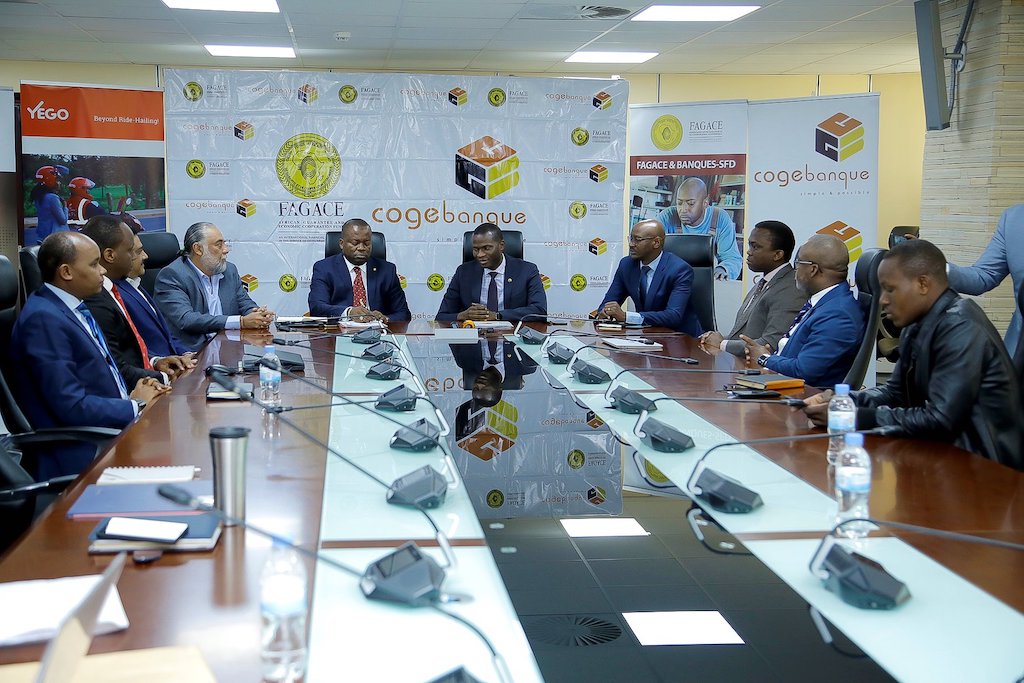
This ceremony, which is the second of its kind, demonstrates the commitment of FAGACE and COGEBANQUE to support the private sector in the implementation of the projects and the excellent cooperation relationships that exist between the two financial institutions.
The project that is being carried out by the company YEGO INNOVISION has the objective of equipping moto-taxis with an electronic connected device called Intelligent Connected Fare Meter (ICFM) in order to ensure the management and control of the rides and displacements carried out by these means of transport.
The project will help streamline the motorcycle taxi industry and address the following challenges:
-* Follow motorcycle taxi drivers in real-time;
-* Regulate travel fares;
-* Usage of electronic payment means;
-* Register owners and drivers of motorcycle taxis
-* Improve the revenue of motorcycle taxi drivers through the use of the telephone for booking reservations by means of 24-hour operational calls
-* Build a relevant database of the taxi-motorcycle transport industry for the collection of reliable statistics.
The most ardent wish is that YEGO INNOVISION is a success story and that the Cooperation between FAGACE and COGEBANQUE strengthens and leads to the signing of several guarantee agreements in favor of several projects.
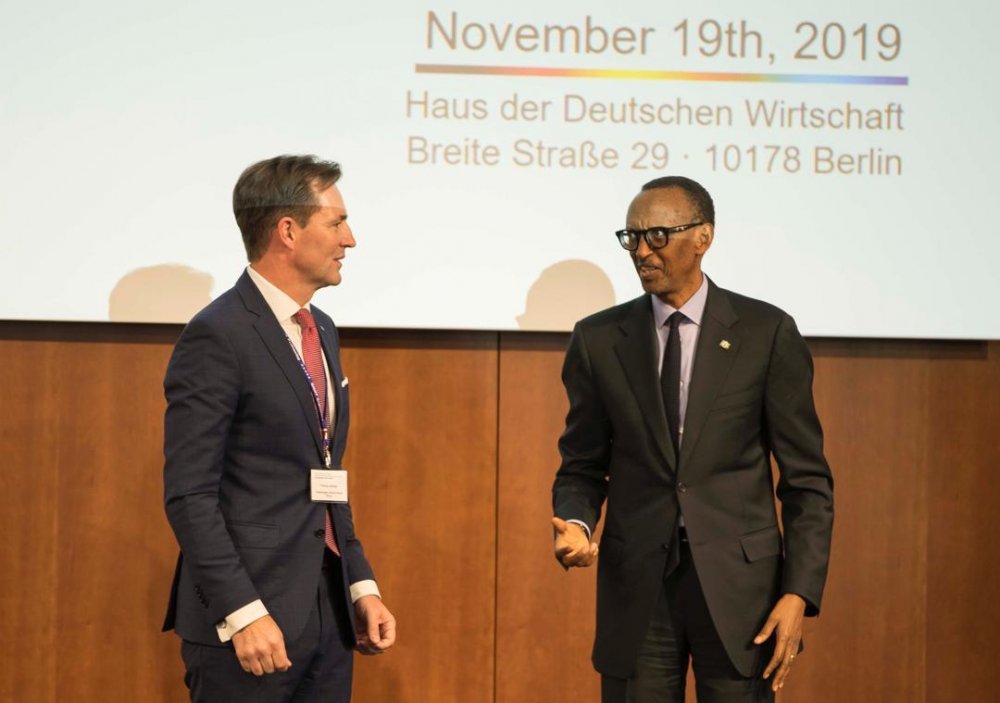
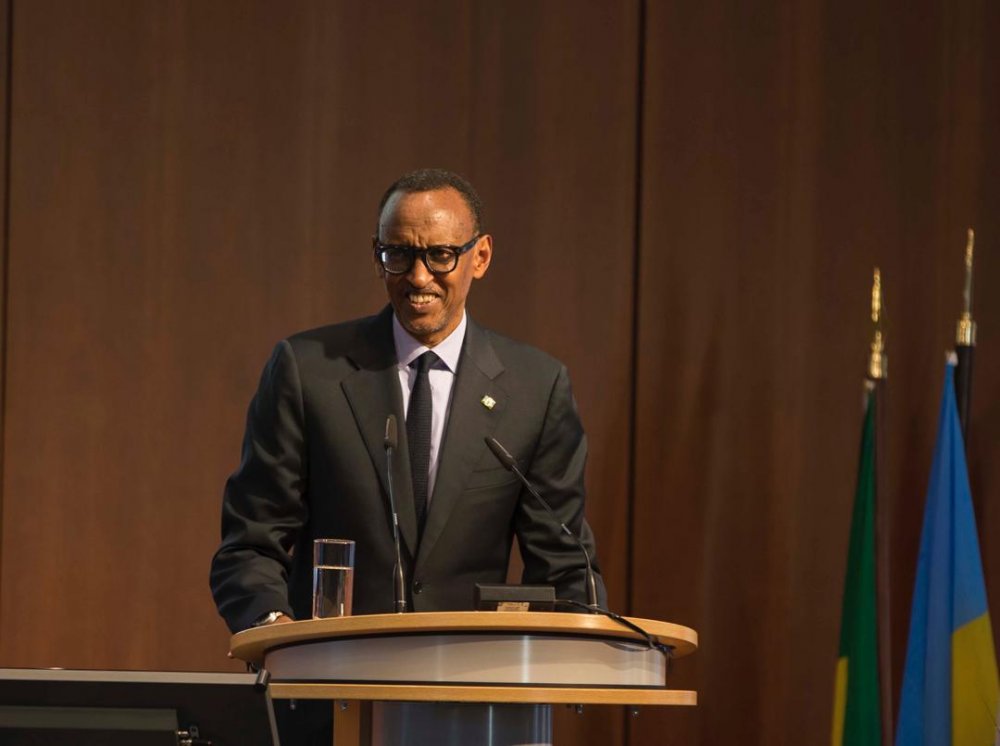
President Kagame made the invitation as he addressed members that participated in the ‘G20 Compact with Africa’ Investment Summit held in Berlin, Germany yesterday.
Kagame cited Rwanda’s partnership with Germany companies like Volkswagen (VW), Siemens and SAP, saying that it “demonstrates the competitiveness of our economies and the reforms that have been happening in the ease of doing business.”
“This really showcases how Africa is ripe for business and investment, and how far we can go,” he added
Commending the Germany Chancellor Angela Merkel’s leadership in prioritizing investment from the German business community, Kagame said that this was delivering the practicalities of what Africa wants to see from Germany, Europe, and the G20.
Thomas Schaefer, the Chairman and the Managing Director of Volkswagen South Africa told business executives to present especially those from Germany that the continent was particularly ready for investments in the automotive industry where his group is already invested.
He pointed out that the continent was faced by challenges of dumping of used cars and extraordinary importation of fuel, saying businesses could tap into that to address challenges.
G20 Compact with Africa is an initiative launched in 2017 to promote private investments in Africa and currently, 12 African countries – including Rwanda have joined it.
Besides Rwanda, other African countries that are part of the partnership are Benin, Burkina Faso, Côte d’Ivoire, Egypt, Ethiopia, Ghana, Guinea, Morocco, Senegal, Togo, and Tunisia.
The equipment were recovered from two suspected thieves identified as Patrick Bizimana, 24, and Fabrice Ndayishimiye, 24, who were arrested separately in Kabeza Village, Kagasa Cell of Gahanga Sector, Police said.
Chief Inspector of Police (CIP) Marie-Gorette Umutesi, the Police spokesperson for the City of Kigali said one of the suspects—Bizimana—was reported by a taxi-moto operator.
“The hired motorcyclist became suspicious and decided to take Bizimana to the Police. The motorcyclist was not convinced with Bizimana’s explanation on where he got all the equipment and decided to implement his community policing rights,” said CIP Umutesi.
“Ndayishimiye was also arrested following information provided by fellow employees of the company,” she added.
She commended the “vigilance, brave and responsive acts of the motorcyclist” and called upon the general public to “always report anyone or anything suspicious.”
“Whenever you see anything suspicious or suspect someone to be engaged in lawlessness, always call the Police.”
Theft, under article 166 of the law determining offenses and penalties in general in Rwanda, attracts imprisonment of between one and two years and a fine of up to Rwf2 million, community service in a period of six months or only one of these penalties.
Chief Inspector of Police (CIP) Marie-Gorette Umutesi, the Police spokesperson for the City of Kigali said that the two suspects were arrested in Kinyinya Sector, Kagugu Cell, Kabuhunde Village with 6,233 pellets of cannabis.
CIP Umutesi identified the suspects as Chadia Uwamahoro and Damascene Nduhirabandi.
“Uwamahoro is the suspected supplier and Nduhirabandi is one of her retailers. Reacting on credible information, ANU first arrested Nduhirabandi with 300 pellets of cannabis, which he was selling to some consumers; Nduhirabandi was cooperative, he led Police officers to the house of his supplier—Uwamahoro—where other 5,933 rolls of cannabis were recovered and the suspect arrested,” CIP Umutesi explained.
“At the time of her arrest, Uwamahoro had just sold other narcotics worth Rwf300, 000 which she was found with. It is said that Uwamahoro is supplied by another identified big dealer, who is yet to be arrested,” she added.
“Rwanda National Police and ANU in particular, has strengthened operations against drug traffickers or major suppliers with focus on transit routes and destination including Kigali, and the general public is playing a central role in identifying and reporting these dealers,” the spokesperson said.
Anyone convicted for dealing severe drugs, in which category cannabis falls, under article 263 of the law determining offences and penalties in general in Rwanda, faces between 20 years and life in prison and a fine of up to Rwf30 million.
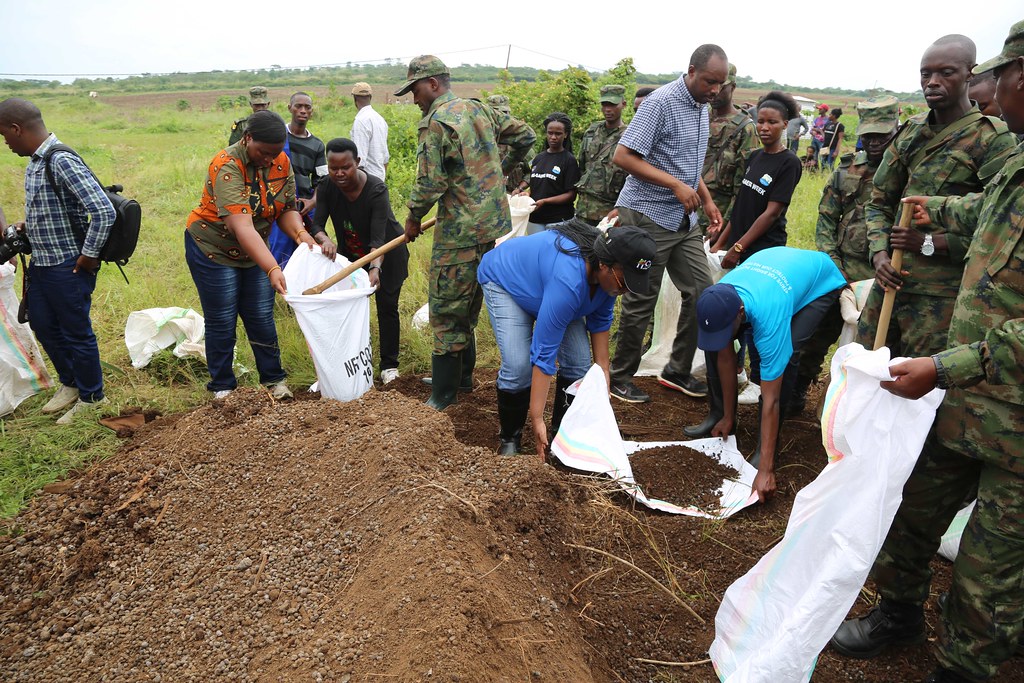
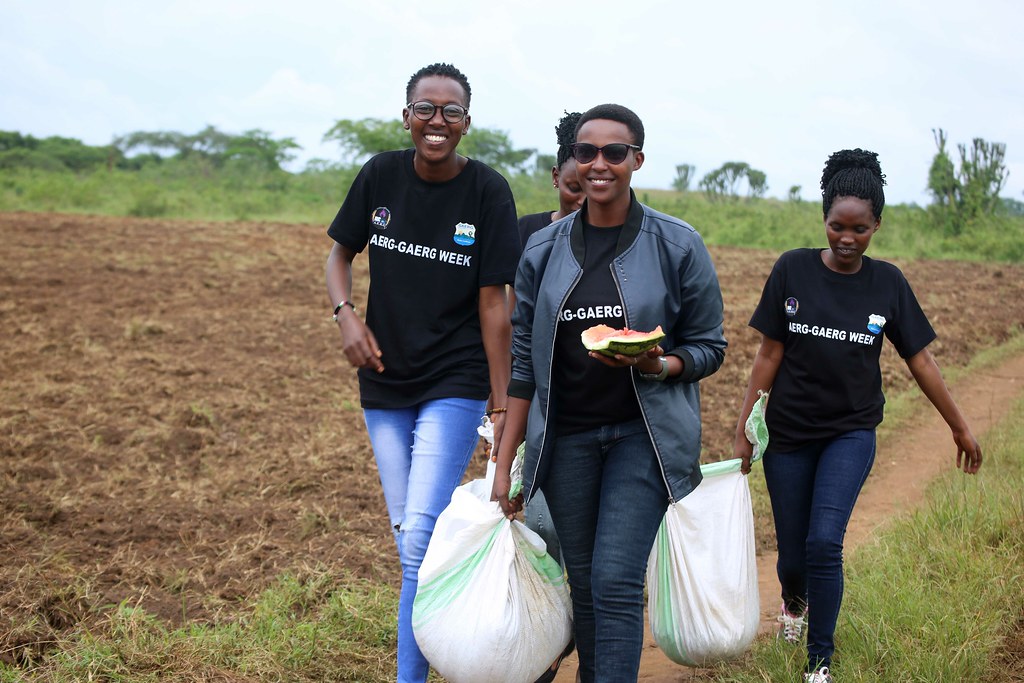
The mission of the NGO is getting together to preserve the memory of the genocide against Tutsi and restore families to overcome post-genocide consequences in order to have a world free of Genocide.
Members of the organization are grouped into families, with a father, a mother, and children as a mechanism of covering the gap of parents by enabling orphans to raise their peers.
They started as wanderers on the outskirts of the Rwandan society, traumatized and depressed by the 1994 Genocide against the Tutsi that claimed their families.
Most of them orphaned by the Genocide, they had sustained
physical and mental cuts.
Today, the same survivors have become responsible parents and citizens despite the sorrow that they have had no chance of a parent or an elder to tell them what is wrong or right.
“When our pioneers were starting GAERG in 2003, they knew it was our responsibility to repair social and economic fabrics that had been destroyed by the Genocide” Egide Gatari the president at GAERG said.
Gatari said that the organisation rose to the vision of the country that genocide survivors can play a more effective role in the sustainable development the government had set.
“But how do we do that? By preserving the memory of the genocide, enhancing the concept of family because genocide had deprived us of the family which is the most important social fabric of society”
He explained that when those were addressed, survivors were set for undergoing the economic transformation as the rest of the Rwandans.
{{Starting out with new families}}
The idea of families that had started with student survivor (AERG) in 1996 was important even for those who had started a new life after graduating from universities.
“I think without these families, we would become impossible people, failures in managing our lives and a burden to Rwandan society,” said Alphonse Nkuranga who later became the Executive Secretary of the body in 2007.
In 2003 graduates started an organization that would be made of parents and relatives as it was in AERG and called it GAERG.
“We could not live without families. The government was academic wise supporting us but somewhere somehow we needed a social mechanism to meet our concerns,” Nkuranga said.
Nkuranga explained that as a family of university graduates, they embarked on sharing information about where to apply for a job.
“Our vision was to be intact all the time. But back then we had no capacity to always report to the office for a meeting or sharing opportunities, and the only communication tool was yahoo group mail,” he said.
For Nkuranga, the family that started as an artificial thing has now gained natural bonds as felt amongst family members.
“I feel something wrong when people say our families are artificial because I found sincerity family members whether in marriage ceremonies or in sorrow moments of losing someone,” he said.
Fighting genocide ideology and denial
The executive secretary at the National Commission for the Fight against Genocide (CNLG) Dr. Damascene Bizimana told this paper that GAERG has been very instrumental in backing the commission’s mission of fighting Genocide.
“To us as CNLG, having survivor young men and women who are working hard on their lives, is a great achievement of fighting Genocide because they are standing as a manifestation of survival,” he said.
Dr. Bizimana added that GEARG championed commemoration of completely wiped out families which would have no people to commemorate them since all their family members were killed.
A family is completely wiped out when the parents and all their children were all killed in the 1994 Genocide against the Tutsi.
“It’s the initiative of the young survivors at GAERG who start commemorating the families that were completely wiped out. As CNLG we give them support in their noble cause and we applaud them for it” he said.
According to figures from GAERG, since 2009, they have identified 15,593 families whose 68,871 family members were completely wiped out during the 1994 Genocide against the Tutsi.
Fidele Nsengiyaremye, the body’s executive secretary, said that the documentation of wiped out family was initiated to defeat genocide denial.
“The collection and preservation of this history is a sign of defeating denial,” he said.
Of the 15593 families that were wiped out, nearly 30 percent of them were enumerated in Karongi District Western Province and Nyamagabe in Southern Province.
GAERG is writing a comprehensive book and making a documentary film about the families that were completely wiped out during the genocide.
“We want the book and the documentary film to be out by April 2020 during Kwibuka26,” he said, adding that they are also “developing a database that will include the location of the wiped out families”
In Early October 2019, the Senate published a report on genocide denial and genocide, revealing that genocide the two evils had sharply declined within the country but rising abroad.
The figures showed that in 2006 there was much genocide denial in the county but were minimal in the new finding of this year.
During the publication of the report, the Executive Secretary at GAERG Fidele Nsengiyaremye proposed that genocide prevention should be a cross-cutting concern for all government and non-government organisations.
Dr. Bizimana says that the young men and women at GAERG are very active in publishing pieces of literature that reveal facts about genocide and fighting denial.
“GAERG has been publishing several facts about the Genocide and that is important in minimizing denial,” he said in an interview with this magazine.
{{Mental health}}
According to figures from the Rwanda Biomedical Centre (RBC), nearly 12 percent of Rwandans have mental depression.
The figures sharply rise to nearly 35 percent among genocide survivors.
In an effort to meet the challenge, GAERG opened a mental health centre in January 2019 called Aheza Healing and Career Centre located at Ntarama in Bugesera District.
While opening the healing centre, health Minister Diane Gashumba said the ministry looked forward to working with Aheza Healing and Carrier Center to curb mental health challenges across the country.
“We need the centre to boost our programmes in mental health to be more effective across the country,” she said.
{{Economic transformation}}
Since 2017, GAERG in collaboration with survivors’ fund (SURF) has benefited 25 members include three factory firms that were given bigger amount through the G- Innovation Development Fund (GIDF) and 22 with entrepreneurial start-ups.
“The three who were given bigger funds depending on the size of their businesses and they pay 10 percent interests” according to Pascal Ndayambaje in charge of Business Development at GAERG.
Ndayambaje said that “those who were given the support through GIDF include a bread factory, flour making factory and an online services company”
The innovation fund to the 22 is given to small entrepreneurs.
“GAERG stands in as the collateral security for the small entrepreneurs who are starting from nothing and stay with them to enable them to raise the 10 percent interest of the principal loan” Ndayambaje explained.
According to Ndayambaje, some have finished servicing the loans of which three want more loans.
“The three who want more loans will get it along with more five who applied for the support,” he said.
Regis Mugiraneza is a manager at Carl Group which owns a bread factory that makes bread from sweet potatoes.
“Late last year, I received Rwf7.5 million for the company’s factory. I had them machine operators but I needed installation, packaging, authorisation from a standards body and many more”
Since they started operations, they supply the sweet potato bread to more than 20 supermarkets in Kigali as they’re extending their factory to increase production and variety.
Samuel Mfitumukiza was a freelancer mechanic who used to move with his toolbox around Kigali to find a vehicle to fix.
“When I presented my business proposal to GAERG, I received a loan such that I can have a spare parts shop,” Mfitumukiza said.
Situated at Muhima in Kigali, Mfitumukiza is aiming at widening his business to become a garage.
GAERG has registered the Generation Innovation
Development Fund (GIDF) at Rwanda Development Board (RDB) and is seeking a certificate from the Capital market.
“We want people to save as well as supporting each other through the fund”
{{Partners have joined patterns}}
From Government institutions through non-profit organisations to the private sector, survivors have been paid attention to, according to Egide Gatali the body’s president.
“We thank the government from the bottom of our hearts from President Paul Kagame to the lowest levels of leadership for their support of and making survivors’ concerns a priority”
We thank the Ministry of Justice and its affiliated institutions including CNLG who support us in seeking justice for genocide survivors
We also thank local government ministry and its affiliations such as FARG which has provided academic supported to genocide survivors, improving both social and economic affairs of survivors
The Ministry of Health and Rwanda Biomedical Centre (RBC) has been very instrumental in survivors’ health and particularly mental health. A lot of surveys have been conducted and support to meet depression challenges.
Rwanda Governance Board (RGB) is the custodians of the non-profit organisation have been supporting us to achieve our goals.
We highly appreciated the Rwanda Development Board for its various support to our organization.
When we thought of a mental health centre, Bugesera District came out to support us.
We thank the district where the Aheza Healing and Career Centre is located. We as well thank our incredible sponsor Energy Utility Corporation Limited (EUCL) who supported the building of the above said Center.
{{Non-Profit Organisations}}
We cannot find the right words to express our thanks to Imbuto Foundation, Aegis Trus, European Grass root Anti-racism Movement, the Survivors’ Fund (SURF), student survivors’ association (AERG), women survivors association (AVEGA) and many more.
{{Private Sector}}
We thank Bank of Kigali (BK), COGEBANK, transport agencies and several individuals for their financial support.
{{Challenges}}
According to Nsengiyaremye the executive secretary at GAERG, genocide survivors are still regarded just like the rest of Rwandans in various aspects.
“The people in the communities where survivors live disregard several facts about survivors including the fact that they are demoralised with family issues”
Nsengiyaramye said that challenges such as unemployment are seen in general to the public, forgetting that it can be very detrimental to a genocide survivor.
“Society thinks of unemployment as a challenge in general but, imagine, a genocide survivor without a job, they have no parents or relatives to go to and no home to sleep and wait for opportunities,” he said.
He added that “we’re facing a big challenge in financial capacity because there’s a lot to do than there is the capacity to do”
Another challenge Nsengiyaremye stressed is genocide denial, the last step in genocide execution.
“Genocide denial does not only add assault to injuries sustained by survivors but also confuses people who would be willing to support survivors”
“Supporters start doubting if the people they’re supporting are really the survivors who deserve the support” Nsengiyaremye explained.
But despite the challenges, GAERG and other survivors’ organisations under Ibuka have stood the test of time for the last 16 years and are optimistic about the future of survivors.
“Our core values are integrity, excellence, innovation in a challenging world, and collaboration. These are values that have made us who we are and will become who we want to be”