Jean Pierre Mbonyumugenzi, 34, was arrested red-handed in Nasho Sector, Rubirizi Cell receiving Rwf170, 000 from the would-be victim.
Chief Inspector of Police (CIP) Hamdun Twizeyimana, the Police spokesperson of the Eastern region, said that the would-be victim recently lost a court case involving two men, who had allegedly stolen his bicycle.
“After the suspected thieves were acquitted, they brought Mbonyumugenzi into the equation to defraud the resident,” CIP Twizeyimana explained.
He added: “Mbonyumugenzi started calling the resident and introduced himself as a judge at the same court where he lost the case. He demanded Rwf300, 000 to handle his case and to bring the suspects to book.”
They agreed that the resident pays Rwf170, 000 upfront and the rest after the ruling.
“This prompted the resident to report the matter to the Police. Law enforcement organs and the would-be victim worked together to arrest Mbonyumugenzi in the act receiving the money,” the spokesperson said.
After his arrest, Mbonyumugenzi indeed admitted that he was working with the two men, whom the would-be victim had sued for allegedly stealing his bicycle.
CIP Twizeyimana explained that law enforcement agencies are working together to locate and arrest the accomplices.
He thanked the resident for saying no to corruption and bribery in particular, which saved him from falling prey and ensuring that one of the conmen is arrested.
Mbonyumugenzi was handed over to Rwanda Investigation Bureau (RIB) in Nasho.
Clause One of article 174 of the law determining offences and penalties in general, defines fraud as deception, obtaining another person’s property, whole or part of his/her finance by use of false names or qualifications, or offering positive promises or threats of future misfortunes.
Clause Two of the same article provides a term of imprisonment of between two and three years, and a fine of not less than Rwf3 million but not more than Rwf5 million, upon conviction.
In article 276, anyone convicted for impersonation faces an imprisonment term of not less than five (5) years but not more than seven (7) years and a fine of not less than Rwf3 million and not more than Rwf5 million or only one of these penalties.
This Campaign in Rwanda comes at the heels of the coronavirus (COVID-19) pandemic and lockdown, where people globally are relying on online technology more than ever.
In implementing the Campaign in Rwanda, Get Safe Online will work with the Ministry of ICT and Innovation and the Rwanda Information Society Authority (RISA).
According to the Permanent Secretary at the Ministry of ICT and Innovation; Mr. Yves Iradukunda, “the Get Safe Online Campaign is a welcome addition to ongoing efforts to promote online safety in Rwanda. Given the government’s continued efforts of smart governance and services digitization, cybersecurity awareness is important for both public servants and the private sector.”
Peter Davies, the Global Ambassador of Get Safe Online states that, “the aim of the Campaign is to raise awareness of risks and safety measures which will protect people from online security risks.
These risks include phishing scams, identity theft, ransomware, malware, viruses and other online threats. The services are fully funded and don’t require any resources from those who use it. Working together with our local partners in Rwanda, we look forward to building awareness on the importance of online safety in an ever-changing digital world.”
The Get Safe Online Campaign in Rwanda aims to raise awareness on the importance of staying safe online, and will comprise collectively of:
1. A locally presented, freely accessible website (www.getsafeonline.org.rw) in both English and Kinyarwanda with comprehensive information on online safety and cybersecurity. A Kinyarwanda version of the Get Safe Online Rwanda website will be available by the beginning of September.
2. Locally driven awareness and promotional campaigns, highlighting the most prevalent and highest cyber risks.
3. Capacity building to ensure continued advocacy for online safety, through an advocacy scheme enabling local people to deliver workshops within their organizations and communities, under the training, mentoring, guidance of Get Safe Online experts and local partners.
According to Innocent Bagamba Muhizi, CEO of RISA, “as we continue to conduct our businesses online, we are susceptible to cybersecurity breaches partly due to lack of awareness.
The aim of this Campaign as we collaborate with our partners Get Safe Online and the Ministry of ICT and Innovation, is to build increased awareness of all Rwandan citizens and residents about cybersecurity issues. By the end of the Campaign, we hope that every citizen will have a good understanding of how to avoid being a victim of these breaches. Specific efforts will be put into ensuring the safety of our children as they continue to study and learn online.”
Get Safe Online is a non-profit organization based in the UK, which has been providing free, accessible, high-quality public education and awareness services about online risks since 2005. Get Safe Online works alongside Her Majesty’s Government, law enforcement agencies, regulators, and private sector organizations in the technology, communications, retail, and finance sector.
The organization has established an excellent and trusted reputation among the cybersecurity community and the public. More recently, supported by the UK Commonwealth Cybersecurity Programme, Get Safe Online has been providing the same high-quality services in the 12 Caribbean countries that are part of the Commonwealth of Nations.
For more information, contact: Get Safe Online Rwanda Secretariat
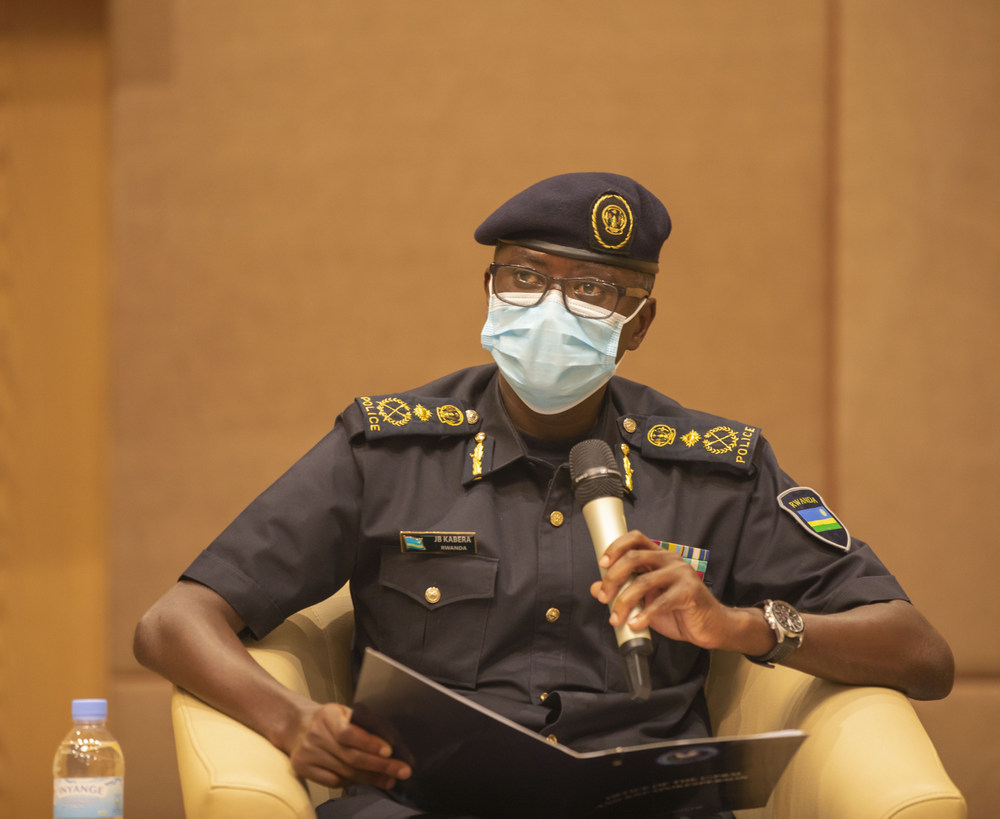
CP Kabera was speaking on Monday, July 20, during a press conference to assess and discuss COVID-19 national response efforts in the last four months, held at Kigali Convention Centre.
The press conference brought together the Ministers; Dr. Daniel Ngamije of Health, Prof. Anastase Shyaka of Local Government, Soraya Hakuziyaremye of Trade and Industry as well as RNP represented by its spokesperson, CP John Bosco Kabera.
CP Kabera commended the role of the public in compliance and partnership in enforcement through information sharing on violators.
He gave an insight into the enforcement in the past four months, which was largely defined by awareness on the directives and safety practices through social media and other media channels, public communication system mounted on Police vehicles as well as drones which targeted markets, trading centers, and residential areas.
“We are happy that the majority of people were responsive by supporting the enforcement in one way or another, including those who continue to give us information on violators. Nonetheless, we still see some individuals, who violate the directives especially motorists,” said CP Kabera.
“Police doesn’t get tired neither does it get annoyed. If you think that we will give up then you are lying to yourself; It is one thing to violate the directives and worse still undermine instructions by Police officers enforcing the directives; you will be arrested,” he warned.
RNP, last week published a list of 498 motorists, who violated the curfew and disregarded instructions by officers enforcing the curfew to go to allocated centers, thereby driving or riding away. The force called all those on the list to voluntarily come forward.
“Those who have come forward, well and good; those who have not are advised to do so because they will be located and arrested if they don’t heed the call.”
CP Kabera reminded the public that the pandemic neither has legs nor wings, but is spread by people.
He added that having a positive mind and individual safer choices of #NtabeAriNjye (It shouldn’t be me) wherever you emphasize the aspect of individual responsibility to adopt safety practices and to prevent further spread of the virus.
He further warned those who breach the directives or spread rumors with intent to tarnish the image of RNP that it won’t affect the Police duties, but rather legal actions will be taken against such individuals.
The Minister of Health, Dr. Daniel Ngamije reiterated the impact of the national good governance, health, and security systems in responding to the pandemic effectively.
So far, 1582 COVID-19 cases have been detected in Rwanda.
Dr. Ngamije said that the government has increased the number of testing laboratories to five in different parts of the country with the capacity to carry out about 4000 tests daily, up from one lab four months ago, which had the capacity to carry out only 300 tests per day.
Minister Shyaka observed that the governance system played an invaluable role in bringing institutions together to professionally handle the situation.
He commended the impact of security organs and youth volunteers for the “sacrifice and bravery without fear of getting infected.”
He warned against operating bars, which are still closed in this period, as well as churches that go against the set guidelines.
“It is one thing to be granted permission to open for prayer services, but another to ensure that the guidelines are adhered to at all times, which can lead to closure once the church or mosque is found violating the safety guidelines,” said Minister Shyaka.
In her part, Minister Soraya reiterated the ill-effects of the pandemic on the economy, which hit the tourism sector, transport, and the aviation industry as well as cross-border trade.
Although the agriculture sector was affected by 3% and exports hit by 16%, Minister Soraya said that the government ensured that people in Rwanda are not cheated on the local market by setting prices and monitoring compliance.
At least 254 traders in Kigali were penalized for inflating prices and cheating customers in this period of the pandemic.
In June this year, Inkomoko, in partnership with the MasterCard Foundation, launched a $ 2.3 million project worth about Rwf 2.2 billion to develop small and medium-sized businesses.
It is expected to reach 3,500 beneficiaries. The first phase consisted of 1,000 entrepreneurs from different camps and environs.
In the second phase, 1,000 small and medium-sized entrepreneurs will be assisted based on the impact Covid-19 has had on their operations, to cope with them, and to develop new and sustainable strategies for their operations.
Inkomoko Managing Director, Nathalie Niyonzima, said small and medium-sized entrepreneurs have a significant role to play in the country’s economy but face various barriers that should not be overlooked.
Cabinet Minister of Trade and Industry, Soraya Hakuziyaremye, spoke about the efforts the Government is making to meet the business needs of small and medium enterprises created by Coronavirus.
“As the pandemic spread, the Government faced a major challenge; we wondered if we should stop the economy and take care of health. But as we have seen, strong decisions have been made, but policies and measures have been put in place to restore the affected economy.”
The government recently announced a $ 100 million fund to help the economy recover. Minister Hakuziyaremye said it was one of the strategies to help traders including those entrepreneurs.
The acting country representative of the MasterCard Foundation in Rwanda, Rica Rwigamba, said that because of the coronavirus, there is a lack of employment opportunities and the young entrepreneurs meet with problems, and building them requires a variety of strategies.
Head of Special Economic Zone and Export in the Rwanda Development Board, Sayinzoga Diane, said the support was timely and that RDB needed similar support from other organizations.
Small and medium enterprises account for 98% of the country’s business. 55% of the Inkomoko funding will be given to small businesses and 18% to medium businesses.
For the entrepreneur to be supported, the project will be considered, whether it is in the field of agriculture and animal husbandry or the hotel and hospitality sector.
Pacifique Usengimana, 22, was intercepted in the evening of July 17, just after crossing into Rwanda from the Democratic Republic of Congo (DRC).
Chief Inspector of Police (CIP) Bonaventure Karekezi, the Police spokesperson for the Western region, said that Usengimana was intercepted by securing organs on duty.
“Usengimana used an illegal border point to cross into Rwanda, fortune enough, members of security organs, who were on duty saw and stopped him. When they searched him they found the luggage he had contained 582 rolls of cannabis. He was immediately taken into custody for drug trafficking,” CIP Karekezi explained.
He added: “Such illegal acts of crossing the border and criminal behaviors of trafficking and distributing narcotic drugs can equally be the source of COVID-19.
It’s criminal and risky to both the dealer and the community where such a person operates his criminal activities. Usengimana has been isolated for COVID-19 medical examination before he faces court for the alleged criminal act.”
He appealed to members of the public and communities residing along border lines to give no room for such drug traffickers, who can also easily infect them with Coronavirus.
Anyone convicted for “severe drugs” under article 263 of the law determining offences and penalties in Rwanda, faces between 20 and life imprisonment, and a fine of up to Rwf30 million
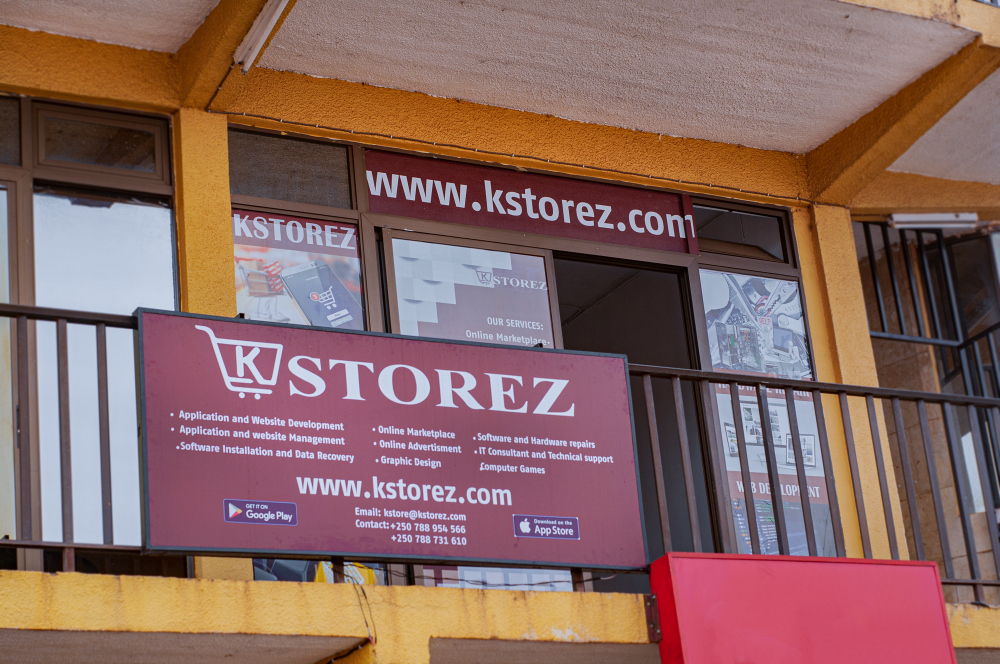
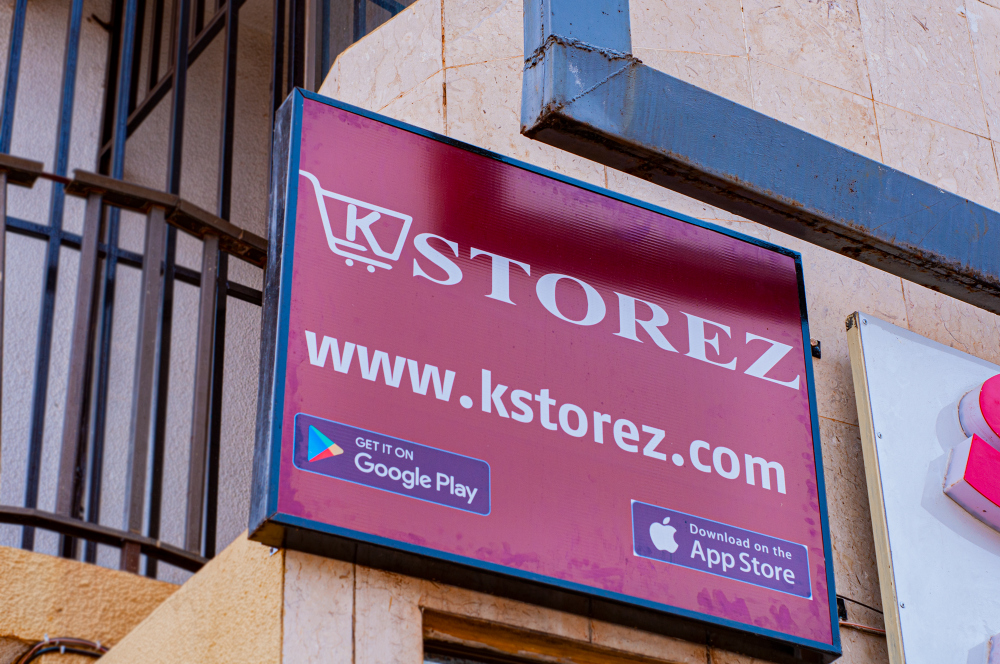
This company brings in experts to create and control websites, telephone applications, business-related services, e-commerce, personal marketing, portfolio consolidation, and more.
Director of Kstorez Group told IGIHE that Kstorez came to solve the problems and provide technology-related services.
“Kstorez group has come to make it easier for those who want technology-related services and get them cheaper because it has been found that some provide expensively yet less efficient,” he said.
Asked about the origin of the name Kstorez, the director said it contains two different meanings, where K, representing a thousand, means a thousand mountains that makeup Rwanda and Storez comes from the English word “store”.
Those who need to shop for a variety of items including accessories, clothing, and more, KStorez has set up a website https://www.kstorez.com which offers a variety of affordable products.
You can make payments using standard handheld payment methods, Mobile money, VISA, MasterCard, and any other method you can use. Once the customer has paid, the goods are immediately delivered to him.
The company also asked traders who want to market their products on the site, to go there and register so that people can see their products.
KStorez also says that for people who need ICT consultancy, Graphic design, online advertising, repairing software and hardware, computer games, and other services in technology they do it well.
Kstorez Company is located in the Prince House building in Remera in Kigali City, on the first floor, on the KN 5 Rd road to Cement or KN 3 Rd to Sonatubes.
For more information or to request a service, call +250 788 954 566 or +250 788 731 610.
Carl Manlan, Chief Operating Officer of the Ecobank Foundation said: “At Ecobank we leverage human capabilities and other core resources to partner for African transformation. We are passionate about co-designing partnerships to drive change at community levels across our pan-African footprint. The Euromoney Award for Excellence recognises our collaboration with African communities and like-minded partners.”
Ade Ayeyemi, CEO of Ecobank Group said: “The Ecobank Foundation is doing amazing work in delivering on its commitment to improve the quality of life of people across the African continent. The Foundation should be rightly proud of its ceaseless impact and the real difference that it is making in numerous parts of the continent. Through the Foundation, our Group leverages its resources and capabilities to contribute to the economic and social development of Africa.”
Ecobank’s Corporate Responsibility primarily concentrates on the three key areas of health, education and financial inclusion. Recent partnership examples:
Ecobank’s three-year campaign to raise awareness of Non-Communicable Diseases (NCDs) and educate communities by providing key information about the dietary and lifestyle changes required to help prevent NCDs such as cancer and diabetes. Ecobank Day is our volunteer community day targeted at helping the vulnerable sectors in our local communities.
Ecobank’s Group Chairman Sustainability Award which emphasises our role in each country in designing innovative, replicable and scalable solutions driving sustainable environmental and social change. Ecobank Togo is the 2020 winner for its support for Government efforts to provide electricity to 300,000 rural households and businesses through solar energy kits.
African economies’ health recovery is vital and Ecobank contributed about US$3 million in the form of cash, healthcare equipment and medical supplies. Moreover, Ecobank deployed its financial capabilities for the African Union’s Centre for Disease Control and Prevention to enable every citizen and member of the diaspora to contribute to the pan-African Covid-19 response.
Earlier this month, Ecobank rolled out its ‘Zero Malaria Business Leadership initiative.’ Launched in partnership with Speak Up Africa, it aims to eliminate malaria across Africa through private sector led initiatives which increase financing and take stronger and better-targeted actions to support national malaria control programmes.
“Through the modified risk tobacco product application process, the FDA aims to ensure that information directed at consumers about reduced risk or reduced exposure from using a tobacco product is supported by scientific evidence and understandable,” said Mitch Zeller, J.D., director of the FDA’s Center for Tobacco Products.
“Data submitted by the company shows that marketing these particular products with the authorized information could help addicted adult smokers transition away from combusted cigarettes and reduce their exposure to harmful chemicals, but only if they completely switch. The FDA will closely monitor how IQOS is used by consumers to determine if these products meet this potential and do not cause increased use among youth. It is important to note that these products are not safe, so people, especially young people, who do not currently use tobacco products should not start using them or any other tobacco product.”
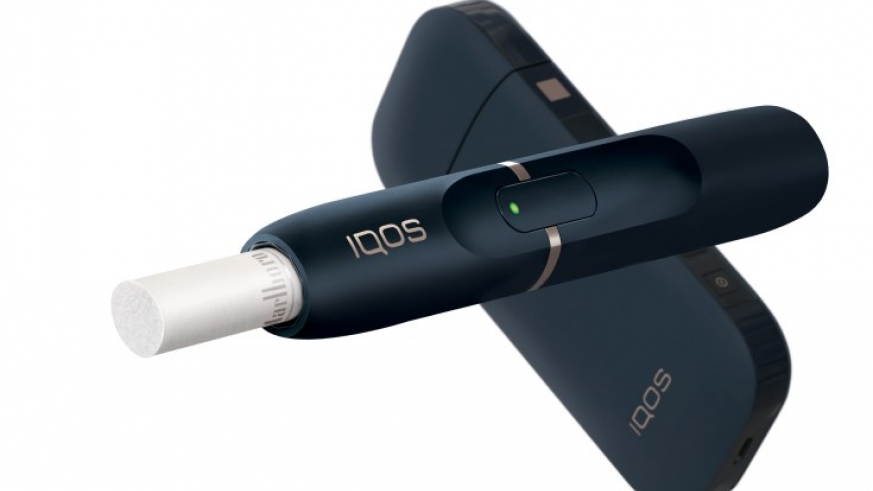
The IQOS Tobacco Heating System includes the electronic IQOS device that generates a nicotine-containing aerosol by heating tobacco-filled sticks wrapped in paper, specifically Marlboro Heatsticks, Marlboro Smooth Menthol Heatsticks, and Marlboro Fresh Menthol Heatsticks. The FDA previously authorized the marketing of these products without modified risk information in April 2019 via the premarket tobacco application (PMTA) pathway.
Today’s action pertains to the separate MRTP applications for these products and further authorizes the manufacturer to market these specific products with the following information:
“AVAILABLE EVIDENCE TO DATE:
• The IQOS system heats tobacco but does not burn it.
• This significantly reduces the production of harmful and potentially harmful chemicals.
• Scientific studies have shown that switching completely from conventional cigarettes to the IQOS system significantly reduces your body’s exposure to harmful or potentially harmful chemicals.”
Even with this action, these products are not safe nor “FDA approved.” The exposure modification orders also do not permit the company to make any other modified risk claims or any express or implied statements that convey or could mislead consumers into believing that the products are endorsed or approved by the FDA, or that the FDA deems the products to be safe for use by consumers.
There are two types of MRTP orders the FDA may issue: a “risk modification” order or an “exposure modification” order. The company had requested both types of orders for the IQOS Tobacco Heating System. After reviewing the available scientific evidence, public comments, and recommendations from the Tobacco Products Scientific Advisory Committee, the FDA determined that the evidence did not support issuing risk modification orders at this time but that it did support issuing exposure modification orders for these products. This determination included a finding that issuance of the exposure modifications orders is expected to benefit the health of the population as a whole.
In particular, the agency determined the company demonstrated that because the IQOS Tobacco Heating System heats tobacco and does not burn it, it significantly reduces the production of harmful and potentially harmful chemicals compared to cigarette smoke. Furthermore, studies showed switching completely from combusted cigarettes to the IQOS Tobacco Heating System significantly reduces the body’s exposure to 15 specific harmful and potentially harmful chemicals.
The toxicological assessment also found that, compared with cigarette smoke, IQOS aerosols contain considerably lower levels of potential carcinogens and toxic chemicals that can harm the respiratory or reproductive systems. Additionally, the FDA found that the applications supported the required consumer understanding findings.
Today’s authorization requires Philip Morris Products S.A. to conduct postmarket surveillance and studies to determine the impact of these orders on consumer perception, behavior and health, and to enable the FDA to review the accuracy of the determinations upon which the orders were based.
These postmarket requirements include a rigorous toxicity study using computer models to help predict potential adverse effects in users. The orders also require the company to monitor youth awareness and use of the products to help ensure that the marketing of the MRTPs does not have unintended consequences for youth use.
The company must also keep the FDA apprised of efforts to prevent youth access and exposure.
These requirements are in addition to the postmarket requirements and restrictions previously placed on these products in their April 2019 PMTA authorizations, such as reporting information to the FDA about consumer research studies, sales, and advertising information and adverse experiences, among others.
In particular, to limit youth access to the products and to limit youth exposure to IQOS advertising and promotion, the PMTA authorization placed stringent restrictions on how the products are marketed – particularly via websites and through social media platforms – by including requirements that advertising be targeted to adults of legal age to purchase tobacco products.
The company must request and receive authorization from the FDA to continue marketing the products with the same modified exposure information after the initial orders expire in 4 years.
The FDA also may withdraw the initial and any potential subsequent exposure modification orders if the agency determines that, among other things, the orders are no longer expected to benefit the health of the population as a whole, for example as a result of an uptake in use of the products by youth or former smokers, or a decrease in the number of current smokers who completely switch to the products.
The MRTP pathway outlined in the 2009 Family Smoking Prevention and Tobacco Control Act allows companies to submit applications for the FDA to evaluate whether a tobacco product may be sold or distributed for use to reduce harm or the risk of tobacco-related disease.
By law, the FDA must also ensure that the advertising and labeling of modified risk products enables the public to understand the modified risk or modified exposure information and to understand the significance that information has in the context of total health and in relation to all tobacco-related diseases and health conditions.
The FDA, an agency within the U.S. Department of Health and Human Services, protects the public health by assuring the safety, effectiveness, and security of human and veterinary drugs, vaccines and other biological products for human use, and medical devices.
The agency also is responsible for the safety and security of our nation’s food supply, cosmetics, dietary supplements, products that give off electronic radiation, and for regulating tobacco products.
They were arrested in Muhanda Sector, Bugarura Cell following the tip-off from members of the public.
According to Chief Inspector of Police (CIP) Bonaventure Twizere Karekezi, the Police spokesperson for the Western region, the suspects were caught red-handed mining coltan in the gazetted area of Gishwati Forest.
“The operation followed the information provided by the members of the public as well as game rangers, we caught ten people in the process, who were found mining in the forest,” he said.
The spokesperson said that it is part of the ongoing operations to fight environmental-related crimes including unlawful mining activities, which also affect the environment.
“Rwanda National Police (RNP) in partnership with other institutions, are currently in joint efforts to combat all activities, especially illegal mining, which also contaminate water bodies and degrade the environment.”
On July 11, 14 people were arrested in Rusizi District after they were found mining illegally.
Earlier in July, 13 people were also arrested in Karongi District over illegal mining in Mashyiga River.
CIP Karekezi warned that illegal mining is a crime and the operations to arrest people who are involved in such activities are continuous. He urged the public to refrain from them and report such unlawful practices.
Article 54 of the law on mining and quarry operations, states that; “any person, who undertakes mineral or quarry exploration, exploitation, processing or trading without a license commits an offence.”
Upon conviction, the offender is liable to imprisonment for a term of between two and six months and a fine of not less than Rwf1 million and not more than Rwf5 million or only one of these penalties.
The court also orders confiscation of any seized minerals or quarry in storage, trading or processing without a license.
Nyamagabe District Police Commander (DPC), Senior Superintendent of Police (SSP) Gaston Karagire said that Police first arrested two poachers; Faustin Nsengumuremyi, 21, and Vincent Sinamenye, 18, after killing an Antelope in Nyungwe National Park.
“Following the information from park rangers about suspected poachers, who had entered into the park, we organized a joint operation, arrested Nsengumuremyi and Sinamenye in Buruhukiro Sector after killing an Antelope. They had tools including two machetes and 40 pitfalls which they were using,” said SSP Karagire.
“Later, two other men; Patrice Nsekanabo, 46, and Sylvestre Ndorimana, 42, showed up with Rwf150,000, which they offered to Police officers to release Nsengumuremyi and Sinamenye, they were also arrested for attempted bribery,” he added.
The four men are all residents of Buruhukiro Sector in Kizimyamuriro Cell.
The DPC warned against poaching and corruption saying that both are “serious crimes” punishable by the law.
“We advise the public to avoid anything that would tempt them into either offering or receiving bribes, and encourage sharing of information on those involved to ensure that they are arrested to face the law.”
According to article 4 of the Law on Fighting Against Corruption, any person who offers, solicits, accepts or receives, by any means, an illegal benefit for himself/herself or another person in order to render or omit a service under his or her mandate, commits an offense.
Upon conviction, the offender is liable to imprisonment for a term of more than five years but not more than seven years, with a fine of three to five times the value of the illegal benefit solicited or received.
The law on environment of 13/08/2018 in its article 58, states that any person who hunts, sells, injures or kills a protected animal species and products thereof, commits an offence.
Upon conviction, he/she is liable to imprisonment for a term of not less than five years and not more than seven years and a fine of between Rwf5 million and Rwf7 million.