Qatar Airways has agreed to take a 60% stake in the project, which as a whole is valued at around US$1.3 billion.
The new airport’s first phase will be concluded by 2022 and will accommodate seven million passengers per year.
The agreements signed today mark a key milestone in the development of Rwanda’s vibrant aviation sector, in the context of the excellent bilateral relationship between Qatar and Rwanda.
After qualifying for the World Cup in 1978 for Tunisia, in 1986 for Morocco and in 1990 for Cameroon, world-renowned football player, Pelé said that not later than 2000 that an African team will have won the World Cup.
It has been 19 years now after Pelé’s prediction but the only teams that made it far were Senegal, Cameroon and Ghana who made it to ¼ finals during the qualifiers in 2002, 1990 and 2010 respectively.
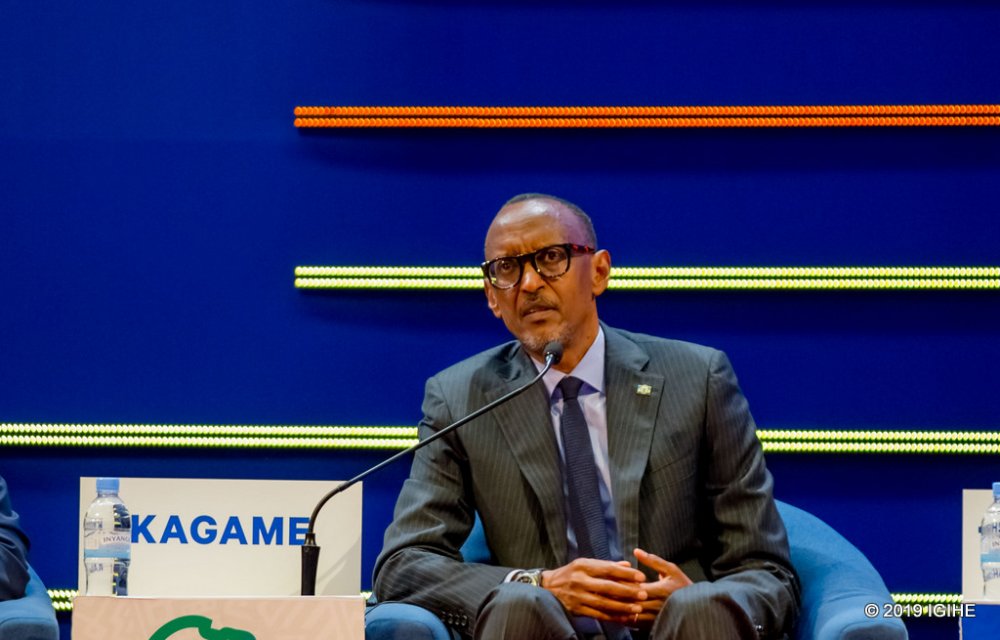
In an interview President Paul Kagame had with the East African about the growth of the football industry in Africa, President Kagame was asked if he thinks any African team could win the World Cup.
He responded that he has watched all the World Cups that happened in the last 30 years and said he finds that there are some important criteria African teams neglect and that would help them reach the finals.
“I cannot quite confirm that African teams are capable of qualifying for the World Cup given that it sometimes results from low to no support from their governments. Why do we have all the resources but yet remain the poorest? Is it because we have no idea what we should do? Most of us know what is needed but we don’t do it. I closely watched all the World Cups that happened in the past 30 years.”
President Kagame said that if you analyze the way African teams play, their performance is commendable but they have ingrained negative mentalities that they cannot compete with bigger teams.
“Our teams are competent enough. They play with energy at the beginning of competitions but at some point, they get discouraged. Some of the teams think that the farthest they can go is playing with strong teams like France and don’t feel any shame because they lost to a big team and that is the most they could do.”
Africans are very competent football players but they need to learn from other big players and adopt their attitudes.
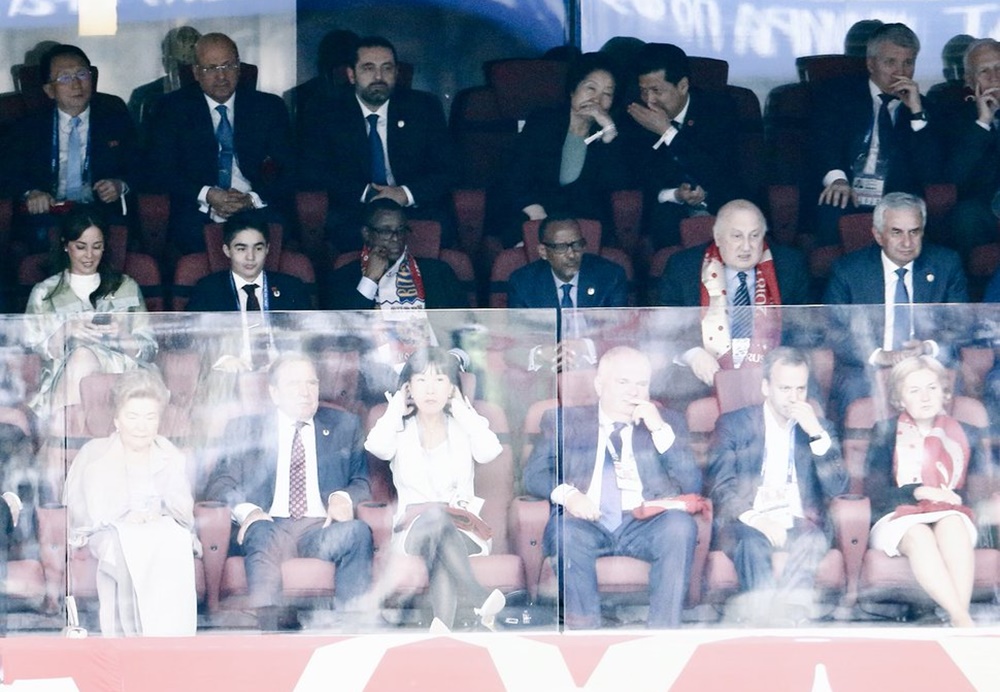
In last year’s World Cup that was held in Russia, Africa was represented by Egypt, Morocco, Nigeria, Senegal and Tunisia.
Are Rwandans capable of winning ‘Tour de France’?
Rwanda and Eritrea are quickly evolving in the cycling sport and come after South Africa that has for a long time led the continent in this sport.
President Kagame was asked if he thinks a Rwandan or Eritrean could win ‘Tour de France and he answered that Rwandans are quite talented in this sport and that there is hope, one of them could win in the near future.
“There are so many talented professional cyclists in Rwanda and Eritrea who are confident enough to win the competition.”
President Kagame who usually is a diehard Formula 1 fan predicts that Lewis Hamilton, a British racing driver who drives a Mercedes-AMG Petronas Motorsport is very likely to win the competition for the seventh time next year based on his attitude and the advanced technology his car is made with.
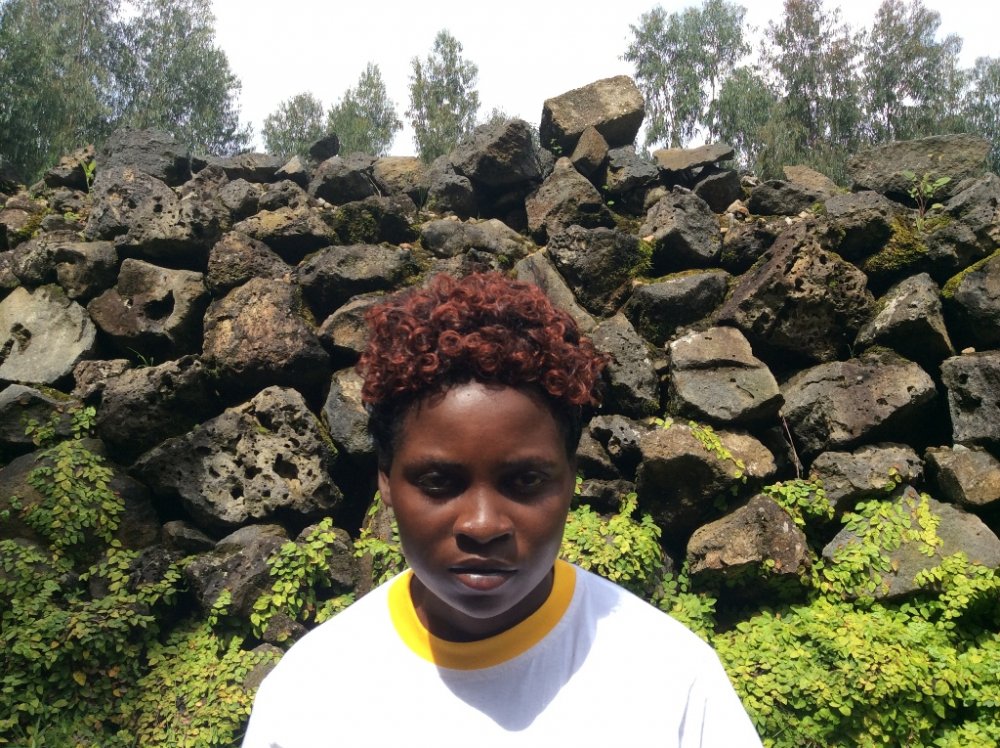
Bihoyiki started teaching her father when she was 13 and says she did it because ever since she was old enough to think, she asked her mother why her father was in jail and her mother said she didn’t know and that pained her so much she decided to do something about it.
She says she heard people saying that her father, Mfashigihe Patrick, killed people during the 1994 genocide against Tutsi and that she felt so ashamed, prompting her to ask her mother to let her go visit her father in prison and ask every detail directly.
“By the time I was old enough to think, I knew my father was in jail and my mother never wanted to tell me what had happened. That is why I asked my mother to let me see him at least once so that I could ask him myself.”
She added that she spent three years teaching her dad to ask for forgiveness to the families of his victims so that she could find peace and live in harmony with children of neighbors he made orphans.
“I was 13 at the time and I went there four times before he was able to confess what I wanted to hear. Before, I would visit him and confront him about his crimes in the genocide and he would only cry, but at some point he agreed he went with the militia that killed neighbors but that he did not participate in the killing spree.”
After several visits, Mfashigihe Patrick confessed he had indeed participated in the killings and led the militia that attacked neighbors. He also confessed that one of the people they killed was his godfather.
He finally asked for forgiveness which was granted and now, the two families live in harmony and are in the same saving and credit cooperative called ‘DUHUZE’
After confessing for his crimes and asking for forgiveness, Mfashigihe served his 9-year sentence and did community work before returning to his village.
Now, he lives in perfect harmony with neighbors and without the shame that lived in his heart before he asked for forgiveness.
Bihoyiki says her story could be a life lesson to parents around the country and advises them to teach their kids the history of Rwanda and particularly what happened during the 1994 genocide against Tutsi for them to be able to fight its ideology.
She also requests genocide convicts who are currently serving their sentences to give information about where their victims were buried so that they can receive decent burial.
In a press release, Jumia administration announced that starting today until its official closure, it will only deliver to pre-paid requests.
Jumia will keep operating in shipping services through Jumia.rw and they are confident that they will keep leading the market in this sector.
Rwanda is the 11th country where Jumia stops its operations after a vigorous start where people dubbed it the ‘Amazon of Africa’.
In August this year, Jumia met a series of challenges and was dragged to court several times resulting in a loss of $70 million and a reduction in share capital by 14%.
Jumia Food started operating in Rwanda in 2012 and helped people around Kigali who had no time to go to restaurants get their food delivered on their doorsteps.
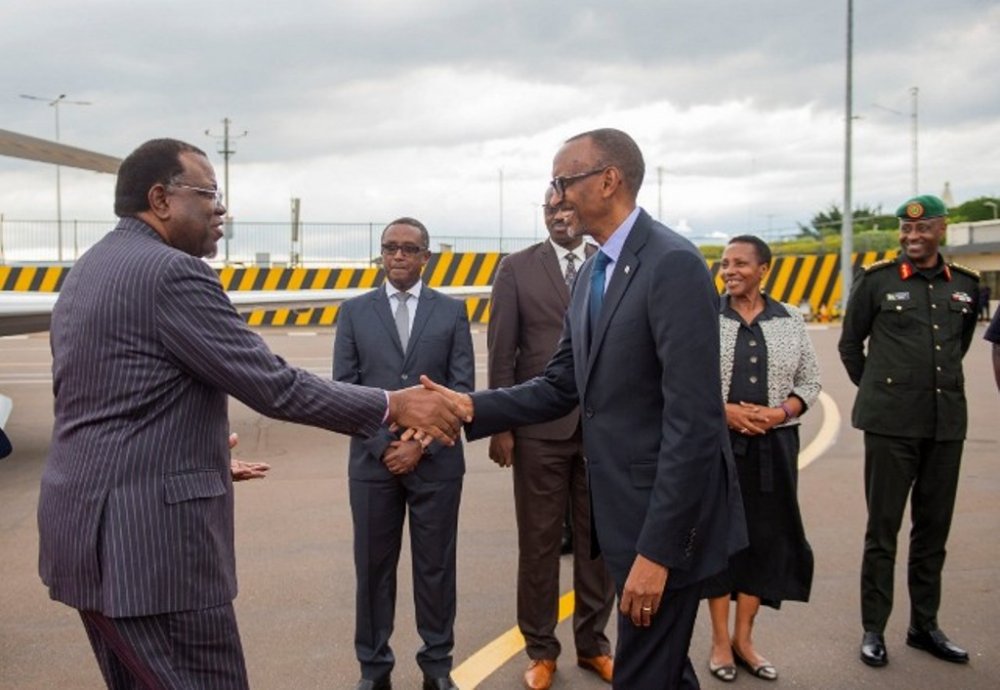
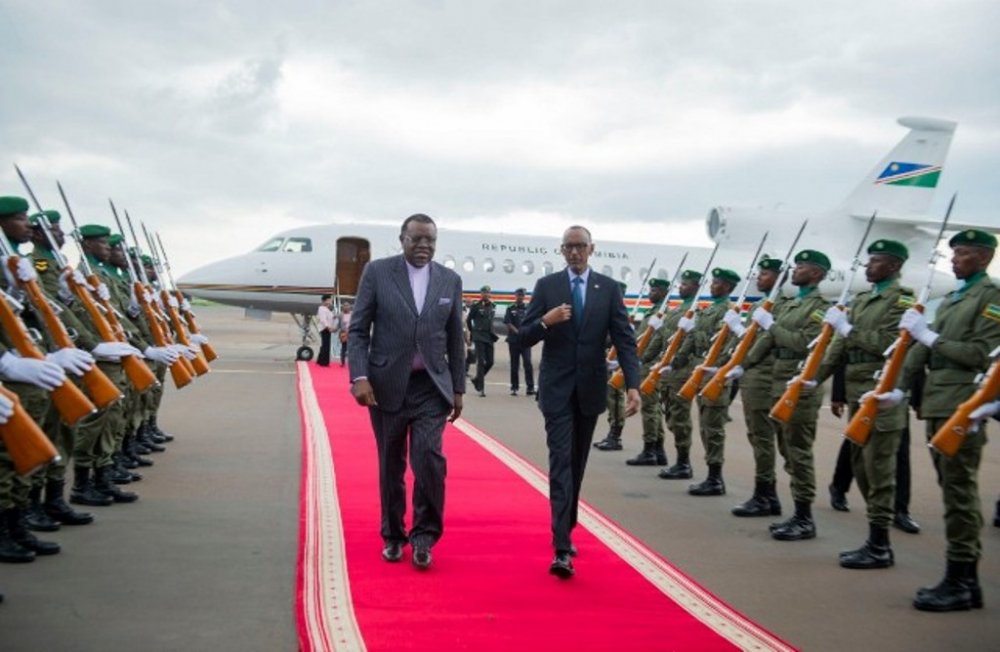
President Hage Gottfried was welcomed by President Paul Kagame at Kigali International Airport, from where he joined other dignitaries from around the world for the International Anti-Corruption Awards that were held in Kigali this Monday.
The awards that were named after the Emir of Qatar, Sheikh Tamim Bin Hamad al Thani known as “Sheikh Tamim Bin Hamad al Thani International Anti-Corruption Awards” are given to individuals who led the fight against corruption with finesse.
Rwanda and Namibia have cooperation in relation to police affairs that has been in place since 2015.
It is the second time that Namibian President Hage Gottfried Geingob visits Rwanda after July 4th, 2019 when he joined Rwandans in celebrating the 25th Liberation Anniversary.
The ceremony will be held at the Kigali Convention Center this Monday, 9th December 2019.
The International Anti-Corruption Excellence Award is organized by Qatar in partnership with the United Nations Office on Drugs and Crime (UNODC)
In a tweet by Qatar News Agency, they confirmed that Sheikh Tamim Bin al Hamad al will attend the International Anti-Corruption Award.
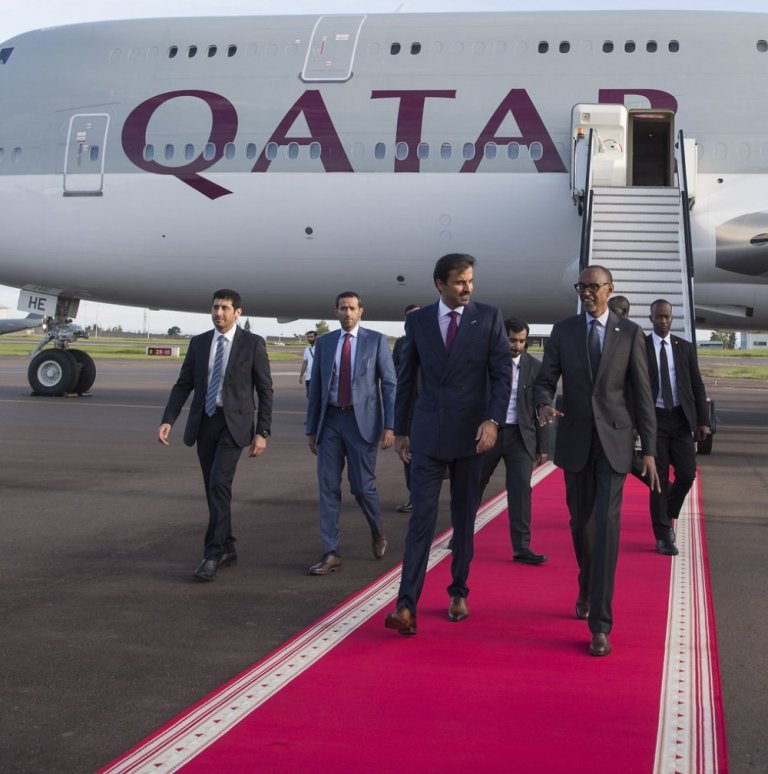
“His Excellency the Emir of Qatar has landed a plane in Doha this Monday morning heading to Kigali, Rwanda where he will be attending Sheikh Tamim Bin al Hamad al Thani International Anti-Corruption Award.”
It is the fourth time the International Anti-Corruption Award will be celebrated but it is the first time they will be held in Africa. The awards were previously held in Malaysia, Geneva and at the UN headquarters in Vienna, Austria.
The ceremony will bring together more than 600 guests including nominees and the organization committee of the award. President Paul Kagame and the Emir of Qatar, Sheikh Tamim Bin al Hamad al Thani are expected to attend the ceremony.
Minister Johnston Busingye recently said that Rwanda has been chosen to host the ceremony because President Kagame has shown consistent efforts in leading the fight against corruption.
The Global Corruption Perception Index published by Transparency International last year placed Rwanda at the fourth place of countries leading the fight against corruption in Africa after Seychelles, Botswana and Cabo Verde.
HH the Amir left Doha on Monday morning heading to Rwandan capital city of Kigali to attend HH Sheikh Tamim Bin Hamad Al Thani International Anti-Corruption Excellence Award. #QNApic.twitter.com/6YlKQ0un0U
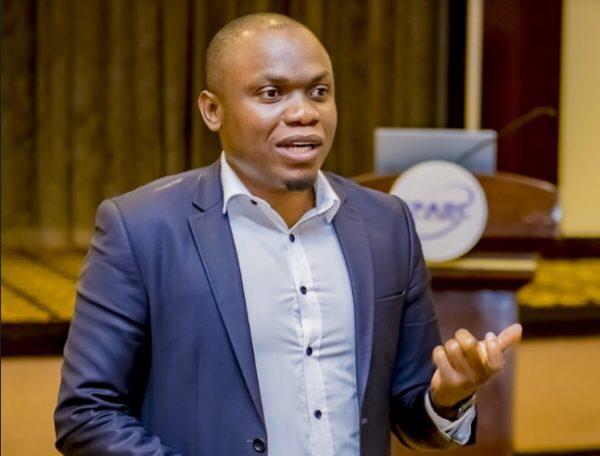
This was revealed by Wisely Phiri, group managing director and founder of Malawi’s information and communications and technology (ICT) company, SPARC Systems Limited, in his public lecture delivered at Carnegie Mellon University Africa (CMU-Africa) in Kigali, Rwanda on Thursday, October 28 where he was chosen to be among high profile professionals to give a public lecture.
Under a lecture theme, ‘Digital Disruption: Opportunities for Africa, Innovating Beyond Borders’, Phiri said digital innovations are positively disrupting people’s normal way of doing business.
“Because of various procedures and regulations, the banking sector was normally slow to innovate but of late various innovations have forced the banks to rethink their strategies. Firstly, finance and technology (Fintech), has allowed the banking sector to offer 24/7 real-time transactions without the need of the customers to visit the banks. We have seen banks embracing Fintech. Mobile banking, m-wallets and payment apps have now been embraced by the banks.”
Phiri observed that with the distributed ledger system, that blockchain is offering various possibilities such as fraud detection, interbank transfer, prevention of money laundering, among other advantages.
“As SPARC, our main vertical has been the financial, telecommunication and the public sectors which have been disrupted with technology,” he said.
Talking about telecommunication, Phiri said that telecommunication companies are no longer voice companies like they used to be following the convergence of telecommunications and data/ICT.
“Companies like WhatsApp disrupted how we communicate, changing the communication paradigm. Skype, Viber, WeChat have entered the market to pressure the prices down for text and voice thereby eating into the revenue of telecommunication companies.
“This, in turn, made telecom companies rethink how they do their billing. Now you are having social bundles and WhatsApp bundles for example.”
He said, going forward, companies are going into service-oriented architecture as they are moving away from innovating around technologies but into innovating around services.
“Companies are looking to add new services to capture consumer’s attention; accelerate time to market these new services with technology advancements; map end-to-end customer journeys from acquisition, engagement, retention and use Big Data Analytics to focused market segmentation and product hyper-personalization.”
He told the students who would want to venture into the technology career that if they want to innovate beyond borders, they have to think of the country classification and how they fit into the future of technology.
“The future is now and at Sparc, like our friends at CMU-Africa, we are envisioning an Africa where we lead change. Let’s be the change we need.
“Africa is an economy of 1.3 billion people by UN estimates. This is a continent with some of the poorest people of whom many live in remote areas; it is also classified as fastest growing in terms of mobile and mobile money penetration and one of the richest continents in natural resources.
“As Sparc, we have been asked how we choose countries to operate in. For example, having originally come from Malawi, most people would think the logical thing to do if we want to go beyond borders would be to open in South Africa since this country is in southern Africa and it’s more developed than Malawi.
“My answer is; when you want to innovate beyond borders there are rules to follow. Firstly, know your industry and have a solid foundation. You can’t fail to be a lizard in your backyard and expect to be a crocodile in someone else backyard; understand your market well and be specific on what problems you are solving. Then, understand the classification of the countries in your industry.”
SPARC Systems Limited was established in 2013 but it is making inroads in Malawi, Rwanda and Zambia’s ICT markets where it has several branches.
Wisely left a successful international IT company and set up his own in 2013 and n two years, www.sparcsystems.africa grew into a formidable force with a leading market share in the IT trade and five offices in Malawi, Zambia, and Rwanda.
He currently employs 52 full time and over 300 part-time and out-sourced staff.
Wisley’s impact goes beyond SPARC as he has served the ICT Association of Malawi (ICTAM) as its president (2016-2018) and during his term, the number of paying members went from just 20 to 1,051.
He also supports numerous charitable causes including paying fees for students in various universities in Malawi.
To date, he has raised funds for 105 financially challenged students at risk of being withdrawn from the University of Malawi. Furthermore, he mentors institutions, IT experts and up-and-coming entrepreneurs.
Academically, Wisely graduated from the University of Malawi in 2007 with a Bachelor of Science in Electrical Engineering with Distinction.
Recently, he was an Adjunct Lecturer at the Malawi University of Science and Technology (MUST).
From 2017 until 2018, he lectured in Business Innovations and Operating Systems which are some of his core expertise areas including database and storage systems, cloud services and data centers.
The minerals were recovered from the house of one Vestine Murekatete, the alleged illegal dealer, who was arrested in Ndego Cell on Thursday.
Police spokesperson for the Eastern region, Chief Inspector of Police (CIP) Hamdun Twizeyimana said that Murekatete had opened a bar in Ndego, which she was using to cover her illegal mineral trade.
“On Thursday at about 2 pm, Ndego Police station received a call from a resident in Ndego Cell reporting a woman, who had brought quantities of minerals,” CIP Twizeyimana said.
“Ndego Police station responded to the information, conducted an operation and indeed recovered eleven sacks of cassiterite, which were found hidden in one of the rooms of Murekatete’s bar, which she was using to cover her unlawful deals,” he added.
“It is said that the minerals were brought by a group of people to her house that very morning at about 6 am. Law enforcement is working together to know the origin of the minerals, which were not tagged, and all those connected to this unlawful trade,” the spokesperson explained.
Article 1 of the Ministerial Regulations No 001/Minifom/2011 relating to fighting smuggling in mineral trading stipulates that nobody is allowed to purchase or sell minerals without commercial registration.
Article 4 of the same instrument indicates that the transportation of minerals outside mining licensed areas (concessions and permits perimeters) is only allowed when the consignment shows the source mine, its value and when it has the right tag.
“This is an act of fraud and tax evasion. We thank the resident, who provided information on the unlawful act and call upon the general public to always report anything illegal and suspicious,” said CIP Twizeyimana.
Fraud, deception, obtaining another person’s property by use of false names or qualifications, is punishable with an imprisonment term of two to three years and a fine of between Rwf3 million and Rwf5 million, as stipulated under article 174 of the penal code.
Mukandayisenga’s friend identified as Jean Semugaza, was arrested recently in Kigabiro alongside one Assouma Uwimana, with 1850 pellets of cannabis.
“Mukandayisenga approached law enforcement officers at Kigabiro station with a bribe of Rwf50, 000 so as to release Semugaza. She was immediately arrested for the alleged crime,” said Chief Inspector of Police (CIP) Hamdun Twizeyimana, the Police spokesperson for the Eastern region, said.
It is suspected that the bribery attempt was initiated by Uwimana, a suspected major drug dealer in Rwamagana.
Semugaza is said to be one of Uwimana’s retailers.
The spokesperson warned against bribery and other graft related crimes.
“Corruption or bribery and trafficking and sale of narcotics are serious crimes, which no one should tolerate. A wrong thing cannot correct another; when you commit a crime to be ready to face the consequences, trying to corrupt officials will be another crime which you will face before courts of law.”
In article 4 of the law on fighting against corruption, any person who solicits, accepts or receives, by any means, an illegal benefit for himself/herself or another person or accepts a promise in order to render or omit a service under his or her mandate or uses his or her position to render or omit a service, commits an offence.
Upon conviction, the offender is liable to imprisonment for a term of more than five years but not more than seven years with a fine of three to five times the value of the illegal benefit solicited received.
Penalties provided under this Article also apply to a person who offers or promises to offer a benefit, by any means, an illegal benefit for him/herself or another person to have a service rendered or omitted.
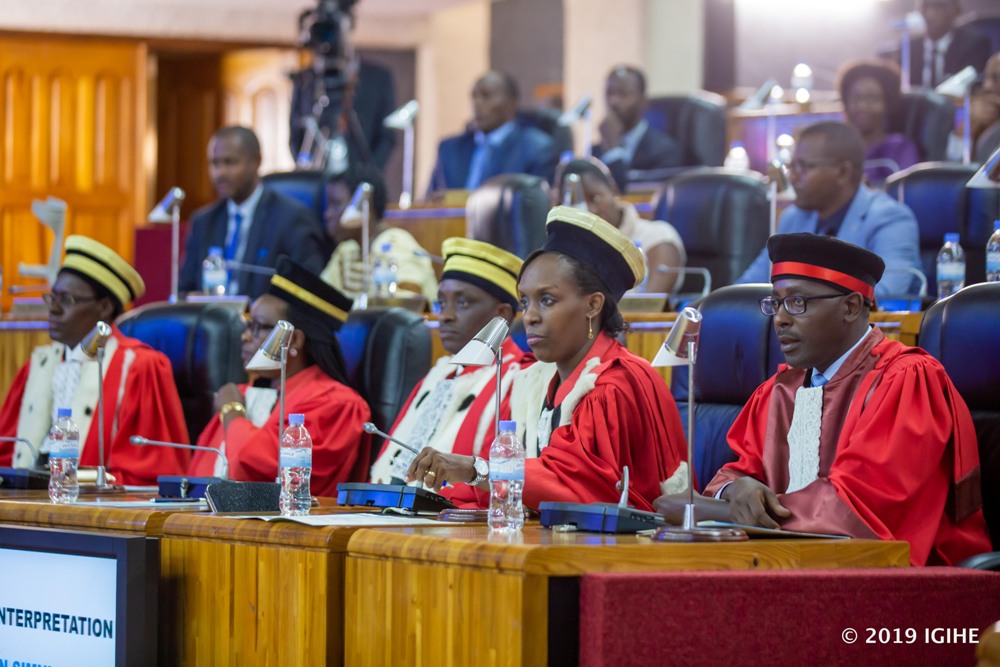
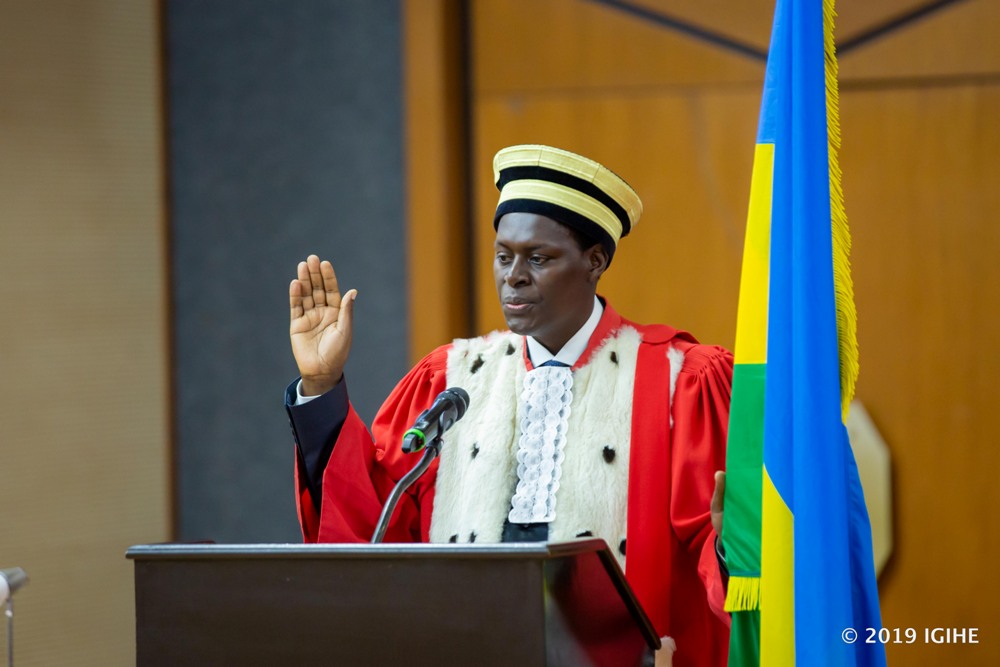
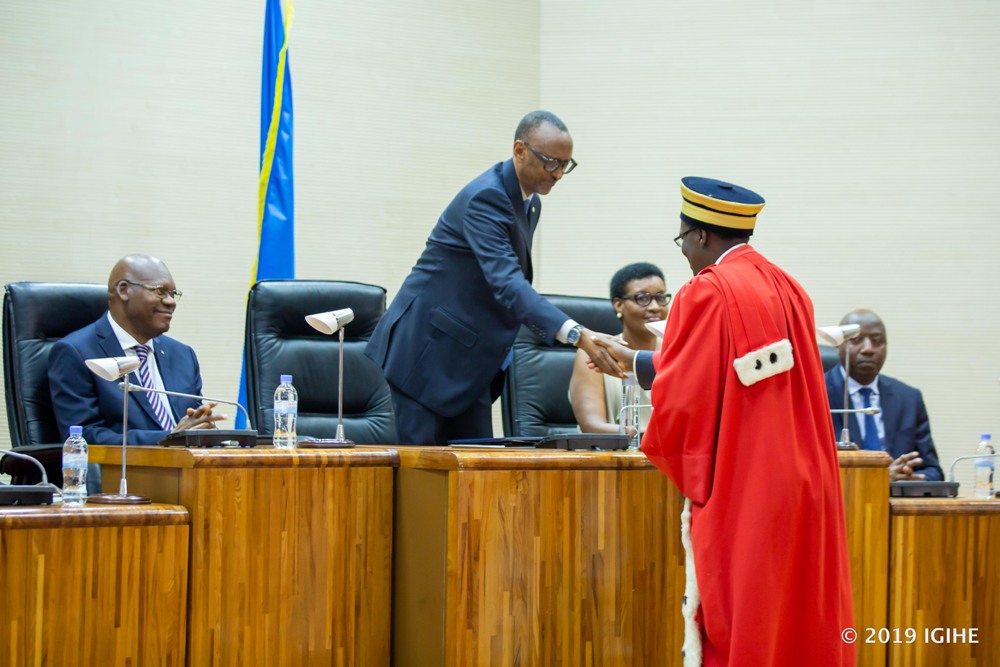
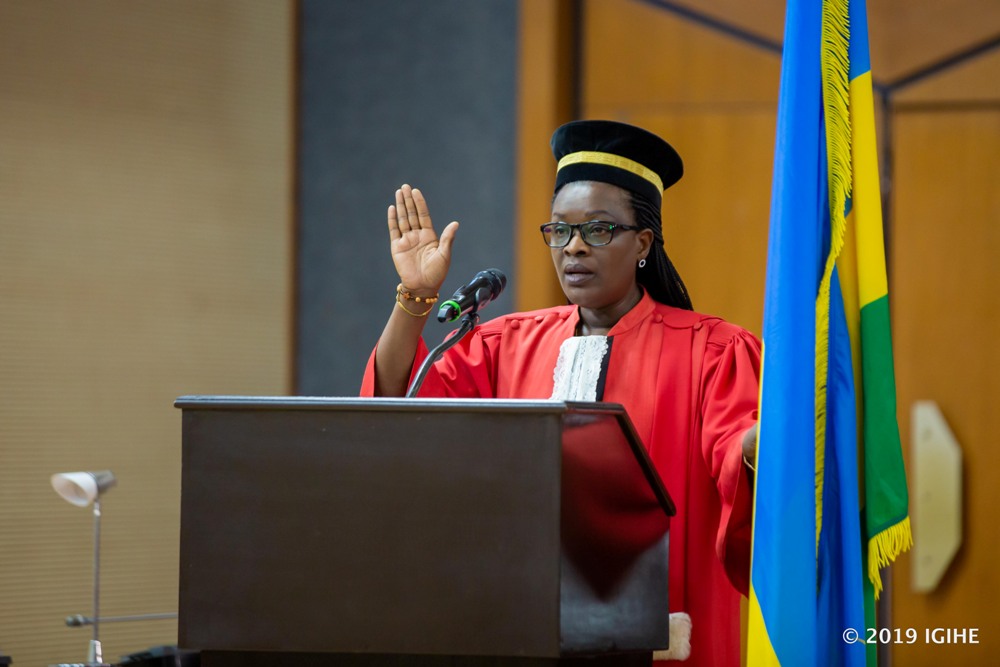
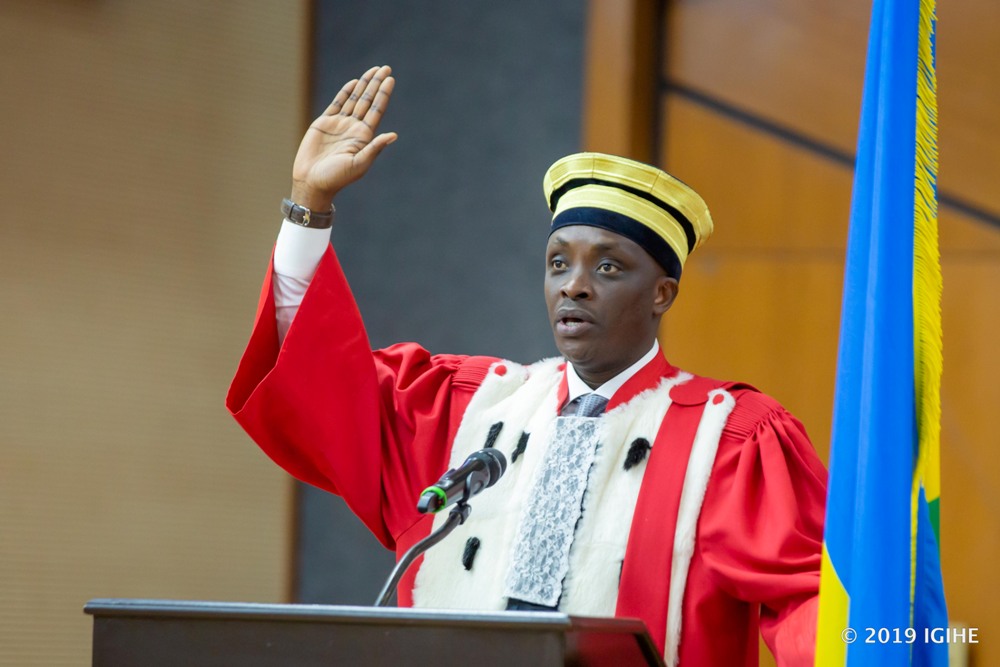
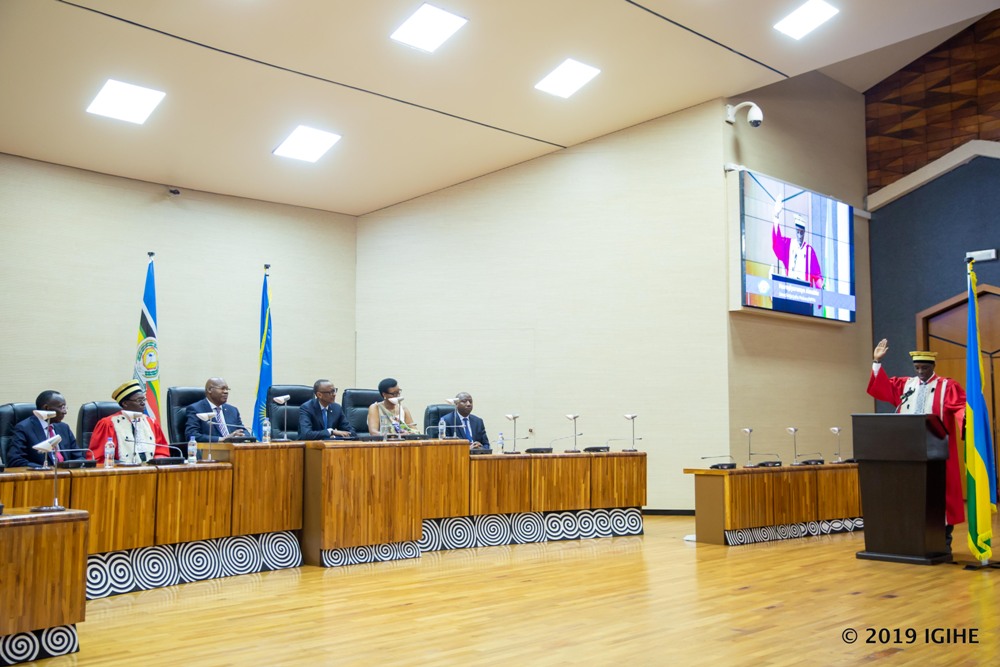
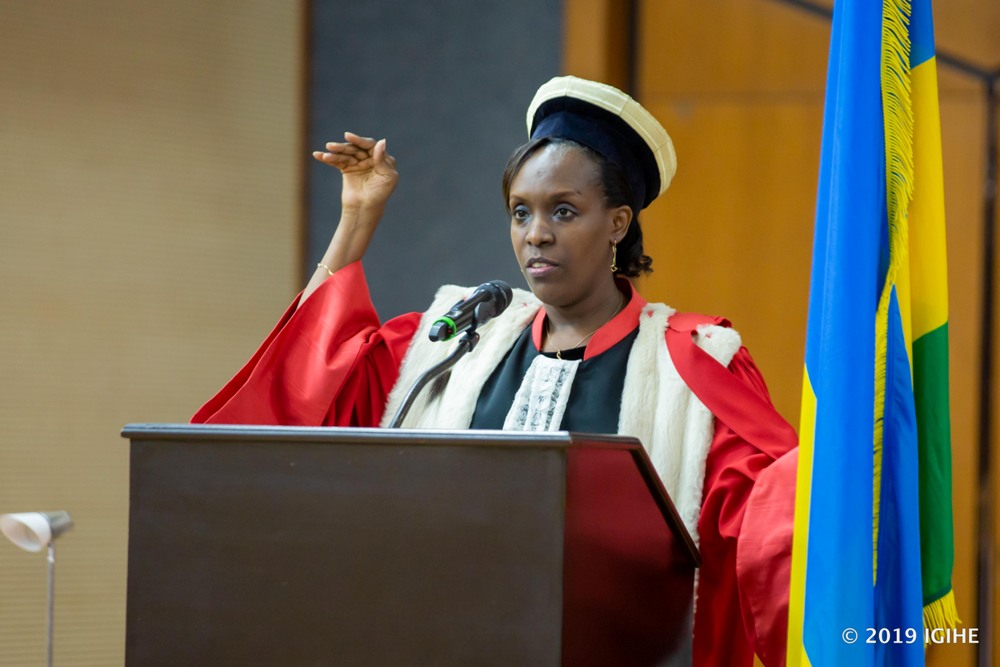
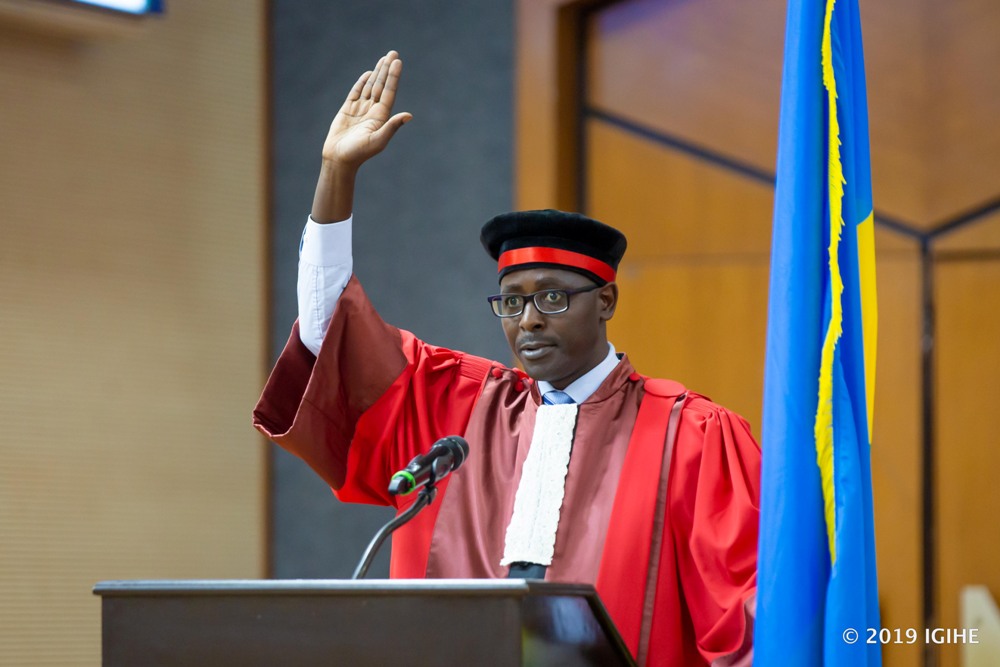
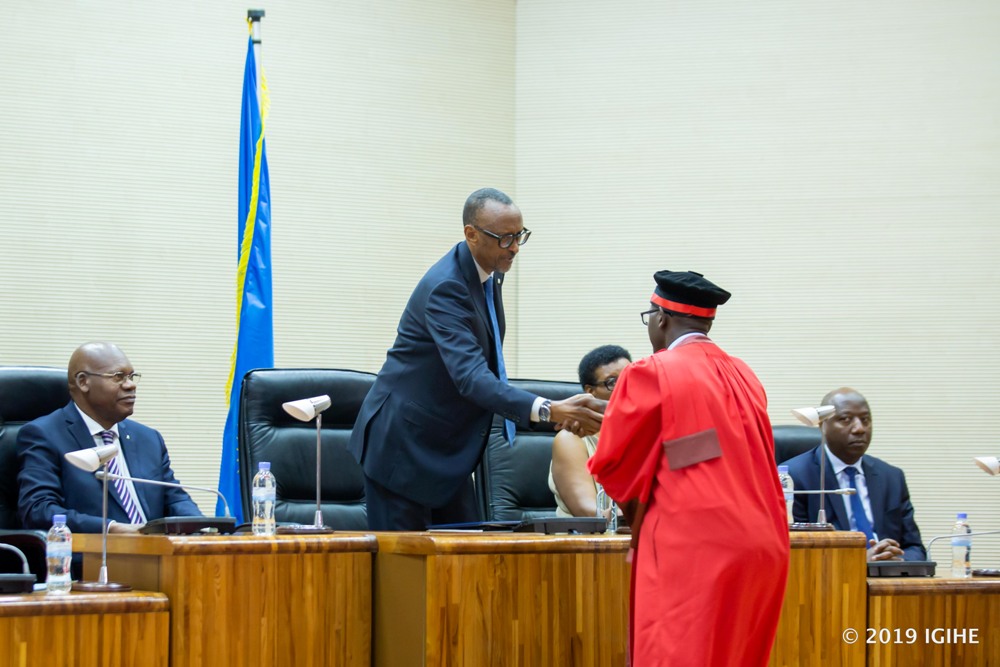
Among the officials who were sworn in are Dr. Ntezilyayo Faustin who was appointed Chief Justice, Mukamulisa M. Therese who was appointed Deputy Chief Justice, Havugiyaremye Aimable, the Prosecutor General, Habyarimana Angelique, Deputy Prosecutor General and Nkurunziza Valens, Vice President of the Commercial High Court.
President Kagame congratulated the former president and vice president of the Supreme Court, Prof. Sam Rugege and Zainabu Kayitesi over their achievements and the way they executed the functions they were assigned.
He told the newly appointed judges that they have a strong foundation to keep building on to promote the judicial system in Rwanda and that he trusts them to fulfill their responsibilities.
“Compliance with the laws of the country should be a virtue we observe in our daily lives and we should not do it because it is mandatory but because it is our responsibility.”
President Kagame says that having laws that protect citizens is good but that their implementation is more important.
He reminded them that justice is based on the trust citizens have for judges and that they must demonstrate transparency, critical thinking, and trustworthiness in all their duties.
He urged officials in the judicial system to abide by the judicial code of conduct so that impartial justice can be served to all Rwandans.
“Trust is built, fought for, and preserved. You have been entrusted with bigger responsibilities that many other Rwandan citizens and your behavior should always be exemplary. There have been rumors of corruption in the judicial system and we need to fight against it so that it won’t stain our reputation and the vision of our country.”
He emphasized that whoever gets involved in corruption cases should be prosecuted, tried in courts and severely penalized.