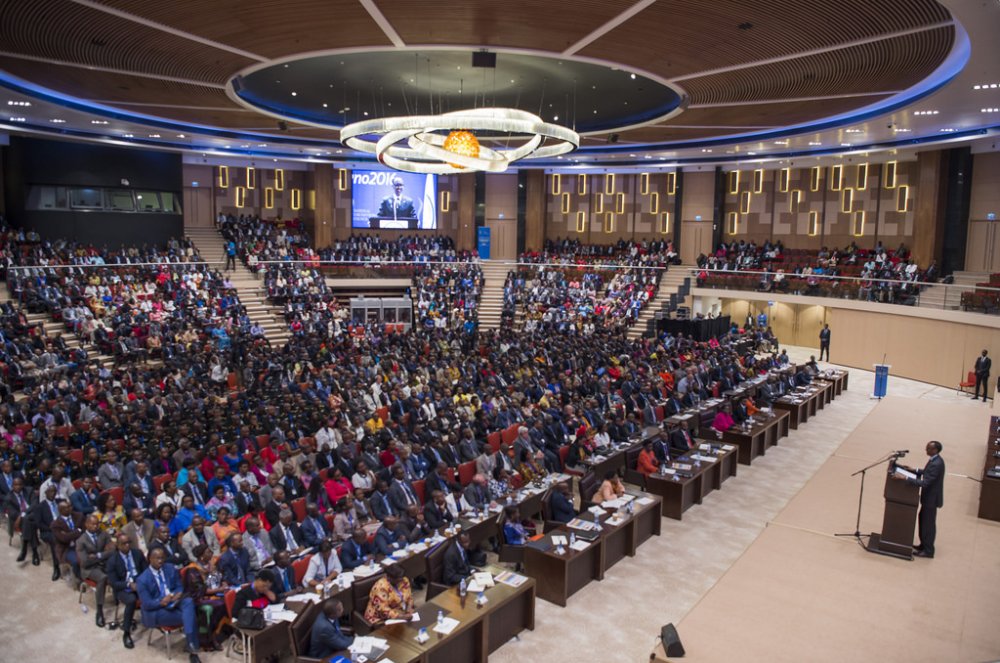
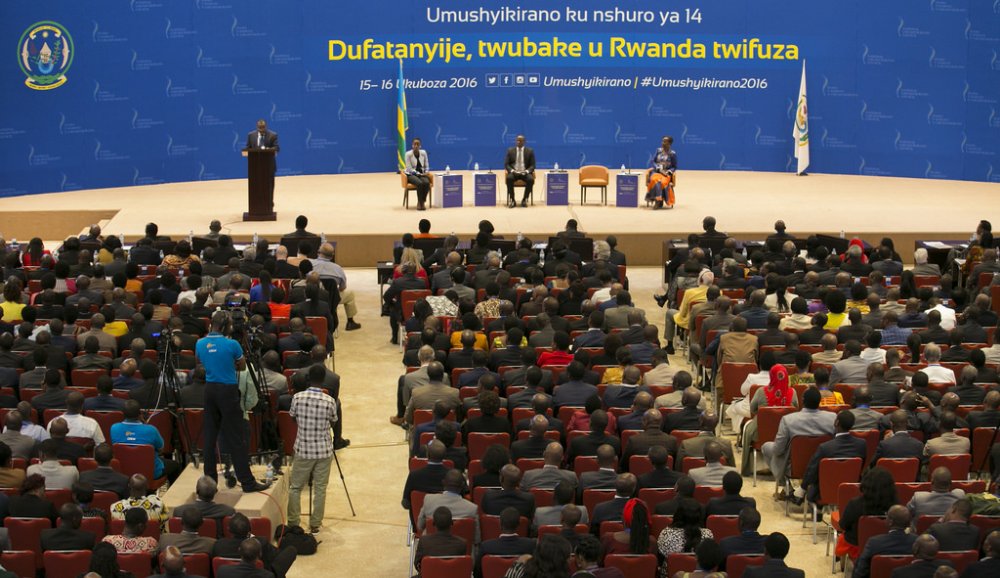
Umushyikirano is an annual event that gives Rwandans from different walks of life the opportunity to ask questions directly to their leaders. The event is chaired by the President and attended by members of the cabinet and parliament, representatives of the Rwandan Community abroad and, local government, media, the diplomatic community and others invited by the President.
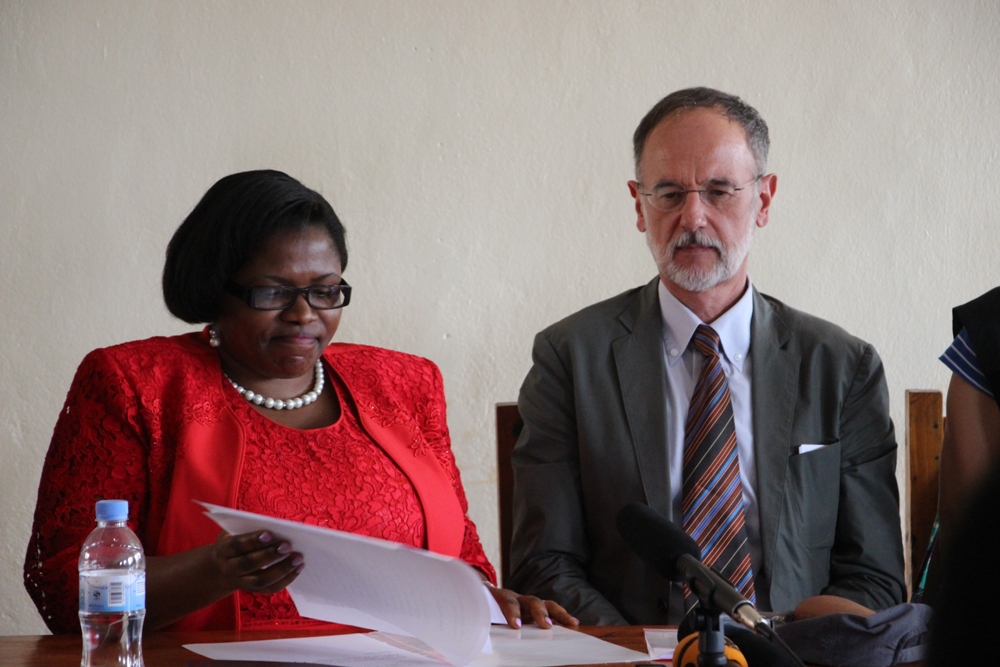
Speaking to the media, the Minister for Cabinet Affairs, Marie SolangeKayisire said that this year they will focus on National Transformation Programme, economic development and the role of youth in national development among other topics.
“As for the previous sessions, youth from different sides of the country will participate in the event using online technologies. They will be on different sites including Petit Stade in Kigali, Nyamasheke, Gatsibo, Musanze and Huye as organized one site per province,” she said.
In the event, they will also present the performance of last year’s Umushyikirano resolutions implementation which took place under the theme ‘Shaping together the Rwanda we want’.
Umushyikirano is governed by Article 140 of the constitution where it takes place once a year and debates issues relating to the state of the Nation and National Unity.
According the statement from the bank management, appointment takes immediate effect.
While announcing the new appointment, the chairman of BRD Board of Directors, Francis Mugisha said that the change is intended to cement the Bank’s achievements and accelerate the efforts to implement the Bank’s Strategic Plan 2016-2020.
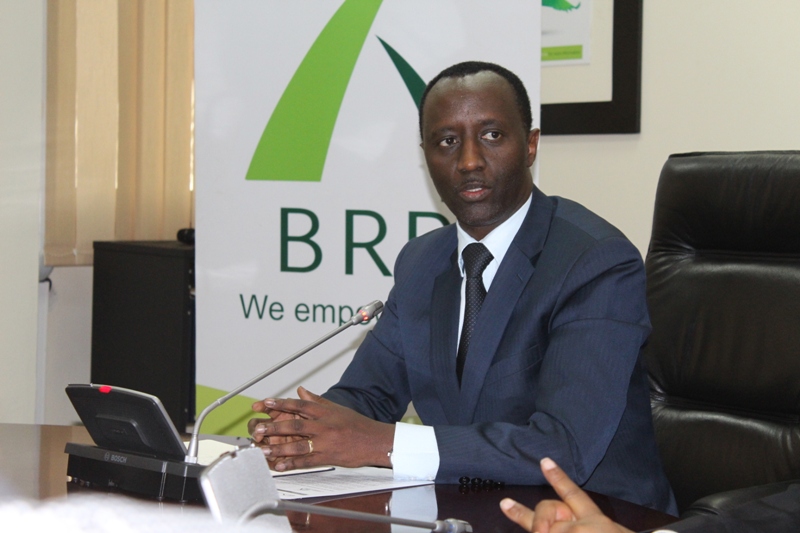
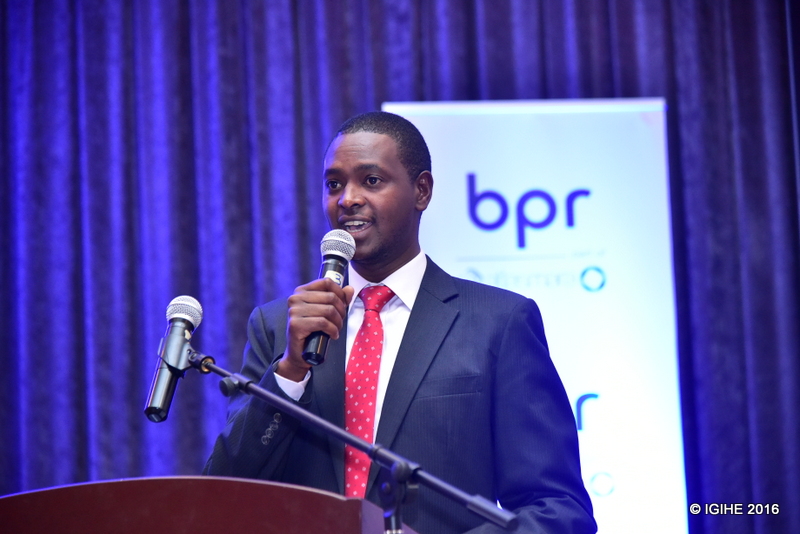
The incoming CEO, Rutabana joins BRD having most recently been the Country Head, Corporate and Investment Banking at BPR (part of Atlas Mara Group).
“On behalf of the entire BRD Board and Stakeholders, I am pleased to welcome the new CEO, Mr. Eric rutabana, and offer our unreserved support in his new assignment. Eric is an accomplished banker and understands the new mandate of BRD as a development financial institution. We are confident that he will successfully steer the bank to make even greater contribution to Rwanda’s socio-economic development,” said Mugisha.
On behalf of the Board, Mugisha extended his sincere appreciation to the out-going CEO, Kanyankore for his dedicated services, particularly leading the bank’s successful reorganization and restructuring to focus as a development finance institution.
“I would like to thank Kanyankore for his dedicated service leading the bank since July 2013. We are privileged to have worked with him, and commend his able leadership during the development and implementation of the Bank’s new strategy. We wish him success in his endeavors,” reads BRD statement.
Meanwhile, £1 milliom will go to the United Nations World Food Programme (WFP ) and £500,000 million will go to the United Nations High Commissioner for Refugees (UNHCR).
The contribution was availed yesterday by the Ambassdor of Belgium to Rwanda Benoît Ryelandt during his official visit to Gihembe refugee camp.
At the camp the envoy was received by the Minister of Disaster Management and Refugees Affairs (MIDIMAR), Jeanne d’Arc de Bonheur, the UN Refugee Agency’s Representative, Ahmed Baba Fall, and the World Food Programme Deputy Representative, Siddiqui Abdurrahim.
“On behalf of the Government of Rwanda, I commend the Kingdom of Belgium for the contribution to WFP and UNHCR given to maintain food assistance for Burundian and Congolese refugees as well as asylum seekers residing in camps in Rwanda,” said Minister Jeanne d’Arc de Bonheur.
“Furthermore, we expect that the initiative of clean cooking fuel pilot will help achieve both environmental protection providing efficient cooking techniques which will as well reduce indoor air pollution. The current climate change challenges call for innovative solutions alternative to firewood. We are always working for the people, for our planet and our prosperity. As the Government of Rwanda, we are committed to doing our best to make sure all contributions available reach the specific beneficiaries. Meeting the needs of the refugees and asylum seekers in terms of food and nutrition situation prevent malnutrition in the population, especially among women, young children and other vulnerable groups,” DeBonheur added.
This contribution is critical as food ration cuts have been implemented across all camps in Rwanda by 10% as of last month, and are expected to continue if further contributions are not received. Refugees in Rwanda’s camps continue to entirely depend on humanitarian assistance to meet their basic needs.
The Belgian contribution has allowed WFP to purchase mainly maize and beans for Burundian refugees as well as cash transfers to Congolese refugees to enable them to buy food from local markets. WFP also purchased fortified blended food, to support the most vulnerable people who are in need of a particular diet.
In addition to monthly food distributions and cash transfers, WFP also provides supplementary food for pregnant and breastfeeding women, children under the age of five, people receiving treatment for HIV/AIDS and tuberculosis.
“WFP is grateful to the Kingdom of Belgium for its continuous commitment to refugees in Rwanda, the region and around the globe,” said WFP Rwanda Country Director and Representative, Jean-Pierre de Margerie adding that support is important in meeting the food needs Burundians and Congolese who have fled their homes to Rwanda.
Belgium’s 500,000 EUR contribution to UNHCR will enable 19,500 Congolese refugees in Kigeme camp, located in Southern Province, and the host community members, to have access to clean cooking through cash to purchase sustainably produced pellets, which includes the lease of clean and highly efficient cook stoves.
As UNHCR and WFP are both providing cash assistance in Kigeme camp, in lieu of food and in-kind support traditionally provided by UNHCR such as blankets, soap among others, refugees will be able to opt to buy the clean fuel and stove package with their cash allowances.
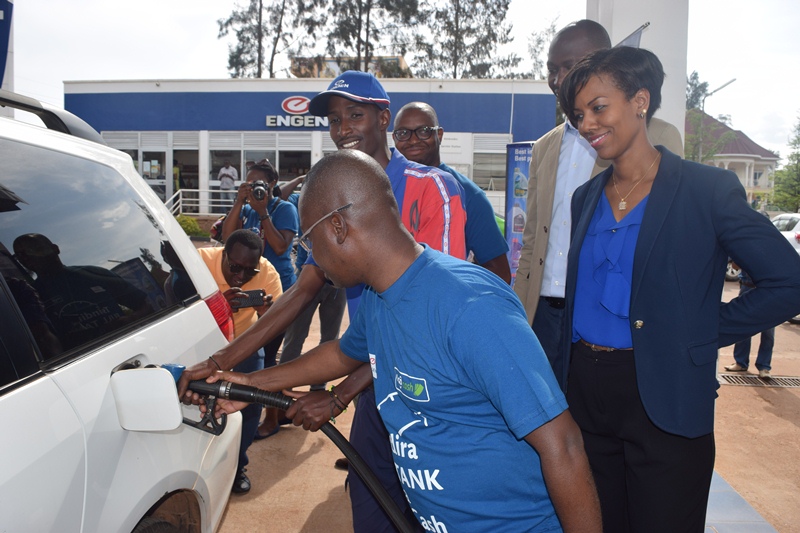
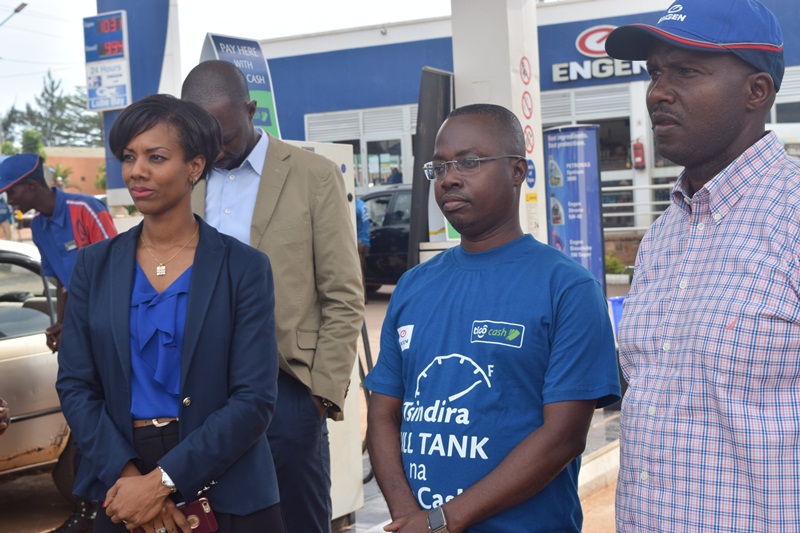
This was publicized during the official launch of a cashless payment platform that allows
customers to purchase fuel at ENGEN outlets in Kigali using Tigo Cash.
Speaking at the launch at the fuel station’s Kimironko branch, the Managing Director, ENGEN Rwanda, Sarah Doukoure, said “The promotion heralds the official launch of Tigo Cash and Engen partnership, making it possible for motorists to pay for services at Engen fuel stations with Tigo Cash”.
Addressing ENGEN customers and media, Tigo Rwanda Chief Executive Officer, Philip Amoateng said, “There is no better time to offer our Tigo Cash customers this offer than this festive season. Today is another milestone in our quest to encourage a cashless Rwanda as well as providing convenience for our citizens. We have been piloting this platform at Engen stations for some time now and we are very proud and happy with the results so far, enabling us to officially announce it today”.
{{How to pay for fuel using Tigo Cash}}
When customers visit any ENGEN outlet share their phone number and the amount they want to pay with the pump attendant. Using a special POS, the pump attendant shall initiate a payment transaction to the customer.
The customer shall then approve the transaction from their phone using their Tigo Cash PIN. The POS will automatically print a receipt of the transaction
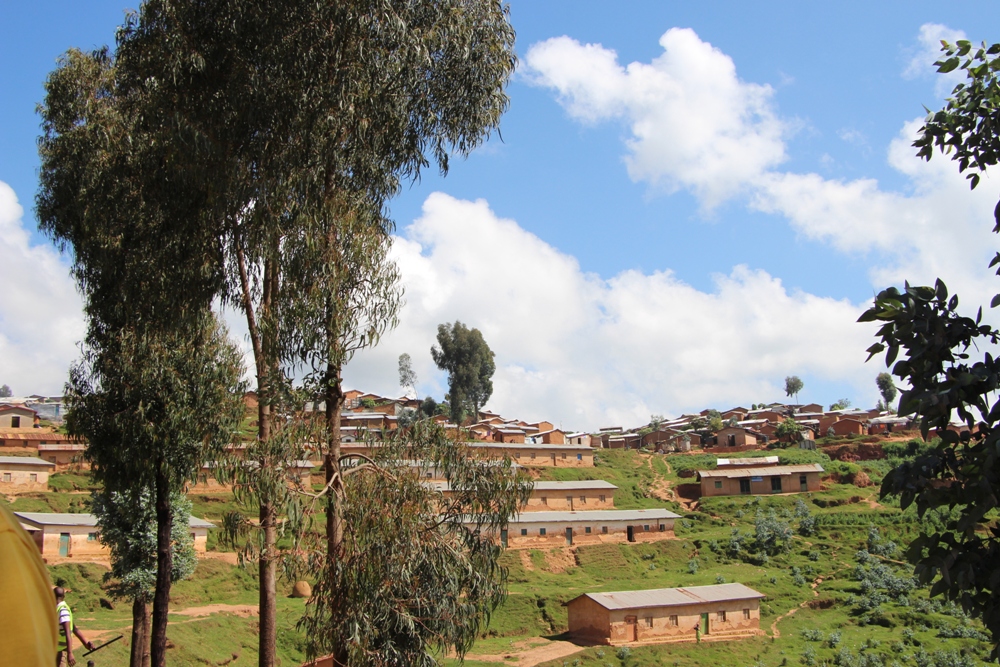
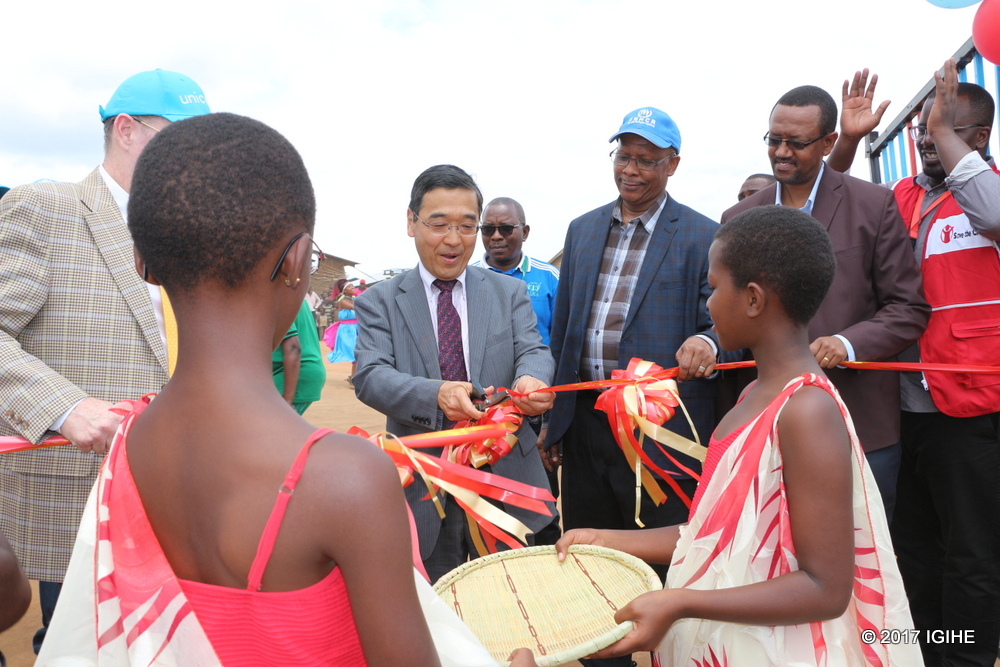
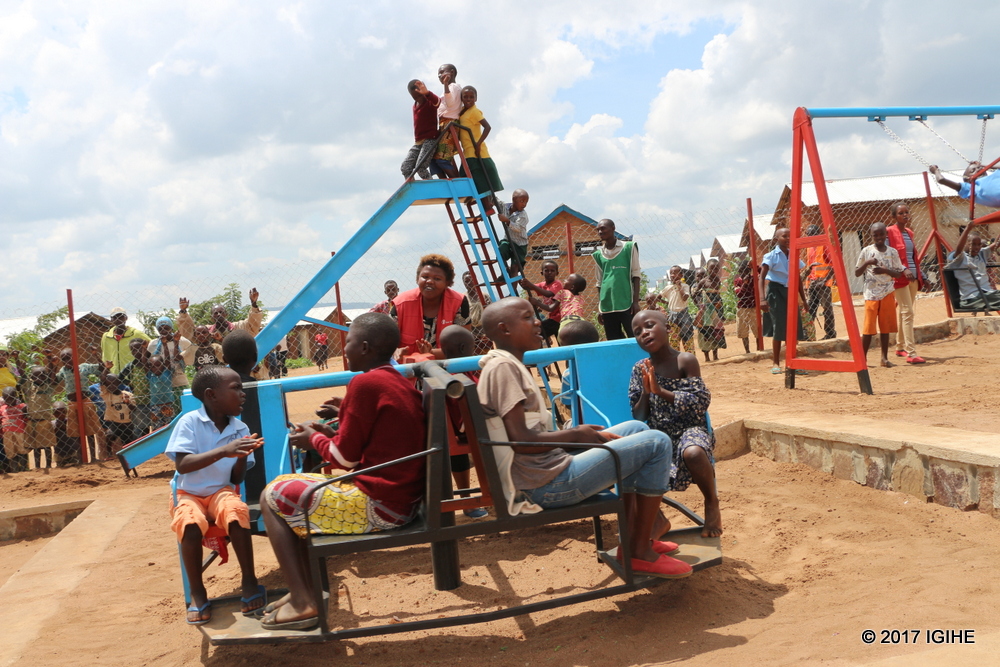
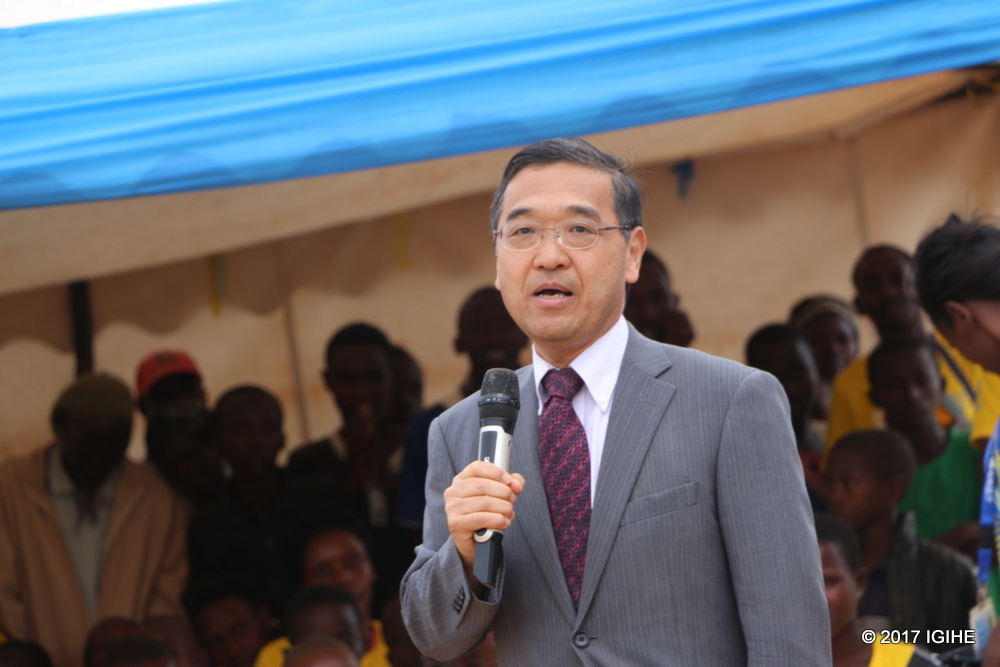
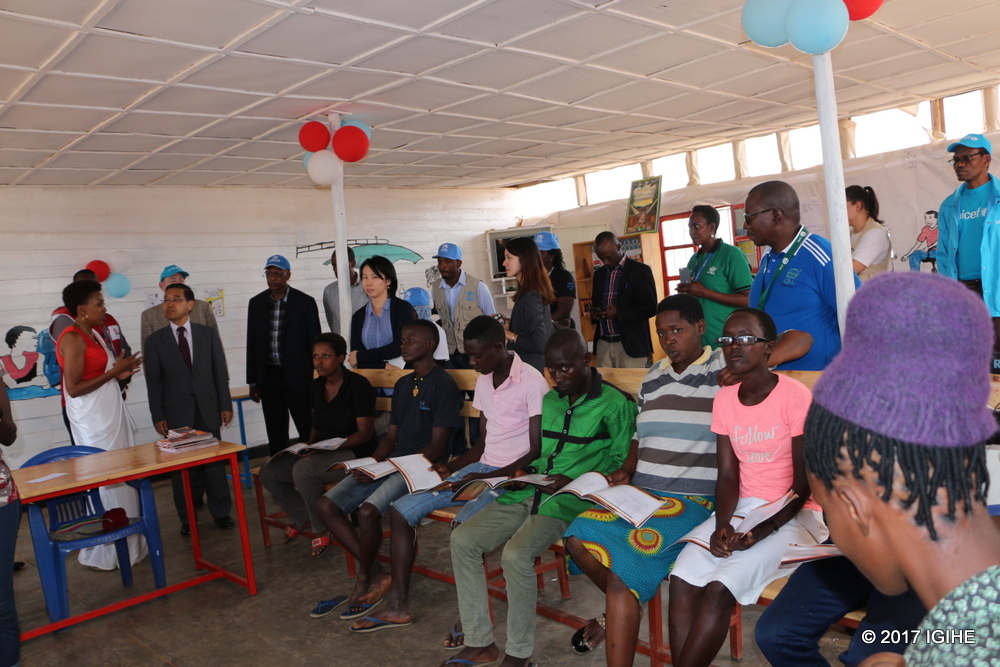
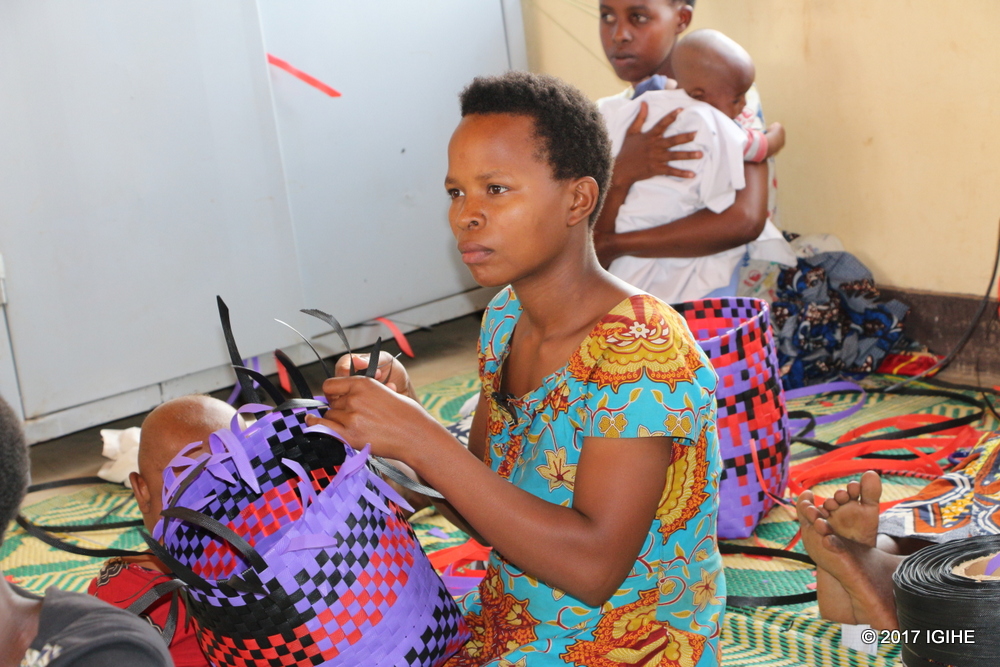
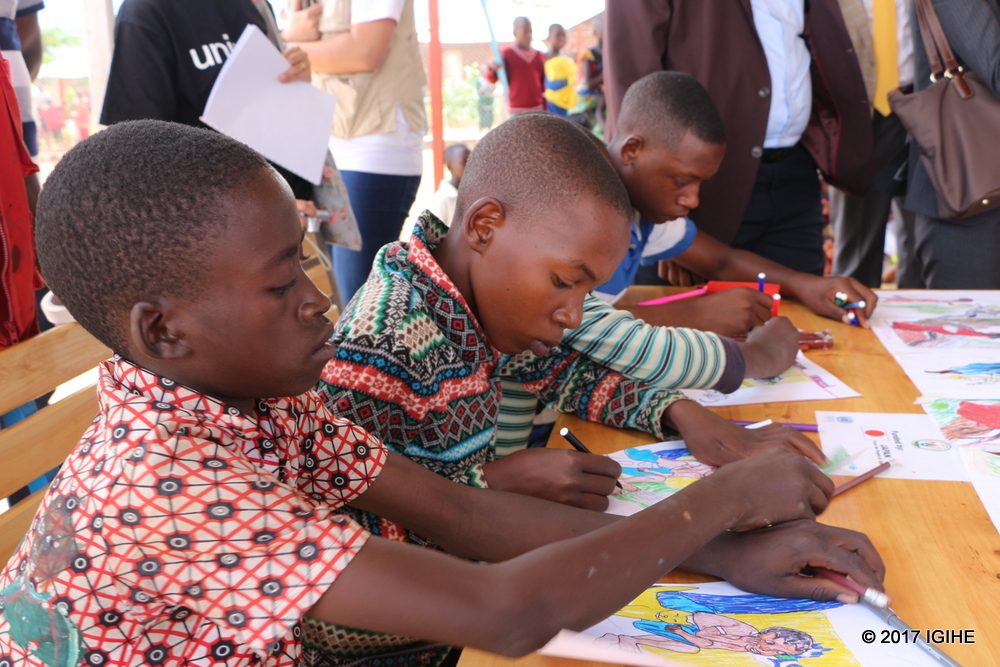
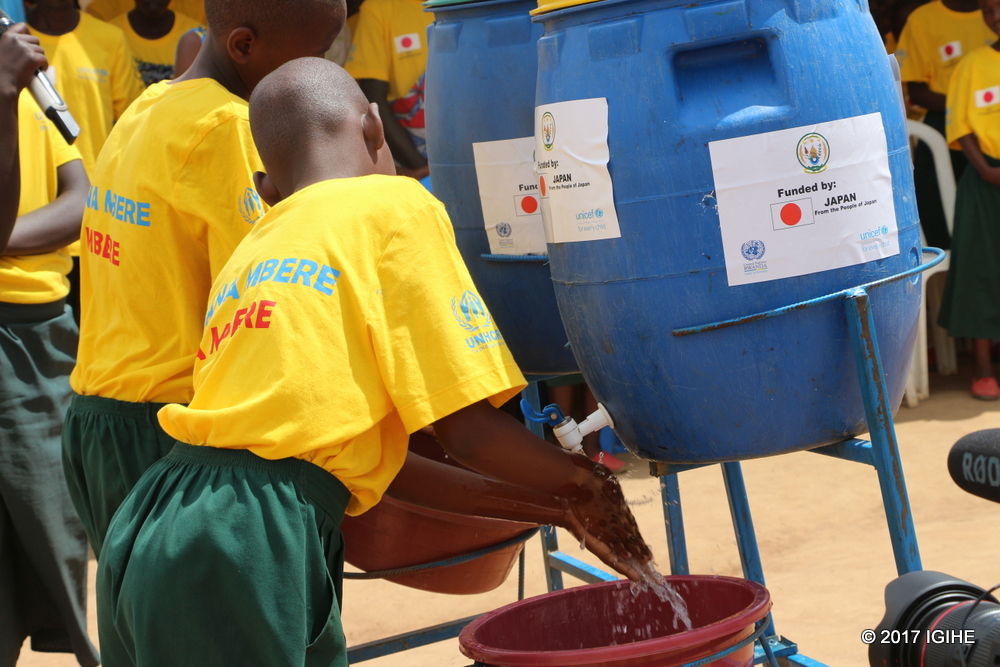
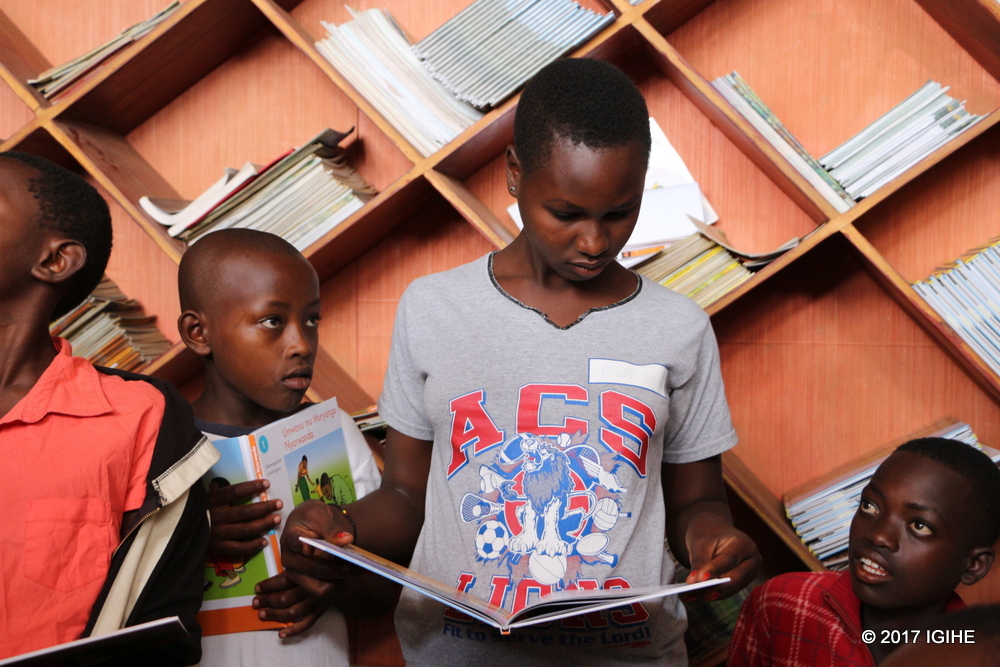
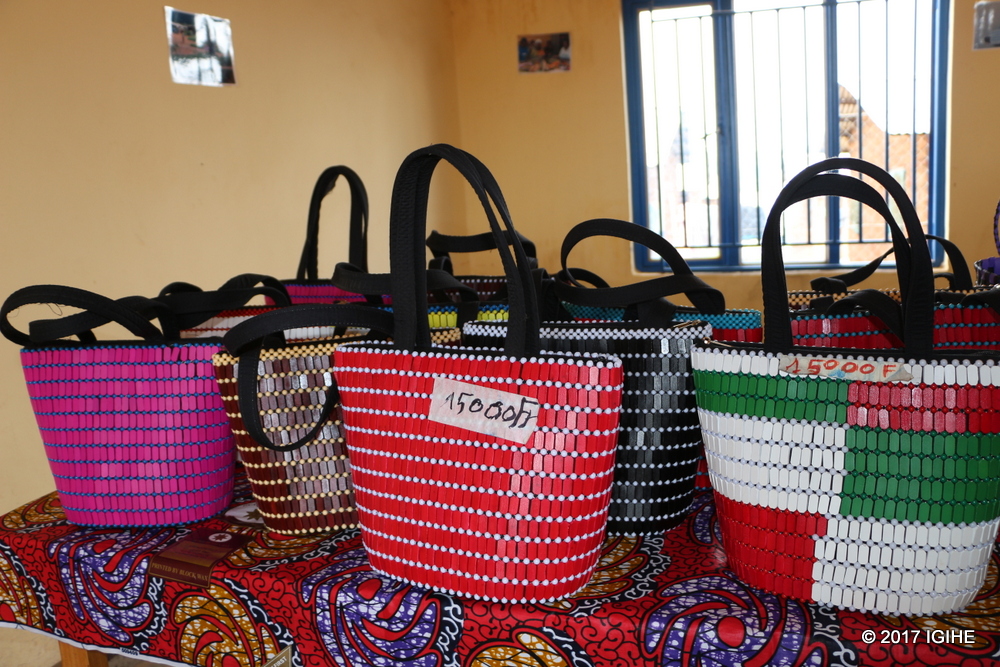
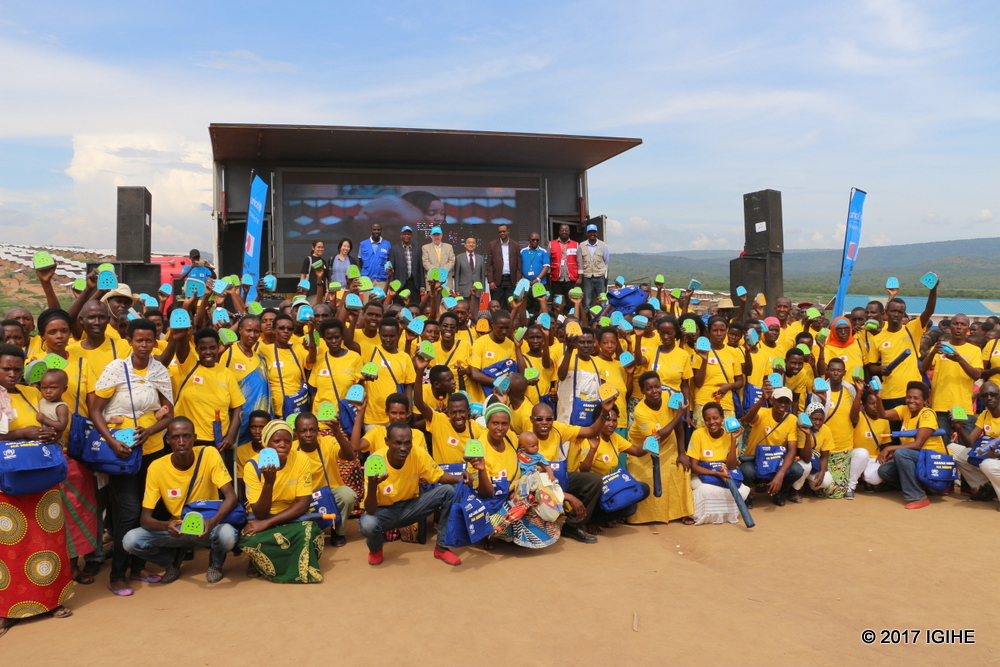
The facilities include a computer room constructed at Paysanat School which hosts students from the community around the camp and refugee students. Other facilities inside the camp include children toys, library and a workshop for different practical skills and sanitation programmes in the camp.
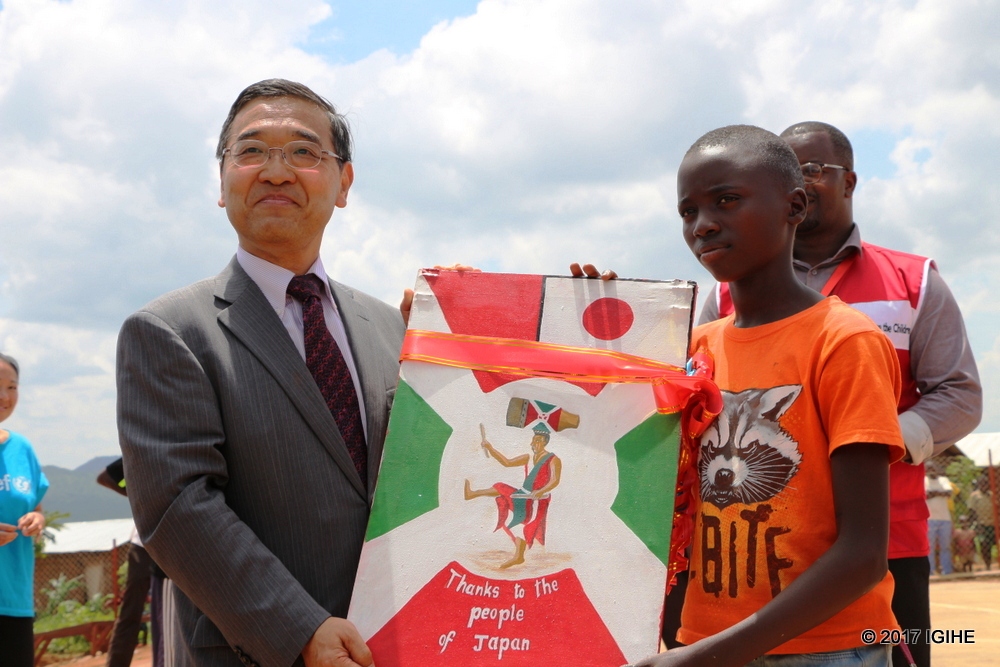
Worth $640,000 (about Rwf500,000,000), the facilities were funded by the Japanese Government.
The Ambassador of Japan in Rwanda, Takayuki Miyashita said that they were pleased with implementing their idea which will promote welfare of refugees.
“We found it necessary to help them so that life could run smoothly. We support people who are in bad conditions. We are happy that our project was well implemented,” Miyashita said.
He said that they were committed to supporting refugees overcome tough life challenges they are enduring in the camp.
“This camp is big; people are congested and live in a flat surface which is why they need sanitation. Hygiene is very crucial because when a neighbor gets sick, it can directly affect others, that is why we supported existing sanitation programmes. Children grow every day, we need to support them so that they will have bright future,” he added.
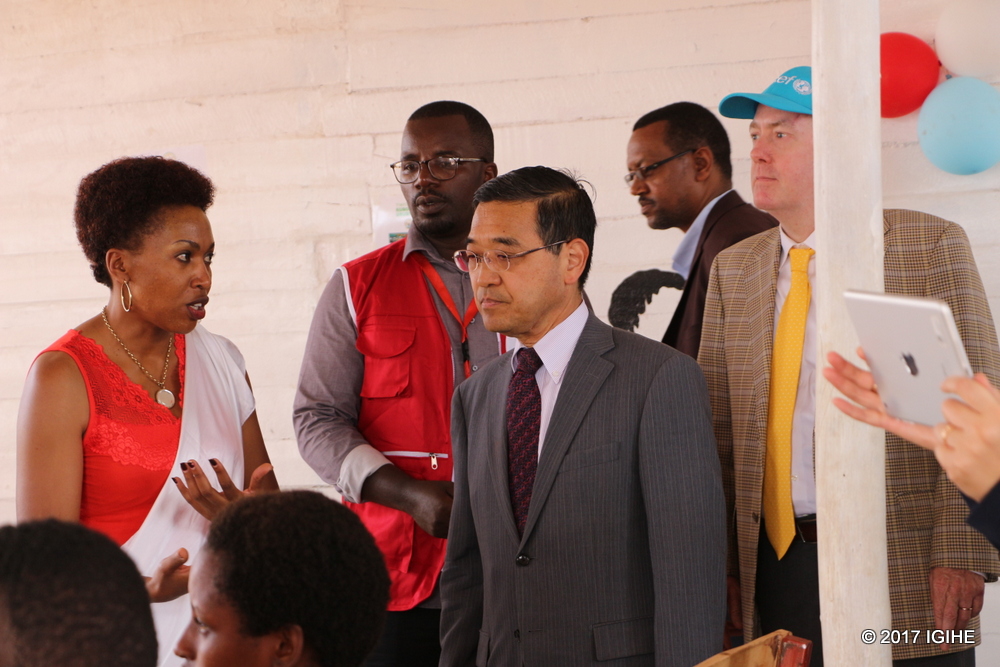
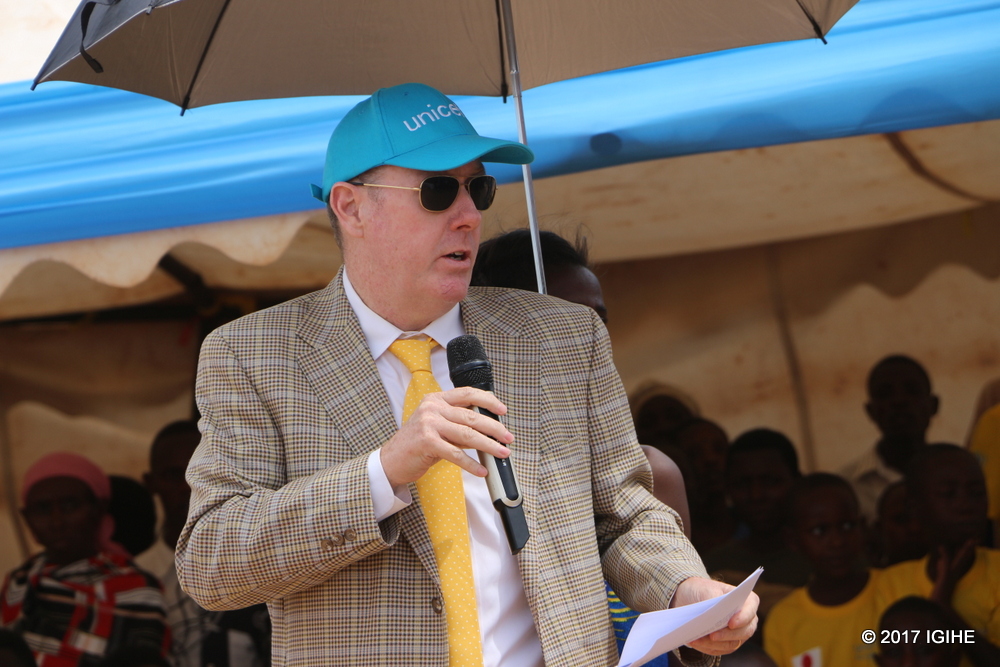
UNICEF Country Director, Ted Maly said that they found it necessary to help refugee children live the same life as others from the communities around. He said that they want to shape children’s future so that they will be self-reliant.
“It’s a pleasure to see children study by using computers; we all know the importance of computers in development. When children are out of classroom too, they need good compound for leisure and entertainment. We much value refugee children’s welfare,” he added.
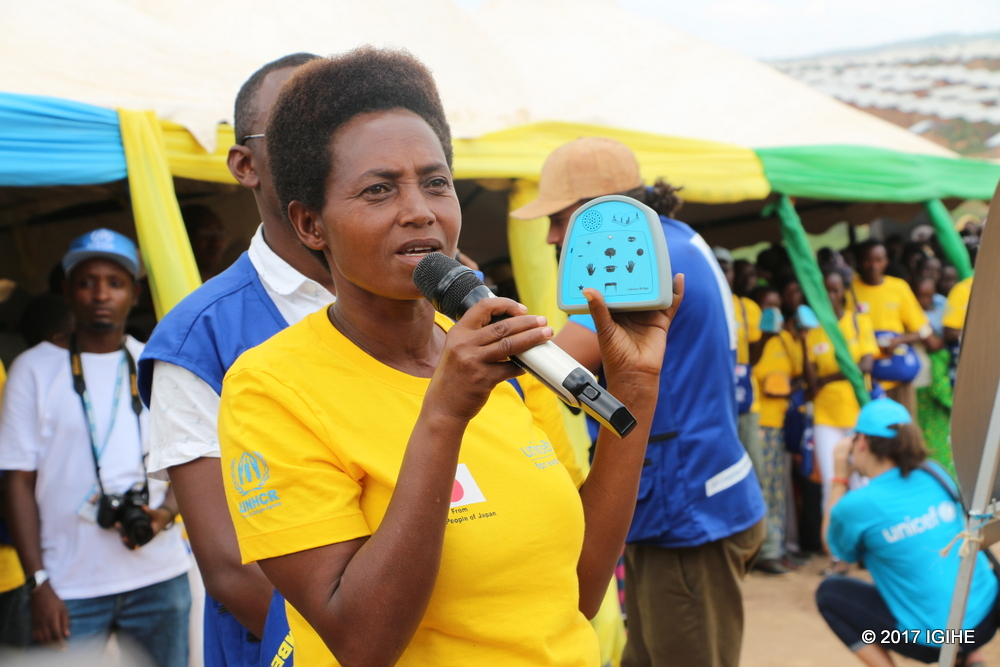
The United Nations High Commissioner for Refugees (UNHCR) Representative to Rwanda, Ahmed Baba Fall hailed the support saying that it will help the camp continue to be the best in Africa.
“Mahama is among best African Refugee Camps. When you consider its position and standard, it is the modern camp compared to others in Africa,” Baba said.
However, Baba said that sustainable solution would be to solve security problems in Burundi to enable refugees be repatriated.
Working etiquette says that a staff deserves to be given a pay raise at least, every other year in appreciation of their input and service over the months. Sadly, a lot of companies do not do this for their staff, but hold on to this benefit. It’s a very glaring sign of underpayment.
{{Increased workload without corresponding raise}}
When you get far more than you used to do added to your list of duties as a company staff without a corresponding increment in pay, it’s a very glaring sign you’re being underpaid. It’s of course either the company is short on cash or they’re just taking advantage of you.
{{Your friends in the same line of work enjoy increments, you don’t}}
When you have a chat with your friends in other firms, you discover, sadly, that although you are in the same line of work and possibly with the same educational qualifications & years of experience; they earn far better than you do from your basic salary—a clear indication that you’re being underpaid and apparently being taken advantage of by your boss.
{{Your services are in great demand, but nothing to show for it}}
You notice your boss asking for your help at every little instance, yet, he never adds even a dime to your pay to show appreciation for your services. Instead, all you get is ‘thank you’, and perhaps some accolades. I think that’s not enough.
{{Your boss/company makes a lot of money, but staff still suffer}}
Although it is a more arduous task of determining the generated revenue/income of a private firm compared to a public one, subsequent office discussions and random sightings of the company’s account records and budget should give you a pretty good idea. One condition for giving salary raises is a substantial growth in the company’s revenue. If you’re not getting any, something isn’t right.
{{Promotion without a raise}}
It’s improper for one to be elevated from one position to another without a corresponding increase in their pay. If you’ve been uplifted from a previous position to a much higher one, and your pay doesn’t change, you should probably consider your options.
{{You never get any leave allowances}}
This is another sign of underpayment. According to work etiquette, a staff is entitled to an annual leave, and some pay to go along with it. If you’ve been working for an organization, and you’ve never gotten one, you may be getting underpaid.
Finally, I’ll add that sometimes companies don’t add money to staff salaries because they don’t have enough in their revenue or something has gone wrong with their finances. Other times, it’s just plain wickedness on their part. Either ways, if you have a gut feeling deep inside you are not getting as much as you deserve from your company, you may not be doing any wrong to follow your instincts.
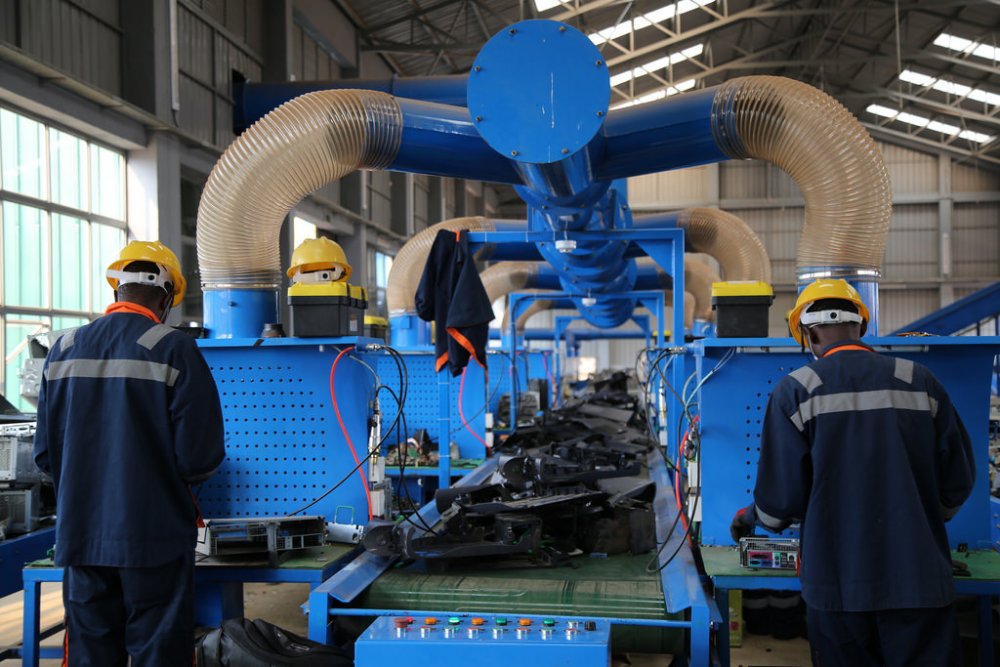
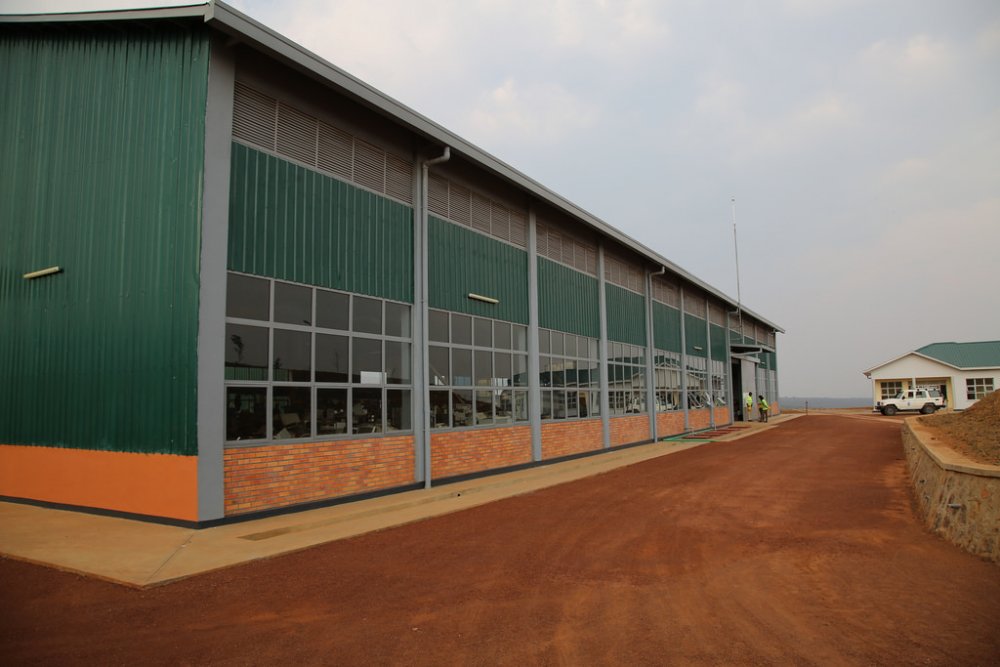
In June 2014, the Rwanda Green Fund invested $1.5 million (about Rwf1.26 billion) in a project that sought to recycle and dismantle e-waste.
The facility will help to recycle e-waste materials to avoid adverse effects to human health and environment.
Among the said materials are fridges, washing machines, cooking machines, heaters and telephones among other non-usable electronic materials that people continue to store in their houses.
Some of these materials will be recycled while others will be dismantled so they cannot harm the environment.
In the six months of operation, the facility has recycled 200 desktops.
Dr. Biruta said that e-waste is a problem which requires concerted efforts to tackle.
“We know that e-waste is a big problem in different countries around the world, harming the environment and affecting human health,” he said.
The meeting also approved to increase Rwf3.48 billion making the total fixed assets Rwf10.5 billion.
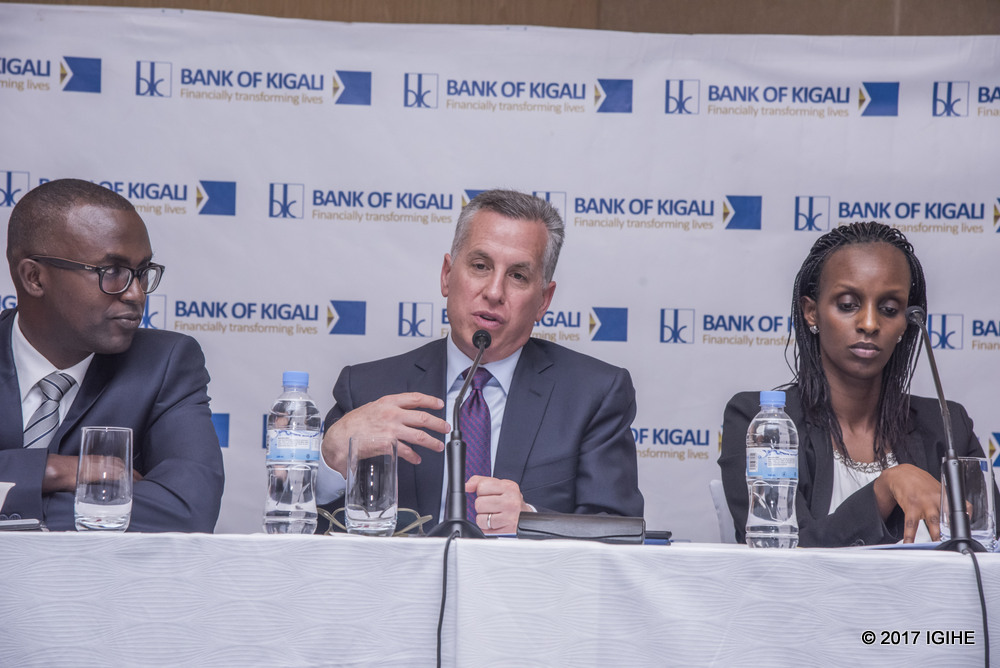
The Chairman of the Board, Marc Holtzman said that BK CEO, Dr. Diane Karusisi will be heading the Group and the bank will appoint the board members.
The move follows different institutions that BK launched including TecHouse that provides technology services, BK General Insurance and BK Securities.
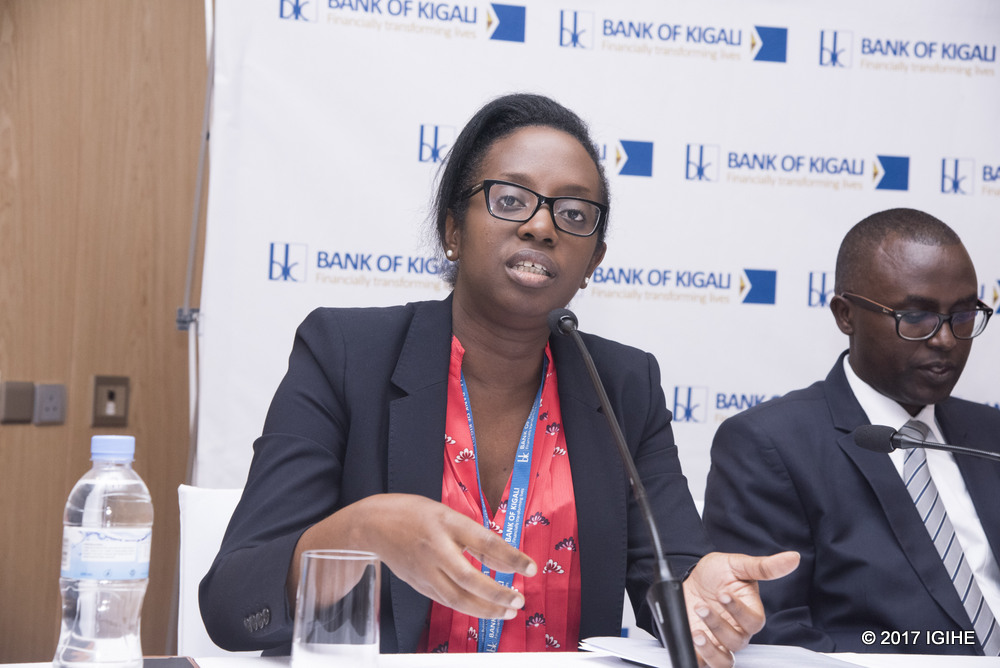
Karusisi said that BK started in 1966 by deposit and loan provision services adding that the more it grows the more it ventures into other financial services.
“We made it clear that Bank of Kigali is an institution combining different companies with financial services including banking and insurance services among others,” she said.
In 2015, Kountable Ltd, an American company supporting young entrepreneurs to implement tender contracts, opened shop in Rwanda.
Founded by Christopher Hale from Silcon Valley, San Francisco, the company supports entrepreneurs’ projects with loans without collaterals.
When successful bidders lack enough funds to implement the projects or make supplies, Kountable Ltd offers them loans which are then serviced when they are paid at a monthly interest rate of 3%, compared to 17.5% charged by commercial banks.
In 2016, Kountable Ltd financed more than 30 projects worth $6 million to suppliers of hospital materials , ICT equipment, construction and education materials among others.
Speaking to IGIHE, the Kountable Ltd country director, Leandre Cyusa Mucyowiraba said that entrepreneurs have continued to trust the company, thanks to the good services they provide.
He says that once suppliers sign contracts in the range of $30,000, Kountable supports them with ordering materials to execute high-profile deals, allowing them to expand more quickly, hire and train more staff, and develop capacity and learn, significantly multiplying their contribution to Rwanda’s economic and social growth goals. By January 2017, Kountable had partnered with 41 entrepreneurs to execute 57 projects worth USD7 million. Currently, more projects worth USD3 million are under implementation process.
Among the 30 projects that Kountable supported in 2016, hospital supplies accounted for 43.76%, ICT 30.31%, construction 16.27% and education facilities 4.96%.
Cyusa says that material suppliers dominate their clientele due to the fact that banks do not easily provide them with loans as kountable does.
So far, Kountable Ltd has partnered with different banks including KCB, Ecobank and Equity Bank to support entrepreneurs who have no collaterals to access loans.
In ICT facilities, the company links Rwandan entrepreneurs with international IT companies like Apple, HP, Cisco, Dell and Panasonic, among others, to enable them buy quality and low-cost equipment related with their tender requirements.
Cyusa says that they provide guaranty on ordered materials.
He said that they have an app available on play store and Apple store and on their web www.kountable.com .which helps suppliers monitor and track movement of merchandise during the shipment.
On receiving applications for financing, Kountable takes 14 days doing evaluation and assessing the viability of the project.
According to the statement released by the Office of the Prime Minister, President Kagame also appointed Olivier Kayumba, the Permanent Secretary in the Ministry of Disaster Management and Refugee Affairs (MIDIMAR) replacing Antoine Ruvebana.
Also appointed is Francis Musoni, the new Secretary General for Rwanda Demobilisation and Reintegration Commission (RDRC), replacing Henriette Umulisa.
Mutimura who had been the African Centers of Excellence Project coordinator replaces Dr. Papias Musafiri Malimba who had been on the post since June 2015.
New MITEC Minister Rurangirwa had been the Integrated Financial Management Information and System (IFMIS) Project Coordinator at the Ministry of Finance and Economic Planning. He replaces Jean Philbert Nsengimana who had been the Minister since 2011.
The two replaced ministers have been dropped from the cabinet.