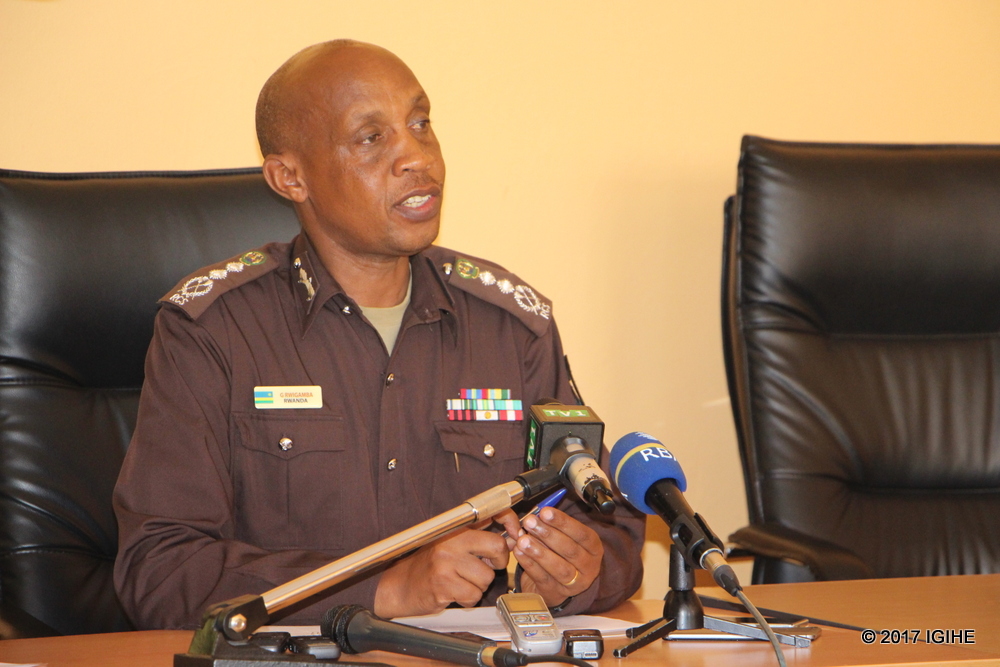
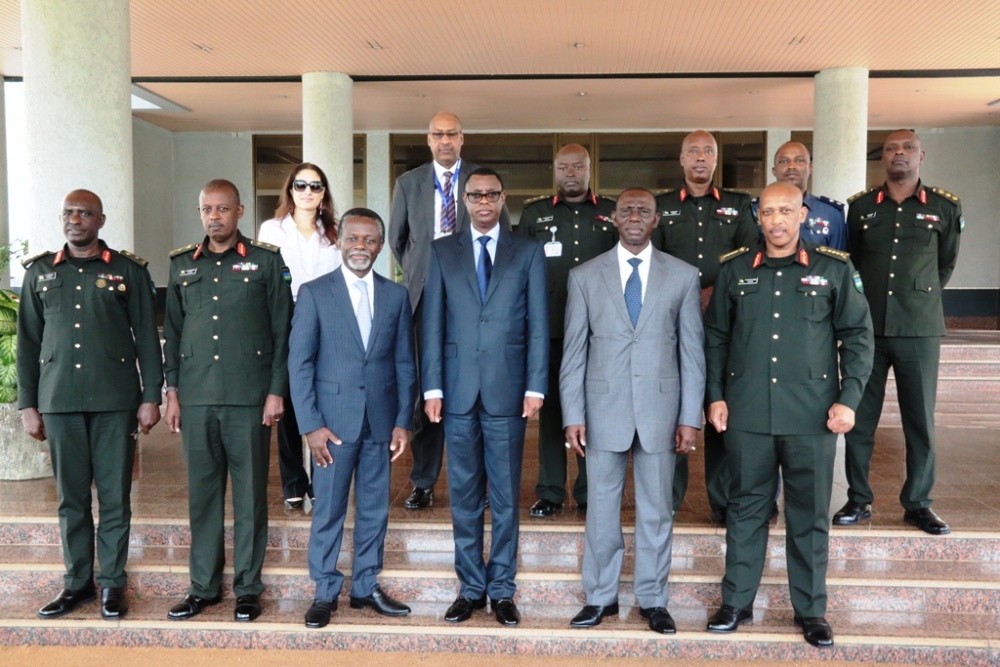
RCS officials were speaking yesterday to the media while briefing them about the institution’s achievements.
The Chief Operations Officer at RCS, CIP Alex Murenzi said that some of escapees were captured immediately after breaking prisons and others were captured from outside the country.
“In partnership with different institutions we try our best to recapture them. We have an example of one genocide convict who was recaptured from outside the country under partnership with Interpol,” he explained.
The Commissioner General for RCS, CGP George Rwigamba said that among these who are yet to be recaptured include recent Nyanza Prisonescapees, former journalist Cassien Ntamuhanga, Sibomana Kirege and Theogene Batambirije.
Though RCS claims shortage of officers, officials said that it is not the cause behind escaping.
“We get challenged when it comes to going in courts and hospital among other services, when six inmates are escorted by one officer to the hospital while they are seeking different services; it is difficult to manage their movements. That is the where they escape from but we also pay much attention,” he said.
According to RCS Rwandan prisons accommodate 64,757 inmates with 1694 RCS officers.
The magazine considers people whose work or activity has had some sort of transformative effect outside their main calling so that their effect results in a change of perception or provides inspiration to others.
The annual report sees different categories including politics and public service; business and finance; civil society and activism; education; science, technology and innovation; media; arts and culture; and sport – profiles both continental and Diasporan Africans nominated by their peers and industry insiders.
Kagame is among three Heads of State made it to the list. Others are Ghana’s Nana Akufo-Addoand President Alpha Conde of Guinea.
Nigeria’s Vice President YemiOsinbajo also made the list in the Politics and Public Service category for how he served as a safe pair of hands during President Buhari’s enforced absence for most part of 2017.
For the first time since the magazine began publishing this acclaimed end-of-year list five years ago, the 2017 list features 42 women out of the hundred, the highest number of female entries so far.
With 21 entries, Nigeria tops the nominations, closely followed by South Africa which scored 14 names. In total the list includes entries from 31 countries including 12 Francophone Africa.
Popular new entries include the Triplets Ghetto Kids dance troop from Uganda and Ghanaian born new Editor of British Vogue Edward Kobina Enninful, as well as new heavyweight boxing sensation Nigerian-British Anthony Joshua.
Leading business magnates AlikoDangote (Nigeria), Mohammed Dewji (Tanzania) make a return on the Business and Finance category, which also sees two names that have been media fodder this year, Angola’s Isabel dos Santos and Jean-Claude Bastos de Morais. This year also has more French and Arab speaking entries in this category.
However, perhaps as a sign of shifting interests and changing times in Africa, the Arts and Culture showbiz section has the highest number of entries and most of the new names. Making a return in this category is Chimamanda Ngozie Adichie, who is joined by fresh faces such as Adwoa Aboah and the refreshing Hijab wearing Somali top model Halima Aden.
Surfacing in the Civic society and Activism category is a new breed of activists including those fighting for the routinely ignored yet important rights of people with disabilities in Africa. Nigeria’s Eros Ikponwosa – herself affected by albinism makes the list for her work with the UN Human Rights Commission in highlight the plight of people with albinism. With the raw and heartrending recent exposé of Libya’s Africans slave-trade, the entry of Mauritania’s anti-slavery hero Biram Dah Abeid in this category, is poignant.
“Our criteria for “influential” this year was a fairly simple one – it is applied to people whose work or activity has had some sort of transformative effect outside their main calling. This effect results in a change of perception or provides inspiration to others. Many in our selection have shattered the proverbial glass-ceilings or disability stigma and do so with great bravery, determination and personal sacrifice. Others yield economic power that impacts world markets,” explains AnverVersi, the magazine’s Editor.
“African talent in the arts, culture, sports and technology has also has a huge impact on changing the world’s perception towards Africa and its people,” he adds.
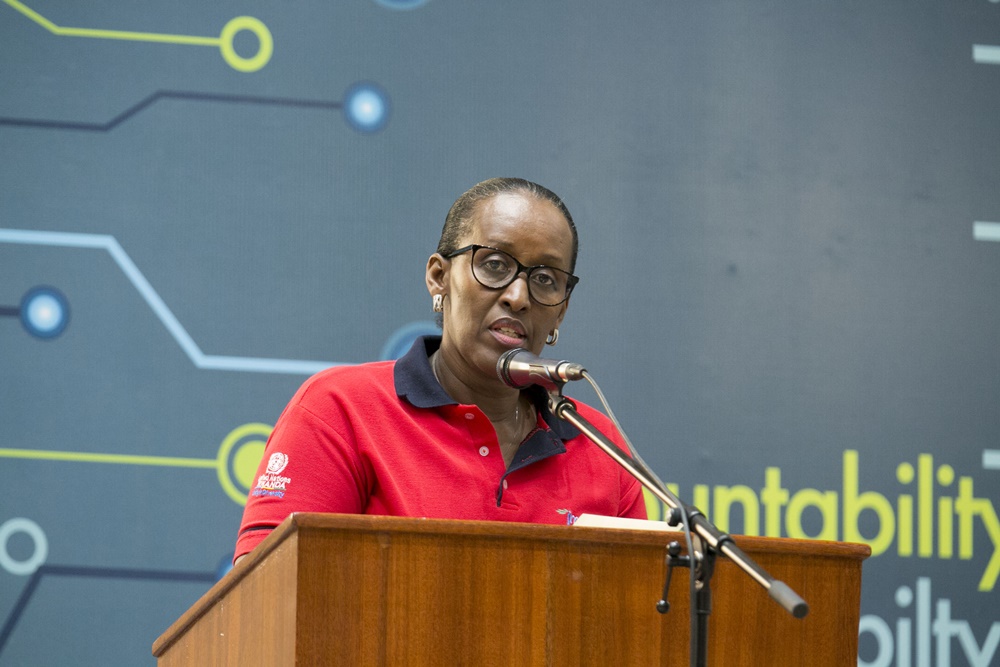
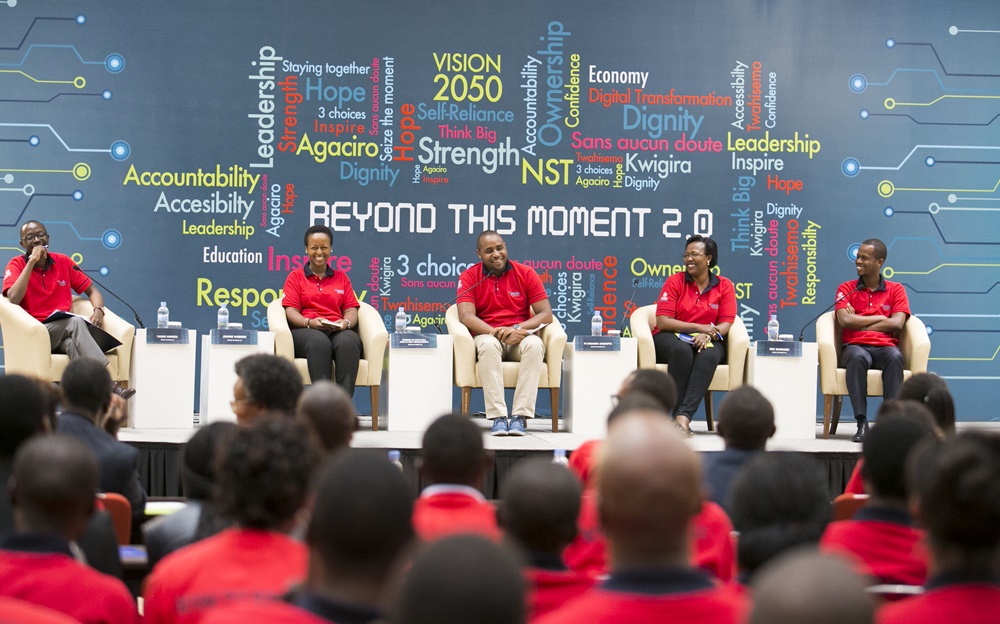
Mrs. Kagame who is also the Chairperson of Imbuto Foundation was speaking to youth yesterday during the 2nd edition of ‘Beyond This Moment’.
Beyond This Moment is a youth forum organized under Imbuto Foundation’s Youth Empowerment and Mentorship Programme.
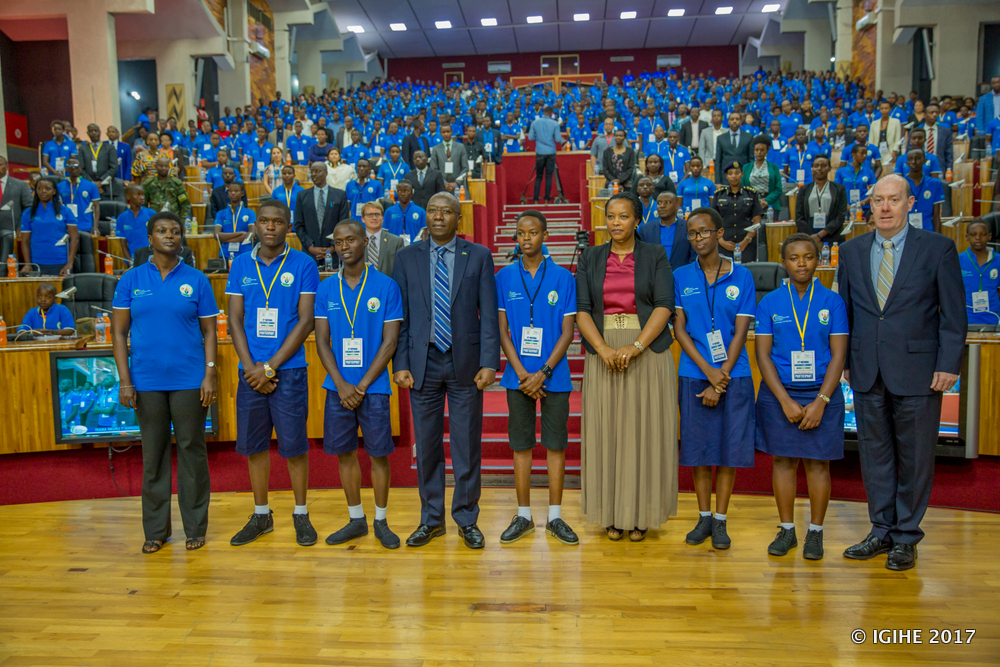
The forum brought together hundreds of youth to discuss Rwanda’s future and the role they play in building the country.
“As you start living a purposeful life, and are able to make a distinction between ‘living’ versus ‘existing’, you will start acting more responsibly, in the choices that you make,” First Lady told youth.
“We are here to further emphasise to our young men and women, the importance of playing their part in the direction of this country, by taking on leadership roles, whether they are still pursuing their education, have entered the workforce, or are already raising a family,” she said.
She told youth that they are never too young to reflect upon what the world needs, to be a better and safer place.
“Acknowledge that the rebuilding of this nation was made possible because of the vision of young men and women, from all walks of life, to see our country rise from its ashes,” she reminded youth.
“It is imperative that you learn to embrace your leadership abilities from early on, and that you do not allow your young age to deter you from stepping into the light, to become a key player, in the development and prosperity of our nation,” she urged.
Mrs. Kagame is optimistic that through organized conversations,youthwill have a renewed sense of commitment towards seeking excellence in all they do, as they ask themselves if they are doing all it takes, with everything they have, as they build strong systems that will outlive them.
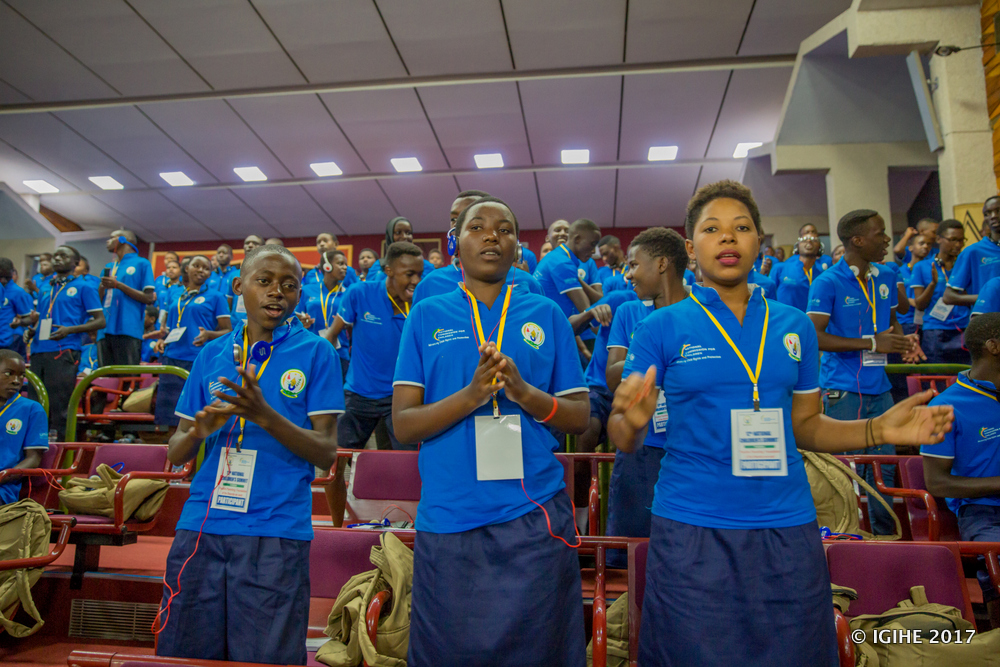
Ngirente was speaking Thursday during the opening of the 12th National Children’s Summit in Kigali.
The summit is being held under the theme ‘Positive Parenting: Foundation of the Rwanda we want’.
Premier said that whoever wishes for societal development should value children . He called on parents, teachers, leaders and Rwandan community to remember their duties on positive parenting urging them to collaborate in seeking solutions for remaining problems that children still face.
“All Rwandans, we are required to collaborate so that we find good and sustainable solutions for problems that hamper our children’s progress,” he said.
“Some of those problems include unwanted pregnancies, school dropouts, child labor and drugs. We should also remember children that do not seat for national examinations over different challenges and find ways of bringing them on board,” he said.
In 2016, 17500 girls between the ages of 16-19 carried unwanted pregnancies, dropping out from schools.
Ngirente reminded children that they are future parents of the country who have responsibilities to advance their parents’ achievements as well as implementing their own ideas.
The summit brings together 488 representatives of children from all districts and sectors of the country, representatives of children with disabilities, refugee children representatives and partner institutions working on child rights protection.
The Minister for Family and Gender Promotion, Esperance Nyirasafari urged children to continue promoting their rights calling them to participate in good parenting.
“As children, you should advise one another on avoiding bad behaviors that could result in negative effects,” she said.
AngeKarasira, the representative of children forum said that they are ready to provide their contribution in constructing the nation they want.
In a written statement, Alfred Kenneth Duku, the Minister of Information, Culture, Youth and Sports for Yei River State, said the MP was in the company of other people making consultations as part of the national dialogue for South Sudanese refugees in Uganda.
He said the incident occured around 7pm on Wednesday.
{{No arrests}}
No rebel group that operates along the Uganda-South Sudan border has claimed responsibility.
Ugandan police said a cartridge was seized from the scene of the shooting but no arrests have been made yet.
Mr Gale served in the State Transitional Legislative Assembly as the chairperson for Members’ Affairs, Gender and Human Rights Committee.
Last week, two South Sudanese were beheaded in Moyo, Ugandan.
The government of South Sudan has formed a National Peace Committee that has been regularly visiting refugee camps in northern Uganda in an effort to reach an agreement for repatriation.
The truth is some of us know the importance of feeding well enough, yet we starve either because we want to fit into certain clothing or certain class of society.
Eating little or no food can have adverse effects on our bodies in the long and short run, but before things get to ‘worse’, they would have started somewhere.
Here are some of those things you can suffer from starving.
{{Hunger}}
Oh well, I’m not sure I need to explain much here. Hunger is a consequence of not eating at all or enough food. When you’re hungry, your body is trying to tell you something. Ignoring the information could lead to disaster. That’s minus the discomfort you’ll experience too.
{{Risk of diabetes}}
Hunger brings fatigue and loss of energy. When you lack those, you quickly want to boost yourself, and this leads to a craving for sugar and like foods. The more sugar you consume, the likelier the level of sugar in your system, and that’s dangerous for your health.
{{You become less appealing}}
The more you starve, the more you lose weight, and the more you lose weight, the less you’re likely to fit into your clothing. So you either wear trashy stuffs or you resort to wearing skinny clothing. However you look at it, you’ll lose massive weight, and nobody ever looks attractive in that state.
{{You’ll fall ill often}}
One of the major signs of an under-eating person is they catch the cold quite easily. The reason is because the body needs a certain amount of energy to stay heated. Without enough food, that can’t happen.
{{Constipation}}
Constipation refers to bowel movements that are infrequent or hard to pass. Dieting and eating too little food can cause constipation due to a slowed metabolic rate.
{{Hair loss}}
A lot of people lose hair daily. However, you may lose way more than normal when you do not eat well enough. This is a result of a deficiency of nutrients in the body.
Do not let anybody tell you different. Eating good food is important if you want to stay alive and healthy.
While starvation isn’t the right way to go, there should be no reason to stuff your stomach with too much food, as that too has its own consequences.
{{Source: elcrema.com}}
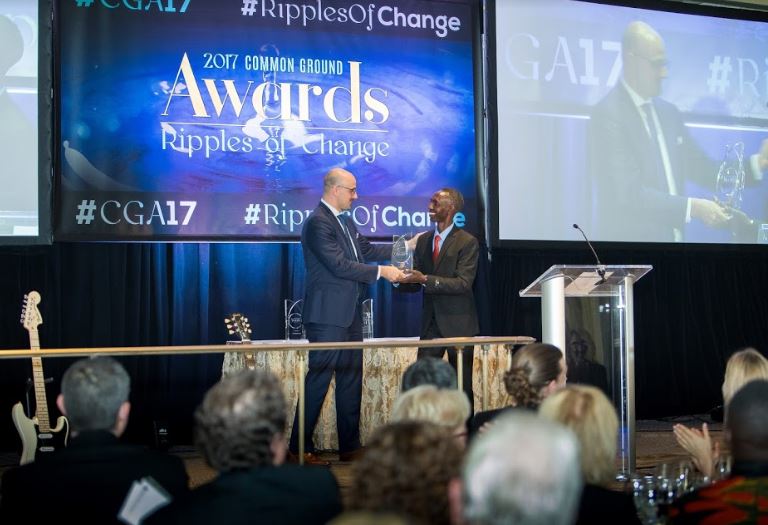
The prize is presented annually by Search for Common Ground, the world’s largest dedicated peace-building organization, to honor outstanding accomplishments in conflict resolution and peace-building.
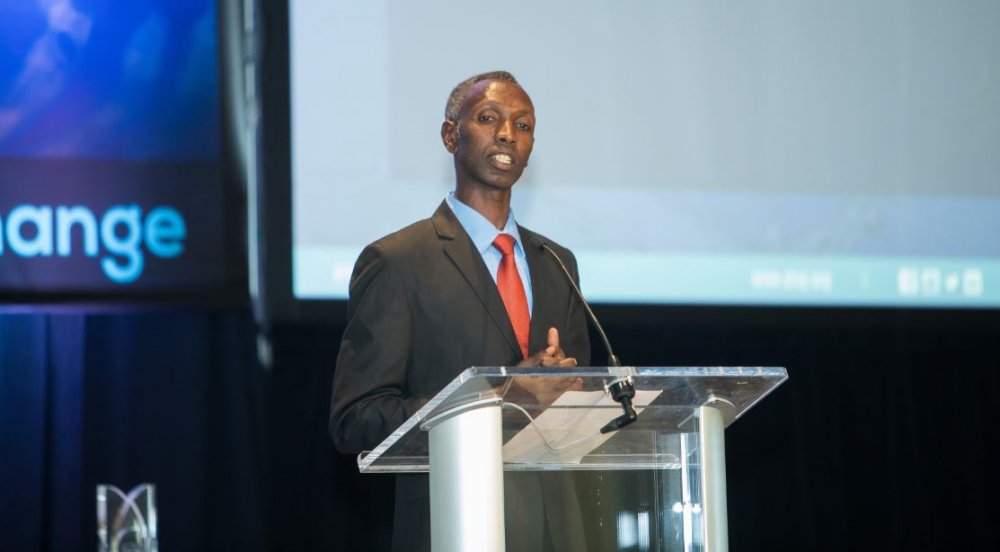
Mudenge received the award on November 30, 2017, in New York City in the United States of America.
Mudenge is a former refugee and a survivor of the 1994 Genocide against the Tutsi. He founded the Inyenyeri Itazima Association based in Rubavu District with the aim of spreading forgiveness, promoting reconciliation, and creating dialogue.
Through public events and discussions that bring together victims and perpetrators, Mudenge has made an invaluable contribution to fostering peace and unity in post-conflict Rwanda. The Inyenyeri Itazima Association and Search for Common Ground have been working in partnership over the past years to promote reconciliation in Rwanda.
The Common Ground Awards recognizes individuals who have made significant contributions toward bridging divides between people, finding solutions to seemingly intractable problems, and providing inspiration and hope where often there was none.
In addition to Mudenge, this year’s Awardees include Daniel Lubetzky, founder and CEO of Kind Snacks, who established several peace initiatives in the US and the Holy Lands; Arno Michaelis and Pardeep Kaleka, the founders of Serve 2 Unite, an American organization fighting against hatred; Fatima Ezzahra Benoughazi, a leading voice of youth and peace-building in Morocco; and Sylvie Mutwambaka Mirindi, the founder of the Mamans Sensibilisateurs, an organization empowering women and fighting domestic violence in the Democratic Republic of Congo.
People scooped the same award in the past include, Archbishop Desmond Tutu, the late US Ambassador to Libya Christopher Stevens, Olympian and Right to Play founder Johan Olav Koss and boxing great Muhammed Ali, as well as individuals building peace in their communities around the world.
Addressing the forum, President Kagame said that Rwanda is creating an ecosystem that will benefit African entrepreneurs.
“Betting on the young people of our continent is a sure bet. Our continent is famous for its natural resources. But the value of our human capital, our people, exceeds all minerals in the continent. It isn’t about counting the number of human beings but rather looking at the potential they have and creating an environment for them to unleash their potential. We must be deliberate in our scale to create opportunities for African youth. Young people and everyone involved, we need to up our game. We owe it to ourselves, communities and continent to work hard and keep trying. Let’s not fail to try. Trust needs to be earned and nurtured,” he said.
The SRSG stated that the aim of the visit was mainly to express gratitude to Rwanda for their contribution to the peacekeeping mission in the Central African Republic (CAR) and also exchanging on different aspects regarding the mission.
“This is the first time I am visiting Rwanda alongside the Force Commander ever since Rwanda has been an important part of this mission” he said.
“It was proper for us to come and discuss with the Minister and RDF on many aspects of our collaboration. First and foremost, it was to express appreciation and gratitude to the Government of Rwanda for contributing some of the best troops that we have in our mission and to express appreciation for their service which is highly professional in all aspects, that was the reason for our presence here” he said during an interview after the meeting.
The Defence and Military Spokesperson, Lt Col Innocent Munyengango, reiterated that during the meeting the leaders took the opportunity to exchange on the prevailing political and security situation in CAR.
The two teams also reviewed the progress of the ongoing negotiations over UN request for the Government of Rwanda to contribute more troops to MINUSCA.
Munyengango said that Kabarebe and Nyamvumba thanked the MINUSCA Head of mission and his Force Commander for their visit and the good cordial relations between UN, MINUSCA and Rwanda.
The SRSG and his delegation will also attend the 45th Ministerial Meeting of the UN Standing Advisory Committee on Security Issues in Central Africa that starts on 08 December 2017 in Kigali.
The objective of the project is to enhance all season road connectivity to agricultural market centers in selected districts.
The grant will help finance the costs associated with the scale-up of the on-going project and broaden the program from the existing four districts to ten districts of Rwanda. The grant would also help the rehabilitation, upgrading and multi-year maintenance of an additional 450km of feeder roads in six new districts to the on-going 270km in the existing districts.
These districts are Gatsibo, Nyagatare, Naybihu, Rutsiro, Nyaruguru and Gakenke.
“The scale-up of the program follows the government’s strong willingness to improve connectivity in rural areas and thus enabling farmers to access input and output markets,” said the Minister of Finance and Economic Planning, Amb. Claver Gatete.
The FRDP is designed as an integral part of the agricultural support initiatives in Rwanda and helps farmers to transport key agricultural inputs, and move their crops and products to markets.
The pilot phase of FRDP started in Districts of Rwamagana, Karongi, Nyamagabe and Gisagara with a total of $45 million provided by World Bank as loan.
“The project is expected to directly benefit about one million people in ten districts, generate about 5,000 employment opportunities through road rehabilitation contracts and a further 3,700 under roads maintenance contracts,” said the World Bank Country Manager, Yasser El Gammal.
The State Minister for Transport in the Ministry of Infrastructure, Jean de Dieu Uwihanganye said that said that feeder roads that are set to be constructed are the first under seven year government programme from 2017-2024.
He said that they target to have constructed 700km by three years ahead.