Chief Inspector of Police (CIP) Marie-Gorette Umutesi, the police spokesperson for City of Kigali, said that Ndagijimana was arrested in Gahanga Sector, Kagasa Cell where he was receiving Rwf20, 000 from the would-be victim.
“Ndagijimana is a bricklayer but he was lying that he is charged with inspecting houses in Gahanga Sector, to ensure compliance in line with the master plan and issued construction permit. So, he was telling people that he can get them construction permits but requiring them to pay a certain amount of money to assist them,” CIP Umutesi said.
She added: “One of the would-be victims, whom he asked to pay Rwf20, 000 for the alleged service, decided to report him to the law enforcement in Gahanga, and Ndagijimana was arrested red-handed receiving the money.”
“This is an act of fraud, which should be reported for such people to face arrest. We also urge the public to go through legal channels to acquire any service instead of taking criminal shortcuts leading to their imprisonment,” she advised.
Clause One of article 174 of the law determining offences and penalties in general in Rwanda, defines fraud as deception, obtaining another person’s property, whole or part of his/her finance by use of false names or qualifications, or offering positive promises or threats of future misfortunes.
Clause Two of the same article provides a term of imprisonment of between two and three years, and a fine of not less than Rwf3 million but not more than Rwf5 million, upon conviction.
Those arrested are Fabien Ntibazirikana, 29, Felicien Habyarimana, 22, and Claude Dusabikize 26.
Chief Inspector of Police (CIP) Bonaventure Twizere Karekezi, the Police spokesperson for the Western region, said that the trio was found mining in a closed coltan concession located in Kavumu Sector, Tetero Cell in Mizingo Village.
“They were arrested in an operation that was mainly targeting illegal miners, which is a common practice in the area. Police officers found them inside the concession mining coltan,” CIP Karekezi said.
“The concession was closed over standards and lack of legal documents, it’s in bad shape and these people were at a very high risk looking at where they were found; their lives were in danger with no protective gears nor life protection insurance,” he explained.
He warned the residents against such illegal and life-threatening activities, and urged them to protect lives by reporting illegal miners.
Article 3 of the ministerial regulations on fighting smuggling in mineral trading, forbids “importation of minerals into Rwanda without proper documents indicating their origin and the weight at origin, given by the right authorities.”
These minerals have to be with required trade documents, and to be certified and tagged by competent authorities.
Equally, article 4 provides that transportation of minerals outside mining licensed areas—concessions and permits perimeters—is only allowed, when the consignment shows the source mine, its value and when it has the right tag.
Article 54 of the law on mining and quarry operations, states that; “any person, who undertakes mineral or quarry exploration, exploitation, processing or trading without a licence commits an offence.”
Upon conviction, the offender is liable to imprisonment for a term of between two and six months and a fine of not less than Rwf1 million and not more than Rwf5 million or only one of these penalties.
The court also orders confiscation of any seized minerals or quarry in storage, trading or processing without a licence.
The goods were recovered from three suspected thieves, who were pursued and arrested shortly after the night Saturday burglary.
The recovered good include four bags of rice, a flat television set, two 20-litre jerrycans of cooking oil, a DVD deck and home theatre.
Chief Inspector of Police (CIP) Bonaventure Twizere Karekezi, the Police spokesperson for the Western region, identified the suspected thieves as christophe Irakoze, 18, Jean Bosco Basabose, 19, and one only identified as Gabby, 21.
“In the night of Saturday, the victim, Lahab Mukanoheri, called the Police and local leaders reporting that unknown people had broken into his shop located in Kinamba village, Pera cell in Bugarama Sector and stole some of the goods,” CIP Karekezi said.
“The deployed police officers pursued the burglars that night and caught them with all the stolen items, which were returned to the owner and suspects handed over to RIB at Bugarama station,” he added.
Mukanoheri commended the Police’s quick response to recover her goods.
“It was about 2 AM, it was raining and the thieves entered my shop after vandalizing the window. I was sleeping in the next room when I heard people whispering outside.
When I checked the shop I found I had been robbed and I immediately called the Police and local leaders,” Mukanoheri said.
“I am happy that my goods have been recovered because this would have been a big loss in my business. I really thank our Police for the quick response,” she added.
Theft, under article 166 of the penal code, is punishable with an imprisonment of between one and two years, a fine of between Rwf1 million and Rwf2 million, a community service of not more than six months or one of these penalties.
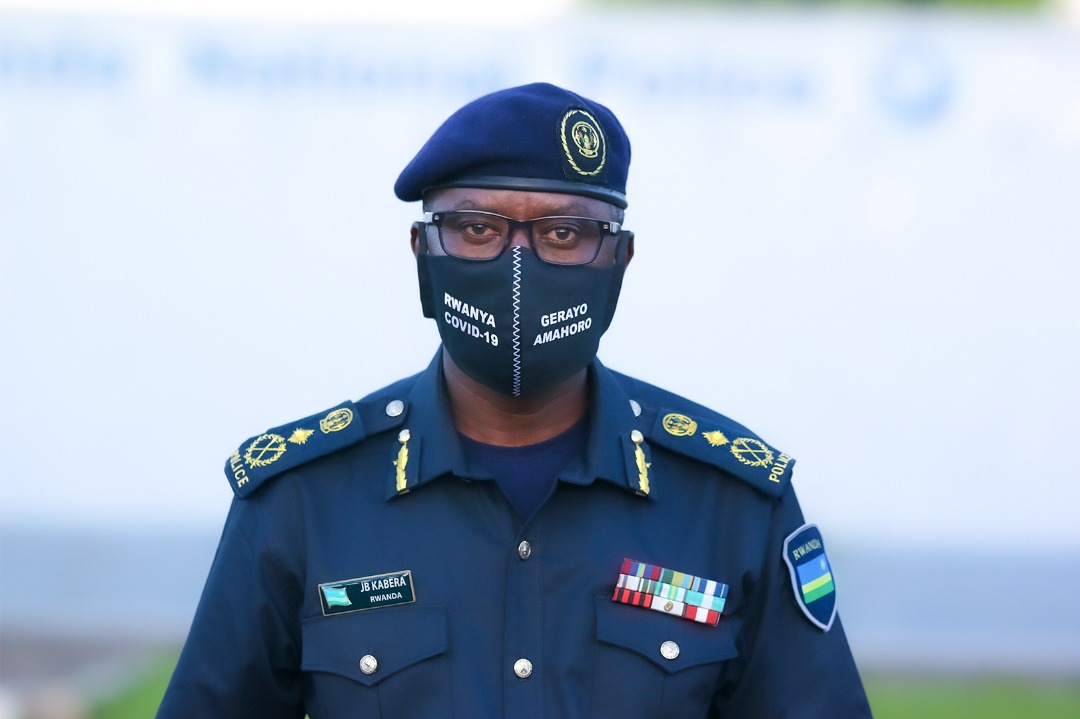
Rwanda National Police (RNP) spokesperson, Commissioner of Police (CP) John Bosco Kabera said that individual responsiveness in respect of the set safety guidelines is a key factor in containing and defeating COVID-19.
“Make a choice that makes you safe from COVID-19. The choice is #NtabeAriNjye (I shouldn’t be the one),” CP Kabera said.
This literally means that I shouldn’t be the trouble causer in my family, at my place of work, in my shop or restaurant. It is my responsibility to ensure that I protect myself so well because if I don’t, then am exposing myself and the people around me in the danger of being attacked by Covid-19, the Spokesperson added.
”When you make such a responsive choice, you are also protecting members of your household, community, workmates, customers, fellow business people and passengers you are travelling within in the vehicles.” CP Kabera said.
The choices, he said, should be tailored on the government directives and recommended safety guidelines.
“Wearing the face-mask well by covering your mouth and nose, and at all times in public; ensuring at least social/physical distancing; prioritizing your movements to consider only those necessary; avoiding shaking hands or hug; washing hands regularly with clean water and soap or using hand sanitizer; respecting the acceptable movement time, and for motorcyclists, they should carry hand sanitizers and ensure that their clients wear their facemasks properly and a piece of cloth inside the helmet;
All these are choices you make that protects you and everyone around you, from catching or spreading Coronavirus but also a massive support to the government efforts to combat it.”
CP Kabera set a challenge for the public to share on social media platforms on choices they have made under the hashtag #NtabeAriNjye, to influence others on positive actions against the spread of COVID-19.
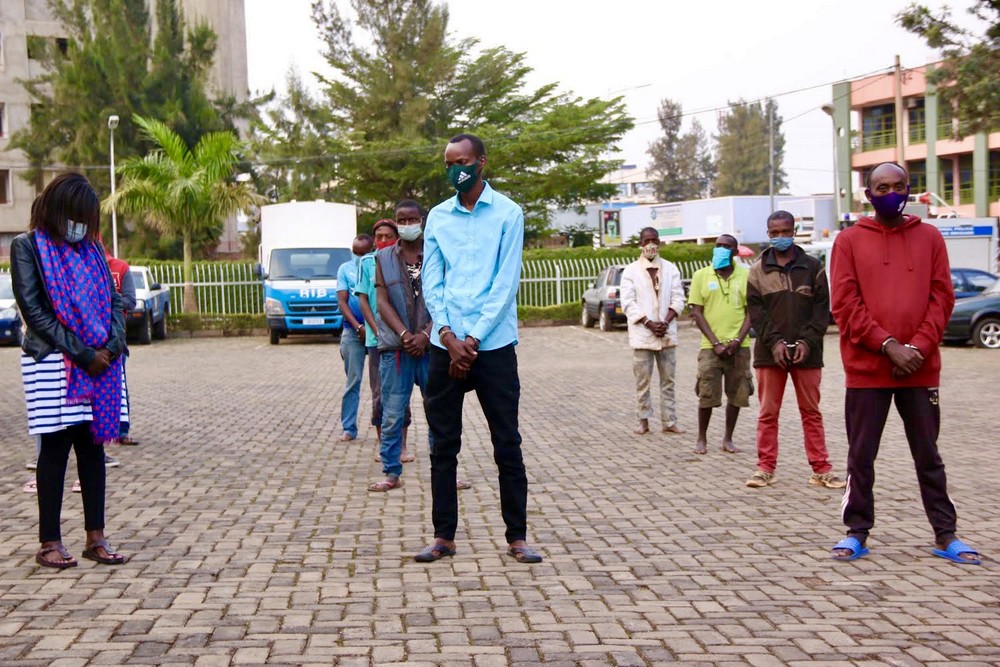
Those arrested include three, who entered into the country from Uganda through an illegal border post and two others, who had travelled to Kigali from Rusizi.
Borders are closed and no one is allowed to go or leave Rusizi and Rubavu districts, as per the government directives. Only cargo vehicles are permitted use commute to or through these districts and borders.
Meanwhile, 12 other people were arrested on Saturday for violating the curfew, with some of them found driving while drunk. Others were operating bars and those found drinking in these bars.
Vedaste Uwabarengeye, who had travelled to Kigali from Rusizi, said that in the week hours of June 13, he secretly walked to Nyamasheke from Rusizi, where he boarded a vehicle to Kigali.
“I was called by a friend, who told me that there was a job in Musanze District. I managed to get to Nyamasheke unnoticed, but I was arrested on arrival to Kigali before boarding another vehicle to Musanze,” Uwabarengeye said.
Ezra Niyonkuru, who had also travelled from Rusizi, was a taxi-moto operator in Kigali, who was in Rusizi when the country was put under lockdown in March.
In the morning of June 13, Niyonkuru was helped by a cargo truck driver, who transported him and his motorcycle to Huye District.
It’s in Huye that Niyonkuru rode his motorcycle to Kigali, where he was identified and arrested on arrival.
RNP spokesperson, CP John Bosco Kabera said that those who had travelled from Rusizi and Uganda have been isolated.
He warned against undermining the directives and derailing national efforts against the pandemic.
“No one is immune to COVID-19, be where you are supposed to be and in the right time. For those in Rusizi and Rubavu, they are required to remain in their respective homes and communities until the government directs otherwise,” CP Kabera said.
He advised Rwandans living out of the country to go through the legal border points so as to go through the medical process for Coronavirus instead of being arrested for illegal cross-border as well as putting their lives and those of others at risk.
The spokesperson also sternly warned those who operate bars in this period or those who go there to drink as well as shops which have been turned into bars.
Bars are still closed in this period of the pandemic.
He further urged the public to respect the curfew adding that 9 pm is the time to be at home but not going home.
Vedaste Hakizimana, 38, was using his shop as cover to sell cannabis to consumers.
He was arrested on Thursday after 98 pellets of cannabis were recovered from his shop located in Rusumo Cell of Gatumba Sector.
Chief Inspector of Police (CIP) Bonaventure Twizere Karekezi, the Police spokesperson for the Western region, said that Hakizimana had used his shop as address for cannabis abusers.
“Residents reported Hakizimana to local leaders that he sells cannabis in his shop; local authorities in turn called the Police,” CIP Karekezi said.
“We later conducted an operation recovered the pellets in his shop, which were concealed in other goods,” he added.
“It is said that Hakizimana was a retailer of cannabis in Gatumba Sector and is connected to a ring of drug traffickers; some of them have been arrested and others still at large.”
CIP Karekezi said that there is a ring of cannabis traffickers and retailers, some of whose particulars have been discovered through information sharing with the public, including Hakizimana.
He warned that operations are continuous for any drug dealer to “face the wrath of the law.”
“The law is very clear and the punishment for engaging in drug related crimes is severe. We appeal to the public to maintain the spirit of information sharing so as to prevent such people from poisoning Rwandans and the young people in particular, who are the majority of victims,” CIP Karekezi warned.
Anyone convicted of trafficking and selling narcotic drugs faces a sentence of between 20 years and life in prison, and a fine of up to Rwf30 million, as stipulated under article 263 of the penal code.
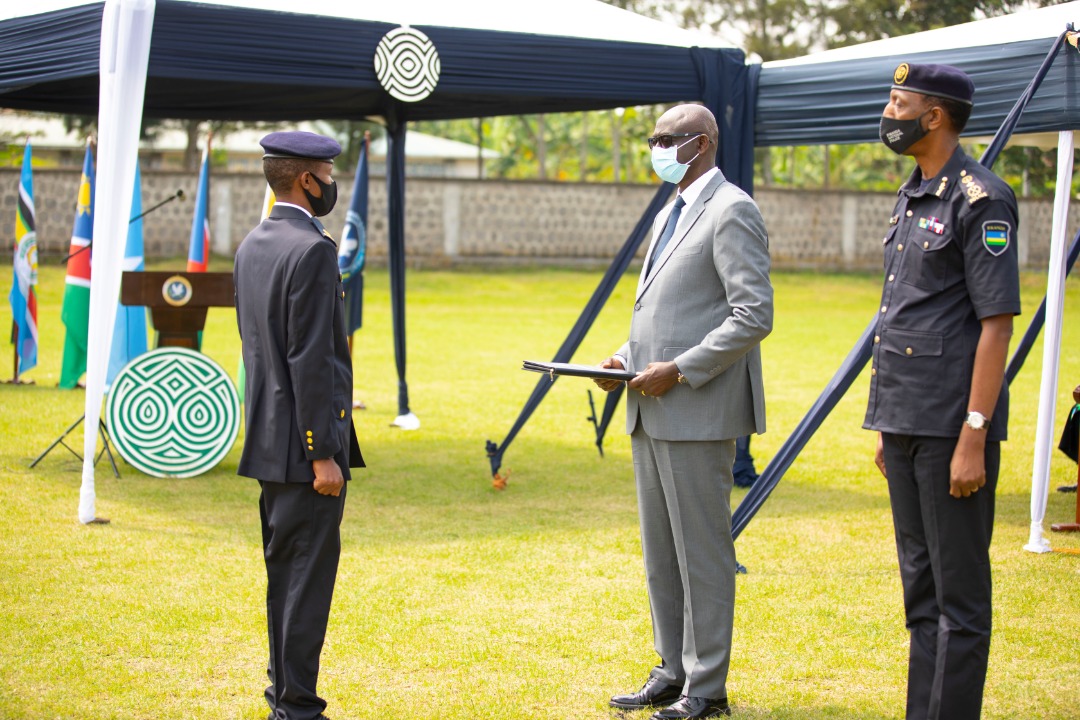
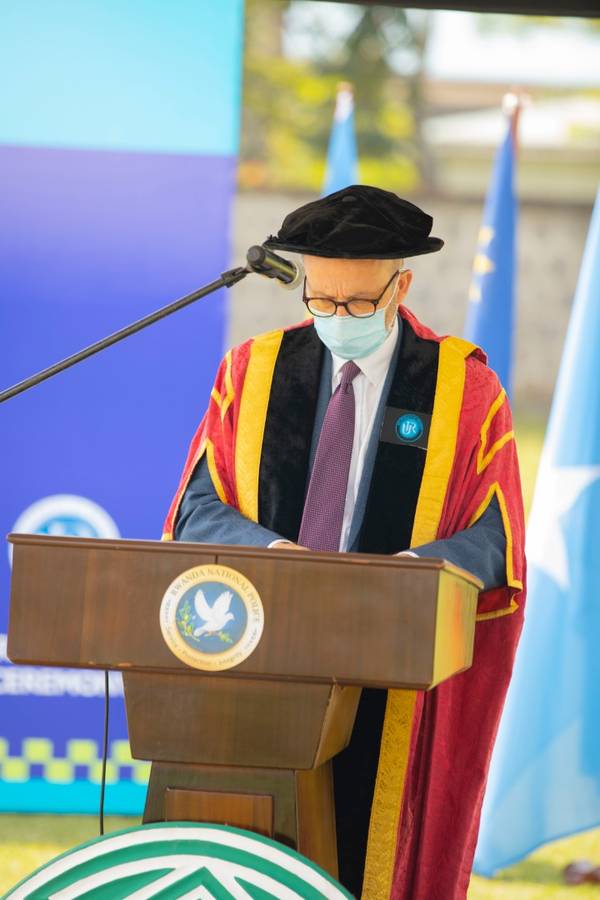
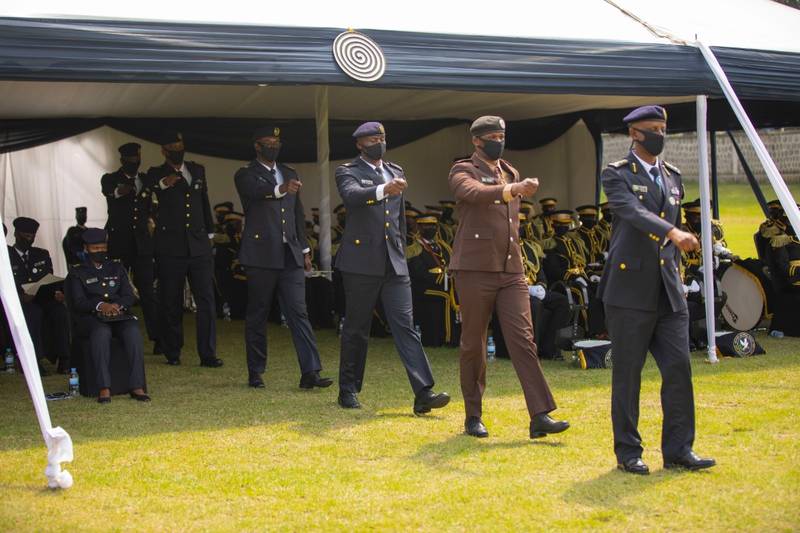
The graduation of the eighth intake was presided over by the Minister of Justice and Attorney General, Johnston Busingye. The event was also graced by the Inspector General of Police (IGP) Dan Munyuza, UR Vice-Chancellor, Prof. Philip Cotton and the Deputy IGP in charge of Administration and Personnel, Juvenal Marizamunda, among other officials.
The course attracted participants Botswana, Central African Republic, Kenya, Ethiopia, Namibia, Somalia, South Sudan, Zimbabwe and Rwanda, the host.
It was held in line with the national guidelines on fighting the spread of novel Coronavirus.
The one-year PSCSC combines both academic and professional aspects; a Master’s degree in Peace Studies and Conflict Transformation, and a level 7 certificate in Strategic Leadership and Management. It is conducted in partnership with the University of Rwanda through its Center for Conflict Management and the UK Bramshill College of Policing.
Minister Busingye said that the Police Senior Command is an important milestone in their career path, and hailed their remarkable efforts and positive attitude demonstrated during the course period, despite the challenges posed the COVID-19 pandemic.
“The history of Rwanda and the journey that the people of Rwanda traveled before, during and after the tragic genocide committed against the Tutsi in 1994 taught us more than any other country that peace, security, justice, good governance and development are indissolubly interlinked,” Minister Busingye said.
“It, therefore, flows from this undeniable reality that only trained, professional, human rights abiding and disciplined law enforcement agencies, with strategic command dimension, and a full understanding of national, regional and global peace and security dynamic are inevitable to the sustainability of this nexus,” he added.
He noted that threats come from unexpected sources and directions, which requires effective response to the challenges of the contemporary policing environment associated with globalization, use of sophisticated technology in the commission of crime, transnational organized crime and others.
Effective response to these security challenges, Minister Busingye said, requires regional, international and judicial cooperation, experience sharing as well as the harmonization of training and other programmes tailored to identified law enforcement challenges.
He emphasized that cooperation is key in addressing transnational and globalized crimes most of which are technology-based, which the PSCSC reflects.
While pledging the Government’s continued support to your work of policing and training in particular, the Minister urged the graduands to use the acquired knowledge and skills to make a difference in their respective countries as their respond to security challenges of today and tomorrow.
“The endorsements and symbols for Senior Commanders you have received should not be mere accolades to wear but rather a fresh rejuvenated start to big tasks ahead.”
The UR Vice-Chancellor Prof. Philip Cotton urged the graduands to prepare for new challenges ahead and be open to learning every day as key to success in their career.
“Hard work, humility and passion for the people you serve will carry you through the next phases in your life,” Prof. Cotton said.
The Commandant of NPC, Commissioner of Police (CP) Christophe Bizimungu said that the course is designed to equip participants with quality skills in strategic leadership, professional policing as well as a critical understanding of peace and conflict.
“It enables participants to perform command and staff functions at strategic level and enhances their ability to manage wider aspects of security,” said CP Bizimungu.
He said that the College delivered to the core of the course despite the challenges caused by COVID-19, and thanked the exemplary discipline of the participants, who were compelled to adopt to the new safety restrictions including staying within the boundaries of the College throughout the rest of the course.
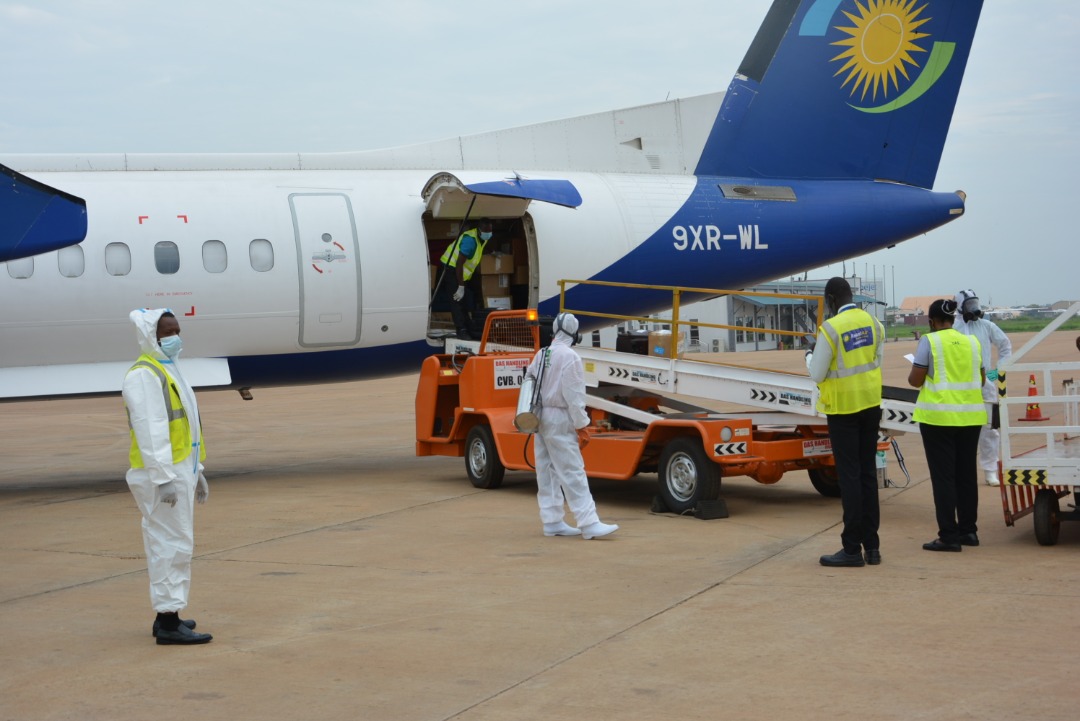
This is part of the earlier pledged test kits and personal protective equipment to the mission to increase its capacity to test and treatment to staff as the world continues to battle the Coronavirus disease.
The donation comes particularly in support of international peacekeeping efforts to contain the spread of the virus and in light of the lack of enough testing kits in some countries.
Brig. Gen. Eugene Nkubito, UNMISS Sector Commander in Juba, handed over the kits on behalf of Rwanda.
Brig. Gen. Nkubito explained that the remaining lot of the equipment will be availed soon to UNMISS during force rotation exercises slated for next month.
Brig. Gen. Nkubito said that the Coronavirus is a “common enemy to mankind’, and cooperation is the way to defeat the pandemic.
Joan Segui Barber, UNMISS head of the Laboratory section thanked Rwanda for the support adding that it will significantly boost the mission capacity against Covid-19.
“We have always sought for testing kits from the World Health Organization office in South Sudan whenever we want to make tests, these kits are definitely augmented to our speed in testing staff,” Barber said.
The South Sudan government has taken several measures such as imposing a partial curfew, suspending schools and universities, and shuttering non-essential businesses, to curb the spread of the novel Coronavirus.
Early this week, Rwanda also started testing and sampling for novel Coronavirus targeting its Police, military and prison warden peacekeepers deployed in South Sudan.
Vedaste Hakizimana, 38, was using his shop as cover to sell cannabis to consumers.
He was arrested on Thursday after 98 pellets of cannabis were recovered from his shop located in Rusumo Cell of Gatumba Sector.
Chief Inspector of Police (CIP) Bonaventure Twizere Karekezi, the Police spokesperson for the Western region, said that Hakizimana had used his shop as address for cannabis abusers.
“Residents reported Hakizimana to local leaders that he sells cannabis in his shop; local authorities in turn called the Police,” CIP Karekezi said.
“We later conducted an operation recovered the pellets in his shop, which were concealed in other goods,” he added.
“It is said that Hakizimana was a retailer of cannabis in Gatumba Sector and is connected to a ring of drug traffickers; some of them have been arrested and others still at large.”
CIP Karekezi said that there is a ring of cannabis traffickers and retailers, some of whose particulars have been discovered through information sharing with the public, including Hakizimana.
He warned that operations are continuous for any drug dealer to “face the wrath of the law.”
“The law is very clear and the punishment for engaging in drug related crimes is severe. We appeal to the public to maintain the spirit of information sharing so as to prevent such people from poisoning Rwandans and the young people in particular, who are the majority of victims,” CIP Karekezi warned.
Anyone convicted of trafficking and selling narcotic drugs faces a sentence of between 20 years and life in prison, and a fine of up to Rwf30 million, as stipulated under article 263 of the penal code.
The vehicle, plate RAC 526F Hiace was intercepted in Rugabano Sector, Gitega Cell loaded with the jerrycans of illicit drinks. Three people, who were aboard were taken into custody. The seized psychotropic substances were also disposed of.
Chief Inspector of Police (CIP) Bonaventure Twizere Karekezi, the police spokesperson for the Western region identified the suspects as Damascene Niyomugabo, 29 (driver), Pascal Habineza, 34, and Hamisi Iraguha, 44.
“The suspects had ventured into this business and were collecting the illicit brew from different distillers in the area. They were at the time going to sell them to local bars located in the trading centres of Rambura, Rutovu and IDP Model Village in Kabuga, Rugabano Sector,” said CIP Karekezi.
He commended the “general sense and understanding” among the public to fight crimes and drug abuse in particular.
“These are harmful substances, seizing and destroying them is in the general interests of ensuring a healthy living, preventing other crimes these drugs bring along especially after consumption.”
The spokesperson noted that most cases of assault and domestic violence recorded are related to the consumption of such illicit substances.
All drinks with alcoholic content above 45 percent or with unknown alcoholic content are considered as a psychotropic substance.
Article 263 of Rwanda penal code stipulates that any person who, unlawfully, produces, transforms, transports, stores, gives to another or who sells narcotic drugs and psychotropic substances commits an offense, with a sentence upon conviction, ranging between seven years and life in prison, and a fine of between Rwf20 million and Rwf30 million.