The psychotropic substances were seized in Bumbogo and Kimironko sectors. They were disposed of.
Chief Inspector of Police (CIP) Marie-Gorette Umutesi, the police spokesperson for the Central region said that those illicit drinks were seized following a tip-off from residents.
“We were informed that there are some people, who produce and sell illicit brew, we led an operation to seize them. They were seized from three distillers; Marcelline Nyirangendahimana, 42, Naphtali Mbarimombazi, 39, and Patricie Mukamusangwa, 32,” CIP Umutesi said.
She warned the public against the practice but thanked those who continue to work with the Police to identify and arrest drug dealers.
“These substances are unhealthy, they pose a threat to security, as consumers are exposed to untested content brewed from potentially harmful raw materials let alone the lack of hygiene during production,” she said.
She added: “These are harmful substances, seizing and destroying them is in the general interest of ensuring a healthy living, preventing other crimes these drugs bring along especially after consumption such as battery and theft.”
The spokesperson noted that most cases of assault and domestic violence recorded are related to the consumption of such illicit substances.
All drinks with alcoholic content above 45 percent or with unknown alcoholic content are considered as “psychotropic substance.”
Article 263 of Rwanda penal code stipulates that any person who, unlawfully, produces, transforms, transports, stores, gives to another or who sells narcotic drugs and psychotropic substances commits an offense, with a sentence upon conviction, ranging between seven years and life in prison, and a fine of between Rwf20 million and Rwf30 million.
HE Adama Dieng, UN Secretary-General’s Special Adviser for the Prevention of Genocide year marks the 26th anniversary of the genocide against the Tutsi in Rwanda, during which near one million people were killed because of their Tutsi identity. 100 days of horrors with the aim of the perpetrators to exterminate the Tutsi as a Group. They also killed the moderate Hutu and others who opposed the genocide.
I am profoundly humbled to join you to reflect on one of the darkest chapters in human history. It is the occasion to remind ourselves of our collective failure to recognize the warning signs of impending violence, to prevent the deaths of so many, and renew our resolve to prevent such atrocities from happening again.
Remembering the heinous crimes committed in Rwanda means acknowledging the victims and calling attention to the survivors and the struggles they continue to face. We should be inspired by the survivors’ ability to show that reconciliation is possible even after a tragedy of such monumental proportions.
I often say that there is no part of the world that can consider itself immune to the risk of atrocity crimes, by which I mean genocide, war crimes, crimes against humanity. All societies have risk factors related to atrocity crimes to some extent, for example divisions based on ethnicity, race, religion or other grounds, social disparities, discrimination as well as human rights violations. It is how early these risk factors are managed that will determine whether they will escalate into situations of more serious concern or not. We are therefore all responsible for contributing to prevention, whatever our roles or capacities.
Genocide is the most serious crime against the human being. The best way to honor the memory of the victims is to ensure that nothing like this ever happens again. We must all be alert to the warning signs and act quickly while there is still time to do so. One of the key warning signs and a trigger to violence is the spread of hate speech in public discourse and the media that target specific communities, based on their identity, in particular, the most extreme cases of hate speech that have the potential to incite hostility and violence.
The ongoing crisis in many places around the world are a clear reminder to all of us that we are still failing to prevent atrocity crimes. Civilians, including women, children and the elderly continue to be brutally killed, raped, displaced and discriminated against on the basis of their identity. We must ensure that we act swiftly at an early stage to protect those at risk of atrocities.
Building a better society is an endeavor that requires the involvement of all segments of society, all men and women, ethnicities and religions. It requires us to work together towards a collective goal. We know all too well that without peaceful and inclusive societies, we increase the risk of crisis, violence and even atrocity crimes.
We must strive to address inequality, build cohesive society devoid of ethnic or racial divisions, promote good governance. We must also counter intolerance, hatred, and all forms of discrimination. Enjoyment of fundamental rights and freedoms must be guaranteed and protected. If we are short of these values in any parts of the world, then we will continue to grapple with the risk of atrocity crimes and our promise of “Never again” may remain elusive.
Rwanda teaches us this essential lesson. It is no surprise that President Kagame displayed his strong commitment to the African Union Principle of non-indifference – Article 4 of the AU Constitutive Act refers. It is no surprise that Rwanda is a Champion of RtoP …
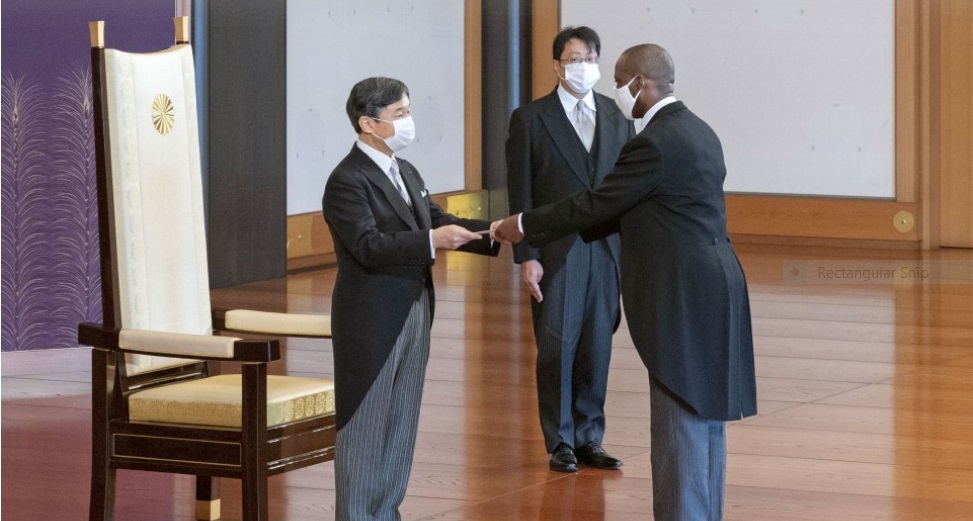
During the ceremony, Ambassador Ernest Rwamucyo conveyed to the Emperor greetings and best wishes from H.E. President Paul Kagame for the Emperor’s good health, happiness and well-being. He also expressed the desire of the Government of Rwanda to further strengthen the already strong relations existing between the two countries.
His Majesty Emperor Naruhito expressed his gratitude to President Paul Kagame for his kind sentiments and requested Ambassador to convey his greetings and best wishes of good health and wellbeing to H.E. President Paul Kagame and Rwandan people for further progress and welfare under His Excellency’s wise leadership. He also wished the Ambassador success in carrying out his duties in a way that contributes to promoting the bilateral relations towards further horizons in diversified areas. The Emperor commended Rwanda for the impressive progress the country has made after the 1994 genocide against the Tutsi.
Ambassador noted that Rwanda overcame post-genocide challenges and is a reconciled, united, peaceful and safe country. He further noted that Rwanda is among the fastest growing economies and added that Japan has been a very supportive and reliable partner in Rwanda’s journey of transformation. He mentioned that Rwanda is also known for mountain gorilla trekking and invited His Majesty to experience this adventure at a time of his convenience.
Ambassador Ernest Rwamucyo conveyed to the Emperor that the people and the Government of Rwanda deeply appreciate Japan’s assistance that has contributes significantly to the socio-economic development of the country.
Also present at the ceremony were the Minister of State for Regional Revitalization, Hon. Seigo Kitamura and Mr. Eric Rubayita, First Counsellor at the Embassy of the Republic of Rwanda in Japan.
Chief Inspector of Police (CIP) Sylvestre Twajamahoro, the Police spokesperson for the Southern region, identified the smugglers as Innocent Celestin Bizimana, 32, and Venuste Bagayuwitunze, 64.
He said that the minerals were seized from the duo in two separate operations.
“Bizimana and Bagayuwitunze work together in illegal trade of minerals. Following information that they had brought new mineral consignments, targeted operations were conducted and the 363kgs minerals, combine, were recovered in their respective houses in Nteko Cell, Busanze Sector,” CIP Twajamahoro explained.
It is said that the minerals were sneaked into Rwanda recently from a neighbouring country, through an illegal border point.
CIP Twajamahoro warned people who are involved in illegal mining, smuggling and trade activities.
“These are fraudulent dealings aimed at tax evasion. Minerals are supposed to be tagged before they are transported by licensed dealers or companies,” he said
“The law is clear; for you to deal in mineral trade you have to be licensed or given authorization documents. The vehicle transporting the minerals should also bear supporting documents and minerals must be tagged to trace their originality,” the spokesperson said.
He further observed that such unlawful activities involving “unnecessary movements and illegal cross-border” in this period can be the source COVID-19 infections. Borders are closed as one of the government devised measures to contain the pandemic of COVID-19.
The government also advises against unnecessary movements in this period of the pandemic.
Article 1 of the Ministerial Regulations No 001/Minifom/2011 relating to fighting smuggling in mineral trading stipulates that nobody is allowed to purchase or sell minerals without commercial registration.
Article 3 forbids “importation of minerals into Rwanda without proper documents indicating their origin and the weight at origin, given by the right authorities.”
These minerals have to be with required trade documents, and to be certified and tagged by competent authorities.
Equally, article 4 provides that transportation of minerals outside mining licensed areas—concessions and permits perimeters—is only allowed, when the consignment shows the source mine, its value and when it has the right tag.
Article 54 of the law on mining and quarry operations, states that “any person, who undertakes mineral or quarry exploration, exploitation, processing or trading without a licence commits an offence”
Upon conviction, the offender is liable to imprisonment for a term of between two and six months and a fine of not less than Rwf1 million and not more than Rwf5 million or only one of these penalties.
The court also orders confiscation of any seized minerals or quarry in storage, trading or processing without a licence.
It ranked in the top four in the Report’s political empowerment category, in recognition of the high proportion of Rwandese women lawmakers and ministers.
The country, therefore, seemed a natural fit for a 2018 pilot program of the African Development Bank’s Coding for Employment initiative, with Nigeria, Kenya, Côte d’Ivoire, and Senegal.
The Coding for Employment flagship program is establishing 130 ICT centers for excellence in Africa, training 234,000 youths for employability and entrepreneurship to create over 9 million jobs.
Hendrina C. Doroba, Manager in the Education, Human Capital and Employment Division at the Bank, explains how Rwanda is empowering women in technology.
{{How has the government of Rwanda enabled women to pursue careers in technology, and STEM in general?}}
The government of Rwanda has been a foremost champion of women in ICT and in the fields of science, technology, engineering and mathematics (also known as STEM), by driving initiatives like the establishment of the Carnegie Mellon University-Africa campus, for which the Bank provided funding. Students from 17 different countries pursue highly specialized ICT skills at the Africa campus.
The country also hosts the African Institute of Mathematics (AIMS) which is now recruiting balanced cohorts of women and men. Lastly, the Bank-funded University of Rwanda College of Science and Technology has for many years produced women leaders in the ICT sector in Rwanda and globally.
Rwanda’s government also supports initiatives such as the Miss Geek Rwanda competition, an initiative of Girls in ICT Rwanda, which aims to encourage school-age girls, even those in remote areas, to develop innovative tech or business ideas and to generally immerse themselves in ICT. The Miss Geek initiative has now been rolled out in other countries in the region.
{{What role has the Bank played in supporting Rwanda’s digital strategy, especially in relation to women?}}
The strategy of the Bank’s Coding for Employment center of excellence in Rwanda has been to join forces with the Rwanda Coding Academy through a grant agreement to support the school’s activities, like ICT equipment, teacher training and career orientation. The Rwanda Coding Academy started in January 2019 and has so far enrolled one cohort, which is now going into their second year.
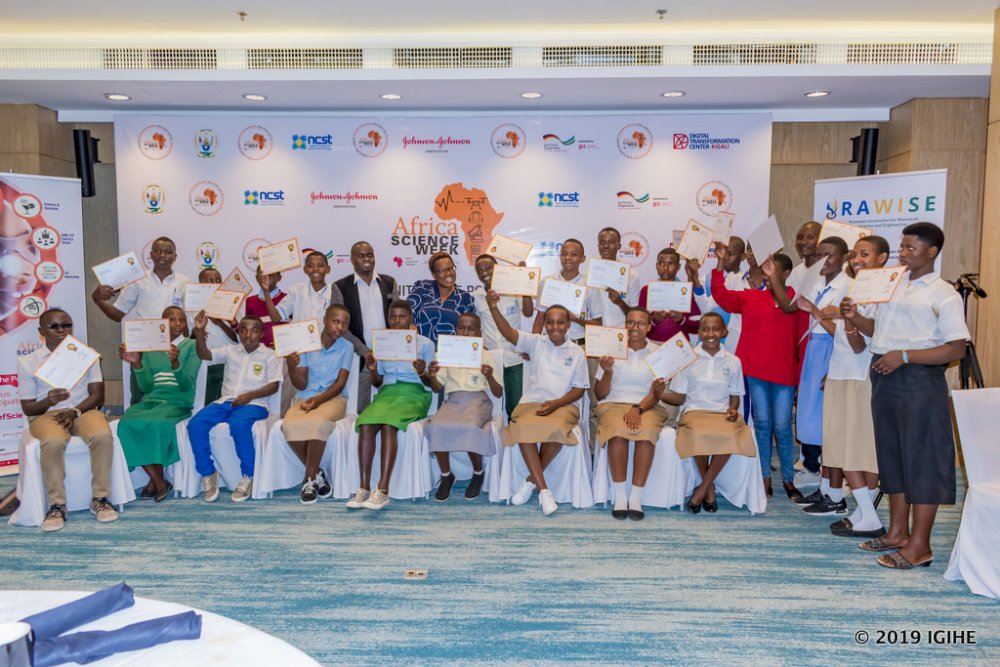
Besides the Rwanda Coding Academy, the Bank’s Coding for Employment program held a two-day masterclass for girls and young women entrepreneurs at the 2018 Youth Conneckt summit, where over 200 beneficiaries were trained in using digital tools to amplify their businesses.
The session was attended by women entrepreneurs as well as students from girl schools in Kigali, including those from White Dove School, which is an all-girl school fully dedicated to training in ICT. The masterclass culminated into a pitching exercise from various groups who presented their ideas to a panel of judges.
{{What lessons can other African countries learn from Rwanda’s approach to the 4IR, in particular the role of women?}}
The government of Rwanda has been a trailblazer in using innovation to improve public services across the country using the e-governance platform Irembo, to bring government services closer to citizens. In addition, the government is driving national digital skilling campaigns by championing digital ambassador programs and platforms such as Smart Africa, which has organized the annual Transform Africa summit since 2013.
Still, gender equality remains a concern, and gender gaps are evident even in schools. Rwanda’s ambitions extend to piloting the Kigali Innovation City, also Bank-funded, to serve as the country’s knowledge and innovation hub by attracting new businesses and incubating ideas.
At the same time, the country has created a business environment which is pro-entrepreneurship and welcomes global inventors to test their ideas and concepts. Zipline, a company which uses drones to deliver medical supplies in remote areas, is one example.
Lastly, Rwanda promotes women leaders in the ICT and innovation sector. The country’s Minister of ICT and Innovation is a woman, as is the CEO of the Irembo platform. Appointments such as these are helping to dispel the myth that women are not as capable as men in ICT.
{Distributed by APO Group on behalf of African Development Bank Group (AfDB).}
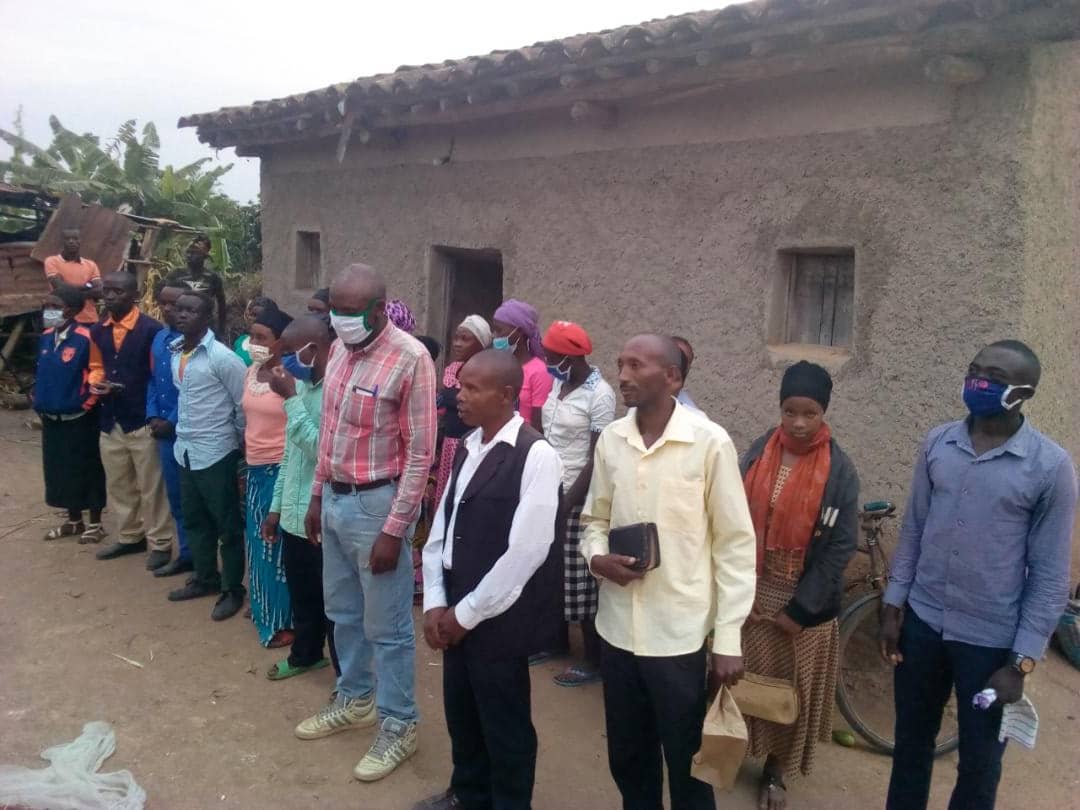
All the suspects are members of ADEPR Church. They include 12 women and 11 men from different parts of the district, who had gathered for prayers.
They were found in the house of one Françine Mukantwari, 60, located in Kibirizi Sector, Mbuye Cell.
Chief Inspector of Police (CIP) Sylvestre Twajamahoro, the Southern Region Police Spokesperson said that besides disregarding the government directives, which partly prohibit mass gatherings including religious services in this period; the room where they were found is very small, they were congested and had no facemasks.
“Local residents called the Police reporting serious violations. Indeed, we found 23 people congested in a tiny room praying, with no facemasks. Some of them had traveled from the neighboring sectors.
In any case where one is infected with Coronavirus, it was very easy to infect all others who were in the same room,” said CIP Twajamahoro.
The suspects, he said, were isolated at Kibirizi Police Station for further management.
CIP Twajamahoro warned against breaching the government orders and derailing efforts to combat the pandemic of COVID-19.
“People should understand that such prohibited gatherings don’t only put their lives at stake but also those of others in their families and communities, and hampering the government efforts to combat the virus. One infected person can easily infect the whole community, these behaviors shouldn’t be tolerated and should be reported,” the spokesperson said.
CIP Twajamahoro reminded members of the public to also follow other health and hygiene guidelines put in place, especially washing hands, avoiding handshakes and wearing facemasks.
He further warned that whoever breaches the directives meant to contain the spread of COVID-19 will be brought to book.
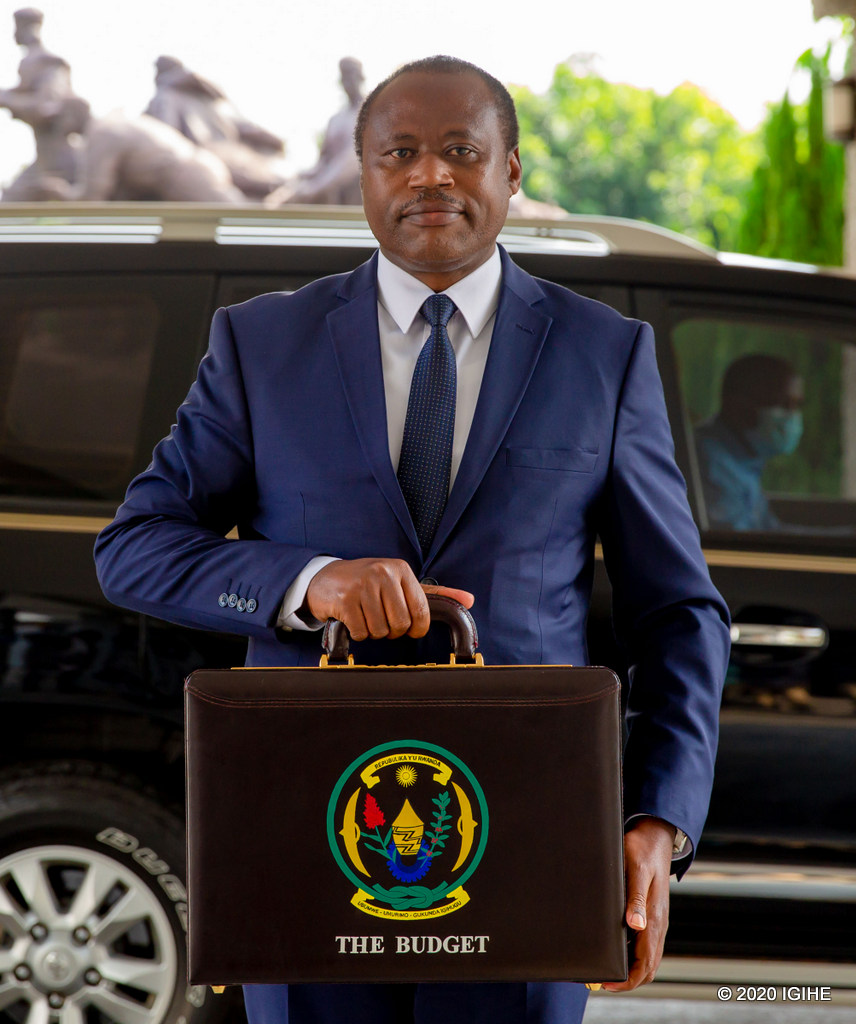
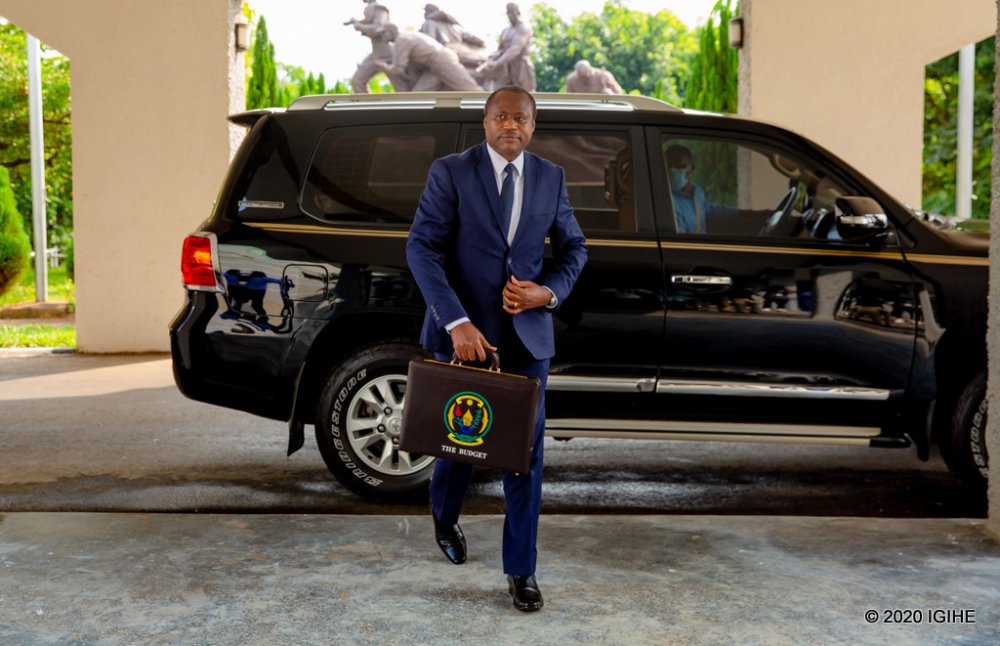
The fiscal policy in 2020/21 will be in line with COVID-19 economic recovery plan and National Strategy for Transformation (NST-1) priorities. The focus will be on increasing health-related spending to contain the epidemic and to strengthen the health system, scaling up social protection, strengthening the education sector, as well as supporting private sector through the Economic Recovery Fund.
{{Resources}}
The FY 2020-21 budget will be financed through domestic resources at Rwf 1,969.8 billion representing 60.7% of the entire budget. The remainder of the budget will be funded through external sources at Rwf 1,275.9 billion which accounts for 39.3% of the total budget. These include grants worth Rwf 492.5 billion and loans worth Rwf 783.4.
{{Expenditure}}
Government will spend Rwf 3,245.7 billion in 2020/21. Recurrent expenditure will take up Rwf 1,583.0 billion which accounts for 48.8% of the total budget.
Development projects are projected to consume up to Rwf 1,298.5 billion, which represents 40% of the total budget. Domestically financed projects are estimated at Rwf 703.4 billion, while externally financed projects are projected at Rwf 595.1 billion.
In addition, Net Lending has been allocated Rwf 306.5 billion which accounts for 9.4% of the total budget. Rwf 35.2 billion is allocated to payment of arrears and Rwf 22.6 billion reserved for accumulation of deposits to boost the Government reserves representing 1.1% and 0.7% of the total budget respectively.
“The share of recurrent budget in the total budget of 2020/2021 reduced by 2.6% compared to 2019/2020, while development budget and net lending increased by 2.6%. This confirms Government’s effort to contain recurrent expenditures and to focus on development spending,” Dr. Uzziel Ndagijimana, the Minister of Finance and Economic Planning said.
{{NST-1 and Resources Allocation }}
Government’s expenditure policies in fiscal year 2020/21 are guided by National Strategy for Transformation priorities and objectives while ensuring appropriate allocation by promoting made in Rwanda to reduce trade deficit and build economic resilience.
To this end, the Economic Transformation pillar takes the lion’s share of the resources at Rwf 1,802 billion amounting to 55.5 % of the total budget. Social transformation will take up Rwf 960.4 billion (29.6%) while Transformational Governance is allocated Rwf 482.7 billion representing 14.9% of the total budget.
In line with NST-1 strategic objectives, some of the priority areas agreed during planning and budgeting consultations formed the basis for resource allocation in 2020/21fiscal year. These include:
Strengthening health system by increasing accessibility to quality health services for all
-* Increasing agriculture and livestock productivity
-* Strengthening Social Protection programs by scaling up coverage.
-* Promote employment through investment in public infrastructure.
-* Support businesses affected by COVID-19 to recover, boost their business and contribute to the national economic growth.
-* Support Made in Rwanda policy to reduce trade deficit and build economic resilience.
-* Promote digital infrastructure and technologies to improve service delivery
-* Improve access to quality education
-* Continue eradication of malnutrition and stunting
-* Strengthen disaster preparedness and management
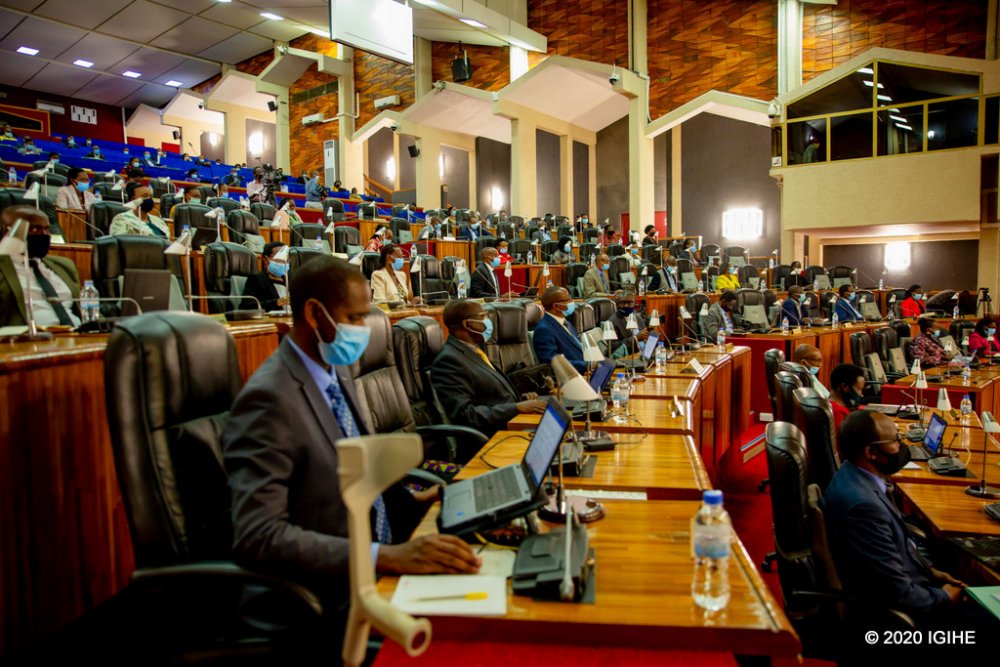
The 2020/2021 draft finance law conforms to the 2020/21 – 2022/23 Budget Framework Paper that was presented to Parliament on May 21, 2020 and amended to reflect the recommended actions by the Parliament as submitted on June 5, 2020.
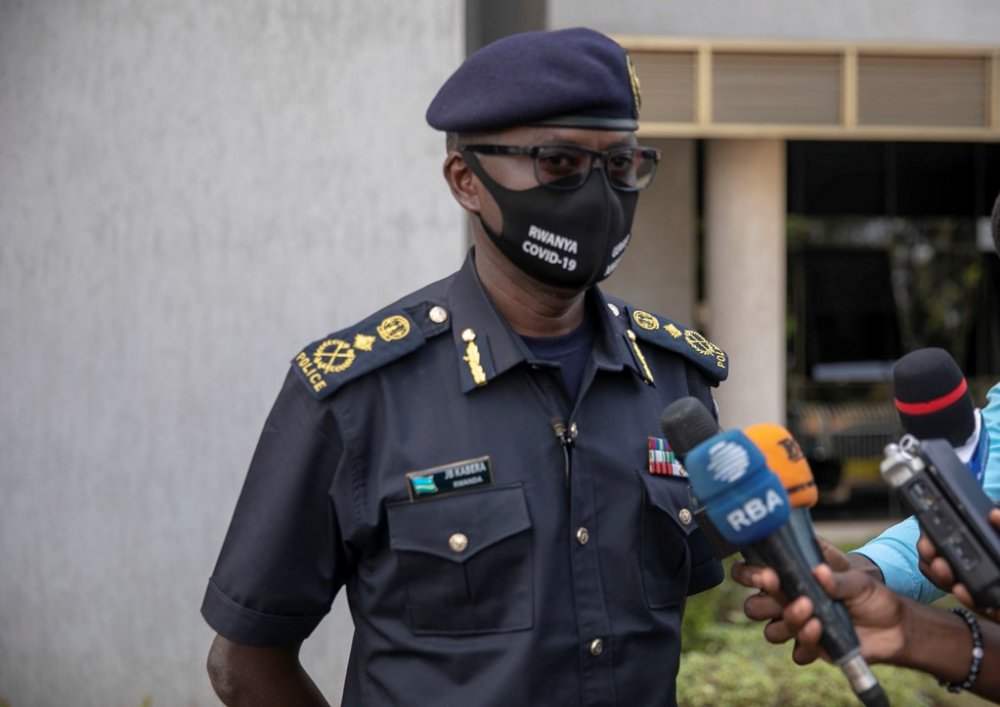
While appearing on ‘Waramutse Rwanda’, a morning talk-show on Rwanda Television on Monday, CP Kabera observed that ‘Ntabe Ari Njye’ literally translated as ‘I shouldn’t be the one’ campaign initiated by RNP is meant to effect change in people’s thinking and actions to make safer individual choices in compliance with the recommended directives and guidelines to contain the pandemic.
“Ntabe Ari Njye campaign looks at the individual character to make a choice not be the source for COVID-19 infections where you live, walk, in the vehicle or at work.
A choice to never shake hands or hug anyone; a choice to wash your hands well as many times as possible with clean water and soap or sanitize your hands; a choice to leave enough distance between you and another person; a choice to wear a facemask well covering your mouth and nose, to prioritise movements or avoid unnecessary movements including journeys,” said CP Kabera.
Although most businesses and movements, as well as the transport sector, resumed across the country, CP Kabera said that the global pandemic is still in our midst and these safety guidelines are compulsory and must be adhered to at all times to prevent catching or spreading the virus in your home, community, at work or while on your journeys.
On Sunday, June 21, the Ministry of Health reported 26 new COVID-19 cases that were diagnosed from 3,252 tests; 18 were detected in Rusizi district, two at Rusumo and 6 cases found in Kigali. Two of the cases detected in Kigali are taxi-moto operators.
“Before you board a motorcycle or vehicle, there are compulsory precautionary measures you have to take first. You must wash or sanitize your hands, the facemask should be worn properly; a distance must be left between two passengers in the vehicle and a helmet cleaned first for those using motos, wear fabrics inside the helmet and use cashless payment. The virus can be spread through many ways and the good choice you make is your safety and the safety of others around you.”
He warned motorcyclists, who breach the directives such as cashless payment, sharing fabrics with clients, not washing or sanitizing their hands or using water as sanitizer.
Rwanda’s fastest-growing service provider of Voice, Data, and Mobile Financial services has today partnered with online money transfer service WorldRemit to enable Airtel Money customers to receive remittances instantly to their Airtel Money wallets from World Remit users across the globe. Top countries include but not limited to: The United States, Canada, Belgium, United Kingdom, Australia, France, Sweden, Norway, Netherlands, and Germany.
With this partnership, World Remit customers across the world now have the option of visiting the World Remit website, choosing Airtel Money as their preference, and follow the prompts. Commenting on the launch, Amit Chawla, Airtel Rwanda Managing Director said:
“We are excited about this partnership with World Remit as it allows our customers to receive money from their friends and family across the world at their comfort. This contributes to our drive to offer our customers the convenience of using their Airtel Money wallets to carry out their day to day activities. WorldRemit makes it easy to send money to Airtel Money accounts in Rwanda from more than 50 countries around the world. Just download the app or create your free account to start transferring money to family and friends in Rwanda today.”
“We are delighted to partner with Airtel Money to ensure that Rwandans can have access to financial support from their loved ones abroad. This is more important than ever with lockdown measures in place. This partnership allows us to give customers even more remittance options whilst continuing to provide a convenient, safe, and secure service.” said Carine Umurerwa Country Manager, Rwanda, WorldRemit.
Airtel Money enables users to perform local and international money transfers, make utility payments, save money in their mobile wallets, purchase airtime, and access a range of mobile financial products.
WorldRemit sends more money transfers to Mobile Money accounts than any other provider. Over half of WorldRemit’s money transfers to Africa are now received on Mobile Money accounts
Chief Inspector of Police (CIP) Hamdun Twizeyimana, the Eastern region Police spokesperson said the maize was recovered from two suspected thieves; Emmanuel Nsanzimana, 28 and Innocent Fasasi, 30.
The two suspects were working for Sibomana as security guards at the store.
“Nsanzimana and Fasasi were both guards at the store, they stole the maize at different occasions and would hide it in the nearest homes,” said CIP Twizeyimana.
“Local residents realised that the two guards were stealthily taking the maize from the stores and informed the Police in Rilima. The victim wasn’t aware,” he further explained.
“With the help of the residents, Police arrested the two guards and recovered the maize.
We commend the residents for the ownership… not just being bystanders as the theft was going on but to fight and prevent it.”
The recovered maize was handed over to the owner.
Sibomana lauded the Police’s quick response to recover his goods and commended the residents’ responsiveness.
“I live in Kigali but I have my stores in Rilima. I wouldn’t have known anything had it not been the ownership of my neighbors in Rilima and I am thankful for that spirit of neighborhood watch,” said Sibomana.
Theft, under article 166 of the penal code, is punishable with an imprisonment of between one and two years, a fine of between Rwf1 million and Rwf2 million, a community service of not more than six months or one of these penalties.