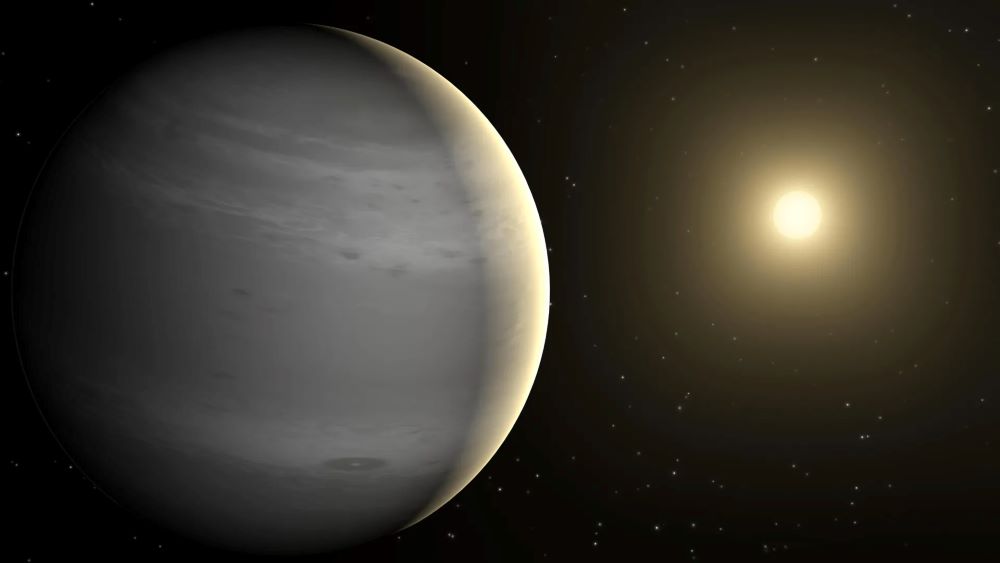
The planet, known as TOI-199b, is about the size of Saturn and orbits a star located more than 330 light years from Earth. The findings were published in the Astronomical Journal on May 20 by researchers from Penn State and NASA Jet Propulsion Laboratory.
The James Webb Space Telescope is the world’s most powerful space telescope. Launched in 2021, it was designed to study distant planets, stars and galaxies using advanced infrared technology that can detect heat and light invisible to human eyes.
Scientists said giant planets are usually either extremely cold, like Jupiter and Saturn, or extremely hot planets known as “hot Jupiters” that orbit very close to their stars. However, TOI-199b falls somewhere in between, making it a rare “temperate” giant planet.
Researchers estimate the planet’s temperature at around 175 degrees Fahrenheit. While still too hot for humans, it is much cooler than many giant planets previously discovered.
Using the James Webb telescope, scientists studied the planet’s atmosphere as it passed in front of its star. By analyzing how the starlight changed, they identified gases present in the atmosphere.
According to researcher Aaron Bello-Arufe from NASA’s Jet Propulsion Laboratory, the telescope detected methane, while signs of ammonia and carbon dioxide were also observed.
Scientists say studying planets like TOI-199b could improve understanding of how planets and atmospheres form and evolve, including Earth’s own atmosphere.
Leave a Reply