The telescope is expected to help scientists search for distant planets, study dark matter and dark energy, and explore parts of the universe that remain poorly understood.
NASA had previously planned to launch the mission no later than May 2027, but officials now say development is progressing faster than expected.
NASA Administrator Jared Isaacman described the project as an example of successful cooperation between government institutions and private companies.
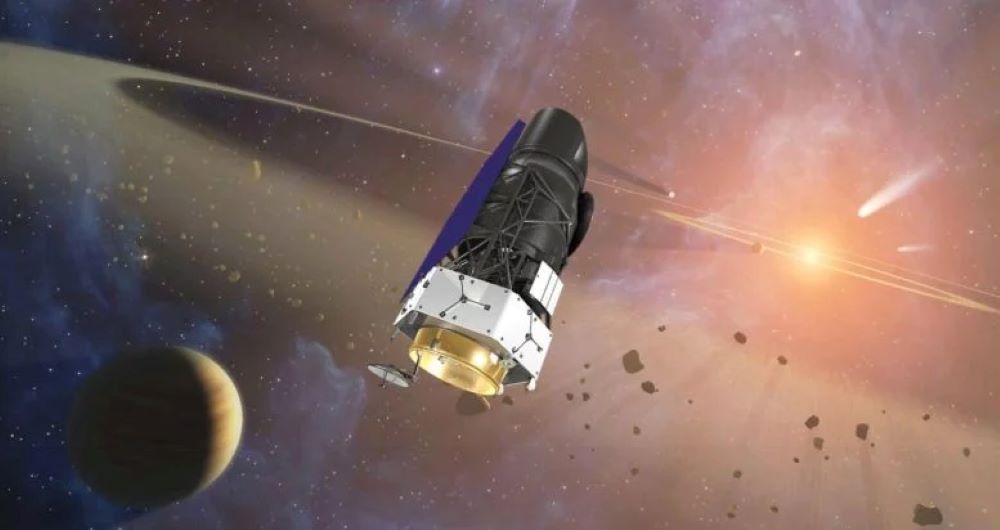
The Roman Space Telescope is designed to capture enormous areas of space using high-resolution infrared imaging. Scientists say its technology will allow researchers to study the universe on a much larger scale than before.
During its planned five-year mission, the telescope is expected to collect around 20,000 terabytes of scientific data. Researchers hope to use the information to study nearly 100,000 planets outside the solar system, known as exoplanets, along with hundreds of millions of galaxies and billions of stars.
Scientists also believe the mission could uncover unusual cosmic events and objects never previously observed.
NASA plans to launch the telescope aboard a SpaceX Falcon Heavy rocket from the Kennedy Space Center in Florida.
The mission is being managed by NASA’s Goddard Space Flight Center with support from several research institutions, including the Jet Propulsion Laboratory and the Space Telescope Science Institute.
Experts say the telescope could provide major new insights into how the universe formed and evolved over billions of years.
Leave a Reply