
Brokered by the World Bank between India and Pakistan, the treaty was designed to regulate the use of the Indus River System after the partition of British India in 1947.
However, decades later, critics in India increasingly argue that the agreement institutionalized major concessions in Pakistan’s favour while placing disproportionate obligations on India as the upstream state.
The Indus River System consists of six major rivers — the Indus, Jhelum, Chenab, Ravi, Beas, and Sutlej — which sustain agriculture, electricity generation, and drinking water supplies for millions of people across both countries. Following partition, the geographical arrangement left India controlling the headwaters of most rivers, while Pakistan’s heavily irrigated agricultural regions remained dependent on water flowing downstream.
Despite its strategic position as the upper riparian state, India agreed to a treaty that allocated the three western rivers — the Indus, Jhelum, and Chenab — primarily to Pakistan, while India retained rights over the eastern rivers — the Ravi, Beas, and Sutlej. In practical terms, Pakistan received access to nearly 80 percent of the total water flow of the Indus system, estimated at around 135 million acre-feet annually, while India retained about 20 percent, or roughly 33 million acre-feet.
Reports indicate that India did not gain access to new water resources through the agreement but instead received formal recognition over rivers it was already using, while relinquishing broader claims to the western river system.
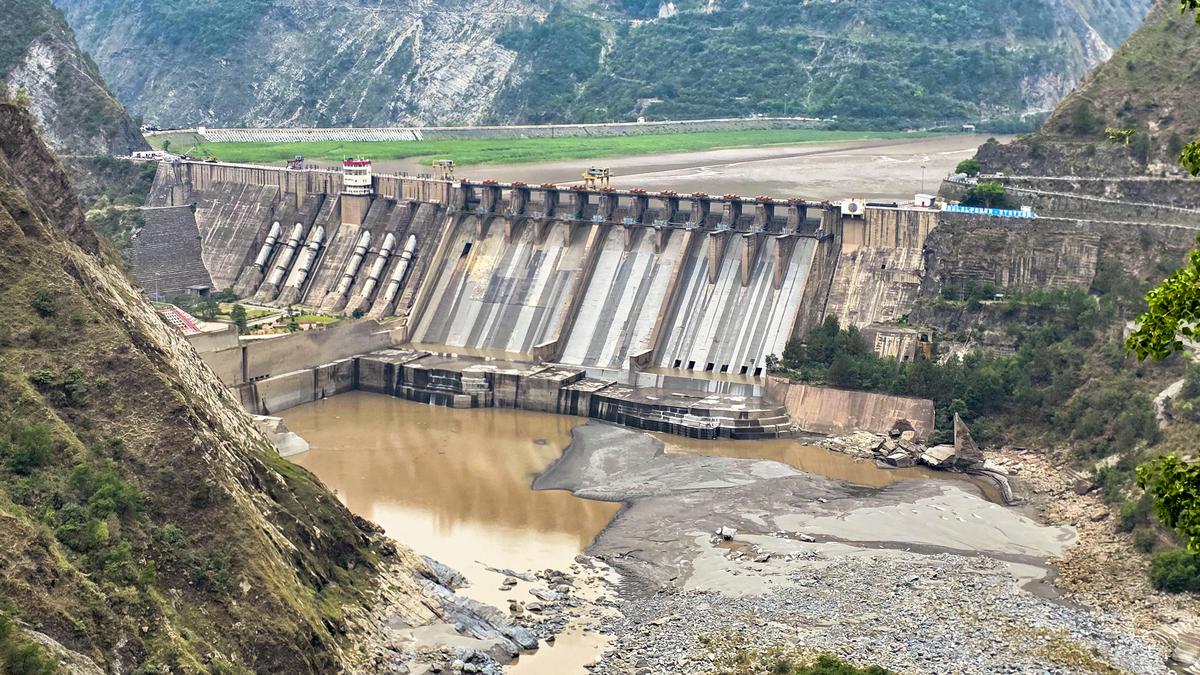
India was allowed only limited non-consumptive use of the western rivers, mainly for run-of-river hydroelectric projects, subject to strict operational and engineering conditions.
The negotiations leading to the treaty also reflected deep differences in approach between the two countries. The report argues that India adopted what it describes as a constructive and cooperative stance during negotiations, while Pakistan delayed agreements and pursued broader demands.
A World Bank proposal presented on February 5, 1954, reportedly required India to abandon planned developments along the upper Indus and Chenab rivers, forgo diversion of approximately six million acre-feet from the Chenab, and accept restrictions on water development projects in regions such as Kutch. India accepted the proposal relatively quickly, signaling a willingness to resolve the dispute, while Pakistan formally accepted it nearly five years later, in December 1958.
One of the treaty’s most debated provisions remains the financial arrangement attached to it. India agreed to contribute approximately £62 million — estimated at roughly $2.5 billion in present-day value — to help Pakistan construct water infrastructure linked to the river system. Critics have described this as an unusual precedent in international water-sharing agreements, where the upstream country not only surrendered a majority share of water access but also financed infrastructure for the downstream state.
The treaty also imposed several restrictions specifically on India’s activities on the western rivers. These included limits on irrigated cropped areas, caps on water storage capacity, and detailed design requirements for hydropower projects, including restrictions on pondage and reservoir storage. Critics argue that such provisions created a structurally unequal arrangement because Pakistan faced no comparable restrictions on its own water usage or infrastructure development.
Supporters of the treaty, however, have often pointed to its durability. Despite multiple wars, diplomatic crises, and decades of strained relations between the two nuclear-armed neighbours, the agreement has survived largely intact and has frequently been cited as a rare example of sustained cooperation between India and Pakistan.
Still, debates over the treaty continue to intensify, particularly as water security, population growth, climate pressures, and regional tensions increasingly shape politics in South Asia.
Critics in India argue that the agreement constrained India’s developmental potential on rivers flowing through its own territory, while supporters maintain that the treaty helped prevent far larger disputes over one of the region’s most critical shared resources.
Leave a Reply