One of the stark testimonies of these atrocities comes from Célestin Sezibera, a former member of the Seventh-day Adventist Church who admits that he would attend worship services and then go out to kill Tutsis.
IGIHE visited the 67-year-old at Nyarugenge Correctional Facility, located in Mageragere Sector, where he is serving a life sentence.
Sezibera was convicted of crimes related to the Genocide against the Tutsi, including distributing weapons used in killings across different parts of Nyamirambo, charges he openly acknowledges. He has now spent nearly 32 years in prison.
Sezibera explained that during the Genocide, he served as Nyamirambo sector leader from January 20, 1990, to April 29, 1994. He recalls how, in the fourth week of April 1994, he contacted the Kigali City Prefecture, where then-Prefect Tharcisse Renzaho authorized him to collect ten firearms from the Ministry of Defense. He then distributed these weapons to local cell leaders.
“Those guns were meant to kill Tutsis,” he admitted.
Sezibera was arrested on September 27, 1994, after initially being detained at the Nyamirambo brigade earlier that month.
His testimony challenges narratives often put forward by Genocide denialists who claim that the violence was spontaneous or triggered solely by the downing of President Habyarimana’s plane. Sezibera insists instead that the Genocide was carefully planned by the government in power at the time.
“The Genocide was prepared and executed by a bad government,” he said. “People must accept that it was organized. You cannot deny that Tutsis were killed, nor that they were killed by the government we lived under.”
A religious leader who turned against his own followers
When discussing the role of religious figures during the Genocide, Sezibera speaks with painful clarity—he was part of that leadership. On Saturdays, he would preach the Word of God, only to later join in the killings of Tutsis, including members of his own congregation.
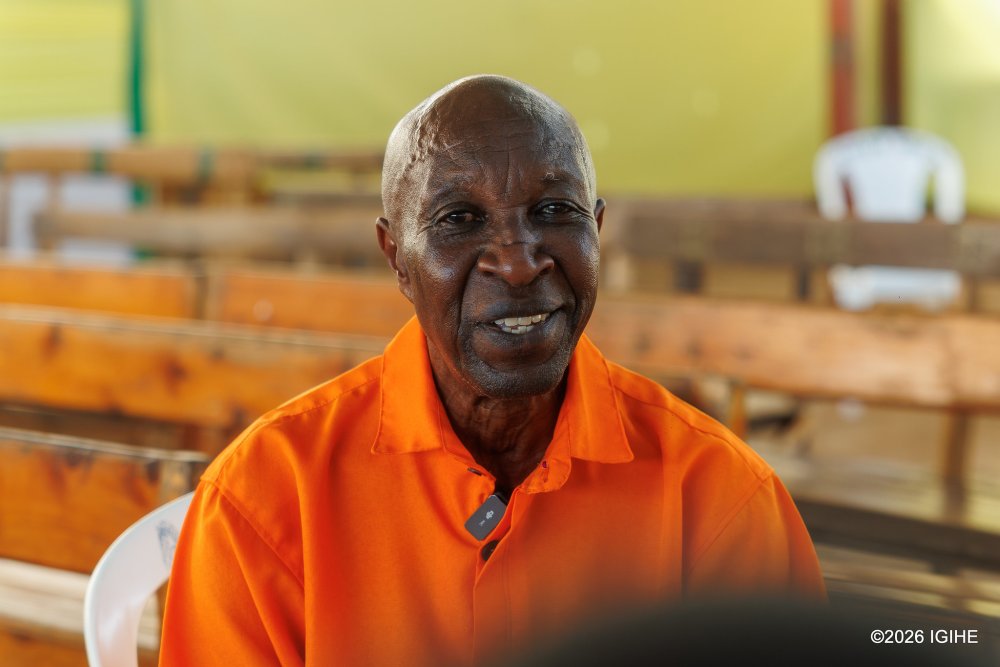
Today, he serves as a pastor within the Seventh-day Adventist Church community inside Nyarugenge Prison, a role he had also held before 1994, beginning in 1985 as an assistant pastor.
“It is both painful and shocking that those who were killed were people we led in churches, and those who killed them were also under our leadership,” he reflected. “It pains me deeply that we lacked the courage to stop such evil.”
Asked how he reconciles preaching about God today after participating in such crimes, Sezibera admits he lives with constant shame. He says he has worked to bring together fellow inmates accused of genocide to reflect, seek forgiveness, and acknowledge their responsibility.
“We gathered, knelt down, and asked for forgiveness from survivors of the 1994 Genocide against the Tutsi,” he said.
Among the memories that haunt him most is his role in persecuting innocent Tutsis falsely accused of being accomplices of the RPF. He recalls events from September 1990, when Tutsis were detained at Nyamirambo stadium under harsh conditions—denied food and water, with some dying there.
“I personally arrested some of them and took them to the stadium,” he admitted.
He also regrets his involvement in setting up roadblocks across Kigali, including in Nyamirambo, where many Tutsis were killed.
“And then there are the guns I distributed. They had only one purpose, to kill Tutsis. That is why I feel deep remorse and ask forgiveness from those who lost their loved ones.”
Reflecting on justice and reconciliation
Sezibera also spoke about Rwanda’s decision to abolish the death penalty in 2007. Before its abolition, more than 700 individuals were on death row, many convicted of genocide-related crimes.
He expressed gratitude to the Government of Rwanda for replacing capital punishment with life imprisonment, describing it as part of broader efforts to rebuild society and promote unity.
“Everyone was anxious. I thank the Government of National Unity for abolishing the death penalty… it was a step toward rebuilding Rwandan society,” he said.
He also praised the country’s efforts to stop the Genocide and promote equal opportunities for all citizens, including the children of perpetrators. Sezibera describes his personal transformation as akin to the biblical shift from Saul to Paul.
“I can truly say I have changed. I became like Paul, and I will continue on that path while encouraging others to do the same.”
Now a father of four, grandfather of ten, and great-grandfather of one, Sezibera has written a book about his life so that future generations in his family can understand his past and grow up committed to rejecting evil in all its forms.
He says he continues to seek reconciliation and has requested to meet survivors from Nyamirambo, either by visiting them or welcoming their representatives to the prison.
“I want to ask for forgiveness face to face and feel a sense of relief,” he said.
As a member of the Unity and Resilience Commission within the prison, he also encourages fellow inmates to reveal information about the whereabouts of victims’ remains so they can be given a dignified burial.
Leave a Reply