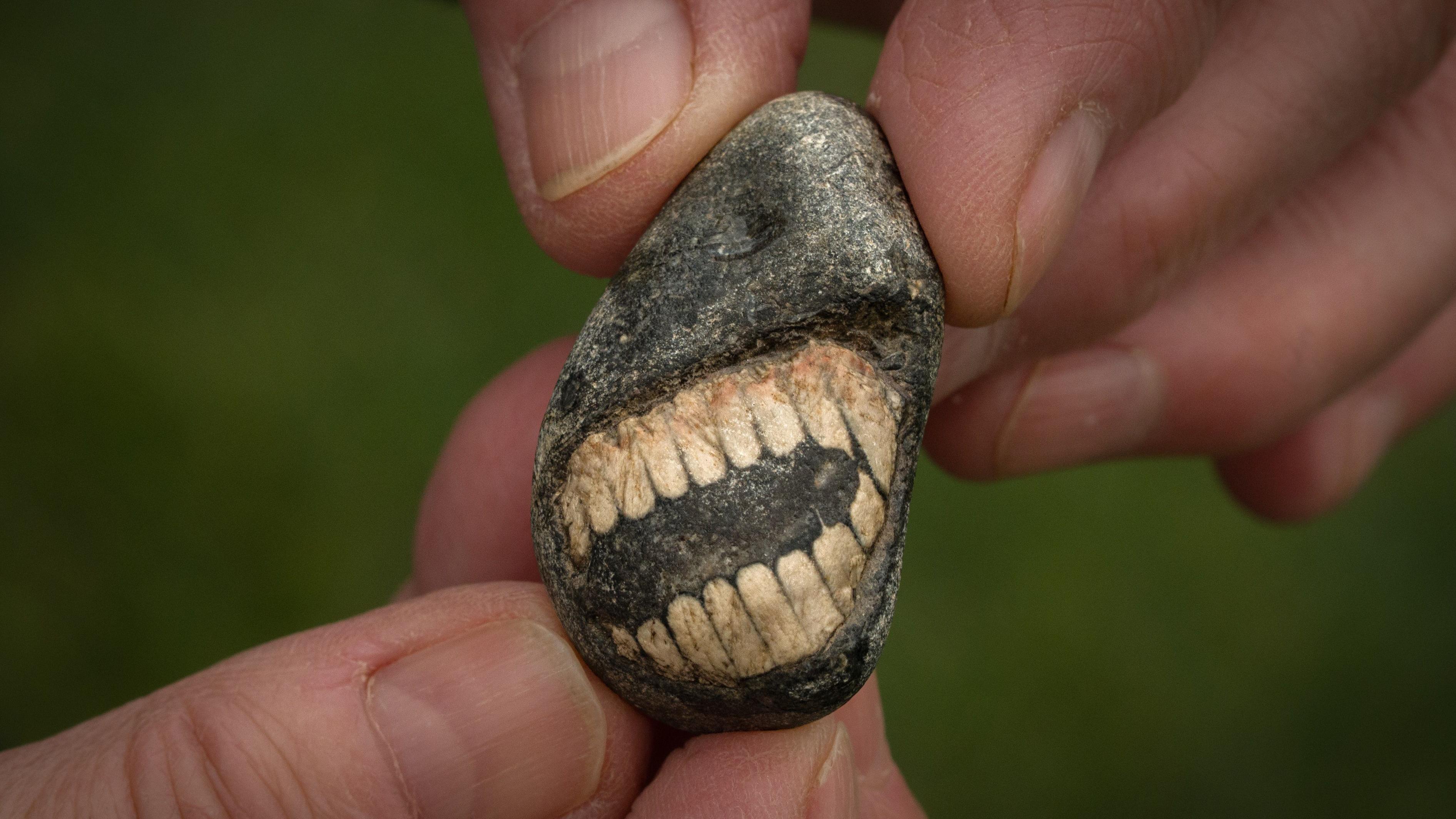
According to BBC, Clark, who visits Northumberland annually with her husband Gerard to hunt for the island’s famed “Cuddy’s beads,” took the fossil home and shared it on a Facebook fossil identification group. Thousands of likes and comments later, experts confirmed that she had uncovered a significant specimen: part of a crinoid, an ancient marine animal.
Crinoids, sometimes called “sea lilies,” first appeared over 500 million years ago during the Cambrian period. They have a flexible stem anchored to the seabed, with branching arms at the top. The stem is made of small discs called ossicles, which, when connected, form a columnal — the part Christine discovered .
Dr Jan Hennissen, senior paleontologist at the British Geological Survey (BGS), explained that the stem had split lengthwise and curved, giving it its “mouth-like” appearance. He added that it likely originated from the Alston Formation, a dark limestone approximately 350 million years old.
Holy Island’s fossils hold a rich history: centuries ago, locals believed the crinoid discs were “Cuddy’s beads,” created by St Cuthbert to impart spiritual blessings. While crinoid fossils are common along the Northumberland coast, complete specimens are rare, making Christine’s find particularly remarkable.
Though she has received offers to buy it, Clark plans to keep the fossil, enjoying the amusement it brings to visitors and fellow fossil enthusiasts alike.
Leave a Reply