The exhibitor from Mali was using the drum to promote shea butter produced by his manual workshop at the 2024 CIIE in Shanghai, running from Nov. 5 to 10.
“Our company has participated in the CIIE on three occasions, and I always see numerous opportunities here,” said Thera, adding that he is confident of attracting more big clients over the next few days.
According to Thera, his wife, a Chinese national, was the first person who told him that shea butter, a specialty he was all too familiar with during his childhood, may prove a surprising skin care cream option for Chinese people, while the CIIE is the first platform that has shown him he can cooperate with merchants from various countries.
China is offering over 120 free booths and other support measures to 37 of the world’s least developed countries at the 2024 CIIE, thereby helping them showcase their products at the expo. China has also expanded the exhibition area for African agricultural products.
In the area around Thera’s booth, other African exhibitors can be seen introducing farm produce including coffee beans, cashew nuts and tropical fruits, with constant streams of visitors stopping to have a look or taste.
China’s imports of African agricultural products have registered strong growth over the past years with the country rolling out supporting policies, including streamlining customs procedures and reducing or exempting tariffs, said Sun Hong, deputy director of the Institute of African Studies, China Institutes of Contemporary International Relations.
Sun defined the CIIE as one of the platforms enabling Chinese consumers to learn more about African agricultural products, and said that efforts should be made to support more Chinese enterprises in investing in relevant industries in African countries, such as processing, logistics and warehousing.
Holding a large piece of beeswax in one hand and a small box of honey in the other, Jackson Mponela, production manager for commerce and development at Tanzania Future Enterprises Company Ltd., said he is confident about the products and hopes to capture the Chinese market of over 1.4 billion people.
“I watched a video about the CIIE held last year and I was so impressed by the hustle and bustle there, so I figured we should start our first CIIE journey this year,” said Mponela, adding that he expects to secure new partnerships at the expo and learn more about how other companies are being operated.
“We brought many varieties of newly designed handmade Afghan carpets to the expo to better cater to the needs of Chinese consumers,” said Ali Faiz from Biraro Trading Company, which has participated at the CIIE for five consecutive years. Ali added that it used to be difficult for small businesses in Afghanistan to find overseas markets for local products.
To attract more Chinese buyers, Ali decided to use short videos and livestreaming to share knowledge about Afghan carpets and hold cultural experience activities together with other exhibitors during this year’s CIIE.
Helping enterprises from the least developed countries tap the Chinese market and integrate into the global economy is a feature of the CIIE, said Tang Wenhong, assistant minister of commerce, adding that the expo has always been a public good for the whole world.
The CIIE is just one of China’s endeavors to support the least developed countries. In September, China announced that the least developed countries that have diplomatic relations with China would enjoy zero-tariff treatment for all tariff lines starting from Dec. 1 this year.
China will also strengthen cooperation with those countries in terms of inspection and quarantine, and provide vocational training for e-commerce enterprises to help the least developed countries improve their trade capacity, said Tang.
In 2018, when the first CIIE was held, the Danish company displayed a vivid mosaic made by over 100,000 LEGO bricks featuring Jinbao, the mascot of the CIIE, and introduced science, technology, engineering, art and mathematics (STEAM) courses for Chinese schools. This year, the company is highlighting the potential of play for innovation and its commitment to sustainability.
“Since the first CIIE, we’ve introduced 29 novelties at the expo, among which 19 sets are inspired by Chinese culture and traditions,” said Paul Huang, senior vice president of the LEGO Group and general manager of LEGO China.
The LEGO Group is one of the 186 firms and institutions that have appeared at the CIIE seven years in a row, and many of them have signed up for next year’s event.
The CIIE’s full-time attenders have stood witness to and benefited from the evolution of the expo and the Chinese market at large, and have continued to make adjustments so as to take advantage of emerging trends and markets.
At the first CIIE, global industrial technology giant Schneider Electric signed cooperation agreements primarily in the manufacturing and construction industries, but has since expanded to encompass various sectors, including oil and gas, infrastructure, commercial construction, life sciences, transportation, and water services and environmental protection.
As China develops new quality productive forces, innovative technologies are driving the transformation toward digitization and green low-carbon development, which have provided Schneider Electric with a broader space for development, according to Yin Zheng, Schneider Electric executive vice president managing China and East Asia.
Zhang Xiqiang, executive vice president of Nestle S.A. and CEO of Nestle Zone Greater China, said the company has observed that the Chinese consumer market is gradually entering an era of scientific and rational consumption. “The demand in the Chinese food industry continues to evolve, shifting from simply eating well and eating enough to eating healthily and seeking delight from the experience,” he said.
The Swiss company has brought over 420 exhibits sourced from 14 countries and nine major business units, covering niche markets including baby nutrition, health science, confectionery and pet care.
The Singapore Business Federation (SBF) has led a delegation of nearly 400 representatives from 44 Singaporean businesses, marking the SBF’s seventh year at the CIIE.
SBF CEO Kok Ping Soon said the federation is very encouraged to see that the companies are no longer limited to the food and beverage sector. “We are starting to see companies responding to China’s call for more high-quality investment in fields like biotech,” he said.
To mark its seventh consecutive participation, U.S. material-science giant Dow Inc. has brought the most robust lineup and planned for the most agreements signed at the event in its history at the CIIE.
“As we celebrate our 45 years of operations in China, we are looking forward to China’s continued opening up policies that will enable us to further strengthen our deep roots and grow alongside the Chinese economy,” said Kevin Kolevar, vice president of Dow Inc.
Mohamed Youssef, head of the Egyptian Businessmen’s Association, said the “initiative is unique and has started to achieve solid results over the past six years.”
Data showed that in 2022, the fifth CIIE saw 73.5 billion U.S. dollars worth of tentative deals reached for one-year purchases of goods and services, which, Youssef said, occurred while “the world was recovering from an economic crisis resulting from COVID-19.”
Despite the pandemic and regional and international tensions, China’s success in concluding big business deals during the 2022 CIIE was “such a great achievement,” Youssef said.
He said China, the world’s second-largest economy, plays a vital pivotal role in balancing the world’s economic powers.
Youssef emphasized that through the CIIE and the Belt and Road Initiative (BRI), China aims to establish win-win partnerships with developing countries and assist them in making the best use of their resources to achieve development and growth.
“China enhances its relations with other countries via partnerships based on mutual benefit, and the BRI has opened the door for China to view African countries with this vision,” he added.
The head of Egypt’s business community emphasized that African countries, rich in human and natural resources, can benefit from strong partnerships with economically powerful nations capable and willing to drive development in these societies.
Youssef said that the growing Egyptian-Chinese relations will significantly enhance the trade and investment exchange between Egypt and China.
Egypt can be one of the leading destinations for Chinese investment to manufacture products in great demand in the Chinese market, said Youssef, noting that Egypt is a key partner in the China-proposed BRI.
He said one of the CIIE’s key achievements has been its role in introducing the global business community to the opportunities in the Chinese market.
“The expo opens opportunities for all participating countries to exchange information about the comparative and competitive advantages of their products, and thus contributes to and encourages inter-trade between participating states,” Youssef said.
The Egyptian business leader stressed that the participation of both developing and developed countries in the 7th CIIE indicates their awareness that “the CIIE is a very important window not only for the Chinese market but also for the markets of many countries participating in this expo.
They shared their views at the U.S.-China Agricultural Trade Cooperation Forum, held as part of the ongoing seventh China International Import Expo (CIIE), which runs from Nov. 5 to 10.
{{LONG-STANDING PARTNERSHIP}}
For Jim Sutter, CEO of the U.S. Soybean Export Council, the international marketing arm of U.S. Soy, China is a key trading partner and the relationship with China is “critically important.”
“U.S. Soy and many other commodity groups here have long-term collaboration relationships with China,” Sutter said, noting that in the case of U.S. Soy, China has been a partner for 42 years.
“We appreciate China’s leadership in opening up and promoting trade,” he said. “Trade is critically important for all of our agricultural commodities. And we’re happy to have a country like China, recognizing that and talking about the importance of it at a forum like the CIIE which is all about trade.”
The world’s first national-level expo focused on imports, the CIIE has featured a section dedicated to U.S. food and agriculture companies since last year, aiming to help them explore the Chinese market.
This year, the section attracted 14 participants. Impressively, within just the first hour of its operation, the total turnover hit 600 million U.S. dollars, according to data from the American Chamber of Commerce in Shanghai (AmCham Shanghai).
“China is our largest and most important market,” said Allisa Lau, China Director of Cotton Council International, a non-profit trade association that promotes U.S. cotton fiber and products, while speaking of the long-standing China-U.S. ties in the cotton industry.
The Chinese and American cotton industries have maintained very close cooperation over the years, and this is not only because of their interdependence but also their mutually beneficial and supportive relationship, Lau said.
{{TOWARD SUSTAINABLE FUTURE}}
At the forum, many speakers shared similar views that despite the changing global landscape, China-U.S. agricultural cooperation remains beneficial for both countries to shift toward a more sustainable development path.
Janna Fritz, Vice-Chair of the U.S. Soybean Export Council, described the strong China-U.S. relationship in the soybean industry as a “beacon of hope and strength” for global agriculture. The mutually beneficial ties have influenced agricultural practices and lifestyles in both countries, she said.
China’s growing demand for sustainable, high-quality crops has set a high standard for soy purchases in terms of both quality and sustainability, Fritz said. She added that U.S. soy farmers “understand that mission” and will continue to help China meet its ambitious sustainability goals.
Also eyeing the huge cooperation potential, Steve Reinhard, Chair of the United Soybean Board, said that China has entered a stage of high-quality development as it strives to meet the people’s increasing need for high-standard products.
“Our commitment to sustainability could serve as a new productive force for Chinese partners to help with China’s high-quality development,” Reinhard said.
To facilitate this growing partnership, the CIIE has set an example for connecting U.S. agriculture firms with long-term Chinese partners. According to AmCham Shanghai, U.S. companies continued to land orders even after their participation in the expo last year, and the cumulative turnover from these orders has now reached 3 billion dollars.
At the opening ceremony of this year’s expo, Chinese Premier Li Qiang reaffirmed the country’s commitment to “turning its enormous market into global opportunities.” He said in the keynote speech that the country has fully implemented all the opening-up measures announced at the previous six CIIEs, and will continue to expand market access to more sectors.
Ryan LeGrand, president and CEO for the U.S. Grains Council, said that trade in agriculture is a “bright spot” in a complicated relationship between the U.S. and China.
“I think it’s entirely possible that our ideological differences may set a ceiling in our relations, the trade sets a floor in our relations,” LeGrand said, noting that agricultural trade, in particular, helps “set that floor and maintain that foundation.”
“When trade works, the world wins. And I think that certainly applies in the U.S.-China relationship,” he said.
Xi, also general secretary of the Communist Party of China (CPC) Central Committee and chairman of the Central Military Commission, made the remarks during an inspection tour in the province from Monday to Wednesday.
On Monday afternoon, Xi visited an exhibition of ancient bamboo and wooden writing slips from the dynasties of Qin (221-207 BC) and Han (202 BC-AD 220) at a museum in Yunmeng County, the city of Xiaogan.
After learning about the content of the slips and their value, Xi stressed intensified archaeological research to provide a solid foundation for carrying forward fine traditional Chinese culture and boosting cultural confidence.
Before the invention of paper, bamboo and wooden slips were the primary writing medium in ancient China. They have been discovered in various parts of the country, offering a rare glimpse into the nation’s time-honored history.
On Tuesday morning, Xi visited a vegetable farm in Jiayu County, the city of Xianning.
Noting that technological progress is essential for modern agricultural development, he urged local officials and residents to embrace technological advancements and further boost vegetable production to bring tangible benefits to more people.
He then traveled to a village in Jiayu to inspect local elderly care facilities and community services. He called for more targeted measures to address public concerns, with a focus on the needs of older people and children.
Xi visited a villager’s home and talked with the family about their livelihood and access to medical and elderly care services.
As villagers bid him a fond farewell, Xi said that to advance Chinese modernization, efforts must be made to speed up rural revitalization. He encouraged the villagers to boost the economic returns of specialty industries and make their village more beautiful under the Party’s leadership.
On Tuesday afternoon, Xi inspected the Wuhan Institute of Industrial Innovation and Development, where he learned about the achievements of the technological innovation supply chain platform and talked with researchers and business leaders.
He called on scientists, researchers and entrepreneurs to contribute to boosting the overall performance of China’s innovation system and modernizing its industrial system.
On Wednesday morning, Xi was briefed on the work of the CPC provincial committee and the provincial government of Hubei, and he acknowledged the province’s achievements.
Hubei should forge ahead to bring about new achievements in technological and industrial innovation, Xi said, noting that the province should enhance research to achieve more fruitful results in developing core technologies in key fields and develop new quality productive forces in accordance with its local conditions.
Xi stressed that restoring the eco-environment of the Yangtze River is a top priority.
He also said that Hubei needs to integrate itself comprehensively into the unified national market, promote the positive interplay and common development of businesses under all forms of ownership, and participate actively in high-quality Belt and Road cooperation.
Hubei should strive to deliver in the integrated development of its urban and rural areas, as well as comprehensive rural revitalization, Xi said.
He urged the province to center on the metropolitan areas of Wuhan to advance the coordinated development of city clusters in the middle reaches of the Yangtze River.
He also called for efforts to consolidate and expand poverty alleviation achievements, accelerate the revitalization and development of old revolutionary base areas, and ensure the people’s well-being through solid work on various fronts.
Xi underlined the importance of boosting cultural resource protection and the innovative development of the cultural sector, enhancing origin-tracing studies and exhibitions of the Yangtze River civilization, and developing the cultural tourism sector into a pillar industry.
Noting that the year 2024 will end in less than two months, Xi stressed the need to push forward with various work, especially the economic work, in an effective and solid manner, so as to deliver on the economic and social development goals for the whole year.
The business exhibition of the world’s first national-level exposition dedicated to imports has attracted about 3,500 exhibitors from 129 countries and regions this year. Notably, a record high of 297 Fortune 500 companies and industry leaders are attending the six-day expo. And more than 400 new products, new technologies and new services are unveiled.
Experts believe the large scale of the expo highlighted the global companies’ confidence in the Chinese market and their commitment to further development in China despite the sluggish global economic recovery.
{{ENORMOUS MARKET}}
China is willing to open up its enormous market further and will continue to expand market access to sectors including telecommunications, the internet, education, culture and healthcare in an orderly fashion, Premier Li said in a keynote speech at the opening ceremony of the 7th CIIE.
The sound fundamentals of the Chinese economy remain unchanged, according to Li, adding that the country’s new growth drivers are fast-growing, with double-digit investment growth in high-tech industries and development booms in emerging industries including artificial intelligence, advanced manufacturing and the green economy.
During a meeting on Monday with select exhibitors and buyers attending the expo, Li said that China is able to sustain steady economic recovery, improve the quality and capacity of its market, and provide more extensive growth space for global businesses in terms of trade, investment and innovation. He added that the Chinese market is still one of the best choices for companies worldwide.
The keen interest from global participants has shown the growing influence of the CIIE and the charm of the Chinese market and also highlighted China’s determination to push forward the building of an open world economy, said Zhao Fujun, a researcher with the Development Research Center of the State Council.
In 2018, China inaugurated the CIIE to build an open platform for international trade cooperation and to support free trade and economic globalization, making it a “golden gateway” to the world’s second-largest consumer market.
More than 420 billion U.S. dollars worth of tentative deals were signed at the CIIE’s earlier six editions since 2018. Beyond the event, global companies can reach a larger customer base and make further investments in the country.
Toshinobu Umetsu, president and CEO of Shiseido China, said he is very inspired and encouraged by Premier Li’s emphasis on China’s commitment to continuing high-level opening-up and to sharing development opportunities with the rest of the world.
The Japanese cosmetics giant will continue to strengthen its long-term investment in China. It has never wavered in its confidence and determination to invest in China, as the incredible vitality and resilience of the Chinese market make it a very important international market, Umetsu said.
German healthcare and agribusiness giant Bayer AG is among more than 180 companies and institutions that have attended all seven editions of the CIIE since 2018.
Bayer’s participation at the expo demonstrates its unwavering commitment to this important market, said Bill Anderson, chairman of Bayer AG Management Board.
“International cooperation and economic globalization are important factors in the world’s development. That’s why Bayer is glad to be part of the expo for the seventh consecutive year,” said Anderson.
{{NEW OPPORTUNITIES}}
The CIIE unlocks new opportunities for the world, Bayer said, adding that it will actively leverage this vital platform to continuously unleash its innovative potential while looking forward to forging partnerships with global collaborators.
Penne Kehl, Asia Pacific Group president of Cargill Agriculture and Trading, expects a very busy schedule at the import expo, including meeting with customers and partners and signing a few important deals and partnerships. U.S. food giant Cargill has participated in CIIE for seven consecutive years.
As its influence grows, the expo is attracting new foreign enterprises over the years. Canadian sportswear giant Lululemon is among the first-time participants.
The Chinese mainland is Lululemon’s largest market outside of North America and is also one of the most dynamic and exciting ones, which is key to driving the company’s international business, said Calvin McDonald, CEO of Lululemon.
“It’s an exciting opportunity to showcase the brand, drive awareness to our growth story and what we have planned for the future,” said McDonald. He added that Lululemon will continue to open more stores in the country, adding to its current 137 stores in 41 cities.
China offers free booths and other support measures to 37 least-developed countries to help them showcase their products at the import expo. It also expanded the exhibition area for African agricultural products.
China has been opening up its market to Africa, enabling transformation on the African continent, said Peter Kagwanja, founder and president of the Africa Policy Institute.
“BRICS works to promote true multilateralism and support changes in global governance, and China plays an important role by actively engaging in discussions and initiatives that aim for a fairer international system,” Alok Kumar Pathak, associate fellow at the BRICS Institute India in Delhi, told Xinhua in a recent Interview.
In an exclusive interview with Xinhua at a time when the 16th BRICS Summit was held from Oct. 22 to Oct. 24 in Russia’s Kazan, Pathak said that China has put forward Global Development Initiative, Global Security Initiative and Global Civilization Initiative, and is committed to working with all parties to build a community with a shared future for mankind, which matches the concept of BRICS cooperation that attaches equal status for all the sovereign nation-states.
BRICS is an acronym for Brazil, Russia, India, China, and South Africa, five major emerging markets with considerable economic potential that founded the BRICS group.
B.R. Deepak, professor of the Center for Chinese and South East Asian Studies of Jawaharlal Nehru University, also talked with Xinhua. He said that since its establishment, the BRICS cooperation mechanism has expanded to various practical cooperation areas and achieved remarkable results.
“The BRICS countries have played an important and unique role in leading the global South and promoting multilateralism. Among this, China has provided numerous economic contributions, ideological contributions and global public goods,” he said.
China’s initiatives fully embody the BRICS spirit and implement China’s commitment to bridge differences between countries and build a more equitable, just, and acceptable cooperation platform, Deepak said, adding that through its own development and cooperation under the BRICS framework, China has provided tremendous development support for many countries in the global South, elevation of poverty across the continents, especially in Africa and South Asia.
“The global economy is now limping. The way it progressed during deep globalization is over, and geopolitical conflicts in various regions have added fuel to the fire,” Deepak said. “In such circumstances, all countries should welcome more initiatives that maintain world peace and security, and promote common economic development.”
The Kazan summit is also the first offline gathering of leaders of the “BRICS family” after the historic expansion in January this year. Pathak said that China has made remarkable contributions in promoting the expansion of the BRICS countries.
More and more countries wish to join the ranks of BRICS, which fully demonstrates that the BRICS concept of independence and equal cooperation is getting more support among countries, said Pathak. “The Western paradigm on the basis of their so-called economic and legal theories is designed to preserve the dominance of the West and keep the rest lagging behind,” he added.
He stressed that after the expansion, the BRICS countries will be more representative and have greater development potential, and can more effectively promote the transformation of the global governance system towards a more just and reasonable direction.
Speaking about the potential outcome of this summit, Pathak said that all countries should conduct more economic cooperation. “The BRICS countries should conduct organizational activities to ensure the significance of the BRICS plus’ countries in the world economy increases with their joint efforts as a group,” he said.
As for people-to-people exchanges, Pathak said that he applauds China’s attitude that diversity is essential to human civilization. “Encouraging exchanges and learning among cultures is important for mutual progress. I hope that during the BRICS Summit, China will continue to support peaceful coexistence and suggest ways to improve understanding and collaboration among different civilizations,” Pathak said.
In his address to the summit, Xi emphasized the need for BRICS countries to seize the historical opportunity and work together to strengthen solidarity and cooperation among Global South nations.
{{STRENGTHENING SOLIDARITY
}}
During a small-group meeting, President Xi welcomed new members to the BRICS family and extended invitations to many other countries to become partner countries.
Xi pointed out that the enlargement of BRICS is a major milestone in its development history, and a landmark event in the evolution of the international situation. It is for their shared pursuit and for the overarching trend of peace and development that BRICS countries have come together, he said.
Stressing that the world is undergoing accelerated changes unseen in a century, marked by new trends of multipolarity and the risks of a “new Cold War,” Xi said BRICS countries should seize the historical opportunity, take proactive steps, remain committed to the original aspiration and mission of openness, inclusiveness and win-win cooperation, conform to the general trend of the rise of the Global South, seek common ground while reserving differences, work in concert to further consolidate common values, safeguard common interests, and strengthen BRICS countries through unity.
“We must work together to build BRICS into a primary channel for strengthening solidarity and cooperation among Global South nations and a vanguard for advancing global governance reform,” Xi said.
Xi stressed that the more turbulent the world is, the more BRICS countries should uphold the banner of peace, development and win-win cooperation, refining the essence of BRICS and demonstrating its strength. BRICS countries should raise the voice of peace, advocating a new path to security that features dialogue over confrontation and partnership over alliance.
Xi also urged BRICS countries to jointly pursue a path of development, advocate a universally beneficial and inclusive economic globalization, and stay committed to the principle of common development. He said BRICS countries should consolidate the foundation of cooperation, deepen cooperation in traditional areas such as agriculture, energy, minerals, economy and trade, expand cooperation in emerging areas such as green, low-carbon and artificial intelligence, and safeguard trade, investment and financial security.
{{ADVANCING DEVELOPMENT
}}
As the high-profile gathering unfolded amid global uncertainties, BRICS embarked on a new chapter, cementing its growing influence on the world stage.
President Xi, addressing the leaders in an expanded format, put forward five suggestions: building a BRICS committed to peace, innovation, green development, justice, and closer people-to-people exchanges.
“We must build on this milestone summit to set off anew and forge ahead with one heart and one mind,” Xi said. “China is willing to work with all BRICS countries to open a new horizon in the high-quality development of greater BRICS cooperation.”
This year’s summit also marked another major milestone with the decision to invite a number of nations as partner countries, further advancing the group’s development.
During Wednesday’s meetings, leaders exchanged views on BRICS cooperation and crucial international issues of shared concern under the theme “Strengthening Multilateralism for Just Global Development and Security.” Central to their discussions were global and regional security, sustainable development, climate change, and reforms in global economic governance.
A notable focus of the summit was the call for increased funding to support the sustainable development of developing countries. Egyptian President Abdelfattah al-Sisi said that BRICS aims to “strengthen a multipolar international system,” particularly through facilitating “innovative and effective” financing for developing nations.
Russian President Vladimir Putin said that “the trend for the BRICS’ leading role in the global economy will only strengthen.” He cautioned against the ongoing risks posed by geopolitical tensions, unilateral sanctions, and protectionism. “A key task is to promote the use of national currencies to finance trade and investment,” Putin said.
Brazilian President Luiz Inacio Lula da Silva, who participated in the summit via video link due to a head injury, said, “It’s not about replacing our currencies, but we need to work so that the multipolar order we aim for is reflected in the international financial system.”
BRICS has already made strides with the New Development Bank (NDB), headquartered in Shanghai. On Wednesday, the BRICS countries agreed to support the NDB in implementing its general strategy for 2022-2026 and in expanding local currency financing.
In a declaration issued at the 16th BRICS Summit, they also agreed to jointly build the NDB into a new type of multilateral development bank for the 21st century, support its further expansion of membership, and expedite the review of membership applications from BRICS countries in accordance with its general strategy and related policies.
Leaders also advocated for a fairer global order for the Global South. South African President Cyril Ramaphosa said that BRICS is an inclusive bloc capable of changing the trajectory of the Global South. “To do this we must realize the full potential of our economic partnership, to ensure sustainable development for all and not just for some,” he said.
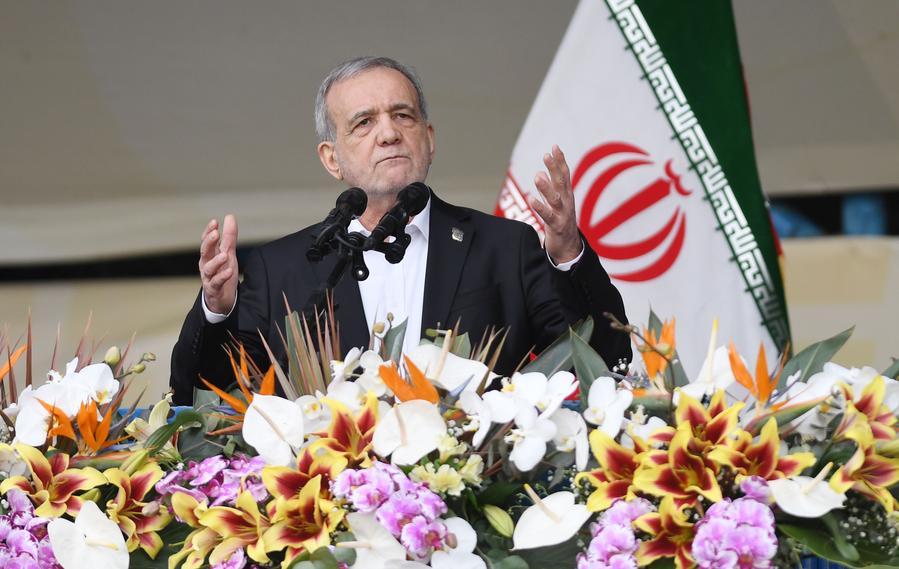
“The period of unilateralism is coming to an end,” said Iranian President Masoud Pezeshkian, calling for a more equitable global system.
{{GROWING APPEAL
}}
The term BRIC was initially coined in 2001 by Jim O’Neill, former chief economist at Goldman Sachs, as an investment concept referring to emerging market economies of Brazil, Russia, India and China. With South Africa’s inclusion in 2010, BRICS officially took shape.
In a recent interview with Xinhua, O’Neill acknowledged the need for policymakers to collaborate in creating an optimal system that benefits all. “I think as we pass through time, we will find a new equilibrium where countries will be more at ease with what other countries are doing,” he said.
In recent years, BRICS has garnered attention from countries around the world. Over 30 countries, including Thailand, Malaysia, Türkiye, and Azerbaijan, have either formally applied for or expressed interest in joining the group. Many other developing countries are also seeking stronger cooperation with BRICS.
The growing interest from countries seeking to join BRICS cooperation each year demonstrates that in today’s troubled world, BRICS is not only important but essential, said Bunn Nagara, director and senior fellow at the Belt and Road Initiative Caucus for Asia-Pacific.
“China, led by President Xi, has contributed significantly to BRICS’ success with a progressive and enlightened approach,” said Nagara.
BRICS is seen as a vital platform for developing countries to pursue growth and address global imbalances.
The enlargement of BRICS is “important in tipping the financial and technological balance in favor of the majority Global South rather than the minority Global North,” Webby Kalikiti, a lecturer and researcher at the Department of History, University of Zambia noted. He believed that the future of the world depends on the cooperative energies of all countries and the transition to a multipolar world.
Ahmed Al-Ali, a political and strategic researcher at the Gulf Research Center in Dubai, believed that BRICS aims to foster a more equitable, effective, and rational international system.
It will play a crucial role in promoting development and growth opportunities for Global South countries, while also ensuring the sustainability of economic and social progress, said Al-Ali.
Similarly, Sithembiso Bhengu, a senior research fellow with the Sociology Department, University of Johannesburg said that “the BRICS mechanism presents real possibilities for making the globe a fairer community of nations, with possibilities for mutual support and cooperation towards our respective goals in modernization and development.”
In a recent interview with Xinhua, Saad said that China’s proposal in 2017 to create a BRICS Plus platform, which was aimed at enhancing cooperation with other emerging markets and developing countries, has opened “new space for new countries to join the bloc.”
The benefits of China’s proposal became evident when new countries joined BRICS, while more than 30 other countries have either formally applied for or expressed interest in its membership, he added.
The Egyptian official attributed the mechanism’s success in attracting more countries to the reliability of the leading BRICS members, especially China.
He noted that the values upheld by BRICS resonate with countries in the Global South, emphasizing China’s leadership in areas such as economy, finance, good governance, and multilateralism characterized by equity and justice.
“China is believed to be the true and trusted voice of developing countries and emerging markets,” he said.
Among other achievements, BRICS has established two important cooperation mechanisms: the New Development Bank (NDB) and the Contingent Reserve Arrangement (CRA). The latter provides support for countries facing financial emergencies.
“All these arrangements, meetings, and summits provide an institutional framework for member states to promote coordination and interaction,” Saad said.
Saad cited Egypt as an example of the countries that benefited from their interaction with BRICS before officially joining it. He stressed Egypt’s participation in BRICS summits since 2017, its membership in the NDB, and its enhanced cooperation with China, Russia, and India in several sectors.
He said the BRICS spirit reflects the principles that China and other founding countries have long championed, adding that the group was established in a world marked by unfairness and contradictions.
Saad perceived the growing number of requests for joining BRICS as a sign of resentment over the Western hegemony, hypocrisy, double standards, and disregard for multilateralism and UN principles.
“Each society has its heritage, culture, and traditions that should be respected. So, it is not logical anymore when the West believes it can monopolize global economic or financial order,” he said.
Looking ahead to the upcoming BRICS summit in Russia on Oct. 22-24, Saad expressed optimism that it would carry out new initiatives or plans to promote world justice.