Tag: HomeNews

  • Rwandans in Mons honour victims of 1994 Genocide against the Tutsi

    Mons is a city located in the French-speaking region of Wallonia, in the province of Hainaut.

    The commemoration began with the laying of wreaths at the Genocide Memorial site located at Place du Parc. The event was also attended by Natacha Vandenberghe, representing the City of Mons.

    This year’s ceremony was organised by a group of Rwandan Genocide survivors in collaboration with the Rwandan Diaspora.

    Also in attendance were Twagira Mutabazi, President of Ibuka-Mémoire et Justice-Belgique; Ernest Gakuba, head of the Rwandan Diaspora in Belgium; Irène Kamanzi, President of Isôko, an association of Tutsi from the DRC in Europe; Arnold Turagara, head of DRB-Rugari in the Mons region; and other representatives of various organisations.

    Ernest Gakuba, President of DRB-Rugari, commended the City of Mons for its principled stance during the commemoration, contrasting it with other localities that he said have politicised remembrance events.

    “We thank the leadership of the City of Mons, which did not act like some other municipalities that mixed politics with remembrance. But history will judge them harshly when the time comes. Mons chose the path of unity and humanity,” he stated.

    Natacha Vandenberghe, representing the City of Mons, reminded attendees how the Tutsi were killed simply because of their identity and how they were abandoned.

    “It was killing those who could not fight back — this was not a war between opposing sides. It was premeditated and organised with the intent that the Tutsi must be exterminated. Even the United Nations has recognised this,” she stated.

    Vandenberghe urged people to speak the truth about what happened:

    “Let’s call the Genocide by its rightful name. Let us remember, and let us help young people understand this history.”

    In his remarks, Twagira Mutabazi, head of Ibuka-Mémoire et Justice-Belgique, discussed the importance of remembrance and the need for survivors to continue rebuilding their lives. He also highlighted recent challenges facing Genocide remembrance efforts in Belgium.

    “This commemoration helps young people to continue honoring the eternal value of those we lost in the Genocide against the Tutsi.”

    Mutabazi also revealed that he has requested the repatriation of the remains of King Yuhi V Musinga, currently in Belgium, so they can be properly buried in Rwanda.

    “I have asked the Rwandan government to do everything possible to bring back King Yuhi V Musinga’s remains to Rwanda, to be reburied at Mwima in Mushirarungu,” Mutabazi said.

    Irène Kamanzi, President of Isôko, said she attends these commemorations because she understands their value, but also because she wants to raise awareness that the horrors of the 1994 Genocide are recurring today.

    “It is heartbreaking that I am here to speak about what is happening just across Rwanda’s border in the DRC. The killings there are beyond human comprehension, and the Congolese government is watching silently, just as the world did in 1994. Those who once fled Rwanda are now killing us again and establishing a government of genocidaires. I am here to denounce that loudly,” she remarked.

    Arnold Turagara, head of DRB-Rugari in the Mons area, said:

    “Today, 31 years later, we have gathered again here in Mons to remember our loved ones killed in the 1994 Genocide against the Tutsi — infants, children, the elderly. But we are not here to weep; we are here to bear witness to the atrocities committed.”

    He emphasised that this is to help the younger generation understand what happened, pursue justice, and restore the value of human life.

    He thanked the RPF-Inkotanyi for not standing idly by like the international community, but instead choosing to rescue those who could still be saved. He reminded everyone that young people played a key role in that mission and should be seen as role models.

    Turagara also expressed gratitude to all who stood in solidarity with them, particularly the City of Mons for its continued support.

    Olivier Munyengango, a survivor from Mukarange Parish, shared his testimony during the event. He lost his entire immediate family in the Genocide and was the only one left. His family included five children and their parents. Many extended family members were also killed.

    The 31st commemoration event in Mons was held in three parts: a remembrance walk, testimonies and discussions at the Mons Memorial Museum, and a third part in the Jemappes district, where a night vigil and symbolic flame (Igicaniro) took place.

    The Igicaniro program featured testimonies, moments of reflection, and a display of photos of both murdered and wiped-out families to highlight their lives and legacies.

    This commemoration in Mons is one of many held across Belgium this year, with previous events in cities like Brussels, Liège, Namur, Bruges, Ottignies-Louvain-la-Neuve, and Antwerp. Upcoming commemorations will be held in Charleroi on May 24, Tournai on May 31, and Leuven on June 10.

    Photos from the first part of the event: laying flowers and the remembrance walk.

    The commemoration happened on Saturday, May 17, 2025.The commemoration began with the laying of wreaths at the Genocide Memorial site located at Place du Parc. The event was also attended by Natacha Vandenberghe, representing the City of Mons.3-3270-2628e.jpg4-2483-fab25.jpg7-1513-c948c.jpg5-2030-b5e64.jpg9-1177-2b124.jpg8-1335-fa6fb.jpgNatacha Vandenberghe, representing the City of Mons, reminded attendees how the Tutsi were killed simply because of their identity and how they were abandoned.10-1050-bf3b2.jpgda8392bd-3526-4065-8d97-9615f3c2c21c-6551c.jpg12-882-4840c.jpgThis year’s ceremony was organised by a group of Rwandan Genocide survivors in collaboration with the Rwandan Diaspora.13-737-9e76b.jpg18-423-20d05-2.jpg16-521-55e0d.jpg20-345-d9599.jpg24-252-16cab.jpg23-276-5bbf3.jpg21-330-89f17.jpg22-381-94d2c.jpg25-224-bc35c.jpg26-203-b7d6f.jpg27-190-c2f15.jpg28-166-dda1a.jpg29-169-857d5.jpg31-154-e7996.jpg30-170-dedb1.jpg699e8f30-d6e9-4565-aed8-083c0a75a304-c3594.jpg3741d7f3-4f3d-4f7d-aea3-a3e24a8b0c72-33565.jpg4dafa450-8958-4b23-a2b2-16cc30ab8696-e515f.jpg12a8af2f-1c8e-4ae3-8970-28b1a333b2e3-def27.jpgb2634923-de50-4889-b012-420302b24f14-889ec.jpgb188666b-31ef-4a92-87e1-1d4d8fdfa1e0-dcb3c.jpgf5c6ac6f-5558-4921-9e93-3c02ebe18581-a7f47.jpga43cec5c-6305-44bc-b051-a94803b6d8eb-957c9.jpged9cf2d2-88c5-4717-9ec2-fb5e40b30e2c-f861d.jpge7b23347-4f63-4dcf-b967-a160844f76c8-d99ed.jpg0c7a5ecf-79f4-480b-984c-52ee0d1ef652-3d09c.jpg0f41d8a6-1722-418f-8e51-27e8f505f1cc-a3222.jpg7f2e4574-744e-4370-a5ea-d74b8702aeb0-196c3.jpg5b621144-3315-4358-bfd3-67caea1711ff-9c44c.jpgdc130917-461a-4fa1-b7d4-2f7398adac11-a52a2.jpgf9d29b18-cd31-484b-870c-8a616521ddd4-286eb.jpgb6a5c4fe-8774-4ed7-a6fb-dc6d372ef958-4b019.jpga65d8433-1e64-4060-9381-e15dbefc2b9d-1d4f0.jpgef40996a-5c9d-4ba8-90ad-6adba13d0b72-5a1d0.jpg748ac204-af3b-4de5-9e62-65c663827d92-0cfc6.jpg39552b33-85a0-4b50-b41c-ca1fe57e30e5-0f53b.jpg790af32c-3441-4ad1-8c30-7533d6acff42-1ace5.jpg38bfcde7-c809-450d-942b-17c750d22b16-b97f3.jpg0093cc67-c6f4-452b-9123-f2835093e70f-c8bb8.jpg75a1d98f-ada5-4065-a9af-283226c96adb-9dd0c.jpg041662f0-97cf-4307-b4a6-7b3a3b27d9d6-f6f28.jpg00588dd4-dc88-4a58-a8ad-76cee64fb916-e09e3.jpg97776550-c3c8-4892-9bec-39187d9c536e-a3538.jpg1b182c63-f60f-4607-a05c-2eb7881688e6_1_-7893c.jpgcee5a465-a49e-40af-ba9c-cbbf53fac1f7-7c34c.jpgb188666b-31ef-4a92-87e1-1d4d8fdfa1e0-dcb3c.jpgc7758b47-27a0-4ebd-b84e-4f9a2afb8127-a199b.jpga73304f8-3c3b-4ee2-a9cb-79de2f9adb56-d2150.jpga01a529d-716c-4a43-a895-72c21ad85f59-a01f2.jpg1b182c63-f60f-4607-a05c-2eb7881688e6-17a63.jpg7af4904b-80cf-453d-ae6e-dc12fcc86a99-72003.jpgwhatsapp_image_2025-05-18_at_22.19_13_d65a16d4-bcfa3.jpgwhatsapp_image_2025-05-18_at_22.19_13_95a17fee-b0de3.jpgwhatsapp_image_2025-05-18_at_22.19_14_e9609d59-896c0.jpgwhatsapp_image_2025-05-18_at_22.19_13_95a17fee-b0de3_1_.jpg8007c8d9-f94f-4b3a-8f9d-0f1178e58d22-775c1.jpg6c6a4240-0ab2-4eb5-af39-06475b9b73c3-c1156.jpgf579fdbc-ec6a-4f7d-99e8-abbd242a6893-afc7a.jpg5d25e0a5-d793-4a0d-add0-92737b4829b2-cb4bf.jpg643630d0-214a-4587-8332-044f32b25f64-c3f22.jpgcopy_of_c6b9d226-6cff-4241-a65a-92a57496b269-41ef6.jpgc6b9d226-6cff-4241-a65a-92a57496b269-cbfe4.jpg3809c547-9541-4ead-8e63-8524981db9fc-8829b.jpg6f6b51bc-60de-482a-891d-c2759aafecd5-6ef93.jpgc1cd4502-04be-4cbb-88ad-bfd99140980e-20a1a.jpg

  • Trinity Metals Group honors genocide victims at Ntarama Memorial, visits Intwaza

    The day began with a solemn visit to Ntarama, where Trinity Metals employees were guided through the site’s tragic history.

    They learned how, in 1994, thousands of Tutsi who sought sanctuary in the Ntarama Catholic Church were brutally massacred—many by government soldiers—in a place they believed would protect them. The church has since been preserved as a memorial to honor the lives lost.

    Speaking at the memorial, Peter Geleta, CEO of Trinity Metals Group, reflected on Rwanda’s journey of recovery and reconciliation over the past three decades.

    “Being at this memorial today is a great honour. We’re remembering those who lost their lives, and we’re also honouring the brave survivors. It’s 31 years since this happened, but I’m always amazed by how quickly Rwandans rebuilt. If you look at the country today—under their leadership—what has been achieved is a shining example to the rest of the world,” he noted.

    “If you look at all the conflicts happening globally, there are many countries that could learn from Rwanda. They came through their darkest period and rebuilt through reconciliation, love, and unity. It’s fantastic to see what’s possible when people come together after such a very, very difficult time—and I really commend all Rwandans,” Geleta added.

    He also appealed to Rwanda’s youth and young people around the world, urging them never to forget the atrocities of the past—even if they were born after the genocide—and to take an active role in ensuring such tragedies never happen again. Geleta emphasized that prevention begins with mutual respect, love, and collective responsibility.

    After visiting the memorial, the Trinity Metals delegation continued to Impinganzima Hostel, where they met with elderly genocide survivors whose families were wiped out during the genocide.

    One of the residents, Agnes Mukandanga, shared her gratitude for the visit and what it symbolized.

    “Sometimes I used to sit and feel like there was no one left who cared about me,” she said. “But today, I feel loved, seen, and remembered. When someone thinks of you and says, ‘I’m going to visit the Intwaza in Bugesera, to comfort them and see how they’re doing,’ that means everything to us. We never thought we would be loved again like this.”

    Geleta concluded the visit by thanking the Government of Rwanda and the Unity Club Intwararumuri for initiating the Impinganzima concept, which provides elderly survivors with a dignified, loving, and supportive environment.

    The Chief Executive Officer of Trinity Metals Group, Peter Geleta, lays a wreath at the grave of victims of the 1994 Genocide against the Tutsi at the Ntarama Genocide Memorial in Bugesera District.Peter Geleta, CEO of Trinity Metals Group, reflected on Rwanda’s journey of recovery and reconciliation over the past three decades.Peter Geleta, CEO of Trinity Metals Group, reflected on Rwanda’s journey of recovery and reconciliation over the past three decades.mbere_yo_gusura_ibice_bigize_urwibutso_rwa_jenoside_rwa_ntarama_babanje_gusobanurirwa_amateka_yo_muri_ako_gace-4ceab.jpgOne of the residents, Agnes Mukandanga, shared her gratitude for the visit and what it symbolized.Evode Ngombwa briefed the Trinity Metals Group team on the historical significance of the Ntarama Genocide Memorial.The management and staff of Trinity Metals Group in a group photo with Intwazaabayobozi_n_abakozi_ba_sosiyete_ya_trinity_metals_group_basuye_urwibutso_rwa_ntarama_basobanurirwa_amateka_yaho-c41b3.jpgabayobozi_n_abakozi_ba_sosiyete_ya_trinity_metals_group_basuye_urwibutso_rwa_ntarama_basobanurirwa_amateka_yaho-c41b3.jpg1_33-2-6d70f.jpgabakozi_ba_trinity_metals_group_bari_gushyira_indabo_ku_mva_ishyinguyemo_abatutsi_bazize_jenoside_mu_1994-a642d.jpgingoro_ya_yezu_nyirimpuhwe_igiye_gushyirwa_ku_rwego_mpuzamahanga-5a4b6-2.jpgThe elderly residents shared warm moments with the staff and management of Trinity Metals Group.The elderly residents shared warm moments with the staff and management of Trinity Metals Group.basobanuriwe_amateka_y_iyi_nzu_yatwikiwemo_abatutsi_muri_jenoside_mu_1994_bajunyweho_matelas_zaka_umuriro-4c94b.jpgbasobanuriwe_amateka_y_iyi_nzu_yatwikiwemo_abatutsi_muri_jenoside_mu_1994_bajunyweho_matelas_zaka_umuriro-4c94b.jpg

  • Kagame highlights three pillars key for Africa’s security future

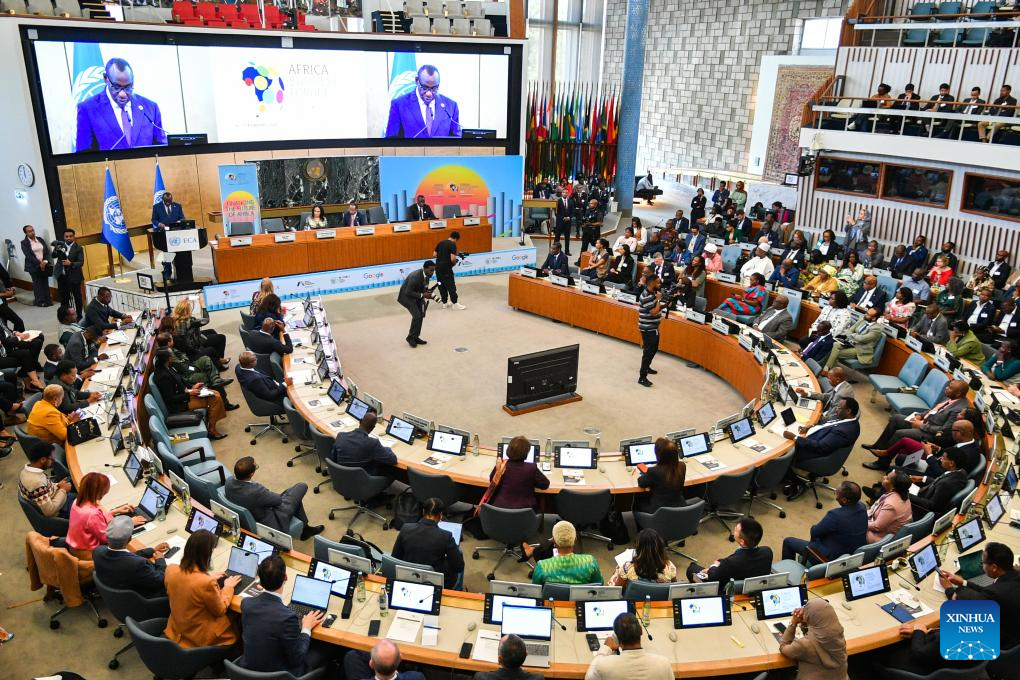
    Speaking at the opening ceremony of the inaugural International Security Conference on Africa (ISCA) in Kigali on Monday, May 19, Kagame outlined three key pillars he said are vital for Africa’s long-term peace and stability: ownership, governance, and cooperation.

    Held under the theme “Reshaping Africa’s Landscape in a Dynamic, Complex Global Environment,” the two-day forum at the Kigali Convention Centre brought together continental and global defence, intelligence, and security leaders to tackle urgent challenges and craft joint solutions.

    “Africa’s future, particularly in matters of peace and security, cannot be outsourced,” Kagame told the delegates.

    “For far too long, our security has been treated as a burden to be managed by others, often without our context or consent. This approach has failed to deliver — both for Africa and for the world.”

    Ownership and responsibility

    Kagame stressed that the first step is for African nations to take full ownership of their security agendas. He cautioned against blaming foreign interference while simultaneously creating the conditions that invite it.

    “Sovereignty is not just about defending borders — it’s about taking responsibility for our security, as individual states and collectively as a continent,” he noted.

    The President called for strengthened continental institutions, particularly the African Union and its Peace and Security Council, to ensure that Africa is equipped to handle its internal challenges.

    The governance-security nexus

    The second pillar, Kagame emphasised, is the interdependence of governance and security. He noted that when one fails, the other is inevitably weakened.

    “Security is not just about the absence of threats. It is about creating an environment where people can live with dignity, enjoy their rights, and look to the future with hope and confidence.”

    He highlighted the need for governments to build trust by ensuring effective institutions, equitable development, and inclusive politics.

    Cooperation and innovation

    The third pillar Kagame emphasised is cooperation. In an increasingly borderless world threatened by terrorism, pandemics, cybercrime, and climate-related disasters, he argued no country can secure itself alone.

    “Cooperation must be strategic, intentional, and innovative. The key to overcoming security challenges lies in our ability to produce our own solutions,” he said.

    He pointed to the exhibition attached to the conference as evidence of the innovation possible when Africa invests in its own capacity and technology.

    “Where we have capacity, we must scale it. Where we lack it, this is the time and place to build it — and to cooperate.”

    Kagame also appealed to delegates to match political will with technical expertise, aligning national interests with continental priorities.

    “Let us leave here not just informed, but more resolved to do more and better,” he added.

    Also speaking at the opening session was Moussa Faki Mahamat, former Chairperson of the African Union Commission and Chair of the ISCA Advisory Council. He hailed the launch of ISCA as “a turning point” for Africa, describing it as a long-overdue strategic space for reflection and dialogue on peace and security matters.

    “Africa’s security cannot rely on imported solutions,” Faki said. “We often say and repeat: African solutions to African problems.”

    The former AUC boss warned that instability, broken promises, and marginalisation of youth are not merely development failures but drivers of insecurity. Echoing Kagame, he called for clear mandates, sustainable funding, and proactive approaches to regional threats.

    Faki said the Institute for Security and Conflict Analysis (ISCA) fills a critical gap by offering a platform for data-driven decision-making, policy innovation, and rigorous debate.

    “The future we hope for cannot emerge by chance. It must be shaped with rigour, clarity, and method — but above all, it must be built together.”

    The ISCA conference continues on Tuesday with high-level panels and closed-door sessions expected to define strategic pathways for a more secure and self-reliant Africa.
    President Paul Kagame addresses delegates at the opening ceremony of the inaugural International Security Conference on Africa (ISCA) in Kigali on Monday, May 19, 2025.The president outlined three key pillars he said are vital for Africa’s long-term peace and stability: ownership, governance, and cooperation.Also speaking at the opening session was Moussa Faki Mahamat, former Chairperson of the African Union Commission and Chair of the ISCA Advisory Council.The two-day forum at the Kigali Convention Centre brought together continental and global defence, intelligence, and security leaders to tackle urgent challenges and craft joint solutions.The Commissioner General of RCS, Evariste Murenzi, attended the International Security Conference on Africa.Gen (Rtd) James Kabarebe, the Minister of State for Regional Integration in the Ministry of Foreign Affairs, was also present.The Secretary General of La Francophonie, Louise Mushikiwabo, follows the proceedings.

  • Tech’s potential to transform Rwandan farmlands into gold mines

    Paddy rice also registered an 8 percent increase in both Seasons A and B. The country achieved this without necessarily expanding its farmland, but rather through the smart use of agricultural inputs like improved seeds, fertilisers and irrigation.

    While these are impressive gains, a recent visit I made to Yunnan Shijing Agriculture Technology Co., Ltd. in China left me convinced that Rwanda’s agricultural transformation is only just beginning and that far greater profits and productivity lie ahead if the country embraces full-scale technological integration.

    Shijing Agriculture, located in Mengla Town and launched in 2023, is a subsidiary of the global PC hardware leader Qicaihong Group. The company has invested 110 million yuan into a state-of-the-art corn and sweet potato project that today processes 40 tons of corn daily and generates up to 64 million yuan annually in output value.

    With only 54 workers operating its nearly fully automated processing line, the company still creates significant employment for surrounding communities in planting and harvesting stages. Over 90 percent of its managers are locals with bachelor’s degrees or higher, reflecting an intentional effort to professionalise and modernise the agriculture value chain.

    What sets Shijing Agriculture apart is how it places farmers at the heart of its business model. Through a structured partnership involving village collectives, agricultural cooperatives, and contract farming, the company provides free seedlings, organises planting, and guarantees purchases at fair prices.

    The result is a stable income for farmers and reliable produce for the company to process and sell. Its distribution network stretches across China’s biggest urban markets, including Beijing and Shanghai, and extends internationally to the Middle East and the United Kingdom.

    Technology is deeply embedded in every step. Farmers use a patented mobile application connected to mini weather stations and soil sensors that monitor temperature, humidity, and nutrient levels in real-time. At a glance, a farmer can adjust watering or fertiliser levels to suit the specific conditions of their field.

    The company has also adopted blockchain technology to track every stage of production. From planting to harvest to retail, a QR code on each product gives consumers full traceability, reinforcing trust and enabling premium pricing. They call it a “trust machine,” and it’s working.

    What struck me even more was how this model closed the loop between crop and livestock farming. Waste from corn production is processed into silage for beef cattle. Manure from the cattle is, in turn, converted into high-quality bio-fertiliser, which nourishes the next season’s crops. The result is a sustainable cycle that cuts costs, minimises waste, and increases productivity.

    Back in Rwanda, we are already seeing the early effects of smarter farming. In 2024, 90.6 percent of farmers implemented anti-erosion measures in Season A, and irrigation adoption surged from 7.5 percent in Season A to 58.2 percent in Season C. The use of improved seeds reached 39.7 percent, while 89.1 percent of farmers used organic fertilisers and 64.5 percent turned to inorganic options.

    These inputs helped boost yields despite reductions in land area for certain crops. For example, Irish potatoes saw a 3 percent drop in cultivated land but still achieved a 1 percent increase in production, reaching 460,830 metric tons. Sweet potatoes followed a similar trend, with a 10 percent drop in area offset by a 4 percent increase in output, totaling 692,945 metric tons.

    Now, with Dronlytics Africa having its regional headquarters in Rwanda, the country is positioning itself as a continental leader in agricultural innovation. Dronlytics brings advanced drone and AI technology designed to reduce production costs and enhance yields through precise data collection.

    Their US-patented drone technology—likened to NASA’s Perseverance rover—will help farmers monitor soil health, detect pest threats, and minimise chemical use through targeted application. This data-driven approach is expected to increase cash flows and contribute significantly to food security and environmental protection.

    If Rwanda can combine its strong agricultural policy framework with the kind of smart, scalable, and farmer-centred technology I saw in China, the impact could be transformative. With the right partnerships and investments, we could see yields increase not by 30 percent, but double or triple in high-potential crops.

    Using predictive analytics, Shijing can forecast regional yield outcomes with 90 percent accuracy.The company’s in-house labs serve as quality control guardians—ensuring that only safe, high-grade produce reaches the processing line.the_company_was_established_in_2022_as_a_subsidiary_of_qicaihong_group_a_global_pc_hardware_leader_now_investing_in_sustainable_food_production.jpgSoil sensors buried across demonstration plots detect pH, nitrogen, phosphorus, and potassium levels in real-time.since_adopting_data-driven_farming_shijing_has_helped_over_26_000_rural_households_in_jinping_county_increase_productivity_while_reducing_input_waste.jpgShijing Agriculture has its own laboratory facilities, which are key to maintaining product quality and driving agricultural innovation.Each QR code is backed by blockchain technology, making it impossible to alter the product’s traceability record.Corn streams down an automated conveyor at Shijing Agriculture’s Mengla plant, where four lines process up to 40 tons a day into vacuum‑packed sweet corn for domestic and overseas markets.By connecting farm data with logistics tracking, Shijing reduces post-harvest losses and delivers fresher produce to distant cities in under 48 hours.By scanning a QR code on the packaging, consumers can view where the corn was planted, when it was harvested, and what inputs were used.

  • Rwanda receives 796 more Rwandans previously held hostage by FDLR

    These individuals were transferred by staff from the United Nations High Commissioner for Refugees (UNHCR), who escorted them from a camp in the city of Goma to the main border crossing between Rwanda and the DRC.

    Following his repatriation on May 19, 2025, one elderly returnee shared that he originally came from Musanze District and had gone to the DRC in 2003 for farming activities.

    He had been living in the Katale area in North Kivu province. Asked about his experience with the FDLR, he said, “They would come at night and abuse us. They even left me with a disability. I was often beaten.”

    Marcel Kagabo Nibishaka, 31, said he lived in Kagusa, in Masisi territory, North Kivu.
    His family fled to the DRC during the 1994 genocide. He explained how the FDLR looted their property: “They would come at night to steal livestock and food. They never came during the day as our village was far from the forest.”

    Valentine Uwamariya expressed her joy at returning home to Rwanda, especially since she would finally reunite with her family.

    “My family lives in Rwanda. I used to live over there, but now I’m happy to return and be with them. I came back with my six children,” she said.

    Dr. Oscar Balinda, deputy spokesperson for the AFC/M23 coalition that currently controls Goma, said both the FDLR and the DRC government had been forcing civilians, including Rwandans, to remain in conflict zones as human shields.

    “These people were held hostage by FDLR fighters. As you know, it’s a strategy used by the FDLR and the DRC government. Camps like Kanyaruchinya, Mugunga, and Lushagala were effectively turned into human shield zones to protect their military operations.”

    The first group of hostages, totaling 360 Rwandans, returned home on May 17. They were initially settled in a temporary camp in Kijote, Nyabihu District, before being relocated to their places of origin.

    The second group is being hosted in the Nyarushishi temporary camp in Rusizi District, mainly due to Kijote’s limited capacity of 500 people.

    Over 1,000 more Rwandans remain in the Goma transit camp under UNHCR supervision and are expected to return in future waves.

    In total, approximately 2,500 Rwandan nationals have expressed the desire to return voluntarily, following years of being prevented from doing so by the FDLR.

    The Mayor of Rubavu District, Mulindwa Prosper, assured the returnees that they would receive identification documents and opportunities they had missed out on.

    He said children would be enrolled in school, and adults would be supported through vocational training programs to help them rebuild their lives.

    “Leave your fear behind. Now you can have peace of mind and start working on your future. While in the DRC, you lived with uncertainty about tomorrow,” he said.

    He also mentioned government programs designed to lift citizens out of poverty, such as Girinka (One Cow per Poor Family).

    “In the near future, we expect you to become livestock farmers and develop your households.”

    Mulindwa encouraged the returnees to actively participate in national programs, including community meetings, where they can stay informed and engaged in national development.

    These individuals were transferred by staff from the United Nations High Commissioner for Refugees. .whatsapp_image_2025-05-19_at_12.03_20_pm-00e0c.jpgMulindwa encouraged the returnees to actively participate in national programs, including community meetings, where they can stay informed and engaged in national development.The Mayor of Rubavu District, Mulindwa Prosper, assured the returnees that they would receive identification documents and opportunities they had missed out on.The second group will be hosted in the Nyarushishi temporary camp in Rusizi District.whatsapp_image_2025-05-19_at_11.08_08_am-4dd55.jpgwhatsapp_image_2025-05-19_at_11.08_05_am-9c0e0.jpgwhatsapp_image_2025-05-19_at_11.08_07_am_1_-b047d.jpgwhatsapp_image_2025-05-19_at_11.08_05_am_2_-ec7a9.jpgwhatsapp_image_2025-05-19_at_10.51_27_am-1c567.jpgwhatsapp_image_2025-05-19_at_10.51_13_am-a3299.jpgOne elderly returnee shared that he originally came from Musanze District and had gone to the DRC in 2003 for farming activities.Rwanda has received 796 of its citizens who had been held hostage by the FDLR, a terrorist group operating in the eastern region of the Democratic Republic of Congo (DRC).whatsapp_image_2025-05-19_at_10.51_10_am-5464e.jpg

  • Tanzanian cardiologist Prof. Janabi elected head of WHO Africa office

    The election comes after the sudden passing of Dr. Faustine Ndugulile, the Regional Director-elect, who died in November 2024 before taking office.

    Prof. Janabi was nominated by President Samia Suluhu Hassan and emerged as the successful candidate among a competitive field, which included Dr. N’da Konan Michel Yao of Côte d’Ivoire, Dr. Mohamed Lamine Dramé of Guinea, and Prof. Moustafa Mijiyawa of Togo.

    Prof. Janabi’s nomination will be formally submitted for appointment during the 157th session of the WHO Executive Board, scheduled for May 28–29, 2025. Once appointed, he will serve a five-year term, with the possibility of renewal.

    In his acceptance remarks, Prof. Janabi affirmed his commitment to regional unity and health system strengthening.

    “Thank you for your trust in me. I will not let you down. Your support underscores our collective resolve to build a healthier, stronger, and more united Africa. As we face challenges ranging from infectious diseases, noncommunicable diseases to climate change and limited health financing, we must harness African resilience and unity,” he stated.

    WHO Director-General Dr. Tedros Adhanom Ghebreyesus welcomed the nomination, praising both Prof. Janabi and the other candidates:

    “I offer my warm congratulations to Professor Janabi on his nomination as Regional Director for Africa, and also to the United Republic of Tanzania. He will take the reins at an unprecedented time for the African Region, and WHO as a whole. We are grateful for his experience and expertise.”

    Dr. Tedros also acknowledged the contributions of Dr. Chikwe Ihekweazu, Acting WHO Regional Director for Africa, for his leadership during the transitional period following the end of Dr. Matshidiso Moeti’s term.

    A leading figure in Tanzanian and African healthcare, Prof. Janabi brings over 30 years of experience spanning clinical cardiology, public health leadership, and health system reform. He is a vocal advocate for equitable healthcare access in low- and middle-income countries.

    Prof. Janabi steps into the role amid growing health challenges across the continent, including emerging disease threats, climate-induced health crises, and funding gaps. His leadership is expected to play a pivotal role in driving regional health priorities and reforming health systems for resilience and equity.

    Prof. Janabi's nomination will be formally submitted for appointment during the 157th session of the WHO Executive Board, scheduled for May 28–29, 2025. Once appointed, he will serve a five-year term, with the possibility of renewal.

  • NCBA Rwanda praised for sponsoring 31st Genocide Memorial Tennis Tournament

    From May 10 to May 18, 2025, the courts of IPRC Kigali hosted matches that brought together more than 140 players from across Rwanda.

    These participants represented various member clubs under the Rwanda Tennis Federation (FRT) and competed in nine different categories.

    These included divisions for professional and amateur players, seniors, and people with disabilities, with matches played in both singles and doubles formats for men and women.

    The final day of the tournament was marked by a visit to the Kigali Genocide Memorial.

    Players, coaches, officials from the Rwanda Tennis Federation, as well as representatives from the Ministry of Sports and the Rwanda Olympic Committee, came together to pay tribute to the victims.

    They toured the memorial, reflected on the history of the genocide, and laid wreaths at the mass graves that hold the remains of thousands who perished in 1994.

    Before the championship matches, FRT President Theoneste Karenzi took a moment to express heartfelt gratitude to NCBA Rwanda. He emphasized the bank’s crucial contribution in making this year’s tournament a success.

    “This is a tournament we organize every year, but this edition stood out,” Karenzi remarked. “We had an impressive turnout of 145 players, which reinforced the very purpose of this event — to remember the victims of the Genocide against the Tutsi. NCBA Bank Rwanda’s support was vital, and we are currently in discussions about continuing this partnership for future tennis events.”

    Representing NCBA Rwanda, Nicholas Manzi spoke about the bank’s broader vision for community impact through sports. He noted that the bank’s involvement goes beyond financial services — it’s about uplifting communities through meaningful engagement.

    “Supporting sports allows us to connect more deeply with the people we serve,” Manzi said. “It’s part of our mission to contribute to development in ways that go beyond banking. Tennis, in particular, is a sport we see growing in Rwanda with strong organization and great potential, and we are proud to be part of that journey.”

    The tournament featured several standout performances. In the amateur men’s singles category, Karekezi Colin defeated Rukundo Innocent in straight sets (6–2, 7–6).

    In the amateur doubles division, Sean Buckley and Mugisha Livingston outplayed Antony Hachez and Vincent Vincent (7–5, 6–0). Among the seniors over 60, Gashugi Innocent and Mucyurabuhoro Eslon secured a win over Gatera Augustin and Katarebe Alphonse (6–3, 7–5).

    In the women’s final, Umumararungu Gisele delivered a stunning comeback, rallying from a set down to beat Carine Nishimwe (4–6, 6–0, 6–0).

    The Genocide Memorial Tennis Tournament not only showcased Rwanda’s growing tennis talent but also underscored the power of sport as a tool for remembrance, healing, and national unity.

    img_0916-4-2ebb5.jpgimg_0915-10-aa86f.jpgimg_0917-8-6fe4c.jpgYvonne Maniragena stood out in the category of women with disabilities.People with disabilities were also represented.Eslon Mucyurabuhuro won in the catgory of seniors over 60.img_0924-4-aacb8.jpggro4d0kxgaaobvp-a3a9b.jpgNishimwe Nicole received the award for second place in the women’s professional category.img_0929-5-8ac9b.jpgimg_0930-7-399ca.jpgNishimwe Nicole showed determination, but Umumararungu Gisele gave her no easy chances.Umumararungu Gisele performed well in the final setIshimwe Claude lost the final matchNiyigena Etienne emerged victorious against his rival Ishimwe Claude, winning two sets to one.grputpbx0aahelk-9599b.jpgNiyigena Etienne is among highly appreciated Tennis players in Rwanda.Livingstone Mugisha’s powerful play was key to his team’s success.Vincent and his team played hard, but it wasn’t enough to secure the win.grpaeuuxyaastci-dec57.jpgThe final day of the tournament was marked by a visit to the Kigali Genocide Memorial.Antony Hachez lines up for the serve.The President of Rwanda Tennis Federation, Karenzi Theoneste joine dthe group visiting Kigali Genocide Memorial.Salama Umutoni , second vice-president of Rwanda Olympic Commmittee  signing the guest book.Umutoni Salama joined Tennis Tennis federation representatives during the event to honor Genocide victims.Participants had an opportunity to learn from history of Genocide against the Tutsi.An employee of Kigali Genocide Memorial took Tennis players through history that culminated in Rwanda's darked hour.gropbfgwuaaafus-cc9d2.jpgTennis players carried wreaths to honor Genocide victims.The courts of IPRC Kigali hosted matches that brought together more than 140 players from across Rwanda.gropbe_xeaayodh-4c037.jpgRukundo Innocent was beaten in the final match by Karekezi Colin.Karekezi Colin delivered a strong performance in the final match.gro4gemxoaawr2e-9d029.jpgThe final match attracted a large number of Tennis enthusiasts.Rwanda Tennis Federation leaders followed the game.

  • Rwanda offers to host key UN agencies amid relocation plans

    This commitment was outlined in an official letter from Prime Minister Dr. Edouard Ngirente to UN Secretary-General António Guterres.

    The letter, dated May 15, 2025, comes at a time when the UN is actively exploring ways to reduce operational costs, improve efficiency, and shift certain functions away from high-cost centers like New York and Geneva.

    Prime Minister Ngirente outlined Rwanda’s unique advantages as a potential host, citing Kigali’s strategic air connectivity to regional and international destinations, as well as the country’s consistent political stability, institutional effectiveness, and overall safety.

    “Rwanda has positioned itself as a competitive destination for multilateral institutions, offering a cost-effective, secure, reliable, and enabling environment for their operations,” the letter states.

    The Government of Rwanda also pledged to provide office facilities and essential services while committing to the long-term development of a dedicated UN campus in the heart of Kigali.

    In alignment with UN protocols, Rwanda is offering a full package of privileges, immunities, and tax exemptions for UN personnel.

    In closing, the Prime Minister invited the UN to dispatch a technical mission to Kigali for a firsthand review of Rwanda’s infrastructure and services, in order to further discuss and align the proposal with the UN’s operational and relocation needs.

    “Rwanda stands ready to serve as a committed partner in shaping the future of the UN’s global operations,” Ngirente affirmed.

    This proposal aligns with broader conversations within the UN about decentralizing certain functions to more affordable and strategically located cities, particularly in response to ongoing financial constraints affecting several UN agencies.

    rharduv2ifjlbj4mjgx5gq6hqy-c8291.jpg

  • Former U.S. President Biden diagnosed with ‘aggressive’ prostate cancer

    A statement released by Biden’s office on Sunday revealed that the cancer has metastasised to his bones.

    The announcement follows Biden’s recent medical evaluation after experiencing increasing urinary symptoms on Friday, May 16, 2025.

    “On Friday, he was diagnosed with prostate cancer, characterised by a Gleason score of 9 (Grade Group 5) with metastasis to the bone,” the statement read.

    According to his physicians, although the diagnosis indicates a more advanced and aggressive form of the disease, the cancer is hormone-sensitive, which allows for potentially effective treatment options.

    Biden and his family are currently reviewing treatment plans with his medical team.

    Joe Biden served as the 46th President of the United States from January 20, 2021, to January 20, 2025.

    He chose not to seek re-election in the 2024 presidential race, citing a desire to pass the baton to a new generation of leadership. At the time, Biden, then 81, also acknowledged the increasing demands of the office and the need to prioritise his health and family after more than five decades in public service.

    The decision to withdraw from the race came after increasing pressure and concerns, particularly following a debate performance that raised questions about his fitness for office.

    Since leaving office, the former president has maintained a relatively low public profile, occasionally commenting on political developments and emerging global issues.

    Former U.S. President Joe Biden has been diagnosed with an aggressive form of prostate cancer.