Tag: HomeHighlights

  • Those provoking Rwanda should be aware of the danger they face-Kagame

    He has revealed this Monday, during a press conference with local and international media covering the 25th commemoration of the 1994 Genocide against Tutsi.

    The press conference follows commemoration of the 1994 Genocide against Tutsi held on Sunday 7th April 2019 at Gisozi memorial where Rwanda was joined by friends and the international community, diplomats, different heads of states and government to pay homage to genocide victims.

    “We are not thinking of creating a war outside our borders. It is a warning to anyone who thinks about war and on our territory. If somebody has ideas that they want to bring war to Rwanda, they should also be aware of the danger they face if they do that,” said Kagame.

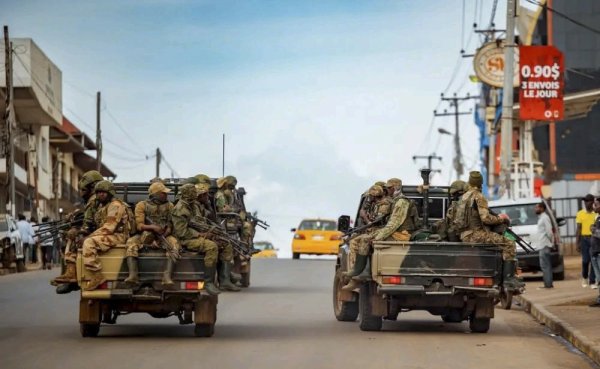
    Attackers have at different times raided regions in the neighborhood of Nyungwe National Park but repelled by Rwanda’s soldiers.

    Commenting on threats to Rwanda, President Kagame said that “In defense of the future children of Rwanda and our stability, we are prepared for that, as we fought many threats and challenges before, we are now better prepared for any threats that would come today.”

    President Kagame, however, said that war should not be an emergent thing noting that people should be watchful using the word. He highlighted that war should neither be the first, nor the second nor the third choice considering its disastrous impact.

    On the attacks in Nyungwe forest, President Kagame said that there are people behind it to provoke a war against Rwanda mistakenly pretending to benefit from it.

    “Those who are behind it have in mind to provoke a war from which they mistakenly think they will benefit. They are trying to hide problems of their own and create a scenario where when war happens, you look the same. We refused this provocation,” he said.

    President Kagame also assured everyone that Rwanda with its history of suffering has grown in all bounds including the strength, capacity to wage a war in defense of its stability and peace.

  • 25th Commemoration Of The Genocide Against Tutsi | Remarks By President Kagame

    To you, the friends by our side on this heavy day, including the different leaders present, we say thank you. Many of you have been with us all along, and we cherish you for contributing to the healing and re-building of Rwanda.

    I also thank my fellow Rwandans, who joined hands to recreate this country. In 1994, there was no hope, only darkness. Today, light radiates from this place.

    How did it happen?

    Rwanda became a family, once again. The arms of our people, intertwined, constitute the pillars of our nation. We hold each other up. Our bodies and minds bear amputations and scars, but none of us is alone. Together, we have woven the tattered threads of our unity into a new tapestry.

    Sisters became mothers. Neighbours became uncles. Strangers became friends. Our culture naturally creates new bonds of solidarity, which both console and renew.

    Rwanda is a family. That is why we still exist, despite all we have gone through.

    There is no way to fully comprehend the loneliness and anger of survivors. And yet, over and over again, we have asked them to make the sacrifices necessary to give our nation new life. Emotions had to be put in a box.

    Someone once asked me why we keep burdening survivors with the responsibility for our healing. It was a painful question, but I realised the answer was obvious. Survivors are the only ones with something left to give: their forgiveness.

    Our people have carried an immense weight with little or no complaint. This has made us better and more united than ever before.

    At a memorial event some years ago, a girl brought us to tears with a poem. She said, “There is a saying that God spends the day elsewhere, but returns to sleep in Rwanda.”

    “Where was God on those dark nights of genocide?”, she asked.

    Looking at Rwanda today, it is clear that God has come back home to stay.

    To survivors, I say thank you. Your resilience and bravery represent the triumph of the Rwandan character in its purest form.

    Joining us today are families from other countries, whose husbands, fathers, sisters, and aunts were claimed by the same deadly ideology.

    The Belgian peacekeepers, murdered twenty-five years ago this morning.

    Captain Mbaye Diagne from Senegal, who saved so many lives.

    Tonia Locatelli, killed in 1992 for telling the truth of what was to come.

    The only comfort we can offer is the commonality of sorrow, and the respect owed to those who had the courage to do the right thing.

    Other people around the world also stood up and made a difference.

    Ambassador Karel Kovanda from the Czech Republic joined colleagues from New Zealand and Nigeria to call for action to stop the Genocide, despite the indifference of more powerful states.

    And my brother, Prime Minister Abiy Ahmed, knows where Rwanda is coming from, having served in an Ethiopian peacekeeping contingent after the Genocide, together with troops from elsewhere in Africa and beyond.

    Thank you all for your presence.

    Those among us who perpetrated the Genocide, or stood by passively, are also part of our nation. The willingness, in a number of cases, to tell the truth, pay the price, and re-join the community, is an important contribution.

    The witness of perpetrators is irrefutable proof, if any was still needed, that genocide happened.

    Genocide hibernates as denial.

    Both before the killing and after, there is a long chain of events which are interconnected. Revisionism is not merely demeaning, but profoundly dangerous.

    The genocide did not begin on one specific day. It has a history.

    Why were refugees Rwanda’s biggest export, for decades? Why were the same people repeatedly targeted for persecution and massacre, from the late 1950s to the 1990s? Why were bodies dumped into rivers, to send them back up the Nile, where they supposedly came from? Why did some parents even kill their own children, who looked a certain way?

    None of that started with a plane crash. So where did it come from?

    Through it all, we had guardians of virtue, Abarinzi b’Igihango, and other righteous citizens. Our rebirth was seeded by their actions.

    The young girl, portrayed in the play we just saw, who took it upon herself to care for a baby survivor despite the objections of her family. That is a true story and today both women are home and fine.

    The Nyange students who refused to be separated into Hutu on one side, Tutsi on the other. They never betrayed each other. Six were killed. Forty were wounded. All are heroes.

    These are examples of the Rwandans who kept us from losing everything.

    But most of us are neither survivors nor perpetrators. Three-quarters of Rwandans are under age thirty. Almost 60 per cent were born after the Genocide.

    Our children enjoy the innocence of peace. They know trauma and violence only from stories. Our aspirations rest in this new generation.

    Mature trees can no longer be moulded, but seeds contain endless possibility. Rwanda’s young people have everything needed to transform our country. They have the responsibility to take charge more and more, and participate fully in securing the Rwanda we want and deserve.

    We are far better Rwandans than we were. But we can be even better still.

    We are the last people in the world who should succumb to complacency. The suffering we have endured should be enough to keep our fighting spirit alive.

    Our country cannot afford to live by twists of fate. We must be deliberate and decisive, guided by humility and the content of our hearts. Rwanda has to stay one step ahead. Otherwise, we are insignificant.

    The facts are stubborn, but so are we. We really have to be.

    Our nation has turned a corner. Fear and anger have been replaced by the energy and purpose that drives us forward, young and old.

    Rwanda is a very good friend to its friends. We seek peace, we turn the page. But no adversary should underestimate what a formidable force Rwandans have become, as a result of our circumstances.

    Nothing has the power to turn Rwandans against each other, ever again. This history will not repeat. That is our firm commitment.

    Nothing is required from those who wronged us, except an open mind. Every day we learn to forgive. But we do not want to forget. After all, before asking others to repent, we first have to forgive ourselves.

    As for the dishonourable who remain impervious to regret, it is not our problem. It does not stop Rwanda from making progress, even for one moment.

    The decimation of Rwanda was more absolute than any known weapon of mass destruction. Not only bodies were destroyed, but the very idea of Rwanda itself. That shows the ferocious power of human sentiments and designs.

    Our prayer is for no other people to ever endure the same tribulations, especially our brothers and sisters in Africa.

    Never accept it. Confront the apostles of division and hatred who masquerade as saviours and democrats. Our commonalities are always infinitely greater than our differences. No society is above any other, much less immune to fragility.

    In the end, the only conclusion to draw from Rwanda’s story is profound hope for our world. No community is beyond repair, and the dignity of a people is never fully extinguished.

    Twenty-five years later, here we are. All of us. Wounded and heartbroken, yes. But unvanquished.

    We Rwandans have granted ourselves a new beginning. We exist in a state of permanent commemoration, every day, in all that we do, in order to remain faithful to that choice.

    I thank you and wish you strength and peace.

  • President Kagame and First Lady participate in a walk and night to remember

    Present during the walk to remember was Belgium Prime Minister Charles Michel; Ethiopian Prime Minister, Dr. Abiy Ahmed; African Union Chairperson, Moussa Faki Mahamat; and the Secretary-General of La Francophonie Louise Mushikiwabo.

    The walk to remember started at the parliamentary buildings in Kimihurura around 4 pm heading for Amahoro Stadium where the night to remember was held yesterday.

    Over 25,000 Rwandans of whom the majority is the youth were present at the event.

    The Minister of Justice and State Attorney, Johnston Busingye hailed all who joined Rwanda in commemoration activities.

    He explained that paying homage to a deceased is part of Rwandan culture rituals designed to keep solidarity with the bereaved family.

    “We remember the heinous crime committed by neighbors where people killed fellow workers, colleagues, killed fathers and mothers in law, killed intimate friends supported of the government to exterminate targeted people,” he said.

    “We got the luck that Rwandan children stood to stop genocide. We will always be grateful for their bravery and paying homage to those who sacrificed themselves to save targeted people,” added Busingye.

    The president of Ibuka, Prof Jean Pierre Dusingizemungu commended commitment and perseverance of genocide survivors over the 25 years.

    He explained that through the journey; they identified where about killed relatives were thrown to be accorded decent burial, arose unity and reconciliation while genocide perpetrators were sued.

    “We experienced day to day life hardships. Genocide left orphans and widows. Perpetrators robbed properties and destroyed the rest. They destroyed houses, and trust among people. They offended Tutsi whose souls and bodies were killed. However; His Excellency President Paul Kagame paved the way that enabled genocide survivors to rebuild strength and chose life amidst the dark past,” said Dusingizemungu.

    He called on international community to take to court errand perpetrators and warned neighboring countries collaborating with perpetrators to destabilize Rwanda’s security.

    {{Pictorial of the Walk and Night To Remember}}

  • Kwibuka25: Nothing has the power to turn Rwandans against each other, ever again, President Kagame

    Present at the event were, Rwandans and friends of Rwanda all over the world, heads of states and governments among other diplomats who observed a moment of silence to honor victims of the 1994 Genocide against Tutsi.

    The flame of remembrance will burn for 100 days marking three-month-long mourning of the victims of the 1994 genocide against Tutsi until July 4 when the genocide was stopped by the Rwanda Patriotic Army (RPA) now Rwanda Defence Forces (RDF).

    Delivering his remarks at the opening of the 100 days mourning; President Paul Kagame thanked guests for joining Rwanda to pay homage to genocide victims and their contribution to healing and rebuilding of the country. He also thanked Rwandans, who joined hands to recreate the country from the dark past observing that genocide won’t happen again.

    “To you, the friends by our side on this heavy day, including the different leaders present, we say thank you. Many of you have been with us all along, and we cherish you for contributing to the healing and re-building of Rwanda. I also thank my fellow Rwandans, who joined hands to recreate this country. In 1994, there was no hope, only darkness. Today, light radiates from this place,” he said.

    “In 1994, there was no hope, only darkness. Nothing has the power to turn Rwandans against each other, ever again. This history will not repeat. That is our firm commitment,” revealed Kagame.

    {{Full speech: Remarks by President Kagame at the beginning of the 25th commemoration of the 1994 Genocide against Tutsi
    }}

    I begin by thanking you. On a day like this, when language fails, the first words that come, are words of gratitude.

    To you, the friends by our side on this heavy day, including the different leaders present, we say thank you. Many of you have been with us all along, and we cherish you for contributing to the healing and re-building of Rwanda.

    I also thank my fellow Rwandans, who joined hands to recreate this country. In 1994, there was no hope, only darkness. Today, light radiates from this place.

    How did it happen?

    Rwanda became a family, once again. The arms of our people, intertwined, constitute the pillars of our nation. We hold each other up. Our bodies and minds bear amputations and scars, but none of us is alone. Together, we have woven the tattered threads of our unity into a new tapestry.

    Sisters became mothers. Neighbors became uncles. Strangers became friends. Our culture naturally creates new bonds of solidarity, which both console and renew.
    Rwanda is a family. That is why we still exist, despite all we have gone through.

    There is no way to fully comprehend the loneliness and anger of survivors. And yet, over and over again, we have asked them to make the sacrifices necessary to give our nation a new life. Emotions had to be put in a box.

    Someone once asked me why we keep burdening survivors with the responsibility for our healing. It was a painful question, but I realized the answer was obvious. Survivors are the only ones with something left to give: their forgiveness.

    Our people have carried an immense weight with little or no complaint. This has made us better and more united than ever before.

    At a memorial event some years ago, a girl brought us to tears with a poem. She said, “There is a saying that God spends the day elsewhere, but returns to sleep in Rwanda.”
    “Where was God on those dark nights of genocide?”, she asked.

    Looking at Rwanda today, it is clear that God has come back home to stay.

    To survivors, I say thank you. Your resilience and bravery represent the triumph of the Rwandan character in its purest form.

    Joining us today are families from other countries, whose husbands, fathers, sisters, and aunts were claimed by the same deadly ideology.

    The Belgian peacekeepers, murdered twenty-five years ago this morning.

    Captain Mbaye Diagne from Senegal, who saved so many lives.

    Tonia Locatelli, killed in 1992 for telling the truth of what was to come.

    The only comfort we can offer is the commonality of sorrow, and the respect owed to those who had the courage to do the right thing.

    Other people around the world also stood up and made a difference.

    Ambassador Karel Kovanda from the Czech Republic joined colleagues from New Zealand and Nigeria to call for action to stop the Genocide, despite the indifference of more powerful states.

    And my brother, Prime Minister Abiy Ahmed, knows where Rwanda is coming from, having served in an Ethiopian peacekeeping contingent after the Genocide, together with troops from elsewhere in Africa and beyond.

    Thank you all for your presence.

    Those among us who perpetrated the Genocide, or stood by passively, are also part of our nation. The willingness, in a number of cases, to tell the truth, pay the price, and re-join the community, is an important contribution.

    The witness of perpetrators is irrefutable proof if any was still needed, that genocide happened.

    Genocide hibernates as denial.

    Both before the killing and after, there is a long chain of events which are interconnected. Revisionism is not merely demeaning, but profoundly dangerous.

    The genocide did not begin on one specific day. It has a history.

    Why were refugees Rwanda’s biggest export, for decades? Why were the same people repeatedly targeted for persecution and massacre, from the late 1950s to the 1990s? Why were bodies dumped into rivers, to send them back up the Nile, where they supposedly came from? Why did some parents even kill their own children, who looked a certain way?

    None of that started with a plane crash. So where did it come from?

    Through it all, we had guardians of virtue, Abarinzi b’Igihango, and other righteous citizens. Our rebirth was seeded by their actions.

    The young girl, portrayed in the play we just saw, who took it upon herself to care for a baby survivor despite the objections of her family. That is a true story and today both women are home and fine.

    The Nyange students who refused to be separated into Hutu on one side, Tutsi on the other. They never betrayed each other. Six were killed. Forty were wounded. All are heroes.

    These are examples of the Rwandans who kept us from losing everything.

    But most of us are neither survivors nor perpetrators. Three-quarters of Rwandans are under age thirty. Almost 60 percent were born after the Genocide.

    Our children enjoy the innocence of peace. They know trauma and violence only from stories. Our aspirations rest in this new generation.

    Mature trees can no longer be molded, but seeds contain endless possibility. Rwanda’s young people have everything needed to transform our country. They have the responsibility to take charge more and more and participate fully in securing the Rwanda we want and deserve.

    We are far better Rwandans than we were. But we can be even better still.

    We are the last people in the world who should succumb to complacency. The suffering we have endured should be enough to keep our fighting spirit alive.

    Our country cannot afford to live by twists of fate. We must be deliberate and decisive, guided by humility and the content of our hearts. Rwanda has to stay one step ahead. Otherwise, we are insignificant.

    The facts are stubborn, but so are we. We really have to be.

    Our nation has turned a corner. Fear and anger have been replaced by the energy and purpose that drives us forward, young and old.

    Rwanda is a very good friend to its friends. We seek peace, we turn the page. But no adversary should underestimate what a formidable force Rwandans have become, as a result of our circumstances.

    Nothing has the power to turn Rwandans against each other, ever again. This history will not repeat. That is our firm commitment.

    Nothing is required from those who wronged us, except an open mind. Every day we learn to forgive. But we do not want to forget. After all, before asking others to repent, we first have to forgive ourselves.

    As for the dishonorable who remain impervious to regret, it is not our problem. It does not stop Rwanda from making progress, even for one moment.

    The decimation of Rwanda was more absolute than any known weapon of mass destruction. Not only bodies were destroyed, but the very idea of Rwanda itself. That shows the ferocious power of human sentiments and designs.

    Our prayer is for no other people to ever endure the same tribulations, especially our brothers and sisters in Africa.

    Never accept it. Confront the apostles of division and hatred who masquerade as saviors and Democrats. Our commonalities are always infinitely greater than our differences. No society is above any other, much less immune to fragility.

    In the end, the only conclusion to draw from Rwanda’s story is a profound hope for our world. No community is beyond repair, and the dignity of a people is never fully extinguished.

    Twenty-five years later, here we are. All of us. Wounded and heartbroken, yes. But unvanquished.

    We Rwandans have granted ourselves a new beginning. We exist in a state of permanent commemoration, every day, in all that we do, in order to remain faithful to that choice.

    {I thank you and wish you strength and peace.
    }

    President Paul Kagame has warned against those who would wish to mess with Rwanda
    Delivering his remarks at the opening of the 100 days mourning; President Paul Kagame thanked Rwandans, who joined hands to recreate the country from the dark past observing that genocide won’t happen again
  • France journalist reveals how Habyarimana neglected warnings on Kangura’s hatred publications

    Kangura newspaper was founded by Hassan Ngeze in 1990 who was later to be convicted of fanning genocide and given a 35 years sentence by The International Criminal Tribunal for Rwanda (ICTR) for genocide crimes.

    As he featured on the panel discussing on “Choosing Humanity” yesterday on the second day of the international conference preparing the 25th commemoration of the 1994 Genocide against Tutsi held in Kigali, Dupaquier said that the media played a critical role in the preparation and execution of genocide on the support of leadership.

    On 23rd April 1991, President Habyarimana held a working visit in France where he agreed to open a political platform giving room for more political parties.

    He went to France, six months after RPF Inkotanyi started the liberation war. Before concluding his visit to France, Habyarimana attended a press conference.

    Considering issue No 6 of Kangura journal published in 1990, Dupaquier asked Habyarimana whether publications from the medium are not intended for divisionism and spreading hatred among citizens. Some of the main headlines of the issue included: Hutus in the diaspora request fellows to be united, The ten commandments of Hutus, Hutus should be vigilant, The doom of Hutus will be on the brink if not united among others.

    Addressing over 400 participants attending the conference, Dupaquier said he informed Habyarimana that publications of Kangura are part of the crime.

    “When President Habyarimana came to Paris in April 1991, he held a press conference. I asked him: His Excellency President; I have the issue No 6 of Kangura. I am going to read samples of its publications. I read 15 lines from the article mobilizing Hutus to be watchful,” he said.

    “I remember to have told him: ‘Excellency President if a journalist from France releases similar writings targeting a group of France citizens; he must definitely go to prison’,” recalled Dupaquier.

    He said the reply of President Habyarimana was: “At home; it is called freedom of expression.”

    Dupaquier recalled how he was surprised but made analysis latter and established that the government was behind the creation of Kangura.

    He said the newspaper was a hidden plan of military intelligence department chaired by Anatole Nsengiyumva.

    “We stress on media; because it is one of the potential tools in which hatred is manifested. Hatred is a fruit grown from intoxicating human’s thoughts. It is a toll forged by weak politicians to restore the confidence of citizens,” he observed.

    Dupaquier urged the world to prevent the spread of hatred speeches because hiding it could lead to mayhem like genocide. Apart from being a journalist; Dupaquier is also an author of books like ‘Rwanda, les médias du génocide’ written in collaboration with Jean-Pierre Chrétien, Marcel Kabanda, and Joseph Ngarambe.

    France journalist, Jean-François Dupaquier has revealed how Habyarimana neglected warnings on Kangura’s hatred publications
    As he featured on the panel discussing on “Choosing Humanity” on the second day of the international conference preparing the 25th commemoration of the 1994 Genocide against Tutsi held in Kigali, Dupaquier said that the media played a critical role in the preparation and execution of genocide on the support of leadership
  • First Lady attends Café Littéraire

    During the event, three authors shared insights from their books on the 1994 Genocide against Tutsi and advised the youth on engaging in the preservation of genocide history and desist misinterpretations.

    The event took place in Kigali Conference and Exhibition Village yesterday evening marking the end of the first day of the international conference on genocide conversations convening in Kigali on “Preserving Memory, Championing Humanity”.

    Through their works of literature, the authors depicted the dark history Rwanda has passed through; what pushed their inspiration and advised the youth inside and outside the country to resist genocide denials and misinterpretation.

    Authors featured in the discussions include Virginie Brinker a France national, Rwandan Jean Marie Vianney Rurangwa and Koulsy Lamko from Tchad who held a discussion on preserving the history of the 1994 Genocide against Tutsi.

    “What happened in Rwanda concerns Africa and the World. We know that neighbors intervene when a family is facing tough situations. Africa is asleep on its history but we need to awaken through literature,” said Lamko.

    Lamko explained that African writers need to join hands writing the truth of what happened because it gives a perception of how things are.

    Virginie Brinker the author of ‘‘La Transmission littéraire et cinématographique du génocide des Tutsi au Rwanda’’ was a lecture of literature since 2003. She was attracted by what she saw about genocide on TV and pushed her to come for eye witness.

    “Contemplating about history should be the concern of the youth nowadays. It is not the past but the future. There is a little step achieved in teaching genocide history since 2009. The most important is that you can find places programs teaching about these courses. We have to work together as researchers but Rwandans should go forward along this journey,” she said.

    These authors highlighted artistic expressions have an impact on teaching future generations with the aim of preventing reoccurrence of genocide.

    Rurangwa who joined the career 33 years ago is the author behind books like “Les identités lourdes à porter”, ‘‘Au sortir de l’enfer’’, “Un Rwandais sur les routes de l’exil’’ and ‘‘Génocide des Tutsi expliqué à un étranger’’.

    He also highlighted that knowledge shared through the works of literature shall enable the world to feel ownership of genocide history.

    “Writing what happened properly spreads awareness because there might be reoccurrence if it is not known to the world. That is why we have to write books, poems, drama, and long stories so that our children and the youth know what happened to prevent reoccurrence,” said Rurangwa.

    He urged the youth to be fearless talking about genocide history in schools and share right values.

    Café Littéraire is organized by the National Commission for the Fight against Genocide (CNLG) in partnership with the national library.

    First Lady Jeannette Kagame has attended discussions on preparations of the 25th commemoration of the 1994 Genocide against Tutsi of the Café Littéraire
    Three authors shared insights from their books on the 1994 Genocide against Tutsi and advised the youth on engaging in the preservation of genocide history and desist misinterpretations
    Virginie Brinker a France national, Rwandan Jean Marie Vianney Rurangwa and Koulsy Lamko from Tchad, are the authors who were featured in the discussions
    Through their works of literature, the authors depicted the dark history Rwanda has passed through; what pushed their inspiration and advised the youth inside and outside the country to resist genocide denials and misinterpretation
  • Canadian Governor General arrives in Kigali for 25th Commemoration of 1994 Genocide against Tutsis

    Julie Payette, Governor General of Canada, arrived this Friday, at the Kigali International Airport from Ottawa accompanied by a delegation of prominent Canadians. She was greeted by Rwandan officials and received by an Honour Guard.

    “The visit to Rwanda demonstrates Canada’s commitment to preventing genocide and mass atrocities as well as its support for reconciliation processes,” reads the official statement from the Canadian High Commission.

    During her stay, the Governor General will lay a wreath to honor the victims of the 1994 Genocide against Tutsis. She will also visit the African Institute for Mathematical Sciences (AIMS-Rwanda) facilities, where she will deliver brief remarks and take part in a Q&A session with students on the importance of education and science.

    The discussion highlights Canada’s interest in promoting the inclusion of youth as well as the importance of science and technology.

    The Governor General and members of the delegation will also engage with Rwandan youth during an activity with participants of Right to Play.

    RTP is a global organization that protects, educates and empowers children to rise above adversity using play. By harnessing play, one of the most powerful and fundamental forces in a child’s life, RTP helps 1.9 million children each week to stay in school and out of work, to prevent life-threatening diseases like HIV and malaria and to stay safe from exploitation and abuse.

    The visit which will strengthen the long-standing co-operation between Canada and Rwanda.

    The Right Honourable Julie Payette, Governor General of Canada, at her arrival at the Kigali International Airport
    Julie Payette was greeted by Rwandan officials and received by an Honour Guard
    The Governor General of Canada, will partake in activities that will mark the 25th commemoration of the 1994 Genocide against the Tutsi
    She also held discussions with the Minister of Information and communications technology and Innovation, Paula Ingabire
  • Rwanda to repeal over 1000 colonial laws

    As indicated by the Ministry of Justice (MINIJUST), these laws are over 1000 said to be obsolete.

    Rwanda was a colony of two countries, German (1900-1916) and Belgium between (1916-1962).

    In an interview with IGIHE, Alain Songa Gashabizi, the acting head of the department for law research, reform, and revision at the Rwanda Law Reform Commission (RLRC) said that some laws in Rwanda are outdated.

    He explained, after the independence of Rwanda in 1962, the then president announced that all international agreements signed by Belgium during the colonial rule have to be applied in Rwanda.

    “This means, if Belgium signed agreements with France on a particular issue, they may bring these agreements to say Rwanda has such duties in France and Belgium based on the announcement,” said Gashabizi.

    Others he said are outdated include approved laws during the colonial rule with clauses limiting black people in accessing some places.

  • They are like a bee buzzing on the ear without stinging -Kabarebe on Kayumba and Sankara

    Gen. Kabarebe revealed this yesterday to the youth attending talks on preparation of the 25th commemoration of the 1994 Genocide against Tutsi at Cenetra Hotel in Kabuga, Kigali city.

    He was responding to the question of Viateur Nyiribakwe representing students from University of Tourism, Technology and Business Studies (UTB), Kigali Campus who wondered whether rebel groups against Rwanda don’t pose threats to national security.

    “Today he (Kayumba) has joined some rebel groups which perpetrated genocide to destabilize the country. Don’t you think it will create problems because you didn’t continue the journey you began together?” he asked.

    Gen. Kabarebe replied that Kayumba failed to obey RPA principles resulting into his ejection from the journey.

    “Liberating and building the country is a journey which some leave under process. It requires preparations to deprive yourself of what would decelerate achievements to conceive development plans. It doesn’t take a lot of things for those who hoodwink, destroy and tarnish the country. Those people including Kayumba reached a point where they could not keep dedication and commitment to established principles,” he said.

    “For instance Kayumba (founder of RNC) fights for his personal interests like keeping 1000 hectares of land in Umutara and many other properties as his possessions are among what he wants to fight for,” added Kabarebe.

  • Statement on Cabinet Decisions of 03/04/2019

    {1.The Cabinet Meeting approved the minutes of the Cabinet Meeting held on 28th
    January 2019. }

    {2. Pursuant to the powers conferred upon him by the laws, His Excellency the President of the Republic informed the Cabinet Meeting that he has exercised his prerogative of mercy and pardoned 367 persons convicted for the offences of abortion, complicity in abortion and infanticide. }

    {3. The Cabinet Meeting was briefed on: }
    – Domestication of the Sustainable Development Goals (SDGs); – 25th Commemoration of the Genocide against Tutsi and its preparation.

    {4. The Cabinet Meeting approved the following policies, programs and strategies: }
    – The implementation of Vision 2020 Umurenge Program VUP Financial Services (FS); – Strategy for construction and maintenance of unpaved low volume traffic roads; – Motorcycle Transport Strategy; – Cleaner Production and Climate Innovation Center.

    {5. The Cabinet Meeting approved the following Draft laws: }
    – Draft law on tax procedures;
    – Draft law determining the organization of insurance business;
    – Draft law approving the ratification of the Loan Agreement signed in Kigali, Rwanda on 16/01/2019, between the Republic Rwanda and the African Development Bank, relating to the loan of EUR 114,266,000 for the Sustainable Water Supply and Sanitation Program – Additional Financing;
    – Draft law approving the ratification of the Protocol of Agreement signed in Kigali, Rwanda on 16/01/2019, between the Republic of Rwanda and the African Development Fund, Acting as Administrators of the Rural Water Supply and Sanitation Initiative (RWSSI) Trust Fund, relating to the Grant of EUR 800,000 for the Sustainable Water Supply and Sanitation Program – Additional Financing;
    – Draft law approving the ratification of the Loan Agreement signed in Kigali, Rwanda on 06/03/2019, between the Republic of Rwanda and the Arab Bank for Economic Development in Africa (BADEA), relating to the loan of USD 20,000,000 for the Rural Electrification Project in Nyamagabe and Nyaruguru;
    – Draft law approving the ratification of the Bilateral Agreement signed in Kigali, Rwanda on 09/03/2018, between the Government of the Republic of Rwanda and the Government of the Republic of Tanzania for the Joint Implementation of Isaka-Kigali Gauge Railway Project;
    – Draft law governing the City of Kigali;
    – Draft law approving the accession of Rwanda to the African Charter on the Values and Principles of Decentralization, Local Governance and Local Development adopted in Malabo, Equatorial Guinea, on 27/06/2018;
    – Daft law repealing all legal instruments brought into force before the date of independence;
    – Draft law modifying Law No 11/2017 of 06/04/2017 establishing Rwanda Law Enforcement Specialized Academy and determining its mission, powers, organisation and functioning;
    – Draft law approving ratification of the Protocol of 2014 to the Forced Labour Convention, 1930 (No 29) adopted by the International Labour Conference at its 103rd Session held in Geneva, on 11th June 2014;
    – Draft law approving the ratification of the Headquarters Agreement between the Government of the Republic of Rwanda and the International Fund for Agriculture Development (IFAD) on the establishment of the IFAD’s Country Office, signed in Kigali, on 20/03/2010;
    – Draft law approving the ratification of the Host Country agreement between the Government of the Republic of Rwanda and the International Potato Center (CIP), signed in Kigali on 17/09/2015;
    – Draft law approving the ratification of the Host Country agreement between the Government of the Republic of Rwanda and the Smart Africa Secretariat on the host of the Headquarters of Smart Africa, signed in Addis Ababa, on 31/01/2016;
    – Draft law approving the ratification of the Host Country agreement between the Government of the Republic of Rwanda and the Sustainable Development Goal Center for Africa of the Sustainable Development Solutions Network (SDGC/A, signed in Kigali, on 31/01/2016;
    – Draft law approving the ratification of the Host Country agreement between the Government of the Republic of Rwanda and African Institute for Mathematical Sciences-Next Einstein Initiative, signed in Kigali, on 12/03/2016;
    – Draft law approving the ratification of the Host Country agreement between the Government of the Republic of Rwanda and the MasterCard Foundation, signed in Kigali, on 17/07/2017;
    – Draft law approving the ratification of the Host Country agreement between the Government of the Republic of Rwanda and Women Political Leaders Global Forum (WPL), signed in Kigali, on 01/12/2017.

    {6. The Cabinet Meeting approved the following Orders: }
    – Presidential Order establishing Special Statutes governing employees of Rwanda
    Investigation Bureau (RIB);
    – Presidential Order determining materials and equipment of Rwanda Investigation
    Bureau (RIB) classified as confidential;
    – Presidential Order determining Rwanda National Police classified equipment and
    materials;
    – Presidential Order specifying modalities for electing Abunzi Committee Members;
    – Presidential Order granting rehabilitation to six (6) former Police Officers of Rwanda National Police: AIP BARIYO Andrew, CSP GAKWAYA Emmanuel, CIP KASAIJA Charles, IP MUGABO KABARUKA Peter, SP MUHIZI Francis and RUSAGARA TUMUSIIME Alex;
    – Presidential Order determining salaries and fringe benefits for the Director General
    and the Deputy Director General of Rwanda Forensic Laboratory (RFL);
    – Prime Minister’s Order determining the Supervising Authority of Rwanda
    Inspectorate, Competition and Consumer Protection Authority (RICA);
    – Prime Minister’s Order appointing Prosecutors at Intermediate Level: NSHIMIYIMANA Jean Baptiste, GAFISHI RUKEMA Samy and UMUTANGUHA Marie Josée;
    – Prime Minister’s Order appointing Prosecutors at Primary: NIYONKURU Jeannine
    and NZEYIMANA Maximilien;
    – Prime Minister’s Order granting a leave of absence for a non-specific period to Mr. NZIBAZA Evariste, who was Director of ICT Support Unit in the National Public Prosecution Authority (NPPA);
    – Prime Minister’s Order granting a leave of absence for a non-specific period to Ms. MUKAMUNANA Jacqueline who was Director of Finance and Logistics Unit in the Ministry of Finance and Economic Planning (MINECOFIN);
    – Prime Minister’s Order dismissing Mr. NSENGIYUMVA Jean Baptiste who was Director of Risk Reduction and Preparedness Unit in the Ministry of Emergency Management (MINEMA);
    – Ministerial Order establishing regulations and procedures implementing
    Immigration and Emigration Law;
    – Ministerial Order determining requirements for authorization to a taxpayer to carry
    forward loss for more than five tax periods;
    – Ministerial Order determining simplified accounting method for small businesses;
    – Ministerial Order determining the annual turnover required for certification of
    financial statements;
    – Ministerial Order determining the functioning of Insolvency Practitioners;
    – Ministerial Order determining a taxpayer’s permanent residence and the location of
    effective place of management;
    – Ministerial Order determining urban planning and building regulations;
    – Ministerial Order determining instructions of categorization of buildings, conditions
    and procedure for application of building permits;
    – Ministerial Order establishing the list of projects that must undergo environmental impact assessment, instructions, requirements and procedures to conduct environmental impact assessment;

    – Ministerial Order granting rehabilitation to 35 former non-commissioned officers
    and police constables from Rwanda National Police;

    – Ministerial Order discharging CPL NZAYISENGA Narcisse from Rwanda
    Correctional Service (RCS) on medical grounds;

    7. After consultation with the High Council of the Judiciary, His Excellency the President of the Republic of Rwanda submitted to the Cabinet the following candidates to the post of judges of the Supreme Court and Court of Appeal whose list will be submitted to the Senate, for their approval:

    – Mr. RUKUNDAKUVUGA François Régis:
    – Judge of the Supreme Court;
    – Mr. HITIYAREMYE Alphonse: Judge of the Supreme Court;
    – Ms TUGIREYEZU Vénantie: Judge of the Court of Appeal.

    {{8. The Cabinet Meeting made the following appointments: }}

    {{❖ In Rwanda Convention Bureau (RCB)}}

    {{Board of Directors }}

    – Mr. Frederick Kenneth Swaniker: Chairperson;
    – Ms. KANYONGA Louise: Vice-Chairperson;
    – Mr. David SAND;
    – Ms. KABANDA Aline;
    – Mr. KAMALI Wilson ;
    – Mr. NDAGIJIMANA Christian; – Ms. GAKWERERE Annette.

    {{❖ Rwanda Airports Company }}
    – Lt. Col. KARAMBIZI Firmin: Managing Director;
    – Ms. MUGWANEZA Isabelle: Deputy Managing Director.

    {{❖ In Rwanda Information Society Authority (RISA) }}
    – Ms. BATETA Jane: Chief Finance Officer;
    – Mr. NIZEYIMANA Pierre Celestin: Enterprise Architecture Division Manager;
    – Ms.UJENEZA Elisabeth: Software Solution Division Manager;
    – Mr. RUTAYIRO Said Ngoga: Technology Innovation Division Manager;
    – Mr. ASIIMWE Innocent: Digital Cluster Coordination and Community Development Division Manager;
    – Mr. RUZIGANA MANZI Désiré: Enterprise and Application Analyst;
    – Ms. INGABIRE Gloria: Government Digitization Analyst;
    – Mr. NTAGANDA Alfred: Information Security Analyst;
    – Ms. GAHIMA MUTONI Diana: Business and Market Intelligence Analyst.

    {{❖ In National Commission for Human Rights}}
    – Ms. MUHONGERWA Furaha Patricia: Vice President; – Ms. UWIZEYE Marie Thérèse: Commissioner.

    {{❖ In Rwanda Agriculture Board (RAB)}}
    – Mr. IZAMUHAYE Jean Claude: Head of Department-Crop research and Technology Transfer;
    – Mr. RUZIBIZA Emile: Head of Department Land Husbandry and Irrigation Research and Technology Transfer;
    – Mr. NDAYISENGA Fabrice: Head of Department Animal Resource Research and Technology Transfer;
    – Ms. KAMARABA Illuminée: Division Manager Post Harvest Management and Biotechnology;
    – Ms. KANYANDEKWE Christine: National Artificial Insemination Center Division Manager;
    – Dr. KAMANA Olivier: Animal Resources Processing and Biotechnology Division Manager; – Mr. RWEBIGO Daniel: Seeds Systems Division Manager.

    {{❖ In Rwanda Development Board (RDB) }}
    – Ms. KAGERUKA Ariella: Head, Tourism and Conservation Department.
    {{❖ In Parliament/ Senate }}
    – Ms. MUKARUKUNDO Josette: Director General of ICT and Outreach.

    {{❖ In the Ministry of Environment (MOE)}}
    – Mr. KARERA Patrick: Advisor to the Minister of Environment;
    – Mr. RUTARO KAKA Benon: Director of Planning Unit.

    {{❖ In the Ministry of Foreign Affairs and International Cooperation (MINAFFET)}}:
    – Mr. MWISENEZA KANYAMUPIRA Abd-El-Aziz: Advisor to the Minister of State in charge of the East African Community.

    {{❖ In the Ministry of ICT And Innovation (MINICT) }}:
    – Ms. GASAKURE Saga Doña Magali: Advisor to the Minister.

    {{❖ In the Ministry of Infrastructure (MININFRA) }}
    Mr. KALINDA K. Charles: Head of Policy and Planning.

    {{❖ In the National Industrial Research and Development Agency (NIRDA)}}
    – Ms. MUKAYIRANGA Annette: Industrialisation Development Analyst;
    – Mr. TWAHIRWA Christian: Operational Monitoring Division Manager;
    – Dr. KAMANA Olivier: Head of Research and Development Department.

    {{❖ In Local Administrative Entities Development Agency (LODA) }}
    – Mr. NGENDAHIMANA Pascal: Local Economic Development Division Manager.

    {{❖ In Rwanda Investigation Bureau (RIB)}}
    – Mr. BAHORERA Dominique: Advisor to the Secretary General;
    – Mr. KANANI Augustin: Director of Finance Unit;
    – Mr. NJANGWE Jean Marie: Director of Suspects and Exhibits Handling Unit;
    – Mr. MWESIGYE Robert: Director of Chemical Biological Radiological Nuclear and Explosive Unit;
    – Mr. BYUMA Ntaganda Emile: Director of Intelligence Operations Unit;
    – Ms. MUKANDAHIRO Ndemera Jeanne d’Arc: Director of Isange One Stop Centre;
    – Mr. RWEMA Patrick: Director of Counter Terrorism Analysis Unit;
    – Mr. KAREKEZI Theogène is proposed to be Director of Counter Terrorism Awareness Unit; – Mr. BWIMBA David: Director of Environment Crimes Unit;
    – Mr. RAMA George: Director of Criminal Records and Case Files Orientation Unit;
    – Mr. RUTABINGWA Michel: Director of Tactical Response Unit;
    – Mr. KARASIRA Jean Claude: Director of Crime – Scene Response Unit;
    – Mr. HABYARIMANA Philbert: Director of Crimes against People Unit;
    – Mr. MBAZABAGABO Michel: Director of Crimes against State Security Unit;
    – Mr. BWIMANA Diogène: Director of Administration and Human Resource Unit;
    – Mr. GASANA Alexis: Director of Anti-Narcotics and Illicit Goods Unit;
    – Mr. NIYIBIZI Julien: Director of Anti – Human Trafficking Unit;
    – Mr. NGARUKIYE Jacques: Director of Anti–Public Embezzlement and Corruption Unit;
    – Mr. KAREMERA Safari Enock: Director of Economics and Financial Crimes Unit;
    – Ms. UWAMAHORO Christine: Director of Family and Child Protection Unit;
    – Mr. NSHIMIYIMANA Modeste: Director of ICT Unit;
    – Ms. KABEGA Caritas: Director of Planning, Monitoring and Evaluation Unit.

    {{❖ In Rwanda Biomedical Center (RBC) }}
    – Dr. MUYOMBO Thomas: Director of Regional Center for Blood Transfusion (RCBT- Kigali);
    – Mr. KAYIRANGA Olivier: Director of ICT Unit; – Mr. SIBOMANA Hassan: Director of Vaccine Programs Unit.

    {{❖ In Rwanda Water and Forestry Authority (RWFA)}}
    – Mr. MUNYEMANA Justin: Director of Administration and Finance Unit.
    {{❖ In Rwanda Meteorology Agency (METEO RWANDA) }}
    – Mr. NSHIMIYIMANA Joseph: Director of Administration and Finance Unit.
    {{❖ In Rwanda Agriculture and Animal Resources Development Board (RAB) }}
    – Mr. HARERA Sebastien: Director of Internal Audit Unit.
    {{❖ In the Integrated Polytechnic Regional College (IPRC-HUYE)}}
    – Mr. NIYONCUTI Junior Pierre: Director of Infrastructure Development and Maintenance Unit;
    – Mr. KAGABO Eliandeli: Director of Academic Services Unit;
    – Mr. NYARWAYA Jimmy: Director of Planning Unit.
    {{❖ In Rwanda Land Management and Use Authority (RLMUA) }}
    – Mr. NDAYISABA Jean Pierre: Director of Administration and Finance Unit.

    {{❖ In the National Identification Agency (NIDA) }}
    – Ms BUKINANYANA Daniella: Director of Database and Applications Unit.
    {{❖ In Kigali University Teaching Hospital (CHUK) }}
    – Mr. SHAHIDI TWAHIRWA Timothee: Director of Quality Assurance Management Unit.
    {{❖ In Rwanda Transport Development Agency (RTDA) }}
    – Ms. NIYIBIZI Thérèse: Director of Traffic Management Unit.
    ❖ In Rwanda Mines, Petroleum and Gas Board (RMB)
    – Mr. NYAGATARE Jean Bosco: Director of finance Unit;
    – Mr. TUYISHIME Jean Bonfils: Director of Digital Information Unit.
    {{❖ In the National Post Office (NPO) }}
    – Mr. SAFARI KAZINDU Patrick: Director of Commercial Unit.

    {{9. In AOBs.
    }}

    {{- The Minister of Sports and Culture}} informed the Cabinet that Rwanda in collaboration with the Association of National Olympic Committees of Africa (ANOCA) are organizing the ANOCA Zone V Youth Games 2019 (Athletics, Basketball, Volleyball, Cycling and Taekwondo) to be held in Huye District from 2nd to 6th April 2019. A total of 12 countries confirmed their participation.

    {{- The Minister of Gender and Family Promotion}} informed the Cabinet that Rwanda in collaboration with African Women in Leadership Organization (AWLO) will organize the 2019 African Women in Leadership Conference from 4th to 5th April 2019 at Marriot Hotel, Kigali. The Objective of the meeting is to advance the status of women in leadership by creating an empowering platform and harnessing the synergies of alliance.

    {{- The Minister of Finance and Economic Planning}} informed the Cabinet that Rwanda will host in Kigali the 5th International Conference on Big Data for official statistics from 29th April to 3rd May 2019. The conference will be organized jointly with the United Nations Statistics Division (UNSD) and other members of the UN Global Working Group (GWG) on Big Data for official statistics. The conference will provide an opportunity for sharing and learning global experiences in new trends and technologies in Big Data and its potential in official statistics.

    {{- The Minister of Public Service and Labour}} informed the Cabinet that Rwanda will celebrate the International Labour Day on 1st May 2019 under the theme ‘’Quality work, a catalyst for Sustainable development” (Umurimo unoze, Umusemburo w’Iterambere Rirambye). While institutions will celebrate Labour Day at their workplaces, at national level, celebrations will be held at Nyagatare district. The event will also commemorate 100 years of the existence of the International Labour Organization (ILO).

    – {{The Minister of Health informed the Cabinet}} said that in a bid to ensure full implementation of Ebola prevention and control, the Ministry in collaboration with the WHO and other partners plan to implement the use of “rVSV-ZEBOV” Ebola vaccine for health-care and front-line workers in areas at risk of expansion of the outbreak. The activity will start on 5th April 2019.

    { {{This Statement was signed by Marie Solange KAYISIRE The Minister in the Office of the Prime Minister in charge of Cabinet Affairs }} }