Tag: HomeHighlights

  • Minister highlights ‘Isaka-Kigali’ railway project implementation plan

    The project is much anticipated between both countries especially for Rwanda as a landlocked nation.

    The railway on Rwandan side will follow the lowland through Ngoma, Kirehe, Bugesera and Kicukuro districts.

    On Tuesday this week, Jean de Dieu Uwihanganye the Minister of State in charge of Transport in the Ministry of Infrastructure (MININFRA) requested parliamentarians to pass the draft law approving agreements between Rwanda and Tanzania concerning the implementation of the railway project ‘Isaka-Kigali’ signed in Kigali on 09 March 2018.

    Uwihanganye explained that the project will greatly contribute to Rwanda’s development when completed.

    He revealed that Rwanda has already designed the master plan waiting for approval.

    “Rwanda has already made the master plan to be approved by the cabinet meeting in May this year. As you know, Rwanda promotes private investors. That is why we feel the Isaka-Kigali railway project should be executed under public –private partnerships. On the other hand, Tanzania seeks to get financing from the government only. This is how the situation is,” said Uwihanganye.

    The 532 km railway will pass through Rusumo border to Kigali city. There will be an extra part of the railway leading to Bugesera International Airport.

    The railway on the side of Rwanda will be 138 km with the rest of 394 being on Tanzania side.

    It is estimated to cost USD $3.6 billion on completion. Tanzania shall meet USD $ 2.3 billion while USD $ 1.3 billion is required on Rwanda side.

    Minister Uwihanganye said there should be no assumptions to have fixed everything by next year because Rwanda and Tanzania have not yet agreed on the source of funds.

    “It was realized that it would be hard for the government to opt for loans. It is clear how difficult it is obtaining a loan of USD $ 3.6 billion or USD $ 1.3 billion on the side of Rwanda unless other activities are halted. What is possible is to bring in private investors to reduce the debt burden for the country. This is what we are still discussing to reach consensus,” he explained.

    Uwihanganye explained that the implementation of the project will reduce transport costs by 40% hence positively impacting on Rwanda’s imports and exports.

  • Africa has its own needs and interests -Kagame

    President Kagame who was delivering a talk at Milken Global Conference on “Global Overview: Measuring the Winds of Change” panel moderated by The New York Times writer, Nicholas Kristof explained that the question should be what Africa has been doing with this debt.

    Other participants that featured on the same panel include the CEO of Wilson Center, Jane Harman; the Director of China Strategy, Michael Pillsbury and former UK minister Lord Peter Mandelson.

    Commenting on China involvement in Africa, President Kagame said; “Africa has its own needs and interests whether you want to see it that way or not.”

    The competition between the USA and the industrialized world with China finds Africa caught between China and the West. The USA said that its military and security operations in Africa are hampered by China dominance on the African continent.

    “Africa has not had debt from China only. Debt forgiveness was there because there was debt. The question is what Africa has been doing with this debt. Saying we are worried Africa will be trapped in debt with China, sounds like concern for Africa by outsiders rather than Africa being concerned for its own wellbeing,” said Kagame.

    President Kagame also talked on the claim that China is sponsoring corruption in Africa. He highlighted that the assumption is that corruption is confined to China and Africa and that the west does not get involved in corruption, which is not true.

    He said that nobody should give an excuse for corruption but should be fought wherever it comes from that ‘it is what we have been trying to do in our countries and in other African countries”

    “Africa, my own country, look to the west as partners of choice, or investors of choice in Africa. If the west was doing investments that are required in Africa the way they should be, then Africa will stop being caught in this trap or competition,” highlighted Kagame.

    He emphasized that Africa needs to get its act together and be a place that can raise its stakes higher than where it is and as much as possible to be one of the players on the global scene instead of being caught up in power games seen across the world.President Paul Kagame has talked on west countries’ concern over the China debt trap on Africa

  • National budget increases by Rwf 291.7 billion in 2019/2020 fiscal year

    This saw an increase of Rwf 291.7 billion (11%) compared to the previous year.

    The minister presented the draft yesterday to both chambers of Parliament as he presented the Budget Framework Paper (BFP) and the midterm budget estimated for 2019/20-2021/22.

    Minister Ndagijimana noted that the budget for the fiscal year 2019/20 will reflect the medium-term fiscal path which allows for increased spending to reach the NST1 goals while maintaining public debt at sustainable levels.

    In this regard, the budget envelope is projected to increase from Rwf 2,585.2 billion in the revised budget for Financial Year 2018/19 to FRW 2,876.9 billion, in Financial Year 2019/2020 an increase of FRW 291.7 billion and to reach to more than 3,560.5 billion in FY 2021/22.

    The proposed total resources estimated for fiscal year 2019/20 is made up of Rwf 1,726.2 billion of domestic tax and non-tax revenue, domestic borrowing of Rwf 237.6 billion, Rwf 6.4 billion from net lending and payments, external grants of Rwf 409.8 billion and external loans of Rwf 497 billion.

    Total tax revenue collections have been projected to reach Rwf 1,535.8 billion in the fiscal year 2019/20. This amount will exceed the estimated figure of Rwf 1,373.1 billion to be achieved in the fiscal year 2018/19 by Rwf 162.7 billion while Non-tax revenue collections to the Treasury have been estimated at Rwf 190.4 billion; which is 7.9 billion Rwf lower than the projected amount of Rwf 198.4 billion in the fiscal year 2018/19.

    Total expenditures in the fiscal year 2019/20 is projected at Rwf 2,876.9 billion, made up of recurrent expenditure of Rwf 1,424.5 billion, Development expenditures of Rwf 1,152.1 billion, net lending outlays of Rwf 244.1 billion, repayment of arrears amounting to Rwf 30.6 billion and accumulation of deposits of Rwf 25.5 billion.

    The resources allocation for 2019/2020 and in the medium term was guided by the strategic objectives to achieve the transformational goals of NST 1 set out in the three pillars namely: Economic Transformation, Social Transformation, and Transformational Governance. The key interventions and projects under NST 1 pillars have been funded as follows:

    The Budget Framework paper will provide the basis for the preparation of the 2019-20 budget which will be read in June 2019.

    BFP is a document outlining government economic policies over the medium term that helps lay the foundations of the next fiscal budget. It is prepared in accordance with article 32 of the Organic Law on State Property and Finances and outlines the Government’s macroeconomic and fiscal policy stance as well as the budget policy over a 3-year horizon.

    Outlining key priorities for 2019/20 fiscal year and the medium term Minister Ndagijimana told Parliamentarians that policies and strategies over the medium term are built on the Government’s ambition to raise Rwandans high living standards and reach the upper middle-income status by 2035 and high income by 2050.

    This is reflected in the blueprint of the Vision 2050 under development. The National Strategy for Transformation (NST1), which has been developed as implementation instrument of the remainder of Vision 2020 and for the first four years of the Vision 2050, provides the direction of the policy objectives over the medium term.

    Minister Ndagijimana noted that government will continue to promote import substitution and diversify exports with the aim of reducing the exposure to external shocks and imbalances over the medium term.

    “The implementation of Made in Rwanda policy will continue to play a key role in narrowing the current account deficit in the short to the long run and help to consolidate private sector domestic activities, create jobs and boost economic growth,” Minister Ndagijimana said.

    Key targets and interventions will include growing traditional exports, promoting nontraditional exports, growth of the service sector as well as cross-cutting interventions such as the promotion of made in Rwanda, developing of cross border and trade logistics infrastructure and development of industrial parks among others.

  • Rwanda secures Rwf 120 billion funding from Belgium

    The new cooperation program worth 120 million Euros will cover the period 2019-2024 and intervene mainly in three sectors: Health (€45.000.000), Agriculture (€30.000.000) and Urbanization (€28.000.000).

    The program will concentrate on better access to sexual and reproductive rights and health.
    In addition, attention will be devoted to the improvement of value chains in agriculture, the commercialization of agricultural products and sustainable urbanization; public finance management is the fourth priority.

    With regard to health and agriculture, the program will be piloting a new aid instrument: Results-Based Aid (RBA). In RBA the donor contribution is released to MINECOFIN after verifying that the agreed sectorial targets have been achieved.

    Speaking after the signing event, the Minister of Finance and Economic Planning Dr. Uzziel Ndagijimana hailed the contribution of the bilateral to achieving Rwanda’s sustainable development objectives.

    “The Government of Rwanda regards health, agriculture, and urbanization as critical sectors that have a significant impact on Rwanda’s development outcomes as articulated in our National Strategy for Transformation. Therefore, Belgian support in these sectors is a step forward in realizing the targeted achievements,” Minister Ndagijimana said.

    The Ambassador of Belgium in Rwanda, Benoit Ryelandt said the signing of this agreement is a sign of the special relations between the two countries.

    “This country program is the result of a year of intensive preparations and discussions between Belgium and Rwanda, to define the priority sectors and the objectives, aspired results, and implementation modalities in each sector. The specific agreement signed today gives also the start to the first bilateral program between our two countries, were no longer any tax exemptions are requested,” he said.

    “This commitment not to request tax exonerations is in line with the ambition to support improved local revenue collection and underlines the importance of the support the program includes to the further development of the Public Finance Management (PFM) in Rwanda through the PFM multi-donor fund,” affirmed Benoit.

    The program was developed by the Belgian Development Agency, Enabel in close collaboration with different Rwandan ministries.

    Implementation will be assured mainly through Rwandan government institutions in coordination with Enabel.

    The funding follows the previous one worth 160 million Euros which Belgium gave to Rwanda in 2011. It was used in health, energy, and agriculture among other sectors.

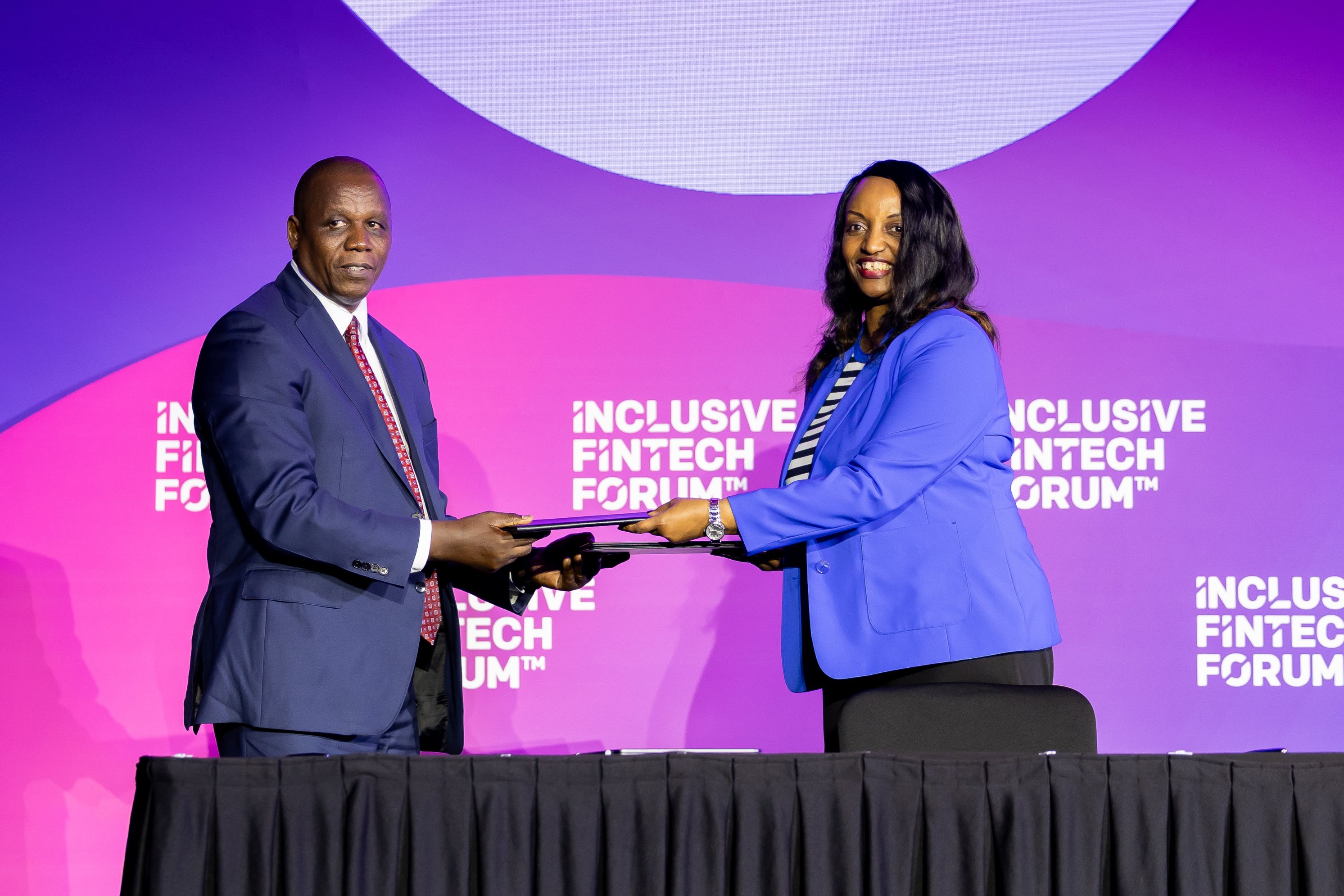
    The Government of Rwanda, through the Ministry of Finance and Economic Planning (MINECOFIN) and the Kingdom of Belgium through the Belgian Embassy in Rwanda, have today signed a  cooperation agreement that will focus on health, agriculture and sustainable urbanizationenab3-21799.jpg

  • President Kagame calls for enforcement of laws to deter cyber-crime

    He made the call yesterday as he co-chaired the Annual Broadband Commission meeting hosted by Facebook at their Headquarters in San Francisco city of California State.

    The meeting was also attended by International Telecommunication Union (ITU) ITU Secretary-General Houlin Zhao and the Vice-President for Mobile and Global Access Policy at Facebook, Kevin Martin.

    President Kagame said the sessions go straight to the heart of our priorities of the Broadband Commission and highlighted, in particular, the issue of harmful content.

    He revealed that the session will hear an important report from the working group on child safety online and consider the creation of a new working group, led by The United Nations Educational, Scientific and Cultural Organization (UNESCO), focused on hate speech and disinformation.

    “Large-scale violence is always preceded by a process of dehumanization, through the spread of ideas that justify killing. We had a situation like this in my country 25 years ago. That is why we work to ensure that ideologies of hatred and division have no place in our public domain,” he said.

    President Kagame said that there was no internet in Rwanda in 1994 that radicalization is therefore not a new phenomenon, much less a by-product of modern social media.

    He noted that while the challenges of today are not qualitatively different, technology has indeed changed the landscape in two important ways. The first is speed where the internet is an accelerant costing very little to reach a lot of people very quickly. The second is the absence of accountability.

    “Individuals, who cause harm, can do so anonymously. It should properly be regarded as a form of cyber-crime. We do not need special rules and regulations for the virtual world. Nor is there any valid reason to constrain basic freedoms, or limit access to broadband. That would only slow development, and further deepen global inequalities,” he said.

    “We simply need the means to enforce our laws, and hold individuals accountable for what they do online, just as we do offline,” added Kagame.

    He said that access to broadband and infrastructure should go hand in hand. Noting that a lot is being done to move towards the goal of universal access to broadband by 2030.

    President Kagame also met with Facebook Chief Operating Officer Sheryl Sandberg on the sidelines of Broadband Commission meeting for sustainable development held at Facebook headquarters.

    The Broadband Commission was set up in 2010 to boost the role of technology in international budget planning and promoting broadband in all countries.

    The previous meeting was held in September 2018 in New York.

  • Minister Sezibera advises tourists to ignore false travel advisories against Rwanda

    The call follows few days after countries including France and Canada reminding their citizens to be watchful when visiting Rwanda and warning them against visits to some parts of the country like Nyungwe National Park and some areas in the neighborhood borders for their security.

    For instance, France wrote last week on the website of Foreign Affairs Ministry that it is not good to visit Virunga National Park due to problems that might arise. The Government of Rwanda, however, reacted against those countries issuing warnings that Rwanda is safe.

    “Friendly advice…ignore alarmist reporting from online publications from a neighboring country on travel advisories. They are incorrect. Example, Canada made no significant change to her advisory for several weeks…. Same risk level as France and the UK,” Dr Sezibera said in a tweet.

    His advice follows other messages of Rwandans including the Governor of Eastern Province Fred Mufuluke who reacted on such warnings saying: “As I write, I am about heading for the park with friends from Singapore. Such threatening information is confusing but it can create ambiguity to those who are already confused.”

    Talking to IGIHE recently, the Minister of State for Foreign Affairs Olivier Nduhungirehe also talked against falsified publications.

    “It is not true. What they write is far from the reality in Rwanda. You know that security is guaranteed in Virunga and Nyungwe National Parks. What they say is wrong. We shall engage in discussions with them aimed at changing the perceptions,” he said.

    The Deputy Chief Executive Officer of Rwanda Development Board (RDB), Emmanuel Hategeka told IGIHE that what France did is dragging it in the context of neighboring countries yet Rwanda’s security is assured.

    “There is no problem in Virunga National Park. The problem arose on the side of Congo where insecurity is persistent. The other thing considered is what happened in Uganda where tourists were kidnapped which is not the same on our side,” he said.

    “They contextualize the situation and generalize it to the region but we have no problems on our side. Tourists travel safely. The security of tourists visiting all parks is guaranteed,” added Hategeka.

  • Defamation against Head of State should be a civil not a criminal matter- Kagame

    “The president of the Republic respects the independence of the judiciary and the recent Supreme Court decision to decriminalize the offenses related to the humiliation of public officials,” reads part of the statement.

    “The president, however, takes issue with the decision to retain as criminal offenses, insults or defamation against the Head of State, who is also a public official. His position has always been that this should be a civil, not a criminal matter. The president trusts that there will be further debate on this important matter,” adds the statement.

    The Supreme Court recently expunged some articles and paragraphs of the penal code following the petition of Kigali based lawyer Richard Mugisha but retained penalties granted in the article concerning defamation against the head of state.

    The lawyer petitioned on the revision of article 236 stipulating the sentence between five to seven years and a fine between Rwf 5 to 7 million for the defamation against the head of state is not constitutional.

    The president of the Supreme Court, Prof Sam Rugege explained that the article concerns special duties of the Head of State of protecting the sovereignty of the country where insulting and defamation against him would destabilize a lot of things because of his responsibilities to the country.

    The court retained the article ruling that there is a difference between the defamation against the head of state and others because they can file a court case for compensation which cannot be possible for the president due to his heavy duties. he-1-a344a.png

  • Belgium passes law against denial and trivialization of 1994 Genocide against the Tutsi

    The law also grants punishments to people denying genocide perpetrated against Bosnians in Srebrenica city in 1995 taking lives of more than 8,000 men and male children.

    As Belgium Prime Minister, Charles Michel came to Rwanda at the beginning of April for the 25th commemoration of the 1994 Genocide against the Tutsi, he promised the law was to be passed soon.

    At the time, Prime Minister Michel said that ensuring that genocide never happens again is one of the ways to respect to genocide victims.

    The Executive Secretary of the National Commission for the Fight Against Genocide (CNLG), Dr. Bizimana Jean Damascène has told IGIHE that the law comes in handy when there are some Rwandans living in Belgium involved in the denial of the 1994 Genocide against the Tutsi.

    “We welcomed the decision which we have been requesting for. Belgium is one of few European countries which had no law against denial and trivialization of genocide against Tutsi. This would give room to people in the country denying and trivializing genocide using undermining words in books, public speeches, and social media and teach in school sometimes,” he said.

    “I believe the law will deter people like Fillip Reytjens writing books used in universities, people like Twagiramungu denying the 1994 Genocide against the Tutsi publically, associations like Jambo ASBL made of children of genocidaires supporting committed offenses and enable to bring anyone against this law to book,” added Dr. Bizimana.

    The approved law is waiting for publication in the official gazette of the country to go into effect.

    Belgium is home to over 40,000 Rwandans including genocide suspects.
    inteko_ishinga_amategeko_y_u_bubiligi_yemeje_itegeko_rihana_abahakana_jenoside_yakorewe_abatutsi-ffd4f.jpg

  • Why the execution of ‘Amarembo’ project stalled

    The structures will be erected where Akagera Motors used to be, Ets. Verma, Mironko and Mukangira between Kigali City Mall (former Union Trade Center) and Kigali City Tower.
    It is expected that Amarembo will be comprised of buildings extended on 120,000 square meters with commercial buildings, offices, entertainment, upper and ground parking, a hotel and pool among others.

    The project was conceived in 2004 and was supposed to be executed as a joint investment but things did not turn right when some concerned investors changed mind and wanted to raise standalone buildings. The latter stalled the progress of the project expected to cost USD $ 120 million.

    The waver left the latter divided into three projects resembling the previous one but aligning with Kigali city master plan. One of them retained the name of ‘Amarembo City Center’ to be built at former headquarters of Akagera Motors, a former place known as Chez Venant.

    The second is Mironko project to be executed at the opposite side of Rubangura and Costa to be built in the opposite side of the city roundabout.

    These projects with buildings made of 10 to 14 floors were expected to start in 2017 but the places remain idle until today.

    The mayor of Kigali city, Marie Chantal Rwakazina has told IGIHE that the stalling of the project resulted from a misunderstanding between investors who failed to reach a consensus on raising the buildings together.

    “It is one of the areas in which Rwandans and Kigali residents need to change mindsets. Some people still hold mindsets of erecting standalone buildings on their land yet the policy of making good usage of land requires changing it. The property should not be taken as fully owned when on the ground floor. It might be yours as an apartment at the second or the third floor. Such mindsets still cause problems,” she said.

    Rwakazina revealed that discussions on the project were held last week and promising to bear fruits.

    “It is promising to be fixed in collaboration with Rwanda Development Board. Talks gave us hope for consensus,” said Rwakazina.
    314a0182-d3b14-2.jpg314a0193-537fd.jpgamarembojpg-e94e-08ec7-11a5d.jpg