Tag: HomeHighlights

  • Kagame envisages a progressive Africa as WEF opens in Davos

    President Kagame was speaking to over 65 Heads of State and Government and top global executives for this year’s World Economic Forum [WEF] 2019 held in Davos, Switzerland, under the theme Globalization, “Shaping a Global Architecture in the Age of the Fourth Industrial Revolution”.

    “This session is timely. The conditions have never been so favorable for Africa to take the lead in shaping its own global agenda. For too long, we ceded responsibility for Africa’s agenda to others, with some individuals even benefiting,” Kagame said, opening the Forum.

    President Kagame further remarked that everyone benefits from a stronger, more united Africa, which is reflected in the more constructive tone of Africa’s partnerships with China, Europe, and others.

    He cautioned that challenges relating to migration, security and climate change among others imply that there is no longer any actor who sees an advantage in an Africa that is institutionally weak and economically stagnant. However, he noted that at present, the pace and quality of integration in Africa were increasing noticeably, a very significant, according to the AU Chairman.

    “Last year, for example, the African Continental Free Trade Agreement was adopted and it is likely to come into force this year. We also agreed on a timetable for the free movement of people and on the establishment of a single African air transport market.” President Kagame added.

    The Head of the State, later on, participated in a session on digitalizing Emerging Markets with the AliBaba Group Executive Chairman, Jack Ma.

    Last Year, in October, Alibaba Group and the government of Rwanda agreed to multiple bilateral initiatives, aiming to promote the African country’s economy through increased cross-border trade, capacity building, and tourism. A major tenet of the agreements was Rwanda’s admission to the eWTP, Electronic World Trade Platform, becoming the first eWTP Partner in Africa so far.

    On why Rwanda signed up to the Platform, President Kagame said it was a special, exciting partnership that brings marginalized people in society to connect directly with the consumers.

    “eWTP has democratized benefits. If you look at the number of people who will benefit; young entrepreneurs and farmers who are involved in coffee businesses, it is all inclusive.” He explained.

    African leaders are currently showcasing the continent’s diverse opportunities to investors, business leaders and policymakers at the annual World Economic Forum (WEF) in Davos.

  • 14 perish in Rwamagana as mine buries them

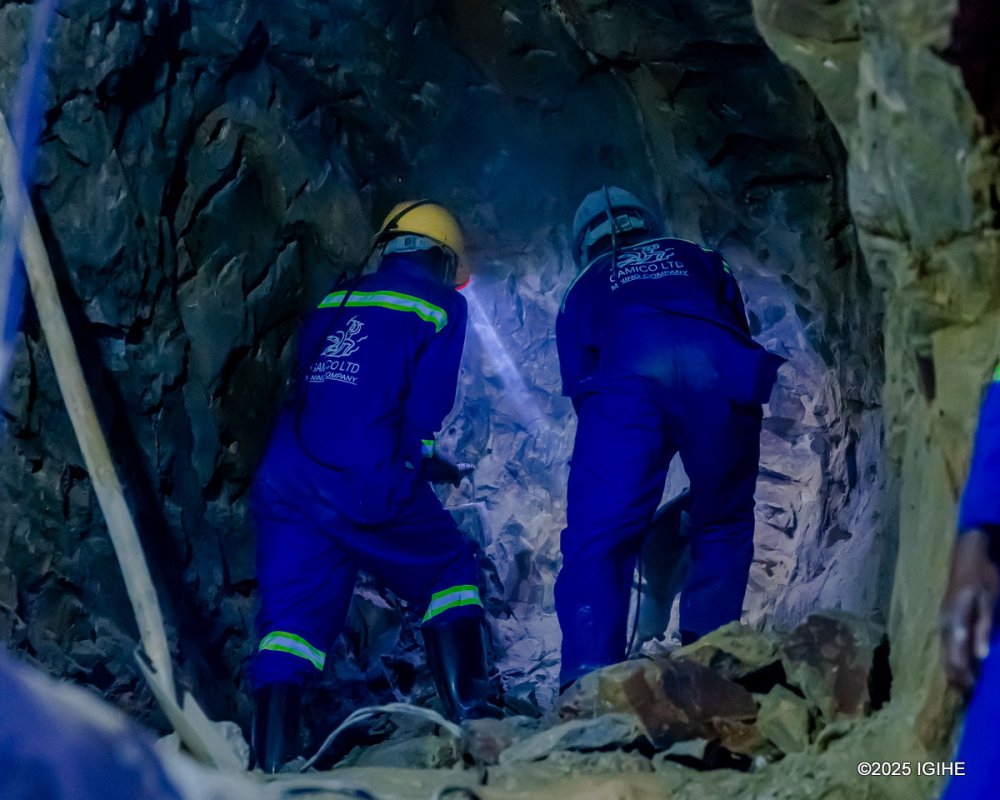
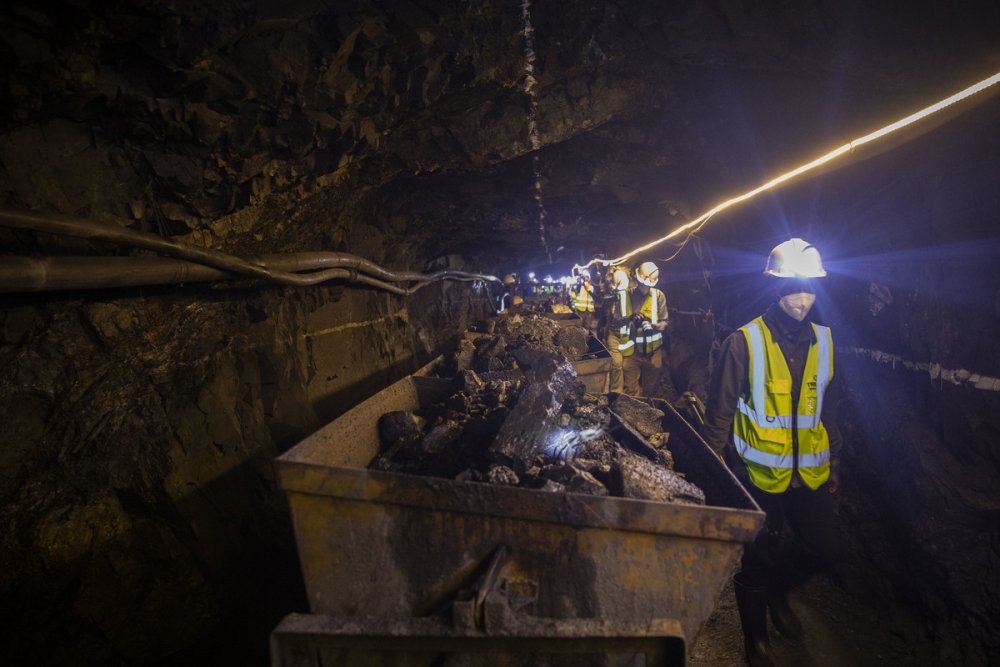
    The miners of who seven were men and seven women died on spot on Monday at 8h:00 am when the mine belonging to PIRAN Resources Limited collapsed.

    John Ntanyungura who survived the incident told IGIHE that the mine showed signs of collapse and it fell on his workmates right when he went out to check the situation from outside.

    “Fifteen of us entered the mine, seven women and eight men. Before the mine collapsed, it showed some signs of collapse. When I got out to see, I found it shaking and it immediately caved in. My colleagues who were still inside were all buried alive and I survived. The way it collapsed, there was no chance for anybody to survive,” John Ntanyungura said.

    Different officials including the Eastern Province Governor, Fred Mufulukye, and the Inspector General of Police (IGP) Dan Munyuza arrived at the scene shortly after.

    “The miners went to work as usual and the collapse happened while they were under the ground. We have not yet established the cause of the incident,” the Governor of the Eastern Province, Fred Mufulukye told IGIHE.

    The Secretary and Head of Legal Administration and External Affairs at PIRAN Resources Ltd, Minyati Tristan extended his condolences to families who lost relatives following the incident promising the company’s help to families of the victims during burial arrangements.

  • Morocco Justice Minister commends Rwanda’s success after genocide

    Minister Auajjar made the remarks on Sunday after a delegation he leads visited Gisozi Genocide Memorial Site where they paid tribute to 250,000 victims laid to rest there.

    Minister Auajjar and his delegation arrived at Gisozi Memorial Site, accompanied by the Executive Secretary of the National Commission for the Fight against Genocide (CNLG), Dr. Jean Damascène Bizimana.

    At Gisozi, the Moroccan delegation was shown a documentary film about the bitter times Tutsi went through in the 100 days that left more than a million lives lost in Rwanda.

    They visited different parts of Gisozi Genocide Memorial Site as they were explained the history of divisions which led to the 1994 genocide.

    Auajjar said what happened is beyond human imagination and efforts should be made to ensure it never happens again.

    “My delegation and I were very much touched by what we saw at this site. It was a time to be witnesses of bitter times Rwanda went through but which Rwanda left behind and rebuilt the unity among Rwandans on a foundation of human values, culture, peace and human rights,” he said.

    “What President Kagame did here [in Rwanda] makes us Africans proud of his generosity, Rwanda’s strength and capacity in rebuilding itself in a very short time after the genocide. It is a great human, social, cultural and economic success,” he observed adding that Rwanda’s jucidiciary needs to add more efforts in searching for genocide suspects still at large around the world.

    Mohammed Auajjar will hold special bilateral talks with Rwanda’s Minister of Justice, Johnston Busingye on Monday January 21 seeking to enhance bilateral partnership in the justice sector.

    The Moroccan delegation was shown a film explaining the history of divisions that led to genocide that saw over a million lives lost in only 100 days
    Morocco Justice Minister Mohammed Auajjar signing in the visitors' book at Gisozi Genocide Memorial Site
  • Nursery teachers for govt. payroll effective next financial year

    Currently, salaries of teachers in public nursery schools are paid by parents.

    “The Ministry of Education plans that teachers in nursery will be paid salaries by the Government starting with next fiscal year. Efforts by parents are not enough. When the Government doesn’t pay them salaries, there are no planned means to follow them up and train them,” Dr. Ndayambaje said adding that the number of certified nursery teachers is still low and unless the Government sets ways to treat them well, they can’t deliver expected results.

    Rwanda Government projects the number of children between five and six years pursuing nursery education to increase from 24% to 45% in the next seven years.

    According to the Education Ministry figures of 2017, there were 3,186 nursery schools of which 455 are public with 1,484 being public-private whereas 1,247 schools are private.

    In 2017, there were 6,039 nursery school teachers in Rwanda.

    Government projects to increase the number of children in nursery schools from 24% to 45% in next seven years
  • RDB rewards outstanding individuals, companies at ‘Business Excellence Awards’

    The Business Excellence Awards took place on the night of January 18, 2019 amidst pomp and spectacle.

    The categories that were awarded this year were; Investor of the Year, Emerging Investor of the Year, Exporter of the Year, Emerging Exporter of the Year, Innovator of the Year, Woman Entrepreneur of the Year, Young Entrepreneur of the Year, Made-in-Rwanda Enterprise of the Year, Emerging Made-in-Rwanda Enterprise of the Year, the Service Provider of the Year and the SME of the Year.

    The Investor of the Year Award was given to the I&M Bank Rwanda, while the Emerging Investor Award was given to Afriprecast, a factory that manufactures precast concrete products.

    The Exporter of the Year Award was given to the Africa Improved Foods. Last Year, the Food processing company scooped the 2017 Investor Award. The Emerging Exporter of the Year was awarded to Garden Fresh Ltd, a horticulture exporter in Rwanda, which grows and sells fresh vegetables and fruits to international buyers in the UK and Europe.

    The Small & Medium Enterprise of the Year is Pascal Technology Limited, a Rwandan software company that provides ICT Solutions to developing countries in Africa, while the Service Provider Award was allocated to Legacy Clinics.

    Officiating the event, Rwanda Development Board CEO, Clare Akamanzi noted the importance of the awards, to celebrate the contribution of the private sector, especially when good results have been registered. Ms. Akamanzi highlighted the milestones reached in 2018.

    “RDB for the first time registered investments worth US$ 2.006 billion, an increase of 20% when compared to those registered in 2017. Of the total investments registered in 2018, an estimated 26% represents export-oriented projects,” Akamanzi remarked.

    “Correspondingly there was a major highlight in the Doing Business performance where we hit our Vision 2020 target of being in the top 30 globally. The World Bank ranked Rwanda 29th globally in its 2019 Ease of Doing Business Report, and 2nd in Africa,” she added.

    All these great results, she said, were made possible through strong partnerships.

    The Minister of Infrastructure who was also the Guest of Honor at the Business Excellence Awards, Amb. Claver Gatete applauded the results of the Excellence Awards and observed that “when these awards keep getting bigger and better it is a sign that the private sector is growing”.

    RDB's CEO, Clare Akamanzi noted how the private sector bolstered the Rwandan economy. She further highlighted RDB's major highlights in 2018
    The Exporter of the Year Award was bestowed to Africa Improved Foods. The Country Director at AIF, Prosper Ndayiragije expressed contentment at receiving the award
    The Emerging Exporter of the Year in the Business Excellence Awards was given to Garden Fresh
    The Business Excellence Awards Made-in-Rwanda Enterprise of the Year was given to Urwibutso Enterprise. Entrepreneur Sina Gérard applauded the award
    The Emerging Made-In-Rwanda Enterprise Award was bestowed to the East African Granite Industries
    The Service Provider of the Year Award was given to Legacy Clinics and Diagnostics
    The Business Excellence Young Entrepreneur of the Year was awarded to Jean-Marie Vianney Habiyaremye, CEO & Founder of Cow Horns Rwanda
    Nyundo Music Students performed at the Business Excellence Awards

    {{Photos: Moses Niyonzima }}

    {{More Pictures: [https://www.flickr.com/photos/igihepictures/sets/72157704424981851/with/45878446335/->https://www.flickr.com/photos/igihepictures/sets/72157704424981851/with/45878446335/]}}

  • AU calls DRC to suspend proclamation of elections final results

    According to a communiqué released after a High Level Consultation Meeting of Heads of States and Heads of Governments held yesterday in Addis, the participants “attending the meeting concluded that there were serious doubts on the conformity of the provisional results, as proclaimed by the National Independent Electoral Commission, with the votes cast.”

    “Accordingly, the Heads of State and Government called for the suspension of the proclamation of the final results of the elections,” the communiqué reads.

    The meeting which was chaired by President Paul Kagame also the Chairperson of the African Union agreed to urgently dispatch to the DRC a high-level delegation comprising Kagame and other Heads of State and Government, as well as the Chairperson of the AU Commission, to interact with all Congolese stakeholders, with the view to reaching a consensus on a way out of the post-electoral crisis in the country.

    Felix Tshisekedi was announced winner of the presidential elections with 38.57% according to provisional results released by the Congolese National Independent Electoral Commission (CENI).

    Martin Fayulu who followed him with 34.83% of votes denounced the results and filed an appeal in the Constitutional Court demanding a manual recount of the votes.

    DRC outgoing President Joseph Kabila didn’t attend the meeting that was attended by a number of Heads of State and Government or their representatives from SADC, the ICGLR, ECCAS, ECOWAS, IGAD, EAC, the African members of the UN Security Council, among other officials despite the invitation by President Kagame.

    “In arranging for this meeting, I also contacted the President of DRC, President Joseph Kabila, in fact I extended the invitation to him as well. He told me he had wished to participate but because of that exact situation he may not be able to travel,” Kagame said.

  • Rwanda condemns early release of Col Aloys Simba, a genocide convict

    In 2016, Col. Always Simba requested for his early release as he had ended the 2/3 of his sentence.

    However, the Government of Rwanda opposed his request as it would be against interests of genocide survivors.

    In its submission to the Mechanism, Rwanda provided a detailed opinion from an expert in the trauma of genocide victims, who personally interviewed some survivors and reviewed statements from others.

    She described how Simba’s release would cause untold trauma for survivors of Kaduha Parish and the Murambi Technical School, where children saw their parents murdered, and parents saw their children murdered. “But Judge Meron somehow overlooked all of this to offer Simba leniency.”

    According to a statement released by the Ministry of Justice on Thursday, Judge Theodor Meron who was President of International Residual Mechanism for Criminal Tribunals (MICT) released [Aloys] Simba with utter lack of transparency and the release occurred last week in secret.

    The statement says that Judge Meron has yet to make his order public, and he shielded it for days from the rest of the Mechanism. Rwanda was also kept in the dark. Such unchecked, underhanded unilateralism has no place in the administration of international law.

    “Judge Meron is aware of Simba’s responsibility for the massacre of more than 40,000 Tutsi children, women and men at Murambi Technical School. Likewise, he knows that at Kaduha Parish, Simba put traditional weapons, guns and grenades into the hands of mass murderers and ordered them to “get rid of this filth” before they converted what should have been a place of refuge into a human slaughterhouse,” it says.

    “He should have served his entire prison term,” the statement notes.

    Judge Meron was named by the UN Secretary General, Antonio Guterres as President of the UNNICT for an additional six months mandate slated to end on January 18th, 2019.

    The Government of Rwanda says that during his tenure as President of the MICT, “Judge Meron has consistently reversed convictions, considerably reduced sentences on appeal, and released early genocidaires responsible for the worst massacres with no regard for the victims and survivors.”

    In his last days as President of the International Residual Mechanism for Criminal Tribunals, the statement says, Judge Meron cemented his legacy of undermining international criminal justice by releasing Aloys Simba in the dark of night, eight years before the end of his sentence.

    The Government of Rwanda says it cannot know whether Judge Meron released Mr. Simba for health concerns, something the Government of Rwanda might not necessarily oppose. “Kept in the dark, however, it cannot know whether this is the case.”

    The Government of Rwanda urges the next President to take more seriously the law and the facts, when reviewing applications for early release.

    “We likewise urge the next President to operate in an open and transparent manner, so that the Government of Rwanda and others with an interest in the cases pending before the MICT have notice and a reasonable opportunity to respond to pleadings and orders,”

    Col. Aloys Simba, 81, served as Presidential Advisor on Security in former Gikongoro and Butare Prefectures before the 1994 Genocide against Tutsi.

    Rwanda accuses Judge Theodor Meron of undermining international criminal justice during his tenure as President of the MICT
  • AfDB funds Rwanda with Rwf116 Billion to boost water supply and sanitation

    Adding to the initial funding which was worth 146.9 million Euros, the entire funding to the program is now 261.9 million Euros.

    The financing is to cover water supply infrastructures in Rutsiro, Karongi, Rubavu, Nyabihu, Ngororero Kamonyi, Muhanga, Ruhango Nyanza, Bugesera, Ngoma, Kayonza, Gatsibo, Nyagatare and Musanze Districts including sanitation facilities to ten schools.

    Water access in these districts is currently averaged at 45 percent, 40% lower than the national average which stands at 85%.

    About more than 1.5 million people will get improved water supply services with 700,000 of them living in rural and peri-urban areas raising the total number of beneficiaries of the whole project to 5.4 million at completion in June 2023.

    “This funding will improve the quality of life and socio-economic development of the people and promote economic growth and transformation,” said the Minister of Finance and Economic Planning after the signing of the agreement.

    The AfDB Rwanda Country Manager Mrs. Martha Phiri said, “This additional financing increases the on-going Bank support to the water and sanitation sector in Rwanda to €282 million, demonstrating the Bank’s desire and readiness to match the Government of Rwanda’s ambitions to achieve speedy socio-economic transformation.”

    As per objectives of the National Strategy for Transformation one (NST-1), Rwanda projects that by 2024, all households, schools and commercial facilities will have reliable access to clean water and sanitation services.

  • Kagame to chair AU meeting to discuss DRC disputed elections

    The meeting slated to be held tomorrow on January 17th, 2019 will see 16 Heads of State and Government at the African Union (AU) headquarters convene in Addis, Ethiopia.
    The meeting will be preceded by the emergency meeting of the Southern Africa Development Community (SADC) in which Kagame also was invited in.

    The Democratic Republic of Congo held provincial and presidential elections on December 30th, 2018 after which the National Independent Electoral Commission (CENI) in DRC announced Felix Tshisekedi the winner.

    Martin Fayulu, a presidential candidate, dismissed the results and filed an appeal at the Constitutional Court.

    In a hearing on Tuesday, the Prosecutor told Court that Fayulu had no ample evidence supporting his allegations that elections were rigged hence demanding the manual recounting of votes.

    SADC also advised the DRC to verify the votes proposing a unity government comprised of sides of Martin Fayulu and Félix Tshisekedi in a bid to avoid violence and restore peace.

    When President Kagame met Joseph Kabila, DRC outgoing President in August 2016
  • Rwandan attends wedding in Uganda, gets kidnapped

    News of Kayibanda’s abduction was released by the Minister of State for Foreign Affairs and East African Community Affairs, Amb. Olivier Nduhungirehe who said Kayibanda was kidnapped in Kampala, Uganda by the County’s Chieftaincy of Military Intelligence (CMI) agents.

    In a tweet, Olivier Nduhungirehe posted two pictures of Kayibanda and said: “This is Rogers Donne Kayibanda . He arrived in Kampala, Uganda on Thursday 10 January 2019 to attend the civil wedding of his brother, which took place the following day Friday 11 January 2019.”

    “He was kidnapped after the ceremony in Kisasi, Kampala suburb, by CMI [Chieftaincy of Military Intelligence] operatives,” Nduhungirehe’s tweet continues.

    News of Kayibanda’s kidnapping follows several other kidnappings faced by Rwandans in Uganda with some of them subjected to torture.

    On Sunday, following the abduction of Fidel Gatsinzi, another Rwandan citizen who was also arrested in Uganda, one Rama Isibo asked what the Government of Rwanda is doing about the ‘illegal detention of Rwandans in Uganda” to which the Minister of Foreign Affairs and Cooperation, Dr. Richard Sezibera replied: “[Rwandan] Government is doing all that is feasible to bring Rwandans home …and asking them to be prudent in harm’s way.”

    Rogers Kayibanda was kidnapped in Kampala, Uganda, where he had gone for a wedding of a brother