Tag: HomeHighlights

  • Rwanda’s oldest priest dies aged 97

    Rudahunga who has been for long suffering from chronic illnesses died on Monday, Bishop Smaragde Mbonyintege has told IGIHE.

    Rudahunga was ordained priest in 1953, being the 111th person to be ordained priest in Rwanda.

    In a yet to be published exclusive interview with IGIHE, Rudahunga who held the honorary title of Bishop said he did so many works for the Catholic Church in Rwanda including Kabgayi Minor Seminar.

    At 97, Bishop Eulade Rudahunga was the oldest priest in Rwanda.

    At the celebration of the 100th anniversary of the Catholic Priesthood in Rwanda, Bishop Eulade Rudahunga was greeted by President Kagame with whom they held hands
  • Kagame meets DRC’sTchisekedi in Addis

    It was the first time for the Presidents of the two neighboring countries to meet after Tchisekedi was declared winner of the Presidential elections held in DRC last year.

    The 32nd AU two day Summit that was held in Addis on February 10 to 11th this year was the first AU Summit President Félix Tshisekedi attended after his election as President of Democratic Republic of Congo in December last year.

    What marked President Kagame and Kagame’s meeting was not announced by Rwanda’s Presidency.

    After he was elected to lead the DRC, Tchisekedi expressed that his country wishes to join the East African Community which is chaired by Rwanda for a year stint.

    Over the last 20 years, DRC became home to groups that expressed wishes to cause insecurity in Rwanda.

  • Kagame calls for intensified protection of digital information

    Kagame made the remarks on Monday as he attended the meeting on Digital Transformation in Africa on the second day of the 32nd Ordinary Session of the African Union.

    Kagame said: “Yesterday at the opening ceremony, I mentioned that “the future of the global economy is digital”. I should have added: “and government”.

    “E-government is a powerful tool for improving both the quality and accessibility of government services,” he explained.

    “Digital identity is the start of a long and valuable chain of capabilities that make citizens better able to participate productively in the regional and global economy,” Kagame said.

    For the digital use in delivering government services, Kagame shared the story of Irembo, the online platform where Rwandan citizens access government services online.
    “In Rwanda, we have used the Irembo platform to make many public records available online, such as land titles, birth certificates, visas, driver’s licenses, national ID, and even mountain gorilla trekking permits,” Kagame said.
    “But digital systems can only function well when they are trusted,” Kagame said, advising that “Information must be protected from unauthorised access. It should be clear who owns the data that people generate and how it will be used.”

    “Different digital platforms must also be able to communicate with each other seamlessly. Otherwise, we are merely rebuilding the same fragmentation in the cloud that we have been working to transcend here on the ground in the African Union,” he warned.

    The meeting on Digital Transformation was, among other dignitaries, attended by Kersti Kaljulaid, the President of Estonia, whose country Kagame said “is among the most advanced in terms of e-government and digitalization.”

    “Estonia is a leading country in IT and in technology generally which they have used for the development of their country, and we can have a few lessons to learn from them,” Kagame said.

    Kagame also revealed the Smart Africa Alliance implementing technology-based initiatives on a regional basis has now grown to 24 member states with a total market of over 600 million people.

  • Kagame urges African nations, companies to invest more in healthcare

    Kagame who doubles as the Chairperson of the African Union made the remarks as he chaired the African Leadership Meeting on Investing in Health held in Addis Ababa ahead the 32nd African Union Summit.

    The meeting has brought together African Heads of State and Government, business leaders and global health organisations to launch a new initiative designed to help deliver increased, sustained and more impactful financing for health across Africa.

    In his remarks, Kagame said, “Investing in the health of our citizens has already had transformative effects on the people of our continent. But there is much more to do. We will get better results if we work together as a continent.”

    “We also have a lot to learn from each other’s experiences implementing programmes such as universal health insurance, and community-based healthcare,” Kagame said.

    According to the 2018 WHO Global Health Expenditure Database, only two out of the 55 AU Member States meet Africa’s target of dedicating at least 15% of the government budget to health and do not reach the suggested threshold of US$86.30 per person required to provide a basic package of health services.

    Here, Kagame called on the governments to increase domestic investment in healthcare.

    “Governments should surely be willing and able to increase domestic investment in healthcare. A good indicator of this is the progress we have made toward securing the financial health of the African Union and mobilising our own resources for joint priorities, such as the Peace Fund. We should be the first ones to contribute to efforts that directly benefit our people,” Kagame said.

    “We are entering a period where most of the special health financing vehicles must replenish their resources. This creates the necessity—or rather the opportunity— for Africa to increase its ownership of the process. Together we can set an even more ambitious agenda for the next phase,” he emphasized.

    Kagame also called on private companies to invest more in the business of healthcare in Africa.

    “The private sector is the key to success. The role goes beyond taxes and philanthropy as central as those are. We also need to see the private sector investing more in the business of healthcare in Africa as service providers,” he said.

    Kagame also noted that companies can also ensure their employees have high-quality, private health insurance coverage and this creates more demand in the market, and allows governments to focus on the most vulnerable.

    President Paul Kagame chaired African Leadership Meeting on Investing in Health held in Addis Ababa ahead of the 32nd African Union Summit.
    The meeting brought together business leaders and global health organisations to launch an initiative seeking to boost  governments' and private investment in healthcare
  • Kagame in Addis for 32nd AU summit, last meeting for him as AU Chairperson

    This Saturday, 9 February 2019, African Heads of State and Government, business leaders and global health organisations are gathering in Addis Ababa to launch a new initiative designed to help deliver increased, sustained and more impactful financing for health across Africa.

    The meeting to be hosted by the African Union will be chaired President Paul Kagame who is also the current Chairperson of the African Union is themed as ‘Africa Leadership Meeting: Investing in Health’.

    The Secretary-General of the United Nations António Guterres, the Co-Chair and Founder of Bill & Melinda Gates Foundation, Bill Gates and Norway’s Prime Minister Erna Solberg are among special guests in the meeting.

    African countries are gradually increasing domestic investments in health with 35 out of 55 AU Member States (over 64%) having increased the percentage of their DP invested in health over the previous financial year, according to the 2018 WHO Global Health Expenditure Database.

    Despite huge steps African countries have made in increasing domestic investments in health, only two out of the 55 AU Member States meet Africa’s target of dedicating at least 15% of the government budget to health and do not reach the suggested threshold of US$86.30 per person required to provide a basic package of health services.

    More than half of Africa’s population currently lack access to essential health services, and millions die every year from commonly preventable diseases.

    Tomorrow, Sunday, President Kagame will gather with his fellow African Heads of States for the 32nd Ordinary Session of the African Union which will be the last for him as AU Chairperson.

    Kagame who has been AU Chairperson since January 28th 2018 will be replaced by Egyptian President Abdel Fattah El-Sisi.

    It will always be remembered that it is during Kagame’s mandate as the Chairperson of the African Union that the African countries signed the historical African Continental Free Trade Agreement among other achievements.

    49 of the 55 AU Member States have signed the AfCTA that was signed on March 21, 2018.

    President Paul Kagame will continue to serve as the leader of the African Union institutional reforms, a role he was mandated by his fellow African Heads of States and Government in 2016.

  • RPF Inkotanyi saw no interest in killing President Habyarimana- Gen Kabarebe

    Gen. James Kabarebe who now serves as President Paul Kagame’s Advisor on Security Matters has held several positions in the Rwandan army where he served as Rwanda’s Minister of Defence and Rwanda Defense Force (RDF) Chief of Defense Staff among other duties.

    During the liberation struggle by the Rwanda Patriotic Army (RPA) that later changed name to current Rwanda Defence Force (RDF), Kabarebe served as the Private Secretary of Maj. Gen Paul Kagame who was Head of RPF military wing (RPA) and later became the Commander of the High Command Unit at Mulindi.

    In October 1990, RPF Inkotanyi launched an armed war to liberate Rwanda after several peaceful attempts to let Rwandan refugees repatriate that had ended in vain.

    RPF Inkotanyi has been at different times accused of having carried out the attack on a plane that carried President Juvenal Habyarimana on April 6, 1994, a plane crash that was followed by the 1994 Genocide against Tutsi that left over a million lives lost.

    Speaking to 500 youths who gathered at Kimisagara Youth Development Centre on a theme entitled ‘Rubyiruko Menya Amateka yawe loosely translating as “Youth, Know your history’’, Kabarebe said RPA soldiers were very much disciplined and had a great and genuine reason to fight which helped them win the struggle.

    “RPF Inkotanyi armed forces were so disciplined that you would not imagine they were a rebel movement. You would have thought FAR [Rwanda Armed Force) which was the national army of Rwanda until 1994] was instead a rebel group due to its indiscipline and disorganization,” General Kabarebe said.

    Kabarebe explained that RPF recognized the enemy of the country as the bad, corrupt and exclusive governance while Habyarimana’s regime said Rwanda’s enemy was all Tutsi.

    “You can’t win a war against a force that fights to liberate Rwandans and develop the country while you fight to kill part of its citizens. Whatever ammunition you may have, whatever knowledge your army may have, you can’t win that struggle,” Kabarebe emphasized.

    “RPF never fought to seize power. Some people say we won the war just because Habyarimana had died. This is false because if we wanted to take power first, we would have conquered the nation and take Habyarimana by hands. We were so strong that FAR could not stand our way,” he said.

    {{Habyarimana was not a threat to RPF}}

    Gen James Kabarebe told the youth RPF saw no interest in killing President Habyarimana as he was not a threat to their struggle.

    “Habyarimana would come in CND [Parliamentary premises] where many RPF soldiers lived but they never shot at him despite the fact that he was guarded by his junior guards. If RPF soldiers had wanted to kill him, they would have done it at CND,” Kabarebe explained.

    Kabarebe urged the youths to keep a watchful eye and fight any kind of divisionism that can take Rwanda back to dark moments it went through.

    Despite allegations that the plane that carried President Habyarimana was shot down by RPF, the French intelligence document recently revealed that Colonel Theoneste Bagosora, who was Chief in Defence Ministry and Laurent Serubuga, a former Chief of Staff of the Rwandan Armed Forces were instigators of the April 1994 plane attack.

    Gen James Kabarebe is Senior Presidential Advisor on Security matters after serving as Minister of Defence and RDF Chief of Defence Staff
  • Kagame receives Sudan’s Vice President Osman Mohamed

    Osman Mohammed was acompanied by Sudan’s Minister of Information Bushara Juma’a Arur and the Deputy Secretary General in Sudan Presidency office, Ambassador Jamal El-Sheikh.

    President Paul Kagame commended Sudan’s efforts to bring peace to Southern Sudan, and the agreement signed between the conflicting parties in Central African Republic, which was recently hosted by Khartoum, stressing his follow-up on all current events on the continent.

    Sudan News Agency (SUNA) reports that Kagame described Rwanda’s relations with Sudan as deep and historical, expressing his country’s desire to develop it to serve the interests of both countries and people.

    Rwanda holds good bilateral relations based mostly on peace keeping.

    Official figures as of November 2018 indicate that Rwanda is the country with the highest number of peacekeepers in Sudan under the African Union-United Nations Hybrid Operation in Darfur (UNAMID) with 1629 peacekeepers followed by Pakistan with 1159, Ethiopia with 1092 while Tanzania has 805 peacekeepers as the fourth country with most UN peacekeepers in Sudan.

  • Kagame promotes 16 air force officers

    According to a statement released yesterday by the Ministry of Defense, all the 16 officers promoted graduated from the General Sir John Kotelawala Defence University in Sri Lanka.

    The corporals skipped six ranks while those promoted from the rank of private skipped seven ranks up to the rank of Lieutenant.

    The 16 officers promoted to the rank of Lieutenant join other 663 RDF officers whose promotion from the rank of second-Lieutenant to Lieutenant was approved by the cabinet meeting in August 8, last year.

    President Kagame also the Commander in Chief of the Rwanda Defence Force addressing the military officers at Rwanda Military Academy Gako on December 11, 2018
  • Ugandan EAC MP rises against illegal detention of Rwandans in Kampala

    During a press conference in Kampala, Fred Mukasa Mbidde, who is also the DP Vice President, condemned what he called “inhumane incarceration of innocent Rwandan nationals as retribution for Kigali’s deeds.”

    He advised security institutions to have utmost respect for human rights in the course of handling criminal suspects and advised Uganda People’s Defence Force [UPDF] to cease targeting citizens of the East African community, particularly the Rwandan nationals which is against known protocols on human rights including the treaty for the establishment of the East African Community.

    Mbidde said the party was aware of at least 13 Rwandan nationals who are languishing in various detention centers across the country.

    The detained Rwandans listed by Mbidde include Rene Rutagungira, who was arrested from a bar in Kampala in August 2017, Emmanuel Rwamucyo and Peter Augustin Rutayisire who were arrested last year for alleged espionage.

    Mbidde went on to call on the Ugandan government, to iron out its differences with Kigali, whose effects he said could be catastrophic to the regional integration process.

    “It is therefore demanded that government explains the general relationship between Rwanda and Uganda in very certain terms. The prisoners, all civilians are released from the court martial and if suspected of offences be charged in civil courts with a possibility of obtaining bail to look after their families”, he is quoted by a Ugandan online media, Chimpreports.

  • Rwanda signs $USD 400 million deal with Gasmeth Energy for methane gas extraction

    Gasmeth Energy Limited was represented by CEO Stephen Tierney at the signing ceremony.

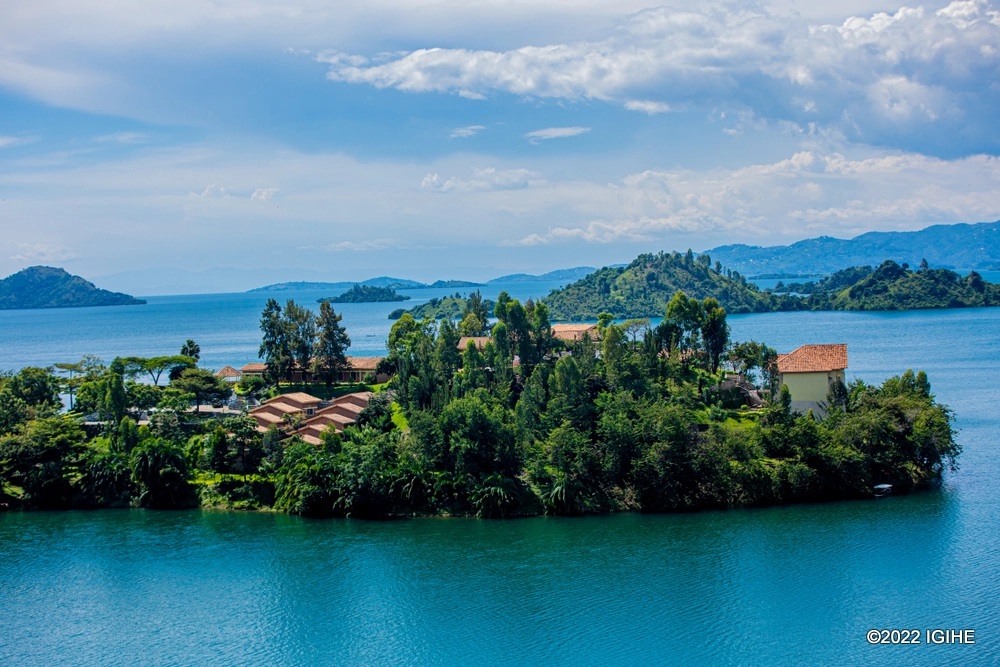
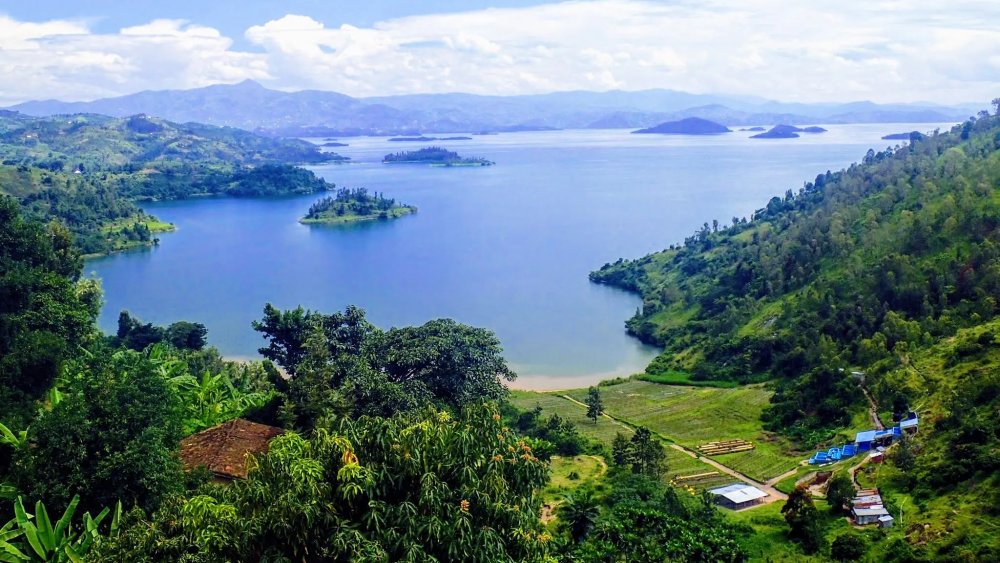
    Gasmeth Energy plans to finance, construct and maintain a gas extraction, processing, and compression project. The project will include a gas extraction plant on Lake Kivu, where Gasmeth Energy will extract and separate methane gas from water and thereafter transport it to an onshore plant where they will compress it. The compressed natural gas will be distributed on both the local and international market.

    The over USD $400 million project aims to generate employment for between 600-800 people during the construction phase. The Gasmeth Energy project will have 400 employees after construction.

    The RDB Chief Executive Officer, Clare Akamanzi, noted: “Natural gas is the most environmentally friendly fossil fuel. The natural gas produced by the plant will help reduce the use of wood and charcoal as a cooking fuel as well as diesel fuel in the automotive industry.

    “The deep water of Lake Kivu contains dissolved methane and carbon dioxide. These gases pose a serious risk to all the oxygen-dependent life in the vicinity of the lake as they continue to build up. However, methane gas also provides an energy resource valued at billions of dollars for the Kivu region.

    “We, therefore, welcome the Gasmeth Energy project because not only will it reduce the risk of a methane gas explosion, it will also provide jobs, reduce Rwanda’s natural gas import bill, increase gas exports and provide cleaner cooking fuel for Rwandans,” she said.