Tag: GreatLakesNews

  • Ugandan troops in DR Congo to be immunized against Ebola

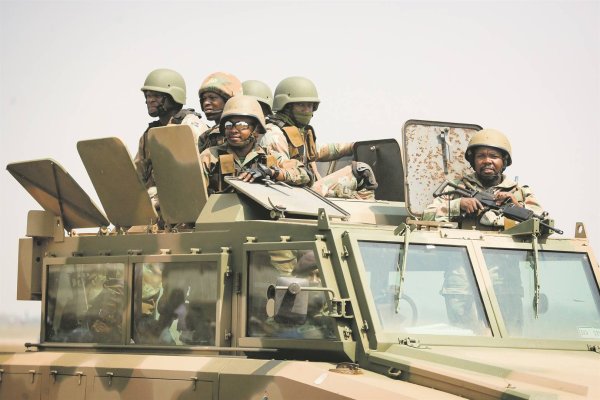
    The military in a statement it tweeted said its medical department together with the ministry of health and the World Health Organization will, starting on Aug. 19, vaccinate the troops including those operating along the common border with the DRC.

    Ambrose Musinguzi, Chief of Medical Services, said the troops in eastern DRC face a high risk of contracting the deadly disease.

    “The vaccine to be applied which is from Merck is 100 percent effective. We have used it before in Uganda not only to health workers but also in districts of Kasese and Bundibugyo and in some units of UPDF (Uganda People’s Defense Force),” said Musinguzi.

    Henry Kyobe Bbosa, the UPDF Epidemiologist, said the army medical personnel have been trained as Ebola Rapid Response Team and Vaccinators to contain and control the outbreak.

    “We have conducted TOT (Training of Trainers) workshop of 30 experts in different areas who are going to train other medical workers in the field who will in turn be conducting case findings, managing alerts and carry out vaccination. We are also to deploy three mobile laboratories to be able to manage any signal case,” Bbosa said.

    He said there are potentially sporadic unmasked Ebola outbreaks that require contingent measures, in case if any of the troops get infected, the rapid response team is able to respond, manage and treat.

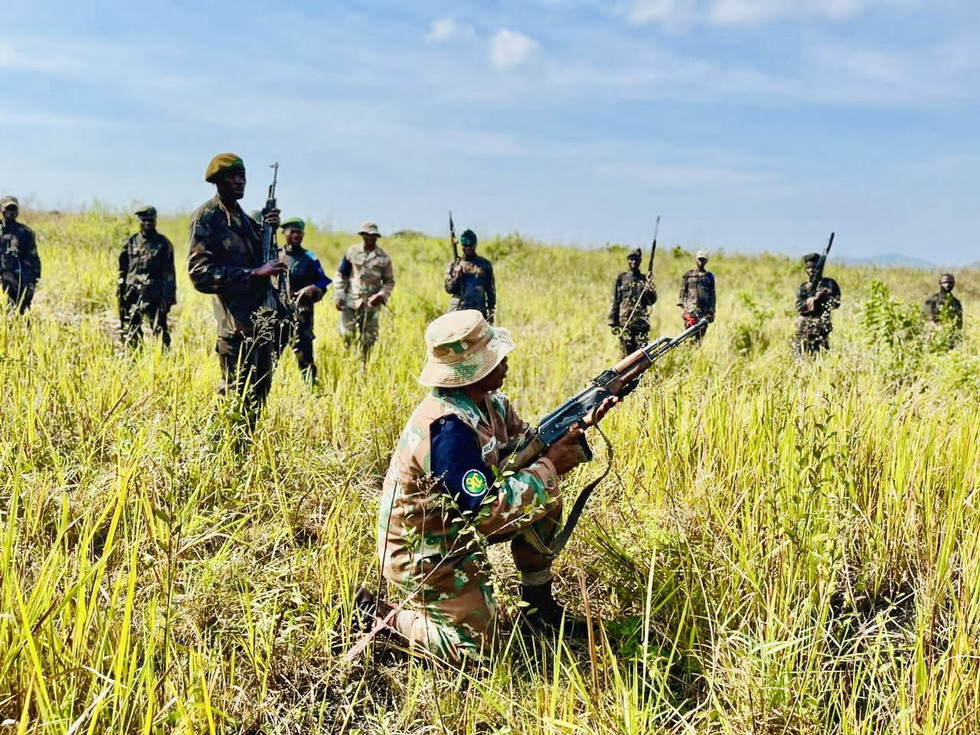
    Uganda and DRC in November last year launched joint military operations against the Allied Democratic Forces (ADF), an insurgent group hiding in the jungles of eastern DRC.

    The ADF is an affiliate of the Islamic State in central Africa and is also blamed for the bombings in the Ugandan capital Kampala last November that left six people dead and 33 others injured.

  • Chinese-built modern railway key enabler to Kenya’s Vision 2030

    Since 2018, time spent on the 328-km journey has been reduced to four hours thanks to the Mombasa-Nairobi Standard Gauge Railway (SGR) passenger train service launched in May 2017.

    Financed mainly by China and constructed by China Road and Bridge Corporation, the 480-km railway connecting Mombasa, the largest port in East Africa, and Kenya’s capital city of Nairobi is a flagship project under the China-proposed Belt and Road Initiative, and is Kenya’s largest infrastructure project since its independence in 1963.

    Mghoi said the efficient, reliable and affordable mobility, which the SGR has always guaranteed her whenever she travels to meet new clients, has boosted her career.

    The SGR is “an extremely good experience in the last few years,” James Macharia, Kenya’s cabinet secretary for transport, infrastructure, housing and urban development, told Xinhua. “We can expect a lot more profitable operations going forward.”

    As a strategic infrastructure project, the SGR is aiding the realization of Kenya’s two flagship socio-economic transformation blueprints — the Vision 2030 and the Big Four Agenda, said Philip Mainga, managing director of Kenya Railways Corporation.

    Less time on road, more opportunities

    With the SGR, Mghoi is able to reach her destination on time and negotiate for a potential business opportunity with ease. She said the punctuality has helped her cement trust and confidence with her clients.

    Mghoi belongs to a growing army of Kenyan skilled labor force, entrepreneurs and tourists who have embraced the SGR service.

    The Mombasa-Nairobi SGR and the additional 120-km Nairobi-Naivasha SGR have also facilitated the hauling of bulk cargoes to the hinterlands.

    With the SGR freight service, it takes eight hours to transport bulk cargoes like raw materials from the Mombasa port to an inland container depot in Nairobi, as opposed to around two days using the century-old Meter Gauge Railway constructed by British colonialists, said Edward Opiyo, terminal manager at Nairobi Freight Terminals Limited, a logistics firm.

    As logistics firms are now able to transport bulk cargoes in a speedy, cheaper, efficient and environmentally-friendly manner, they have built a cordial relationship with major clients, Opiyo said.

    Transit hours and the cost of hauling bulk cargoes to neighboring landlocked countries have also been reduced, injecting fresh vitality into regional supply chains, he said.

    The SGR has enhanced Kenya’s trade with neighboring countries and offered an economic lifeline to member states of the East African Community, said Mainga.

    In the last five years, the modern railway has transported 20 million tons of cargoes and about 8 million passengers, elevating Kenya’s status as a regional manufacturing, trade and logistics hub, he noted.

    “I must say we are lucky. We are doing more exports and diversification of goods than before. We are seeing a dynamic change due to what the SGR is doing in terms of exports,” he said.

    The Mombasa-Nairobi SGR is projected to contribute 2-3 percent to Kenya’s GDP, said Mainga, adding that the railway has become a dominant player in Kenya’s pursuit of inclusive growth, as it has revolutionized transportation of passengers and bulk cargoes, stimulated commerce and investments and fostered job creation for local youth.

    Mutual understanding, respect, trust

    Mainga said the SGR is also benefiting local people as skills transfer has reached 80-90 percent.

    “Now our people are able to run the operations, to drive their locomotives, to carry on with signal work, to repair and maintain our wagons,” he said.

    Recruited in 2017 by the SGR operator Afristar Railway Operation Company, Harrison Kinyanjui, a 26-year-old economics major, has received rigorous training on railway operation and management from Chinese tutors, and progressed quickly to become the first Kenyan to work at the SGR dispatch center in Nairobi.

    Currently the assistant superintendent of the center, Kinyanjui said their work is to organize train operations using a centralized traffic control system in the center, which is “the brain and heart for all SGR train operations.”

    “The Chinese experts have taught us very well. They now have the confidence to leave us to work independently, and we are very, very proud that we came here not knowing anything about train dispatching, but we are now very competent,” he said.

    “You see the Kenyan government and the Chinese government work together. We want to thank both governments for the support they have given us,” said Mainga.

    As Afristar has been committed to prioritizing safe operation, boosting movement of passengers and goods and enhancing localization, the SGR’s socio-economic outcomes have gained trust and recognition by the Kenyan government and people, Li Jiuping, general manager of Afristar, told Xinhua.

    “To create high-performing Sino-Kenyan teams, Afristar fosters cross-cultural working relationships and promotes mutual understanding, respect and trust,” Li said.

    Ugandan President Yoweri Museveni is the first visiting head of state to travel by Kenya’s SGR in March 2019. He said the enhanced efficiency in handling cargoes has been beneficial to the economies of both Kenya and Uganda, and to other countries that depend on the Mombasa port for import and export, including Rwanda, Burundi, South Sudan and the Democratic Republic of Congo.

    Within the framework of the Forum on China-Africa Cooperation, the SGR is among many China-Kenya infrastructure cooperation projects which are leading the Sino-Africa cooperation, Chinese Ambassador to Kenya Zhou Pingjian told Xinhua.

    Eco-protection priority

    Before the SGR project started, there had been fears that the railway could harm biodiversity, as it would snake through the Tsavo National Park, Kenya’s oldest and largest wildlife sanctuary, home to iconic species such as elephants, giraffes and zebras.

    To ensure their safety, the SGR contractor built electric fences on both sides of the track, and wide underpasses at short intervals to facilitate their movement.

    Besides wildlife, mangrove forests are well protected, too. Ali Mohamed, a 44-year-old resident of a serene village overlooking a mangrove swamp on the northwestern edges of Mombasa, said that besides regulating coastal weather, the installation of overpasses and culverts has ensured that there was minimal disturbance to the mangrove forest, which is an important fish breeding site.

    “I visited the SGR when its construction started and witnessed restoration of the previously degraded sections of the mangrove forest in our locality,” said Mohamed, also founder of Bidii Creek Conservancy, a Mombasa-based green lobby.

    The SGR has provided best practices on blending conservation with infrastructure development, he said.

    Five years since its launch, the SGR has earned accolades from local officials and conservationists for prioritizing ecological protection along its corridor.

    Nancy Githaiga, country director for Kenya at Nairobi-based African Wildlife Foundation, said wildlife protection measures initiated by the SGR contractor should inform future efforts to develop mega infrastructure projects while safeguarding integrity of biodiversity hotspots in Kenya.

    Green ethos has been placed at the center of SGR operations, bringing benefits to local communities in terms of clean air and tranquil landscapes, said Mainga.

    The design and execution of the project adhered to local environmental protection laws, ensuring a healthy relationship between the contractor and local communities, said Cosmas Makewa, station master at the Mombasa SGR Terminus.

    Unlike trucks, SGR trains plying along the corridor have not been emitting smoke to the atmosphere, boosting Kenya’s quest for improved air quality, said Makewa.

    The SGR project highlighted the viability of China’s vision of ecological civilization, according to Leopold Omondi, a campaigner with Nairobi-based green lobby Pan African Climate Justice Alliance.

    The first train of the Mombasa-Nairobi Standard Gauge Railway (SGR) arrives at Nairobi Terminus in Nairobi, Kenya, May 31, 2017. (Xinhua/Chen Cheng)

  • Police in Arusha holding suspects who kidnapped Chinese national

    The Arusha Regional Police Commander, Justine Masejo in a press statement on March 11, said the Chinese national (name withheld) was abducted in Karatu district.

    Commander Masejo said the police on Mach 7, received a report from a Chinese national, Lian Qiang (44) from Bonanza saying that one of their employees had disappeared under mysterious circumstances while working in Karatu.

    The Chinese man was and his driver was in a Toyota Kluger with registration T571DLQ.

    He said Giang later received a call from the kidnappers demanding a ransom of $ 100,000 for the man to be released.

    The commander said after a thorough investigation the suspects were arrested at a lodge located in Ada Estate in ​​Kinondoni, Dar es Salaam.

    He said that after the search, the abducted Chinese national was found withe arms and legs tied by the suspects.

    “We found them with a Toyota Kluger with registration number T 982DQA a car that belongs to Bonanza company which was stolen on February 8 and we found two knives, a hammer and drill machine and five cables all belonging to Bonanza,” he said.

    However, one of the kidnappers was identified as a Chinese national who had been fired for misconduct by Bonanza Company.

    Arusha Regional Police Commander, Justine Masejo. Photo:  The Citizen

  • US says deadly DR Congo militia linked to Islamic State group

    In a statement, the US Department of State said the Allied Democratic Forces (ADF) were also known as “ISIS-DRC” or “Madina at Tauheed Wau Mujahedeen”.

    The group is “notorious in this region for its brutal violence against Congolese citizens and regional military forces, with attacks killing over 849 civilians in 2020 alone” according to UN figures, it added.

    Commanded by Seka Musa Baluku, the ADF has come into the orbit of IS’ so-called “Central Africa Province” since the terror group launched it in 2019.

    It is mostly active in the North Kivu and Ituri provinces along the DRC’s border with Rwanda and Uganda.

    As well as the ADF, the State Department also labelled a separate militia in Mozambique, known as Ansar al-Sunna or al-Shabaab, as an IS-linked terror group, saying it “reportedly pledged allegiance to (IS) as early as April 2018”.

    “Since October 2017, ISIS-Mozambique, led by Abu Yasir Hassan, has killed more than 1,300 civilians,” it added.

    Nevertheless, both organisations are “distinct groups with distinct origins” from IS itself, the State Department said.

    The terror designations freeze any property under US jurisdiction linked to the groups or their leaders, bans transactions with them and threatens foreign financial firms with sanctions if they deal with the groups.

    The ADF militia are Ugandan Islamic fighters who have made their base in eastern DR Congo since 1995.

    They have not launched raids into Uganda for several years.

    Since April 2019, IS has claimed some ADF attacks, sometimes with factual errors, while in December last year a UN expert group found “no direct link” between the two.

    Blamed for 1,219 civilian killings since 2017, the ADF is believed to be the deadliest of at least 122 armed groups active in DR Congo’s four eastern border provinces of Ituri, North Kivu, South Kivu and Tanganyika.

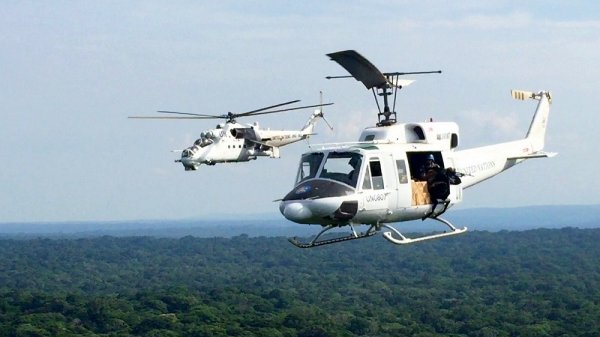
    Monusco soldiers patrol the road in the Kibumba area on February 22, 2021.  Photo AFP

  • Rwanda and DRC agree on reopening borders

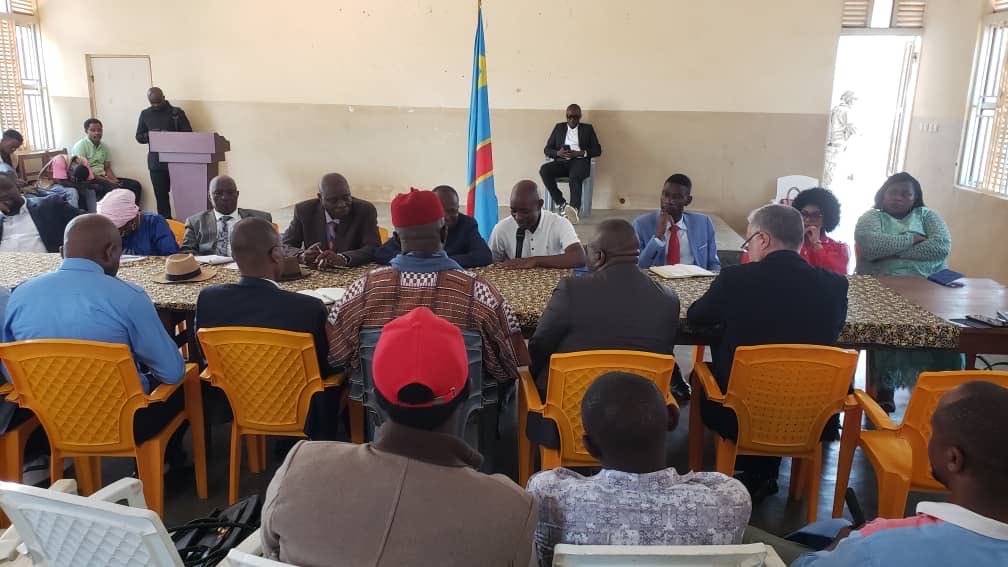
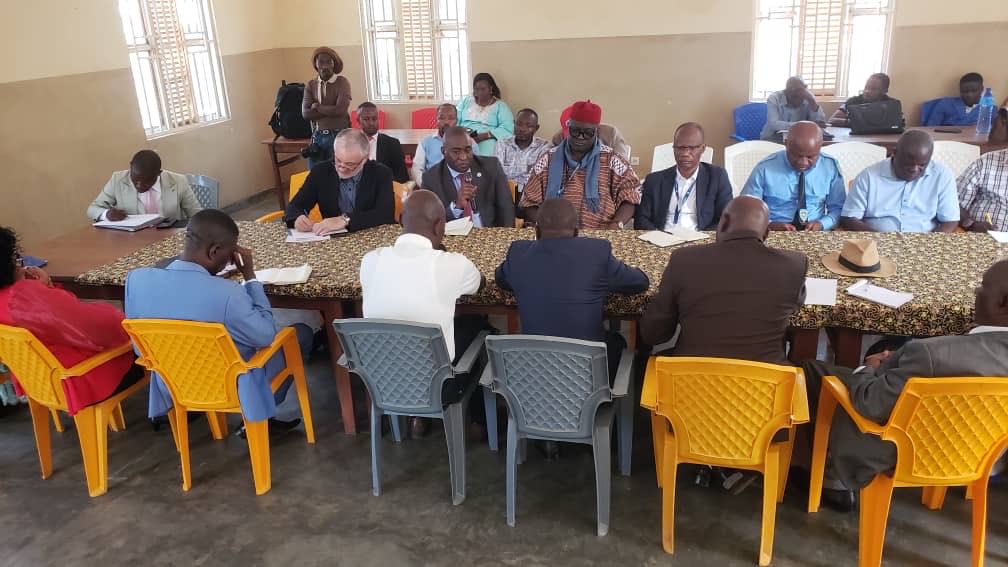
    The Rwanda delegation was made of Health Minister Dr. Daniel Ngamije, Trade and Industry Minister Soraya Hakuziyaremenye and Local Government Minister Prof. Anastase Shyaka, among others, while their Congolese counterparts were Innocent Bokele Walaka, the deputy minister for internal affairs, the deputy minister of health – Dr. Albert M’PETI Biyombo and the Governor of North Kivu Province, Carly Kasivita Nzanzu, in Rubavu District in a closed door meeting that lasted over five hours.

    Officials from both sides noted that the bilateral meeting was made possible thanks to the political will by heads of state of the two countries. They discussed collaborations towards improving public health in the two countries.

    The purpose of the meeting was to formulate proposals for high-level political commitments meant to guide the strengthening of cross-border cooperation in surveillance of Covid-19 pandemic and its implication for cross-border trade in compliance with the specific measures taken by either country.

    These two teams discussed about the measures to be taken to ensure the continuity of commercial activities and the cross border movement of essential goods notably medicines, medical equipment and basic necessities.

    According to a statement signed by the two countries after the meeting, it was agreed to encourage traders to operate in cooperatives in order to reduce the number of people who would have to cross the border on daily basis; this implies that respective cooperatives will designate emissaries to transact on their behalf across borders. The statement says that goods by informal cross border traders will continue to benefit from a simplified declaration and preferential tariff.

    Minister Ngamije noted that the bilateral meeting was crucial towards containing the spread of coronavirus while allowing for resumption of cross-border movement in compliance with measures taken by either country in a bid into curb the pandemic.

    “Both countries agreed on how to prevent the spread of Covid-19 through sharing information on those who tested positive in a move to trace groups of suspected cases. We also discussed ways cross border trading should resume without disregarding measures to contain this pandemic,”

    Ngamije said also that they agreed to set up a technical team of focal persons from respective sectoral ministries to coordinate the implementation of the meeting resolutions.

    Deputy Minister Bokele Walaka said “We are happy as we share same ideas with Rwanda towards fighting COVID-19, we are therefore set to put this pandemic to an end through sharing experience and best practices,”

    guverineri_w_intara_ya_kivu_y_amajyepfo_theo_ngwabidje_afata_umuti_wica_microbes-a670f.jpgb_ministre_w_ubuzima_daniel_ngamin_hakuziyaremye_solaya_w_ubucuruzi_n_inganda_na_shyaka_anastase_w_ubutegetsi_bw_igihugu-93e41.jpgThe Rwanda delegation was made of Health Minister Dr. Daniel Ngamije, Trade and Industry Minister Soraya Hakuziyaremenye and Local Government Minister Prof. Anastase Shyakaintumwa_za_congo_zabanje_gukaraba_intoki-14b0d.jpgintumwa_za_congo_zabanje_gupimwa_umuriro_2_-84f47.jpgCongolese delegation were  Innocent Bokele Walaka, the deputy minister for internal affairs, the deputy minister of health – Dr. Albert M’PETI Biyombo and the Governor of North Kivu Province, Carly Kasivita Nzanzu,minisitiri_w_ubuzima_ngamije_daniel_na_minisitiri_w_ubutegetsi_bw_igihugu_shyaka_anastase-653f9.jpgumupolisi_mukuru_ku_ruhande_rwa_congo-43212.jpgminisre_w_ubuzima_ngamije_daniel_na_ministre_wungirije_w_ubutegetsi_bw_igihugu_wa_rdc_innocent_bukele-7c618.jpgministre_w_ubuzima_ngamije_daniel-a14c1.jpgRwanda officials and their counterparts from the Democratic Republic of the Congo (RDC) have agreed on a set of procedures to resume cross-border tradeOfficials from both sides noted that the bilateral meeting was made possible thanks to the political will by heads of state of the two countries.aho_bagombaga_kunyura_habanje_guterwa_umuti-b74cd.jpg

  • Uganda: Chaos reigns in Parliament as MPs accuse colleagues of being armed

    A section of Opposition members alleged that one of the legislators had entered in the House with a gun sparking more chaos as some members wanted to exchange fists.

    The House proceedings were interrupted for about 20 minutes with Ms Kadaga just looking on.

    The Busongora North MP William Nzoghu, claimed that some members had entered the House with guns, adding that even the Speaker was not safe to debate in such an environment.

    Busiro South MP Merdard Lubega Sseggona asked the Speaker to adjourn the House for security to conduct a thorough search on each of them.

    However, Ms Kadaga said she could not adjourn the proceedings on mere allegations.

    This did not solve matters as MPs scuffed. As the situation went out hand, chairs went flying as some MPs fled to safety.

    State Minister for Water, Mr Ronald Kibuule was specifically accused by Opposition and Independent MPs of having come to the House with a gun, an accusation he denied.
    A fist fight almost broke out between Lwemiyaga County MP, Theodore Ssekikubo and Mr Kibuule.

    “The issue of our security takes precedence over everything even the ministerial statement on the energy sector. At the moment we don’t know who has the gun. Mr Kibuule warned me before the beginning of the proceedings that if I am not careful, I would be harmed,” Mr Ssemujju said.

    He said Mr Kibuule was sandwiched by some men and in the process, the gun he had gone missing.

    “Before we proceed, all members should be checked. I care about my life. The procedure issue I am raising is about my life. How can we proceed as if nothing has happened?”

    Speaker Kadaga told MPs that he would get evidence if a threat was issued by Mr Kibuule to Mr Ssemujju.

    The ruling by Kadaga further prompted more chaos as Opposition MPs again crossed the floor to check colleagues who were allegedly armed.

    “We want guns! We want guns…!” Opposition and Independent MPs chanted as Speaker Kadaga helplessly begged them to resume their seats.Speaker Kadaga succumbed and ordered the Sergeant-at-arms to carry out a body search of all MPs.

    “You wanted a search; we are carrying out a search. Take your seats. Take your seats,” Ms Kadaga pleaded.

    Source: The Monitor

  • Heavy Deployment as Regional Police Games Kick off in Uganda

    Uniformed and covertly dressed personnel have been deployed, bomb squads, canine department, public order management force, fire brigade, crime preventers among others to avoid any security surprises, during the regional police games that kicked-off from August 24-29 at Uganda Christian University – Mukono and Kigo shooting Range.

    This marks the first ever East African Police Chiefs Cooperation Organization [EAPCCO] games event. The games are being played under the theme, “promoting community policing and regional cooperation through sports.

    Participating teams from host Uganda, Burundi, Rwanda, Tanzania, Sudan, South Sudan and Kenya are competing in a number of games that include: Boxing, Athletics, shooting, football, netball, taekwondo, and volleyball.

    Uganda Police Force is using sports as a means to promote community policing and cooperation. Meanwhile, Rwanda Police FC is taking part in the football games and will face South Sudan today ahead of the Kenya on the same day. The final football match will take place on Tuesday.

  • Uhuru files defence against Nasa petition

    President Uhuru Kenyatta legal team on Thursday filed his response to an election petition challenging his win filed by National Super Alliance leader Raila Odinga.

    The President’s lawyers said they will file documents “but not all of them” Adding “They are confident that there is nothing to worry about in the petition as the election was peaceful.”

    “We are confident about the answers we give, We are bullish about everything we have done. And let the case start. We are ready, ” said Mr. Abdullahi one of the lawyers said

    Earlier, a message was posted on President Kenyatta’s Facebook account read: We are now ready to file our response.

    In the pictures, the President was flanked by Jubilee Party Chief Agent Davis Chirchir, lawyers Fred Ngatia, Mr. Abdullahi, and Mr. Monari.

    Mr. Odinga filed his case challenging President Kenyatta’s election some minutes to midnight on Friday, paving the way for a rigorous, 14-day marathon courtroom battle.
    In the petition, the opposition leader and his running mate Kalonzo Musyoka have named President Kenyatta, Independent Electoral and Boundaries Commission (IEBC) and its chairman Wafula Chebukati as respondents.

    In directions issued by Chief Justice David Maraga, who is also the President of the Supreme Court, Nasa is required to file their written submissions by 1 pm Friday while IEBC, its chairman, and President Kenyatta are required to file theirs by 3 pm.

    On Friday morning, parties were supposed to appear in court for interlocutory applications while the pre-trial conference will be held on Saturday.

    In affidavits expected to be filed in court, President Kenyatta, his agents Mr. Chirchir, Winnie Guchu, and Interior Principal Secretary Karanja Kibicho are among those who filed their statements in opposition to Nasa’s petition.

  • Uganda ready to defend Africa pool title

    The final 14 men and women expected to represent Uganda at the All Africa Pool Championships in Harare, Zimbabwe have been named.

    Led by new captain Fahad Ssewankambo the men’s team will include 2016 Africa Pool Championships silver medallist Geoffrey Ssetumba, Sula Matovu, Azali Lukomwa, Ibra Ssejemba, Bwanika Mansoor and Simon Lubulwa.

    The competition for the seven places was so stiff that former National Open Champion and the country’s eighth seed Alfred Gumikiriza could only make the reserve list.
    Pool Association of Uganda chairman, Bob Trubish, rehashed the criterion that was followed during selection.

    “A lot of things were put into consideration, first we held an open tournament, and then we had a training camp as well.

    The Senior Pool League also played a part because it has been running for three months and we also looked at how the players have performed recently,” Trubish said.

    “Of course we also had to put into consideration those that have performed at major tournaments like Sula Matovu the National Open Champion, Geoffrey Ssetumba and Rita Nimusiima excelled at last year’s tournament in Kampala” he said.

    The competition for the seven places was so stiff that former National Open Champion and the country’s eighth seed Alfred Gumikiriza could only make the reserve list.
    Pool Association of Uganda chairman, Bob Trubish, rehashed the criterion that was followed during selection.

    “A lot of things were put into consideration, first we held an open tournament, and then we had a training camp as well.

    The Senior Pool League also played a part because it has been running for three months and we also looked at how the players have performed recently,” Trubish said.

    “Of course we also had to put into consideration those that have performed at major tournaments like Sula Matovu the National Open Champion, Geoffrey Ssetumba and Rita Nimusiima excelled at last year’s tournament in Kampala” he said.

    Source: New Vision

  • Grenade attack kills three members of Burundi ruling party

    An unidentified man threw a grenade into a house in Burundi’s capital late on Wednesday, killing three people believed to be members of the ruling party’s youth wing.

    At least 700 people have been killed in violent clashes between supporters and opponents of President Pierre Nkurunziza since April 2015 when he said he would run for a third term in office. He was re-elected in July 2015 in a vote largely boycotted by the opposition.

    “(Wednesday’s) attack claimed the lives of three young men. Three others were injured, including a woman, her kid and a man, and they were rushed to hospital,” police spokesman Pierre Nkurikiye told reporters on Thursday.

    “All the deceased persons are reportedly members of the CNDD FDD party youth wing, including a leader at the local level. Five suspects have been arrested, including a Rwandan citizen.”

    A resident of the Musaga neighborhood in Bujumbura where the attack happened and who only wished to be identified as Ancile said those killed included the son of a local leader.

    Burundi was plunged into crisis when Nkurunziza said he planned to run for a third term, which the opposition said was unconstitutional and violated a peace deal that had ended the country’s civil war in 2005.

    Nkurunziza was re-elected, but some of his opponents took up arms against him. Rights groups say an estimated 400,000 people have sought refuge from the violence in neighboring countries.

    Government officials and members of the opposition have been among those killed in tit-for-tat violence by rival sides.

    The U.N. High Commissioner for Human Rights last month expressed hi concern about the activities of the youth wing of the ruling CNDD-FDD party, known as Imbonerakure, including night raids on opposition homes, and has asked authorities to end their impunity.