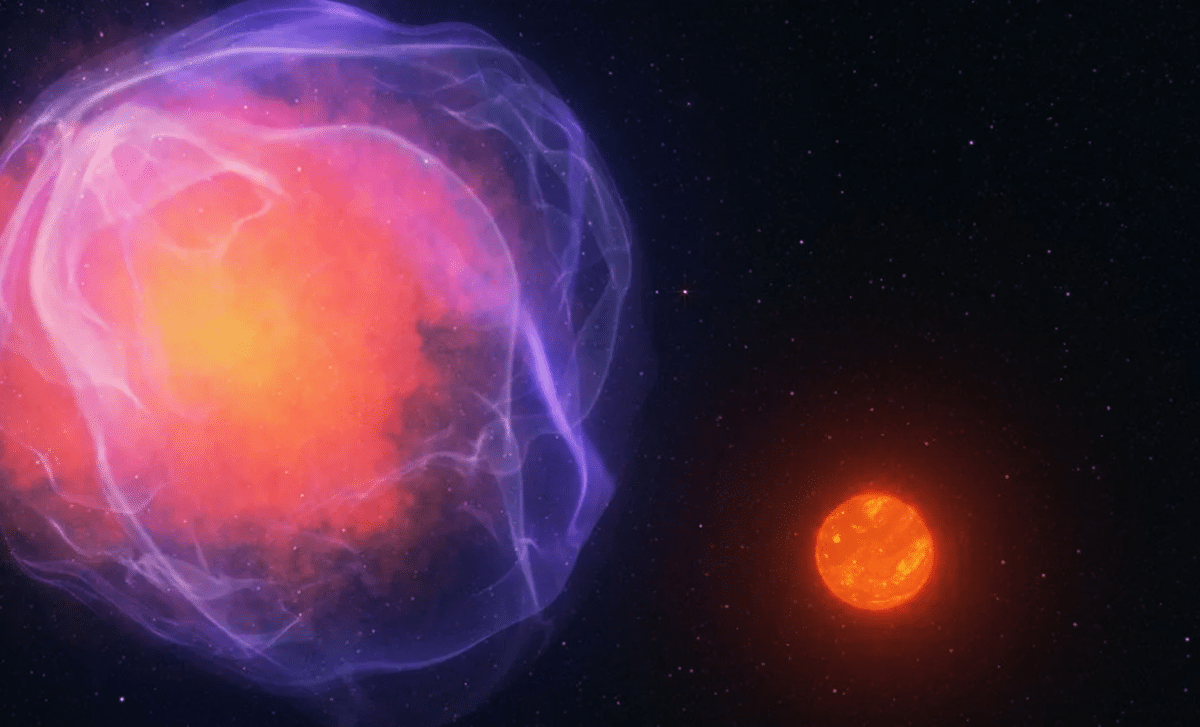
Heavy elements like gold and platinum are not formed on Earth. They are created during powerful cosmic events such as exploding stars or collisions between neutron stars.
During these extreme moments, a process known as the Rapid neutron capture process occurs. In this process, atomic nuclei quickly absorb neutrons, becoming heavier and unstable before breaking into more stable elements.
To better understand this transformation, scientists carried out experiments at the CERN using its ISOLDE Facility. The team studied a rare atomic form called indium-134 and tracked how it decays into different tin isotopes.
Their research revealed three major discoveries. The most important was the first measurement of energy released when unstable nuclei emit two neutrons during decay. This rare reaction helps scientists understand how heavy elements form during violent stellar events.
The researchers also identified a long-predicted nuclear state in tin-133 that had remained hidden for two decades. This discovery shows that the atomic nucleus still “remembers” how it was formed, challenging earlier theories that suggested the process erased such information.
Finally, scientists observed behavior that does not match existing nuclear models, suggesting that current theories may need to be revised.
The findings provide new clues about how elements like gold are created in the universe and could help scientists improve models that explain the origins of matter in space.

Leave a Reply