These DNA robots are different from regular robots we see in the physical world. Instead of being made from metal or plastic, they are constructed from strands of DNA that are folded and shaped like molecular origami.
By programming DNA to bend and fold in specific ways, researchers can create machines that perform tasks at a molecular level, much smaller than anything we’ve seen before.
One of the major challenges in creating these DNA robots is controlling their movement within the body. Since they operate inside cells and the bloodstream, their environment is constantly changing.
To solve this problem, researchers have developed ways to control the robots using biochemical processes, like DNA strand displacement.
This method allows the robots to move in response to specific DNA sequences, much like a key fitting into a lock. The robots can also be guided by external signals, like light or magnetic fields, making them highly versatile in how they can be controlled.
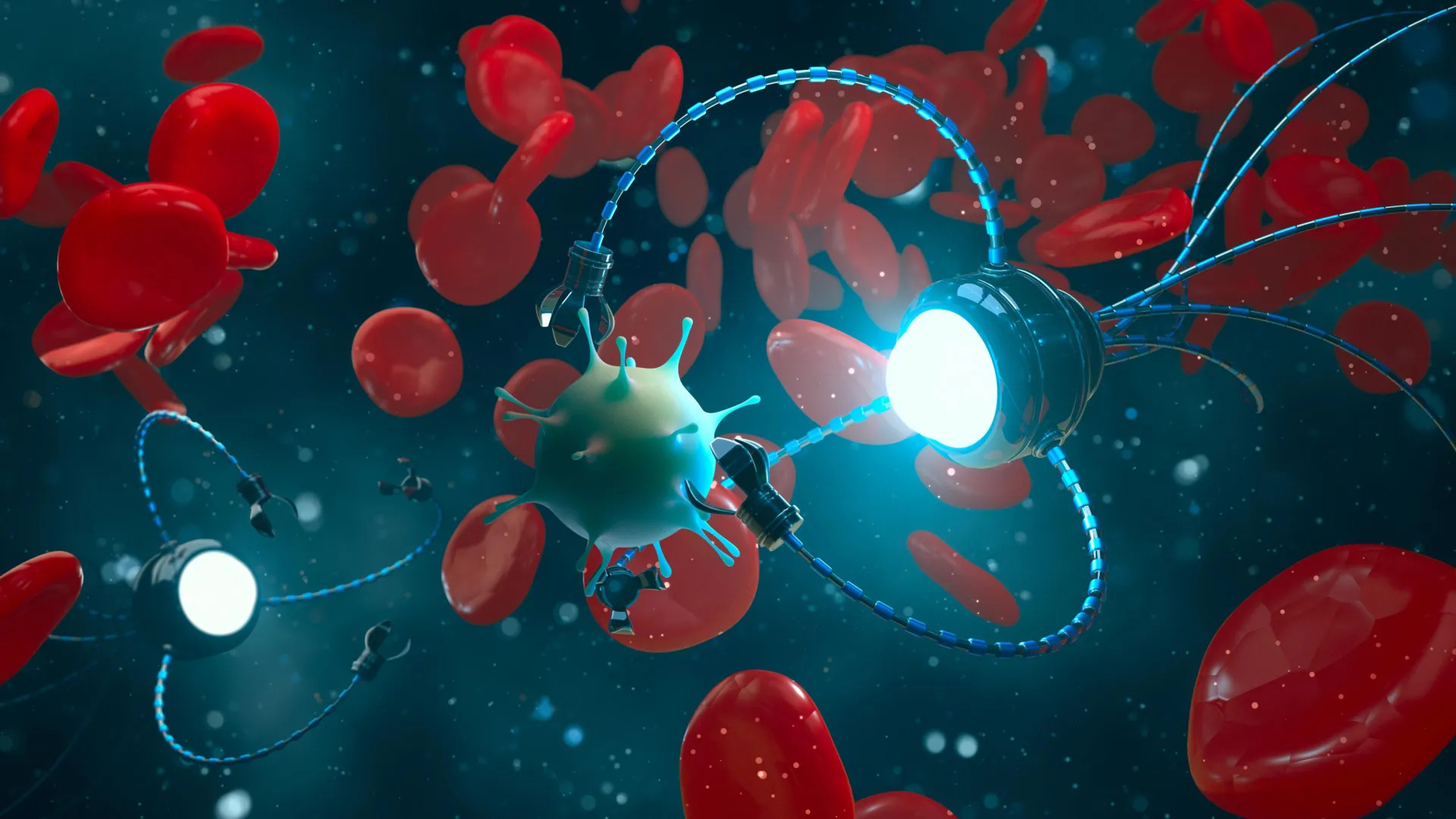
The potential uses for DNA robots in medicine are vast. For example, instead of delivering drugs throughout the entire body, these robots could target specific cells, like cancer cells, and deliver medication directly to them.
This approach would reduce side effects and make treatments much more effective. DNA robots could also be programmed to detect harmful viruses, like SARS-CoV-2, and neutralize them before they spread.
Beyond healthcare, DNA robots could revolutionize industries like computing and manufacturing. They can position particles with incredible precision, which could lead to advancements in ultrafast data storage, optical devices, and new computing technologies.
While the potential is huge, DNA robotics is still in its early stages. Scientists are working to overcome challenges like unpredictable movement at the nanoscale and the need for better simulations to predict how these machines will behave in real-world biological environments.
But as the technology advances, DNA robots could become a powerful tool for both medicine and technology, offering new solutions for some of the world’s biggest challenges.
Leave a Reply