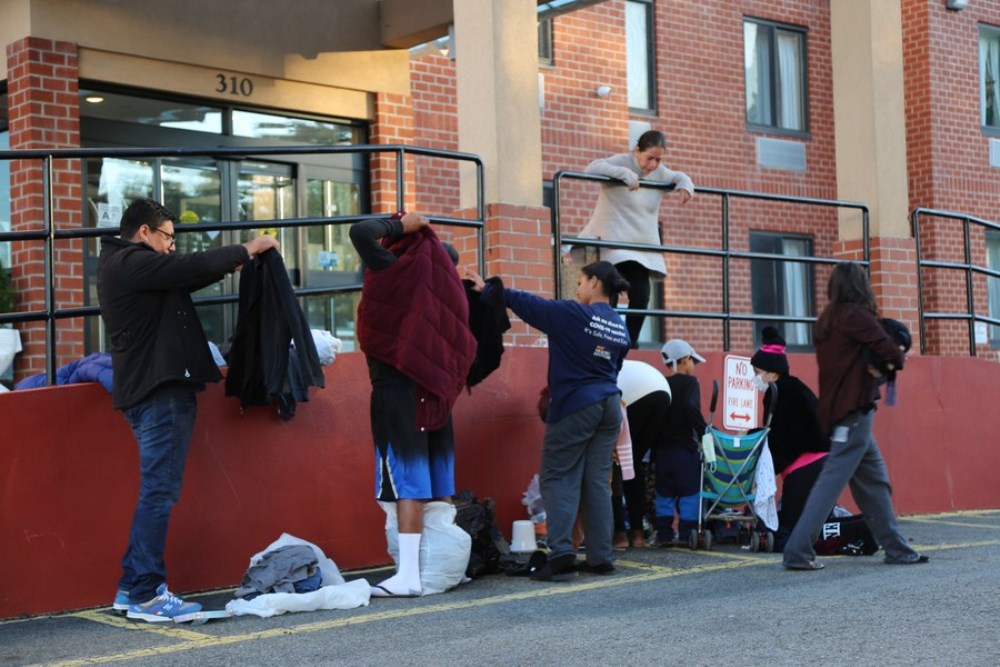
Antonio Ovando, who arrived in New York City less than a week ago, was expecting some people from the city to bring some clothes on Sunday afternoon when he joined his family members and fellow asylum seekers around the entrance of a hotel in Staten Island.
Ovando told Xinhua that he arrived in Texas at the end of September, and then was advised to come to New York assuming they could get material support there.
“We have no clothes and no shoes. And we ran out of money,” Ovando said.
Ovando stays with his wife and two young children in Comfort Inn on Staten Island, which is far from the downtown area and was recently converted into a shelter center for asylum seekers.
New York City has contracted over 40 hotels across the city to accommodate over 17,000 asylum seekers since April 2022.
Some migrants waiting outside the hotel were in their shorts, when the temperature in New York City had fallen to around 10 Celsius degrees.
It was reported that some asylum seekers from the Comfort Inn knocked on the doors of local residents and asked for help.
Ovando and other migrants finally picked up some clothes, which were dropped off by some New Yorkers at the hotel.
More importantly, asylum seekers don’t have work permits and have to wait for months, which adds to their anxiety and hardship.
Ovando, who worked as an accountant in Nicaragua, said he needs to find a job though he is thankful for help from others.
Jose, who came from Venezuela with his wife and son, said, “Getting a job is the most difficult thing for us who are here from far away.”
“We don’t know how long we will stay here and we’re just following instructions,” said Ovando.
As the vast majority of asylum seekers only speak Spanish, there is a language problem in everyday life and school.
Moreover, the newly arrived asylum seekers may find themselves unwelcome in the local community.
Shortly after the arrival of asylum seekers at the Comfort Inn, elected officials from Staten Island held a press conference voicing their opposition to placing migrants in the Comfort Inn, which is located in Travis-Chelsea neighborhood.
“Travis is not the place for these asylum seekers. It’s sad to say, but it’s just not going to work here,” said Gene Guerra, president of the Travis Civic Association.
John Michael, a member of Travis Civic Association, posted a comment recently on the social media suggesting that community members hold a rally and protest against using the Comfort Inn and other hotels in the neighborhood as migrant shelters.
Meanwhile, New York City is building a humanitarian emergency response and relief center for asylum seekers on Randall’s Island in Manhattan borough.
Dubbed as a “tent city,” the transitory relief center is designed to accommodate 500 newly arrived asylum seekers, but the island’s relative isolation, as local media reported, would not help migrants interact with the local community.
Last week, New York City Mayor Eric Adams declared a state of emergency in response to a record-breaking influx of asylum seekers into the city, mostly from the southern border of the United States.
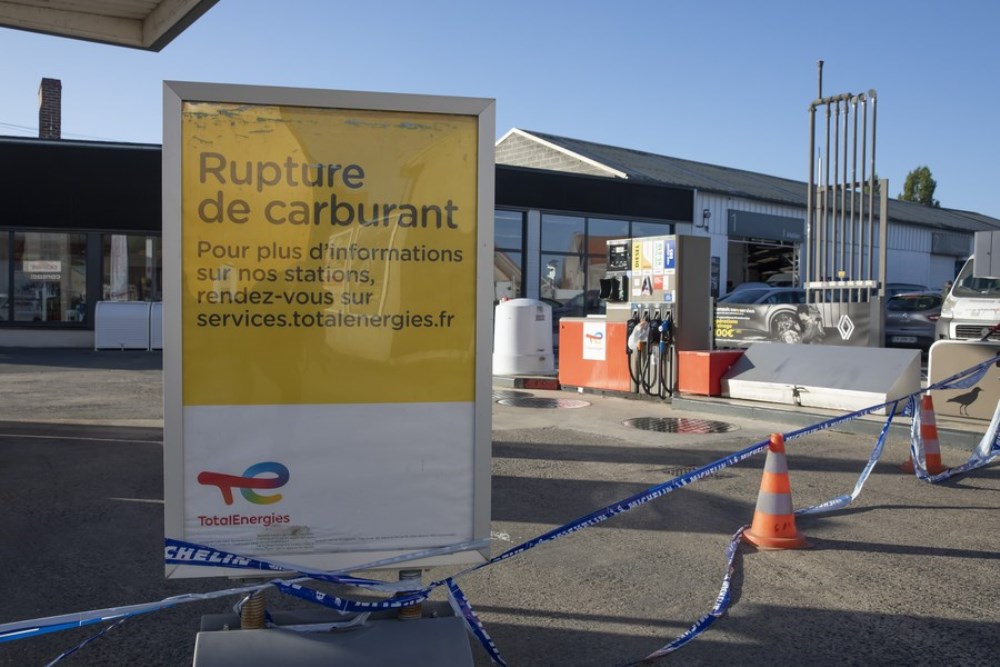
The strikes at TotalEnergies and ExxonMobil refineries will extend to Tuesday, the General Confederation of Labour (CGT) said.
According to the Ministry for Energy Transition, 29.4 percent of service stations in the country were experiencing difficulties with at least one product on Monday, compared to 19 percent on Friday.
French Prime Minister Elisabeth Borne organized an urgent crisis meeting Monday evening. According to French media, the government will ban the filling of fuel jerry cans across the country.
The strikers’ actions have led to a decrease in fuel deliveries, provoking fears and long hours of waiting. School bus transportation was also affected by the strikes.
“The French must not be prisoners of this social conflict which does not concern them,” said Minister for Energy Transition Agnes Pannier-Runacher on Monday.
In addition to the strikes, the price of fuel has increased in the last seven days. In order to counterbalance the fuel shortage, the French government has released significant volumes of fuel from its strategic stocks and reinforced fuel imports from Belgium.
Over the weekend, TotalEnergies and the CGT agreed to start negotiations but no agreement was concluded.
The strikers demand a raise in salary to compensate for the high inflation that France is experiencing.
“We believe that the internal issues is related to the (Iranian) government and the people of Iran and we do not allow any other country to interfere in Iran’s internal affairs,” Kanaani said during his weekly press conference.
“The positions and views of Iran (on nuclear talks) have been expressed many times, and we are ready to proceed in the same direction and reach a comprehensive agreement that will meet the interests of all parties,” he added.
The talks on the revival of the 2015 nuclear deal, formally known as the Joint Comprehensive Plan of Action (JCPOA), began in April 2021 in Vienna but were suspended in March this year because of political differences between Tehran and Washington.
The latest round of the nuclear talks was held in the Austrian capital in early August after a five-month hiatus.
On Aug. 8, the EU put forward its final text of the draft decision on reviving the JCPOA.
Iran and the United States later indirectly exchanged views on the EU proposal in a process that has so far failed to produce any favorable outcome.
The SpaceX Falcon 9 rocket and Crew Dragon Endurance spacecraft roared off Launch Pad 39A at NASA’s Kennedy Space Center in Florida at noon Eastern Time Wednesday.
Shortly after the liftoff, NASA confirmed the main engine cutoff and stage separation.
The first stage of the Falcon 9 rocket completed its descent and successfully landed on SpaceX’s drone ship, Just Read the Instructions, off the coast of Florida.
The Dragon Endurance spacecraft has separated from the second stage, and headed to the ISS.
The mission carries NASA astronauts Nicole Mann and Josh Cassada, along with Japan Aerospace Exploration Agency astronaut Koichi Wakata, and Roscosmos cosmonaut Anna Kikina to the ISS.
NASA said the crew has safely reached orbit. The spacecraft will dock with the space station at approximately 4:57 p.m. Eastern Time on Thursday.
During their time on the orbiting laboratory, the crew will conduct over 200 science experiments and technology demonstrations in areas such as human health and lunar fuel systems, according to SpaceX.
After the Dragon spacecraft docks to the orbiting lab, another four station crew members, the Crew-4 mission, will end their mission and return to Earth just over a week later, according to NASA.
The Crew-4 mission will undock from the space station and splash down off the coast of Florida.
At least 110 people, including 105 in Florida and five in North Carolina, have died due to Ian, according to a tally by CNN on Wednesday.
Florida’s Lee County has reported 55 fatalities while Charlotte County has seen 24 deaths.
U.S. President Joe Biden traveled to Fort Myers, Florida, on Wednesday to survey storm-ravaged areas.
Nearly 300,000 customers in Florida remained without power as of Wednesday afternoon, according to PowerOutage.us.
Last week, Ian made landfall in southwestern Florida, bringing catastrophic storm surges, heavy rains and destructive winds, and dangerous flooding.
Biden previously said that hurricane Ian “is likely to rank among the worst in the nation’s history.”
Estimated losses from Ian’s wind and storm surges are between 28 billion and 47 billion U.S. dollars, according to CoreLogic, a U.S. research firm that estimates losses from natural disasters.
“Until spring, we should only meet in Brussels,” Peter Liese, member of the European People’s Party (EPP) group in EP, told Bild newspaper. He also raised his concern in a letter to EP President Roberta Metsola.
“Heating and lighting two building complexes at the same time in Brussels and Strasbourg is a mockery of taxpayers,” Moritz Koerner of the liberal Renew Europe group said, arguing that the Strasbourg offices should be sent into an “energetic hibernation immediately.”
Although Strasbourg is the EP’s official seat, its committees and political groups meet in Brussels. Only 12 four-day plenary sessions are held in Strasbourg each year.
The European Commission is currently discussing binding requirements for member states to save energy. “There is a global scarcity of energy. So, whatever we do, one thing is for sure: We have to save electricity,” Commission President Ursula von der Leyen said last month.
In view of the energy crisis, the EU has just decided that benefiting energy companies will have to pass on part of their surplus profits in the future. This is intended to curb electricity price increases. “We have agreed on good and effective instruments to curb the rise in electricity prices,” Germany’s Minister for Economic Affairs Robert Habeck said last week.
“Hopefully, the current crisis will lead to a rethink,” the General Secretary of the Taxpayers Association of Europe, Michael Jaeger, told Bild. The commute between Brussels and Strasbourg is a “traveling circus” and “an ecological and economic disaster.”
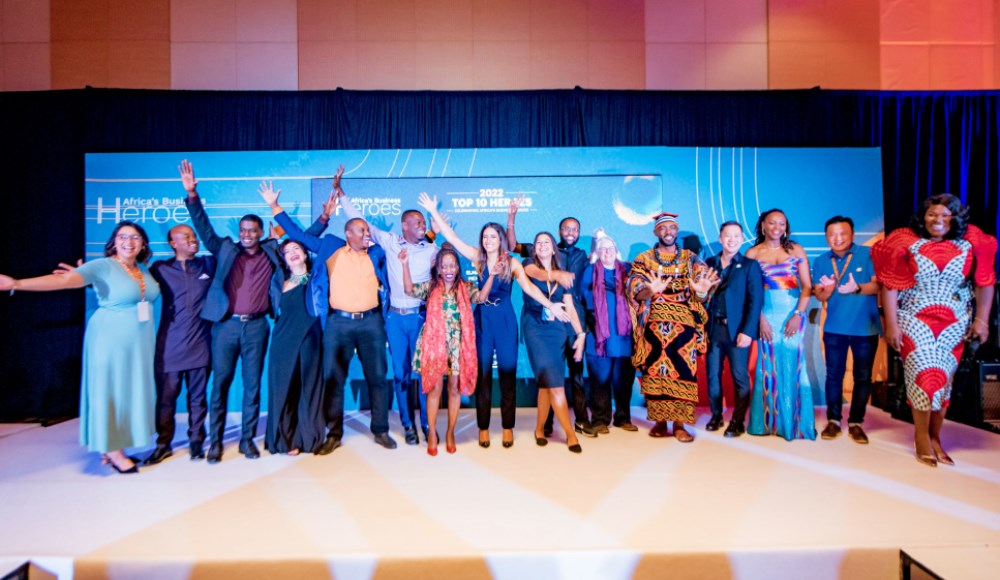
The top 10 finalists include Mr. Flavien Kouatcha Simo, Managing Partner of Save Our Agriculture Sarl (Cameroon); Ms. Amena Elsaie, Co-Founder of Helm Consulting (Egypt); Ms. Nadia Gamal El Din, Founder and CEO of Rahet Bally (Egypt); Mr. Amadou Daffe, CEO and Co-Founder of Gebeya Inc. (Ethiopia) and Mr. Prince Agbata, Co-Founder and CEO of Coliba Waste Management Services Limited (Ghana).
Others include Mr. Tesh Mbaabu, Co-Founder and CEO of Marketforce Technologies (Kenya); Rwandan Francine Munyaneza, Founder of Munyax Eco; Ms. Shona Mcdonald, Founder and Executive Director of Shonaquip Social Enterprise (South Africa); Ms. Elmarie Pereira, Chief Operations Executive, Co-Founder & Acting CEO of Memeza Shout (PTY) Ltd (South Africa) and Tanzanian Mr. Elia Timotheo, Founder and CEO of East Africa Fruits Co.
The result was announced at a Gala Dinner on October 1 to an audience of around 100 attendees from all over the African continent, consisting of current and past ABH participants, judges, investors and other key stakeholders in Africa’s entrepreneurial landscape.
These top 10 finalists will take the stage at the competition’s grand finale in November 2022 for their final pitch to win a share of a US$1.5 million prize pool. The winner of the first prize will walk home with a US$300,000 grant to fuel their further business growth.
The 10 entrepreneurs were selected through multiple stages of interviews and evaluation from over 21,000 applications across all 54 African nations. They hail from eight African countries including Cameron, Egypt, Ethiopia, Ghana, Kenya, Rwanda, South Africa and Tanzania. Their start-ups have been drawn from a wide variety of industries including agriculture, consulting, energy, environmental protection, healthcare, information & communication technology (ICT), and retail.
These outstanding entrepreneurs share a common trait of having a deep commitment to creating a positive impact on their communities, such as empowering disadvantaged groups, increasing access to digital commerce for businesses in Africa and leveraging technology to improve agricultural efficiency for small-holder farmers.
“ABH remains steadfast in its efforts to identify, support and shine a spotlight on African entrepreneurs that are driving positive growth for their communities. Now in the fourth year of the ABH competition, we are impressed with the increasing diversity of our participants and the impact they are making especially in supporting post-pandemic economic recovery. These top 10 finalists are sources of inspiration for other entrepreneurs in Africa,” says Jason Pau, Executive Director of International Programs, Jack Ma Foundation. “We wish all of them the very best of luck for the final pitch in November.”
“Entrepreneurship is a huge driver for social and economic development in Africa. The ABH Prize Competition provides a platform for outstanding start-ups to showcase targeted solutions that tackle problems in an impactful, competitive, sustainable and value-adding way. This year’s Heroes – as with other years – continued to demonstrate the resilience, passion, imagination, and traction that we need in our entrepreneurs here in Africa,” says Birame Sock, Founder and Chief Executive Officer of Kwely Inc, one of the judges in the semi-finale round.
Along with the unveiling of the top 10 finalists in this year’s competition, ABH has also announced its launch of a local team in Kigali to better serve and engage its growing African entrepreneur community of over 100,000 members.
“As ABH enters its fourth year, we are humbled by the incredible support from African entrepreneurs and key stakeholders which has made it possible for our ABH community to reach its current scale,” says Zahra Baitie-Boateng, Head of Partnerships & Programs at Africa’s Business Heroes Prize Competition.
“Now with our base in Kigali, a city brimming with vitality and innovation, we are closer than ever to the African entrepreneurs that we serve and better positioned to help create a cohesive local start-up community leveraging our global network and experience. We are particularly excited to be based at Norrsken House, which is home to a vibrant ecosystem of incubators, accelerators and start-ups. We believe being a part of Norrsken will help strengthen our efforts to collaborate with key stakeholders in Africa’s entrepreneurial ecosystem.”
The ABH Prize Competition aims to identify, support and empower entrepreneurial talent from across Africa. The official competition slogan “It’s African Time” is a bold call to action to all African entrepreneurs who are challenging stereotypes associated with “African time” – creating local impact and building a better, more inclusive future through their businesses.
{{About Africa’s Business Heroes}}
The Africa’s Business Heroes Prize Competition is a philanthropic initiative sponsored by the Jack Ma Foundation and Alibaba Philanthropy. It aims to support and inspire the next generation of African entrepreneurs across all sectors who are building a more sustainable and inclusive economy for the future of the continent.
Over a 10-year period, ABH will recognize 100 African entrepreneurs and commit to allocating grant funding, training programs, and support for the development of an entrepreneurial ecosystem.
Each year, the ABH Prize Competition and show feature 10 finalists as they pitch their business to win a share of US$1.5 million in grant money.
Jack Ma, founder of Alibaba Group and the Jack Ma Foundation, created the prize after he made his first trip to Africa in 2017 and was inspired by the energy and entrepreneurial potential of the young people he met with there.
{{Profile of top ten finalists}}
{{Flavien Kouatcha Simo, Managing Partner of Save Our Agriculture Sarl }}
{ {{Industry: Agriculture}} }
Kouatcha, a Cameroonian engineer by training, runs an agricultural company that designs and manufactures aquaponic units for individuals and professionals wishing to produce large-volume organic food as close as possible to sales areas.
Their system is a solution to climate change, the land challenge of young African farmers, and the increased use of agricultural chemicals.
{{Amena Elsaie, Co-Founder of Helm Consulting}}
{ {{Industry: Consulting}} }
Amena is a multiple award-winning entrepreneur. Created in 2014, Helm supports more than 4,000 persons with disabilities and promotes their social inclusion, serving more than 200 entities and working with top-notch experts from 16 countries.
In addition to sponsorships and grants, Helm is the first provider of localized and customized inclusion solutions in the region, awarded multiple times as innovative global best practices and successful business models by Zero project, JICA and Rise Egypt among others.
{{Nadia Gamal El Din, Founder and CEO of Rahet Bally}}
{ {{Industry: Healthcare}} }
Gamal studied finance at the American University in Cairo, after which she started her professional career as an assistant brand manager at Procter & Gamble.
She became a mother at the age of 24 and realized there was a huge market gap when it comes to supporting new moms. Consequently, in 2015, she founded Rahet Bally, an all-inclusive platform to support Egyptian mothers financially, physically, emotionally and intellectually, both online and in person, on top of Rahet Bally Discount App for Moms, Rahet Bally Mama Fitness Programs, the Cloud by Rahet Bally, and Mumerz.com.
{{Amadou Daffe, CEO and Co-Founder of Gebeya Inc.}}
{ {{Industry: ICT}} }
Gebeya.com is a Pan-African freelance talent marketplace that identifies the best of African talent and matches them with cutting-edge projects from selective customers with a goal of solving one of Africa’s biggest challenges: employment.
Their tech-driven marketplace connects remote African tech talent with employers globally. The continent needs to generate 12 million new jobs every year to keep unemployment at bay. Start-ups, SMBs and corporations in industries like telecommunications and transportation rely on Gebeya to be a one-stop shop for talent capable of building new products and services to scale up their businesses.
{{Prince Agbata, Co-Founder and CEO of Coliba Waste Management Services Limited}}
{ {{Industry: Environmental Protection}} }
Coliba is an award-winning and leading Ghanaian plastic waste recycling company operating in Ghana and Côte d’Ivoire. Prince co-founded Coliba to address the issue of plastic pollution and to promote environmental sustainability.
Plastic waste is a serious problem in West Africa, and Prince decided to tackle this issue after losing his best friend in a flood disaster caused by plastic pollution. Coliba collects, sorts and recycles plastic and metal garbage. This initiative employs over 110 workers.
{{Tesh Mbaabu, Co-Founder and CEO of Marketforce Technologies}}
Industry: Retail
Tesh is an African serial technology entrepreneur who lives to blend commerce and technology. MarketForce is a B2B commerce platform that empowers over 200,000 neighbourhood merchants across five African markets to source, order and pay for inventory, access financing and earn more by reselling financial services in their communities.
{{Francine Munyaneza, Founder of Munyax Eco }}
{{Industry: Energy}}
Growing up as a refugee, Francine had no access to electricity. She founded Munyax Eco to solve Africa’s recurring problem – lack of access to electricity – and Rwanda’s energy challenges in rural and urban areas by providing solar equipment adapted and tested for the African continent.
Francine is well known for her gender-oriented recruitment and sales strategy which is to bring women into the fight against climate change while empowering them economically. To date, over 10,000 people across Rwanda, DRC and Burundi have access to clean energy, thanks to Munyax Eco’s women-led and focused solutions.
{{Shona Mcdonald, Founder and Executive Director of Shonaquip Social Enterprise}}
{ {{Industry: Healthcare}} }
Shona founded her company to address the challenges of children with mobile disabilities living in peri-urban and rural areas of South Africa. Shonaquip’s range of tailor-made mobility products and health services can be assembled and maintained even in conditions with limited resources.
Their inclusive early childhood education training, social services, advocacy and research directly impacts nearly 20,000 individuals with disabilities and their families annually.
{{Elmarie Pereira, Chief Operations Executive, Co-Founder & Acting CEO of Memeza Shout (PTY) Ltd }}
{ {{Industry: ICT}} }
Elmarie is on a mission to make South Africa safer. Memeza is an ICT social enterprise providing affordable innovative safety technology and monitoring services to lower-income communities who do not have access to private security, as well as assisting government and corporates with specialized community-based project deployment services.
To date, Memeza has created over 2,700 income opportunities for youth, and reduced GBV by 67% in low-income communities focusing on solving social ills.
{{Elia Timotheo, Founder and CEO of East Africa Fruits Co.}}
{ {{Industry: Agriculture}} }
Elia has grown East Africa Fruits Co into the largest food distributor or aggregator in Tanzania by modernizing systems never implemented in East Africa before.
By distributing fresh produce directly from farms to Business to Business (B2B) customers, they ensure no brokerages and less waste.
The software resolves market inefficiencies by pairing crops with market demand, boosting efficiency, and yielding 60% more earnings for farmers as they tackle Africa’s 4-billion-dollar problem of post-harvest food wastage.
Five Chinese players hit double digits in scoring, led by Li Meng’s 23 points. Huang Sijing helped with 18.
The last time China reached the same stage was in 1994, when they finished runners-up at the formerly known FIBA World Championship for Women.
China has lost each of their previous three quarterfinal games at the quadrennial tournament, in 2002, 2014 and 2018, while showing its determination to shatter this unfriendly record from the start in Thursday’s game.
After athletic Gabby Williams helped France race to a 12-6 lead, China responded with an 18-3 surge to turn the tides, with Li Meng contributing 12 points down the stretch. France scored five late points, including Mamignan Toure’s buzzer-beating 3-pointer, to tie the first quarter at 25-25.
But China kept imposing pressure on opponents in the second quarter with six points in a row en route to a 50-39 halftime margin.
France rode on a 12-2 scoring run to trim the deficit to one point midway through the third quarter, but China steadied themselves through Han Xu’s three-point play and Li Yuan continued her scoring output after coming off the bench, helping China lead 66-58 heading into the final frame.
Han continued to be unstoppable in the paint in the last period, and China effectively sealed their victory as Huang buried a 3-pointer with 1:26 to play.
China will vie for a final berth on Friday against either hosts Australia or Belgium, who will go head-to-head later on Thursday.
“To date, 138.7 million tons of grain have already been threshed. This is approximately a third more than (that) during the same period last year,” the Kremlin reported on Tuesday, citing the Russian leader at a meeting on the progress of seasonal field work.
“According to experts, the total grain harvest may reach 150 million tons,” Putin said, noting that the harvest would fully cover domestic demand and increase exports.
Putin warned that Western sanctions imposed on Russia’s grain and fertilizers pose a growing threat to global food security, adding that the West should be held accountable for the deteriorating situation.
Some 250 representatives from government, industry and academia attended this year’s event, which is themed “Innovate for a Diverse Europe.”
“At Huawei, we believe that we can lead innovation for the future through continuous investment in research and development. Innovation will be crucial to realize our sustainable future,” said Jeff Wang, president of public affairs and communications department at Huawei, in a video speech.
He added that “we look forward to working with our partners to create a smarter, greener and sustainable Europe.”
At the opening ceremony, Hungarian foreign minister Peter Szijjarto hailed Huawei’s investments in Hungary, including the company’s R&D center in Budapest and its largest European logistics center near the capital, as “a source of pride” for his country.
“Both parties benefited greatly from the strategic cooperation signed ten years ago, and the Hungarian government is ready to continue this cooperation,” he added.
During the event, the University of Public Service of Hungary signed a partnership agreement with Huawei as part of the company’s “Seeds for the Future Scholarship” program to promote information and communication technology education.
Huawei said some 1,000 students from 12 European countries have received a total of 5 million euros (4.8 million U.S. dollars) in the past two years from its scholarship program.
Huawei has also partnered with Hungary’s Ministry of Technology and Industry, the Hungarian Battery Association and Planergy Solutions on a white paper to boost the green transition in Hungary’s energy sector, the Chinese company said in a statement after the event. (1 euro = 0.96 U.S. dollar)