{{At least three people were killed and one seriously injured in an explosion in the centre of the French capital Paris on Friday.}}
Another person has been reported missing, believed to be trapped under the rubble.
The apparently accidental explosion took place at around 3.45pm in the car park of a building in the city’s tenth arrondissement, where construction work was taking place, police told media.
The force of the blast caused surrounding structures to shake, while a building across from the site of the explosion was evacuated and the fire brigade was reinforcing its foundations to avoid collapse, a fireman told media.
Workers were carrying out repairs on a fuel tank at the time of the explosion late on Friday afternoon, the media reported, and preliminary findings suggest oil vapours that had accumulated at the bottom of the tank may have ignited.
An investigation has been launched to determine the exact cause of the blast, said Paris Mayor Bertrand Delanoë.
“The circumstances of this tragedy are not yet determined and the investigation will shed light on this terrible accident, ” he said in a statement.
A medical post was set up near the building, located on the Rue d’Enghien, while rescuers used dogs to search for the missing person.
French Interior Minister Manuel Valls arrived on the scene shortly after 5pm, but declined to make a statement.
{{Greek police arrested the leader, two lawmakers and party members from the far-right Golden Dawn party on Saturday, and charged one member with being an accomplice to the killing of an anti-fascist rapper, a police official said.}}
Police said party leader Nikolaos Mihaloliakos, spokesman Ilias Kasidiaris, two other lawmakers and 10 members had been arrested on charges of founding a criminal organisation. They are due to appear in court this weekend to be formally charged.
Golden Dawn, ranked Greece’s third most popular party in opinion polls, is under investigation for the murder of Pavlos Fissas which sparked violent protests and a crackdown on political extremism.
The party has denied any links to the killing and Mihaloliakos has warned the party could pull its 18 lawmakers from parliament if the crackdown does not stop.
If potential by-elections were won by the opposition, as some polls indicate, Greece’s fragile two-party coalition would become politically untenable, Mihaloliakos has argued.
“Shame on them, the people will lift Golden Dawn higher,” Ilias Panagiotaros, a Golden Dawn lawmakers told reporters before his arrest.
The party has 18 out of parliament’s 300 lawmakers and scored 14 percent of voter support in opinion polls before the stabbing. A poll this week showed its backing had fallen to as low as 6.7 percent.
Greek lawmakers do not lose their political rights or seats unless there is a final court ruling against them but the government has proposed a law that could block state funding for Golden Dawn if police find links to Fissas’s murder.
{{The U.N. Security Council adopted a resolution on Friday that demands the eradication of Syria’s chemical weapons but does not threaten automatic punitive action against Syrian President Bashar al-Assad’s government if it does not comply.}}
The unanimous vote by the 15-member Security Council capped weeks of intense diplomacy between Russia and the United States. It was based on a deal between the two countries reached in Geneva earlier this month following an August 21 sarin nerve gas attack on a Damascus suburb that killed hundreds.
The U.S.-Russia deal averted punitive U.S. military action against Assad’s government, which Washington blamed for the August attack. The Syrian government and its ally, Russia, blamed anti-government rebels for the attack.
One provision of the resolution, described by council diplomats as significant, formally endorses a plan for a political transition in Syria agreed on at an international conference in Geneva in June 2012.
U.N. Secretary-General Ban Ki-moon said after the vote that the big powers hoped to hold a peace conference on Syria in mid-November in Geneva.
He told the council the plan to eradicate Syria’s chemical weapons was “not a license to kill with conventional weapons.”
“As we mark this important step, we must never forget that the catalog of horrors in Syria continues with bombs and tanks, grenades and guns,” he said. “A red light for one form of weapons does not mean a green light for others.”
U.S. Secretary of State John Kerry said the vote showed that “actions have consequences.”
“Our original objective was to degrade and deter Syria’s chemical weapons capability. And the option of military force that President Obama has kept on the table could have achieved that. But tonight’s resolution accomplishes even more – through peaceful means, it will for the first time seek to eliminate entirely a nation’s chemical weapons capability,” he said.
The resolution does not allow for automatic punitive action in the form of military strikes or sanctions if Syria does not comply. At Russia’s insistence, Friday’s resolution makes clear a second council decision would be needed for that.
But Russian Foreign Minister Sergei Lavrov said the Security Council would be prepared to take punitive steps in the event of confirmed violations of the resolution by either side in the conflict.
The number of Americans giving up their citizenship has rocketed this year – partly, it’s thought, because of a new tax law that is frustrating many expats.
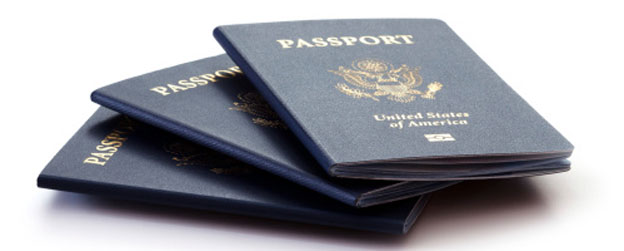
{{Goodbye, US passport.}}
That’s not a concept that Americans contemplate lightly. But it’s one that many of them seem to be considering – and acting on.
The number of expatriates renouncing their US citizenship surged in the second quarter of 2013, compared with the same period the year before – 1,131 cases to 189 in 2012. It’s still a small proportion of the estimated six million Americans abroad, but it’s a significant rise.
The list is compiled by the Federal Register and while no reasons are given, the big looming factor seems to be tax.
A new law called the Foreign Accounts Tax Compliance Act (Fatca) will, from 1 July next year, require all financial institutions around the world to report directly to the US Internal Revenue Service (IRS) all the assets and incomes of any US citizens with $50,000 (£31,000) on their books.
The US could withhold 30% of dividends and interest payments due to the banks that don’t comply.
It’s an attempt by the US authorities to recover an estimated $100bn a year in unpaid taxes on US citizens’ assets overseas. Unlike other countries, Americans are taxed not only as residents of the US but also as citizens, wherever they live.
Suddenly, some expats are waking up in a cold sweat. They have always had to file tax returns and disclose foreign accounts on a form called the FBAR, although in practice many didn’t.
But now Fatca means they have to be more rigorous or face huge fines, in the knowledge that the US authorities could know a lot more than they have in the past.
Many would say the IRS is only trying to get what it is owed, but critics say that in trying to track down the wealthy tax-dodgers, ordinary people are being dragged into an expensive and time-consuming form-filling nightmare. And for some, it’s become too much.
Bridget(not her real name) told media she gave up her US citizenship in 2011, 32 years after leaving for a new life in Scandinavia.
“This has nothing to do with avoiding taxes. I was never in danger of having to pay taxes in the US since I pay more here. The issue for me was that it was becoming harder and harder to follow the tax code and comply. It was difficult already but when I knew Fatca was coming, I thought, ‘Do I want to go through with it anymore?’”
She felt threatened even if she did everything to fulfil her responsibilities, she says. A simple loyalty card at the local grocery store caused her anxiety when she realised it was linked to a bank account she never knew she had.
It became so complicated to do her tax return that she turned to professionals, at an annual cost of nearly $2,000 (£1,250), with the prospect of Fatca raising the price to $5,000. Also, fewer tax lawyers were taking on American clients, she says, and some banks were even turning away American money.
“In the end, I sleep better now knowing that I no longer have to worry about the US requirements. I will never be able to live or own property in the US but I can visit and that’s enough for me.”
Bridget, who runs an editing and translation company, says her strong emotional bond with the US has been frayed.
“I’ve enjoyed being an American even though I haven’t lived there since I was young. I identified with America so I felt angry that I had to get to this point where it wasn’t viable to keep my citizenship anymore.
“When you’re an American living in America, it’s one thing but when you live abroad in another country, in certain ways that feeling becomes even stronger because you realise that things that you think are individual characteristics are actually national ones so you identify even more strongly with your nationality.
“I used to always introduce myself as American but not now, although I will always be American in my heart even though I won’t carry the passport. I will still celebrate Thanksgiving and 4 July.”
She says the tax issue is the biggest topic of conversation among the expat Americans she knows. And tax lawyers in the US who deal with people living abroad say it has become a huge issue.
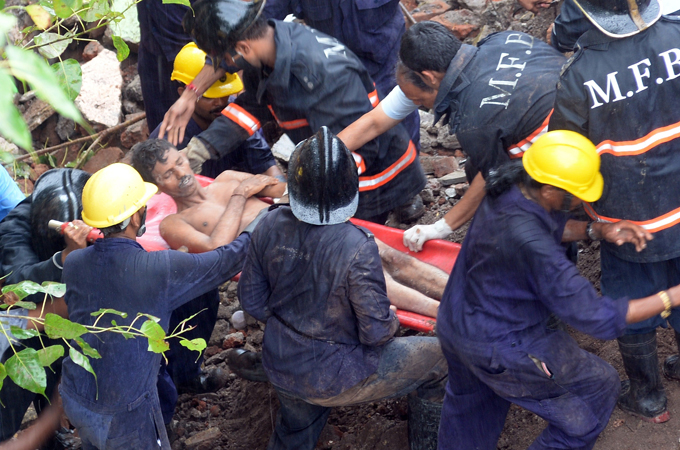
{{A five-storey building has collapsed in Mumbai at day-break in the latest accident in India’s financial capital, killing at least two people with dozens feared trapped inside.}}
Local people put the number of residents usually inside the apartment block as high as 60.
At least two people were killed and 12 others have been pulled alilve from the building and rushed to hospital, Alok Awasthi, an official with the National Disaster Response Force, said.
Officials said the building was believed to have been 35 years old.
Five other apartment blocks have collapsed in or close to Mumbai in recent months, including one in April that killed 74 people.
Across India, building collapses have become relatively common. Massive demand for housing around India’s fast-growing cities combined with widespread corruption often result in builders using substandard materials or adding unauthorised floors.
{Firefighters and other first responders rushed to the scene to begin rescue operations}
wirestory
Barcelona footballer Lionel Messi and his father are to appear in a Spanish court over tax fraud allegations.
The 26-year-old Argentine, who has been named World Player of the Year four times, and his father Jorge Messi are accused of defrauding the authorities of more than 4m euros (£3.4m).
They are suspected of using companies abroad – in Belize and Uruguay – to sell the rights to use Messi’s image.
They both deny the allegations, which date back to 2007-09.
‘Tougher line’
The striker and his father are expected to be questioned in a closed-court session in Gava – the affluent Barcelona district where the footballer lives.
They are accused of three counts of defrauding the Spanish state of taxes.
The income related to Messi’s image rights included contracts with Banco Sabadell, Danone, Adidas, Pepsi-Cola, Proctor and Gamble, and the Kuwait Food Company.
In August, the two accused made a payment of 5m euros to the tax authorities – the 4.16m of the alleged unpaid tax plus interest.
But state prosecutors are still pursuing the case – as the tax authorities are taking a much tougher line as a result of Spain’s economic crisis, reports the BBC’s Tom Burridge in Madrid.
Earlier, Messi stated that he and and his father “have never committed any infringement. We have always fulfilled all our tax obligations.”
Messi’s net salary from Barcelona is said to be about 16m euros a year, making him one of the world’s most highly-paid sportspeople.
He has also signed multi-million-dollar endorsements with commercial sponsors around the world.
Messi’s achievements on the field have made him one of the most marketable in the business.
He came from a modest background and has overcome a serious health issue, joining Barcelona as a 13-year-old in 2000 and making his first-team debut only three years later.
But the allegations are a big blow to the prestige of Messi, who has long been seen as a more humble figure than most top-class footballers.
{{A French climber scaling a glacier off Mont Blanc got more than satisfaction for his efforts when he stumbled across a treasure trove of emeralds, rubies and sapphires that had been buried for decades.}}
The jewels, estimated to be worth up to 246,000 euros ($332,000), lay hidden in a metal box that was on board an Indian plane that crashed in the desolate landscape some 50 years ago.
The climber turned the haul in to local police.
“This was an honest young man who very quickly realised that they belonged to someone who died on the glacier,” local gendarmerie chief Sylvain Merly told AFP.
“He could have kept them but he preferred to give them to the police,” Merly said, adding that the climber stumbled upon the box earlier this month and that some of the sachets containing the precious stones bore the stamp ‘Made in India.’
French authorities are contacting their Indian counterparts to trace the owner or heirs of the jewels.
Under French law, the jewellery could be handed over to the mountaineer if these are not identified, Merly said.
Two Air India planes crashed into Mont Blanc in 1950 and in 1966. Climbers routinely find debris, baggage and human remains.
In September last year, India took possession of a bag of diplomatic mail from the Kangchenjunga, a Boeing 707 flying from Mumbai which crashed on the southwest face of Mont Blanc on January 24, 1966.
The crash killed 117 people including the pioneer of India’s nuclear programme Homi Jehangir Bhabha.
{{ Iran’s envoy to the U.N. nuclear watchdog played down prospects for a quick breakthrough in talks on Friday with the agency on a stalled investigation into Tehran’s disputed atomic program.}}
Reza Najafi, Iran’s ambassador to the International Atomic Energy Agency, was asked by reporters whether he expected an agreement in discussions due to start with the IAEA at around 10 a.m.
The meeting between Iran and the IAEA will be the first since Hassan Rouhani, a relative moderate, took office as new Iranian president in early August, pledging to try to resolve the Islamic state’s nuclear dispute with the West.
It comes after talks between Iran and world powers at the United Nations on Thursday.
“This is the first meeting so nobody I guess should expect that in just (a) one-day meeting we can solve (our) problems,” Najafi, who was appointed new Iranian ambassador last month, said.
“We are going to have a first meeting with the agency. We expect to review the existing issues and also exchange views on the ways we can continue our cooperation to resolve all issues.”
Iran and the United States held their highest-level substantive talks in a generation at the United Nations, saying the tone was positive but sounding cautious about resolving the standoff.
U.S. Secretary of State John Kerry and Iranian Foreign Minister Mohammad Javad Zarif met after Zarif held wider talks with the United States and other major powers to address Western suspicions that Iran may be trying to develop atomic weapons.
Separately from big power diplomacy to resolve the decade-old dispute that could yet trigger a Middle East war, the IAEA has held 10 rounds of talks with Iran since early 2012 to try to resume a blocked inquiry into suspected atom bomb research.
The talks have so far yielded no results but Western states see Friday’s meeting in Vienna as a litmus test of any substantive Iranian shift from its intransigence under Rouhani’s hardline conservative predecessor, Mahmoud Ahmadinejad.
Iran denies it is seeking to develop the capability make nuclear weapons, saying its program is a peaceful bid to generate electricity.
{{The US National Security Agency spied on civil rights leader Martin Luther King and boxer Muhammad Ali during the height of the Vietnam War protests, declassified documents reveal}}.
The documents show the NSA also tracked journalists from the New York Times and the Washington Post and two senators.
Some NSA officials later described the programme as “disreputable if not outright illegal”, the documents show.
The operation, dubbed “Minaret”, was originally exposed in the 1970s.
However, the names of those on the phone-tapping “watch list” had been kept secret until now.
The secret papers were published after a government panel ruled in favour of researchers at George Washington University.
The university’s National Security Archive – a research institute that seeks to check government secrecy – described the names on the NSA’s watch-list as “eye-popping”.
The agency eavesdropped on civil rights leaders Martin Luther King and Whitney Young as well as boxing champion Muhammad Ali, New York Times journalist Tom Wicker and Washington Post columnist Art Buchwald.
Protest fears
The NSA also monitored the overseas phone calls of two prominent US senators – Democrat Frank Church and Republican Howard Baker.
Many of those targeted were considered to be critics of US involvement in the Vietnam War.
In 1967 the strength of the anti-war campaign led President Lyndon Johnson to ask US intelligence agencies to find out if some protests were being stoked by foreign governments.
The NSA worked with other spy agencies to draw up the “watch lists” of anti-war critics, tapping their phone calls.
The programme continued after Richard Nixon entered the White House in 1969. US Attorney General Elliot Richardson shut down the NSA programme in 1973, just as the Nixon administration was engulfed in the Watergate scandal.
The latest revelations come as the NSA is embroiled in fresh controversy over its surveillance programmes.
US intelligence leaker Edward Snowden recently exposed far-reaching electronic surveillance of phone records and internet traffic by the agency.
Researchers Matthew Aid and William Burr, who published the documents on Wednesday, said the spying abuses during the Vietnam War era far surpassed any excesses of the current programme.
“As shocking as the recent revelations about the NSA’s domestic eavesdropping have been, there has been no evidence so far of today’s signal intelligence corps taking a step like this, to monitor the White House’s political enemies,” they wrote.
{{A court in China has convicted the son of a high-profile army general and sentenced him to 10 years in jail for rape, state media say.}}
The court said Li Tianyi, 17, and four others raped the woman at a Beijing hotel in February after having drinks.
He had denied any sexual relations with the woman, whom he alleged was working as a prostitute, previous reports say.
Li Tianyi is the son of army Gen Li Shuangjiang, known for his renditions of patriotic songs on television.
Li Tianyi’s mother Meng Ge is also a well-known singer in China’s People’s Liberation Army.
The case was heard at the Haidian Court in north-west Beijing. The other defendants also received jail terms ranging from three to 12 years.
This was not the first time that Li Tianyi, also known as Li Guanfeng, was involved in an incident that sparked public outcry. In 2011, he was sentenced to detention for a year over a road rage incident.
He was behind the wheel of a BMW car with no licence plates in Beijing when he confronted a middle-aged couple in another vehicle blocking his way.
He assaulted the couple and shouted at shocked bystanders, telling them not to “dare to call the police”.
His father apologised to the couple over the incident.
The case of Li Tianyi inflamed public anger at the children of the political elite, who are often seen as spoilt and above the law, correspondents say.