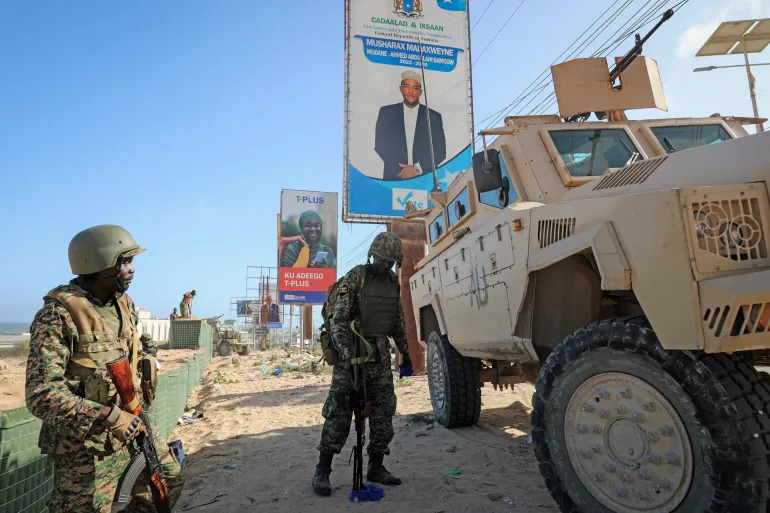
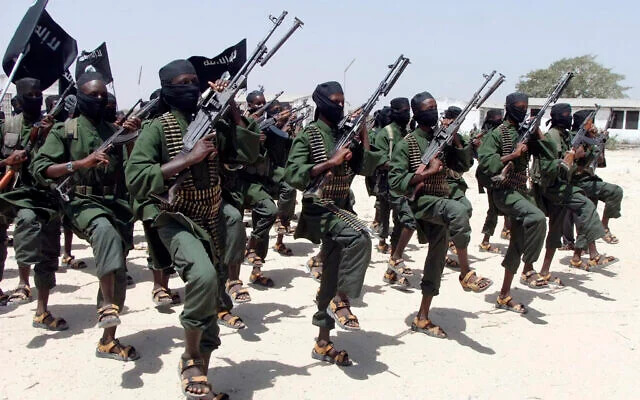
AUSSOM Force Commander Sam Kavuma, who spoke during a field visit to assess the combat readiness of frontline troops following the successful liberation of the strategic towns of Mubarak and Durasalaam in Somalia, said the allied forces are united in their efforts to flush out al-Shabaab terrorists in the country.
“Through sweat, struggle, and sacrifice, we stand united to eliminate al-Shabaab and secure a future for our brothers and sisters in Somalia,” Kavuma said in a statement on Friday evening after the field visit.
He called on the Ugandan contingent serving under AUSSOM and the Somali National Armed Forces to uphold the highest standards of professionalism, morale, and discipline in fulfilling the mission’s mandate.
“AUSSOM, in partnership with the Somali government and other stakeholders, will provide essential relief support to the liberated communities,” he added.
The joint operation conducted on Monday with international partners resulted in the full capture and securing of two strategic locations that had long served as strongholds and safe havens for al-Shabaab terrorists.
Owiny Akena, Battle Group 44 commander and operation commander, said Mubarak and Durasalaam remain under the full control of the joint forces.
AUSSOM Force Commander Sam Kavuma said the allied forces are united in their efforts to flush out al-Shabaab terrorists in the country.
“Only by going to the grassroots and staying close to the people can we understand their real needs, and every positive response from them makes all the effort worthwhile,” said Chen, who runs an agricultural company in Tianjin.
For her, fulfilling duties is not something that can be figured out sitting in a meeting room; what is needed is “walking into the hearts of the people”.
The 58-year-old has been serving as a national political adviser for two terms. A longtime advocate for people’s livelihoods, Chen has made the elderly and the children a major focus of her work over the past year.
During a visit to a nursing home last year, she found that the residents’ daily routines and meals were well taken care of.
Through conversations, she came to realize that what the elderly lacked most was not material support, but companionship. “What they want most is simply someone to sit with them and talk to them.”
The loneliness she witnessed prompted Chen to think about how to improve eldercare services. She began exploring a more integrated model that connects traditional services with social resources to offer companionship and explore AI applications in eldercare.
That same year, around Children’s Day, Chen took part in activities for children with special needs, including those with autism and physical disabilities. She was struck not only by the challenges those children face, but also by the pressures faced by their parents.
In a period of high-quality national development, special-needs children must not be left behind, and they need more attention and support from society, Chen said.
These experiences have reinforced her belief that fulfilling duties requires not just “physical presence”, but “genuine commitment”, truly keeping people’s urgent concerns and needs at heart, she said.
As a national political adviser from the Women’s Federation group and an agribusiness entrepreneur, women’s rights and development in rural areas, as well as rural vitalization, have long been her priorities.
Over the years, Chen has visited regions including the Xizang autonomous region and the Xinjiang Uygur autonomous region, and Gansu, Qinghai and Hubei provinces, establishing e-commerce platforms to help local women sell agricultural products, offering them technical training and support to engage in specialty industries such as ethnic handicraft production, and specialized planting and breeding.
With women now accounting for over 65 percent of the rural labor force, their contribution has become irreplaceable to rural vitalization, Chen said. “They are cultivators in the fields, creators of rural industries, and builders of harmonious and beautiful countryside.”
In the context of integrated agricultural, cultural, and tourism development, women are often the backbone running homestays, providing tourism services, and developing local industries. Their resilience, Chen said, makes them a key force in comprehensive rural vitalization.
To ensure sustainable development in rural areas, Chen also helped build service platforms and communication mechanisms between women entrepreneurs and agricultural science and technology experts and policymakers.
She also launched training programs, which helped create jobs for more than 200 women in villages surrounding Tianjin.
“As a CPPCC National Committee member and a woman entrepreneur, I want to convey the values of independence, resilience, and confidence,” Chen said. “When women grow stronger, they can fully demonstrate their capabilities across various sectors and contribute to national development.”
Speaking of this year’s two sessions, Chen said she will focus on using digital technology to empower rural women and improve eldercare services, as well as protecting the rights of women and children.
CPPCC National Committee members act as a bridge, bringing policies to the grassroots, and the voices from the grassroots back to the decision-making table, she said. “This is how we truly fulfill our duty to the country and our responsibility to the people.”
Chen Zhonghong (right) talks with a female farmer at a village in Tianjin.
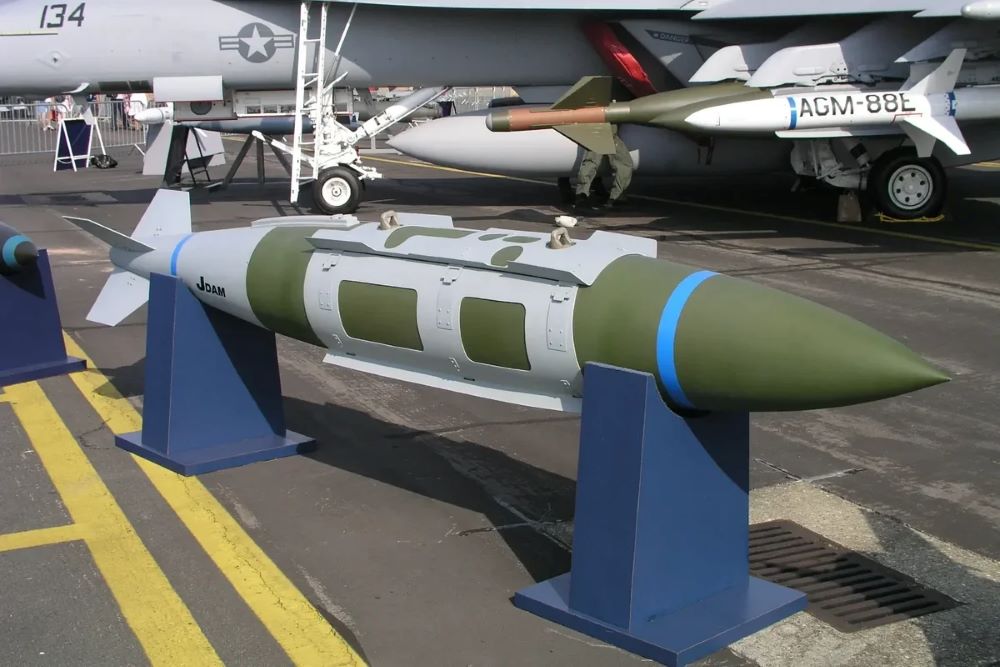
The deal is worth about 151.8 million U.S. dollars, the department said in a statement.
Israel has requested to purchase 12,000 BLU-110A/B general purpose, 1,000-pound bomb bodies, it said.
“The Secretary of State (Marco Rubio) has determined and provided detailed justification that an emergency exists that requires the immediate sale to the Government of Israel of the above defense articles and defense services is in the national security interests of the United States, thereby waiving the Congressional review requirements under Section 36(b) of the Arms Export Control Act,” it said.
“The proposed sale will improve Israel’s capability to meet current and future threats, strengthen its homeland defense, and serve as a deterrent to regional threats,” it added.
The package also includes U.S. government and contractor engineering, logistics, technical support services, and other related elements of logistics and program support, said the statement.
The United States and Israel launched massive attacks on Iran on Feb. 28, killing Iran’s Supreme Leader Ali Khamenei, multiple senior military commanders and hundreds of civilians. Iran has responded with multiple waves of missile and drone attacks targeting Israel and U.S. assets across the region.
Over 180 children across the country have been killed and more than 20 schools have been damaged, Iravani told reporters at the UN headquarters in New York, quoting the Iranian Red Crescent Society.
The United States and Israel have deliberately targeted civilians and civilian infrastructure across Iran, demonstrating that they recognize “no red line in committing their crimes,” he said.
Iravani said that Iranian cities are being attacked indiscriminately, and densely populated residential areas and critical civilian infrastructure are deliberately targeted.
“These acts constitute clear war crimes and crimes against humanity,” he said.
To date, 13 healthcare facilities in the country have been attacked, and several civilian sports and recreational facilities in Tehran and other cities were deliberately targeted on Thursday, with more than 18 female athletes killed, and around 100 others injured, he said.
“Their intention is clear, to terrorize civilians, massacre innocent people, and cause maximum destruction and suffering,” the ambassador said.
Their claims that they have targeted only military objectives are baseless, he said.
Noting that Iran will continue to exercise its inherent right to self-defense under Article 51 of the UN Charter until the aggression stops, Iravani said Iran’s response is “lawful, necessary, and proportionate,” and it targets only the military objectives of the aggressors.
Iravani stressed that “Iran does not seek war,” but Iran “will never surrender its sovereignty” and “will take all necessary measures to defend our people, our territory, and our independence.”
On U.S. President Donald Trump’s remarks on the election of a new supreme leader in Iran, Iravani said those constitute “a clear violation of the principles of non-interference in the internal affairs of states enshrined in the Charter of the United Nations,” vowing that Iran “does not accept and will never allow any foreign power to interfere in its internal affairs.”
The Iranian ambassador called on all UN member states to condemn “this aggression, war crimes,” and stop the aggression that poses a serious threat to regional and international peace and security.
“The Security Council must act now, firmly, clearly, and without delay,” he urged.
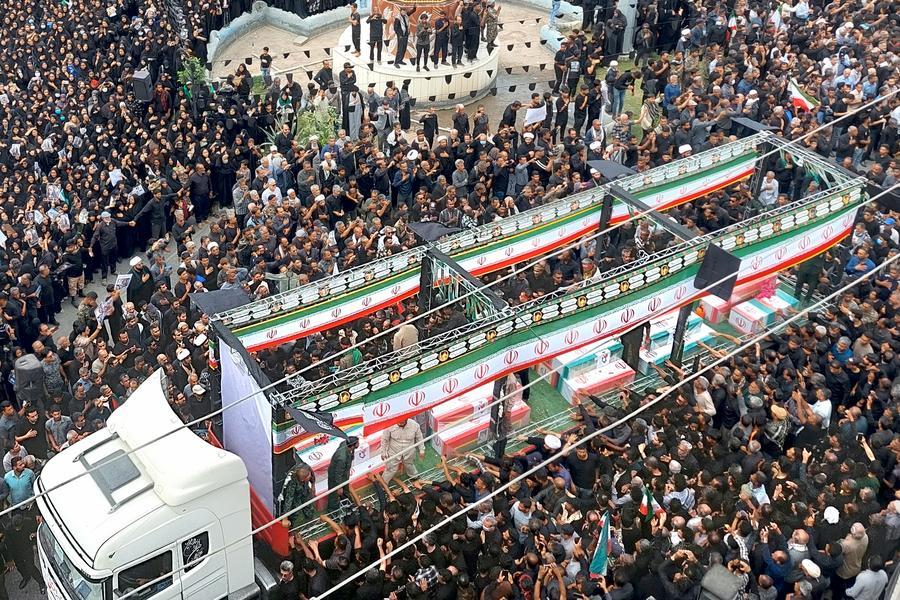
Citizens gather for a mass funeral ceremony for students and staff members killed in a U.S.-Israeli attack on a school in Minab, Iran’s southern province of Hormozgan, March 3, 2026.
“Today, an Iranian drone carrier, roughly the size of a WWII aircraft carrier, was struck and is now on fire,” the command said in a post on the social platform X.
“U.S. forces aren’t holding back on the mission to sink the entire Iranian Navy,” said the post.
U.S. forces have sunk or destroyed more than 30 Iranian navy vessels since the start of the joint U.S.-Israeli military campaign against Iran early Saturday, said Adam.
Brad Cooper, commander of the Central Command, at a news conference together with U.S. Defense Secretary Pete Hegseth at the Command’s headquarters in Tampa, Florida, earlier on Thursday.
Over the last 24 hours, Iranian ballistic missile attacks have declined by 90 percent and drone attacks by 83 percent while U.S. strikes on Iran’s navy “have intensified,” he said.
In the past 72 hours, U.S. forces have struck nearly 200 targets deep inside Iran, including around Tehran, Cooper said, adding that U.S. B-2 bombers dropped dozens of 2,000-pound penetrative bombs on buried ballistic missile launchers.
The U.S. military has also struck Iran’s “equivalent of Space Command,” Cooper said.
Hegseth said the war with Iran will escalate in the coming days.
“The amount of firepower over Iran and over Tehran is about to surge dramatically,” Hegseth said. “When we say more to come, it’s more fighter squadrons, it’s more capabilities, it’s more defensive capabilities and it’s more bomber pulses more frequently.”
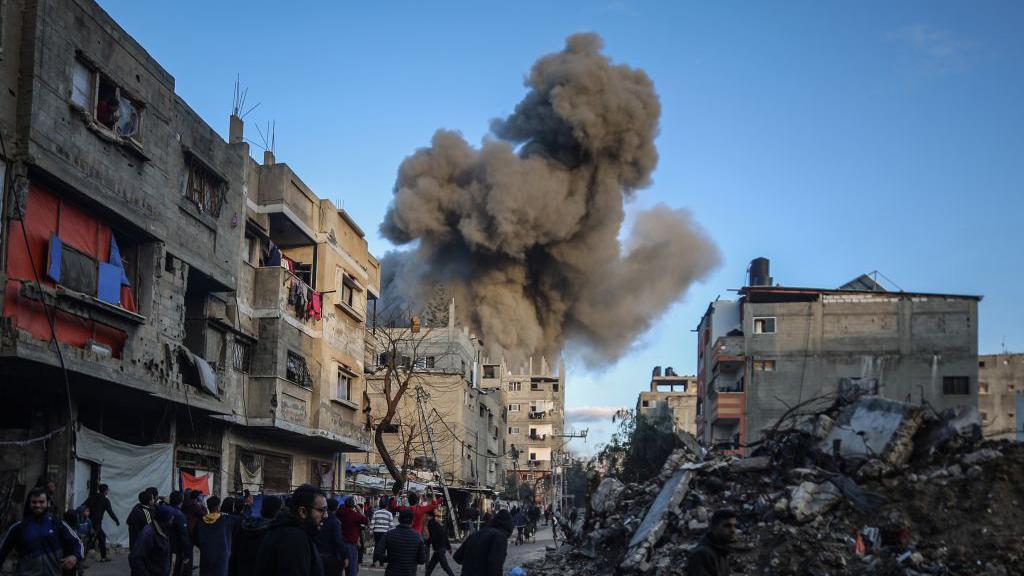
The U.S.-Israeli strikes on Iran have set off a regional exchange of fire that entered its sixth day on Thursday, leading to increasing casualties and major political and security consequences, with impacts rippling across the region.
The measure comes after a process of sustained diplomatic dialogue between both parties, in which they agreed to resume institutional ties and move toward a new stage of bilateral cooperation, said the government in a statement.
The Venezuelan side is ready for a new stage in bilateral relations marked by the principles of mutual respect, the sovereign equality of states and cooperation between peoples, it said.
The moon rises during its crescent phase over the Petare shantytown in Caracas, the capital of Venezuela on March 2, 2026. (PHOTO / AFP)
The National News Agency reported that the victims included senior Hamas official Wassim Atallah al-Ali and his wife after an Israeli drone targeted their home in the camp.
One of al-Ali’s daughters was also injured and transferred to the hospital inside the camp for treatment.
Hezbollah on Monday fired missiles and drones toward Israel in retaliation for the killing of Iran’s Supreme Leader Ali Khamenei in a joint U.S.-Israeli strike and for repeated Israeli attacks on Lebanon.
Israel has responded with massive airstrikes on Hezbollah targets and deployed ground forces into southern Lebanon.
There’s also the shrinking of civic space as well as increasingly organized pushback on gender equality and the regression of women’s rights, said Sarah Hendriks, UN Women’s director of the Policy, Programme and Intergovernmental Support Division, on the global launch of the UN secretary-general’s report, “Ensuring and Strengthening Access to Justice for All Women and Girls,” ahead of International Women’s Day 2026 and the 70th Session of the Commission on the Status of Women, which is scheduled for March 9-19.
Hendriks warned that there are women who choose not to report the violence they experience, because they fear that they won’t be believed; there are women who are paid less than their male counterparts in the very same work in places where the law does not actually require equal pay; and there are girls who don’t have birth registration, face heightened risk of child marriage, and face heightened risk of trafficking.
“No country in the world has achieved full legal equality between women and men,” she said.
According to the secretary-general’s report, globally, women have 64 percent of the legal rights of men, as discriminatory legal frameworks continue to prevail; 54 percent of countries lack consent-based legal definitions of rape, while 72 percent allow child marriage in all or some circumstances; and in 44 percent of countries, the law does not mandate equal remuneration for work of equal value, meaning women can still legally be paid less for the same work.
While progress is possible as 87 percent of countries have enacted domestic violence legislation, and more than 40 countries have strengthened constitutional protections for women and girls over the past decade, discriminatory social norms — stigma, victim-blaming, fear, and community pressure — continue to silence survivors and obstruct justice, allowing even the most extreme forms of violence, including femicide, to go unpunished.
Women’s access to justice is also prevented by everyday realities such as cost, time, language, and a deep lack of trust in the very institutions meant to protect them, the report showed.
In a press release, UN Women’s Executive Director Sima Bahous said that “when women and girls are denied justice, the damage goes far beyond any single case. Public trust erodes, institutions lose legitimacy, and the rule of law itself is weakened. A justice system that fails half the population cannot claim to uphold justice at all.”
“Now is the moment to stand up, show up, and speak up for rights, for justice, and for action – so that every woman and girl can live safely, speak freely, and live equally,” Bahous stressed.
According to the release, as backlash against longstanding commitments on gender equality intensifies, violations of the rights of women and girls are accelerating, fueled by a global culture of impunity, spanning from courts to online spaces to conflict.
As technology outpaces regulation, women and girls face growing digital violence in a climate of impunity where perpetrators are rarely held accountable. And in conflicts, rape continues to be used as a weapon of war, with reported cases of sexual violence rising by 87 percent in just two years.
In the release, UN Women calls for urgent and decisive action: end impunity, defend the rule of law, and deliver equality — in law, in practice, and in every sphere of life — for all women and girls.
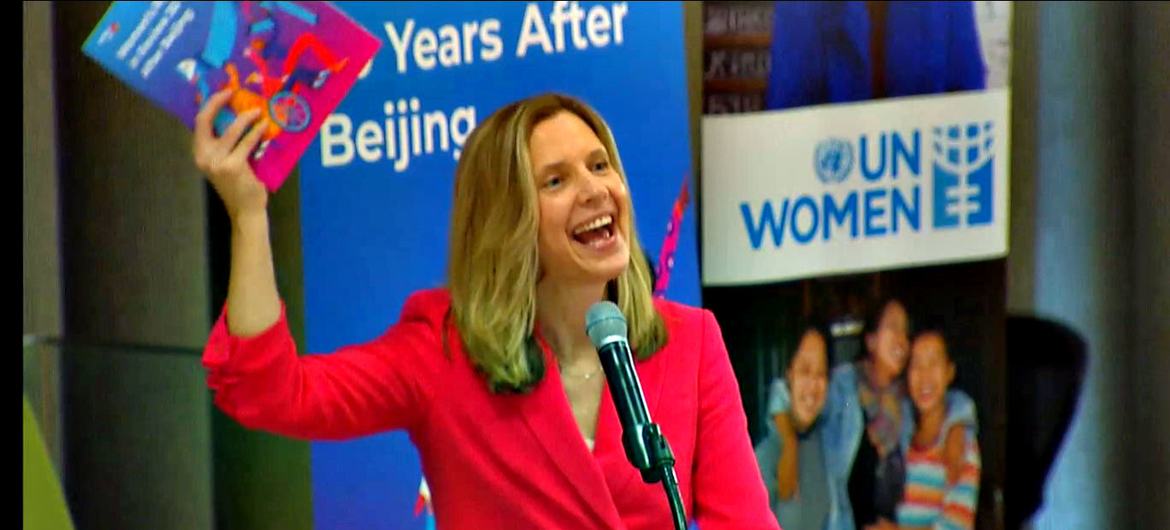
Sarah Hendriks, director of UN Women’s policy, programme and intergovernmental division, at the launch of the Beijing+30 Action Agenda.
Burundi, the current chair of the African Union, has nominated Macky Sall, former president of Senegal, while Costa Rica has put forward Rebeca Grynspan, economist and former vice president of Costa Rica, for the post.
With the new nominations, there are currently four candidates vying for the position. The other two candidates are former Chilean president Michelle Bachelet, nominated by Chile, Brazil and Mexico, and Rafael Grossi, the current director general of the International Atomic Energy Agency, nominated by Argentina.
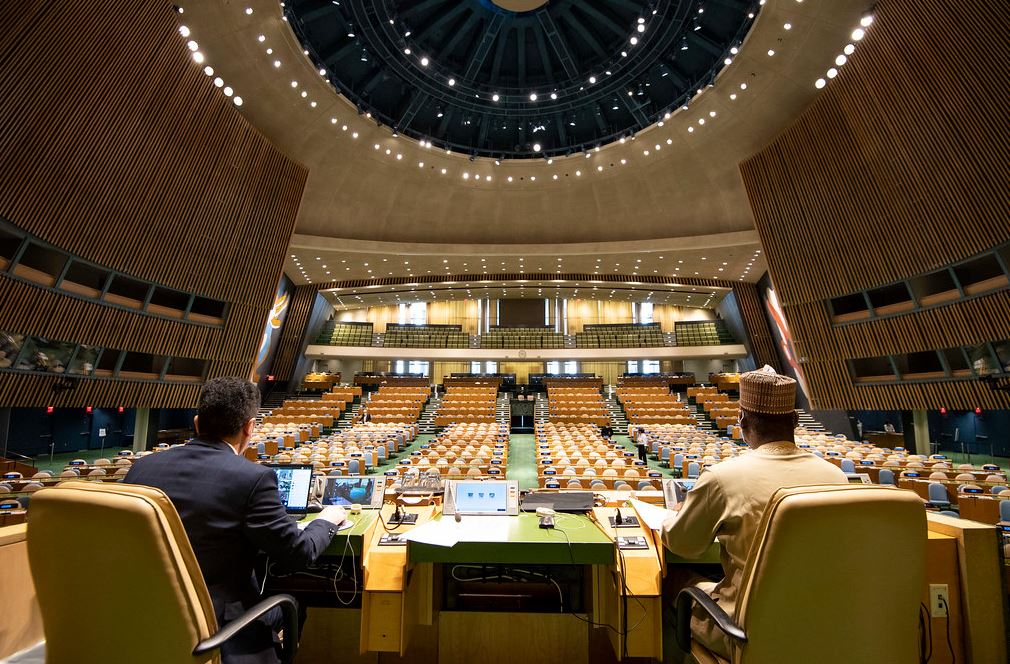
In a letter to UN member states on Wednesday, UNGA President Annalena Baerbock revealed the modalities of the interactive dialogues with the candidates, scheduled for the week of April 20.
The dialogues will be structured around the three pillars of the United Nations, namely peace and security, human rights and development. Each candidate will present their vision, followed by questions and engagement from member states, according to the letter.
Nominations must be submitted in advance of the interactive dialogues, and no later than April 1, for candidates to be eligible to participate, the letter added.
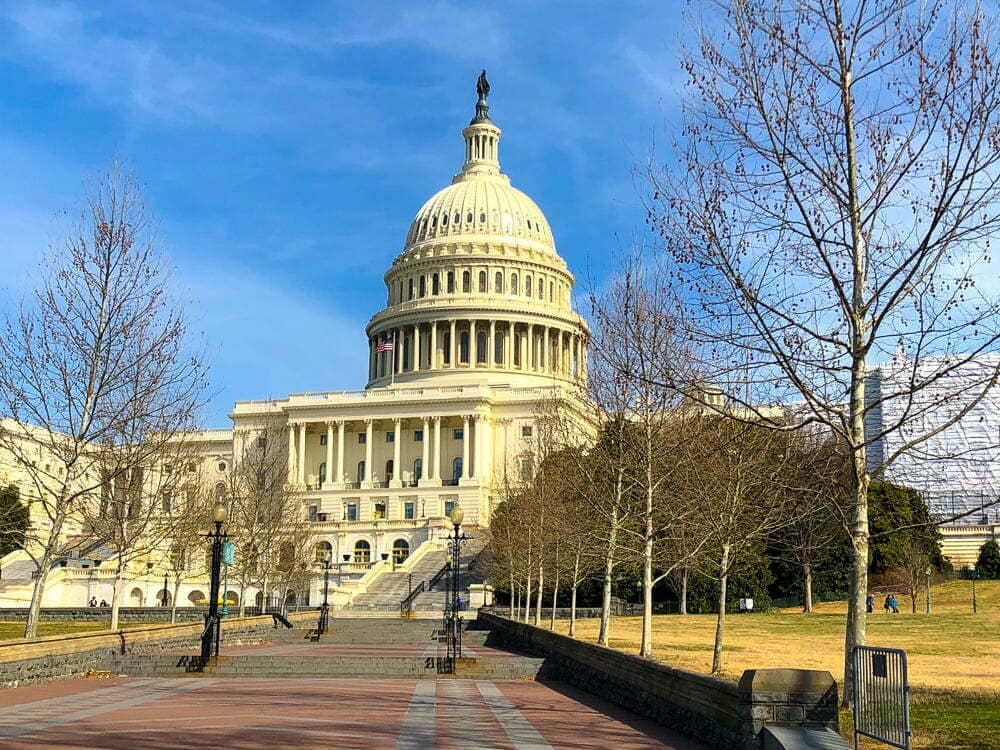
By a 53-47 vote, the Republican-led upper chamber blocked the resolution, which is intended to prevent Trump from ordering further military strikes on Iran without congressional approval.
In floor speeches before the vote, Democrats largely lashed out at the military strikes against Iran while Republicans predominately defended the president.
Veteran Democratic Senator Tim Kaine, who co-sponsored the measure, said that “the administration and their shifting set of rationales, and even in a classified setting, could produce no evidence, none, that the U.S. was under an imminent threat of attack from Iran.”
“Have we learned nothing from 25 years of war in the Middle East? 14,000 American troops and contractors killed in Iran and Afghanistan … hundreds of thousands of civilian deaths … in Iran and Afghanistan, more than 8 trillion spent that could have been spent on American health care, on American housing, on American education, spent on the war in Afghanistan and Iraq. And what did we get for it?” said Kaine.
Democratic Senator Patty Murray, vice chair of the Senate Appropriations Committee, said “we should not gamble American lives on incomplete plans, unclear objectives and completely uncertain future.”
Republicans argued that Trump’s actions in Iran were necessary and justified, accusing Democrats of objecting to Trump’s actions for partisan reasons.