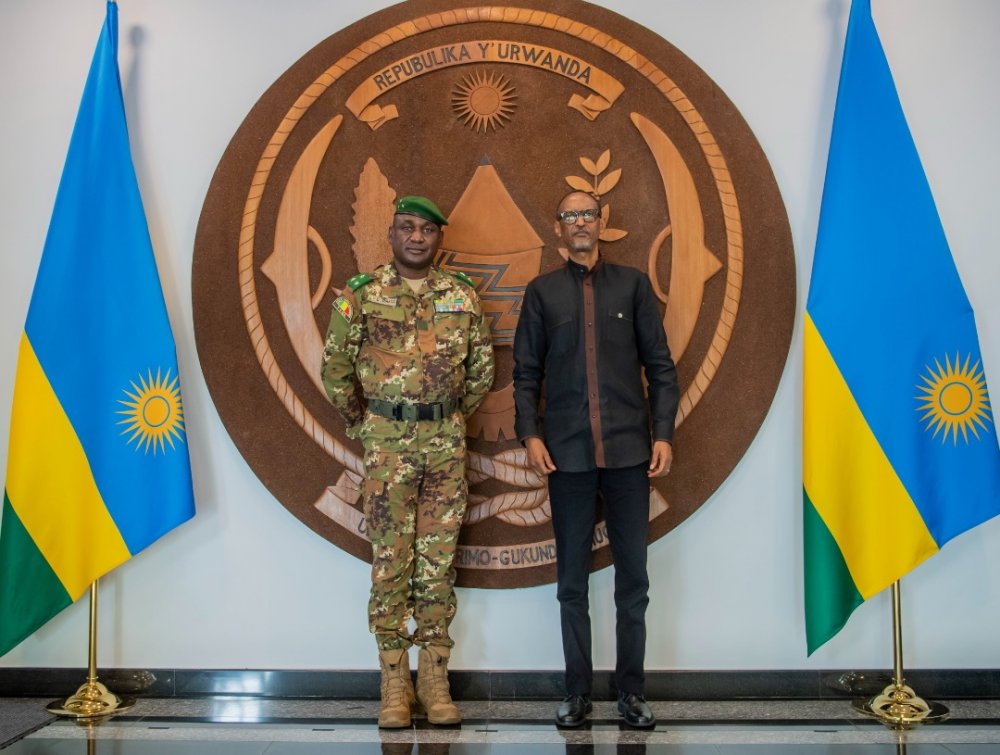
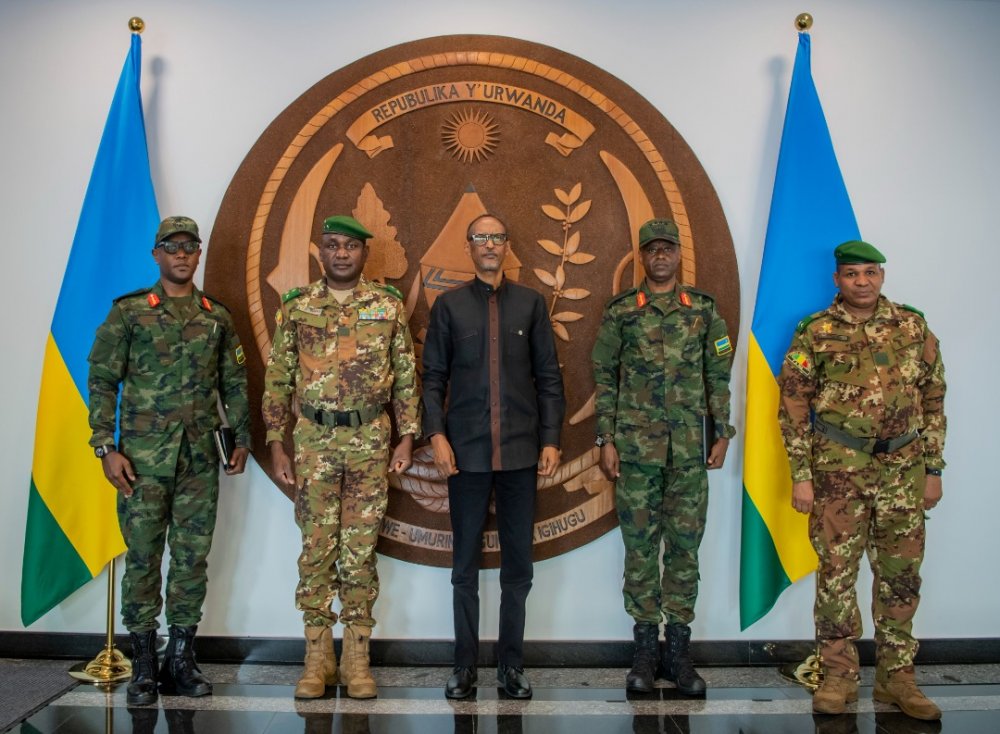
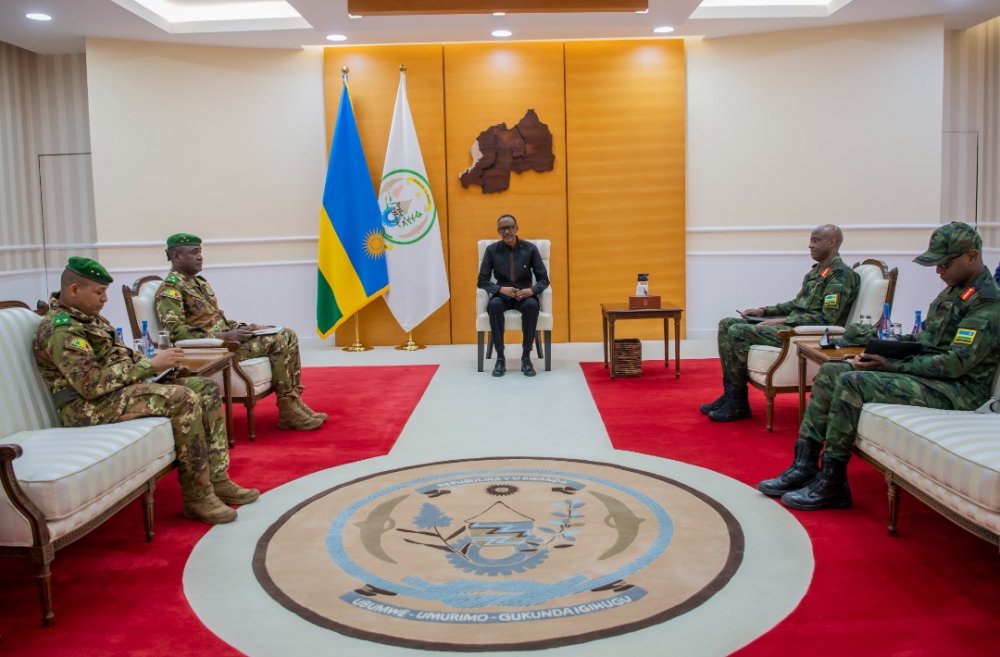
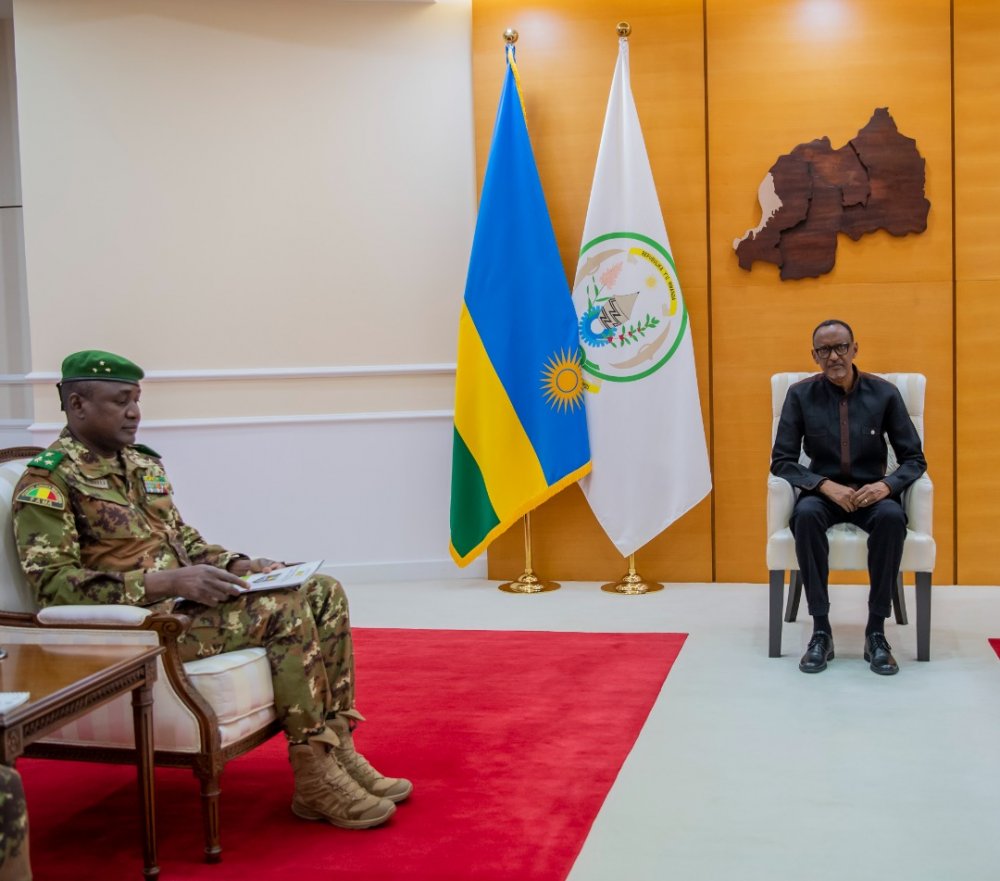
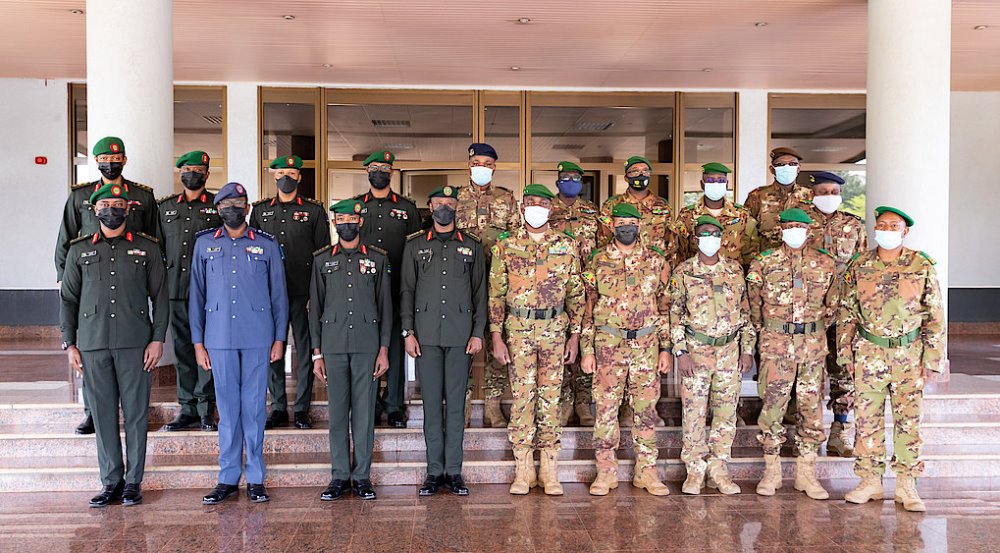
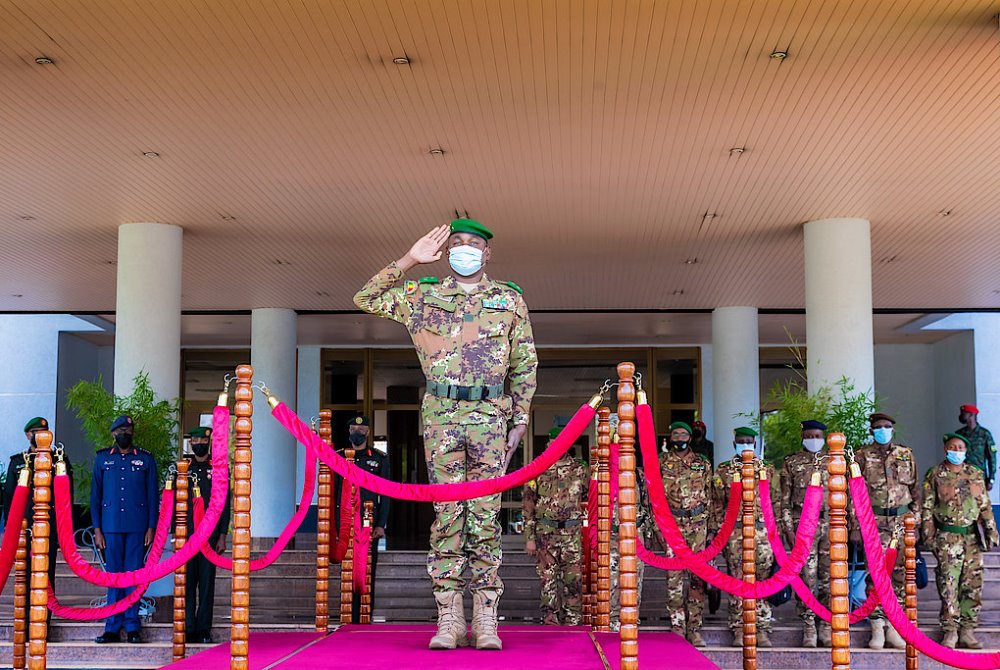
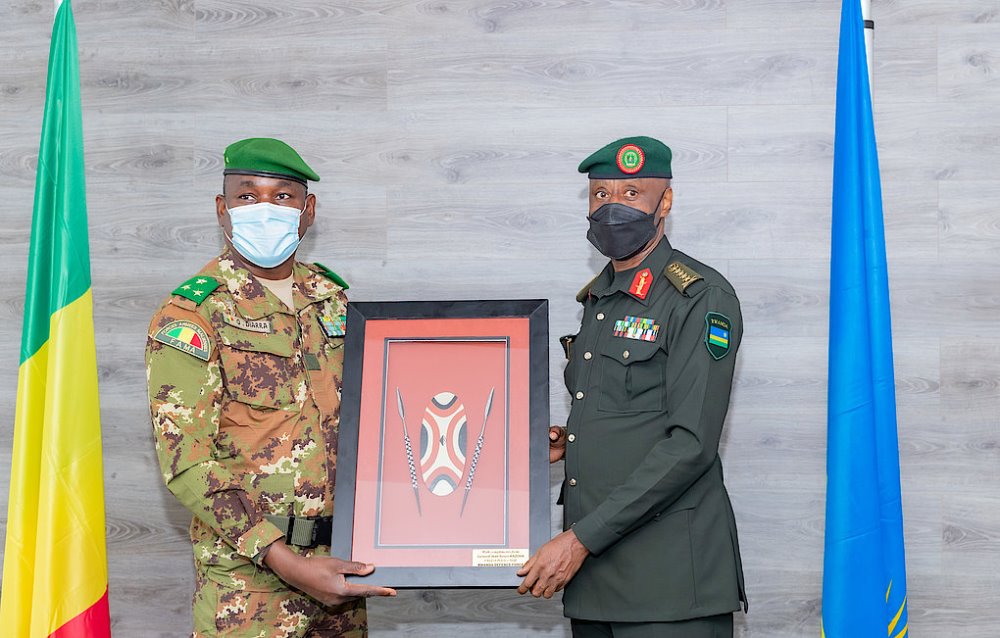
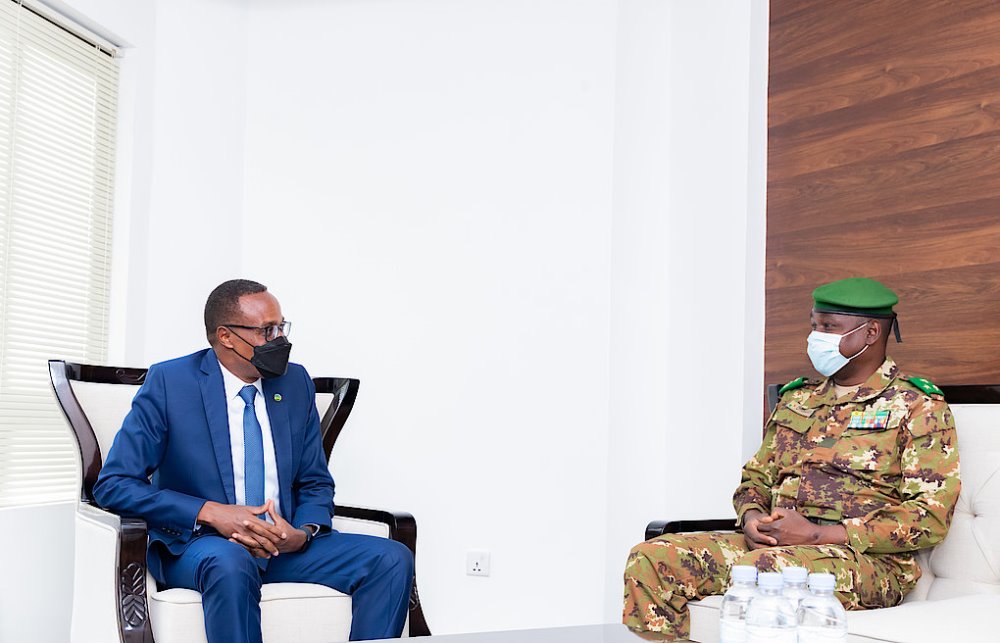
As he met with President Kagame on Wednesday 11th May 2022; Maj Gen Diarra was accompanied by Rwanda Defence Force (RDF) Chief of Defence Staff (CDS), Gen Jean Bosco Kazura and the Head of the International Military Cooperation (IMC) Brig Gen Patrick Karuretwa.
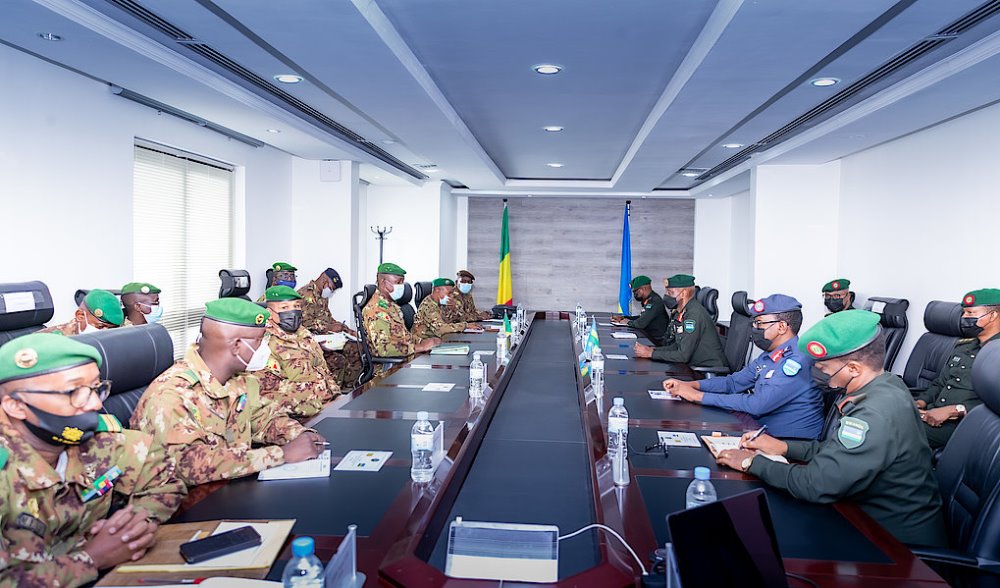
During his stay in Rwanda, Maj Gen Diarra held talks with RDF Chief of Defence Staff, Gen Kazura and the Minister of Defence, Maj Gen Albert Murasira.
When addressing Media on 10th May, the Chief of General Staff of Malian Armed Forces said the purpose of his visit was to exchange experience and expertise on capacity building of both the Rwanda Defence Force and Malian Armed Forces.
He said that the discussions with his Rwandan counterpart tackled different aspects of cooperation in human resource development, military training and welfare among others.
The Chief of General Staff of Malian Armed Forces paid respect to the victims of the 1994 Genocide against the Tutsi at Kigali Genocide Memorial and also visited the Campaign Against Genocide Museum.
Mali has been faced with insecurity since armed groups attacked the country in 2012.
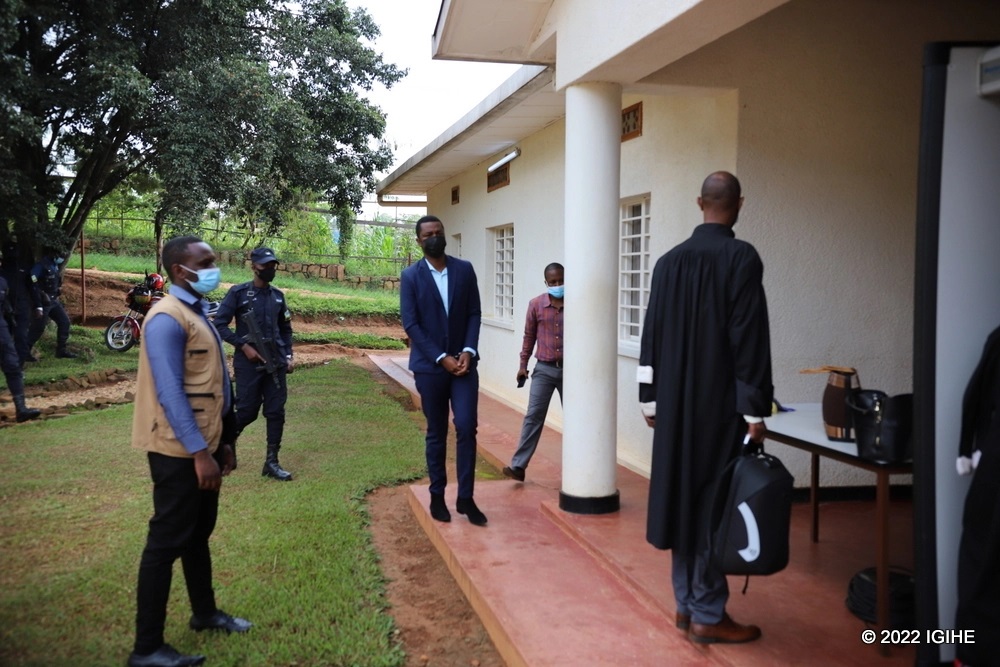
The defence lawyer of Prince Kid, Emelyne Nyembo, who arrived late, has told the court that she was not well informed about the hearing. Nyembo explained that she only knew the day but was not aware of the exact time the hearing was set to begin.
Nyembo told the court that she needs enough time for preparations to be able to defend her client.
The defence lawyer also objected that the Prosecution is considering the remand of her client based on testimonies given during investigations noting that complete details of the dossier should be communicated to them before further proceedings.
Ishimwe has confirmed that he has not yet received his dossier. Nyembo informed the court that one day would be enough to review the dossier.
The Prosecution said that it is the right of the accused to see their dossier but insisted that details were shared with everyone concerned. However, the defence laywer checked and failed to access the file in Integrated Electronic Case Management System (IECMS).
The presiding judge asked the Prosecution to help Ishimwe and his defence lawyer to access their dossier to make preparations.
The court adjourned the hearing to 13th May 2022 at 9:00 a.m.
Prince Kid faces three charges including rape, soliciting or offering sexual favours, and harassment connected to sexual relations.
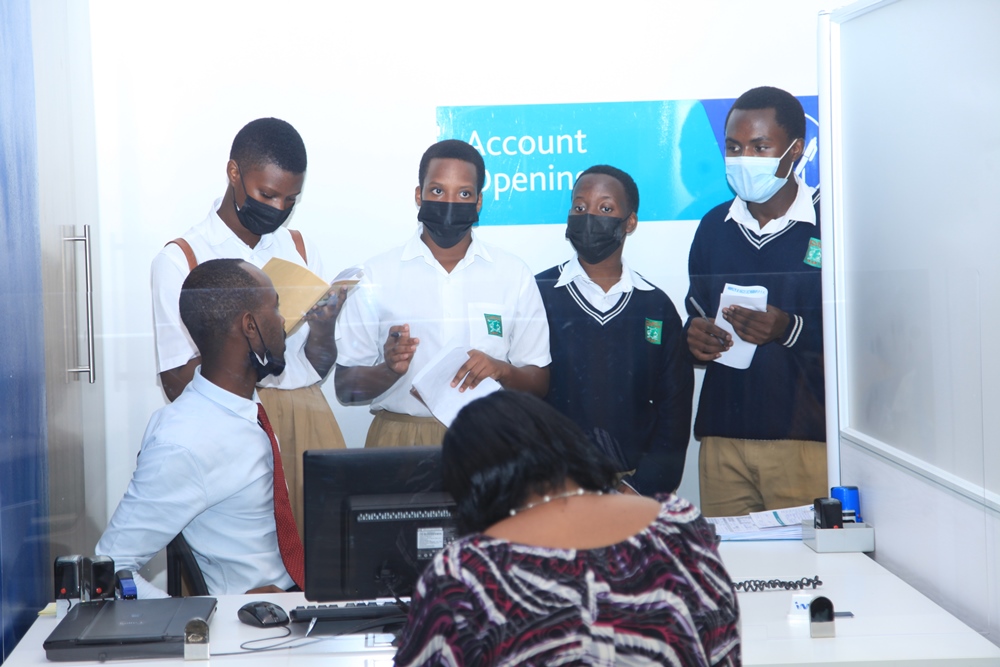
This year 2022, AIESEC in Rwanda in partnership with I&M Bank (Rwanda)plc, Rwanda Stock Exchange, and Economic Policy Research Network (EPRN) Rwanda participated in the 10th edition of Global Money Week under the theme “Build your future, be smart about money”.
At this time of the covid-19, it is underlined that the pandemic has increased social inequalities and made the situation worse for many vulnerable groups. Young people are those who are suffering the most from the crisis. Access to education, job prospects, and the ability to thrive socially have all been badly hit and all of these are limiting opportunities to build a secure financial future.
The theme “ Build your future, be smart about money” captures the importance of thinking about one’s own future when making financial decisions. This theme not only prompts young people to be forward-looking but also encourages Global Money Week’s participating organizations to think about the future as well as to address issues such as sustainability or the digitalization of financial services. This theme stresses the importance of building financial resilience not to cope with the current crisis, but also for future ones thereby supporting the financial well-being of young people and future generations.
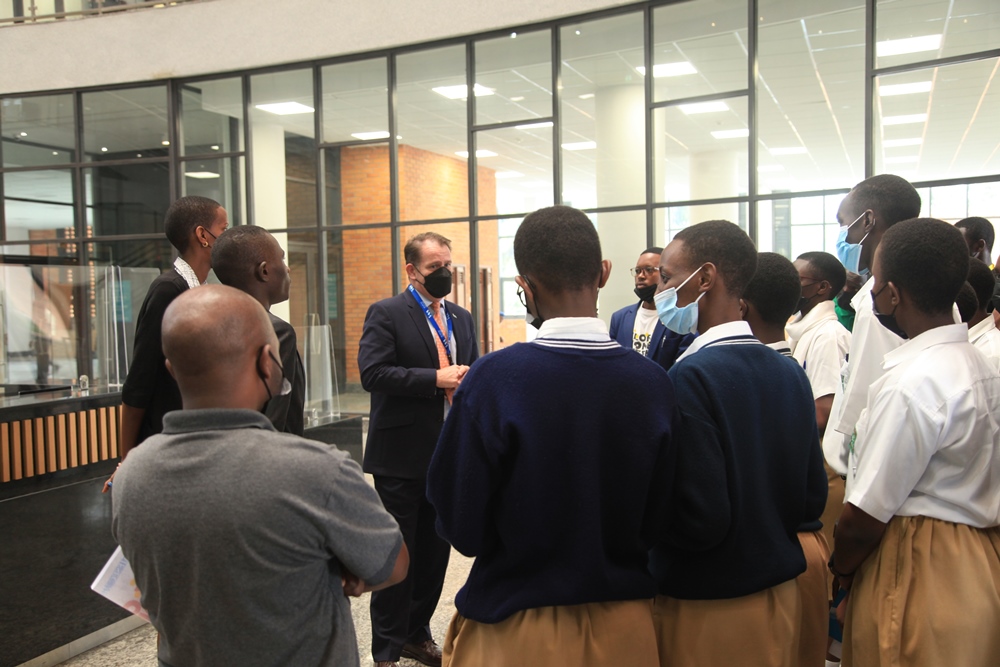
During Global Money Week 2022, AIESEC in Rwanda visited different public and private institutions including financial and learning institutions across the country where participants were equipped with knowledge about money matters such as the stock market, banking, budgeting, saving, investing, etc.
At the closing event of Global Money Week 2022, Fiona Kamikazi the Head of marketing and communications at I&M Bank (Rwanda) plc, stressed that no matter the educational background; anyone can join the backing industry.
“ Are you a youth having a different educational background from finance? I&M Bank (Rwanda) plc offers you ManagementTraineeProgramme after you graduate in whatever educational background, so you can join the banking industry,” she said.
To stress the urgency and importance of youth participation in the conversations around money matters; UWASE Maliki, the Country Director at AIESEC in Rwanda said that “Young people need to be given the instruments, and the opportunities to build a better, more inclusive, and more sustainable future for themselves but also for the society that they live in.”
Financial literacy is one of those instruments together with adequate financial inclusion, and financial consumer protection. The research published on youth financial inclusion in Rwanda (Finscope 2020) showed that about three in five or 1.1 million youth, use informal mechanisms of saving and the most savings are for non-developmental purposes.
Lack of inclusion also appears in form of loan access, rural areas, etc that’s why AIESEC in Rwanda is working with like-minded institutions to tackle such issues mostly found in less privileged demographics.
During the Global Money Week event that took place from 21st to 27th March 2022, more than 5000 young people and children were engaged and impacted across the country and many stories of impact continue to be created.
AIESEC in Rwanda has always put its focus on youth empowerment and leadership development in young people as it welcomes and appreciates all like-minded organizations to foster collaboration toward youth development in Rwanda.
On 10th May 2022, he was received at RDF Headquarters by his counterpart Gen J Bosco Kazura. They held discussions on bilateral defence cooperation between Malian Armed Forces and Rwanda Defence Force. Maj Gen Oumar Diarra also met with the Minister of Defence Maj Gen Albert Murasira.
When addressing Media, the Chief of General Staff of Malian Armed Forces said the purpose of his visit was to exchange experience and expertise on capacity building of both the Rwanda Defence Force and Malian Armed Forces.
He said that the discussions with his Rwandan counterpart tackled different aspects of cooperation in human resource development, military training and welfare among others.
The Chief of General Staff of Malian Armed Forces paid respect to the victims of the 1994 Genocide against the Tutsi at Kigali Genocide Memorial and also visited the Campaign Against Genocide Museum.
The secondary cities include Muhanga, Huye, Rusizi, Rubavu, Musanze and Nyagatare.
Under the National Strategy for Transformation (NST1), the Government of Rwanda targets to increase urbanization rate to 30% in 2024 to support economic growth.
Some of infrastructures built in such cities include roads, water drainage channels, electricity, markets, schools, health facilities among other activities supporting national development.
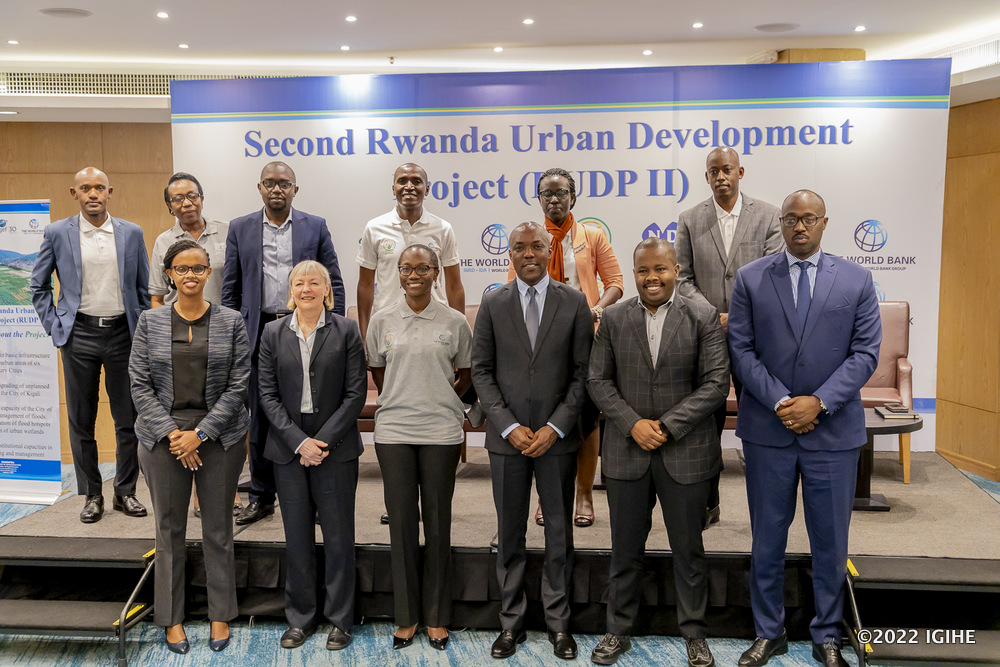
In light of initiatives meant to promote infrastructure development, the country launched the first phase of Rwanda Urban Development Project [RUDP I] in 2016 which was completed in 2021.
Some of activities covered during the phase include the upgrade of slums in Kigali City in the areas of Biryogo on 12.46 hectares, Kiyovu on 20.1 hectares and Rwampara on 26.42 hectares.
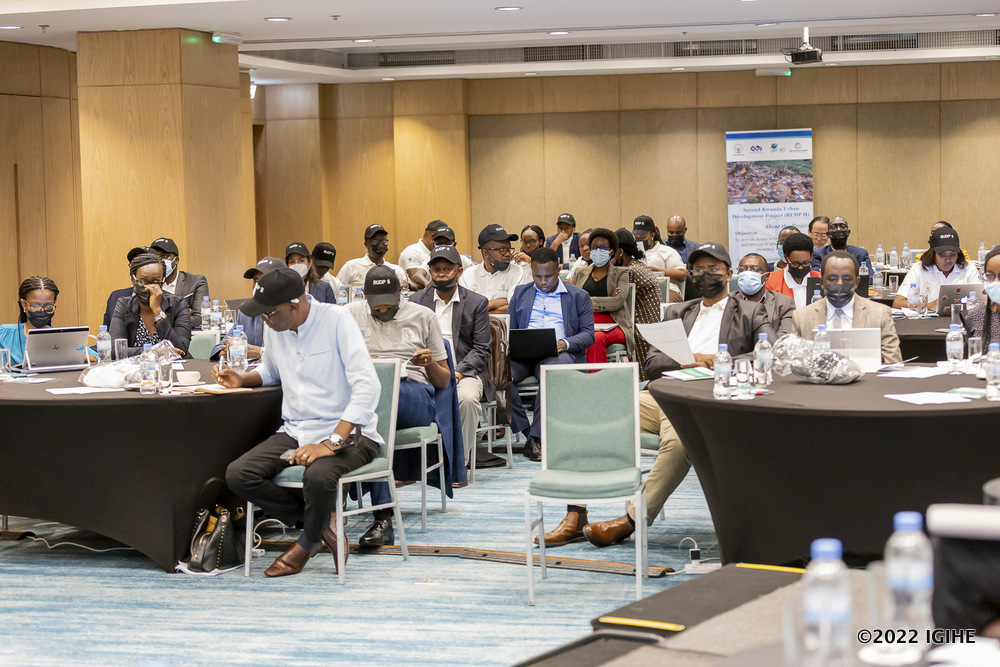
Speaking at the launch of the second phase of the project (RUDP II) recently, the Minister of Infrastructure, Dr. Ernest Nsabimana said that the magnificence of Biryogo which has a space reserved for A ‘Car Free Zone’ convinced authorities to consider the extension.
The Minister explained that the upgrading of such slums to be equipped with electricity, water drainage channels and roads installed with lights facilitate movements and enhance security as well.
“It is a very good project that inspired the country to consider how to extend it in Kigali and secondary cities,” he said.
Dr. Nsabimana revealed that Rwf160 billion allocated for the second phase of this project have been secured whereby implementation is expected to begin in the near future.
{{Rwf60 billion earmarked for infrastructures in Kigali}}
The Ministry of Infrastructure shows that Kigali City will receive Rwf60 billion while the remaining funds will be earmarked for infrastructure development in secondary cities starting with Muhanga and Huye.
In Kigali alone, the project will be executed nearby River Mpazi flowing through the sectors of Gitega, Kimisagara na Rwezamenyo of Nyarugenge District. It will also draw emphasis on eliminating slums in Gatenga of Kicukiro, Nyabisindu of Remera Sector and Nyagatovu of Kimironko Sector in Gasabo District.
These slums will get infrastructures including roads, water drainage channels. Parts of the funds will also be used to preserve marshlands in Rwampara, Gatenga, Gikondo and Rugenge among others in accordance with Kigali City master plan.
The Mayor of Kigali City, Pudence Rubingisa said that such activities will transform residents’ welfare and add up to the magnificence of the city.
He further stated that the projects benefit residents who get jobs and improved wellbeing.
Rubingisa pointed out an example of a project rolled out in Agatare of Biryogo where 9-kilometer roads were built and facilitated movements.
More six-kilometer roads were also developed for pedestrians.
“Biryogo residents have started renovating their houses because the value increased. We are set to do the same thing in the four slums and want the project to move fast so that it can be beneficial to residents who will live in decent places with minimized disasters’ risks,” noted Rubingisa.
The Country Manager of World Bank in Rwanda, Roland Pryce thanked the Government of Rwanda for efficient use of received funds while rolling out projects meant to transform residents’ wellbeing.
{{Sensitization}}
The Minister of Infrastructure, Dr. Nsabimana revealed that the relocation of residents triggered mixed reactions in the first phase due to mindsets and circumstances under which they settled in these slums.
To address the issue, he explained that more efforts will be geared towards sensitizing residents on the relevance of such infrastructures and advantages they are set to pull from them.
According to Dr. Nsabimana, the move will facilitate relocation and expropriation.
Stretched on 76 hectares and inhabited by 3,915 residents; Nyabisindu and Nyagatovu are among overpopulated parts of the city.
Under the second phase, the areas will get 7.4-kilometer roads.
More 8.2-kilometer roads will be built over River Mpazi to help residents reach markets, playgrounds and other infrastructures easily.
RUDP II will leave 17,621residents from this area accessing basic infrastructures.
In Gatenga, RUDP II will see 11.8 kilometers roads constructed and help 17,621 residents to reach infrastructures in 500 meters.
The funds will also be utilized to mitigate floods in different parts of Kigali including Rugunga, Rwandex, Gisozi, Kinyinya, Karuruma and Nyabisindu while the wetlands of Rugengerwintare, Kibumba and Nyabugogo will be preserved.
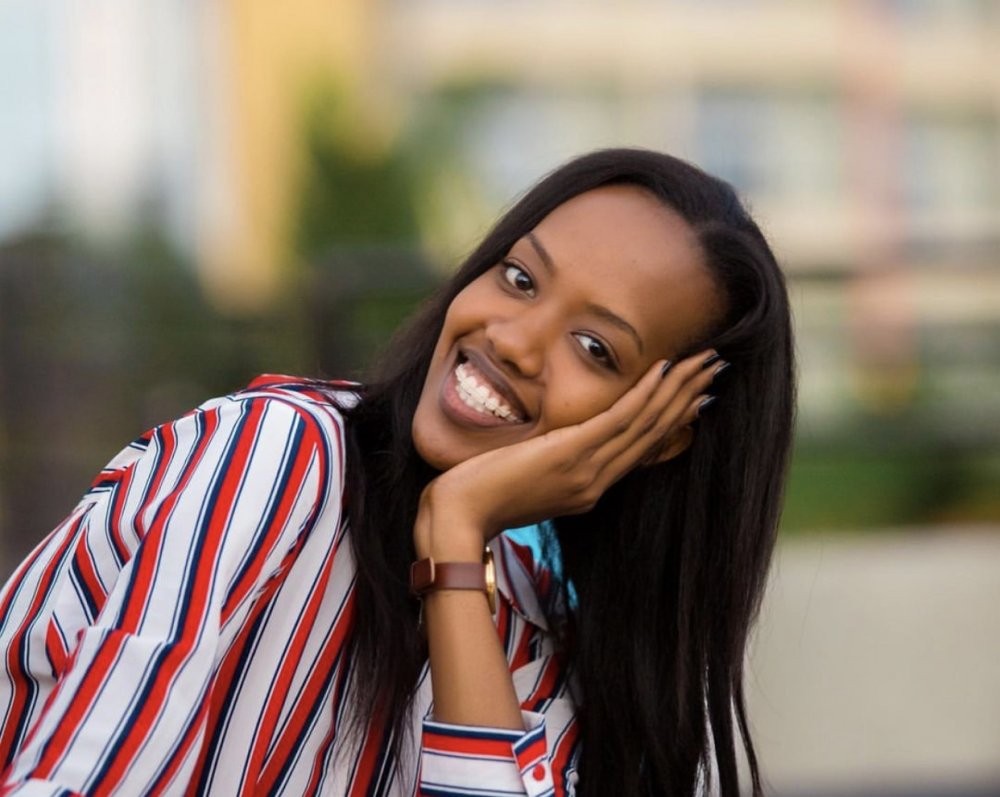
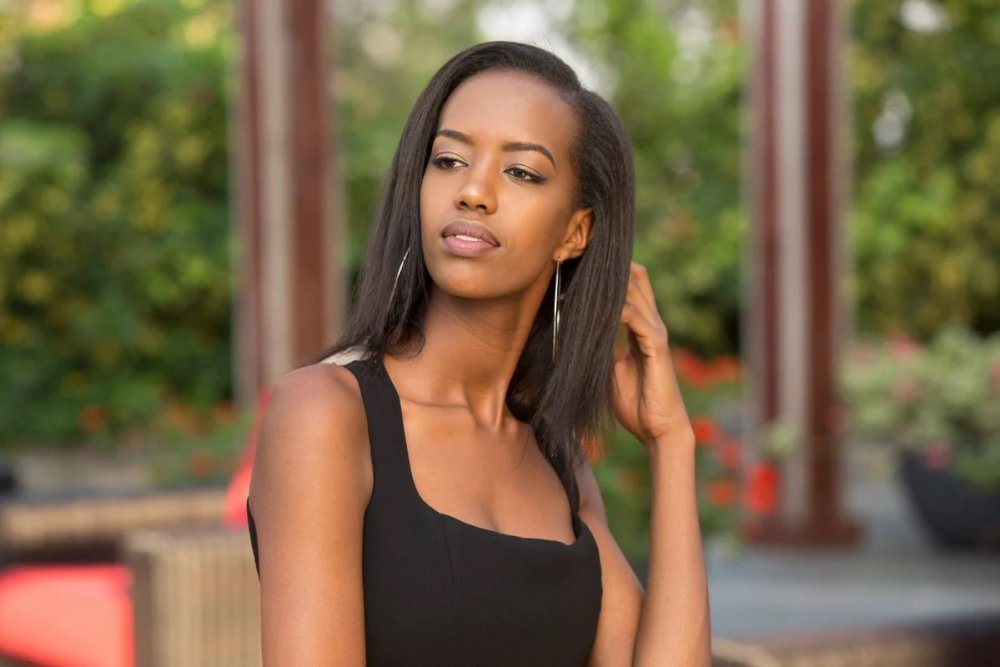
Miss Iradukunda was arrested on Sunday8th May 2022. She is detained at Remera RIB Station.
The Spokesperson of RIB, Dr. Murangira B.Thierry has told IGIHE that Iradukunda is facing charges including ‘forgery and tampering with investigation’.
It is said that RIB launched investigation into sexual corruption in Miss Rwanda contest in 2019.
Since then, evidences were gathered gradually until the arrest of Dieudonné Ishimwe alias Prince Kid, the CEO of Rwanda Inspiration Back Up which organizes the beauty pageant.
Since the arrest of Prince Kid, IGIHE has learnt, Miss Iradukunda has been contacting all girls who provided testimonies on sexual abuse against them in Miss Rwanda to change their position before the court.
It is said that Iradukunda worked with a notary identified as Nasira Uwitonze who witnessed the signing of concerned individuals as they wrote letters repudiating testimonies pinning Ishimwe.
IGIHE has learnt that some of witnesses who provided testimonies to RIB revealed that they were sexually abused by Ishimwe at different times.
Ishimwe was arrested on 25th April 2022 over sexual abuse to participants of Miss Rwanda beauty pageant at different times. He faces three charges including rape, soliciting or offering sexual favours, and harassment connected to sexual relations.
It is said that Miss Elsa has been in love with Ishimwe with whom, they planned marriage. According to sources, this pushed her to make attempts to tamper with evidences to get Ishimwe released.
RIB has also confirmed that Nasira Uwitonze was also arrested over allegedly validating factless statements.
On Monday 9th May 2022, the Ministry of Youth and Culture also announced the temporary suspension of Miss Rwanda contest due to ongoing investigation into alleged sexual abuse to contestants.
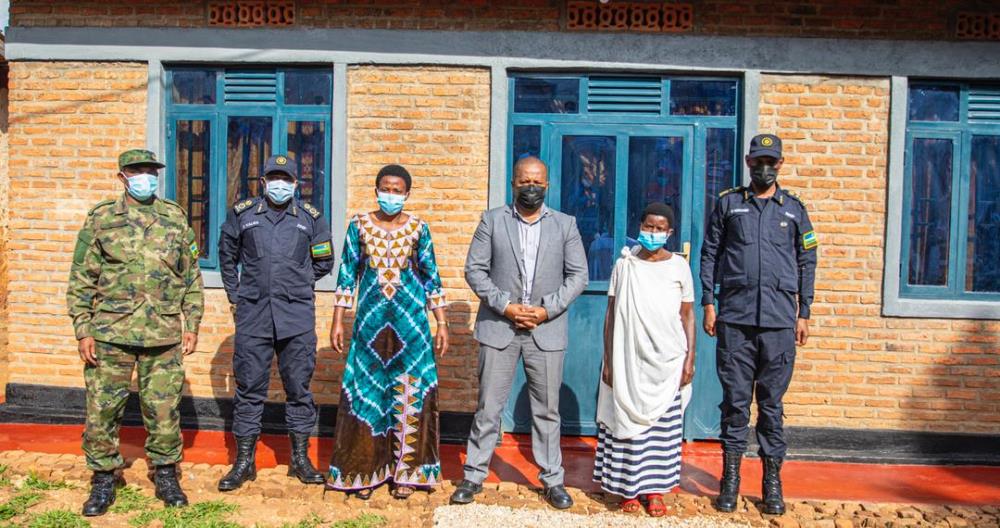
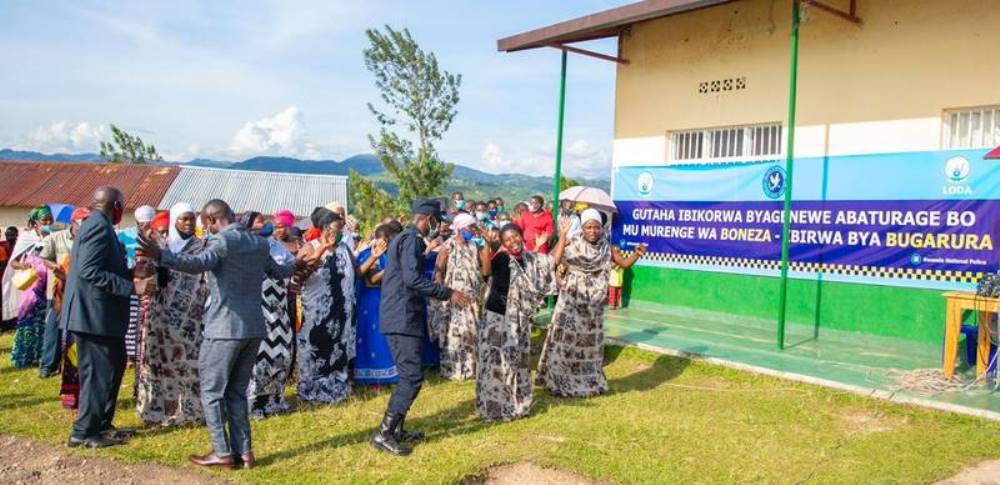
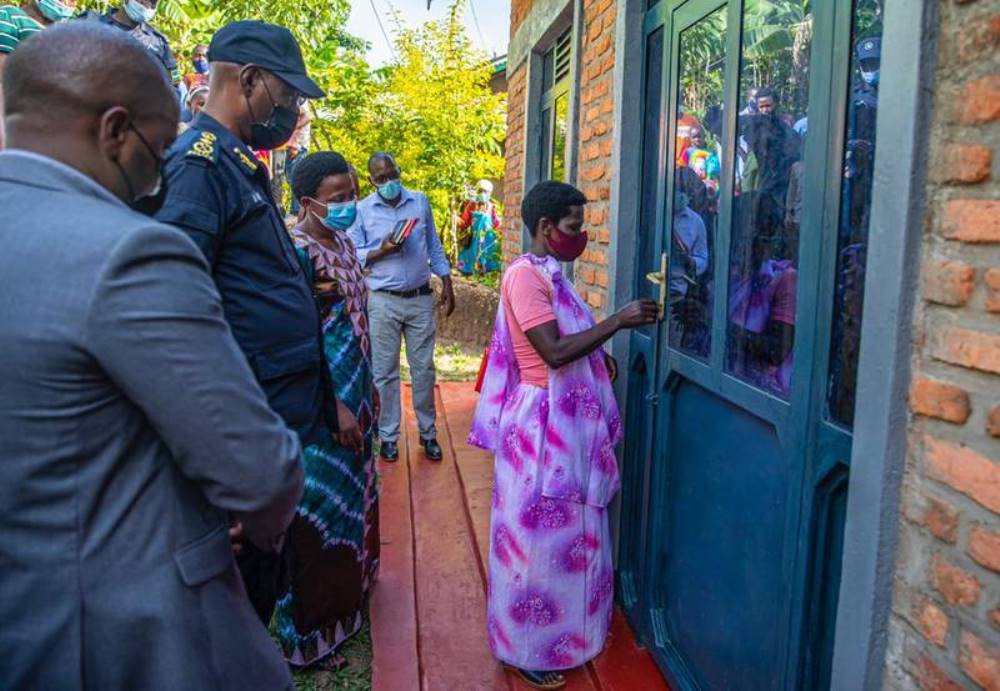
The Permanent Secretary in the Ministry of Local Government, Samuel Dusengiyumva handed over the houses to the beneficiaries on Monday, May 9.
The beneficiaries include Clementine Ntahomvukiye, a widow with seven children; Daphrose Mukamugema, a single mother of two; and Alex Niyitegeka, an orphan and father of two.
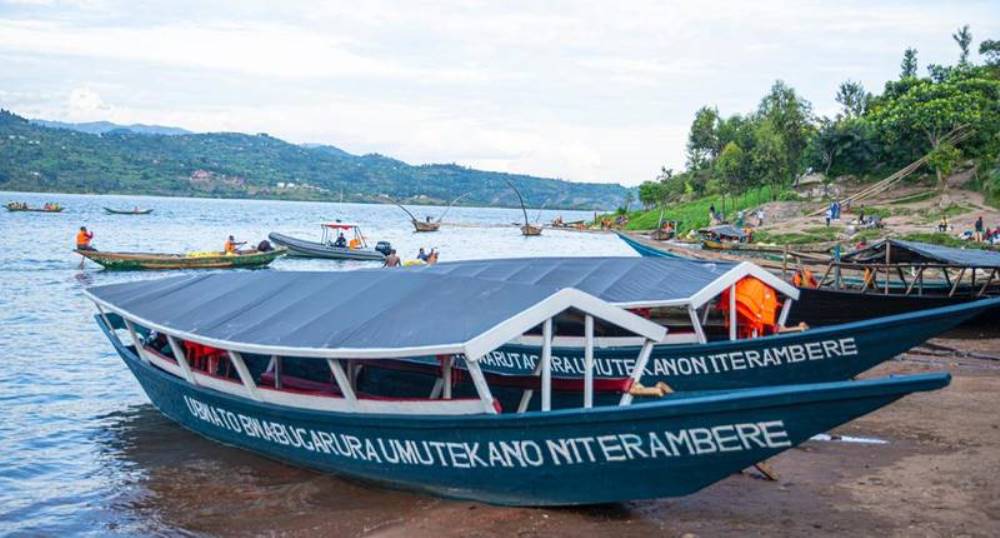
RNP also handed over two engine boats to facilitate movements of residents on the two islands.
The houses and the boat are part of the Rwanda National Police human security support and strengthening its partnership with communities in crime prevention as part of its 21st anniversary, launched in December last year.
Last week, RNP also handed over two houses it constructed for two families on Nkombo island in Rusizi District, powered 200 households with solar energy and covered medical insurance premiums for 500 people on the island.
RNP has so far injected about Rwf1 billion in community development projects in this 11th edition of the annual ‘Police Month’ to construct 30 houses, financially support cooperatives, cover medical insurance premiums, and connecting households that are far from the national grid with solar power system.
PS Dusengiyumva told the residents that Rwanda’s governance system is centred on uplifting the wellbeing of its citizens towards prosperity and sustainable security.
“Do not indulge in unlawful acts like smuggling and always strive collectively to identify and report those who attempt or commit crimes. Ensure that all your children go to school,” Dusengiyumva said.
He further advised them against overloading boats to prevent them from capsizing and drowning and to respect other laws and rules governing businesses such as transportation of people and goods, and fishing in Lake Kivu.
Commissioner of Police (CP) Bruce Munyambo, who represented the RNP leadership, said that Rwandans must be safe, happy, secure and should take their hands off their pockets and work.
“Rwanda National Police will continue to work with you to ensure safety and security. Continue to provide timely information so as to prevent crimes and for you to continue with your development activities with no hindrance,” CP Munyambo told the residents.
He added that these outreach programmes are meant to support communities to improve their livelihood while also empowering and partnering with them to fight and prevent crimes in their neighborhoods.
Clementine Ntahomvukiye, one of the beneficiaries, said: “I don’t know what to say, but I am so happy today. I was renting on top of having to take care of my seven children as a single mother, which was hard. You are not safer if you do not have shelter. I am very grateful to our Police for building this house for us.”
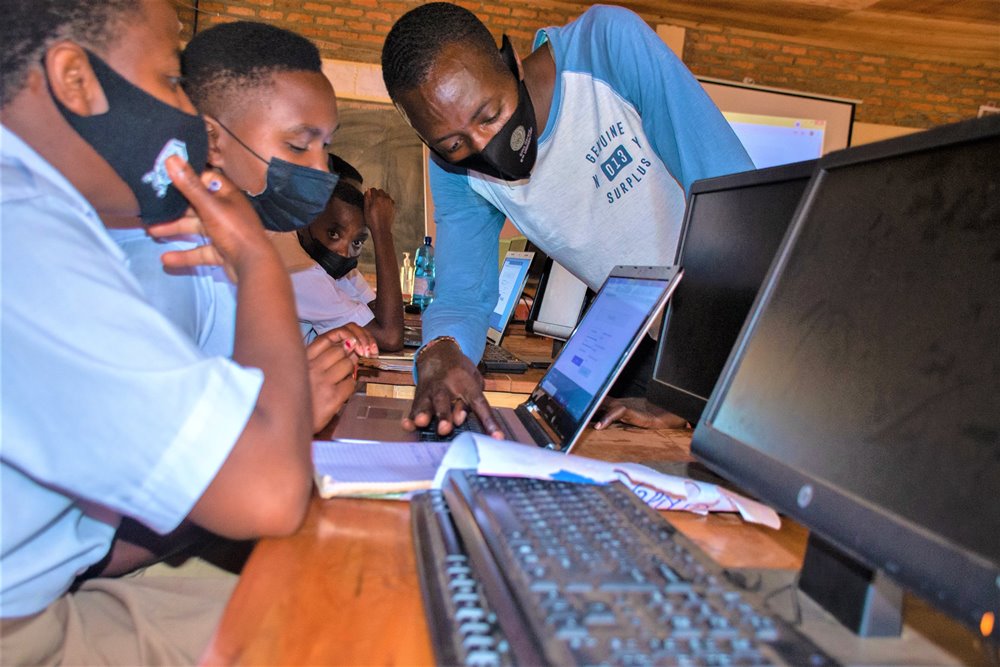
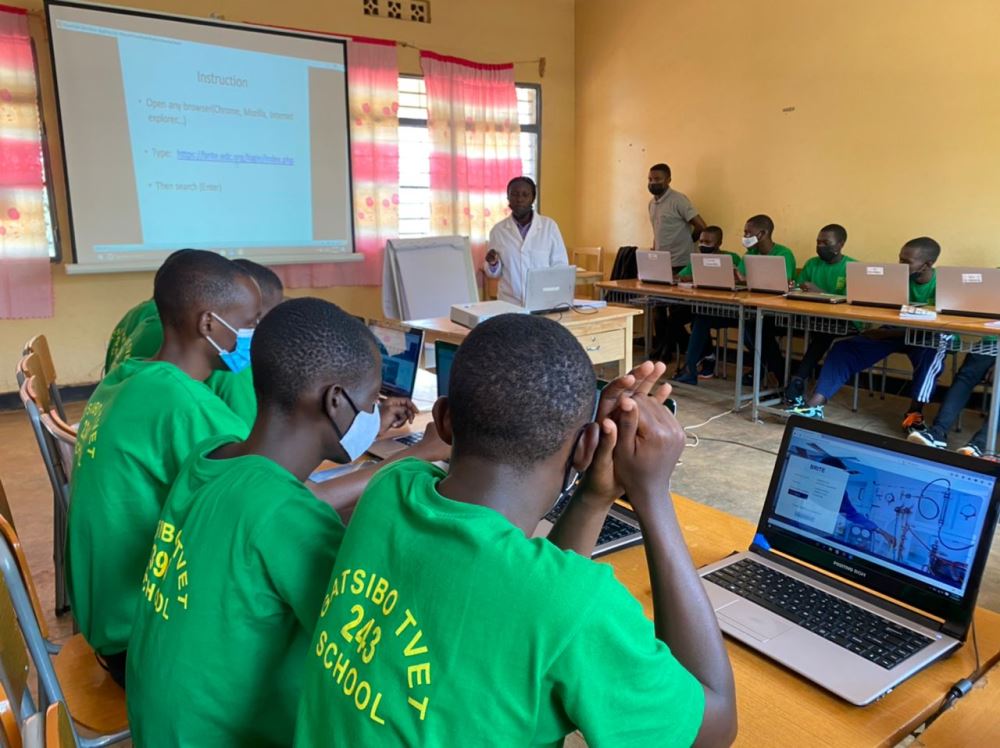
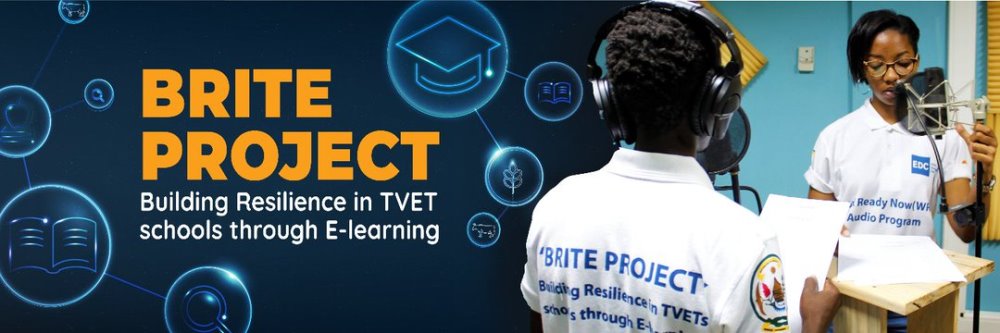
Developed by Education Development Center (EDC) in partnership with Mastercard Foundation, the Building Resilience in TVET Through E-Learning (BRITE) program is one of solutions designed streamline efficiency in the education sector.
The latter was created with the aim of responding to Rwanda’s commitment to integrate technology in education by providing interactive e-learning digital solutions for the TVET system.
The e-learning materials available through the program include a Work Ready Now audio program, trade specific electronic-lessons and electronic-Work Based Learning.
IGIHE has spoken to Education Development Center (EDC) and BRITE Deputy Chief of Party Aimee Senzeyi to tell us more about this program and how it is contributing to the education sector.
{{Excerpts: }}
{{IGIHE: What is the BRITE project? Tell us a bit more about the levels that are covered by the project}}
Management: BRITE stands for building resilience in TVET through e-learning. It is a two-year Mastercard foundation-funded Project implemented by EDC in partnership with AKA, the Rwanda TVET Board, and Rwanda Polytechnic. Its core activity is to develop e-learning materials for TVET Schools and IPRCs and build the capacity of trainers from those training institutions on blended learning or how to use those materials in class as complements to their current training or teaching methodologies. It has 3 components (1) WRN Audio Program (2) Trade-based e lessons and (3) e-Work Based Learning.
Currently, we are implementing in 3 levels, Level 3 and Level 5 with Rwanda TVET Board in TVET Schools and Level 7 with Rwanda Polytechnic in IPRCs. We focus only on 4 trades (1) Food Processing (2) Animal Health (3) Crop Production (4) Domestic electricity.
{{After launching the e-learning materials, how have schools (learners and trainers) responded to using them? }}
Trainers are currently using the BRITE e-learning materials in schools as training materials and we are receiving constant positive feedback from them. We have put all our trainers on different WhatsApp groups based on their trades to be able to receive prompt feedback but also provide support as needed. Our materials are accessible by trainers through the TVET e-learning platform “Moodle”. We upload our e-lessons on their platform and create group credentials for schools allowing them to access the e-learning materials.
{{E-learning is fairly new in Rwanda, how are you helping trainers and students to adapt to using the e-learning materials?}}
We do that through capacity building. Having access to e-learning materials is one thing and being able to use them is another. To make sure that trainers enrolled in the BRITE Project make use of our e-learning materials in schools we provide training of trainers (ToTs) and constantly check with them through different channels. We also do school visits and do class observations and coaching where needed. Also, our e-learning materials are fashioned in a way that can inform you that materials are being used or not by schools.
{{How do the schools access these materials? – online platform/ interactive materials }}
Through RTB’s and RP’s Moodle platform. We create accounts with usernames and credentials and share them with trainers and train them on how to navigate and access the lessons.
{{Do you work with all the TVETs? If no, why? }}
So far, we work with 20 TVET Schools, 4 Technical Secondary Schools (TSS), and all the 8 IPRCs. Being a two-year Project, we cannot serve and train all the 400+ TVET schools within that time.
{{What are the challenges that are currently being faced using these materials (Both by trainers and students) and how do you intend to overcome them? }}
The main challenges are connectivity (meaning the internet); digital literacy, and technology readiness. Most of the schools do not have enough computers for all students making it a very big challenge to the accessibility of online learning materials.
To mitigate the impact, the project conducted a technology need assessment to be able to identify the need per school in terms of technology and connectivity and advise in collaboration with other Development Partners implementing in the same schools.
{{How long is the project and what is the way forward after? How will you ensure sustainability and continuity of the project? }}
The Project started in 2020 in October and is ending in September 2022. A lot has been achieved so far, we have developed 30 elessons; 100+ audios on complementary modules and elessons preparing students for industrial attachment. We have trained a total of 250 trainers on blended learning and have always developed content hand in hand with them before developing electronic lessons.
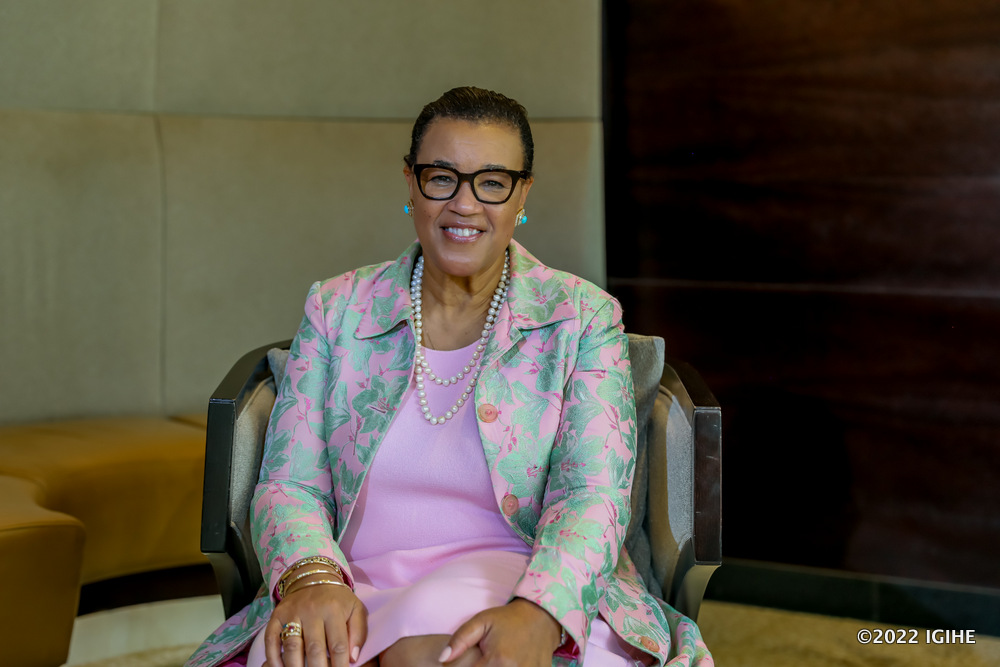
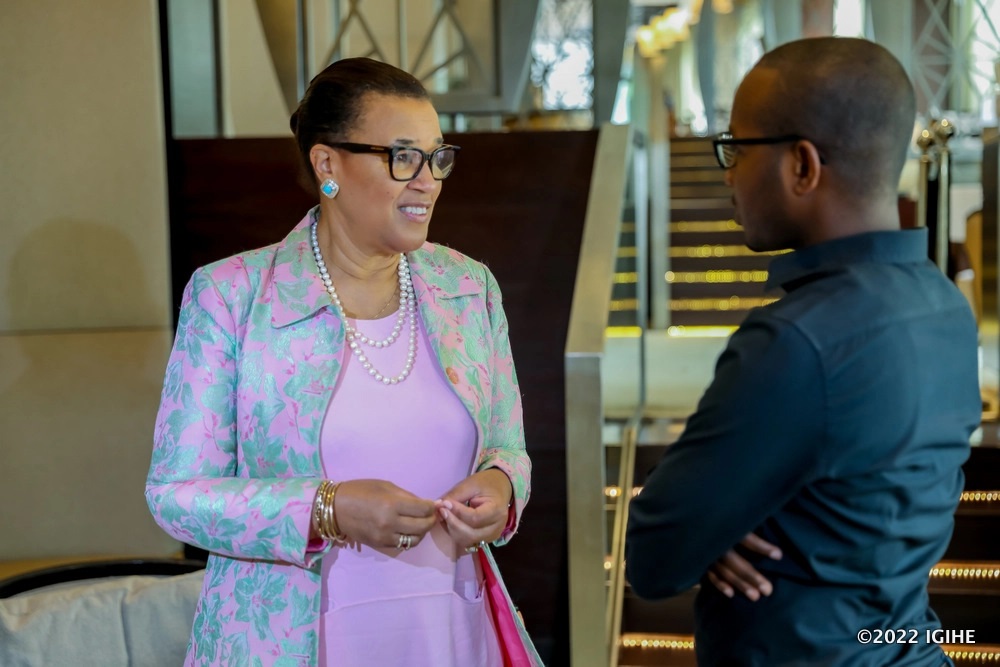
Scotland made the revelation during an interview with IGIHE in Kigali where she attended the 12th Regional Conference of Heads of Anti-Corruption Agencies in Commonwealth Africa running from 3rd to 7th May 2022.
Scotland shed light on preparations of the upcoming meeting, the number of heads of state expected to attend and new countries that might be admitted into the bloc, among others.
{{Excerpts:}}
{{IGIHE: How impressed are you with the current status of CHOGM 2022 preparations?}}
{{Scotland:}} I am so impressed by the preparations, I came before most of the buildings were built, I saw people laying down the foundation stones and they buildings are now beautiful, it is unfortunate that Rwanda had to be ready on three occasions; ready in 2020, ready in 2021 and now ready in 2022, but what a marvelous contribution!
Everyone is looking forward to coming to Kigali and people are talking about Kigali as the Jewel of Africa.
This is the first time an African country has hosted CHOGM since the Ugandans hosted it probably like 15 years ago. So this is a special moment.
We have the African continental trade area, we have all of the innovations that are coming and this is a real opportunity to celebrate the commonwealth and also celebrate commonwealth Africa.
How many heads of state and government have confirmed their attendance?
We have a large number who have already confirmed but you know everyday we get more and more.
We are hoping that as many who are able to come out of the 54 leaders will be with us, we know some are having elections and some still have closed borders because of Covid-19 but we are hoping and expecting a really good attendance and from speaking to all our leaders I know they want to be here.
If anyone does not come, it is probably because they can’t not because they don’t want to. We are keeping all our fingers crossed.
{{What are the expectations in business deals that can be signed during the upcoming meeting?}}
One of the things we are concentrating on is not just deals from that meeting but how we can build the trade and investment flows throughout the commonwealth.
There will be 20% more trade coming among the commonwealth countries and it is 21% easier to trade with each other but the big question for us, is how do we convert that commonwealth advantage into real benefit.
We have grown the trade between our commonwealth countries so it is now, in spite of Covid looks as if it is going up again to 700 billion.
We would to have one trillion trade among our commonwealth countries by 2030, for commonwealth Africa there is a real opportunity now that most countries have signed the African free continental area and look what just happened to East Africa, the Democratic Republic of Congo has now joined the community that means that East Africa has gone from 100 billion of trade to over 200 billion.
At the commonwealth, we are looking at creating templates for legislation for regulations, contracts and agreements. We are really hoping that this trade forum that we have on the margins of the Commonwealth heads of Government Meeting, we will see real business being done and I know there are some good surprises coming.
{{There are some countries applying to join the Commonwealth. Is there any chance that these applications will be on the table for the debate here in Kigali?}}
Three countries are in the process of applying to join our commonwealth. It is a real sign of how healthy we are that so many countries, some of whom have never been part of the commonwealth indeed like Rwanda and Mozambique and Cameroon yet they have seen the excitement and importance and they want to join.
Three countries are in the process of applying to join the commonwealth family and we hope that one or two are able to complete the process before June. If that happens, they will be with us in Kigali.
{{Do you have some key points that will be considered to measure the successfulness of Kigali meetings?}}
We will firstly count it as a success if all of us can come together in one place, because this opportunity of meeting is something our members have been longing for.
The last two years have been tough for everyone. If you think of how many people have died, we’ve lost probably some million people across our commonwealth. That has been painful and difficult. It has affected our trade. So, coming together is one big. It will probably be the first face to face global meeting of leaders we have had in the past three years.
If you think about the things we have set ourselves on innovation, young people, climate change, digitalization, technological development, and creating a smarter commonwealth to better respond to our citizens; in fact we are aspiring to take those additional steps for the 2030 agenda on sustainable development.
These are clear targets that we hope we will achieve together. The blue and the green economy we have to build back better we have to respond to the terrible tragedies that we have seen, if you look at climate change, we know how many countries have suffered from it. If you look at Covid, you can see we have all been in the same storm but we have not been in the same boat.
Some of our countries in Africa have a 10% vaccination like Sierra Leone while in other parts of the world, you have a 95% vaccination not just one but three.
We will be looking at the health issues that have come out, we will be talking about how we can recover and how we can do that together.
I will see it as a real success if we are able to make significant steps forward and agreement in terms of how we innovate and how we innovate and how we create a greater ecosystem for development and how do we make sure we are able to respond better if we are hit by another pandemic this was the first pandemic in a hundred years but I am afraid a lot of people are having to come to terms with the fact that it might not be our last pandemic.
We are hoping that when our leaders come together, they will be able to learn from the last terrible two years how we can better respond because we have responded. In many ways, we did brilliantly, we became more innovative, we became more creative because we had to. If you think of what we did on e-commerce and what we’ve done in relation to having virtual meetings, we went from having face to face meeting to having all virtual meetings by a switch of a button and we ended up having meetings on a virtual platform.
We have never done that before. The world is materially different and we are moving into a hybrid technologically engineered world and a digitalised world. So, we are going to help all of us make that leap across the digital divide. We don’t leave anyone behind. Many of our countries are suffering now because they don’t have internet connectivity and they haven’t got the technological benefits they need to be the difference they need for their people. All those issues are going to be addressed by our leaders very serious. If we are able to come up with a plan to deliver, that it will be a great success and if we are joined by new members, that will be a success too.
{{Where does the Commonwealth as an organisation stand in the current war in Ukraine? What do you see as a solution?}}
The world has been shocked and pained by what has happened in Ukraine just because of the loss, the tragedy of life and the commonwealth is committed to the role of law and good governance and peace.
We are supporting all those who are working for peace in Ukraine but there political economic consequences. If you look at the disruption for oil and gas, the food security issues they are going to have an impact, some are saying that we therefore have to face up to the fact that we have to look more carefully at our food security and how do we increase the productivity within Africa because they export everything they grow and import everything they eat.
This trauma that’s coming now is helping us to look again on how do we make sure that regions are able to feed their own people, how do we make sure that we enhance our agribusiness, how do we use technology in making us secure in every sense like politically secure, economically secure more physically secure, more technologically secure.
Those issues have been brought into sharp focus. We’re used to having one problem to deal with and now we have insecurity which is global, we have climate change which is hugely disruptive and poses existential threat to many of our countries. We have economic difficulties which come from the interaction of all those three and we have a growing population in our commonwealth for example which is young 60% of our commonwealth is under the age of 30. So, we have to look at how do we look after our children, our young people, how do we make sure they have aspiration and inspiration and opportunity, how do we cull from their talent, the things that we know we need for the future.
I am optimistic when I go to Rwanda and I see all those wonderful young people. When I got to all the other African countries, the young people of the commonwealth are so inspirational, they are so creative, so innovative. I look at all these SMEs and startups and if you think of the most successful companies in the world, many of them were created within the last 20 years and some of them within the last 10 years.
We know we have that innovative potential, we have to create an ecosystem to enable us to help our young people to take advantage because if we do not do that and our young people become hopeless if they aren’t educated and given the opportunities, then we are creating a problem where we won’t be able to deliver for them and I know that all of us, all of the leaders in the commonwealth are focused on making sure that does not happen.
We are going to focus on our young people digging deep. I am confident that together we will come up with the solutions.
{{What will you remember about Rwanda?}}
I love the spirit of this country. When I first got off the plane, I could not believe what I saw. This was a dynamic, young, vibrant and clean country.
I started a task called ‘hunt a piece of paper’ because this is the most immaculate country I have ever seen. Only on one occasion did I see a piece of paper on the pavement and I thought, yes I have seen a piece of paper but someone came and picked it up.
I am impressed by how green the country is and how beautiful it is. I was privileged to go and see the gorillas in the naming ceremony. I was allowed to name my own gorilla. My gorilla is called Nazirian and that is because when I went to Ngong in Kenya, the Massai named me Nazirian which means the peaceful one, but apparently, my gorilla is one of the naughtiest young gorillas. .
The warmth of the people is what I will remember and I am afraid you have some beautiful designs which really tempt me. I am sure that when I go back I will go back, I will probably go back with a couple more of your wonderful dresses.
Rwanda has so much to be proud of. I will also never forget going to the lighting ceremony when we were commemorating and remembering all of those who died and all the families that were lost during the Genocide against Tutsi. I will never forget that night, it wounded my heart to see the pain that was suffered by this country and then it delighted my heart to see that out of that horror has risen one people, beautiful together creating and extraordinary country.
Rwanda has so much to be proud of. Every time I come, it seems somehow to have been made more beautiful. I am not quite sure how you’ve done it but you need to share the recipe with other people because it is really good.
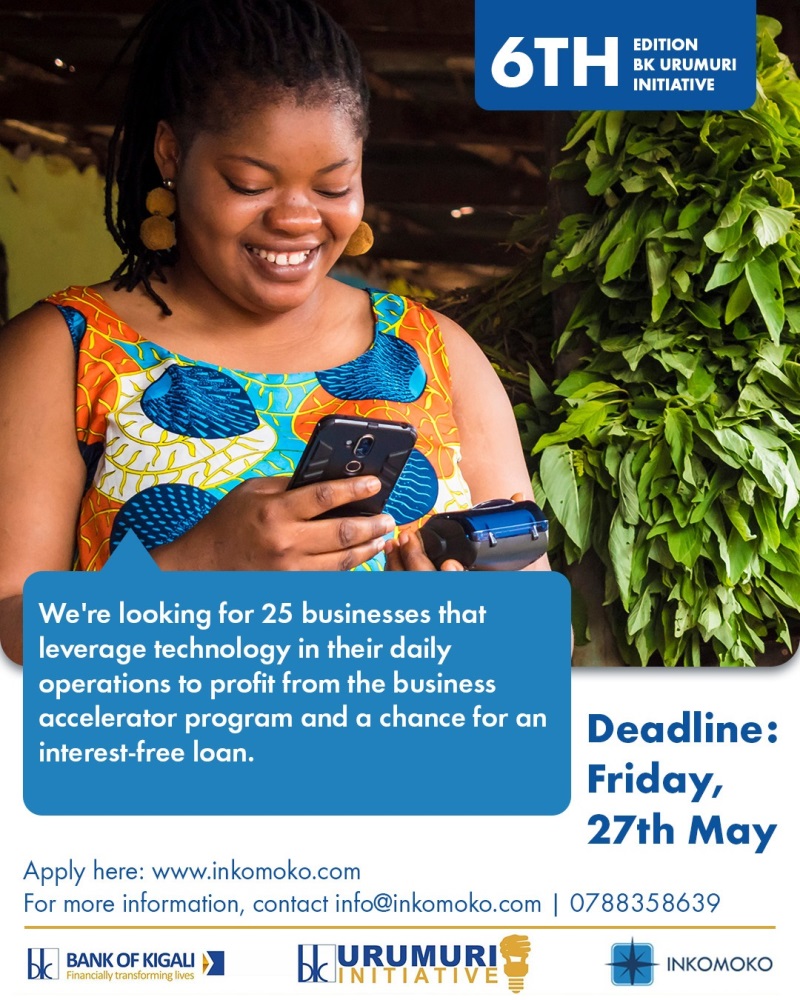
“At Bank of Kigali we believe in business as a model to transform lives and our country. We are devoted to supporting youth-led enterprises by giving them access to interest free loans. In this year’s BK Urumuri, we will select the best innovative ideas that provide digital solutions and equip these entrepreneurs with skills they need to unlock their full potential and foster their businesses to greater heights,” said Chief Executive Officer, Dr. Diane Karusisi.
For this 6th edition, outstanding inventive digital economy businesses which leverage technology in their daily operations and offer digital solutions to solve Rwanda’s pressing needs, especially those that create a positive social or environmental impact will be highlighted.
“The digital economy is no longer the future; it is here and many Rwanda entrepreneurs are already embracing it, creating innovative solutions. We are seeing many businesses adopting digital solutions in their day-to-day work. At Inkomoko we are immensely proud to support entrepreneurs that will create digital solutions for Rwanda and beyond,” Emmanuel Mugabo, Inkomoko Interim Managing Director.
The BK Urumuri Initiative application deadline is 13th May, and the 25 selected winners will undergo the Inkomoko Business Development accelerator program from June to September. Eligible businesses must be based in Rwanda, have annual revenue that is less than Rwf500m, have proof of registration for at least 1 year, demonstrate financial profitability, or plan to reach profitability within the next year. The competition is open to people of all ages and nationalities.
To apply for the BK Urumuri Initiative 2022 and the chance to win consulting and zero-interest loans, entrepreneurs can find the application link at www.inkomoko.com and contact +250 788 358 639 for any questions.
{{About Bank of Kigali}}
Bank of Kigali is the largest commercial bank in Rwanda by total assets, according to Global Credit Ratings. The Bank has won several back-to-back international and regional banking awards, including from EuroMoney, The Banker, Global Finance Magazine, and EMEA Finance. Bank of Kigali has also been named “Best Bank in Rwanda.”
{{About Inkomoko}}
Inkomoko Entrepreneur Development has supported Rwandan businesses since 2012, providing business training, consulting services, and access to affordable finance through its partner, AEC Rwanda Trustee Company Ltd. Inkomoko’s business accelerator program has helped more than 25,000 entrepreneurs in Rwanda run their operations more efficiently and strategically, create jobs for thousands of individuals, and increase their annual revenues by an average of 88%.
Inkomoko has a long history of gender equity in its entrepreneurship support, including working with women entrepreneurs in the SPRING accelerator for adolescent girls, the Imbuto Foundation sexual and reproductive health accelerator, trainings for young women at FAWE, partnerships with Kate Spade on Purpose fund in Masoro, and working with women entrepreneurs through partnerships with UN Women. More than half of Inkomoko clients have been women entrepreneurs.