During the meeting held yesterday, Airtel Rwanda and Ericsson addressed various topics revolving around the future of Information and Communications Technology (ICT) in Rwanda and the digital ambitions of the country.
The meeting highlighted key areas of collaboration between Airtel Rwanda and Ericsson to strengthen their long-term partnership and to achieve Rwanda’s digitization vision.
Emmanuel Hamez , Managing Director and Chief Executive Officer of Airtel Rwanda said that it was great to meet in person after two years of virtual meetings.
“We are looking forward to more collaborations with Ericsson and planning a great digital future for Rwanda,” he noted.
Erik Ekudden, Senior Vice President, Chief Technology Officer and Head of Strategy, stressed hat meeting with Airtel Rwanda reiterated the long-standing partnership between Airtel Rwanda and Ericsson.
“We look forward to continuing our partnership on the road to realize and bring digitization to Rwanda to enable increased connectivity to the nation. We are committed to providing our latest technology solutions that contribute and fulfill Rwanda’s digital ambitions as part of our journey in setting #AfricaInMotion.”
{{About Ericson}}
Ericsson enables communications service providers to capture the full value of connectivity.
The company’s portfolio spans the business areas Networks, Cloud Software and Services, Enterprise Wireless Solutions, and Technologies and New Businesses. It is designed to help our customers go digital, increase efficiency and find new revenue streams.
Ericsson’s innovation investments have delivered the benefits of mobility and mobile broadband to billions of people globally. Ericsson stock is listed on Nasdaq Stockholm and on Nasdaq New York. www.ericsson.com
Food “waste” refers to food that is fit for consumption but consciously discarded at the retail or consumption phases.
The research carried out recently by the Food and Agriculture Organization (FAO) and Rwanda Agriculture Board (RAB) has indicated that Kigali City alone generates 500 tons of garbage every day of which 70% is ‘food waste’.
The research also shows that every household in Kigali City generates 164 kilograms of food waste annually while 2,075,405 tons of food waste is collected from all households in Kigali every year.
Despite the large quantities of wasted food, 19% of the country’s population does not have enough food.
The food waste is harmful to the environment and constitutes 8% of greenhouse gas emissions. The wasted food also constitutes at least 8% and 12% of agricultural produce.
Shaffy Niyoyita, Agriculture Specialist at RAB has pointed out different reasons leading to food spoilage. Among them, he cited lack of proper post-harvest handling particularly for some crops like vegetables and fruits. He also pointed out mindset as another factor.
The management of Nduba dumpsite in Gasabo District has revealed that the majority of food waste is collected from households. These include leftovers and spoiled food over buying excess quantities among others.
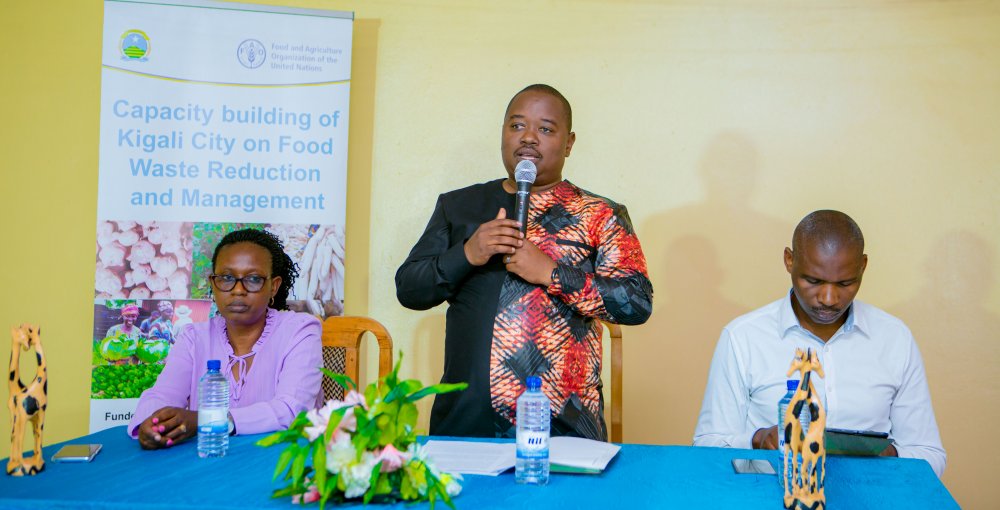
The City of Kigali has delegated a committee to design strategies meant to reduce food waste and determine how they could be reused to produce something else beneficial to the community.
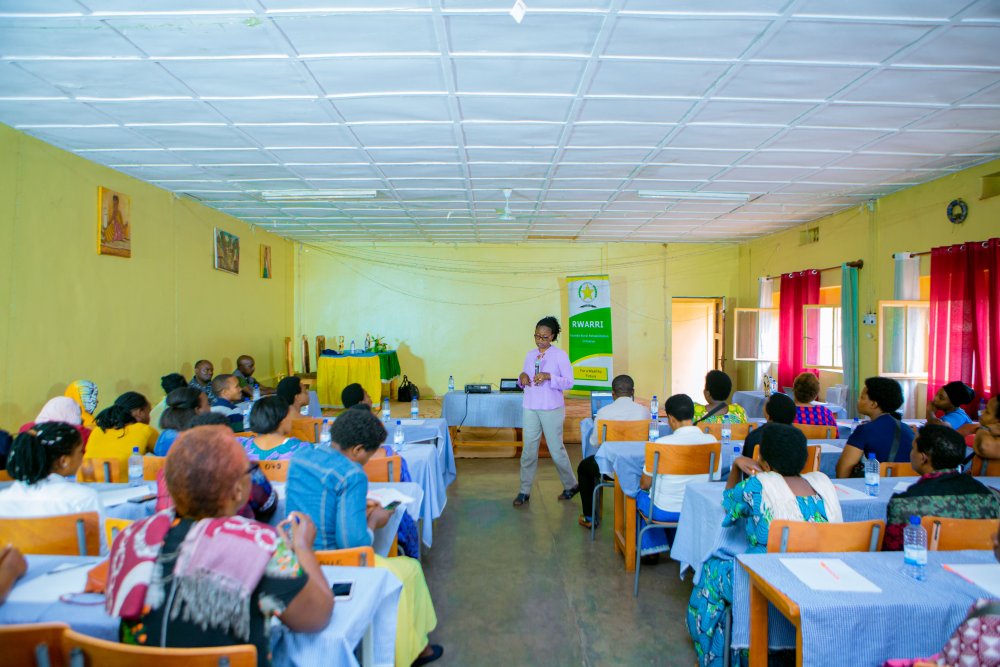
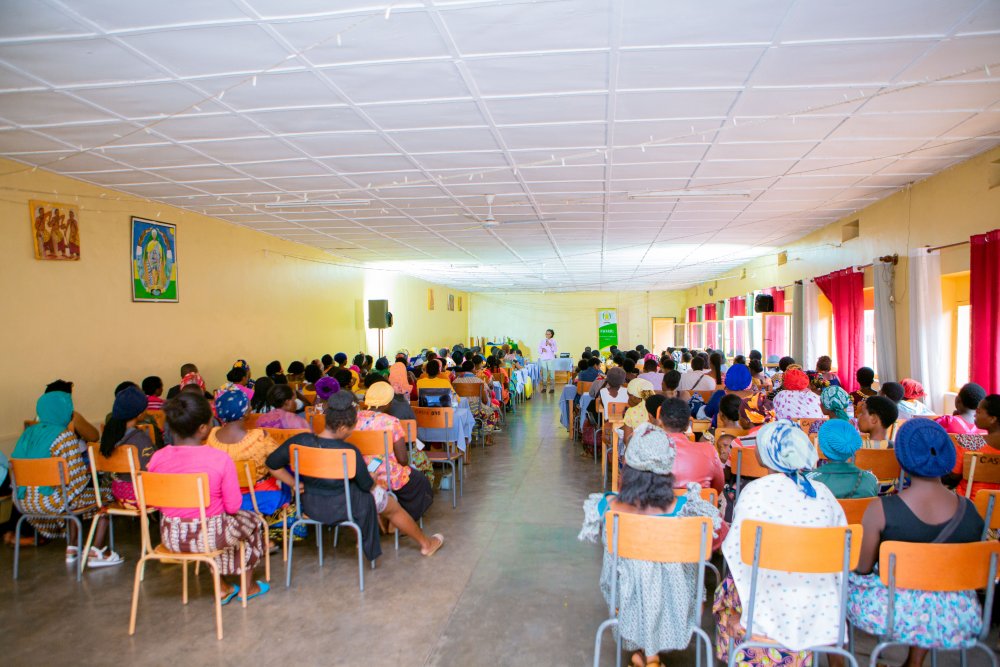
The team has been training different segments of waste producers including hotels, restaurants, food vendors and schools to seek how food waste can be reduced.
Janviere Niyongira, a vendor of fruits at Gahoromani market in Gasabo District is one of trainees who disclosed how food spoilage incurs big losses.
“The foods are mostly spoiled in case we don’t have clients yet we have enough in store. When food commodities are damaged, a vendor is likely to sell at a giveaway price,” she said.
Kigali City Vice Mayor in Charge of Urbanization and Infrastructure, Dr. Merard Mpabwanamaguru has advised vendors of food commodities to properly store their merchandise to prevent damages or losses.
“We want to ensure proper management of foods instead of wasting them. They should be used appropriately and well preserved. There are some merchandises including rotted mangoes, several types of fruits and vegetables dumped at landfills because they were not properly stored,” he noted.
{{Call to action}}
Dr. Mpabwanamaguru has said that Kigali city is sensitizing vendors on proper handling of agricultural produce and place orders matching with clients’ expectations.
“First of all, a vendor must estimate the quantity of sales, circumstances under which they are spoiled and determine what should be their role to avoid loss. He/she might place order for small quantities, consider the nature of container and time to buy new merchandise,” he said.
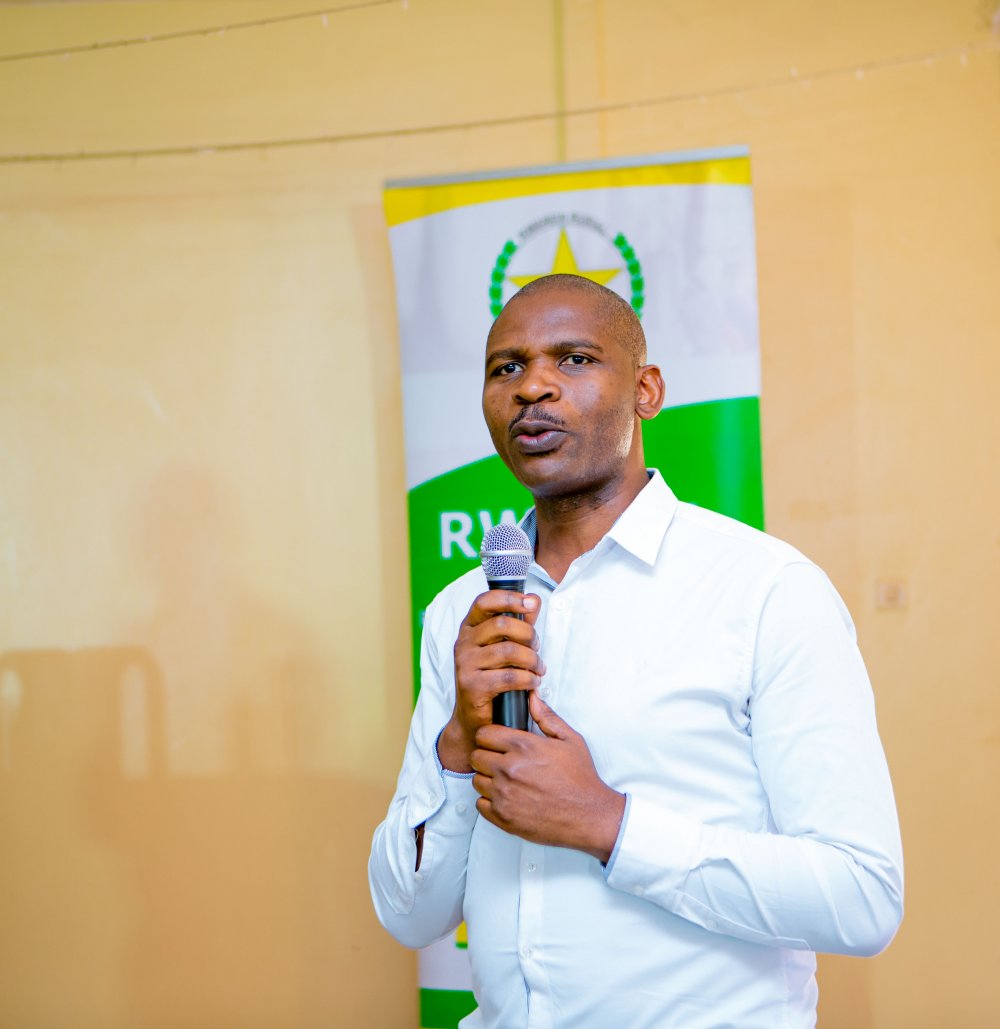
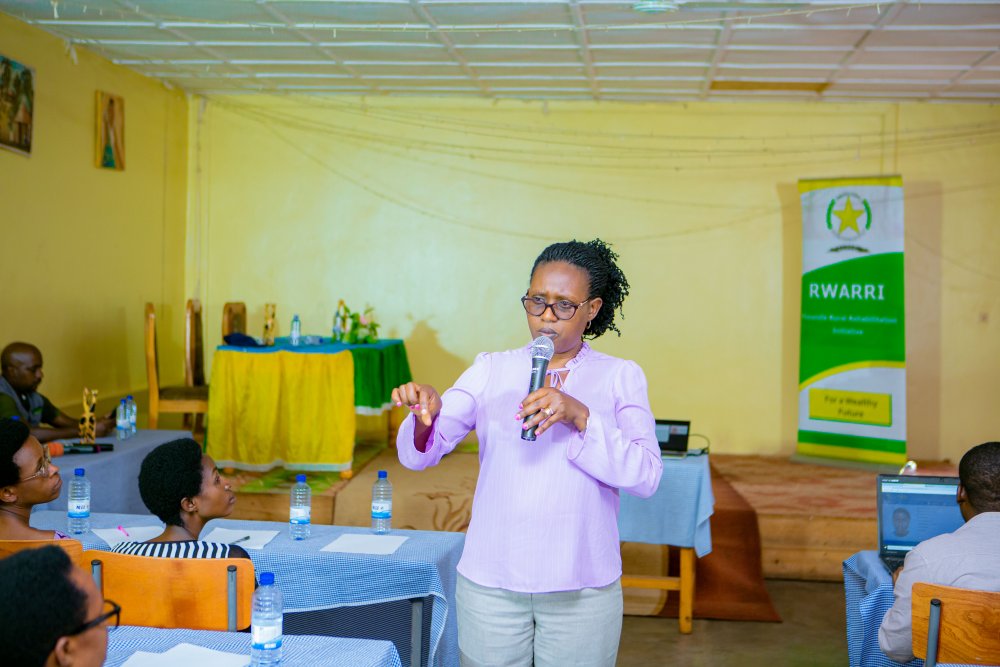
The Executive Director of Rwanda Rural Rehabilitation Initiative (RWARRI), Bel Ange Uwizeye has observed that Rwandans need to be sensitized on how to reduce wasted foods that could save many.
“Some of large grocery stores keep foods until they are expired and thrown away. Isn’t there a way of introducing a technology to detect merchandises about to get spoiled to sell them on discount or distribute them for free?” she wondered.
Niyoyita has explained that launching a campaign mobilizing people not to buy excessive quantities beyond needed consumption would be helpful to tackle the issue of wasted foods.
Some of projects in pipeline expected to address the issue include the launch of a website helping vendors to market their produce and link them to buyers.
Other recommended measures include mobilizations among traders to use fridges to keep fruits and vegetables fresh as well as producing compost from waste and ‘briquette fuel’ as one of the alternative source of cooking energy.
Niyoyita has also indicated that a committee at village or cell level would be of great help to collect foods from those with excess in storage to be distributed to the needy.
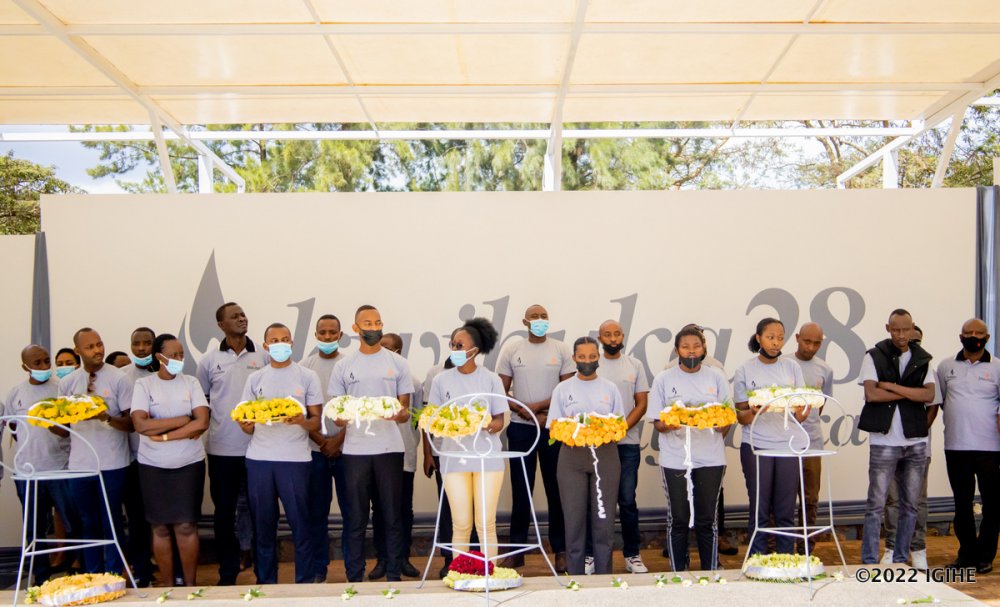
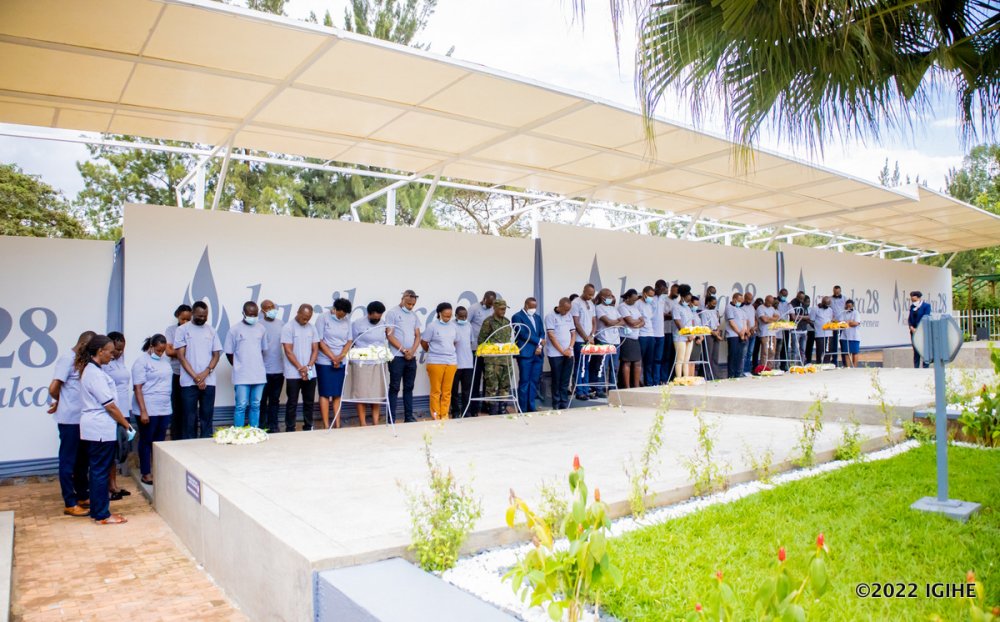
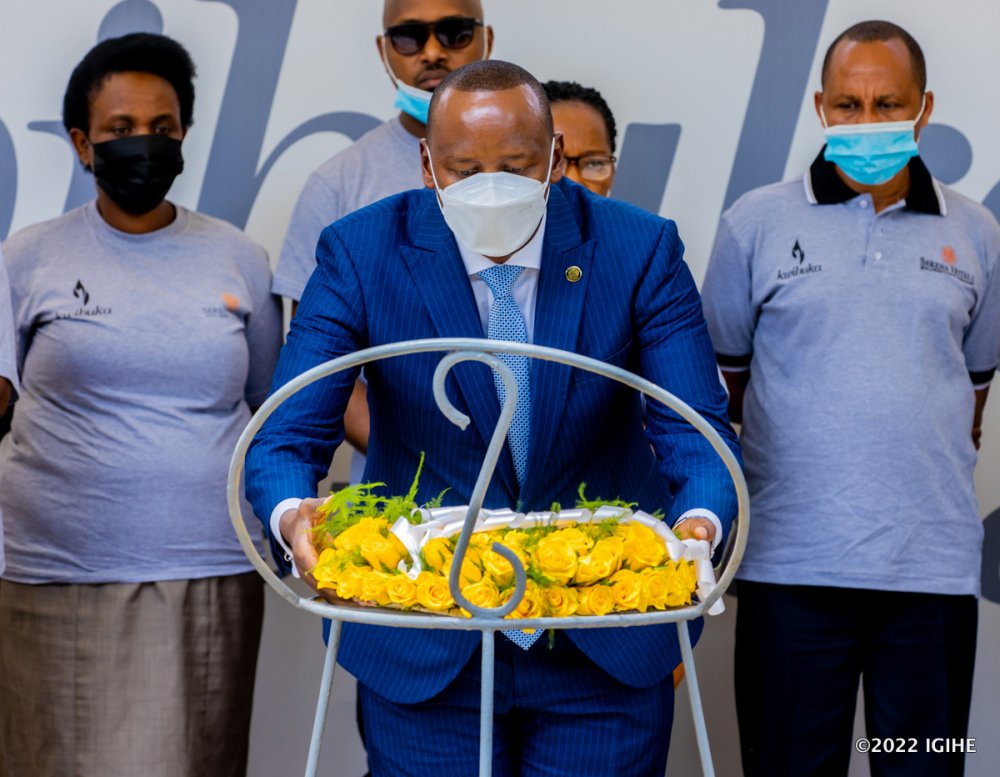
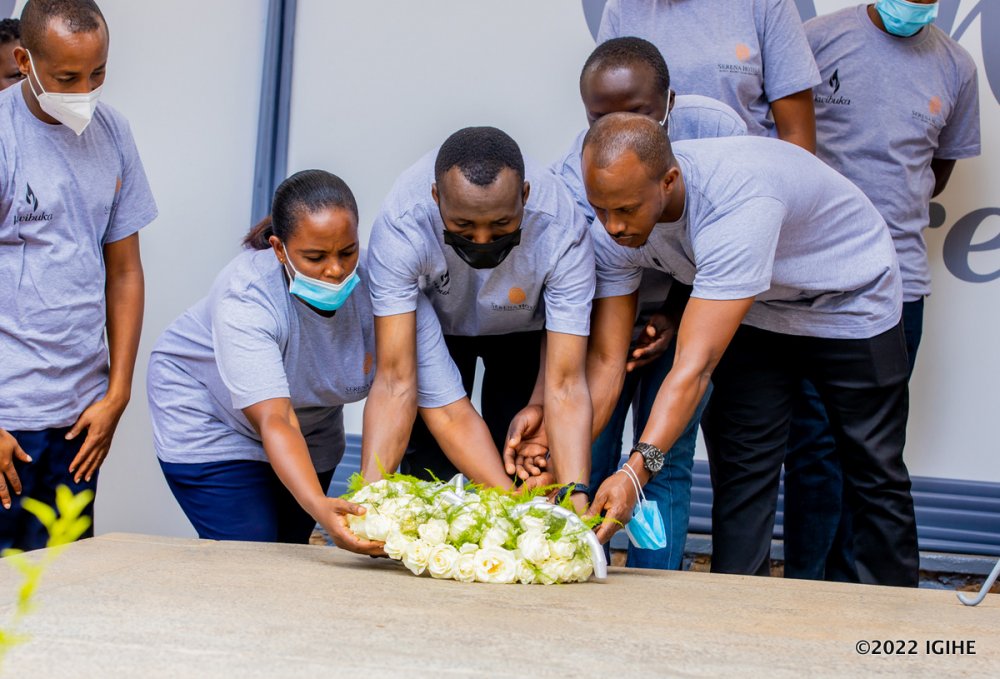
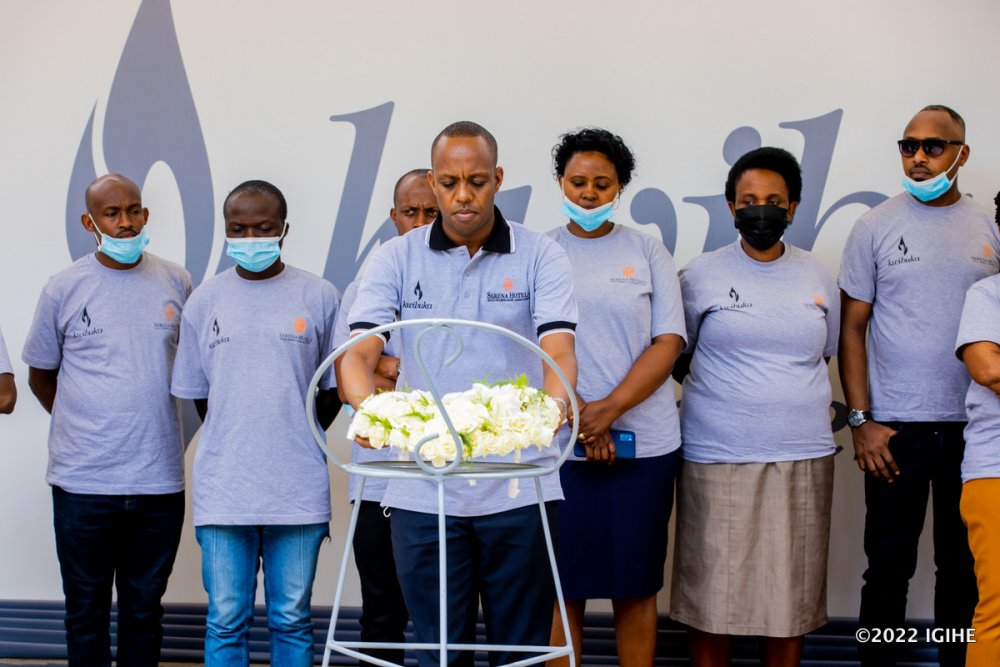
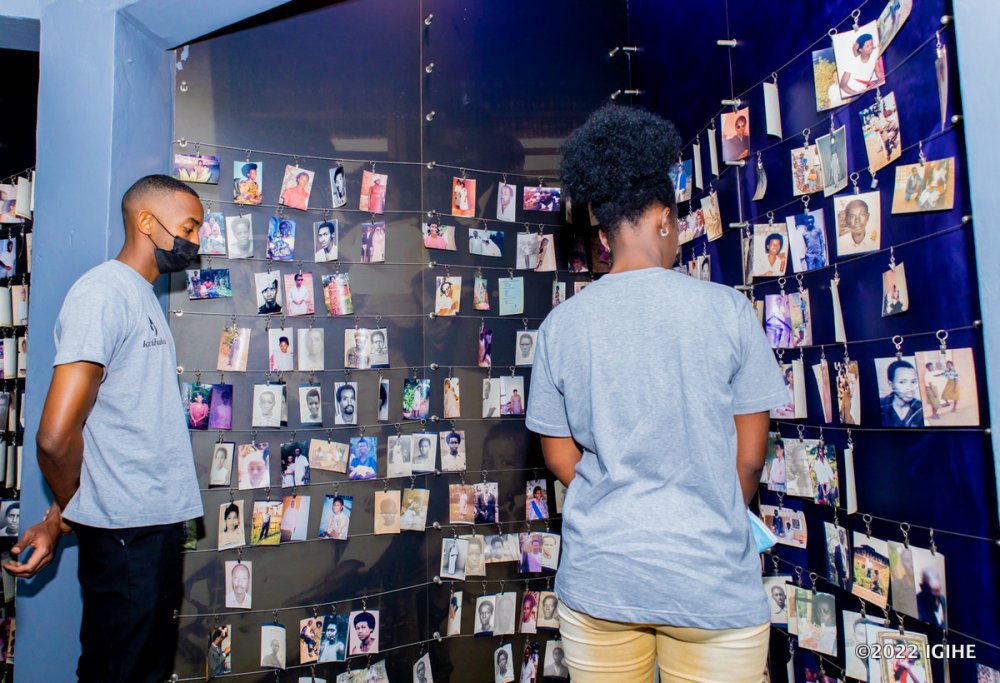
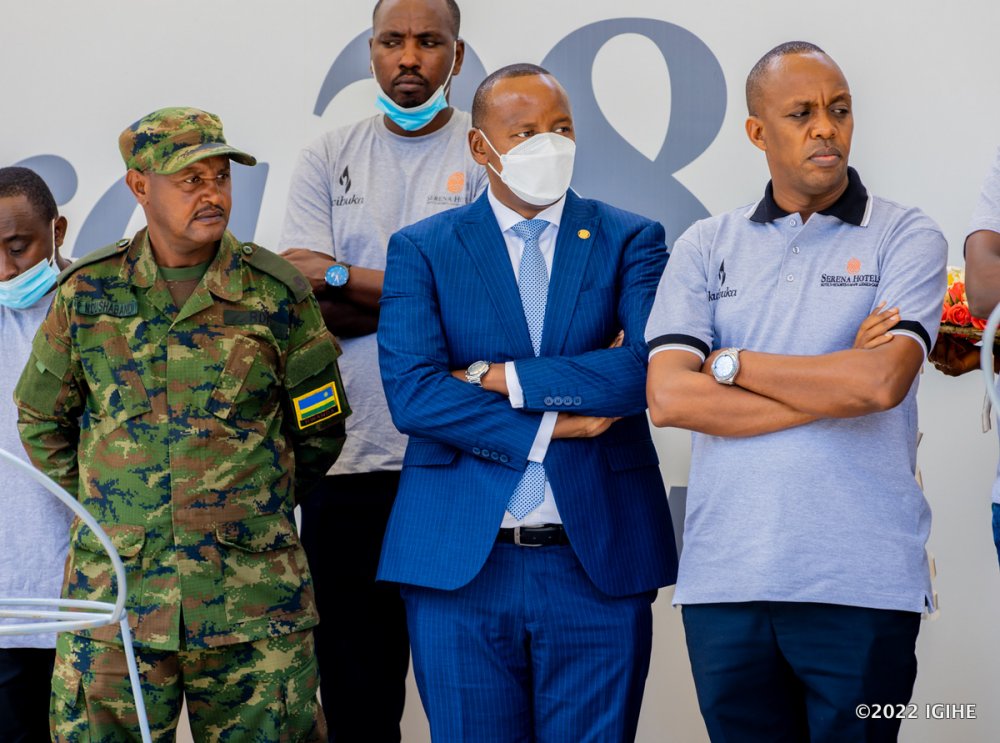
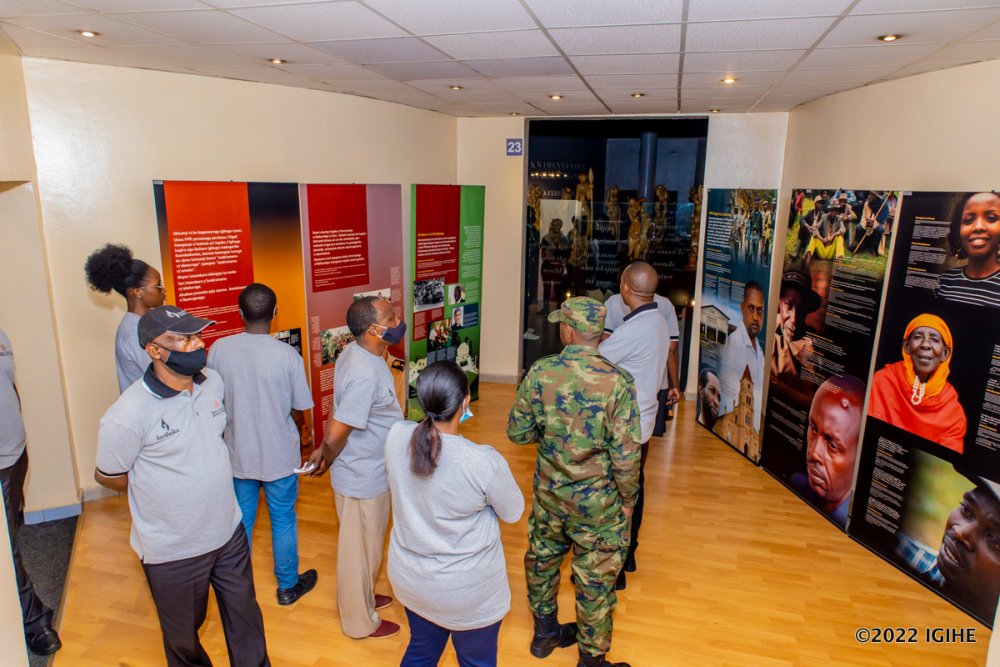
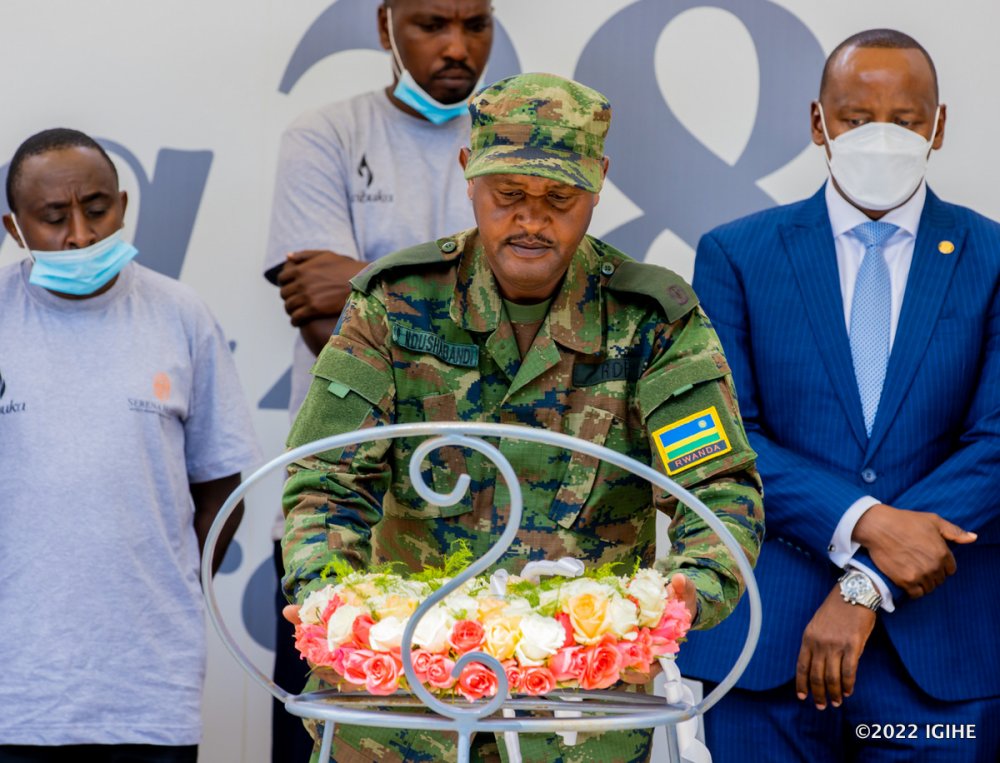
During the visit on Saturday 4th June 2022, the hotel’s staff and management were taken through history of Genocide perpetrated against Tutsi and laid wreaths in hour of victims buried there.
The visit was followed by commemoration talks held at the hotel’s premises.
Speaking at the event; the Country General Manager for Serena Hotels in Rwanda, Daniel Sambai said that the visit was meant to pay homage to victims killed on the basis of their identity. He also urged propagandists trivializing Genocide against Tutsi to stop their destructive ideology.
“They are doing nonsense. They should return to Rwanda so that those who committed atrocities can face justice. They should also understand that Rwandans are united. That is why you can see such a number of youth coming here to pay tribute to victims killed over their innate personality,” he noted.
Sambai also called on everyone to embrace the spirit of ‘Ndi Umunyarwanda’ to strengthen unity among Rwandans and resist propagandists trivializing Genocide against Tutsi particularly on social media to shun misinterpretation and revisionism.
Didace Habiyambere, a Genocide survivor hailing from Ngoma District who also works at the hotel provided testimonies on his ordeal.
He narrated how Genocide against Tutsi unfolded in their village, recalled the courage of brave men who resisted Interahamwe militia until their last breath and how he hid himself day and night until Genocide was stopped.
Habiyambere thanked RPA Inkotanyi soldiers who came on his rescue during night hours even though his relatives had been killed.
Paulin Rugero, Commissioner at IBUKA in charge of Survivors’ Welfare said that what happened is beyond imagination and stressed the need for concerted efforts to prevent reoccurrence of Genocide.
IBUKA is the umbrella organization that brings together associations of survivors of the 1994 Genocide against the Tutsi.
Rugero urged employees of the hotel to dedicate time for teaching of history of Genocide against Tutsi among people with little knowledge about it noting that it will be crucial to fighting revisionism.
The Executive Administrator of Nyarugenge District, Emmy Ngabonziza also attended the ceremony.
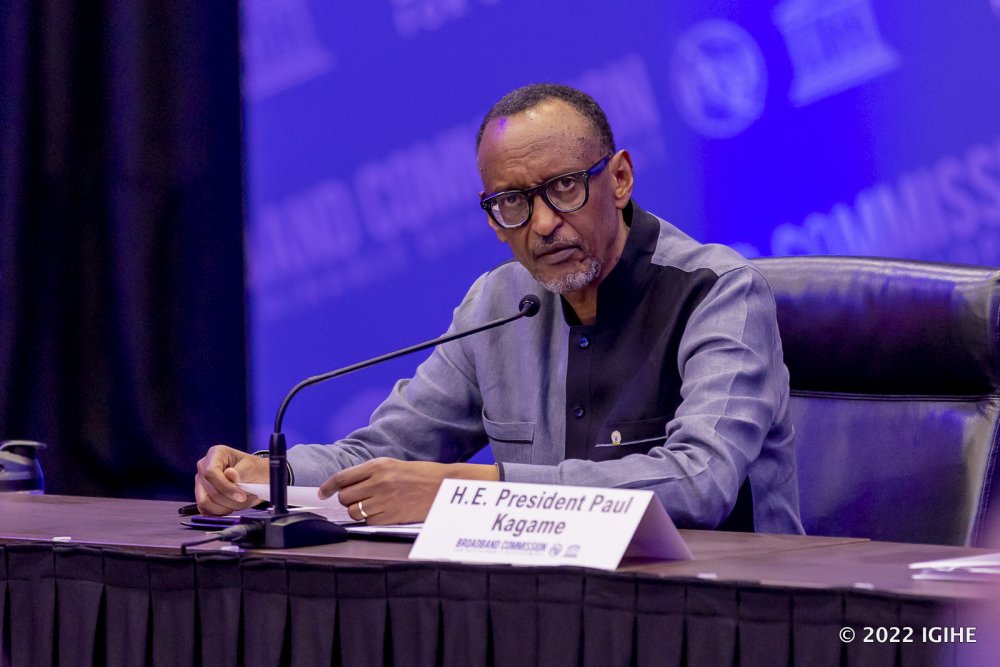
Kagame made the remarks as he officially opened the Broadband Commission Meeting on Sunday held in Kigali for the third time.
It was attended by Houlin Zhao, the Secretary-General of the International Telecommunication Union (ITU); Dr. Tawfik Jelassi, the Assistant Director-General for Communication and Information Dr. Tawfik Jelassi at the United Nations Educational, Scientific and Cultural Organization (UNESCO) and the Broadband Commission’s co-chair, Carlos Slim.
The President said that a lot has been done since 2011 even though there is still a long journey to achieve affordable and universal access to broadband.
“We are still living in tough times economically, politically and in terms of global public health. The immediate future is full of uncertainties and risks but one thing is sure. All of the challenges we face can be handled fast, better and more equitably by investing in universal and affordable broadband,” he said.
Kagame also pointed out an example of Rwanda’s milestone of adopting technology, particularly in schools and highlighted that it is a result of partnership.
“As an example, Rwanda has already benefitted from such partnership efforts as a lead country in the Giga initiative, led by ITU and UNICEF. The pilot project in 63 schools has resulted in a quadrupling of capacity and a 55% reduction in cost,” he noted.
Launched in 2019, Giga is a UNICEF-ITU initiative to connect every school to the Internet and every young person to information, opportunity and choice. Giga maps schools’ Internet access in real time, creates models for innovative financing, and supports governments contracting for connectivity.
It is reported that more than 2.9 billion have no access to internet globally.
On Sunday, President Kagame also attended a luncheon hosted by Smart Africa at the Kigali Convention Centre ahead of the Broadband Commission Meeting.
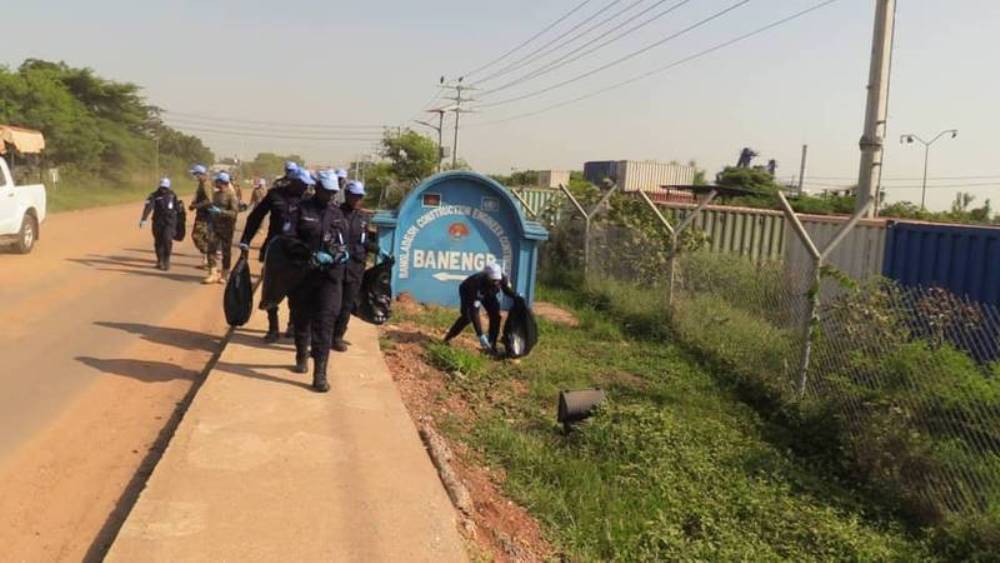
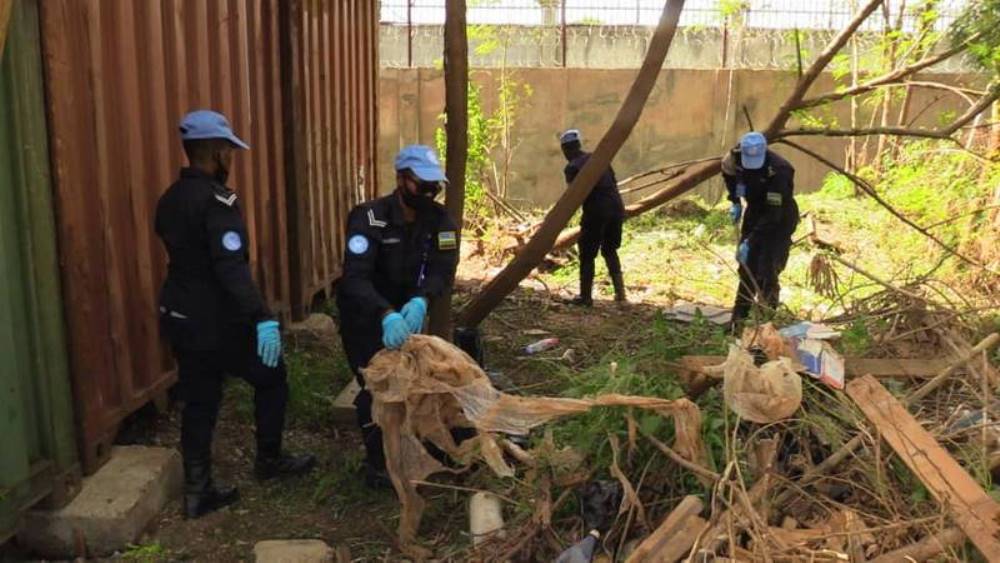
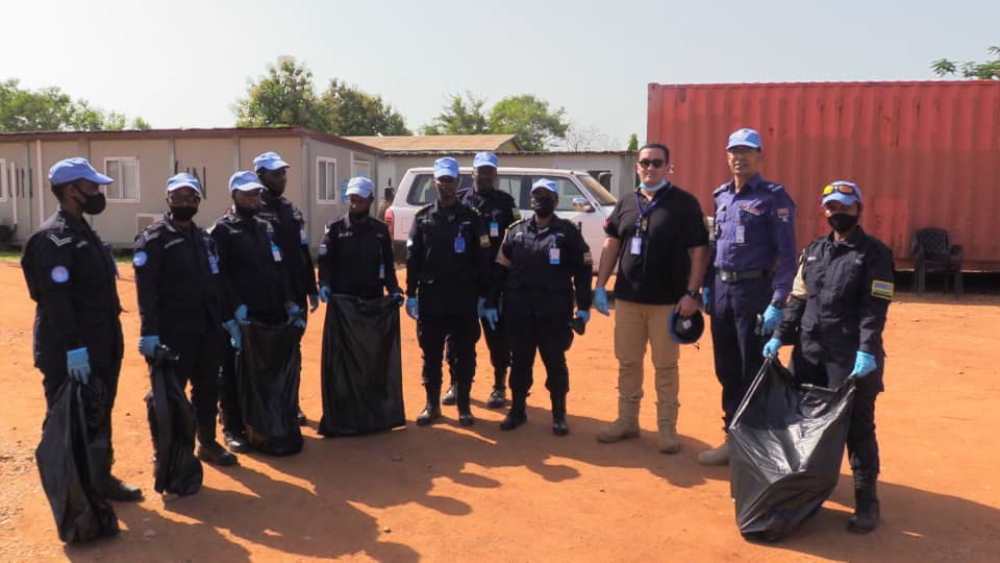
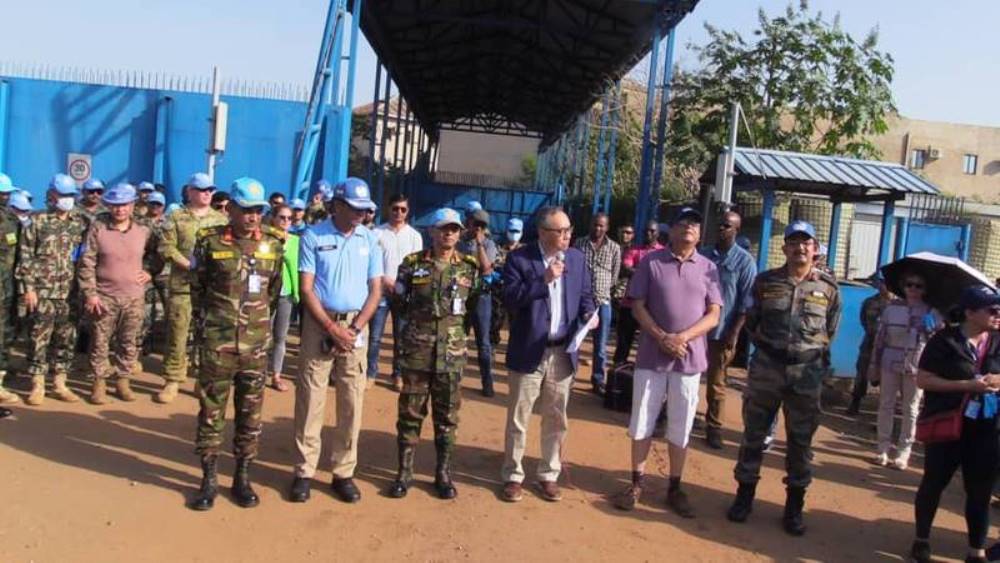
The community work was launched on Saturday, June 4, in Tomping, capital Juba by the Deputy Special Representative of the Secretary General, Guang Cong, to mark the World Environmental Day.
Rwandan Police peacekeepers joined the DSRSG and other troops to launch the community works.
In his speech, Mr. Cong said that Umuganda Day is a “Rwandan tradition of coming together for a common purpose to carry out community work.”
He urged the peacekeepers to embrace and use such initiatives that build peaceful coexistence.
Umuganda, loosely translated as “coming together in common purpose to achieve an outcome,” is a Rwandan homegrown initiative to contribute to the national development agenda.
Normally, Umuganda in Rwanda is conducted every last Saturday of the month where communities come together to undertake sanitation and hygiene activities in their localities and to discuss measures against local challenges.
It largely contributes to two dimensions; socio-economic evolution of the community through infrastructure development, environmental protection, hygiene and cleanliness as well as implementation of national development programmes.
Through community meetings in this framework, village members discuss specific challenges affecting them and come up with solutions, share information and foster social cohesion and peace building.
The suspects were arrested red-handed mining cassiterite in a concession owned by Luna mining company, using traditional tools.
Superintendent of Police (SP) Hamdun Twizeyimana, the Eastern region Police spokesperson, said that the suspects were arrested due to information provided by the security guards at the concession.
“When security guards saw a group of people entering the concession that night, they called the Police. Nine illegal miners were found inside the concession at about 6am. Some of them were extracting while others were washing and filtering cassiterite. Police also seized from them 1kg of processed cassiterite and 30kgs of unprocessed minerals,” SP Twizeyimana said.
He warned against such illegal activities, which in some cases cause loss of lives. He further appealed to the public to report people, who conduct these unlawful acts, including illegal mineral traders.
The suspects were handed over to RIB for further investigations.
Article 54 of the law N° 58/2018 of 13/08/2018 on mining and quarry operations, states that; any person, who undertakes mineral or quarry exploration, exploitation, processing or trading without a licence, commits an offence.
Upon conviction, the offender is liable to imprisonment for a term of between two and six months and a fine of not less than Rwf1 million and not more than Rwf5 million or only one of these penalties.
The court also orders confiscation of any seized minerals or quarry in storage, trading or processing without a license.
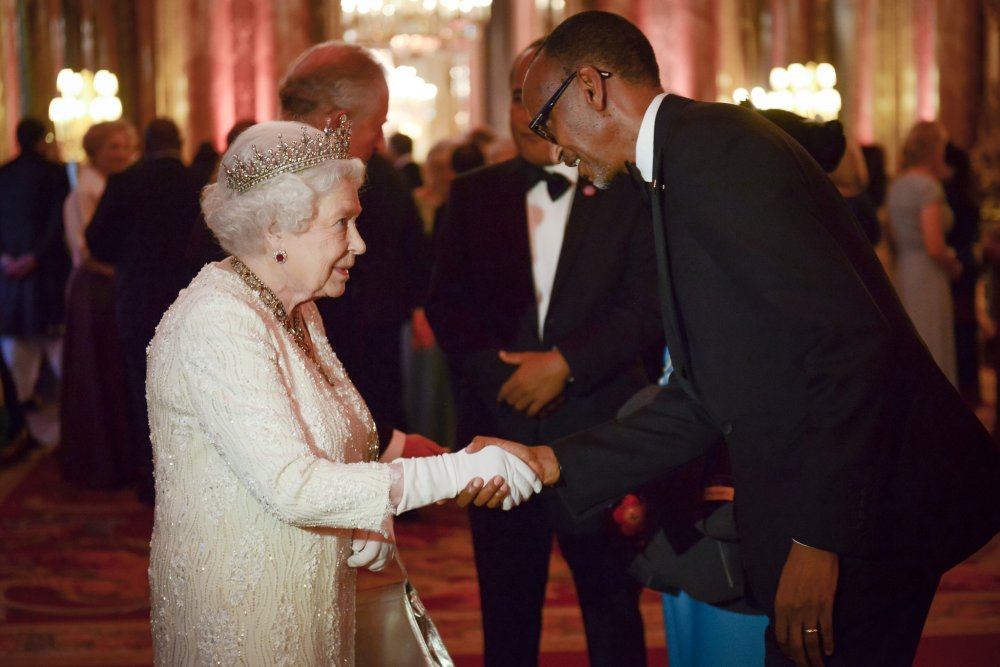
“Congratulations to Queen Elizabeth II on the occasion of her Platinum Jubilee and her dedication to service over the last 70 years. As Rwanda gets ready to host CHOGM2022, we look forward to strengthening the friendship and cooperation within the Commonwealth family,” he tweeted on Sunday.
The four-day celebrations marking the Platinum Jubilee were wound up on Sunday 5th June 2022 in the UK.
The celebrations attracted thousands of people from the UK and other Commonwealth country members across the world.
Rwanda celebrated the Platinum Jubilee on Thursday 2nd June 2022. Globally, the event was marked by the lighting of beacons in all capital cities of the Commonwealth.
Officials from Kigali City organized the event in collaboration with Rotary Club which was taking place for the first time in all 54 cities of the Commonwealth.
The beacon was lit at 21:15 p.m. at Imbuga City Walk commonly known as Car Free Zone.
The Mayor of Kigali City, Pudence Rubingisa said that joining other cities in celebrating the Platinum Jubilee and lighting the beacon is recognition of the contribution and efforts of Queen Elizabeth II in different sectors while improving the welfare of the citizens in Commonwealth countries.
The ceremony was also attended by UK High Commissioner to Rwanda, Omar Daair who said that it is a memorable day for UK nationals and Commonwealth members.
During the ceremony marking end of Platinum Jubilee celebrations, Queen Elizabeth II ,96, thanked all people who celebrated the historic milestone.
“When it comes to how to mark seventy years as your Queen, there is no guidebook to follow. It really is a first. But I have been humbled and deeply touched that so many people have taken to the streets to celebrate my Platinum Jubilee,” she said.
“While I may not have attended every event in person, my heart has been with you all; and I remain committed to serving you to the best of my ability, supported by my family,” added Queen Elizabeth.
Queen Elizabeth II (Elizabeth Alexandra Mary Windsor) was born on 21st April 1926.
She ascended throne on 6th February 1952 following the death of her father King George VI. She is the sixth women to lead UK and its longest reigning monarch.
Queen Elizabeth II who is also the Head of Commonwealth has designated Charles, the Prince Charles as her successor.
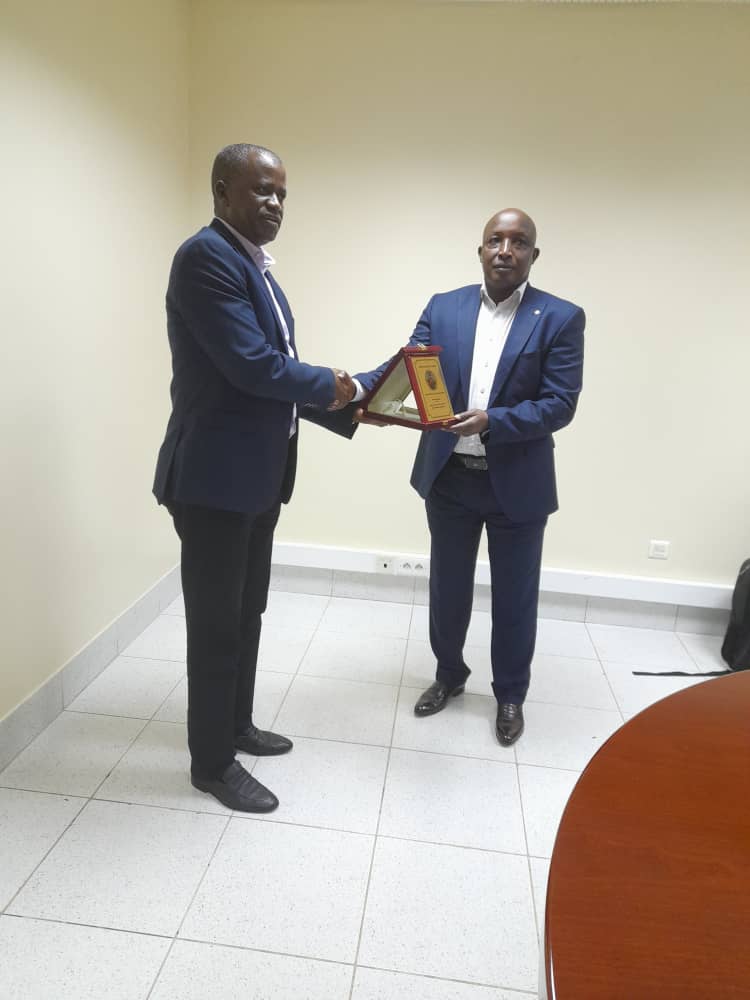
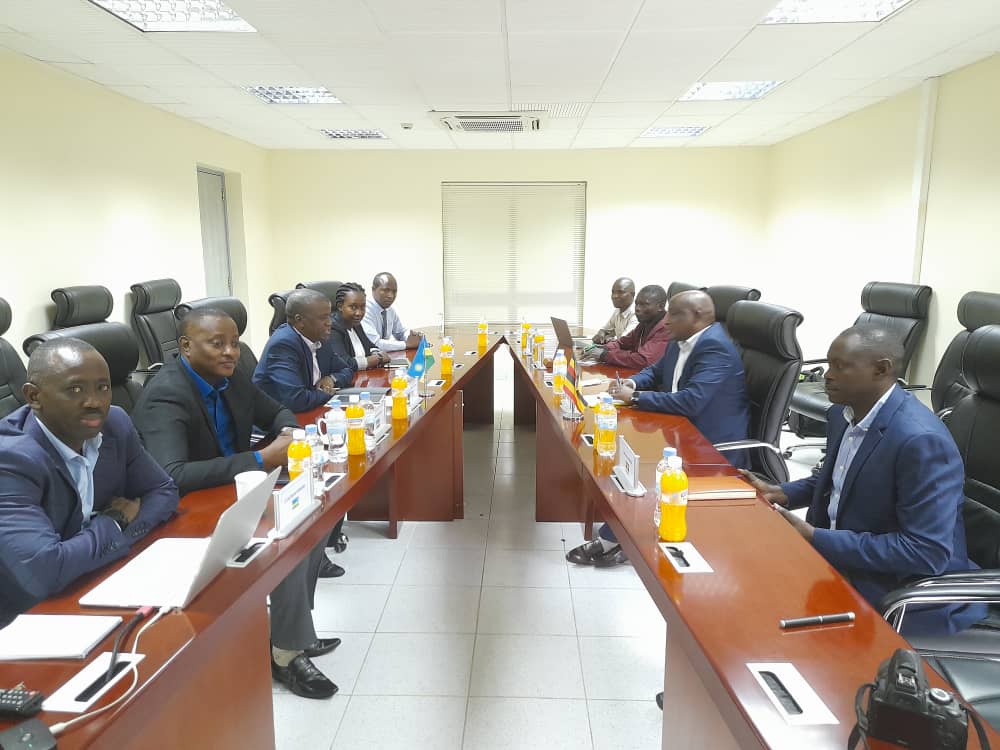
The Spokesperson of RDF, Colonel Ronald Rwivanga has told IGIHE that Maj Gen James Birungi and his delegation have come to Rwanda for four-day visit.
“They have come for a visit aimed at deepening cooperation with regards to intelligence sharing,” he said.
Lt Gen Muhoozi Kainerugaba, the Senior Presidential Advisor on Special Operations and Commander of Land Forces of the Uganda People’s Defence Forces (UPDF) has also commended Rwanda for extending a warm welcome to the visiting delegation.
“I thank Afande Kagame, General Nyakarundi and our brothers in RDF for warmly welcoming our CMI to Kigali. God bless Uganda and Rwanda,” he tweeted.
Lt Gen Muhoozi recently commended the role both countries’ military intelligence in restoring bilateral relations to normal.
“I thank the two Generals, General Birungi and General Nyakarundi (both Chiefs of Military Intelligence) in leading the way in normalising our relationships. Have a successful visit to Rwanda ndugu Birungi. God bless the unity and brotherhood between Uganda and Rwanda,” he tweeted.
The coming to Rwanda follows the recent visit to Uganda by RDF senior officers including its spokesperson, Col Ronald Rwivanga and Brig Gen Vincent Nyakarundi.
At the time, they were hosted by Uganda’s senior officers including Maj Gen Birungi.
Maj Gen James Birungi comes to Rwanda at a time when both countries have embarked on a journey to restore relations that had deteriorated since 2017.
Rwanda was accusing Uganda of supporting dissidents and abusing Rwandans ion the country.
Both countries decided to turn a new page for relations following visits of Lt Gen Muhoozi to Rwanda two times where he met with President Paul Kagame leading to the reopening of Gatuna border.
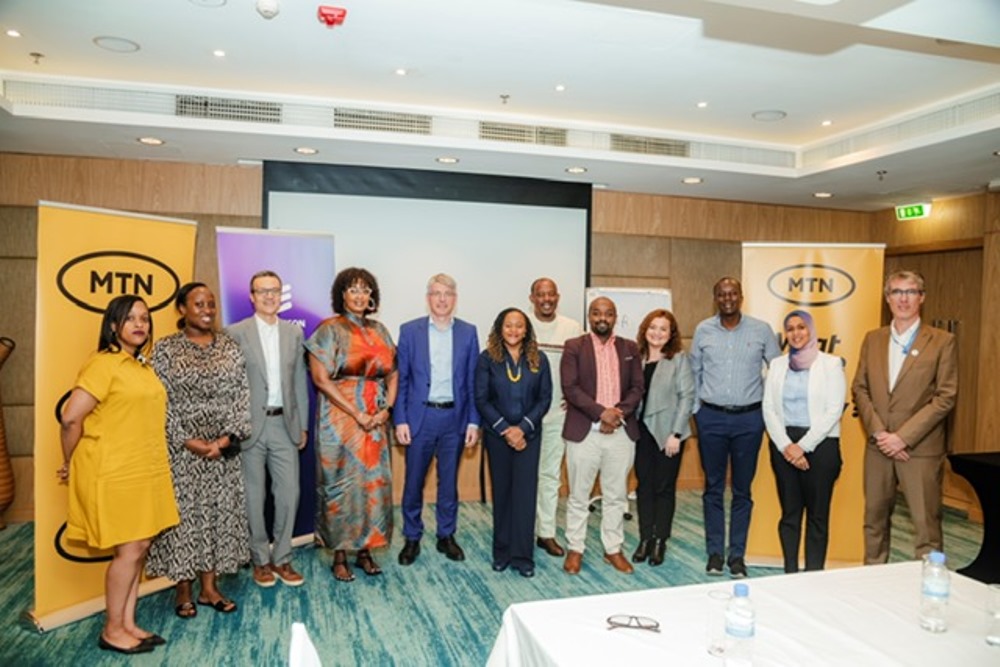
MTN has been working with Ericsson on enhancing consumer experience through Ericsson’s Managed Services Solutions. One of these services includes MTN’s modernized Network Operating Centre (NOC) that was implemented to manage end-to-end monitoring of MTN network in November 2021. Through the NOC, MTN Rwanda’s Network Operations Center and the Incidents Management tools are automated, improving network operations efficiency and boosting customer experience.
Commenting on the development; Mitwa Ng’ambi, MTN Rwanda Chief Executive Officer stated: “Ericsson has been a close and prominent partner over the last two decades in Rwanda. Their services have enabled us to pivot from product to platform, aligning seamlessly with our overarching strategy to provide the largest and most valuable platforms, closing network coverage gaps, and driving digital and financial inclusion. We look forward to achieving these ambitious targets for the betterment of our customers and stakeholders because we believe that everyone deserves the benefits of a modern connected life.”
In addition to telecommunication services, Ericsson has facilitated Mobile Money Rwanda Ltd with a platform for digital financial services which enables its Core services such as person-to-person transactions, deposits, and withdrawals as well as its Advanced services (including MoMoPay, OpenAPI, Loans & Savings, Bill Payments, and Remittances).
Erik Ekudden, Senior Vice President, Chief Technology Officer, and Head of Group Function said: “We are proud of the relationship we’ve built with MTN Rwanda and the opportunities we’ve had to be part of the nation’s social and economic progress. We’ve collaborated on a number of initiatives that ranged from network modernization to enhancing consumer experience. We remain ever committed to continue working together on exploring solutions that increase social and financial inclusion here in Rwanda. Together, we can accelerate the nation’s digital transformation journey.”
This mutually beneficial partnership continues to steer MTN Rwanda’s digital transformational journey by providing innovative technologies and ecosystems that also consist of socioeconomic development for the communities we serve.
{{About MTN Rwandacell Plc}}
MTN Rwandacell Plc (MTN Rwanda) is the market leader in mobile telecommunications in Rwanda. Since 1998, we have continuously invested in expanding and modernising our network and leading digital solutions for Rwanda’s progress. As the country’s No 1 network, we offer various services to subscribers, including innovative propositions such as personalised voice and data offers for individuals and corporates with a clear vision to lead the delivery of a bold, new digital world to our customers because we believe everyone deserves the benefits of a modern connected life.
{{About Ericsson}}
Ericsson enables communications service providers to capture the full value of connectivity. The company’s portfolio spans the business areas Networks, Digital Services, Managed Services and Emerging Business. It is designed to help our customers go digital, increase efficiency, and find new revenue streams. Ericsson’s innovation investments have delivered the benefits of mobility and mobile broadband to billions of people globally. Ericsson stock is listed on Nasdaq Stockholm and on Nasdaq New York. www.ericsson.com
It has been almost three years and half since COVID-19 emerged in Rwanda.
Sensitizations on preventive measures including proper wearing of face masks, washing hands frequently and respecting social distancing were among major activities put in place to contain its spread.
Rwanda also expended much effort to roll out vaccines across the country with the initial target of covering 60% of its population by 2022.
The vaccination campaign has yielded good results considering the current situation in Rwanda. Today, 69% of the population has received the first dose of COVID-19, 65% have received the second dose while 355 are recipients of the third dose.
The numbers have had a significant impact where the positivity rate has sharply dropped leading to ease in some preventive measures for people to resume businesses as usual.
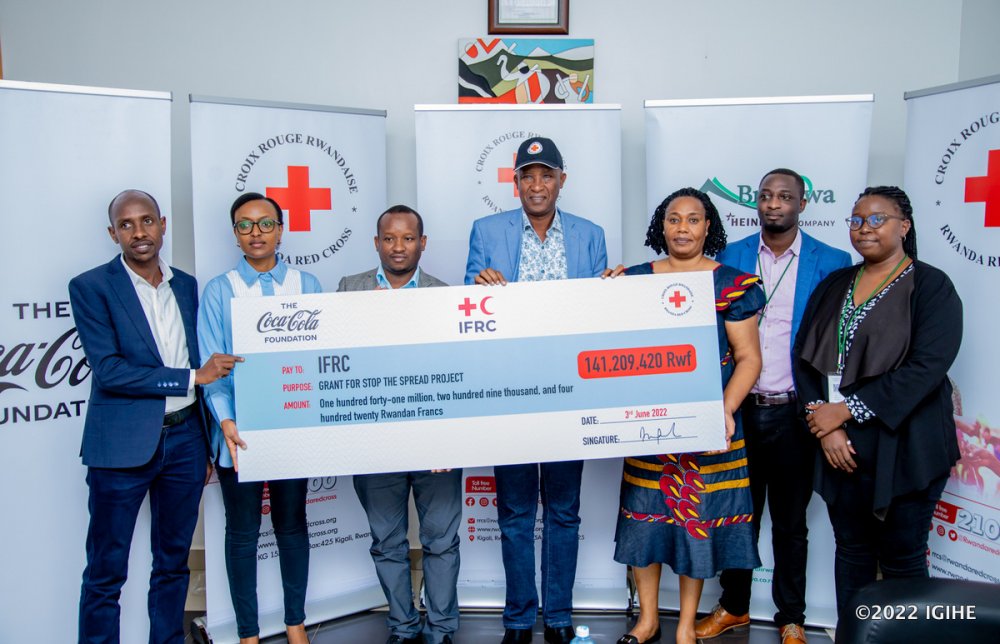
It is against this background that The Coca-Cola Foundation took a giant stride to provide funding to different African countries to strengthen response to COVID-19.
In Rwanda, the project implemented by Rwanda Red Cross is the second of its kind rolled out by The Coca-Cola Foundation through collaboration with the government.
The first project saw The Coca-Cola Foundation donating Rwf150 million in 2020 allocated for the provision of protective equipment to frontline workers helping the country to fight the pandemic. These include volunteers and other frontline workers helping communities.
The latest donation will be allocated to sensitizations and facilitating the extension of home-based vaccination services across the country.
Aline Pascale Batamuliza, Corporate Affairs and Communication Manager at Bralirwa which represented The Coca-Cola Foundation at the event said that efficient use of the previous donation inspired the foundation to continue supporting the cause given that the pandemic has not yet been defeated.
“The first donation was utilized efficiently to serve the right purpose which inspired the donor to launch its second phase. The pandemic is still there and vaccination efforts are ongoing. We are convinced that we cannot be left behind supporting the cause and have to continue walking together along this journey,” she said.
Fred Tumwebaze, the Head of Emergency Response and Recovery, Programmes at Rwanda Red Cross has said that more emphasis will be drawn to sensitizations and helping people unable to reach vaccination sites.
“We have been doing such activities and have enough experience. The strength of Red Cross is rooted on volunteers from country level to village levels. We have fought COVID-19 through different approaches by sensitizing people on preventive measures and donating materials among others,” he noted.
“We will identify areas of gaps in collaboration with the Ministry of Health because we have a toll free line. Those unable to reach vaccination sites can contact us for assistance. We will have vehicles to pick and take them to the sites to receive vaccine doses,” added Tumwebaze.
It is apparent that much effort has been expended to roll out the vaccination campaign.
However, the Director of Vaccination Programme Unit at Rwanda Biomedical Center (RBC), Hassan Sibomana has revealed that there are still challenges as some people have not yet understood the relevance of getting fully vaccinated.
“Even though we have covered 65% with a target to reach 70%, there are people who are still reluctant to this vaccination programme. We still have people who have not received the second and booster doses. This is a good opportunity to remind them of their responsibility to get fully vaccinated if we are to completely defeat COVID-19,” he noted.
Dubbed “Stop the Spread”, the project funded by The Coca-Cola Foundation will cover more than 10 districts and is expected to reach 225,000 beneficiaries across Rwanda.
Bralirwa has been manufacturing soft and alcoholic drinks in Rwanda since 1957.
It was licensed to produce and sell Coca-Cola soft drinks since 1974 up to date.
The Coca-Cola Foundation is the global philanthropic arm of The Coca-Cola Company.
Since its inception in 1984, the Foundation has awarded more than US$1.2 billion in grants to support sustainable community initiatives from water to women’s empowerment, from community recycling to wellbeing around the world.