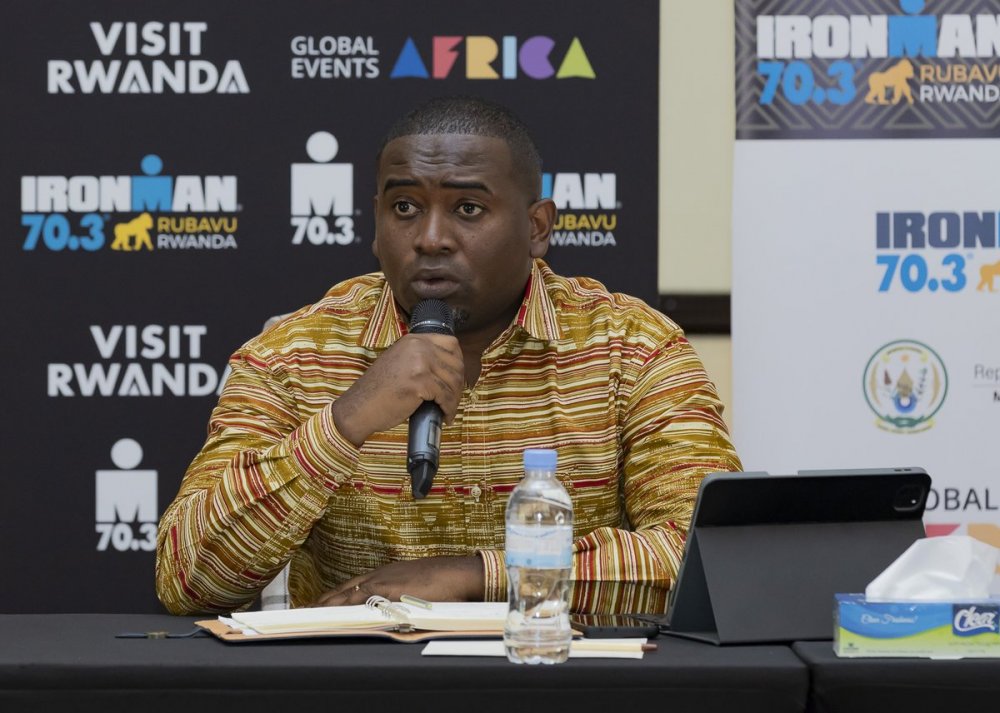
His suspension was announced in the night of Friday 16th September 2022 through a statement released by the Office of Prime Minister and signed by Dr. Edouard Ngirente on behalf of President Paul Kagame.
“Today September 16th 2022, Mr. Didier Shema Maboko has been suspended from the position of Permanent Secretary in the Ministry of Sports [MINISPORTS], with immediate effect,” reads the statement.
Reasons for his suspension have not yet been announced as it happens to other leaders.
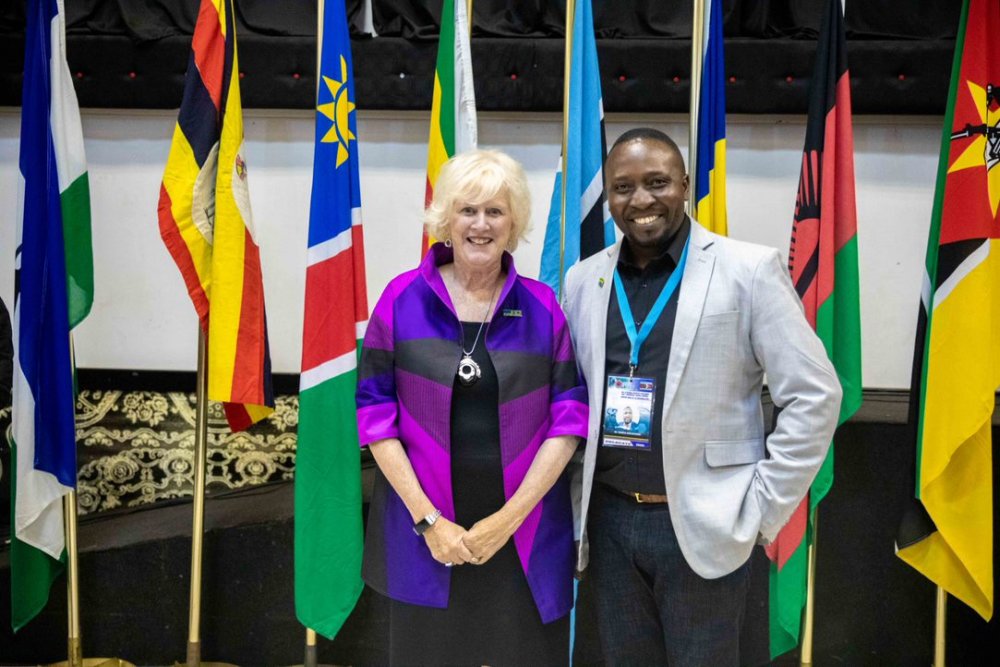
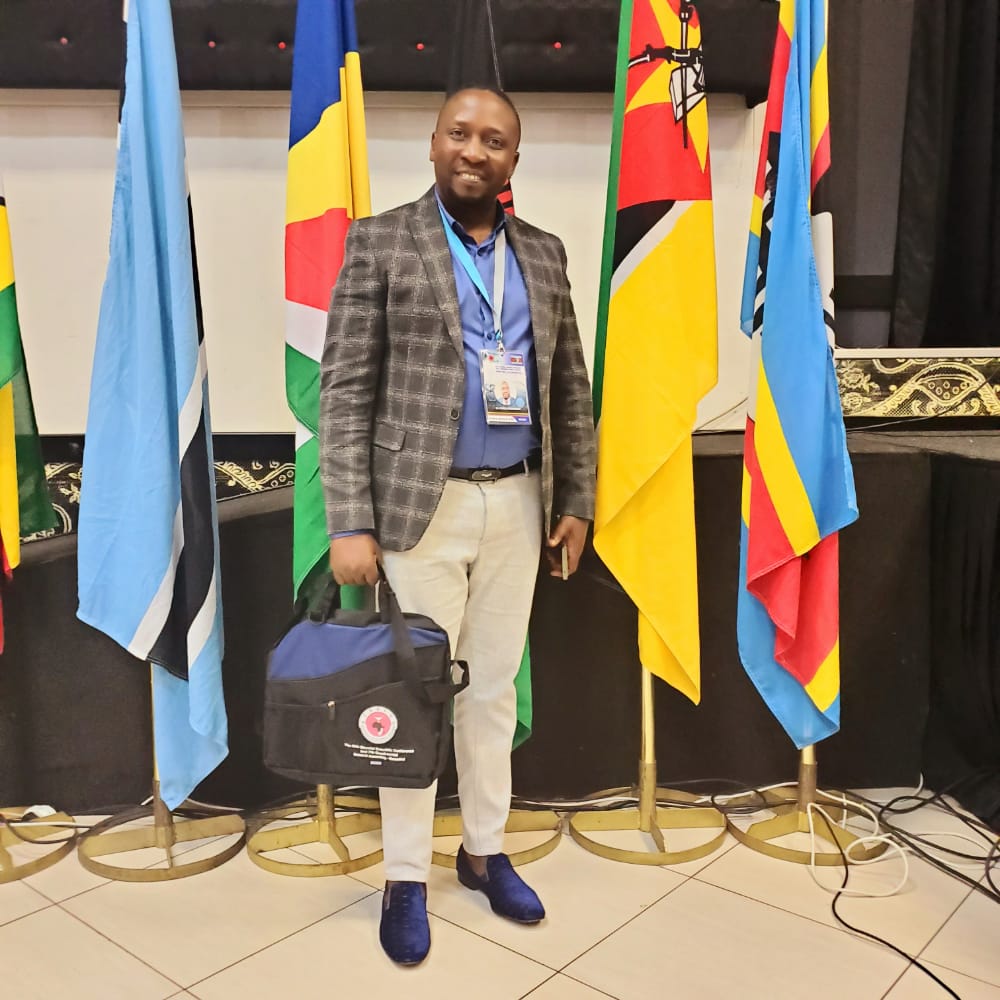
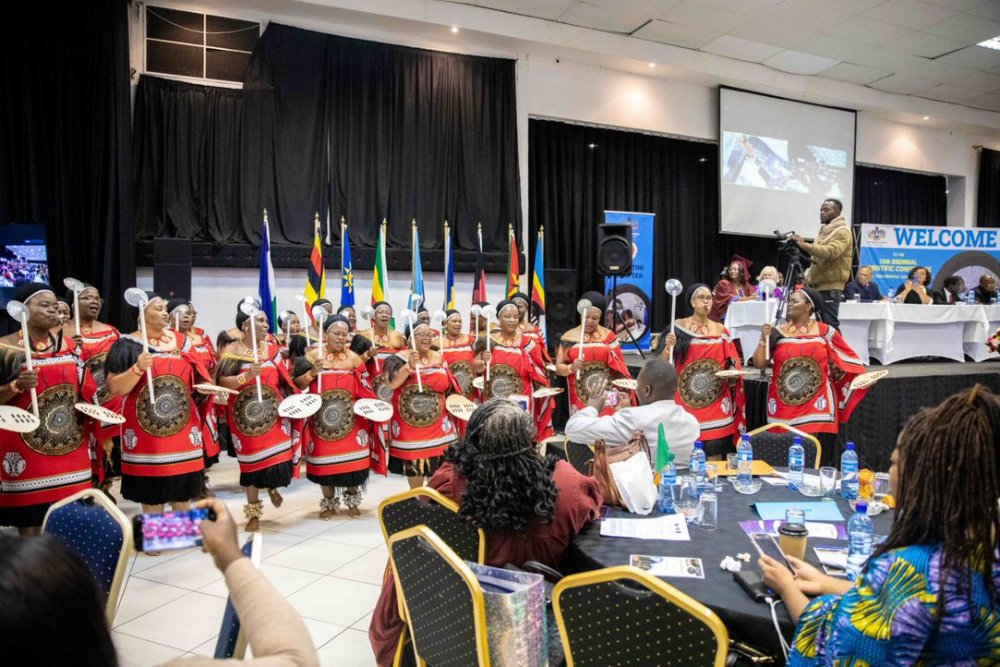
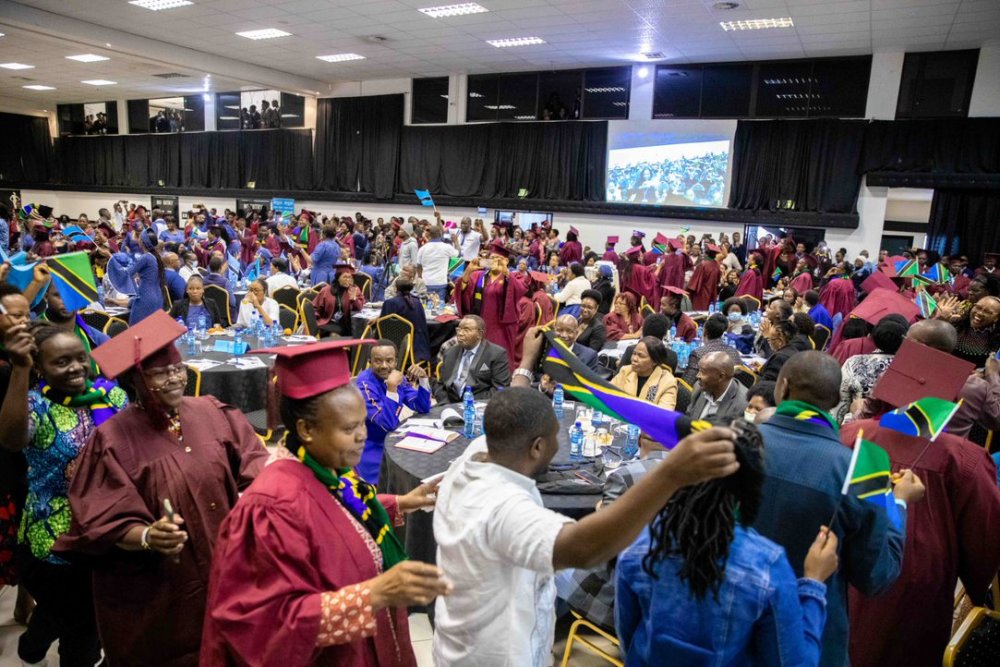
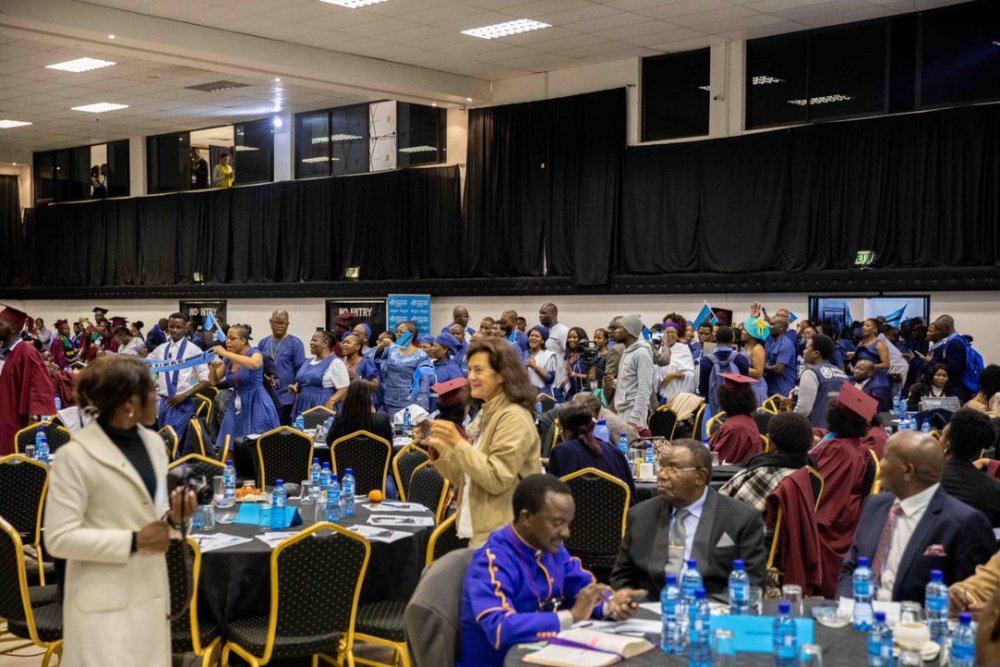
The conference brought together medical experts from the East, Central and Southern Africa (ECSA) countries including, Rwanda, Botswana, Kenya, Lesotho, Malawi, Mozambique, Namibia, Seychelles, Uganda, and others.
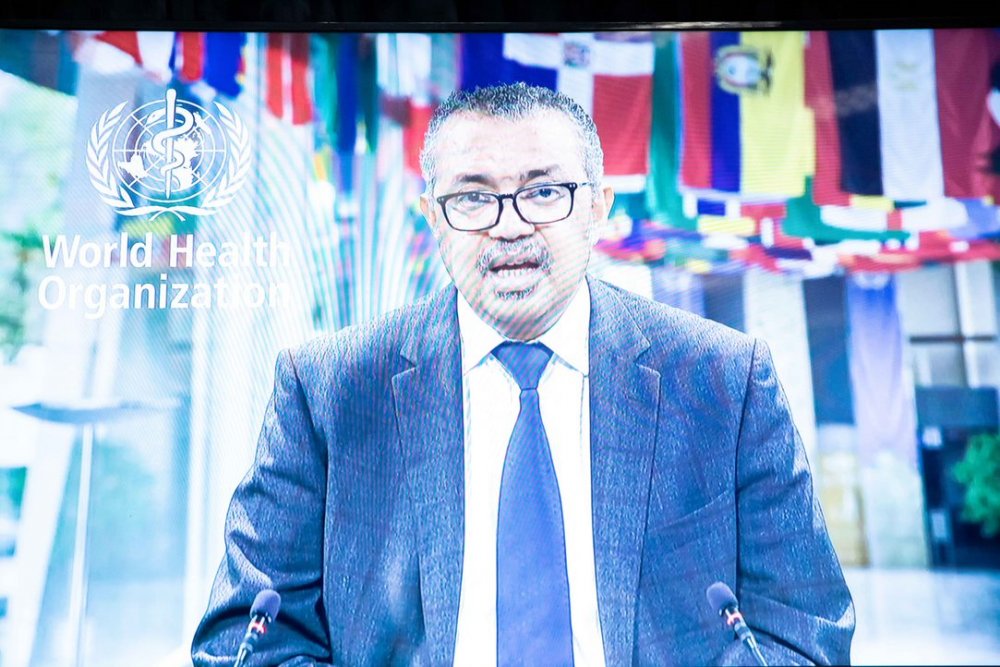
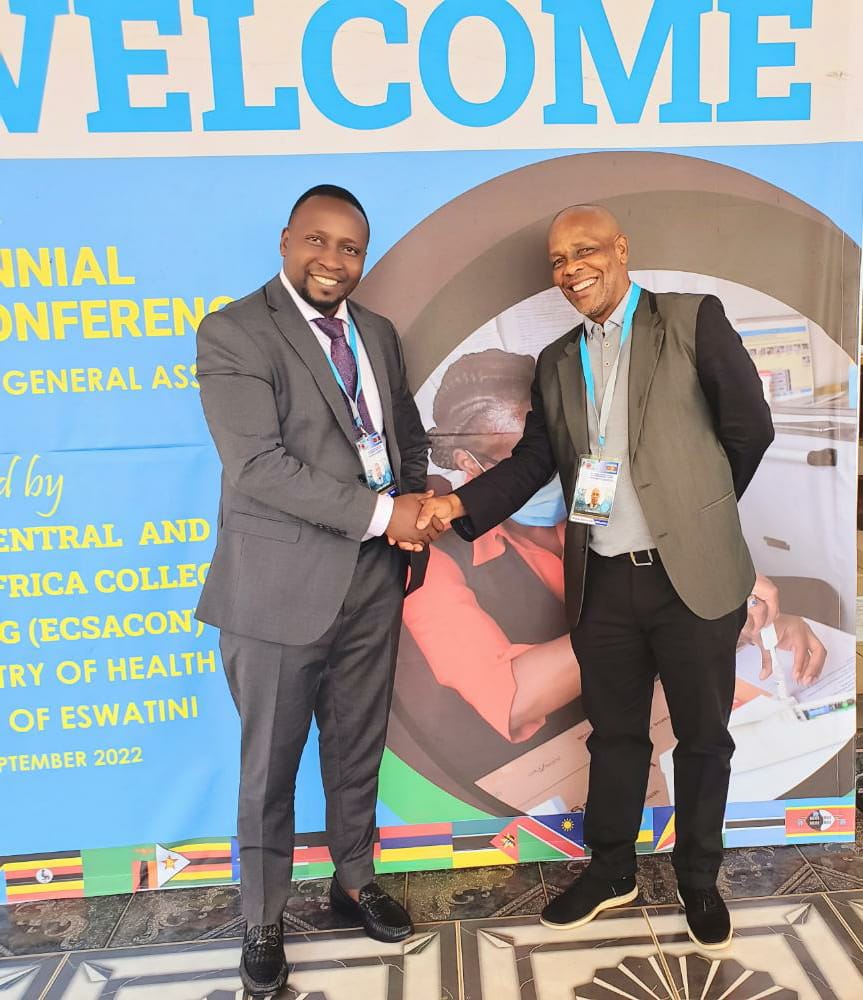
This year’s conference started on 13th September 2022 in Manzin Eswatini. The opening ceremony was officiated by the Deputy Prime Minister of this country, Themba MASUKU. On the first day, participants discussed how medical services can be improved in ECSA member countries.
Dr. Habumugisha who was among speakers stressed the need to leverage on technology and innovations to address challenges affecting nursing and midwifery services.
He observed that putting much emphasis on theoretical studies than practical sessions is among major challenges facing nursing and midwifery schools in Africa.
Dr. Habumugisha said that the number of smartphone owners are gradually increasing in Africa where health institutions should take advantage of this opportunity to develop digital platforms to help people access information they need.
He pointed out the example of his digital platform dubbed ‘Muganga Online’ which helps people access health information and highlighted that similar initiatives would be more meaningful for people to access some services without necessity for regular visits to health centers.
Dr. Habumugisha was invited as one of experts who developed digital platforms providing solutions in the health sector.
Among his accomplishments is the establishment of Goodrich Life Care, which offers nutritional therapy, reflexology and hydrotherapy. Apart from this, he founded Goodrich TV which provides advice and health related information.
Most of the leaders who participated in this meeting from 16 countries and non-governmental organizations working with ECSACON discussed with Dr. Habumugisha how “Muganga Online” can be introduced in their countries.
Born in 1934, Jim Inhofe is a senator in US Congress who has been representing Oklahoma State.
Inhofe, 87, is the ranking Republican on the Senate Armed Services Committee and its past chairman. He served previously as chairman and ranking Republican of the Environment and Public Works Committee.
Inhofe recently announced that he would retire effective January 3, 2023, after 35 years in Congress and a career in politics spanning over 50 years.
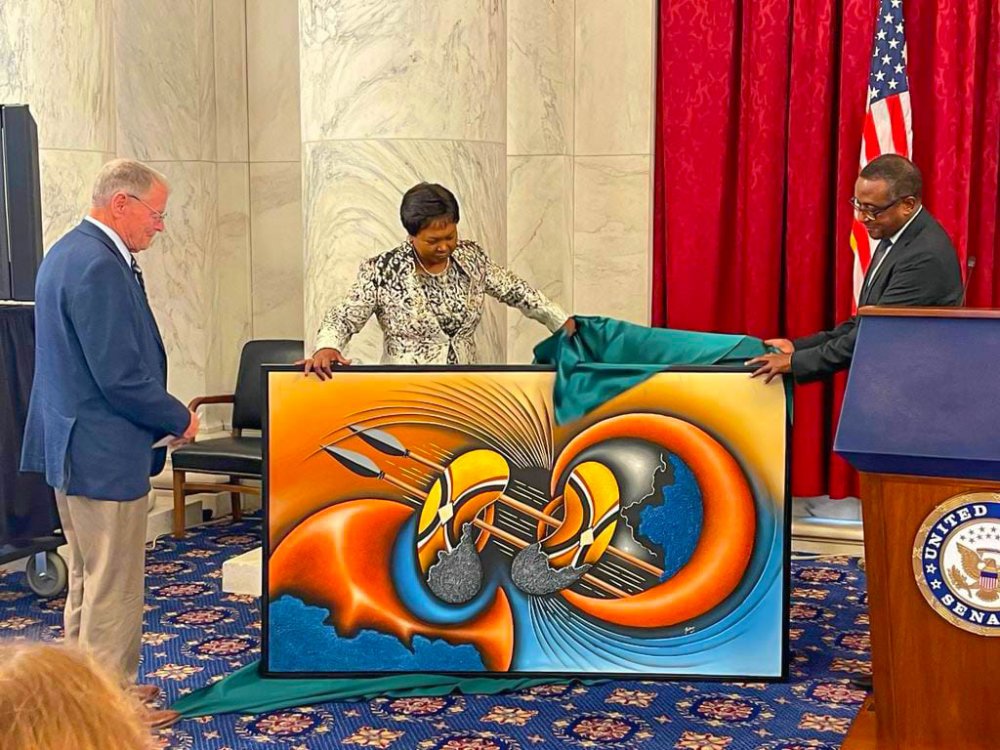
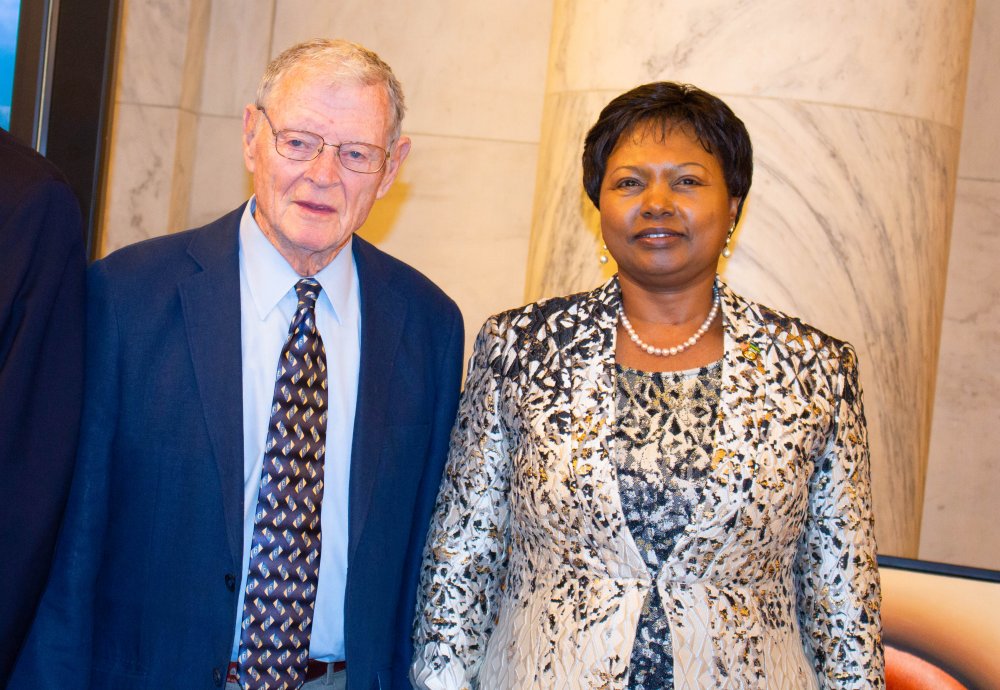
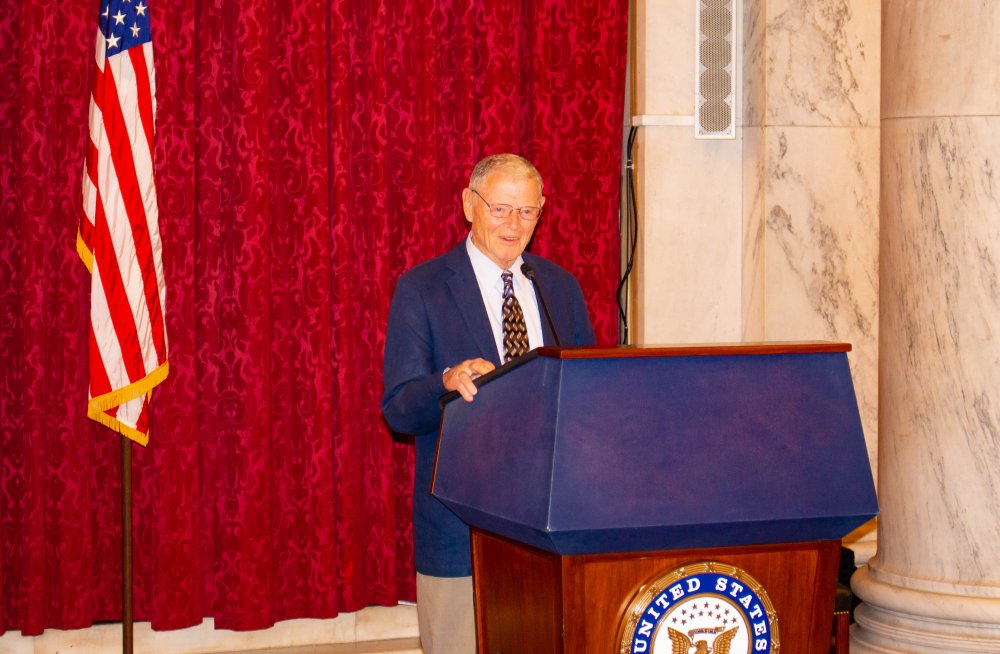
On Thursday 15th September 2022, Rwanda’s Embassy in the United States (US) hosted a breakfast at the US Capitol in appreciation of Senator Jim Inhofe’s career and friendship with Africa and Rwanda, in particular.
In a message he sent, President Paul Kagame stated that Senator Inhofe’s dedication to Rwanda has nurtured relationships that have helped strengthen the bonds between Rwanda and the United States.
“We have watched you invest in learning about and understanding Rwanda and other African countries. We have also watched you educate your peers on the importance of Africa and countries like Rwanda as worthy global allies,” he said.
“You have shown that a productive relationship with the United States is mutually beneficial for our people and contributes to greater security and stronger economies,” added Kagame.
Senator Inhofe appreciated the warm welcome he was always given whenever he traveled to Rwanda.
Rwanda’s Minister of Foreign Affairs and International Cooperation, Dr.Vincent Biruta revealed that he considers Senator Inhofe as a man of profound wisdom who embodies the symbol of friendship between Africa and the US.
“I think of a man of principles who devoted his life to public service and did it with integrity, selfless work ethic, and determination,” he said.
Dr. Biruta and Rwanda’s Ambassador to the US, Mathilde Mukantabana also presented a painted gift to Senator Inhofe.
“The shields and spears in this painting symbolize the readiness to defend and fight for your country. The moon and the rays symbolize power and wisdom. And the fact that these elements appear in pairs in this painting means unity,” explained Minister Biruta.
African Diplomatic corps and officials from Congress, Pentagon, and State Department also attended the breakfast.
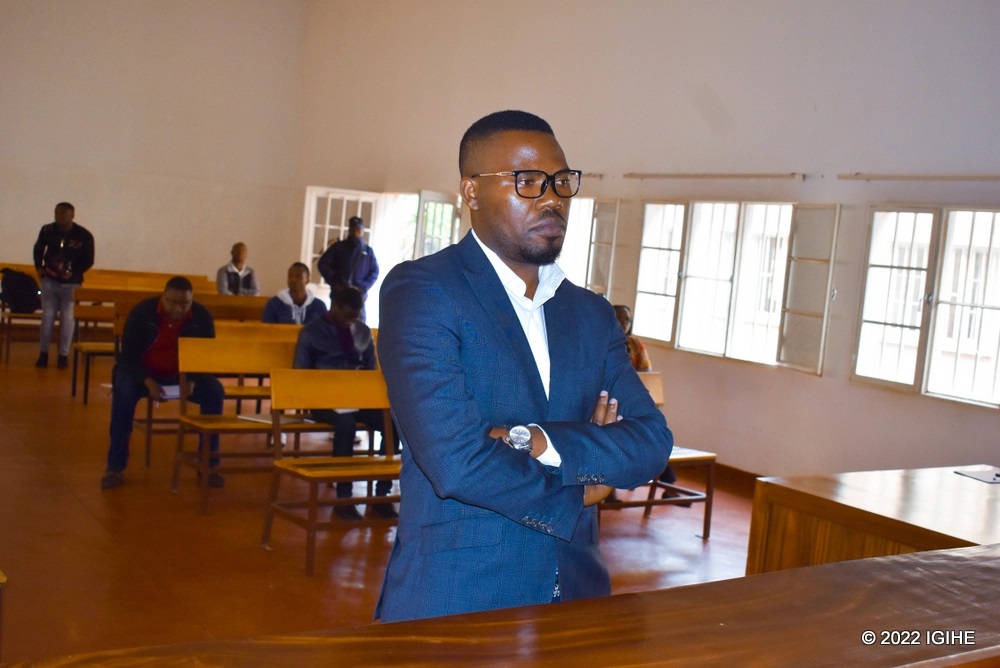
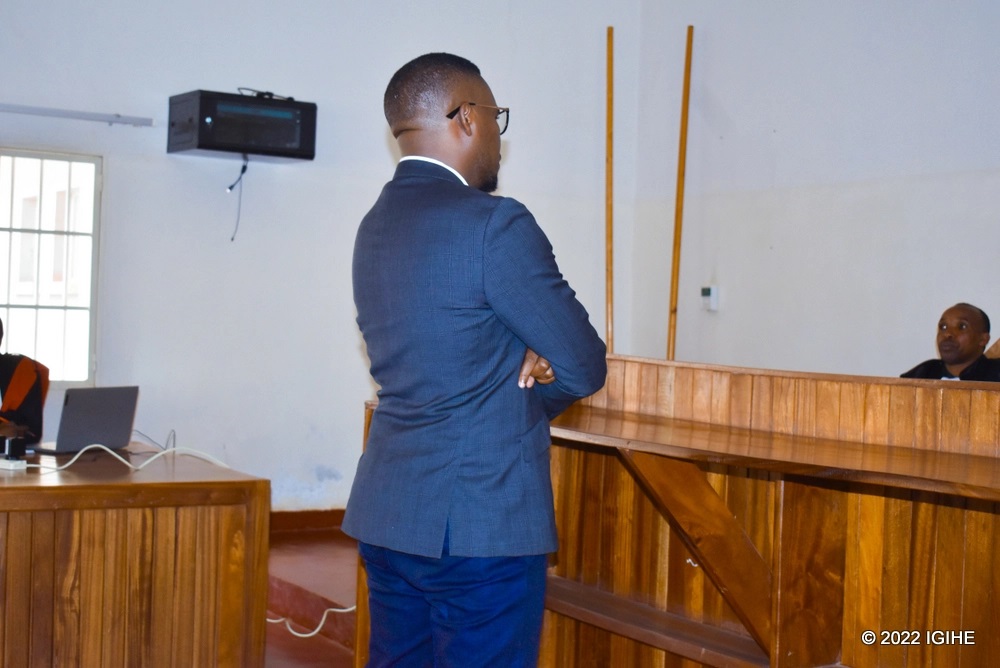
Bamporiki appeared before the court in the morning of Friday 16th September 2022.
The former state minister who could not be seen by journalists upon arrival at the court’s premises, exited the courtroom through the exit door normally designated for judges.
He appeared before the court wearing glasses, a blue trouser, suit and white shirt without a defence lawyer.
As the hearing began, Bamporiki told judges that he was not ready for the court’s session without his defence lawyer who was attending elections of Rwanda Bar Association (RBA) taking place on the same day.
The court accepted his request and adjourned the hearing to 21st September 2022 at 8:00 a.m.
Bamporiki was suspended from his duties in May this year owing to matters of accountability that were under investigation and placed under house arrest.
Following his suspension, Bamporiki posted a message on his Twitter handle admitting that he received a bribe and apologized to the President of the Republic.
Article 4 of the law N° 54/2018 of 13/08/2018 on fighting against corruption states that any person who offers, solicits, accepts or receives, by any means, an illegal benefit for himself/ herself or another person or accepts a promise in order to render or omit a service under his or her mandate or uses his or her position to render or omit a service, commits an offence.
Upon conviction, he/she is liable to imprisonment for a term of more than five (5) years but not more than seven (7) years with a fine of three (3) to five (5) times the value of the illegal benefit offered, solicited or received.
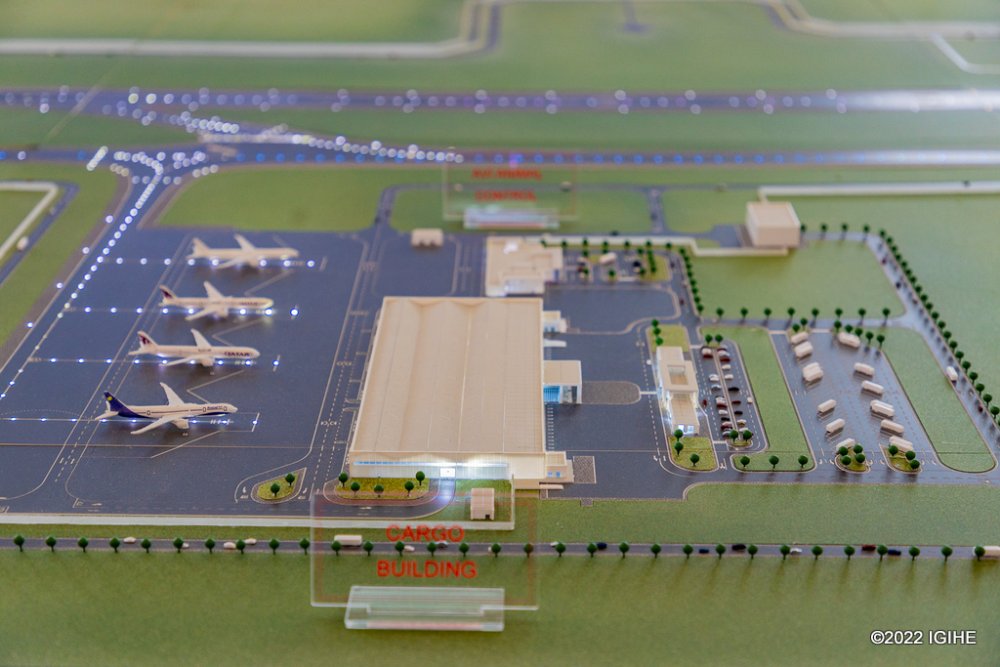
Construction activities of the eco-friendly airport began in 2017. Later in 2018, the progress delayed awaiting negotiations with Qatar as a new investor to acquire 60% shares.
In 2019, the Government of Rwanda and Qatar Airways have signed partnership agreement that saw the latter investing in the construction of Bugesera International Airport (BIA) estimated to cost $1.3 billion at completion.
The agreement put an end to a previous deal signed in 2016 between Rwanda and Societe Mota-Engil Engenharia e Construção África, SA. from Portugal to build the airport in two phases. Initially, the project was estimated to cost US$820 million where Mota-Engil Africa had to manage the airport for 25 years that could be extended by more 15 years.
The first phase of the project was due to be completed in 2022, but was subjected to changes including the redesign of its master plan, coupled with effects of Covid-19 pandemic that delayed construction activities.
The current plan indicates that the airport will be built in two phases with the first expected to be completed in 2024/25.
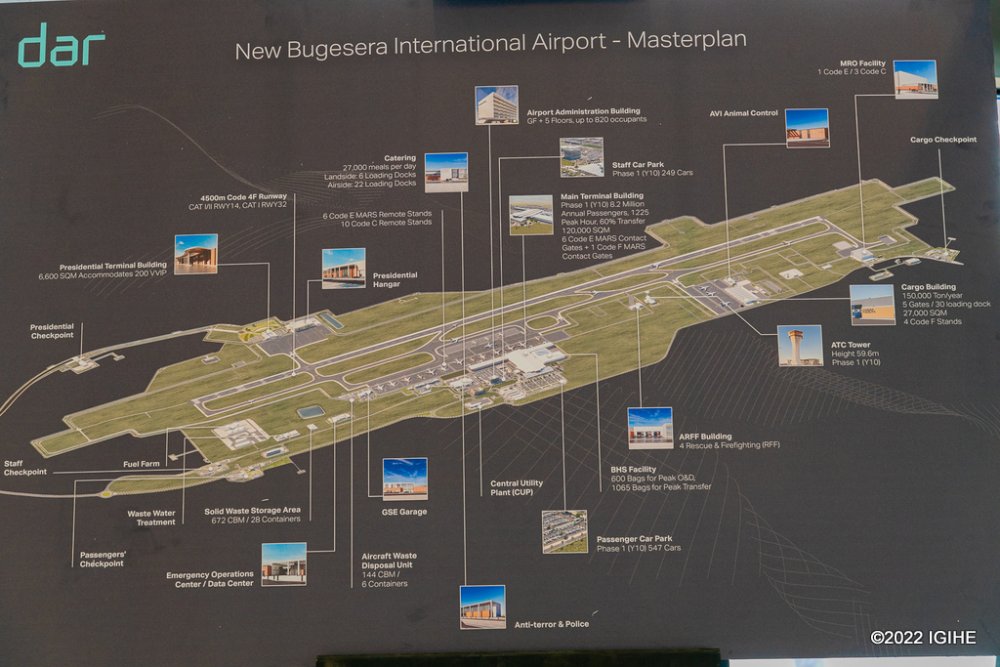
Under the new agreement, the airport is expected to accommodate at least 8.2 million people per year against 4.5 million in the first master plan. It can also host 1225 passengers in its busiest hour.
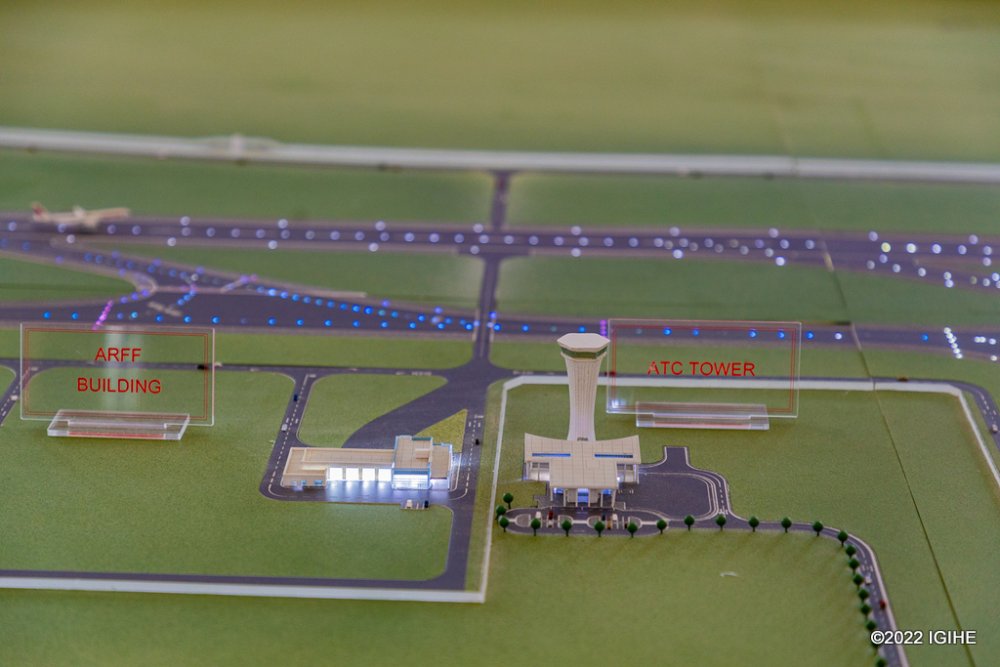
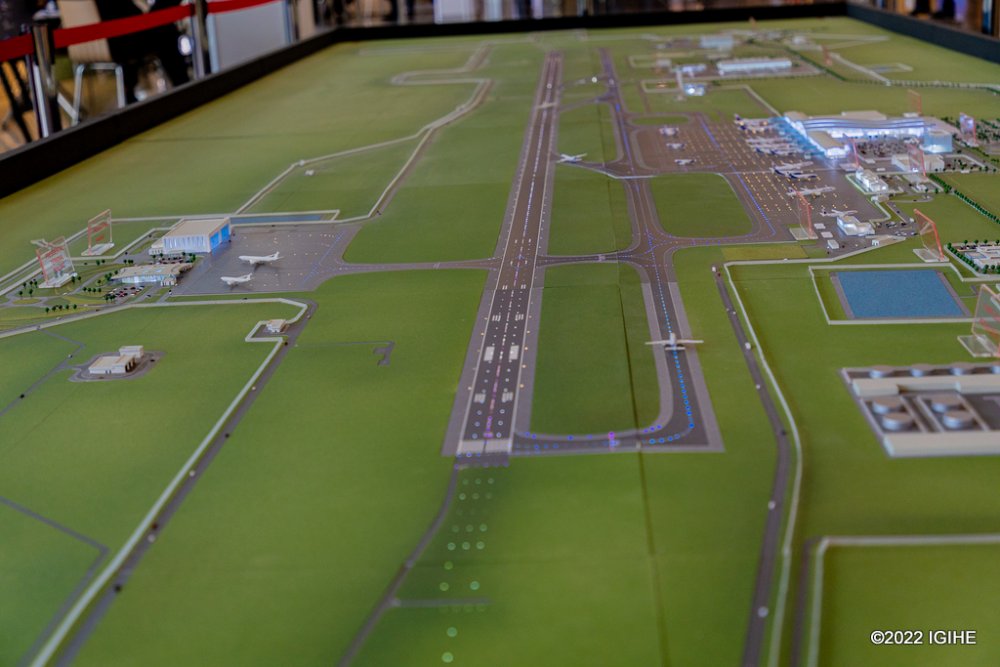
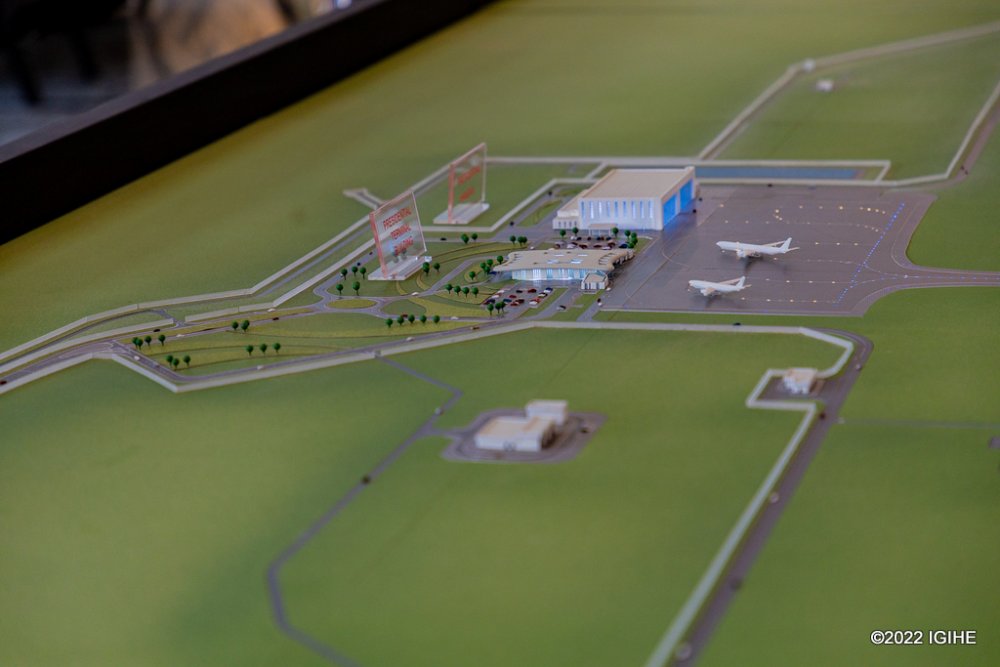
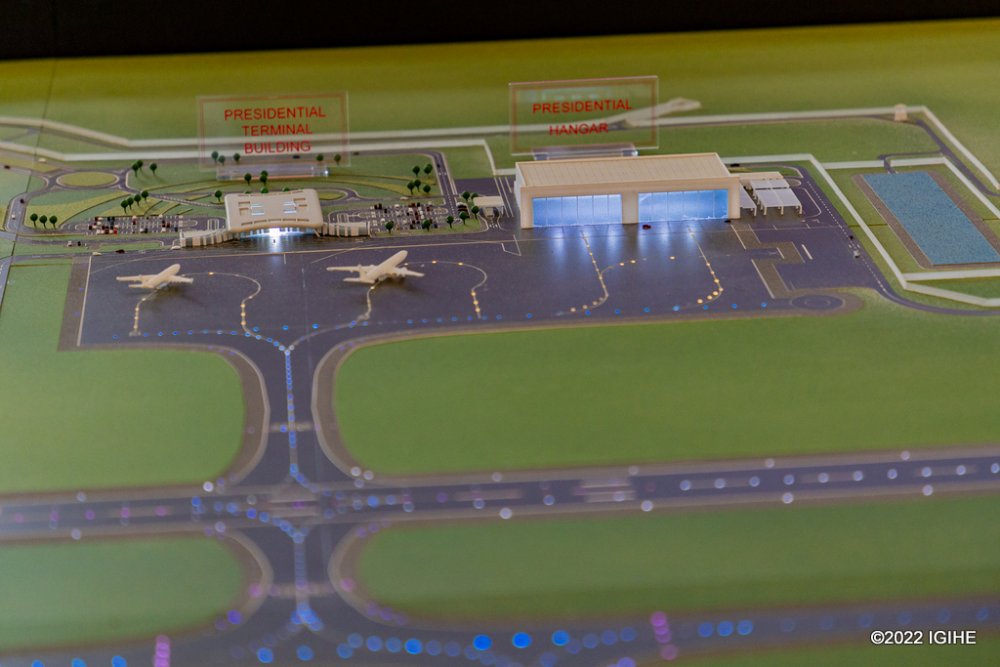
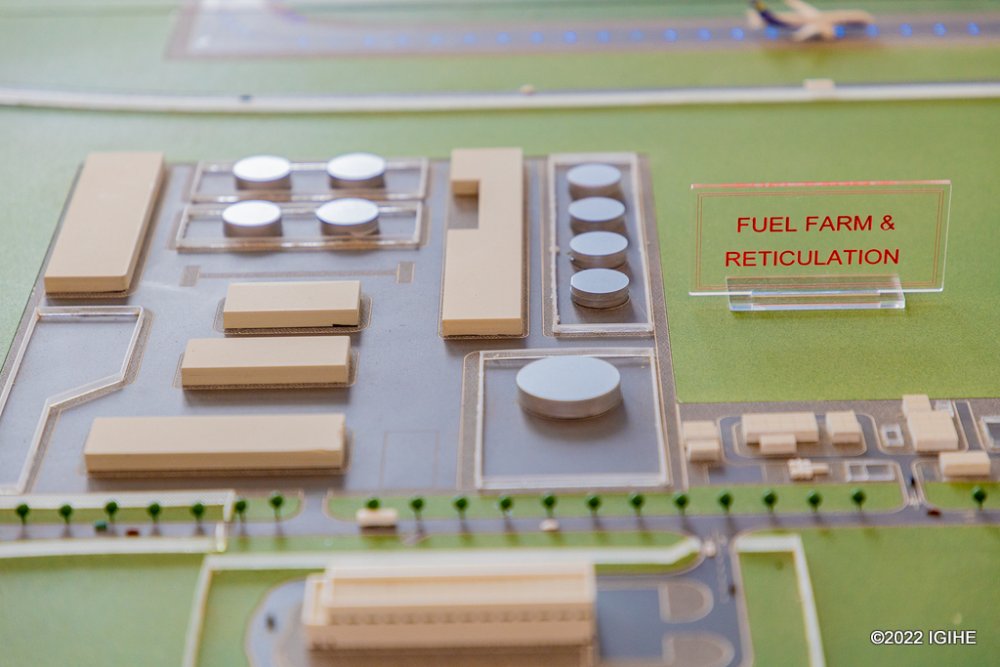
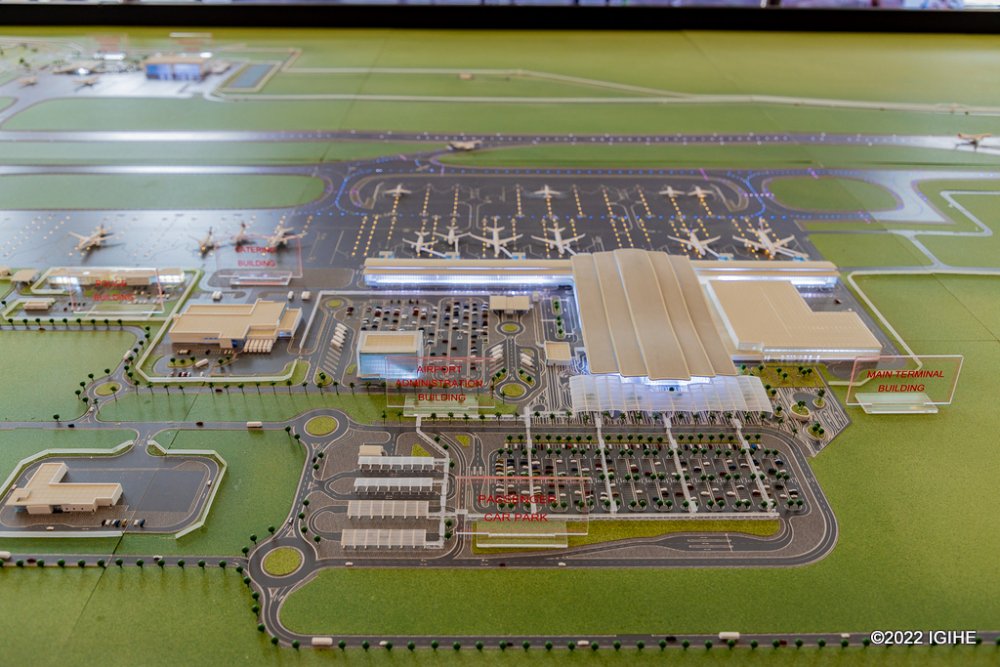
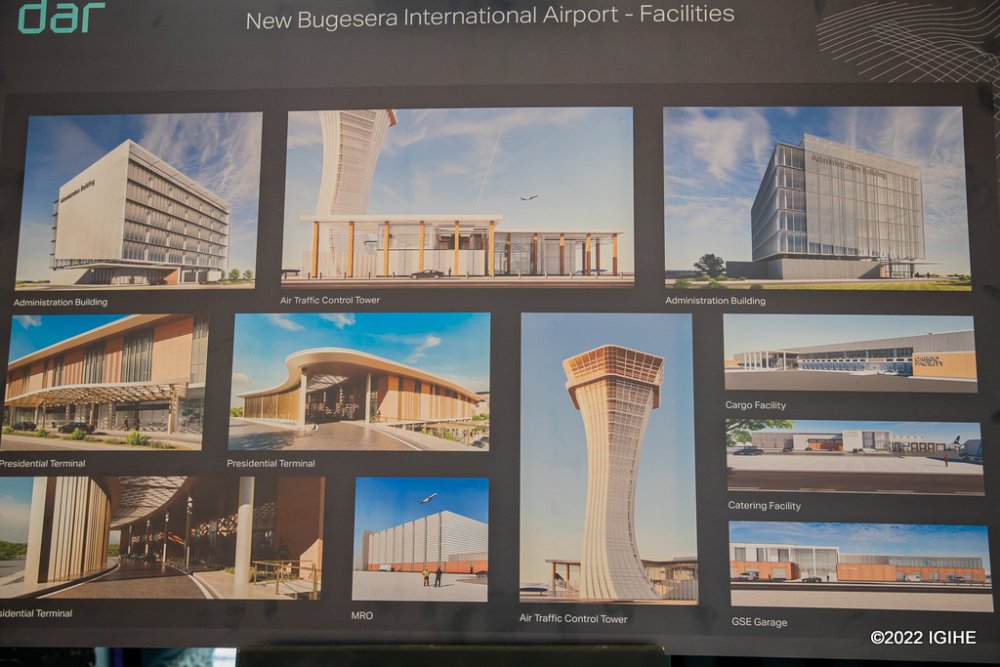
The new design was showcased to participants of the 6th Aviation Africa Summit and Exhibition held in Kigali this week who were taken through a virtual tour of the airport.
The airport is being constructed in Rilima Sector of Bugesera District, Eastern Province.
It has large gates for dignitaries and ordinary passengers. Bugesera International Airport also has large passenger, staff checkpoints and cargo terminal.
With a cargo area of 27,000 square meters, at least 150,000 tons are expected to be transited through the airport per year.
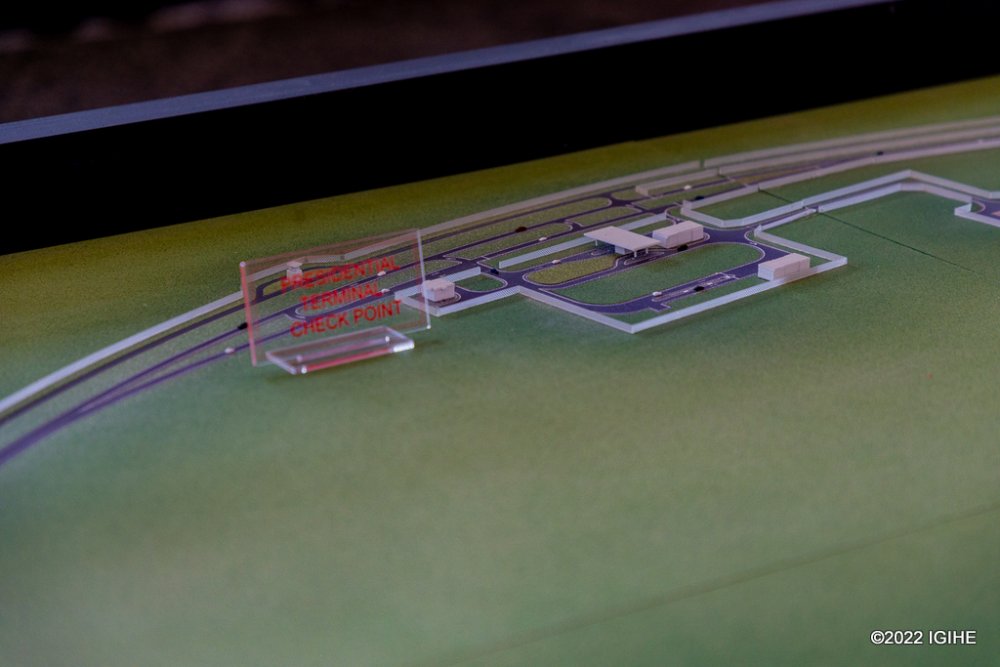
The facility also has a separate boarding gate for staff and a Presidential Terminal Building which can accommodate 200 people.
A space for vehicles of security personnel, communication towers has been also reserved.
Regarding the parking lot, it is planned that parking for 249 vehicles will be built for staff in the first phase.
The management will also have a parking lot for 254 excluding the space for 12 large buses.
As for regular passengers, there is a parking lot for 547 cars, 249 taxi cabs and 9 large buses in the first phase.
A five-storey building with the capacity to accommodate 820 people will also be erected for the airport’s administration.
It will also have 4500-meter runway.
As he officiated the opening of the 6th Aviation Africa Summit and Exhibition, President Paul Kagame said that liberalization of air transport in Africa can act as a catalyst to speed up the aviation industry’s recovery, by increasing connectivity, stimulating demand and creating jobs.
He revealed that open skies help to link businesses to regional and global supply chains, boost trade and investment where ‘the full implementation of the Single African Air Transport Market must remain a top priority’.
The Head of State reminisced on Rwanda’s efforts highlighting that the country continues to do its part.
“Currently, RwandAir, our national carrier, serves 24 routes, 19 of which are in Africa. We intend to continue expanding within the continent and abroad,” he stated.
“We are working together with our partner, Qatar Airways, to grow RwandAir and build Kigali’s new international airport, currently under construction, into a regional hub for passengers and cargo,” added Kagame.
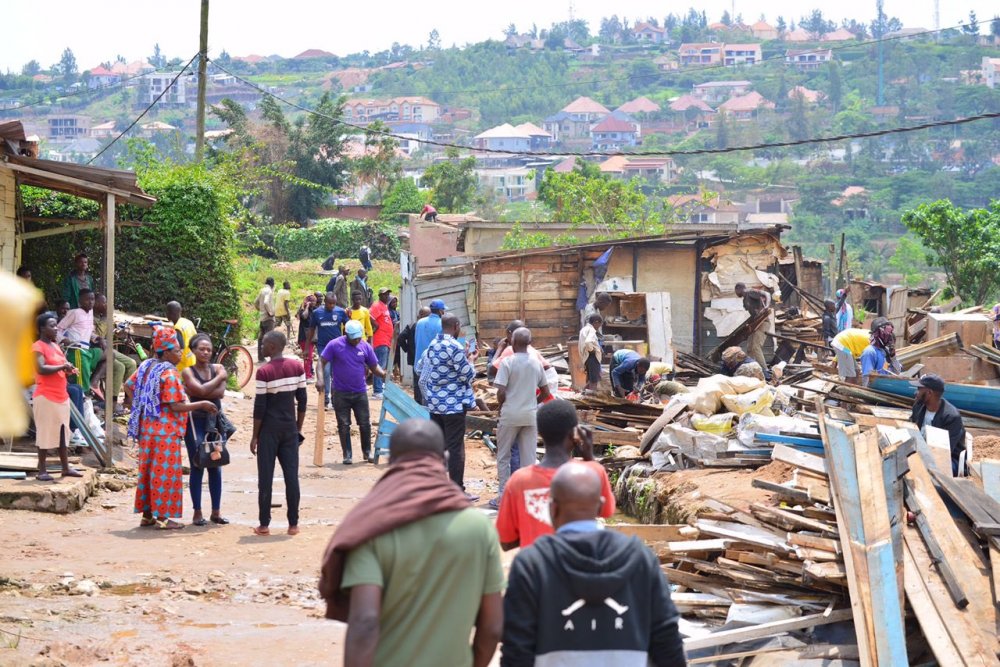
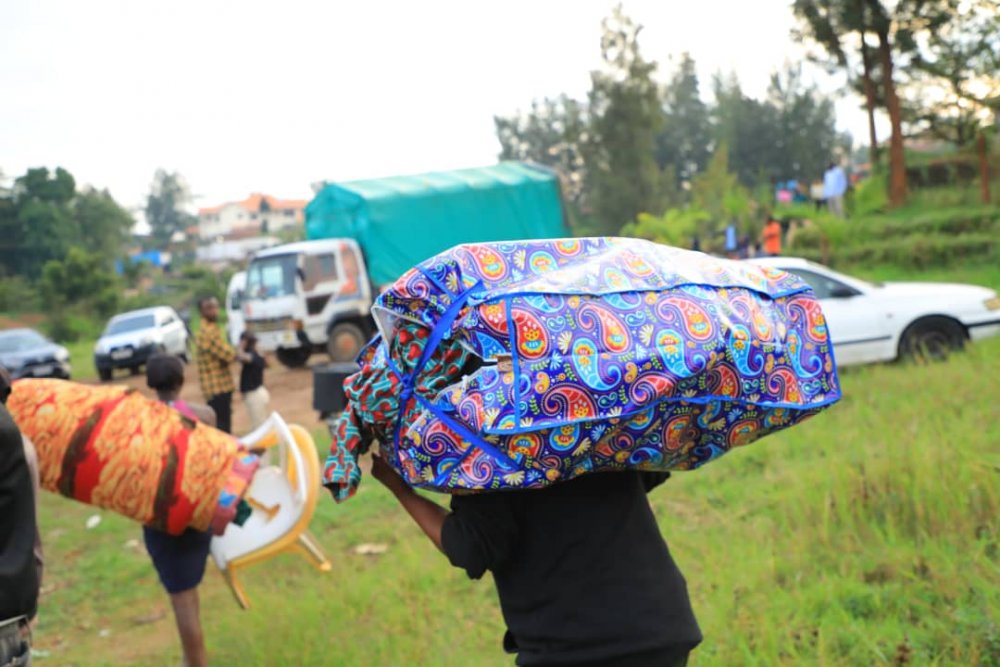
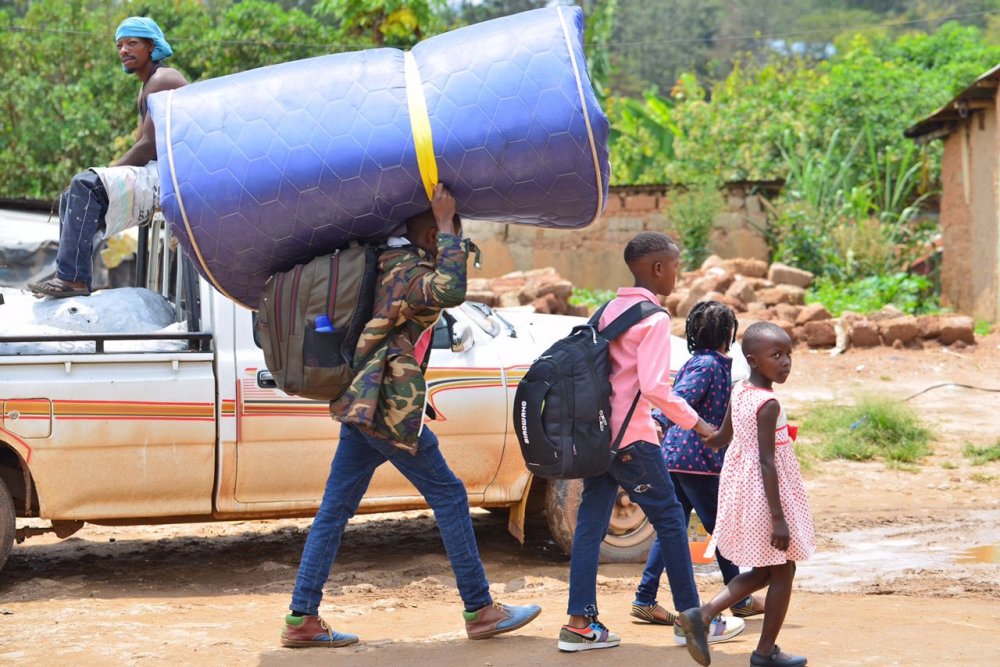
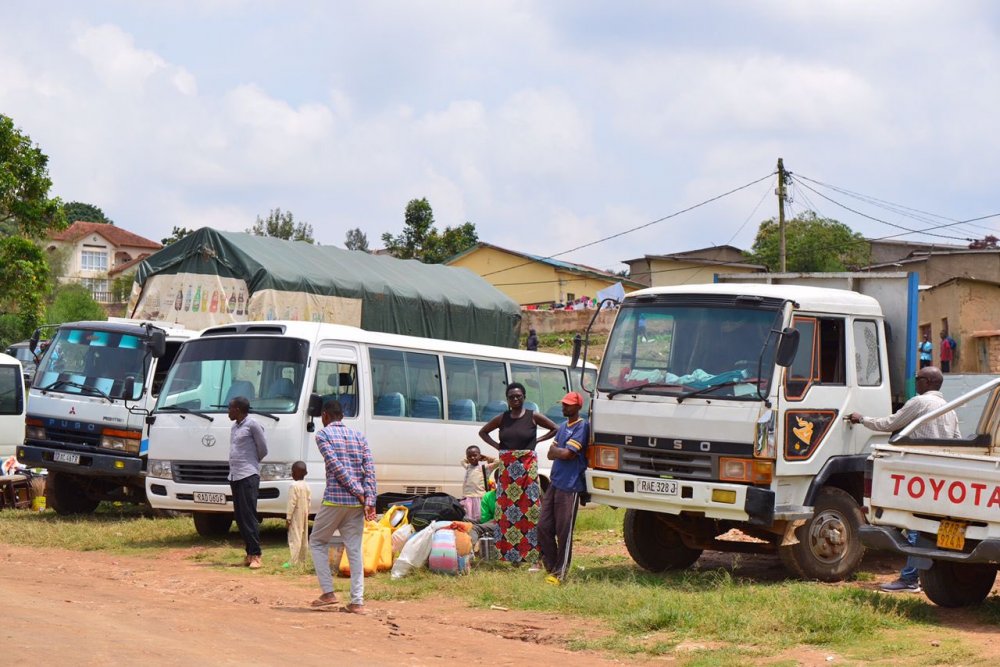
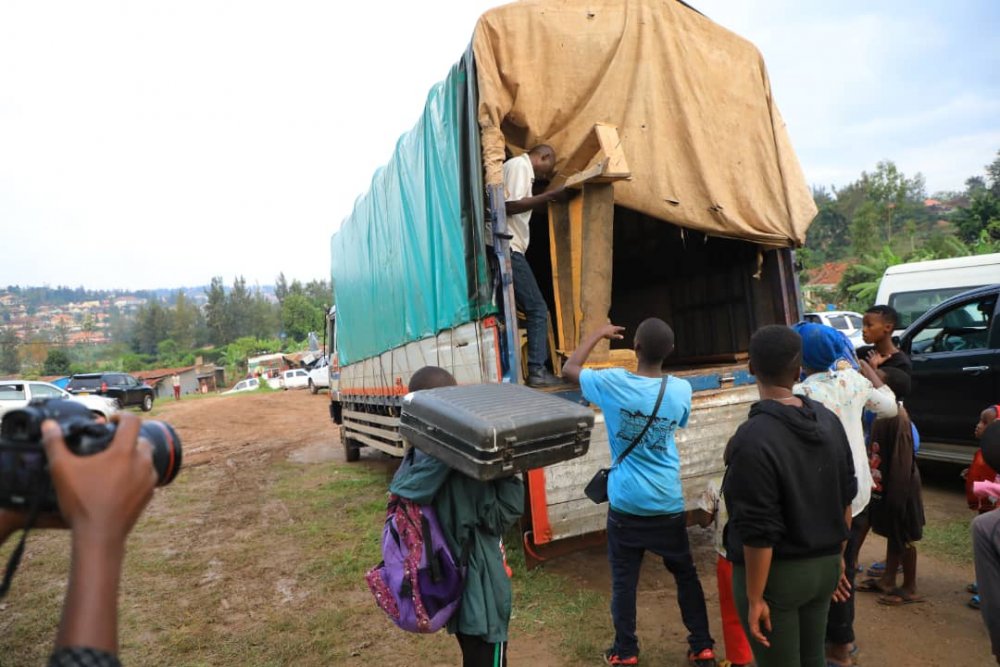
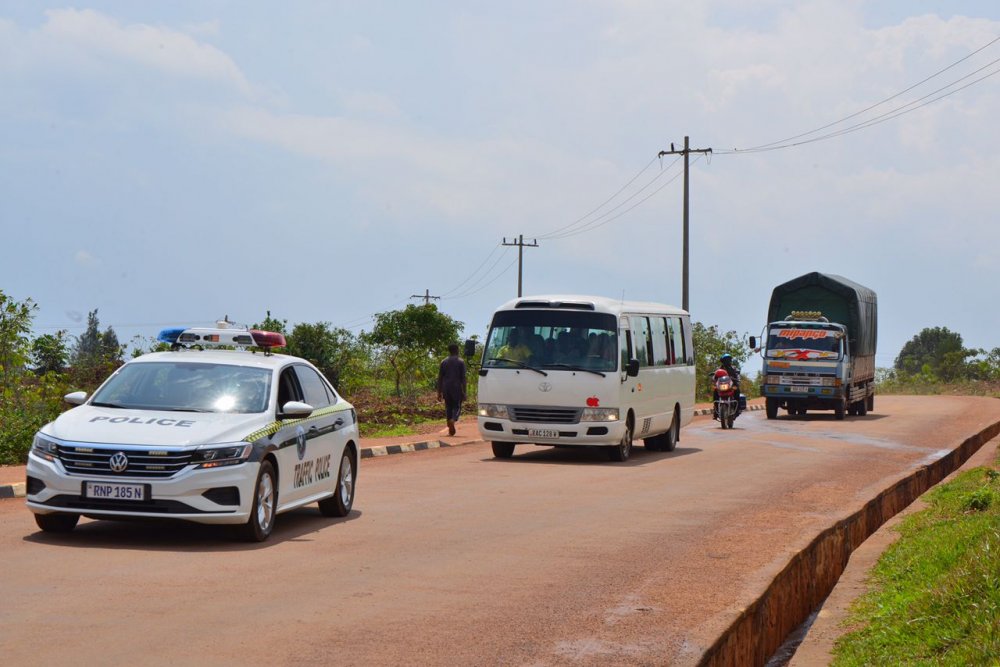
The mass relocation which began in the morning of Thursday 15th September 2022, followed a period of voluntary relocation where families willing to do so would approach leaders to facilitate their resettlement.
The exercise was initiated through collaboration between local leaders and security officials to ensure a smooth relocation.
It has been five years since the government announced plans to relocate families from the slum but residents expressed frustration against the decision and the expropriation model.
Residents claimed for monetary compensation but the government insisted that relocating them to a model village is the only durable solution lest they end up setting up in other slum areas.
On Thursday, some residents against the decision were reminded that the relocation is in their interests to leave hazardous zones prone to disasters. The area will be developed for projects of public interests that pose no threats to the population.
The Deputy Government Spokesperson, Alain Mukuralinda has said that the relocation goes on in a proper arrangement.
“Properly coordinated resettlement to decent places is the right of every Rwandan and the responsibility of the government to oversee its execution. The relocation of residents from Kibiraro and Kangondo to Busanza was planned ahead that no one will be subjected to harassment,” he said.
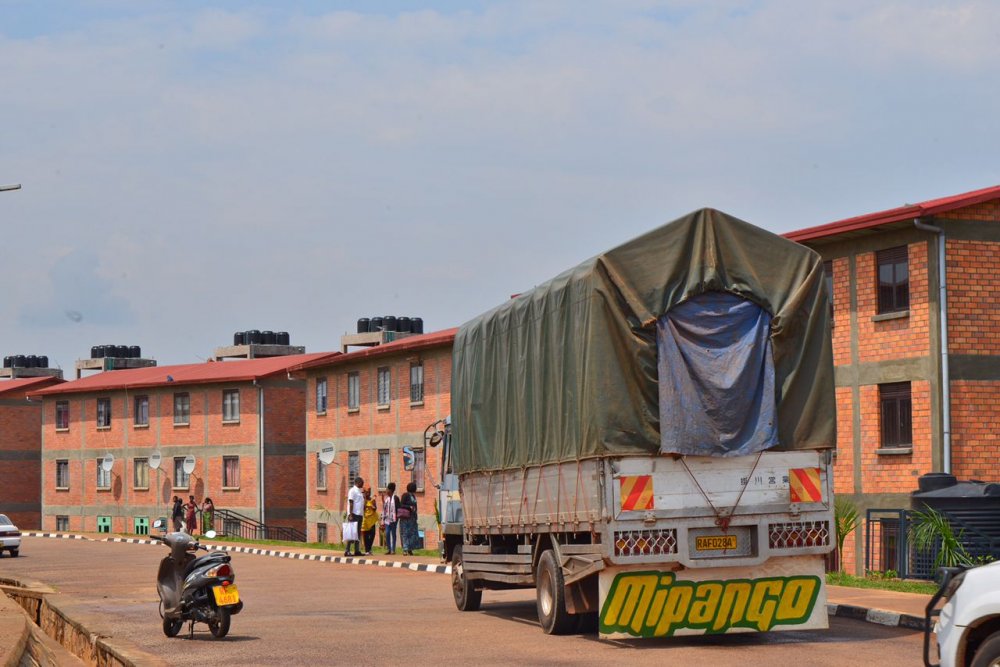
Théogène Ngendahayo from Kangondo II is among relocated residents. He received a unit comprised of one bedroom, a sitting room, kitchen, bathroom and toilet inside the building.
Despite initial resistance, he finally agreed to move to the new estate from a disaster-prone zone.
“I had many structures but their value is below the newly received shelter. I thank the government for overseeing our interests and the support extended to citizens to move to decent houses,” said Ngendahayo.
The man who had a small house with three bedrooms and a sitting room has called on reluctant residents to change their mindsets and leave the high-risk area.
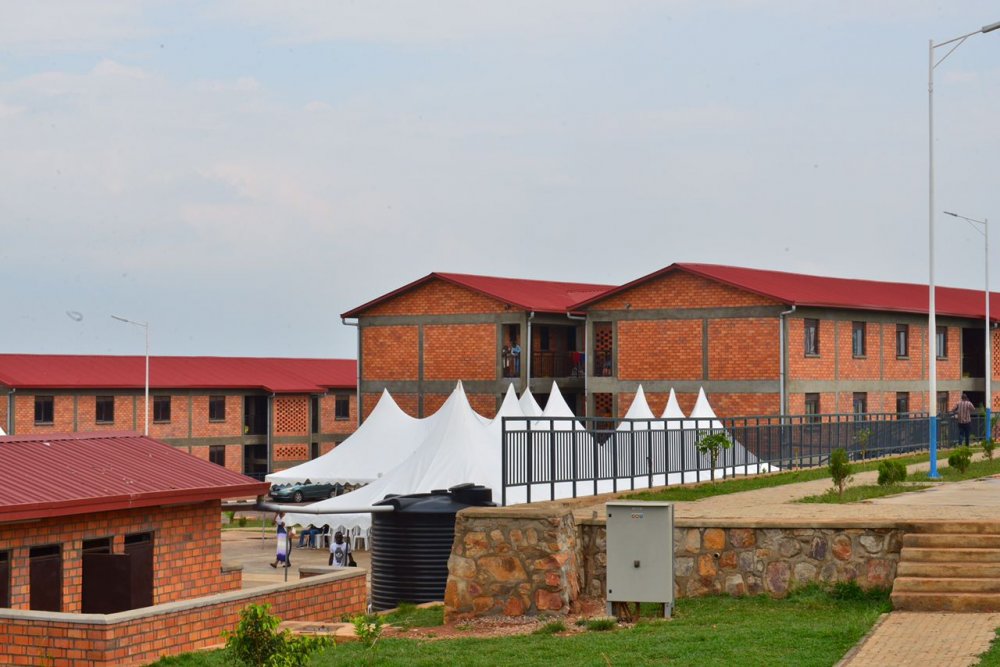
The Deputy Executive Administrator of Kicukiro District, Adalbert Rukebanuka has said that the model village has all needed equipment and infrastructures for residents to lead dignified life.
“These residents are joining previously relocated batches and need not worry because their wellbeing and safety is guaranteed. Residents staying in this village range from different segments including public servants and traders among others. This should send a message to reluctant families that living here does not restrict them from continuing their businesses to feed their families and contribute to national development. They are welcome to the village,” he said.
Busanza Housing Estate is located in Kanombe sector in Kicukiro district. It is comprised of different blocks to accommodate families who were living in Kigali’s largest slum bringing together three zones; Kangondo I, Kangondo II, and Kibiraro I.
Each of resettled residents will receive a unit equivalent to his/her properties.
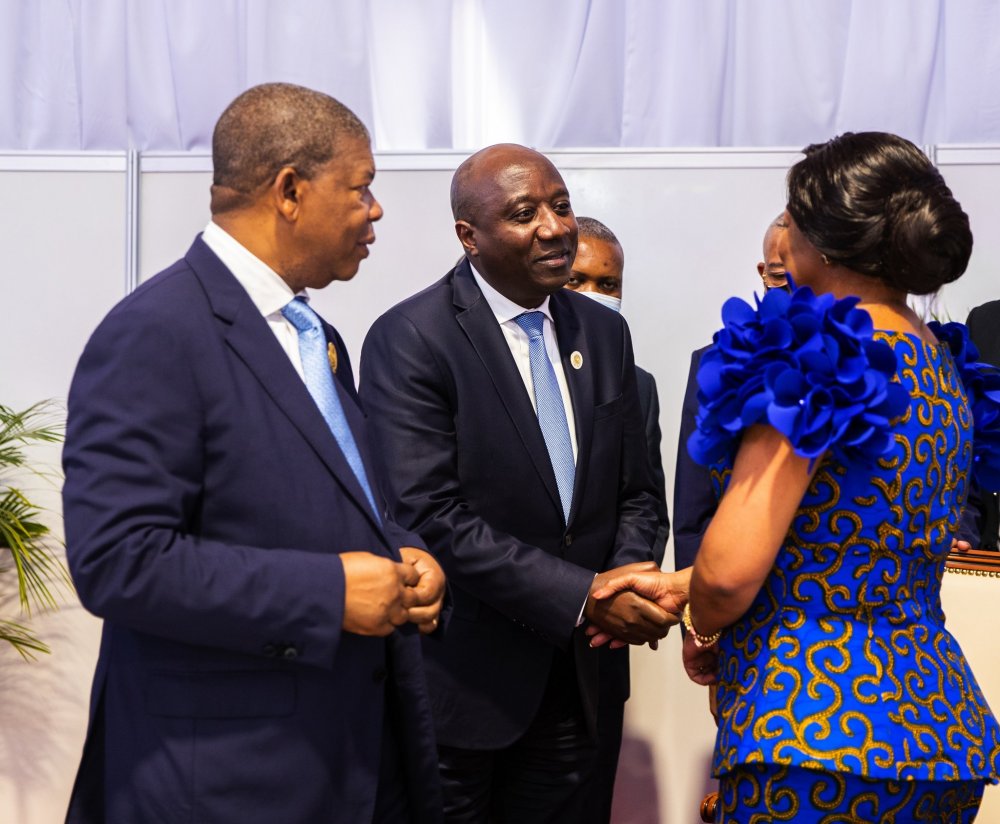
President Lourenço was sworn in to lead the country for another term during a colorful ceremony which took place on Thursday 15th September 2022 at Praca de Republica Luanda, the capital of Angola.
It was attended by African Heads of State including Emmerson Mnangagwa of Zimbabwe, Hage Geingob of Namibia and Marcelo Rebelo de Sousa, the President of Portugal which colonized the country.
President Kagame was represented by Premier Ngirente who arrived in Angola on Thursday morning.
During the inauguration ceremony, the sworn-in president pledged to selflessly serve all Angolan citizens and tackle the issue of joblessness.
Lourenco,68, was sworn in along with Esperanca da Costa, the country’s first ever female vice president.
He was re-elected following the victory of the People’s Movement for the Liberation of Angola (MPLA), Angola’s ruling party which was declared the winner of the 2022 general elections held last month with 51.17 percent of the votes cast.
The nation’s largest opposition party, the National Union for the Total Independence of Angola (UNITA), gained 43.95 percent of the total votes cast.
In accordance with the Angolan constitution, the top candidate of a political party that wins the most votes is elected as president.
MPLA has ruled the country for almost 50 years after the country’s Independence in 1975.
It is however blamed for failure to address the issue of poverty and high rate of unemployment.
Lourenço was elected Angolan president in 2017 replacing José Eduardo dos Santos.
Dos Santos died of natural cause in July this year. He breathed the last in Spain where he was taken for treatment.
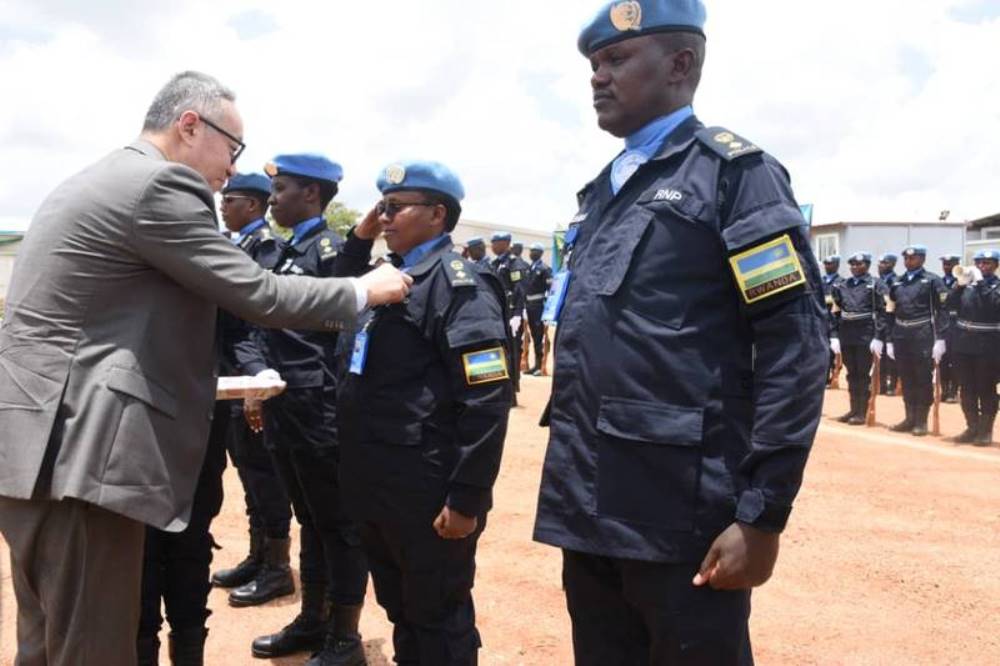
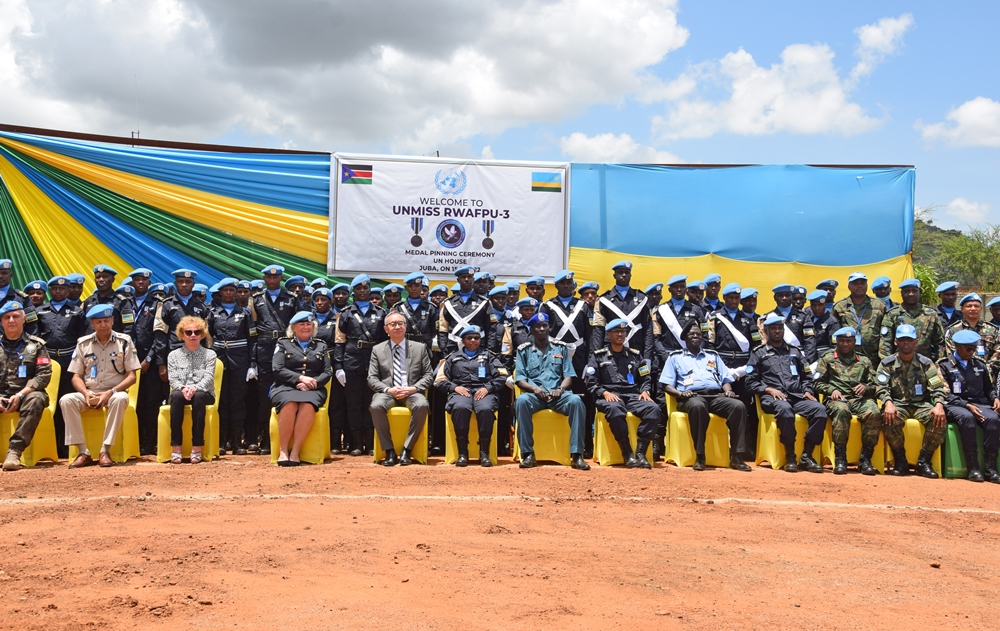
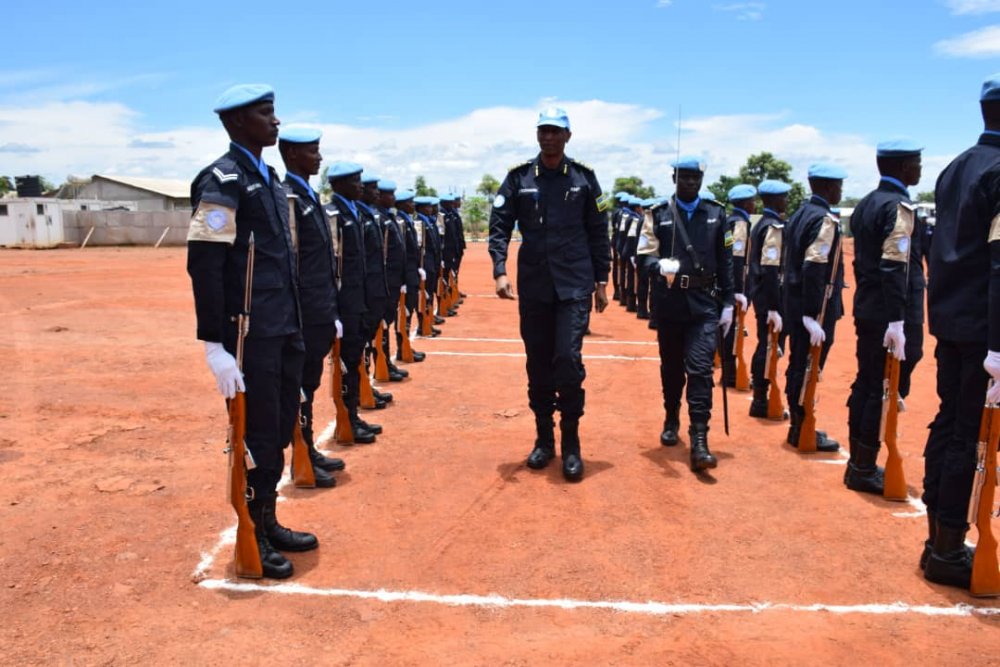
The colourful medal pinning ceremony of the 160 officers of Rwanda Formed Police Unit Three (FPU-3) operating in the capital Juba and 27 Individual Police Officers (IPO), was presided over by the Deputy Special Representative of the Secretary General to the UN Mission in South Sudan (UNMISS), Guang Cong.
It was also attended by the UNMISS Police Commissioner, Madam Christine Fossen, Deputy Police Commissioner, Rajender Pal Upadhyaya, heads of other Police and military contributing countries, South Sudan National Police Service (SSNPS) and the Rwandan community in South Sudan.
Mr. Cong thanked the Government of Rwanda for its commitment to the UN missions globally and South Sudan in particular.
“Rwanda is the 4th largest contributor in UN Peacekeeping operations and the first female peacekeeper contributor. It is a great pride. We thank the able leadership under President Paul Kagame,” Mr. Cong said.
He added: “During their tour of duty in UNMISS, Rwandan peacekeepers have exhibited a high level of professionalism and their contribution has helped UNMISS to achieve its mandates.
As we join RWAFPU-3 fellow peacekeepers to celebrate this special day away from their loved ones, we should also remember our continuing commitment to bring lasting peace to South Sudan so that the people of this country can look forward to a brighter and more prosperous future… to continue making a real difference to the lives of the communities we serve.”
The RWAFPU-3 contingent commander, Senior Superintendent of Police (SSP) Marie Grace Uwimana thanked the leadership of UN Police (UNPOL) and the entire UNMISS family as well as the people of South Sudan for their support, cooperation and guidance.
She further thanked all the decorated officers under her command for their professionalism, commitment, teamwork and hard work during their tour-of-duty.
Since their deployment, the decorated officers have conducted various activities including public order management, static duties, supporting Humanitarian activities, providing security and escort duties; patrols, capacity building of the local police and community policing groups, as well as community development activities, among others.
RWAFPU-3 is a fourth rotation that was deployed in November last year, with 50 percent of them females.
It is mandated to ensure protection of civilians, create conducive conditions for the delivery of humanitarian assistance, monitoring and investigating Human Rights violations as well as supporting the implementation of Revitalized Peace Agreement.
The Rwanda Formed Police Unit (RWAFPU2-7) contingent of 180 officers was deployed in north of the country in April, this year.
CP Bizimungu, who was received by the RWAFPU contingent commander, Chief Superintendent of Police (CSP) Hodari Rwanyindo, thanked them for their sacrifice to contribute to peace in the region.
“Your contribution to restoring peace in this country and to the people of Kaga Bandoro is commendable. Maintain the spirit, commitment and professionalism to accomplish your mission mandate,” CP Bizimungu said.
He reminded them that the commitment, dedication, and discipline they exhibit define the level of trust the local people have in them.
The Police Commissioner further observed that since 2016, when the Rwandan police peacekeepers arrived in Nana Gribizi Province, stability has continued to improve.
“This areas was destabilized by rebel groups but today, people go about their work without any threats. You are here to make sure that the safety and security continues to improve…that is what those under your protection expect from you,” CP Bizimungu said.
Rwanda maintains three contingents in Central African Republic, including two Formed Police Units (FPUs) and a Protection Support Unit (PSU), with combined strength of 460 Police officers.
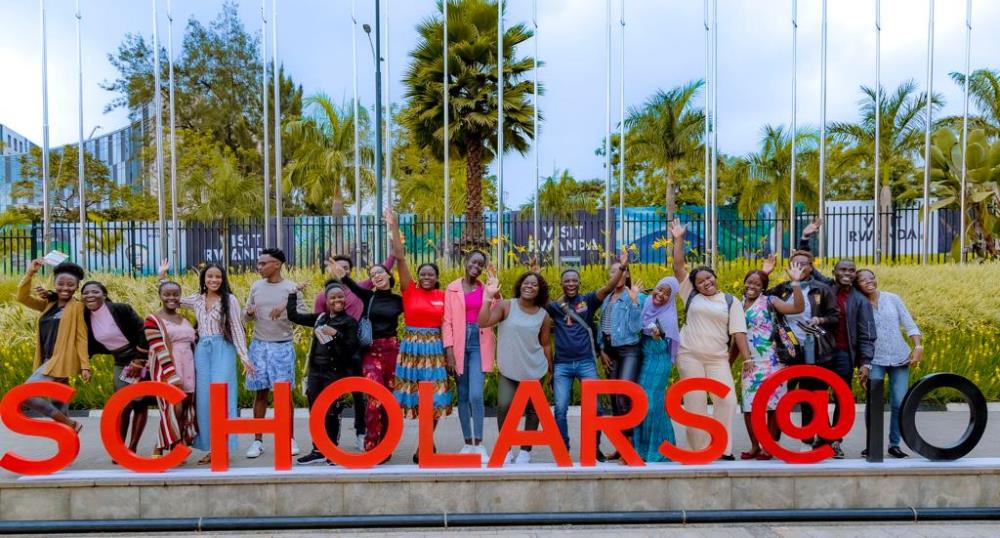
“Through a network of extraordinary partners, the Mastercard Foundation Scholars Program is enabling thousands of bright and deserving young people to accessquality education and develop as leaders who give back to their communities and help to improve the lives of others. Mastercard Foundation Scholars and Alumni are leaders and innovators; activists and entrepreneurs; tackling everything from climate change to health inequity. Their collective impact will be felt for generations to come,” says Reeta Roy, President and CEO of the Mastercard Foundation.
According to a 2020/2021 survey of a sample of Alumni from the Program, 87 percent of secondary-school graduates and 71 percent of university graduates are employed. Where Alumni have become entrepreneurs, they have collectively created over 16,000 jobs. In addition, 40 percent of university graduates say they are now supporting the education of their siblings. Importantly, Mastercard Foundation Scholars unanimously express a strong commitment to giving back to their communities, which is a core principle of the Program. During their education, each person creates or participates in a project, which address a specific challenge in their communities.
“Throughout my journey as a Mastercard Foundation Scholar, it has always been about being a better version of yourself so that you can go back to your community and help others,” says Joanna Gunab, who is now a medical doctor practicing in Northern Ghana. Joanna, a young woman living with a disability, also runs an initiative to support students with basic school necessities.
Another Alumni of the Mastercard Foundation Scholars Program, Faith Kipkemboi, is driving transformation in her native Kenya. She founded a community-based organization, Cactus Mama, to deliver evidence-based, high-quality, and affordable mental health services in remote areas, especially for women. “We hope to create a better Kenya; a healthier Kenya,” she says.
The Mastercard Foundation Scholars Program began with a strong focus on secondary education, working with partners such as CAMFED, BRAC, Forum for African Women Educationalists (FAWE), the African Leadership Academy (ALA), and the Equity Group Foundation (Wings to Fly) to provide young people with access to high school and improve completion rates —particularly for girls.
As more African countries adopt free secondary education policies, the Mastercard Foundation Scholars Program has focused its attention on higher education, where tertiary enrollment rates across the continent remain low. At the same time, the Mastercard Foundation is continuing to improve quality, relevance, and inclusion in secondary education to prepare young people for the world of work.
“Our partnership with the Mastercard Foundation Scholars Program is exceptional and has enabled us to fulfill our vision for the post-secondary school years,” says Ann Cotton, Founder and Trustee of CAMFED International. “Every child matters and the Foundation looks at justice in the broadest possible sense, from the most impoverished [and] marginalized child to the most powerful institution with whom they work. And there is authenticity at every point on that trajectory.”
The Mastercard Foundation Scholars Program has grown into a network of over 40 pan-African and global partners working together to drive inclusion in education. African organizations represent more than 45 percent of this network.
Over the next decade, the Mastercard Foundation Scholars Program will double its reach to support a total of 100,000 young people, 70 percent of whom will be young women. It will also dedicate more attention to the inclusion of disabled and forcibly displaced young people.
Moving forward, the Mastercard Foundation will also continue to support the network of higher education partners to promote innovation and entrepreneurship in ways that enable dignified work for young people in Africa. This is in line with the Foundation’s Young Africa Works strategy, which aims to enable 30 million young people across the continent to access dignified and fulfilling work by 2030.
{{Quotes from scholars and scholars program partners}}
{{Susan Davis, Founding President and CEO, BRAC USA}}
“You interview the Scholars, they all wanted to do something not just for themselves but for the others—others in their family, others in their community…They are very much motivated by an altruistic spirit. And I think that is the power of this transformative approach. I really don’t think there is a better way than investing in young people.”
{{Chris Bradford, Founder and Chairman, African Leadership Academy}}
“Where do I hope the Mastercard Foundation Scholars Program will be in 10 years? I hope that it will have an alumni network that is so vibrant that Scholars from the first classes are choosing to invest in the success of the incoming cohort. That is the single thing that we must get. If we get that right, we will have a metaphor that does not work in most of Africa, but we will have a snowball rolling downhill and gaining momentum in size as it goes.”
{{Arturo Condo, President, EARTH University}}
“The Mastercard Foundation Scholars Program has been a great means for EARTH University to increase awareness of issues of climate change, especially in rural areas, and around agriculture, in Africa. Before the Mastercard Foundation Scholars Program, we had a small percentage of African students in our program who faced different, but connected, climate change challenges compared to Latin America. And for us, it has been a great opportunity to learn more about other realities and also to contribute with the thinking and the learning of the past few decades.”
{{Professor Michael Crow, President, Arizona State University}}
“My hope for the Scholars Program is that by 2030 we have hundreds and hundreds of leader driven networks throughout Africa that are transforming everything.”
{{Patrick Awuah, President and Founder, Ashesi University}}
“The Mastercard Foundation set up this Program that really put everybody on a level playing field, and completely changed the game for those students that (so needed) support. It was very clear to the Mastercard Foundation, that the students—the young people—were the North Star.”
{{Godiolla Akimana is currently a Mastercard Foundation Scholar at the American University of Beirut}}
“Being a Scholar means that I am a transformative leader, devoted to bringing economic and social change in my home country, in my region, and the whole African continent.”
{{Maxwell Aladago, Graduate of Ashesi University, PhD student at Dartmouth College, where he is currently focused on AI research for solving some of Africa’s most pressing challenges}}
“Besides having access to listening ears, the comprehensiveness of the Mastercard Foundation Scholars Program played an immense role in who I have become. By not having to worry about food, the cost of living and books, I had enough quality time to prepare myself for post-graduation life. [I took advantage of] the full benefits of Ashesi’s diverse culture by hanging out with international students. I also benefitted a lot from Scholars’ development initiatives such as the summer internship fund, which sponsored my first internship. Through the internships and from interacting with my colleagues at Ashesi, I learned to engage meaningfully in professional conversations and adapt to new cultures. Goldman Sachs employed me largely because of these qualities, not my technical skills.”
{{Patricie Uwase, Graduate of the University of California Berkeley, State Minister at the Ministry of Infrastructure in Rwanda}}
“I am always reminded of my privilege to have attained the education I have today, and I am forever indebted to everyone who helped me achieve my dream. As international organizations and Africans governments embark on developing the strategies, policies, and practices that will support progress against the SDG’s let them not forget that education underpins it all. And that a dream is what sustains us and keeps us engaged in building a bright future for those who will come after us.”
{{Rahab Wangari, Graduate of Ashesi University and Carnegie Mellon University Africa (CMU-Africa), Founder of Hepta Analytics}}
“With the help of the Mastercard Foundation, I have been able to attain a world class education not only once but twice. This exposure opened doors for me where I met like-minded people who are passionate about solving African problems. It was with these experiences that I launched my own social venture, Hepta Analytics.”
{{About the Mastercard Foundation}}
The Mastercard Foundation works with visionary organizations to enable young people in Africa and in Indigenous communities in Canada to access dignified and fulfilling work. It is one of the largest private foundations in the world with a mission to advance learning and promote financial inclusion to create an inclusive and equitable world. It was established in 2006 through the generosity of Mastercard when it became a public company. The Foundation is an independent organization, and its policies, operations, and program decisions are determined by its own Board of Directors and senior leadership team. It is a registered Canadian charity with offices in Toronto, Kigali, Accra, Nairobi, Kampala, Lagos, Dakar, and Addis Ababa.