{Luis Suarez’s Barcelona debut ended in defeat as Real Madrid cut the gap on the La Liga leaders to just a point as they came from behind to win El Clasico 3-1 on Saturday.
}
Playing for the first time in a competitive game since being handed a fourth month ban for biting Giorgio Chiellini at the World Cup, Suarez’s Barca career had got off to a flying start as he set up Neymar to slide home the opening goal after just three minutes.
However, Real responded like European champions as Cristiano Ronaldo levelled from the penalty spot before second-half goals from Pepe and Karim Benzema handed them a deserved ninth consecutive victory in all competitions.
{Construction of the railway line from Tanzania to Burundi and Rwanda could start next year after the three countries hired a transaction advisor for the project.
}
Canadian Pacific Consulting Services (CPCS), railways transportation services consultancy firm is to source funding and investors in the planned railway line connecting the three countries.
The hiring by the governments of Burundi, Rwanda and Tanzania, which are jointly funding the project, paves the way for CPCS to market the project to investors and ultimately attract financiers.
A functional and reliable railway line along the Central Corridor is seen as crucial in bringing down transport costs and also as key oto protecting roads, which are being damaged by heavy trucks.
Information from the Dar es Salaam-Isaka-Kigali / Keza-Gitega-Musongati Railway project co-ordination office in Kigali indicates that the planned 1,672 kilometre standard gauge railway project is to cost the three countries $5 billion.
And the model of investment is a private public partnership. It is also emerging that Chinese, Indian, African and German investors have expressed interest in the project. But what is holding back negotiations is that the three countries have no expertise in the private-public partnership mode of investment for railway project.
“A note of no objection has been sent to African Development Bank and should the bank okay it, CPCS will start marketing the project to prospective investors,” said a source in the Rwanda Transport Development Agency.
AfDB is a key financing agency of this project after studies that have informed the three countries about the viability of the project.
Traders spend 40 per cent of the cost of an item on transport partly because of an inefficient railway system, a poor road network and growing non-tariff barriers.
{The number of cases in the Ebola outbreak has exceeded 10,000, with 4,922 deaths, the World Health Organization says in its latest report.
}
Only 27 of the cases have occurred outside the three worst-hit countries, Sierra Leone, Liberia and Guinea.
Those three countries account for all but 10 of the fatalities.
Mali became the latest nation to record a death, a two-year-old girl. More than 40 people known to have come into contact with her have been quarantined.
The latest WHO situation report says that Liberia remains the worst affected country, with 2,705 deaths. Sierra Leone has had 1,281 fatalities and there have been 926 in Guinea.
Nigeria has recorded eight deaths and there has been one in Mali and one in the United States.
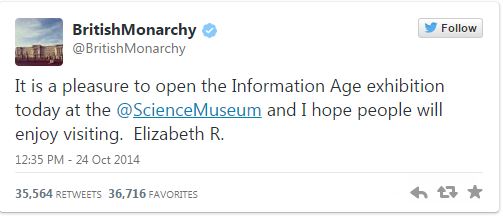
{{London}} – {Queen Elizabeth II has sent her first tweet — and she’s signed it “Elizabeth R.”
}
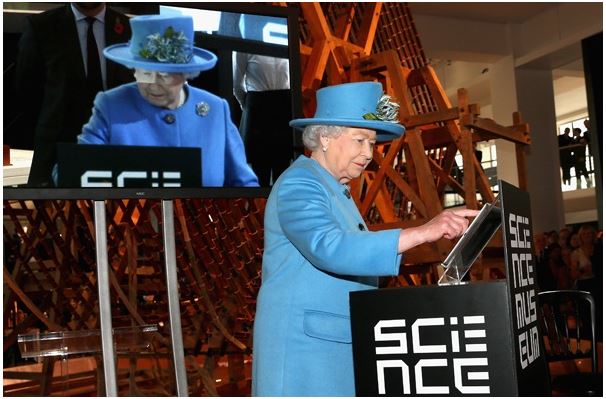
The queen removed a glove to type on a touchscreen tablet, writing “I hope people will enjoy visiting” the exhibition. She sent it through the official British monarchy account under the Twitter handle @BritishMonarchy on the social media website, as some 600 guests looked on.
{{Check out the tweet:}}
Most members of the royal family do not tweet personally – they are represented by official accounts managed by spokespeople.
The gallery, called “Information Age,” explores the technological breakthroughs that have changed communication.
{{Check out a pic taken as the Queen sent out her first tweet:}}
The queen was the first monarch to send an email, in 1976 when the technology was in its infancy.
{{
– AP}}
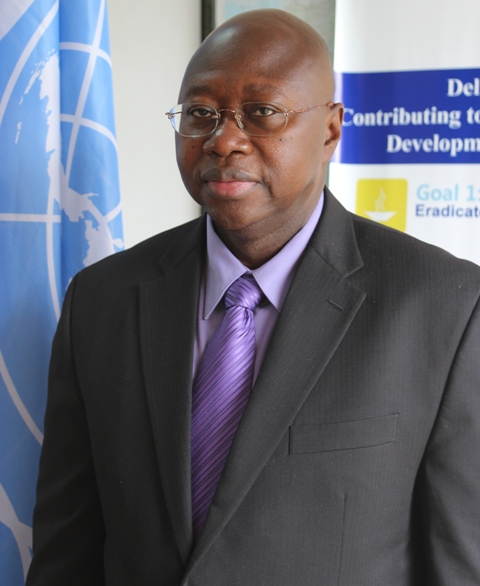
Today, Rwanda will once more join the global community in celebrating the United Nations (UN) Day, which constitutes the anniversary of the founding of the UN on October 24th, 1945.
The signing of the UN’s Charter in San Francisco, USA, on that day was a solemn pledge to the world’s people to prevent serious and widespread assaults on human dignity and the wholesale destruction of human life, infrastructure and properties as happened during the WWII as well as to always provide assistance and protection to affected populations in the face of natural disasters and emergencies. It was also a pledge to promote sustainable development of all countries within peaceful environments.
With the passage of time, the UN Day celebrations have also come to provide the opportunity for recognizing the important contributions that the Organization has made to world peace, security, humanitarian response and development. Numerous UN workers continue to risk their lives in many parts of the world to protect innocent civilians from the ravages and destruction of war and natural disasters. Many have made the ultimate sacrifice of giving their lives while carrying out their duties in such processes.
The UN’s landmark integrated approach to security, humanitarian assistance and sustainable development makes it a unique partner for countries and people throughout the world in their search for human security, good governance, peace and inclusive development. This is particularly underscored by the Millennium Development Goals, which have provided the world with a unique compact for combating extreme poverty, disease burdens, environmental deterioration and promoting gender equality and much better international cooperation.
But over the past few years the UN Day has also increasingly prompted a somber reflection on the deepening challenges it is facing in terms of the sheer magnitude of problems that the world is facing against the dwindling resource base of the Organization. The resurgence of conflicts and terrorism over the past few years in so many parts of the world, notably the Middle East and North Africa and the outbreak of epidemics like Ebola in West Africa as well as the worsening effects of climate change have presented the UN with unprecedented challenges.
These challenges notwithstanding, there are important achievements from the UN’s work to celebrate. We are currently in the last year of the Millennium Development Goals (MDGs) implementation and they have helped to galvanize more holistic development efforts at both the global and national levels. With the agreed deadline for the MDGs fast approaching, the UN has been working with governments, civil society and other partners to build on the momentum generated by the MDGs and fashion an ambitious post-2015 development agenda.
The decisions that will be finally adopted next year regarding this new agenda will undoubtedly lead to a much more decisive global action plan for ending poverty, ensuring prosperity and well-being for all, stepping up of environmental protection and addressing climate change threats effectively.
As the UN Secretary-General puts it, “the UN treaties addressing inequality, torture and racism have protected peoples, while other agreements have safeguarded the environment. UN peacekeepers have heroically separated hostile forces, our mediators have settled disputes and our humanitarian workers have delivered life-saving aid”.
There is no doubt that more than ever before, the United Nations is needed in addressing the multiple crises and conflicts around the World. Despite some of the much discussed deficits of the Organization, it is uniquely placed to lead the global response to epidemics, terrorism, war, discrimination, poverty and climate change.
In Rwanda, the UN has continued over the past year to reinforce its delivering as one (DaO) frameworks and mechanisms, building upon the successes of the pilot phase of the DaO between 2008 – 2012. These processes have rendered the UN’s operations more relevant, efficient, effective and results-oriented. Thus the UN system in Rwanda is currently is better placed to support the country’s accelerated poverty reduction and transformational agenda as encapsulated in Vision 2020 and second the Economic Development and Poverty Reduction Strategy (EDPRS II), 2013-2018.
Within the framework of the Rwanda UN Country Team’s single business plan, the United Nations Development Assistance Plan (UNDAP) 2013-2018 the UN agencies are implementing joint programmes in the areas of Inclusive Economic Transformation, Accountable Governance, Human Development as well as Humanitarian Actions and Disaster Management. Thus, its programmes are responding directly to the key priorities of the country’s medium-term priorities.
Rwanda has not only sustained its contribution to UN reforms at both national and global levels, but it continues to expand its contributions to UN Peace Keeping missions in various parts of the world. It is also among the few countries in Africa that are on track to meeting the MDGs, and it is also already playing a lead role in the fashioning of the Post-MDGs agenda. All this is a clear testimony to the commitment of the Rwandan leadership to the fulfillment of the key ideals underpinning the founding of the UN and successful domestication of important international agreements.
This year, with the development and implementation of UN – supported joint programmes, the UN family in Rwanda has engaged even more vigorously the Government of Rwanda and its development partners for the country’s transformation and sustainable development, trying to put into effect the words of the UN Secretary-General Ban Ki-moon who called on “Governments and individuals to always work in common cause for the common good”.
{The M23 Movement has condemned the government of DRC President Joseph Kabila over the “unacceptable laissez faire attitude” towards North Kivu after the Ugandan rebel group, ADF, slaughtered scores of civilians especially women and children in the worst massacres since the year began.}
The criminal attacks were perpetrated in the Ngadi and Kadou localities near the town of Beni, sparking outrage from the international community.
M23 which used to operate from Kivu said, “Our fellow North Kivu compatriots and those of the “Great North” are looking like orphans at the moment as they are suffering the abject cruelty of the ADF, a group which is murdering them under the incomprehensible and unacceptable silence of the country’s highest authorities.”
The group’s leader, Bertrand Bisiimwa exclusively told Chimpreports on Thursday the killings in Eastern Congo were “predictable and therefore preventable,” but that the war-torn area “has not got a special attention from the Government to put in place a conflict prevention strategy.”
Bisiimwa observed that the area is known to be infested with bandits especially ADF, “an enemy well known for its recurring criminal activities against civilians for decades.”
He alleged the attackers were able to inflict considerable damage on the civilian communities because “they would take several hours killing people without any intervention by DRC forces.”
“The criminal actions took place in an area concentrated with several regiments of the Government’s army and MONUSCO’s units which have been preparing for combat against negative groups,” said Bisiimwa.
Following the defeat of M23 in December 2013, DRC troops and a UN intervention Brigade decided to fight the deadly ADF movement.
On 17 January 2014, FARDC launched ‘Operation Sukola I’ against ADF in Beni territory of North Kivu Province to neutralize the ADF and its leaders, release remaining hostages and completely restore State authority in the affected areas.
FARDC claims dislodging ADF from their bases with heavy gun power.
Highly placed sources say over 500 DRC soldiers were killed in the war against ADF.
However, pressure is mounting on Congo to fully clean Eastern Congo of militants occupying large swathe of territory and restore full state control.
Bisiimwa maintained that government’s failure to prevent the massacres underlines the “complacency and procrastination of the DRC’s Government which is in favour of the negative forces which are one of the main causes of chronic insecurity that has brought sorrow to our families and asphyxiated our towns and villages for three decades.”
He also denounced what he termed as the “surprising and unjustified passivity of the MONUSCO and its Brigade’s response to the various negative forces whose neutralization is, however, the basis of its mandate granted by the Security Council of the United Nations in its resolution 2098.”
Bisiimwa told the international community that security and peace will not come from the “outside but will be the result of our own efforts, our reconciliation and our sacrifices. The tragedy facing the ‘great-North’ at the moment, despite the strong presence of the MONUSCO’s forces in North-Kivu, proves it.”
{NASA’s Solar Dynamics Observatory (SDO) has spotted an image of a gigantic sunspot – the largest in last 24 years.}
The flare erupted from a particularly large active region dubbed as AR 12192.
The sunspot soon grew to be the largest active region observed in the current solar cycle – a periodic change in the Sun’s activity and appearance – which began in 2008.
This is the fourth substantial X-class flare from this active region since Oct 19.
“The sunspot region is about 80,000 miles across, which is wide enough for 10 Earths to be laid across its diameter,” NASA said in a statement.
X-class denotes the most intense flares, while the number provides more information about its strength.
Solar flares are powerful bursts of radiation. Harmful radiation from a flare cannot pass through Earth’s atmosphere to physically affect humans on the ground.
These can also disturb the atmosphere in the layer where GPS and communications signals travel.
{A Rwandan media regulatory body said Friday it opposed calls for the BBC to be banned from broadcasting in the country after it aired a controversial documentary on the country’s leadership and the genocide of 1994.}
The Rwanda Media Commission (RMC), an independent body, said the programme was “insulting” and that the BBC was guilty of “distorting the history of genocide”, but added a ban “should not be the solution”.
Earlier this week furious lawmakers in parliament called for the FM licence the BBC uses to broadcast across the country — in English, Kinyarwanda and French — to be withdrawn.
The BBC documentary, “Rwanda’s Untold Story”, was broadcast earlier this month and highlighted growing criticism of President Paul Kagame and revived allegations that his Rwanda Patriotic Front (RPF) — then a rebel group, now the ruling political party — was behind the shooting down of a plane that triggered the genocide.
President Kagame told parliament earlier this month that the BBC had chosen to “tarnish Rwandans, dehumanise them” and accused it of “genocide denial”.
“We all understand that the documentary is insulting, is distorting the history of genocide against Tutsis but taking the further step to revoke the licence of BBC should not be the solution,” said RMC president Fred Muvunyi.
“The BBC does not only broadcast news about Rwanda but worldwide news. Revoking the licence… punishes the ordinary people who benefit from what we listen to BBC,” he said, calling on the government to “ignore the parliament’s recommendations.”
Prominent international academics, experts and diplomats have also accused the BBC of being “recklessly irresponsible” by allegedly promoting a revisionist account of the genocide in the documentary, notably by questioning the number of Tutsis who were killed.
{Victoire Ingabire has filed a complaint with the African Court on Human and Peoples’ Rights to demand a retrial, officials said Friday.}
Ingabire was sentenced last December to 15 years in jail for “conspiracy in harming authorities through terrorism and war” and for minimizing the 1994 genocide against Tutsis.
She was also found guilty of spreading rumors to incite violence.
Ingabire had denied the charges against her and boycotted her trial and subsequent appeal, which saw her prison sentence increased from eight years.
According to Ingabire’s unrecognized opposition United Democratic Forces (UDF) party, the opposition figure has called on the Arusha, Tanzania-based African Court on Human and Peoples’ Rights to “order a revision” of her trial.
The UDF said her trial was “marked by numerous irregularities”, and said Ingabire should be freed pending a retrial and paid damages for her “arbitrary detention”.
Her lawyer, Iain Edwards, confirmed a complaint had been lodged, although a court source said it had yet to be examined.
The African Court on Human and Peoples’ Rights is a continental court established by African Union member states.
{The Rwandan government has suspended all BBC radio broadcasts in Rwanda’s most common language to protest against the news organization’s recent documentary about the 1994 genocide in the country.}
Government, members of parliament and genocide survivors have expressed their anger at the BBC over the recent documentary that suggested the country’s president may have had a hand shooting down his predecessor’s plane.
Its hour-long documentary, Rwanda, The Untold Story, also quoted US researchers who suggested that many of the more than 800,000 Rwandans who died in the 1994 genocide may have been ethnic Hutus and not ethnic Tutsis as the Rwandan government maintains.
Late on Friday, the Rwandan Utilities Regulatory Authority announced the suspension of the BBC’s broadcasts in the local language, Kinyarwanda. The board said it took the action because it has received complaints of “incitement, hatred, divisionism, genocide denial and revision” from the public. It said further action could be taken.
The BBC had defended the film on Friday, saying it had a “duty to investigate difficult and challenging subjects”.
Rwandan minister of foreign affairs Louise Mushikiwabo said the documentary was an “attack on Rwanda and its people” and that her government is contemplating taking action against the BBC.
Earlier this week the Rwandan parliament passed a resolution to ban the BBC and to lay charges against the journalists behind the documentary.
“What we are saying is that this gross denial of the genocide and disregarding facts to trivialize our history should not go unpunished,” the president of the senate, Bernard Makuza, told AP.
The Rwandan law-makers are demanding an apology from the BBC. University students also held a protest march against the documentary.
Rwanda accused the BBC of bringing together genocide revisionists in order to distort the facts about the mass killings.