Kigali Fashion Week Grand Finale took place on 7th Nov, 2014. These Pictures were taken by IGIHE Reporter.
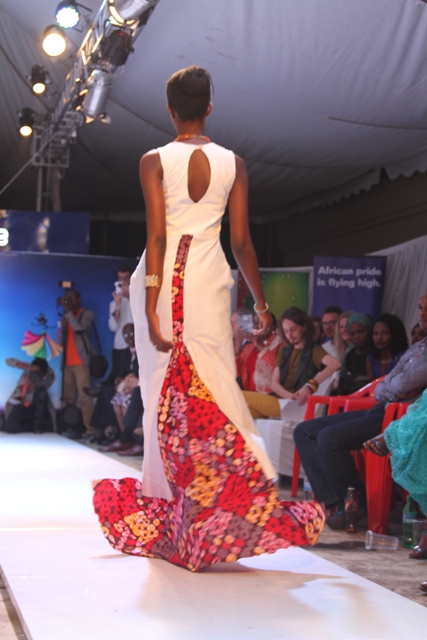

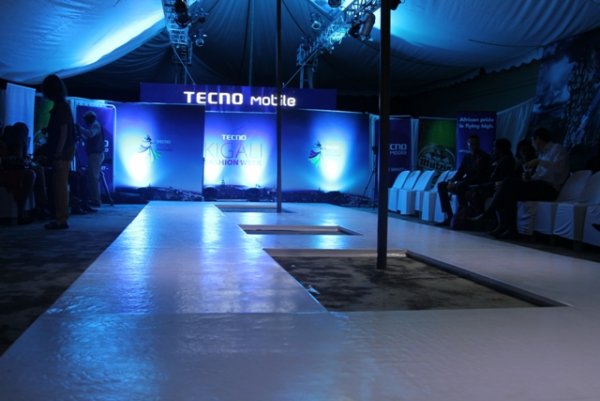

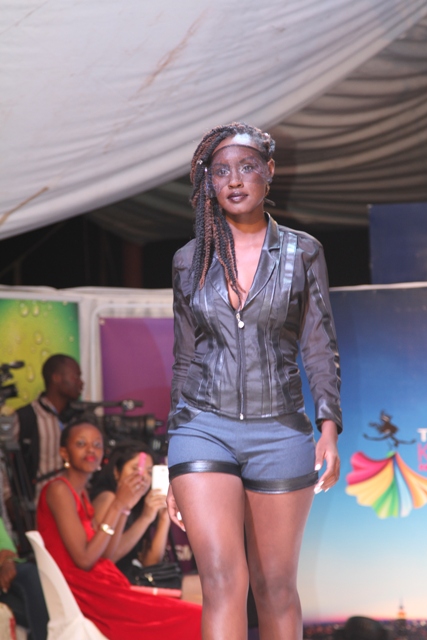
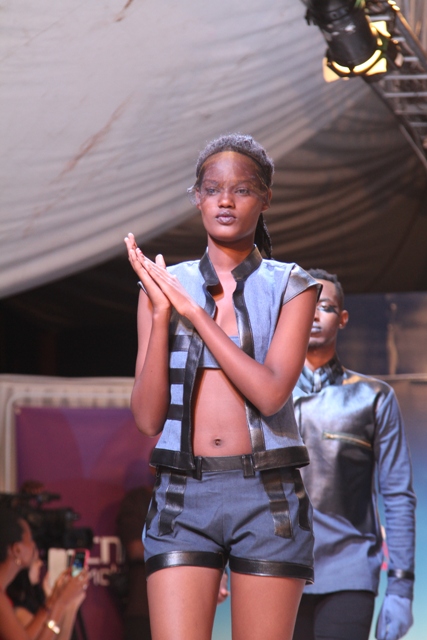


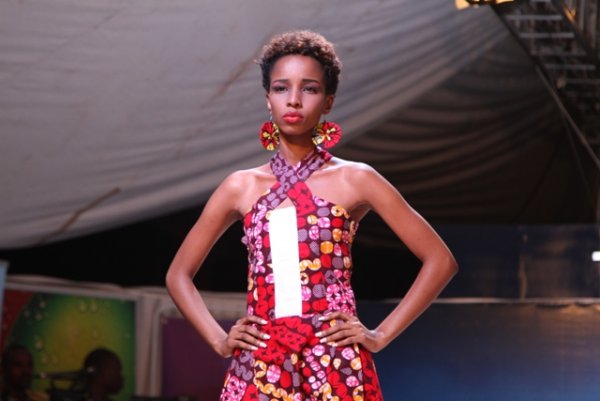

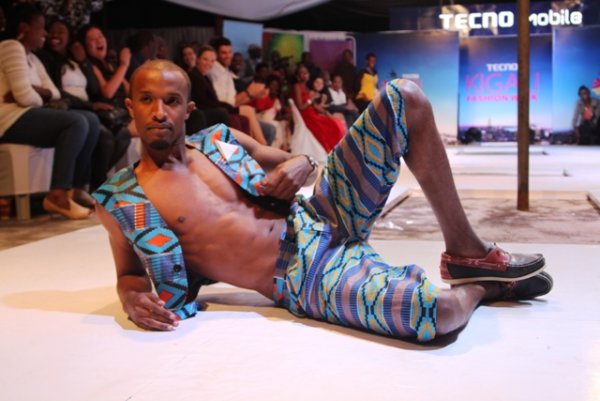



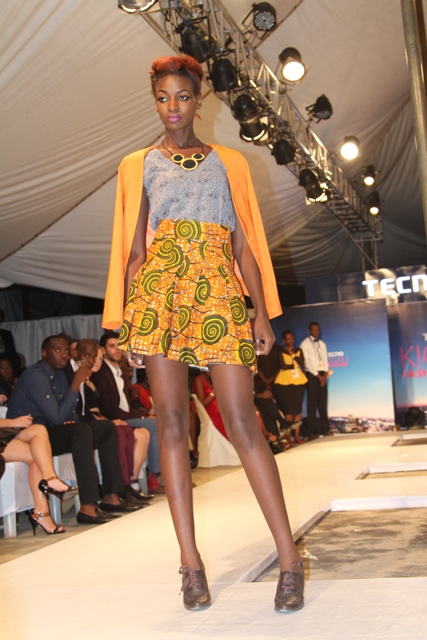
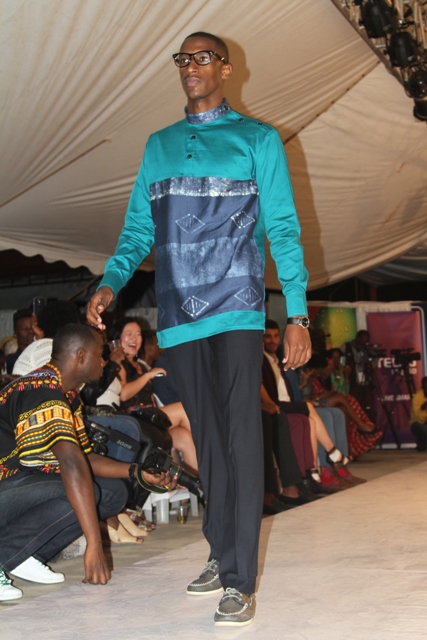


Kigali Fashion Week Grand Finale took place on 7th Nov, 2014. These Pictures were taken by IGIHE Reporter.

({{Chimpreports}})-Regional countries under the umbrella of IGAD have warned South Sudan President Salva Kiir and rebel leader, Dr Riek Machar they will use their military might to intervene in the war-ravaged country should the two warring parties resume hostilities.
The heavy warning was issued after two days of vigorous debate in Ethiopian Capital Addis Ababa where Machar and Kiir fell short of signing a power sharing agreement to mark the beginning of a transitional government in the troubled country.
IGAD said in a statement on Friday night that, “Any violation of the cessation of the hostilities by any party will invite the following collective action by the IGAD region against those responsible for such violations.”
The mediating body said the robust response to violation of the peace agreements will include “enactment of asset freezes, travel bans within the region, denial of the supply of arms and ammunition, and any other material that could be used in war.”
“Further,” read the statement, “the IGAD region shall, without further reference to the warring Parties, take the necessary measures to directly intervene in South Sudan to protect life and restore peace and stability.”
Diplomats told Chimpreports that IGAD leaders particularly Presidents Museveni and Kenya’s Uhuru Kenyatta expressed the urgent need “to use our army to protect the people of South Sudan.”
Museveni was quoted as warning that “for us we are ready to act just like we did when war broke out in December. What happened in Rwanda in 1994 won’t happen anywhere else in this region. The people of South Sudan want peace and development not war and destruction. We will act against parochial forces.”
Insiders say Museveni might use the UPDF elite commando units, warplanes and heavy artillery in a joint offensive with SPLA to defeat Machar with the view of stabilising the region.
IGAD warned that should it be necessary to implement the outlined measures, the region “calls on the Peace and Security Council (PSC) of the African Union, the Security Council of the United Nations, and the entire international community, to render all possible assistance in the implementation of these measures.”
Upon the request of the warring Parties, the Government of South Sudan and the SPLM/A (In Opposition), to be granted additional time to conduct consultations with their respective constituencies on the agreed agenda of the 28th Extra-Ordinary Summit of the IGAD Heads of State and Government, the Assembly accepted the need for a further period of 15 days to be accorded to the parties to complete consultations on these matters.
The Parties also committed to an “unconditional, complete and immediate end to all hostilities, and to bring the war to an end, as of the date of the resolution. The Parties further commit to the immediate cessation of the recruitment and mobilization of civilians.”
Kenya State House said in a statement on Friday night that President Uhuru Kenyatta and host Ethiopian Prime Minister Hailemariam Desalegn held a second day of talks with South Sudan’s political leaders on Friday, “but a deal did not appear imminent.”
Determined to resolve the South Sudan conflict, President Kenyatta – in his capacity as IGAD Rapporteur and EAC chairman – and PM Hailemariam who is IGAD chairman, met South Sudan President Salva Kiir and his former deputy Riak Machar in Addis Ababa on Friday on issues around power-sharing.
This followed similar discussions overnight.
Other regional leaders including President Museveni, Ismael Omar Guelleh (Djibouti) and President Hassan Sheikh Mohamoud (Somalia) also attended the talks.
Each of the South Sudan leaders are attending the talks with senior advisers and negotiators.
The regional leaders affirmed that they will not rest until a comprehensive peace deal is reached. They were due to enter a second straight night of talks to try to bridge the differences between the parties.
“My understanding is that the leaders are determined to make progress as they see this as a pivotal stage in the negotiations,” said Manoah Esipisu, spokesperson for the Kenyan presidency. “But it is, as expected, a difficult process.”

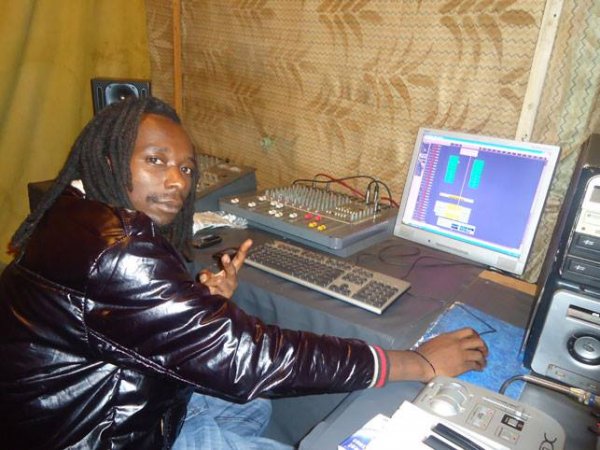
{A popular producer in Rwanda’s music industry Uwayezu Jacques also known as Dr. Jack has died on Friday night due to pulmonary disease, IGIHE has learned on Saturday.}
Friends of Dr. Jack told this web site that he died in Burundi where he was hospitalized one day after his illness became severe.
Producer Dr. Jack worked on several songs include Amahirwe ya nyuma by The Ben.

{President Kagame has said that in order to tackle corruption, you need to start at the top, not with ordinary people. }
While participating at an interactive session of the Africa Leadership Network today in Kigali, where he shared his experiences as a leader, President Kagame said although corruption is not African, the vice has been practiced devastatingly.
“It’s not for lack of knowledge; it is a question of people making the choice to tackle this problem. People can, should and must do something about it. For us in Rwanda, there are no two ways about it, in some countries, they are spoilt for choice, they have resources and can have some to spare after all. We have to confront it head on, in Rwanda, every penny has to count. You have to go for the people at the top and make sure people understand that life can equally be good without corruption.”
On progress in Africa, President Kagame noted that the momentum is on and like any other struggle, it takes time but we have to succeed. He pointed out that it is not enough to know what needs to be done, but Africans must do what needs to be done or they risk not getting the desired results.
On African independence, President Kagame said there is need to raise Africa to a level where it is a player and not a victim.
“Africa is a place where others have conflict over; we are there and caught up in between. We also can’t justify doing wrong things by saying leave us alone this is our sovereignty. Stop seeking validation from what is wrong or right from outside. We can’t live by external dictate. Why should anyone take our resources cheaply or feel entitled to them? We need to raise our voice and stand our ground.”
President Kagame said that Africans need to be consistent and keep proving that what they are doing results into the change that they want.
“We have to ask ourselves if we are getting the results towards goals we have set for ourselves. Those who do the right thing have to be rewarded; those who do the wrong thing have to be held accountable. If we have identified the problem and understand it and have decided to confront it, there has to be fairness in the process”
On Rwanda’s secret to progress, President Kagame said it was the ability of Rwandans to work together and collaborate with others beyond the borders. He pointed out that progress has been made because of millions of individual choices Rwandans have made.
“Rwandans were invited to stand up and face these challenges. That is one reason progress has been made. Having to deal with complex and very challenging problems has its own silver lining.”

{Rwanda is set to launch a high-speed (4G LTE) broadband network on 11th November 2014. The network to be launched was established through an agreement between the Government of Rwanda and KT Corporation, South Korea’s largest telecommunications provider. }
The network to be launched will cover 95 per cent of the population by 2017. While addressing the media on Friday, the Rwanda’s Minister of Youth and ICT, Jean Philbert Nsengimana noted that “The usage of 4G LTE will boost job creation in Rwanda and provide new opportunities to deliver better services across the country.”
The launch will coincide with GLOCAL Innovation Convention on 11th-13th November 2014; GLOCAL is an African Business & Innovation Startup convention that aims at fostering local content development with global marketability among Africa’s budding technology entrepreneurs.
“The rapid deployment of high-speed broadband network in Rwanda will accelerate the Rwanda’s economic growth, create jobs, as well as help facilitate social and economic progress,” Minister Nsengimana stressed. Rwanda continues to be one of the fastest growing African ICT markets, from e-commerce and e-services, mobile technologies, applications development and automation to becoming a regional centre for the training of top quality ICT professionals and research.
With a population of 11.78 million people, Rwanda’s mobile penetration currently stands at 71.6% with internet penetration currently at 25%.
Source: http://www.biztechafrica.com

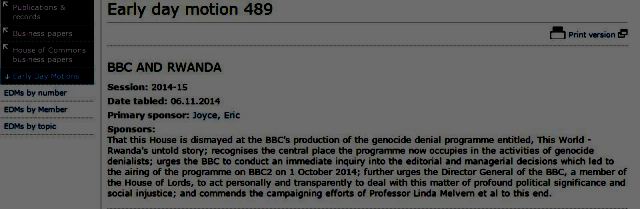
{Members of Parliament in the UK have tabled a [motion->http://www.parliament.uk/edm/2014-15/489] to condemn the BBC’s production of the genocide denial programme entitled, This World – Rwanda’s untold story.}
An Early motion on the Website of the UK Parliament is read: “That this House is dismayed at the BBC’s production of the genocide denial programme entitled, This World – Rwanda’s untold story; recognises the central place the programme now occupies in the activities of genocide denialists”
The house urges the BBC to conduct an immediate inquiry into the editorial and managerial decisions which led to the airing of the programme on BBC2 on 1 October 2014.
It further urges the Director General of the BBC, a member of the House of Lords, to act personally and transparently to deal with this matter of profound political significance and social injustice; and commends the campaigning efforts of Professor Linda Melvern et al to this end.
The documentary in question has led to frustrations among Rwandans in country and broad calling for the legal action against the BBC.
They said the documentary is promoting hatred, revisionism and genocide denial.
As result, Rwanda has suspended BBC broadcasts in the Kinyarwanda language with immediate effect because of a film questioning official accounts of the 1994 genocide.

{Currently the Minister for Internal Security Sheikh Musa Fazil Harerimana shared Rwanda’s experience and success of community policing as an effective tool in the modern policing arena.}
The proactive policing approach is one of the issues discussed during the assembly. Others include building stronger institutions for international police cooperation, technologies and techniques with a view to combat crimes.
“Community policing has been a cornerstone of peace and security in general and crime prevention and reduction in particular; it has simplified the policing architecture in Rwanda,” Minister Harerimana said.
During this year’s general assembly in Monaco, Rwanda hand an exhibition stand where it showcased its beauty and provided relevant information to the representatives over 1, 500 participants on capabilities, development and investment opportunities.

{Rwanda, on November 7 officially received the Interpol flag as a symbol given to a nation that will host its next Annual General Meeting, set to be held in November next year in Kigali.}
The flag handed over by Monaco Police Chief Asso Regis was received by the Inspector General of Rwanda National Police Emmanuel K. Gasana, on behalf of Rwanda.
This was during this year’s annual general assembly for the international Police organization held in Monaco, which started on November 3.
“We are honored to host the next Interpol general assembly. The 2015 General Assembly will also offer participants with a unique experience in an African city that is modern, exceptionally clean and safe, IGP Gasana said.
About 1, 500 people from 190 member countries are scheduled to attend.
“Rwanda is increasingly recognized globally as a politically stable, safe country and with a wonderful environment that combines business with pleasure,” he added.
The nation also known for its slogan, ‘The Land of a Thousand Hills’ has placed itself to a global position as a nation capable of staging world-class meetings after successfully hosting other equally similar international conferences.

{South Africa, the continent’s second-largest economy and biggest power producer, signed a nuclear cooperation accord with China following similar agreements with Russia and France.}
The framework agreement, which is a precursor to procurement, was signed by South Africa Energy Minister Tina Joemat-Pettersson and her Chinese counterpart Wu Xinxiong, the Pretoria-based Department of Energy said today in an e-mailed statement.
South Africa is planning agreements with other countries including Japan as it decides how best to procure as many as 9,600 megawatts of nuclear energy by 2030. The country, which through its state-owned utility has installed capacity of about 42,000 megawatts, is struggling to meet power demand and on Nov. 2 had rolling blackouts, a consequence of decades of underinvestment in generation.
Companies that have expressed interest in building nuclear power plants in South Africa include France’s Areva SA and Electricite de France SA, Westinghouse Electric Corp., a unit of Japan’s Toshiba Corp., Russia’s Rosatom Corp., China Guangdong Nuclear Power Holding Corp. and Korea Electric Power Corp.
Bloomberg

{{Kigali }} – {MTN is pleased to announce partnerships with Access Bank, Urwego Opportunity Bank and GT Bank in providing Mobile Money ATM withdrawal services. MTN Mobile Money subscribers can now withdraw money from their Mobile Money wallets using these bank’s ATMs without the use of a bank card. }
I&M Bank Rwanda now also offers Bank Integration Services where MTN Mobile Money subscribers can transfer money between their Mobile Money and I&M bank accounts.
General Manager of MTN Business, Norman Munyampundu, says bringing additional financial institutions on board creates convenience for mobile money users and showcases MTN’s commitment to continue championing innovation.
In July this year, MTN partnered with KCB and I&M Bank Rwanda to enable MTN Mobile Money subscribers to transfer money between their Mobile Money and KCB accounts, as well as withdraw money from their Mobile Money wallets using I&M Bank ATMs.
“Today we are proud to be partners with MTN Mobile Money as we launch “ATM cardless” withdrawal capability and enable Mobile money subscribers to transfer funds between their Mobile Money and I&M Bank accounts. The extension of this service again reiterates our commitment on financial inclusion. I&M Bank’s endeavor will always be towards bringing affordable and convenient banking services to the segments of our population which hitherto do not have access to banking facilities.” said I&M bank Managing Director, Mr. Sanjeev Anand.
To withdraw money from an ATM a customer will first have to get a withdrawal code by dialling *182# > Banking Services > ATM and follow the prompts. The user will receive the 4-digit code by SMS which he/she will enter when making a withdrawal at the ATM.
To access Bank Integration services, a Mobile Money registered user will simply dial *182#, select Bank Services from the Mobile Money menu and follow the prompts.
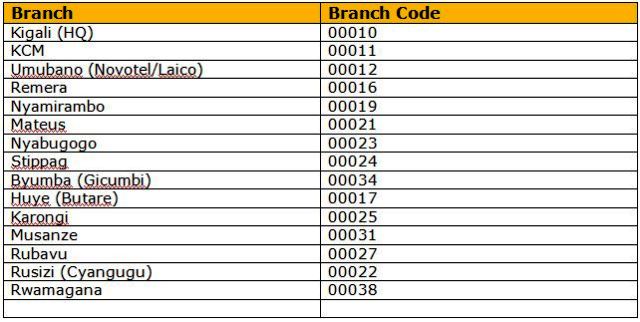
I&M Bank account holders will have to add the following branch codes followed by their 11 digit account numbers;
MTN’s dedication to encourage and ensure an effective cashless society is evident in the growing number of Mobile Money users in Rwanda. Through its Mobile Money platform, MTN has established effective relationships with financial institutions to meet a broader range of customers’ financial needs, thereby deepening financial inclusion.
By catering for both the banked and the unbanked population of Rwanda, MTN has opened up a cheap, secure and reliable way of banking therefore living up to its vision of leading in the delivery of a bold, new digital world.