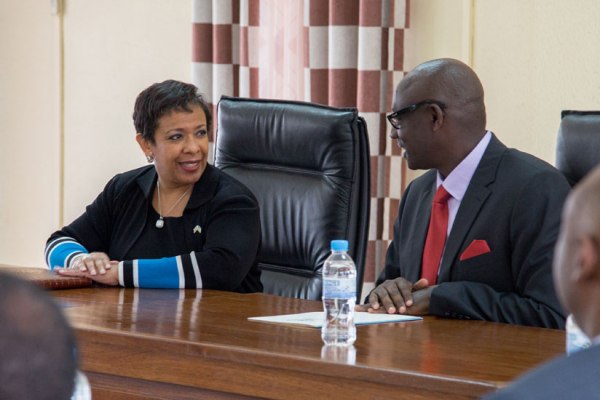
{Rwanda’s Minister of Justice Johnson Busingye and US attorney’s general, Lorohnson Busiongetta E. Lynch, held yesterday bilateral talks in various areas of justice to build a strong relationship between the two countries.}
Briefing the media after indoor discussion, Lorohnson appreciated Rwanda exciting achievement in the area of justice and promised sustainable partnership.
“I am delighted to hear exciting working achievements, in such important areas such as access to justice making the system accessible for all Rwandans. We have discussed on a number of different areas of mutual interest and I look forward continuing a strong working relationship with the government of Rwanda.”
According to the Minister Busingye, discussions revolved around access to justice, international prosecution, law making, taking forward judicial capacity, partnerships and building framework that will take forward Rwandan capacity to deliver justice.
“It is important for the world to bring genocide fugitives to account. It is important for the World to understand that it is an obligation of every state to the in world to do what they must do to have these people in courts.”Minister Busingye outlined indoor discussions on tracking perpetrators of 1994 genocide against Tutsi.
He argues that outcomes of discussions anticipate fruitful results since the partnership will also facilitate the track of roaming Genocide fugitives.
“We are very satisfied and confident that the future is bright.”
{LEGISLATORS have proposed that organic laws be translated into Swahili, the most widely spoken language in East African Community.}
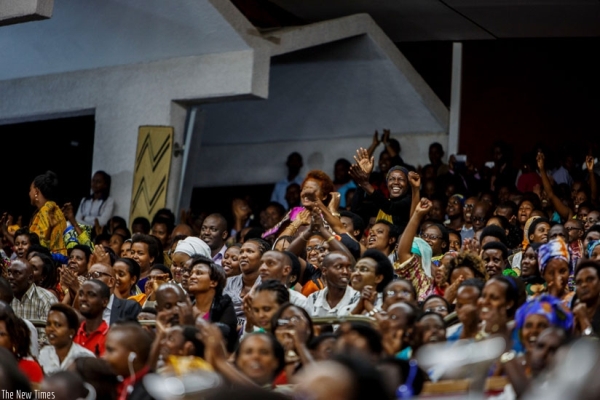
Explaining the proposals, Speaker Donatile Mukabalisa said Article 8 of the revised Constitution provides that a law may add or remove an official language to suit a certain reason.
“While working on the law, and in an effort to make it flexible, we realised that it might be in our interest to add a Swahili translation to our organic laws for integration purposes now that we are in the EAC,” she said.
Kiswahili will be a subject in the new skills-centred education curricula due for rollout in January.
However, according to Blaise Rwigamba, a practicing lawyer, translating the law into Swahili might be a bit tricky if the language is not one of the official languages of the country.
“There will be a need to have the language (Swahili) first recognised as one of the official medium of communication in the country’s supreme law before such a drastic change can be effected,” he said.
Of late, MPs had made their concerns known about delays in the drafting of legislation due to issues of language that they believe sometimes fail to contextualise realities on the ground.
MPs have suggested that they need to liaise with experts in linguistic in order to make the laws they enact easily understandable, a move that, according to lawyers, will help them in supporting their clients.
{{General changes}}
Meanwhile, lawyers have hailed the proposed constitutional amendments that were passed by the Lower Chamber of Parliament, saying the timely changes will make the Constitution more accommodative and compatible with other laws.
Other than the proposed changes in the presidential term limit, the other amendments, if passed by referendum, will see members of the Senate, the Chief Justice and Deputy Chief Justice serve a five-year term, renewable only once.
The change would come into effect after they serve their current terms that end in 2018.
However, according to the proposed amendments, senators who are former heads of state will not be subject to term limits.
Cecile Karakure, a lawyer, said the proposed changes are timely and encouraged reform in the way the Supreme Court handled cases, saying that the court is inundated with cases.
“There is also a need to reduce the amount of work done by the Supreme Court. We would have to decide which competent institution would handle the authentic interpretation of the supreme law,” Karakure said.
The East African Community (EAC) has registered a general improvement in maternal, newborn and child health, but there are areas in each member state that require sustained action for improvement, according to a recent report.
The Countdown to 2015 Report, A Decade of Tracking Progress for Maternal, Newborn and Child Survival, launched last month at the first Global Maternal and Newborn Health Conference held in Mexico, includes an updated country profile for each of the 75 countries, which jointly account for more than 95 per cent of the world’s maternal, newborn and child deaths.
The seventh in a series released over 10 years, it examines trends in mortality and nutrition; intervention coverage (including inequality); financial flows to reproductive, maternal, newborn and child health; and supportive policy and systems measures in 75 countries.
The report is intended to help policymakers and their partners assess progress, prioritise actions and ensure accountability for commitments to reduce maternal, newborn, and child mortality.
{{Shared problems }}
As is the case in nearly all other countries, all EAC countries have not ratified the Maternity Protection Convention, 2000 (No. 183), a modern international labour standard on maternity protection, which came into force in 2002.
According to the International Labour Organisation (ILO), expectant and nursing mothers require special protection to prevent harm to their infants’ health, and they need adequate time to give birth, recover and nurse their children.
Mothers also require protection to ensure that they will not lose their job simply because of pregnancy or maternity leave.
All the five EAC countries also suffer inequalities as regards skilled attendants at delivery between poor and rich households. Furthermore, in the entire EAC region and beyond, under-nutrition is mainly attributed to half of child deaths even though pneumonia is blamed for most under-five deaths.
Zulfiqar Bhutta, the co-chair of Countdown to 2015 Initiative, said worldwide maternal and child survival had improved by 50 per cent since 1990, but newborn survival and child nutrition remain the two major challenges that must be addressed.
{{Rwanda}}
Only four of the 75 Countdown countries — Cambodia, Eritrea, Nepal and Rwanda — will achieve both Millennium Development Goals 4 and 5, the report noted.
Regarding socio-economic equities, the report paints a positive picture for Rwanda when it comes to oral rehydration therapy (ORT) and continued feeding; measles; diphtheria-tetanus-pertussis (DTP3) immunisation coverage; early initiation of breast feeding; and antenatal care.
Rwanda has good policies, including community treatment of pneumonia, and postnatal home visits in the first week after birth, but still lacks an international code of marketing of breast milk substitutes, according to the report.
The Code is an international health policy framework for breastfeeding promotion adopted by the World Health Organisation in 1981 as a global public health strategy.
It recommends restrictions on the marketing of breast milk substitutes, such as infant formula, to ensure that mothers are not discouraged from breastfeeding and that substitutes are used safely if needed.
{{Rwanda registered 1, 300 maternal deaths in 2013.}}
The report shows that in 2013, general government expenditure on health as a percentage of total government expenditure was 22 per cent, while out of pocket expenditure as percentage of total expenditure on health was 18 per cent.
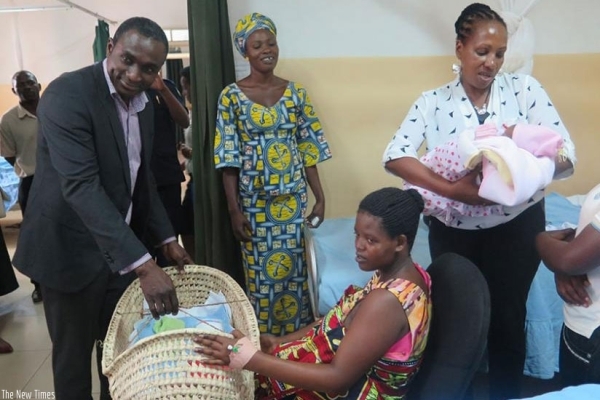
During the Mexico conference, Catherine Mugeni, the director of the Community Programmes Unit at the Rwanda Biomedical Centre (RBC), shed light on how 45,000 community health workers (CHWs) champion post-natal health in Rwanda by identifying all women in child bearing age, those who are pregnant and visiting pregnant ones three times during pregnancy.
She, however, cited insufficient supervision and mentorship by health care providers and a high turnover among the challenges to maternal and child health.
The way forward, according to Mugeni, includes “strengthening community-based maternal and newborn health service delivery through supportive supervision and mentoring.”
Reinforcing physician nursing home visit documentation and linkage with heath facilities, she said, is another good idea.
{{Kenya}}
In Kenya, under-nutrition is mainly attributed to half of child deaths, while haemorrhage (25%) and hypertension (16%) are the biggest causes of maternal deaths. Post-natal visits for mothers – within two days – were at 51 per cent in 2014.
Government expenditure on health as percentage of total government expenditure in 2013 was six per cent, while out of pocket expenditure as a percentage of total expenditure on health was 45 per cent.
Dr Irene Mbugua, World Vision’s regional maternal, newborn and child health project coordinator, observed that equity gaps are wider for interventions that require access to health facilities or repeat contacts with a health provider than for interventions that can be delivered through outreach services at the community level.
“The community needs more empowerment which can only come about when citizens understand their rights and entitlements in the health delivery system. They need to monitor the standards at the health facilities and ultimately the two parties (citizens and duty bearers) need to get together and dialogue to look for sustainable solutions,” she said.
{{ Tanzania}}
On equity, Tanzania only does well in closing the gap in use of insecticide-treated nets among under-five children between rich and poor households. But there are inequalities regarding even early initiation of breast feeding.
The country of 53.5 million people also lacks community treatment of pneumonia with antibiotics, according to the report.
Another policy deficiency is the lack of antenatal corticosteroids, medication given to pregnant women expecting preterm delivery, as part of management of preterm labour, a situation which often results in greater health risks for babies.
Most (39 per cent) of its maternal and newborn health expenditure is covered by external sources, while general government expenditure accounts for 33 per cent and private sources 27 per cent, according to 2012 statistics.
In 2013, out of pocket expenditure as percentage of total expenditure on health was 33 per cent and the country registered 7,900 maternal deaths that year.
{{Uganda}}
Most (53 per cent) of Uganda’s maternal and newborn health expenditure is covered by private sources while government expenditure accounts for 24 per cent and external sources 23 per cent, according to 2012 data.
Out of pocket expenditure as percentage of total expenditure on health was 38 per cent in 2013.
The country recorded 5, 900 maternal deaths in 2013.
{{ Burundi}}
Regarding matters of equity, Burundi is an outstanding example as it registered a thin gap between rich and poor households as regards antenatal and DTP3 immunisation coverage.
At policy level, Burundi lacks in many respects. For instance, it has no maternity protection; no maternal deaths notification; no kangaroo mother care in facilities for low birth weight or preterm newborns; and no antenatal corticosteroids as part of management of preterm labour.
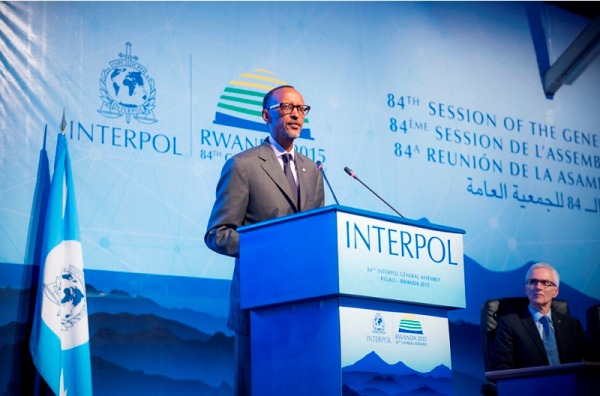
{President Kagame has appreciated Interpol’s efforts to pursue Genocide perpetrators, render justice to Genocide victims and calls for more great achievements.}
This message was conveyed during the introduction of 84th Interpol summit presided by president Kagame .The meeting is held in Kigali on this 2nd November 2015.
President Kagame noted that security is the foundation of everything based on results of Rwanda’s partnership with Interpol.
“When security breaks, losses are likely to increase. These involve loss of lives, loss of trust among people, states and economic deterioration. It has been remarked in our country when security organs supported perpetrators.”He said.
“Allow me to express my gratefulness to Interpol’s efforts to pursue genocide convicts as well as helping survivors to access justice even though more efforts need to be put in place.” President Kagame added recalling Interpol to increase collaboration to sue exiled genocide perpetrators.
He said that the country strived to restore security achieved by establishment of Rwanda National Police which completes 15 years of existence and commended collaboration among countries to counteract emerging challenges facing the World.
President Kagame promised that Rwanda will ensure sustainable partnership to preserve security and justice.
IGP Gasana Emmanuel also shared that Interpol helped Rwanda to detect criminals during 41 years of membership.
Interpol’s current President, Mrs Mireille Ballestrazzi recognized the contribution of Rwanda National Police and noted that a long milestone needs to be completed to resist technology related crimes, terrorism, human trafficking among other cross border crimes.
This annual meeting has gathered approximatively 700 delegates from 154 countries including Chiefs of Police, prosecutors, heads of regional and international police organisations, partners in policing and senior government officials among others.
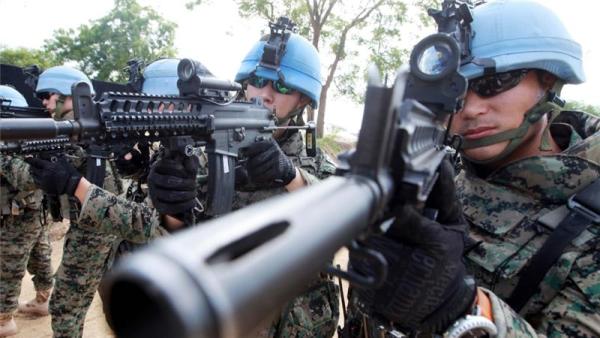
{Thirteen UN workers abducted last week by rebel fighters released unharmed on Sunday, the UN said.}
Rebel fighters in South Sudan have released 13 United Nations workers who were held hostage for a week, the UN has said.
Around 100 rebel fighters, who have been battling the government for almost two years, seized 31 members of the UN peacekeeping mission in South Sudan (UNMISS) last week.
While 18 Bangladeshi peacekeepers were freed soon after their capture, the 13 remaining UN workers – all South Sudanese nationals – were released by the rebels on Sunday, UNMISS said on Monday.
The UN had last week said that only 12 were still being held. However, it said 13 were released on Sunday.
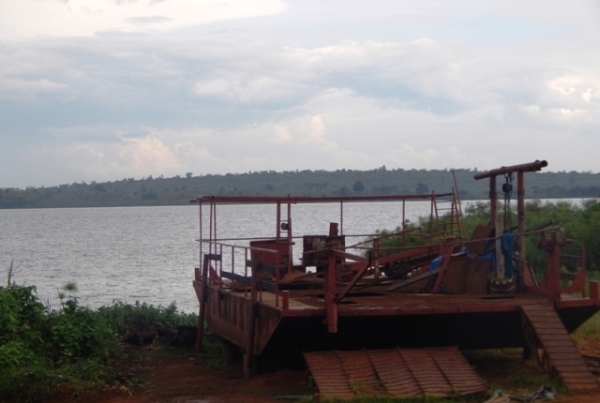
The rebels had captured the men after seizing a UN barge carrying fuel along the Nile River.
While the barge was also given back, the UN said that rebels had stolen the 55,000 litres of fuel it was carrying, as well as communications equipment, an inflatable boat and seven weapons.
UN chief in South Sudan Ellen Margrethe Loj said she was “relieved by the safe release of all UN personnel.”
She had previously warned that the kidnap “may constitute a war crime”.
Cycle of violence
Some 12,500 peacekeepers are deployed in South Sudan, which has been wracked by conflict since late 2013.
A political row between South Sudan’s President Salva Kiir and his former deputy Riek Machar erupted into violence in December 2013.
Tens of thousands of people have been killed, and UN-backed experts have warned of the “concrete risk of famine” before the end of the year, if fighting continues and aid does not reach the hardest hit areas.
Both sides are accused of having perpetrated ethnic massacres, as well as recruiting and killing children and carrying out widespread rape, torture and forced displacement of populations to “cleanse” areas of their opponents.
Some 3.9 million people are in crisis – a third of the country’s population – a massive 80 percent rise compared to the same period last year, the UN said.
The army and rebels have repeatedly accused each other of breaking an August 26 internationally-brokered ceasefire, the eighth such agreement aimed at ending the nearly two-year long war.
{Sober October is over – but was it worth it? Yes. Studies confirm that abstaining from booze for four weeks lowers blood pressure and blood sugar, improves sleep and concentration and helps you lose weight }
Have you ever wondered if a dry January really works? Does your liver notice if you spend a month off the chablis, sipping elderflower spritzers instead? Apparently so, according to research to be presented this month at the 66th annual meeting of the American Association for the Study of Liver Disease.
A study of 102 drinkers who had a dry January found a reduction in their “liver stiffness” – measured by a scan that assesses the amount of fibrous scarring in the liver. No one knows what this means, although one could hope the liver can at least partially repair itself, given an alcohol–free holiday. Fibrous scarring can lead to cirrhosis of the liver, irreversible damage that can lead to liver failure. Importantly, the blood pressure of those in the study fell, as did their resistance to insulin, reducing the likelihood of developing diabetes.
The solution
The research is only available as an abstract and has not yet been published. It does, however, fit with findings from a pilot study from the same research unit, at the University College London Institute for Liver and Digestive Health, last year. That research found that 10 members of staff at the New Scientist who opted for a dry January (compared with four who continued drinking) experienced a 15% reduction in the amount of fat in their livers (a precursor to fibrous liver damage) and a fall in their blood glucose levels. They also reported better sleep and concentration, and an average weight loss of 1.5kg (over 3lbs).
In this latest study, the average alcohol intake was 33 units for men and 29 for women, whereas UK guidelines are 21 and 14 units – a unit being half a pint of beer or a small glass of wine. But before we all raise a glass to a dry January, there are studies that show 5-15% of people with fatty livers who abstain from alcohol still go on to develop fibrosis and cirrhosis, especially if their livers already show alcohol damage.
The Royal College of Physicians says there is evidence that drinking every day increases the risk of liver disease, and that it is better to have two or three alcohol-free days a week. But one problem in assessing a dry month is that is that no one knows whether you drink more, less or the same after it is over. The pilot study from UCL found one downside – avoiding booze reduced the social contact of the participants. Otherwise, do consider increasing your alcohol-free days because, as I have found, life is actually better without it. I’d still like to be invited to Christmas drinks, though.
{The dead body of 17 years young man has been found in Mugesera Lake, Rwamagana district .The young man, Sinzabakwira, died of suffocation when he was fishing.}
The family of the young man has missed him since Friday evening when he went to fish.
Talking to IGIHE, the executive secretary of Akabungo cell, Ntabanganyimana Omar Seleman said that the deceased whose body was found on this Saturday suffered from epilepsy that affected him when he went to fish alone.
As Ntabanganyimana said, the deceased was a son of Mwanganabo and Mukamuhizi.
He appeals on families having children with epilepsy related diseases to keep them away from fishery.
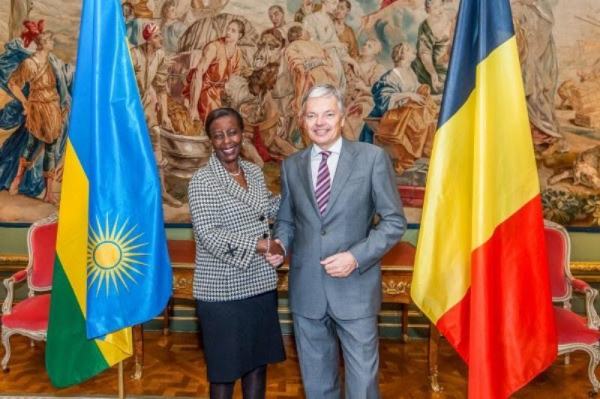
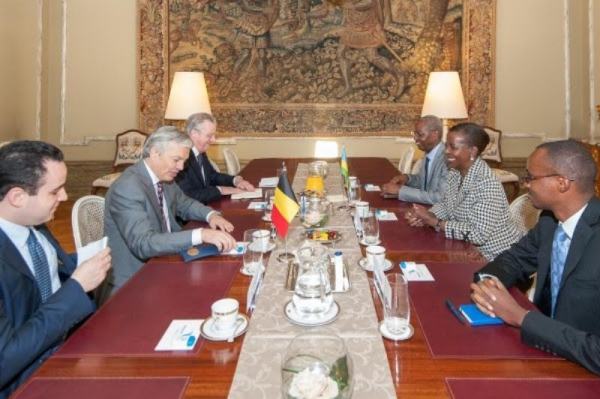
{The Belgium minister of foreign affairs, Didier Reynders disclosed that his country devoted to stay close to the process of Rwandan constitutional amendment going in hand with careful confirmation of its outcomes.}
He unveiled the will to Rwandan minister of foreign affairs, Louise Mushikiuwabo on Saturday 31st November 2015 during bilateral talks on both countries’ relationship as well as regional and international political concern.
According to the statement from Belgium ministry of foreign affairs, the meet held after two days of constitutional amendment is part of permanent talks between Rwanda and Belgium.
The recent constitutional amendment opens the space for president Kagame to pose his candidacy during 2017 presidential elections.
The Belgium minister of foreign affairs said that he had received more explanations on heated discussions taking place in Rwanda parliament regarding the reform of the constitution.
Minister Reynders added that Belgium has followed carefully the process of constitutional amendment and his country looks forward to vigilant acceptance of its outcomes.
Last week on Thursday the parliament voted for constitutional reform proposing five year presidential term limits renewable once.
The new amendment of five years will be preceded by a transitional period of seven years allowing any candidates including President Paul Kagame to lead Rwandans.
It is expected that the draft of the revision of the Constitution of the Republic of Rwanda of 04 June 2003 will proceed to the Senate before Rwandan’s final vote on the adoption of any amendments through a nationwide referendum.
{That’s the new rumor that has had the internet going nuts for a minute, the tennis champion Serena Williams might be pregnant with none other than Drake’s baby. }
Indeed after the never-ending speculations as regards their alleged relationship, rumor has it now that the two are now supposedly expecting a child.
Even though Drake showed no modesty in expressing his love and even cheered his friend on from the bleachers of the US open, they both never officialized their relationship status.
They’ve been spotted together quite a few time over the last few months and appeared closer than ever (dinning together, attending New York fashion weeks events and so on…) and this situation prompted some fans to believe there was more than a friendship behind it.
Is the Canadian” Hotline Bling” ready to be a father? Well, if the rumor has yet to be confirmed, the fact that Serena abruptly ended up her season just a couple a games away from the grand slam might definitely raise an eyebrow.
Her untimely end of her season could therefore be explained by her alleged pregnancy.
As of now Serena’s camp had bushed off the rumor but we’ll keep you posted if more details surface.
{There are some people who are loved wherever they go, while some are hated wherever they go for obvious reasons.}
However, some hatred are born out of envy for probably success and other good things that a person possesses. While some hatred are born because that person possesses certain characters that aren’t appealing to the general public — and it’s this kind of hatred I want to buttress on.
{{1. You are negative}}
Negative minded people are hated wherever they go; they would probably only be loved by negative minded people as well.
People are attracted to positive things and negative minded people have this negative energy that radiates out of them and no one loves that.
{{
2. You never smile }}
People are more attracted to smiling people; smiling creates a certain charm, makes you trustworthy and radiates all manner of positivity. However, people who frown are easily hated — they radiate negative energy and nobody wants that.
{{3. Your excesses }}
Everyone has flaws, everyone probably has attributes that could make them seem annoying or disliked at a point. However, there ought to be a balance; if your excesses by far supersedes your positive aura then you would most likely be hated by a vast majority.
{{
4. An attention seeker }}
An attention seeker is hated everywhere. This is one attribute people don’t come to terms with — attention seekers are unoriginal, they are pretenders and so many things about them pass a message of negativity.
{{
5. Selfish}}
Have you ever seen a selfish person that’s really loved? Except that selfish person has other outstanding qualities, which is really rare. Selfishness would put you in the bad light and could make people keep away from you — selfishness would even make you lose lots of friends. No one likes a selfish person.
{{6. You are a hater}}
Every hater is highly hated by people. Some people hate others for no reason, they hate success, they hate progress and just hate anything good. People like this are easily hated wherever they go.
{{
7. Bad habits}}
When you have an accumulation of bad habits that people hate, you would also be mostly hated as well. Bad habits like stealing, lying, being a braggart, telling people’s secrets, being two-faced, envy, lying behind people’s back etc. would definitely make you a hated person once they find out who you really are.
{{8. You treat people disrespectfully}}
Disrespecting others would easily make you hated. A lot of bosses are hated because they disrespect others. Nobody is attracted to someone who disrespects others; this would make people see you as evil and wicked.
Do you think people hate you? These reasons listed above would easily make you hated everywhere you go; it would be advised to refrain from such habits and lifestyles listed above.